Iran Lobby

Exposing the Activities of the lobbies and appeasers of the Mullah's Dictatorship ruling Iran

  • Home
  • About
  • Current Trend
  • National Iranian-American Council(NIAC)
    • Bogus Memberships
    • Survey
    • Lobbying
    • Iranians for International Cooperation
    • Defamation Lawsuit
    • People’s Mojahedin
    • Trita Parsi Biography
    • Parsi/Namazi Lobbying Plan
    • Parsi Links to Namazi& Iranian Regime
    • Namazi, NIAC Ringleader
    • Collaborating with Iran’s Ambassador
  • The Appeasers
    • Gary Sick
    • Flynt Leverett & Hillary Mann Leverett
    • Baroness Nicholson
  • Blog
  • Links
  • Media Reports

Important to Remember Iran Role in 9/11 Attacks

September 8, 2016 by admin

Important to Remember Iran Role in 9/11 AttacksImportant to Remember Iran Role in 9/11 Attacks

Important to Remember Iran Role in 9/11 Attacks

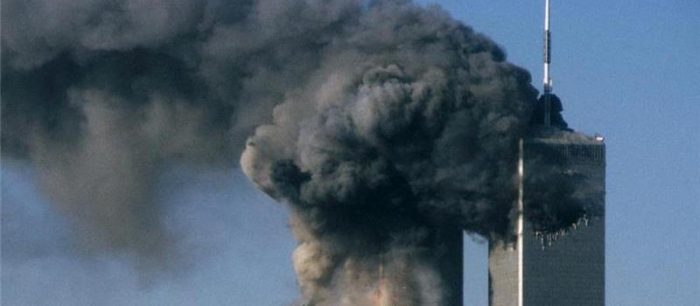
This Sunday marks the 15th anniversary of the 9/11 attacks which killed 3,000 people and changed the course of U.S. involvement in the Middle East. After a decade and half, much has changed in the world in regards to the global fight against terrorism and much of it not in a good way.

At the center of the shifting sands of terrorism lies the Iranian regime. Its enabling role in much of the terror, death and destruction that has raged across the region over the last 15 years has been documented, but not fully appreciated by the world until lately.

One of those shedding a light on the regime’s role in terror, especially in the 9/11 attacks, is former Sen. Joseph Lieberman, chair of United Against Nuclear Iran, who wrote an editorial in the Wall Street Journal examining Iran’s role.

“A key al Qaeda partner, Iran, has never been held responsible for its enabling role—even though the 9/11 Commission found that ‘there is strong evidence that Iran facilitated the transit of al Qaeda members into and out of Afghanistan before 9/11, and that some of these were future 9/11 hijackers,’” Lieberman writes.

Lieberman notes correctly that although the U.S. State Department says Iran is the world’s leading state sponsor of terrorism, the regime is willing to work with extremists of the Sunni sect in the Arab world and elsewhere—even though it views itself as the vanguard of the world’s Shiite community. Iran is aiding both Sunni and Shiite terror organizations—including Sunni Hamas and Sunni Islamic Jihad, and Shiite Hezbollah and Shiite Iraqi militias.

For the mullahs in Tehran, terrorism is an equal opportunity vocation that knows no religious boundaries.

He details the long road Osama bin Laden took in developing a relationship with Iran that started Sudan in the 1990s with a meeting with Sheikh Nomani, an emissary of Iran who “had access to the highest echelons of power in Tehran.”

The Washington Institute’s Matthew Levitt and Michael Jacobson concluded, “Iran and al-Qaeda reached an informal agreement to cooperate, with Iran providing critical explosives, intelligence, and security training to bin Laden’s organization.” Because Islamic Revolutionary Guard Corps (IRGC) already supported Hezbollah operationally and financially, a vehicle was in place through which they could support and influence al Qaeda.

“After 9/11, Iran became a more important haven for al Qaeda fighters who fled from Afghanistan as the Taliban collapsed,” Lieberman said. “Iran regularly granted the terrorists freedom to move within Iran and to cross into Iraq and Afghanistan to carry out attacks. From their safe base in Iran, al Qaeda members planned terrorist operations, including the 2003 attack in Riyadh, Saudi Arabia that killed 26 people, including eight Americans, and the 2008 attack on the American Embassy in Yemen that claimed 16 lives, including six terrorists.”

Newly declassified letters captured in the May 2011 raid that killed Osama bin Laden reveal how crucial Iran has been to al Qaeda. In a 2007 letter, bin Laden directed al Qaeda not to target Iran because “Iran is our main artery for funds, personnel, and communication,” Lieberman added.

The fact that the Iranian regime has waged a destabilizing war against its neighbors and the U.S. for decades has somehow been glossed over and ignored by the Iran lobby which pushes the idiotic theory that the mullahs are somehow going to change their ways and embrace pluralistic democracy, joining hands and singing songs.

Nothing illustrates the mullahs desire to confront the U.S. in every way as yet another incident occurred in the Persian Gulf as another IRGC fast-attack craft came within 100 yards of a U.S. Navy coastal patrol ship, forcing it to change course this week.

It was at least the fourth such incident in less than a month and demonstrates an escalation in the confrontations ordered by the mullahs in what is becoming an increasingly dangerous game of high seas saber rattling.

Pentagon spokesman Captain Jeff Davis said the Iranian vessel sailed directly in front of the USS Firebolt, forcing the 174-foot (53-metre) U.S. ship to change course.

The incident began when seven Iranian ships “harassed” the Firebolt, Davis said.

A U.S. Defense official, speaking on the condition of anonymity, said the interaction was “unsafe and unprofessional due to lack of communications and the close-range harassing maneuvering,” adding that uncovered and manned weapons were seen on the Iranian vessel.

The U.S. official said there have been 31 similar interactions with Iranian ships this year, almost double the amount from the same period last year.

The sharp increase in incidents shows how feeble the arguments made by the Iran lobby were in promising a more moderate Iran put forth by regime supporters such as Trita Parsi of the National Iranian American Council.

All of which makes news of the Obama administration completing its $1.7 billion cash payment to the Iranian regime all the more dubious considering the regime is more than likely using the funds to replenish the coffers of its terrorist clients such as Hezbollah in Syria and the Houthis in Yemen.

Ultimately, given the Iranian regime’s deep and long history of terrorist support, including its relationship with Al-Qaeda, this 9/11 anniversary deserves recognition of the mullahs’ role in supporting terrorism.

By Laura Carnahan
Filed Under: Blog, News Tagged With: al Qaeda, Featured, Iran, Iran Human rights, Iran Lobby, Iran Terrorism, IRGC

Week of Living Dangerously in Persian Gulf By Iran Regime

August 27, 2016 by admin

Week of Living Dangerously in Persian Gulf By Iran Regime

Week of Living Dangerously in Persian Gulf By Iran Regime

A lot can happen in one week. According to the Bible, God created the heavens and earth and all the creatures in just a week’s time. You can have half of an Olympic Games run in one week.

For the Iranian regime, one week is enough time to create an international crisis in the Persian Gulf and threaten to spark a shooting war with the U.S. Navy.

The week started out on Tuesday with the Iranian regime’s Revolutionary Guard Corps sending several ships to harass the U.S. Navy destroyer Nitze by closing at high rates of speed, then veering off and returning again.

The Arleigh Burke-class destroyer issued several warnings including radioed messages, fired flares and whistles at the regime ships which did not respond as it transited international waters; well away from Iranian waters. A Navy spokesman described the Iranian maneuvers as “unsafe and unprofessional.”

That incident was followed on Wednesday by another one in which three IRGC ships approached the U.S. coastal patrol ships Squall and Tempest at high speed in the northern Persian Gulf.

According to the Washington Post, “later in the day, an Iranian vessel came within 200 yards of the Tempest. After the Tempest shot flares and tried to communicate using the ship’s loudspeaker, Squall personnel fired three shots into the water from that ship’s .50-caliber gun. The Iranian ship then departed.”

That same Iranian ship later approached the USS Stout, a guided-missile destroyer, later Wednesday. “The [IRGC] vessel proceeded to cross the bow of the Stout at close range on three separate occasions,” said William Urban, a spokesman for the U.S. 5th Fleet.

Responding to a U.S. complaint, the Iranian regime rejected the American version of events. The defense minister, Brig. Gen. Hossein Dehghan, said in remarks quoted by the state news media that the Iranian boats patrolled only Iran’s territorial waters and had a mission to “counter any unintentional or aggressive intrusion.”

“If an American ship enters Iran’s maritime region, it will definitely get a warning. We will monitor them and, if they violate our waters, we will confront them,” Dehghan said in a statement reported by the Iranian Students’ News Agency.

It clearly shows the regime’s intentions of antagonizing the U.S. at a time when the Iran lobby had promised a new era of cooperation following the Iran nuclear deal.

Obama administration officials say Iran has abided by its commitments on the nuclear program, but there have been few signs of change in Iranian regime’s behavior in other arenas, including tensions in the Persian Gulf, clashes with U.S. allies in the region and the civil wars in Syria and Yemen.

Congressional Republicans and critical private analysts have been angry about this behavior since late last year, when the Islamic republic conducted two tests of nuclear-capable ballistic missiles in defiance of U.N. sanctions and then staged a live-fire exercise dangerously close to a U.S. warship in the Persian Gulf.

The situation worsened in January, when the Iranian regime detained 10 U.S. Navy sailors whose boats had drifted mistakenly into Iranian waters in the Gulf.

Although administration officials hoped the deal might lead to a less-confrontational posture from Iran, House Foreign Affairs Committee Chairman Edward R. Royce, California Republican, said Iran continues to pursue policies that are “destabilizing the region.”

“Iran is on a roll, and the perception is that the administration is getting rolled at this moment,” Mr. Royce said in January. “We need to see more backbone, not backing down.”

Revelations this month of how the Obama administration worked out a $1.7 billion settlement of a failed Iranian missile sale in January at virtually the same time as the release of five American prisoners held in Iran has only fueled criticism that the Obama administration is overlooking continued misbehavior by Tehran to preserve the nuclear deal.

Stephen Bryen, a senior fellow in defense studies at the American Foreign Policy Council, authored an editorial in U.S. News and World Report, in which he criticizes the administration’s oddly held belief that somehow the Iranian regime can still be a friend to the U.S.

“This view, strongly held by the White House, State Department, Pentagon and CIA, is a true fantasy. … Washington persists in fostering the illusion. There is no immediate cure for a political disease: We have yet to invent an anti-regime-biotic that, when injected into the insane, returns them to normalcy,” Bryen writes.

“As there is no solution, the Obama administration will explain the Persian Gulf incident as some sort of aberration or unauthorized action by the Iranian Revolutionary Guards, or a mistake, but not an act of overt hostility,” he adds.

More darkly, he raises the specter that the Iranian regime is merely testing a “swarming boat attack” tactic to learn how they might fling multiple small, fast attack boats at much larger U.S. warships.

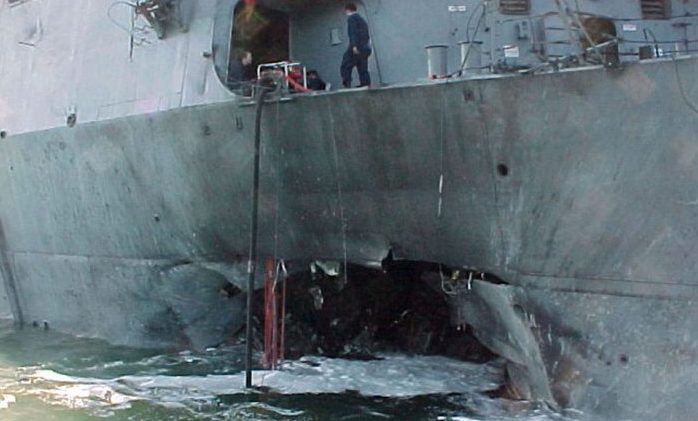
“Recently the Iranians added another dimension to the swarming boats: a vessel known as the Ya Mahdi, a remotely piloted fast patrol boat that can fire rockets or be stuffed with explosives. It is a new version of the boat that attacked the USS Cole in Aden in 2000 at a cost of 17 lives, 39 injuries and severe damage to the ship,” Bryen warns.

Criticism from the White House is sorely lacking as these provocations increase. One explanation may be the announcement that Ben Rhodes, the national security advisor who created the so-called “echo chamber” of support for the Iranian regime and nuclear deal, is now scheduled to keynote a conference sponsored by Iran lobby loyalist, the National Iranian American Council.

Outside organizations such as NIAC and the Ploughshares Fund, which is co-sponsoring the upcoming conference, were cited as key parts of the White House’s effort to mislead the public about the deal.

The NIAC event is being viewed as another sign that the White House is seeking to boost these organizations in return for their efforts to push the nuclear deal and support the pro-Iran “echo chamber.”

“Pro-Iran lobbies like NIAC were helpful to Ben Rhodes when he created his echo chamber to sell the Iran nuclear deal and the Iran money-for-hostages deal,” said one senior foreign policy consultant who has worked with Congress on the Iran deal. “It’s only fair that Rhodes would return the favor by keynoting NIAC’s conference. It’s not clear what he’ll talk about more: Iran developing its nuclear program, Iran expanding across the region, or Iran seizing more American hostages including those with close links to NIAC itself.”

The cozy relationship between Iran lobbyists and Obama administration may well explain why this past week it has been silent on the provocations, but it does not explain how to stop the regime.

BY Michael Tomlinson

Filed Under: Blog, News Tagged With: #NuclearDeal, Appeasement policy, Ben Rhodes, Featured, Iran deal, Iran Lobby, Iran Terrorism, IRGC, National Iranian American Council, NIAC Action

US Warns of Travel to Iran as Regime Shows off Military Might

August 24, 2016 by admin

US Warns of Travel to Iran as Regime Shows off Military Might

US Warns of Travel to Iran as Regime Shows off Military Might

In what is becoming annual rite of summer, the U.S. State Department on Monday issued a warning urging U.S. citizens to avoid traveling to Iran. This latest advisory, which emphasizes Iran’s desire to capture U.S. citizens, comes on the heels of a growing scandal over the Obama administration’s decision to pay Iran $400 million in cash on the same day that it freed several U.S. hostages, according to the Washington Free Beacon.

The new warning replaces an existing one the department issued on March 14, 2016 and reiterates and highlights the risk of arrest and detention of Americans, particularly dual national Iranian-Americans, which the Iranian regime does not recognize.

“Iranian authorities continue to unjustly detain and imprison U.S. citizens, particularly Iranian-Americans, including students, journalists, business travelers, and academics, on charges including espionage and posing a threat to national security,” the advisory said.

“Iranian authorities have also prevented the departure, in some cases for months, of a number of Iranian-American citizens who traveled to Iran for personal or professional reasons. U.S. citizens traveling to Iran should very carefully weigh the risks of travel and consider postponing their travel. U.S. citizens residing in Iran should closely follow media reports, monitor local conditions, and evaluate the risks of remaining in the country,” the advisory added.

The advisory goes on to warn of the threats posed to religious minorities and a wide range of other classifications of individual at risk of arrest, harassment and detention by regime authorities.

“The Iranian government continues to repress some minority religious and ethnic groups, including Christians, Baha’i, Arabs, Kurds, Azeris, and others.  Consequently, some areas within the country where these minorities reside, including the Baluchistan border area near Pakistan and Afghanistan, the Kurdish northwest of the country, and areas near the Iraqi border, remain unsafe.

“Iranian authorities have detained and harassed U.S. citizens, particularly those of Iranian origin. Former Muslims who have converted to other religions, religious activists, and persons who encourage Muslims to convert are subject to arrest and prosecution,” the advisory said.

Despite the warning, Iran remains a tourism destination for some with The New York Times offering two-week trips to Iran several times a year. It is noteworthy that the Times has long been an editorial supporter of accommodating the Iranian regime as part of the Obama administration’s echo chamber of support.

The warning flies in the face of the all of the claims made by the Iran lobby during the nuclear talks last year when prominent advocates for the regime such as Trita Parsi of the National Iranian American Council, bloggers Ali Gharib and Jim Lobe, all promised a more moderate and stabilizing Iranian regime.

Clearly the opposite has happened if the U.S. government has to update warnings about its citizens being kidnapped by the Iranian government and then warning that it can do little to help you out if you are taken hostage.

Top that level of aggressive militancy with new announcements by the Iranian regime of is newly grown military muscle which it puts on display with the glee of a child showing off a new bicycle.

The regime released images of its first domestically built long-range missile defense system on Sunday, a project started when the country was under international sanctions.

Images on multiple state news agencies showed President Hassan Rouhani and Minister of Defense Hossein Dehghan standing in front of the new Bavar 373 missile defense system, according to France 24 News.

The system was designed to intercept cruise missiles, drones, combat aircraft and ballistic missiles, according to earlier statements by Dehghan. He claimed that Iran’s missile range capabilities have been expanded by two to three times across its arsenal. The upgrades now give Iran’s current stock of cruise missiles the ability to hit targets 62 miles off its coast, easily putting ships traveling through the Persian Gulf’s Strait of Hormuz at risk.

Rouhani said in a televised speech on Sunday that Iran’s military budget had more than doubled compared with last year.

“If we are able to discuss with world powers around the negotiating table, it is because of our national strength” he said.

Rouhani also unveiled the first Iranian-made turbo-jet engine on Sunday, saying it was capable of flight at 50,000 feet.

“The Islamic republic is one of eight countries in the world who have mastered the technology to build these engines,” Rouhani said.

Dehghan added that Iran was now looking to develop seaborne cruise missiles capable of supersonic speed.

The new missile was developed as a response to the suspension of delivery of a Russian-made S-300 missile system because of earlier sanctions, but with those sanctions lifted because of the nuclear agreement, Russia completed delivery of the advanced weapons system this year.

Dehghan also boasted on regime television that the regime would also negotiate with Russia to acquire its sophisticated Sukhoi fighter and attack aircraft to bring its air force capability for long-range force projection and air combat against the more sophisticated air forces of regional rivals such as Saudi Arabia and the Gulf states.

Iran has also discussed with Russia the production licensing of the Russian T-90 tank inside Iran. The focus of the Iranian regime is on acquiring the capability and technology to produce the systems in-country rather than depending on the mood of the Kremlin to sell Iran weapons.

The world should be aware now that the Iranian regime’s intentions are anything but peaceful and moderate.

By Michael Tomlinson

Filed Under: Blog, News Tagged With: #NuclearDeal, Featured, hassan rouhani, Iran, Iran deal, Iran Human rights, Iran Terrorism, Khamenei, nuclear talks

For Iran Regime Religion Defines Policies

August 16, 2016 by admin

For Iran Regime Religion Defines Policies

For Iran Regime Religion Defines Policies

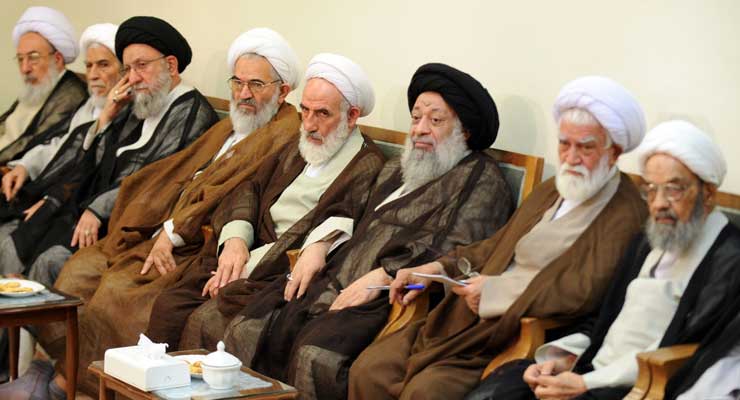
From the beginning of the Islamic revolution, the mullahs and religious cleric followers of Ruhollah Khomeini secured for themselves a nation-state completely under their control. Over three decades before ISIS spawned its own dreams of an Islamic caliphate, the mullahs in Tehran had already achieved that goal.

As a religious state, the Iranian regime stands virtually alone in a secular world of nations governed by parliaments, democracies, constitutional monarchies and even communist or socialist regimes.

Aside from the Vatican city-state, Iran is unique among nations, which makes understanding its religious leaders vital in understanding its national goals and policies.

For the mullahs, there were only one goal they had: To preserve power under the banner of the Islamic revolution and expansion and exporting of that same revolution.

Iranian regime’s constitution is emblematic of those priorities; vesting all final authority with the supreme leader, especially critical areas such as foreign policy, the military and judiciary. The control of virtually all sectors of Iranian life places the Iranian people squarely under the thumb of the mullahs.

They subject the Iranian people to the harshness of the religious courts that control daily family life. They subject the Iranian people to legions of morality police that enforce moral codes for everything from women driving cars and their style of dress to the gathering of young men and women at cafes.

With each beating given out, with each Iranian thrown into prison, with each public execution, the mullahs attempt to enforce their control over the Iranian people and in doing so only sow the seeds of discontent deeper into the soil of Iranian society from which springs for dissent and discontent in ways large and small.

Opposition to the mullahs rule can come in the form of a selfie by a young Iranian woman posting without a hijab or another young Iranian woman holding up a sign courtside of a volleyball game at the Rio Olympics.

It can take the form in mass protests and street demonstrations or it can take the form of hooking up a simple satellite dish to watch banned newscasts from Europe or the U.S.

For the mullahs, each rising level of defiance has to be met with even more brutal suppression because allowing even a small crack or glimmer of hope to shine through would only undermine their rule and bring forward the prospect of regime change.

This explains why the mullahs are always seeking provocations to fight against or blame for their own inadequacies. It is also why they regularly snatch hostages and balance their fate against the needs of the religious regime.

The mullahs inability to improve the economy following the nuclear deal points to their own ineptness, as well as their priorities to shift billions in recovered funds, as well as a $400 million ransom payment for American hostages, to use not for the Iranian people, but to line their own pockets and continue to fund their terrorist proxies in wars in Syria, Iraq and Yemen.

Regime-controlled media, as well as the Iran lobby have been busy pushing the idea that the lack of progress in improving the Iranian economy is to be blamed on the U.S. failure to open up all financial channels for the mullahs’ use.

Mohammad Javad Larijani, the head of the regime’s judiciary council , was quoted citing perceived serious flaws in the nuclear agreement leaving Iran without benefits it was promised.

“The US has completely retained the structure of the sanctions, and is not intending to lift them in the near future,” he said.

The flawed documentation and ill-definition of commitments in the JCPOA and the subsequent UN Security Council Resolution 2231 enable Washington to make very little concessions to Iran, Larijani explained, adding that having control over how to interpret the deal has given US politicians the power to impose what they want.

That point of view by the regime was reinforced over and over by statements by top mullah Ali Khamenei who claims that the duty to lift all sanctions lies with the U.S. and failure to do so would end up negating the agreement.

It is conspicuous Khamenei makes these claims on the eve of the U.S. presidential elections in which the days of the current administration are numbered as is the continuation of the same policy of appeasement it has been following for the past two years.

What remains is a violent regime bent on preserving its religious control over the Iranian people and willing to commit any atrocity to achieve it and preserve its Islamic revolution.

If the world truly wants a free and democratic Iran, the first step will have to be the continued opposition to the rule of the mullahs and the empowerment of the Iranian people through the dissidents and oppressed fighting for their freedom.

By Michael Tomlinson

Filed Under: Blog, News Tagged With: Featured, Iran, Iran deal, Iran Human rights, Iran sanctions, Iran Terrorism, Khamenei

Abuses and Reach of Iranian Regime is Proof to Keep Sanctions

August 16, 2016 by admin

Abuses and Reach of Iranian Regime is Proof to Keep Sanctions

Abuses and Reach of Iranian Regime is Proof to Keep Sanctions

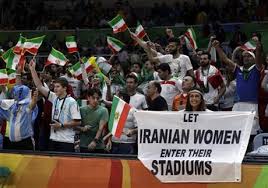
The sign read “Let Iranian women enter their stadiums.”

As protest signs go against the Iranian regime, this one was pretty tame, but the setting of where it was held aloft made for news; it was at the Rio Olympics.

Darya Safai, an Iranian-born Belgian, held aloft the sign during the men’s volleyball match between Iran and Egypt. As security personnel approached her to take down the sign, she broke into tears. Safai was allowed to stay and keep her sign and she vowed to show up—with sign—at all other matches with Iran’s volleyball team, even though the International Olympic Committee bans political statements at games.

Safai was protesting an Iranian regime edict that bans women from attending sporting events. She has lived in Belgium since 2000, after being arrested in Iran in 1999 and put in prison for taking part in anti-government demonstrations. She has been staging sports protests since 2014.

Since 2012, the Iranian government has banned women from attending volleyball tournaments as the sport became increasingly popular in Iran with both sexes.

It has arrested women for trying to enter stadiums, human rights groups say.

Her small protest is emblematic of the much larger protests and demonstrations that have become part and parcel against the Iranian regime, including a recent hunger strike staged in front of 10 Downing Street in London and the recent mass gathering outside of Paris by 100,000 human rights activists and Iranian dissidents.

The protests have stepped up as the Iranian regime has stepped up its various human rights abuses, most notably the renewal of its penchant for nabbing dual-nationality citizens without charge and tossing them into prison.

An editorial by Dr. Majid Rafizadeh, president of the International American Council on the Middle East, in Huffington Post, talked about the sharp spike in arrests of foreigners by the Iranian regime.

“Even the State Department has acknowledged the increasing threat ‘Iran has continued to harass, arrest, and detain US citizens, in particular dual nationals,” he said.

“Many believed that Iran would open up politically and socially after rejoining the global financial system and after sanctions were lifted. Rouhani encouraged the Iranian Diaspora to visit Iran without fear,” he added. “Iranian authorities use dual citizens as pawns for extracting economic concessions or receiving political and financial gains and can also use them to swap prisoners.”

The use of hostages pales in comparison though to the regime’s heavy use of executions, especially mass executions lately, to reinforce its policies of fear and dread, as described in a piece for The Hill by Shahriar Kia, a press spokesman for residents of Camp Liberty, Iraq, and members of the People’s Mujahedin Organization of Iran opposition group (PMOI, also known as MEK).

Iran is known for its skyrocketing number of executions and practice of obtaining coerced confessions through torture and other banned methods. The mullahs have also proved their “sickening enthusiasm” of sending juveniles to the gallows, all in violation of international laws and respecting no bounds in this regard, said Magdalena Mughrabi, Deputy Middle East and North Africa Program Director of Amnesty International. International law, including the Convention on the Rights of the Child to which Iran is a state party, absolutely prohibits the use of death penalty for crimes committed when the defendant was below 18 years of age. Yet apparently this is a pretext Iran refuses to respect.

“The recent execution of nearly three dozen Sunni Kurds in one day adds to Iran’s already dismal human rights history, especially in the past three years after the ‘moderate’ Hassan Rouhani came to power,” he writes.

The Iranian regime’s brutal policies have also helped serve as a breeding ground of discontent that is driving willing Sunni recruits into the arms of ISIS. Far from the public perceptions being pounded by the Iran lobby the truth is that Iran is doing more to drive ISIS’s growth than anything the West is doing.

Wahab Raofi, a former interpreter for NATO forces in Afghanistan, described such a problem in a piece for Huffington Post.

“Politicians keep taking jabs at ISIS, yet the world’s most notorious terrorist group continues to carry out spectacular, deadly attacks around the world. This is because politicians jab only at the extremities of their foe – they cannot win unless they deliver a knockout blow to the head. And that target is Iran,” he said.

“Peace-seeking governments need to pinpoint the source of the problem. Why is ISIS, for all its brutality, still able to recruit young Sunni Muslims from around the world? The path of destruction leads to the doorstep of Shiite Iran,” he added.

The Iranian regime stands as the most destabilizing influence throughout the world today and ignoring that threat under the misguided hope of gaining favor with “moderate” forces within Iran is a mistake of monumental proportions.

The fact that human rights and sponsorship of terrorism were not attached to the Iran nuclear agreement and thus the opportunity exists to reauthorize the Iran Sanctions Act, as well as maintain existing sanctions related to those areas where the regime’s conduct has been plain for the world to see.

A reminder of what the mullahs in Tehran believe in comes from an editorial penned by Barry Rosen, one of the 51 Americans taken hostage 40 years ago in the takeover of the American embassy during the Islamic revolution, in the Telegraph where he voiced his support and concern for Nazanin Zaghari-Ratcliffe, a British-Iranian aid worker imprisoned by the regime who’s health is reported to be in steep decline.

“She is a young mother of British-Iranian citizenship who has dedicated her life to aid and charity work. And, simply because she was in the wrong place at the wrong time, she has been taken from her family, and is subject to the brutality of the Iranian prison regime,” he writes.

“In 1979, the Iranians were very clear that I and the other hostages would only be released if there was a financial payment to Iran. The deal was made in 1981 and that’s why we were free. And no matter how much the agencies dress it up, the $400m that has just been paid to Iran by the US, at the same time as five Americans were released from Iranian jails, was just the same. Some $400m in foreign currency, packed onto crates and delivered to Iran on the same day as our hostages being released is a quid pro-quo that bad timing alone cannot explain,” he added.

Rosen knows the regime well and has found that in 40 years very little has changed.

“Businesses, organizations, charities and agencies that operate in Iran are at risk, and the people who work for them – especially if they have dual nationality – are in a very dangerous position. It is my deep concern that further investment in Iran will, rather than open it to the world, will actually put more dual citizens at risk; will help the country obtain nuclear weapons; and will help fund human rights abuses,” Rosen warns.

It is a warning the world would be well served to remember.

By Laura Carnahan

Filed Under: Blog, News Tagged With: Featured, Iran, Iran Human rights, Iran Lobby, Iran sanctions, Iran Terrorism, Rouhani

Iran Lobby Tries to Hold Off Iran Sanctions

August 2, 2016 by admin

Iran Lobby Tries to Hold Off Iran Sanctions

Iran Lobby Tries to Hold Off Iran Sanctions

The Iran lobby, led by the National Iranian American Council, has consistently raised the idea that Iran has not been rewarded with the full lifting of economic sanctions per the nuclear agreement reached last year.

It makes this case based on the continued shaky nature of the Iranian economy, and by the threatening statements of various regime officials such as top mullah Ali Khamenei and foreign minister Javad Zarif who maintain the U.S. is deliberately trying to sabotage the deal.

It is a profoundly ludicrous ideal given the fact that the Obama administration has broken with past U.S. policy over the past three decades in maneuvering to get this deal done in the first place. The Obama administration has set new standards for political gymnastics in trying to secure this policy win, including treating the agreement as a political framework and not a formal treaty in order to avoid an uncertain Senate vote.

It even de-linked Iranian regime’s notoriously bad human rights record and sponsorship of terrorism as conditions for doing the deal; an unheard of step in modern diplomacy.

It also ignored blatant tampering by the Iranian regime in sanitizing military sites where prior uranium enrichment had been ongoing and ignored copious mountains of evidence that Iran was still pursuing dual-use nuclear technology from Germany and ballistic missile designs from North Korea.

Even after all that, the Iran lobby and regime still blame the U.S. for not following through on its commitments.

With friends like these, who needs enemies?

A key goal for the regime remains the lifting of the remaining sanctions put in place by the U.S. in response to Iran’s abysmal human rights record and terror support. These items were ostensibly left out from the nuclear deal since—by the Iranians argument—they had nothing to do with nuclear production, but now the mullahs want these sanctions lifted even though Iranian regime has done nothing to improve its conduct in either area.

The fact that the Iran lobby and regime are now trying to link these sanctions—previously off the table—now back on the table and have threatened to walk away from a deal they have already walked away from, demonstrates how completely useless the nuclear exercise has become.

In a posting on its website, the NIAC, argued that the pending renewal of the Iran Sanctions Act could bring disastrous consequences if it was amended with so-called “poison pills” to impose new restrictions, sanctions or even lengthen its term.

“There is a danger that passage of new sanctions legislation, even if it is to renew sanctions already on the books, could exacerbate tensions over JCPOA sanctions relief. The prospect of Congress renewing ISA, especially extending them beyond the 2023 deadline for lifting sanctions, could send troubling signals regarding the U.S. commitment to the JCPOA at a time of ongoing political uncertainty. Iranian officials and many in the broader Iranian public say the sanctions relief promised under the deal has not been delivered,” the NIAC statement said.

It’s a perverse position to take since the gross mismanagement of the regime’s economy and the decision to support three ongoing wars in Syria, Iraq and Yemen have badly hobbled an economy already rife with public corruption and battered by plummeting oil prices that have nothing to do with the sanctions; especially since Iranian regime is now free to sell the country’s oil back on the open market.

The Iranian people are rightly angry and upset at the stagnant economy, but Tehran’s streets and the channels of social media are not being filled with vocal denunciations of the U.S., instead it is filled with harsh protests of inflated paychecks for regime officials and the pouring of thousands of young Iranian lives to die on the battlefields far from Iran’s borders.

The effort to misdirect attention away from the real failings of the regime and try to blame it on the U.S.—even after the U.S. has tried to do everything it can to appease the Iranian regime short of baking cookies—is a time-worn tactic of the mullahs and we should not fall for it.

Robert Spencer, noted author and director of Jihad Watch, wrote an editorial in the New York Post warning that the Iranian regime is the greatest threat the U.S. and West face right now and dwarfs ISIS in its threat.

“Iran is not as flashy as ISIS but is actively working now on numerous anti-American initiatives that could turn out to be even more lethal than anything ISIS has yet perpetrated,” he said. “The nation is a breeding ground for terrorist activity: funding and controlling a global network of jihad terror organizations with a truly global reach, ready to do Iran’s bidding up to and including the killing of its perceived enemies.”

“Iran’s Hezbollah doesn’t just operate in Lebanon. It continues to target the United States through Mexico, where it has teamed with drug cartels along the US border. This partnership is mutually beneficial: Hezbollah gets massive amounts of cash to finance its jihad operations, and the drug cartels receive extensive training in ways to strike terror into the hearts of their enemies. That is one principal reason why the Mexican drug cartels have adopted what up until recently had been two trademarks of jihad groups: kidnapping and beheading,” he added.

Bob Blackman, a member of the British Parliament, similarly warned of trusting the Iranian regime in a piece in The Hill after the United Nations released a report assessing the regime’s compliance with the nuclear agreement, which found it had failed to meet the higher standards for compliance.

“The critical report by the UN is only the latest in a long series of marks against the Rouhani administration’s supposedly moderate credentials. In order to believe in that moderation in the first place, Western policy-makers had to ignore Rouhani’s long history in the security apparatus of Iran’s clerical regime, including his former role as lead nuclear negotiator, about which he boasted of raising Tehran’s nuclear profile while keeping international scrutiny at bay. And in order to keep the moderation narrative alive to the current date, those same policy-makers have had to ignore various statistical indicators and warnings from the Iranian opposition,” he said.

“The U.S. gave up important leverage in hope of improved relations, but it remained the main object of Tehran’s wrath. The UN closed the file on Tehran’s nuclear weapons program and Iran has continued to accuse it of political bias. And the six major powers involved in the JCPOA, having given in to even last-minute demands by the Islamic Republic, received nothing in return but the most cursory and minimal compliance with the deal. As the Associated Press reported last week, secret side-agreements already outline the expanded nuclear activities that Iran plans to pursue at its earliest possible opportunity,” Blackman added in a warning we should all heed.

By Michael Tomlinson

Filed Under: Blog, News Tagged With: #NuclearDeal, Appeasement policy, Featured, Iran, Iran deal, Iran Human rights, Iran Lobby, Iran sanctions, Iran Terrorism, NIAC Action

Why the Iran Regime Needs ISIS

July 28, 2016 by admin

Why the Iran Regime Needs ISIS

Why the Iran Regime Needs ISIS

Rev. Jacques Hamel was an 85-year old priest shepherding a flock in a small church in Normandy, France. He was celebrating Mass when two dedicated followers of the terrorist group ISIS stormed in, made him kneel at the altar and then slit his throat in front of two shocked parishioners and two nuns who then heard a sermon from the killers.

ISIS claimed responsibility for the attack and fulfilled its long-standing vow to bring a war against Christians and the Catholic Church by killing a priest in the sanctity of a church.

“They forced him to his knees and obviously he wanted to defend himself and that’s when the drama began,” said one nun, who identified herself as Sister Danielle, The Guardian reported. “They were filming themselves preaching in Arabic in front of the altar. It was a horror.”

The attack comes amid a spate of terror strikes in France, including Tunisian Mohamed Lahouaiej Bouhlel’s truck rampage in Nice on July 14, when he plowed into a crowd of Bastille Day revelers – killing 84 and wounded over 300.

For two years, the black-clad jihadist army has called for attacks on Christians in Rome, throughout Europe and across the world. It has even called for the assassination of Pope Francis. The attack — which the knife-wielding ISIS killers reportedly videotaped — in the northern French town of Saint-Etienne-du-Rouvray shows Islamist killers have heeded the call.

“The Islamic State is persistently demoralizing European unity by launching divisive attacks within its borders — the most recent attack on the Catholic Church aims directly at the French sense of identity,” said Veryan Khan, editorial director for the U.S.-based Terrorism Research & Analysis Consortium.

Over the weekend, ISIS Twitter accounts called for more operatives to take up arms in France and carry out additional deadly attacks, according to an analyst with the U.S. based company GiPEC.

ISIS warned that London and Washington DC are next on the list of target cities, with images threatening major world capitals being posted online.

With a secure base of operations extending from Syria to northern Iraq, ISIS can continue to recruit young extremists, engineer the return of fighters to their home countries and supply arms, cash and documents to move terrorists around the world.

The inability to crush ISIS in Syria and Iraq has been largely the result of the almost-never ending wars brought about by Iranian intervention in both countries. It has been well-known that Iran’s last minute support for the Assad regime kept it from falling during the Arab spring protests.

The decision by Iranian commanders to target not extremist Islamic groups, but instead go after Western-funded and backed rebels, was a key step towards freeing militants to expand their ranks. Iranian regime’s manipulation of the administration of former Iraqi prime minister Nouri al-Maliki was the defining blow though in driving out Sunnis from a coalition government straight into the arms of ISIS and leading to the downfall of Mosul, the most important victory for the terror group.

The cold calculation of the mullahs in Tehran explains why the regime did not go after ISIS and why ISIS has so far largely left Iranian interests and its citizens alone and untouched.

For the mullahs ruling Iran, the mere existence of ISIS and its sheer brutality provides a usual counterweight to attacks on its own human rights record and support for terrorism such as its long-standing partner Hezbollah. As ISIS ratchets up the severity, frequency and brutality of its attacks, Iranian regime’s conduct begins to pale in the opinions of media and governments.

Imagine a wife beating, rapist living on your block. You would be rightly worried about him, but instead a notorious serial killer moves into the neighborhood and starts slaughtering people. Who would you be more concerned about?

It’s a sleight of hand trick that gives the mullahs freedom to operate and gain some political cover for their abuses. If the world protests the arrests of dual-national citizens by Iran, don’t worry, there’s an ISIS attack on a church.

These efforts at deception have been part and parcel part of the tools the mullahs use to distract attention. They used it to great effect during the negotiations for the nuclear talks by pointing to the Syrian conflict’s start and how a more “moderate” Iran could help ease tensions there; never mind Iran started it all in the first place.

It is also why Iranian regime has done little to actually combat ISIS. Even with the enlistment of Russia to fight in Syria alongside Iran, the targeting list for Russian warplanes includes American-backed militias and not ISIS units.

Now that the regime has set the date for its next presidential election for May 2017, you can be assured the mullahs will use ISIS to demonstrate their commitment to helping combat terrorism, while continuing its own sponsorship of terror.

Predictably the media, with the help of the Iran lobby, was pedaling the notion that the election represents a battle between “moderates” vs. “hardliners.” If the past three years under Hassan Rouhani have taught us anything, it is that there are no real moderates within the Iranian regime.

Anyone espousing a dissenting view has either been put in prison or sent to the gallows to be hung. It’s a tidy way to clear your ballot of any dissenting views.

By Michael Tomlinson

Filed Under: Blog, News Tagged With: Featured, hassan rouhani, Iran, Iran Lobby, Iran Mullahs, Iran Terrorism, IRGC

Iran Regime Hands Military Over to Extremist While Seeking Cash

July 28, 2016 by admin

Iran Regime Hands Military Over to Extremist While Seeking Cash

Iran Regime Hands Military Over to Extremist While Seeking Cash

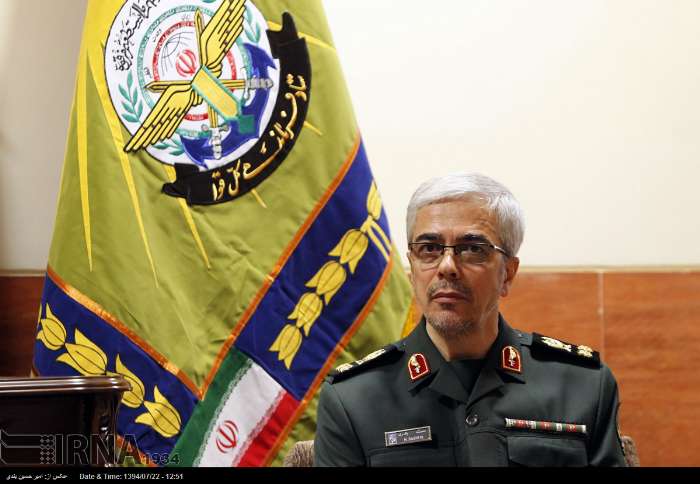
In an unexpected development late last month, the Iranian regime’s Supreme Leader Ali Khamenei announced the promotion of Maj. Gen. Mohammad Bagheri as chief of staff of Iran’s armed forces. A shadowy figure from the country’s vaunted Islamic Revolutionary Guards Corps (IRGC), Bagheri has been tasked with overseeing all branches of Iranian regime’s armed forces, including the IRGC, the regular military (Artesh), and the police.

Bagheri has an extensive military background, including serving as the IRGC’s chief of intelligence and information operations, which has put him at the forefront of coordinating the regime’s work with terrorist groups such as Hezbollah, as well as maintaining the network of proxies throughout the region including Shiite militias in Iraq and Houthi rebels in Yemen.

Importantly according to a piece in the National Interest, Bagheri belongs to a clique of IRGC officers who form the organization’s core leadership, sitting alongside the likes of Mohammad Ali Jafari, the current commander of the IRGC, and Qassem Soleimani, the famed general directing the IRGC’s expeditionary wing, the Quds Force.

Composed of just a few members, this clique shares deep ties dating back to the Iran-Iraq War, and is hugely influential in shaping the organization’s trajectory. Neither is it averse to intervening in domestic politics: members of this clique, including Mohammad Bagheri, signed a letter in 1999 to then president of the mullah’s regime, Mohammad Khatami, threatening a military coup if Khatami did not crush a growing student rebellion. Notably, Rouhani the current “reformist” president was the Iranian regime’s National Security Advisor at the time and was at the forefront of suppressing the student movement.

This appointment is not some simple bureaucratic reshuffling. It represents a significant change in regime policy to put the nation’s military and police services firmly in the hands of the IRGC and away from the regular army. It places the most politicized unit of the military, which already controls wide swathes of Iran’s economy, at the top of the pyramid in terms of raw power.

The sharp end of Iran’s interventions in the Middle East has been the IRGC, which to date has lost hundreds of fighters and tens of commanders across the region. In Iraq, the IRGC has overseen the establishment of the Popular Mobilization Forces (PMF), an umbrella organization spanning hundreds of predominantly Shia militias that fights alongside Iraq’s regular military and often commands its own operations.

The IRGC provides training, weapons and frontline commanders to assist the PMF, which is dominated by militias that have pledged personal fealty to Iran’s supreme leader and not the nation as a whole; an important distinction.

The moves includes the outlining of a modernization plan by Bagheri to upgrade the Islamic state’s military which has already begun with an expensive shopping list of Russian military hardware, including new fighter jets, anti-ship missiles and advanced anti-aircraft batteries.

The costs of that upgrade may also explain why the regime has been complaining loudly of the lack of access to U.S. currency exchanges and the reluctance of foreign banks to handle Iranian transactions due to the continued threat of economic sanctions put in place by the U.S. over human rights violations and support of terrorism and not tied to last year’s nuclear agreement.

The fact that the regime has opted to use the unfrozen funds it has access to as part of the nuclear agreement to help fund its proxy wars and not to help spur the Iranian economy says loads about the intentions of Khamenei and the other ruling mullahs.

Instead, the regime has sought to place blame on the still anemic economy on the U.S. and the inability to get fresh cash. This has helped whip the Iran lobby into a lather writing editorials calling the cash crunch a “new sanction” and a threat to the nuclear agreement, which is silly when we consider the agreement has been a failure in stemming the regime’s nuclear and regional ambitions.

One example has been the near constant drumbeat of posts on regime loyalist blog Lobelog.com which put out a Q&A with noted regime supporter retired Amb. Peter Jenkins of the British Diplomatic Service, who blamed the Obama administration for doing nothing to help Iran access its financial windfall.

He also raised the issue of presidential candidate Hillary Clinton’s past support for some of the toughest sanctions ever placed on Iran and whether or not she would continue on that path if elected.

“I am concerned by Ms Clinton’s uncritical liking for the current Prime Minister of Israel and his right-wing government. I am also concerned by the hawkish nature of her record on foreign policy issues, and I am unsure that she will feel any inclination, still less obligation to protect the legacy of President Obama, from some of whose policies she has sought to distance herself,” Jenkins said.

The realization is probably growing on the mullahs that no matter who gets elected in November, the U.S. policy of appeasing the regime may be coming to an end which is spurring their frantic efforts to unlock the billions in cash they so desperately need.

It is a point former president Bill Clinton reinforced in his speech during Tuesday’s nomination of his wife at the Democratic National Convention, where he emphasized her role as Secretary of State in getting the toughest sanctions placed on Iran during her tenure.

“As secretary of state, (Hillary Clinton) worked hard to get strong sanctions against Iran’s nuclear program” and “got Russia and China to support them,” Bill Clinton said.

We can only hope as president, should she prevail, she continue on that same path.

By Michale Tomlinson

Filed Under: Blog, News Tagged With: Featured, Iran, Iran Terrorism, IRGC, Mohammad Bagheri, Qassem Soleimani, Quds force

Clinton and Trump Must Face Dealing with Iran

July 23, 2016 by admin


Clinton and Trump Must Face Dealing with Iran

Clinton and Trump Must Face Dealing with Iran

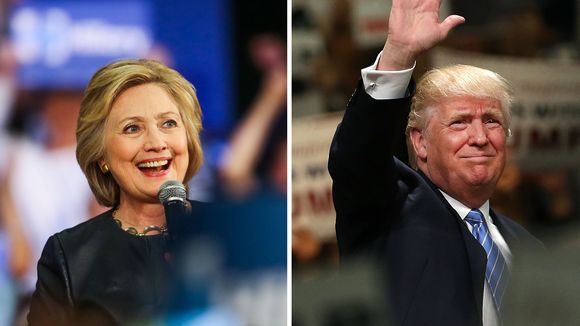
The Republican National Convention is going on in Cleveland where Donald Trump will become the nominee for the Republican Party. Hillary Clinton will follow suit in Philadelphia and then another season of American politicking will launch into its usual fall fury.

This election year though is different from any other in that the U.S. and the rest of the world are confronted by a problem it has never seen before and that is the rise and spread of Islamic extremism and the terror being perpetuated by organizations such as Hezbollah and ISIS, but also aided by nation states such as the Iranian and Syrian regimes.

Through the use of the internet and social media, extremist groups are now able to preach their hatred around the world and manipulate individuals to commit heinous acts, as well as coordinate terror cells in a playbook that has already been proven time and again from Sydney and Ottawa to Boston and San Bernardino to Paris and Bangladesh.

That makes the problem of dealing with terror not so much a law enforcement exercise of going after specific individuals, but rather a geopolitical strategic exercise in battling an ideology. This makes the problem facing the next president all the more daunting because the battlefront is in trying to kill an idea instead of just using a Predator drone to fire a missile at a terrorist leader.

This also helps frame a better understanding of the role the Iranian regime plays in the spread of global terrorism.

Iran remains on the U.S. State Department list of nations that is a state-sponsor of terror; a list that has ironically shrunk over the years as the Cold War ended much of the friction that occurred between the U.S. versus the old Soviet empire and each respective client states.

Instead, we are left with a world of unaligned rogue nations such as Iran and North Korea, and nations that have fallen apart to such a degree that terrorist organizations operate essentially freely such as Somalia, Syria and to a lesser degree now Libya.

The rise of Al-Qaeda and ISIS into essentially nation-state status illustrates the fundamentally changed nature of the world we live in and it is a world that could not happen unless countries such as Iran under the mullahs have provided support, cash, expertise and political cover for those rogue entities.

When Al-Qaeda was driven from Afghanistan after the U.S. invasion, many of its key leaders were granted refuge in Iran by the mullahs in Tehran. The mullahs also provided support to Shiite militias backed by Iran fighting U.S. troops in Iraq, killing many with Iranian-manufactured explosive devices.

When Syria’s Assad regime was on the brink of collapse, the Iranian regime stepped in with Quds Force fighters, Hezbollah terrorists, Afghan mercenaries recruited from refugees in Iran, billions of dollars in cash support and arms and ammunition.

Staving off Syria’s governmental collapse allowed Islamic extremist groups to flourish in the carnage of that war as Iran targeted Western-backed moderate rebel groups and left terror groups such as ISIS to spring forth and take root.

Iran did as much as anyone to pump ISIS up with the collapse of the Iraqi government of Nouri al-Maliki which drive disaffected Sunni tribes into the arms of ISIS and opened the door for the fall of Mosul and the rich oilfields in the north which have sustained ISIS with millions of dollars in illicit oil revenues a day.

These are all facts that the Iran lobby have mightily sought to deflect and hide from scrutiny. Groups such as the National Iranian American Council have concocted straw man issues out of immigration visas and banking transactions while ignoring the much more significant problems of human rights violations and the incredible suffering being caused by Iranian regime’s policies.

Iranian regime itself has publicly and aggressive announced its intentions for the all the world to see, most notably in flouting a nuclear agreement which was dead on arrival a year ago.

Even the regime’s foreign minister, Javad Zarif, who pulled this pathetic deal from the arms of a compliant and submissive Obama administration, boasted yesterday of Iran’s ability to bring its nuclear program back on track to producing literally tons of enriched uranium quickly as the deal eases off more quickly than the advertised 15 years promised.

Zarif said a document, submitted by Iran to the International Atomic Energy Agency and outlining plans to expand Iran’s uranium enrichment program, is a “matter of pride.”

The absurdity of the contention that Iran is abiding by the nuclear deal was on display when the United Nations issued a 17-page report that pointed out Iran may be abiding by the letter of the agreement, but not the spirit of it.

No greater understatement in diplomacy has been uttered since Neville Chamberlain claimed “peace in our time” after meeting with Adolf Hitler in Munich.

The report did have the common sense to point out the destabilizing nature of Iran’s recent test launches of ballistic missiles capable of carrying nuclear warheads and its illicit supplying of arms to Yemen and Iraq in those proxy wars.

Those understated concerns were too little and too late to offset the deaths and violence escalating around the world as Islamic extremist terrorist acts are now becoming the norm rather than the exception.

The fuel for that extremism comes from an Iranian regime that commits such cruel acts of barbarism as to set a bar that ISIS seems compelled to match and exceed with each new act of bloodshed.

Amnesty International took Iran to task with a new report on the denial of medical care to Iran’s numerous political prisoners; a reprehensible situation revealed broadly by Americans taken prisoner by Iran such as Christian pastor Saeed Abedini and former U.S. Marine Amir Hekmati.

The report, Health taken hostage: Cruel denial of medical care in Iran’s prisons, provides a grim snapshot of health care in the country’s prisons. It presents strong evidence that the judiciary, in particular the Office of the Prosecutor, and prison administrations deliberately prevent access to adequate medical care, in many cases as an intentional act of cruelty intended to intimidate, punish or humiliate political prisoners, or to extract forced “confessions” or statements of “repentance” from them.

“In Iran a prisoner’s health is routinely taken hostage by the authorities, who recklessly ignore the medical needs of those in custody. Denying medical care to political prisoners is cruel and utterly indefensible,” said Philip Luther, Director of Amnesty International’s Middle East and North Africa Program.

“Prisoners’ access to health care is a right enshrined in both international and Iranian law. When depriving a prisoner of medical care causes severe pain or suffering and it is intentionally done for purposes such as punishment, intimidation or to extract a forced ‘confession’, it constitutes torture.”

Iran sets the template and ISIS follows and unless Donald Trump or Hillary Clinton deal first and foremost with the behavior of the Iranian regime, its actions will never to checked and altered.

By Michael Tomlinson

Filed Under: Blog, News Tagged With: Featured, Iran deal, Iran Human rights, Iran Lobby, Iran Mullahs, Iran Terrorism, zarif

July 14th Proves Infamous in More Ways Than One

July 16, 2016 by admin

July 14th Proves Infamous in More Ways Than One

July 14th Proves Infamous in More Ways Than One

July 14 is traditionally celebrated throughout France as Bastille Day, the national day of independence for the French republic. The nation marks it with parades, family outings, fireworks and all the trappings of a national holiday; not dissimilar to the 4th of July in the U.S.

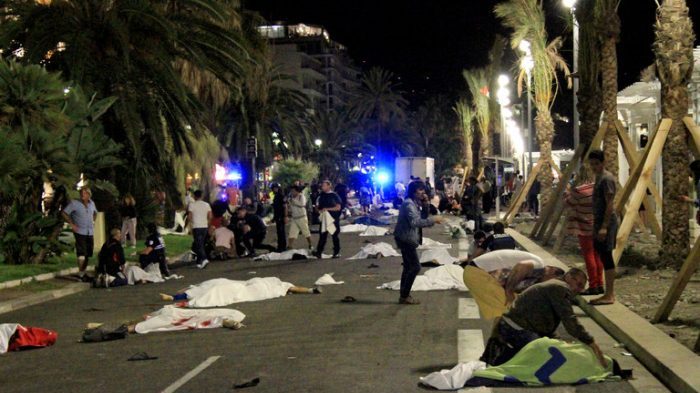
July 14, 2016 also marks the one year point since the Iran nuclear deal was reached by the P5+1 group of nations. Both milestones were joined by a more dubious one last night in which a purported terrorist attack struck the tony waterfront promenade of the French seaside resort of Nice where a man drive a large panel truck down a street packed with thousands of revelers watching a fireworks display.

As the large white truck veered widely left and right—appearing to aim at hapless bystanders—scores of people were flung like rag dolls or dragged and crushed underneath. Initial reports by French officials cited 80 killed, including two Americans, and another 20 critically injured with many more wounded.

French President Francois Hollande declared it a terrorist attack after a cache of grenades and weapons were also found in the struck after the driver engaged with police in a firefight before being killed.

This attack follows the Charlie Hebdo killings and the massive Paris attacks, bringing the specter of terrorism to the people of France three times now in only 18 months. The sheer brutality of this attack was captured throughout social media as people recorded the carnage, which was celebrated and welcomed on the social media profiles of Islamic extremists and their sympathizers.

Nice now joins the long list of cities victimized by the rapid spread of Islamic extremism including Boston, Sydney, Ottawa, Brussels, San Bernardino, Orlando, Bangladesh and Istanbul.

Those cities now join the wars raging in Syria, Iraq and Afghanistan. The reach of Islamic terror now cuts across all religions, continents, ethnicities and governments. It respects no boundaries; murdering Muslims next to Christians, Hindus and Jews.

It is a world much different than the one promised by supporters of the Iran nuclear deal. Iran lobby participants such as Trita Parsi of the National Iranian American Council pushed a pile of lies, the foremost amongst them was the promise of a newly-empowered moderate Iran to help stabilize the region and aid in the fight against Islamic extremists and terrorism.

It is noteworthy though that the one year anniversary statement issued by Parsi neglected mention anything about terrorism and its global impact.

“There are a whole host of opportunities that can strengthen U.S.-Iran diplomatic channels and insulate the deal from political opposition – including via efforts to fix sanctions relief complications; pursue sustainable diplomatic solutions in Syria and Yemen; enabling enhanced U.S.-Iran academic exchanges; establishing a permanent diplomatic channel; and by securing the freedom of imprisoned dual nationals like Siamak and Baquer Namazi,” Parsi said.

To say the opposite has happened would be an understatement of monumental proportions. Iran’s intervention in Syria to save the Assad regime from falling set the stage for the rise of ISIS and the expansion of a war that now includes Iraq and Yemen and helped build a terror network that stretches from Lebanon to Nigeria to Libya to Bangladesh.

It is also interesting that Parsi has mentioned the plight of father and son team Siamak and Baquer Namazi; since Siamak is a close personal friend of Parsi and helped found the basis of the Iran lobby and NIAC, without mentioning the despicable practice of the Iran regime to illegal arrest and hold dual nationals such as several Canadians and British citizens now.

The greatest failing of the nuclear deal was the complete separation of holding Iran’s conduct accountable in a whole host of related issues such as missile testing, human rights violations and the sponsorship of terrorism. These issues have fed into the Iranian regime policy of provocation and export of its extremist Islamic theology which has helped set the template for much of the global terrorism we are now experiencing.

Iran does not actively combat ISIS in Syria or anywhere else. Its forces have largely targeted Western-backed rebel groups in Syria, while its Shiite militias in Iraq have greatly aided ISIS by driving Sunni tribes to join its ranks as the result of sectarian conflict and tribal score settling.

Let’s also not forget that the nuclear deal fails at what it is purported to do in the first place which is prevent Iran from getting a nuclear weapon.

In the year since its approval, international monitoring agencies have detected uranium particles at Iran’s Parchin facility even after it was thoroughly scrubbed clean by Iran. Its nuclear infrastructure such as centrifuges remain intact in storage and ready to be reactivated, while the regime continues testing new, improved nuclear-capable ballistic missiles.

Rep. Mike Pompeo (R-KS) put it succinctly in a Fox News editorial saying that “one year on, the region is far less stable as well.  Iran increasingly controls Baghdad, Damascus, Sanaa, and Beirut.  Terror attacks have increased.  While the deal itself is problematic, also devastating is the fact that America is no longer viewed as a reliable partner to our traditional regional allies.”

Robert Spencer, director of Jihad Watch, writing for Breitbart, made the case that Iran is an even greater threat that ISIS noting that Iran already possesses a nuclear program which ISIS does not that be easily restarted.

While ISIS has significant reach especially in its ability to spread extremism among locals through social media, Iranian regime possesses and funds a global network of terror groups it supplies with its own intelligence, fighters, weapons and cash; something that ISIS only aspires to build.

Lastly, while ISIS has called upon its followers to strike at foreigners, the Iran regime has pursued that policy as a military objective for decades from orchestrating the attack on the U.S. Marine barracks in Lebanon in 1983 to the bombing of the Khobar Towers in Saudi Arabia to the killing of U.S. service personnel in Iraq. Iran has been at the center of instituting policies directly leading to the death of Americans.

Ultimately, the attacks in Nice is just another bloody reminder of how Iran’s full-fledged support for Islamic terrorism has set the stage for even more bloodshed and death unless the West acts to support regime change through the Iranian people.

By Michael Tomlinson

Filed Under: News Tagged With: Featured, Iran Lobby, Iran Terrorism, IRGC, Khamenei, Trita Parsi

  • « Previous Page
  • 1
  • …
  • 13
  • 14
  • 15
  • 16
  • 17
  • Next Page »

National Iranian-American Council (NIAC)

  • Bogus Memberships
  • Survey
  • Lobbying
  • Iranians for International Cooperation
  • Defamation Lawsuit
  • People’s Mojahedin
  • Trita Parsi Biography
  • Parsi/Namazi Lobbying Plan
  • Parsi Links to Namazi & Iranian Regime
  • Namazi, NIAC Ringleader
  • Collaborating with Iran’s Ambassador

Recent Posts

  • NIAC Trying to Gain Influence On U.S. Congress
  • While Iran Lobby Plays Blame Game Iran Goes Nuclear
  • Iran Lobby Jumps on Detention of Iranian Newscaster
  • Bad News for Iran Swamps Iran Lobby
  • Iran Starts Off Year by Banning Instagram

© Copyright 2026 IranLobby.net · All Rights Reserved.