Iran Lobby

Exposing the Activities of the lobbies and appeasers of the Mullah's Dictatorship ruling Iran

  • Home
  • About
  • Current Trend
  • National Iranian-American Council(NIAC)
    • Bogus Memberships
    • Survey
    • Lobbying
    • Iranians for International Cooperation
    • Defamation Lawsuit
    • People’s Mojahedin
    • Trita Parsi Biography
    • Parsi/Namazi Lobbying Plan
    • Parsi Links to Namazi& Iranian Regime
    • Namazi, NIAC Ringleader
    • Collaborating with Iran’s Ambassador
  • The Appeasers
    • Gary Sick
    • Flynt Leverett & Hillary Mann Leverett
    • Baroness Nicholson
  • Blog
  • Links
  • Media Reports

Iranian Regime No Longer Hiding Its Military Intentions

April 18, 2016 by admin

Iranian Regime No Longer Hiding Its Military Intentions

Iranian Regime No Longer Hiding Its Military Intentions

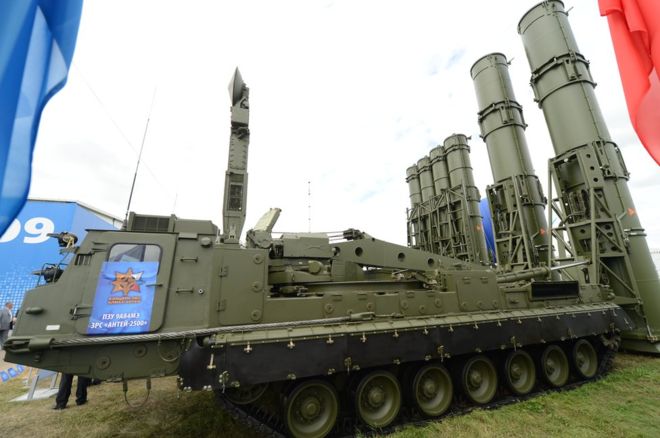
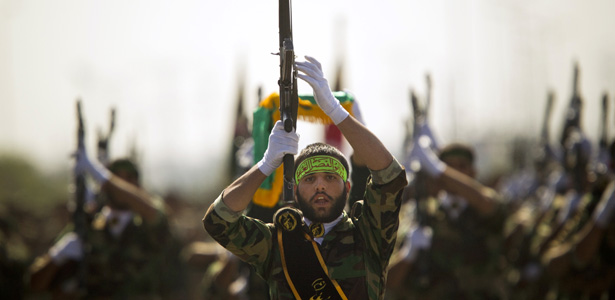
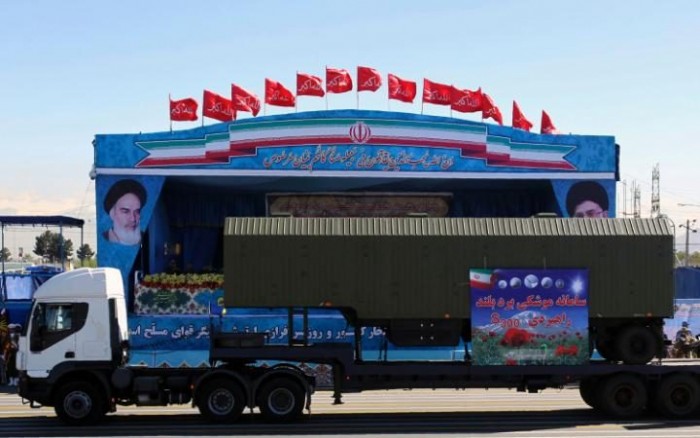
The Iranian regime held its annual Army Day parade as a showcase to pose itself as a mighty power in the region, but more importantly for the mullahs it provided an opportunity to show off parts of the long-awaited new S-300 air defense system from Russia.

While the advanced anti-aircraft missiles were originally ordered by Iran in 2007, their delivery was held up due to the imposition of sanctions related to Iranian regime’s violations concerning the development of nuclear weapons. Only after the nuclear agreement was reached last year was the delivery allowed to go through.

The delivery of the missile system is significant since it instantly brings the regime’s air defense to a much more modern and sophisticated level; a major issue for the mullahs and Revolutionary Guard since without it, any effort to restart its nuclear program would be subject to air attack by the U.S. and its allies.

The fact that the mullahs pushed hard to remove weapon systems such as this and the development of new ballistic missiles from the nuclear negotiations spoke volumes of their determination to upgrade their military capabilities far beyond where they stand today, particularly since they see this the only path to survival of the vast internal discontent.

According to pictures published by the semi-official ISNA news agency, S-300 missile tubes and the radar equipment were shown during the military parade held in southern Tehran.

Iran and Russia are also in talks on a sale of the advanced Sukhoi SU-30 fighter, another proposal criticized by the U.S. The regime’s current air force fleet dates from the pre-revolutionary era of the former Shah.

Speaking at Sunday’s parade, Hassan Rouhani insisted Iran’s plans to upgrade its military capabilities were defensive in nature, referring to the worst conflicts in the Middle East.

“Our military, political and economic power is not directed against neighboring countries and the countries of the Islamic world.

“When Baghdad was threatened by terrorists, the Islamic Republic of Iran responded to the call of the people, the army and the Iraqi government to defend Baghdad and the holy places,” he said, referring to the surge of the ISIL group in June 2014.

The argument he makes is similar to those consistently made by the Iran lobby from groups such as the National Iranian American Council which has sought to portray the Iranian regime as some sort of dedicated freedom fighter against Islamic extremism. The only difficulty with that portrayal is that Iran’s mullahs are the ones spreading it, not the other way around.

The beefing up of its military capability, including the multiple test launches of new ballistic missiles, comes at a time when the Iranian regime is also ramping up its military presence in Syria in support of the regime of Bashar al-Assad, except now the Iranians are not even trying to hide their deepening presence even as they pretend to advocate for peace talks.

Fearing that Russia may side with the U.S. and approve the removal of Assad from power, the Iranian government is now, more than ever, investing in propping up the regime’s dwindling army and air force.

“They [the Iranians] saw it as an opportunity to move closer to the regime,” one U.S. official told the Financial Times.

The Russian military pullback announced last month threatens Tehran’s position not only in Syria, but in the region. If Assad is ousted, Iranian military presence in the country will be diminished and Iran will no longer be able to present itself as a player in the region.

Iranian regime officials have in number of times reiterated that Syria is their front line and if they don’t fight the enemy in Syria, soon they have to do it in Tehran, referring to the strategic importance of Syrian dictatorship for the Ayatollahs in Iran. That’s why Iran is deploying more troops to Damascus. Those deployments, though, come at a cost. At least four Iranian soldiers have been killed in one week. Iranian media have reported that more than 150 Guards died in more than a year of fighting in Syria.

Tehran has kept its army at home for decades and tried to keep conflict at bay through a strategy — manned and managed by the Guards — of fighting its regional rivals through proxies in Iraq, Syria and Lebanon. Syria is crucial to its success. It is on the ‘frontline’ with Israel and is an important bridge to Hezbollah, Iran’s Shia proxy force in Lebanon.

Iran has vowed that it will not compromise on the fate of Assad, and backs his offer to include opposition figures in a national unity government while ruling out a “transitional governing body with full executive powers” — the formula agreed at talks in Geneva in 2012.

In the meantime, the high casualty rate among Revolutionary Guards — whose “military advisers” are reckoned by a western diplomat in Tehran to number fewer than 10,000 — has prompted Tehran to deploy its regular army to bolster Assad’s forces in Syria.

The stakes are high for the Iranian regime as it again sent Qassem Soleimani, the notorious leader of its Quds Force, to Moscow again in violation of international travel bans restricting his movements to discuss with Russian military officials on the deteriorating situation in Syria and the delivery of nearly $8 billion of new weapons just purchased by Iran.

The delivery of new military hardware is viewed by Tehran as an important adjunct to the use of Hezbollah proxies, Quds Force fighters, Basiji paramilitaries and thousands of paid mercenary Afghans that the Iranian regime has been sending to Syria in a desperate bid to keep Assad in power.

According to the BBC, the first Afghan militias began to arrive in 2012 in Syria.

“The Iranian Revolutionary Guards Corps decided that the Syrian military could not succeed on their own,” one former Afghan fighter told the BBC. “The frontlines were too depleted and men were trying to avoid conscription.”

The Iranians decided to set up a 50,000-strong National Defense Force to fight alongside the Syrian army.

With a shortage of willing fighters inside Syria, they began looking elsewhere – signing up Iranian Afghans, Lebanese, Iraqi and Pakistani Shia recruits. The fact that the mullahs are now committing Iranian regular army units to the Syrian fight shows a significant leap in their desperation over the situation there.

Mrs. Maryam Rajavi, the leader of the National Council of Resistance of Iran, one of the leading Iranian dissident groups in the world, took note of these changes in an interview with Asharq Al-Awsat on Sunday in which she pointed out that the Iranian regime would collapse consequentially should Assad be toppled in Syria, which is why Iran’s regime has been trying to keep Assad in power at any cost.

“If Assad falls out of power in Damascus, then the Iranian regime will evidently follow and collapse in Tehran,” Mrs. Rajavi said.

By Michael Tomlinson
Filed Under: Blog, News Tagged With: Ballistic Missiles, Featured, Ghassem Soleimani, Iran, Iran deal, Iran sanctions, NIAC, S300 Missiles

Iranian Regime Executions of Juveniles Does Not Stop

April 16, 2016 by admin

There is no surer sign of a government’s barbarity than the execution of people who should not be executed. There is no surer sign of a government’s lack of trustworthiness than in its inability to change or improve how it treats its own citizens.

In the case of the Iranian regime, repeated reports, investigations and reviews have documented and chronicled the catalog of abuses and horrors the mullahs visit on ordinary Iranian citizens every day.

Human rights groups such as Amnesty International and Iranian dissident groups such as the National Council of Resistance of Iran have long reported of arrests, imprisonment, torture and executions of many people whose only crimes have been to defend themselves against an abusive spouse, criticize the government or attempt to improve their economic condition.

Like so many other despotic governments such as North Korea, the Iranian regime has blithely ignored such criticism and continued on its barbaric ways. The litany of woe has almost become problematic to the extent the rest of the world has become numb to it; much as American news media have become numb to urban crime reporting.

Human rights and dissident groups have sought to shock the social consciousness of the world about Iran at times through the personal stories of those being tortured or executed – often at great personal risk to tell these stories – but even the most horrific tales are now consigned to obscure blogs or the back pages of newspapers.

Even when high profile prisoners such as the Washington Post’s Jason Rezaian or Christian pastor Saeed Abedini have been released and tell their stories or mistreatment and abuse, it often doesn’t go anywhere beyond the obligatory debriefing interview upon their release.

It does not result in governments changing their policies towards the regime and it does not advance efforts to improve the human rights situation in Iran. In fact, the example of the nuclear agreement reached last year is a glaring example of how low priority human rights seem to have become in that the Iranian regime specifically demanded and received a provision not to link human rights with the agreement.

Now the U.S. State Department has released its annual country survey of human rights practices for 2015 and Iran continues to be perpetrator of severe abuses. The listing of abuses is too numerous to recount here, but it is all too familiar. It reads in part:

“The most significant human rights problems were severe restrictions on civil liberties, including the freedoms of assembly, association, speech (including via the internet), religion, and press; limitations on citizens’ ability to choose the government peacefully through free and fair elections; and abuse of due process combined with escalating use of capital punishment for crimes that do not meet the threshold of most serious crime or are committed by juvenile offenders.”

“Other reported human rights problems included disregard for the physical integrity of persons, whom authorities arbitrarily and unlawfully detained, tortured, or killed; disappearances; cruel, inhuman, or degrading treatment or punishment, including judicially sanctioned amputation and flogging; politically motivated violence and repression; harsh and life-threatening conditions in detention and prison facilities, with instances of deaths in custody; arbitrary arrest and lengthy pretrial detention, sometimes incommunicado; continued impunity of the security forces; denial of fair public trial, sometimes resulting in executions without due process; the lack of an independent judiciary; political prisoners and detainees; ineffective implementation of civil judicial procedures and remedies; arbitrary interference with privacy, family, home, and correspondence; harassment and arrest of journalists; censorship and media content restrictions; severe restrictions on academic freedom; restrictions on freedom of movement; official corruption and lack of government transparency; constraints on investigations by international and nongovernmental organizations (NGOs) into alleged violations of human rights; legal and societal discrimination and violence against women, ethnic and religious minorities, and lesbian, gay, bisexual, transgender, and intersex (LGBTI) persons based on perceived sexual orientation and gender identity; incitement to anti-Semitism; trafficking in persons; and severe restrictions on the exercise of labor rights.”

And all that is just in the summary page with much more detailed in the report. Yet even with the acknowledgement of all of Iran’s violations, there is not enough movement to rectify these terrible problems, nor hold the regime accountable for them.

A Reuters story highlighted one case to illustrate the appalling act of executing juveniles. In the southern province of Fars, Fatemeh Salbehi suffocated her husband after drugging him, a capital crime in the Islamic Republic.

What made the case controversial is that Salbehi was only 17, a minor by international legal standards, when she allegedly committed the crime. Her alleged confession also came during a series of interrogations where there was no lawyer present.

The case was retried but Salbehi was hanged in the Adel Abad prison in Shiraz last October.

The issue has come under scrutiny because of a scathing U.N. report on human rights in Iran last month which highlighted what it called the “alarmingly high” rate of executions in the country, including juveniles.

That report, along with an Amnesty International report in January, spurred commentary from ordinary Iranians on social media at least some of which criticized the administration of Hassan Rouhani for not doing more to stop the juvenile executions.

Iran has the highest rate of juvenile executions in the world, despite being a signatory to the Convention on the Rights of the Child, an international human rights treaty that forbids capital punishment for anyone under 18.

“The fact that there were two executions in less than two weeks just shows how indifferent and contemptuous the Iranian authorities are of their obligations,” said Raha Bahreini, the Iran researcher for Amnesty International.

In the past decade, Iran has executed at least 73 juvenile offenders, according to the January Amnesty report.

Clearly the regime has little regard for international agreements when it does not suit its needs and until the world unites in holding Iran accountable, human rights abuses or development of new ballistic missiles or

Iranian Regime Executions of Juveniles Does Not Stop

Iranian Regime Executions of Juveniles Does Not Stop

deepening of the Syrian war will only continue unabated.

By Michael Tomlinson

Filed Under: News Tagged With: Featured, Iran, Iran deal, Iran Human rights, Juvenile execution

Iran Regime Gets New Missiles and Acts More Deadly

April 16, 2016 by admin

Iran Regime Gets New Missiles and Acts More Deadly

Iran Regime Gets New Missiles and Acts More Deadly

Russia has reportedly begun delivery of the first components in the new S-300 surface-to-air missile batteries to the Iranian regime as part of a larger military build-up utilizing a portion of the financial windfall the mullahs received from the nuclear deal reached last July allowing previously frozen deals to now go through.

The $800 million contract originally signed in 2007 was frozen due to international sanctions in 2010, but was unfrozen last year in the wake of the nuclear agreement.

The S-300, made by Rostec, can be used against multiple targets including jets, or to shoot down other missiles. It is one of the most advanced medium-range defensive weapons in the world. It can engage multiple aircraft at low to high altitude, up to 90 miles away. It is battle tested and in high demand from militaries around the world.

The S-300V4 variant, delivered to the Russian armed forces in 2014, can shoot down any medium-range missile in the world today, flies at five times the speed of sound and has a range of 400km (249 miles), Russia’s Tass news agency reports.

In addition to the S-300, Iran plans to license production of the Russian T-90 tank and has expressed interest in front-line Russian fighters like the SU-34. Russia is also assisting Iranian regime in rebuilding its nuclear energy capability.

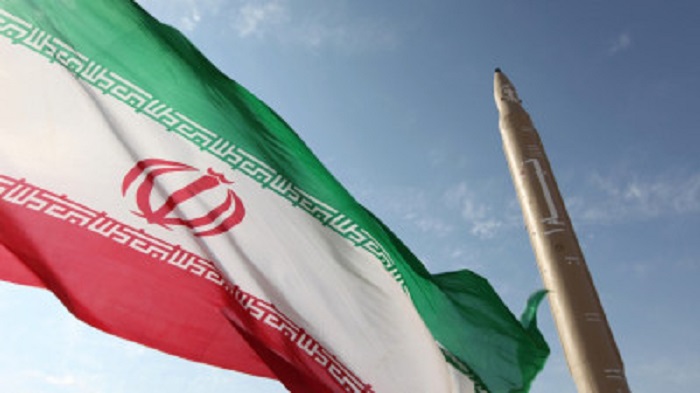
The significant rebuilding and upgrading of Iran’s military capability in both offensive and defensive categories comes at the same time the regime has test fired new ballistic missile designs capable of carrying nuclear, chemical or biological payloads reaching deep into Europe, Africa and Asia.

The introduction of advanced missiles, anti-aircraft batteries, fighter jets and battle tanks clearly indicate the Iranian regime’s desire to significantly improve its combat capabilities as well as its military reach far beyond its own borders.

The delivery of S-300 systems is problematic for the U.S. and other nations concerned over Iran’s nuclear program since one of the promises made by the Iran lobby during nuclear talks was that the West would still retain the ability to bomb out of existence any illegal nuclear program. The introduction of the new missile systems makes such a response that much more difficult and protects the regime from military response should it cheat.

This points out the serious flaw in the arguments posed by Iran lobby supporters such as the National Iranian American Council and the Ploughshares Fund; by separating other corresponding acts by the regime – such as support of terrorism or proxy wars from the nuclear talks – the mullahs were empowered to engage in other provocative acts with impunity.

The next link in the chain of restrictions the mullahs are trying to break now involves accessing the international financial system, specifically trading and exchanging in and out of U.S. currency markets which would allow the mullahs to engage in commerce worldwide.

But many foreign banks remain uncertain about allowing the regime into their systems since the U.S. government still has sanctions in place related to Iran’s support of terrorism. This has proven to be a sore spot for the mullahs to such an extent that leaders such as Ali Khamenei and Hassan Rouhani have made the issue of access to U.S. dollars almost a “red line” in the sand and have threatened to walk away from the nuclear deal and restart its nuclear program.

It is clear however from the regime’s actions since the deal, that the mullahs have every intention of breaking the deal anyway after they get everything they want from West.

That possibility was only reinforced by repeated statements by senior regime leaders about its ballistic missile program, the most recent coming from regime foreign minister Javad Zarif who rejected making any concessions to the international community on the missile topic according to the Guardian newspaper.

“Secretary Kerry and the U.S. State Department know well that Iran’s missile and defense capabilities are not open to negotiation,” state media quoted Zarif as saying during a joint press conference with his visiting Estonian counterpart.

Meanwhile the regime continues a broad human rights crackdown at home and has now reached out beyond its borders to focus on its oldest enemies; Iranian dissident groups that have long worked to oppose the regime and bring democratic reforms to Iran.

German prosecutors on Friday accused two Iranian men, 31-year-old Maysam P. and 33-year-old Saied R., of spying on the People’s Mujahedin of Iran (MEK) and the National Council of Resistance of Iran (NCRI) on behalf of Iranian intelligence.

Prosecutors said both men infiltrated MEK with Maysam P. starting in January 2013 and Saied R. in August 2014 to gather information for Iranian intelligence on opposition members in Germany and other EU countries.

The NCRI welcomed “the fact that German prosecutor has brought the case of espionage targeting PMOI and NCRI to justice and calls on the German government and relevant officials to disclose and make public the details of the case of espionage and illegal activities of the Iranian regime and its agents in Germany. This is an imperative step to prevent these criminal activities.”

The crazy nature of the see-saw back and forth between lifting sanctions and imposing sanctions was highlighted as the European Union announced the extension of sanctions against 82 Iranian regime officials until 2017 because of deteriorating human rights in Iran.

The 28-nation bloc has had asset freezes and travel bans in place against Iranians since 2011 because of perceived violations of human rights.

By Michael Tomlinson


Filed Under: Blog, News Tagged With: Featured, Iran, Iran deal, NIAC, Ploughshares, S 300 Missiles, spying on people's Mojahedin

Iran Lobby Pressing for More Appeasement

April 13, 2016 by admin

Iran Lobby Pressing for More Appeasement

Iran Lobby Pressing for More Appeasement

A year after completion of the nuclear deal with the Iranian regime, the U.S. and its allies are confronted increasingly with acts by the regime demonstrating the mullahs complete lack of interest in engaging in peaceful and moderate ways.

The fact that the nuclear deal was not tied to corresponding improvements in Iran’s human rights record, support for terrorism and involvement in proxy wars made the situation even more muddled for the rest of the world. Even as the U.S. and European Union sought to lift sanctions against the regime as part of the deal, they were forced to deliberate imposing new ones to address growing problems such as the launch of illegal ballistic missiles.

As a result, the full impact of loosened economic sanctions has been lessened by the uncertainty being created by the regime’s actions and has prompted the Iran lobby to rally to the defense of the Iranian regime and push harder for full implementation of the nuclear deal irrespective of the militant acts being undertaken.

A key objective of the Iran lobby is to lift the last of the financial restrictions remaining on the regime, specifically the prohibitions in place preventing Iran to access U.S. currency markets and conduct business in U.S. dollars.

A lifting of those prohibitions would effectively lift the last dam holding back the floodwaters of Islamic extremism streaming out of Iran. It would also clear a pathway for the regime to jump feet first back into the waters of high finance where it could launder black market dollars, shift funds to supply and back terrorism groups and utilize foreign banks to make payments with almost complete anonymity.

Iranian regime’s past history of engaging in illegal financial transactions, most of it not related to nuclear weapons development, has persistently ranked it as a “high-risk, non-cooperative” jurisdiction by the Financial Action Task Force, an inter-governmental body that sets and promotes standards aimed at curbing money laundering and terrorist financing.

The FATF statement read in part:

“The FATF remains particularly and exceptionally concerned about Iran’s failure to address the risk of terrorist financing and the serious threat this poses to the integrity of the international financial system.

“The FATF reaffirms its call on members and urges all jurisdictions to advise their financial institutions to give special attention to business relationships and transactions with Iran, including Iranian companies and financial institutions.”

In this way, the Iran lobby’s insistence that the nuclear deal not be linked to issues not related to nuclear weapons has left it open to the problem of having certain sanctions kept in place that were not affected by the agreement.

Tyler Cullis of the National Iranian American Council took to the Atlantic Council to publish an editorial that reads as a press release for the regime’s finance ministry.

“Currently, Iran is taking unilateral steps to beef up its AML/CFT laws.  Last month, Iran’s Deputy Foreign Minister Majid Takht Ravanchi noted that legislation aimed at addressing Iran’s AML/CFT deficiencies was awaiting approval before the Guardian Council and would soon take effect.  Moreover, Ravanchi pointed to recent amendments made to Iran’s current laws to resolve issues with existing legislation,” Cullis writes.

Cullis recognizes the irony of attempting to provide Iran greater access to financial systems while still designated a state sponsor of terrorism and supporter of terrorism financing, but he does not acknowledge that Iran’s mullahs must first change those policies before being allowed to have these restrictions lifted.

He only argues that the regime’s “good intentions” are sufficient for the lifting of these sanctions without any movement by Iran to withdraw support for Hezbollah, without any effort to cut off the black market dealings of the regime’s elites and Revolutionary Guard or to halt the corruption that runs rampant through the government of Hassan Rouhani.

“It is time to take advantage of new channels opened by the nuclear agreement and move towards a more constructive US relationship with Iran,” Cullis adds.

The fact that Cullis is still pushing the line that the relationship between Iran and the U.S. has to improve even after the significant efforts of the Obama administration to appease the regime in order to gain a foreign policy “win” demonstrates how the mullahs are committed to getting everything for nothing.

The Iranian regime’s efforts to regain its old market share in global oil markets with the lifting of sanctions on its petroleum industry illustrate that take no-prisoners approach by the mullahs. Iran is driving down prices in order to secure long-term supply contracts and bring badly needed cash reserves into the country because even though it got as $100 billion windfall as a result of the nuclear deal, Iran is quickly burning through that cash to buy new weapon systems and deepen its support of Hezbollah in Syria and Houthi rebels in Yemen.

Thus despite the terms to which U.S.-led global negotiators and Iran supposedly agreed in July, the deal is less a firm agreement than a continuing drama with one storyline: Tehran demands a concession, the administration proposes a response, Iran-watchers in Congress and elsewhere voice concerns and U.S. officials offer a middle ground to satisfy Tehran without igniting a revolt in Washington.

As Lawrence Haas, a senior fellow at the American Foreign Policy Council, writes in U.S. News and World Report “the concessions – the most recent of which involve Iran’s ballistic missiles program and its access to the U.S. financial system – are not just rewriting the previous consensus among government officials, diplomats, nuclear experts and Iran-watchers in the United States, Europe and the Middle East over how the deal would work. They’re also serving to expand Iran’s military capability, strengthen its economy and leave U.S. allies in the region feeling more abandoned.”

By Michael Tomlinson


Filed Under: Blog, News Tagged With: Featured, Iran, Iran deal, Iran Lobby, Trita Parsi, Tyler Cullis

The Lie That Is Iranian Moderation

April 11, 2016 by admin

The Lie That Is Iranian Moderation

EDITORS’ NOTE: Reuters and other foreign media are subject to Iranian restrictions on their ability to report, film or take pictures in Tehran.
Members of Iran’s Basij militia march during a parade to commemorate the anniversary of the Iran-Iraq war (1980-88), in Tehran September 22, 2010. REUTERS/Morteza Nikoubazl (IRAN – Tags: ANNIVERSARY MILITARY POLITICS)

Nothing illustrates the confusion over the nuclear deal with the Iranian regime than one simple fact: Even as the Obama administration is encouraging new trade and investment opportunities with the regime as a reward for the deal, it is also at the same time seeking to impose new economic sanctions for violating prohibitions against developing nuclear-capable ballistic missiles.

The flip-flopping is emblematic of what makes diplomacy towards the mullahs in Tehran an exercise in frustration and futility because the truth of the matter is that they are not committed to a path towards true peace and civility. Rather Iranian leaders such as Ali Khamenei and Hassan Rouhani are playing the long game of chess moves designed to break down barriers; allowing the regime to access resources while playing off the desires of the West for peace vs. pushing the envelope of newly aggressive acts.

The mullahs and their allies in the Iran lobby recognize that time is running out to play this game since virtually all of the leading contenders to replace President Obama this fall have denounced the regime and have publicly staked out territory to hold the mullahs accountable.

Consequently, regime allies such as Trita Parsi and Reza Marashi of the National Iranian American Council have been usually quiet in their public statements and social media posts about what is happening with Iran such as the missile launchings, the smuggling of weapons to Yemen, the escalation in sending fighters to Syria and the continued incarceration of dissidents and journalists in Iran.

The strategy for them is to be as deaf and dumb as a lamp post and not provide fodder for the foes of Iran to tee off against them and expose the hypocrisy of their support for a regime which has ably shown itself to have intentions or desires for moderation.

Matthew Lee, the Associated Press’ diplomatic writer, examined this conundrum for the Obama administration over the weekend.

“Eager that a successful deal and a new era in the U.S.-Iran relationship be part of President Barack Obama’s legacy, his administration finds itself encouraging foreign trade with Iran even as it forbids most American commerce with the Islamic Republic. Those efforts are complicated by the fact that the United States continues to condemn and try to punish Iranian actions in non-nuclear arenas such as Tehran’s support of terrorist groups and belligerence toward Israel,” Lee writes.

“Asian and European government and companies, primarily banks, are balking at doing now-legal business with Iran, because of uncertainty over those remaining sanctions. They want written clarification about what current U.S. laws and financial regulations allow them to do. Essentially, they want a promise that the U.S. will not prosecute or punish them for transactions that involve Iran,” he added.

The fact that the Obama administration is trying to navigate a path for the Iranian regime to receive benefits from the nuclear deal even as it violates other international agreements demonstrates how ineffective U.S. policy has become in reigning in the mullahs and the Revolutionary Guard Corps.

What has not been focused on by most Western media is the intricate network of Iranian companies owned and operated by the Revolutionary Guard Corps and regime leaders and their families such as Khamenei.

In 2013, Reuters published a three-part investigation into what it called Ayatollah Assets. Now, Khamenei wants certain companies to be the main beneficiaries from lifting the sanctions, mainly the economic arm of the Revolutionary Guard — stamped by many around the globe as a terrorist organization.

The fact that Khamenei has been on a verbal rampage over the slow drip of funds into companies he controls is not so much a desire to help ordinary Iranians as much as it represents his frustration over not getting his payday and like a petulant child, Khamenei has ordered a paramilitary force comprised of zealot students loyal to him to fight in Syria.

A media group close to the Iranian government, Mehr News Agency, reported Tuesday at least 30 members of the regime’s Basij Resistance Force have been killed fighting in Syria and Iraq. Iran’s military influence in both countries is significant, with around 212 killed in both countries, according to a report by Al-Jazeera. Analysts conservatively estimate there are around 7,000 Iranian forces operating in Iraq and Syria.

While the Iranian regime escalates its military involvement in Syria, the Obama administration held its second Nowruz celebration observing the Persian New Year with First Lady Michelle Obama. It is worth noting the flood of social media messages coming in from activists and Iranian dissidents urging the First Lady not to forget about the terrible human rights abuses going on in Iran.

Protests over the regime’s policies though come in all sizes and shapes and its latest request comes in response to the plight of a group of female crew members at a French airline.

When it was announced that Air France would begin flying into Tehran after an eight year hiatus, a number of the female crew demanded the right to opt-out of working on the new route. Many objected to an internal memo asking them to wear a hijab when disembarking the plane in the Iranian capital.

The crew members have now won the battle. On Monday Air France announced it would allow its female staff to be reassigned to other flights, should they not wish to fly to Iran.

We can only hope that more acts of “soft power” defiance take place in support of those shackled by the regime.

By Michael Tomlinson

Filed Under: Blog, News Tagged With: Featured, Iran, Iran Lobby, NIAC, Reza Marashi, Trita Parsi

Meeting of Arab States Shows Challenge of Confronting Iran

April 8, 2016 by admin

Meeting of Arab States Shows Challenge of Confronting Iran

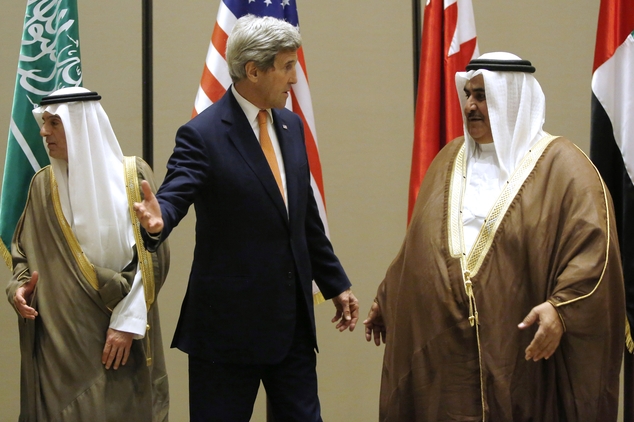
Secretary of State John Kerry talks with Bahrain Foreign Minister Khalid bin Ahmed Al Khalifa, right, after they and Saudi Arabia Foreign Minister Adel al-Jubeir, left, gathered for a family photo at the start of the Gulf Cooperation Council (GCC) Ministerial meetings in Manama, Bahrain, Thursday, April 7, 2016. (Jonathan Ernst/Pool Photo via AP)

The Gulf Cooperation Council (GCC) is a regional political and economic union of Arab States within the Persian Gulf and includes Bahrain, Kuwait, Oman, Qatar, Saudi Arabia and the United Arab Emirates. Since 1981 when it was founded, it has come to form a cohesive union of Arab states that share in the massive oil wealth of the Persian Gulf and within the last few years has created military alliances to combat the rise of ISIS and the increased militant forays of the Iranian regime.

These states have found themselves at the forefront of various Iranian provocations ranging from Bahrain battling insurgents armed by Iranian agents to Saudi Arabia which is trying to stem a full-scale insurrection on its border with neighboring Yemen fueled by Houthi rebels armed, trained and advised by Iran’s Revolutionary Guard Corps.

These Arab states have also intercepted considerable amounts of arms being smuggled by Iran to various proxies and terrorists to fuel insurrection and strikes at the various states in a stark reminder of how committed the mullahs in Tehran are in destabilizing their Arab neighbors.

All of this highlights one of the untruths uttered by the Iran lobby during the run up to the nuclear deal last year which was securing a deal would empower moderate forces within Iran to take greater control over Iran’s government and temper its more extreme elements.

We now know since the deal was agreed to last July, the Iranian regime has taken every opportunity to step up its military activities throughout the region; from Syria on the Mediterranean to Yemen on the Indian Ocean.

It is against this backdrop that U.S. Secretary of State John Kerry travels to Bahrain for a meeting of the GCC whose members are intent on reading Kerry the riot act about the rise of Iranian extremism.

Part of that process included statements from Kerry and Bahrain’s foreign minister on Thursday urging Iran to stop escalating its provocative behavior and pursue a more constructive foreign policy.

Kerry is in Bahrain to consult with officials from Bahrain and other Gulf Arab countries frustrated by Tehran’s policies and lay the groundwork for meetings between President Barack Obama and Gulf Arab leaders in Riyadh later this month. The president held a meeting in Washington last year with Gulf Arab leaders and senior officials to pledge military aid and calm allies’ nerves about Tehran as the nuclear deal neared completion.

“Today we are noticing two things that we kind have expected,” Sheik Khalid bin Ahmed Al Khalifa, Bahrain’s foreign minister, said, outlining the views of Bahrain and the GCC. “The missile program is moving forward with full support of the leadership of the Islamic Republic and we are seeing the hegemonic interventions through proxies in several parts of our region continuing unabated.”

While Kerry once again stressed the positive virtues of the nuclear agreement, the reality is that the almost slavish dedication to keeping afloat a nuclear deal that is already – for all intents and purposes – dead from the Iranian point of view has allowed the Iranian regime to move forward aggressively on several other fronts now that sanctions have been lifted and it can access a new credit line of $100 billion to replenish its military losses at a critical time for the mullahs.

That reality has forced Kerry to make a complex argument here to the ministers of the GCC, where he repeated that the U.S. would continue to lift the economic sanctions against Iran that it agreed to as part of the nuclear accord, even while imposing new ones to counter Tehran’s missile launches, an effort now underway in the United Nations Security Council.

The bipolar nature of American diplomacy has caused consternation and confusion among America’s allies such as the Gulf states and what can only be construed as unbridled joy amongst the mullahs who are taking advantage of the mixed messages.

But sentiment was hardening against Iran and the weak administration position as the editorial board for the Washington Post decried the ramp up in missile testing by Iran and the need to sanction the regime.

“Tehran’s behavior comes as no surprise to the many observers who predicted the deal would not alter its hostility to the West or its defiance of international norms. Unfortunately, the Obama administration’s response has also been much as critics predicted: It has done its best to play down Iran’s violations and avoid any conflict out of fear that the regime might walk away from a centerpiece of President Obama’s legacy,” the Post wrote.

In reference to a push by Iran to lift restrictions on accessing U.S. currency markets, the Post said “Secretary of State John F. Kerry, the accord’s architect, said Tuesday that the regime ‘deserves the benefits of the deal they struck.’ There’s logic to that. But there’s also a problem of reciprocity: Should the United States take steps not strictly mandated by the text of the nuclear accord at a time when Iran is testing nuclear-capable missiles?”

What has all this wrought? Not the peace and moderation promised by Iran lobby supporters such as Trita Parsi of the National Iranian American Council, but instead the world has witnessed a global military spending boost of nearly $1.7 trillion in 2015, the first increase in several years as a result of Iranian regime’s rise and increase in global terrorism and proxy wars fueled by Iran according to a new report.

Tiny Qatar has signed a deal for $7.6 billion to buy 24 Dassault Rafal fighter jets from France. Kuwait on Tuesday finalized a deal to purchase 28 Eurofighter Typhoons, a deal estimated to be worth around $8 billion; all in response to the uncertainty the Iranian regime is sowing.

By Laura Carnahan


Filed Under: Blog, News Tagged With: Featured, Iran, Iran deal, Iran Lobby, Iran Mullahs, Iran sanctions, National Iranian American Council, NIAC, Trita Parsi

Iranian Regime Steps Up Provocative Actions

April 6, 2016 by admin

Iranian Regime Steps Up Provocative Actions

Iranian Regime Steps Up Provocative Actions

The Iran nuclear deal is pretty much dead…at least according to the Iranian regime as regime officials on Monday accused the U.S. of violating the agreement by working behind the scenes to stop American companies from conducting business with Iran, according to regional media reports.

The regime has been complaining for months that it is not being granted enough sanctions relief under the agreement in a bizarre example of bipolar thinking. On the one hand Iran complains about sanctions relief and on the other it boasts of the billions in new business deals it has signed with foreign companies.

These complaints have reportedly pushed the Obama administration to consider offering Iran greater concessions, including access to the U.S. dollar and American financial markets in an even more desperate bid to appease the mullah’s regime.

Sadeq Amoli Larijani, Iran’s judiciary chief, “warned” the United States in remarks on Monday, claiming that the administration’s current actions violate the agreement.

“The Americans are now acting in violation of the nuclear agreement,” Larijani was quoted as saying on Monday before high-ranking Iranian officials.

Larijani accused the Obama administration of “pressuring companies which are interested in investment in Iran to withdraw from their decision,” according to reports carried in Iran’s state-controlled media.

“The Americans should know that the Islamic Republic of Iran would never compromise its interests and would never agree with investment of foreign firms in the country at any price, while it enjoys rich resources and abundant talents,” Larijani was quoted as saying, obviously bluffing about regime’s bankrupt economy.

At the same time, ironically the regime leaders borrowed from President Obama’s own rhetoric in warning the U.S. not to cross a “red line” when it came to sanctioning the regime’s ballistic missile program.

Brig. Gen. Massoud Jazzayeri, deputy chief of staff of the Iranian military, claimed the Obama administration has been intentionally prolonging the removal of sanctions as outlined by the nuclear deal. He believes the U.S. is trying to connect the terms of agreement with the regime’s ballistic missile program, which it explicitly sought to delink during talks last year.

“The White House should know that defense capacities and missile power, specially at the present juncture where plots and threats are galore, is among the Iranian nation’s red lines and a backup for the country’s national security and we don’t allow anyone to violate it,” said Jazzayeri, as reported by Iranian media outlet and government mouthpiece Fars news.

The general’s reference appears to mirror language used by President Obama who claimed on September 4, 2013, that any use of chemical weapons by Syrian President Bashar al-Assad against the Syrian opposition would cross a “red line.”

The regime’s full-court assault on the Obama administration over the nuclear deal is part of an overall effort to set up the potential for walking away from the deal and blame its failure on the U.S. Such a move would allow Iran to restart its nuclear program with speed after it has received over $100 billion in fresh cash to stuff its coffers and complete a series of military deals with Russia to replenish and upgrade its forces.

Part of strategy can be seen in a series of moves to expand and reinforce its proxy forces currently fighting in Syria and Yemen, including deploying a top army unit to Syria in what commanders call an advisory mission, according to state-run media.

Regime general Ali Arasteh, deputy chief liaison of the army’s ground force, said the unit comprises “commandos” in a force from the 65th NOHAD — a Persian abbreviation for Airborne Special Forces Brigade.

“We are sending commandos from army’s Brigade 65 and other units to Syria as advisers,” Arasteh told the Tasnim news agency.

The move bolsters an already robust Iranian military presence in Syria, analysts say.

In the last two years, Iran has sent thousands of its Revolutionary Guard Corps (IRGC) to fight ground battles for the Syrian regime, joining with Iranian-backed Hezbollah fighters from Lebanon. Tehran reportedly increased the number of IRGC personnel in Syria in the final months of 2015, sending as many as 3,500 militia fighters to the frontlines, as well as recruit paid Afghan mercenaries to supplement its forces.

Additionally, the U.S. Navy intercepted and seized an arms shipment from Iran likely bound for Houthi fighters in Yemen in the Arabian Sea in a statement on Monday.

The weapons seized last week by the U.S. warships Sirocco and Gravely were hidden on a small dhow and included 1,500 AK-47 rifles, 200 rocket-propelled grenade (RPG) launchers, and 21 .50-caliber machine guns, according to the Navy statement.

“This seizure is the latest in a string of illicit weapons shipments assessed by the U.S. to have originated in Iran that were seized in the region by naval forces,” the statement said.

It cited a Feb. 27 incident in which the Australian Navy intercepted a dhow in late February and confiscated nearly 2,000 AK-47s, 100 RPG launchers, and other weapons. On March 20, a French destroyer seized almost 2,000 AK-47s, dozens of Dragunov sniper rifles, nine antitank missiles, and other equipment bound from Iran to the Houthis.

The evidence is abundant and widespread of the regime’s aggressive posturing and direct involvement in causing the wars now ranging in three different countries. The mullahs the last few months before the presidential election as a fire sale to grab everything they can before the appeasement potentially ends since virtually all of the leading candidates – both Democrat and Republican – have vigorously denounced Iran’s actions.

Ironically the Iran lobby has pushed the same party line as the mullahs in accusing the U.S. of not following through on the nuclear deal.

We can only hope the region doesn’t fall so far into a bottomless black pit of Islamic extremism and war that the world can’t dig the cancer of the Iranian regime out in 2017.

By Michael Tomlinson

Filed Under: Blog, News Tagged With: Ballistic Missiles, Featured, Iran, Iran Missile program, Iran sanctions

Pressure Mounts to Keep Iranian Regime Out of Financial System

April 6, 2016 by admin

Pressure Mounts to Keep Iranian Regime Out of Financial System

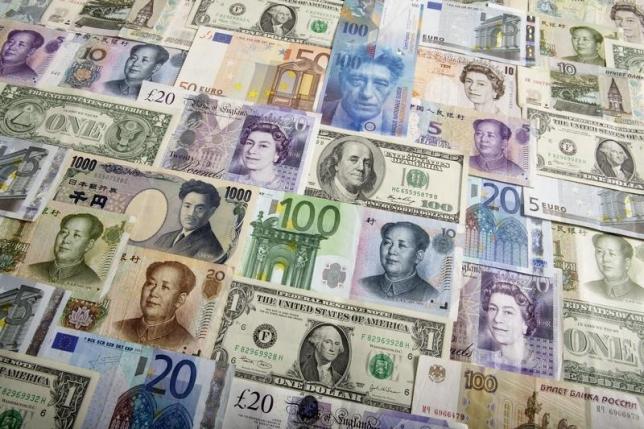
Arrangement of various world currencies including Chinese Yuan, Japanese Yen, US Dollar, Euro, British Pound, Swiss Franc and Russian Ruble pictured in Warsaw January 26, 2011. REUTERS/Kacper Pempel

The American dollar is the world standard for global currencies. Its fluctuations set the pricing in currency markets, allows companies and governments to transact business around the world and provide certainty in holding reserves and assets in turbulent times.

The role of U.S. currency is so integral to conducting business, the Iranian regime’s removal from the global banking system and access to U.S. dollars crippled its export economy and was one of the most significant drivers in forcing the mullahs back to the negotiating table after putting enormous pressure on their finances.

The nuclear agreement with the Iranian regime reached last year provided for an easing of sanctions including allowing the regime access to previously frozen assets, but the agreement did not affect certain restrictions that remained in place keeping Iran out of U.S. currency markets for non-nuclear sanctions such as support and sponsorship of terrorism.

This has proven to be somewhat of an Achilles heel for the mullahs since not having complete and unfettered access to U.S. dollars hampers its ability to conduct international exports such as exchanging euros for dollars for taking advantage of currency floats to earn additional money from the estimated $100 billion in assets it now has access to in overseas accounts.

Relaxation of those restrictions would also greatly ease the ability of family members of the ruling mullahs and members of the Revolutionary Guard Corps to move the illicit funds they have squirrelled away over the past decade in engaging in black market petroleum sales and transfers of weapons and other banned technologies to enrich themselves.

This has become such a thorny issue for the regime that virtually all of its leaders, including Ali Khamenei, Hassan Rouhani and Javad Zarif, have denounced the U.S. for not fully lifting access and threatened to walk away from the nuclear agreement as a result. To say their complaints carry a hint of desperation would be understatement.

The Iran lobby has followed similarly in calling for a complete lifting of all sanctions and warning of a collapse of the agreement that could threaten the region with more disorder, which any rational person would find hard to believe when you look at Syria, Yemen, Libya and Iraq.

The Obama administration has typically floated some trial balloons to give the regime access to U.S. currency through loopholes creating offshore clearing houses not tied to the U.S. banking system that foreign banks could access to exchange dollars.

The reaction from Congress has been unified and uniformly negative to the idea. A senior State Department official reassured concerned lawmakers on Tuesday that the Obama administration is not planning to allow Iran access to the U.S. financial system or use of the U.S. dollar for transactions.

“The rumors and news that have appeared in the press … are not true,” Under Secretary of State for Political Affairs Thomas Shannon told the Senate Foreign Relations Committee.

U.S. lawmakers have expressed deep concern about recent reports that the administration might let Iran use the dollar in some business transactions.

That concern was reinforced in an editorial by Rep. Ed Royce (R-CA), the chairman of the House Foreign Affairs Committee, in the Washington Post.

“Iran has yet to see the economic growth it wants from President Obama’s nuclear deal, and it’s demanding additional concessions — above and beyond the agreement — in return for nothing. Specifically, Ayatollah Ali Khamenei wants the United States to end sanctions aimed at curbing Iran’s funding for terrorism and illicit weapons so Iran can gain access to the U.S. financial system, where the majority of international business is conducted,” Royce said.

“This is an alarming departure from the Obama administration’s position just months ago. Indeed, when selling the nuclear deal to the American people last year, the administration repeatedly stressed to Congress that key terrorism, missile and human rights sanctions against Iran would continue to be vigorously enforced,” he added.

“Iran has seen what Obama will do to preserve his nuclear deal, and it’s taking full advantage. The United States cannot cave again. Congress should make clear that until the Iranian regime drops its illicit missile program and funding of terrorism, it won’t receive another dime of sanctions relief,” Royce said.

Royce is correct in pointing out how the world has gotten virtually nothing in return for the nuclear agreement after one year with Iran engaging in a broad range of militant and aggressive moves both home and abroad. The sheer number of provocative acts has dismayed supporters of the regime and put them on the defensive in trying to explain away everything from missile launches to mass executions to interception of illegal weapons shipments.

For Iran lobby supporters such as the National Iranian American Council and media boosters such as Jim Lobe of Lobelog, their task has been to focus on the idea that the U.S. is failing the nuclear agreement and not the other way around.

Lobe attempted to use results from public opinion polls done in Iran to show how the Iranian people were growing more distrustful of the U.S.

“Confidence that the U.S. will abide by the deal has also slipped—from 45% in a September survey by the Gallup organizations to 29%, according to CISSM. Although 41% of respondents said in September that they were either ‘not very’ or ‘not at all’ confident about Washington’s compliance, the new poll found that figure had risen to 66%. The pollsters did not probe the reasons for the increase in skepticism, although it may relate either to the continuing imposition of sanctions as well as coverage of the election campaign here,” Lobe writes.

His reasoning is as silly as the mullahs blaming the U.S. for the threat of new sanctions for launching illegal ballistic missiles.

The Iranian people live in a society under harsh control by the mullahs where online activities are tracked and they are subjected to withering amounts of anti-American propaganda on a daily basis.

Is it any wonder they feel negative upon seeing no improvement in their lives one year after the deal as Rouhani has promised to keep unfrozen assets overseas to help purchase new weapons and Khamenei has vowed to maintain a “resistance economy?”

These are not the acts of a regime interested in improving the lives of the Iranian people and we should not be swayed their continued propaganda.

By Michael Tomlinson

Filed Under: Blog, News Tagged With: Featured, Iran, Iran deal, Iran Human rights, Iran Lobby, Lobelog

Khamenei Defends Illegal Missile Program as World Worries

April 1, 2016 by admin

Khamenei Defends Illegal Missile Program as World Worries

Khamenei Defends Illegal Missile Program as World Worries

In a speech that reinforced the fact that he alone was firmly in control of the Iranian regime’s military policies, top mullah Ali Khamenei firmly defended the regime’s ballistic missile program in the face of mounting concerns around the world as missile after missile has been launched.

In a speech on Wednesday, Khamenei said that Tehran would lose its leverage in negotiations with the world’s major powers if it were to abandon its missile program.

“These are times of both missiles and negotiations,” he said. “If the Islamic establishment seeks technology and negotiations but does not have defensive power, it will have to back down in the face of any petty country that threatens it.”

It’s a curious point to make since Iran currently possesses the largest military in the region, and now flushed with over $100 billion in cash from the nuclear agreement, has gone on a furious buying binge of new advanced military hardware including tactical fighters, anti-aircraft and anti-ship missile batteries, tanks and encrypted communications equipment.

The regime also exerts influence and power through its network of terror groups and proxies such as Hezbollah, Shiite militias and the Houthis in maintaining control. The argument of needing intercontinental ballistic missiles for defense is farcical since such weapons are commonly characterized as first-strike offensive weapons.

United Nations Security Council Resolution 2231 expressly restricts the regime from developing such weapons and Khamenei has openly dismissed such restrictions as being inapplicable to Iran.

Khamenei was speaking to religious eulogists in Tehran a day after it emerged that the US and its European allies in the security council had written a joint letter warning that recent missile tests by Iran were in defiance of a UN security council resolution adopting last year’s nuclear agreement.

The letter, which claimed that Iranian missiles were “inherently capable of delivering nuclear weapons”, was carefully drafted and did not say, however, that the tests violated the accord itself, which would have serious implications on its implementation.

Earlier in March, the Revolutionary Guards claimed to have successfully tested two ballistic missiles, Qadr-H and Qadr-F, during large-scale drills. The Fars news agency, which is affiliated to the guards, said the missiles carried a message in Hebrew written on them: “Israel must vanish from the page of time.”

His speech was aimed not only at international audiences, but also to domestic ones in which he sought to tamp down any expectations of hope for moderation or change in the regime’s leadership. Even at age 76, Khamenei remains engaged and committed to the extremist principles it espouses.

The furor over how to rein in the regime’s missile program is an ironic repeat of the same consternation and debate that enveloped the regime over its nuclear program three years ago. While Groundhog Day already came, it still seems like the cycle of Iranian violations and threats of new sanctions is repeating itself.

This also points out the inherent weakness of the Iran lobby’s argument last year in which groups such as the National Iranian American Council argued strenuously to remove subjects such as the ballistic missile program from nuclear negotiations in the false hope it would lead to moderation.

The opposite has occurred now that the regime, led by Khamenei, feels it has the upper hand in pushing forward with its military programs without worry of repercussions or penalties.

But if signs that the United Nations Security Council might not sanction Iran over its ballistic missile program continue, a key member of Congress vowed an angry response, potentially increasing the incentives for lawmakers to come down hard on Tehran with congressional sanctions.

That “directly contradicts assurances made by the administration,” Senate Foreign Relations Committee Chairman Bob Corker (R-Tenn.) said in a statement Wednesday. “As many of us feared, now it appears Iran can defy those restrictions with impunity, fearing no pushback from the U.N. Security Council.”

The Treasury Department has taken steps to sanction Iran over the reported ballistic missile tests, blacklisting individuals and companies that it determined are working to support Iran’s ballistic missile program. There is strong bipartisan support for coming down hard on Iran for the missile tests as well, with several Democrats who supported the Iran deal arguing it is essential to the integrity of that deal to make sure Iran is held to account for its actions elsewhere.

Sens. Corker and Ben Cardin (D-Md.), are expected to soon release bipartisan legislation stepping up sanctions against Iran over its ballistic missile program.

The flurry of action shows the price to be paid for previous inaction in opposing the regime. Sooner or later, the world will have to come to the realization that appeasing the mullahs only emboldens them.

By Michael Tomlinson

Filed Under: Blog, News Tagged With: #NuclearDeal, Featured, Iran, Iran deal, Iran Missile program

Iran Lobby Blaming US for Failure of Nuclear Accord

April 1, 2016 by admin


Iran Lobby Blaming US for Failure of Nuclear Accord

Iran Lobby Blaming US for Failure of Nuclear Accord

Like the erupting of Old Faithful or the certainty of the tides and moon, the Iran lobby is now attempting to blame the failure of the nuclear agreement reached with the Iranian regime squarely on the Obama administration and the U.S.

It’s an absurd and bitterly ironic move since it was these same supporters of the Iranian regime who lauded President Obama for disregarding the opinions of the American people, his military and national security advisors and a majority of Congressmen to do a deal with a nation firmly in the thrall of religious extremists.

Since the deal was done last summer, the evidence of Iran’s complete lack of compliance has been laid bare to see ranging from the testing of illegal ballistic missiles and narrowing of inspections to carefully stage-managed media events to the imposition of a vicious human rights crackdown and rigging of parliamentary elections that delivered continued control of Iran to the ruling mullahs.

And in a complete demonstration of weak intestinal fortitude, the doors were opened for Iran to access over $100 billion in cash which is promptly used to begin buying advanced new weapons from Russia, as well as host North Korean officials connected to that regime’s nuclear and missile programs.

Meanwhile, the Iranian people have seen no benefits or improvements in their lives, only greater oppression as detailed by Amnesty International and the UN Special Rapporteur for human rights in Iran who have noted a dizzying climb in executions, including among children and women, and severe crackdowns against religious minorities such as Christians, Sunni Muslims and Bahai, as well as journalists, artists, students and political dissidents.

Now the Iran lobby is blaming the U.S. for the failure of the nuclear accord?

“The nuclear accord between the U.S., other major world powers, and Iran is under threat. But the source of this risk might upset expectations: it is the Obama administration that has failed to resolve persistent ambiguities with the U.S. sanctions relief and, as a result, major foreign banks continue to refuse to handle transactions involving Iran, frustrating the expectations of Iran’s people for economic reprieve and plaguing the ultimate sustainability of the nuclear accord,” said Tyler Cullis of the National Iranian American Council in a piece in Huffington Post.

Last week, Iran’s Supreme Leader Ayatollah Ali Khamenei publicly alleged that the United States was failing to “respect its commitments” under the nuclear accord, particularly by “using roundabout paths to prevent the Islamic Republic” from achieving economic re-integration with the rest of the world. Specifically, the Supreme Leader decried the reticence of foreign banks to re-engage with their Iranian counterparts, chalking it up to pernicious efforts by U.S. sanctions authorities to undermine the benefit of the sanctions relief for Iran, wrote Cullis.

It’s an absurd series of statements that would take an encyclopedia to deconstruct, but let’s take a shot at the highlights or rather, the lowlights:

  • Ali Khamenei, the religious dictator in control of Iran, has long hammered the U.S. and the rest of the world for that matter not only for sanctions and policies aimed against the regime, but also for the failure to free Iran to interact with the rest of the world, even though he has consistently called upon Iranians to embrace a “resistance economy” built on the idea that the regime could be self-sustaining and not subject to future sanctions; thereby freeing it to pursue any policies it wanted free from reprisals;
  • Khamenei and Cullis’ claim that Iran is being kept from re-entering the international financial system is partly true in that the Obama administration is still debating whether or not to lift those restrictions. The problem is that since the regime insisted that the nuclear deal not be tied to other contentious issues such as support for terrorism and human rights violations, the similar lifting of sanctions in place for those “unrelated” activities might violate U.S. laws on the books;
  • Cullis’ contention that failure to lift access to the financial system is burdensome on the Iranian people is a farce since the government of Hassan Rouhani has already announced it is going to keep the bulk of its new-found wealth abroad to be used to buy planes, missiles, telecommunications equipment and other items the regime was prohibited from buying beforehand. Virtually none of that money will find its way back to Iran to provide healthcare for Iranians, boost the consumer economy or even help protect Iran’s environment devastated by gross mismanagement by the mullahs.

Khamenei and Cullis can’t have it both ways. You cannot demand to have items delinked from the deal and then demand the lifting of sanctions not related to the nuclear deal as well. In this case, both are whining like bully children being denied the ability to smack around another child that already waved the white flag.

While Cullis urges to provide foreign banks with clear guidelines on how to tap Iran back into the financial system, he neglects to focus on the real issue which is by treating the nuclear deal by itself and not addressing the vast number of other collateral issues, the sanctions program against Iran regime is frankly a mess and vast loopholes and uncertainty everywhere.

In fact, the Obama administration and U.S. Treasury Dept. have already had to levy additional sanctions and criminal charges against individuals and companies for violating existing sanctions, as well as for brand new cyberattacks on U.S. financial institution and a New York dam.

“Without taking steps such as these, the Obama administration will continue to frustrate Iran’s expectations and risk the nuclear accord in the process. When it comes to U.S.-Iran relations, perceptions matter; and the perception in Iran right now is that the U.S. — whether acting out of malice or negligence — is hindering the practical benefit to Iran of the sanctions relief. Should this perception grow in Tehran that the United States is not a good-faith actor with which Iran can deal, both the historic nuclear accord and the progress in relations between the two bitter adversaries will be placed in bitter peril,” Cullis adds.

It’s a silly statement to make because it pre-supposes that the burden of compliance falls on the U.S. and its allies, not on Iran mullahs which violated international law in the first place by pursuing nuclear weapons!

This is like a serial killer being paroled from prison and then suing the state for not providing him with a beachfront home in Malibu and brand new Tesla in the garage.

Cullis’ gumption is admirable, it’s takes a special kind of chutzpah to push for a terror regime to gain access to the world’s ATM machine.

By Laura Carnahan

Filed Under: Blog, Current Trend, Latest from Lobbies & Appeasers, News Tagged With: Featured, Iran, Iran deal, Iran Human rights, Iran Lobby, Iran Mullahs, Tyler Cullis

  • « Previous Page
  • 1
  • …
  • 19
  • 20
  • 21
  • 22
  • 23
  • …
  • 34
  • Next Page »

National Iranian-American Council (NIAC)

  • Bogus Memberships
  • Survey
  • Lobbying
  • Iranians for International Cooperation
  • Defamation Lawsuit
  • People’s Mojahedin
  • Trita Parsi Biography
  • Parsi/Namazi Lobbying Plan
  • Parsi Links to Namazi & Iranian Regime
  • Namazi, NIAC Ringleader
  • Collaborating with Iran’s Ambassador

Recent Posts

  • NIAC Trying to Gain Influence On U.S. Congress
  • While Iran Lobby Plays Blame Game Iran Goes Nuclear
  • Iran Lobby Jumps on Detention of Iranian Newscaster
  • Bad News for Iran Swamps Iran Lobby
  • Iran Starts Off Year by Banning Instagram

© Copyright 2026 IranLobby.net · All Rights Reserved.