Iran Lobby

Exposing the Activities of the lobbies and appeasers of the Mullah's Dictatorship ruling Iran

  • Home
  • About
  • Current Trend
  • National Iranian-American Council(NIAC)
    • Bogus Memberships
    • Survey
    • Lobbying
    • Iranians for International Cooperation
    • Defamation Lawsuit
    • People’s Mojahedin
    • Trita Parsi Biography
    • Parsi/Namazi Lobbying Plan
    • Parsi Links to Namazi& Iranian Regime
    • Namazi, NIAC Ringleader
    • Collaborating with Iran’s Ambassador
  • The Appeasers
    • Gary Sick
    • Flynt Leverett & Hillary Mann Leverett
    • Baroness Nicholson
  • Blog
  • Links
  • Media Reports

Iran Lobby Pushes Fiction of Moderate Win in Iran

March 15, 2016 by admin

Iran Lobby Pushes Fiction of Moderate Win in Iran

Iran Lobby Pushes Fiction of Moderate Win in Iran

That bastion of apologists for the Iranian regime’s abuses and extremists activity – the National Iranian American Council – has pushed vigorously the fiction that the recent parliamentary elections in Iran delivered a resounding win for the forces of moderation; all evidence to the contrary.

It’s a recognition by the NIAC and their fellow travelers that the rhetoric in the American presidential campaign has heated up against the recent actions of the mullahs with all the Republican candidates and now Democratic front runner Hillary Clinton all calling for new sanctions to be imposed in the wake of ballistic missile tests violating United Nations Security Council resolutions banning them.

For the NIAC, it’s a particularly thorny problem since the clock is now running on the end of the Obama presidency and what has been a policy of appeasement of the mullahs in Tehran. Coupled with that is growing public opinion that Iran has not shifted towards moderation in the wake of the nuclear deal, but in fact has grown more aggressive and hostile especially in human rights abuses and proxy wars with its neighbors.

The world has been subjected to the largest refugee crisis since World War II resulting from the Syrian civil war and has seen the Iranian regime go all in by begging Russia to intervene and target rebels to the regime of Bashar al-Assad and not ISIS as widely touted.

The Iranian elections were also a charade given the mass elimination of over half of the candidates submitted for approval. Even the most supportive news media have grudgingly admitted that the human rights situation in Iran and throughout the Middle East has grown more desperate.

Ahmad Shaheed, the UN special rapporteur for human rights in Iran, has issued yet another blistering report of human rights conditions within Iran following similar condemnations by Amnesty International and Iranian dissident and watchdog groups such as the National Council of Resistance of Iran (NCRI), all of whom have painted a bleak picture of the mass arrests, torture, imprisonment and execution of journalists, artists, bloggers, students, ethnic and religious minorities and political opponents and dissidents.

The picture of how bad things are in Iran has become so obvious it’s taken on the near-certainty of gospel. Ask any person on the street if things have improved in Iran, the answer will most likely be “No.”

And yet the NIAC and its allies cannot give up the fight and still try to push the fiction that things are better, even as their own allies such as Iranian-American businessman Siamak Namazi was arrested and tossed into prison without explanation by the same regime he was promoting in the ultimate irony.

With friends like these, who needs enemies?

But Jamal Abdi and Ryan Costello of the NIAC continued to push the party line with the publishing of a “policy memo” on the NIAC website cheerfully citing all the good news coming out of the Iranian elections such as:

  • Huge moderate wins in the parliament and Assembly of Experts, even go so far as saying Hassan Rouhani now has a plurality to enact his policies;
  • How Rouhani, newly empowered, will seek out new policies to open up bridges to the rest of the world; and
  • How so many notable hardliners were defeated as evidence of the mandate of the Iranian people for a new moderate future.

Unfortunately, none of that is true.

The dismissal of over 6,000 candidates left open the way for a field of candidates bulging with loyal supporters of the regime. If the Iranian people are only left with choices between bad and worse candidates, it stands to reason they would select the lesser of two evils.

What Abdi and Costello leave out is the simple fact that real power within the regime didn’t change at all. Supreme Leader Ali Khamenei still remains in charge, as does the Revolutionary Guards Corp (IRGC) which has been busy shooting missiles as fast as it can. The courts and police remain firmly in control and have been busy executing 2,300 people under Rouhani, as well as rounding up virtually any dissenter and locking them away.

Of course Abdi and Costello neglect to mention any of the extremist policies undertaken by Rouhani such as the level of executions than have surged higher than at any time in the history of the mullahs’ reign since 1989. Nor do they take up the lack of any progress on halting child executions, misogynist laws passed under Rouhani’s term or the continued use of Basiji paramilitaries to beat and arrest women for honor code violations such as driving alone or not wearing traditional hijabs.

Most galling of all are Abdi and Costello’s lack of any comment on the bloodshed caused by Rouhani’s policies in supporting three active wars in Syria, Iraq and Yemen and the complete lack of any momentum to halt the killing taking place at the hand of Iranian-backed Hezbollah fighters, Iranian-backed Shiite militia and Iranian-backed Houthi rebels.

Alireza Jafarzadeh, deputy director of the Washington office of the National Council of Resistance of Iran (NCRI), said in an editorial on Fox News:

“Rouhani has not been the only loyal servant of the theocracy throughout his career. The same can be said of all the well-known candidates from the supposedly moderate and reformist faction in the recent elections. They include men like former Chief Prosecutor of the Revolutionary Court Ali Razini and former Prosecutor General and Intelligence Minister Ghorbanali Dorri Najafabadi, both of whom oversaw the executions of political prisoners, the extrajudicial assassinations of dissidents and undesirables, and issued orders for shockingly inhumane punishments like stoning.

“Meanwhile, standing side-by-side with current president Hassan Rouhani is former president Ali Akbar Hashemi Rafsanjani, who has somehow come to be regarded as a leading reformist. This is a man for whom Interpol issued an arrest warrant due to his involvement in the 1994 bombing of the Jewish community center in Buenos Aires, which killed 85 people and wounded 300.”

The reality is that things have not changed in Iran and in fact are only getting worse.

By Michael Tomlinson
Filed Under: Blog, News Tagged With: Featured, Iran, Iran Human rights, Iran Lobby, Jamal Abdi, NIAC, NIAC Action, Ryan Costello

Iranian Regime Launches More Missiles; Clinton Pushes for Sanctions

March 10, 2016 by admin

Iranian Regime Launches More Missiles; Clinton Pushes for Sanctions

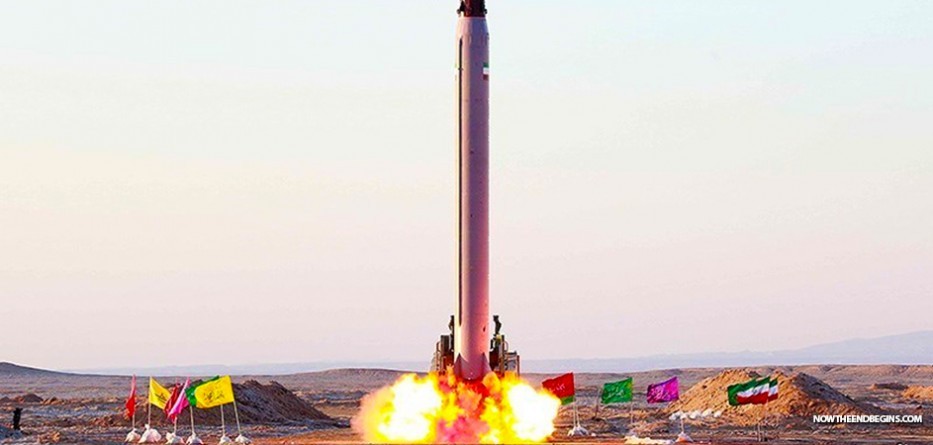
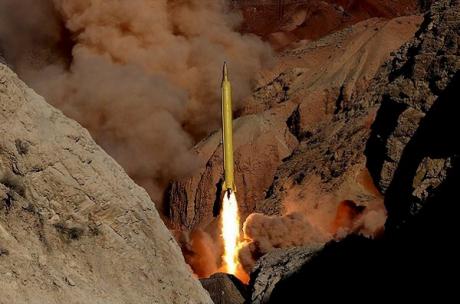
A ballistic missile is launched and tested in an undisclosed location, Iran, in this handout photo released by Farsnews on March 9, 2016. REUTERS/farsnews.com/Handout via Reuters

You have to wonder just how much of North Korea is rubbing off on the mullahs in Tehran as the Iranian regime launched ballistic missiles for the second straight day in violation of United Nations Security Council resolutions and boldly thumbed their collective noses at the U.S. as Vice President Joseph R. Biden Jr. was touring Israel.

The Revolutionary Guards Corps, which oversees the Islamic state’s missile program, fired two missiles that it said hit targets over 850 miles away and pointedly declared that Israel was now within striking distance.

If they didn’t get their point across, the IRGC said the missiles bore inscriptions written in Hebrew on the side saying “Israel must be wiped off the face of the earth,” as reported by Fars, a regime news agency which also released video of the launches.

The head of the Revolutionary Guards’ missile program, Brig. Gen. Amir Ali Hajizadeh, said the rockets had a range of about 1,200 miles and were capable of hitting the “Zionist regime,” Iran’s name for its archenemy Israel, the semiofficial news agency Mehr reported.

As expected, the Iran lobby did not utter one tweet, statement or editorial condemning the provocative launches, nor the timing which seemed designed to send a pointed message to the U.S. The repeated launches does bring to mind the tactics used by North Korea in also aggressively firing missiles and rockets regardless of any international sanctions that exist. The fact that the two radical nations – which already share missile and nuclear technology – are now sharing the same political playbook should come as no surprise.

The lack of inclusion of the regime’s missile program in the nuclear agreement reached last year shows the glaring loopholes that exist for Iran to continue the development of destabilizing weapons systems that can deliver chemical, biological or conventional warheads – let alone nuclear ones developed in secret – anywhere in the Middle East and most of Europe, Asia and Africa.

The lack of response from the Obama administration was predictable and disheartening for those who have consistently warned of the threat the regime poses; even after a rigged parliamentary election was touted as producing a “moderate” shift in Iran’s domestic politics.

Laudably, Democratic presidential candidate Hillary Clinton entered the fray by calling for more sanctions against the Iranian regime in light of this most recent violation.

Clinton said on Wednesday she was “deeply concerned” by reports that Iran had tested multiple ballistic missiles and said the country should face sanctions for its actions.

“This demonstrates once again why we need to address Iran’s destabilizing activities across the region, while vigorously enforcing the nuclear deal,” Clinton said in a statement.

“Iran should face sanctions for these activities and the international community must demonstrate that Iran’s threats toward Israel will not be tolerated,” she said.

Her backing of sanctions comes as Democrats and Republicans on Capitol Hill joined together in a push to develop new sanctions against Iran in light of these new and repeated transgressions.

Senate Foreign Relations Committee Chair Bob Corker (R-Tenn.) and ranking member Ben Cardin (D-Md.) are preparing legislation to slap additional sanctions on Iran in response to a recent spate of ballistic missile launches. While the tests do not themselves violate the Iranian nuclear deal that took effect in January, officials believe they fly in the face of other international prohibitions and weaken the spirit of compliance needed to sustain the nuclear pact.

The senators are also negotiating a way to extend the current regime of sanctions under the Iran Sanctions Act past the end of the year, and possibly increase sanctions against Tehran for other conventional weapons and terrorist activities as well.

If the Senate can produce a package of sanctions, it stands a good chance of getting an audience in the House, where Speaker Paul Ryan (R-Wisc.) said Tuesday that Congress would “continue to press for new sanctions against Tehran” in light of the most recent ballistic missile tests.

Thus far, the Obama administration has only issued sanctions against 11 individuals involved in Iran’s ballistic missile program. Sen. Kelly Ayotte (R-N.H.) today said those sanctions are “proving to be anemic, given [Iran’s] continuing testing of ballistic missiles.”

The realization that the Iranian regime remains committed to a militarized pathway in the wake of the nuclear deal and recent elections was not lost on U.S. military commanders, as the top U.S. military commander overseeing the Middle East said Tuesday that despite the nuclear deal, Iran shows no signs of altering its destabilizing behavior.

“There are a number of things that lead me to personally believe that, you know, their behavior is not — they haven’t changed any course yet,” said Army Gen. Lloyd Austin, commander of U.S. Central Command, at a Senate hearing.

Austin said he was concerned about Iran’s continued testing of ballistic missiles, which the U.S. intelligence community believes is Iran’s preferred method for delivering a nuclear weapon.

“What I would say is that what we and the people in the region are concerned about is that they already have overmatch with the numbers of ballistic missiles,” Austin told the Senate Armed Services Committee.

“The people in the region, they remained concerned about [Iran’s] cyber capabilities, their ability to mine the straits,” he added. “And certainly the activity of their Quds forces … we see malign activity, not only throughout the region, but around the globe as well.”

Austin also expressed concern about an “emerging strategic partnership” between another U.S. adversary, Russia. The two nations are working together to bolster Syrian President Bashar Assad’s government.

“What I worry about is [if] that relationship between Syria, Russia and Iran develops further, that it will present a problem for the region,” he said.

That cooperation is expanding to include the sale of high-end weapons, Austin said.

“We’ve seen recently [the sale of] high-end air defense capability from Russia to Iran and that’s a problem for everyone in the region,” Austin said.

“And also coastal defense cruise missiles. As that type of technology is — migrates from Russia to Iran, it’ll eventually wind up in the hands of Lebanese Hezbollah.”

All in all, it hasn’t been a very good weak for the Iran lobby proponents of a new moderate Iran and puts to a lie what they have been advocating for so long.

By Laura Carnahan

Filed Under: Blog, News Tagged With: #NuclearDeal, Featured, Iran, Iran Lobby

Iranian Regime “Moderates” Get More Ballistic Missile Launches

March 9, 2016 by admin

Iranian Regime “Moderates” Get More Ballistic Missile Launches

Iranian Regime “Moderates” Get More Ballistic Missile Launches

Fulfilling vows the mullahs made to continue developing its ballistic missile program despite threats of new sanctions, the Iranian regime test-fired several ballistic missiles on Tuesday aimed at showing the regime’s “deterrent power” and “all-out readiness to counter any threat,” according to the official Islamic Republic News Agency.

The launches were carried out by the Revolutionary Guard Corps with surface-to-surface missiles fired from silos in central Iran and hit targets 435 miles away, according to the semiofficial Fars news agency.

These were the first tests since the U.S. Treasury Department imposed sanctions in January on 11 Iranian entities with alleged links to Tehran’s ballistic missile program, citing the “significant threat” the weapons posed to regional and global security. Iran last tested its missiles in October and November, according to the Wall Street Journal.

The Obama administration was understandably low-key in its response, taking pains to reiterate how it did not see that the test launches violated the recently approved nuclear agreement, but might be in violation of existing United Nations Security Council resolutions banning the development of nuclear-capable ballistic missiles.

“To be very clear, such tests are not a violation of the JCPOA,” a senior Obama administration official said. “That said, there are strong indications that the test is inconsistent with U.N. Security Council Resolution 2231. If confirmed, we intend to raise the matter in the U.N. Security Council. We will also encourage a serious review of the incident and press for an appropriate response.”

Iranian regime officials have said its recent tests don’t violate international accords, and that the weapons are merely for defense. Hassan Rouhani ordered the missiles’ development to be expedited in December, amid the prospect of new U.S. sanctions and in clear defiance of existing prohibitions.

The absurdity of the nuclear deal into stark relief when we now see the folly of unlinking various issues such as ballistic missile development, proxy wars and human rights violations from the principle agreement, in which the regime is now freed of any potential leverage that could be used against it.

In a move that eerily imitates how North Korea ignored international agreements and sanctions, the Iranian regime threatened its willingness to walk away from the nuclear deal it so desperately sought now that is has secured a lifting of economic and gained access to $150 billion in frozen assets around the world.

“If our interests are not met under the nuclear deal, there will be no reason for us to continue,” Abbas Araqchi, Iran’s deputy foreign minister, warned during remarks delivered to a group of Iranian officials in Tehran.

“If other parties decide, they could easily violate the deal,” Araqchi was quoted as saying by Iran’s state-controlled media. “However, they know this will come with costs.”

Araqchi appeared to allude to the United States possibly leveling new economic sanctions as a result of the missile test, according to the Washington Free Beacon.

The reaction from Capitol Hill was swift and urgent.

“The administration’s response to Iran’s new salvo of threatening missile tests in violation of international law cannot once again be, it’s ‘not supposed to be doing that,’” Sen. Mark Kirk (R., Ill.) said in a statement. “Now is the time for new crippling sanctions against Iran’s Islamic Revolutionary Guard Corps, Ministry of Defense, Aerospace Industries Organization, and other related entities driving the Iranian ballistic missile program.”

House Majority Leader Kevin McCarthy (R., Calif.) warned that the nuclear agreement has done little to moderate the regime’s rogue behavior.

“Far from pushing Iran to a more moderate engagement with its neighbors, this nuclear deal is enabling Iran’s aggression and terrorist activities,” McCarthy said in a statement. “Sanctions relief is fueling Iran’s proxies from Yemen to Iraq to Syria to Lebanon. Meanwhile, Khamenei and the Iranian regime are acting with impunity because they know President Obama will not hold them accountable and risk the public destruction of his nuclear deal, the cornerstone of the president’s foreign policy legacy.”

McCarthy went on to demand that the Obama administration step forward with new sanctions as punishment for the missile test.

House Speaker Paul Ryan said on Tuesday that lawmakers would continue to press for new sanctions against Tehran “until the regime ends its violent, provocative behavior against the U.S. and our allies.”

In another sign that the regime has no interest in real moderation in the government, in spite of how the Iran lobby characterized the election results, top mullah Ali Khamenei appointed close ally Ebrahim Raeisi, the 55-year-old national prosecutor-general, as the new chairman of Astan Quds Razavi, the foundation that manages the shrine of Imam Reza in Mashhad.

Raeisi is a close ally of Khamenei, and his appointment will strengthen links between the leader’s office and the shrine, whose annual turnover – based on endowments, property and companies – is many billions of dollars slated for Khamenei’s private coffers.

Raeisi, who holds the clerical rank of hojjatoleslam, is a different character, according to a story by The Guardian. At last year’s 36th anniversary of the taking of the embassy hostages, which featured criticism of the Rouhani administration as well as denunciations of the United States as the “Great Satan”, Raeisi announced that the intelligence and security forces had “identified and cracked down on a network of penetration in media and cyberspace, and detained spies and writers hired by Americans.”

Raeisi, reportedly defended the amputation of the hands of thieves, also at the time of the 1988 executions of 3,000-5,000 political prisoners and dissidents ordered by then leader Khomenei, Raeisi was deputy prosecutor in Tehran, a role he had held since 1984-5 where he played a key role in the massacre.

These are the faces controlling Iran and it does not bode well for future prospects for peace.

By Michael Tomlinson

Filed Under: Blog, News Tagged With: Featured, Iran, Iran deal, Iran Human rights, Khamenei, Rouhani

Pushback Grows Against Iran Lobby Claims of Moderate Win

March 4, 2016 by admin

Pushback Grows Against Iran Lobby Claims of Moderate Win

Pushback Grows Against Iran Lobby Claims of Moderate Win

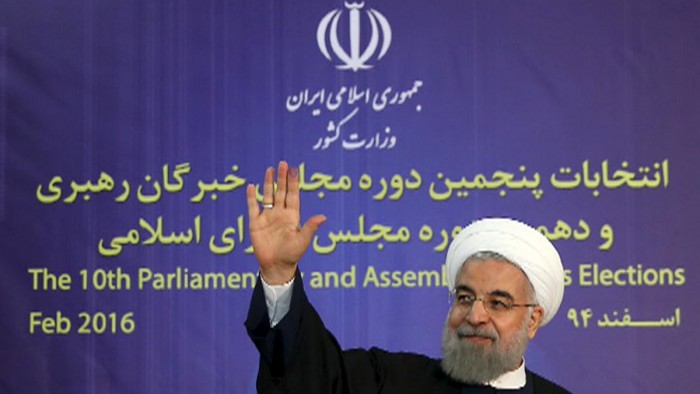
Basking in the afterglow of the Iranian regime’s parliamentary election results, the Iran lobby predictably boasted of the massive wins by moderate and reformist forces within Iran, but now the pushback is coming from a wide variety of the political spectrum as the results and actual winning candidates are absorbed and evaluated.

The realization is settling in that far from the moderate tsunami described by regime supporters such as Trita Parsi and Reza Marashi of the National Iranian American Council, the truth is that very little has changed within the regime leadership and the Iranian people still remain firmly in the grip and thrall of the mullahs.

The parade of cold water on the moderate landslide theory was led by the editorial board of the Washington Post, which has intimate first-hand knowledge of the extremist nature of the regime through the hostage taking and eventual prisoner swap of its reporter, Jason Rezaian. It editorialized:

“Claims of a reformist triumph, however, are overblown. Before the elections, an Iranian liberal coalition said that 99 percent of 3,000 pro-reform candidates had been disqualified by a hard-line clerical council. Most of those in Mr. Rouhani’s coalition are, like him, moderate conservatives, meaning they favor economic reforms and greater Western investment, but not liberalization of the political system or a moderation of Iran’s aspiration to become the hegemon of the Middle East. True Iranian religious and political reformers, like those who joined the 2009 Green Movement, are in jail or exile, or were banned from the ballot.

“For now, Iran can be expected to continue the course it has been pursuing in the months since the nuclear deal was struck: waging proxy wars against the United States and its allies around the Middle East, using its unfrozen reserves to buy weapons, and defying non-nuclear limits — such as by testing long-range missiles. The elections won’t make the regime more pliable, and they won’t change the need for a U.S. counter to its aggressions. They shouldn’t provide an excuse for the Obama administration to tolerate Tehran’s provocations,” the Post said.

The Post is correct in its assertions and admits to the basic problem facing those nervously praising the “moderate” wins: they are left with hoping for the best outcome even though it will most likely come to pass since the alternative is to face the difficult choices of pushing for regime change against a regime firmly entrenched.

The Atlantic’s Kathy Gilsinan noted some of the difficulties in the tea leaf reading going on post-election in discerning who actually won.

“Institutions whose members aren’t popularly elected, including the office of the supreme leader, the Guardian Council, the judiciary, and the security services, are the most powerful in Iran’s government. And they remain in the hands of hardliners,” she writes.

“Another reason it’s difficult to know the significance of these elections—aside from the dueling claims of victory from each camp, and the fact that, as Thomas Erdbink of The New York Times reported Wednesday, ‘there has been no official comment on the affiliation of the winning candidates’—is that Iran does not have strong political parties. Knowing that Republicans have a majority in the U.S. Congress, for example, gives you a rough sense of that body’s legislative priorities and how they would differ from those of a Democratic Congress. As Majlis Monitor, a website devoted to Iranian politics, notes, ‘While political parties help us see a country’s political fault-lines, their absence in Iran makes it difficult to understand how politics are actually [organized] and work there.’”

This points out the fundamental problem with the claims being made by Parsi or Jim Lobe over at Lobelog that moderates won the election: the absence of political parties stems from the mullahs aim to eliminate all dissent and organize the government around homogenous support for the Islamic revolution. True dissident parties such as the Mojahedin Khalgh (MEK or PMOI) were outlawed and membership was classified as punishable by death.

There is no doubt that the Iranian people want real reform and a true turn towards democracy. They are tired of living in an oppressive regime where their every online move is monitored and their every economic move is stymied by widespread official corruption.

The New York Times’ Erdbink also explained how results of the election may never be publicly revealed.

“The Interior Ministry, which is overseeing the voting for the 290-seat Parliament and the clerical Assembly of Experts, announced on Tuesday the names of 222 parliamentary candidates who won nationwide. It also announced that there would be a second round of voting for 68 seats in several constituencies in April,” he said. “But there has been no official comment on the affiliation of the winning candidates, and there may never be, making it difficult to determine how many seats the various factions have won.”

The Interior Ministry also oversees the internal security for the regime and already has a checkered history with the hijacking of the 2009 elections. It wouldn’t be unreasonable to see some similar shenanigans with these results to ensure the right kinds of “moderates” eventually won seats.

Former UN ambassador John R. Bolton took a similar viewpoint in writing for the American Enterprise Institute:

“Efforts to distinguish Tehran’s moderates from hard-liners have a long historical record of failure, as have similar precedents in analyzing Moscow and Beijing. Today in Iran, while there are disagreements over economic, social and religious policies among the elite, there is no disagreement over the objective of mastering the difficult science and technology required to achieve nuclear weapons deliverable on ballistic missiles. There is simply no credible evidence that the ayatollahs and other key Iranian leaders have ever diverged on that goal. Moreover, the nuclear and ballistic missile programs are firmly controlled by the Revolutionary Guards, which is about as likely to cede responsibility to the elected Majlis as to America’s Congress,” he writes.

Ultimately the real test of real reform will come if Evin Prison is emptied, ballistic missiles are shelved and support is withdrawn from Syria, Iraq and Yemen.

I wouldn’t hold your breath for that.

By Michael Tomlinson

Filed Under: Blog, News Tagged With: Appeasement policy, Featured, Iran, Iran deal, Iran Lobby, Lobelog, National Iranian American Council, NIAC, Reza Marashi, Trita Parsi

Iran Elections Results Are In a Day Early: The Mullahs Won

February 26, 2016 by admin

Iran Elections Results Are In a Day Early: The Mullahs Won

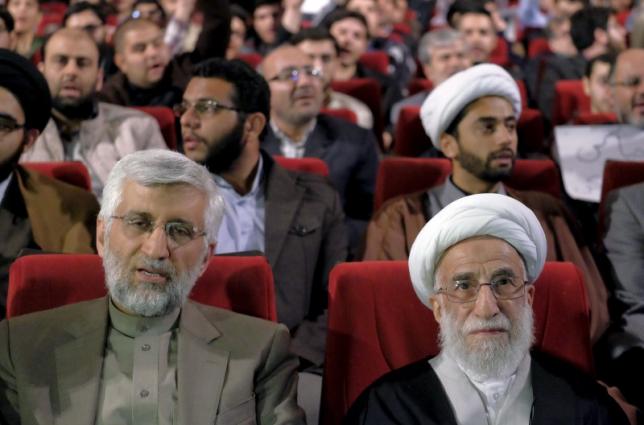
Ayatollah Ahmad Jannati (R), a candidate for the upcoming vote on the Assembly of Experts, and Iran’s former chief negotiator Saeed Jalili attend a conservatives election campaign gathering in Tehran February 24, 2016. REUTERS/Raheb Homavandi/TIMA

The headlines screamed out from various news publications around the world on the day before parliamentary elections were to be held in Iran:

“Moderates Test Hardliners’ Grip on Power in Iran Vote” – Reuters

“Iran’s Moderates Face a Major Challenge in First Elections Since the Nuclear Deal” – TIME

“Iran Reformists Hoping for Boost in Parliament Election” – New York Times

“Why Iran’s Parliamentary Elections This Friday Are So Crucial” – The Nation

Most of the international media seem to be suffering from the same form of mass amnesia in that they have conveniently forgotten the fact that the elections were rigged months ago when the Guardian Council, whose members are handpicked by top mullah Ali Khamenei, kicked off virtually all candidates from ballots with even a hint of moderation or lack of ideological purity.

Just as it has done in every election since the mullahs seized the revolution in 1979 and turned Iran into an theocratic dictatorship, there is no doubt to the outcome. There was no doubt when Mahmoud Ahmadinejad was re-elected in a blatant steal of the ballot box and there was no doubt when Hassan Rouhani was elected after virtually all potential challengers were rejected by the same Guardian Council that mowed down this election.

So as Iranians go to the polls, they are going to find themselves confronted with few choices and fewer options if they truly want regime change. Not only have any potential “moderates” been knocked off the ballot, but true opposition parties and dissident groups are outlawed and membership in any is grounds for arrest and even execution.

While the U.S. is engaged in a presidential race marked by hyperbole, multiple debates, flooding of social media and a months-long process of examination, questioning and arguing with candidates, the mullahs in Iran spent months dumping candidates and allowing only one week of actual campaigning.

But some media have tried prying the lid the mullahs have placed on these elections and are running stories that look more critically at how these elections are a sham and already decided.

David Blair, writing for the Telegraph, visited Qom, one of Iran’s holiest cities, and found residents there with little to no choices available to them.

“If any of the inhabitants of Iran’s second-holiest city wish to vote for reformists in Friday’s election, they will be disappointed,” he writes. “Every moderate candidate who tried to stand in Qom has already been disqualified, leaving the 1.1 million people of this desert city – known as the Shia Vatican – to choose between different brands of hardliners.”

“The voting that will take place in Qom sums up everything important about Iran’s election. On the face of it, people will have the freedom to choose both a new Majles, or parliament, and a new Assembly of Experts, the body which appoints and supervises the Supreme Leader, Ayatollah Ali Khamenei,” Blair correctly points out. “In reality, another committee in Iran’s labyrinthine power structure, the Guardian Council, has already vetted every candidate for both elections, banning almost half of the 12,000 hopefuls from standing and weeding out most of the reformers.”

Outside of Tehran, Blair and other journalists have cities and communities in more rural areas with virtually no moderates on any ballot and limited campaigning with most Iranians resigned to picking from lists of hardliners vs. more hardliners.

A senior fellow at the Washington Institute for Near East Policy, writing in the Wall Street Journal, acknowledged the same situation playing out.

“The upcoming vote will largely mirror past elections in Iran, being neither free nor fair. The candidates have been closely screened and the outcome is expected to uphold the largely conservative makeup in parliament and the Assembly of Experts. In addition, the victors will remain largely dependent on military institutions, namely the Islamic Revolutionary Guard Corps. Moderates will stay marginalized in this arrangement and face intensified pressure from hard-line colleagues,” Khalaji said.

He goes on to point out that Rouhani’s election was devoted to getting a nuclear deal done to relieve the regime of crippling economic sanctions.

“Mr. Rouhani has focused most of his energy on the nuclear deal. He has not improved the dismal human rights situation in Iran”… During his tenure, military and intelligence suppression of political activists has remained robust and effective,” he writes.

“Presidential candidates in 2017 will need to establish strong relations with the supreme leader and his apparatus, especially the Revolutionary Guards, and are likely to succeed by reassuring these entities that their political and economic interests will not be undermined,” he added.

The fact of the matter elections in Iran are already pre-determined. The Revolutionary Guards and religious clergy exert overwhelming control of the country’s economy and industries and quickly stifle any dissent by tossing dissidents in prison and hanging them publicly to deter any future opponents.

That control will almost certainly continue to flow through regime leaders such as Ahmad Jannati who will be a shoo-in for re-election to the 88-member Assembly of Experts and will also shepherd the process to ensure the replacement for Khamenei is just as ideologically pure and committed to the Velayat-e-Faqih and more important keep the mullahs hold on power intact.

In remarks echoed by Khamenei, Jannati this week accused the United States and Britain of trying to influence Friday’s votes.

“The United States and the United Kingdom were trying to take advantage of the Iranian elections and send their agents and infiltrators into the Assembly of Experts, but God helped us and we managed to identify and block them all,” he was quoted as saying by the Fars news agency on Wednesday.

Jannati is a clear example of the type of extremist Iran will be electing and it was already decided long ago. Today’s vote is just a formality.

By Michael Tomlinson

Filed Under: Blog, News Tagged With: Featured, Iran, Iran deal, Iran Election, Iran Elections 2016, Iran Human rights, iranelections2016, Iranian election

Iranian Regime Use Boogeyman of Great Satan to Control Elections

February 23, 2016 by admin

Iranian Regime Use Boogeyman of Great Satan to Control Elections

Iranian Regime Use Boogeyman of Great Satan to Control Elections

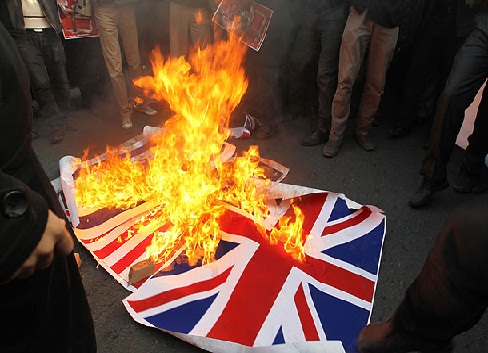
As parliamentary elections for the Iranian regime approaches, the regime continue their verbal drumbeat blaming the U.S., Great Britain and anyone else not named “Iran” for meddling in the elections. The latest verbal volley came from Hassan Firouzabadi, the chief of staff of the regime’s armed forces, who accused the U.S. and Great Britain of meddling by campaign for and against certain candidates.

“Such interference is [part of] aggressive strategies adopted by the US and Britain toward the Iranian nation, and the country’s officials should not underestimate it,” Firouzabadi said on Saturday.

He added that the “impudent” move by arrogant powers, including the U.S. and Britain, would provoke the wrath of the “revolutionary” Iranian nation.

Of course the good general neglected to mention any specific examples of meddling in his diatribe, but that is par for the course for the regime to hurl invective without any evidence, proof or backing. The truth is that there is no meddling going on or intrusive acts, especially from an Obama administration which seems intent on appeasing the mullahs in any way imaginable.

A compliant and friendly U.S. government though doesn’t fit the Islamic revolutionary beliefs held near and dear to the mullahs as their means of oppressing the Iranian people in what top mullah Ali Khamenei affectionately calls the “resistance economy;” an economy designed to keep Iranians struggling, impoverished and dependent on the regime for subsidized fuel, food and medicine.

It serves the regime’s purposes to keep blaming the U.S. and rest of the West for all the ills that have befallen Iran, especially during the time of economic sanctions, but since those have been lifted as part of the nuclear deal negotiated last summer, the mullahs are caught in the bind of having to explain to the Iranian people why things – like the economy – remain so bad under their stewardship.

For the mullahs, continued scapegoating of the U.S. is about the only excuse they have left to divert blame away from their own corruption, incompetence and mismanagement. It is also the strategy the Iran lobby follows in turning every issue into a blame game against the poor mullahs of Tehran.

All of which is a behavior that is only reinforced when the Obama administration fails to stand up aggressively to the regime’s misbehavior, thereby engendering even more egregious acts by the Iranian regime.

Case in point is the letter sent from Iranian general Mohsen Rezaei to Hassan Rouhani in which he detailed how to force even more concessions from the U.S. by aggressively building longer-range ballistic missiles.

The letter follows the capturing of U.S. sailors, the firing rockets near a U.S. carrier, and the flying of drones over U.S. and French carriers and it claims the U.S. only was willing to make a nuclear deal because Tehran aggressively pursued a renegade nuclear bomb program that violated UN sanctions.

“Just as Iran’s success in developing 20,000 centrifuges was a slap in the face of the United States and forced the Americans to come to the negotiating table and recognize our right to enrich uranium, I am hoping that with your support, the range of Iran’s missiles will exceed 5,000 kilometers [3,106 miles],” Rezaei wrote Rouhani.

The expanded reach of the missiles would threaten the U.S. and its allies by putting American military installations and Europe within range of an Iranian missile, which currently can only travel 2,000 kilometers.

If the regime were to develop a longer-range missile, no doubt using technology already developed and tested by North Korea, it would pose a significant threat to most of Europe and Asia. Not surprisingly, the Obama administration has been largely silent and the Iran lobby has been deaf and mute on these latest provocations.

North Korea is an interesting case study, since the efforts to rein in that rogue nation’s nuclear program through international monitoring – similar to the deal reached with the Iranian regime – has been an utter failure and has only allowed the North Koreans to assemble a small arsenal of nuclear warheads, but also develop intercontinental ballistic missile capability which it has been eager to sell to Iran for hard currency; of which the mullahs are swimming in $100 billion of it courtesy of the nuclear deal.

All of which is fueling a wild new arms race throughout the Middle East as the Iranian regime’s neighbors worry – and rightly so – about the mullahs intentions. Support of proxy wars in Syria, Yemen and Iraq has not bred much confidence in Iran’s neighbors, nor has an $8 billion shopping spree in Moscow for advanced weapons.

Escalating conflicts driving Middle Eastern nations to buy more weapons include conflicts in Libya, Yemen, Syria and Iraq, along with violence in Egypt and Turkey, says Ken Pollack, a senior fellow researching the Middle East at the Brookings Institution.

“We are seeing a region on fire,” Pollack says. “A lot of countries feel the need to increase their military capabilities to intervene in those conflicts or to fend off rivals.”

Pollack says the top rivalry in the region “consuming ammunition” is between Iran and Saudi Arabia and their allies, especially in Yemen where Tehran is backing the Houthi opposition to the Saudi-supported government. Iran is also supporting embattled Syrian President Bashar Assad while Saudi Arabia is sending weapons to groups opposing his government, but Pollack says the two nations appear to be vying for influence through other proxy wars in the region.

As long as the Iranian regime is allowed to continue the fantasy of blaming its ills on others such as the U.S., the longer the mullahs will feel safe in continuing on their path of destruction and oppression.

By Michael Tomlinson

Filed Under: Blog, News Tagged With: Featured, Iran, Iran deal, Iran Economy, Iran sanctions, Khamenei, Rouhani

Human Rights Remain Under Assault by Iranian Regime

February 22, 2016 by admin

Human Rights Remain Under Assault by Iranian Regime

Human Rights Remain Under Assault by Iranian Regime

Next week the Iranian regime will conduct parliamentary elections that most news media and analysts have already called rigged because of the customary elimination of over two-thirds of the candidates seeking seats in the lower parliament and the more powerful Assembly of Experts.

The regime’s Guardian Council, with its handpicked members by top mullah Ali Khamenei, exercised their usual due diligence in removing any candidate that even had a hint of moderation or deviation from the Islamic revolutionary principles that guide the regime.

What is left are only those candidates that pledge religious, ideological and political fealty to the mullahs that run the regime and hold sway over virtually all facets of life in Iran.

This winnowing process empowers the mullahs and allows them the freedom and discretion to continue the unabated crackdown on human rights in advance of the elections with no cause for worry or recrimination from the international community, but there are news accounts that leak out depicting the brutality being visited on ordinary Iranians – often smuggled out by members of the dissident community at great personal risk.

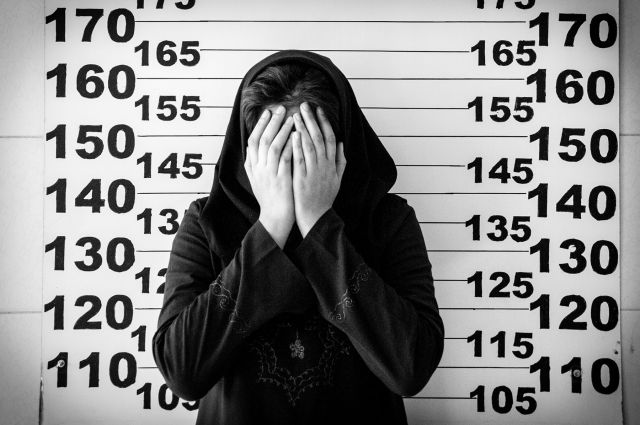
One of those moving accounts was published in Quartz online in a photo essay by a photographer who spent four years researching women and girls being held in Iranian prisons, many awaiting death sentences.

“My main goal in this project was to understand how young girls could end up in jail in the first place,” the prizewinning photographer tells Quartz. “I spent time talking to them, they were nice and kind.”

In Iran, the death penalty can be applied to minors, and in 2014, a United Nations report estimated that at least 160 juvenile offenders were on death row in the country.

While according to a Jan. 25 report by Amnesty International, 73 juvenile offenders were executed in Iran between 2005 and 2015.

The compelling photos paint a grim portrait of a regime willing to kill young girls, often for crimes committed by male acquaintances who escape punishment, leaving it to the girls to pay the ultimate price in their stead.

It’s a situation that the Iran lobby has been virtually silent on. A careful perusal of the websites, blogs and social media feeds for regime supporters such as Trita Parsi, Reza Marashi and Tyler Cullis of the National Iranian American Council or Ali Gharib or Lobelog.com reveal hardly a word of criticism or protest over the heinous violations. What they have protested though has been the incarceration of Siamak Namazi, a dual U.S.-Iranian citizen who was detained by regime authorities and not part of the prisoner swap that occurred as part of the nuclear agreement.

It is ironic that Namazi’s case is the one that earns the attention of the Iran lobby because of the close relationship he has with Parsi and his role in helping launch the NIAC and as an outspoken advocate of the nuclear deal with the regime.

Now Namazi is experiencing the same denial of legal representation that was forced on other American hostages such as Christian pastor Saeed Abedini and Washington Post reporter Jason Rezaian. We can only hope now that the shoe is on the other foot, these supporters of the regime would be more vocal in their criticisms, but we doubt it.

These elections though will provide a glimpse though of the lie that is Iranian regime democracy, which was discussed in an editorial in the New York Post who took to task the policy of appeasement exercised by the Obama administration:

“When it runs out of plausible excuses for its appeasement-plus policy on Iran, the Obama administration advances one argument as final line of defense: showing goodwill toward the Islamic Republic would help ‘moderates’ secure a greater share of power in Tehran with the hope of an eventual change of behavior by the ruling mullahs.”

“But who are the ‘moderates’ that Obama hopes to promote Tehran? A trio of mullahs consisting of former President Hashemi Rafsanjani, former Security Minister Dorri Najafabadi and current President Hassan Rouhani forms the core of the faction that Obama hopes would sail to victory next week,” the article writes. “The triumvirate has a history of masquerading as moderates.”

He recounts how these supposed moderates have often espoused political reforms, but never offered or implemented any political reforms while holding office.

“Rafsanjani and his hand-picked successor Khatami governed for 16 years, but never offered a single political reform let alone implementing any. Their successor Rouhani has had more than two years to show that he follows the same path. During his presidency Iran has become world leader in the number of executions and political prisoners,” he adds.

Rouhani is exercising the playbook that Rafsanjani and Khatami exercised in portraying himself as a moderate when he has no intention of supporting reforms and has openly talked about his admiration for the so-called “Chinese Model” which emphasizes economic development with control of the government firmly in the Communist Party’s hands. Rouhani envisions a similar situation with the lifting of economic sanctions bolstering the flow of money to regime coffers, but no loosening of political restrictions.

The Financial Times took note of the Iranian public’s distinct lack of enthusiasm for upcoming elections against the backdrop of a sputtering economy still stifled by mass corruption and a focus on diverting funds to supporting the proxy wars in Syria, Yemen and Iraq.

“The subdued seasonal shopping just one month before Norouz, the Iranian new year holiday, is adding to widespread gloom about a prolonged economic stagnation that has also dimmed public enthusiasm for the crucial upcoming elections,” the Financial Times writes. “Hassan Rouhani, the country’s centrist president, is now blamed by many for failing to deliver on his election campaign promises to help improve the economy with the nuclear agreement. Although inflation has shrunk — from a peak of about 40 per cent in 2013, when Mr. Rouhani took the reins, to about 13 per cent today, according to central bank figures — economic growth is next to zero and people are unwilling to purchase goods.”

While the election results may be a forgone conclusion, the hope remains that an oppressed Iranian people will someday soon see true regime change.

By Michael Tomlinson

Filed Under: Blog, News Tagged With: Featured, Iran, Iran Human rights, Iran Lobby, Khamenei, NIAC, Reza Marashi, Rouhani, Trita Parsi

Iran Lobby Promises of More Moderate Iran Rebutted

February 10, 2016 by admin

Iran Lobby Promises of More Moderate Iran Rebutted

Iran Lobby Promises of More Moderate Iran Rebutted

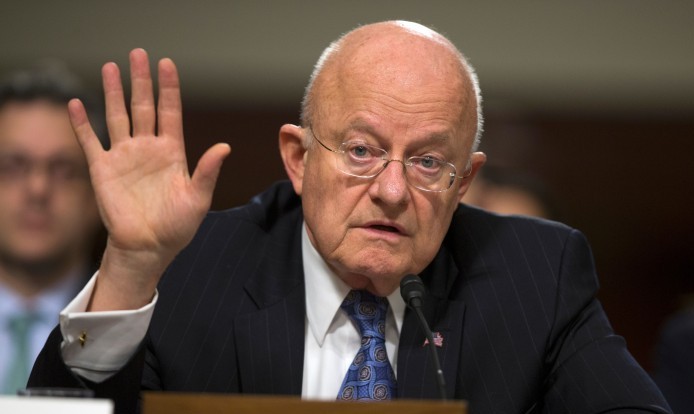
In an appearance before the Senate Armed Services Committee on Tuesday, James Clapper, director of national intelligence, gave a very somber description of what he sees as the Iranian regime’s intentions toward the U.S. now that last summer’s nuclear deal has commenced.

In particular, his statements offered little assurance the regime is acting as an honest actor with the U.S. and the other states involved in last year’s negotiations, or that the nuclear deal will stop Iran regime from obtaining a nuclear weapon.

“Iran probably views JCPOA [Iran deal] as a means to remove sanctions while preserving nuclear capabilities, as well as the option to eventually expand its nuclear infrastructure,” said Clapper.

The U.S. intelligence community has concluded that “Iran does not face any insurmountable technical barriers to producing a nuclear weapon, making Iran’s political will the central issue,” according to Clapper.

Clapper’s statements stand in stark contrast with those made by the Iran lobby led by the National Iranian American Council, which lauded the nuclear accord last summer, claiming it would not only stop all of Iran’s possible pathways to a nuclear weapon, but that “under its terms, Iran is never allowed to build a nuclear weapon.”When queried on Iran’s missile tests conducted in October and December of 2015 just months after the signing of the Iran deal, Clapper had no doubts the regime was trying to send a message.

“I think this was a deliberate message of defiance and that the Iranians are going to continue with an aggressive program to develop their missile force,” said Clapper.

The U.S. intelligence community predicts the Iranian regime “would choose ballistic missiles as its preferred method of delivering nuclear weapons, if it builds them,” according to Clapper. “Iran’s ballistic missiles are inherently capable of delivering [weapons of mass destruction], and Tehran already has the largest inventory of ballistic missiles in the Middle East.”

The regime also continues research on its space program, which is largely considered a front for the construction of advanced ballistic missile technology.

“Iran’s progress on space launch vehicles—along with its desire to deter the United States and its allies—provides Tehran with the means and motivation to develop longer-range missiles, including ICBMs,” Clapper said.

At the same time, Iran continues to be the world’s foremost sponsor of terrorism.

“Iran—the foremost state sponsor of terrorism—continues to exert its influence in regional crises in the Middle East through the Islamic Revolutionary Guard Corps—Quds Force (IRGC-QF), its terrorist partner Lebanese Hezbollah, and proxy groups,” Clapper said.

The Obama administration responded to the tests with a new round of sanctions on Iran’s missile program. Regime officials said the new sanctions would not deter its ambitious missile program, and that it will instead go on the “offensive” in response.

It is in this context that the recent ramp up in testing and deployment of new ballistic missiles and nuclear warheads by North Korea is the most troubling since it has been North Korea that has provided the initial designs and materials to the Iranian regime for its nuclear and missile programs as Clapper indicated in his testimony.

He testified that North Korea has expanded its Yongbyon plant for uranium enrichment and has restarted a plutonium reactor shut down in 2007 that could produce nuclear weapons fuel “within a matter of weeks to months.” North Korea could have as many as 100 nuclear bombs less than five years from now, plus, as Clapper warned, it’s developing an ICBM missile to carry them to the U.S. homeland.

North Korea in many ways is the preview of what the Iranian regime is on track to similarly do as it has broken all of the agreements it has made, developed its weapons program under the unsuspecting eyes of international inspections and freely traded in its technology to other radical nations.

North Korea is also a reminder that hollow diplomatic promises not backed up by severe consequences leads to only more appeasement in a desperate bid to regain perceived momentum with each new violation and militant act. It’s a pattern that is already being repeated with the Iranian regime which has launched new missiles, stepped up its wars in Syria and Yemen and instituted a large-scale crackdown on human rights and political dissidents at home in advance of upcoming elections.

And even with the Iran lobby’s own, most vocal supporters being similarly tossed into Iranian prisons, the Iran lobby cannot face the awful consequences of its actions and still expresses support for the totalitarian regime in Tehran.

That link between North Korea and the Iranian regime is under scrutiny by members of Congress who have called for an investigation of the cooperation between the two regimes.

Sen. David Perdue (R-Ga.) late Monday filed an amendment to a North Korea sanctions bill that would require the administration to disclose to Congress any cooperation between the rogue Asian nation and Iran on nuclear weapon and ballistic missile development.

Congress took up the issue after North Korea said it successfully tested a hydrogen bomb last month. On Saturday, the country conducted a missile launch that it claimed was to put a satellite into space for peaceful purposes, but the U.S. and allies suspect was a long-range missile test in violation of international law.

Perdue and other members of Congress suspect that North Korea and Iran are cooperating and that the administration has been reluctant to disclose to Congress what it knows.

“It’s undeniable that Iran and North Korea have been cooperating on nuclear weapon and ballistic missile development for years now,” said Perdue, a member of the Senate Foreign Relations Committee, in a statement.

“Iranians have reportedly been present for at least three of North Korea’s nuclear tests,” he said.

Perdue’s amendment would require the administration to submit a semiannual report to Congress on North Korea’s cooperation with Iran on nuclear weapon and ballistic missile testing, development and research.

It would also require the administration to disclose to Congress the identity of individuals who have knowingly engaged in or directed material support or exchanged information between governments of Iran and North Korea for their nuclear programs.

“This amendment forces the Obama administration to disclose to Congress what it knows about this cooperation between rogue nations, instead of denying the linkages. The sooner we acknowledge this illicit cooperation, the sooner we can work to put it to a halt,” Perdue said.

The failure to rein in North Korea and the appeasement of the mullahs in Iran with a deeply flawed nuclear deal has only emboldened these regimes to aggressively move forward with their plans. We can only hope that the world will respond soon enough to halt these threats before it’s too late.

By Michael Tomlinson

Filed Under: Blog, News Tagged With: #NuclearDeal, Featured, Iran, Iran Lobby

Iran-Rouhani Paris Visit Met by Thousands of Protestors

January 29, 2016 by admin


Rouhani Paris Visit Met by Thousands of Protestors

Rouhani Paris Visit Met by Thousands of Protestors

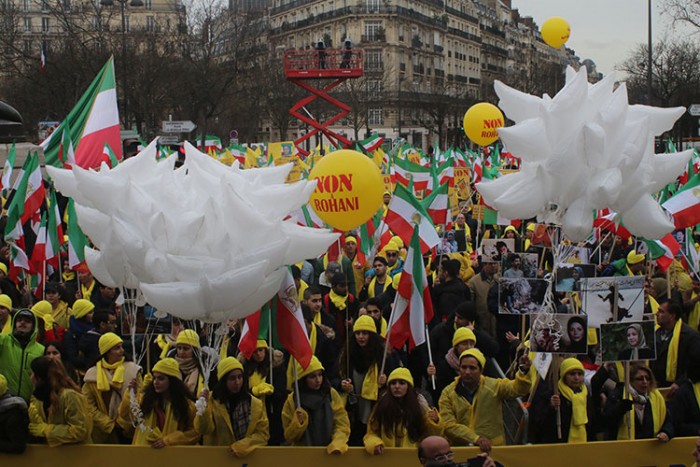
As Iranian regime leader Hassan Rouhani arrived in Paris for the second half of his European tour, thousands of protestors gathered at Place Denfert-Rochereau to demonstrate against his presence and give voice to the brutality that has been meted out during his term against dissidents, religious minorities, women, children and ordinary Iranians in gross violations of human rights.

The protests included French political figures, Iranians, human rights groups and other activists who called on French leaders to reprimand Rouhani for the terrible human rights conditions in Iran, as well as the long-term policies of support for terror groups and the spread of Islamic extremism including the long-running Syrian civil war.

The list of noteworthy participants at the protests included:

  • Sid Ahmad Ghozali, former Algerian Prime Minister;
  • Gilbert Mitterrand, President of France Libertés Foundation and son of the late French President Francois Mitterrand;
  • Senator Jean-Pierre Michel;
  • Giulio Maria Terzi, former Italian Foreign Minister;
  • Alejo Vidal-Quadras, President of the International Committee In Search of Justice (ISJ) and former Vice-President of the European Parliament;
  • José Bové, Member of the European Parliament from France;
  • Rama Yade, former French Secretary of State for Human Rights;
  • Henri Leclerc, prominent French lawyer and jurist;
  • Dominique Lefevbre, member of French National Assembly;
  • Jean- François Legaret and Jacques Boutault, Mayors of 1st and 2nd districts of Paris;
  • Struan Stevenson, President of European Iraqi Freedom Association (EIFA);
  • Michel Kilo, member of Syrian opposition; and
  • Marzieh Babakhani, member of PMOI/MEK Central Council

The large demonstration represented a tangible reminder to world media that Rouhani was not being welcomed with open arms in Europe, as a sizable contingent of French citizens joined in protests amid the still resonating pain of the Paris attacks that left 130 dead. Rouhani’s presence – far from being a PR coup for the regime – provided the opportunity for news media to see a visceral opposition to Rouhani and the theocratic regime as a whole.


It was also a reminder that far from being the “moderate” portrayed by the regime, Rouhani faithfully tows the party line in pushing unpopular positions such as the Iranian regime’s insistence that Syrian dictator Bashar al-Assad stay in power; dashing hopes for a quick political resolution to the bloody conflict that has forced the largest mass migration of refugees since World War II.

Asked at a news conference in the Élysée Palace whether Tehran would drop its support for Assad, Rouhani called the question “strange.”

“Syria’s problem is not a question of people. The problem is terrorism and Islamic State,” Rouhani said, standing beside French President François Hollande, who has repeatedly called for Assad to step down.

The stalemate over Assad bodes ill for a meeting set for Friday in Vienna, where Western governments hope to meet with Russia, Iran and other countries in the region as well as the Syrian regime and opposition to push for an end to the nearly five-year war.

Another further illustration of the harsh nature of the regime came in a three-minute video released by top mullah Ali Khamenei in which he questioned the Nazi Holocaust. The video – entitled “Holocaust: Are the Dark Ages Over?” – plays on of Khamenei’s speeches in which he said “No one in European countries dares to speak about the Holocaust, while it is not clear whether the core of this matter is reality or not. Even if it is reality, it is not clear how it happened.”

The questioning of the Holocaust is a matter of rote exercise for the regime as famously uttered by Holocaust denier Mahmoud Ahmadinejad and has almost become an article of faith among the mullahs in Tehran and a perennial sore point in relations with the West.

That lack of concern over such deplorable events in human history carries over in the regime’s day-to-day disregard for human rights in virtually all phases of Iranian society and jurisprudence. The Daily Mail ran a powerful photographic series from Sadegh Souri who shot pictures documenting the harsh treatment and plight of young girls and women awaiting death sentences in Iranian prisons.

In Iran, the second-biggest user of capital punishment in the world, young women can be hanged for crimes, following unfair trials, including those based on forced confessions extracted through torture and other ill-treatment.

The frightened girls are imprisoned in a Juvenile Delinquents Correction Centre after their sentence verdict and a large number of the inmates are then killed when they reach 18.

In Time magazine, Matthew Trevithick, one of the American hostages released in the prisoner swap with Iran, recounted his arrest and 41 day imprisonment, in which he was studying Farsi in Tehran only to be placed under surveillance, then arrested and told he was never going to be leaving Iran again.

During his imprisonment, Trevithick was told to lie to his mother about his whereabouts and then regime interrogators demanded he videotape a confession that he worked for the CIA and had access to arms and cash. He said no and then was sent back to Evin prison where interrogators questioned him about any ties to journalists he might have had.

Trevithick noticed that the other prisoners he was with were all artists, dissidents and intellectuals; everyone who could be viewed as a problem for the regime was being locked up. Even as he is finally released, the regime officials at the airport make him pay a fee for overstaying his student visa.

The absurdity of the situation is balanced by the fact that virtually no news organization knew of his incarceration, nor of the efforts to coerce a confession from the American student who had traveled to Tehran lured by the false sense of security promulgated by the Iran lobby such as the National Iranian American Council and ended up spending 41 days in prison.

Unfortunately for the thousands of other dissidents, women and children languishing in Iranian prison, their hopes for release are much dimmer.

By Michael Tomlinson

Filed Under: Blog, News Tagged With: Featured, Iran, Iran appeasers, Iran Human rights, Rouhani

Rouhani Meeting with Pope Francis Underscores Mistreatment of Religious Minorities

January 29, 2016 by admin

Rouhani Meeting with Pope Francis Underscores Mistreatment of Religious Minorities

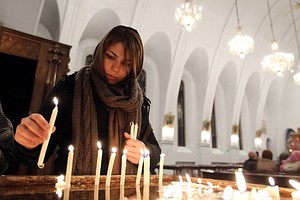
An Iranian Christian woman lights candles during the Christmas Eve mass at the St. Gregor Armenian Catholic church in Tehran on December 24, 201, as Christians around the world are celebrating Christmas. AFP PHOTO/ATTA KENARE (Photo credit should read ATTA KENARE/AFP/Getty Images)

Iranian regime president Hassan Rouhani concluded the second day of his European tour with a 40 minute meeting with Pope Francis at the Vatican in which the Pope raised the question of the “promotion of human dignity and freedom of religion”—sensitive topics for the regime, which has been under fire for its human-rights record.

Only yesterday international human rights group Amnesty International issued a blistering report denouncing the Iranian regime’s record-setting pace of executing juveniles, while Iranian dissident groups stage protests of Rouhani’s tour and freed Christian pastor Saeed Abedini going public with revelations about his brutal torture over the past several years before his release as part of a prisoner swap.

No one can fault Pope Francis for praying and hoping for a more peaceful world with Iran’s participation, unfortunately the stark political realities of the regime’s government and rock-solid devotion to its particular virulent strain of extremist Islam makes the Pope’s wishes problematic.

For his part, Rouhani came out of the meeting with the Pontiff proclaiming that the pathway to solving instability in the Middle East and suppressing Islamic extremism and terrorism would come from supporting Iran economically; as if a job and car would be sufficient inhibitors to Extremism.

“If we want to combat extremism and violence in the world, if we want to fight against terrorism, one of the paths that we have is economic development and creating jobs,” Rouhani said.

It’s a curious position for Rouhani to advocate since the economic policies of his administration have so crippled the Iranian economy, widespread dissatisfaction over low wages, deep-rooted government corruption and a yawning gap between the privileged families of the mullahs and Revolutionary Guard Corps have led to large-scale protests and demonstrations throughout Iran involving everyone from striking teachers to small business owners.

There is no broad movement towards economic reforms even with the influx of an estimated $100 billion in cash being released under the terms of the nuclear agreement according to most economists and Rouhani’s shopping list on his European tour reflects that with deals being signed mostly in heavy industries completely under the control of the Revolutionary Guard Corps including aviation, petroleum, manufacturing and shipping.

Industrial sectors benefitting ordinary Iranians such as agriculture, consumer technology, pharmaceuticals and entertainment are not part of the announced economic revitalization Rouhani has outlined.

Meanwhile the plight of religious minorities continues to be a sore spot as dozens of Christians remain in regime prisons, many for simply holding religious services in their own homes. Rouhani’s government currently requires Christians to register with the regime authorities, while their religious practices are carefully monitored by regime intelligence and security forces.

Other religious minorities such as those who practice the Baha’i faith are also dealt with harshly in Iran, as well as those Muslims diverging from the regime’s Shia faith as Abedini noted in which he and other prisoners were forced to watch hangings of Sunni prisoners on Wednesdays in the prison he was being held in.

Abedini noted how during his captivity, he had come to believe his jailers were ready to execute him as well, but recalled how Rep. Robert Pittinger (R-NC) had spoken at a mass protest rally sponsored by the National Council of Resistance of Iran in which he invoked Abedini’s name causing – he believed – the regime to reconsider killing him now that he had become a higher profile prisoner.

“That speech, you mentioned my name,” Pittinger recalls Abedini as saying. “At that time, I really believe they were thinking about killing me. All of a sudden they let up. They got afraid.”

In the last months of Abedini’s detention, while diplomats were negotiating the terms of his release, his captors began treating him very well, taking good care of him and feeding him regularly, Pittenger relays.

“He thought maybe he was headed out, perhaps they were going to release him,” Pittenger says. “’When I left here, they wanted me to look good.’ Those were his words.”

Pittenger doubts Abedini will ever return to Iran.

“He saw the bigger picture. He was arrested because of his Christian faith. He’s Iranian. He understands the government, he understands what these mullahs do. They’re tyrants and they’re very rigid sectarian Shiite Muslims, and they have no respect or tolerance for other sects, much less Christianity,” Pittenger says.

The lack of tolerance within the Iranian regime will be further exposed as the United Nation’s cultural agency, UNESCO, will challenge Rouhani on Wednesday, International Holocaust Remembrance Day, over the regime’s plans to host a cartoon contest for caricatures of the Holocaust.

The contest, scheduled for June and announced last December by the regime’s Islamic Republic News Agency (IRNA), will be held at the Tehran International Cartoon Biennial and offers a prize of up to $50,000.

The atmosphere of intolerance is emblematic of the simple fact that the Iranian regime is not opening up in the wake of the nuclear deal as promised by Iran lobby supporters such as the National Iranian American Council.

Anne Applebaum, writing her column in the Washington Post, pointed out the extremes in Iranian actions towards more intolerance and abuse.

“President Hassan Rouhani is not Mikhail Gorbachev, and this is not a perestroika moment. Iran is not “opening up” or becoming “more Western” or somehow more liberal,” Applebaum writes. “On the contrary, the level of repression inside the country has grown since the “moderate” Rouhani was elected in 2013. The number of death sentences has risen. In 2014, Iran carried out the largest number of executions anywhere in the world except for China.”

“Political pressure and religious discrimination have increased, too. Women who don’t wear veils are still vulnerable to arrest and sentencing. The penalties for apostasy, adultery and homosexuality are still high, up to and including capital punishment,” Applebaum added. “Cultural dissidents are under pressure, too, even more so since the sanctions-lifting deal was announced. On Jan. 7, the poet a poet was arrested after landing at Tehran airport and detained for 48 hours, presumably as a warning. In October, a Kurdish filmmaker received six years and 223 lashes for “insulting the sacred.”

And now with the disappearance of three more Americans in Iraq at the hands possibly of Iranian-controlled Shiite militia groups, the lack of cooperation from Tehran has been noticeable.

As Rouhani continues his tour of Europe, the evidence of regime malfeasance continues to pile up.

By Michael Tomlinson

Filed Under: Blog, News Tagged With: Featured, Iran, Iran Human rights, pop, Rouhani

  • « Previous Page
  • 1
  • …
  • 21
  • 22
  • 23
  • 24
  • 25
  • …
  • 34
  • Next Page »

National Iranian-American Council (NIAC)

  • Bogus Memberships
  • Survey
  • Lobbying
  • Iranians for International Cooperation
  • Defamation Lawsuit
  • People’s Mojahedin
  • Trita Parsi Biography
  • Parsi/Namazi Lobbying Plan
  • Parsi Links to Namazi & Iranian Regime
  • Namazi, NIAC Ringleader
  • Collaborating with Iran’s Ambassador

Recent Posts

  • NIAC Trying to Gain Influence On U.S. Congress
  • While Iran Lobby Plays Blame Game Iran Goes Nuclear
  • Iran Lobby Jumps on Detention of Iranian Newscaster
  • Bad News for Iran Swamps Iran Lobby
  • Iran Starts Off Year by Banning Instagram

© Copyright 2026 IranLobby.net · All Rights Reserved.