Iran Lobby

Exposing the Activities of the lobbies and appeasers of the Mullah's Dictatorship ruling Iran

  • Home
  • About
  • Current Trend
  • National Iranian-American Council(NIAC)
    • Bogus Memberships
    • Survey
    • Lobbying
    • Iranians for International Cooperation
    • Defamation Lawsuit
    • People’s Mojahedin
    • Trita Parsi Biography
    • Parsi/Namazi Lobbying Plan
    • Parsi Links to Namazi& Iranian Regime
    • Namazi, NIAC Ringleader
    • Collaborating with Iran’s Ambassador
  • The Appeasers
    • Gary Sick
    • Flynt Leverett & Hillary Mann Leverett
    • Baroness Nicholson
  • Blog
  • Links
  • Media Reports

End of Iran Regime Sanctions Brings Uncertain Future

January 19, 2016 by admin

On the same line, it has been trying to put the blame on other factions or "hardliners" within the mullahs for the surge in executions and oppressive measures taking place during "moderate" president of the mullahs, Rouhani's tenure.

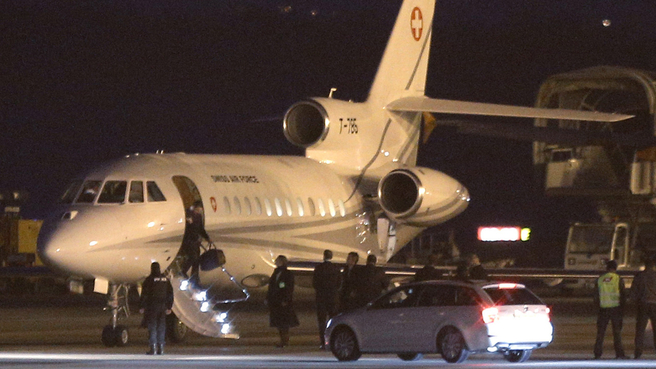
An unidentified man leaves a Dassault Falcon jet of Swiss army at the airport in Geneva, Switzerland, Sunday, Jan 17, 2016. A US government plane waited nearby to bring back to the US the men who were left from imprisonment in Iran the day before. (AP Photo/Laurent Cipriani)

This weekend brought an almost frantic rush of events as the Obama administration and international community lifted economic sanctions against the Iranian regime, while also facilitating a prisoner swap of four Americans being held in Iran with seven Iranian-Americans being held in U.S. prison for trafficking in illegal weapons and nuclear materials.

Three of Americans fly out of Iran and onto Germany to be reunited with loved ones, including Christian pastor Saeed Abedini, former U.S. Marine Amir Hekmati and Washington Post reporter Jason Rezaian. A fourth American, Nosratollah Khosravi whose imprisonment had not been previously reported, opted to stay in Tehran where he has a residence.

The lifting of nuclear sanctions on Saturday allowed Iran to re-enter the world’s oil markets; according to some estimates, by the end of the year its exports may increase by a million barrels a day, yielding about $30 million a day in revenue at current prices. Its ships will be able to enter and leave foreign ports, and its citizens will have access to global financial markets. On top of which the regime is scheduled to being receiving cash transfer of frozen assets that could total as much as a staggering $150 billion.

The Obama administration also took to clearing up several old accounting issues, including a payment of $1.7 billion representing a $400 million refund in payments made for military equipment sold to the government under the former shah, but never delivered because of the revolution along with interest accumulated over 37 years.

With all of this cash now flooding into the Iranian regime’s coffers, the single biggest question hanging over the Middle East is “What will the mullahs do with all that money?”

Considering the nuclear agreement made no attempt to link any restrictions on how the money was to be used, the mullahs are essentially free to do whatever they like with it, which has caused Iran’s neighbors to become very worried.

In Saudi Arabia, there was concern that the lifting of sanctions would bolster Iran and its allies. A statement by 140 Sunni Muslim clerics urged Muslims to unite against the threat of Shiite Iran. It criticized actions by some minority groups in Muslim countries and accused them of “serving foreign agendas,” a veiled reference to what they view as the loyalty of Shiites in Sunni-majority Arab countries to Iran.

Iran’s rivals are also worried that Tehran will spend some of the billions of dollars of oil revenue unfrozen by the lifting of sanctions on aiding regional allies that include Syrian President Bashar al-Assad, the Shiite group Hezbollah in Lebanon and the Shiite-linked Houthi rebels in Yemen.

The prisoner swap and lifting of sanctions was predictably hailed by the Iran lobby, but even the regime’s staunchest supporters recognized the current ambivalent mood of American and European voters who have been unnerved by a rash of terror attacks inspired by Islamic extremism.

“While this diplomatic victory should be celebrated, it is impossible to ignore the ongoing systemic human rights violations in Iran. Recent arrests of activists and artists appear aimed at intimidating reformists and moderates ahead of key elections to Iran’s parliament and Assembly of Experts. Further, an ongoing rise in executions – often for nonviolent drug-related offenses – must be halted without delay. We hope that the moderation that has dramatically impacted Iran’s external relations can now shift inward to produce lasting change,” said the National Iranian American Council, the regime’s leading lobbyist, in a press release. On the same line, it has been trying to put the blame on other factions or “hardliners” within the mullahs regime for the surge in executions and oppressive measures taking place during Rouhani’s tenure, the “moderate” president of the mullahs.

This also represents the double-edged sword the Iran lobby now has to traverse since it has bet everything that the regime will act like a normal civil nation from now on. If the Iranian regime continues to escalate its conflict with Saudi Arabia, continues to fund terror groups or continues to apprehend American sailors at will on the high seas, then public opinion will be turned quickly against the lobby.

Iranian dissident groups that know the regime’s leadership best had the best perspective on this weekend’s events.

“The major part of Iran’s economy (more than 50% of its GDP) is controlled by 14 large entities, all of which are affiliated with the military and security apparatus and controlled by Supreme Leader Ali Khamenei. Much of the released funds will end up in the coffers of these 14 economic entities. A good portion of IRGC expenditures and the monthly financial assistance to the Syrian dictator is paid up by the profits of these institutions. The bulk of the released funds will flow to these economic hubs and will thus serve Khamenei and the IRGC,” said the National Council of Resistance of Iran, one of the leading dissident groups, in a prepared statement.

The NCRI points out, correctly, that the Iranian regime is lurching towards parliamentary elections with a flurry of political arrests and a rapid escalation in public executions – 53 in the first two weeks of January alone – in order to maintain control of the Iranian people, especially if they are anticipating a windfall from the release of funds which they are not likely to receive.

As the Wall Street Journal pointed out in an editorial, this weekend’s events cemented the perception that the Iranian regime essentially swapped four Americans for over $100 billion in cash, access to the international banking system and a re-entry into the global oil markets.

“The timing of Iran’s Saturday release of the Americans is no accident. This was also implementation day for the nuclear deal, when United Nations sanctions on Tehran were lifted, which means that more than $100 billion in frozen assets will soon flow to Iran and the regime will get a lift from new investment and oil sales. The mullahs were taking no chances and held the hostages until President Obama’s diplomatic checks cleared,” the Journal declared.

“But the Iranians negotiated a steep price for their freedom. The White House agreed to pardon or drop charges against seven Iranian nationals charged with or convicted of crimes in the U.S., mostly for violating sanctions designed to retard Iran’s military or nuclear programs. Iran gets back men who were assisting its military ambitions while we get innocents. This is similar to the lopsided prisoner swaps that Mr. Obama previously made with Cuba for Alan Gross and the Taliban for alleged deserter Sgt. Bowe Bergdahl,” the Journal added.

All of this shows that the mullahs tried and true policy of taking hostages will only embolden them to do more. The right policy though seems to be a firm policy much similar to the Sanctions that forced them to come to the nuclear negotiation table.

By Michael Tomlinson
Filed Under: Blog, Current Trend, News Tagged With: Featured, Iran, Iran deal, Iran Lobby

Will the World be Financing More Iranian Aggression?

January 15, 2016 by admin

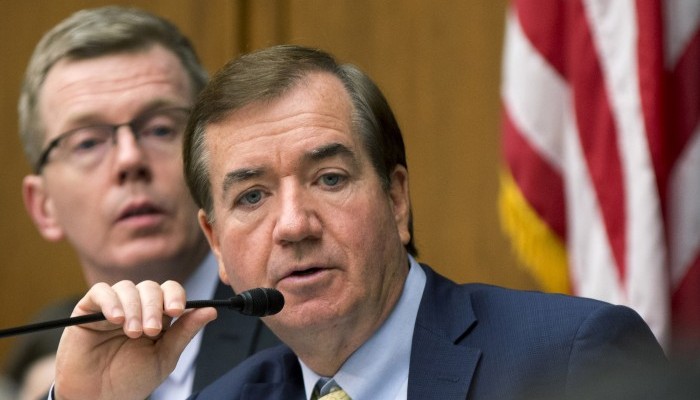
FILE -In this Jan. 7, 2016, House Foreign Affairs Committee Chairman Rep. Ed Royce, R-Calif. speaks on Capitol Hill in Washington. Less than 24 hours after Iran's detention and release of U.S. sailors, the House approved GOP-backed legislation that amplifies Republican distrust of Tehran and would give Congress greater oversight of the landmark nuclear agreement. (AP Photo/Manuel Balce Ceneta, File)

FILE -In this Jan. 7, 2016, House Foreign Affairs Committee Chairman Rep. Ed Royce, R-Calif. speaks on Capitol Hill in Washington. Less than 24 hours after Iran’s detention and release of U.S. sailors, the House approved GOP-backed legislation that amplifies Republican distrust of Tehran and would give Congress greater oversight of the landmark nuclear agreement. (AP Photo/Manuel Balce Ceneta, File)

The USA Today editorial board ran an interesting opinion about the swift release of the ten U.S. Navy sailors captured and detained by the Iranian regime in the Persian Gulf, noting the release of videos and photos depicting the sailors in humiliating poses of surrender follow a similar pattern of aggression by the regime over the past few weeks.

“The seizure and the gratuitous humiliation of the Americans, seen in photographs kneeling with their hands behind their heads, carried at least a whiff of the provocations Iranian military hard-liners have been carrying out lately — such as firing rockets near a U.S. aircraft carrier last month, training a ship-borne heavy machine gun on a U.S. helicopter last summer, and carrying out ballistic missile tests in defiance of a United Nations resolution,” USA Today wrote.

“The quick release undoubtedly had less to do with goodwill than with the fact that Iran stands to get up to $100 billion of its frozen assets back in just days if it has met the conditions of the nuclear deal, which required it to get rid of most of its potentially bomb-making uranium and shut down a plutonium reactor that could also make bomb fuel. A hostage crisis could have stalled the payday,” the board added.

The lure of a huge payday for the mullahs explains the rapid release, but it does not explain the initial detention of the sailors and the need for the regime to publish videos and photos with no other purpose than to score propaganda points against the “Great Satan.”

While the Iran lobby is attempting to portray the release as a positive sign of improved relations, it absurdly excuses the detention in the first place and the videotaped “apology” from one of the sailors in more video as nothing more than a misunderstanding, but the incident provides important lessons for the rest of the world.

Reuters reported that the ultimate decision to release the Americans rested solely with top mullah Ali Khamenei according to regime officials, which is telling since Hassan Rouhani only participated in one meeting on the subject and did not have a voice in the decision. It is a reflection of how internal regime politics work and how Rouhani – while touted by the Iran lobby as a standard bearer for moderation – is in fact nothing more than a puppet for Khamenei.

The value of the videos cannot be underestimated for the regime since symbolism in the Middle East is of paramount importance in countries where strongman politics are the coin of the realm.

As Jennifer Rubin writes in the Washington Post’s Right Turn blog:

“This is a propaganda bonanza for Tehran, one that it will exploit to the hilt to make clear to its allies and those it seeks to intimidate that the United States is weak, unreliable and useless. It furthers their ambitions in the region and demoralizes those resisting Iranian aggression. For countries and individuals on the fence (e.g. the Sunni tribes), the message is clear: You really want to stick your neck out for the Americans?”

There are many in Congress increasingly uneasy in the face of rapidly escalating Iranian aggressions. Less than 24 hours after Iran’s detention and release of U.S. sailors, the House approved GOP-backed legislation that amplifies Republican distrust of Tehran and would give Congress greater oversight of the landmark nuclear agreement.

Lawmakers voted 191-106 Wednesday to approve the Iran Terror Finance Transparency Act, spurning a veto threat from President Barack Obama, but vacated the vote until Jan. 26th in order to gain veto-proof majority in a revote.

The House bill would bar the removal of certain individuals and foreign financial institutions on a restricted list kept by the Treasury Department until the president certifies to Congress that they weren’t involved in Iran’s ballistic missiles program or in terrorist activities, but the delay may not halt the Obama administration’s rush to lift sanctions, nor forestall an anticipated lifting of sanctions by the European Union and United Nations which could come as early as next week.

House Foreign Affairs Committee chairman Ed Royce, speaking at a GOP policy retreat, said the recent actions by the Iranian regime were “very destabilizing in the region.”

“Iran is on a roll, and the perception is that the… administration is getting rolled at this moment,” he added. “We need to see more backbone, not backing down.”

What is clear is that the regime is going to receive an influx of cash without any strong attached and given its most recent acts, we can only assume those funds will flow to support its continued aggression against the world and its neighbors.

The short-term illusion of security with the nuclear agreement will quickly evaporate as the regime bolsters its military, resupply its proxy allies and increase the pace and tempo of its terror activities.

The world will soon discover that the threat posed by ISIS pales in comparison to the threat posed by the Iranian regime.

By Michael Tomlinson

Filed Under: Blog, News Tagged With: Featured, Iran, Iran deal, Iran sanctions

Calls Increase for New Sanctions Against Iran Regime

January 13, 2016 by admin

Calls Increase for New Sanctions Against Iran Regime

Calls Increase for New Sanctions Against Iran Regime

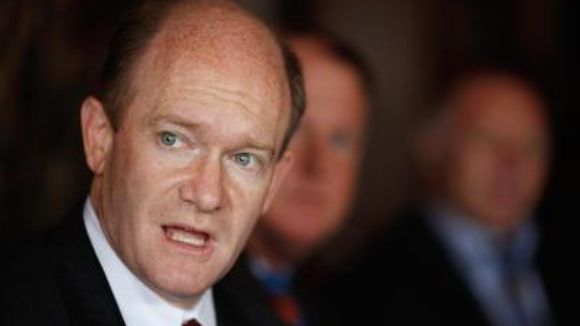
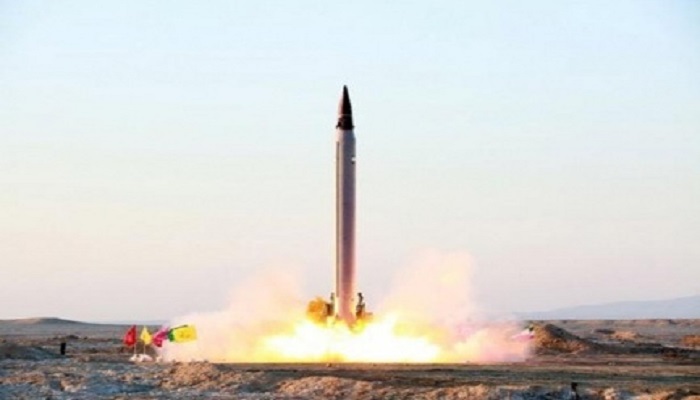
Sen. Christopher A. Coons (D-Del.), who serves on the Senate Foreign Relations Committee, has stepped up his calls – alongside a growing number of Democrats – for the Obama administration to move forward on implementing new sanctions against the Iranian regime for the apparent violation of bans against development of nuclear-capable ballistic missiles.

“I don’t know why the administration has hesitated, but I am urging them publicly and privately to move ahead with those designations,” he told reporters. “I am concerned with the hesitation to move forward with the ballistic missile related designations.”

Coons is among a growing number of Democrats, including some who supported the Iran nuclear deal, who have called on the president to take a firm response to two missile tests late last year. They argue that the administration’s response should show Iran that it will not be able to cheat on the nuclear agreement.

Coons, who supported the Iran nuclear deal, said it was “very clearly communicated and it played a role in my decision” to support the nuclear agreement that the United States was still able to sanction Iran on non-nuclear issues including its missile program or support for terrorist groups.

Unfortunately, Coons and other supporters of the nuclear deal were largely led astray by the Iran lobby which argued long and hard for a separation of nuclear issues from other issues such as missile development, human rights abuses and sponsorship of terrorism.

We are seeing the butcher’s bill come due now as the Iranian regime begins to push the envelope in all those areas now that it has its nuclear agreement.

Unsurprisingly, the mullahs in Tehran have called any proposed new sanctions a violation of the agreement and “illegal.” Such new sanctions as Coons has called for would be viewed as a breach of the agreement by the mullahs and allow them to resume their nuclear program.

Some, such as the New York Times editorial board, still cling to the hope that these issues could still remain separate in what can only be described as delusional thinking. In an editorial yesterday, the Times continued to make the argument that the nuclear deal was the more important goal:

“Critics of Iran and the nuclear deal say the missile tests are proof that the agreement failed. But ending Iran’s production of ballistic missiles was not the focus of the agreement. The greater threat by far has always been Iran’s nuclear program, which was coming closer to producing a bomb until the agreement halted the process.”

The Times does acknowledge the worrisome threat posed by the missile launches in light of the close collaboration between the Iranian regime and North Korea which supplied Iran’s first missiles and still supplies key components, but it still adheres to the laughable idea that there is a real difference and separation between regime president Hassan Rouhani and top mullah Ali Khamenei in terms of “moderates” versus “hardliners” when it comes to the strategic interests of the mullahs in Iran.

Furthermore, Ahmed Shaheed, the UN human rights advocate to Iran, said in a discussion with “Rooz”, Iranian website, that human rights in Iran have not witnessed a significant change since Rouhani’s reign, given that Iran has been refusing, for six years now, the UN rapporteur on human rights.

Amnesty International also issued a statement, last July, warning of the subject of the accumulating executions during the first half of 2015, after recording figures as high as 700 executions, at a time when Iranian statistics showed only 246 Iranians executed. Since Rouhani’s start of his term, over 2,000 people have been executed in Iran, placing Iran at the top of the world list for executions on a per capita basis.

Clearly change needs to come to Iran, but it won’t be coming from the mullahs.

By Laura Carnahan

Filed Under: Blog, News Tagged With: Featured, Iran, Iran Human rights

NIAC List of Accomplishments Misses on Human Rights

January 5, 2016 by admin


NIAC List of Accomplishments Misses on Human Rights

NIAC List of Accomplishments Misses on Human Rights

The National Iranian American Council, the leading advocate and lobbyist for the Iranian regime, published its list of accomplishments for 2015. It was a revealing list giving insight into the top priorities for the NIAC.

For an organization that claims as its mission the “strengthening the voice of Iranian Americans and promoting greater understanding between the American and Iranian people” one would think some of its top priorities would include:

  • Lifting of restrictions within Iran in the use of social media and access to the internet;
  • Halting censorship of news media and a stop to the arrest and imprisonment of journalists;
  • Freeing of Iranian-Americans currently being held in Iranian prisons, including Washington Post reporter Jason Rezaian, Christian pastor Saeed Abedini and former U.S. Marine Amir Hekmati;
  • Withdrawing support for terrorist organizations such as Hezbollah and a halt to proxy wars in Syria, Lebanon, Iraq and Yemen;
  • Releasing over 90 Christians currently imprisoned in regime prisons for practicing their faith;
  • Stopping all executions and imposition of punishments such as public amputations, stoning and beatings; and
  • Restoring basic rights to Iranian women to be free from abuse, spousal murder and misogyny laws.

On the surface, that would seem like an eminently reasonable list of goals for any organization interested in advancing humanitarians causes, but in the case of the NIAC, none of those goals are in its list of accomplishments, nor are they in its 2016 resolutions for future action.

That’s right, zero, zilch, nada.

So what exactly were the NIAC’s best accomplishments for the year? According to its website, the NIAC lays proud claim to nine achievements in its list, of which seven were related to the nuclear agreement with the Iranian regime.

The single most important achievement for the NIAC in 2015 according to its own boasts was securing a nuclear deal already dead on arrival with the test firing of ballistic missiles in violation of United Nations Security Council sanctions and threats by the mullahs to walk away from the deal if there are any threats to impose new sanctions for its missile violations.

Not exactly a recipe for “promoting greater understanding.”

Unsurprisingly, among its four stated “resolutions” for 2016, half relate to the nuclear deal.

Nowhere does NIAC mention the Iranian-Americans being held in Iran.

Nowhere does NIAC mention the brutal human rights situation in Iran.

Nowhere does NIAC mention the growing sectarian rift being fueled by extremist statements being made by top mullah Ali Khamenei who has been calling for the destruction of Sunni Arab states.

Nowhere does NIAC give any mention to the need to ratchet down tensions by calling on the Iranian regime to withdrawal support for proxy wars that have turned the Middle East into a battlefield stretching from the Mediterranean to Indian Oceans.

Instead, the NIAC’s sole focus is to keep the nuclear agreement alive long enough for $100 billion in cash to be wire transferred into regime bank accounts.

Trita Parsi must be looking to buy a new house.

It is a sad situation when the NIAC spells out in its own words its top priorities and none of them address the concerns of Iranian-Americans who yearn for a return to a homeland free from religious control, free from harsh brutality and open to all forms of religious worship and freedoms.

Far from serving Iranian-Americans, the NIAC serves only the mullahs in Tehran and has no other agenda than to take its orders from them.

One would think just for the sake of appearances the NIAC would throw a bone to human rights advocates and mention or cite as a goal the release of these Iranian-American hostages as a priority. It doesn’t even have to be the top priority, maybe number five or six on its list, but the NIAC can’t even bring itself to do that.

It should be apparent to any member of Congress, to any Congressional candidate, to any presidential campaign, who looks at this list, the NIAC is nothing more than a lobbying arm of the Iranian regime and does not accurately reflect the concerns of Iranian-Americans.

In this new year of 2016, we can only hope everyone wakes up to the charade the NIAC has been playing in 2015.

By Michael Tomlinson

Filed Under: Blog, National Iranian-American Council Tagged With: #NuclearDeal, Featured, Iran, Iran deal, Iran Human rights, Iran Lobby, Iran Terrorism, National Iranian American Council, NIAC, Trita Parsi

New Year Starts Off With Predictable Iran Regime Bullying

January 5, 2016 by admin

New Year Starts Off With Predictable Iran Regime Bullying

New Year Starts Off With Predictable Iran Regime Bullying

As 2015 rolled into 2016, the world celebrated with fireworks, parties, countdowns and even offered prayers for a peaceful new year, but the Iran regime dashed those hopes and threw cold water on the festivities by once again flexing its ideological muscle in regards to its illegal ballistic missile program.

Regime president Hassan Rouhani kicked off the New Year by delivering an order to his defense minister to expedite development of the regime’s ballistic missile program in response to threatened new U.S. sanctions set to be imposed on Iranian defense companies.

Rouhani made his comments on his official Twitter account throwing into confusion the nuclear agreement completed last July. It was a confusing situation being created since the Obama administration had been moving aggressively to begin dismantling economic sanctions under the agreement as early as this month, while at the same time it was set to impose new sanctions for the illegal test firing of two new ballistic missiles in violation of United Nations Security Council sanctions.

The schizophrenic nature of the situation illustrates perfectly the almost comical nature of the nuclear agreement where on the one hand the Obama administration is almost tripping over itself to grants relief to the Iran regime, while at the same time rattling its sword over illegal missile development; development it allowed to happen in the first place by removing them as a condition of the same nuclear agreement.

It also brings into sharp focus the essential nature of the Iranian regime which is to push the proverbial envelope as far as it can in taking advantage of its adversaries’ disarray.

“If U.S. continues its illegitimate interference with Iran’s right to defend itself, a new program will be devised to enhance missile capabilities,” Rouhani said in his tweet. “We have never negotiated regarding our defense capabilities including our missile program and will not accept any restrictions in this regard.”

Regime defense minister Hossein Dehghan spoke on state television saying he intended to make the regime’s missiles more powerful.

“Given the current circumstances in the region and the world, we believe peace and security can only be achieved through strength,” he said. “Therefore, we are going to expand our missiles in terms of range and accuracy.”

But in a contest of who might blink first, the Obama administration opted to delay implementation of the proposed sanctions amid threats by the mullahs in Tehran that any fresh U.S. sanctions might force the regime to pull out of the deal; a deal promising to deliver over $100 billion in badly needed cash to the regime.

While Obama officials offered no definitive timeline as to when these sanctions might be imposed, the announcement to impose them was originally scheduled for last Wednesday. By Thursday, members of Congress criticized the administration’s decision to pull back as another capitulation and appeasement to the mullahs.

Top U.S. lawmakers, including White House allies, said they believed failing to respond to Tehran’s two recent ballistic missile tests would diminish the West’s ability to enforce the nuclear agreement reached between global powers and Tehran in July.

“I believe in the power of vigorous enforcement that pushes back on Iran’s bad behavior,” Democratic Sen. Chris Coons of Delaware, a supporter of the nuclear deal, said Friday. “If we don’t do that, we invite Iran to cheat.”

Critics of the White House accused President Obama of backing down on his promises to take action in the face of Iranian provocations such as missile launches. They drew parallels to Mr. Obama’s failure to follow through on threats to launch military strikes on Syrian President Bashar al-Assad’s regime in 2013 in response to its use of chemical weapons against civilians.

“I fear that pressure from our ‘partners’—or threats from the Iranian government that it will walk away from the deal or threaten the U.S. in other ways—have caused the administration to rethink imposing sanctions for Iran’s violations of the testing ban,” said Sen. Bob Corker (R., Tenn.), chairman of the Senate Foreign Relations Committee.

The on-again, off-again nature of these new sanctions does little to strike fear in the hearts of the mullahs and if anything, emboldens them into believing nothing they do will earn a rebuke from Washington.

The United States has also accused Iran’s Revolutionary Guards of recklessly and provocatively firing rockets this week in the vicinity of American warships in the heavily trafficked Strait of Hormuz, a vital international waterway bordering southern Iran that connects with the Persian Gulf, in another sign of belligerent activity from the mullahs.

The confrontation over ballistic missiles and increased level of animosity between the regime and the U.S. in the wake of the nuclear deal points out the incredible pile of falsehoods pushed by the Iran lobby – most notably the National Iranian American Council – which promised a new era of moderation and cooperation and instead has seen fresh terror attacks in Paris and San Bernardino inspired by Islamic extremism, launches of new ballistic missiles and the near state of war between the Iran regime and Saudi Arabia.

Hardly a recipe for peace and stability in 2016 regime supporters such Trita Parsi of NIAC and Jim Lobe at Lobelog promised.

By Michael Tomlinson

Filed Under: Blog, The Appeasers Tagged With: Appeasement policy, Featured, Iran, Iran deal, Iran Lobby, Trita Parsi

Iran Regime Hack on U.S. Power Grid Underscores Cyberwar

December 22, 2015 by admin


Iran Regime Hack on U.S. Power Grid Underscores Cyberwar

Iran Regime Hack on U.S. Power Grid Underscores Cyberwar

One of the most consistent points offered by the Iran lobby in support of the nuclear agreement with the Iranian regime and the rest of the world was that it would usher in a new era of moderation and stability and open the pathway to a rapprochement. Regime supporters such as Trita Parsi of the National Iranian American Council contended that if the U.S. would see fit to delink noxious and troublesome issues such as human rights abuses, support for terrorism and cyberwarfare that things would improve and everyone would join hands in singing a chorus of “We Are the World.”

Nothing could be further from the truth. In fact, new disclosures from former and current U.S. officials clearly show the Iranian regime has been behind some of the most disturbing and threatening cyberattacks against the U.S. in recent memory.

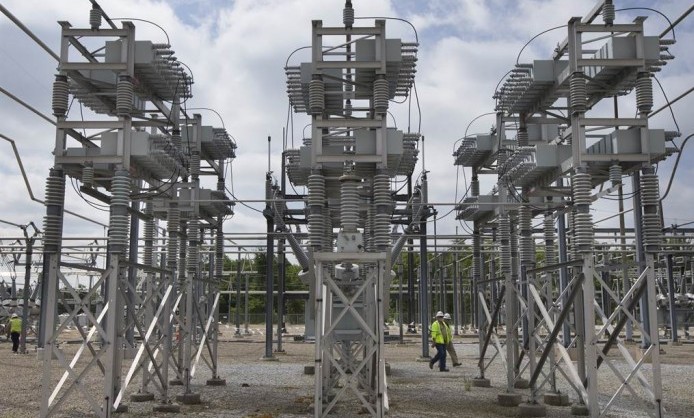
According to the Wall Street Journal, Iranian hackers infiltrated the control system of a small dam less than 20 miles from New York City two years ago. The breach came amid attacks by hackers linked to Iran’s government against the websites of U.S. banks.

“These systems control the flow in pipelines, the movements of drawbridges and water releases from dams. A hacker could theoretically cause an explosion, a flood or a traffic jam,” said the Wall Street Journal. “The incident at the New York dam was a wake-up call for U.S. officials, demonstrating that Iran had greater digital-warfare capability than believed and could inflict real-world damage, according to people familiar with the matter.”

U.S. intelligence agencies noticed the intrusion as they monitored computers they believed were linked to Iranian hackers targeting American firms, according to people familiar with the matter. U.S. officials had linked these hackers to repeated disruptions at consumer-banking websites, including those of Capital One Financial Corp., PNC Financial Services Group and SunTrust Banks Inc., the Journal reported at the time.

The escalation in cyberattacks by Iranian-based hackers represents a new phase in aggressive hostilities punctuated by increases in actual armed conflict with the launching of a new offensive in Syria in support of the Assad regime by the mullahs in Tehran.

While the Obama administration has long held to the idea that Assad needed to go in order to bring about an eventual political solution in Syria, the military support coming from Russia has potentially altered the political calculus of the administration to finding a way to keep Assad in power as a bulwark against the perceived greater threat of ISIS.

“The calculation that the White House has made is that working with Assad is less bad than the alternative of going to war with Russia over Assad, or of sending in a large number of American troops to fight the Islamic State on the ground,” says Joshua Landis, who heads the Center for Middle East Studies at the University of Oklahoma, to the Washington Times.

The administration’s approach is facing biting criticism from lawmakers on Capitol Hill, several of whom argue that the White House has no clear strategy for defeating the terrorist group also known as ISIS and ISIL and is badly following Russia’s lead on Syria as a whole.

The issue also has become a divisive one on the presidential campaign trail. President Obama’s former top diplomat, Hillary Clinton, is aligned with Republican contenders Marco Rubio, Jeb Bush and Chris Christie in asserting that Assad’s ouster should be a top U.S. priority in any serious strategy to defeat the Islamic State.

Tied to that is the prickly question of what to do about the Iranian regime’s total support of Assad in terms of foreign fighters, cash and weapons. It is a question that is increasingly being answered by critics as requiring a strong response from the U.S. and allied countries to back Iran off from supporting Assad and allowing a reduction in fighting for a political solution to take shape.

According to the Michael Singh writing in then Wall Street Journal, Sen. Bob Corker has noted, since the agreement was signed in July, the regime has sentenced Washington Post reporter Jason Rezaian–who has been in jail for more than a year–and imprisoned another Iranian-American. It has defied United Nations sanctions by exporting arms to Yemen and Syria; by dispatching Qasem Soleimani, chief of the regime’s Quds Force, and other sanctioned officials to Russia, Iraq, and elsewhere; and by conducting two ballistic missile launches. Iranian hackers have reportedly engaged in cyberattacks on the State Department. Tehran also refused to fully cooperate with the International Atomic Energy Agency investigation into its nuclear weapons research.

The Washington Post editorial board took an even tougher stance, writing in Sunday’s edition:

“Iran is following through on the nuclear deal it struck with a U.S.-led coalition in an utterly predictable way: It is racing to fulfill those parts of the accord that will allow it to collect $100 billion in frozen funds and end sanctions on its oil exports and banking system, while expanding its belligerent and illegal activities in other areas — and daring the West to respond.

“Unfortunately, the Obama administration’s response to these provocations has also been familiar. It is doing its best to downplay them — and thereby encouraging Tehran to press for still-greater advantage.”

“By flouting the U.N. resolutions, Iran is clearly testing the will of the United States and its allies to enforce the overall regime limiting its nuclear ambitions. If there is no serious response, it will press the boundaries in other areas — such as the inspection regime. It will take maximum advantage of Mr. Obama’s fear of undoing a legacy achievement, unless and until its bluff is called. That’s why the administration would be wise to take firm action now in response to the missile tests rather than trying to sweep them under the carpet,” warned the Washington Post.

That effort to appease the mullahs at all costs has manifested itself in the manner the Obama administration is literally prostrating itself before the mullahs over the issue of the visa waiver program changes contained in the recently passed omnibus funding bill.

As Eli Lake and Josh Rogin point out in Bloomberg View:

“In the latest example of the U.S. effort to reassure Iran, the State Department is scrambling to confirm to Iran that it won’t enforce new rules that would increase screening of Europeans who have visited Iran and plan to come to America,” they write.

“House staffers who spoke with us say Iran was included for good reason, because it remains on the U.S. list of state of sponsors of terrorism for its open support for Hezbollah and Hamas. The White House did not object until the Iranian government told the administration last week that the bill would violate the nuclear agreement, according to correspondence on these negotiations shared with us,” Lake and Rogin added.

The willingness for the U.S. to not press the Iran regime on these and a wide range of issues, including the most recent cyberattacks, only reinforces the same bad behavior by the mullahs.

But on a more personal level, the plight of individual families was highlighted by an editorial written by Daniel Levinson, son of retired FBI agent Robert Levinson, who disappeared in Iran in 2007 and has not been produced by regime despite repeated demands.

“Any foreign national considering a trip to Iranian-controlled territory risks arbitrary detention, potentially without access to any basic human rights or their loved ones for years to come. This is what happened to my father,” Levinson writes in the Washington Post. “We were devastated that he was not released in the aftermath of the accord. Now we fear that the United States has squandered its best opportunity for leverage in ensuring my father’s safe return home.”

For the Levinsons and countless other families impacted by the barbaric cruelty of the Iranian regime, the price of not standing up to the mullahs only goes up with each new act of appeasement.

By Michael Tomlinson

Filed Under: Blog, News, The Appeasers Tagged With: Appeasement policy, Featured, Iran, Iran deal, Iran sanctions

Human Rights in Iran Matter to the World

December 9, 2015 by admin

Human Rights in Iran Matter to the World

Human Rights in Iran Matter to the World

This Thursday marks International Human Rights Day, which marks the day in 1948 when the United Nations General Assembly adopted the Universal Declaration of Human Rights which lays out a broad range of political, civil, social, cultural and economic rights that eventually formed the foundation of human rights principles binding the UN in its work and through the work of the High Commissioner for Human Rights.

In 1948, the world was still picking up the pieces from World War II and the early battle lines of the Cold War were being drawn in a world largely divided between old Soviet-era Warsaw Pact and U.S.-led NATO alliance.

That world is gone and today we are increasingly finding a world divided along secular and sectarian lines as terror has become a tool of statecraft for nations such as Iran and Syria, while other nations such as Afghanistan, Lebanon, Yemen and Iraq are being fought over in what they pretend to be a religious and ideological battle.

In this new world of global terror, human rights have all but vanished in these disputed regions, but whereas the fall of the Iron Curtain and Berlin Wall came after an arms race the Soviet Union could not win and the seeds of democracy flourished in places like Gdansk in Poland, the hegemony of Islamic extremists is growing and sinking deeper roots as the West struggles to formulate a coherent strategy to stem the growth of groups such as ISIS, Al-Qaeda and Boko Haram.

Central to that any successful strategy though will be how to address the crushing suppression of human rights by the Iran regime against its own people. As one of only three state sponsors of terror left on the U.S. State Department terrorism list, the Iran regime sits in the middle of most – if not all – of the crises occurring throughout the Middle East.

Rep. Eliot Engel (D-NY) pointed out during a House Foreign Affairs Committee hearing last week that Iran’s Islamic Revolutionary Guard Corps (IRGC) has been fueling turmoil throughout the Middle East even with strict economic sanctions in place.

“Iran is the leading state sponsor of terrorism, and in the past several years when Iran had no money, it still found money to be the leading state sponsor of terrorism,” Engel said.

“Under the [nuclear] deal negotiated with Iran, they will be awash in cash, they will have lots of money, and imagine how much destruction they can do in support of terrorist activities and terrorism. That is very deeply troubling for me.”

The mullahs support of Hezbollah and the Assad regime in Syria has fostered the birth of ISIS and other splintered Al-Qaeda groups, while its mishandling of Iraq’s government collapsed a coalition government driving Sunni tribes out and into the arms of ISIS which soon become a nation-state in its own right with the takeover of Mosul of most of northern Iraq.

Their support of Houthi rebels in Yemen, toppled the government and drove Saudi Arabia and other Gulf States into a shooting war that threatens the flow of oil from the Persian Gulf.

Beyond the foreign policy conundrums the mullahs in Tehran have fomented, it is their treatment of the Iranian people that has caused the most problems because the complete suppression of dissent has enabled the mullahs to keep their hands on power and accomplish their goals of exporting their extremist philosophy around the world.

Without dissent, without a free press and without due process and fair trials, the Iran regime has managed to turn Iran into a virtual police state that would give a Stalinist-era Soviet Union a run for its money in cruelty. That cruelty is not necessarily confined to just political dissent as the Iran regime seeks to impose its punishments on all facets of Iranian life.

Amnesty International noted this in a blistering statement condemning death sentences placed on two Iranian children.

“This ruling lays bare the Iranian authorities’ contempt for the human rights of children, coupled with their appetite for the death penalty – a toxic combination that leaves numerous juvenile offenders facing execution,” said Said Boumedouha, deputy director of Amnesty International’s Middle East and North Africa Program.

“Iran’s continued use of the death penalty against persons convicted of crimes committed while they were under 18 years of age is cruel, inhumane and blatantly unlawful. The death sentences of both these men, and all other juvenile offenders on death row in Iran, must be commuted immediately.”

As noted by Amnesty International, Iran is a state party to the Convention on the Rights of the Child and the International Covenant on Civil and Political Rights, both of which prohibit the imposition of the death penalty against persons who were below 18 years of age at the time of the crime, without exceptions. However, Iran continues to impose the death penalty against juvenile offenders and frequently defer the execution until after they pass the age of 18, which illustrates the regime’s approach to most international treaties and agreements it signs.

That same contempt has been applied to nuclear agreements the regime has signed, including the most recent one negotiated last July, which it violated through the test firing of new ballistic missiles.

But the regime is facing consequences of its crackdowns as evidenced by the rising tide of protests and demonstrations being mounted within Iran – often at personal risk to the protestors – such as a protest of students expressing frustration over the continuing repression in Iran and demanding for the release of political prisoners, at a ceremony marking Students Day (December 7) in Iran.

But criticism of government officials, and especially of the regime’s top mullah Ali Khomeini, comes at a high cost. Indeed the angry speeches and slogans at the Students Day event were partly sparked by the recent wave of arrests carried out by the Revolutionary Guards Intelligence Organization against journalists, reformists, poets, and artists. Last month four journalists, were among the latest detainees, while many other peaceful activists, such as Bahareh Hedayat, Narges Mohammadi, Atena Faraghdani, and Atena Daemi are still behind bars in Iran.

The protests come on the heels of an announcement that the regime’s revolutionary courts sentenced the managing editor of a state daily newspaper claiming he violated prohibitions on coverage of Mohammad Khatami, a former regime president now described as a seditionist.

The indictment was also notable because the editor, Mahmoud Doaei, of the Ettelaat, one of Iran’s oldest newspapers, was an early figure in the 1979 Revolution. He was a member of the inner circle around Ruhollah Khomeini, the regime’s previous supreme leader who gave birth to the deadly ideology of Islamic extremism, and was considered somewhat protected in the factional feuding that has increasingly marked Iran’s opaque political hierarchy.

All of which points to an almost bipolar exhibition of policy decisions by the regime that have left many Western observers baffled, but to experienced Iranian dissidents, the actions of the regime have been all too typical of past history.

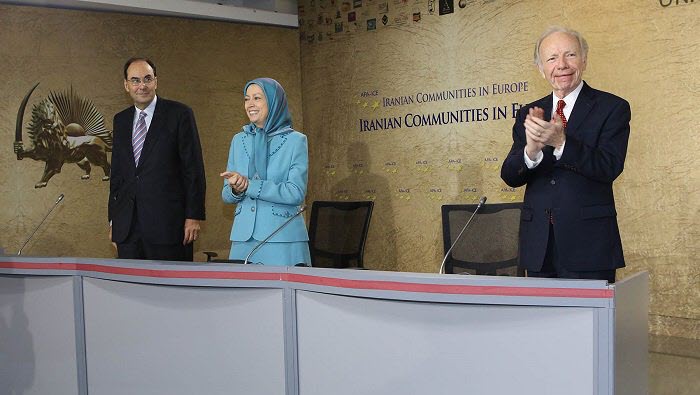
At a meeting sponsored by the Union of Iranian Associations in Europe in Paris the other day, Mrs. Maryam Rajavi, leader of the National Council of Resistance of Iran, drew attention to the efforts of the Iran regime to save the Assad regime in Syria.

She called on Western governments to revise their policy which has so far reinforced the Iranian regime that causes instability in the region and is the main threat to global peace and security, and to make their relations with the Iranian regime contingent on end to executions and torture, and freedom of political prisoners.

“This calls for Western governments to adopt a policy that supports the desires of the innocent people of Syria for a speedy overthrow of Bashar Assad, gives substantial backing to the Free Army of Syria in its struggle against the regime, and insists on the eviction of foreign troops, specifically the Iranian Revolutionary Guards Corps from Syria and Iraq,” Mrs. Rajavi said.

Only by reforming Iran and bringing about a sectarian, democratic government can the Middle East ever hope to find peace and stability and the first step towards that goal is making human rights a top priority again in Iran.

By Michael Tomlinson

Filed Under: Blog, News Tagged With: Featured, Iran, Iran Human rights, Iran Mullahs, Joe Lieberman, Maryam Rajavi

Tying Terrorism to the Environment Doesn’t Excuse Iran Regime

December 2, 2015 by admin

Tying Terrorism to the Environment Doesn’t Excuse Iran Regime

Tying Terrorism to the Environment Doesn’t Excuse Iran Regime

As world leaders gathered this week in a Paris still suffering from the after effects on a series of bloody terrorist attacks for a global summit on climate change, one of the more controversial side topics to erupt from it was the claim of a linkage between the planet’s extreme weather changes and the rise in extremist terror around the world.

The world’s news media have been filled with analysis and debate, which has filtered over into the U.S. presidential campaign as well. Evan Halper in the Los Angeles Times recaps some of that debate as the issue has been promoted by luminaries such as Britain’s Prince Charles and denounced by Rupert Murdoch’s Sun newspaper.

The linkage from proponents comes from the idea that global warming has shifted weather patterns to such an extent that crop failures and long-term drought have led to deprivation of impacted regions of the globe that have lent themselves to the spawning of extremist groups initially intent on acquiring limited resources such as food, water and arable land to curry the favor and recruitment of desperate people.

One case in point has been the building debate over root causes of the Syrian civil war, which some climate activists have claimed had its start in a decade-long drought that caused the mass migration of some 1.5 million people out of farming areas and into refugee status and provided a fertile recruiting group for extremist groups.

The complexity of such a debate must also take into account issues of religion, politics, economics and even personal graft and greed; all issues of pressing relevance throughout the Middle East and developing world.

But the Iran lobby and the Iran regime have been quick to latch onto this theory as an alternative rise in Islamic extremism and put some distance between the mullahs in Tehran to terror groups and terrorist activities they have historically supported such as Hezbollah in Lebanon and Syria and the Houthis in Yemen.

The regime was so intent on fostering this idea that it sent Masoumeh Ebtekar, head of its Department of Environment, to Paris to speak on the sidelines of the global climate summit and gave her remarks broad play in state-run media.

But even when the topic is rising temperatures, the mullahs could not miss out on any opportunity to voice their time worn demand for the immediate lifting of all sanctions against it by having Ebtekar make the promise that the regime would cut its greenhouse emissions by 4 percent and increase those cuts to 12 percent if sanctions are fully lifted.

“I wish to urge the UN system to initiate an assessment on the carbon footprints of war, conflicts, security and terrorism,” Ebtekar said. “Those perpetuating conflicts are in fact accomplices of the global warming process.”

It’s an interesting statement to make from the regime’s leadership considering that their gross mismanagement has turned what was once called the cradle of civilization into what is arguably now one of the greatest environmental disasters on the planet.

Tehran has been rated one of the most polluted cities in the world with cars and buses using mostly leaded gasoline, which is heavily subsidized by the regime in order to quell a restive population, but which has the unfortunate side effect at negating any effort to conserve and leads to profligate and highly inefficient traffic patterns.

Its traffic management systems are virtually non-existent with little to no vehicle inspection, mobile emission testing or controls and a government bureaucracy so corrupted by the mullahs nepotism and favoritism that the wealthy children of mullahs and those aligned with the Revolutionary Guards Corps are often seen tooling around in gas guzzling Lamborghinis and Ferraris.

The rural parts of Iran suffer from large-scale overgrazing and growing desertification and deforestation turning large swathes of the country into desert dunes, while industrial and urban wastewater runoff has contaminated most rivers, coastal areas and underground aquifers.

The World Bank estimates that losses inflicted on the regime economy as a result of deaths coming from air pollution alone reach $640 million or 0.57 of total gross domestic product for the entire nation, while the UN Environment Program ranked Iran 117th among 133 countries in terms of environmental indexes.

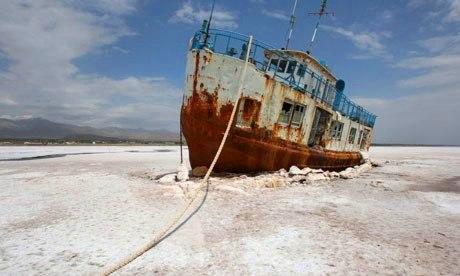
One example of the environmental mismanagement of the regime is the drying up of Lake Urmia in the northwest of Iran, which has shrunk a stunning 70 percent and is in danger of permanently disappearing after being the sixth largest saltwater lake in the world.

Things are so bad that Iran generates an estimated 50,000 tons of trash every day with only 70 percent of it disposed of safely and an even smaller amount redirected into reuse and recycling. The rest of the garbage finds its way into the country’s waterways and forests. Iran ranked worst in the world for soil erosion as well in 2011.

The degradation of Iran’s environment has led to mass discontent throughout the nation as the country’s environmental activists have taken to protesting the mullahs’ mismanagement much in the same way Iranian dissidents protested human rights violations.

The failure of Hassan Rouhani to live up to campaign promises to clean up the environment have led to top mullah Ali Khamenei to issue his own 15-point list of policy directives to staunch some of these problems. In reading the policy directive, one could almost envision it being a verbatim policy paper written by the Obama administration’s Environmental Protection Agency as it calls for lofty goals such as “bilateral, multilateral, regional and international partnerships and targeted cooperation in the environmental field.”

But no matter how many “laterals” the regime undertakes, what is abundantly apparent is that the regime is more concerned about practical political and military matters than environmental ones as it spends much of its treasury on supporting terror groups and the proxy wars in Syria, Iraq and Yemen.

If President Obama is correct and extremist terrorism is given its birthplace out of the degraded environments of regions plagued by drought and famine, then Iranian regime’s dismal environmental management has certainly produced bumper harvests of terrorists and violence.

By Laura Carnahan


Filed Under: Blog, News Tagged With: Featured, Iran, Rouhani, Sanctions

Reasons To Be Thankful This Past Weekend

December 1, 2015 by admin

Reasons To Be Thankful This Past Weekend

Reasons To Be Thankful This Past Weekend

This past weekend, across the U.S., families sat down together to celebrate family and give thanks for all what they have, including secularism in government, freedom of speech and the practice of religion, support for the rights of women and minorities, protection for a free and active press and the guarantee of due process and a presumption of innocence in criminal cases.

All those things and more have formed the bedrock of American civil society for 239 years, but are virtually non-existent in the one country that has steadily called for the destruction of the American way of life since 1979: the Iranian regime.

The past few months of 2015 have certainly caused significant concern and alarm among Americans and throughout most parts of the world. We have seen terror attacks spring up literally around the world, most recently in the horrific attacks in Paris – first with the Charlie Hebdo attacks and then the bombings – and in the wave of atrocities perpetuated by Al-Qaeda, Boko Haram, Hezbollah and Shiite militias.

Couple that with the spread of sectarian conflicts – most fueled by the Iranian regime – in Syria, Iraq and Yemen, and you begin to get a pretty good idea of how chaotic the year has become in spite of the promises made by the Iran lobby that things would settle down after a deal was struck with the mullahs in Tehran over a new nuclear deal.

How wrong people like Trita Parsi of the National Iranian American Council were.

But for most Americans, their Thanksgiving wishes and victories were much smaller and personal. For them, most Americans could be thankful that this past weekend:

  • No more Americans were arrested and held hostage in Iran, except for the five currently held captive by the Iranian regime;
  • No new terror attacks were launched against Americans at home or abroad; and
  • The Iranian regime didn’t launch any new ballistic missiles like it did last month violating United Nations arms embargoes.

But for the Iranian regime, this past weekend wasn’t nearly a peaceful or good one for the mullahs as setbacks continue to dog the regime and stymie each of its efforts to expand its vision for a greater Islamic sphere of influence controlled from Tehran.

Among the news coming from media sources this weekend include:

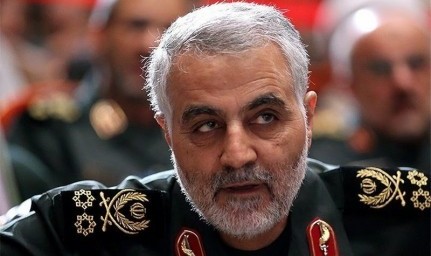
  • Reports that Quds Force commander Qassem Soleimani was seriously injured in Syria while supervising Iranian regime forces fighting rebels on behalf of the Assad regime. This follows previous news of deaths of other top Iranian military commanders in Syria;
  • The Washington Post reported that findings by the International Atomic Energy Agency can be expected to spark another round of intense scrutiny over the Iran regime’s claims its previously undisclosed nuclear program did not have any military components to it;
  • In anticipation of the IAEA report, the regime denounced the ongoing investigation and warned that Iran would not follow through on the nuclear deal unless the IAEA closed its investigation no later than Dec. 15;
  • Kenyan security forces have arrested two Kenyan men with links to the Iranian regime’s Quds Forces on suspicion of planning attacks in the East African nation, the Interior Ministry said on Saturday. It said their targets included “hotels in Nairobi frequented by Western tourists and diplomats;”
  • A flurry of reports in the Iran regime’s official and semi­official news outlets that have flooded out about more combat deaths suffered by Iranian forces in Syria have surprised analysts who monitor the country’s tightly controlled media. The reports, they say, indicate that at least 67 Iranians have been killed in Syria since the beginning of October, in a move some have described as an attempt by the mullahs to grab headlines back from Russia in an effort to burnish the image of regime forces fighting in Syria.

And to top off the weekend, top mullah Ali Khamenei went on his usual Sunday rant denouncing the U.S. and promising to keep the regime’s policies aimed squarely at preserving the Islamic revolution and spreading it throughout the region.

As reported in the Washington Times, Khamenei’s message was the subject of an analysis in a report by the U.S. Army Foreign Military Studies Office at Fort Leavenworth, Kansas.

“To encourage perpetual revolution might mean to foment continuous crisis,” the report said. “This, in turn, suggests greater regional instability and Iranian Revolutionary Guards Corps provocations toward U.S. forces and others.”

In other words, the Joint Comprehensive Plan of Action, the nuclear deal on which the Obama administration gambled for a more moderate Iran, has not tempered Khamenei’s fiery outcry.

“Khamenei’s endorsement of an expansive and perhaps even growing IRGC role confirms the group’s position as the chief obstacle to any political and economic reform in the Islamic Republic, and also suggests that the IRGC may win disproportionate advantage from any unfrozen assets or foreign direct investment entering the Iranian economy,” the report added.

All of which points out that while Americans celebrated values of family, peace, forgiveness and charity on Thanksgiving, the Iranian regime was busy deepening a conflict that has displaced half of Syria’s population, creating the largest refugee crisis in Europe since the end of World War II and spreading a radicalized form of extremist Islam manifesting itself in various terrorist groups around the world.

We can only hope the mullahs don’t get their holiday wishes granted next month.

By Michael Tomlinson

Filed Under: Blog, News Tagged With: Featured, Iran, Iran deal, Iran Terrorism, IRGC, Khamenei, Quds force, Syria, Trita Parsi, Yemen

Iran Regime Serves as Center of Terrorism Now

November 25, 2015 by admin


Iran Regime Serves as Center of Terrorism Now

Iran Regime Serves as Center of Terrorism Now

There are 196 countries on the planet and they all have their issues with their neighbors. They squabble, they fight, they complain, they protest, they even spy on one another and in a few cases they openly make war.

Some of those countries are vast and powerful such as the U.S., Russia or China, while others are small to the point of being insignificant on the world stage such as Monaco, Tuvalu or San Marino.

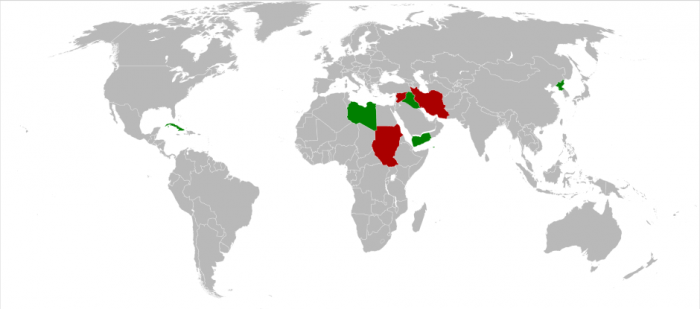
But there are only three countries that share a unique and disturbing distinction. There are only three countries remaining on the U.S. State Department’s list of state sponsors of terrorism:

  • Syria
  • Iran
  • Sudan

It’s a pretty exclusive club, one that used to have as its members Libya, Iraq, South Yemen, Cuba and North Korea.

To be placed on this list, countries are alleged to have “repeatedly provided support for acts of international terrorism.”

In order to get off the list, countries have to demonstrate:

  • Fundamental change in the leadership and policies of the government of the country concerned;
  • Not supporting acts of international terrorism, and
  • The government has provided assurances that it will not support acts of international terrorism in the future.

It doesn’t seem like an unreasonable set of criteria to follow, especially if a country wants to be part of the international community. But in Syria and Sudan’s cases, it’s understandable considering the civil wars they are embroiled in and inability of any central government to eliminate any safe havens for terrorist groups to operate in.

The Iranian regime stands out as the only government not undergoing any turmoil that actively and aggressively supports terrorism around the world; and does so with religious fervor.

The State Department terrorism report describes the Iranian regime polices this way:

“While its main effort focused on supporting goals in the Middle East, particularly in Syria, Iran and its proxies also continued subtle efforts at growing influence elsewhere including in Africa, Asia, and, to a lesser extent, Latin America. Iran used the Islamic Revolutionary Guard Corps-Qods Force (IRGC-QF) to implement foreign policy goals, provide cover for intelligence operations, and create instability in the Middle East. The IRGC-QF is the regime’s primary mechanism for cultivating and supporting terrorists abroad.”

The mullahs in Tehran are using all of the available levers of state power to further their support of terrorism whether it is providing safe havens for terrorist leaders, financing of operations, supplying fighters and manpower, equipping them with arms and ammunition, providing transportation and intelligence or actively directing them in attacks.

In many ways, the Iran regime resembles the fictional Hydra organization in the Marvel Cinematic Universe as its tentacles stretch across the world seeking influence in Asia, Africa, Europe and the Americas. Unfortunately, in our universe, we don’t have Captain America or Iron Man to rely on.

That propagation of terrorism has served as a template for extremist groups such as ISIS and affiliated Al-Qaeda groups to spring up everywhere and launch attacks to the extent that the U.S. State Department issued a global travel advisory for only the fourth time in history and most ominously the alert extends through the busy holiday travel season through February 2016.

The general degeneration of global peace and stability can be traced in many ways back to the Iranian regime, including its support of the Assad regime in Syria’s civil war, the collapse of the Sunni-Shiite coalition government of Nouri al-Maliki in Iraq, the overthrow of the Yemen government by Iran-backed Houthi rebels and the recruitment of Hezbollah and Afghan fighters across Syria and Iraq.

All of which puts a harsh spotlight on the rosy claims made by the Iran lobby and backers of the regime by a variety of groups and analysts such as the National Iranian American Council and Paul R. Pillar and Ali Gharib that approval of a landmark nuclear deal would usher in a new era of moderation and cooperation.

That naïve sentiment was again proven wrong as news reports came out revealing a surge in sophisticated computer espionage by the Iran regime resulting in serious cyberattacks against State Department officials over the past month.

According to the New York Times, “over the past month, Iranian hackers identified individual State Department officials who focus on Iran and the Middle East, and broke into their email and social media accounts, according to diplomatic and law enforcement officials familiar with the investigation. The State Department became aware of the compromises only after Facebook told the victims that state-sponsored hackers had compromised their accounts.”

“It was very carefully designed and showed the degree to which they understood which of our staff was working on Iran issues now that the nuclear deal is done,” said one senior American official who oversees much of that operation and who requested anonymity to discuss a continuing investigation. “It was subtle.”

It is clear now that the Iranian regime is not only the center of state-sponsored terrorism in the world, it is its living heart.

By Michael Tomlinson

Filed Under: News Tagged With: ALi Gharib, Featured, Iran, Iran deal, Iran Lobby, Paul Pillar, Reza Marashi

  • « Previous Page
  • 1
  • …
  • 22
  • 23
  • 24
  • 25
  • 26
  • …
  • 34
  • Next Page »

National Iranian-American Council (NIAC)

  • Bogus Memberships
  • Survey
  • Lobbying
  • Iranians for International Cooperation
  • Defamation Lawsuit
  • People’s Mojahedin
  • Trita Parsi Biography
  • Parsi/Namazi Lobbying Plan
  • Parsi Links to Namazi & Iranian Regime
  • Namazi, NIAC Ringleader
  • Collaborating with Iran’s Ambassador

Recent Posts

  • NIAC Trying to Gain Influence On U.S. Congress
  • While Iran Lobby Plays Blame Game Iran Goes Nuclear
  • Iran Lobby Jumps on Detention of Iranian Newscaster
  • Bad News for Iran Swamps Iran Lobby
  • Iran Starts Off Year by Banning Instagram

© Copyright 2026 IranLobby.net · All Rights Reserved.