Iran Lobby

Exposing the Activities of the lobbies and appeasers of the Mullah's Dictatorship ruling Iran

  • Home
  • About
  • Current Trend
  • National Iranian-American Council(NIAC)
    • Bogus Memberships
    • Survey
    • Lobbying
    • Iranians for International Cooperation
    • Defamation Lawsuit
    • People’s Mojahedin
    • Trita Parsi Biography
    • Parsi/Namazi Lobbying Plan
    • Parsi Links to Namazi& Iranian Regime
    • Namazi, NIAC Ringleader
    • Collaborating with Iran’s Ambassador
  • The Appeasers
    • Gary Sick
    • Flynt Leverett & Hillary Mann Leverett
    • Baroness Nicholson
  • Blog
  • Links
  • Media Reports

What the Taking of Another American by Iran Regime Tells Us

November 2, 2015 by admin

What the Taking of Another American by Iran Regime Tells Us

What the Taking of Another American by Iran Regime Tells Us

The sudden and surprising arrest by Iran regime officials of Siamak Namazi raised the eyebrows of many veteran Iran watchers; not the least because Namazi has been an integral part of efforts to build a lobbying force in the U.S. used to support the regime’s political goals, namely passage of a just-completed nuclear agreement.

In fact, the ties between Namazi and Trita Parsi, the founder of the National Iranian American Council and leading lobbyist for the regime, have been well documented, all of which raised the question of why would regime leaders order the arrest of one of their own?

The very question indicates how wrong most analysts are about Iranian mullahs in the first place. Many people, including apparently Namazi, long assumed that if you towed the party line of the mullahs, you were always going to be in their good graces and in Namazi’s case, he hoped to reap the financial rewards that came from that association in the form of guiding foreign investment into Iran following the nuclear deal.

But what he failed to understand and what many others have failed to grasp even as they tried appeasing these same mullahs is that they are never going to allow anyone into their tight circle of control who does not follow their proscribed fundamentalist and extremist religious beliefs.

For the mullahs in Tehran, the coin of the realm is not just money; the constitution vests absolute authority with Ali Khamenei and his cadre of mullahs who oversee the judiciary, military and foreign affairs and vast tracts of the economy, while have an unrelaxing temptation for expansion of their authorities in to neighboring countries.

The Iranian Revolutionary Guard Corps wields disproportionate influence through its monopolistic control of entire industries such as telecommunications, petroleum, finance and agriculture. Iran’s theocracy controls planning of the economy and dispenses its meager rewards to the Iranian people, while reserving the bulk of the financial gains for its elites, their families and the military campaigns it funds overseas in Lebanon, Syria, Iraq and Yemen.

For Namazi and Parsi and their fellow Iran lobbyists, the suddenness of the arrest was jarring, but it should have not comes as a complete surprise since the mullahs have long practiced the art of score-settling amongst their factions with sham trials, imprisonments and even executions.

But unlike what Parsi and his ilk would have the rest of the world believe, the fight in Iran’s leadership is not between “moderates” and “hardliners,” but in fact is between factions of corrupt mullahs bickering over the booty they rob from the Iranian people. The fact that every effort to promote a “moderate” faction within Iran has met with utter failure is indicative not of the lack of passion within the Iranian people for regime change, but rather the ruthless willingness of the mullahs to use deadly force against their own people to keep tight their grip on power.

Also since signing of the nuclear agreement, Khamenei has made it his mission to remind the world the he does not view adherence to the terms of the agreement to be beneficial to the regime, nor indispensable. In fact, in his mind, anything that compromises the extremist Islamic fanaticism is the antithesis of what the mullahs want. For Khamenei, getting a $150 billion check from unfrozen assets with no strings attached is the best possible alternative.

Khamenei is eager for the money in order to continue funding his vision of an expanding Islamic sphere of influence stretching from the Mediterranean to the Indian Ocean, but he does not want to jeopardize it with young Iranians clamoring for access to Snapchat on their iPhones while wearing clothes from Old Navy, which is why the arrest of Namazi, a putative supporter of the regime, tells us clearly that the regime intends to be the one calling the shots and not the other way around.

By Michael Tomlinson
Filed Under: Blog, National Iranian-American Council, News, The Appeasers Tagged With: #NuclearDeal, Appeasement policy, Featured, Iran, Iran deal, Iran Lobby, Iran sanctions, Khamenei, National Iranian American Council, NIAC, Trita Parsi

What Camp Liberty Tells Us About the Iran Regime

October 30, 2015 by admin

What Camp Liberty Tells Us About the Iran Regime

What Camp Liberty Tells Us About the Iran Regime

Camp Liberty, located near Baghdad International Airport, was originally built by the U.S. military as a base for coalition forces during the Iraq war. Since 2012, it has served as home to over 2,200 Iranian refugees; most are members of the People’s Mujahedin of Iran (PMOI/MEK) a longtime resistance group to the current Iran regime.

It has also been subject to an almost endless barrage of attacks from forces aligned with the Iran regime; with the most recent attack coming last night in the form of some 80 rockets falling on the compound and killing at least 23 people with dozens more injured according to the National Council of Resistance of Iran, an umbrella group of dissident and resistance groups.

This is the fifth attack on the camp since 2003 with international inquiries pointing to Iraqi paramilitary forces, Shiite militia and other terror groups backed by Iran as being responsible. Attacks included four separate mortar and rocket attacks in 2013 alone.

According to NCRI-US office deputy director Alireza Jafarzadeh, some of the missiles used in this week’s attack are Falaq missiles manufactured by the Iran regime.

“The Iraqi Government and the United Nations, which signed a memorandum of understanding in December 2011, guaranteeing the protection of the residents of Camp Liberty, must be held to account,” said opposition spokesman Shahin Gobadi.

The refugees were relocated to Camp Liberty from Camp Ashraf two years ago after suffering similar attacks and under an agreement with the UN Assistance Mission for Iraq to resettle them through the UN High Commissioner for Refugees (UNHCR). The Iraqi government and UN ostensibly were responsible for the safety and security of the residents, but despite calls by the UNHCR, the Iraqi government has failed to provide adequate security.

The UNHCR issued a statement condemning the attacks saying “This is a most deplorable act, and I am greatly concerned at the harm that has been inflicted on those living at Camp Liberty,” said High Commissioner for Refugees António Guterres. “Every effort must continue to be made for the injured and to identify and bring to account those responsible.”

Mrs. Maryam Rajavi, the head of the NCRI, also condemned the attack saying “The government of Iraq and the United Nations who signed a Memorandum of Understanding and built a Temporary Transit Location (TTL) since 2011, are formally and legally accountable for this attack. In our view, however, as was the case in the six previous bloodbaths in Ashraf and Liberty, the Iranian regime’s agents in the government of Iraq are responsible for this attack and the United States and the United Nations are well aware of this fact.”

The timing of the attack is interesting because it follows a string of provocative and aggressive actions by the Iran regime after agreeing to a nuclear agreement that proponents and members of the Iran lobby had touted as ushering in a new era of moderation and openness with the mullahs in Tehran.

In a few short months, Iran has:

  • Convicted Washington Post reporter Jason Rezaian and continue to hold three other Americans as potential hostage bargaining chips to exchange for 19 Iranian agents convicted of arms trading and smuggling nuclear components;
  • Spurred a military alliance with Russia to come to the rescue of Assad in Syria and launch a new offensive aimed at rebels with Iranian troops, Hezbollah terrorists, Shiite militias and Afghan mercenaries;
  • Launched a new ballistic missile capable of carrying nuclear payloads in direct violation of UN Security Council sanctions against their development;
  • Stonewalled inspections and questioning by International Atomic Energy Agency officials on the military dimensions of its nuclear program and scrubbed its Parchin site prior to inspection;
  • Stepped up executions and is on pace to kill over 1,000 people this year alone as revealed in a critical report by the Special Rapporteur for Human Rights in Iran and Amnesty International.

And ironically enough, agents of the regime’s Revolutionary Guards Corps even arrested and tossed into Evin Prison one of the key builders of its lobbying network in the U.S. in a bid to reassert the domination of regime policies by Ali Khamenei, its top mullah.

The attack on Camp Liberty is nothing more than a continuation of the same aggressive policies of the mullahs who have increased efforts to stifle any form of dissent and opposition by attacking members of the resistance outside of Iran and cracking down at home against those who foolishly believed in the propaganda of a more moderate Iran post-nuclear deal.

The fact that Iran has been invited to multilateral international talks on Syria is more evidence that the regime is pressing its agenda on all fronts as broadly as possible including its top priority of keeping the Assad regime firmly in power in order to maintain the corridor of for the extremist groups it has built from Lebanon to Iraq to Yemen.

The attack on Camp Liberty is just another reminder that the West should act to restrain the Iran regime and not appease it.

By Laura Carnahan

Filed Under: Blog, News Tagged With: Appeasement policy, Featured, Iran, NIAC, NIAC Action

Iran Regime Turns on Its Own

October 29, 2015 by admin

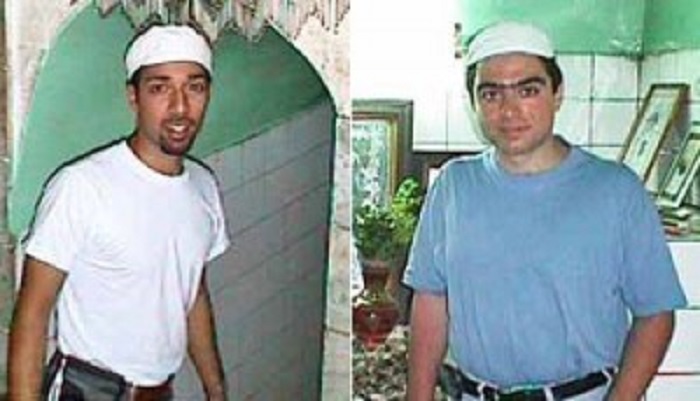
Trita Parsi traveled with Siamak Namazi to Isfahan, Iran’s third largest city, in August 2000. They also toured the Zoroastrian “Fire of Victory” Temple in Yazd. At the time, Siamak was living in Tehran, working for Atieh Bahar, a consultant company with close ties to the government. In 1999, Parsi and Siamak co-authored a paper that recommended setting up a lobbying organization in Washington to influence US-Iran policy. Siamak took a sabbatical in 2005 to complete a fellowship at the Woodrow Wilson Center in Washington, DC. While at the Center, Siamak helped Parsi formulate NIAC policies supportive of the Iranian regime.

Trita Parsi traveled with Siamak Namazi to Isfahan, Iran’s third largest city, in August 2000. They also toured the Zoroastrian “Fire of Victory” Temple in Yazd.
At the time, Siamak was living in Tehran, working for Atieh Bahar, a consultant company with close ties to the government.
In 1999, Parsi and Siamak co-authored a paper that recommended setting up a lobbying organization in Washington to influence US-Iran policy. Siamak took a sabbatical in 2005 to complete a fellowship at the Woodrow Wilson Center in Washington, DC. While at the Center, Siamak helped Parsi formulate NIAC policies supportive of the Iranian regime.

Siamak Namazi, an Iranian-American citizen, has been credited with helping found the Iran lobby including the creation of the National Iranian American Council alongside Trita Parsi as the primary vehicle for advocating for a nuclear agreement lifting economic sanctions on the regime.

The Daily Beast chronicled his family’s involvement as an “intellectual architect” for the NIAC as a pathway for empowering those within the regime whom he had a close relationship with and believed by helping secure an agreement it would boost his fortunes within the regime.

In the immortal words of Kevin Spacey who plays the scheming Frank Underwood on Netflix’s “House of Cards,” “We’re all victims of our own hubris at times.”

Truer words were never spoken about the Iran lobby because on the verge of reaping their perceived successes, they discover all they really are, are puppets for a regime of mullahs whose intent is only focused on preserving their own power.

That is because according to regime media reports, while visiting family in Tehran, Namazi was arrested by Revolutionary Guards Corp soldiers and tossed into the notorious Evin Prison.

There is an irony here on par with Alfred Nobel inventing dynamite and then creating the Nobel Peace Prize after his invention was used in war.

Namazi joins four other Americans who are being held hostage by the regime, including Washington Post reporter Jason Rezaian, Christian pastor Saeed Abedini, former Marine Amir Hekmati and the former FBI agent Robert Levinson.

According to a piece in American Thinker, Parsi and Namazi founded NIAC as a way to lobby for the removal of sanctions against the regime and promote its foreign policy while combatting anti-regime forces in the U.S.

Both Parsi and Namazi reportedly enjoyed close ties and access to Hassan Rouhani and Javad Zarif, the regime’s president and foreign minister, with Parsi being seen traveling with and in close discussions with the regime delegation during nuclear talks.

Conspicuously, the NIAC have been silent on the issue, declining comment and social media feeds for Parsi and other NIAC staff is devoid of any mention of the arrest.

But Hassan Dai, editor of the Iranian American Forum who won a defamation lawsuit filed against him by Parsi, speculated that the arrest suggests a power struggle of sorts within the regime’s leadership.

Dai explained in an interview with Breitbart News that Namazi had consistently “lobbied in favor of a faction of the regime,” which upset the mullahs because it would only be acceptable to “lobby for the whole regime.”

The fight between the factions in Iran is a fight for “the best solution to preserve the regime,” he explained, adding that groups like NIAC have never sided with true “reformists,” but with people who wish to employ a different strategy to empower the regime, such as Rouhani and former President Akbar Rafsanjani.

Because Namazi and NIAC prefer one faction over the other, “they are undermining the Supreme Leader. They are undermining the Revolutionary Guard,” Dai explained. “When you lobby U.S. policymakers to remove sanctions against Iran with the rationale that it will help reform the regime, you undermine the Supreme Leader, because he wants them to accommodate to the regime now.”

The arrest of Namazi sends a message from Iran’s rulers that “Rouhani has no power,” Dai concluded. “He cannot even protect his own friend.”

Breitbart News further speculates – and rightly so – that the arrest pours cold water on the notion that securing the nuclear deal would empower “moderates” within the regime and help reform it. Evidence since agreeing to the nuclear contradicts that idea completely with the conviction of Rezaian, the test launch of an illegal ballistic missile and the launching of a new offensive in Syria alongside Russian forces.

The arrest of Namazi demonstrates that the leadership of the Iran regime is of one mind and firmly in the control of Ali Khamenei and his religious cohorts and that any idea of moderation within the regime is a pipe dream; which may go to explain why coming off of the NIAC’s recent leadership conference to celebrate the nuclear deal, Parsi’s Twitter feed was filled with posts condemning Saudi Arabia, a bitter enemy of Iran and locked in fighting in Yemen.

If Parsi doesn’t tow the mullahs’ line, he might find a different kind of reception party the next time he travels to Tehran and end up sitting next to his buddy Namazi.

By Michael Tomlinson


Filed Under: Blog, Latest from Lobbies & Appeasers, National Iranian-American Council, News Tagged With: #NuclearDeal, Appeasement policy, Featured, hassan rouhani, Iran, Iran deal, Iran Economy, Iran Lobby, Irandeal, Jason Rezaian, Khamenei, Moderate Mullahs, National Iranian American Council, NIAC, Nuclear Deal, Rouhani, siamak Namazi, Syria, Trita Parsi

Human Rights Report Puts Focus on Iran Regime

October 28, 2015 by admin


Human Rights Report Puts Focus on Iran Regime

Human Rights Report Puts Focus on Iran Regime

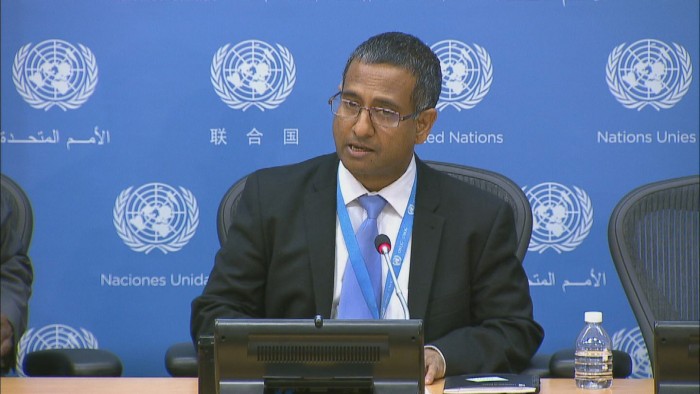
Ahmed Shaheed, the United Nations Special Rapporteur for Human Rights in Iran issued a new report saying that the Iran regime was on track to execute more than 1,000 people in 2015 in an unrelenting campaign of brutal human rights suppression that continues unabated after agreeing to a nuclear agreement that proponents said would shift the regime to a more moderate stance.

Calling it an “unprecedented assault on the right to life in Iran,” Shaheed described a surge in executions over the past year. He said Iran hanged nearly 700 people since January.

Shaheed said that within the past two weeks, the Islamic Republic violated international law by hanging two juvenile offenders. He added “there are dozens more waiting a similar fate on death row.”

According the New York-based Committee to Protect Journalists, at the end of last year, at least 30 journalists were held in Iranian prisons, including Washington Post reporter Jason Rezaian. Others have been detained since, and in August state media accused a senior Wall Street Journal reporter who once served as a correspondent in Iran of conspiring against the government. The Journal called the claims “completely false, outlandish and irresponsible.”

Sherif Mansour, the Middle East and North Africa program coordinator for the Committee to Protect Journalists, said in an interview with the Associated Press, reporters often get targeted because they are “much easier to frame” as spies.

Additionally, in more signs of a brutal crackdown, the regime jailed and sentenced two Iranian poets. Fatemeh Ekhtesari, a practicing obstetrician, and Mehdi Mousavi, a trained doctor who teaches literature and poetry, were first arrested in December 2013, months after Hassan Rouhani took office and sentenced to 99 lashes apiece for shaking hands with members of the opposite sex. Ekhtesari received an 11½-year prison sentence, while Mousavi got nine years on charges ranging from propaganda against the state to “insulting sanctities,” as well as the lashings, according to PEN America, an organization promoting literature and freedom of speech.

“I think people thought with the nuclear deal, there would be sort of a bit of a thaw as well or a bit of an opening up,” said Karin Deutsch Karlekar, the director of Free Expression Programs at PEN America. “I think the judiciary is sort of pushing back and trying to make clear that there isn’t going to be that opening people were hoping for.”

Shaheed’s report detailed a grisly butcher’s bill of death by the regime:

  • Between Jan. 1 to Sept. 15 this year, Tehran hanged at least 694 people, the highest rate of executions under the regime in 25 years;
  • The bulk of the crimes committed by those executed were for non-violent, political or drug offenses;
  • By way of comparison, in the last year of Mohammad Khatami’s term as president in 2005, the regime carried out a total of 91 executions according to the report; nearly doubling in the first year of Mahmoud Ahmadinejad’s term to 177 executions;
  • According to Shaheed, the Iran regime executes more people per capita than any other country on the planet.

In addition to drug crimes, Iranian law applies the death penalty for a range of offenses: from threats to “the security of the state” to “enmity towards God,” also known as moharebeh, to “insults against the memory of Imam Khomeini and against the supreme leader of the Islamic Republic,” according to the State Department’s 2014 human rights report on Iran. “Prosecutors frequently used moharebeh as a criminal charge against political dissidents and journalists, accusing them of struggling against the precepts of Islam and against the state that upholds those precepts.”

Shaheed said a “deeply flawed justice system” that violates international standards and national laws sits at the heart of Iran’s human rights troubles. He said he continues “to receive frequent, alarming reports” about the mistreatment of detainees and the use of torture to obtain confessions. Many of the accused lack access to defense lawyers.

The authorities, he said, have also refused to acknowledge rights for gay, lesbian, or transgender individuals, saying it is incompatible with sharia law. And authorities have imposed harsh sentences, including the death penalty, for posting articles on social media deemed offensive to the government. A semi-official news outlet reported that more than 480 people were flogged during the first two weeks of Ramadan for not fasting.

The regime refused comment on Shaheed’s report and in fact has consistently refused to allow entry into Iran by Shaheed or any member of his office to see first-hand the human rights abuses going on in Iran.

In fact, while Shaheed was issuing his report, Rouhani was holding forth with state-controlled media IRNA in a ceremony welcoming the new Spanish ambassador to Iran, saying he believed sanctions on the regime would be lifted as early as the end of this year, again contradicting assurances by the nuclear deal proponents that the sanctions removal would only come after the regime had met its obligations for dismantling its nuclear infrastructure.

Clearly the regime remains committed to its policy of public executions and cares not a whit about international opinion on the matter.

By Michael Tomlinson

Filed Under: Blog, News Tagged With: Featured, Iran, Iran deal, Iran Human rights, Iran Talks, Irandeal, Jason Rezaian, Khamenei

Halloween Comes Early for Iran Lobby

October 27, 2015 by admin


Halloween Comes Early for Iran Lobby

Halloween Comes Early for Iran Lobby

Halloween involves kids (and adults) firing up their imaginations to come up with costumes and then go knocking door to door seeking treats and getting the odd trick played on them maybe in a haunted house. For the Iran lobby, Halloween came a week early as the chief advocate, the National Iranian American Council, held its annual leadership conference this weekend.

It’s worth noting that the NIAC bills its event as a premier conference for the nation’s Iranian-American community, but its agenda and participants hardly represent the views and beliefs of the estimated one million Iranian-Americans living in the U.S.

In fact, the line-up of speakers at this year’s conference reads more like a line-up card of Iran regime boosters and potential business partners than any group seriously examining the daunting challenges remaining between the U.S. and Iran. What is even more amazing are the lack of any speakers who have first-hand experience with the abysmal human rights situation in Iran, nor were there any speakers offering views on the sizable opposition worldwide to the regime amongst the Iranian diaspora.

Among the highlights of this gallery of apologists and appeasers includes:

  • Bijan Khajehpour, who founded Atieh International and the related Atieh Bahar which employed NIAC staffers to serve as a conduit for directing foreign companies to invest into the regime through the access it provided to top regime officials who controlled most of Iran’s economy through a complex web of shadow companies. Atieh was the subject of an in-depth piece in The Daily Beast on its start and close relationship with leading supporters of the regime and how it profited from those ties and in advocating for a lifting of sanctions against Iran;
  • Joseph Cirincione, president of Ploughshares Fund which was the largest funder of the lobbying campaign in support of the nuclear deal and the lifting of sanctions against the regime. It alone provided NIAC with at $150,000 for its advocacy work on behalf of the nuclear deal; not including money given by its staff. Commentary Magazine poured through tax records to glean the wide scope of Ploughshares giving to groups working on behalf of the regime’s cause; and
  • Alan Eyre, the U.S. State Department’s Persian-language spokesman who came under fire recently for promoting anti-Semitic conspiracy sites demonizing American Jewish groups, as well as postings on his personal social media praising the regime’s controversial Quds Force commander Qassem Soleimani according to the Washington Free Beacon. Eyre also posted links to Lobelog, a well-known blog dedicated to supporting the regime’s key messages.

The conference also featured several speakers who are actively seeking business deals within the regime including: Ned Lamont, chairman of Lamont Digital Systems; Jay Pelosky, a self-described advisor on emerging markets who recently visited Iran; and Amir Handjani, president of PG International Commodity Trading Services, a leading importer of agricultural commodities in the Iranian market.

We can’t resist one dig at Reza Marashi of NIAC who called the gathering the “world cup of Iranian-Americans.”

One interesting tidbit were comments made by Dr. Farideh Farhi who lamented the fact the nuclear deal had not led to substantial changes in U.S. policy towards the regime, but failed to note the swift shifts in Iranian policy towards the rest of the world in the rapid buildup of its military in Syria and launching of a new ballistic missile in violation of United Nations Security Council sanctions; both provocative acts.

This was followed by a tweet by Trita Parsi, NIAC’s head honcho, who described comments made by Shadi Hamid, a senior fellow at the Brookings Institution, and Mehdi Hasan, a commentator for Al Jazeera’s English broadcast, as saying about the panic from neighboring Arab nations about the nuclear deal: “If someone panics, you slap them in the face, you don’t indulge them.”

An appropriate comment since it neatly encapsulates the Iran lobby’s response to concerns over what the Iran regime will do now in the wake of the nuclear agreement. The recent rise in belligerent military action, coordination with Russia in blasting Syrian rebels back to the Stone Age and the conviction of Washington Post reporter Jason Rezaian all point to a slide into anarchy which has even alarmed Democratic lawmakers who initially supported the nuclear deal, but now have begun offering up new legislation designed to keep the regime in check.

The NIAC conference was predictable in celebrating its perceived win with the nuclear deal and the effort now to safeguard potential foreign investment after “Implementation Day” on December 15 when the U.S. will pave the way by lifting economic sanctions and allow Iran to rejoin the world of international commerce.

But the conference also revealed the biggest weaknesses of the lobby which was its inability or unwillingness to meet the most troublesome aspects of the Iran regime head-on; namely it horrific human rights record which leaves a deep and wide trail for the world’s media to follow.

With every arrest, every beating, every public hanging and every denunciation of a minority religious or ethnic group, the regime weakens any argument the lobby can make and increases the pressure on groups such as the NIAC to answer basic questions of “why aren’t you speaking out against the killing of X group?”

Which is why the NIAC conference was so focused on economic issues since the regime is desperate to not only get its hands on the estimated $150 billion in frozen assets to help pay off its military obligations in Syria, Lebanon, Afghanistan, Iraq and Yemen, but is equally anxious to bring in foreign investment to help prop up an economy devastated by gross mismanagement and corruption by regime officials.

By Laura Carnahan


Filed Under: Blog, National Iranian-American Council, News Tagged With: #NuclearDeal, Bijan Khajehpour, Farideh Farhi, Featured, Iran, Iran deal, Iran Lobby, Jason Rezaian, Joseph Cirincione, National Iranian American Council, NIAC, NIAC Action, Nuclear Deal, Reza Marashi, Trita Parsi

The Ongoing Appeasement of the Iran Regime

October 23, 2015 by admin

The Ongoing Appeasement of the Iran Regime

The Ongoing Appeasement of the Iran Regime

During the run up towards the completion of negotiations over the nuclear agreement with the Iran regime, the Obama administration and the Iran lobby likened it to the most significant foreign policy issue of our time. The words used by proponents in advocating the deal included “historic,” “transformational,” “ground breaking,” “momentous,” “consequential” and “important.”

You almost thought Trita Parsi, head of the National Iranian American Council and chief cheerleader for the regime, had a word-a-day calendar on his desk with new synonyms for “historic.”

The fact that proponents of the deal characterized the choices as being between “war” and “peace” helped to get the agreement passed, but it also gave the Iran regime the opening to hold the West linguistic hostages since by framing the agreement in that manner, supporters found themselves beholden to the mullahs in Tehran to the extent no matter what they did, supporters of the deal were going to have to cover for them in order to keep the agreement alive.

This leverage cleared the way for the continuing acts of appeasement being afforded to the mullahs in the run up towards implementing the agreement. The perception of needing to keep this deal alive quickly became more important than addressing how much the Iran regime might cheat and what to do in response if the mullahs did cheat.

Two recent developments made that appeasement abundantly clear.

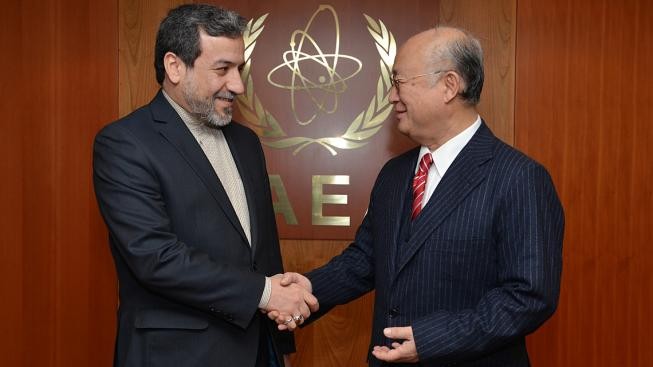
The first was the completion of a secret side agreement between the Iran regime and the International Atomic Energy Agency, the arm of the United Nations Security Council responsible for inspections and compliance of nuclear issues.

The IAEA has worked for the past decade to gain access to regime nuclear facilities, its scientists and technicians, as well as documentation to ascertain the full scope and nature of Iran’s nuclear program. It has been stymied and stonewalled at every turn by the regime.

Beyond the obfuscation by the regime, it is imperative to any future compliance to the nuclear agreement that the IAEA establish a baseline of where Iran’s nuclear program stands. Without it, there is no way to make comparisons to see if the regime is indeed cheating.

The IAEA “is committed under the deal to release a report by year-end about the status of Iran’s alleged weaponization work. U.S. officials over the weekend said the IAEA report would have no bearing on moves by the international community to lift sanctions,” according to the Wall Street Journal.

“That final assessment, which the IAEA is aiming to complete by December 15th, is not a prerequisite for implementation day,” a senior U.S. official said Saturday. “We are not in a position to evaluate the quality…of the data. That is between Iran and the IAEA.”

The irony here is that the U.S. is basing its decision to move ahead with implementing the agreement with the regime on the findings of the IAEA inquiry, but at the same time is not going to evaluate the veracity of those findings. In essence, the U.S. and other nations will simply shrug and say “we believe you” even if Iran provides no information or complete access as per the agreement.

So on December 15th, if the IAEA certifies Iran as being in compliance even though it has no tangible proof the regime is in compliance, the political pressure will be such that the IAEA will rubberstamp the report and allow implementation to move forward.

As Armin Rosen writes in Business Insider: “In the process, the US has essentially decided that the investigation of past nuclear-weapons work, and the state of current Iranian weaponization expertise, is nonbinding on a treaty specifically meant to prevent Iran from obtaining a nuclear weapon.”

If it wasn’t such a serious issue, it would be Orwellian in nature.

The second issue was the recent test firing of a new ballistic missile by the regime which violated a UN ban on development of nuclear-capable ballistic missiles. The ban is tied to the nuclear agreement and sets an eight year ban on ballistic missiles after the agreement is implemented.

The U.S., Britain, France and Germany called on UN Security Council’s Iran sanctions committee to take action over the missile test by Tehran. Diplomats have said it was possible for the sanctions committee to blacklist additional Iranian individuals or entities if it determined that the missile launch had breached the U.N. ban. However, they said Russia and China, which have opposed the sanctions on Iran’s missile program, might block any such moves.

All of which sets up the most obvious question facing everyone. What if Iran cheats? What should the response be?

Even though the U.S. asked the Security Council to take action over the missile test, U.S. officials said in the next breath that the missile test itself didn’t violate the nuclear deal.

Let that sink in for a second. We sent a letter calling for action for a violation of the UN ban, but in the same moment said the launch did not violate the nuclear agreement. So we are scolding the mullahs, but also letting them off the hook.

It’s a bipolar approach to foreign policy worthy of analysis by a psychiatrist.

In both cases, the Iran regime is clearly acting to breach terms of not only the nuclear agreement, but existing sanctions that will remain in effect after the nuclear deal goes into effect and the repercussions of those violations appear to be non-existent or minimal. This does nothing to deter the mullahs and only empowers them into believing they can continue to press their advantage.

By Michael Tomlinson

Filed Under: News Tagged With: #NuclearDeal, Appeasement policy, Featured, Iran, Iran deal, Iran Lobby, Iran Talks, Irandeal, NIAC, NIAC Action, Nuclear Deal, Trita Parsi

As Iran Regime Approves Nuke Deal, It Bulks Up Militarily

October 23, 2015 by admin

As Iran Regime Approves Nuke Deal, It Bulks Up Militarily

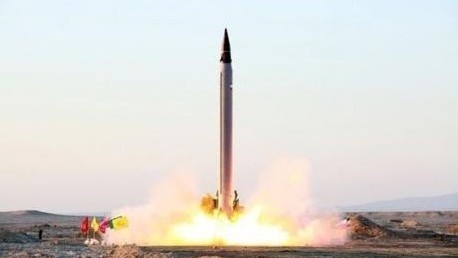
A new Iranian precision-guided ballistic missile is launched as it is tested at an undisclosed location October 11, 2015. REUTERS/farsnews.com/Handout via ReutersThe Iran regime’s top mullah, Ali Khamenei, added his tepid support to the nuclear deal that the regime’s Parliament also approved, clearing the pathway for the regime to get its payday of $150 billion plus billions more in foreign investment and economic activity.

But nothing is ever simple with the inscrutable mullahs of Tehran as Khamenei added the caveat that all sanctions had to be lifted or Iran would walk away from the deal. This reinforces the key stumbling block he placed in front of negotiators when he maintained that the regime had to first receive the benefits of lifted sanctions before it would begin any dismantling of its nuclear infrastructure.

The chicken and egg argument he poses is deliberately cloaked in the obscurity it needs to allow both sides proof of his adherence to the terms of the deal from both sides perspective, while allowing the wiggle room Khamenei wants to set the implementation of the agreement any way he sees fit.

This is readily apparent in the deluge of provocative acts the regime has undertaken since the agreement was signed, including:

  • The conviction of Washington Post reporter Jason Rezaian on trumped up spying charges and then offering to swap him for convicted Iranian arms smugglers;
  • The test firing of a new ballistic missile violating United Nations Security Council resolutions prohibiting development of new nuclear-capable missiles;
  • Coordination of a military alliance with Russia through a mission to Moscow by Quds Force commander Qassem Soleimani in violation of UN travel restrictions; and
  • Launching of a new offensive in Syria against forces opposing the Assad regime including the use of thousands of Iranian fighters and proxies from Hezbollah in Lebanon, Shiite militias from Iraq and Afghan mercenaries.

These acts put to a lie the claims long made by the Iran lobby during the nuclear negotiations that the regime was only interested in becoming a moderating force within the region. Led by the National Iranian American Council, those same supportive voices for the regime have been struck deaf and dumb in the face of these new violations by the regime.

The test firing of the new ballistic missile was especially provocative and so concerning that the U.S., Great Britain, France and Germany called on the UN Security Council’s Iran sanctions committee to take action over the violation.

In a letter obtained by Reuters containing details on the launch, the nations said the ballistic missile was “inherently capable of delivering a nuclear weapon.”

Is it too late to say “We told you so?”

Even now, news media that once editorialized in support of the nuclear deal have reversed course in noting the worrisome developments by the Iran regime.

“But the Syrian offensive is certainly more than message-sending. If successful, it could eliminate the chance to construct a moderate, secular alternative to the Assad regime, and send hundreds of thousands more refugees across Syria’s borders. It was just such aggression that Mr. Obama acknowledged might be a byproduct of the nuclear deal — and that he vowed to resist. If he remains passive as Maj. Gen. Soleimani’s forces press forward, both Iranian and U.S. allies across the Middle East will conclude that there will be no U.S. check on an Iranian push for regional hegemony,” said the Washington Post in an editorial.

There was also a move by 11 Senate Democrats to push the Obama administration to respond forcefully to the regime’s missile test, pressing the case that a response would set a precedent for how the U.S. would react to any future violations of the nuclear deal.

“We are concerned about the military significance of this test, which is part of a long-term Iranian program that seeks to improve the range and capabilities of its ballistic missiles,” the senators wrote. “We are also convinced that the launch is an attempt to test the world’s will to respond to Iranian violations of its international commitments.”

It is worth noting that several of these same Senators had voted in favor of the deal.

Joshua Keating at Slate raised a similar concern about the fallout from the nuclear deal saying “it certainly doesn’t bode well for the optimistic notion that the deal could lead to U.S.-Iranian security cooperation beyond the narrow areas laid out in the agreement and it certainly doesn’t look good for the administration. Iranian leaders were presumably well aware of this.”

This understanding of the regime’s intentions puts into perspective the potential use of the billions of dollars about to be released into the control of the mullahs and as the International Business Times puts it:

“Pushed by a combination of its own outdated military equipment and the formidable military buying power of its oil-rich Middle East rivals, analysts said Tehran is urgently plotting to upgrade and replace its own antiquated defense technology in favor of Russian- and Chinese-made military equipment by spending oil revenue that’s been trapped in an assortment of banks worldwide for the last three years.”

“Those options range from providing Hezbollah fighters, who are supporting Syrian President Bashar Assad in the Syrian civil war, to boosting aerospace efforts, including space-based platforms such as satellites, to advance its military into the 21st century,” according to Ariel Cohen, senior fellow at the Atlantic Council, an international affairs think tank based in Washington, D.C.

It is clear that the foxes let loose by the nuclear deal are now coming home to hunt.

By Michael Tomlinson


Filed Under: News Tagged With: Appeasement policy, Featured, Iran, Iran deal, Iran Lobby, Iran Mullahs, Iraq, Sanctions, Syria, Yemen

The Price of Failure in Syria for Iran Regime

October 20, 2015 by admin

The Price of Failure in Syria for Iran Regime

The Price of Failure in Syria for Iran Regime

With the Iran regime’s all-in move in Syria through the commitment of thousands of additional troops, the loss of top commanders killed in fighting by Syrian rebels and the new alliance with Russia, the mullahs in Tehran have painted themselves into something of a corner.

The most obvious price to be paid by the regime will be whether or not a military campaign against the broad coalition of rebels, Islamic groups and secular opponents actually succeeds or fails. If it fails, the price will be extraordinarily high for Tehran. It will deal a crushing blow to the carefully crafted image of military supremacy the regime cultivates and it will send its leadership into an inevitable round of finger pointing and blame.

Failure in Syria will also carry a financial price tag since the regime’s previous support in propping up the Assad regime has tallied over $15 billion so far and with the stepped up reinforcements and new offensive, the costs are likely to spiral into the upper atmosphere. Depending on how long the fight takes, that $150 billion the mullahs are eager to get their hands on as the result of the nuclear deal could shrink very quickly.

The stakes for the regime are unquestionably high as it has put Maj. Gen. Qasem Soleimani, the leader of its Quds Forces, at the frontlines to direct Shiite forces from three countries including Iraq, Lebanon and Afghan proxies in what is shaping up as a major assault on the rebel stronghold of Aleppo.

The fact that Russia has been bombing rebel forces and not areas controlled by ISIS, and that Iran is targeting Aleppo, a strategic economic hub controlled by rebel forces early in the civil war, tells us all we need to know about the priorities of the regime.

The fact that Soleimani, who only recently was a frequent visitor to the battlefields in Iraq where victories for the regime grew scarce as the war stagnated, was shifted over to Syria shows the changing priorities of the Iran regime as it struggles to find a military victory anywhere in the conflicts it has started.

Just as its fight in Iraq and ground to a halt, the Houthi rebels Iran supports in Yemen have been thrown back under the combined assault of an air and ground campaign backed by Saudi Arabia and other Gulf states.

As the fighting in Syria went badly for Iranian-backed forces, the mullahs sent Soleimani to Moscow to beg for Russian intervention and have set up this new offensive as a last-ditch effort to salvage any kind of good military news.

Kitaeb Hezbollah, an Iranian-backed Shiite militia designated a terrorist organization by the United States, sent 1,000 troops to Aleppo last weekend, said a senior official with the militia. He spoke on the condition of anonymity, citing orders that the deployment not be made public yet according to the Washington Post.

He said the men were part of the group’s elite forces, which have experience from fighting the United States in Iraq. They have done previous rotations in Syria, he said.

“They were sent based on a demand from Soleimani,” he said. “He specifically requested them for the launch of the operation of Aleppo, which is going to be led by Kitaeb directly under the supervision of Soleimani.”

The militia official said the Syrian army would have a “minor role.”

The rapid ramp up in Iranian aggressiveness with the offensive in Syria, launching of new ballistic missiles and conviction of Washington Post reporter Jason Rezaian have all taken on a certain manic quality as the regime attempts to literally spit out as much vitriol as it can in the shortest amount of time.

It’s a stunning period of chest beating at a time when the regime would be normally seen celebrating what it touts as a victory in its recently completed nuclear negotiations, but this almost bipolar behavior demonstrates the deep schism in regime politics as the religious forces headed by Ali Khamenei exert their control over the political puppets of leaders such as Hassan Rouhani. In many ways, the militant nature of the regime’s recent actions is a reaffirmation that there are no such a thing as moderates within the Iranian regime.

This idea was reinforced when an influential Iranian lawmaker delivered inflammatory new accusations on Monday against Jason Rezaian, The Washington Post’s Tehran reporter convicted of espionage this month, asserting that he had plotted with seditionists.

The New York Times reported that in an interview with Iran’s semiofficial Fars News Agency, the lawmaker, Javad Karimi-Qoddusi, also sought to depict Rezaian as a nefarious spy who had used his credentials as a journalist as a ruse to gain insights that would be valuable to the Iranian government’s enemies.”

It’s indicative of the deep-seated paranoia that runs throughout the regime’s government and why any agreement negotiated with Iran is doomed to failure as there is very little rational thought within the top ranks of the regime’s leadership.

By Michael Tomlinson

Filed Under: News Tagged With: #NuclearDeal, Appeasement policy, Iran, Iran deal, Jason Rezaian

Adoption Day for Nuclear Deal Brings Uncertainty

October 19, 2015 by admin

Adoption Day for Nuclear Deal Brings Uncertainty

Adoption Day for Nuclear Deal Brings Uncertainty

Sunday marked what has been dubbed “Adoption Day” and we’re not talking about lost puppies. This weekend marked the start of the of what the Obama administration and other members of the P5+1 called the start of showing readiness to the Iran regime in lifting economic sanctions that have held the mullahs in Tehran in check for the past decade.

In a memo, President Obama directed the secretaries of state, treasury, commerce and energy “to take all necessary steps to give effect to the U.S. commitments with respect to sanctions described in (the Iran deal).”

This will be followed by “Implementation Day” on December 15 in which the U.S. and its partners will begin the actual process of lifting sanctions against the regime after certification by the International Atomic Energy Agency that the regime has lived up to its commitments to curb its nuclear program.

For the Iran regime, Sunday also marks the “put up or shut up” moment for the mullahs in which the regime will have to begin the process of dismantling parts of its nuclear program, including decommissioning nearly 15,000 centrifuges, converting its Arak heavy-water reactor so that it will produce less plutonium and reducing its stockpile of enriched uranium 98%. U.S. officials expect it will take about six months.

Ali Akbar Salehi, the head of Iran’s Atomic Energy Organization, told Iranian state television Sunday that the country would begin taking its next steps under the deal—including reducing the number of uranium centrifuges in operation, and removing the reactor core at the Arak facility—in short order, according to the Wall Street Journal.

But the real question is will the regime move aggressively forward in order to recoup frozen assets and foreign investments needed to stave off economic disaster from corrupt mismanagement at the hands of the mullahs, or will the regime simply slow walk changes while providing its usual propaganda lip-service, supported by loyal Iran lobbyists such as the National Iranian American Council, and stonewall any real changes?

Already we’ve seen efforts by the Obama administration and United Nations to provide some cover for the regime even as the mullahs have undertaken provocative steps in the wake of adopting the nuclear deal.

The most notable action has been the military buildup in Syria, including the mobilization and commitment of Iranian troops directly into the fight and coordination in drawing in Russia to fight the fights the Iran regime has been unable to win so far in support of the Assad regime.

This has been followed by the reported conviction of Washington Post reporter Jason Rezaian for espionage (ironically announced on the exact same number of days Iran held the 52 American embassy hostages), and the launching of a new ballistic missile design that has been denounced as a violation of UN Security Council resolutions banning the Iran regime from pursuing ballistic missile designs that could be used to deliver nuclear payloads.

U.S. Ambassador to the U.N. Samantha Power stopped short of any confrontational rhetoric, affirming Wednesday that the test violated a U.N. Security Council resolution “if the facts are as we believe them to be.” Iran has always considered such resolutions to be invalid and has violated their provisions numerous times since they were adopted in 2010. The Iranian government also denies the ballistic activity violates the Joint Comprehensive Plan of Action, the formal name for the nuclear agreement.

The fact that the U.S. recognizes that the regime has already violated the UN agreement, yet opts not to confront the regime is indicative of what lies in store for us as the regime continues to make its aggressive and increasingly desperate moves throughout the Middle East.

The regime’s actions are remarkably similar to moves made by North Korea as it first agreed to restrictions on its nuclear program, only to continue advancing it in secret until it tested fully functional nuclear weapons in spite of successive efforts to sanction North Korea after the fact with no effect.

The mullahs in Tehran have watched and learned what Pyongyang did in steering tis nuclear program past international sanctions, which may be why Iran unveiled to the world video of once-secret underground missile bunkers where it stored its arsenal of mobile missile launchers.

The most significant aspects of the revelation by the regime are that: a) no one knew about these secret bunkers; and b) that the bunkers hint at the size and scale of secret military facilities that have hardened against attack by being buried as much as 500 meters under a mountain range.

Why this is important is that it basically invalidates significant sections of the nuclear agreement dealing with limited inspections only of “known” facilities and not allowing inspections of military sites. It also puts into proper perspective the nefarious nature of the regime as it hides most aspects of its military capabilities.

According to the Daily Beast, “while details about the alleged 500-meters-down subterranean base are few and difficult to confirm, the bunker and others like it could upset the delicate military balance between the United States and Iran as the two countries move forward on an agreement to limit Tehran’s nuclear program in exchange for a gradual easing of economic and military sanctions targeting the Islamic regime.

“That’s because any facility a quarter mile below ground is way too deep for America’s existing bunker-busting bombs to directly destroy in the event Iran reneges on the nuke deal and tries to put atomic warheads on its long-range rockets,” the Daily Beast reported.

Then again, given the regime’s penchant for hyperbole, bluster and outright fabrication in order to make itself seem more militarily formidable than it really is, all of this could simply be fakery.

That begs the question of whether or not the U.S. and its allies should be making the $150 billion bet that the regime is a sheep in wolves’ clothing.

The people that know the regime best, the dissidents and members of the resistance movement worldwide, should be the ones we should be taking our cues from and in their view, the nuclear deal has only emboldened the Iran regime in its march towards oppression.

By Michael Tomlinson


Filed Under: Blog, News Tagged With: #NuclearDeal, Featured, Iran, Iran deal, Iran Economy, Iran Human rights, Iran Lobby, Irandeal

Iran Regime Unveils Missile Base to Cover Weakness

October 16, 2015 by admin

Iran Regime Unveils Missile Base to Cover Weakness

Iran Regime Unveils Missile Base to Cover Weakness

Mother Nature provides us excellent examples of weaker insects or animals using the art of disguise to shield themselves from predators. The katydid tries to look like a leaf, while the elephant hawkmoth caterpillar looks like a snake head. Both use deception to keep from becoming someone else’s lunch.

In a case of man imitating nature, the Iran regime’s Revolutionary Guard Corps released video footage of secret missile base in an underground tunnel deep in a mountain side.

“The video, aired on semi-official Fars TV and set to rousing music, shows an extensive tunnel packed with medium- and long-range missiles and launcher units. The Guard said the missiles were on their launch pads, ready to be fired in the event of an attack on the country,” according to Fox News.

The video of the missile base, so far unconfirmed by independent sources, follows the recent test firing of a new ballistic missile that the U.S. claims violates terms of a United Nations Security Council sanction prohibiting the regime from developing new missiles. The video’s airing raises some basic questions such as: Why?

Dominic Waghorn, reporting for Sky News, said the video’s release was designed for domestic consumption as leaders within the Revolutionary Guards Corps worry about appearing weak to the rivals such as Saudi Arabia, especially at a time when its Syria campaign all but collapsed until the last-minute intervention by the Russians.

“But an attempt to project strength is in itself a sign of weakness. Neither Russia nor Iran would be in Syria were their ally Bashar al Assad not in trouble,” Waghorn said. “Their forces are there because his have been crumbling and that has threatened their interests there. Their presence invites a response from his enemies and their backers, and is not therefore without considerable peril.”

But the Iran regime’s effort to project a more assertive posture as it has seen a rolling series of setbacks didn’t stop with the missile video and test launch. It included grainy video released through Twitter showing the regime’s Quds Force commander Qassem Soleimani, purportedly addressing Iranian and Syrian troops in Syria on the eve of launching a new offensive to attack rebel militias.

Showing Soleimani taking direct command of ground forces following the deaths of two other senior IRGC commanders strongly shows the mullahs near-desperation to pull out a victory in Syria after so much blood and treasure has been spent with little to show for it as Assad’s forces have been pushed nearly all the way back to the sea.

But with the looming deadline for certification by the International Atomic Energy Agency to complete its investigation of Iran’s past nuclear activities, the regime – which had been slow in responding to the inquiry – stepped up at the last minute to be responsive to the UN probe.

In the past two weeks, after Iran had largely brushed off serious questions about its past nuclear activities, the IAEA and some Western governments directly warned Tehran that it must increase cooperation if it wanted IAEA board members to conclude it had sufficiently addressed their concerns, according to the Wall Street Journal.

The board must decide in mid-December, based on a report by Director General Yukiya Amano, whether Tehran has done enough for the nuclear agreement it signed in July with six world powers to proceed.

As the regime is confronted with the costs of a massive new offensive in Syria, it may very well have concluded that it needs the scheduled $150 billion in frozen assets as quickly as possible to replenish its coffers as part of the nuclear deal, as well as keep its economy afloat.

That became painfully apparent as the engine from an Iranian Mahan Air 747 fell off shortly after takeoff from Tehran. The regime badly needs new aircraft to replace a fleet hampered by economic sanctions.

Ultimately, many of the regime’s most recent moves can be seen as desperate acts by a leadership of mullahs being pressed in on all sides.

By Michael Tomlinson

Filed Under: Blog, News Tagged With: #NuclearDeal, Featured, Iran, Iran Economy, Iran Mullahs, Nuclear, Nuclear Deal, Sanctions

  • « Previous Page
  • 1
  • …
  • 24
  • 25
  • 26
  • 27
  • 28
  • …
  • 34
  • Next Page »

National Iranian-American Council (NIAC)

  • Bogus Memberships
  • Survey
  • Lobbying
  • Iranians for International Cooperation
  • Defamation Lawsuit
  • People’s Mojahedin
  • Trita Parsi Biography
  • Parsi/Namazi Lobbying Plan
  • Parsi Links to Namazi & Iranian Regime
  • Namazi, NIAC Ringleader
  • Collaborating with Iran’s Ambassador

Recent Posts

  • NIAC Trying to Gain Influence On U.S. Congress
  • While Iran Lobby Plays Blame Game Iran Goes Nuclear
  • Iran Lobby Jumps on Detention of Iranian Newscaster
  • Bad News for Iran Swamps Iran Lobby
  • Iran Starts Off Year by Banning Instagram

© Copyright 2026 IranLobby.net · All Rights Reserved.