Iran Lobby

Exposing the Activities of the lobbies and appeasers of the Mullah's Dictatorship ruling Iran

  • Home
  • About
  • Current Trend
  • National Iranian-American Council(NIAC)
    • Bogus Memberships
    • Survey
    • Lobbying
    • Iranians for International Cooperation
    • Defamation Lawsuit
    • People’s Mojahedin
    • Trita Parsi Biography
    • Parsi/Namazi Lobbying Plan
    • Parsi Links to Namazi& Iranian Regime
    • Namazi, NIAC Ringleader
    • Collaborating with Iran’s Ambassador
  • The Appeasers
    • Gary Sick
    • Flynt Leverett & Hillary Mann Leverett
    • Baroness Nicholson
  • Blog
  • Links
  • Media Reports

Ali Khamenei Reinforces Why Things Will Not Change After Elections

May 11, 2017 by admin

Ali Khamenei Reinforces Why Things Will Not Change After Elections

Ali Khamenei Reinforces Why Things Will Not Change After Elections

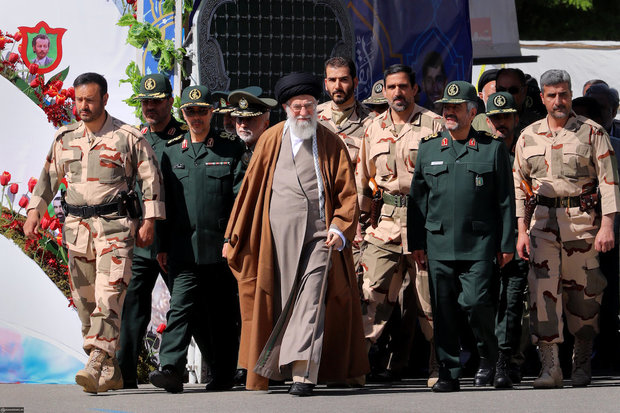
Ali Khamenei, the mullah at the top of the power pyramid in Iran, gave another of his vitriolic speeches in which he reinforced exactly why things won’t change much in the Iranian regime after presidential elections May 19th no matter who gets elected.

He warned that any disrupters of the election would receive a “slap in the face” which is a not so-veiled warning to anyone planning protests over the election results.

The warning came in remarks he made to graduating cadets of the Revolutionary Guard Corps, in which he stressed the importance of security as the dominant issue in the election. An emphasis that is at odds with protests around Iran by ordinary Iranians demanding better jobs wages and economic growth.

The tensions are so bad that Hassan Rouhani’s recent appearance at the scene of a mine collapse trapping and killing scores of miners was met with derision and protesting miners kicking and banging on his car.

Those underlying tensions are a clear signal to Khamenei and the other mullahs of the precarious nature of their hold on power, which is why Khamenei chose to deliver his comments before the regime’s military.

It is also why controls on this year’s elections are much stricter with street rallies banned and restrictions on televised debates.

The elections have also done nothing to alter the trajectory of the regime’s military build-up, which if anything has stepped up in tempo as evidenced by Iran’s communications minister recently announced plans to put two satellites into space, but the impending launch may be cover for ballistic missile research.

Mahmoud Vaezi announced on Monday that the two supposedly home-made satellites will be launched into orbit in the coming months. The launches may seem innocuous, but such space technology could be used to help advance Iran’s missile technology.

“Iran is certainly using its satellite program to shield the ICBM (inter-continental ballistic missile) program. The technology and challenges in the two programs are similar in many aspects and one can move from one to another,” Saeed Ghasseminejad, an Iran research fellow at the Foundation for Defense of Democracies, told The Daily Caller News Foundation.

Iran needs to disguise its ICBM program, he added, and satellite launches are an ideal method. The Islamic Republic has been sanctioned by the U.S. for its missile tests in the past, even since the signing of Joint Comprehensive Plan of Action nuclear agreement in 2015. Iran’s military has engaged in at least eight missile launches since the deal was inked.

Iran’s missile arsenal forms the backbone of its national defense. The Islamic Republic was cut off from Western military support after its revolution in 1979, diminishing the capabilities of its air force. The country instead focused on advancing its missile program, which was easier to maintain thanks to the help of North Korea. An Iranian missile tested in January had North Korean origins, according to the Pentagon.

That commitment to Iran’s missile capability was reinforced by Khamenei in the same remarks to the Revolutionary Guard Corps cadets.

“The hype over Iran’s missile capability is because of their (enemies) spite and anger about this element of power in Iran,” Khamenei said.

“We possess missiles which are very precise and can hit the targets with high precision from thousands of kilometres away,” he said, adding that “We will preserve this capability with all in power and will increase it powerfully.”

He said that Iran’s military power serves as a tool for “deterring purposes” and relies on domestic potentials.

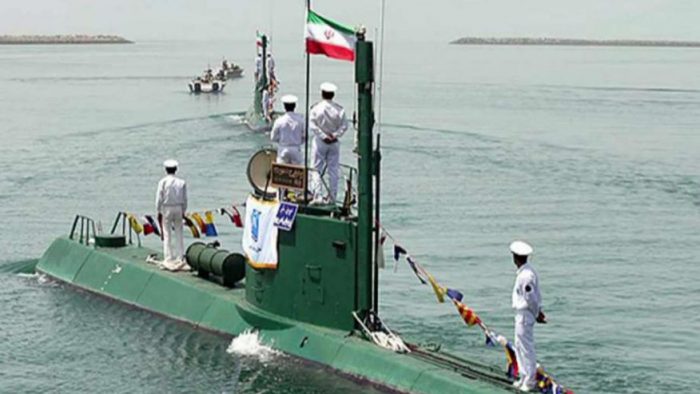
Also, the regime test-fired a high speed torpedo, a senior U.S. defense official told Fox News, marking the latest provocative action from the Islamic Republic.

The Hoot torpedo, which has a range of six miles, was fired in the Strait of Hormuz, where much of the world’s oil passes each day.

It’s unclear if the torpedo test was successful.

It is not the first time Iran has tried to test this torpedo. The last time it did so was in February 2015. It also follows a cruise missile test from a midget submarine also based on North Korean designs.

Iranian officials announced in April that the regime’s defense budget increased 145 percent under Rouhani, hardly the sign of a government intent on becoming a “moderating” influence in the region as promised by the Iran lobby.

In the end, very little has changed in Iran and will remain so no matter who gets elected. The only real hope for democratic reforms and change remains empowering the global Iranian resistance movement and give it the international backing it needs to become a force within Iranian politics again.

Laura Carnahan
Filed Under: Blog, News Tagged With: Featured, Hoot, Iran, Iran Lobby, Iran Terrorism, IRGC, Khamenei

Iran Military Buildup Continues Obscured by Election

May 6, 2017 by admin

Iran Military Buildup Continues Obscured by Election

Iran Military Buildup Continues Obscured by Election

It’s no secret that while the Iran lobby was busy promising more moderation and accommodation from the Iranian regime during nuclear talks two years ago, the mullahs in Tehran were busy working over their calculators figuring out what they were going to buy with their newfound cash coming from relief from economic sanctions and the bonus of billions coming from a prisoner swap with the U.S.

Since the completion of the deal, the Iranian regime has been busy replenishing its military which was drained from years of fighting in Syria and Yemen, as well as supplying its proxies with weapons and ammunition including Hezbollah, Shiite militias and the Houthis.

More worrisome though is analysis indicating that Iran has sought to not only rebuild its military, but transform it primarily from tactical, regional actions to a more strategic, offensive posture posing a menacing threat to its neighbors, especially long-time rivals Saudi Arabia and the Gulf states.

Iranian officials announced late last month that Iran’s defense budget had increased by 145 percent under President Hassan Rouhani and that the military is moving forward with a massive restructuring effort aimed at making it “a forward moving force,” according to regional reports.

Regime leaders have stated since the Iran deal was enacted that they are using the massive amounts of cash released under the agreement to fund the purchase of new military equipment and other armaments. Iran also has pursued multi-million dollar arms deals with Russia since economic sanctions were nixed as part of the deal, according to the Washington Free Beacon.

Leading members of Congress and U.S. officials working on the Iran portfolio suspect that at least a portion of the Obama administration’s $1.7 billion cash payment to Iran  has been used to fund and support terrorists in the Middle East.

The latest disclosure about Iran’s military buildup is further fueling concerns that U.S. cash assets returned to the country—which were released with no strings attached by the Obama administration—are helping Iran pursue a more aggressive military stance against U.S. forces in the region.

Iranian Brigadier General Kiumars Heidari announced the military buildup during Iran’s annual Army Day. While the announcement did not grab many headlines in the Western media, national security insiders have been discussing the announcement for weeks, according to conversations with multiple sources.

Iran’s goal is to turn its army into an “offensive” force, a major shift from its historic role as a support agent for the Iranian Revolutionary Guards Corps, or IRGC, Iran’s extremely well funded primary fighting force.

Iran hopes to revamp its army from top to bottom, including improving logistical capabilities, weaponry, and other armaments.

The regime has also escalated its attempts to demonstrate additional military capabilities including the launching of ballistic missiles.

Another sign was an Iranian Yono-class “midget” submarine attempted to launch a cruise missile from the Strait of Hormuz on Tuesday, according to U.S. officials.  The only two countries in the world that operate this type of submarine are Iran and North Korea. The test launch was not successful, reported Fox News.  Iran had previously announced it had successfully tested a sea-launched missile and it is not known if this was the first actual submarine launch of the weapon.

The increase in military activity and emphasis on first-strike weapons and tactics is leading many to speculate what path the Trump administration will pursue to stymie the mullahs.

Much crystal-ball gazing has been going on lately, not the least of which coming from Iran lobby members such as the National Iranian American Council who hope to shape the narrative much as it did during the nuclear negotiations.

Secretary of State Rex Tillerson said last month that Iran is complying with the terms of the 2015 nuclear agreement. The positive finding of the State Department’s routine periodic review of the nuclear agreement, known formally as the Joint Comprehensive Plan of Action (JCPOA), was surprising given President Trump’s assessment that it was “the worst deal ever negotiated.” Some analysts believed Tillerson was signaling that the Trump administration would let the agreement stand rather than “rip it up” as the president had promised.

But according to James S. Robbins, a member of USA TODAY’s Board of Contributors, who served as a special assistant to the secretary of defense in the George W. Bush administration, there is something deeper going on. The key language in Tillerson’s statement dealt with the National Security Council’s inter-agency review to determine whether continued suspension of the sanctions is “vital to the national security interests of the United States.” This phrasing points to the key weakness in the structure of the deal, said Robbins.

“In addition, previously secret aspects of the deal have begun to be revealed, such as the Obama administration freeing Iranian prisoners accused of major crimes related to the nuclear and missile programs. These shady aspects of the bargain make it easier for the Trump administration to make the political case against it, which Americans opposed by wide margins to begin with,” he added.

If the National Security Council determines that Iran’s activities are not in U.S. national security interests, the president can lift the sanctions waivers. This puts Iran in a bind. Tehran has threatened it could restart its nuclear program “in a new manner that would shock Washington.” But if Iran chooses openly to violate the terms of the deal, this would activate the agreement’s Article 37 “snap back” mechanism which restores all the pre-JCPOA international sanctions. The only way the “snap back” would not happen is if the UN Security Council votes otherwise, but the United States could veto any resolution that keeps the deal alive, according to Robbins.

This puts Iran in a lose/lose position: accept renewed and potentially tougher U.S. sanctions while staying within the framework of the JCPOA; or breach the deal and suffer the “snap back” consequences. Of course, Iran could just attempt to go full-bore to develop nuclear-armed missiles as quickly as possible and hope for the best. But the developing crisis with North Korea should be instructive to Tehran. The Trump administration is less willing than its predecessors to accommodate or ignore the nuclear ambitions of rogue states.

All of which places the Iranian regime squarely in the sights of the international community for the first time in nearly four years when Iran was dragged unwillingly to the bargaining table because of the effectiveness of previous sanctions.

We shouldn’t let this opportunity slip away like the last one.

Michael Tomlinson

Filed Under: Blog, News Tagged With: Featured, Iran Lobby, Iran Mullahs, Iran sanctions, Iran Talks, Iran Terrorism, IRGC, Khamenei, National Iranian American Council, Nuclear Deal

Middle East Headed for More Instability Courtesy of Iran Regime

May 3, 2017 by admin

Middle East Headed for More Instability Courtesy of Iran Regime

Middle East Headed for More Instability Courtesy of Iran Regime

To say that Saudi Arabia and the Iranian regime are at odds is to make one of the bigger understatements of the decade. For the Iranian regime, its adherence to its own particular extremist faith and expansionism, drives it to view any other country in the region with deep suspicion if not outright hostility.

Its relationship with Saudi Arabia has been fraught with peril as the mullahs in Tehran have consistently waged a silent war to destabilize the kingdom in a myriad of ways, including resorting to terror strikes such as the bombing of the Khobar Towers to insurrection in neighboring Yemen through Houthi rebel proxies.

From Saudi Arabia’s perspective, it has been in open—if not yet declared—war with the Iranian regime and for some powerful members of the ruling family, they’ve had enough.

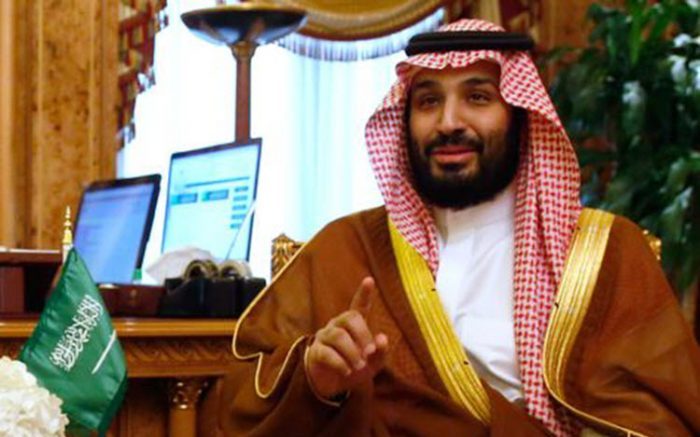
Saudi Arabia’s deputy crown prince closed off the potential for more dialogue with the Iranian regime accusing it of following an “extremist ideology” and seeking to take over the Muslim world, according to the New York Times.

The prince, Mohammed bin Salman, is second in line to the throne and serves as defense minister and said the kingdom would fight Iran’s efforts to extend its influence in the region.

“We are the primary target for the Iranian regime,” Prince Mohammed said in describing efforts by Iran to take control of Islamic holy sites in Saudi Arabia. He vowed Saudi Arabia would not wait for Iran to attack Saudi Arabia, but would instead battle the regime in Iran.

The proxy wars between the two Islamic nations have already been waged on opposite sides in Syria and Yemen with both sides blaming the other for supporting terror and extremist groups.

The war in Syria doesn’t appear to be winding down in any meaningful way as Iran announced it would be providing more troops to fight there on behalf of the Assad regime according to a senior commander in the Revolutionary Guard Corps.

Iran has provided military support to Assad’s forces since at least 2012, but initially did not comment publicly on its role. But as the military support increased and Iranian casualties also rose, officials began to speak more openly.

“The advisory help isn’t only in the field of planning but also on techniques and tactics,” the Fars news agency quoted Mohammad Pakpour, head of the Revolutionary Guard ground forces, as saying. “And because of this the forces have to be present on the battlefield.”

An Iranian official said late last year that more than 1,000 Iranians had been killed in the Syrian civil war. These include a handful of senior commanders of the Revolutionary Guards, according to Iranian media reports.

Iran has helped to train and organize thousands of Shi’ite militia fighters from Iraq, Afghanistan and Pakistan in the Syrian conflict. Fighters from Lebanon’s Hezbollah are also working closely with Iranian military commanders in Syria, according to Reuters.

While the conflict continues to grind on in Syria, the prospect of stopping Iran’s expansion in Yemen might provide the leverage necessary to roll back the regime as outlined in an editorial by Gerald Feierstein, former U.S. ambassador to Yemen, in Defense One.

Feierstein pointed out differences in how to confront Iran between Saudi Arabia and its partner Gulf states may be easing as Yemen has proving to be common ground for agreement.

“Yemen may be the key to solving the GCC’s Iran problem. After last year’s Kuwait round of Yemeni negotiations ended in stalemate, the Saudi-led coalition determined that only a shift in the military balance would bring the Houthis and their allies, loyalists of former President Ali Abdullah Saleh, back to the negotiating table. A strategy was derived to push the Houthis off the Red Sea coast — the Yemeni terminus of the arms-smuggling route that begins in Iran — and seize the vital port of Hodeidah,” he said.

Return of the port to government or even UN control would be a big step towards thwarting Iran in Yemen and eventually turn the tide in its struggle against Saudi Arabia.

The hammer could be a Trump administration review of Iranian policy that could mark a significant shift back towards valuing human rights improvements within Iran as a condition of future economic sanctions relief.

Amir Basiri, a contributor to the Washington Examiner’s Beltway Confidential blog and an Iranian human rights activist, touted the potential of this shift in a column.

While Iran does pose a major military threat, through supporting what has been described by Trump as “radical Islamist terrorism,” Tehran’s ongoing human rights abuses should finally receive the long overdue attention they deserve. In fact, U.S. interests can be advanced through a robust challenging of Iran’s domestic dissent crackdown. U.S. strategy seeking to confront Iran would receive a correct boost through combating Tehran’s authoritarian dogma, Basiri said.

“Parallel to such policy overhauls, the U.S. should stand alongside the Iranian people and their organized resistance, represented for decades by the National Council of Resistance of Iran, the umbrella group of different organizations and individuals led by Maryam Rajavi, advocating regime change and peaceful transition to democracy,” he said.

“Increasing sanctions on Iranian regime elements involved in human rights violations is another aspect that would complete the canvas of Trump’s policy vis a vis Iran. Such measures would also send messages to the international community regarding the dangers in seeking short-term economic interests at the cost of the Iranian people’s long and ongoing misery,” he added.

By realigning U.S. interests to valuing human rights, we could also effectively sideline the Iran lobby which has been loath to discuss Iran’s human rights record knowing it to be dismal.

Michael Tomlinson

Filed Under: Blog, News Tagged With: Featured, Iran, Iran Human rights, Iran Lobby, Iran Mullahs, Iran Terrorism, IRGC, Khamenei

Iran Regime Up to Old Tricks of Assassination Overseas

May 3, 2017 by admin

Iran Regime Up to Old Tricks of Assassination Overseas

Iran Regime Up to Old Tricks of Assassination Overseas

The Iranian regime has a long history of committing violence around the world either through its terrorist proxies such as Hezbollah, its intelligence operatives and Quds Forces, as well as its own Revolutionary Guard Corps.

The mullahs have long adopted the use of deadly force as a tool of statecraft. Not since the medieval age when monarchs plotted assassinations of rivals, has a nation used killing as part of an ordinary foreign policy tool.

The only other nation that seems to share that same affinity for killing is fellow rogue state North Korea which was implicated of the assassination of its leader Kim Jong Un’s half-brother in a brazen chemical attack at an airport in Malaysia in front of passers-by.

The use of chemical weapons seems to be a common trait shared by North Korea, Iran and its client state of Syria.

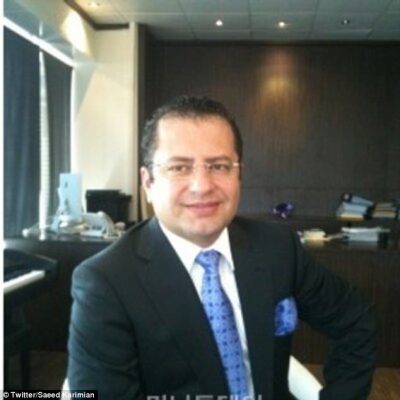
Now comes word that a dissident British-Iranian television executive was assassinated in Istanbul over the weekend only a few months after being sentenced in absentia to a six-year prison term by an Iranian court for allegedly spreading subversive propaganda, according to the New York Times.

Saeed Karimian was the owner of Gem TV, a network of television channels broadcasting in Farsi and other languages. He was shot “minutes after leaving his office,” Gem announced on Sunday. Also killed was his Kuwaiti business partner, whose name has not been released.

The assailants fled, and their vehicle was found abandoned and partly destroyed in another part of Istanbul, according to reports by Gem and several Turkish news outlets.

While there was an effort to spin the killing as a dispute over money, others saw the Iranian regime’s dark hand at work.

The National Council of Resistance of Iran, one of the largest Iranian dissident groups, claimed that Karimian was assassinated by Iran’s Revolutionary Guard on the orders of top mullah Ali Khamenei. Iran has been accused of assassinating Iranian exiles in the past, most recently Abbas Yazdi, an Anglo-Iranian businessman who was kidnapped in Dubai in 2013 and is now thought to be dead.

Karimian had long been the target of propaganda and smears by media outlets linked to Iranian security services, the NCRI statement said.

His network has been aggressively expanding lately, recently adding several new channels and recruiting Iranian artists and staff from inside Iran and abroad.

Several regime-controlled Iranian media reports meanwhile said Karimian was linked in the past to The People’s Mujahedeen of Iran (PMOI), an Iranian dissident group which is part of the NCRI coalition, which may be one explanation for the assassination since the Iranian regime has allegedly instigated several documented attacks on refugee camps housing PMOI dissidents in Iraq resulting in massacres of unarmed civilians.

Turkey and Iran are neighbors and major trade partners, but relations have recently been strained. The two are regional rivals and have backed opposing sides in the Syrian civil war, according to the Washington Post.

Reporters Without Borders, a press freedom watchdog, ranks Iran as one of the worst oppressors of journalists in the world. The motive behind the killings, however, remains unclear.

The BBC reported that Karimian’s family said that the Iranian government had threatened him in recent months and that he had planned to leave Istanbul for London.

According to the New York Times, an Iranian court announced last January in a judicial newspaper that Karimian had been sentenced to six years in prison for spreading propaganda against the country’s Islamic government, and acting against national security.

What was so threatening to the mullahs? Apparently soap operas and other entertainment broadcast by Karimian’s networks are a threat to the religious theocracy the mullahs built in Iran since seizing power in 1979.

The potential pollution of the mullahs’ harsh religious control is so precarious that the regime bans satellite dishes and regularly sends militia and police out to rip them off rooftops; they are widely used, and millions of Iranians watch dissident’s “subversive” programming.

Karimian had previously suggested that he hoped his work would change Iranian society. “We will do our best to create an Iran one day that we can take pride in,” Karimian said in comments that were broadcast posthumously on his own network on Sunday following his killing.

The potential for change in Iran must have been seen as too threatening to the control of the mullahs it seems.

Michael Tomlinson

Filed Under: Blog, News Tagged With: Featured, hassan rouhani, Iran Mullahs, Iran Terrorism, IRGC, Khamenei

US Steps Up Sanctions Against Iran Prison Industry

April 19, 2017 by admin

US Steps Up Sanctions Against Iran Prison Industry

US Steps Up Sanctions Against Iran Prison Industry

Each passing day seems to bring more evidence that the Trump administration intends to chart a very different path than the Obama administration when it comes to dealing with the Iranian regime.

The first clue was the harsh rhetoric directed at the mullahs and the nuclear agreement, as well as the multi-billion dollar payment made by the Obama administration as part of the deal.

Then came the first series of sanctions in response to Iran’s launching of ballistic missiles; a move the Obama administration did not make for fear of upsetting the mullahs and threatening the nuclear deal.

Next came the cruise missile strike against a Syrian airbase in response to a chemical attack against civilians, including young children and infants.

In less than three months, President Trump has acted aggressively and swiftly against Iran and its interests in Syria in a bold departure from the feckless policies of trying to appease the mullahs in Tehran practiced by President Obama.

Now the Trump administration is leveling new economic sanctions against senior Iranian officials and its prison system for widespread human rights abuses, including the systematic torture of those being held in these facilities, according to White House officials familiar with the matter.

The latest sanctions target the Tehran Prisons Organization and Sohrab Suleimani, a senior official in the prison system and the brother of Qassem Soleimani, a senior Iranian military figure responsible for operating Iran’s rogue activities in Syria and elsewhere.

Sohrab Soleimani is responsible for overseeing Iran’s notorious Evin Prison, which is known for torturous interrogations, forced interrogations, and widespread mistreatment of inmates.

The latest sanctions are certain to rankle Tehran, already the subject of a range of new sanctions under the Trump administration, which is currently conducting a widespread review of all matters related to the landmark nuclear agreement.

A senior official on the White House National Security Council told the Washington Free Beacon that the Soleimani family has a history of fomenting violence and unrest both inside and outside Iran.

“It’s no coincidence that Sohrab Suleimani is the brother of the notorious Qasem Soleimani, the head of the IRGC’s Quds Forces, who has been responsible for so much of the violent disruption Iran has been spreading through the region,” said the official, who was not authorized to speak on record.

U.S. intelligence agencies believe Gen. Soleimani is overseeing Iran’s military operations in Syria, which are designed to prop up the regime of President Bashar al-Assad. The U.S. and its Middle East allies also said they have seen Gen. Soleimani’s hand in Revolutionary Guard military activities in Iraq, Yemen, Lebanon and the Palestinian territories.

Iranian human rights abuses have only grown under the leadership of so-called reformist President Hassan Rouhani, the official said. This includes the detention of U.S. citizens

“There has been a disturbing and significant increase in the number of detentions and executions of Iranian citizens under President Rouhani, and the infamous Evin Prison under Sohrab Suleimani’s control has been a key facility in this program of domestic repression,” the official said.

The Trump administration is holding meetings with the family members of American citizens still being detained in Iran and believed to be subjected to torture.

Soleimani’s role in Iran’s prison system makes him one of the foremost human rights abusers worldwide.

Soleimani oversaw an April 2014 incident at the Evin Prison in which dozens of security guards and prison officials beat a number of political prisoners. The attack is believed to have lasted several hours and impacted more than 30 prisoners. Many of these prisoners were later denied medical treatment.

Evin Prison is home to large number of Iranian political dissidents and other government opponents, who are routinely shut down and arrested by the Iranian regime for political activities targeting those in power.

The sanctioning of someone so central to the regime’s enforcement system against dissidents and a family member to a key figure in Iran’s military represent a significant escalation in attempts to push and contain the Iranian regime’s influence.

More importantly, the move once again highlights human rights as a central policy concern for the U.S. moving forward and redefines the need for the regime to improve its human rights practices.

U.S. lawmakers have been calling in recent week for the U.S. to further impose sanctions on Iran for its nonnuclear activities. They specifically cited Iran’s continued detention of four U.S. nationals and two U.S. green-card holders as justification for more penalties. Iran has accused most of these Americans of espionage, a charge they have denied.

A bipartisan group of U.S. lawmakers wrote Treasury Secretary Steven Mnuchin last week and noted that Iran hadn’t been sanctioned for any human-rights violations since the nuclear agreement was reached in July 2015.

“Failing to sanction individuals and entities committing flagrant abuses of human rights against the Iranian people not only goes against our most cherished values and principles but also undermines the credibility of our government,” they wrote.

This is an important step, but it’s only a step forward to finally bringing hope and democracy back to the Iranian people. We can only hope the pressure continues to build through next month’s presidential election in Iran.

Laura Carnahan

Filed Under: Blog, News Tagged With: Featured, hassan rouhani, Iran, Iran deal, Iran Human rights, Iran Lobby, Iran Mullahs, Iran sanctions, Iran Terrorism, IRGC, Khamenei, soleimani

Trump Administration Must Move to Sanction IRGC

April 18, 2017 by admin

Trump Administration Must Move to Sanction IRGC

Trump Administration Must Move to Sanction IRGC

With recent moves such as the launching of a cruise missile attack against a Syrian airfield, the dynamics of the how to confront the Iranian regime are inevitably changing in the transition from the Obama administration to the Trump administration.

The pressure on the Iranian regime can be seen in the stepped-up attacks by the Iran lobby to try and dissuade U.S. policymakers from shifting to a more aggressive stance against the mullahs in Tehran.

How and in what form that stance will be is taking shape internally within the administration and in the halls of Congress and the mullahs are desperate to influence that debate. Unfortunately the easy access Iran enjoyed through the open door policy at the Obama White House through multiple visits by Trita Parsi of the National Iranian American Council and other members of the Iran lobby is now shut off.

The Trump White House is poised to ratchet up existing sanctions against Iran and is weighing a much stricter interpretation of the nuclear agreement between Tehran and major world powers, according to Foreign Policy.

The administration is inclined to adopt a “more rigorous application of the tools at its disposal,” a senior White House official told Foreign Policy, referring to sanctions policy. Among the options under consideration: broadening U.S. sanctions to include much larger chunks of the Iranian economy linked to the Islamic Revolutionary Guard Corps (IRGC).

No final decision has been taken by the president or the cabinet. But officials said some decisions will need to be taken soon. On April 25, Iran and the six governments that negotiated the nuclear deal with Tehran, including the United States, are due to meet in Vienna for a quarterly review of the accord.

How President Donald Trump decides to proceed on sanctions and the nuclear deal more broadly carries high stakes for the United States, Iran, and the wider Middle East. A concerted U.S. effort to squeeze Iran would represent a gamble that Tehran’s regional push for power, particularly in Syria and Yemen, could be checked in part by increasing economic pressure.

Another major decision facing President Trump is whether or not to stick with the nuclear deal that he so roundly criticized on the campaign trail. The calculation of whether or not to keep it will have to rely on a central question which is are the mullahs abiding by it or simply using it as a smokescreen to rebuild their military as many suspect.

But the president doesn’t have to shred the deal to put pressure on the Iranian regime. As Foreign Policy pointed out, the agreement is not a binding treaty as such he has broad leeway to interpret its provisions. Under President Obama, that flexibility allowed him to grant Iran broad leniency in areas such as enriched fuel and heavy water. Trump could choose to close those loopholes.

Evidence of that tougher stance has cropped up as the Treasury Department announced new sanctions last week, including the brother of the powerful head of the special forces arm of the IRGC, Sohrab Soleimani, for his role in abuses at the country’s prisons. And in February, the Treasury Department blacklisted eight organizations linked to the Revolutionary Guards, as well as one of its officials based in Lebanon.

The focus on the IRGC and its Quds Forces signal a significant change that could hold the promise of increased effectiveness because of the deep roots the organizations have throughout Iran and its economy.

At the moment, any entity that has a 50 percent ownership stake or more held by the IRGC is subject to sanctions, but the administration is mulling a change that would drop the threshold to a lower percentage.

Such a move would break with long-standing policy at Treasury, which has traditionally defined ownership as above 50 percent for any category of sanctions. A lower threshold would mean blacklisting hundreds and possibly thousands of additional Iranian companies and organizations with links to the IRGC, experts said.

The mere threat of a lower threshold has helped stifle potential investments into the Iranian regime as banks and companies from Europe and Asia fret about possible sanctions being levied by the U.S. down the road should they invest.

That has had a ripple effect as the much-promised economic benefits from the nuclear deal have failed to materialize leading to speculation that top mullah Ali Khamenei may have decided to abandon the pretense of moderation in favor of a harder line as evidenced by who makes the presidential ballot for next month’s election in Iran.

Emanuele Ottolenghi, Ph.D., a senior fellow and expert on Iran at the Foundation for Defense of Democracies, wrote in The Hill of the need to close one loophole benefitting the regime now which the lifting of sanctions restricting the sale of commercial airliners to Iran.

The activities of Iran’s aviation sector have exposed the inadequacy of the nuclear agreement’s caveat that licensed items and services must be used “exclusively for commercial passenger aviation.” Currently, at least five Iranian and two Syrian commercial airlines are engaged in regular military airlifts to Syria, he writes.

These carriers have been crisscrossing Iraqi airspace since 2011, but have increased their tempo since the summer of 2015, when Iran and Russia coordinated their efforts to save Assad’s regime. Flight tracking data indicate that, from the nuclear deal’s implementation day on Jan. 16, 2016 to March 30, 2017, there were at least 696 flights from Iran to Syria, only six of which were carried out by Iran’s air force, she added.

She points out that it is extremely likely that Iran Air is still an active participant in the Syria airlifts. First, there is no justification for frequent commercial flights to Damascus: Syria is a war zone with little tourism or commerce, yet it is served almost twice daily by Iranian airlines. Iran Air, for example, flies to Damascus twice a week. It is doubtful Iranian tourists are posing for selfies in the ruins of bombed cities.

The flight cannot be purchased on Iran Air’s booking website or through travel agencies and the booking website does not include Damascus among its destinations from Tehran’s international airport, where the flights originate. Finally, Iran Air flights to Damascus occasionally make unscheduled stopovers in Abadan, an IRGC logistical hub for the Syria airlifts.

The next few months will show whether or not the Trump administration will follow through on its campaign promises and finally begin the hard work of stopping the mullahs.

Michael Tomlinson

Filed Under: Blog, News Tagged With: #NuclearDeal, Featured, hassan rouhani, Iran deal, Iran Mullahs, Iran sanctions, Iran Terrorism, IRGC, Khamenei

After Syria Strike Next Move Should be Pushing Iran Out

April 13, 2017 by admin

After Syria Strike Next Move Should be Pushing Iran Out

After Syria Strike Next Move Should be Pushing Iran Out

You can almost pinpoint to the day when things turned really bad in Syria. For much of the fall and spring of 2012-2013, the Assad regime was on the ropes from a series of victories by rebel forces including the loss of a key airbase and provincial capital.

The Syrian army suffered from several publicized defections of key leaders and the rebel coalition had grown significantly around moderate groups backed by the U.S.

Then in April of 2013, the Iranian regime directed its terrorist proxy Hezbollah to join in the fray, along with advisors and commanders from the Iranian Revolutionary Guard Corps. Coupled with a massive influx of cash and weapons, the restocked Syrian army launched a series of counteroffensives that began to turn the tide.

Up until that point, the rebels had pushed to within eyesight of Damascus and Assad was frantically figuring out where his exile should take place.

For the mullahs in Tehran, it was an equally scary time as its major Shia partner was about to fall.

But with the reinforcements and direct intervention by Iran, the tide of the war changed and with it the situation we are now mired in.

Not only did Syria alongside Iranian forces fight rebels, they specifically targeted, moderate Western-backed units in order to decimate their numbers and leave only radical Islamic groups on the battlefield forcing the U.S. and its allies to pick between a certifiable mass murderer in Assad or groups such as ISIS and Al-Nusra.

It was a clever strategy and one that worked too well given the Obama’s support of the corrupt Al-Maliki government in Iraq, preserving ISIS at a critical time when its numbers were small and lacked cash and weapons. It gained both when it exploited the divided government in Iraq; split apart by Iranian regime’s insistence on a Shia only leadership thereby pushing some of the Sunnis straight into the waiting arms of ISIS and leading directly to the blitzkrieg that toppled Mosul and delivered ISIS its first major victories.

Less than two years later, as Iran was again on the ropes with its resources depleted and rebel forces on the verge of breaking out again in Syria, Iranian mullahs took the step of begging Russia to intervene and save its proverbial goat, which Vladimir Putin was all too happy to oblige, sensing an opportunity to preserve its naval base on the Mediterranean while filling the power vacuum left by the Obama administration’s total withdrawal from the region.

But President Trump’s decision to retaliate against Syria for the use of chemical weapons changed the game plan entirely and now raises the question of how to best move forward?

There is no doubt that the most desirable solution in Syria is a diplomatic one, but focusing on removing Assad from power is only treating the symptom. The real sickness that afflicts Syria is the presence of the Iranian regime there; it is so embedded many Syrians have taken to view Iranian soldiers as an occupation force.

By removing Iran from Syria, the situation resolves itself in a myriad of ways: Russia would lose its key partner on the ground; A peace deal with rebels will definitely prevail; and the Syrian people would have the chance to choose their own destiny.

It would also allow for the repatriation and resettlement of the four million refugees that have fled Syria since the war began.

And the key to pushing Iran out of Syria lies within supporting—fully—the dissident movement within Iran itself.

As Reuel Gerecht, a senior fellow at the Foundation for Defense of Democracies, and Ray Takeyh, a senior fellow at the Council on Foreign Relations, explained in an editorial in the New York Post:

“The regime’s survival is now dependent on unsteady security services and the power of patronage, which ebbs and flows with the price of oil. Iran’s continuing stage-managed elections and colorless apparatchiks, including President Hassan Rouhani, a founding father of the feared intelligence ministry who mimics reformist slogans, have failed to convince, much less inspire,” they said.

“Today, the Islamist regime resembles the Soviet Union of the 1970s — an exhausted entity incapable of reforming itself while drowning in corruption and bent on costly imperialism,” they added. “If Washington were serious about doing to Iran what it helped to do to the USSR, it would seek to weaken the theocracy by pressing it on all fronts. A crippling sanctions regime that punishes the regime for its human-rights abuses is a necessity. Such a move would not just impose penalties on Tehran for violating international norms but send a signal to the Iranian people that the United States stands behind their aspirations.”

Re-prioritizing human rights as a dominant issue with Iran moving forward would place the U.S. back on the moral high ground that the Obama administration vacated and serve as an effective counter to the ceaseless arguments made by the Iran lobby opining about potential economic benefits of trade with Iran.

A new report by human rights group Amnesty International showed that Iran remained a dominant executioner of its own people, second in the world only to China, which makes hammering the regime on human rights all the more critical.

That emphasis on human rights was boosted by the European Union’s decision to extend sanctions until April 2018 on Iran for “serious human rights violations.”

The bloc has also extended by a year its travel ban and an asset freeze on 82 Iranian people and one entity, as well as a ban on exports to Iran of equipment for monitoring telecommunications and other gear that “might be used for internal repression.”

Sir David Amess, a member of the British Parliament, pointed out in an editorial in the Washington Examiner that the key to confronting Iran ultimately is to cut off the IRGC’s commerce as outlined by a leading Iranian dissident group.

“The National Council of Resistance of Iran (NCRI) specifically identified the sites of some 90 docks operated exclusively by the IRGC within Iranian ports. The information was obtained from the network of the People’s Mojahedin Organization of Iran (PMOI/MEK), which has assets within the clerical regime and the IRGC itself and made international headlines in 2002 when it revealed key details about the regime’s nuclear program,” Amess said.

“Iran’s destabilizing regional influence and its subversive activities will only be diminished if the domestic and international power of the IRGC is confronted and constrained, first through the rightful designation of the organization as a terrorist organization and then through the sanctioning of all its economic activities followed by financing regional conflicts and threats against the West,” he added.

Ultimately the U.S. should use its influence to specifically diminish the IRGC and its influence in Syria if there is ever to be any hope of a lasting peace there.

Michael Tomlinson

Filed Under: Blog, News Tagged With: Featured, Hezbollah, Iran, Iran Terrorism, IRGC, Khamenei, Rouhani, Sanctions, Syria

Years of Obama Compromise Finally Come to End

April 10, 2017 by admin

Years of Obama Compromise Finally Come to End

Years of Obama Compromise Finally Come to End

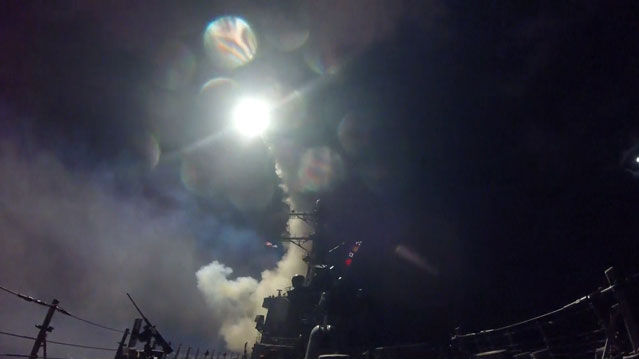
With the launching of 59 Tomahawk cruise missiles from two U.S. Navy warships aimed at a Syrian airbase last week, the Trump administration took an enormous step in reversing the policies of appeasement and accommodation that marked the Obama administration’s approach to Middle East conflicts.

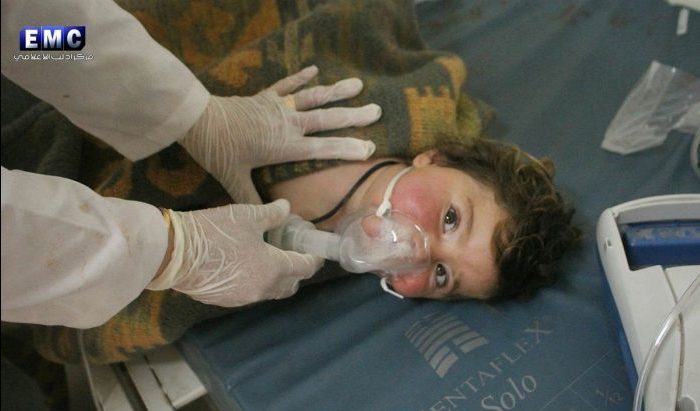
The airstrike was done in response to a chemical weapons attack in which at least 87 people were killed – including women and children – in the assault on the Syrian town of Khan Shaykhun last Tuesday. Medical personnel on the ground indicated the chemical agent was sarin, a nerve agent so deadly that mere drops inhaled or absorbed on skin kill within minutes.

U.S. military personnel allegedly tracked the aircraft launched from the airbase in question and took a flight path to the town, dropping its ordinance and returning.

The chemical attack was not the only one the Assad regime has been accused of conducting since a much-publicized deal that Russia brokered to remove Syria’s chemical weapons stockpile. These recent attacks demonstrate clearly that the Assad regime retains its chemical weapons and is unafraid of using them.

These incidents demonstrate clearly the utter failure of the Obama administration’s past policies that sought to broker agreements with regimes that have no intention of abiding by them; be it Syria with chemical weapons or Iran with its nuclear program.

As the New York Post editorial board pointed out in a scathing piece pointing out that administration’s failures and more importantly what it means for the nuclear agreement with the Iranian regime.

Last week’s horrific attack in Syria disproved the Obama administration’s boast of stripping Bashar al-Assad of “100 percent” of his chemical weapons. And that has big implications for the nuclear deal with Iran. After all, the nuke deal relies on the same kind of verification and accountability system entailed in the agreement with Assad, the Post said.

“We will, for the first time, be in a position to verify all of [Iran’s] commitments,” President Barack Obama said at the time, insisting the deal had at least temporarily halted Tehran’s pursuit of nuclear weapons.

Critics insist it did no such thing. Just as many refused to believe Team Obama’s claim that it had fully rid Syria of its weapons of mass destruction. The Syria accord allowed Obama to save face for failing to enforce his “red line” against Assad’s use of chems after the dictator got caught using sarin nerve gas to kill up to 1,500 Syrian civilians, the Post added.

“We are getting chemical weapons out of Syria without initiating a strike,” said Obama. And Secretary of State John Kerry: “We got 100 percent of the chemical weapons out.”

Just this past January, former National Security Adviser Susan Rice insisted, “We were able to get the Syrian government to voluntarily and verifiably give up its chemical weapons stockpile” in a way “that the use of force would never have accomplished.”

The Post summed up by saying “Just how wrong they all were has now become dead obvious. So why should anyone still believe the same team’s assurances on Iran’s ability to produce nukes?”

While the strike by the Trump administration didn’t do much tactical damage to the airbase since American officials warned the Russians of the pending attack, who then promptly tipped off their Syrian allies who quickly moved most of their assets out of harm’s way, the attack was a major strategic masterstroke by President Trump.

The attack was the first by the U.S. against Syrian regime assets and crosses the “red line” that President Obama had previously laid down the first time the Assad regime used chemical weapons, only to infamously balk at crossing its own line.

The airfield bombed is significant, because it is also used by members of Islamic Revolutionary Guard Corps (IRGC) and the Quds Force, according to a report from Asharq Al-Awsat Arabic language website. The field has been used for a long time by IRGC to operate not only in Syria but also in Iraq.

It also neatly puts the Iranian regime on notice that the conditions of the conflict have shifted dramatically. The U.S. was willing to take unilateral military action without U.N. approval or consultation with regional partners in response to a clear and present danger.

For Bashar al-Assad and Hassan Rouhani, the prospect of a surprising and swift U.S. response must have come as a shock.

Of course that did not stop Iran from doubling down on its bets on a murderous Assad regime.

Iranian regime rallied around the Syrian strongman and pledged to respond to US “aggression” after the Trump administration bombed a military airfield in retaliation for a poisonous gas attack.

Assad has drawn heavily on foreign Shi’ite militias sponsored by Iran, led by Lebanon’s Hezbollah group, for his most important gains since the Russian intervention.

In Iran, Supreme Leader Ayatollah Ali Khamenei said the U.S. missile strike was a “a strategic error, and a repeat of the mistakes of the past,” the state news agency IRNA reported.

“The Islamic Republic has shown that … it does not back off and its people and officials … do not retreat in the face of threats,” said Khamenei.

Many Syrians opposed to Assad’s rule consider Lebanon’s Hezbollah and Iranian-backed troops as occupiers seeking to drive out mainly Sunni Syrians from the areas they live in. They hold Iran and its allies responsible for the displacement of millions outside the country, according to Reuters.

Allies including the United Kingdom and Australia Friday, applauded Trump’s decision to launch the strike.

Michael Tomlinson

Filed Under: Blog, News Tagged With: Featured, Iran, Iran Mullahs, Iran Terrorism, IRGC, Khamenei, Syria

Iran Regime Stands by Assad in Chemical Attack

April 6, 2017 by admin

Iran Regime Stands by Assad in Chemical Attack

Iran Regime Stands by Assad in Chemical Attack

In the aftermath of the grisly chemical weapons attack on Syrian civilians that killed more than 100 men, women and children, the Iranian regime predictably stood by their man in Syrian president Bashar al-Assad, even as it publicly condemned the attack.

“Iran strongly condemns all use of chemical weapons regardless of who is responsible and who are the victims,” Foreign Ministry spokesman Bahram Ghassemi told reporters in Tehran, according to an account carried by the official Islamic Republic News Agency.

But Ghassemi cautioned against “rushed judgments and accusations that benefit … certain actors,” claiming that anti-Assad rebel groups — which Tehran calls “terrorists” — have also been known to have stored and used chemical weapons.

It’s a strange position to take since the only people attacked were in rebel-controlled areas. It is unlikely rebels would be dropping chemical agents on their own positions, but logic was never a strong suit of the Iranian regime.

Citing Assad’s frequent past use of chemical weapons, the Trump administration and governments across Europe have said Damascus was most likely behind the attack on the Syrian province of Idlib.

The reaction of Assad’s patron is not unexpected, but while media attention is focused on their denials, one important fact seems to be escaping most analysts’ attention which is the fact that Iran had previously committed to the removal of Syria’s chemical weapons earlier as part of an agreement to avoid President Obama’s infamous “red line” mandate.

The fact that chemical weapons were used, especially a more sophisticated compound in sarin gas, demonstrates the Iranian regime’s comfort level with its ally using these weapons.

On another account, Dr Joseph Kechichian, an author and writer, penned an editorial in Gulf News detailing how Iran actually continues to focus on interfering in the affairs of its neighbors.

“The intrepid Iranian spokesperson further rejected as groundless all of the claims made by several Arab leaders in their pronouncements that the Islamic Republic of Iran openly interfered in the internal affairs of Arab countries, saying that Tehran ‘never interfered in the internal affairs of any country and feels no need at all for such interference,’ which must also be challenged. He added his deep sorrow as several Arab and Muslim leaders, ‘either intentionally or by mistake… go astray and fail to distinguish friend from foe,’ allegedly because they point the finger at Iran instead of ‘dealing with the most important crises in the region,’” Kechnichian writes.

In fact, and lest the fearless Qassemi may have forgotten, it was Ali Akbar Velayati, a former Iranian minister of foreign affairs and an adviser on international affairs to Supreme Leader Ali Khamenei — as well as the president of the Expediency Council’s Centre for Strategic Research — who told a group of Yemeni clerics gathered in Tehran in October 2014 that “The Islamic Republic of Iran supports the rightful struggles of Ansar Allah [Al Houthis] and considers this movement as part of the successful materialisation of the Islamic Awakening [the name Iran uses for the Arab Uprisings] movements”.

Velayati boasted of Al Houthi victories in Yemen, which came to naught after the Kingdom of Saudi Arabia led a coalition to restore the legitimately elected president in Sana’a, even if the war is now in its third year. Velayati and his colleagues may be sure of an Al Houthi triumph in Yemen, though there is little to back that presumption, except that Tehran successfully managed to empower Al Houthis to play the same role that Hezbollah plays in Lebanon, he added.

Article in the Commentary Magazine added another perspective in the Iranian regime’s willingness to keep using Afghan refugees impressed into service as mercenary fighters for the regime’s campaigns.

“Increasingly, however, the Islamic Republic of Iran is replicating the former Soviet and Cuban strategies in Syria, where its intervention to support Bashar al-Assad has cost the Islamic Republic several thousand Iranian soldiers and cadets. The Iranian use of Hezbollah in Lebanon should have put permanently to rest any notion that Hezbollah has evolved into a Lebanese national organization. Rather, it remains what it always has been: A proxy for the Islamic Republic of Iran. But Hezbollah is not alone. A couple of years ago, I noted the increasing number of funerals of foreign nationals—especially Afghans—occurring in Iran whom Iranian news sources said had died fighting in Syria,” The Commentary Magazine writes.

The chemical attack in Syria is just symptomatic of the broader problem of the Iranian regime’s control of the battles being waged in Syria with the influence of the Revolutionary Guard Corps. Unless Iranian control is removed from the equation more Idlib attacks will happen.

Michael Tomlinson

Filed Under: Blog, News Tagged With: Chemical Attack, Iran Terrorism, IRGC, Khamenei, Syria

New Chemical Attack in Syria Shows Iran Complicity

April 4, 2017 by admin

New Chemical Attack in Syria Shows Iran Complicity

New Chemical Attack in Syria Shows Iran Complicity

If your neighbor is about to get arrested for being a pedophile and polluting the neighborhood by burning toxic waste in his backyard, it seems like a no-brainer to remove the offending person.

But what if their distant cousin from across town moves in to save them from being arrested and evicted by persuading authorities they will serve as a careful guardian and custodian? Now imagine the courts and law enforcement allow that creep to stay, but he just goes right on pillaging the neighborhood kids.

That pretty much sums up Bashar al-Assad in Syria and his Iranian benefactors.

But now the United States blamed the Syrian government and its patrons, Russia and Iran, on Tuesday for one of the deadliest chemical weapons attacks in years in Syria, one that killed dozens of people in Idlib Province, including children, and sickened scores more, according to the New York Times.

A senior State Department official said the attack appeared to be a war crime and called on Russia and Iran to restrain the government of President Bashar al-Assad of Syria from carrying out further chemical strikes.

Britain, France and Turkey joined Washington in condemning the attack, which they also attributed to Assad’s government. The United Nations Security Council was scheduled to be briefed on the attack on Wednesday.

On Tuesday, the White House called the attack a “reprehensible” act against innocent people “that cannot be ignored by the civilized world.”

The State Department official who briefed reporters on Tuesday, also said that it appeared Russia was unable or unwilling to hold the Syrian government to the agreed cease-fire.

He reiterated that the attack on civilians appeared to be a war crime. The official, who could not be identified under the State Department’s protocol for briefing reporters, also asserted that even before the alleged chemical strike, the Trump administration had shelved the idea of cooperating militarily with the Assad government against the Islamic State.

The Syrian Observatory for Human Rights, a U.K.-based monitoring group, said 58 people were killed in the town of Khan Sheikhoun in northern Idlib province, including 11 children. The  death toll is likely to rise, the group said.

Turkey said it dispatched 30 ambulances to Idlib following chlorine gas attacks in the northwestern province, the Turkish Anadolu news agency reported. Syrian opposition health minister Firas Jundi put the death toll at more than 100 civilians and said 500 others, mostly children, were sickened or burned by the gas.

“I believe this horrible memory will stay with me for the rest of my life,” Jundi told CNN.

The Syrian anti-government activist group Idlib Media Center published photos of young children receiving medical treatment, and a video showed what appeared to be bodies of children lined up on a blanket.

On Tuesday, Tillerson released a statement condemning the attack, one that took aim at Russia and Iran.

“There are reports of dozens dead, including many children.  While we continue to monitor the terrible situation, it is clear that this is how Bashar al-Assad operates: with brutal, unabashed barbarism,” the statement said. It also called on the countries to act. “As the self-proclaimed guarantors to the cease-fire negotiated in Astana, Russia and Iran also bear great moral responsibility for these deaths.”

French Foreign Minister Jean-Marc Ayrault called the attack “further evidence of the barbarity suffered by the Syrian people.” British Foreign Minister Boris Johnson said he was “horrified” by the attack that “bears all the hallmarks” of chemical weapons previously used by the Syrian regime. Turkish President Recep Tayyip Erdogan called the attack “inhuman” and “unacceptable.”

Maryam Rajavi, the leader of the National Council of Resistance of Iran, the largest Iranian resistance group, pointed blame at Iran’s Revolutionary Guard Corps for protecting and enabling the Assad regime with fighters, arms, cash and equipment.

“Persistence of the war crimes in Syria with the growing involvement of the Iranian Revolutionary Guards Corps and its affiliated militia clearly shows that as long as the Iranian regime is not evicted and its IRGC not expelled from Syria, and so long as their puppet government is in power in Damascus, peace, tranquility and even a ceasefire could not be upheld in that country and the region,” she said.

The attack appeared to be the largest and deadliest chemical attack in Syria since August 2013, when more than 1,000 people were killed in the Damascus suburbs by the banned toxin sarin. Under threat of United States retaliation, Assad agreed to a Russian-American deal to eliminate his country’s chemical weapons program, which until that time it had denied having, and to join an international treaty banning chemical weapons.

With this week’s attack, it clearly shows that guarantees on chemical weapons being banned in Syria are pretty much worthless.

Laura Carnahan

Filed Under: Blog, News Tagged With: Assad, Chemical Attack, Featured, Idlib, Iran Terrorism, IRGC, Khan Sheikhoun, Syria

  • « Previous Page
  • 1
  • …
  • 4
  • 5
  • 6
  • 7
  • 8
  • …
  • 12
  • Next Page »

National Iranian-American Council (NIAC)

  • Bogus Memberships
  • Survey
  • Lobbying
  • Iranians for International Cooperation
  • Defamation Lawsuit
  • People’s Mojahedin
  • Trita Parsi Biography
  • Parsi/Namazi Lobbying Plan
  • Parsi Links to Namazi & Iranian Regime
  • Namazi, NIAC Ringleader
  • Collaborating with Iran’s Ambassador

Recent Posts

  • NIAC Trying to Gain Influence On U.S. Congress
  • While Iran Lobby Plays Blame Game Iran Goes Nuclear
  • Iran Lobby Jumps on Detention of Iranian Newscaster
  • Bad News for Iran Swamps Iran Lobby
  • Iran Starts Off Year by Banning Instagram

© Copyright 2026 IranLobby.net · All Rights Reserved.