Iran Lobby

Exposing the Activities of the lobbies and appeasers of the Mullah's Dictatorship ruling Iran

  • Home
  • About
  • Current Trend
  • National Iranian-American Council(NIAC)
    • Bogus Memberships
    • Survey
    • Lobbying
    • Iranians for International Cooperation
    • Defamation Lawsuit
    • People’s Mojahedin
    • Trita Parsi Biography
    • Parsi/Namazi Lobbying Plan
    • Parsi Links to Namazi& Iranian Regime
    • Namazi, NIAC Ringleader
    • Collaborating with Iran’s Ambassador
  • The Appeasers
    • Gary Sick
    • Flynt Leverett & Hillary Mann Leverett
    • Baroness Nicholson
  • Blog
  • Links
  • Media Reports

Trita Parsi Stepping Down But Is He Going Away?

May 21, 2018 by admin

Trita Parsi Stepping Down But Is He Going Away?

Trita Parsi Stepping Down But Is He Going Away?

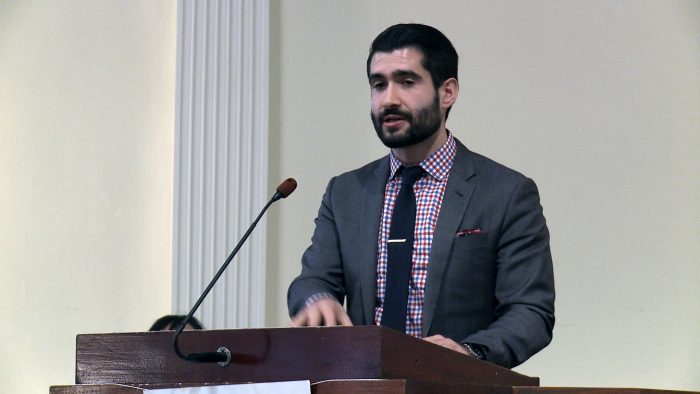
Our old friend, Trita Parsi, founder of the National Iranian American Council and chief cheerleader for the Iranian regime, announced he was leaving the post of president and turning the reins over to Jamal Abdi, NIAC’s current vice president for policy and head of its NIAC Action lobbying front.

Should we shed a tear or let out a cheer that the nemesis of Mideast peace is transitioning out?

Probably neither since his departure from NIAC is probably less about stepping away from publicly lobbying for the Iranian regime and more about removing the bulls-eye target that has been affixed to him for the past decade.

Parsi personifies the strengths and weaknesses of the Iran lobby in the U.S. He is educated and has the ability to speak in academic circles by convoluting historical events with twisted assumptions about what they mean.

He understands the soft spots of American democracy and the rise of political correctness and progressivism and parlays them to his advantage by catering to populist messages that support Iran without asking any tough questions.

In the Obama administration, he found kindred spirits and was able to translate that into unprecedented access to the White House—with visitor logs showing a stupefying nearly three dozen visits leading to the run-up of the Iran nuclear deal, which amounted to the high-water mark of his tenure.

But like his would-be masters in Tehran, Parsi was trapped by his own dogged refusal to ever find fault with the regime’s actions never let even the most horrific atrocities committed by Iran or its proxies divert him from his cause of supporting Tehran.

The use of chemical weapons to gas scores of Syrian men, women and children—twice—failed to move him to condemn the Iranian regime.

The snatching of dual citizens from the U.S., Great Britain, Canada and other countries wasn’t enough to get Parsi off his regime wagon train; even when one of them was a putative friend of his.

Over 17 years, Parsi has worked hard off a blueprint he envisioned of creating a strong PR machine designed to give the Iranian regime a moderate face and lobby U.S. decision makers on giving the mullahs in Tehran a break.

“Give peace a chance” became more than a slogan for Parsi and the NIAC, it became a mantra to steer U.S. foreign policy into one of the most disastrous decisions ever: a nuclear deal that came with no strings attached for human rights violations, sponsorship of terrorism, funding of proxy wars in neighboring countries and development of a crash ballistic missile program that would make North Korea look like an Erector-Set toy.

What was Parsi able to gain in return for his partners in Tehran? A cash windfall of billions of dollars in repatriated money, opening the global market for Iranian oil and invite scores of European and Asian companies to lock up investment deals.

What did the world get in return? A postponement, but not an eradication of Iran’s nuclear capabilities. A full-blown civil war in Syria creating four million refugees and killing over 400,000 men, women, and children. Destabilization in Yemen and Iraq and the threat of a full-blown war between Israel and Saudi Arabia with Iran.

That’s quite a butcher’s bill for Parsi and his promise of moderation.

Now Parsi is handing off the NIAC to Jamal Abdi, a man who has spent years working his way into the political warrens of Capitol Hill and influencing policy towards moderating views about Tehran. Alongside his fellow cohorts including Reza Marashi, Tyler Cullis, and Ryan Costello, Abdi helped Parsi flog his untruths and even spearheaded the creation of NIAC Action, the formal lobbying arm of the NIAC.

The creation of NIAC Action and the installation of Abdi as its first leader is no accident. The open secret that NIAC was lobbying on behalf of Iranian interests finally became too hard to sweep under a carpet and the NIAC had to come out into the sunlight as an official lobbying force (paradoxically neither NIAC Action or Abdi are registered with the House of Senate lobbying disclosure databases).

Of course, Parsi is not leaving the baby he gave birth to. His announcement on the NIAC website states he will turn over power on August 1, 2018, but he intends to “continue to be involved and fully committed to the organization but through a different role.”

And what role would that be? It’s too much to hope for that Parsi would simply exit the stage he left in tatters as the Trump administration has killed the Iran nuclear deal he worked so hard to secure and a deluge of global companies have announced decisions to back out of contracts with the Iranian regime as renewed U.S. economic sanctions loom large.

Not even the wailing of European interests about trying to salvage the deal through a European Union-only coalition will be enough to safeguard the Iranian regime.

Even the Iran Parsi promised is just a mirage. The mullahs are under tremendous pressure back home from unrelenting and broad protests that they have met with brutal suppression and efforts to ban messaging apps such as the popular Telegram.

Iran’s economy is reeling, its currency sinking to an all-time low and a united front is now on the horizon in forming policies to block Iranian expansionism.

About the only thing left Parsi has to show for all of his efforts now is a photo of him shaking hands with a smiling Mohammad Javad Zarif, Iran’s foreign minister, in the wake of the nuclear deal.

How fast things have changed for the Iran lobby in just a year.

Michael Tomlinson
Filed Under: Blog, Current Trend, National Iranian-American Council, News Tagged With: #NuclearDeal, Featured, Iran deal, Iran Lobby, Jamal Abdi, Reza Marashi, Ryan Costello, Syria, Trita Parsi, Tyler Cullis, Yemen

Iran Lobby Ineffectiveness Reaches New Lows

April 27, 2018 by admin

Iran Lobby Ineffectiveness Reaches New Lows

Iran Lobby Ineffectiveness Reaches New Lows

For the past several weeks, the Iran lobby has mounted a massive effort to try and dissuade the Senate from confirming former CIA chief Mike Pompeo as the next secretary of state, as well as opposing the installation of former UN ambassador John Bolton as the new national security advisor.

This included the usual suspects such as National Iranian American Council staffers such as Trita Parsi and Reza Marashi, as well as NIAC Action head Jamal Abdi busy issuing press statements and drafting editorials and giving interviews to anyone who would bother listening to them.

Gone though are the heady days during the Obama administration when the Iran lobby was part of the vaunted “echo chamber” pushing for passage of the Iran nuclear deal and gaining appearances on mainstream programs such as CNN.

This latest effort to alter the trajectory of President Trump’s latest cabinet additions to his foreign policy team died a quiet death amidst a dearth of any appreciable news coverage of the Iran lobby’s messaging.

Long gone are the days when Parsi could command prime editorial space in major newspapers. Instead, the complaints and whining of the NIAC are relegated to progressive blogs and academic journals.

Their complaints were centered on the same old, refrain warning of the Trump administration’s misguided actions in getting tougher with the Iranian regime leading almost certainly to a path towards war.

It’s the same nonsense NIAC tried pedaling in warning about the president’s tough talk against North Korea and now we see the positive steps coming from that tough talk as the presidents of North and South Korea met in a historic meeting this week in South Korea; marking the first time a North Korean leader set foot across the Demilitarized Zone.

North Korean leader Kim Jong Un offered to discuss denuclearization for the first time without preconditions; an admission both startling in its suddenness and shocking in its existence.

Even President Trump’s most ardent critics have reluctantly given him credit for the breakthrough and for setting the stage for the first-ever summit between a sitting U.S. president and a North Korean leader.

It is ironic too considering that North Korea provided Iran with its initial designs for its ballistic missile program, as well as assistance in jump starting its nuclear weapons program.

If North Korea and the U.S. can find an accommodation to abandon nuclear weapons as well as curtail ballistic missile development, then the claims made by NIAC and the rest of the Iran lobby that the Iran nuclear deal would be the best vehicle to achieve those goals will be proven false.

Pompeo’s confirmation by the Senate by a comfortable 57-42 margin also demonstrated how feeble the Iran lobby is now and how it lacks much influence anymore on domestic American politics.

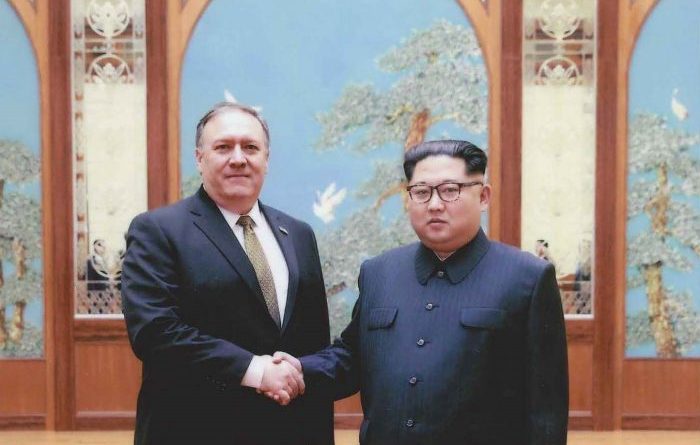
Seven Democratic senators joined with Republicans in approving Pompeo in a strong sign of bipartisan support. It is no coincidence that his approval came after his secret diplomatic mission to North Korea in meeting Kim to discuss the summit with the president in the kind of diplomatic derring-do NIAC has claimed the administration was incapable of conducting.

Far from serving the interests of Iranian-Americans anymore, NIAC has been reduced to either serving as a cheap adjunct to the extreme “progressives” wing in order to keep money flowing or parrot whatever comes out of the mouths of the foreign ministry in Tehran.

Worse yet, NIAC seems to get more press from regime-controlled publications than any in the U.S. Even Parsi’s tweets have taken on an edge of near-panic.

“WAKE UP AMERICA! Trump’s about to start a war with #Iran and he’s openly telegraphing it. He’ll kill the #IranDeal (the deal that restricted Iran’s program) and then threatens war if Iran restarts the program – which it’ll only do if Trump kills the deal.” — Trita Parsi (@tparsi) April 24, 2018

One has to wonder why Parsi and the rest of NIAC are fixated on fighting battles to oppose the president at every turn, they remain strangely silent on more recent moves by the mullahs in Tehran to oppress its people and further try to destabilize the region.

The regime for example took the first steps to the popular Telegram instant messaging app used by over half of the Iranian population by banning the ability of Iranians to swap videos and pictures on it.

The act was taken by the regime to try and halt the near constant flow of videos and pictures being sent around and outside of Iran of protests and acts of oppression by the regime including arrests and beatings by regime police.

Also, the U.S. has stepped up surveillance to monitor the movement of suspected Iranian anti-air and ballistic missiles inside Syria as concern mounted the Iranian regime was moving its military forces into position for possible strikes against U.S.-backed coalition forces or even Israel.

Amidst these new actions, Iranian foreign minister Javad Zarif arrived in New York for a weeklong visit and was met by large protests from Iranian dissident and human rights groups.

Several dozen supporters of the Organization of Iranian American Communities (OIAC) joined a demonstration Monday across the street from New York’s Council on Foreign Relations (CFR) as it hosted a discussion with Zarif on the 2015 Iran nuclear deal and U.S.-Iran relations.

Shirin Nariman, the organizer of Monday’s protest, told VOA Persian that her group objected to Zarif’s invitation to speak at CFR. “The people of Iran have spoken [through anti-government street protests] in the last few months and showed that they don’t want this regime at all — not even a part of it,” Nariman said.

We can only hope that the ever-shrinking influence of the Iran lobby and NIAC continues to eventually disappear.


Filed Under: Blog, News Tagged With: Featured, Iran deal, Iran Lobby, Jamal Abdi, National Iranian American Council, NIAC, NIAC Action, North Korea, Pompeo, Reza Marashi, Trita Parsi

NIAC Tries to Diminish Iran Protests

February 14, 2018 by admin

NIAC Tries to Diminish Iran Protests

NIAC Tries to Diminish Iran Protests

The National Iranian American Council has a problem; well it has several problems. It has lost its influential position in the “echo chamber” created by the Obama administration. It has lost its currency with many mainstream news organizations as the Iranian regime it defends has clearly shown itself to be a staunch supporter of sectarian wars and terrorism.

It finds itself having to retool on the fly and recast itself as a loyal and faithful partner to the progressive wing of American politics in the hopes of finding continued relevancy in an era of conservative politics dominating the White House, Congress, and electorate.

Much of that more conservative view among Americans has been driven by unrelenting terrorist attacks inspired by Islamic extremism; much of it flowing from the Iranian regime. It was also helped by extensive coverage of Iran’s own appalling human rights record over the past two years in the face of a so-called moderate administration by Hassan Rouhani.

Now the NIAC is faced with the specter of a widespread series of grassroots protests ranging throughout Iran and based largely within the working classes and poor of Iran’s population. It is the type of revolt that fueled the revolution against the Shah before it was hijacked by the mullahs that turned Iran into a theocracy.

The protests in Iran have been largely fueled by deep distrust of the regime, backbreaking poor economic conditions, the perception of rampant government corruption and a rigged game that rewards the scions of the Revolutionary Guards and mullahs, but punishes everyone else with strict morality codes, ever-vigilant policing and ruthless religious courts.

So, the leaders of the NIAC, including Trita Parsi, are faced with having to defend an Iranian regime in the face of broad and deep protests from the Iranian people – many of whom communicate with American-based relatives that find the NIAC virtually silent and absent in advocating for their Iranian brethren.

What does the NIAC do then? It does what it has always done: try to confuse the public and media about the true nature of resistance to the Iranian regime.

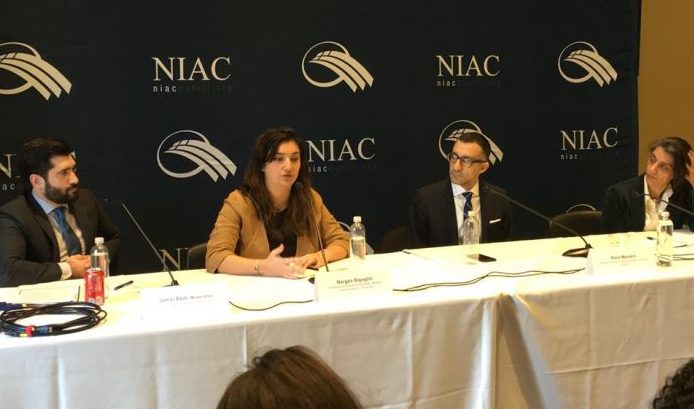
In this case, it involved putting on a panel discussion in Washington, DC in the hopes of communicating that Iran was changing in response to the protests.

Among the panelists were notable advocates for the Iran nuclear deal and noted apologists for the Iranian regime.

“Public dialogue with the (Iranian) state occurs through protest and those protests force changes to come about,” said Sanam Anderlini, Executive Director and co-founder of the International Civil Society Action Network. “Each time there are protests, the regime gives some space and the public moves along, and there is an accommodation” that pushes the country in a more progressive direction.

It is one of the more inane comments said in relation to the political reality in Iran since the Iranian regime has never responded to public protest with a push towards a “more progressive direction.”

In fact, past history clearly demonstrates the regime’s willingness to use brutal force and murder to suppress protest. It happened in the wake of the 2009 mass demonstrates over a presidential election widely considered stolen in favor of re-electing Mahmoud Ahmadinejad.

This most recent rounds of protests around the country have been suppressed by police and IRGC plain clothes and resulted in scores of deaths and arrests of nearly 8,000 men and women, 12 of which are known to have been slain under torture, which the government claims have been cases of suicide.

By the regime’s own admission, fewer than a thousand of those arrested have so far been released weeks later.

Another panelist, a research associate at the Watson Institute at Brown University, pushed the other favorite theory of the Iran lobby which was that these protests were in fact not products of discontent by ordinary Iranians, but were instead fomented by “hardliners” opposed to Rouhani’s “moderate” policies.

She again also emphasized the lack of sanctions relief by the U.S. as a major reason why the regime’s economy has sputtered and spurred protests. She, of course, neglected to mention the diversion of billions in new funds resulting from the lifting of sanctions from the nuclear that was instead used on building a ballistic missile program and funding wars in Syria and Yemen rather than boosting the economy.

In another Iran lobby message, she squarely lays blame on President Donald Trump as if the president was personally cooking the books in Tehran.

Predictably, the NIAC’s Reza Marashi weighed in by comparing the Trump administration to the Obama administration as if he was mourning a long-lost lover.

The panelist from Brown University’s biggest lie was describing the political response in Iran to the protests as being markedly different than previous major demonstrations.

“Unlike the 2009 protests, in which the political establishment eventually decided they should be suppressed, in this protest almost all factions have said publicly ‘we should let the people protest and let the people air their grievances’ because no one wanted to be seen as suppressing their base,” she claimed.

It is a bald-faced distortion given the ample video and photographic evidence of regime police and IRGC plainclothes wading into crowds throughout Iran in running street battles as chants of death to Rouhani and top mullah Ali Khamenei rang out.

It is amazing that the NIAC can continue to deny the evidence that every Iranian-American knows now which is that Iran is not on a course to moderation, but steering straight towards a reckoning with its own people.

Laura Carnahan

Filed Under: Blog, News Tagged With: Featured, hassan rouhani, Iran deal, Iran Lobby, IRGC, Jamal Abdi, Khamenei, Marashi, Moderate Mullahs, National Iranian American Council, NIAC, NIAC Action, Rouhani, Sanam Anderlini, Trita Parsi

Threat of Iran Sanctions Drives Iran Lobby and Regime Crazy

July 28, 2017 by admin

Threat of Iran Sanctions Drives Iran Lobby and Regime Crazy

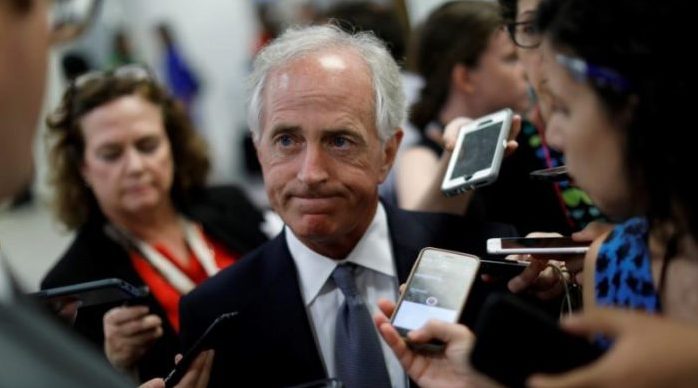
Senator Bob Corker (R-TN) speaks with reporters about the withdrawn Republican health care bill on Capitol Hill in Washington, U.S., July 18, 2017. REUTERS/Aaron P. Bernstein

It’s all but a done deal. House and Senate negotiators reached agreement according to news reports on Wednesday to get sanctions legislation against Iran, Russia and North Korea through the Senate without further amendments; avoiding needing another House vote.

“Following very productive discussions with [House Majority Leader Kevin McCarthy], I am glad to announce that we have reached an agreement that will allow us to send sanctions legislation to the president’s desk,” said Sen. Bob Corker (R-Tenn.), chair of the Senate Foreign Relations Committee. “The Senate will move to approve the Iran and Russia sanctions it originally passed six weeks ago, as well as the North Korea sanctions developed by the House.”

Votes in both houses of Congress up to this point have been lopsided, bipartisan affairs as Democrats joined with Republicans in a rare show of unity on confronting the three nations in question.

Both sides agreed on the need to take further action against North Korea even as the rogue nation has ramped up launches of ballistic missiles with ranges reaching the continental U.S.

The speed with which the sanctions legislation is moving through Congress demonstrates sharply how the landscape has changed over the last two years since the Iran nuclear deal went into effect.

The Iranian regime’s provocative actions in Iraq, Syria, Yemen, Pakistan, Bahrain and Kuwait have aptly shown the world how an unrestrained regime will act. It has also proven false the narrative used by the Iran lobby that by approving the nuclear deal, moderate elements in Iran would be empowered to take a leading role there.

Clearly, the truth has been shown that there are no moderate elements in Iran’s government.

But that hasn’t stopped the Iran lobby from trying to stop this speeding train from running over the mullahs in Tehran as evidenced by the latest editorial by Jamal Abdi of NIAC Action in The Hill.

Abdi tries to make the argument that in their rush to punish Russia, Democrats are allowing President Trump to dismantle the Iran nuclear deal.

“While Democrats may score a victory on Russia, they may be setting the stage for turning Trump into a wartime president. And if that happens, few will remember the Democrats as the party that sanctioned Russia. Instead they will remember when Democrats acquiesced to, and even encouraged, Trump’s push towards war with Iran,” Abdi said.

There is little doubt that Abdi’s words are not only ineffectual, but largely being ignored on Capitol Hill; demonstrating how far the Iran lobby has fallen in its effectiveness and ability to set the national debate.

Long gone are the days of the vaunted “echo chamber” banging the PR drum loudly in support of the mullahs; only replaced by vivid images of multiple missile launches, Iranian navy ships speeding at American warships, and wide swathes of destruction in Syria and Yemen at the hands of Iranian troops.

The inability of the Iran lobby to offer any policy whatsoever calling for any reform or restrictions to the Iranian regime’s behavior is fueling the belief that the Iran lobby can offer no more solutions.

The most recent hostage-taking by Iran of a Chinese-American researcher from Princeton University and the 10-year anniversary of the arrest of former FBI agent Robert Levinson who is still being held in Iran only reinforced the perception that the regime was lawless and recalcitrant.

The recent death of North Korean-hostage Otto Warmbier only reinforced the urgent necessity of getting American captives out of Iran and has become a focal point for President Trump as he demanded the release of several other Americans being held in Iran.

Typically, Reza Marashi of the National Iranian American Council, proposed another hostage swap, taking a page from the Obama administrations appeasement policies, and echoing demands from Iran’s leadership for the U.S. to release Iranians convicted of smuggling nuclear technology to Iran.

For President Trump, his ultimate leverage may be the very nuclear deal the Iran lobby is trying desperately to save. Even though the flawed deal served up all of the freebies and goodies for the Iranian regime in the beginning, it does represent the last fig leaf covering up the ugliness of the Iranian regime’s actions under the guise of “compliance.”

Without it, the regime would have no political cover and would become a pariah nation again so the president’s warnings in a recent interview with the Wall Street Journal that he may ultimately find the Iranian regime “noncompliant” with the deal could prove a key turning point for his administration.

The regime’s leadership responded with characteristic bravado as Hassan Rouhani vowed a “reciprocal” response should U.S. sanctions pass.

Rouhani said his country would “take any action that is necessary for the country’s expedience and interests” should the sanctions go into effect, according to The Associated Press.

“If the enemy breaches parts of the deal, we will breach parts of it,” the Iranian president added. “If they breach the entire deal, we will breach it in its entirety.”

The threats seem pointless at this time since whatever restrictive effects the deal purportedly had have been largely bypassed with Iran’s ability to keep its entire nuclear refining capacity and aggressive expansion of its ballistic missile program.

For the mullahs, they have already milked that deal dry and walking away from it would probably cause them little to no discomfort.

Filed Under: Blog, News Tagged With: Featured, Iran, Iran deal, Iran Human rights, Iran Lobby, Iran sanctions, Iran Terrorism, IRGC, Jamal Abdi, National Iranian American Council

Bipartisan Consensus Forming on Dealing with Iran Regime

March 30, 2017 by admin

Bipartisan Consensus Forming on Dealing with Iran Regime

Bipartisan Consensus Forming on Dealing with Iran Regime

In today’s turbulent political environment there is not much anyone agrees on, except that maybe the New England Patriot comeback in the Super Bowl was astounding or that the Chicago Cubs win of the World Series was historic.

Other than that, most politicians can’t even seem to agree on the weather and what causes a shift in temperature day to day.

On one topic though there seems to be a growing bipartisan consensus, not just in the U.S. but around the world and that is more needs to be done to rein in the intransigence of the Iranian regime and the threat posed by its burgeoning military and ballistic missile program.

Monday’s Senate Foreign Relations Committee hearing on Iran was an example of a political environment with a rare and welcomed unanimity. Ranking member Sen. Benjamin L. Cardin (D-Md.) remarked that although he voted against the Joint Comprehensive Plan of Action on Iran, he doesn’t think it would be wise to withdraw, saying:

“Iran’s activities today are as bad as they have ever been and probably worse. They are certainly increasing their terrorist sponsorship in the Middle East as we see in so many different countries in that region. Their record on violating the ballistic missile obligations are well known and well understood. Their human rights violations against their own citizens are horrible, one of the worst countries in the world. They violate the arms embargo and the list goes on and on. So, it is appropriate to get this Committee to look at what we can do to make sure that first, the Iran nuclear agreement is honored so that Iran does not become a nuclear weapons state, but then secondly, look at those activities that were not covered under the JCPOA as to how we can play a stronger role.”

He was joined by his Republican colleague, Sen. Bob Corker (R-Tenn.), chairman of the committee who said:

“One of my criticisms of the JCPOA was that it would become our de facto Middle East policy and Iran would expand their destabilizing activities. I think we are seeing a lot of that today. Regionally, we’ve seen an escalation in Iranian intervention. Iran, along with its allies in Russia, has continued to prop up Assad at the cost of countless lives in Syria. Iran’s support to the Shia militias in Iraq threatens the interests of Sunnis and Kurds alike, not to mention the Shia in Iraq that don’t subscribe to the anti-American, zero-sum politics of the militias that are there.”

Jennifer Rubin in the Washington Post’s Right Turn blog opined that “given this shared assessment of Iran — the JCPOA is not going away but the United States needs to confront Iran in other arenas — it’s not surprising that a bipartisan bill, the Countering Iran’s Destabilizing Activities Act of 2017, with seven co-sponsors from each party, was introduced last week.”

“The act establishes new sanctions targeting Iran’s testing of ballistic missiles and its backing for terrorism, and also seeks to block the property of any entity involved in the sale of arms to or from Iran. It does not reintroduce sanctions lifted from Iran as part of the 2015 nuclear deal.”) In a summary released last week, senators described potentially far-reaching measures including mandatory sanctions on those involved with Iran’s ballistic missile program, new sanctions against the Islamic Revolutionary Guard Corps and a requirement for the president “to block the property of any person or entity involved in specific activities related to the supply, sale, or transfer of prohibited arms and related material to or from Iran,” Rubin added.

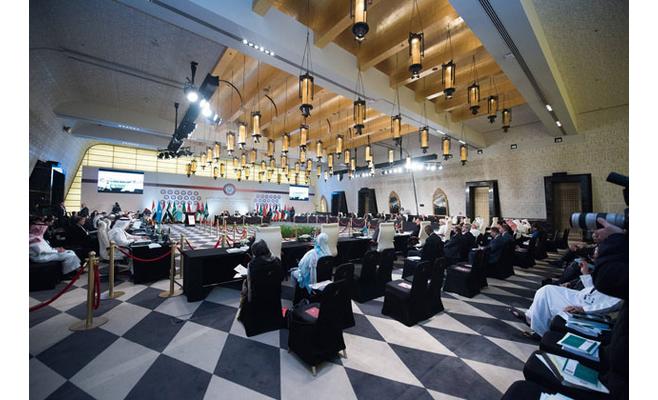
But it wasn’t just on Capitol Hill where there was unanimous consent as all 15 resolutions passed by the Arab summit which took place in Jordan Wednesday were devoted to an indictment of Iran, its Revolutionary Guards Corps and Lebanese surrogate, Hezbollah. They were a testament to the depth of Arab-Iranian animosity and exposed the extent of the rift between the Sunni and Shiite Muslim worlds.

Iran was accused of meddling in the internal affairs of Arab nations, inciting Shiites against Sunnis, and arming and training Shiite terrorist groups for operations against legitimate Arab governments. The Arab rulers combined to put Tehran in the dock for its interference in the Syrian civil war and assault on its sovereignty.

It was notable that at an Arab summit that has in the past concerned itself with issues related to Israel and the plight of the Palestinian people, the entire focus of the summit was on the Iranian regime; demonstrating how important the issue of confronting Tehran has become to the wider Arab world.

In the annual AIPAC conference a clearer united vision of the importance to oppose the Iranian regime was surfaced. American authorities and law makers used the opportunity to show their unanimous visions on the threat they feel from the Iranian regime and the need to take action to contain the growing destabilizing activities of the mullahs in the region.

The speaker of the US House of Representatives, Paul Ryan, called to designate the Revolutionary Guards as a terrorist group, describing it as a “terrorist army.” He said “Iran supports the terrorist dictator of Damascus and the militias in Yemen, Baghdad and Beirut.”

Furthermore, Nikki Hailey, the US ambassador to the United Nations asserted at the conference that “Iran’s nuclear deal is worrisome because it empowered Russian and Iran and encouraged the latter to act freely without fear of accountability.”

Mitch McConnell, the Republican majority leader in the Senate added: “Today we must adopt a different approach. We must combat Iran’s ability to finance, arm and train terrorists, such as Hezbollah, Hamas and its proxies in Syria.”

McConnell criticized Iranian regime’s nuclear deal, saying that it disabled the United States from taking more aggressive steps against Iran.

Meanwhile the Iran lobby was once again beating the war drum in an editorial in Huffington Post by Jamal Abdi of NIAC Action and Adam Weinstein of the National Iranian American Council, in which they claimed that this bipartisan consensus would only provide incentives for the U.S. to be plunged into a war with Iran at the behest of President Trump.

They go on to argue that if the proposed sanctions bill passes, Tehran would respond negatively and all the positive gains made by the nuclear deal would evaporate. What positive gains?

Since the deal was agreed to, the Iranian regime has broken every promise of moderation, stability, peace and partnership made by the NIAC and other Iran lobby supporters.

The harsh proof of Iranian regime’s track record over the past years has been so convincing that a bipartisan consensus is seen among both houses of congress to try to oppose the mullahs in Tehran.

All we can say is that it’s about time.

Michael Tomlinson

Filed Under: Blog, News Tagged With: #NuclearDeal, Adam Weinstein, Featured, Iran deal, Iran Lobby, Iran Mullahs, Iran sanctions, Iran Terrorism, IRGC, Jamal Abdi, National Iranian American Council, NIAC, NIAC Action, Syria, Yemen

Hypocrisy of Iran Lobby Extends to Criticizing Trump Speech to Congress

March 1, 2017 by admin

Hypocrisy of Iran Lobby Extends to Criticizing Trump Speech to Congress

Hypocrisy of Iran Lobby Extends to Criticizing Trump Speech to Congress

There is no doubt that President Donald Trump is a polarizing figure and has become a lightning rod for criticism for everything ranging from his affinity for tweeting to his policies such as his roll back of regulations and imposition of a temporary moratorium on visas from several countries in the Middle East.

The jury is still out on much of his agenda since he has yet to collaborate with Congress to bring forth specific legislative proposals, but that has not stopped the torrent of criticism being directed at him by the Iran lobby as it works to oppose anything that might be perceived as upsetting the goals and plans of the mullahs in Tehran.

This was true when Iran lobby advocates such as the National Iranian American Council’s Trita Parsi blasted Trump’s decision to impose fresh sanctions on members of the regime’s Revolutionary Guard Corps for its support for ballistic missile launches that violated United Nations sanctions.

It has also been true of the Iran lobby’s efforts to deflect attention away from the Iran regime’s litany of problems at home with increasing mass demonstration and protests to issues abroad as it encounters growing calls for resistance amongst its Sunni neighbors such as Saudi Arabia and the Gulf States; alarmed at the turmoil surrounding them caused by the Iranian regime.

The Iran lobby has been particularly focused on the debate over Trump’s immigration policies leveraging it to its advantage to raise funds and maintain its ties to progressive Democratic groups that it previously aligned with in the efforts to support the Iran nuclear deal.

The reasons for these efforts are simple: In a post-Obama world, the Iran lobby is desperately trying to stay relevant.

Since the electoral sweep that not only saw Trump elected, but also radically changed the complexion of the Congress, the Iran lobby has been on the defensive ever since. It has found little support within the much-vaunted “echo chamber” of support previously cobbled together to help push for negotiations with the regime.

Iranian regime’s ever growing militant actions in launching ballistic missiles, supplying proxy wars in Yemen and Syria and flexing its military muscle in expansive war games have proven to be almost impossible for the Iran lobby to defend.

Predictably, after President Trump’s first address to a joint session of Congress, the NIAC’s Jamal Abdi sent out a statement criticizing the speech, but in his criticism he revealed the bias and hypocrisy of the NIAC and the Iran lobby.

Abdi makes the claim that “no Iranian has ever been implicated in a terrorism-related death inside America,” which is a convenient distinction since it ignores the fact that the Iranian regime has been directly responsible for the deaths of hundreds of Americans in terrorist attacks in Beirut, Lebanon, the Khobar Towers in Saudi Arabia and in IED attacks throughout the Iraqi war.

In each case, Iranian regime controlled, supplied, participated or directed the attacks directly resulting in the deaths of Americans. In fact, several court decisions have held the Iranian regime responsible for these deaths and injuries and confiscated financial assets of the regime as part of court settlements to the victims and their families.

Abdi also fails to mention the violence fueled by the Iranian regime’s efforts to export its brand of extremist Islamic vision that has sparked sectarian violence between Sunnis and Shiites all across the Middle East, including the Syrian civil war, the Houthi coup attempt in Yemen and the expansion of ISIS arising out of the dissolution of the coalition government in Iraq.

All of these debacles were fueled by the Iranian regime and have cost the lives of hundreds of thousands of men, women and children and Abdi and his colleagues have remained stonily silent.

But the hypocrisy of criticizing Trump’s policies while ignoring the much harsher realities of the regime’s policies echoes the same treatment given by regime foreign minister Mohammad Javad Zarif who lauded the protest by Iranian filmmaker Asghar Farhadi who won the Oscar for best foreign film against Trump’s immigration policies, yet at the same time did not acknowledge the regime’s imprisonment and torture of several prominent Iranian filmmakers for engaging in acts against the Islamic state.

The rank hypocrisy of the Iranian regime and Iran lobby was taken to task by prominent journalists such as CNN anchor Jake Tapper and Human Rights Watch.

“Farhadi’s movie deserves the praise it has received – and much more. Iranian cinema has a long-established and well-earned reputation for providing a powerful, nuanced perspective into Iranian society,” said Sarah Leah Whitson, executive director for Human Rights Watch’s Middle East and North Africa Division in an editorial. “Yet while Iranian officials bask in pride on the international stage, their rhetorical support does not translate into respect for filmmakers at home, where they have harassed and jailed movie directors and other artists for work they find displeasing.”

“In the aftermath of the 2009 presidential elections, authorities arrested Jafar Panahi, a prominent director, for allegedly attempting to make a movie about protests that followed the vote. In December 2010, Tehran’s revolutionary court sentenced Panahi to six years in prison and a 20-year ban on all his artistic activities. Following international outcry, the government did not execute Panahi’s sentence but kept the ban in place, forcing him to make movies without an official permit,” Whitson added.

“These filmmakers could serve as powerful messengers for the diversity and talent in Iran today. But until the authorities stop censoring and imprisoning them, they put into question the Iranian government’s expressed commitment to supporting the country’s millennia of “culture & civilization,” she warned.

Michael Tomlinson


Filed Under: Blog, News Tagged With: Iran Mullahs, Iran Terrorism, IRGC, Jamal Abdi, National Iranian American Council, NIAC, NIAC Action, Nuclear Deal, Syria, Trita Parsi, Yemen

Iran Lobby Pushes Fiction of Moderate Win in Iran

March 15, 2016 by admin

Iran Lobby Pushes Fiction of Moderate Win in Iran

Iran Lobby Pushes Fiction of Moderate Win in Iran

That bastion of apologists for the Iranian regime’s abuses and extremists activity – the National Iranian American Council – has pushed vigorously the fiction that the recent parliamentary elections in Iran delivered a resounding win for the forces of moderation; all evidence to the contrary.

It’s a recognition by the NIAC and their fellow travelers that the rhetoric in the American presidential campaign has heated up against the recent actions of the mullahs with all the Republican candidates and now Democratic front runner Hillary Clinton all calling for new sanctions to be imposed in the wake of ballistic missile tests violating United Nations Security Council resolutions banning them.

For the NIAC, it’s a particularly thorny problem since the clock is now running on the end of the Obama presidency and what has been a policy of appeasement of the mullahs in Tehran. Coupled with that is growing public opinion that Iran has not shifted towards moderation in the wake of the nuclear deal, but in fact has grown more aggressive and hostile especially in human rights abuses and proxy wars with its neighbors.

The world has been subjected to the largest refugee crisis since World War II resulting from the Syrian civil war and has seen the Iranian regime go all in by begging Russia to intervene and target rebels to the regime of Bashar al-Assad and not ISIS as widely touted.

The Iranian elections were also a charade given the mass elimination of over half of the candidates submitted for approval. Even the most supportive news media have grudgingly admitted that the human rights situation in Iran and throughout the Middle East has grown more desperate.

Ahmad Shaheed, the UN special rapporteur for human rights in Iran, has issued yet another blistering report of human rights conditions within Iran following similar condemnations by Amnesty International and Iranian dissident and watchdog groups such as the National Council of Resistance of Iran (NCRI), all of whom have painted a bleak picture of the mass arrests, torture, imprisonment and execution of journalists, artists, bloggers, students, ethnic and religious minorities and political opponents and dissidents.

The picture of how bad things are in Iran has become so obvious it’s taken on the near-certainty of gospel. Ask any person on the street if things have improved in Iran, the answer will most likely be “No.”

And yet the NIAC and its allies cannot give up the fight and still try to push the fiction that things are better, even as their own allies such as Iranian-American businessman Siamak Namazi was arrested and tossed into prison without explanation by the same regime he was promoting in the ultimate irony.

With friends like these, who needs enemies?

But Jamal Abdi and Ryan Costello of the NIAC continued to push the party line with the publishing of a “policy memo” on the NIAC website cheerfully citing all the good news coming out of the Iranian elections such as:

  • Huge moderate wins in the parliament and Assembly of Experts, even go so far as saying Hassan Rouhani now has a plurality to enact his policies;
  • How Rouhani, newly empowered, will seek out new policies to open up bridges to the rest of the world; and
  • How so many notable hardliners were defeated as evidence of the mandate of the Iranian people for a new moderate future.

Unfortunately, none of that is true.

The dismissal of over 6,000 candidates left open the way for a field of candidates bulging with loyal supporters of the regime. If the Iranian people are only left with choices between bad and worse candidates, it stands to reason they would select the lesser of two evils.

What Abdi and Costello leave out is the simple fact that real power within the regime didn’t change at all. Supreme Leader Ali Khamenei still remains in charge, as does the Revolutionary Guards Corp (IRGC) which has been busy shooting missiles as fast as it can. The courts and police remain firmly in control and have been busy executing 2,300 people under Rouhani, as well as rounding up virtually any dissenter and locking them away.

Of course Abdi and Costello neglect to mention any of the extremist policies undertaken by Rouhani such as the level of executions than have surged higher than at any time in the history of the mullahs’ reign since 1989. Nor do they take up the lack of any progress on halting child executions, misogynist laws passed under Rouhani’s term or the continued use of Basiji paramilitaries to beat and arrest women for honor code violations such as driving alone or not wearing traditional hijabs.

Most galling of all are Abdi and Costello’s lack of any comment on the bloodshed caused by Rouhani’s policies in supporting three active wars in Syria, Iraq and Yemen and the complete lack of any momentum to halt the killing taking place at the hand of Iranian-backed Hezbollah fighters, Iranian-backed Shiite militia and Iranian-backed Houthi rebels.

Alireza Jafarzadeh, deputy director of the Washington office of the National Council of Resistance of Iran (NCRI), said in an editorial on Fox News:

“Rouhani has not been the only loyal servant of the theocracy throughout his career. The same can be said of all the well-known candidates from the supposedly moderate and reformist faction in the recent elections. They include men like former Chief Prosecutor of the Revolutionary Court Ali Razini and former Prosecutor General and Intelligence Minister Ghorbanali Dorri Najafabadi, both of whom oversaw the executions of political prisoners, the extrajudicial assassinations of dissidents and undesirables, and issued orders for shockingly inhumane punishments like stoning.

“Meanwhile, standing side-by-side with current president Hassan Rouhani is former president Ali Akbar Hashemi Rafsanjani, who has somehow come to be regarded as a leading reformist. This is a man for whom Interpol issued an arrest warrant due to his involvement in the 1994 bombing of the Jewish community center in Buenos Aires, which killed 85 people and wounded 300.”

The reality is that things have not changed in Iran and in fact are only getting worse.

By Michael Tomlinson

Filed Under: Blog, News Tagged With: Featured, Iran, Iran Human rights, Iran Lobby, Jamal Abdi, NIAC, NIAC Action, Ryan Costello

Holding Iran Accountable Starts by Not Believing Iran Lobby

March 11, 2016 by admin

Holding Iran Accountable Starts by Not Believing Iran Lobby

Holding Iran Accountable Starts by Not Believing Iran Lobby

The Iran lobby, consisting of lobbying groups such as the National Iranian American Council and media platforms like Lobelog.com, has long argued that agreement on a nuclear deal would bring about a new period of moderation within Iran and smooth the way for normalized relations.

Since the agreement was completed last summer, the Iranian regime has acted nothing like a moderate government engaging in a wide variety of foreign policy excesses such as going all-in on the Syrian civil war and stepping up support for Houthi rebels in Yemen, to instituting a harsh crackdown at home imprisoning dissidents and journalists and keeping the gallows busy by marching over 2,200 people to their deaths over the past two years.

Throughout it all, the Iran lobby has worked hard to maintain its charade and keep journalists believing in this false narrative no matter how incredible the proof has been otherwise. One example of this is a Q&A in the New York Times by Rick Gladstone in which he regurgitates many of the Iran lobby’s myths. For example, Gladstone asks:

  • Is Iran honoring the nuclear agreement? He writes it is according to the International Atomic Energy Agency, but neglects to mention admissions by the head of that agency that inspection protocols had been comprised at various points and full reporting may never be achievable;
  • Are recent missile tests prohibited under the nuclear agreement? He says no, such launchings are considered a separate issue, but neglects to mention that the regime pushed hard to unlink a host of issues such as ballistic missiles, human rights and support for terrorism from the deal, thereby allowing the regime a free hand to continue its illegal activities;
  • Iran’s parliamentary elections last month were supposed to have strengthened moderate supporters of Hassan Rouhani. So why is Iran provoking its critics by testing missiles? Gladstone explains that the launches are conducted by the Revolutionary Guard Corps which is outside of Rouhani’s control, but neglects to point out that Rouhani has been a willing supporter of these hardline tactics since his government has overseen one of the harshest crackdowns in 20 years against public dissent.

This militancy on the part of the Iranian regime was reinforced by boasts by senior military commanders that the tests would continue even though they are in violation of United Nations Security Council resolutions, which are being proven impotent by the lack of any consequences for these violations.

Brig. Gen. Amir Ali Hajizadeh, a senior commander for the Iranian Revolutionary Guard Corps that runs the regime’s missile program, told state television that it has more missiles ready to launch, and they are for defensive purposes.

“Iran’s missile program will not stop under any circumstances,” Hajizadeh said. “We are always ready to defend the country against any aggressor.”

The fact that the argument over the regime’s violations have shifted from calling for swift action to debates over whether or not imposition of sanctions might jeopardize a nuclear agreement that has already proven ineffectual in curbing the regime demonstrates how weak the international response has become.

This broad policy of appeasing the mullahs has already generated severe negative consequences as Iran seeks to aggressive upgrade its military and rearm in the wake of its deep involvement in three ongoing proxy wars in Syria, Iraq and Yemen as well as a potential new arms race with its chief regional rival, Saudi Arabia.

Hajizadeh also announced that Iran is calling its own version of a spy drone, “Simorgh,” which is Iranian for “Phoenix,” according to the country’s state controlled media.

Iran’s version of the drone “was manufactured through reverse engineering of the U.S. drone, which was tracked and hunted down in Iran late in 2011, and has been equipped by the IRGC with bombing capability,” according to Fars News Agency.

This comes on the heels of an $8 billion shopping spree in Moscow by the Iranian regime and the imminent delivery of an advanced S-300 anti-aircraft missile system.

Most disturbing of all was the announcement by Ahmed Shaheed, U.N. special rapporteur on human rights in Iran, that there had been a “staggering surge in the execution of at least 966 prisoners last year – the highest rate in over two decades,” Shaheed told a news briefing.

The number of executions are roughly double the number executed in 2010 and 10 times as many as were executed in 2005 and demonstrate how Rouhani’s promises of a more moderate government when he was elected were merely political window dressing.

“A large percentage of those executions are for drug offences and under Iran’s current drug laws, possession of 30 grams of heroin or cocaine would qualify for the death penalty. So there’s a number of draconian laws,” he said.

“Fundamental problems also exist with regard to the due process and fair trial rights of the accused,” Shaheed said.

“I continue to receive frequent and alarming reports about the use of prolonged solitary and incommunicado confinement, torture and ill-treatment, lack of access to lawyers and the use of confessions solicited under torture as evidence in trials – practices that clearly violate Iran’s own laws,” he said.

Hundreds of journalists, bloggers, activists and opposition figures “currently languish in Iran’s prisons and detention facilities,” he said.

None of which has stopped the Iran lobby from trying to divert attention to anything else as evidenced by an appearance by Jamal Abdi, of the NIAC, at a summit in Washington, DC aimed at criticizing the U.S. relationship with Saudi Arabia.

He spoke of how the Saudi regime tried to jeopardize the U.S. nuclear deal with Iran and criticized the visa restrictions the U.S. imposed on Iranians and Iranian dual nationals. He also spoke of how the U.S. is essentially “renting” the Saudi army to carry out the war in Yemen, and potentially even Syria, which is ironic considering that it was the Iranian regime’s support of the Assad regime in Syria and Houthi rebels in Yemen that started both conflicts in the first place.

All of which demonstrates how the Iran lobby will address any issue other than the current activities of the regime.

By Michael Tomlinson

Filed Under: Blog, News Tagged With: Featured, Iran Human rights, Iran Lobby, Iran sanctions, IRGC, Jamal Abdi, Lobelog, National Iranian American Council, NIAC, NIAC Action

Iran Lobby Tries Clearing Economic Pathway for Regime

October 10, 2015 by admin

Iran Lobby Tries Clearing Economic Pathway for Regime

Iran Lobby Tries Clearing Economic Pathway for Regime

The Iran lobby, led by the National Iranian American Council, has been busy working to clear the economic runway for the Iran regime now that it has its nuclear deal because now that it has the opportunity to operate more freely in the world, the mullahs have opted to significantly increase the regime’s military operations in Syria, Yemen and Iraq; all of which requires cash and mountains of it.

As part of that NIAC propaganda push, Tyler Cullis and Amir Handjani, posted an editorial in The Hill arguing that the U.S. should open greater economic ties with the Islamic regime; the reason being that European and Asian nations are already quickly seeking to exploit these new markets.

Cullis and Handjani are correct that there are some companies and nations seeking to rush into this economic void. We know that China has a deep interest in securing contracts for cheap Iranian oil, while Russia has already begun selling weapons to the regime despite the fact that embargos on advanced ballistic missiles and weapons remains in effect.

They note however that the Obama administration has put the brakes on the rush to re-open economic ties with the regime. Part of delay comes from the huge groundswell of negative reaction from American voters to the nuclear deal which has forced many representatives who supported the deal to backtracked and offer up new pieces of legislation to address the perception that the Iran regime received a sweetheart deal and the U.S. got nothing in return; most notably Sen. Ben Cardin’s (D-MD) move to introduce to track compliance by the regime.

Most anti-regime critics called the effort too little, too late and still does not address the central and most critical issue surrounding the Iran regime: the delinking of human rights and sponsorship of terror from the deal and thus making no effort to reform or modify the regime’s bloodthirsty policies.

There has also been discussions and disagreements over the conflict between the nuclear deal and the Iran Threat Reduction and Syria Human Rights Act (ITRA) which was signed into law in August 2012 by President Obama which closes the foreign subsidiary loophole that the an annex in the nuclear deal makes open.

According to Fox News, “ITRA contains language, in Section 605, requiring that the terms spelled out in Section 218 shall remain in effect until the president of the United States certifies two things to Congress: first, that Iran has been removed from the State Department’s list of nations that sponsor terrorism, and second, that Iran has ceased the pursuit, acquisition, and development of weapons of mass destruction.

“Additional executive orders and statutes signed by President Obama, such as the Iran Nuclear Agreement Review Act, have reaffirmed that all prior federal statutes relating to sanctions on Iran shall remain in full effect.”

All of which drives a stake through the arguments made by Cullis and Handjani who by using the flawed tactic of supporting “moderates” against “hardliner” mullahs, argue that continued economic isolation of Iran only strengthens the “hardliners” and leaves American companies out in the cold versus their European and Asian competitors.

First of all, it is refreshing Cullis and Handjani are so interested in the economic well-being of American firms, but the reality is they recognize failure to fully open Iran to international trade and commerce will not bring in the cash and investment necessary for the regime to generate the revenue necessary to fund its expansionist policies.

The regime has spent upwards of $15 billion in direct financial aid and military support just to prop up the Assad regime in Syria alone. This doesn’t include the billions being spent to arm Houthis in Yemen and outfit Shiite militias in Iraq, not to mention the regime’s old terrorist partners in Hezbollah. With slumping oil prices, the mullahs desperately need that foreign investment to help keep them in power as ordinary Iranians have staged protests against the “war economy” top mullah Ali Khamenei has mandated for the past decade.

Oddly, Cullis and Handjani use the analogy of President Nixon opening up relations with China in the early ‘70s as an example of opening up to a closed society the U.S. was in conflict with, but what they don’t mention is the fact that coming out of the Vietnam War, China recognized the need to end its sponsorship of armed conflict and instead turn to embracing capitalism.

The fact that a deeply Communist nation that inflicted the Cultural Revolution on its people in brutal repression, recognized it needed to do a complete policy turnaround and embrace the very thing it denounced as part of its founding represents why the Nixon overtures were even possible in the first place; China’s leaders made that opening available by being receptive to change.

Iran’s mullahs have exhibited no such inclination. In fact since the nuclear deal was agreed to, Iran has partnered with Russia to step up an air and ground campaign in Syria, was caught smuggling weapons into Yemen and has turned Iraq into a virtual client state.

So while the Iran lobby may be hard at work trying to rewrite history, the Iran regime is busy trying to shape the future to its own perverted vision.

By Laura Carnahan

Filed Under: Blog, Latest from Lobbies & Appeasers, News Tagged With: Amir Handjani, Appeasement policy, Featured, Iran, Iran deal, Iran Economy, Iran Lobby, Iran Nuclear, Iran sanctions, Iran Talks, Jamal Abdi, National Iranian American Council, NIAC, NIAC Action, Sanctions, Tyler Cullis, Yemen

Iran Lobby Turns to Dubious List of Hate Apologists

August 28, 2015 by admin

Iran Lobby Turns to Dubious List of Hate Apologists

Iran Lobby Turns to Dubious List of Hate Apologists

The National Iranian American Council demonstrated its full-fledged commitment to supporting the Iran regime at any cost by issuing what could only be described as anarchist’s playlist of a press release full of terror supporters, hate apologists and regime sympathizers in a letter purporting to show “prominent international relations scholars” voicing their support for the Iran nuclear deal.

The letter is a farce – to put it mildly – because it omits the one phrase that dominates everything about the Iran regime: Human Rights.

Feel free to search the text of the NIAC release. It doesn’t exist anywhere in the letter, which should come as no surprise since it is the fatal flaw in all things the NIAC is involved in. Human rights for the NIAC are an inconvenient truth. It is the Achilles heel of its arguments in portraying a new “moderate” Iran.

While NIAC staffers such as Trita Parsi, Reza Marashi, Jamal Abdi and Tyler Cullis shout until veins bulge out of their collective necks that the mullahs deserve a break, they continue to blatantly ignore the incalculable human suffering being inflicted by those same mullahs on women, children, Christians, Iranian-Americans, Sunnis in Iraq, moderates in Syria or refugees in Yemen. The swatch of human suffering and misery caused by the mullahs has earned neither reproach nor condemnation by the NIAC and its allies.

The fact that this bogus letter excludes any mention of human rights is not unusual since the signers of the letter are culled from some of the most notorious corners of the academic world funded by regime sponsors and used as tools in defending terror groups, propagating hatred and applauding murder and mayhem.

Article in Breitbart delved deep into the histories and backgrounds of many of these academic frauds, noting “quite a few of the ‘prominent’ professors share radical views pertaining to issues of concern to everyday Americans. This list includes terror group sympathizers, Muslim Brotherhood sympathizers, Iranian regime apologists, Islamist supremacists, anti-Israel conspiracy theorists, overt anti-Semites, and other deplorable characters.”

“One of the most notable signatories is Noam Chomsky, who rose to fame as an MIT linguistics expert and now considers himself an international relations scholar. Chomsky, whom some believe is an anti-Semite, openly supports Iran-backed terror groups Hezbollah and Hamas,” Schahtel added.

Article published in Breitbart also reminds us that Parsi, also a signatory on the list of pro-deal “scholars,” made headlines last week when he alleged there was an Israeli conspiracy behind a report that presented the text of the “side deal” between Iran and the International Atomic Energy Agency. Additionally, several prominent Iranian dissidents have complained that Parsi’s agenda parallels that of the theocracy in Tehran.

But that has been the glaring aspect of NIAC’s fanatical devotion to the Iran regime agenda; the open unwillingness to criticize or comment on the human toll inflicted by the regime’s actions. NIAC has not argued against the retribution murders committed by Shiite militias supported by Iranian regime’s Quds Forces in Iraq as they slaughter entire Sunni villages.

NIAC has not commented on the horrific conditions in refugee camps caused by Iran regime proxy wars in Syria and Yemen. Nor has Parsi or his cohorts ever applauded efforts by groups such as Amnesty International or the United Nations Special Rapporteur for Human Rights in Iran as they have condemned and battled the over 2,000 executions conducted by the regime in less than two years; a staggering assembly line of death.

It would be a public service for those opposing the Iran nuclear deal and the policies of the regime and mullahs in Tehran to peruse the list of professors and send letters to the administrations of each of these universities – the vast majority of which are public and taxpayer funded – and ask why these academics are allowed bully pulpits to argue in favor of a regime that stifles free thinking and political discourse at home and brutally tortures students and teachers in Iran.

The sheer audacity of arguing for an accommodation of a regime that makes no accommodation for dissenters has helped persuade a majority of Americans that the mullahs cannot be trusted in spite of the efforts by NIAC, aided and abetted by groups such as J Street and MoveOn.org, to hold demonstrations that have generated small crowds.

The ultimate proof of the complete lack of authenticity within NIAC is the complete lack of honesty about the regime’s abuses.

By Michael Tomlinson

Filed Under: Blog, National Iranian-American Council, The Appeasers Tagged With: Iran deal, Jamal Abdi, NIAC, NIAC Action, Noam Chomsky, Reza Marashi, Trita Parsi

  • « Previous Page
  • 1
  • 2
  • 3
  • Next Page »

National Iranian-American Council (NIAC)

  • Bogus Memberships
  • Survey
  • Lobbying
  • Iranians for International Cooperation
  • Defamation Lawsuit
  • People’s Mojahedin
  • Trita Parsi Biography
  • Parsi/Namazi Lobbying Plan
  • Parsi Links to Namazi & Iranian Regime
  • Namazi, NIAC Ringleader
  • Collaborating with Iran’s Ambassador

Recent Posts

  • NIAC Trying to Gain Influence On U.S. Congress
  • While Iran Lobby Plays Blame Game Iran Goes Nuclear
  • Iran Lobby Jumps on Detention of Iranian Newscaster
  • Bad News for Iran Swamps Iran Lobby
  • Iran Starts Off Year by Banning Instagram

© Copyright 2026 IranLobby.net · All Rights Reserved.