Iran Lobby

Exposing the Activities of the lobbies and appeasers of the Mullah's Dictatorship ruling Iran

  • Home
  • About
  • Current Trend
  • National Iranian-American Council(NIAC)
    • Bogus Memberships
    • Survey
    • Lobbying
    • Iranians for International Cooperation
    • Defamation Lawsuit
    • People’s Mojahedin
    • Trita Parsi Biography
    • Parsi/Namazi Lobbying Plan
    • Parsi Links to Namazi& Iranian Regime
    • Namazi, NIAC Ringleader
    • Collaborating with Iran’s Ambassador
  • The Appeasers
    • Gary Sick
    • Flynt Leverett & Hillary Mann Leverett
    • Baroness Nicholson
  • Blog
  • Links
  • Media Reports

Years of Obama Compromise Finally Come to End

April 10, 2017 by admin

Years of Obama Compromise Finally Come to End

Years of Obama Compromise Finally Come to End

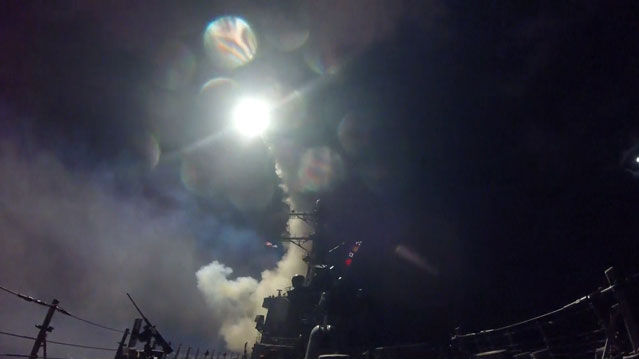
With the launching of 59 Tomahawk cruise missiles from two U.S. Navy warships aimed at a Syrian airbase last week, the Trump administration took an enormous step in reversing the policies of appeasement and accommodation that marked the Obama administration’s approach to Middle East conflicts.

The airstrike was done in response to a chemical weapons attack in which at least 87 people were killed – including women and children – in the assault on the Syrian town of Khan Shaykhun last Tuesday. Medical personnel on the ground indicated the chemical agent was sarin, a nerve agent so deadly that mere drops inhaled or absorbed on skin kill within minutes.

U.S. military personnel allegedly tracked the aircraft launched from the airbase in question and took a flight path to the town, dropping its ordinance and returning.

The chemical attack was not the only one the Assad regime has been accused of conducting since a much-publicized deal that Russia brokered to remove Syria’s chemical weapons stockpile. These recent attacks demonstrate clearly that the Assad regime retains its chemical weapons and is unafraid of using them.

These incidents demonstrate clearly the utter failure of the Obama administration’s past policies that sought to broker agreements with regimes that have no intention of abiding by them; be it Syria with chemical weapons or Iran with its nuclear program.

As the New York Post editorial board pointed out in a scathing piece pointing out that administration’s failures and more importantly what it means for the nuclear agreement with the Iranian regime.

Last week’s horrific attack in Syria disproved the Obama administration’s boast of stripping Bashar al-Assad of “100 percent” of his chemical weapons. And that has big implications for the nuclear deal with Iran. After all, the nuke deal relies on the same kind of verification and accountability system entailed in the agreement with Assad, the Post said.

“We will, for the first time, be in a position to verify all of [Iran’s] commitments,” President Barack Obama said at the time, insisting the deal had at least temporarily halted Tehran’s pursuit of nuclear weapons.

Critics insist it did no such thing. Just as many refused to believe Team Obama’s claim that it had fully rid Syria of its weapons of mass destruction. The Syria accord allowed Obama to save face for failing to enforce his “red line” against Assad’s use of chems after the dictator got caught using sarin nerve gas to kill up to 1,500 Syrian civilians, the Post added.

“We are getting chemical weapons out of Syria without initiating a strike,” said Obama. And Secretary of State John Kerry: “We got 100 percent of the chemical weapons out.”

Just this past January, former National Security Adviser Susan Rice insisted, “We were able to get the Syrian government to voluntarily and verifiably give up its chemical weapons stockpile” in a way “that the use of force would never have accomplished.”

The Post summed up by saying “Just how wrong they all were has now become dead obvious. So why should anyone still believe the same team’s assurances on Iran’s ability to produce nukes?”

While the strike by the Trump administration didn’t do much tactical damage to the airbase since American officials warned the Russians of the pending attack, who then promptly tipped off their Syrian allies who quickly moved most of their assets out of harm’s way, the attack was a major strategic masterstroke by President Trump.

The attack was the first by the U.S. against Syrian regime assets and crosses the “red line” that President Obama had previously laid down the first time the Assad regime used chemical weapons, only to infamously balk at crossing its own line.

The airfield bombed is significant, because it is also used by members of Islamic Revolutionary Guard Corps (IRGC) and the Quds Force, according to a report from Asharq Al-Awsat Arabic language website. The field has been used for a long time by IRGC to operate not only in Syria but also in Iraq.

It also neatly puts the Iranian regime on notice that the conditions of the conflict have shifted dramatically. The U.S. was willing to take unilateral military action without U.N. approval or consultation with regional partners in response to a clear and present danger.

For Bashar al-Assad and Hassan Rouhani, the prospect of a surprising and swift U.S. response must have come as a shock.

Of course that did not stop Iran from doubling down on its bets on a murderous Assad regime.

Iranian regime rallied around the Syrian strongman and pledged to respond to US “aggression” after the Trump administration bombed a military airfield in retaliation for a poisonous gas attack.

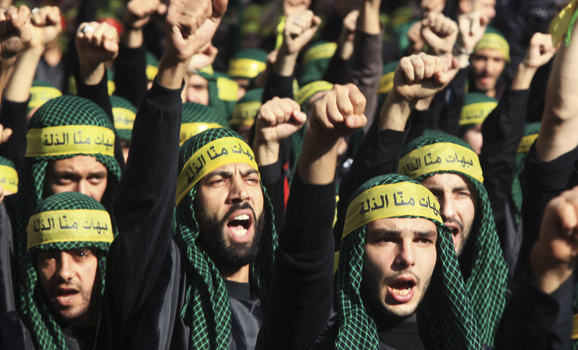
Assad has drawn heavily on foreign Shi’ite militias sponsored by Iran, led by Lebanon’s Hezbollah group, for his most important gains since the Russian intervention.

In Iran, Supreme Leader Ayatollah Ali Khamenei said the U.S. missile strike was a “a strategic error, and a repeat of the mistakes of the past,” the state news agency IRNA reported.

“The Islamic Republic has shown that … it does not back off and its people and officials … do not retreat in the face of threats,” said Khamenei.

Many Syrians opposed to Assad’s rule consider Lebanon’s Hezbollah and Iranian-backed troops as occupiers seeking to drive out mainly Sunni Syrians from the areas they live in. They hold Iran and its allies responsible for the displacement of millions outside the country, according to Reuters.

Allies including the United Kingdom and Australia Friday, applauded Trump’s decision to launch the strike.

Michael Tomlinson

Filed Under: Blog, News Tagged With: Featured, Iran, Iran Mullahs, Iran Terrorism, IRGC, Khamenei, Syria

Iran Regime Stands by Assad in Chemical Attack

April 6, 2017 by admin

Iran Regime Stands by Assad in Chemical Attack

Iran Regime Stands by Assad in Chemical Attack

In the aftermath of the grisly chemical weapons attack on Syrian civilians that killed more than 100 men, women and children, the Iranian regime predictably stood by their man in Syrian president Bashar al-Assad, even as it publicly condemned the attack.

“Iran strongly condemns all use of chemical weapons regardless of who is responsible and who are the victims,” Foreign Ministry spokesman Bahram Ghassemi told reporters in Tehran, according to an account carried by the official Islamic Republic News Agency.

But Ghassemi cautioned against “rushed judgments and accusations that benefit … certain actors,” claiming that anti-Assad rebel groups — which Tehran calls “terrorists” — have also been known to have stored and used chemical weapons.

It’s a strange position to take since the only people attacked were in rebel-controlled areas. It is unlikely rebels would be dropping chemical agents on their own positions, but logic was never a strong suit of the Iranian regime.

Citing Assad’s frequent past use of chemical weapons, the Trump administration and governments across Europe have said Damascus was most likely behind the attack on the Syrian province of Idlib.

The reaction of Assad’s patron is not unexpected, but while media attention is focused on their denials, one important fact seems to be escaping most analysts’ attention which is the fact that Iran had previously committed to the removal of Syria’s chemical weapons earlier as part of an agreement to avoid President Obama’s infamous “red line” mandate.

The fact that chemical weapons were used, especially a more sophisticated compound in sarin gas, demonstrates the Iranian regime’s comfort level with its ally using these weapons.

On another account, Dr Joseph Kechichian, an author and writer, penned an editorial in Gulf News detailing how Iran actually continues to focus on interfering in the affairs of its neighbors.

“The intrepid Iranian spokesperson further rejected as groundless all of the claims made by several Arab leaders in their pronouncements that the Islamic Republic of Iran openly interfered in the internal affairs of Arab countries, saying that Tehran ‘never interfered in the internal affairs of any country and feels no need at all for such interference,’ which must also be challenged. He added his deep sorrow as several Arab and Muslim leaders, ‘either intentionally or by mistake… go astray and fail to distinguish friend from foe,’ allegedly because they point the finger at Iran instead of ‘dealing with the most important crises in the region,’” Kechnichian writes.

In fact, and lest the fearless Qassemi may have forgotten, it was Ali Akbar Velayati, a former Iranian minister of foreign affairs and an adviser on international affairs to Supreme Leader Ali Khamenei — as well as the president of the Expediency Council’s Centre for Strategic Research — who told a group of Yemeni clerics gathered in Tehran in October 2014 that “The Islamic Republic of Iran supports the rightful struggles of Ansar Allah [Al Houthis] and considers this movement as part of the successful materialisation of the Islamic Awakening [the name Iran uses for the Arab Uprisings] movements”.

Velayati boasted of Al Houthi victories in Yemen, which came to naught after the Kingdom of Saudi Arabia led a coalition to restore the legitimately elected president in Sana’a, even if the war is now in its third year. Velayati and his colleagues may be sure of an Al Houthi triumph in Yemen, though there is little to back that presumption, except that Tehran successfully managed to empower Al Houthis to play the same role that Hezbollah plays in Lebanon, he added.

Article in the Commentary Magazine added another perspective in the Iranian regime’s willingness to keep using Afghan refugees impressed into service as mercenary fighters for the regime’s campaigns.

“Increasingly, however, the Islamic Republic of Iran is replicating the former Soviet and Cuban strategies in Syria, where its intervention to support Bashar al-Assad has cost the Islamic Republic several thousand Iranian soldiers and cadets. The Iranian use of Hezbollah in Lebanon should have put permanently to rest any notion that Hezbollah has evolved into a Lebanese national organization. Rather, it remains what it always has been: A proxy for the Islamic Republic of Iran. But Hezbollah is not alone. A couple of years ago, I noted the increasing number of funerals of foreign nationals—especially Afghans—occurring in Iran whom Iranian news sources said had died fighting in Syria,” The Commentary Magazine writes.

The chemical attack in Syria is just symptomatic of the broader problem of the Iranian regime’s control of the battles being waged in Syria with the influence of the Revolutionary Guard Corps. Unless Iranian control is removed from the equation more Idlib attacks will happen.

Michael Tomlinson

Filed Under: Blog, News Tagged With: Chemical Attack, Iran Terrorism, IRGC, Khamenei, Syria

Iran Regime Desperate for Foreign Policy Wins

March 29, 2017 by admin

Iran Regime Desperate for Foreign Policy Wins

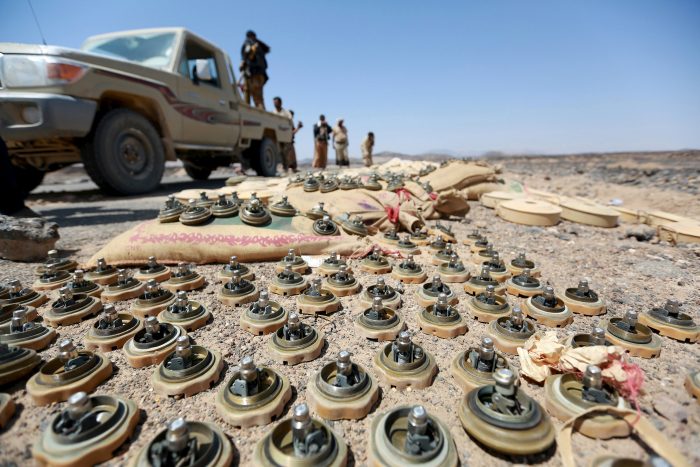
Soldiers loyal to Yemen’s government stand next to mines planted by the al-Houthi group in locations where they controlled in frontline in the province of Marib, October 4, 2015. REUTERS/Stringer TPX IMAGES OF THE DAY

Next May Iran will hold a presidential “election” that will lack for one thing: suspense. In the Iranian regime, uncertainty is anathema to the mullahs, especially Ali Khamenei and his handpicked minions on the various parliamentary councils that review and decide which candidates will appear on the ballot.

For all the handwringing and angst being generated by the Iran lobby over the perceived vulnerability of current president Hassan Rouhani, there is no doubt that if Khamenei wants Rouhani back to carry out his policies, he’s going to be the next president.

Given that certainty, the domestic situation for the ruling mullahs is anything but favorable to them. The Iranian economy remains stuck in reverse. Any hopes for it to be jumpstarted by the billions of dollars released as part of the nuclear agreement evaporated as the mullahs chose to redirect those funds to support the teetering Assad regime in Syria and the war in Yemen, as well as go on a multi-billion dollar buying binge of Russia weapons.

Unemployment remains high, especially among Iranian youth, coupled with rising prices for everything from fuel to consumer goods. Add that to miserable environmental conditions that have resulted in long droughts that have devastated farming and turned vast stretches of Iran into desert, and you get massive street protests—not about politics, but about economic conditions.

The mullahs are not fools, they are crafty political hands, adept at deception and misdirection, and they have dredged up another diversion in constantly pitting Iran in perpetual cycles of war and foreign policy crisis.

If it wasn’t the Syrian civil war, it was the rebellion in Yemen. If it wasn’t the sectarian conflict in Iraq, it was the decades-long civil war in Lebanon. Throughout all of it, the mullahs have used foreign policy to divert attention from the misery at home and gin up a jingoistic fervor.

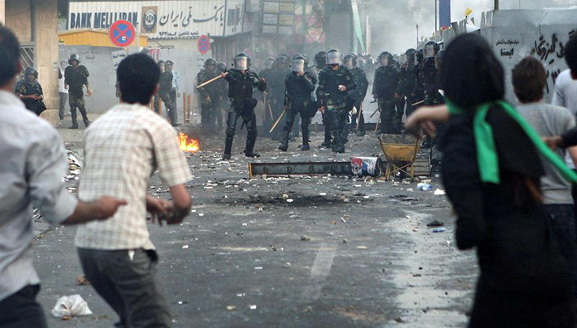
Now as Iran stares at another presidential election, the mullahs don’t want a repeat of 2009 where massive street protests were violently put down in response to cries of a rigged election.

This explains why Rouhani has made a trek to Moscow to call upon Russia to serve as a guarantor of sorts for Iranian regime’s interests in Syria. Rouhani is dangling the prospect of forming a mutual barrier to U.S. policy interests in the Middle East, as well as the tempting offer of access to Iranian bases for Russian military forces.

Iran’s foreign minister Javad Zarif reopened the door to Russian use of Iranian airbases to carry out strikes in Syria, in another sign of increasing cooperation between the two countries, according to the Daily Caller.

Russia carried out some airstrikes on Syria from an Iranian airbase in August, but was later rebuked by Iranian authorities for bragging about it. After Russian state media trumpeted the strike as a major strategic coup, Iran’s minister of defense accused them of a “betrayal of trust” publicly. He declared at the time, “it is finished, for now.”

Zarif signaled that this time-out may be over saying “Russia doesn’t have a military base (in Iran), we have good cooperation, and on a case by case basis, when it is necessary for Russians fighting terrorism to use Iranian facilities, we will make a decision.”

In Moscow, Rouhani and Putin signed several bilateral agreements that served as window dressing for these kinds of state visits. The two leaders affirmed their commitment to peace in Syria, where they have both backed the Assad regime, as well as introducing new economic cooperation mostly in energy and industry, especially calls for reduction in oil production as a means of boosting global oil prices.


Both nations’ economies have been severely impacted by the steep decline in petroleum as a result of stepped up production from the U.S. and Saudi Arabia.


Though Moscow and Tehran both support Assad, their views on Turkey and its involvement in the conflict have differed. Though Moscow envisions Ankara as a part of the solution to the Syrian conflict, Tehran has been more wary – particularly after Moscow and Ankara left Tehran out of a truce they brokered in December, according to Voice of America News.


Aside from the photo opportunities for Rouhani, the Iranian regime stayed the course in maintaining its ever-increasing variety of militant and extremes actions, including reports of a renewed military commitment to Houthi rebels in Yemen in an increasingly volatile war that threatens to drag Saudi Arabia and the Gulf States into direct conflict with Iran.

A group of analysts known for research in global security threats said in a new report that the increase in Iranian involvement is to offset the gains made by Yemeni government troops supported by the Saudi-led Arab coalition forces.

An increased Iranian role will prolong Yemen’s civil war and make the conflict more sectarian, worsening Yemen’s humanitarian crisis and allowing Al Qaeda in the Arabian Peninsula (AQAP) to expand its support base within Yemen, according to Gulf News.

“The deployment of inter-operable proxy forces is part of Iran’s evolution of a form of hybrid warfare that will allow it to project significant force far from its borders and fundamentally alter the balance of power in the region. Iran may increase its engagement in Yemen if US support for the Saudi-led coalition threatens the Al Houthi-Saleh faction’s survival,” they said.

The Critical Threats Project run by the public policy think tank the American Enterprise Institute has published the analysis on their website, providing information on Iranian military assistance to Yemeni rebels.

“Iran may attempt to incorporate the Al Houthis into its Axis of Resistance coalition, which Iran uses to contain the US and its regional allies,” the report stresses, warning that further escalation in the Yemeni civil war will threaten freedom of navigation in the Red Sea, risking both global commercial markets and the US Navy’s freedom of movement in the region.”

The analysis claimed that Iran had attempted to smuggle over 2,000 small arms into Yemen in 2015 and 2016, in addition to a large stockpile of other weapons.

“Iran likely facilitated the development of an Al Houthi-Saleh naval mining program. Mines struck a government coast guard ship near Mokha port, Taiz governorate on March 11 and a fishing vessel near Midi district, northwestern Hajjah governorate on March 8. Iran provides sophisticated weaponry that allows the Al Houthi-Saleh faction to hold terrain, counter Saudi-led coalition capabilities, and threaten US freedom of movement in the Red Sea,” the report warned.

As the flashes go off in Moscow, the rest of the Middle East is dreading what next chapter of hell the Iranian regime is set to unleash.

Michael Tomlinson

Filed Under: Blog, News Tagged With: al houthis, Featured, hassan rouhani, Iran Terrorism, IRGC, Khamenei, Rouhani, Sanctions

Khamenei Promises More Crackdowns on Election Protests

March 22, 2017 by admin

Khamenei Promises More Crackdowns on Election Protests

Khamenei Promises More Crackdowns on Election Protests

Back in 2009, the Middle East was being rocked by the Arab Spring, a pro-democracy movement that toppled governments throughout the region and put despotic regimes on the defensive.

At the time, the Iranian regime’s much despised president Mahmoud Ahmadinejad was running for “re-election” in a contest widely viewed as unlikely for him given the historic disapproval of the Iranian people and their deep desire for democratic change.

But as with all things under the careful watch of the mullahs, his election was essentially guaranteed in what the international community dubbed a rigged election.

In response, Iran was rocked with mass protests and demonstrations the likes of which the Iranian regime had not seen before in the most serious threat to the iron rule of the religious establishment. Alarmed and in response to keep their hold on power, the top mullah Ali Khamenei ordered a widespread crackdown that set human rights back in Iran decades in resulted in scores killed and thousands beaten, arrested and imprisoned.

The mass protests were aided in large part by the emergence of social media which helped rally young and old Iranians alike to dispute the election and served as a splash of cold water in the regime’s face that it would have to change as well, but not in terms of granting more freedoms.

By the time 2013 rolled around, the mullahs had gotten wise to international opinion and instead staged an election by removing anyone from the ballot that could even be considered a dissident and instead offered up an old loyalist in Hassan Rouhani repackaged as a smiling, tweeting, kindly “moderate.”

The end result was another sham election and in comparison to 2009 with favorable media attention abroad. It was also aided by the creation of an Iran lobby apparatus designed to push forward more positive narratives about the regime in news media and among elected officials, especially the National Iranian American Council.

Since then, while Rouhani has paraded himself as ca champion of the oppressed, Iran has plunged even further into disrepair.

It is involved now in two full-blown wars in Syria and Yemen, while spending billions of dollars in cash to support the Assad regime, Shiite militias in Iraq, its long-time Hezbollah proxy, and a rebuilding of its vast military.

It has also cracked down viciously at home, oppressing women, religious and ethnic minorities and even going on a binge of hostage taking amongst dual-national citizens including Americans, Canadians and Brits.

Now the stage is set for another election this May and once Khamenei has set the table by declaring that the regime would not tolerate any interference; meaning only the regime’s candidate will be elected and everyone should stay off the streets.

“I will confront anyone who wants to tamper with the results of the people’s vote. In previous years and previous elections …, it was the same. Some of it was in front of people’s eyes and they became aware of it. And some of it they were not aware of but I was informed about it,” he said in Iranian New Year remarks carried live on state television, according to Reuters.

“It was revealed in 2009 – they came out and drew battle lines. And in other years in other ways, but in all these years I stood against them and said whatever the results of the election are, they must be carried out.”

Two of the candidates from the 2009 presidential election, which put hardliner Mahmoud Ahmadinejad into office for a second term despite large protests over alleged vote fraud that shook the Islamic Republic, have been under house arrest since 2011. Although part of the regime apparatus, they were detained for calling for street protests at the same time that pro-democracy uprisings were convulsing Tunisia and Egypt.

This year’s election will never be in doubt. Whoever Khamenei wants is going to win, this is a matter of course since he controls the policy making body that will have final say on whoever gets on the ballot in the first place.

Imagine if the Democratic or Republican parties had final say on who got on a presidential ballot without having to suffer through the rigors of a primary contest? In essence, that is what the Iranian regime does on a regular basis; it’s a rigged game.

But the Iranian regime is becoming more sophisticated in the ways of politics. Just as it adjusted to the brutal crackdowns following the 2009 elections, it is following up on the initial creation of the Iran lobby with a broader call for more Iranians in the West to become active lobbyists for the regime’s causes as outlined in an editorial by Michael Rubin in Commentary.

“An Iran watcher and Iranian citizen recently alerted me to this clip showing Mahmoud Alavi, Iran’s intelligence minister, on Iranian national television suggesting there are Iranians in the West who have a lobby for the regime,” Rubin said.

“Alavi does not mention NIAC, but the number of politically active groups that focus on issues of sanctions, defending Iran’s ballistic missile program, and Iran’s nuclear program can like be counted not only on one hand but rather on one finger. If Iran’s intelligence minister believes that Tehran can leverage a specific lobby in the West on behalf not of Iranians but rather of the Islamic Republic, perhaps it is time for American counterintelligence authorities to take a far harder look at whatever lobby to which Alavi might be referring,” he added.

Rouhani’s election will be critical as the regime enters a new phase of expansion and aggression as it puts its newfound billions in cash it received as part of the nuclear deal to good use in furthering the war in Yemen and securing Syria as part of its Shiite sphere of influence.

According to Reuters, Iran is sending advanced weapons and military advisers to Yemen’s rebel Houthi movement, stepping up support for its Shiite ally in a civil war whose outcome could sway the balance of power in the Middle East, regional and Western sources say.

Sources with knowledge of the military movements, who declined to be identified, say that in recent months Iran has taken a greater role in the two-year-old conflict by stepping up arms supplies and other support. This mirrors the strategy it has used to support its Lebanese ally Hezbollah in Syria.

A senior Iranian official said Major General Qassem Soleimani, commander of the Qods Force – the external arm of the Islamic Revolutionary Guard Corps – met top IRGC officials in Tehran last month to look at ways to “empower” the Houthis.

We may very soon see the Arabian Peninsula erupt in a war not unlike what has convulsed Syria if the mullahs have their way.

Michael Tomlinson

Filed Under: Blog, News Tagged With: Appeasement policy, Featured, Iran, Iran Human rights, Iran Lobby, Iran Mullahs, Iran Terrorism, IRGC, Khamenei, National Iranian American Council, NIAC, NIAC Action, Rouhani

In Iran the Plight of Women Contradicts International Women’s Day

March 8, 2017 by admin

In Iran the Plight of Women Contradicts International Women’s Day

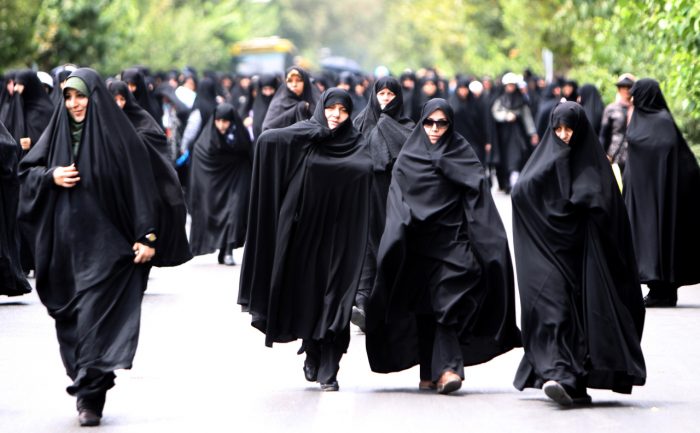
Iranian demonstrators march after weekly Friday prayers in Tehran on July 8, 2011 during a protest asking the government to intensify its crackdown on women and men to enforce the Islamic dress code. AFP PHOTO/ATTA KENARE (Photo credit should read ATTA KENARE/AFP/Getty Images)

The world is taking part in International Women’s Day in a myriad of ways; some of it commercial offering to donate $100 to the cause of your choice, and other’s political with marches planned in the U.S. protesting a wide range of issues from reproductive rights to opposition to administration’s policies.

Women the world over are gathering to reinforce their solidarity with their gender and to support issues of concern to them. It’s an annual spectacle that for many celebrates the freedom and opportunities women are now enjoying everywhere…except in the Iranian regime.

Although International Women’s Day has been around since 1908, its origins as a fight for equal pay and voting rights has morphed into the hashtag #IWD and lost some of its fervor. It’s also at times celebrated not as a call to political arms, but now used to tout corporate branding campaigns emphasizing a product or company’s openness to women.

Unfortunately, the harsh reality is that in many places in the world, women continue to be treated as second-class citizens or even property of their husbands and fathers. Nowhere is that more brutally explicit than in Iran where the ruling mullahs have consistently passed laws that would make any Western feminist breath fire in reaction.

The Iran lobby has tried to cover up this fact by praising window-dressing efforts to empower women in Iran, but those efforts have rung hollow in the face of escalating brutality aimed specifically at women.

Shahriar Kia, a political analyst and member of the Iranian opposition, the People’s Mujahedin Organization of Iran, outlined some of these practices in a piece for American Thinker.

“Iranian regime President Hassan Rouhani has recently been making remarks about women’s rights (!) in an attempt to cloak his portion of the Iranian regime’s misogynist report card,” Kia writes. “In his own memoirs, from page 571 to 573, Rouhani explains in detail how in 1980 he began enforcing mandatory hijab regulations as the mullahs began their historical campaign against Iranian women.”

Rouhani’s tenure has also been the hallmark home of systematic oppression against women, workers, college students, writers, journalists, dissident bloggers; imposing poverty and unemployment on a majority of Iranians; continuous threats made against the media; punishment of political prisoners have increased significantly even in comparison to the years of Iran’s firebrand Mahmoud Ahmadinejad. During Rouhani’s human rights violations-stained tenure, an average of two to three people have been executed on a daily basis, Kia adds.

The mistreatment of women in Iran extends also to non-Iranian women citizens as in the appalling treatment of Nazanin Zaghari-Ratcliffe, a British charity worker who was sentenced to prison for five years by a secret Iranian regime court and has been abused and denied much-needed medical care and given the option of only be able to see her child in prison.

Last year a UN body of human rights experts described her detention as “arbitrary” and said she had been denied a fair trial, according to the Telegraph.

This week, the UN released a new report on human rights in Iran, written by Asma Jahangir, the Special Rapporteur for Human Rights in Iran.

From the outset, it is clear that there has been no marked improvement in human rights in the Gulf nation, despite President Hassan Rouhani signing a Citizens’ Rights Charter in December 2016.

The 14,000-word report discusses both ongoing cases of abuse (like the execution of juveniles) and urgent situations (like the fate of political prisoners denied medical care).

Jahangir, who spoke to non-governmental organizations, intellectuals, lawyers and victims to ensure the accuracy of this report, also covers torture, the bias judicial system, free speech and women’s rights and clearly details just how far human rights, especially for women, have sunk in Iran.

For its part, the Iranian regime as usual blasted the UN report and defended the indefensible in its human rights situation.

In an address to a high-level meeting of the Human Rights Council in Geneva, Iran’s Deputy Foreign Minister Abbas Araqchi denounced a recent resolution raised in the council as “totally baseless and unacceptable,” claiming that political use of human rights by certain countries would pose a real challenge to the council’s goals and undermine and discredit the UN body, according to regime-controlled Tasnim News.

The UN report stated that “the Islamic Republic of Iran has reportedly executed the highest number of juvenile offenders in the world during the past decade. Despite an absolute ban on the practice under international law, the penal code continues to explicitly retain the death penalty for boys of at least fifteen lunar years of age and girls of at least 9 lunar years for qisas (retribution in kind) or hudud crimes, like homicide, adultery or sodomy.”

“The Special Rapporteur urges the Islamic Republic of Iran to take proactive steps to promote the full realization of the rights of human rights defenders and to refrain from any acts that violate the rights of human rights defenders because of their human rights work. The government should take strict measures to ensure that the security and intelligence apparatus does not use reprisals against families of those who monitor or campaign against human rights violations or express views that are contrary to government policies,” the report added.

Aside from the cruelty of human rights in Iran, which includes severe punishments for even minor infractions such as not wearing traditional hijab head coverings, Iranian women are denied economic growth and access to good paying jobs.

According to a Pew Research Center analysis of labor force statistics from 114 nations from 2010 to 2016, the median female share of a nation’s workforce was 45.4%, but in the case of Iran, women made up only a paltry 17.4% of the workforce, ranking near the bottom among all countries.

For all of the talk of empowerment and moderation in Iran by the regime and its Iran lobby supporters, the truth is dismal and the outlook for women even bleaker.

The next time women march for Women’s Day, it might be worth remembering the millions of Iranian women who are denied their futures and can’t even march in protest for fear of arrest and imprisonment.


Filed Under: Blog, News Tagged With: hassan rouhani, international Women's Day, Iran, Iran Lobby, Iran Terrorism, Khamenei, National Iranian American Council, Rouhani, Women's Day

Iranian Revolutionary Guard Corps Stands at Center of Terror

March 7, 2017 by admin

Iranian Revolutionary Guard Corps Stands at Center of Terror

Iranian Revolutionary Guard Corps Stands at Center of Terror

Like the beating heart of a wild animal, the Iranian regime’s Revolutionary Guard Corps stands at the center of almost every piece of chaos, violence and extremism happening in the Middle East today it seems.

The IRGC pumps the engine that powers all the arms of the Iranian war machine that results in terrible human rights abuses and proxy wars raging throughout the region. Its tentacles stretch into almost every part of Iranian society and have been well documented over the past three decades.

Its control of all aspects of Iran’s military and its leadership position in instigating almost every violent act militarily is impressive and deeply disturbing. Needless to say, its conducts warrants nary a word of protest from the Iran lobby. Not even the allegedly peace-loving Ploughshares Fund utters any protests over the IRGC’s worst military excesses.

Just recently, the Pentagon blasted the “unprofessional” behavior of the Iranian navy after two separate incidents in the Strait of Hormuz last week.

According to the Pentagon, an Iranian frigate on Thursday came within 150 yards of the civilian-crewed USNS Invincible.

Then on Saturday, a number of small assault craft came within 350 yards of the Invincible and other ships.

“This was assessed to be a combination of unsafe or unprofessional behavior,” Pentagon spokesman Navy Captain Jeff Davis said.

In both cases, the US ship had to change course to avoid any collision, he added.

According to Fox News, Iran test-fired a pair of ballistic missiles into the Gulf of Oman over the weekend as well. It was the first time Fateh-110 short-range ballistic missiles have been tested in two years. One of the missiles successfully destroyed a target barge at a range of 155 miles.

One of the missiles launched from the IRGC base in Bandar-e-Jask successfully destroyed a target barge at a range of 155 miles. The other missed its target. U.S. officials told Fox News the latest version of the Fateh-110 missile has an “active seeker” system that helps it target ships at sea.

The new Iranian short-range ballistic missile launches come a week after Iran successfully test-fired Russian surface-to-air missiles, part of the S-300 air defense system Russia sent to Iran recently.

According to the Foundation for Defense of Democracies, Iran has conducted as many as 14 ballistic missile launches since the landmark nuclear agreement in July 2015.

A senior U.S. military official told Fox News that Iran had made great advances in its ballistic missile program over the past decade.

Domestically, the IRGC also leads in the brutal crackdowns that have targeted political dissidents, journalists, artists, women and religious minorities.

The Center for Human Rights in Iran (CHRI) reported that two Iranian Catholic converts were arrested in their home by the IRGC in West Azerbaijan Province.

“At 7 a.m. on February 20 (2017), two plainclothes intelligence agents of the Islamic Revolutionary Guards Corps (IRGC) entered the home of Christian converts Anoohe Rezabakhsh and her son Sohail (Augustin) Zargarzadeh in Oroumiyeh (city) without prior notice and searched the premises and took away personal items such as religious and holy books,” Mansour Borji, the spokesperson for the Alliance of Iranian Churches known as Hamgam, told CHRI on March 3, 2017.

Despite President Hassan Rouhani’s pledges during his election campaign in 2013 that “all ethnicities, all religions, even religious minorities, must feel justice,” the targeting of Christian converts has continued unabated under his administration according to the CHRI.

The central role the IRGC plays in all of these actions means that its leaders are key players in the destabilization going on throughout the Middle East. As Dr. Majid Rafizadeh points out in an editorial in Arab News, the Quds Forces Qassem Soleimani could be called Iran’s “Osama Bin Laden” for his key role in directing much of this chaos.

“He is well-known as the Middle East’s deadliest and Iran’s most dangerous man. He prioritizes offensive tactics and operations over defensive ones, and rejoices in taking overconfident selfies with his troops and proxies in battlefields in many countries, including Iraq, Syria, Yemen and Lebanon,” Rafizadeh said. “When it comes to authority, he is Iran’s second man after Supreme Leader Ali Khamenei. Being a staunchly loyal confidante to Khamenei, Qassem Soleimani has great influence over foreign policy.”

“Soleimani commands at least 150,000 militants, many designated as terrorists and belonging to designated terrorist groups. This is why Iran has been repeatedly ranked as the top state sponsor of terrorism by the US State Department,” he added. “Based on my research, there are more than 250 terrorist groups worldwide, with different religious and sociopolitical backgrounds. Roughly 25 percent of them are funded, trained or supported by only one entity, the Quds Force.”

All of this is important as the Trump administration debates whether or not to designate the IRGC as a Foreign Terrorist Organization as a whole rather than simply designating individuals such as Soleimani.

No doubt the Iran lobby will raise its collective voices into another shrill call opposing any designation and warning of dire consequences, but this time the push back is coming strongly from many quarters.

Michael Tomlinson

Filed Under: Blog, News Tagged With: Featured, Iran, Iran deal, Iran Terrorism, IRGC, Khamenei, Sanctions

Case For Designating the IRGC as Terrorists Builds

February 15, 2017 by admin

Case For Designating the IRGC as Terrorists Builds

Case For Designating the IRGC as Terrorists Builds

Momentum continues to build for the U.S. to designate the Iranian Revolutionary Guard Corps a Foreign Terrorist Organization as a whole. Much of that momentum stems from the IRGC’s own actions over the years in supporting terrorism worldwide as well as initiating, supplying and controlling many of the proxy wars breaking out throughout the Middle East.

Even though there has already been well-documented disclosures about the IRGC’s illicit activities, new information continues to come to light as was the case on Tuesday when the National Council of Resistance of Iran (NCRI), a leading global organization of Iranian dissident and human rights groups, held a press conference in Washington, DC to disclose details of the IRGC’s terrorist training activities.

Alireza Jafarzadeh, deputy director of the Washington Office of the NCRI, presented information to reporters gathered by the social network of the People’s Mojahedin Organization of Iran, a dissident group located inside Iran. He said that information shows that since 2012, the NCRI has seen an increase in the training of foreign nationals in its terrorist training camps, which threatens a wide scope of countries, not just those beset by conventional warfare.

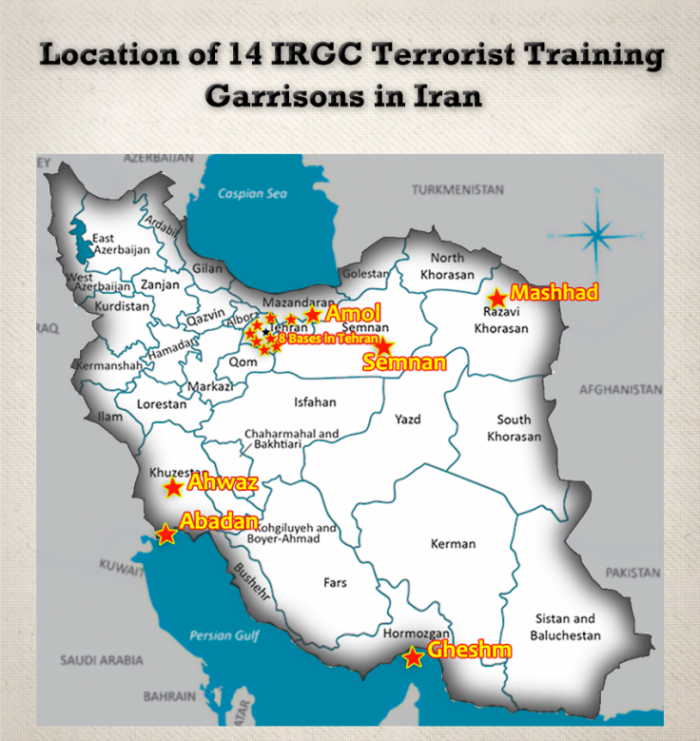
Using intelligence gleaned from sources within Iran, the NCRI claimed that the IRGC had created a training command operating dozens of military bases across Iran specializing in all aspects of warfare with units divided by national origin and specialization such as missile and naval operations to insurgency and urban warfare.

The IRGC that is answerable only to the Iranian regime’s top mullah, Ali Khamenei. It specializes in insurgency and guerilla tactics and is notorious for having supplied most of the IEDs used by Iranian-controlled Shiite militias in Iraq targeting U.S. and foreign troops; resulting in the deaths and wounding of thousands of Americans.

The IRGC was the initial unit that came to the rescue of the Assad regime in Syria as it teetered on the brink of collapse by smuggling in weapons and cash, as well as recruiting and directing Hezbollah fighters. It eventually expanded its role to include Iranian military, as well as the recruitment of Afghan mercenaries and deployment of Shiite militias from Iraq.

According to the NCRI, every month, hundreds of forces from Iraq, Syria, Yemen, Afghanistan and Lebanon — countries where the regime is involved in frontline combat — receive military training and are subsequently dispatched to the various frontlines. For operations in countries where there is no open warfare – including Persian Gulf countries, such as Bahrain and Kuwait – terrorists cells are trained instead.

The NCRI highlighted 14 IRGC training camps, as well as described the command structure, detailing how the commander of the Training Directorate, reports directly to Quds Force Commander, Qassem Soleimani.

Terrorist training for operatives from across the globe is commanded by Colonel Tahmasebi. Codenamed ‘320’, the commander of heavy weapons training at Imam Ali military base is Colonel Ali Mohammad. In charge of ‘VIP Security’ is Colonel Ramky, the NCRI said.

The sheer scale of the Training Directorate’s efficiency in producing fighters is underscored by the fact that just one of its training camps is currently sending 2,000 Afghans to Syria every week, according to the NCRI.

“The IRGC is actually the entity that runs the whole show when it comes to terrorism,” even though they are spearheaded by the Quds force, Jafarzadeh said. “You cannot do the separation. You cannot have the Quds force designated as a terrorist entity, but not the IRGC.”

Jafarzadeh said there is bipartisan support in Congress for the designation of the IRGC as a terrorist group, and suggested that with the new Trump administration, there is “a better possibility for those measures to move forward.”

The disclosures by the NCRI are significant since they provide first-hand and eyewitness accounts of the IRGC and Quds Force activities as it relates to the active support of terrorism and terror-related operations. It also points out with disturbing clarity the efforts by the Iranian regime to ramp up its military activities outside of its borders during the time it sought to portray itself as a “moderate” nation intent on resolving disputes peacefully.

Another example of those destabilizing activities has been the IRGC’s initiation of the revolt in Yemen with Houthi rebels supplied by IRGC forces; mostly smuggled aboard non-descript fishing boats in the Gulf of Aden.

Many of these ships have been intercepted and weapons confiscated by Saudi Arabian and Gulf State warships; the arms eventually traced back to Iranian factories.

Sanam Vakil, Ph.D an Associate Fellow at Catham House told IBTimes UK that the PMOI report spoke to the extent of the IRGC’s training scheme, although she could not independently verify the numbers.

“What I take from this is that this is a very sophisticated operation,” Vakil said. “Iran’s strategic strength is in a-symmetrical proxy relationships. Its conventional military is weak particularly in Iraqi and Syria they have had success in the past. Of course we also know they are the God Parents of Hezbollah.”

It is becoming increasingly clear that in order to effect the growth of Islamic-inspired terrorism abroad, the restraint of the IRGC will be a key factor. Designating it a FTO would be an important step in the right direction.

Michael Tomlinson

Filed Under: Blog, News Tagged With: Featured, Iran, Iran deal, Iran Human rights, Iran Mullahs, Iran Terrorism, IRGC, Khamenei, Syria, Yemen

Trump Effect on Iran Already Seen in Syrian Talks

January 18, 2017 by admin

Trump Effect on Iran Already Seen in Syrian Talks

Trump Effect on Iran Already Seen in Syrian Talks

Donald Trump hasn’t even been inaugurated yet and his effect on U.S. foreign policy is already being felt throughout the Middle East:

  • Saudi Arabia is cautiously optimistic that the policy of trying to appease the Iranian regime under the Obama administration is at an end and that U.S. policy will once again shift back to traditional alliances in the regime that provided security for U.S. allies for the past 50 years;
  • After inserting itself into the Syrian civil war at the behest of the Iranian regime, Russia is now preparing to open new avenues of cooperation with the Trump administration even if Iran is vehemently opposed to them; and
  • The Iranian regime has reaped quick benefits from the Obama administration and the nuclear deal it negotiated including receiving $10 billion in cash and gold, but now is desperate to rake in as much cash as possible with the looming potential of the spigot being shut off by Trump.

A much ballyhooed summit is planned in the Kazakhstan capital of Astana this weekend to discuss a pathway for peaceful resolution of the Syrian conflict, involving Russia, Iran and Turkey, but now Iran is protesting Russia’s proposal to include the U.S. in these talks once Trump assumes office.

Iranian regime foreign minister Javad Zarif stated the regime’s opposition to the U.S. participating in what the regime hoped would be a photo opp moment in the diplomatic limelight for the mullahs in Tehran with these talks.

“We have not invited the U.S. and oppose their presence” at the talks, Zarif said, according to Iran’s Press TV.

Whether Iran would refuse to attend if the United States were invited was not immediately clear. The talks are part of a three-way process led by Russia and including Turkey and Iran — now the three most powerful international players on the ground in Syria. The process is aimed at forging a settlement in Syria after the failure of the Obama administration’s diplomacy, according to the Washington Post.

The opening round is expected to be a modest affair, with representatives of Syrian rebels meeting with members of the Syrian government to discuss the modalities of a shaky cease-fire that went into effect on Dec. 29, Russian Foreign Minister Sergei Lavrov told reporters in Moscow. Representatives of the invited countries will attend in the role of observers, rather than participants.

Although Iran is one of the three sponsors of the peace talks, it has not signed the agreement reached between Russia and Turkey that launched the cease-fire, suggesting that Tehran has reservations about an effort that could potentially erode its extensive influence in Syria.

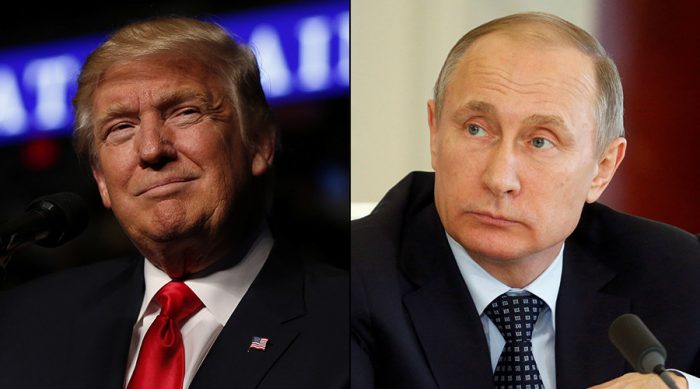
Both Trump and Russian President Vladimir Putin have said they regard Syria as one of the areas in which the United States and Russia could cooperate more closely. Trump has said on a number of occasions that he hopes better relations with Moscow will help counterbalance Iran’s expanding regional role.

That expansion and deepening relationship between Russia and the U.S. could very well leave the Iranian regime out in the cold and without the ability to leverage the two superpowers against each other for its own gain.

Iran has been instrumental in providing the manpower and resources that have helped Assad’s government hold the rebellion at bay. Thousands of Iranian-trained Shiite militia fighters from Iraq and Afghanistan are on the front lines, the Iranian-backed Lebanese Shiite militia Hezbollah is at the forefront of most of the major battles, and Iranian military advisers and commanders are embedded with them in many locations around the country.

All of those gains could be erased should Trump and Putin see eye-to-eye on the necessity to rein in Islamic extremism and view Iran as the regional godfather of radicalized Islamic terror.

That prospect is frankly freaking out the Iranian regime and Hassan Rouhani took to state-owned airwaves to try and keep its attachment to Russia as close as Siamese twins.

“Iran, Russia and Turkey managed to bring a ceasefire to Syria … It shows these three powers have influence,” Rouhani said. “The (Syrian) armed groups have accepted the invitation of these three countries and are going to Astana.”

Asked why the United States and Saudi Arabia had no direct role in the talks, Rouhani said: “Some countries are not attending the talks, and their role was destructive. They were helping the terrorists.”

The prospect of a Trump presidency and realignment with Russia has caused the mullahs to issue pronouncements on a daily basis to try and spin the potential outcomes for the regime after January 20th; most of them bad for the mullahs.

Rouhani went on television to insist that any effort to “renegotiate” the nuclear agreement by Trump is “meaningless” and attributed it simply to Trump making campaign slogans, while his boss, Ali Khamenei, insisted that if the U.S. were to alter the agreement “we will light it on fire.”

Even European Union leaders are coming to the realization that the outcomes over the nuclear deal no longer rely on them, but rather now rest firmly on Trump’s decisions.

Federica Mogherini, the EU high representative for foreign affairs and security policy, who received withering criticism for trips to Iran while political prisoners were being executed, penned an editorial in the Guardian praising the nuclear deal in the hope of staving off its elimination.

It is worthy to note that Mogherini places her support squarely on the economic benefits towards European firms, but makes no mention of the year of terrorism and human rights abuses perpetrated by the Iranian regime and is silent on Syria and the absolute disaster for Europe from millions of refugees that has flooded in.

That kind of silence on important issues of terrorism and war are precisely why Europe has been blistered with multiple attacks in Brussels, Paris, Nice and Berlin and why solving the problem of Iran’s Islamic extremism is the surest path to peace.

Michael Tomlinson

Filed Under: Blog, News Tagged With: #NuclearDeal, Appeasement policy, Featured, hassan rouhani, Iran, Iran deal, Iran sanctions, Iran Terrorism, Khamenei, Rouhani, Syria

Iran Regime Operates Through Fear and Intimidation to Work

January 7, 2017 by admin

Iran Regime Operates Through Fear and Intimidation to Work

Iran Regime Operates Through Fear and Intimidation to Work

“I learned that courage was not the absence of fear, but the triumph over it. The brave man is not he who does not feel afraid, but he who conquers that fear,” said Nelson Mandela, the former president of South Africa and prisoner of conscience who led his nation out of apartheid rule.

He recognized during his long imprisonment for his political beliefs that to conquer a regime and policy of institutionalized oppression, one had to first conquer the fear that institution uses to control its people. It is through the tools of violence, fear and intimidation that a people can remain oppressed for generations.

For the Iranian regime, the mullahs learned early on the lessons of similar oppressive regimes throughout history. Whether you were a Roman tribune enslaving barbarians or a Nazi Stormtrooper kicking down doors in the Warsaw ghetto or a Boko Haram fighter kidnapping scores of girls to auction them as sex slaves, the tools of intimidation and fear were universal in your efforts to maintain control.

Throughout Iran, the mullahs impose the same practices through the use of religious courts that hand down brutal sentences almost on a whim with no accountability, to roving bands of Basji paramilitaries who are free to accost and beat women on the street for violating dress codes.

The mullahs use the same principles in exporting their extremist brand of Islam by supporting terrorist proxies such as Hezbollah or growing their own Shiite militia in Iraq which can be used to subjugate Sunni villages or be shipped off to fight in Syria.

The use of military power and violence is a tried and tested prescription for the Iranian regime to impose its will.

Unfortunately for the mullahs, history has proven those policies eventually fail. Although Rome stood for thousands of years, it eventually collapsed under its own corruption and inability to assimilate the regions it conquered into peaceful co-existence. Eventually all totalitarian regimes have fallen throughout human history; the only question has been how long has it taken?

For the Iranian regime, the clock is running and the mullahs recognize their time may very well run out on them as their economy remains stagnant, unemployment especially among young people remains sky-high and technology improvements in social media and mobility have made it almost impossible to keep a lid on dissenting voices.

Even a string of hunger strikes by political prisoners has resonance as their plight is carried throughout the world on Twitter, Facebook, WhatsApp and Snapchat and has led to noted people such as Nobel peace prize laureate Shirin Ebadi to openly call for the head of Iran’s judiciary to quit.

Sadeq Larijani was appointed by Ali Khamenei and cannot be summoned by MPs for questioning and is not directly accountable to the public. Under his watch the judiciary has made a number of high-profile arrests of dual nationals, according to the Guardian.

Ebadi, a human rights lawyer and women’s rights activist living in exile in the UK, said she considered Larijani to be “directly responsible for the injustices and corruption” in the system.

She said that “in the name of religion and with the excuse of national security”, the judiciary was “overseeing a miscarriage of justice”.

“Civil and social activists and thinkers who voice criticism or protest are put in jail and condemned to lengthy prison sentences and torture and persecution, while criminals, serial killers and those involved in embezzlement continue to abuse people under the shadows of a corrupted judicial system,” she said in a statement posted on the website of the Defenders of Human Rights Centre, of which she is president.

“A considerable number of prisoners are those held on political or religious grounds. In what part of the world and according to what history, you would call this judicial system fair?” she added.

An example of the harsh treatment by Iranian courts was put on display when a British-Iranian woman being held in Tehran’s notorious Evin prison has appeared in an appeals court, using the last legal opportunity to challenge her five-year jail sentence.

Nazanin Zaghari-Ratcliffe, a project manager with the Thomson Reuters Foundation, the news agency’s charitable arm, was found guilty in September on unspecific charges relating to national security.

On Wednesday, she attended a court session in the Iranian capital that lasted up to three hours, her husband told the Guardian. Few details have emerged about the hearing but a verdict is expected to be announced next week.

The exact reason why the 38-year-old has been convicted in Iran is still unclear, but the Revolutionary Guards, which arrested her at the airport in April while she was about to return to the UK after a family visit, have accused her of fomenting a “soft overthrow” of the Islamic republic.

“What I know is that the appeals happened and went on for three hours, the family weren’t able to go but Nazanin was there and her lawyer was there,” said Richard Ratcliffe. “There were lots of revolutionary guards there from both Kerman’s branch and the Tehran branch.”

According to Amnesty International, Iranian authorities have hinted that Zaghari-Ratcliffe’s arrest is connected to the 2014 imprisonment of several employees of an Iranian technology news website. They were given lengthy prison terms for participating in a BBC journalism training course. Zaghari-Ratcliffe was a project assistant at the BBC’s Media Action, the broadcaster’s international development charity, in 2008-09.

Ratcliffe said he last spoke to his wife on Christmas Day. Zaghari-Ratcliffe, who was previously described as being at breaking point, has recently been removed from solitary confinement and taken to Evin’s women’s wards alongside other political prisoners including journalist Reyhaneh Tabatabaei and leading activist Narges Mohammadi, and a number of Baha’i women held because of their faith.

Ultimately, the full force and weight of the Iranian judicial system is being used to focus on a British mother and charity worker and is emblematic of how fragile the mullahs control is if they are forced to have to imprison someone like her.

Michael Tomlinson

Filed Under: Blog, News Tagged With: #NuclearDeal, Appeasement policy, Featured, hassan rouhani, Iran, Iran deal, Iran Human rights, Iran Lobby, Iran Mullahs, Iran sanctions, Khamenei

Trita Parsi Predicts a Worse 2017 But for the Wrong Reasons

December 29, 2016 by admin

Trita Parsi Predicts a Worse 2017 But for the Wrong Reasons

Trita Parsi Predicts a Worse 2017 But for the Wrong Reasons

Trita Parsi, the head of the National Iranian American Council and chief apologist for the Iranian regime, penned an editorial in Middle East Eye that curiously finally recognizes the complete and utter lack of stability in the Middle East. Unfortunately, he never assigns any blame to the Iranian regime.

He does however recognize that the split between Iran and its chief rival, Saudi Arabia, is likely to fuel and deepen even wider divisions and instability in the region.

“Indeed, while some point to Tehran celebrating its victory in Aleppo, success on the battlefield is coupled with even deeper divisions between Iran and some of its Arab or Sunni neighbors, paving a path towards greater conflict rather than reconciliation,” Parsi writes. “Ultimately, as all parties involved should know, true security only stems from the ability to live in peace with one’s neighbors, not one’s ability to outgun them.”

“Thus, the celebrations of today ring very hollow, as the region as a whole is likely heading towards greater instability in the year to come,” he adds.”

Parsi is correct in that the future is bleak in 2017, but his inability to focus on the constant push by Iran of its own extremist Shiite ideology is the fuel that has burned through Syria, Iraq and Yemen fueling new rounds of bloody sectarian violence that haven’t been seen since the decade-long civil war in Lebanon in the 1980s.

Parsi blames previous U.S. administrations for following a policy that was too reliant on supporting traditional U.S. regional allies such as Saudi Arabia, Israel and Egypt and isolated regional pariahs such as Iran and Iraq.

He goes on to blame the U.S.-led invasion of Iraq in 2003 the cause of the latest round of instability in the region; a curiously silly assumption since he blithely ignores Iran’s role in serving as the primary supporter, funder and guardian of the region’s most notorious terrorist groups in Hezbollah, Al-Qaeda and Shiite militias.

Parsi’s ignorance of the role terrorism plays in regional instability and the rise of trans-national groups such as ISIS in instigating the kind of horrific bloodshed that plunged virtually all of the Middle East into war and subjected cities as far flung as Sydney to San Bernardino to Boston to Ottawa to Paris to Brussels and Berlin to mass terror attacks.

Sectarian terrorism is the fuel that has convulsed the world, not the Cold War-era politics of superpowers such as the U.S. and its military might. As far back as the beginning of Christianity and the rise of Islam, religious fervor has sparked millennia of conflict and still does to this day.

This simple fact is why the Iranian regime stands squarely in the middle of virtually all of the conflicts going on today because it is the only religiously-controlled nation there and as such views its foreign and military policies through the colored lens of extremist religious ideology.

Since Iran’s leadership is personified in the religious supreme leader Ali Khamenei, whose wishes are akin to the absolute reign of medieval monarchs, the odds are the bloodshed and violence we are likely to see in 2017 is going to be firmly rooted in the same religious edicts that motivated violence in 2016.

Any child can trace the lines of Shiite fanaticism connecting Tehran to Damascus, Baghdad, Sana, Kabul, Beirut and countless other cities; any child it seems except Parsi. The one truth that Parsi does speak is the prospect of a grim 2017.

“Going forward, there are few signs that stability will return to the region in 2017. Even if the battle of Aleppo signals a turning point in the war in Syria, it is unlikely to signal the end of the war,” he writes. “Russia and Iran may be celebrating their victory, but true stability will only come to the region when all of the regional powers commit themselves to a diplomatic process of brokering a new order.”

“Currently, however, there is far more commitment to military rather than diplomatic strategies. Absent a reversal of this, 2017 will be even grimmer than 2016,” he adds.

Parsi is correct that stability is only going to come when regional powers finally recognize that diplomacy is a preferable path than a military one, but that is a conclusion that the mullahs in Tehran are not even close to reaching.

Tehran’s all-in support for a massive war in Syria, even to the point of dragging in Russia to save the Assad regime—one of Iran’s few reliable allies—demonstrate that diplomacy is not a priority for them. Indeed any solution that involves the mullahs in Iran will have the same faith, since they are the roots of the problem.

Tehran’s support of Houthi rebels in Yemen only broadened the conflict to drag in Saudi Arabia into a shooting war and the use of Shiite militias in Iraq to punish Sunni opponents only pushed the endless cycle of sectarian violence farther down the road.

Parsi’s inability to name Iran’s extremist Islamic policies and priorities as a motivating factor for a dreadful 2016 demonstrates clearly that even now, he cannot bring himself to criticize his Iranian masters in the slightest.

All of this shouldn’t be surprising since Parsi has been a loyal soldier for the Iranian regime and as Donald Trump assumes office in January, Parsi is devoting his time to trying to shape the narrative into painting Saudi Arabia as evil and Iran as good in an effort to drive a deeper wedge into the U.S. relationship with its traditional allies.

As 2016 has demonstrated, 2017 is likely to be just as disappointing for Parsi and his colleagues, but not for the reasons he thinks.

Michael Tomlinson

Filed Under: Blog, News Tagged With: Featured, Iran, Iran deal, Iran Human rights, Iran Lobby, Iran Terrorism, Khamenei, NIAC, NIAC Action, Trita Parsi

  • « Previous Page
  • 1
  • …
  • 3
  • 4
  • 5
  • 6
  • 7
  • …
  • 11
  • Next Page »

National Iranian-American Council (NIAC)

  • Bogus Memberships
  • Survey
  • Lobbying
  • Iranians for International Cooperation
  • Defamation Lawsuit
  • People’s Mojahedin
  • Trita Parsi Biography
  • Parsi/Namazi Lobbying Plan
  • Parsi Links to Namazi & Iranian Regime
  • Namazi, NIAC Ringleader
  • Collaborating with Iran’s Ambassador

Recent Posts

  • NIAC Trying to Gain Influence On U.S. Congress
  • While Iran Lobby Plays Blame Game Iran Goes Nuclear
  • Iran Lobby Jumps on Detention of Iranian Newscaster
  • Bad News for Iran Swamps Iran Lobby
  • Iran Starts Off Year by Banning Instagram

© Copyright 2026 IranLobby.net · All Rights Reserved.