Iran Lobby

Exposing the Activities of the lobbies and appeasers of the Mullah's Dictatorship ruling Iran

  • Home
  • About
  • Current Trend
  • National Iranian-American Council(NIAC)
    • Bogus Memberships
    • Survey
    • Lobbying
    • Iranians for International Cooperation
    • Defamation Lawsuit
    • People’s Mojahedin
    • Trita Parsi Biography
    • Parsi/Namazi Lobbying Plan
    • Parsi Links to Namazi& Iranian Regime
    • Namazi, NIAC Ringleader
    • Collaborating with Iran’s Ambassador
  • The Appeasers
    • Gary Sick
    • Flynt Leverett & Hillary Mann Leverett
    • Baroness Nicholson
  • Blog
  • Links
  • Media Reports

A Year of Proof the Iran Nuclear Deal Failed

August 24, 2016 by admin

A Year of Proof the Iran Nuclear Deal Failed

A Year of Proof the Iran Nuclear Deal Failed

Jay Solomon of the Wall Street Journal wrote an engrossing look back at the Iran nuclear deal after one year and why the Iranian regime’s mullahs, especially its top leader, Ali Khamenei, believe they were the true winners following the deal.

The proof of that belief is in tallying the butcher’s bill of death, misery and military expenditure the regime has dispensed over the last 12 months.

It is a record that cannot be hidden by the Iran lobby. It cannot be explained away by the Obama administration’s “echo chamber” of regime supporters. It will not be ignored by news media intent on trying to resuscitate the quaint notion that somewhere within the Iranian regime is some cadre of “moderates.”

What Solomon notes, is that while the Iranian regime, especially Khamenei, has engaged in almost virulent anti-Western rhetoric since the deal was passed, he and his fellow mullahs are unlikely to willfully walk away from the nuclear deal since it was heavily weighted in the favor of their regime—not the Iranian people mind you, but to the mullahs and their military forces.

As Solomon writes, “for all his complaints about American treachery, Mr. Khamenei and his allies recognize that the nuclear deal has produced significant benefits for their hobbled theocracy.”

“Since the accord was announced last summer, Mr. Khamenei and his elite military unit, the Islamic Revolutionary Guard Corps, have moved to solidify their hold. As international sanctions against Iran have slackened, the ayatollah and his core allies have expanded the Iranian military and pursued new business opportunities for the companies and foundations that finance the regime’s key ideological cadres. Iran has continued to fund and arm its major regional allies, including the Assad regime in Syria, the Lebanese militia Hezbollah and Houthi rebels in Yemen—all of which are at war with America’s regional partners—and the regime has continued to test and develop ballistic missiles. The government has also stepped up arrests of opposition leaders and political activists,” he added.

What brought Khamenei and the mullahs to the bargaining table in the first place was the effect tough sanctions were having on the regime’s finances and their shaky hold over the Iranian people. Coupled with plunging oil prices, the squeeze on the mullahs was considerable.

The mandate Khamenei gave to Iranian negotiators was explicit: preserve the regime’s military and nuclear infrastructure, delink any changes to the regime’s human rights policies or domestic political agenda and ensure financial benefits flowed to refill their depleted coffers immediately.

The nuclear deal agreed to by the U.S. and the other P5+1 nation’s did all that and recouped nothing in terms of moving Iran closer towards a true democracy. As Solomon describes, if anything, the deal has helped control of the nation and its people firmly in the hands of the religious leadership and Revolutionary Guards.

The most overused rationale for the deal by the Obama administration and Iran lobby was that the agreement severely constrained the regime from a pathway to a nuclear weapon, but Khamenei himself espoused the greatest omission in the deal which is the exemption of Iran’s civilian nuclear program.

While the Iran lobby, especially the Ploughshares Fund and National Iranian American Council, have loudly boasted the deal brings Iran’s centrifuge capacity to 5,000 machines, Khamenei has openly called for a “civilian” centrifuge capacity of a whopping 100,000 machines.

“After a decade, the international community would go along with Mr. Khamenei’s vision of an Iran that could develop an industrial-scale, civilian nuclear program without checks on the number or capacity of the centrifuges spinning. The U.S. had won only a short-term pause in the expansion of the Iranian program, and the supreme leader had gained international approval for his longer-term plan,” Solomon writes.

“Indeed, in recent weeks, Iranian officials have talked of their preparations to build 10 new nuclear reactors with Russian help. This will require a steady supply of nuclear fuel from centrifuges that will be allowed to go online in a decade,” he adds.

That close cooperation with Russia has become a major foreign policy headache for U.S. as Russia has sold Iran billions in new sophisticated military hardware and intervened in the Syrian conflict at Iran’s urging and has now begun flying bombers from Iranian airfields.

Most importantly of all for the regime and its mullahs has been the lifting of sanctions to finally sell oil and gas products on the open market and the allowance for foreign investment back into Iran, especially its heavy industries such as agriculture, chemicals and manufacturing which had all but fallen apart.

That influx of investment, as well as the reportedly $400 million in cash the U.S. paid in exchange for the release of American hostages, has essentially saved the regime from collapse with its military commitments in three full-scale wars draining their treasury.

With the financial gain, the mullahs have moved aggressively to secure their prospects domestically with the rigging of parliamentary elections by the removal of almost two-thirds of candidates from the ballot, instituting a harsh crackdown on dissent including mass arrests of journalists, bloggers, dissidents and artists, mass execution of Sunni political prisoners, along with a steep increase in the arrest of dual national citizens that can be used for more ransom payments or hostage exchanges since it worked so well already.

Tied together with the advances made in driving anti-Assad rebels back in Syria, solidifying control over Iraq through Shiite militias now comprising the bulk of Iraqi military activity and now with the backing of the Houthis in Yemen, the Middle East can safely be called the most instable it’s been in the last four decades.

All of this poses a significant challenge for the next American president.

By Michael Tomlinson
Filed Under: Blog, News Tagged With: echo-chamber, Featured, Iran deal, Iran Human rights, Iran Lobby, Khamenei, Ploughshares

For Iran Regime Religion Defines Policies

August 16, 2016 by admin

For Iran Regime Religion Defines Policies

For Iran Regime Religion Defines Policies

From the beginning of the Islamic revolution, the mullahs and religious cleric followers of Ruhollah Khomeini secured for themselves a nation-state completely under their control. Over three decades before ISIS spawned its own dreams of an Islamic caliphate, the mullahs in Tehran had already achieved that goal.

As a religious state, the Iranian regime stands virtually alone in a secular world of nations governed by parliaments, democracies, constitutional monarchies and even communist or socialist regimes.

Aside from the Vatican city-state, Iran is unique among nations, which makes understanding its religious leaders vital in understanding its national goals and policies.

For the mullahs, there were only one goal they had: To preserve power under the banner of the Islamic revolution and expansion and exporting of that same revolution.

Iranian regime’s constitution is emblematic of those priorities; vesting all final authority with the supreme leader, especially critical areas such as foreign policy, the military and judiciary. The control of virtually all sectors of Iranian life places the Iranian people squarely under the thumb of the mullahs.

They subject the Iranian people to the harshness of the religious courts that control daily family life. They subject the Iranian people to legions of morality police that enforce moral codes for everything from women driving cars and their style of dress to the gathering of young men and women at cafes.

With each beating given out, with each Iranian thrown into prison, with each public execution, the mullahs attempt to enforce their control over the Iranian people and in doing so only sow the seeds of discontent deeper into the soil of Iranian society from which springs for dissent and discontent in ways large and small.

Opposition to the mullahs rule can come in the form of a selfie by a young Iranian woman posting without a hijab or another young Iranian woman holding up a sign courtside of a volleyball game at the Rio Olympics.

It can take the form in mass protests and street demonstrations or it can take the form of hooking up a simple satellite dish to watch banned newscasts from Europe or the U.S.

For the mullahs, each rising level of defiance has to be met with even more brutal suppression because allowing even a small crack or glimmer of hope to shine through would only undermine their rule and bring forward the prospect of regime change.

This explains why the mullahs are always seeking provocations to fight against or blame for their own inadequacies. It is also why they regularly snatch hostages and balance their fate against the needs of the religious regime.

The mullahs inability to improve the economy following the nuclear deal points to their own ineptness, as well as their priorities to shift billions in recovered funds, as well as a $400 million ransom payment for American hostages, to use not for the Iranian people, but to line their own pockets and continue to fund their terrorist proxies in wars in Syria, Iraq and Yemen.

Regime-controlled media, as well as the Iran lobby have been busy pushing the idea that the lack of progress in improving the Iranian economy is to be blamed on the U.S. failure to open up all financial channels for the mullahs’ use.

Mohammad Javad Larijani, the head of the regime’s judiciary council , was quoted citing perceived serious flaws in the nuclear agreement leaving Iran without benefits it was promised.

“The US has completely retained the structure of the sanctions, and is not intending to lift them in the near future,” he said.

The flawed documentation and ill-definition of commitments in the JCPOA and the subsequent UN Security Council Resolution 2231 enable Washington to make very little concessions to Iran, Larijani explained, adding that having control over how to interpret the deal has given US politicians the power to impose what they want.

That point of view by the regime was reinforced over and over by statements by top mullah Ali Khamenei who claims that the duty to lift all sanctions lies with the U.S. and failure to do so would end up negating the agreement.

It is conspicuous Khamenei makes these claims on the eve of the U.S. presidential elections in which the days of the current administration are numbered as is the continuation of the same policy of appeasement it has been following for the past two years.

What remains is a violent regime bent on preserving its religious control over the Iranian people and willing to commit any atrocity to achieve it and preserve its Islamic revolution.

If the world truly wants a free and democratic Iran, the first step will have to be the continued opposition to the rule of the mullahs and the empowerment of the Iranian people through the dissidents and oppressed fighting for their freedom.

By Michael Tomlinson

Filed Under: Blog, News Tagged With: Featured, Iran, Iran deal, Iran Human rights, Iran sanctions, Iran Terrorism, Khamenei

How Much Are Four Americans Worth to Iran? $400 Million

August 3, 2016 by admin

How Much Are Four Americans Worth to Iran? $400 Million

How Much Are Four Americans Worth to Iran? $400 Million

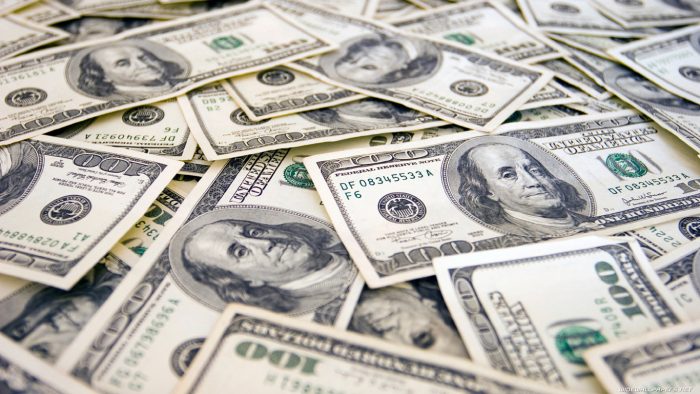
How much are four Americans worth to the Iranian regime? Apparently $400 million since news reports indicate the Obama administration secretly shipped $400 million worth of cash to Iran coinciding with the release of four Americans detained in Tehran and released as part of the nuclear agreement.

According to the Wall Street Journal, Wooden pallets stacked with euros, Swiss francs and other currencies were flown into Iran on an unmarked cargo plane, according to these officials. The U.S. procured the money from the central banks of the Netherlands and Switzerland, they said.

The money represented the first installment of a $1.7 billion settlement the Obama administration reached with Iran to resolve a decades-old dispute over a failed arms deal signed just before the 1979 fall of Iran’s last monarch, Shah Mohammad Reza Pahlavi.

While Obama officials denied any quid pro quo of cash for the prisoners, U.S. officials also acknowledged that Iranian regime negotiators on the prisoner exchange said they wanted the cash to show they had gained something tangible.

Sen. Tom Cotton, a Republican from Arkansas and a fierce foe of the Iran nuclear deal, accused the Obama administration of paying “a $1.7 billion ransom to the ayatollahs for U.S. hostages.”

“This break with longstanding U.S. policy put a price on the head of Americans, and has led Iran to continue its illegal seizures” of Americans, he said.

Since the cash shipment, the intelligence arm of the Revolutionary Guard has arrested two more Iranian-Americans. Tehran has also detained dual-nationals from France, Canada and the U.K. in recent months.

The Iranian regime’s news media quoted senior regime defense officials who described the cash as a ransom payment themselves putting into proper focus how they perceive the cash payment.

Ironically, the $400 million was paid in foreign currency because any transaction with Iran in U.S. dollars is still illegal under existing sanctions not related to the nuclear agreement for violations of human rights and sponsorship of terrorism.

A report by an Iranian news site close to the Revolutionary Guard, the Tasnim agency, said the cash arrived in Tehran’s Mehrabad airport on the same day the Americans departed.

Revolutionary Guard commanders boasted at the time that the Americans had succumbed to Iranian pressure. “Taking this much money back was in return for the release of the American spies,” said Gen. Mohammad Reza Naghdi, commander of the Guard’s Basij militia, on state media.

Among the Americans currently being held are an energy executive named Siamak Namazi and his 80-year old father, Baqer, according to U.S. and Iranian officials. Iran’s judiciary spokesman last month confirmed Tehran had arrested the third American, believed to be a San Diego resident named Reza “Robin” Shahini.

Friends and family of the Namazis believe the Iranians are seeking to increase their leverage to force another prisoner exchange or cash payment in the final six months of the Obama administration. Secretary of State John Kerry and other U.S. officials have been raising their case with Iranian diplomats, U.S. officials say.

Iranian officials have demanded in recent weeks the U.S. return $2 billion in Iranian funds that were frozen in New York in 2009. The Supreme Court recently ruled that the money should be given to victims of Iranian-sponsored terror attacks.

Clearly the Iranian regime expects to use the same tried and true tactics to squeeze more cash out of the Obama administration in its waning days as the three proxy wars it funds in Syria, Iraq and Yemen drain it of cash as fast as it can replenish it.

The $100 million value per American hostage is a stunning amount. As a point of comparison, the four highest paid professional athletes in the world make less money: Soccer stars Cristiano Ronaldo and Lionel Messi make $88 and $81.4 million respectively, basketball star LeBron James banks $77.2 million and tennis great Roger Federer brings in a paltry $67.8 million compared to what the Iranian regime received.

The fact that the last days of the Obama administration are coming and with both presidential candidates—Hillary Clinton and Donald Trump—promising to hold the Iranian regime more accountable, the regime’s leaders may be seeing the end of the road to the usefulness of the nuclear deal.

Top mullah Ali Khamenei harshly denounced the Iran nuclear deal Monday, referring to the negotiations as a “lethal poison” that will prevent his country from negotiating with the U.S. in the future.

“They [the U.S.] want us to negotiate with them on the regional issues but the nuclear deal experience tells us that this is a lethal poison and we cannot trust the Americans’ words in any issue,” Khamenei told a gathering of Iranian citizens Monday.

Various officials within the Islamic Republic have criticized the U.S. for implementing new sanctions against Iran since the JCPOA went into effect in January. They claim the deal prevents the U.S. from implementing any new sanctions against their country, however, the deal only pertains to nuclear related sanctions that existed before the accord was signed. Khamenei threatened to “set fire” to the deal in June should the West violate it, he did not elaborate on what exactly entailed a violation.

It’s a silly claim since the Iranians specifically demanded the deal be de-linked from non-nuclear issues such as human rights and terrorism. In essence, the mullahs have trapped themselves.

Khamenei cautioned against talks with the United States on other regional crises, presumably including the wars in Syria and Yemen and the Islamic State extremist group. The experience of the nuclear deal, he said, “tells us that taking this step would be a deadly poison and that the Americans’ remarks cannot be trusted on any issue.”

His remarks are a verbal backflip from the original promises made by the Iran lobby, especially the National Iranian American Council, that passage of the agreement would help in moderating the various conflicts going on in the region with Iran’s help.

Those claims, like most made in support of the Iranian regime, have proven false.

By  Michael Tomlinson

Filed Under: Blog, News Tagged With: #NuclearDeal, Appeasement policy, Featured, Iran Human rights, Iran Lobby, Iran sanctions, Iran Talks, Khamenei, National Iranian American Council

July 14th Proves Infamous in More Ways Than One

July 16, 2016 by admin

July 14th Proves Infamous in More Ways Than One

July 14th Proves Infamous in More Ways Than One

July 14 is traditionally celebrated throughout France as Bastille Day, the national day of independence for the French republic. The nation marks it with parades, family outings, fireworks and all the trappings of a national holiday; not dissimilar to the 4th of July in the U.S.

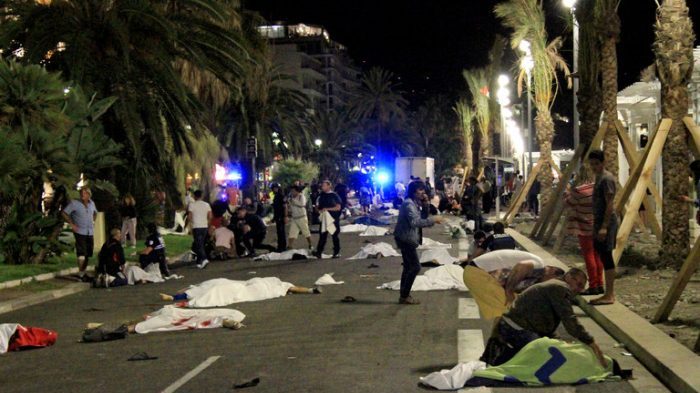
July 14, 2016 also marks the one year point since the Iran nuclear deal was reached by the P5+1 group of nations. Both milestones were joined by a more dubious one last night in which a purported terrorist attack struck the tony waterfront promenade of the French seaside resort of Nice where a man drive a large panel truck down a street packed with thousands of revelers watching a fireworks display.

As the large white truck veered widely left and right—appearing to aim at hapless bystanders—scores of people were flung like rag dolls or dragged and crushed underneath. Initial reports by French officials cited 80 killed, including two Americans, and another 20 critically injured with many more wounded.

French President Francois Hollande declared it a terrorist attack after a cache of grenades and weapons were also found in the struck after the driver engaged with police in a firefight before being killed.

This attack follows the Charlie Hebdo killings and the massive Paris attacks, bringing the specter of terrorism to the people of France three times now in only 18 months. The sheer brutality of this attack was captured throughout social media as people recorded the carnage, which was celebrated and welcomed on the social media profiles of Islamic extremists and their sympathizers.

Nice now joins the long list of cities victimized by the rapid spread of Islamic extremism including Boston, Sydney, Ottawa, Brussels, San Bernardino, Orlando, Bangladesh and Istanbul.

Those cities now join the wars raging in Syria, Iraq and Afghanistan. The reach of Islamic terror now cuts across all religions, continents, ethnicities and governments. It respects no boundaries; murdering Muslims next to Christians, Hindus and Jews.

It is a world much different than the one promised by supporters of the Iran nuclear deal. Iran lobby participants such as Trita Parsi of the National Iranian American Council pushed a pile of lies, the foremost amongst them was the promise of a newly-empowered moderate Iran to help stabilize the region and aid in the fight against Islamic extremists and terrorism.

It is noteworthy though that the one year anniversary statement issued by Parsi neglected mention anything about terrorism and its global impact.

“There are a whole host of opportunities that can strengthen U.S.-Iran diplomatic channels and insulate the deal from political opposition – including via efforts to fix sanctions relief complications; pursue sustainable diplomatic solutions in Syria and Yemen; enabling enhanced U.S.-Iran academic exchanges; establishing a permanent diplomatic channel; and by securing the freedom of imprisoned dual nationals like Siamak and Baquer Namazi,” Parsi said.

To say the opposite has happened would be an understatement of monumental proportions. Iran’s intervention in Syria to save the Assad regime from falling set the stage for the rise of ISIS and the expansion of a war that now includes Iraq and Yemen and helped build a terror network that stretches from Lebanon to Nigeria to Libya to Bangladesh.

It is also interesting that Parsi has mentioned the plight of father and son team Siamak and Baquer Namazi; since Siamak is a close personal friend of Parsi and helped found the basis of the Iran lobby and NIAC, without mentioning the despicable practice of the Iran regime to illegal arrest and hold dual nationals such as several Canadians and British citizens now.

The greatest failing of the nuclear deal was the complete separation of holding Iran’s conduct accountable in a whole host of related issues such as missile testing, human rights violations and the sponsorship of terrorism. These issues have fed into the Iranian regime policy of provocation and export of its extremist Islamic theology which has helped set the template for much of the global terrorism we are now experiencing.

Iran does not actively combat ISIS in Syria or anywhere else. Its forces have largely targeted Western-backed rebel groups in Syria, while its Shiite militias in Iraq have greatly aided ISIS by driving Sunni tribes to join its ranks as the result of sectarian conflict and tribal score settling.

Let’s also not forget that the nuclear deal fails at what it is purported to do in the first place which is prevent Iran from getting a nuclear weapon.

In the year since its approval, international monitoring agencies have detected uranium particles at Iran’s Parchin facility even after it was thoroughly scrubbed clean by Iran. Its nuclear infrastructure such as centrifuges remain intact in storage and ready to be reactivated, while the regime continues testing new, improved nuclear-capable ballistic missiles.

Rep. Mike Pompeo (R-KS) put it succinctly in a Fox News editorial saying that “one year on, the region is far less stable as well.  Iran increasingly controls Baghdad, Damascus, Sanaa, and Beirut.  Terror attacks have increased.  While the deal itself is problematic, also devastating is the fact that America is no longer viewed as a reliable partner to our traditional regional allies.”

Robert Spencer, director of Jihad Watch, writing for Breitbart, made the case that Iran is an even greater threat that ISIS noting that Iran already possesses a nuclear program which ISIS does not that be easily restarted.

While ISIS has significant reach especially in its ability to spread extremism among locals through social media, Iranian regime possesses and funds a global network of terror groups it supplies with its own intelligence, fighters, weapons and cash; something that ISIS only aspires to build.

Lastly, while ISIS has called upon its followers to strike at foreigners, the Iran regime has pursued that policy as a military objective for decades from orchestrating the attack on the U.S. Marine barracks in Lebanon in 1983 to the bombing of the Khobar Towers in Saudi Arabia to the killing of U.S. service personnel in Iraq. Iran has been at the center of instituting policies directly leading to the death of Americans.

Ultimately, the attacks in Nice is just another bloody reminder of how Iran’s full-fledged support for Islamic terrorism has set the stage for even more bloodshed and death unless the West acts to support regime change through the Iranian people.

By Michael Tomlinson

Filed Under: News Tagged With: Featured, Iran Lobby, Iran Terrorism, IRGC, Khamenei, Trita Parsi

#FreeIran Gathering is Biggest Human Rights Event of 2016

July 14, 2016 by admin

#FreeIran Gathering is Biggest Human Rights Event of 2016

#FreeIran Gathering is Biggest Human Rights Event of 2016

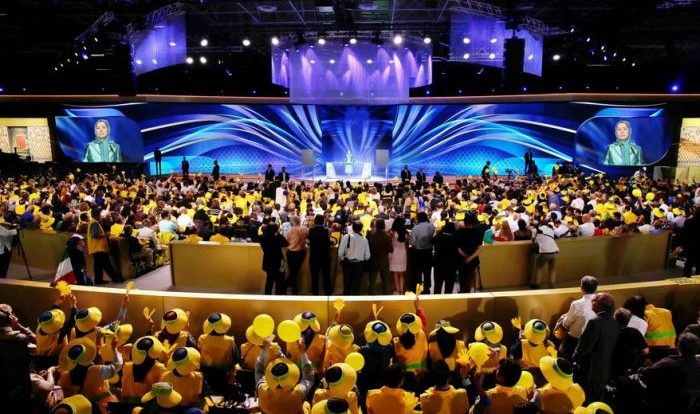
Near the airfield where 90 years ago Charles Lindbergh ended his historic solo flight across the Atlantic Ocean, gathering took place at the cavernous convention halls near Le Bourget Airfield on a similar historic occasion last Saturday.

It is here an estimated 100,000 friends and supporters of over 300 human rights and Iranian dissident groups joined dignitaries and elected officials from around the world in what has become the largest annual gathering opposed to the rule of the mullahs in Tehran.

This gathering has deep roots in the struggle for freedom and democracy in Iran and represents the largest thorn in the side of the ruling religious leaders of the Iranian regime. These groups included the People’s Mujahedin Organization of Iran (PMOI) for which mere association constitutes treason as far as the mullahs are concerned and punishable by death.

While the polarization in American politics as personified by the supporters of Donald Trump and Hillary Clinton are often contentious and biting, it’s hardly conceivable that being a registered Democrat or Republican would warrant a death sentence, yet in Iran, membership in an outlawed political movement is, which makes this event more admirable for the determination of the participants to literally put themselves and their families at risk by merely attending an event that is viewed with such intense hatred by the leaders of the Iranian regime.

Why then did they come?

The overwhelming majority are ex-pats caught outside of Iran during the Islamic revolution in 1979 which saw the promise of a democratic overthrow of the Shah’s reign instead saw it usurped by the fanatical followers of the religious clerics that essentially stole the revolution and installed an Islamic state that far preceded the ISIS the world is grappling with today.

What was most impressive though to those unfamiliar with the Iranian resistance movement was the generational shift occurring with the large participation of young people; the children and grandchildren of the Iranian diaspora.

This Snapchatting, Instagramming, Reddit-loving generation energized a movement that was centered on the long struggle through the ‘80s and ‘90s and has given way to the connections being made on social media within and outside of Iran. Connections and sharing that has earned the wrath of the mullahs who have sought to crack down on these social channels by building their own version of the Great Cyber Wall of Iran to track and block the use of social media platforms.

Since the original Arab Spring protests were violently put down after being shared socially for the first time through mobile phones and apps, the regime’s intelligence services have relentlessly gone after bloggers and high profile social media stars in Iran; tossing many into prison and threatening them with even worse unless they became willing advocates for the regime.

This certainly hasn’t stopped many ordinary Iranians from creating their own forms of private protest; be it posting selfies of women without wearing mandatory hijabs on Instagram or spreading copies of bloated and inflated paycheck stubs of Iranian officials caught in the center of corruption scandals.

Most importantly of all, last week’s gathering provided an opportunity for the governments of the world to unite in supporting the opposition movement with representatives that read like a roll call at the United Nations General Assembly. It was an inspiring scene repeated each year to see a cavalcade of members of parliaments, Congressmen, military officers and even a former U.S. presidential candidate of two lead a packed convention hall in advocating for a free and democratic Iran.

The names of the speakers are well known to those who follow current events, including former Democratic presidential candidate Gov. Howard Dean, former Republican Speaker of the House Newt Gingrich, former UN ambassador John Bolton, former FBI Director Louis Freeh and inaugural Secretary of Homeland Security Tom Ridge.

Most notably, for the first time a high-ranking member of the Saudi royal family came to endorse the movement’s efforts in Prince Turki bin Faisal Al Saud.

All of which points out a significant issue for the rest of the world. The resistance movement’s leader, Maryam Rajavi, is one of the most unique and influential political leaders today.

She is a moderate Muslim woman, leading one of the largest moderate Muslim movements in the world, who warned almost 20 years ago of the dangers posed by the rise of radicalized Islam, only to see her warnings come true during 9/11 and now with the chaotic civil war in Syria and the spread of ISIS and Iranian regime influence around the world.

To say the world is a more dangerous place now would be an understatement as we have seen with brutal and eye-opening terrorist attacks in Sydney, Boston, Ottawa, Paris, Brussels, Orlando, San Bernardino, Istanbul, Baghdad and Bangladesh. The litany of places struck could fill a Fodor’s travel guide around the world.

Yet the National Council of Resistance of Iran, which Rajavi leads, has been at the forefront in laying out a plan to combat this rise in radicalization and offering a roadmap for regime change in Iran that leads back to a democratic, non-nuclear, multicultural and pluralistic society.

One that does not hang political opponents. One that does not condone eye gouging, acid attacks, amputation and other medieval punishments as law enforcement. One that recognizes the value and rights of women, gays and the young people.

What last week’s landmark events also accomplished was refute the endless stream of false accusations and straw men perpetuated by the Iran lobby, which is supported by the Iranian regime. This collection of bloggers, journalists, lobbyists and false front organizations such as the National Iranian American Council, act in concert with agents of regime intelligence services to push out a false narrative that seeks to discredit the resistance movement.

More importantly, the Iran lobby seeks to preserve the few gains it has made in securing a fatally flawed nuclear deal and now pushes to open the lines of commerce to fund the regime’s badly depleted bank accounts, drained after years or proxy wars in Syria, Yemen and Iraq.

Ultimately, the success of this gathering will not be in the headcount of attendees, glowing press reports or posted selfies of attendees, but rather in the stark reminder to the mullahs that an energized, optimistic alternative to their nihilistic rule exists and it’s made up of Iranians.

Michael Tomlinson

Filed Under: Blog, News Tagged With: Featured, Iran, Iran Human rights, Iran Lobby, Iran Terrorism, Khamenei, Moderate Mullahs

Terrorism Strikes in Turkey and Iran Regime Runs Away

June 30, 2016 by admin

Terrorism Strikes in Turkey and Iran Regime Runs Away

Terrorism Strikes in Turkey and Iran Regime Runs Away

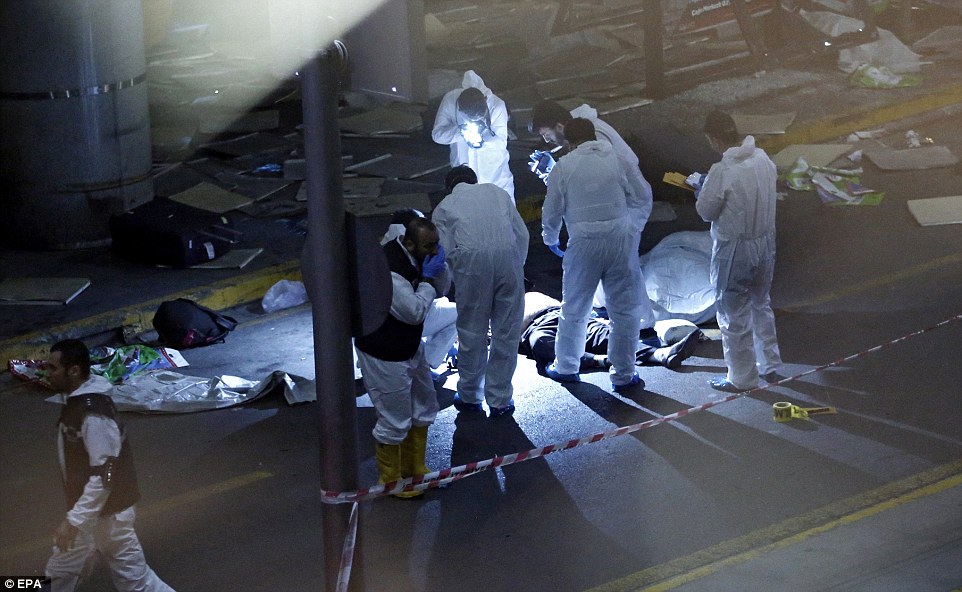
Terror struck another airport again, this time in Turkey, with devastating loss of life. The world was quick to label it terrorism and it brought back fresh memories of similar attacks in Paris and Brussels as suicide bombers fired assault rifles at passengers and then exploded vests.

While no terror group has claimed responsibility so far, suspicion by Turkish officials naturally fell on ISIS which operates extensively along the border with Syria and Iraq. If this attack was perpetrated by the Islamic State, it opens up a widening front in its efforts to destabilize Turkey, which has already suffered steep drops in tourism; a vital component of its economy.

What is worrisome is the larger global trend towards rising violence from radicalized Islamists, either operating directly under the control of terrorist leadership as in Paris, or being self-radicalized as in San Bernardino and Orlando.

The response from many countries to these escalating attacks has been to call for stepped up attacks on ISIS in Syria and Iraq, as witnessed by Wednesday’s attack of an ISIS column leaving Falluja in Iraq by U.S.-led aircraft, or call for a hardening of potential soft targets at home.

What none of these suggestions deal with is the source of this rise in terror from extremist Islamic groups, which is the Iranian regime. Iran and its mullahs sit at the center of the sectarian violence wracking the region.

It was Iranian regime’s intervention in Syria to save the Assad regime that helped to spawn ISIS in the first place. It was Iran that provided safe haven for many of the leaders of Al-Qaeda forced out of Iraq and Afghanistan by the U.S.-led invasions, only to see them go back to fight in Iraq and Syria.

It was Iran that forced the government of former Iraqi prime minister Nouri al-Maliki to force his Sunni coalition partners out of the government, leading to the schism that resulted in the quick fall of Mosul and most of northeastern Iraq to ISIS, giving the terror group its big boost in territory, cash and oil wells.

Predictably, while the rest of the world expressed shock, outrage and sympathy over the attacks in Istanbul, the response by the Iranian regime was understandably muted.

Bahram Ghasemi, newly-appointed spokesperson for the regime’s foreign ministry, officially reacted to the blast when he offered condolences and sympathy to the bereaved families of the victims and Turkish government in state-run media.

“As Foreign Minister Zarif had frequently stated, there is a systematic lack of international resolve to address the vicious phenomenon; extremism and terrorism would not be limited to political and geographical borders,” he said.

There were no similar sentiments expressed by regime leaders such as Ali Khamenei or Hassan Rouhani.

The two-faced nature of the Iranian regime when it comes to condemning acts of terror was highlighted in an editorial by Tom Ridge, former secretary of homeland security, in the Washington Times, in which he took the regime to task for its expressions of sympathy following the mass shooting at the Pulse nightclub in Orlando.

“It’s hard to imagine an expression of sympathy more disingenuous. Tehran’s comments must be viewed against a backdrop of its status as the world’s most active state sponsor of terrorism, its steady propaganda against the United States, and its own brand of homophobia that has its origins in Islamic extremism,” he said.

“Iran is not all talk. The rhetoric about Western ‘arrogance’ and ‘hostility’ has been backed up by the arrests of numerous people who hold both Iranian and Western citizenships. The same goes for journalists, artists and professionals who have any meaningful connections with the West, and for activists the regime deems pro-Western,” he added.

This disconnect between the lip service Iran pays to acts of terror, while fully committing itself to supporting and funding it lies at the heart of the problem with the approach the U.S. and European Union have taken to Iran since the nuclear agreement was reached last year.

You cannot hold a state sponsor of terror such as Iran accountable when you are rushing to do business deals to enrich it. It is dangerous and will eventually lead to only more acts of terror and more chaos across the world.

The rise is terror is only matched by the abhorrent level of human rights abuses being committed by the Iranian regime as well.

Perviz Khazaii, former Ambassador of Iran in Sweden and Norway and the representative of the National Council of Resistance of Iran in Nordic countries, penned an editorial in The Diplomat highlighting these abuses.

“Violent punishments are not confined to Iran’s prisons, either. For instance, in October 2014, gangs affiliated with the regime carried out acid attacks on at least 25 Iranian women and girls who were regarded as being improperly veiled or otherwise in violation of religious norms,” he said.

“This sort of enforcement of the regime’s ruling ideology has also motivated a massive, ongoing crackdown on activists, writers, bloggers, and artists. This has helped Iran to secure its title as the largest jailer of journalists in the Middle East,” he added. “In short, the human rights situation is deteriorating at a fast pace.”

  1. Matthew McInnis, a resident fellow at the American Enterprise Institute, also examined how Iran’s involvement in these conflicts has fueled the rise in sectarian violence as the mullahs seek to solidify a Shia sphere of influence for themselves in Syria and Iraq in an editorial in the National Interest.

“Tehran’s most frequent foreign-policy blind spot remains underestimating the degree to which its aggressive regional activities spur sectarian and ethnic backlash. If it can avoid triggering further Sunni radicalization, an internal Shia civil war, and the potential breakup of the country, however, the Islamic Republic is likely in good shape to continue its ‘Iranianization’ of Iraqi security and political structures,” McInnis writes.

The world should stop enabling the regime and hold it accountable for the spread of  terrors motivated by Islamic extremism.

By Michael Tomlinson

Filed Under: Blog, Latest from Lobbies & Appeasers, News Tagged With: Featured, Iran, Iran deal, Iran Human rights, Iran Terrorism, IRGC, Khamenei, Sanctions, zarif

Iran Lobby Tries to Spin Continued Blacklisting of Iran Regime

June 27, 2016 by admin

Iran Lobby Tries to Spin Continued Blacklisting of Iran Regime

Iran Lobby Tries to Spin Continued Blacklisting of Iran Regime

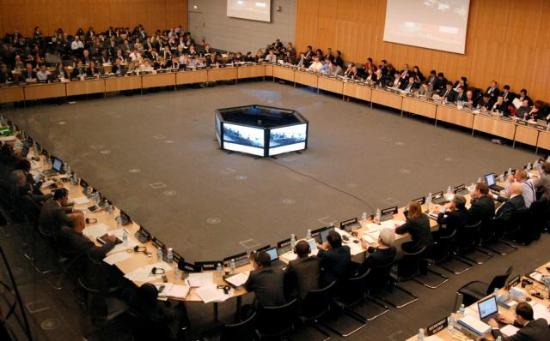
An international group that monitors and combats money laundering worldwide decided this weekend to keep the Iranian regime on its blacklist of high-risk countries, which included notably Syria, Iraq, Yemen and Afghanistan; all countries the regime is currently engaged in proxy wars.

At a meeting of its 37 members in South Korea, the Financial Action Task Force also moved to keep North Korea on its blacklist and urged countries to be on guard against Pyongyang’s attempts to bypass sanctions to finance illicit weapons programs.

“The FATF, therefore, calls on its members and urges all jurisdictions to continue to advise their financial institutions to apply enhanced due diligence to business relationships and transactions with natural and legal persons from Iran,” read the statement FATF issued.

The FATF deferred to the potential for the Iran nuclear deal to help motivate Iran’s support of terrorism, and opted to defer further sanctions for another 12 months to see if the Iranian regime follows through on its promises.

But it is interesting to note the FATF only list 11 nations as being high-risk or non-cooperative in the areas of money laundering and support for terrorism and the Iranian regime is affiliated in its support with five of them. Almost half of the nations on the planet engaged in these activities are tied to the mullahs in Tehran.

That is a remarkable achievement for any regime to take, especially one that is constantly defended by the Iran lobby as a peaceful and moderate nation.

The absurdity of that defense reached new levels with a statement issued by the National Iranian American Council’s Tyler Cullis, which welcomed the deferred action by the FATF, but ignored the continued presence of the regime on the blacklist; choosing instead to look at the glass half-full scenario.

“FATF has suspended its call for Member-States and other jurisdictions to impose counter-measures against Iran and its financial institutions, which should send a clear signal to international banks and businesses that economic opportunities with Iran can move forward,” Cullis said.

It’s a rather willfully ignorant statement since the FATF clearly warned member countries to exercise due diligence when dealing with anyone connected to Iran. When applied to financial institutions such as commercial banks, that is a clear warning to stay away from Iranian regime, which virtually all major banks have opted to do given the uncertainty raised by the FATF.

Cullis claims that the regime has made meaningful steps to counter the financing of terrorism in what has to be the biggest obfuscation since Adolf Hitler said Czechoslovakia invited the Nazis in.

Cullis ignores the interception of several Iranian boats attempting to smuggle guns, rockets and ammunition to Houthi rebels in Yemen. Cullis ignores the arming and support Shiite militias in Iraq which are now meting out retribution against Sunni tribes in furthering sectarian bloodshed. Cullis ignores the long-term funding of Hezbollah and the use of terror in the Syrian conflict in targeting civilians and Doctors Without Borders hospitals.

There is good reason why Transparency International ranks the Iranian regime 130th out of 168 countries in the world for corruption with a score of 27 out of 100. Cullis claiming there are meaningful reforms coming from the mullahs in Tehran to combat terrorism is like claiming a butcher shop is trying to go vegan.

Sanctions experts, banking sources and Western officials say little will change regarding financial institutions’ “hands off” approach to Iran, above all due to concerns about the Islamic Revolutionary Guard Corps’ (IRGC) omnipresence in the Iranian economy. The IRGC is still under international sanctions, according to Reuters.

“Practically speaking the FATF decision changes little since global financial institutions will continue to voluntarily implement strict counter-measures given their serious concerns over Iran’s illicit financial conduct,” said sanctions expert Mark Dubowitz of the Foundation for Defense of Democracies.

To further illustrate how Cullis and the rest of the Iran lobby is wrong, the regime’s top mullah Ali Khamenei obliged with yet another warning of violence to a neighbor, in this case Bahrain.

He blasted as “foolishness” a decision by Bahrain’s leaders to strip a top Shi’ite Muslim cleric of his citizenship, and said it could provoke violence from Shi’ites, who make up the majority in the Sunni-ruled Gulf kingdom.

The speech by Khamenei, carried by state media, came after Bahrain’s Sunni authorities stepped up measures against the island’s Shi’ites and stripped their spiritual leader, Ayatollah Isa Qassim, of his citizenship.

“This is blatant foolishness and insanity. When he still could address the Bahraini people, Sheikh Isa Qassim… would advise against radical and armed actions,” Khamenei said in remarks carried by state television on Sunday.

“Attacking Sheikh Isa Qassim means removing all obstacles blocking heroic Bahraini youths from attacking the regime,” he said.

Of course he neglected to mention that Bahrain has long maintained that Iran funnels financial material support to would-be insurgents.

Again, that pesky “funding terrorism” problem.

Aside from funding terrorism, the Iranian regime still remains a black hole for human rights and its continued arrests of foreign nationals alone should keep it in the sanctions pokey.

In the case of Montreal-based university professor, Homa Hoodfar is being held in an Iranian jail and being investigated for “dabbling in feminism and security matters,” according to her family, while in the case of Nazanin Zaghari-Ratcliffe, a British woman arrested by regime authorities, who claimed she was being held in solitary confinement for three months because she helped to “design a website.”

If the Iranian regime is afraid of women like these, its days in power are surely numbered.

By Michael Tomlinson

Filed Under: Blog, News Tagged With: Featured, Iran, Iran deal, Iran Human rights, Iran Lobby, Iran sanctions, Iran Terrorism, IRGC, Khamenei, National Iranian American Council, NIAC, Tyler Cullis

Iran Attendance at Oslo Forum is Height of Hypocrisy

June 15, 2016 by admin

Iran Attendance at Oslo Forum is Height of Hypocrisy

Iran Attendance at Oslo Forum is Height of Hypocrisy

The Oslo Forum was created in 2003 as a gathering for mediation practitioners to meet and share their expertise. It was aimed at the hope of building a larger community of mediation experts and increase learning, serving as an incubator for testing and honing future peacemakers hoping to resolve conflicts around the world.

It has grown from its first meeting of 17 practitioners to now include over 100 notable key players from the United Nations, intergovernmental and private organizations, journalists, analysts and other experts.

Among its participants has been a veritable who’s who of global ambassadors for peace, including former UN General Secretary Kofi Annan, President Jimmy Carter, new Myanmar leader Aung San Suu Ki and many others.

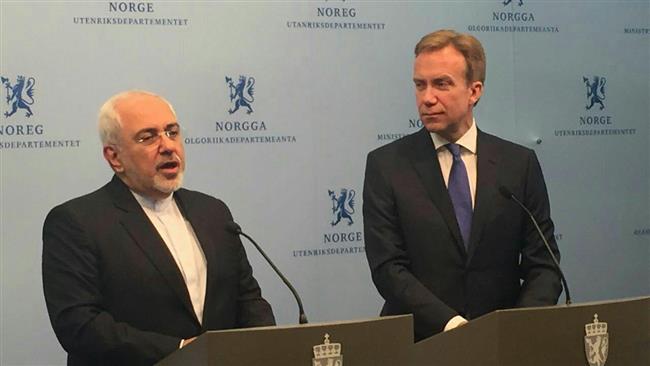
And like any progressive project, it has some more far-fetched ideas it has tried to implement including inviting Javad Zarif, the foreign minister for the Iranian regime to this year’s conclave in Norway.

While we know Norwegians are a kind, generous and thoughtful people, earnestly hoping and working for peace around the world, the participation of Zarif at this Forum to ostensibly share ideas for peace is one of the more incredulous things anyone has heard.

The Iranian regime stands alone in the world as the leading supplier and exporter for terrorism and proxy wars. Its Quds Forces and Revolutionary Guard are on the battlefields and shipping cash, arms and mercenaries to Syria, Iraq, Afghanistan and Yemen.

It has managed to become the second largest executioner of prisoners on the planet and regularly abuses its own men, women, children, ethnic and religious minorities, journalists, dissidents and just about anyone else the mullahs in Tehran have a disagreement with.

Zarif’s crowning achievement has foreign minister has been to snooker the world into supporting a nuclear agreement that essentially preserves Iran’s entire nuclear infrastructure, open the floodgates to billions in fresh cash and does not mandate any changes in its barbaric human rights practices.

That’s a neat trick and if the participants at the Oslo Forum are looking for tips on how to obscure the truth, they’ve invited the right man in Zarif.

No one can deny that Iran’s intervention in Syria is the single largest reason why the civil war has lasted this long and expanded so far. It is also the reason why Islamic extremist groups such as Al-Nusra and ISIS were able to spring into existence and expand.

The heavy military and economic involvement by the Iranian regime and refusal to engage in multilateral peace talks that involve any discussion of removing the bloody Assad regime from power has certainly shaped and molded the Syrian conflict into the bloody affair it is today.

All of which makes Iran’s participation in the Forum that much more curious since top mullah Ali Khamenei has been definitive and expressive in his beliefs concerning the use of violence and terror to achieve the regime’s aims. Compromise, negotiation, mediation and discussion are not words in the vocabulary of the mullahs.

That is certainly true when you look at the recent spate of arrests and imprisonments of dual-national Iranians who have been tossed into Iranian prison without charge or access to counsel, including a Canadian professor and a British mother.

It is also notable that during recent visits by various European leaders to Iran to seek out commercial trade opportunities with the nuclear agreement in effect, the Iranian regime did not slow down one bit the pace of executions, imprisonments and abuses during any of those visits.

Take for example Federica Mogherini, European Union policy chief, who visited Iran this past April only to see the regime execute three prisoners the day she arrived or Matteo Renzi, the Prime Minister of Italy, who visited Iran only to have the regime hang 17 people, including three juveniles at the same time.

These visits by European leaders and the inclusion of Zarif at a conference for peace negotiators makes a mockery of the human suffering in Iran and only emboldens the mullahs to continue with these practices since there seems to be no downside.

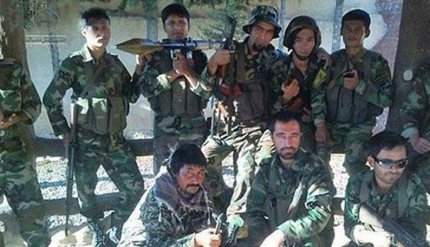
His participation is even stranger when you consider that the Iranian regime has opened up a recruiting center in Heart, Afghanistan to persuade and even coerce thousands of Afghans to fight in Syria.

The Christian Science Monitor visited the center and reported on what is no longer a secret in Iran as the regime seeks to bolster the number of mercenaries sent to fight for the Assad regime.

Some Afghans fight willingly for religious reasons, eager to take up a cause of “defending” Shiite shrines in Syria. Others fight for cash, upwards of $700 per month, or choose to realize promises of Iranian citizenship, schooling for their children, and jobs, if they survive the frontline – benefits usually beyond reach for Afghan migrants in Iran, the Christian Science Monitor reported.

Still other Afghans report coercion and intimidation, and say their second-class status inside Iran – among an estimated 3 million Afghans, only one-third are legal migrants – is taken advantage of. Afghans’ “vulnerable legal position in Iran and the fear of deportation may contribute to their decision [to join militias in Syria], making it less than voluntary,” Human Rights Watch said in a January report.

None of these revelations should be ignored at the Forum and in fact, Zarif should be confronted with these facts and asked why the regime has failed to work for peace in Syria instead of seeking to escalate the conflict.

Ultimately, as Zarif continues this European tour, he should be met with hard and tough questions and not platitudes and open arms.

By Michael Tomlinson

Filed Under: Blog, News Tagged With: Featured, Iran, Iran deal, Iran Human rights, Khamenei, oslo forum, Sanctions, zarif

Iran Regime Continues on Path of Extremism

May 27, 2016 by admin

Iran Regime Continues on Path of Extremism

Iran Regime Continues on Path of Extremism

Recent revelations of the fraudulent nature of the debate about the Iran nuclear deal have forced news media outlets to rethink coverage of the Iranian regime and members of Congress from both sides of the political aisle to crackdown on ever rising acts of extremism coming from Iran.

Conventional wisdom would dictate that once the Iran lobby’s efforts to buy favorable media coverage, push false messages about moderation in Iran and hopeful scenarios of a more stable Middle East, were discovered that the lobby and mullahs in Tehran would retreat to preserve their ill-gotten gains.

Instead, the opposite has happened as the Iranian regime has widened the conflict in neighboring countries, cracked down at dissent at home, and is seeking to forge more military sales to bolster its weakened military.

The regime’s top leader, Ali Khamenei, has spent considerable television time reiterating the policy of opposing the West, warning of infiltration and corruption of its clerical tyranny through American pop culture and social media, and maintained the need to keep up a “resistance economy” to meet the demands for continued proxy wars in Syria, Iraq and Yemen, as major parts of countries resources are spent on these wars.

Khamenei expanded on that militancy by calling for vigilance against what he described as a “soft war” mounted by the West and aimed at weakening the clerical establishment, state television reported on Thursday.

“Our officials and all parts of the establishment should be vigilant about the West’s continued soft war against Iran…the enemies want to weaken the system from inside,” Khamenei said.

In a meeting with members of the Assembly of Experts, with authority to appoint and dismiss the supreme Leader, Khamenei told Iranian officials:

“By impairing centers of powers in Iran, it will be easy to harm the establishment from inside.”

The 88-member assembly, consisting mostly of elderly clerics, is expected to choose any successor to Khamenei, who has the final say on all state matters.

“The only way to materialize the (1979) revolution’s goals is national unity and not to obey the enemy,” he said.

The fact that Khamenei continues to describe the U.S. as the “enemy” demonstrates clearly his views on the relationship between the two countries and undermines the narrative put forward by groups such as the National Iranian American Council of an improvement in relations with Iran.

That desire to continue ruling Iran with an iron fist has led to such a widespread crackdown on human rights that the only avenues of informal protest left to ordinary Iranians are becoming few and far between as the regime deploys new morality police squads and arrests women, journalists, artists, bloggers and pretty much anyone else expressing a divergent opinion.

For example, last Saturday, the Independent reported how a number of women living in Iran chose to cut their hair short and dress as men in a bid to bypass morality police and evade hijabs which are a legal requirement in all public places and strictly enforced, often with public beatings.

But in recent weeks, women have started sharing photos of themselves with their hair short in some images and dressed in clothes more typically associated with men in others, which campaigns against compulsory hijab, in order to move freely in public.

Enforced hijab is just one of a number of laws in Iran which discriminate against women, who need permission from male relatives to study after marrying and leave the country in some cases. Single mothers are left equally disempowered as Iranian law gives all legal rights to the father after children turn seven.

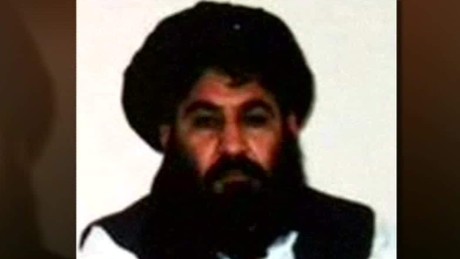
On the foreign policy front, new revelations came out in the wake of the death of mullah Akhtar Mohammad Mansour, the Taliban leader who was recently killed in a U.S. drone strike along the Iran-Afghanistan border, showing he had several trips to Iran as part of efforts to raise funds for the terrorist organization.

Mansour’s death is a major blow to Pakistan and possibly also Iran, which may have forged links with the Taliban to spread extremism in the region, according to Waheed Muzhda, a former Foreign Ministry official in the Taliban regime who is now a political analyst in Kabul.

“Iran may also have been behind the curtain to stab the U.S. in the back using Taliban militants.” Muzhda said.

Although it is Pakistan that has traditionally been condemned for secretly supporting Afghan insurgents, analysts say Iranian regime also provides weapons, cash and sanctuary to the Taliban. Despite the deep ideological antipathy between a hardline Sunni group and cleric-run Shia state the two sides have proved themselves quite willing to cooperate where necessary against mutual enemies and in the pursuit of shared interests.

Mansoor first entered Iran almost two months ago, according to immigration stamps in a Pakistani passport found in a bag near the wreckage of the taxi he was travelling in when he was killed by a US drone strike.

The potential of close coordination between the Taliban and the Iranian regime would offer more proof of the regime’s chief role in supporting virtually all of the major Middle Eastern terrorist groups such as Hezbollah, Houthis, Shiite militias and now the Taliban.

Nonetheless police and intelligence officials in western Afghanistan often complain the local insurgency is being managed and supplied with weapons and training from Iran.

We can only hope more truth emerges from the wreckage of the Iran nuclear deal’s “echo chamber” revelations.

By Michael Tomlinson

Filed Under: Blog, News Tagged With: #NuclearDeal, Featured, Iran, Iran deal, Iran Human rights, Iran Lobby, Khamenei, National Iranian American Council, NIAC

Iranian Regime Losses Mount in Syria

May 9, 2016 by admin

Iranian Regime Losses Mount in Syria

Iranian Regime Losses Mount in Syria

The Iranian regime’s involvement in the Syrian civil war has been well documented, including the regime’s history of supplying badly needed cash, weapons and fighters to prop up the Assad regime as it teetered on the brink of collapse.

Even though Iranian officials have long denied it, evidence is mounting of the regime’s deepening involvement in what may prove to be the Achilles heel of the mullahs in Tehran as they draw a red line in the sand to keep Bashar al-Assad in power even if it means suffering significant losses.

Already the regime has had several commanders of its Quds Forces and Revolutionary Guard Corps killed while leading troops in Syria and now news comes of even more casualties for the regime.

Thirteen military advisers with the Iranian Revolutionary Guards have been killed in Syria in recent days and 21 others wounded, Iranian media reported on Saturday.

It was the regime’s biggest loss of forces within such a short time, based on official figures. The names of those killed and when their remains will be repatriated will be announced later, the Guards said.

Among the killed included 15 Afghan mercenaries the Iranian regime had recruited from the ranks of Afghan refugees living in Iran said the British-based Syrian Observatory for Human Rights. Critics of the regime have claimed that many Afghans were coerced to fight for the Assad regime under threat their families would be deported back to Afghanistan.

Estimates of the number of recruited Afghan fighters in Syria from Iran range from between 10,000 to 12,000, largely drawn from the illegal immigrant population in Iran where their options are limited for employment and their hopes of remaining often hang on the whims of the mullahs in Tehran who often regard the Afghans as cannon fodder.

Reports also added that Iran has promised citizenship to these fighters and improving the living conditions of their families in addition to these fighters being paid from $400 to $600 in monthly wages to fight in Syria.

The monitor also said at least six of the dead came from Lebanon’s Hezbollah Shi’ite movement, an Iranian proxy which has supplied the bulk of fighters to Syria and has been led by Iranian regime officers on the battlefield.

The Iranian dead were from Iran’s northern province of Mazandaran, Hossein Ali Rezayi, a Guards spokesman in the region, told the ISNA and Fars news agencies.

The deaths and injuries occurred in Khan Tuman village some six miles southwest of the battleground city of Aleppo, the official IRNA news agency reported a Guards statement as saying.

Dozens of Iranian “advisers” have been killed in Syria since late 2015, including Revolutionary Guard commanders.

Saturday’s news came as Ali Akbar Velayati, a top adviser to top mullah Ali Khamenei, met Assad in Damascus and reassured him of Tehran’s support.

“Since the Syrian nation chose Bashar al-Assad as president two years ago, he will remain in the post until the Syrian people change him,” Velayati said in an interview with the Lebanese al-Mayadeen television channel.

Velayati rejected the idea of imposing a president on Syria who would serve the interests of Saudi Arabia or any other party.

While Tehran previously said its support was limited to advisers, it has been more open about the extent of its role since Russia intervened on Assad’s side last year.

Iran has been particularly involved in campaigns around Aleppo in northwest Syria, which was the country’s commercial and industrial center before the war and is now divided between government and rebel forces.

With the Iranian regime’s intervention, the war in Syria has only escalated resulting in more than 250,000 people killed, with tens of thousands unaccounted for, some say the death toll may be as high as 400,000, as well as the displacement of nearly half of the country’s entire population.

Syria is a classic example of the impotence of the arguments made by Iran lobby groups such as the National Iranian American Council which claimed that passage of the nuclear agreement with Iran would force moderation within the government and move it to be a more willing ally in seeking peaceful political change in Syria.

Instead Iran has dramatically escalated the violence in Syria and widened the war with the recruitment of Russia into the conflict, proving once again that arguments made by NIAC have proven meaningless.

Struan Stevenson, a former Conservative Euro MP representing Scotland and currently President of the European Iraqi Freedom Association (EIFA), summed up Iran’s responsibility for Syrian bloodshed in an editorial in The Hill:

“The Iranian regime has reached a deadly impasse in Syria with mounting casualties and little sign of progress. The original objective of defeating the Free Syrian Army and occupying its strongholds like Aleppo, with the help of Russian air strikes, has failed. Russia has begun to pull out and Khamenei is panicking. Recently, the commander of the Qods Force – General Qasem Soleimani, was sent to Moscow to plead with Putin for more Russian intervention,” Stevenson writes.

“Western appeasement of the clerical fascist regime in Iran has contributed directly to the Syrian nightmare and to the creation of ISIS. The Iranian regime’s outright support for Bashar al-Assad and his bloody reprisals against innocent civilians paved the way for the rise of ISIS. Iran’s puppet regime in neighboring Iraq, under the genocidal control of former Prime Minister Nouri al-Maliki, opened the door for ISIS to seize great swathes of Iraqi territory. As a result, Europe now faces its biggest refugee crisis since the Second World War, as the civil conflict in Syria spirals out of control,” he adds.

Stevenson is right that the only true pathway for peace in Syria lies with Assad’s ouster and the expulsion of Iranian influence. Only then can the people of Syria make their own futures.

By Michael Tomlinson

Filed Under: Blog, News Tagged With: Featured, Iran, Iran Lobby, Khamenei, National Iranian American Council, NIAC

  • « Previous Page
  • 1
  • …
  • 6
  • 7
  • 8
  • 9
  • 10
  • 11
  • Next Page »

National Iranian-American Council (NIAC)

  • Bogus Memberships
  • Survey
  • Lobbying
  • Iranians for International Cooperation
  • Defamation Lawsuit
  • People’s Mojahedin
  • Trita Parsi Biography
  • Parsi/Namazi Lobbying Plan
  • Parsi Links to Namazi & Iranian Regime
  • Namazi, NIAC Ringleader
  • Collaborating with Iran’s Ambassador

Recent Posts

  • NIAC Trying to Gain Influence On U.S. Congress
  • While Iran Lobby Plays Blame Game Iran Goes Nuclear
  • Iran Lobby Jumps on Detention of Iranian Newscaster
  • Bad News for Iran Swamps Iran Lobby
  • Iran Starts Off Year by Banning Instagram

© Copyright 2026 IranLobby.net · All Rights Reserved.