Iran Lobby

Exposing the Activities of the lobbies and appeasers of the Mullah's Dictatorship ruling Iran

  • Home
  • About
  • Current Trend
  • National Iranian-American Council(NIAC)
    • Bogus Memberships
    • Survey
    • Lobbying
    • Iranians for International Cooperation
    • Defamation Lawsuit
    • People’s Mojahedin
    • Trita Parsi Biography
    • Parsi/Namazi Lobbying Plan
    • Parsi Links to Namazi& Iranian Regime
    • Namazi, NIAC Ringleader
    • Collaborating with Iran’s Ambassador
  • The Appeasers
    • Gary Sick
    • Flynt Leverett & Hillary Mann Leverett
    • Baroness Nicholson
  • Blog
  • Links
  • Media Reports

Iran Lobby Damaged by Revelations of Funding for Nuclear Deal Campaign

May 24, 2016 by admin

Iran Lobby Damaged by Revelations of Funding for Nuclear Deal Campaign

Iran Lobby Damaged by Revelations of Funding for Nuclear Deal Campaign

The expose of national security staffer Ben Rhodes admission in the New York Times Magazine concocting a string of false messages to sell the Iran nuclear deal sent shock-waves through American politics and around the world as the revelations began to sink in that the entire basis of the agreement with the Iranian regime may have been built on lies.

Even more disturbing news reports has come out now that one of the principal advocates for the deal and a central pillar of the Iran lobbying effort had paid cash directly to news organizations in a brash effort to influence favorable coverage of the agreement.

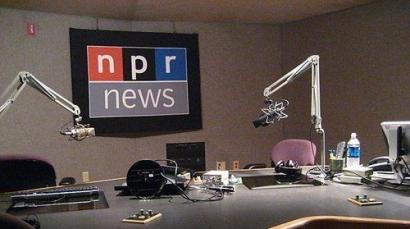
The Associated Press reported that the Ploughshares Fund gave National Public Radio $100,000 last year to help it report on the nuclear deal according to the group’s own annual report, while also funding reporters and partnerships with a wide array of other news outlets.

In the Times article, Rhodes explained how he  worked with nongovernmental organizations, proliferation experts and even friendly reporters to build support for the seven-nation accord that curtailed Iran’s nuclear activity and softened international financial penalties on Tehran.

“We created an echo chamber,” said Rhodes, a deputy national security adviser, adding that “outside groups like Ploughshares” helped carry out the administration’s message effectively.

Most news organizations, including The Associated Press, have strict rules governing whom they can accept money from and how to protect journalistic independence.

Ploughshares’ backing is more unusual, given its prominent role in the rancorous, partisan debate over the Iran deal.

The Ploughshares grant to NPR supported “national security reporting that emphasizes the themes of U.S. nuclear weapons policy and budgets, Iran’s nuclear program, international nuclear security topics and U.S. policy toward nuclear security,” according to Ploughshares’ 2015 annual report, recently published online.

Ploughshares Fund provided over 90 grants to various organizations in 2015 in order to engage in reporting, research and analysis on Iranian nuclear issues. The over 90 grants given out in 2015 nearly doubles those the organization provided in 2014, and triples the amount given in 2013. Ploughshares’ increases in grant funding directly coincides with the time period during which the Iran nuclear deal was being finalized and presented to Congress.

Also receiving grants were think tanks such as the RAND Institute which was given $40,000 to write “a series of articles that analyze specific elements of the diplomatic agreement with Iran on its nuclear program.”

Ploughshares Fund President Joseph Cirincione spoke about the Iran deal on NPR twice last year. He was identified as a donor to the radio station on only one of the two occasions.

Ploughshares also provided over $280,000 to the Iran lobby leader National Iranian American Council (NIAC) for its work supporting the Iran deal, some of which went directly towards sending NIAC staff to the nuclear negotiations in Vienna. NIAC was accused of engaging in lobbying efforts on behalf of the Iranian regime around 2007, which led to the organization’s president Trita Parsi bringing suit against journalist Hassan Daioleslam for defamation. Parsi eventually lost the protracted legal battle.

The New York Post joined in the mounting criticism of the massive lobbying and PR effort with an editorial casting doubt on Ploughshares’ claims:

“And though Ploughshares claims to be working against nuclear proliferation, it backed a soft line toward Iran and worked to enable a deal that at best will only delay Tehran from acquiring nuclear weapons,” the Post said.

Meanwhile the Washington Free Beacon examined claims by NPR that it did not deliberately deny airtime for anti-Iran deal advocates such as Rep. Mike Pompeo (R-KS) who claimed to have scheduled interviews with NPR cancelled at the last time and spots given instead to Iran deal support Rep. Adam Schiff (D-CA).

While NPR executives claimed to have no records of such bookings, emails reviewed by the Free Beacon between NPR and Pompeo’s office show otherwise, casting more doubt on the validity of NPR’s claims of journalistic integrity on the Iran nuclear deal while it was being funded by the Ploughshares Fund.

These revelations expose the tangled connections between the Iranian lobby, its financial backers and its efforts to manipulate news media and manage directly the so-called “hundreds of often-clueless reporters” as characterized by Robert Malley, senior director at the National Security Council, as quoted in the Times article.

As to where Ploughshares gets its money? Ploughshares is financed by billionaire George Soros’ Open Society Institute, the Buffett Foundation, the Carnegie Corporation of New York, the Ford Foundation, the Rockefeller Brothers Fund and the Rockefeller Foundation, among others including several notable Hollywood celebrities such as actor Michael Douglas and entertainer Barbra Streisand.

Joseph Cirincione, the president of Ploughshares, went on the offensive in an effort to blunt the growing embarrassment of these revelations with an editorial on Huffington Post in which he blamed all the attacks on a right-wing, neo-con conspiracy.

While Cirincione took aim at the writers of the Times and AP stories, he neglected to mention the central characters in this entire episode and it wasn’t Ploughshares.

It was the mullahs in Tehran for which Ploughshares and others of the Iran lobby do their bidding.

The core issue is not about donations, coverage and lobbying. It is very much about how a despotic, extremist, religiously fanatical regime is escaping notice as it executes a record 2,500 people, brutalizes the women of Iran and fights three wars in Syria, Yemen and Iraq which has turned much of the Middle East and Europe into the largest refugee center in history since World War II.

Nowhere does Cirincione defend the recent conduct of the mullahs. Nowhere does he mention the rapid development and launching of illegal ballistic missiles designed to carry nuclear warheads. Nowhere does he mention the blatant violations of even the flimsiest provisions of the Iran nuclear deal such as the inability to inspect Iranian military facilities.

The money Ploughshares has spread around like so much horse manure was never intended to expose the Iranian regime, but only to cover it up.

By Michael Tomlinson

Filed Under: Blog, News Tagged With: Appeasement policy, Featured, Iran, Iran appeasers, Iran deal, Iran Lobby, Iran sanctions, Iran Talks, Irandeal, Joseph Cirincione, National Iranian American Council, NIAC, NIAC Action, Nuclear Deal, nuclear talks, Ploughshares, Trita Parsi

Brussels Attacks Shows Need to Confront Islamic Extremism at its Source

March 23, 2016 by admin

Brussels Attacks Shows Need to Confront Islamic Extremism at its Source

Brussels Attacks Shows Need to Confront Islamic Extremism at its Source

An airport ticket counter and Starbucks location crowded with people were the scenes of devastating suicide bombings in Brussels, as was a crowded commuter train where ISIS quickly claimed responsibility for the devastating attacks that so far has killed at least 30 and injured over 200 in a stark reminder of the vulnerability of Europe to sophisticated attacks.

The Islamic State-affiliated news agency has issued a bulletin claiming responsibility for the deadly attacks Tuesday in Brussels.

The claim was disseminated on the group’s official channel on Telegram, a social media platform, and picked up by other official ISIS channels on Telegram and on Twitter.

“Islamic State fighters carried out a series of bombings with explosive belts and devices on Tuesday, targeting an airport and a central metro station in the center of the Belgian capital Brussels, a country participating in the coalition against the Islamic State,” the statement says. “Islamic State fighters opened fire inside the Zaventem airport, before several of them detonated their explosive belts, as a martyrdom bomber detonated his explosive belt in the Maalbeek metro station.”

A security camera image was released depicting three men, two of who wore black gloves that many security experts indicated could have hid the triggering devices or prevented a premature detonation; steps detailed in training manuals developed and distributed by ISIS indicating a high level of planning, coordination and sophistication.

Brussels has now entered the lexicon of Islamic terror attacks that include New York, London, Paris, Madrid, Sydney and Ottawa and adds to the mounting evidence that Islamic extremists and ISIS will not simply be defeated by smart bombs and drones.

To defeat any extremist ideology, one has to look for its sources and how it is nurtured and exported. The blueprint for ISIS was laid out long ago by the Iranian regime which pioneered state-sponsored terrorism by formalizing its deployment in its Quds Forces, backed by the resources of the Revolutionary Guard Corps and excused by the theological nonsense espoused by the regime’s mullahs.

To say the Iranian regime is the godfather of Islamic terror would be accurate. To say the Iranian regime gave birth to ISIS is even more accurate.

ISIS rise out of the quagmire of the Syrian civil war could not have been made possible without the Iranian regime’s support of the Assad regime that prolonged that conflict and reduced the effectiveness of moderate, Western-backed rebel groups in favor of Al-Qaeda affiliated militias.

The splintering and creation of ISIS from Al-Qaeda alone might not have been sufficient to launch the global army of terror we know face unless the meddling of the Iranian regime in Iraq forced the departure of Sunni tribes from the government of Nouri al-Maliki and created a power vacuum allowing for ISIS rapid advances in Iraq, culminating in the conquest of Mosul, which gave ISIS a quadrupling of territory, a ready-made labor force and fertile recruiting ground among disenfranchised Sunni communities.

The fact that Iran went all in by arming and deploying Shiite militias to fight ISIS initially in Iraq quickly turned this conflict into the bloody sectarian war it has now become.

The lack of an appropriate response from the Obama administration only intensified the conflict as Iran sought regional hegemony in a Shia crescent, thereby creating ISIS with a powerful recruiting tool among Sunnis.

Even as the evidence is clear and strong of the links between ISIS and the Iranian regime, the Iran lobby has ramped up to protect Iran from any criticism and have begun to mobilize to lobby the presidential candidates to protect the nuclear deal reached with Iran.

The National Iranian American Council (NIAC), strong advocates for Tehran, urged Hillary Clinton to follow President Obama’s lead in encouraging openings with Iran. It warned that “any deviation from Obama’s prudent and wise rhetoric and diplomacy will risk the significant progress achieved in the past few years.”

“At a time when President Obama is seeking to make his historic Iran policy change as irreversible as possible, we are concerned by Secretary Clinton downplaying the possibility of a larger diplomatic opening,” said Jamal Abdi, NIAC Action executive director.

The move to lobby Clinton is the clearest sign yet the NIAC and other Iran supporters are alarmed at the universal declarations coming from all the presidential candidates warning against accommodating the Iranian regime. Public opinion polls show Americans are leery of the regime and find little confidence in the mullahs promises of moderation that the Iran lobby have been flogging for the better part of three years.

The Brussels attacks are only another chapter in a long and bloody novel that is being authored in Tehran and the failure to connect the two will only result in more attacks and more deaths. Only by dealing effectively with Iran and pushing back its forces abroad back within Iran can we hope to curb the influence of the Revolutionary Guards and more importantly the nihilistic ideology the people like Ali Khamenei peddle in weekly chants of “Death to America” which still holds passionate meaning for him and his fellow clerics.

No matter how the Iran lobby tries to paper over the spread and growth of Islamic extremism, the root and source of that poisoned tree lies in Tehran with deep roots.

By Michael Tomlinson


Filed Under: News Tagged With: Featured, Iran, Iran deal, Iran Lobby, National Iranian American Council, NIAC, NIAC Action, Nuclear Deal

As IAEA Closes Nuclear Probe UN Finds Iran Regime Cheated

December 16, 2015 by admin

As IAEA Closes Nuclear Probe UN Finds Iran Regime Cheated

As IAEA Closes Nuclear Probe UN Finds Iran Regime Cheated

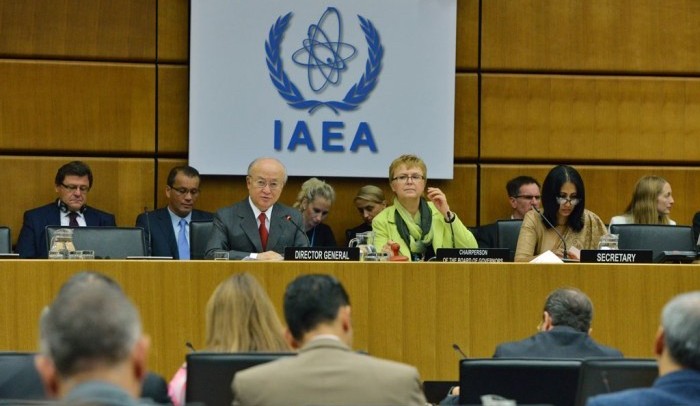
The International Atomic Energy Agency’s board of governors, the United Nations nuclear watchdog, met and voted to close out its investigation in the past military dimensions of the Iranian regime’s nuclear program even though the IAEA’s own report faulted the regime for secretly hiding the existence of its program until 2009 and still refused to come clean on a wide range of outstanding issues.

The irony of giving the regime essentially a get out of jail free card was compounded when it was revealed that a UN panel of experts issued a confidential report stating that the Iranian regime violated a Security Council resolution on October 10 when it test fired a new medium-range ballistic missile capable of delivering a nuclear warhead.

That is what is called a gigantic irony.

The fact that the regime launched a second missile on November 21 only reinforced the mullahs blatant disregard for the UN sanction and demonstrated the contempt they hold for obeying international laws.

Although the U.S. requested the UN Security Council to take action in the wake of the violations (which in of itself is bitterly ironic considering the U.S. has been hell-bent on lifting all sanctions against the regime), the Security Council took no action with most diplomats saying privately punitive measures were unlikely to be taken since Russia and China are now engaged in deep military and trade talks with the regime.

The report on the missile launch, reviewed by The Wall Street Journal, said the ballistic missile, dubbed Emad, was an improved version of Iran’s previous missiles, with a range of up to 1,300 kilometers (800 miles), a payload of up to 1,400 kilograms (1.5 tons), and better maneuvering capability when descending on a target.

“Iran is continuing to focus on further improvement of the performance of its existing ballistic missile system with a particular focus on accuracy,” said the report.

All of which begs the question, if the regime has foresworn nuclear weapons, why does it need to develop nuclear-capable missiles?

The reaction from members of Congress was swift and bipartisan as Sen. Chris Coons pushed the Obama administration to hold the regime accountable for violating UN sanctions.

“While these ballistic missile tests are outside of the parameters of the [joint comprehensive plan of action], our response has to be strategic and we have to make sure Iran knows that it can’t continue to simply blatantly disregard the international community and the U.N. Security Council,” the Democratic senator said.

Coons, a member of the Foreign Relations Committee, added that if the United Nations Security Council doesn’t taken action against Iran over the tests, which he said violated U.N. resolutions, that the administration should be ready to take a “series of unilateral American actions including direct sanctions.”

The fact that a new Gallup poll released Monday showed that terrorism and national security fears has risen to become the number one concern of Americans in the wake of the Paris and San Bernardino attacks and the shutdown of public schools in Los Angeles have sent lawmakers a crystal clear message about new priorities.

This follows polls by Pew Research Center and the Wall Street Journal/NBC News all of which show Americans citing security and terrorism as their top concerns and even persuaded the White House to say if additional sanctions needed to be levied on the Iranian regime, President Obama would not stand in the way.

The Iranian regime remains a concern because it continues to act in provocative ways that do little to diminish Americans’ concerns about the harsh nature of the mullahs’ rule as evidenced by reports that the regime has impounded more than tens of thousands of cars from women who were cited for violating dress codes requiring women to wear hijabs.

Police patrols have kept up campaigns to enforce the law and authorities also use a network of “trustees” who inform on violations according to The National.

In addition, over the past eight months, 609 men and 114 women have been arrested for cybercrimes because of alleged “economic, moral and social” transgressions, official figures show as the regime steps up enforcement of vague morality codes covering use of the internet and banning social media for most Iranians.

All of these actions have gone unmentioned by the Iran lobby even as global media have focused more closely on the recent actions of the regime. Faithful regime supporters such as the National Iranian American Council have been mute in the media and on social media in discussing any of these crackdowns on Iranians.

We can only hope the world’s media continue to hold the regime accountable as we move into the new year.

By Michael Tomlinson

Filed Under: Blog, News Tagged With: #NuclearDeal, Featured, Nuclear Deal

When Past Conduct Means Nothing for Future Actions

December 15, 2015 by admin

When Past Conduct Means Nothing for Future Actions

When Past Conduct Means Nothing for Future Actions

In all facets of our daily lives, we always take into consideration past conduct. If the plumber you hired did a lousy job fixing a leak, you aren’t going to hire them again. If the chef at a restaurant leaves a fly in your soup, you’re liable to walk out without paying and post a nasty review on Yelp.


But only in the case of the Iranian regime does this rule somehow not apply as evidenced by the turmoil over the recently completed nuclear agreement.


As Judith Miller and Charles Duelfer point out in an editorial for Fox News, “is Iran’s past – its habit of cheating on its international nuclear agreements — prologue? Should the Obama Administration accept Iran’s lies about its earlier efforts to design and develop a bomb in exchange for insisting on its strict compliance with the new deal it has made limiting the size, scale and nature of its nuclear program?”


The question is an important one as the International Atomic Energy Agency board of governors meets today to vote on a final report that largely overlooks the Iranian regime’s past history of lying and deceit over its nuclear program and instead rubber stamp approval of closing the file on the regime’s case even though the mullahs have not complied with the original scope of questions the IAEA had about its program.


As Miller and Duelfer explain, the IAEA’s own report damns the mullahs with faint praise:


The IAEA report states that Iran provided only partial or incorrect answers to some questions about efforts to design and test components of a nuclear weapon design (as distinct from the process of enriching the component nuclear material). Specifically, it concludes, Iran’s cover up has “seriously undermined the agency’s ability to conduct effective verification” at Parchin, a military site where Iran is thought to have tested implosion devices in a now-missing chamber. Based partly on a visit there which did not conform to usual Agency inspection procedures, satellite imagery and sampling at the site conducted by Iran but supervised remotely by the IAEA, inspectors dispute Iran’s assertions that only chemical weapons were stored there. The evidence to date, the report declares, “does not support Iran’s statements.”


“Overlooking Iranian stonewalling about aspects of its earlier work,” Miller and Duelfergo on to write. “Only makes it harder to devise an effective monitoring scheme for Iran’s current nuclear program, but also establishes a terrible precedent for arms control accords with other states. Because Washington and its allies are permitting Iran to begin implementing the new deal and get sanctions lifted with a lie, Iran’s past cheating is destined to be prologue.”


The fact that – moving forward – the agreement with the regime is built on a lie only means the mullahs have been given the green light to continue the same behavior in the future. It is a fact already made apparent with Tehran’s recent test firings of two ballistic missiles that violated United Nations sanctions prohibiting the development of nuclear-capable missiles.


Add to that the rest of the world basically did nothing about it except use harsh language.

It is a crucial point that Michael Singh, managing director of the Washington Institute for Near East Policy, and Simond de Galbert, a French diplomat and visiting fellow at the Center for Strategic and International Studies, elaborate on in an editorial in the Wall Street Journal.


“Continuing to insist on a complete investigation into Iran’s nuclear weapons activities is the first test of international determination to strictly implement the nuclear deal. Failing this test would signal to Tehran that the West will allow it to dictate the terms under which the agreement is implemented in the coming years. It would also undermine the credibility of international non-proliferation mechanisms, encouraging other would-be nuclear powers that they can escape scrutiny. If these mechanisms are to succeed in deterring Iran and others in the future, their integrity must be zealously guarded,” they write.


James Phillips, senior research fellow for Middle Eastern affairs at the Douglas and Sarah Allison Center for Foreign Policy Studies at the Heritage Foundation, was even more blunt in a piece in the Daily Signal.


“In short, Tehran is actively undermining longstanding U.S. nonproliferation goals on two fronts. Yet the Obama administration has done little to push back for fear of jeopardizing its risky nuclear agreement, which it believes will enhance its foreign policy legacy,” Phillips writes. “But the administration’s complacent acquiescence to Tehran’s disturbing actions is likely to result in a dangerous and unwanted legacy: an arsenal of nuclear-tipped missiles in the hands of the world’s foremost state sponsor of terrorism.”


Even members of President Obama’s own party are expressing alarm at the free pass being given the Iranian regime.


“I understand that most of Congress and the administration are very distracted by the global refugee crisis, by the terrorist attacks in Paris, by our conflicts with ISIS,” said Sen. Chris Coons (D-Del.) “The reality is with this deal, I’m on the administration’s side, but they need to be doing more…. We have to have a menu of responses that we and our allies have agreed on and that we will take. Or the Iranians will pocket it and keep moving.”


“We know even from the IAEA reports that they were engaged in a program — they weren’t truthful about that,” said Rep. Jan Schakowsky adding that “we need to be on top of what Iran is doing and do everything we can to have full compliance”


It is against this potential future where the Iranian regime is not held accountable that holds the greatest threat to global security and peace. It is a future that is zealously protected by the Iran lobby which has ignored the Paris attacks, the San Bernardino murders and the rise of extremist Islam fueled by the mullahs in Tehran who preach far and wide their radical beliefs.


It is also why even as San Bernardino attack victim Bennetta Bet-Badal, an Iranian who fled at age 18 during the Islamic revolution, was laid to rest at her funeral in California, the Iran lobby such as the National Iranian American Council could not even issue a simple tweet commemorating her death or the acknowledge the suffering of her family.


So while TritaParsi or Reza Marashi cannot send their condolences, we do on behalf of everyone around the world who yearns for peace and stands up to the threat of Islamic extremism.


To the family of Bet-Badal, we send our sincerest condolences and hope you will see a day when the world is free of mullahs issuing fatwas and dispensing brutality in the name of a faith of peace and love.

By Michael Tomlinson

Filed Under: Blog, News Tagged With: #NuclearDeal, Appeasement policy, Featured, Iran deal, Nuclear Deal, Sanctions

With Rising Extremism Hillary Clinton Hardens Iran Regime Stand

December 7, 2015 by admin


With Rising Extremism Hillary Clinton Hardens Iran Regime Stand

With Rising Extremism Hillary Clinton Hardens Iran Regime Stand

In the wake of the Paris and San Bernardino attacks, the world is coming to grips with the new face of terror on so-called “soft” targets of opportunity by native-born residents who become radicalized under the siren call of extremists emanating from terror groups such as ISIS and Al-Qaeda and sponsors of terror such Syria and the Iranian regime.

As the federal investigation uncovers more about the history and background of the husband and wife terrorist team in San Bernardino, facts about how they were radicalized and where they learned their deadly skills in bomb making and planning will undoubtedly emerge.

But what these attacks do point to is an unmistakable strain of extremist belief snaking its way around the world through social media, blogs and videos perpetuating a mythology that has its roots in the apocalyptic beliefs formed out of the Iranian revolution taken over by extremist mullahs who have since controlled Iran and turned it into an perpetual terror factory.

The fact that since the negotiations that yield a nuclear agreement last July purportedly helping support “moderate” elements in the regime’s government, the evidence to the contrary has flooded out of Iran as the mullahs in Tehran launched a massive offensive in Syria, cracked down with broad arrests of journalists and dissidents, went on a military hardware buying binge and doubled down on incendiary and extremist messages broadcast through a sophisticated online and PR effort.

The reaction of the regime since the nuclear deal was completed has alarmed virtually everyone in the U.S. and Europe and led to a broad hardening of stump speeches and policy positions from virtually all the main contenders in the U.S. presidential campaign.

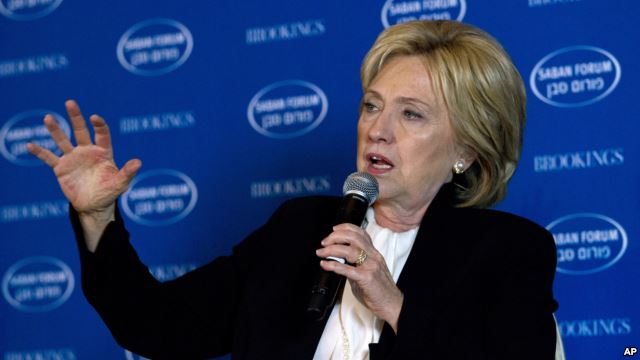
Most notable has been the former Secretary of State Hillary Clinton who promised the U.S. would “act decisively” if the regime sought to violate the nuclear agreement in a speech at the Saban Forum, a conference on Middle East policy at the Brookings Institute think tank.

“Iran will test our resolve. They have already started to do so with a ballistic missile test and other provocative behavior. We have to respond to these provocations including with further sanction designations as necessary,” Clinton said.

She threatened to use military force for incursions on the deal. “Our approach must be distrust and verify. There can be no doubt in Tehran that if we see any indication that Iran’s leaders are violating their commitments in the deal not to seek, develop or acquire any nuclear weapons, we will stop them. And we will make sure the Iranians and the world understand that the United States will act decisively if necessary, including taking military action,” Clinton said.

The tougher stance was reflective of the national mood in the U.S. turned fearful by the San Bernardino attacks, but also the seeming spread of extremism by the simple preaching of it from strongholds and bully pulpits such as Syria and Iran.

Just as Al-Qaeda was able to plan and mount the 9/11 attacks from the relative safety and comfort of a Taliban-controlled Afghanistan, there is a growing sense that the security of Syria and Iran offer extremists a safe haven to recruit and cultivate potential jihadists around the world.

As FBI Director James Comey has warned, the “outsourcing” of terrorism represents an alarming and hard to control new threat the world has not seen before.

It is also a logical explanation as to why the Iran lobby has not voiced any criticism not only of the Iranian regime, but the rise in terror attacks themselves, which is frankly inexplicable given the chorus of voices coming out of the American-Muslim community calling on a new frank and open dialogue about combatting the rise of extremism.

One such forum was sponsored by the Heritage Foundation in Washington, DC where a collection of Muslim groups denounced extremism and called for an unfiltered national discussion to combat the propaganda being offered by terror groups and nations such as the Iranian regime.

The leaders announced the formation of a new initiative called the Muslim Reform Movement, focusing on confronting extremist segments of the religion. According to the Washington Examiner, the group quickly released:

“…a declaration of principles calling on Muslims to reject violent jihad and endorse religious freedom for all and secular government, and saying they will call out those who reject it.”

It’s a similar call previously made by leading Iranian dissident leaders such as Mrs. Maryam Rajavi of the National Council of Resistance of Iran who has long advocated for a return to secular, democratic government in Iran.

Notably, Iran lobby group, the National Iranian American Council, was absent and silent on the topic.

While the PC crowd may dither with the terminology of calling these extremists plain old “terrorists” or “Islamic extremists,” what is not in dispute is the threat they pose and the encouragement and support they receive from places like Tehran where mullahs lay out a theological justification for violence and murder. What they actually practice unabated on their own Muslim population.

The world will soon have to make the hard, but necessary choice of whether or not to put a finger in the dike of the rising tide of extremism, or address the source of it in places like Syria and Iran.

By Michael Tomlinson

Filed Under: Blog, News Tagged With: #NuclearDeal, Featured, Iran Lobby, Iran Terrorism, NIAC, NIAC Action, Nuclear Deal, Rouhani, San Bernardino

Iran Lobby Weighs in On Hillary Clinton as Nuclear Agreement Draws Scrutiny

December 1, 2015 by admin


Iran Lobby Weighs in On Hillary Clinton as Nuclear Agreement Draws Scrutiny

Iran Lobby Weighs in On Hillary Clinton as Nuclear Agreement Draws Scrutiny

If there is any silver lining in the wave of terrorist attacks, sectarian wars being waged and ominous threats and provocative actions coming out of the Iranian regime, it is that virtually all of the candidates running for president in 2016 are united in their collective wariness of the mullahs in Tehran.

That lack of desire among the presidential candidates ranges from outright hostility to the regime to a recognition that the mullahs are committed to an agenda that does not support moderation or regional peace hopes, but that certainly has not stopped the Iran lobby from attempting to influence those campaigns or the American voting public.

The lobby’s chief advocate has long been the National Iranian American Council and its newly created lobbying arm, NIAC Action, which has been urging its supporters to sign and send in petitions and letters to the various campaigns urging them to support the nuclear deal and a broadened dialogue with the regime should they win the White House.

Judging by the lack of enthusiasm from the various campaigns, we can assume that the petition drive by NIAC is being received with less than stellar applause, which might explain by Reza Marashi of NIAC took to Huffington Post with an editorial criticizing Hillary Clinton for taking a harder line against the Iran regime and Islamic extremism in some of her stump speeches.

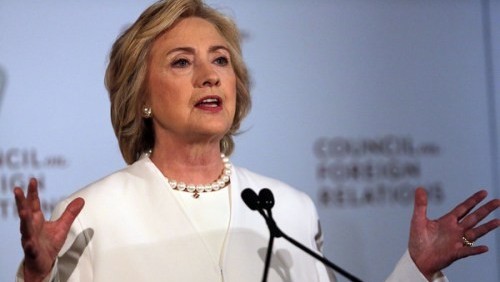
Marashi took exception to a speech Clinton delivered the Council of Foreign Relations where she said:

“We cannot view Iran and ISIS as separate challenges. Regional politics are too interwoven,” she said. “Raising the confidence of our Arab partners and raising the cost to Iran for bad behavior will contribute more effectively to the fight against ISIS.”

Her views that Iran’s Arab neighbors could become more effective partners in the fight against rising Islamic extremism only if the Iranian regime was held accountable for its actions, such as the recent attempt to overthrow the government in Yemen and the effort to take over the Iraqi government, is both a prudent and smart foreign policy declaration for someone who could very well be sitting in the Oval Office in 2017.

The fact that Marashi takes the well-worn Iranian regime talking point blaming its Arab neighbors for the supporting these terror groups is evidence of how paltry and bereft of substance the arguments are from the Iran lobby. The NIAC and other regime supporters have opted to try and shift blame for the rise in terror, including the bloody attacks in Paris on anyone else but the Iranian regime.

But Secretary Clinton recognizes a key point that Marashi and his ilk are desperate to cover up, which is Iran, as a theocratic state, uses its status as a country to support and prop up many terror groups around the world and engage actively in proxy wars that have threaten to draw the rest of the world into bloody conflict. While the flow of funds to some terror groups may be traced back to donations from individual donors, Iranian regime is the only nation-state that has devoted its treasury, military, economy and political influence in supporting groups such as Hezbollah and the Houthis, as well as provided safe harbor and shelter for members of Al-Qaeda and ISIS in the past.

The one true statement Marashi makes is when he says “the more options America has, the greater its leverage becomes.”

In this he is correct, but not in the way he intended because in agreeing to the nuclear deal with Iranian mullahs, the U.S. has unwittingly hampered itself by taking a whole host of tools off the table ranging from continued sanctions to restrictions on the flow of cash coming from the Iranian regime and into the coffers of various terror groups.

But what is even more surprising are the revelations in a recent National Review story that pointed out that the nuclear agreement had not even been signed by the regime and in effect has no legal standing.

“The Joint Comprehensive Plan of Action (JCPOA) is not a treaty or an executive agreement, and is not a signed document,” wrote Julia Frifield, the State Department assistant secretary for legislative affairs, in a November 19 letter written in response to an inquiry sent to Secretary of State John Kerry by Rep. Mike Pompeo (R-Kan.).

Regime leader Hassan Rouhani discouraged his nation’s parliament from voting on the nuclear deal in order to avoid placing legal burdens on the regime, saying “If the Joint Comprehensive Plan of Action is sent to [and passed by] parliament, it will create an obligation for the government. It will mean the president, who has not signed it so far, will have to sign it,” Rouhani said in August. “Why should we place an unnecessary legal restriction on the Iranian people?”

That statement has led to rampant speculation on Capitol Hill that the nuclear deal is already null and void, which explains why most of the presidential candidates have already staked out policy positions visibly diverging from what the Obama administration negotiated with regime.

As more journalists point out this inconvenient truth, such as Michael Ledeen writing of the lack of any signatures in Forbes, we can expect an even more desperate attempt by the Iran lobby and Marashi to try and shift more attention away and onto another false canard. Maybe they can blame El Nino on too much methane coming from cows next.

By Michael Tomlinson


Filed Under: Blog, News Tagged With: #NuclearDeal, Featured, Hilary Clinton, NIAC, NIAC Action, Nuclear Deal, Reza Marashi

Iran Regime Picks and Chooses What It Wants

November 3, 2015 by admin

Iran Regime Picks and Chooses What It Wants

Iran Regime Picks and Chooses What It Wants

There are many aspects to the collective decision-making of the mullahs in Tehran. On the one hand, they support opening up negotiations on a nuclear deal to help unlock the bank vaults to billions in frozen assets. Then on the other hand, they denounce the terms of the deal and claim it doesn’t apply to them unless all sanctions are lifted at once.

The same double standard applies to what is happening in Syria. The Iran regime has fought endlessly to keep Assad in power there to the extent it even begged the Russians for military support to save him from being overthrown as rebels made serious inroads. The mullahs sought to legitimize the idea of Assad staying in power and seemed to reach a breakthrough by finally being invited to multilateral talks on finding a political solution to the crisis.

But now the regime has threatened to walk away from talks if it found them unconstructive, specifically citing Saudi Arabia’s role in the talks as the bitter rivals escalate their growing conflicts that now stretch from Yemen to Syria.

“In the first round of talks, some countries, especially Saudi Arabia, played a negative and unconstructive role … Iran will not participate if the talks are not fruitful,” regime media cited deputy Foreign Minister Hossein Amir Abdollahian as saying.

Delivering unusually personal criticism, regime president Hassan Rouhani appeared to reprimand Saudi Foreign Minister Adel al-Jubeir, who, on Saturday, lashed out at Tehran for what he termed its interference in regional countries.

“An inexperienced young man in a regional country will not reach anywhere by rudeness in front of elders,” Rouhani was quoted as saying by state news agency IRNA on Monday. He did not name the ‘young man’ but Jubeir was assumed to be his target according to Reuters.

It’s this kind of “I’ll take my ball and play elsewhere” response that has come to typify Iranian regime’s reactions in foreign affairs now. It pushed for a nuclear agreement and then complained about it and threatened to walk away. It pushed for a role for Assad and a seat at the table and now that it has it, it threatens to walk away.

While some psychologists might label this bipolar behavior, long-time regime watchers within the Iranian dissident community have long warned this was how the mullahs do business by pushing a false façade and then changing the rules at the last minute.

It was behavior that typified nearly two years of nuclear talks in which Iran refused to commit to the fine print in order to avoid being boxed in; resulting in a 159-page agreement that is dwarfed by the thousands of pages in similar nuclear agreements with the old Soviet Union and North Korea.

That split behavior has been most explicit in Ali Khamenei, the regime’s top mullah, who has persistently and publicly undercut Rouhani following the nuclear agreement in order to demonstrate his firm control over regime matters and relegate Rouhani to the figurehead status many have claimed he remains.

According to Dr. Majid Rafizadeh, head of the International American Council, writing in Huffington Post, Khamenei has ruled out any “snap-back” option with regards to the sanctions.

“First, he wants sanctions to be lifted at the outset, then he wants to make sure that the international community will not have any mechanism through which it can re-impose sanctions in the very likely scenario that Iran decides to pull out of the nuclear agreement and go full speed ahead on uranium enrichment,” he writes.

“But wait, that’s not all, there is another condition to be met as well. After Khamenei had his president and nuclear team add the condition of the removal of an arms embargo to the nuclear agreement in the eleventh hour, he is now adding the removal of all sanctions (including the ones linked to Iran’s terrorism and human rights violations) to the already-done nuclear deal,” he added.

Another sign of the growing tightening of control by Khamenei was discussed by Gerald F. Seib in the Wall Street Journal.

“Iran also has arrested Nizar Zakka, a Lebanese information-technology specialist who lives in Washington and has permanent-resident status in the U.S. At the same time, Iranian businessmen with ties to foreign firms are being harassed by Iran’s state-security apparatus,” Seib writes. “These detentions are likely the work of Iran’s Revolutionary Guards, who function as a kind of parallel government operating alongside—and apparently beyond the influence of—the official government of President Hassan Rouhani and Foreign Minister Javad Zarif, with whom the U.S. and other world powers negotiated the nuclear deal.”

The broad range of actions by the regime over the last few months leaves very little doubt about the intentions of the mullahs and Khamenei in particular.

He is not interested in accommodation. He has no time for negotiations. He has no belief in moderation.

The regime has even stepped up arrests domestically, including two journalists, one a former deputy culture minister who was jailed in the 2009 crackdown that followed the disputed reelection of then-President Mahmoud Ahmadinejad.

The son of ex-official Issa Saharkhiz told news media his father was arrested this week at his residence in Tehran on charges that include “insulting the supreme leader” and “propaganda against the regime.” The arrests are likely to have a chilling effect on journalists and activists ahead of major elections early next year in Iran.

Meanwhile, a relative of Ehsan Mazandarani, editor in chief of the Iranian regime’s daily Farhikhtegan, said that Mazandarani was detained the same day, also in the capital by agents of the Revolutionary Guards Corps.

Even as these crackdowns increase – and in spite of criticism from human rights and dissident groups – in a vote held Monday, regime lawmakers opted overwhelmingly to continue pushing the “Death to America” slogan chanted across the country on Fridays, after regime ally’s Friday prayer services, and with special zeal every November 4th – the day Iranian mullahs commemorates the beginning of the 1977 siege on the U.S. Embassy in Tehran.

Khamenei picks and chooses his fights and he clearly intends on fighting any notion of moderation.

By Michael Tomlinson

Filed Under: Blog, News Tagged With: #NuclearDeal, Appeasement policy, Featured, hassan rouhani, Iran sanctions, Irantalks, Nuclear Deal, Rouhani, Sanctions

Iran Regime Turns on Its Own

October 29, 2015 by admin

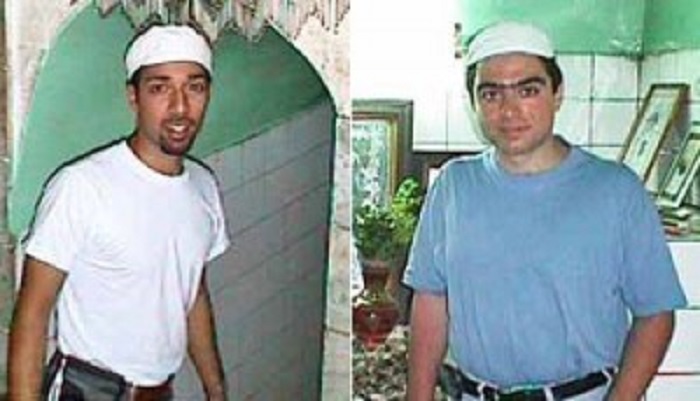
Trita Parsi traveled with Siamak Namazi to Isfahan, Iran’s third largest city, in August 2000. They also toured the Zoroastrian “Fire of Victory” Temple in Yazd. At the time, Siamak was living in Tehran, working for Atieh Bahar, a consultant company with close ties to the government. In 1999, Parsi and Siamak co-authored a paper that recommended setting up a lobbying organization in Washington to influence US-Iran policy. Siamak took a sabbatical in 2005 to complete a fellowship at the Woodrow Wilson Center in Washington, DC. While at the Center, Siamak helped Parsi formulate NIAC policies supportive of the Iranian regime.

Trita Parsi traveled with Siamak Namazi to Isfahan, Iran’s third largest city, in August 2000. They also toured the Zoroastrian “Fire of Victory” Temple in Yazd.
At the time, Siamak was living in Tehran, working for Atieh Bahar, a consultant company with close ties to the government.
In 1999, Parsi and Siamak co-authored a paper that recommended setting up a lobbying organization in Washington to influence US-Iran policy. Siamak took a sabbatical in 2005 to complete a fellowship at the Woodrow Wilson Center in Washington, DC. While at the Center, Siamak helped Parsi formulate NIAC policies supportive of the Iranian regime.

Siamak Namazi, an Iranian-American citizen, has been credited with helping found the Iran lobby including the creation of the National Iranian American Council alongside Trita Parsi as the primary vehicle for advocating for a nuclear agreement lifting economic sanctions on the regime.

The Daily Beast chronicled his family’s involvement as an “intellectual architect” for the NIAC as a pathway for empowering those within the regime whom he had a close relationship with and believed by helping secure an agreement it would boost his fortunes within the regime.

In the immortal words of Kevin Spacey who plays the scheming Frank Underwood on Netflix’s “House of Cards,” “We’re all victims of our own hubris at times.”

Truer words were never spoken about the Iran lobby because on the verge of reaping their perceived successes, they discover all they really are, are puppets for a regime of mullahs whose intent is only focused on preserving their own power.

That is because according to regime media reports, while visiting family in Tehran, Namazi was arrested by Revolutionary Guards Corp soldiers and tossed into the notorious Evin Prison.

There is an irony here on par with Alfred Nobel inventing dynamite and then creating the Nobel Peace Prize after his invention was used in war.

Namazi joins four other Americans who are being held hostage by the regime, including Washington Post reporter Jason Rezaian, Christian pastor Saeed Abedini, former Marine Amir Hekmati and the former FBI agent Robert Levinson.

According to a piece in American Thinker, Parsi and Namazi founded NIAC as a way to lobby for the removal of sanctions against the regime and promote its foreign policy while combatting anti-regime forces in the U.S.

Both Parsi and Namazi reportedly enjoyed close ties and access to Hassan Rouhani and Javad Zarif, the regime’s president and foreign minister, with Parsi being seen traveling with and in close discussions with the regime delegation during nuclear talks.

Conspicuously, the NIAC have been silent on the issue, declining comment and social media feeds for Parsi and other NIAC staff is devoid of any mention of the arrest.

But Hassan Dai, editor of the Iranian American Forum who won a defamation lawsuit filed against him by Parsi, speculated that the arrest suggests a power struggle of sorts within the regime’s leadership.

Dai explained in an interview with Breitbart News that Namazi had consistently “lobbied in favor of a faction of the regime,” which upset the mullahs because it would only be acceptable to “lobby for the whole regime.”

The fight between the factions in Iran is a fight for “the best solution to preserve the regime,” he explained, adding that groups like NIAC have never sided with true “reformists,” but with people who wish to employ a different strategy to empower the regime, such as Rouhani and former President Akbar Rafsanjani.

Because Namazi and NIAC prefer one faction over the other, “they are undermining the Supreme Leader. They are undermining the Revolutionary Guard,” Dai explained. “When you lobby U.S. policymakers to remove sanctions against Iran with the rationale that it will help reform the regime, you undermine the Supreme Leader, because he wants them to accommodate to the regime now.”

The arrest of Namazi sends a message from Iran’s rulers that “Rouhani has no power,” Dai concluded. “He cannot even protect his own friend.”

Breitbart News further speculates – and rightly so – that the arrest pours cold water on the notion that securing the nuclear deal would empower “moderates” within the regime and help reform it. Evidence since agreeing to the nuclear contradicts that idea completely with the conviction of Rezaian, the test launch of an illegal ballistic missile and the launching of a new offensive in Syria alongside Russian forces.

The arrest of Namazi demonstrates that the leadership of the Iran regime is of one mind and firmly in the control of Ali Khamenei and his religious cohorts and that any idea of moderation within the regime is a pipe dream; which may go to explain why coming off of the NIAC’s recent leadership conference to celebrate the nuclear deal, Parsi’s Twitter feed was filled with posts condemning Saudi Arabia, a bitter enemy of Iran and locked in fighting in Yemen.

If Parsi doesn’t tow the mullahs’ line, he might find a different kind of reception party the next time he travels to Tehran and end up sitting next to his buddy Namazi.

By Michael Tomlinson


Filed Under: Blog, Latest from Lobbies & Appeasers, National Iranian-American Council, News Tagged With: #NuclearDeal, Appeasement policy, Featured, hassan rouhani, Iran, Iran deal, Iran Economy, Iran Lobby, Irandeal, Jason Rezaian, Khamenei, Moderate Mullahs, National Iranian American Council, NIAC, Nuclear Deal, Rouhani, siamak Namazi, Syria, Trita Parsi

Halloween Comes Early for Iran Lobby

October 27, 2015 by admin


Halloween Comes Early for Iran Lobby

Halloween Comes Early for Iran Lobby

Halloween involves kids (and adults) firing up their imaginations to come up with costumes and then go knocking door to door seeking treats and getting the odd trick played on them maybe in a haunted house. For the Iran lobby, Halloween came a week early as the chief advocate, the National Iranian American Council, held its annual leadership conference this weekend.

It’s worth noting that the NIAC bills its event as a premier conference for the nation’s Iranian-American community, but its agenda and participants hardly represent the views and beliefs of the estimated one million Iranian-Americans living in the U.S.

In fact, the line-up of speakers at this year’s conference reads more like a line-up card of Iran regime boosters and potential business partners than any group seriously examining the daunting challenges remaining between the U.S. and Iran. What is even more amazing are the lack of any speakers who have first-hand experience with the abysmal human rights situation in Iran, nor were there any speakers offering views on the sizable opposition worldwide to the regime amongst the Iranian diaspora.

Among the highlights of this gallery of apologists and appeasers includes:

  • Bijan Khajehpour, who founded Atieh International and the related Atieh Bahar which employed NIAC staffers to serve as a conduit for directing foreign companies to invest into the regime through the access it provided to top regime officials who controlled most of Iran’s economy through a complex web of shadow companies. Atieh was the subject of an in-depth piece in The Daily Beast on its start and close relationship with leading supporters of the regime and how it profited from those ties and in advocating for a lifting of sanctions against Iran;
  • Joseph Cirincione, president of Ploughshares Fund which was the largest funder of the lobbying campaign in support of the nuclear deal and the lifting of sanctions against the regime. It alone provided NIAC with at $150,000 for its advocacy work on behalf of the nuclear deal; not including money given by its staff. Commentary Magazine poured through tax records to glean the wide scope of Ploughshares giving to groups working on behalf of the regime’s cause; and
  • Alan Eyre, the U.S. State Department’s Persian-language spokesman who came under fire recently for promoting anti-Semitic conspiracy sites demonizing American Jewish groups, as well as postings on his personal social media praising the regime’s controversial Quds Force commander Qassem Soleimani according to the Washington Free Beacon. Eyre also posted links to Lobelog, a well-known blog dedicated to supporting the regime’s key messages.

The conference also featured several speakers who are actively seeking business deals within the regime including: Ned Lamont, chairman of Lamont Digital Systems; Jay Pelosky, a self-described advisor on emerging markets who recently visited Iran; and Amir Handjani, president of PG International Commodity Trading Services, a leading importer of agricultural commodities in the Iranian market.

We can’t resist one dig at Reza Marashi of NIAC who called the gathering the “world cup of Iranian-Americans.”

One interesting tidbit were comments made by Dr. Farideh Farhi who lamented the fact the nuclear deal had not led to substantial changes in U.S. policy towards the regime, but failed to note the swift shifts in Iranian policy towards the rest of the world in the rapid buildup of its military in Syria and launching of a new ballistic missile in violation of United Nations Security Council sanctions; both provocative acts.

This was followed by a tweet by Trita Parsi, NIAC’s head honcho, who described comments made by Shadi Hamid, a senior fellow at the Brookings Institution, and Mehdi Hasan, a commentator for Al Jazeera’s English broadcast, as saying about the panic from neighboring Arab nations about the nuclear deal: “If someone panics, you slap them in the face, you don’t indulge them.”

An appropriate comment since it neatly encapsulates the Iran lobby’s response to concerns over what the Iran regime will do now in the wake of the nuclear agreement. The recent rise in belligerent military action, coordination with Russia in blasting Syrian rebels back to the Stone Age and the conviction of Washington Post reporter Jason Rezaian all point to a slide into anarchy which has even alarmed Democratic lawmakers who initially supported the nuclear deal, but now have begun offering up new legislation designed to keep the regime in check.

The NIAC conference was predictable in celebrating its perceived win with the nuclear deal and the effort now to safeguard potential foreign investment after “Implementation Day” on December 15 when the U.S. will pave the way by lifting economic sanctions and allow Iran to rejoin the world of international commerce.

But the conference also revealed the biggest weaknesses of the lobby which was its inability or unwillingness to meet the most troublesome aspects of the Iran regime head-on; namely it horrific human rights record which leaves a deep and wide trail for the world’s media to follow.

With every arrest, every beating, every public hanging and every denunciation of a minority religious or ethnic group, the regime weakens any argument the lobby can make and increases the pressure on groups such as the NIAC to answer basic questions of “why aren’t you speaking out against the killing of X group?”

Which is why the NIAC conference was so focused on economic issues since the regime is desperate to not only get its hands on the estimated $150 billion in frozen assets to help pay off its military obligations in Syria, Lebanon, Afghanistan, Iraq and Yemen, but is equally anxious to bring in foreign investment to help prop up an economy devastated by gross mismanagement and corruption by regime officials.

By Laura Carnahan


Filed Under: Blog, National Iranian-American Council, News Tagged With: #NuclearDeal, Bijan Khajehpour, Farideh Farhi, Featured, Iran, Iran deal, Iran Lobby, Jason Rezaian, Joseph Cirincione, National Iranian American Council, NIAC, NIAC Action, Nuclear Deal, Reza Marashi, Trita Parsi

The Ongoing Appeasement of the Iran Regime

October 23, 2015 by admin

The Ongoing Appeasement of the Iran Regime

The Ongoing Appeasement of the Iran Regime

During the run up towards the completion of negotiations over the nuclear agreement with the Iran regime, the Obama administration and the Iran lobby likened it to the most significant foreign policy issue of our time. The words used by proponents in advocating the deal included “historic,” “transformational,” “ground breaking,” “momentous,” “consequential” and “important.”

You almost thought Trita Parsi, head of the National Iranian American Council and chief cheerleader for the regime, had a word-a-day calendar on his desk with new synonyms for “historic.”

The fact that proponents of the deal characterized the choices as being between “war” and “peace” helped to get the agreement passed, but it also gave the Iran regime the opening to hold the West linguistic hostages since by framing the agreement in that manner, supporters found themselves beholden to the mullahs in Tehran to the extent no matter what they did, supporters of the deal were going to have to cover for them in order to keep the agreement alive.

This leverage cleared the way for the continuing acts of appeasement being afforded to the mullahs in the run up towards implementing the agreement. The perception of needing to keep this deal alive quickly became more important than addressing how much the Iran regime might cheat and what to do in response if the mullahs did cheat.

Two recent developments made that appeasement abundantly clear.

The first was the completion of a secret side agreement between the Iran regime and the International Atomic Energy Agency, the arm of the United Nations Security Council responsible for inspections and compliance of nuclear issues.

The IAEA has worked for the past decade to gain access to regime nuclear facilities, its scientists and technicians, as well as documentation to ascertain the full scope and nature of Iran’s nuclear program. It has been stymied and stonewalled at every turn by the regime.

Beyond the obfuscation by the regime, it is imperative to any future compliance to the nuclear agreement that the IAEA establish a baseline of where Iran’s nuclear program stands. Without it, there is no way to make comparisons to see if the regime is indeed cheating.

The IAEA “is committed under the deal to release a report by year-end about the status of Iran’s alleged weaponization work. U.S. officials over the weekend said the IAEA report would have no bearing on moves by the international community to lift sanctions,” according to the Wall Street Journal.

“That final assessment, which the IAEA is aiming to complete by December 15th, is not a prerequisite for implementation day,” a senior U.S. official said Saturday. “We are not in a position to evaluate the quality…of the data. That is between Iran and the IAEA.”

The irony here is that the U.S. is basing its decision to move ahead with implementing the agreement with the regime on the findings of the IAEA inquiry, but at the same time is not going to evaluate the veracity of those findings. In essence, the U.S. and other nations will simply shrug and say “we believe you” even if Iran provides no information or complete access as per the agreement.

So on December 15th, if the IAEA certifies Iran as being in compliance even though it has no tangible proof the regime is in compliance, the political pressure will be such that the IAEA will rubberstamp the report and allow implementation to move forward.

As Armin Rosen writes in Business Insider: “In the process, the US has essentially decided that the investigation of past nuclear-weapons work, and the state of current Iranian weaponization expertise, is nonbinding on a treaty specifically meant to prevent Iran from obtaining a nuclear weapon.”

If it wasn’t such a serious issue, it would be Orwellian in nature.

The second issue was the recent test firing of a new ballistic missile by the regime which violated a UN ban on development of nuclear-capable ballistic missiles. The ban is tied to the nuclear agreement and sets an eight year ban on ballistic missiles after the agreement is implemented.

The U.S., Britain, France and Germany called on UN Security Council’s Iran sanctions committee to take action over the missile test by Tehran. Diplomats have said it was possible for the sanctions committee to blacklist additional Iranian individuals or entities if it determined that the missile launch had breached the U.N. ban. However, they said Russia and China, which have opposed the sanctions on Iran’s missile program, might block any such moves.

All of which sets up the most obvious question facing everyone. What if Iran cheats? What should the response be?

Even though the U.S. asked the Security Council to take action over the missile test, U.S. officials said in the next breath that the missile test itself didn’t violate the nuclear deal.

Let that sink in for a second. We sent a letter calling for action for a violation of the UN ban, but in the same moment said the launch did not violate the nuclear agreement. So we are scolding the mullahs, but also letting them off the hook.

It’s a bipolar approach to foreign policy worthy of analysis by a psychiatrist.

In both cases, the Iran regime is clearly acting to breach terms of not only the nuclear agreement, but existing sanctions that will remain in effect after the nuclear deal goes into effect and the repercussions of those violations appear to be non-existent or minimal. This does nothing to deter the mullahs and only empowers them into believing they can continue to press their advantage.

By Michael Tomlinson

Filed Under: News Tagged With: #NuclearDeal, Appeasement policy, Featured, Iran, Iran deal, Iran Lobby, Iran Talks, Irandeal, NIAC, NIAC Action, Nuclear Deal, Trita Parsi

  • « Previous Page
  • 1
  • 2
  • 3
  • 4
  • 5
  • Next Page »

National Iranian-American Council (NIAC)

  • Bogus Memberships
  • Survey
  • Lobbying
  • Iranians for International Cooperation
  • Defamation Lawsuit
  • People’s Mojahedin
  • Trita Parsi Biography
  • Parsi/Namazi Lobbying Plan
  • Parsi Links to Namazi & Iranian Regime
  • Namazi, NIAC Ringleader
  • Collaborating with Iran’s Ambassador

Recent Posts

  • NIAC Trying to Gain Influence On U.S. Congress
  • While Iran Lobby Plays Blame Game Iran Goes Nuclear
  • Iran Lobby Jumps on Detention of Iranian Newscaster
  • Bad News for Iran Swamps Iran Lobby
  • Iran Starts Off Year by Banning Instagram

© Copyright 2026 IranLobby.net · All Rights Reserved.