Iran Lobby

Exposing the Activities of the lobbies and appeasers of the Mullah's Dictatorship ruling Iran

  • Home
  • About
  • Current Trend
  • National Iranian-American Council(NIAC)
    • Bogus Memberships
    • Survey
    • Lobbying
    • Iranians for International Cooperation
    • Defamation Lawsuit
    • People’s Mojahedin
    • Trita Parsi Biography
    • Parsi/Namazi Lobbying Plan
    • Parsi Links to Namazi& Iranian Regime
    • Namazi, NIAC Ringleader
    • Collaborating with Iran’s Ambassador
  • The Appeasers
    • Gary Sick
    • Flynt Leverett & Hillary Mann Leverett
    • Baroness Nicholson
  • Blog
  • Links
  • Media Reports

Iran Attendance at Oslo Forum is Height of Hypocrisy

June 15, 2016 by admin

Iran Attendance at Oslo Forum is Height of Hypocrisy

Iran Attendance at Oslo Forum is Height of Hypocrisy

The Oslo Forum was created in 2003 as a gathering for mediation practitioners to meet and share their expertise. It was aimed at the hope of building a larger community of mediation experts and increase learning, serving as an incubator for testing and honing future peacemakers hoping to resolve conflicts around the world.

It has grown from its first meeting of 17 practitioners to now include over 100 notable key players from the United Nations, intergovernmental and private organizations, journalists, analysts and other experts.

Among its participants has been a veritable who’s who of global ambassadors for peace, including former UN General Secretary Kofi Annan, President Jimmy Carter, new Myanmar leader Aung San Suu Ki and many others.

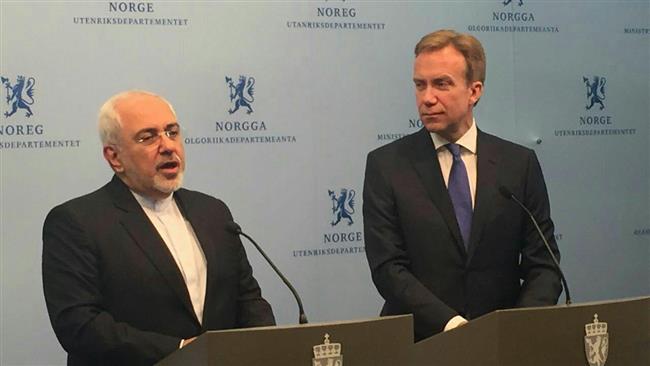
And like any progressive project, it has some more far-fetched ideas it has tried to implement including inviting Javad Zarif, the foreign minister for the Iranian regime to this year’s conclave in Norway.

While we know Norwegians are a kind, generous and thoughtful people, earnestly hoping and working for peace around the world, the participation of Zarif at this Forum to ostensibly share ideas for peace is one of the more incredulous things anyone has heard.

The Iranian regime stands alone in the world as the leading supplier and exporter for terrorism and proxy wars. Its Quds Forces and Revolutionary Guard are on the battlefields and shipping cash, arms and mercenaries to Syria, Iraq, Afghanistan and Yemen.

It has managed to become the second largest executioner of prisoners on the planet and regularly abuses its own men, women, children, ethnic and religious minorities, journalists, dissidents and just about anyone else the mullahs in Tehran have a disagreement with.

Zarif’s crowning achievement has foreign minister has been to snooker the world into supporting a nuclear agreement that essentially preserves Iran’s entire nuclear infrastructure, open the floodgates to billions in fresh cash and does not mandate any changes in its barbaric human rights practices.

That’s a neat trick and if the participants at the Oslo Forum are looking for tips on how to obscure the truth, they’ve invited the right man in Zarif.

No one can deny that Iran’s intervention in Syria is the single largest reason why the civil war has lasted this long and expanded so far. It is also the reason why Islamic extremist groups such as Al-Nusra and ISIS were able to spring into existence and expand.

The heavy military and economic involvement by the Iranian regime and refusal to engage in multilateral peace talks that involve any discussion of removing the bloody Assad regime from power has certainly shaped and molded the Syrian conflict into the bloody affair it is today.

All of which makes Iran’s participation in the Forum that much more curious since top mullah Ali Khamenei has been definitive and expressive in his beliefs concerning the use of violence and terror to achieve the regime’s aims. Compromise, negotiation, mediation and discussion are not words in the vocabulary of the mullahs.

That is certainly true when you look at the recent spate of arrests and imprisonments of dual-national Iranians who have been tossed into Iranian prison without charge or access to counsel, including a Canadian professor and a British mother.

It is also notable that during recent visits by various European leaders to Iran to seek out commercial trade opportunities with the nuclear agreement in effect, the Iranian regime did not slow down one bit the pace of executions, imprisonments and abuses during any of those visits.

Take for example Federica Mogherini, European Union policy chief, who visited Iran this past April only to see the regime execute three prisoners the day she arrived or Matteo Renzi, the Prime Minister of Italy, who visited Iran only to have the regime hang 17 people, including three juveniles at the same time.

These visits by European leaders and the inclusion of Zarif at a conference for peace negotiators makes a mockery of the human suffering in Iran and only emboldens the mullahs to continue with these practices since there seems to be no downside.

His participation is even stranger when you consider that the Iranian regime has opened up a recruiting center in Heart, Afghanistan to persuade and even coerce thousands of Afghans to fight in Syria.

The Christian Science Monitor visited the center and reported on what is no longer a secret in Iran as the regime seeks to bolster the number of mercenaries sent to fight for the Assad regime.

Some Afghans fight willingly for religious reasons, eager to take up a cause of “defending” Shiite shrines in Syria. Others fight for cash, upwards of $700 per month, or choose to realize promises of Iranian citizenship, schooling for their children, and jobs, if they survive the frontline – benefits usually beyond reach for Afghan migrants in Iran, the Christian Science Monitor reported.

Still other Afghans report coercion and intimidation, and say their second-class status inside Iran – among an estimated 3 million Afghans, only one-third are legal migrants – is taken advantage of. Afghans’ “vulnerable legal position in Iran and the fear of deportation may contribute to their decision [to join militias in Syria], making it less than voluntary,” Human Rights Watch said in a January report.

None of these revelations should be ignored at the Forum and in fact, Zarif should be confronted with these facts and asked why the regime has failed to work for peace in Syria instead of seeking to escalate the conflict.

Ultimately, as Zarif continues this European tour, he should be met with hard and tough questions and not platitudes and open arms.

By Michael Tomlinson

Filed Under: Blog, News Tagged With: Featured, Iran, Iran deal, Iran Human rights, Khamenei, oslo forum, Sanctions, zarif

With Lifting of Sanctions Iran Lobby Pressing for Wide Open Trade

January 23, 2016 by admin

With Lifting of Sanctions Iran Lobby Pressing for Wide Open Trade

With Lifting of Sanctions Iran Lobby Pressing for Wide Open Trade

The transition for the Iran lobby was eventual and anticipated as it shifts gears from the lifting of economic sanctions to cheerleading investment by foreign companies into the Iranian economy in a bid to divert billions of dollars in capital into the regime’s coffers.

Nothing exemplified this newfound priority than an editorial by Tyler Cullis, a legal fellow with the National Iranian American Council, which appeared in Huffington Post. Cullis, a true apostle of the mullahs in Tehran, outlined the argument that the U.S. was coming late to the sanctions lifting party and not investing as wholeheartedly as it should.

“The U.S. trade embargo with Iran remains largely intact — outside of newly created authorizations for the import of Iran-origin carpets and certain foodstuffs and the sale to Iran of commercial aircraft. Under the trade embargo, U.S. companies are barred from engaging in trade with or investment in Iran — with few exceptions. Violating these U.S. sanctions prohibitions can lead to serious criminal and civil penalties,” Cullis writes.

“Moreover, considering the reputational risks of being seen doing business with Iran – which retains somewhat of a pariah status among the American public and which has remained under trade embargo for two-plus decades – few U.S. companies were willing to put themselves out on the limb for the chance to re-engage such an unfamiliar market. The result was that U.S. companies conducted virtually no real outreach to either the Obama administration or Members of Congress, which, in turn, fed into a perception in the White House that it lacked any real constituency for the openings that it could have otherwise supported,” Cullis adds.

His logic is fairly twisted on several levels. Cullis is correct that American companies are concerned damage to their brands through re-engagement in Iran, especially in sectors seen as bolstering industries largely controlled by the regime’s Revolutionary Guard Corps such as petroleum, telecommunications and transportation.

That damage to corporate brands can also result from calls for boycotts or other retaliation by human rights groups, Iranian dissidents and religious minorities – all of whom have been subject to brutal treatment by the mullahs there – who may seek to leverage the restart of economic involvement as a vehicle to have their plight heard on the world stage.

Cullis also neglects another key fact about doing business with the Iranian regime; any opening to Iranian markets will almost surely not be accompanied any meaningful reforms in the conduct of the economy by the mullah leadership which remains one of the most corrupt in the world.

According to Transparency International, Iran ranks 136th out of 175 countries in terms of corruption with deficiencies in judicial independence, rule of law, press freedom, free speech and accountability and bribery.

Few American or even European companies would venture into the Iranian market given those conditions and those that do are most likely to work first with regime-controlled industries such as petroleum, shipping or transportation, which is why the first companies most likely to enter the market would be airplane manufacturers such as Airbus, oil companies and heavy equipment manufacturers.

But Cullis is woefully ignorant of the greatest barriers remaining for American companies, especially those engaged in consumer products and services, which the mullahs are hell bent on preventing access to anything that might lead to the Iranian people having greater access to items, goods and services the mullahs might consider “corrupting.”

American cornerstone industries such as entertainment would largely be excluded from Iran. Can we image movies such as “Argo,” “Zero Dark Thirty,” or “13 Hours” getting screen time in Tehran? Can we envision hit television shows such as “Homeland” or “Game of Thrones” airing on Iranian TV sets? Could we really see documentaries about Holocaust or the Iraq-Iran War finding an audience in regime-controlled media?

What about other U.S. industries such as Apple and the ubiquitous iPhone? Would the mullahs allow access to the iTunes store and give Iranians the freedom to use Facebook, Snapchat, Twitter or other social media platforms so far banned by the mullahs and even leading to the arrest and imprisonment of bloggers and other social media users?

Would the mullahs allow U.S. technology companies to enter the marketplace with tablets, WiFi routers, GoPro cameras, portable hard drives, etc? What is more likely is that instead of the rosy picture portrayed by Cullis is a more likely scenario where the mullahs will greatly restrict certain foreign companies from entering the Iranian market that could create a corrupting influence and threaten their reign of terror and suppression.

What is more likely is a “pay-to-play” model where companies will be forced to pay up bribes to regime officials to enter the market and be subject to tight restrictions on what could be sold and to whom. It is a scenario many companies would be reluctant to undertake which explains the reticence of many companies from jumping in with both feet the way Cullis is encouraging.

The fact of the matter is that while sanctions have been lifted, the mullahs still remain in charge and that alone is a significant obstacle for many companies. Coupled with the mullahs continued focus on aggressive military actions in Syria, Yemen and Iraq, as well as continued development of military capability such as ballistic missile design, it’s highly unlikely like McDonalds or Starbucks are going to be opening up locations in Iran and offering free WiFi to Iranians to go with their Big Macs and lattes.

For the vast majority of American consumer brands, entry into the Iranian market is far from a sure thing and remains a risky proposition as long as Iran remains a religious theocracy controlled by a cadre of mullahs who insist on imposing medieval punishments such as public hangings and amputations.

By Laura Carnahan


Filed Under: Blog, Current Trend Tagged With: Featured, Iran Lobby, Sanctions, Tyler Cullis

Iran Regime Deserves No Leeway after Holding Sailors

January 15, 2016 by admin

Iran Regime Deserves No Leeway after Holding Sailors

Iran Regime Deserves No Leeway after Holding Sailors

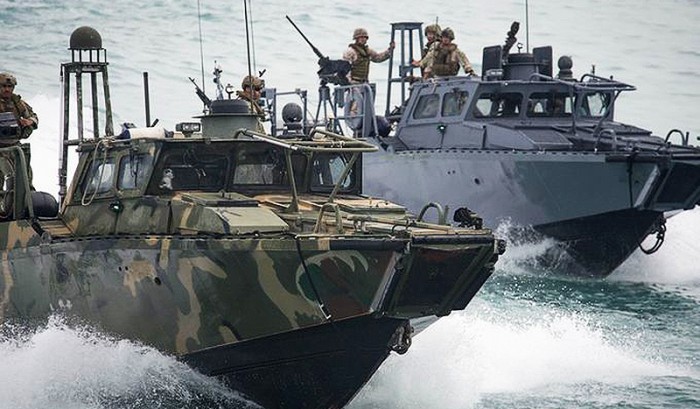
Ten U.S. Navy sailors were detained by the Iranian Revolutionary Guards Corps after their patrol boats lost contact with U.S. commanders and may have lost power and drifted into waters claimed by the Iranian regime.

The two small boats were traveling between Kuwait and Bahrain when contact was lost according to the Defense Department. Regime officials have assured U.S. officials that the sailors would be released shortly…at least that’s the hope.

The regime accused the sailors of “snooping” according to regime-controlled FARS state media.

Recent history would give most people pause though considering that since the Iranian regime negotiated a nuclear agreement with the P5+1 group of nations, it has acted aggressively in both domestic and foreign policy affairs to such an extent, many analysts have noted a new level of tension in the region exceeding recent memory.

Since July of last year, the Iranian regime has:

  • Begun the mass arrest of dissidents, journalists, artists, students, opposition political leaders and social media professionals in a broad effort to tamp down any dissent in advance of parliamentary elections next February;
  • Convicted Washington Post reporter Jason Rezaian of espionage in a secret revolutionary court, while continuing to hold four other Iranian-Americans on trumped up charges and arresting another who has been identified as being supportive of the Iran lobby in the U.S.;
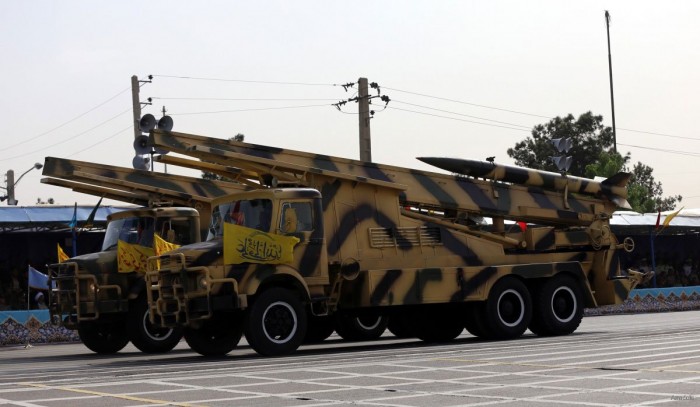
  • Test fired two new ballistic missiles capable of carrying nuclear warheads in defiance of United Nations Security Council resolutions prohibiting such launches;
  • Fired rockets in international waters in the Strait of Hormuz near U.S. warships, including the aircraft carrier USS Harry S. Truman, and commercial vessels;
  • Threatened to walk away from the nuclear deal should the U.S. impose new sanctions over the test firing of ballistic missiles;
  • Recruited Russia to enter into the Syrian conflict in an effort to target anti-Assad rebel forces in a bid to keep the regime in place instead of targeting ISIS;
  • Stepped up supply of Houthi rebel forces in Yemen and supporting new offensives near the Saudi Arabian border forcing a response from Saudi Arabia; and
  • Allowing Saudi embassies to be attacked and burned in Iran while state police stood idly by in a repeat of similar attacks on British and U.S. embassies.

These provocations follow a series of diplomatic breaks between the Iranian regime and most of its Arab neighbors including Saudi Arabia, Kuwait, Bahrain, Sudan and United Arab Emirates.

Unlike the promises made by Trita Parsi and Reza Marashi of the National Iranian American Council, one of the leading lobbyists for the Iranian regime, the nuclear deal did not produce any turn to moderation by the mullahs in Tehran. If anything, the past six months have provided ample proof that the Iranian regime has no intention of altering its course, but instead is intent on flexing its muscle in taking advantage of this period of appeasement.

At the heart of that appeasement lies the proverbial pot of gold at the end of the rainbow in the form of $150 billion in frozen assets the mullahs are due to receive as early as next week as part of the nuclear agreement.

That cash has no restrictions on it, so the regime can use it to purchase military equipment, send it to terrorist groups such as Hezbollah or benefit companies controlled by the Revolutionary Guard Corps such as petroleum and telecommunications shell companies. The ordinary Iranian citizen will most likely see no improvement in their economic status as a result of the windfall much to chagrin of those who believed in the propaganda being spouted by the Iran lobby.

Even as news media report that the regime is complying with provisions of the nuclear deal including the closing of its Arak nuclear reactor, regime officials themselves disputed that compliance.

Iran’s deputy nuclear chief denied yesterday a report that technicians had dismantled the core of the country’s nearly finished heavy water reactor and filled it with concrete as part of Tehran’s obligations under the nuclear deal with the West.

Ali Asghar Zarean, in remarks to state TV Tuesday, dismissed the report by the Fars news agency from the previous day. He said the regime would sign an agreement with China to modify the Arak reactor, a deal that is expected next week.

The fact that the regime can’t seem to get its own story straight about the condition of its heavy-water reactor ably describes the inability of the rest of world to properly monitor exactly what the regime is doing with its nuclear facilities.

By Michael Tomlinson

Filed Under: Blog, News Tagged With: Appeasement policy, Featured, Iran deal, Sanctions

Iran Regime Unveils More Missiles as World Hardens Stance

January 6, 2016 by admin

Iran Regime Unveils More Missiles as World Hardens Stance

Iran Regime Unveils More Missiles as World Hardens Stance

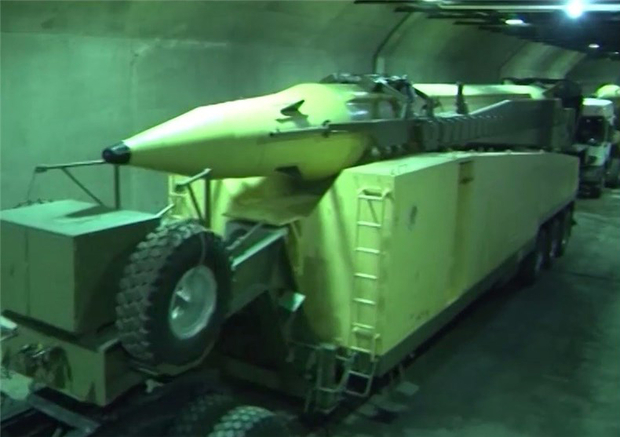
In the wake of the flip flop by the Obama administration to halt the imposition of new sanctions on the Iranian regime for its test firings of Emad ballistic missiles violating a United Nations Security Council resolution last week, the regime unveiled a new underground missile depot prominently featuring the same Emad missile in a blatant thumbing of its nose to the rest of the world.

Regime news agencies and state television video said the underground facility, situated in mountains and run by its Revolutionary Guards Corps, was inaugurated by the speaker of parliament, Ali Larijani. Release of the one-minute video followed footage of another underground missile depot released last October.

U.S. officials say the Emad, which Iran tested fired in October, would be capable of carrying a nuclear warhead and they say Washington will respond to the Emad tests with fresh sanctions against Iranian individuals and businesses linked to the program, but the administration reversed course at the last minute, first announcing a press conference and then canceling it.

The Iranian regime’s boasting about its missile capabilities is a direct challenge for the Obama administration as the U.S. and European Union plan to dismantle nearly all international sanctions against Tehran under the nuclear deal reached in July.

The regime’s provocations undermine all of the reassurances given by supporters of the nuclear deal who claimed it would pave the way for a more moderate and engaged Iranian regime.

After Iran tested the Emad missile in October, the UN Security Council’s panel of experts declared Iran in violation of resolution 1929, adopted in 2010. It prohibits the launching of any missile capable of carrying a nuclear warhead, and remains valid until the July nuclear deal between Iran and the five permanent members of the UN Security Council — the US, UK, Russia, China, and France — plus Germany goes into full effect. That won’t happen until Iran has fulfilled all of its obligations to scale back its program under the agreement, at which point Iran will be “called upon” by the Security Council to cease any missile testing for a period of eight years.

As the Chicago Tribune editorialized yesterday: “As the U.S. backpedaled, the Iranians pressed their advantage: Iranian President Hassan Rouhani proclaimed on Thursday that he was so incensed by proposed U.S. sanctions that he had instructed the military to expand Tehran’s missile program ‘in terms of range and accuracy.’ You don’t like two missile launches? How about 20?

“Days later, the Iranian Navy launched rockets within 1,500 feet of an American aircraft carrier and a French frigate in the Strait of Hormuz.”

“The U.S. and its partners have only one chance to establish that strict compliance from Iran will be expected through the course of this nuclear deal. That chance comes right now, before sanctions are lifted, before millions of dollars flow into Tehran’s economy,” the Tribune went on to say. “The U.S. should impose those sanctions for the missile tests. Iran won’t walk from the deal. It desperately needs that sanctions relief. And if it does walk away, that will serve notice that Iran never did intend to comply.”

The Tribune was not alone in its skepticism of the Iranian regime. Daniel W. Drezner, a professor of international politics at the Fletcher School of Law and Diplomacy at Tufts University, writing in the Washington Post said:

“It is possible that no amount of Obama administration hand-holding and backstopping was going to placate the anxiety of the Sunni states in the wake of the Iran deal. Still, if you look at the past year, the administration seems to have devoted very little time to gardening in the Gulf region. Which guarantees continued bloodshed in Syria, Yemen, Iraq, and . . . I’ve lost count of the sectarian conflicts at this point,” Drezner says.

“It is still likely that the Iran deal will continue to be implemented. But it also seems increasingly likely that the negative externalities of negotiating the deal are rendering it far less significant in advancing the oxymoron that is ‘Middle East stability,’” he added.

All of which goes a long way in explaining the recent escalation in tensions between the Iranian regime and its Arab Gulf state neighbors as Saudi Arabia, Kuwait, Bahrain, Sudan and the United Arab Emirates have all severed ties to the Iranian regime.

For those states which lie only a few hundred miles away from Iran, the threat of the Emad missile is much more real and practical than for the U.S., but no less worrisome is the retreat of U.S. willpower in the face of Iranian aggression under this administration. The message has been unmistakable for many of U.S.’s long-time allies in the region:

You’re on your own.

The Iran lobby was particularly humorous in its most recent statements of support for the mullahs in Tehran as Trita Parsi from the National Iranian American Council actually advocated the idea that Saudi Arabia was pushing for an armed conflict with Iran in order to gain back U.S. support against its long-time foe.

Predictably, Parsi raised the potential of the U.S. cutting loose Saudi Arabia as part of its strategic “realignment” towards Iran with a certain amount of glee.

He offers up the most ironic statement of all when he writes:

“If Washington’s priority is the defeat of IS and other jihadist movements, then a balancing act between an Iran that ferociously opposes IS and a Saudi Arabia that has played an undeniable role in promoting jihadi extremism may not be the right answer.”

The fact that Parsi actually tries to portray the Iranian regime as a standard bearer against Islamic extremism is the height of hypocrisy. It’s like saying the Nazi Party are sponsors of Jewish festivals. We would suggest Parsi reacquaint himself with Iranian regime justice by Googling “Iran executions” and watching some video of the mullahs’ “moderation.”

By Michael Tomlinson

Filed Under: Blog, News Tagged With: #NuclearDeal, Featured, Iran Lobby, Sanctions, Trita Parsi

Looking Back at 2015: Iran Regime at Center of Terror

December 28, 2015 by admin

Looking Back at 2015: Iran Regime at Center of Terror

Looking Back at 2015: Iran Regime at Center of Terror

In many ways, 2015 could be labeled the “Year of the Terrorist” because terrorism was the dominant driving news story throughout the world. It began on January 7 in Paris with the Charlie Hebdo attacks and it ended in November with multiple attacks in Paris again.

In between were attacks around the world ranging from the bloody conflict in Syria to seemingly random shootings inspired by Islamic extremism in places such as Chattanooga, Tennessee and San Bernardino, California. Attacks included almost endless assaults in Nigeria with Boko Haram, Yemen with Houthis, and Iraq with ISIS and Shiite militias.

The rise in terrorism and level of brutal violence was punctuated by mass kidnappings, the sexual enslavement of countless women and girls and videotaped executions reflecting the desire of these terrorist groups to maximize the fear and anguish of the civilized world.

If the world thought 2014 was a year of terror with attacks in Sydney, Ottawa and Belgium, 2015 found terrorists willing to push the proverbial envelope in creating hysteria and shedding blood. ISIS reached new heights in barbarism shared with the world with a video showing the burning to death of Jordanian pilot Moaz al-Kassasbeth, who was also a Muslim, in a cage and became enemy number one in the minds of a majority of people around the world.

But February of 2015, a whopping 68 percent of Americans cited ISIS as the number one security threat to America. That number would only grow throughout the year as ISIS executed 21 Egyptian Coptic Christians on the shores of Libya and extremist violence struck in Copenhagen.

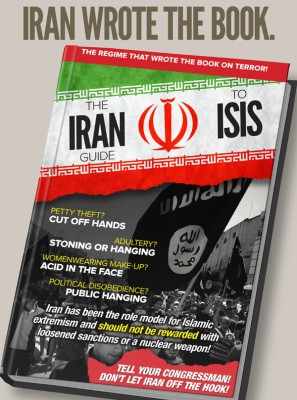
But the blueprint for these grotesque public executions did not begin with ISIS, but rather has been a hallmark of the Iranian regime, which relies on public hangings – often with construction cranes substituting for gallows in town squares – and public amputations with power saws to enforce its medieval brand of justice.

Its religiously controlled courts dispense justice at the whims of the mullahs in Tehran and often with no witnesses, no open trials and no evidence. Tens of thousands ordinary Iranians have been sentenced in this manner and over 1,100 have been executed as catalogued by humanitarian and dissident groups such as Amnesty International.

Being a symbol and mass media template for ISIS and other terror groups is not the only contribution of the Iranian regime in 2015. It also provided ample funding of various terrorist and extremist groups including its long-time proxy in Hezbollah and its recent funding of Houthis rebels in Yemen and the virtual takeover of Iraq’s military and the organization of Shiite militias to fight there and in Syria.

It is not an understatement when various analysts, commentators and journalists have all noted how the Iranian regime has become terror central in 2015.

That became more evident in news media investigations in March of a shadowy unit in the Iranian Revolutionary Guards Quds Forces known as Unit 190 which has fueled many of the conflicts and civil wars raging across the Middle East and North Africa.

After a lengthy and in-depth investigation, Fox News traced the complex land, sea and air routes used by the Quds Force to move weapons to terror groups like Hezbollah, as well as the Houthis who have recently toppled the government in Yemen which only last year was being held up as an example by the Obama administration in the effective fight against terror.

At the heart of Unit 190 is Behnam Shahriyari, born in northwest Iran, who according to western intelligence sources runs a network of straw companies which skirt sanctions by packing rockets, night-vision equipment and grenades in powdered milk, cement and spare kits.

Fox News went on to show photos revealing a hanger at Tehran’s international airport which serves as warehouse and logistics center for the unit’s shipments of illegal weapons fueling conflicts that have killed thousands of innocent civilians globally.

That commitment to terrorism should be recognized by the world as not an ideological battle between Sunni and Shia as the Iranian regime would have us believe, but rather a straight battle for political power, land and military force between the Iranian regime and the rest of the Islamic world and on a much larger political stage, between what the mullahs in Tehran hope will be a new Shia sphere of influence versus the rest of the world.

Their reliance on proxy terror groups is a well-proven method of exerting influence around the world and not just this past year. One only has to look back at the use of Hezbollah to do the mullahs bidding including:

  • Bombings of the U.S. Embassy and barracks in Beirut, Lebanon in 1983 killing 241 Americans and another bombing of the embassy annex in 1984;
  • Hijacking of TWA Flight 847 in 1985;
  • Systematic kidnapping and hostage taking of Americans and Europeans from 1982 to 1992 in Lebanon;
  • Khobar Towers bombing in 1996 killing 19 American servicemen; and
  • Training and arming of insurgents during the Iraq War targeting thousands of innocent Iraqis and also American service personnel.

Now that Hezbollah has provided the bulk of fighters in Syria over the past two years, now aided by mercenary Afghans recruited by the Iranian regime and joined by Quds Force fighters, the regime has made saving Assad in Syria its number one foreign policy initiative next to securing a nuclear deal with the West.

But unlike most other nation states, Iran is not a cult of personality or even a political system. It is a religious theocracy dominated by a select few elite mullahs who work tirelessly to preserve their power and enrich themselves and their families through the skimming off the economy through black market sales of oil otherwise embargoed by international economic sanctions.

It is a regime terrified of the one thing that could bring down its carefully constructed house of cards: ordinary Iranians who have turned their backs on the Islamic state and work towards a democratic, multicultural and pluralistic society.

It is because of the potential for real change in Iran coming from ordinary Iranians that we can only hope 2016 will be much different than 2015.

By Michael Tomlinson

Filed Under: Blog, News Tagged With: Featured, Iran Terrorism, Islamic Extremism, Sanctions

Iran Regime Promises More Missiles in Spite of UN Ban

December 17, 2015 by admin

Iran Regime Promises More Missiles in Spite of UN Ban

Iran Regime Promises More Missiles in Spite of UN Ban

Sounding as defiant as ever, the Iranian regime announced it would not accept any restrictions over its ballistic missile program after the United Nations Security Council’s Panel of Experts concluded in a confidential report that last October’s test firings of a new ballistic missile violated UN restrictions banning development of nuclear-capable missiles by the Islamic state.

“We tested Emad to show the world that the Islamic Republic will only act based on its national interests and no country or power can impose its will on us,” Defense Minister Hossein Dehghan was quoted as saying by the state news agency, IRNA.

Ballistic missile tests by Iran are banned under Security Council resolution 1929, which dates from 2010 and remains valid until the July nuclear deal between Iran and world powers goes into effect, according to Reuters which first broke the news about the confidential UN report.

Once the deal takes effect, Iran will still be “called upon” according to Reuters not to undertake any ballistic missile work designed to deliver nuclear weapons for a period of up to eight years, according to a Security Council resolution adopted in July right after the nuclear deal.

The regime contends that the resolution would only ban missiles “designed” to carry a nuclear warhead, not “capable of”, so it would not affect its military program as Tehran does not pursues nuclear weapons. The distinction is akin to saying a gun that is not designed to kill humans expressly, but is capable of killing humans is somehow different.

It is that kind of linguistic gymnastics which has characterized the regime’s approach to nuclear negotiations and its support of terror groups and the Assad regime in Syria. Regime leaders such as top mullah Ali Khamenei have consistently issued statements inconsistent with public statements made by other regime officials such as Hassan Rouhani and foreign minister Javad Zarif. The contradictions coming out from the regime could give anyone fits trying to detangle the mess.

Therein lay the strategy of the mullahs in that they seek to create this confusion in order to provide the wiggle room necessary to justify any action they see fit. By declaring its missiles not expressly designed for nuclear weapons, they can ignore international bans. By declaring the lifting of any sanction under the nuclear deal tardy or slow, the regime could declare the agreement null and void at any time and build a nuclear weapon at will.

It is the false promises made during the nuclear talks that are now coming to haunt the rest of the world as they see the Iranian regime do whatever it pleases to fit the narrative it chooses to articulate.

Rouhani himself couldn’t stop from making a verbal slam dunk when he went on state television calling the vote by the International Atomic Energy Agency’s board of governors to close out its inquiry into the regime’s past military practices in its nuclear program in spite of highly critical findings by inspectors that the regime continued to develop nuclear weapons well into 2009 and still had not fully answered outstanding questions.

The Tehran regime has announced its intentions to bulk up on Russian military hardware in a buying binge that started with completion of the sale of S-300 advanced anti-aircraft missile batteries.

On the shopping list by the regime’s military are advanced, fifth-generation Russian T-90 battle tank, along with a range of other major defense items, according to Brig. Gen. Ahmad Reza Pourdastan, the regime’s top ground commander, during a defense conference in the Khorasan region of northern Iran.

With the regime due to receive an estimated $150 billion in frozen assets from the lifting of economic sanctions from the nuclear deal, it is clear now the intention of the regime is to spend heavily on military hardware, not in jumpstarting a moribund economy that is punishing Iran’s citizens contrary to the claims made by Iran lobby members such as Trita Parsi of the National Iranian American Council.

Pourdastan also said during the conference that the military needs helicopters, heavy weaponry and advanced combat equipment. While the new requests undermine Iran’s own defense industry, the ground forces commander said that the country’s military industrial complex will continue to develop, according to the International Business Times.

“The Iranian defense industry has strong potential. Nevertheless, we will constantly take care of modernizing it,” he said.

The new moves on the military front have many in Washington calling for new and increased sanctions on the Iranian regime to address all of the issues not addressed by the original nuclear agreement.

Jennifer Rubin writes in the Washington Post suggesting that “new pressure needs to be applied to Iran.”

She also quotes from Eliot A. Cohen, Ray Takeyh and Eric Edelman in a piece in Foreign Policy, suggesting:

“In addition to revising the nuclear agreement, the United States should punish Iran for its regional aggression, sponsorship of terrorism, or human rights abuses. To do so, it should segregate Iran from the global economy by restoring as much of the sanctions architecture as possible. . . . And it should launch a campaign of political warfare to intensify the Iranian public’s disenchantment with the regime and deepen dissension within the ruling circle.”

It would be wise for the world to recognize another race has begun on trying to restrain a newly militant Iranian regime.

By Michael Tomlinson

Filed Under: News Tagged With: #NuclearDeal, Featured, Iran Human rights, Iran's frozen assets, Sanctions, Trita Parsi

When Past Conduct Means Nothing for Future Actions

December 15, 2015 by admin

When Past Conduct Means Nothing for Future Actions

When Past Conduct Means Nothing for Future Actions

In all facets of our daily lives, we always take into consideration past conduct. If the plumber you hired did a lousy job fixing a leak, you aren’t going to hire them again. If the chef at a restaurant leaves a fly in your soup, you’re liable to walk out without paying and post a nasty review on Yelp.


But only in the case of the Iranian regime does this rule somehow not apply as evidenced by the turmoil over the recently completed nuclear agreement.


As Judith Miller and Charles Duelfer point out in an editorial for Fox News, “is Iran’s past – its habit of cheating on its international nuclear agreements — prologue? Should the Obama Administration accept Iran’s lies about its earlier efforts to design and develop a bomb in exchange for insisting on its strict compliance with the new deal it has made limiting the size, scale and nature of its nuclear program?”


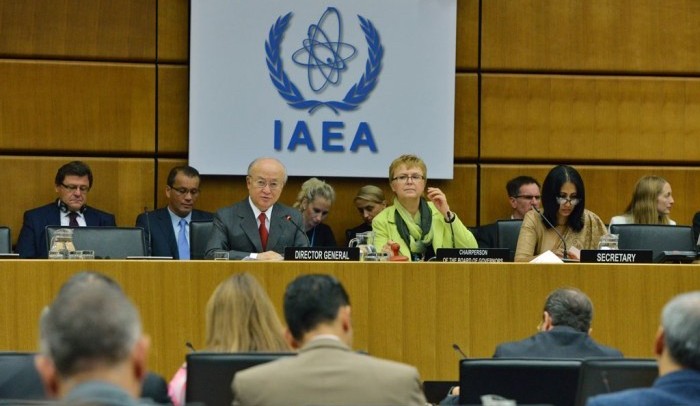
The question is an important one as the International Atomic Energy Agency board of governors meets today to vote on a final report that largely overlooks the Iranian regime’s past history of lying and deceit over its nuclear program and instead rubber stamp approval of closing the file on the regime’s case even though the mullahs have not complied with the original scope of questions the IAEA had about its program.


As Miller and Duelfer explain, the IAEA’s own report damns the mullahs with faint praise:


The IAEA report states that Iran provided only partial or incorrect answers to some questions about efforts to design and test components of a nuclear weapon design (as distinct from the process of enriching the component nuclear material). Specifically, it concludes, Iran’s cover up has “seriously undermined the agency’s ability to conduct effective verification” at Parchin, a military site where Iran is thought to have tested implosion devices in a now-missing chamber. Based partly on a visit there which did not conform to usual Agency inspection procedures, satellite imagery and sampling at the site conducted by Iran but supervised remotely by the IAEA, inspectors dispute Iran’s assertions that only chemical weapons were stored there. The evidence to date, the report declares, “does not support Iran’s statements.”


“Overlooking Iranian stonewalling about aspects of its earlier work,” Miller and Duelfergo on to write. “Only makes it harder to devise an effective monitoring scheme for Iran’s current nuclear program, but also establishes a terrible precedent for arms control accords with other states. Because Washington and its allies are permitting Iran to begin implementing the new deal and get sanctions lifted with a lie, Iran’s past cheating is destined to be prologue.”


The fact that – moving forward – the agreement with the regime is built on a lie only means the mullahs have been given the green light to continue the same behavior in the future. It is a fact already made apparent with Tehran’s recent test firings of two ballistic missiles that violated United Nations sanctions prohibiting the development of nuclear-capable missiles.


Add to that the rest of the world basically did nothing about it except use harsh language.

It is a crucial point that Michael Singh, managing director of the Washington Institute for Near East Policy, and Simond de Galbert, a French diplomat and visiting fellow at the Center for Strategic and International Studies, elaborate on in an editorial in the Wall Street Journal.


“Continuing to insist on a complete investigation into Iran’s nuclear weapons activities is the first test of international determination to strictly implement the nuclear deal. Failing this test would signal to Tehran that the West will allow it to dictate the terms under which the agreement is implemented in the coming years. It would also undermine the credibility of international non-proliferation mechanisms, encouraging other would-be nuclear powers that they can escape scrutiny. If these mechanisms are to succeed in deterring Iran and others in the future, their integrity must be zealously guarded,” they write.


James Phillips, senior research fellow for Middle Eastern affairs at the Douglas and Sarah Allison Center for Foreign Policy Studies at the Heritage Foundation, was even more blunt in a piece in the Daily Signal.


“In short, Tehran is actively undermining longstanding U.S. nonproliferation goals on two fronts. Yet the Obama administration has done little to push back for fear of jeopardizing its risky nuclear agreement, which it believes will enhance its foreign policy legacy,” Phillips writes. “But the administration’s complacent acquiescence to Tehran’s disturbing actions is likely to result in a dangerous and unwanted legacy: an arsenal of nuclear-tipped missiles in the hands of the world’s foremost state sponsor of terrorism.”


Even members of President Obama’s own party are expressing alarm at the free pass being given the Iranian regime.


“I understand that most of Congress and the administration are very distracted by the global refugee crisis, by the terrorist attacks in Paris, by our conflicts with ISIS,” said Sen. Chris Coons (D-Del.) “The reality is with this deal, I’m on the administration’s side, but they need to be doing more…. We have to have a menu of responses that we and our allies have agreed on and that we will take. Or the Iranians will pocket it and keep moving.”


“We know even from the IAEA reports that they were engaged in a program — they weren’t truthful about that,” said Rep. Jan Schakowsky adding that “we need to be on top of what Iran is doing and do everything we can to have full compliance”


It is against this potential future where the Iranian regime is not held accountable that holds the greatest threat to global security and peace. It is a future that is zealously protected by the Iran lobby which has ignored the Paris attacks, the San Bernardino murders and the rise of extremist Islam fueled by the mullahs in Tehran who preach far and wide their radical beliefs.


It is also why even as San Bernardino attack victim Bennetta Bet-Badal, an Iranian who fled at age 18 during the Islamic revolution, was laid to rest at her funeral in California, the Iran lobby such as the National Iranian American Council could not even issue a simple tweet commemorating her death or the acknowledge the suffering of her family.


So while TritaParsi or Reza Marashi cannot send their condolences, we do on behalf of everyone around the world who yearns for peace and stands up to the threat of Islamic extremism.


To the family of Bet-Badal, we send our sincerest condolences and hope you will see a day when the world is free of mullahs issuing fatwas and dispensing brutality in the name of a faith of peace and love.

By Michael Tomlinson

Filed Under: Blog, News Tagged With: #NuclearDeal, Appeasement policy, Featured, Iran deal, Nuclear Deal, Sanctions

Iran Lobby Glosses Over IAEA Report on Iran Nuclear Work

December 3, 2015 by admin

Iran Lobby Glosses Over IAEA Report on Iran Nuclear Work

Iran Lobby Glosses Over IAEA Report on Iran Nuclear Work

The International Atomic Energy Agency released its long-awaited report detailing the military dimensions of the Iranian regime’s nuclear program and unveiled disturbing new details that have left the Iran lobby, especially the National Iranian American Council, scrambling to cover up.

In the report, Iran was actively designing a nuclear weapon until at least 2009, far later than virtually all intelligence agencies had believed and proving the regime’s ability to conceal its design activities while under intense scrutiny and even spying from various nations.

The report, which according to the New York Times, was compiled largely based on partial answers provided by Iran after completing nuclear talks last July, concluded that the regime was “conducting computer modeling of a nuclear explosive device” before 2004 and continued those efforts right through President Obama’s first term in office.

The IAEA detailed a long list of experiments conducted by the regime “relevant to a nuclear explosive device” directly contradicting claims made by the Iran lobby and the mullahs that Iranian regime’s nuclear program was only for civilian and peaceful purposes.

We now know through Iranian regime’s own admission, it was trying to build nuclear weapons at a feverish pace.

But the IAEA concluded that substantial gaps existed because the regime refused to provide answers to several key questions, restricted the ability to interview key scientific personnel and limited sampling of sites and facilities only after they had been scrubbed.

The nuclear deal negotiated with the Iranian regime mandated limiting Iran’s ability to build a bomb for at least 15 years, but the inability to paint a complete picture and the revelation that Tehran had been conducting work unbeknownst to the rest of the world leaves significant doubt as even that goal is attainable.

According to the Times, Tehran gave no substantive answers to one quarter of the dozen specific questions or documents it was asked about, leaving open the question of how much progress it had made.

At Iran’s Parchin complex, where the agency thought there had been nuclear experimental work in 2000, “extensive activities undertaken by Iran” to alter the site “seriously undermined” the agency’s ability to come to conclusions about past activities, the report said.

The response from Capitol Hill was swift and bipartisan.

“I think we’re getting off to a very, very poor start,” Senate Foreign Relations Committee Chairman Bob Corker (R-Tenn.) told reporters after a roughly two-hour top-secret committee hearing.

“These are exactly the things that we talked about during the hearing process that raised concerns and they’re being validated right now,” he added.

“It just sets a very bad precedent that if Iran thinks it can violate the world’s will, as expressed by Security Council resolutions, and in essence face no consequence for it,” said Sen. Robert Menendez (N.J.), one of the four Democrats who voted against the deal in September.

The defense offered by the NIAC’s Trita Parsi through a press release was tepid and paper thin as he focused on the issue of complying with the terms of the agreement in releasing the report, but not in the report’s findings themselves, praising the IAEA’s “assessment of coordinated ‘activities relevant to the development of a nuclear explosive device,’ in Iran prior to 2003, and that there have been no credible indications of such relevant activities since 2009.”

Parsi of course does not mention the fact the work conducted through 2009 was denied by Tehran and by Parsi himself and that the refusal by the mullahs to answer specific questions left the report, at best incomplete, and at worst a whitewash.

The Iran lobby is now finding it harder and harder to cover for the regime because its own promises and arguments are now all coming to be uncovered as falsehoods and outright deceptions. The fortunate thing about the internet is you can always search and look back at the statements people like Parsi have made and in the context of what is happening now, realize just how really wrong they were.

With the IAEA report, it’s just another blow to any shred of credibility the Iran lobby had.

By Michael Tomlinson

Filed Under: Current Trend, News Tagged With: #NuclearDeal, Featured, Iran deal, Iran Human rights, Iran Lobby, Iran Mullahs, Iran sanctions, Iran Talks, National Iranian American Council, NIAC Action, Rouhani, Sanctions, Trita Parsi

Tying Terrorism to the Environment Doesn’t Excuse Iran Regime

December 2, 2015 by admin

Tying Terrorism to the Environment Doesn’t Excuse Iran Regime

Tying Terrorism to the Environment Doesn’t Excuse Iran Regime

As world leaders gathered this week in a Paris still suffering from the after effects on a series of bloody terrorist attacks for a global summit on climate change, one of the more controversial side topics to erupt from it was the claim of a linkage between the planet’s extreme weather changes and the rise in extremist terror around the world.

The world’s news media have been filled with analysis and debate, which has filtered over into the U.S. presidential campaign as well. Evan Halper in the Los Angeles Times recaps some of that debate as the issue has been promoted by luminaries such as Britain’s Prince Charles and denounced by Rupert Murdoch’s Sun newspaper.

The linkage from proponents comes from the idea that global warming has shifted weather patterns to such an extent that crop failures and long-term drought have led to deprivation of impacted regions of the globe that have lent themselves to the spawning of extremist groups initially intent on acquiring limited resources such as food, water and arable land to curry the favor and recruitment of desperate people.

One case in point has been the building debate over root causes of the Syrian civil war, which some climate activists have claimed had its start in a decade-long drought that caused the mass migration of some 1.5 million people out of farming areas and into refugee status and provided a fertile recruiting group for extremist groups.

The complexity of such a debate must also take into account issues of religion, politics, economics and even personal graft and greed; all issues of pressing relevance throughout the Middle East and developing world.

But the Iran lobby and the Iran regime have been quick to latch onto this theory as an alternative rise in Islamic extremism and put some distance between the mullahs in Tehran to terror groups and terrorist activities they have historically supported such as Hezbollah in Lebanon and Syria and the Houthis in Yemen.

The regime was so intent on fostering this idea that it sent Masoumeh Ebtekar, head of its Department of Environment, to Paris to speak on the sidelines of the global climate summit and gave her remarks broad play in state-run media.

But even when the topic is rising temperatures, the mullahs could not miss out on any opportunity to voice their time worn demand for the immediate lifting of all sanctions against it by having Ebtekar make the promise that the regime would cut its greenhouse emissions by 4 percent and increase those cuts to 12 percent if sanctions are fully lifted.

“I wish to urge the UN system to initiate an assessment on the carbon footprints of war, conflicts, security and terrorism,” Ebtekar said. “Those perpetuating conflicts are in fact accomplices of the global warming process.”

It’s an interesting statement to make from the regime’s leadership considering that their gross mismanagement has turned what was once called the cradle of civilization into what is arguably now one of the greatest environmental disasters on the planet.

Tehran has been rated one of the most polluted cities in the world with cars and buses using mostly leaded gasoline, which is heavily subsidized by the regime in order to quell a restive population, but which has the unfortunate side effect at negating any effort to conserve and leads to profligate and highly inefficient traffic patterns.

Its traffic management systems are virtually non-existent with little to no vehicle inspection, mobile emission testing or controls and a government bureaucracy so corrupted by the mullahs nepotism and favoritism that the wealthy children of mullahs and those aligned with the Revolutionary Guards Corps are often seen tooling around in gas guzzling Lamborghinis and Ferraris.

The rural parts of Iran suffer from large-scale overgrazing and growing desertification and deforestation turning large swathes of the country into desert dunes, while industrial and urban wastewater runoff has contaminated most rivers, coastal areas and underground aquifers.

The World Bank estimates that losses inflicted on the regime economy as a result of deaths coming from air pollution alone reach $640 million or 0.57 of total gross domestic product for the entire nation, while the UN Environment Program ranked Iran 117th among 133 countries in terms of environmental indexes.

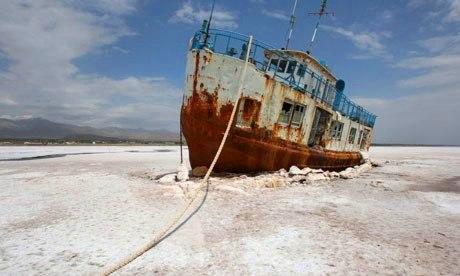
One example of the environmental mismanagement of the regime is the drying up of Lake Urmia in the northwest of Iran, which has shrunk a stunning 70 percent and is in danger of permanently disappearing after being the sixth largest saltwater lake in the world.

Things are so bad that Iran generates an estimated 50,000 tons of trash every day with only 70 percent of it disposed of safely and an even smaller amount redirected into reuse and recycling. The rest of the garbage finds its way into the country’s waterways and forests. Iran ranked worst in the world for soil erosion as well in 2011.

The degradation of Iran’s environment has led to mass discontent throughout the nation as the country’s environmental activists have taken to protesting the mullahs’ mismanagement much in the same way Iranian dissidents protested human rights violations.

The failure of Hassan Rouhani to live up to campaign promises to clean up the environment have led to top mullah Ali Khamenei to issue his own 15-point list of policy directives to staunch some of these problems. In reading the policy directive, one could almost envision it being a verbatim policy paper written by the Obama administration’s Environmental Protection Agency as it calls for lofty goals such as “bilateral, multilateral, regional and international partnerships and targeted cooperation in the environmental field.”

But no matter how many “laterals” the regime undertakes, what is abundantly apparent is that the regime is more concerned about practical political and military matters than environmental ones as it spends much of its treasury on supporting terror groups and the proxy wars in Syria, Iraq and Yemen.

If President Obama is correct and extremist terrorism is given its birthplace out of the degraded environments of regions plagued by drought and famine, then Iranian regime’s dismal environmental management has certainly produced bumper harvests of terrorists and violence.

By Laura Carnahan


Filed Under: Blog, News Tagged With: Featured, Iran, Rouhani, Sanctions

Myth of Hardliners vs. Moderates in the Iran Regime

November 9, 2015 by admin

Myth of Hardliners vs. Moderates in the Iran Regime

Myth of Hardliners vs. Moderates in the Iran Regime

One of the cornerstones of the arguments made by the Iran lobby in favor of the nuclear agreement with the Iran regime was that its passage would empower “moderate” coalitions within Iran to push against “hardliners” in opening up the regime to the outside world.

It was a nice fairy tale, but like most children’s stories, it’s not based in facts or the real world. Regime advocates such as Trita Parsi and Reza Marashi of the National Iranian American Council and Joseph Cirincione of the Ploughshares Fund yelled from the rooftops that the nuclear deal would serve as the bridge towards a more open and inclusive relationship between the regime and the rest of the world.

But the reality has been very different and well documented as the mullahs in Tehran doubled down on a policy of aggressive militarism in Syria and Yemen, while also launching a new brutal crackdown at home with scores of new arrests and executions that have been widely condemned by human rights and dissident groups.

But for Iran, the mythology of the “moderate” factions within a fractured government is just too good to let go, so the regime continues to push the story of a “battle” within the regime as personified by Hassan Rouhani leading the charge for moderation and inclusiveness vs. Ali Khamenei and the hardline elements in the military and judiciary.

Many Western news media are lulled into the same storyline by giving it plenty of play such events over the weekend in which Rouhani gave a broadcast speech in which he criticized “hardline media” hinting that some outlets are connected to security forces responsible for a wave of recent arrests in the country aimed at crippling Western influence, according to the New York Times.

The Times dutifully reported that Rouhani had spoken out against the wave of arrests and leveled a veiled criticism at the regime’s 12-member Guardian Council at the potential exclusion of candidates in the upcoming elections.

First of all, the mere fact that Rouhani could be criticizing the Guardian Council for restricting candidates is particularly ironic since it was the Council that cleared the pathway for Rouhani to become president by eliminating hundreds of potential candidates.

Also, the reporting of this so-called rift reveals the knowledge and cultural gap Western news media have about the workings of the regime government. The authority vested in Khamenei is near absolute, as is his control over the military, judiciary and economy. Rouhani’s portfolio by comparison is Spartan at best and serves largely to fulfill the policies and goals of the religious cadre of mullahs that run Iran.

Khamenei, and by extension the mullahs, were interested in a nuclear deal solely to relieve the regime of crippling economic sanctions that were threatening their grip on power by inciting an increasingly restive Iranian people to protests against the impoverished lives they were living.

The object for Khamenei was to secure release of billions of dollars in frozen assets and be given a free pass by the West to pursue his goals without fear of retaliation of threatened new sanctions. To that end, Khamenei achieved his goals which is why he has embarked on his latest plans to secure his domestic base by cracking down on dissidents and the media; even going so far as to arrest another American, Siamak Namazi who is closely tied to Rouhani, and launch a deadly attack on Camp Liberty in Iraq which houses members of the Iranian resistance.

Given the regime’s past history of dealing with internal dissent, including the ouster of officials who speak out against Khamenei or imprisonment of dissenters, one wonders why Rouhani would risk censure or even expulsion by Khamenei for his perceived bold statements supporting a free press and opposing Khamenei.

Simply put: Because it’s just a show. Rouhani always has been and remains a loyal foot solider for the regime and was hand selected by Khamenei for his post. His value to Khamenei comes from being perceived by the West as a “moderate” face. This allows Khamenei the luxury of running the oldest scam anyone watching a police procedural like “Law and Order” would recognize.

Rouhani is the good cop to Khamenei’s bad cop.

Together they have manipulated the West into believing the idea of a schism within Iran to the extent the West needs to do more to help empower Rouhani against the “hardliners.” In essence, the nuclear negotiations are not over for Iran; they never stopped. For Khamenei and Rouhani, the nuclear agreement is still being negotiated and the West needs to deliver in order to gain the regime’s continued “compliance.”

This was evident in the inspection of the Parchin military site by the International Atomic Energy Agency after it had been scrubbed and sanitized. It was also shown by the invitation from the U.S. to include Iran in international talks on Syria even after Iran mullahs mounted a large-scale offensive there alongside Russia.

Sadly Western governments seem to be playing the game the mullah Rouhani and Khamenei want them to, pretending that there are “moderates” within a regime that has plus 2000 executions on his record just during the recent two years.

By Michael Tomlinson


Filed Under: Blog, News Tagged With: #NuclearDeal, Appeasement policy, Featured, Iran, National Iranian American Council, NIAC, NIAC Action, nuclear talks, Parchin, Reza Marashi, Sanctions, Trita Parsi

  • « Previous Page
  • 1
  • …
  • 5
  • 6
  • 7
  • 8
  • 9
  • Next Page »

National Iranian-American Council (NIAC)

  • Bogus Memberships
  • Survey
  • Lobbying
  • Iranians for International Cooperation
  • Defamation Lawsuit
  • People’s Mojahedin
  • Trita Parsi Biography
  • Parsi/Namazi Lobbying Plan
  • Parsi Links to Namazi & Iranian Regime
  • Namazi, NIAC Ringleader
  • Collaborating with Iran’s Ambassador

Recent Posts

  • NIAC Trying to Gain Influence On U.S. Congress
  • While Iran Lobby Plays Blame Game Iran Goes Nuclear
  • Iran Lobby Jumps on Detention of Iranian Newscaster
  • Bad News for Iran Swamps Iran Lobby
  • Iran Starts Off Year by Banning Instagram

© Copyright 2026 IranLobby.net · All Rights Reserved.