Iran Lobby

Exposing the Activities of the lobbies and appeasers of the Mullah's Dictatorship ruling Iran

  • Home
  • About
  • Current Trend
  • National Iranian-American Council(NIAC)
    • Bogus Memberships
    • Survey
    • Lobbying
    • Iranians for International Cooperation
    • Defamation Lawsuit
    • People’s Mojahedin
    • Trita Parsi Biography
    • Parsi/Namazi Lobbying Plan
    • Parsi Links to Namazi& Iranian Regime
    • Namazi, NIAC Ringleader
    • Collaborating with Iran’s Ambassador
  • The Appeasers
    • Gary Sick
    • Flynt Leverett & Hillary Mann Leverett
    • Baroness Nicholson
  • Blog
  • Links
  • Media Reports

Iran Regime Escalating Tensions With US Navy

October 14, 2016 by admin

Iran Regime Escalating Tensions With US Navy

Iran Regime Escalating Tensions With US Navy

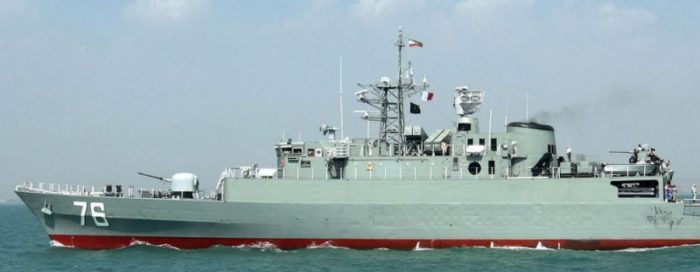
This week has seen tensions rise off the coast of Yemen to unheard of levels as Iranian-backed Houthi rebels twice fired cruise missiles at US Navy warships and in response, a US Navy destroyer fired Tomahawk cruise missiles destroying three coastal radar installations that were used to track the American ships.

Tensions rose even more when the Iranian regime announced it was sending two Iranian warships to the Gulf of Aden in close proximity to one of the world’s most important shipping routes.

“Iran’s Alvand and Bushehr warships have been dispatched to the Gulf of Aden to protect trade vessels from piracy,” regime-controlled Tasnim News Agency reported.

The move introduces Iranian warships far from their operating bases and coastline along the Persian Gulf and puts them adjacent to US warships at a time when threatening behavior is being met with salvos rather than radio warnings.

The Iranian regime has used its navy over the past year to engage in an escalating game of chicken in the Persian Gulf, including having ships make aggressive high speed runs at US warships and ignore radioed warnings and even shots fired across their bows.

Earlier, the Iranian regime detained two US patrol boats that had strayed into waters claimed by the regime and paraded captive US sailors on television and even built a monument to the episode.

The move was seen as the latest escalation in U.S.-Iran tension related to a proxy war in Yemen, where the two are backing opposing sides. The U.S. in March 2015 joined a Saudi-led military coalition to support the embattled Yemeni government against Iranian-backed Houthi rebels, according to The Hill.

Although the Tasnim News Agency reported that the Iran ship deployments were to “protect the country’s trade vessels against piracy in the unsafe zone,” it also noted that it “coincides with the US decision to directly get involved in a Saudi-led war against Yemen.”

For the Iranian regime and its mullahs, Yemen is rapidly rising in importance as it becomes a proxy war for the larger conflict it is pursuing in the region. The use of Houthi rebels as proxies is similar to the game plan used by the mullahs with Hezbollah in Syria and Shiite militias in Iraq, all of which are supplied by Iran’s Quds Forces and Revolutionary Guard Corps with weapons, ammunition and training.

The Houthi’s use of Chinese-made cruise missiles against the US Navy warships is a disturbing escalation since the weapons are not cheap and require a fairly high level of technical know-how to operate in coordination with radar tracking; technical expertise almost surely provided by the Iranian military.

Sen. Mark Kirk (R-Ill.), a leading advocate of a tough foreign policy toward Iran, said it was unacceptable that the Obama administration continues to relax financial sanctions on Iran while it supports the Houthi rebels in Yemen.

“I am relieved the crew of the USS Mason remain safe and unharmed in the Red Sea after Iran-backed Houthi rebels repeatedly launched missile attacks at them,” Kirk said in a statement.

“It’s counterproductive, absurd and unacceptable that the White House keeps unilaterally relaxing financial sanctions against the Iranian terror-sponsoring regime while Iran continues to actively support Houthi militants in Yemen that are trying to kill American servicemen and servicewomen in the Middle East,” he said.

The inconvenient truth for the White House is that after over a year of appeasing the Iranian regime, the US now finds itself on a brink of an actual shooting war with Iran; a fact that the Wall Street Journal editorial board warned about.

“The White House doesn’t want Americans to notice, but the tide of war is not receding in the Middle East. The Navy this week became part of the hot war in Yemen, with a U.S. warship launching missiles against radar targets after American vessels were fired on this week. Just when President Obama promised that American retreat would bring peace to the region, the region pulls him back in,” the Journal wrote.

“Don’t expect the White House to acknowledge this because the ironies here are something to behold. Mr. Obama is backing the Saudis in Yemen in part to reassure them of U.S. support after the U.S.-Iran nuclear deal that the Saudis opposed. Mr. Obama’s Iran deal was supposed to moderate Iran’s regional ambitions, so Mr. Obama could play a mediating role between Tehran and Riyadh. But the nuclear deal has emboldened Iran, and fortified it with more money, so now the U.S. is being drawn into what amounts to a proxy war against Iran. Genius,” the Journal added.

The increase in attacks against the US by Iran may be designed to weaken its support for Saudi Arabia and further fragment the coalition fighting Iranian adventures in Syria, Iraq and Yemen right now.

By Michael Tomlinson
Filed Under: Blog, News Tagged With: Featured, Iran, Iran sanctions, Iran Talks, Iran Terrorism, Irandeal, Nuclear Deal, Syria, Yemen

Key to Syrian Solution Lies in Pushing Iran Out

October 10, 2016 by admin


Key to Syrian Solution Lies in Pushing Iran Out

Key to Syrian Solution Lies in Pushing Iran Out

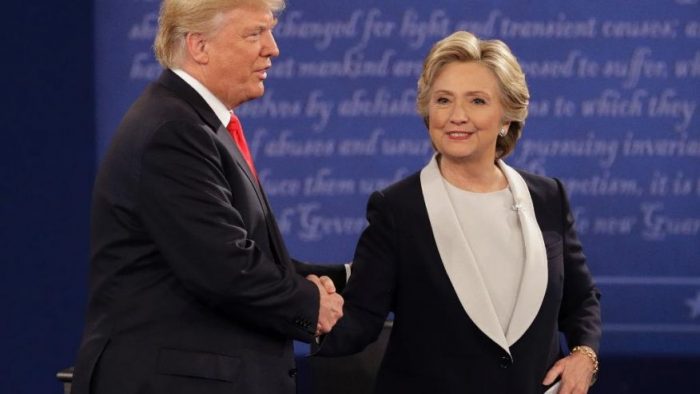
Sunday night’s presidential debate between Hillary Clinton and Donald Trump is sure to be analyzed, dissected and poured over for days, but while both candidates traded accusations on Syria and its effect to refugees, terrorism and geopolitics, neither candidate hit the mark when it came to highlighting the real solution to the Syrian civil war.

The real solution to stopping the bloodshed in Syria lies in getting the Iranian regime out of Syria.

The Syrian civil war has been raging since 2011 and it is easy to forget its beginnings and how it grew into the global conflagration it has become, but what has been indisputable has been the influence of the Iranian regime from the very beginning.

It is useful to recall that the source of the original unrest were protests by ordinary Syrians demanding democratic reforms in March of 2011 and the release of political prisoners. In many respects, the protests taking place on the streets of Damascus were eerily similar to protests on the streets of Tehran by Iranians protesting similar issues in the wake of a presidential election widely recognized as being fraudulent.

Within a month protests had spread throughout Syria and the Assad regime responded just as the mullahs in Tehran did two years earlier; with massive crackdowns by the military that included the indiscriminate shooting of civilians in the streets.

The images of dead and dying civilians in Tehran and Damascus are not the only things that connected the two regimes.

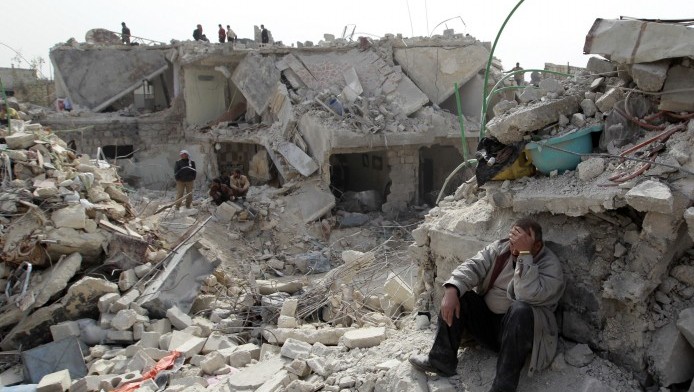
The Iranian regime acted quickly to funnel funds to the cash-strapped Assad regime after a series of punishing international sanctions were imposed for the regime’s use of chemical weapons and mass killing weapons such as barrel bombs on civilians, including hospitals; that support was estimated by the UN to be as high as $6 billion annually, with other human rights groups doubling that amount.

Additionally, the Iranian regime sent senior commanders from its Quds Forces to plan and lead operations involving Hezbollah terrorists to help repel the gains of Syrian rebels. This level of involvement increased with the forced recruitment of thousands of Afghan refugees as mercenaries, along with the shifting of Shiite militias from Iraq to fight in Syria.

The involvement of so much Iranian military capacity led to declarations from Syrian military officials that Syria might as well become a province of Iran.

Even with all of that Iranian regime interferences, the rebels were still making gains leading up to the actual shelling of Assad regime buildings in Damascus, which led to the now not-so-secret trip to Moscow by Quds Force commanders to beg for Russian intervention in Syria.

The increasing tempo of military actions collapsed a proposed cease-fire and led to claims and counter charges between the US and Russia reminiscent of the Cold War. Nothing illustrated that confusion more than the situation in the northern Syrian city of Aleppo.

The New York Times examined the zany alliances at work in Aleppo where there are Iraqi Shiite militiamen cheering for clerics who liken the enemy to foes from seventh-century battles. There are Iranian Revolutionary Guards fighting on behalf of a Shiite theocracy. There are Afghan refugees hoping to gain citizenship in Iran, and Hezbollah militants whose leaders have long vowed to fight “wherever needed.”

The messy mosaic of ground fighters on both sides has challenged Washington’s tangled allegiances. The United States is effectively allied with Iraqi Shiite militias to thwart the Islamic State in Iraq, but in Syria, some of those same militias are fighting on the side of the Assad government, which the United States opposes, and against a mix of rebel groups, some of them backed by the Obama administration.

The Daily Caller discussed the vast increases in Shiite militias in Syria.

“Most estimates of the total number of Shi’a militia fighters in all of Syria now exceed 60,000,” U.S. strategic advisory firm The Soufan Group notes. The Soufan Group highlights that this number may even exceed that of the actual Syrian Arab Army under command of Assad. These Shiite militias take orders only from Iran’s Revolutionary Guard Corps.

Alarmingly, even though the evidence is overwhelming that the only viable solution to Syria’s war lies in containing and ultimately removing Iran’s control of the Assad regime, the Washington Post reported efforts were underway by the Obama administration to actually weaken sanctions imposed on Syria.

According to lawmakers and staffers in both parties, the White House is secretly trying to water down the Caesar Syria Civilian Protection Act, a bipartisan bill that would sanction the Assad regime for mass torture, mass murder, war crimes and crimes against humanity. The bill, guided by House Foreign Affairs Committee ranking Democrat Eliot Engel (N.Y.), would also sanction entities that aid the Syrian government in these atrocities; that includes Russia and Iran.

The bill, named after a Syrian defector who presented the world with 55,000 pictures documenting Assad’s mass torture and murder of more than 11,000 civilians in custody, has 70 co-sponsors, a majority of whom are Democrats.

Now the White House has told members and staffers that the bill’s sanctions on Iran could violate the nuclear agreement the Obama administration struck with Tehran last year and the Russia sanctions could hurt any future efforts to work with Moscow diplomatically on Syria.

It is a stunning position to take and one disturbingly similar to arguments made by Iran lobby members such as the National Iranian American Council.

It seems that the similarities between Syria and Iran be beyond just murdered civilians in the street.

By Michael Tomlinson

Filed Under: Blog, News Tagged With: Featured, Iran, Iran deal, Iran Human rights, Iran Lobby, Iran Mullahs, Iran sanctions, Iran Talks, Iran Terrorism, IRGC, National Iranian American Council, NIAC, NIAC Action, Sanctions, Syria

Iran Regime Killing Environment Like Its People

October 3, 2016 by admin


Iran Regime Killing Environment Like Its People

Iran Regime Killing Environment Like Its People

The Los Angeles Times ran a story examining the deteriorating plight of Iran’s agricultural industry and state of its environment in general; both of which are spiraling downward as dismally as human rights for the Iranian people.

The Islamic paradise promised by the mullahs when they hijacked the Iranian revolution three decades ago, has not come to pass and in its place is a land that has grown parched, where crops have died and entire communities are on the brink of collapse.

Iran’s worsening water crisis has spread desperation across this parched farm belt. Families watch sons leave the villages to hunt for scarce work in the cities. Crops are abandoned. The elderly and infirm forego medical care because they barely have enough money to survive, the Times said.

Iran’s farmers have struggled with several successive years of drought. But environmental mismanagement, water overuse, the pressures of population growth and a government more concerned with security and economic challenges have exacerbated Iran’s agricultural problems, the Times added.

In June, Iran’s Meteorological Organization said 72% the country’s 80 million people were living in “prolonged drought” conditions. Lakes are drying up and cities like Tehran have considered rationing water.

All of which points a devastating picture of how poorly the mullahs have managed the precious natural resources of the country for its people, but that insensitivity to the environment goes all the way back the founding of the Islamic Republic.

The late Ayatollah Ruhollah Khomeini, founder of the Islamic Republic, once told an aide who worried about inflation that Iran’s 1979 revolution “was not about the price of watermelons” — meaning it stood for loftier goals such as economic equality and redistribution, said the Times.

Khomeini’s successors, today’s leaders such as Hassan Rouhani and Ali Khamenei, have even less regard for the environment as they pour billions of dollars into three wars in Syria, Iraq and Yemen and steer the billions in unlocked assets resulting from the nuclear deal to go on a military shopping spree to buy fighters, missiles, ammunition and bombs.

The situation is so dire in many of Iran’s heartlands that many Iranians don’t know what to do next and the regime has been unresponsive to all of their entreaties for help.

In Qiyasabad, residents now must dig as deep as 500 feet to find water. The Hablehrood river, which flows down dun-colored hills to the north, is too salty to use for irrigation, they say. Most farmers still flood their fields to irrigate crops, which is terribly wasteful.

“Ten years ago, I swear, our water was fresh and plenty,” said Karim Baluchi, 54. “Ten years ago I had a decent life.”

He and half a dozen co-owners asked the government this year for a $6,000 loan for a new well and water pump. No one has responded, he said.

According to the Times article, last June, a senior cleric raised eyebrows when he said the drought was caused by women failing to wear appropriate Islamic dress; a clear example of how backwards the mullahs view their nation’s problems.

That lack of concern over Iran’s crumbling environment extends to some of its greatest treasures, including the Asiatic cheetah, otherwise known as the Iranian cheetah, a subspecies of the world’s fastest mammal that exists only within Iran and is on the verge of extinction.

According to the Los Angeles Times, Bahman Jokar, head of the cheetah desk at Iran’s environmental agency, said about 50 cheetahs are believed to remain in Iran’s central deserts – a population so small that to save it requires emergency measures.

“Unfortunately our government and parliament have other top priorities and saving the Asiatic cheetah is not the top one,” Jokar said in a rare bit of candor from an Iranian official over how dire the situation is for the big cats which are deeply rooted in Persian culture and the history of the country going back more than ten centuries.

It’s worth noting that the Caspian tiger and Persian lion, two other species of big cats native to Iran have already gone extinct under the Iranian regime.

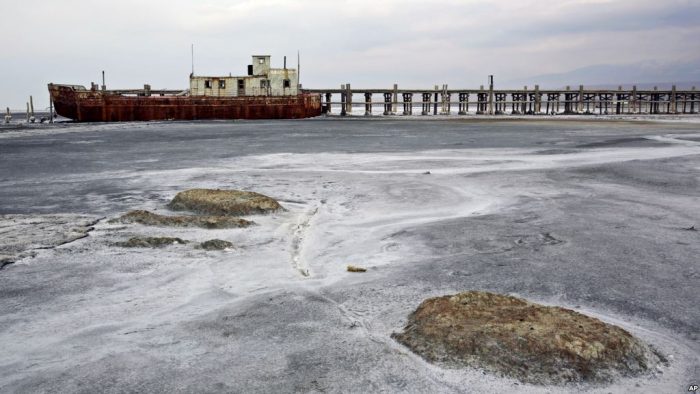
The gross mismanagement and disregard for Iran’s environment by the ruling mullahs extends to the perilous condition of Lake Urmia, the largest lake in the Middle East and sixth-largest saltwater lake in the world which has shrunk to 10 percent of its former size due to damning and overpumping of groundwater.

Even though Rouhani has made continued promises to save Lake Urmia for the cities in Iran that depend on its water, but little has been done and the damage may be irreversible according to environmentalists.

In an article in The Guardian, researcher Shirin Hakim and water management expert Kaveh Madani at the Centre for Environmental Policy of Imperial College, London, described Urmia’s surface as “an area facing a high risk of salt storms.”

The article pointed out that the shrinking of the lake has diminished a fragile ecosystem, with the gradual disappearance of native wildlife including the brine shrimp Artemia and migratory birds like flamingos and pelicans. Such degradation threatens dire economic consequences.

One of the main factors contributing to the state of Lake Urmia is the interference in the natural flow of water into the lake by over 50 dams. The damage has been compounded by unregulated withdrawal of water, water-intensive irrigation and the unsustainable use of fertilizers.

Even as Iran’s environment is destroyed and slowly turned into a wasteland, the mullahs and Rouhani are desperately working on an oil agreement with OPEC to allow it to pump even more oil to sell on the market in order to make up the enormous costs of fighting the Syrian war and keep the Assad regime afloat.

The irony is inescapable and so is the responsibility for this environmental catastrophe which rests on the mullahs in Tehran.

By Laura Carnahan

Filed Under: Blog, News Tagged With: Featured, hassan rouhani, Iran, Iran Human rights, Iran Mullahs, Khamenei, Syria

Iran Regime Goes For Broke to Save Assad in Syria

August 17, 2016 by admin

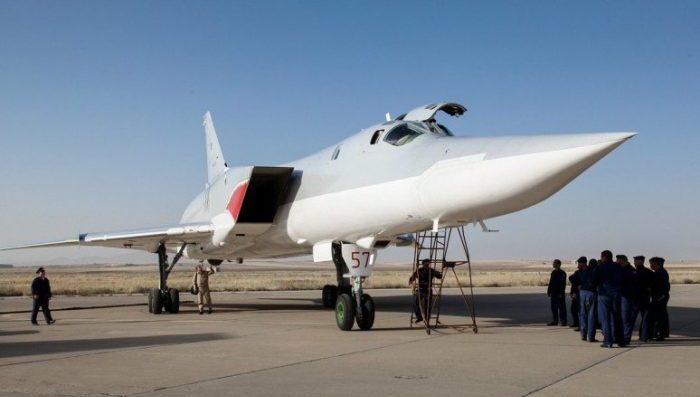
Russian bombersFor the first time in the five year long Syrian civil war, Russian bombers took off from Iranian airfields to carry out strikes in Syria against ISIS; opening up a new and potentially disturbing new dimension to the widening war.

While the Russian military alerted U.S. military commanders in advance—a welcome break from past episodes that almost resulting in strikes against U.S. personnel—the attacks can be debated as to whether or not ISIS was truly the target or moderate rebel forces opposed to Assad were targeted instead.

The complications arising out of Syria grow even more intertwined as the mullahs in Tehran ratchet up the stakes to keep Assad in power and maintain their own foothold on that important region of the Middle East.

That commitment of going all in to save the Assad regime as well as their Shiite sphere of influence was confirmed by U.S. military officials who now estimate as many as 100,000 Iranian-backed Shiite militia are fighting on the ground in Iraq, raising legitimate concerns that if ISIS is defeated in Iraq and Syria, the U.S. would now be stuck facing a hostile force in three unified countries.

Whether the force size is 80,000 or 100,000, the figures are the first-known estimates of the Iranian-backed fighters. The figure first surfaced in a recent Tampa Bay Times article and marks the latest evidence of Tehran’s deepening involvement in the war against ISIS. The growth also could create greater risk for Americans operating in the country, as at least one Iran-backed group vowed earlier this year to attack U.S. forces supporting the Iraqis.

Last August, Fox News first reported Qassem Soleimani, head of the regime’s Quds Forces, visited to Moscow 10 days after the landmark nuclear agreement in July to meet with Russian President Vladimir Putin and top Russian officials to plan Russia’s upcoming deployment to Syria in late September.

That was followed by a massive arms purchase of Russian weapons by Iranian mullahs, following the nuclear agreement and now comes the staging of air strikes from Iranian airfields.

The strikes in Syria and Iraq mirror and heightened intensity within Iran to suppress dissent as well as gather more pieces to be used on the hostage chessboard as the regime confirmed the arrest of yet another dual-national citizen, this one reportedly a British subject.

The person faces espionage charges after being taken into custody, prosecutor general Abbas Jafari Dowlatabadi told the official Islamic Republic News Agency. He didn’t disclose the person’s name or second nationality, or elaborate further on the case according to the Wall Street Journal.

At least six other Iranian dual nationals have been arrested this year, many of whom stand accused of spying or attempting to undermine the Iranian system. The pickup in arrests follows a rare prisoner swap agreed to in January under which Iran released four prominent American prisoners—including Washington Post reporter Jason Rezaian—and the U.S. freed seven Iranians, along with a widely ridiculed payment of $400 million in cash the regime has claimed as ransom.

Recent arrests in Iran include Nazanin Zaghari-Ratcliffe, a British-Iranian employee of the Thomson Reuters Foundation, the charitable arm of media giant Thomson Reuters, who was picked up in April and later accused of being a spy. Others include three Iranian-Americans and an Iranian-Canadian professor.

The latest American to be arrested, San Diego-resident Robin (Reza) Shahini was formally charged with “acting against national security,” “participating in protest gatherings in 2009,” “collaborating with Voice of America (VOA) television” and “insulting the sacred on Facebook,” but his lawyer has not been granted access to the evidence being used against Shahini, an informed source who requested anonymity told the media.

Interestingly, the Iran lobby has been particularly silent on the new wave of hostage taking, as well as the expansion of the Syrian and Iraqi conflicts and news came out today of how one of the ardent supporters of the regime’s receipt of the $400 million ransom payment was on the payroll of a prominent Iran lobby group without disclosing it.

A Washington Post writer who recently claimed that a $400 million cash payment to Iran was “American diplomacy at its finest” failed to disclose that he has been on the payroll of an organization that emerged as a chief architect of the White House’s self-described campaign to build a pro-Iran “echo chamber,” according to information obtained by the Washington Free Beacon.

Allen S. Weiner, a Stanford law professor and contributor to the Post’s opinions section, co-authored a piece arguing in favor of the Obama administration’s decision to pay Iran $400 million in hard currency in what many described as a “ransom payment” for the release of several U.S. hostages.

Weiner and the Post failed to disclose that the writer has long been on the payroll of the Ploughshares Fund, an organization recently exposed as a key cog in a White House-orchestrated campaign to build what it called a pro-Iran “echo chamber.”

Ploughshares provided millions of dollars to writers and experts who publicly pushed for last summer’s nuclear deal with Iran. Senior White House officials subsequently cited the group as its top pro-Iran ally.

The disclosure paints an even more disturbing picture of the efforts the Iran lobby and supporters of the regime will go to in order to paper over the bloody conflicts the Iranian regime is now waging around the world.

By Michael Tomlinson

Filed Under: Blog, News Tagged With: Featured, Iran, Iran deal, Iran Human rights, Iran Lobby, Moderate Mullahs, Qassem Soleimani, Syria

When Will Iran Regime Be Held Accountable for Terrorism?

June 30, 2016 by admin

When Will Iran Regime Be Held Accountable for Terrorism?

When Will Iran Regime Be Held Accountable for Terrorism?

One of the earliest lessons any child learns from a parent is that their actions have consequences. You scream, you’re told to be quiet. You hit your sibling; you get a time out in the corner.

These life lessons form the foundation of our behavior into adult life and help us conform to the restrictions and expectations of living in a civilized world. Even as an adult, we are constantly told our actions have consequences.

You show up drunk at work, you get fired. You rob a bank, you go to jail. You murder a person; you get sentenced to life in prison.

These are not hard lessons to follow and we all take to them fairly naturally.

Only in the arena of foreign affairs and politics do things tend to get more muddled and deviate from what we consider to be acceptable norms. In the case of the Iranian regime, those deviations tend to take on galactic-sized proportions.

Take for example Iran’s involvement in the Syrian civil war. It utilizes a proxy in the form of the terror group Hezbollah to fight on the side of the Assad regime. It uses its own Revolutionary Guard and Quds Forces to attack and target Syrian civilians. It recruited Russia to enter the war and used its fighters to target facilities such as Doctors Without Borders hospitals.

Throughout this bloody conflict, Iran has been selling the war to its own people like a variety show of television, using celebrities, actors and rich kids to justify its involvement.

As Varujean Avanessian writes in the National Interest, “Iranian officials rarely mention bolstering Syria’s Bashar al-Assad or maintaining access to Hezbollah in Lebanon as reasons for Iran’s intervention in Syria. Instead, defending the Shiite shrines and keeping ISIS away from Iran’s borders are the official theme vindicating Iran’s presence in Syria.”

“And a rather peculiar method is employed to peddle Iran’s message: formerly or currently banned celebrities now receive coverage from Iran’s conservative outlets, in exchange for offering favorable views on Iranian policies in Syria,” he writes.

Formerly banned TV host Reza Rashidpour—well known for his tough interviews with Iranian politicians and entertainers—was also enthusiastically covered by conservative outlets for trying to dampen the perception in the society that financial incentives are the main motive for Iranian fighters to go to Syria.

What goes unsaid is the regime’s use of financial inducements and pressure to recruit tens of thousands of Afghan refugees to fight in Syria. For the regime, the perception that paying fighters to go to Syria is the only effective tool it has to get the soldiers it needs is troublesome and worrisome to the mullahs in Tehran. It also underscores the inherent weakness of their position as the conflict drags on for years with no appreciable end in sight.

And yet the Iranian regime pays no penalty or suffers any harsh consequences from the international community for its actions in Syria.

The same can also be said with its almost daily threats to tear up an already broken nuclear agreement and restart its nuclear program—a program it historically denied ever existed.

Alaeddin Boroujerdi, chair of the Iranian regime parliament’s national security and foreign policy commission, warned that the Islamic Republic would “resume large-scale uranium enrichment” if leaders feel the international community is not doing enough for Iran under the nuclear deal.

“The Islamic Republic of Iran’s response to the other side’s non-compliance with the implementation of the nuclear deal will be uranium enrichment,” Boroujerdi was quoted as saying in Iran’s state-controlled press.

His bluster follows similar statements made by top mullah Ali Khamenei last month and have come to take on a certain “boy who cried wolf” tenor as regime leaders start focusing their ire on Western nations for the inept handling of their own economy and the rampant corruption running through regime-controlled industries.

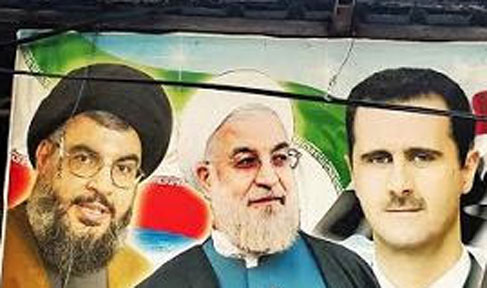
Even more alarming were statements made by Hezbollah’s leader Sayyed Hassan Nasrallah were he openly thanked the Iranian regime for its financial and material support over the years to his terror group.

The admission comes on the heels of Financial Action Task Force (FATF), the intergovernmental organization that sets global standards to combat money laundering and finance for terrorism and proliferation, once again placing Iran on its blacklist for supporting terrorism, yet granting the regime a reprieve from any additional sanctions in the hopes the nuclear deal might eventually pan out.

On what planet do you need to be from to connect the dots of Hezbollah’s own admission of support from Iran for terrorist activities and yet no consequences come from it?

Mark Dubowitz and Toby Dershowitz noted in a Forbes editorial that Tehran’s efforts to pass laws that purport to address international counter-terrorism financing standards are hollow and don’t conform to FATF standards. Iran’s definition of terrorism, for example, excludes groups “attempting to end foreign occupation, colonialism and racism,” and has other language used to justify terrorism against America and its allies. Iran’s leaders are telling the world “we will arm and bankroll whomever we want but won’t call them terrorists.”

The White House itself urged Iran on Monday to stop giving financial support to Hezbollah, warning of such continued backing won’t seep into “its interest.”

“We know that Iranian regime supports terrorism,” the White House deputy press secretary Eric Schultz told reporters aboard Air Force One. “And we know that Iran supports Hezbollah. And that is why we’ve issued the most serious and most severe sanctions ever on Iran for doing so. So it’s important for them to recognize their own behavior in enabling this.”

Yet, the same administration is trying to convince foreign banks to bankroll the Iranian regime and ignore the inconvenient truth of its support for terrorism.

It is arguably the most obtuse argument ever made in foreign policy since Neville Chamberlain came back from Munich claiming “peace in our time” from Adolf Hitler.

All of which goes to show that unless the Iranian regime finally understands the consequences of its actions, nothing will ever change there.

By Michael Tomlinson

Filed Under: Blog, News Tagged With: #NuclearDeal, Appeasement policy, Featured, Iran deal, Iran sanctions, Iran Terrorism, IRGC, Sanctions, Syria

Ties Between Iranian Regime and ISIS Exposed Through Syria

April 27, 2016 by admin

Ties Between Iranian Regime and ISIS Exposed Through Syria

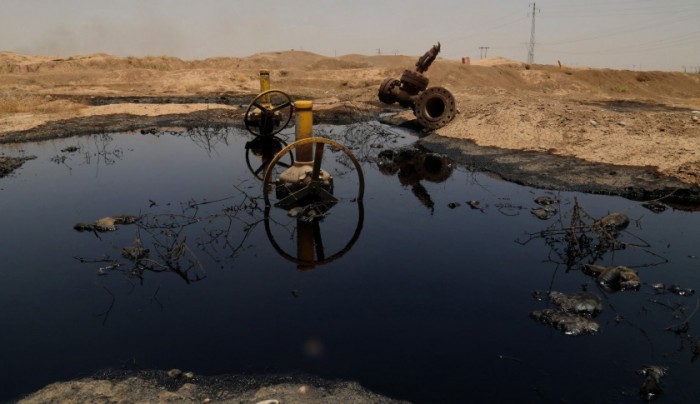
KIRKUK, IRAQ – JUNE 11: June 11 dated picture shows the the view of petroleum pipelines in Kone district, southern Kirkuk that the burglaries steal the crude oil during the clashes in Kirkuk, Iraq on June 11, 2014. Kurdish Peshmerga forces seize the control of Kirkuk where Iraqi army forces and Islamic State of Iraq and the Levant (ISIL) had clashes, and Iraqi forces abandoned the city after these clashes, in Iraq. (Photo by Stringer/Anadolu Agency/Getty Images)

It’s no secret that top Iranian regime leader Ali Khamenei placed preserving the regime of Syria’s Bashar al-Assad as a top priority and committed the Iran’s military and financial resources to keeping him afloat and alive as various rebel groups did battle with the government following the collapse of the Arab Spring protests.

That support to Assad from Iran included billions in cash, arms, ammunition, fighters ranging from Hezbollah terrorists to Afghan mercenaries to Shiite militia from Iraq. It also included Iran’s own Quds Force, Revolutionary Guard Corps fighters and most recently soldiers from its regular army.

Most importantly, the Iranian regime gave Assad its political backing on the world stage with Hassan Rouhani and Javad Zarif making it clear that Iran considered Assad’s removal a red line in the sand which it would not countenance no matter how many Syrian civilians were killed or turned into refugees by the escalating conflict.

For the mullahs in Tehran, the use of barrel bombs on civilians, the recruitment of Russian forces to attack Western-backed rebel groups and the lack of any real engagement against ISIS was not a cause of concern.

New documents just released to news media have shined a disquieting light on one reason why Iran made little or no effort to target ISIS for destruction although it gave much lip service to battling the terrorist group.

On May 16, 2015, U.S. Special Forces killed Abu Sayyaf, the nom de guerre for the number two man in ISIS’s oil operations who helped turn the terror group into the world’s wealthiest terror group, in Syria’s Deir Ezzour province.

The Wall Street Journal published an exhaustive story on Sayyaf’s rise in ISIS and his prodigious organizational skills in building and managing a multi-million oil operation that at its peak provided 72 percent of the terror group’s revenue from natural resources in territory it controlled.

Documents reviewed by The Wall Street Journal that were taken in the raid that killed Sayyaf describe the terror group’s construction of a multinational oil operation with help from officious terror-group executives obsessed with maximizing profits. They show how the organization deals with the Syrian regime, handles corruption allegations among top officials, and, most critically, how international coalition strikes have dented but not destroyed Islamic State’s income.

The responsibilities of Abu Sayyaf extended beyond oil. In September 2014, he was given custody of Kayla Mueller, a kidnapped American aid worker. Ms. Mueller, who had been sexually abused by Mr. Baghdadi after being taken hostage in 2013, was killed about five months later, U.S. officials said.

Memo No. 156 dated Feb. 11, 2015, from Islamic State’s treasury to Abu Sayyaf’s boss requested guidance on establishing investment relationships with businessmen linked to the regime of Syrian President Bashar al-Assad. The document said the terror group already had agreements allowing trucks and pipeline transit from regime-controlled fields through Islamic State-controlled territory.

The ties between ISIS and the Assad regime in a complex web of illicit oil transactions and payments made in U.S. dollars to allow for international money laundering explain much of why the Assad regime and Iranian forces have not targeted ISIS. For Assad, ISIS proved to be a reliable source of hard currency and an effective buffer against more moderate rebels backed by a coalition of Western nations including the U.S.

For Iran, the illicit partnership helped alleviate the financial burden of pumping money to keep the Assad regime propped up and allowed it direct its military forces against the less formidable rebel factions rather than the larger and better armed ISIS forces.

The connections prove the uncomfortable truth about the Iranian regime, which the Iran lobby has fought hard to keep out of the news, which is that it has helped maintain ISIS’s standing as the world’s leading terrorist group and has not sought to destroy it as claimed.

To this day, ISIS-controlled oil fields in Syria and Iraq still pump and sell roughly $1 million a day of oil with a significant portion of profits going to the Assad regime.

The Assad regime’s oil ties to the Islamic State have been well documented. At least two Syrian government officials, including a Russian-Syrian businessman named George Haswani, were sanctioned by the US last year for serving as middlemen between Assad and ISIS for oil deals.

The Daily Beast reported in December, meanwhile, that ISIS delivers both oil and natural gas to the regime. The report said the resources were transported via “midstream” service providers who move the resources from ISIS territory to government territory for profit.

“In exchange for gas, the regime provides utilities like electricity, which ISIS taxes accordingly,” wrote Matthew Reed, the vice president of Foreign Reports Inc., a Washington, D.C.-based consulting firm focused on oil and politics in the Middle East.

“At natural gas fields like those around Palmyra, which produce lighter liquid hydrocarbons in addition to gas, ISIS takes whatever it can turn into fuel,” he continued. “The gas goes west to Assad.”

These disclosures demonstrate the lack of honesty in claims made by the Iran lobby that the Iranian regime was intent on destroying ISIS and could prove to be a valuable ally to the U.S. the fight, when in reality the Iranian regime was an approving partner in Assad’s trade with ISIS.

The Journal only reviewed a small portion of the trove of documents captured in the raid to kill Sayyef. We can only assume even more incriminating material will still be revealed outlining the depth of cooperation between Assad and ISIS and by extension, Iran.

By Michael Tomlinson

Filed Under: Blog, News Tagged With: Featured, Iran, Iran Lobby, ISIS & Assad, Syria

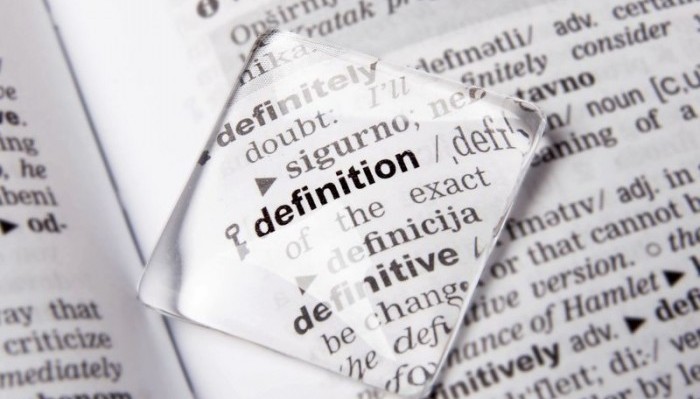
Iranian Regime Dictionary is not Webster’s

April 22, 2016 by admin

Iranian Regime Dictionary is not Webster’s

Iranian Regime Dictionary is not Webster’s

Noah Webster has been called the father of American English dictionaries, publishing the first edition of his dictionaries in 1828. Since then, his name has become synonymous for dictionaries and has become the bedrock for understanding and correcting the English language.

Language and its precise use have determined everything from lawsuits to love poems and most recently language has been at the heart of much of the disputes going on with the Iranian regime. For the mullahs in Tehran, language and the semantic differences it brings has been their lifeline in a sense because it allows them to argue one thing, while agreeing to something totally different.

Take for example the Iranian position in the Syrian conflict. Hassan Rouhani’s government has always maintained that no peaceful solution could happen without guarantees that Syrian leader Assad was still in power. To that end, Iran has targeted the rebel opposition and identified them as “terrorists” and tied them to ISIS and Al-Qaeda, even those moderate elements backed by the U.S. and its allies.

The mullahs have even used deceptive language in describing Iranian military units fighting in Syria, calling them “volunteers” when in fact the regime is now shipping regular army units for the first time. The regime has even recruited tens of thousands of paid mercenaries from the ranks of Afghan refugees seeking shelter in Iran from the war that rages in their country; sometimes signing up only under threat of expulsion of their families.

Iran’s army chief said on Wednesday the forces it had deployed in Syria in the first such operation abroad since the 1979 revolution were volunteers working under Revolutionary Guards supervision, and the regular army was not directly involved.

It announced this month that it had sent commandos from the army’s Brigade 65 to Syria as advisers, suggesting it was using its regular army as well as forces from the Revolutionary Guards to help Assad’s forces in the country’s civil war.

“Some volunteers have been sent to Syria, under the supervision of the related organization, and among them there might be some of the Brigade 65 forces,” armed forces chief Ataollah Salehi was quoted by the Tasnim news agency as saying.

“The army has no responsibility in the military advice given to Syria,” Salehi added.

The talking points are a clear example of how the Iranian regime obscures its real intentions with nuanced language. It’s a tactic adopted by the Iran lobby and its supporters as well in trying to divert attention through misnomers such as the use of the term “moderate” in describing certain elements within the Iranian government.

Moderation does not exist within the Iranian government. It is like making a distinction between the SS and Brown shirts of Hitler’s Nazi Germany and calling one more moderate than the other.

Nowhere is that tactic more apparent than during the recent parliamentary elections in which thousands of “moderates” were kicked off ballots and in their place, candidates loyal to the regime’s leadership were left to run virtually unchallenged, yet they were hailed as “moderates.”

The Iran lobby uses those distinctions in its efforts to distort the truth in Iran. Groups such as the National Iranian American Council have long sought to portray a clear distinction within Iran of an active moderate faction seeking change, but it has gone out of its way to attack all dissident groups not aligned with the regime in some manner.

Entities such as the National Council of Resistance of Iran which is one of the largest Iranian dissident groups in the world has long been vilified by the Iran lobby and portrayed in various nefarious ways in order to denigrate their claims and protests.

The Iranian regime continues this practice in how it makes threats all the time, including warnings by Rouhani of a “serious reaction” should the U.S. not make good on what it perceives as promises to grant Iran expanded sanctions relief under the nuclear agreement such as access to U.S. currency exchanges, while the U.S. steadfastly maintains that no such conditions existed.

Should the rest of the world be worried about these linguistic differences? Yes, to the extent they provide the Iranian regime the excuses necessary to engage in its aggressive behavior.

Iran, much like regimes such as North Korea, use language as a first-line of excuses in justifying any sort of bad behavior.

Test fire ballistic missiles capable of carrying nuclear warheads in violation of international sanctions?

Call it “defensive testing.”

Round up journalists, ethnic and religious minorities and toss them in prison?

Call it “protecting the faith.”

Hang a 13-year-old girl?

Call it “protecting virtue and purity.”

The absurdity of it all makes a mockery of language. We can only assume that Noah Webster is turning in his grave.

By Michael Tomlinson

Filed Under: Blog, News Tagged With: Featured, Iran, Iran deal, Iran Human rights, Iran Lobby, National Iranian American Council, Syria

Iran Lobby Attacks Saudi Arabia to Distract from Worsening Syrian Situation

February 16, 2016 by admin

Iran Lobby Attacks Saudi Arabia to Distract from Worsening Syrian Situation

Iran Lobby Attacks Saudi Arabia to Distract from Worsening Syrian Situation

There is a certain reliable predictability in what the Iran lobby will write about and advocate. It will always defend the Iranian regime from any potential sanctions no matter how egregious its acts. It will always stay mute on horrific human rights violations or terrorist acts springing from Tehran. It will always find someone else to blame for the region’s troubles that come directly from Iranian actions.

Reza Marashi, the research director for the National Iranian American Council and one of the staunchest defenders of the regime, penned an editorial in The Cairo Review which essentially places blame on Saudi Arabia for the all the ills befalling the Middle East. It is an all-too predictable attempt at shifting blame away from Tehran and dumping it on Riyadh.

Among the literary ruins of his diatribe lie a few choice nuggets of deception such as:

“The Obama administration rightly recognizes the aggressive regional policies of both Iran and Saudi Arabia. But here’s the catch: Tehran has been willing to negotiate de-escalation for nearly three years. Washington has encouraged it. To date, Riyadh has refused,” Marashi writes.

The remarkable thing about Marashi’s editorial is that you could trade places between Saudi Arabia and Iran and his editorial would make perfect sense. For example, the previous piece would read now as:

“The Obama administration rightly recognizes the aggressive regional policies of both Iran and Saudi Arabia. But here’s the catch: Riyadh has been willing to negotiate de-escalation for nearly three years. Washington has encouraged it. To date, Tehran has refused.”

In this reality, the truth actually comes out correctly! Tehran has been the sole reason why the Syrian civil war escalated into the conflagration it has become. Top mullah Ali Khamenei and his handpicked puppet Hassan Rouhani made the calculation that keeping Syrian dictator Bashar al-Assad in power was their only hope of maintaining a Shia arc of influence stretching from the Mediterranean Sea to the Indian Ocean through Syria, Iraq and Yemen.

If Iran’s chief regional ally was allowed to fall, the Iranian regime’s position would become precarious and the very real possibility of regime change would finally be available to the overwhelming numbers of ordinary oppressed Iranians who yearn for freedom from the yoke of theocratic control.

Instead, the mullahs went all in by first pouring billions of dollars into the Assad regime to keep it afloat after most of the world imposed harsh sanctions for the use of barrel bombs and chemical weapons on Syrian and opposition civilians.

Then Tehran directed its terrorist proxy Hezbollah to pour fighters into Syria while at the same time it recruited and coerced Afghan refugees in Iran to enlist and shipped them off to fight. Even with all this support, Assad’s regime was on the verge of crumbling from opposition fighters, forcing Rouhani to beg Russia’s Vladimir Putin to intervene and throw Moscow’s weight into the fray to save the Iranian regime’s proverbial bacon.

Even as Syrian peace talks have taken place in Geneva, Marashi contends that Saudi Arabia has no place at the table which is ironic since Marashi conveniently ignores the fact that all lines of conflict flow back to Tehran and Saudi Arabia is intricately caught up in this web with the Iranian regime’s sponsorship and support of Houthi rebels in Yemen who have brought another war to the Saudi Arabian border; a fact Marashi neglects to mention.

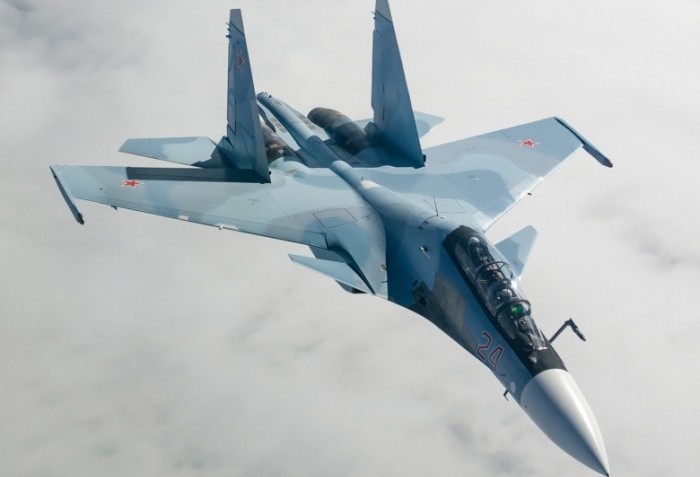
Marashi further contends that the nuclear deal with Iran did not pre-ordain regional conflicts as a result. In fact, that is exactly what it has done. The lifting of economic sanctions and the awarding of over $100 billion in cash to Iran has caused ripples far and wide as Tehran embarked on a mass shopping spree including sophisticated Russian anti-aircraft missiles and now an agreement to buy advanced Sukhoi Su-30 Flanker fighters.

The rapid re-armament of Iran has justifiably spooked its neighbors who plainly see the results of regime aggression and adventurism. Their concerns have sparked talked of a nuclear arms race as Iran’s neighbors seriously weigh their options in pursuing comparable weapons to the Iranian regime, even raising the specter of a new nuclear arms race – a glaring point that Marashi neglects to remark on.

The total commitment of the Iranian regime to support Assad manifested itself with a demand from regime foreign minister Javad Zarif that Iran and its allies in Syria won’t allow a cessation of hostilities in Syria to enable opponents of the Assad regime to “regroup.”

The demand to press the fight against Assad’s opponents by the Iranian regime recognizes that Iran cannot sustain an indefinite war, especially as it drains that $100 billion credit line quickly and global petroleum prices continue to sink, denying the regime the opportunity to cash in immediately on the lifting of embargoes on oil sales.

The clock is definitely running on the mullahs, and they and their allies such as the NIAC know it. This was shown in comments made by the Iranian regime’s air defense chief who vowed that Iran would help Syria further by beefing up its air defense capabilities as the possibility of the establishment of no-fly zones was being raised at the Geneva talks.

One only wonders if that includes transferring some of the new S-300 advanced missile batteries the Iranian regime has just purchased from Russia over to Syria, in what would amount to a dramatic escalation in military support for the Assad regime by Iran.

The reality is that Marashi’s editorial is an indicator of the growing level of concern the mullahs have over the successes Saudi Arabia and neighboring Gulf states have had in stemming Iranian regime advances, especially in intercepting arms being smuggled by Iran into Yemen for Houthi rebels.

By Michael Tomlinson


Filed Under: Blog, News Tagged With: Featured, Iran Lobby, Reza Marashi, Syria

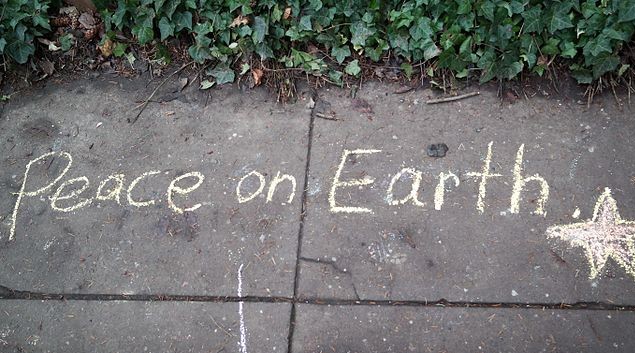
Christmas Hope for a World at Peace

December 25, 2015 by admin

Christmas Hope for a World at Peace

Christmas Hope for a World at Peace

With the world celebrating Christmas and all other assorted holidays this week, it’s worth stepping aside from our normal hustle and bustle and recognize how for one very brief moment, a significant portion of humanity can be joined in peace and harmony.

Even in the worst and darkest times, there can be a glimmer of hope as there was in Christmas of 1914 during World War I when the so-called “Christmas Truce” took place in the trenches of the Western Front.

Even though trench warfare and modern weapons had rendered warfare more akin to industrial slaughter, that particular Christmas found British and German soldiers climbing out of their trenches to exchange seasonal greetings, souvenirs and food and even join in carol-singing. While that truce did not last, throughout history combatants have found small moments to remember the meaning of the holidays.

In today’s world though, we find ourselves living in a time where holiday shoppers have to be on the lookout for unattended bags, passengers on airlines endure enhanced screenings and parents dropping off their children at movie theaters to see the new “Star Wars” movie fret over mass shootings.

The recent terror attacks in Paris and San Bernardino have set Americans on edge to the point that handguns have moved to the top of several wishlists for people wanting to protect themselves, while local law enforcement look for any signs of extremist behavior in social media and in their communities.

The fact that this heightened sense of security is quickly becoming the “new normal” is saddening and a reflection of what our lives may have to be like for the foreseeable future as bad actors around the world continue to focus their terrorist attacks and extremist ideologies at precisely what the holidays have come to represent: peace, joy, love, harmony, tolerance and community.

Nowhere has that been more emblematic than in the wholesale slaughter and expulsion of Christians throughout the Middle East, which reached a crescendo with the plight of the Yazidi sect in Syria and Iraq where 5,000 of them were massacred in 2014 and the sexual enslavement of thousands of women and girls by ISIS.

This was followed by the now infamous videos aired by ISIS killing Egyptian and Ethiopian Christians in mass beheadings and the near eradication of Christian towns, villages and communities in the wake of Islamic extremism’s rapid march.

According to the New York Times, the percentage of the Middle Eastern population that was Christian from 1910 to 2010 was once as high as 14 percent, but has now declined to roughly 4 percent, and all but gone in Iran. Even in Lebanon, once a Christian-dominated country with 78 percent of the population, Christians now account for only 34 percent as Hezbollah and other Islamic extremists groups have taken control over large portions of the country.

The future of Christianity in the region of its birth is now uncertain. ‘‘How much longer can we flee before we and other minorities become a story in a history book?’’ says Nuri Kino, a journalist and founder of the advocacy group Demand for Action.

According to a Pew study, Christians face religious persecution in more countries than any other religious group. ‘‘ISIL has put a spotlight on the issue,’’ says Anna Eshoo, a California Democrat in the U.S. House of Representatives, whose parents are from the region and who advocates on behalf of Eastern Christians. ‘‘Christianity is under an existential threat.’’

But the plight of Christians is only one part of a much larger puzzle where Islamic extremists and religious theocracies such as the Iranian regime systematically drive out any other religion not theirs in order to create a religiously pure society.

Of the 3.1 million displaced Iraqis, 85 percent are Sunnis. No one has suffered more at the hands of ISIS than fellow Muslims. Other religious minorities have been affected as well and in large numbers: Shia Turkmen; Shabak; Kaka’i; and the Mandeans, who follow John the Baptist.

‘‘Everyone has seen the forced conversions, crucifixions and beheadings,’’ David Saperstein, the United States ambassador at large for religious freedom, said. ‘‘To see these communities, primarily Christians, but also the Yazidis and others, persecuted in such large numbers is deeply alarming.’’

The fact that there are almost no Christians left in Iran speaks volumes to the hospitality they enjoy under the yoke of the mullahs in Tehran. There are currently 91 Christians in Iranian regime prisons, including American pastor Saeed Abedini who will not be celebrating Christmas with their families and loved ones.

Most are imprisoned under the false charges of threatening national security through their ministry of Christianity.

We can only hope that by next Christmas, these families experience the greatest present of them all, the return of their loved ones and the halt of persecuting Christians in Iran and elsewhere.

By Laura Carnahan

Filed Under: Blog, News Tagged With: Featured, Iran Terrorism, Syria

Looking Back at 2015: Iran Regime Chaos in Syria

December 24, 2015 by admin


Looking Back at 2015: Iran Regime Chaos in Syria

Looking Back at 2015: Iran Regime Chaos in Syria

In December of 2010, the “Arab Spring” revolt swept across North Africa and toppled governments in Tunisia, Egypt, Libya and Yemen, while major protests broke out in various countries such as Iraq and Sudan. The wave of civil discontent took on a much different shape as it developed into what we now know as the Syrian Civil War.

The conflict in Syria started innocuously enough with an assault by a police officer on a man which quickly led to a flurry of street demonstrations in February of 2011, which would have withered away if not for the arrest of 15 children in Daraa in southern Syria who were painting anti-government graffiti on walls.

The children were abused while in the custody of security forces of the Assad regime which led to the first full-scale protests against the regime. This escalated rapidly into mass demonstrations in Damascus, Aleppo and other cities that today we know as battlefields and no-man’s lands.

Protests culminated into a mass demonstration of over 100,000 people in the central Square of Homs calling for Assad’s resignation and then things got ugly as Assad used the military crackdown, killing at least 136 people. The severity of reprisals grew as Assad security forces continued shooting protestors, some while in ambulances.

By the fall of 2011, the Syrian opposition organizes and begins to gather arms and fight back as a full-scale civil war erupts. In the spring of 2012, international pressure grows on the Assad regime. It is at this time things go from bad to worse in Syria as extremist Islamist groups filter out of Iraq and Iran and into Syria to join the fighting including fighters from Al-Qaeda and Jabhat al-Nusra.

As arms begin to flow from Europe and other Arab states opposed to Assad to rebel forces and the Syrian military suffers a series of setbacks, the Iranian regime makes the decision to commit itself fully to keeping Assad in power since both regimes share the same Shiite ties.

The mullahs in Tehran begin to direct the flow of cash and weapons to their long-time terrorist ally Hezbollah and funnel fighters into Syria from Lebanon in support of Assad.

By August of 2012, President Obama proclaims his now infamous “red line” in the sand position in regards to chemical weapons, which Assad crosses when he uses chemical weapons in September of 2013, killing 300 people outside of Damascus.

In an ironic twist of fate, U.S. Secretary of State John Kerry’s offers a rationale for avoiding direct U.S. military intervention in the wake of the chemical attack when he offers the idea that elimination of all chemical stocks would be a condition to avoid going to war. Russia’s Vladimir Putin seizes on the idea and quickly brokers an agreement to take possession of Syria’s chemical weapons by June of 2014.

All of which takes place while the Iran regime deepens its involvement by scaling up and recruiting Afghan mercenaries living in Iran and mobilizing Shiite militias in Iraq to fight in Syria in an effort to stem a rapidly growing number of military defeats by Assad.

In the meantime, the largest displacement of refugees since World War II takes place as half of Syria’s population is dead or leaves with nearly four million of them trying to get into Europe through Turkey, Greece and the Balkans.

At the same time, ISIS takes control of several key cities in Syria and Iraq and takes advantage of the power vacuum created in Iraq’s government when the Iran regime pushes then Prime Minister Nouri al-Maliki’s government to expel Sunni coalition partners who then flee directly into the arms of ISIS in Iraq.

Within two years, Iran’s meddling has prolonged the carnage in Syria, allowed ISIS to double in size almost overnight and reduced Iraq into little more than a fiefdom for ISIS in the north and Iran in the south.

Even as the Iranian regime’s forces suffered setbacks, including the deaths of several top military commanders, it worked hard at the negotiating table to secure a nuclear agreement allowing it to tap into $150 billion in cash and new supply lines in military hardware from Russia to replace its losses.

More importantly, the deal allowed top mullah Ali Khamenei to make a direct appeal to Russia to intervene on Iran’s behalf and save Assad from doom. Iran used the argument that saving Assad would save Russia’s only naval base in the Mediterranean, stationed in Syria.

By the time Russia begins bombing in Syria last September, ISIS-led attacks in Paris and the ISIS-inspired attack in San Bernardino, push the U.S. to focus exclusively on attacking ISIS and raise the very real possibility of keeping Assad in power in order to defeat ISIS.

The past five years have cost the world four million refugees and 150,000 killed and put the Iranian regime back in a position to claim a win after being so close to defeat in Syria so many times.

One only has to ask questions such as “What if Obama acted on his red line?” or “What if the U.S. held tougher in nuclear talks in Iran?” could the world be seeing a much different situation today?

There is no doubt however that the Iranian regime’s intervention in Syria and its mobilization of forces in Lebanon, Iraq and Afghanistan to fight there was the single biggest reason why this civil war did not end in 2011 the war similar governments toppled in Libya, Egypt and Tunisia.

If any entity deserves the blood on their hands for the carnage, bloodshed and suffering in Syria besides Assad, it is certainly the mullahs in Tehran.

By Michael Tomlinson

Filed Under: Blog, News Tagged With: Featured, Syria

  • « Previous Page
  • 1
  • …
  • 3
  • 4
  • 5
  • 6
  • Next Page »

National Iranian-American Council (NIAC)

  • Bogus Memberships
  • Survey
  • Lobbying
  • Iranians for International Cooperation
  • Defamation Lawsuit
  • People’s Mojahedin
  • Trita Parsi Biography
  • Parsi/Namazi Lobbying Plan
  • Parsi Links to Namazi & Iranian Regime
  • Namazi, NIAC Ringleader
  • Collaborating with Iran’s Ambassador

Recent Posts

  • NIAC Trying to Gain Influence On U.S. Congress
  • While Iran Lobby Plays Blame Game Iran Goes Nuclear
  • Iran Lobby Jumps on Detention of Iranian Newscaster
  • Bad News for Iran Swamps Iran Lobby
  • Iran Starts Off Year by Banning Instagram

© Copyright 2026 IranLobby.net · All Rights Reserved.