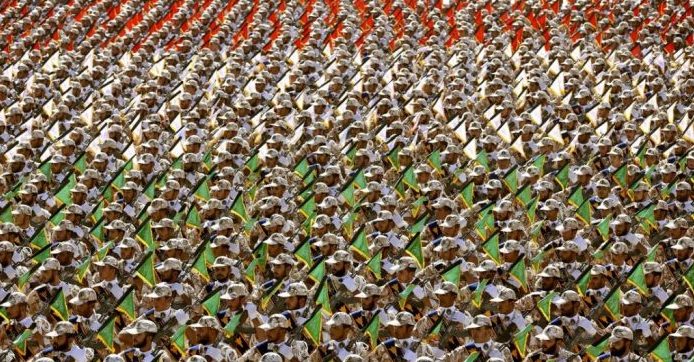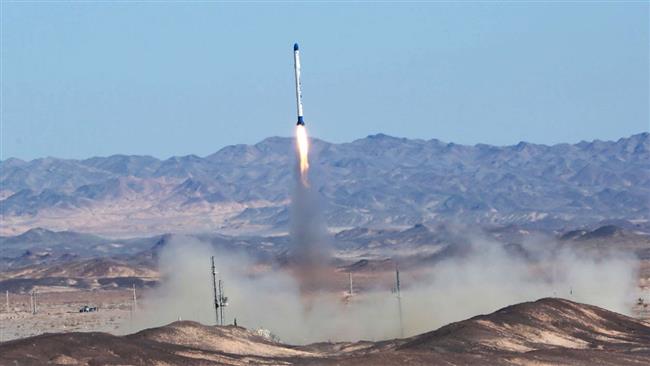
Iran Lobby

Exposing the Activities of the lobbies and appeasers of the Mullah's Dictatorship ruling Iran

  • Home
  • About
  • Current Trend
  • National Iranian-American Council(NIAC)
    • Bogus Memberships
    • Survey
    • Lobbying
    • Iranians for International Cooperation
    • Defamation Lawsuit
    • People’s Mojahedin
    • Trita Parsi Biography
    • Parsi/Namazi Lobbying Plan
    • Parsi Links to Namazi& Iranian Regime
    • Namazi, NIAC Ringleader
    • Collaborating with Iran’s Ambassador
  • The Appeasers
    • Gary Sick
    • Flynt Leverett & Hillary Mann Leverett
    • Baroness Nicholson
  • Blog
  • Links
  • Media Reports

Iran Regime Absurdly Punishes 18 Year Old Chess Prodigy

February 22, 2017 by admin

Iran Regime Absurdly Punishes 18 Year Old Chess Prodigy

Iran Regime Absurdly Punishes 18 Year Old Chess Prodigy

There are lots of reasons why teenagers get punished. They stay out too late. They get bad grades in school. They drink alcohol or take drugs.

Why then would an 18-year-old chess prodigy who has achieved the exalted status a grand master get punished? Did she fail to sacrifice her queen to win a gambit?

In the case of

, when she competed at the Tradewise Gibraltar Chess Festival last month, she committed a grave act in the eyes of the Iranian regime; she chose to wear a simple headband instead of a mandated hijab head covering while she played.

As a result of this grave act, Mehrdad Pahlevanzadeh, the head of Iran’s Chess Federation, ruled this week that Derakshani would be kicked off the national team.

Derakhshani’s younger brother Borna, 15, who also entered the tournament, was also kicked off the team. His offense was agreeing to play an Israeli opponent, according to the Washington Post.

Let’s forget for a moment that kicking a grand master off your national team is akin to benching LeBron James before the Olympics, but punishing children is even more absurd.

“Unfortunately, what shouldn’t have happened has happened,” Pahlevanzadeh told the semiofficial Fars News Agency on Monday (via Radio Free Europe). “Our national interests have priority over everything.”

“As a first step, these two will be denied entry to all tournaments taking place in Iran,” he continued, “And, in the name of Iran, they will no longer be allowed the opportunity to be present on the national team.”

That the two young chess masters received such a harsh punishment is not a surprise. Sports in Iran and other parts of the Middle East have long been affected by the region’s strict cultural norms and precarious political stance.

Last year, American chess master Nazi Paikidze did not compete in the chess world championships in Iran because of the country’s requirement that she don a hijab, said the Post.

“Some consider a hijab part of culture,” Paikidze said in an Instagram post announcing her decision. “But, I know that a lot of Iranian women are bravely protesting this forced law daily and risking a lot by doing so. That’s why I will NOT wear a hijab and support women’s oppression.”

The controversy over the hijab is incidental to the larger issues it represents which is the near constant oppression of Iranian women in a society that legitimizes misogyny, allows for the public beating of women found in violation of dress codes, and regularly arrests girls and women who post on social media selfies in which they do not wear head coverings.

The fact that the Iranian regime uses sports and competition as platforms to advance its views is nothing new. The recent welcoming entry of an American wrestling team to wide media coverage stands out in sharp contrast to the disqualification of these teenaged prodigies.

It is also interesting to see the silence from the Iran lobby on this subject. While groups such as the National Iranian American Council have been vociferous in its protests of social issues such as the controversy over President Trump’s immigrant visa moratorium, it has been stone-dead silent on issues such as the rights of women in Iran and the abuse they suffer at the hands of the regime’s dreaded morality police.

The contrast and hypocrisy is stunning.

It may also explain why American views of the leadership in Iran has plunged to all-time lows in spite of the full-court public relations offensive put on by the Iran lobby.

An annual survey by Gallup on Americans’ views of foreign countries earlier this month revealed that Iran and North Korea were the least liked countries out of the 21 on the list.

Other countries in the “most unfavorable” category, which contains nations that have favorable ratings lower than 20 percent and unfavorable ratings above 70 percent, were Iran, Syria, Afghanistan and Iraq.

The poll was conducted before recent events such as North Korea’s ballistic missile test in violation of U.N. resolutions and the assassination of North Korean leader Kim Jong Un’s half-brother.

It does put into perspective though that in spite of the efforts by the Iran lobby to portray Iran as a moderate state, its militant actions such as intervention in Syria and support for a civil war in Yemen, along with its recent launches of ballistic missiles have firmly convinced the American people that the Iranian regime’s leadership is dangerous and untrustworthy.

Also noteworthy was a call by 100 leading Iranian dissidents to Congress to investigate the Iran lobby’s efforts to influence U.S. policy through its network of lobbyists and spin doctors.

The group of dissidents, composed of prominent Iranian voices that oppose the hardline regime in Tehran, says that Congress is not doing enough to expose the Iranian regime’s lobbying efforts in D.C. and propaganda network, which is said to include some at Voice of America Persia.

Iranian-American groups claiming to represent American interests are said to be carrying water for the Islamic regime inside the White House and on Capitol Hill, according to these dissident voices.

The letter cites VOA’s Persian service as a source of pro-Iran corruption. The Free Beacon has reported multiple times on claims that VOA has been infiltrated by Iran regime loyalists who seek to spin coverage in a favorable way for Tehran. In one instance, an Iranian dissident was barred from appearing on VOA Persia for voicing critical opinions about the regime.

Laura Carnahan
 

Filed Under: Blog, News Tagged With: Featured, Iran Human rights, Iran Lobby, Iran Mullahs

Iran Regime Confronted At Home and Abroad

February 21, 2017 by admin

Iran Regime Confronted At Home and Abroad

Iran Regime Confronted At Home and Abroad

Another weekend and another round of aggressive military actions from the Iranian regime greeted the world. The mullahs engage in regular acts of defiance on a schedule as predictable as North Korea it seems.

The latest episode involves the regime’s announcement of another series of military war games by the Revolutionary Guard Corps with the first phase kicking off on Monday with the launching of a series of rockets and missiles.

“Today, various classes of smart rockets with pinpoint accuracy were successfully test-fired, which showed the power of the Islamic Republic of Iran,” Brigadier General Pakpour told reporters on Monday.

The type of rockets and missiles used were not disclosed, but the regime has been actively launching ballistic missiles of various types over the past several months, earning sharp rebukes from the international community and the U.S. in particular as violations of sanctions imposed by the United Nations Security Council.

The maneuvers are scheduled to last three days and are dubbed “Grand Prophet 11.” Pakpour said that some unspecified rockets, the IRGC’s drones, and artillery would also be used during the exercises.

The military drills will be held despite warnings from the United States and the implementation of new sanctions by Washington over a ballistic-missile test conducted by Iran on January 29.

“Iran would do well not to test the resolve of this new president [Donald Trump],” U.S. Vice President Mike Pence said earlier this month, as the new Trump administration had announced that it had put Iran “on notice” after the missile test last month.

U.S. Secretary of Defense Jim Mattis has also said that Iran is “the single biggest state sponsor of terrorism in the world.”

The ramp up in military actions, followed by threats of sanctions and retaliation have set a volatile stage for the Iranian regime in which its usual repertoire of threats followed by more threats may finally fall on deaf ears of an U.S. administration appearing to be more resolute in confronting the regime rather than appeasing it.

It also follows a new Congress which seems eager to push forward new sanctions after being held off by the Obama administration the past several years.

Sen. Lindsey Graham (R-S.C.) revealed plans Sunday to introduce legislation that would impose further economic sanctions on Iran, according to a Reuters report.

Graham, a member of the Senate Armed Services Committee, mentioned the plans for increased measures during a panel discussion at the 2017 Munich Security Conference.

“I think it is now time for the Congress to take Iran on directly in terms of what they’ve done outside the nuclear program,” Graham said.

Graham said he and other senators would be introducing a measure to hold Iran accountable for its actions, Reuters reported.

James Jones, a former Supreme Allied Commander in Europe and President Barack Obama’s first national security adviser, told a separate event in Munich that he remained convinced that sanctions had persuaded Iran to negotiate the 2015 landmark deal with six world powers to curb its nuclear program.

“The sanctions did work. Iran would never have come to the negotiating table without sanctions,” Jones said. “This is a new form of response that if properly utilized can change behavior and get people to do things that they otherwise wouldn’t do.”

Regime Foreign Minister Mohammed Javad Zarif, who also attended the Munich Security Conference, said Iran doesn’t “respond well” to coercion and threats.

“We don’t respond well to coercion. We don’t respond well to sanctions, but we respond very well to mutual respect. We respond very well to arrangements to reach mutually acceptable scenarios,” Zarif said on Sunday, according to an AP report.

It’s a curious statement for Zarif to make since the Iranian regime has done everything but act respectfully towards its neighbors and the rest of the international community.

It’s doubtful the government in Yemen would find Iranian regime’s supplying of Houthi rebel forces a respectful act, nor would the vast majority of Syrian civilians who have endured a savage conflict at the hands of the IRGC’s Quds Forces and Hezbollah fighters find that a respectful act as well.

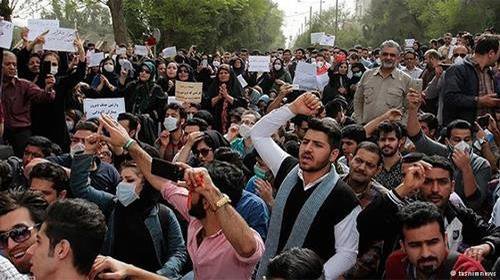
But the pressure the mullahs are feeling from a new American administration has only compounded the pressure mounting from within Iran as they struggle with growing protests and environmental crises made worse by gross mismanagement.

According to the New York Times, days of protests over dust storms, power failures and government mismanagement in one of Iran’s most oil-rich cities subsided on Sunday after security forces declared all demonstrations illegal.

Residents of Ahvaz, a city with a majority Arab population near the border with Iraq, had been protesting for five days in increasingly large gatherings, shown in cellphone video clips shared on social media.

The region around Ahvaz is a center of oil production in Iran, and since economic sanctions were lifted, Iranian people had hoped for changes to renovate the worn-out water and electricity instructures and fix deepening ecological problems.

The cellphone clips show protesters calling for the resignation of the local governor. And as the number of demonstrators grew, the demands started to include a call for top officials from the capital, Tehran, to come to Ahvaz to see the problems for themselves.

Demonstrators can also be heard shouting, “Unemployment, unemployment,” another big problem in the region, and urging their countrymen to offer assistance: “Iranian compatriots, help us, help us.”

A 15-year drought, in combination with poorly planned dam building, has caused local marshes to dry up, increasing the level of dust particles in the air to record highs.

The World Health Organization said in 2015 that Ahvaz was the most polluted city in the world.

With the ruling theocracy in Iran continuing to poor the country’s resources in to the Syrian war, supporting Yemeni’s Houthis, violent militia groups in Iraq, development of Ballistic Missiles,  the pressure will only mount and similar to how North Korea has handled persistent starvation, the Iranian regime will not flex its military muscles in an effort to divert attention from the misery of the Iranian people.

Michael Tomlinson

Filed Under: Blog, News Tagged With: Featured, Iran deal, Iran Human rights, Nuclear Deal

While Iran Regime Throws Roses It Denies Medical Treatment

February 19, 2017 by admin

While Iran Regime Throws Roses It Denies Medical Treatment

While Iran Regime Throws Roses It Denies Medical Treatment

Nothing illustrates the cold, calculating nature of the Iranian regime than two incidents happening this week.

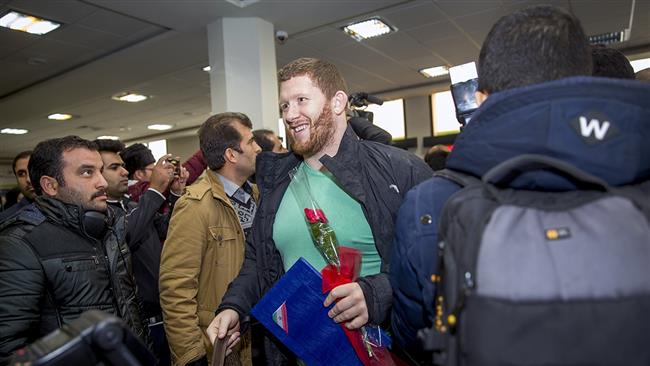
On the one hand, an American wrestling team was welcomed with open arms, red roses and a barrage of social media selfies as it arrived in Iran for a tournament that had been threatened in response to President Trump’s visa moratorium.

The two-day tournament began Thursday, when U.S. wrestlers faced off against Georgia, Russia and Azerbaijan. The Iranian regime didn’t miss the opportunity to stage photos of the Americans being surrounded by well-wishers and flooding social media with comments praising the team, but deriding the U.S. government.

“Welcome to Iran champ!!!!” one Iranian user, Saeed Mohammadi, commented on an Instagram photo.

Another, Nima Jan, said he was traveling to the stadium to cheer for the Americans,

“You proved that you are a noble man.… This is a big chance for us,”Nima Jan commented on an Instagram. “We do not pay attention to the behavior of America’s government” toward Iran, according to the Washington Post.

Widely considered a national sport, wrestling has been one venue to maintain a cultural channel between Iran and the U.S. In fact, a U.S. wrestling team became the first American sports team to visit Iran since the revolution.

In contrast to that public photo opportunity, in the dank, dark confines of Evin prison, a British-Iranian mother and an aid worker languishes, falling ill and being denied medical treatment by the regime.

According to the Times of London, Nazanin Zaghari-Ratcliffe, 38, who has been held in prison since April last year, was denied urgent medical treatment for a neck injury sustained in prison that has left her unable to lift her arms or carry her child.

Prison officials last week refused to refer the charity worker to a neurologist, despite an X-ray and MRI scan revealing that vertebrae in her neck were out of place.

She is unable to move her arms beyond a certain point or lift her two-year-old daughter Gabriella, who is also trapped in Iran after regime authorities confiscated her British passport.

The cruelty of Ratcliffe’s continued incarceration and denial of medical care has earned sharp rebukes from the British government and human rights groups, but it follows a typical pattern of abuse heaped on detained dual national citizens by the regime.

Repeated incidents like this, depict an essential truth of the Iranian regime which is that it is without compassion or mercy and utilizes innocent people to its political advantage on the world stage. It will willingly use a sports team to stage a photo opp to protest moves designed to restrict the movement of terrorists supported by the Iranian regime and it will also put the screws to an ailing mother to put pressure on a British government balking at opening up trade with the regime.

The mullahs are cruel and callous and any press releases or news interviews by Iran lobby supporters such as Trita Parsi of the National Iranian American Council cannot hide that simple truth.

The mullahs calculate every move and weigh every opportunity. They are less religious leaders and more like accountants and they count up the ill-gotten gains they receive from their various black market channels, especially with the nuclear agreement which opened up additional sources of funding to them.

Heshmat Alavi, an Iranian activist, penned a piece in Forbes looking at how the regime was benefitting from the nuclear agreement.

“Now in early 2017, however, signs indicate the main winners in Iran are none other than state-owned companies. This means Iranian Supreme Leader Ali Khamenei and the terrorist-supporting Revolutionary Guards are enjoying JCPOA benefits,” Alavi writes.  “At least 90 of the nearly 110 agreements, totaling nearly $80 billion, involve such state-controlled companies. This includes the National Iranian Oil Company, parallel to others run by regime pension funds and massive conglomerates of semi-public nature.”

“It is a known fact that Tehran maintains a heavy hand over the economy, providing circumstances allowing state-controlled firms to acquire most business deals made possible after sanctions were lifted. The private sector makes up a mere 20% of Iran’s economy, according to official estimates,” he added. “To this end, private companies have received a dismal 17 deals, including a hotel management contract sealed most probably because of the French partner’s chief executive being the brother of Eshaq Jahangiri, Iran’s vice president.”

For the Iranian regime, decision-making is all about perception, economic benefits and exporting its extremist brand of Islam.

Unfortunately, until the world joins together again to confront the Iranian regime, innocents such as Ratcliffe will continue to pay the price.

Laura Carnahan

Filed Under: Blog, News Tagged With: #NuclearDeal, Featured, Iran Mullahs, Moderate Mullahs, National Iranian American Council, NIAC, NIAC Action, nuclear talks, Trita Parsi

Iran Regime Does Away With Moderate Façade

February 16, 2017 by admin

Iran Regime Does Away With Moderate Façade

Archive-Iran Regime Does Away With Moderate Façade

The old adage goes “judge me by my deeds, not my words.” It’s appropriate to apply it to the Iranian regime when weighing how to react to the Islamic state. In the case of the new Trump administration, it is becoming increasingly easy to figure out what is motivating the mullahs in Tehran.

The Iran lobby, most notably the National Iranian American Council, has always made the argument to ignore the rhetoric and judge Iran by its people and the “moderates” struggling to gain control of the government.

Notable Iran lobby advocates such as NIAC’s Trita Parsi have literally yelled from the rooftops that Iran was not really interested in confrontations with the U.S. and only wanted a new friendly relationship. It was this slippery slope the Obama administration fell down in acquiescing broadly to the demands of the mullahs in crafting a nuclear deal separate and apart from placing conditions on things such as support for terrorism and abusive human rights.

Unfortunately, virtually none of those promises have come to pass and in the face of a Trump administration that has opted for an aggressive posture towards Iran with newly announced sanctions and the appointment of several vocal regime critics in key cabinet positions, the mullahs seem to have finally decided to drop the charade and stop trying to portray themselves as moderates.

The latest evidence of that came in the form of a full-length animated film depicting an armed confrontation between Iran’s Revolutionary Guards and the U.S. Navy soon to open in Iranian cinemas.

According to Reuters, the director of the “Battle of Persian Gulf II”, Farhad Azima, said that it was a remarkable coincidence that the release of the film – four years in the making – coincided with a “warmongering” president sitting in the White House.

“I hope that the film shows Trump how American soldiers will face a humiliating defeat if they attack Iran,” Azima told Reuters in a telephone interview from the city of Mashhad in eastern Iran.

The 88-minute animation opens with the U.S. Army attacking an Iranian nuclear reactor, and the U.S. Navy in the Gulf hitting strategic locations across the county.

In the film, the IRGC retaliates by raining its ballistic missiles on U.S. warships.

“They all sink and the film ends as the American ships have turned into an aquarium for fishes at the bottom of the sea,” Azima said.

The main Iranian commander in the film has been intentionally depicted as Qassem Soleimani, the notorious IRGC commander who is overseeing Iran’s military operations in Syria and Iraq against Islamist militants and was designated a supporter of terrorism by the U.S. for his role in coordinating the manufacture and delivery of IEDs to Iranian-controlled Shiite militias in Iraq targeting U.S. personnel.

Soleimani was reportedly seen arriving in Moscow earlier this week in violation of sanctions restricting his travel. He has been to Moscow several times ignoring his travels bans on Iranian airlines to discuss military operations in Syria with Russian officials. His direct pleas have been widely regarded as key to persuading Russia to enter the conflict in order to save the faltering Assad regime.

This is Soleimani’s third trip to Moscow following visits in April and July 2015. Soleimani is thought to be the mastermind behind Iran’s proxy war in Syria in order to prop up the Assad regime. Soleimani met with Russian President Vladimir Putin and Russian Defense Minister Sergei Shoigu days after the Iranian nuclear deal was agreed to in Vienna.

According to Fox News, Soleimani was in Moscow to register the mullahs’ displeasure with Russia’s relationship with Iran’s regional foes, specifically the sale of Russian military equipment to Saudi Arabia and other Arab states.

Lest we forget, the Iranian regime has steadily increased the tempo of bell`igerent actions since the nuclear deal, including the detention and parade of American sailors, widening of the wars in Iraq, Syria and Yemen, and a steady stream of propaganda efforts including the routine “Death to America” depictions as well as the launching of increasingly more powerful ballistic missiles.

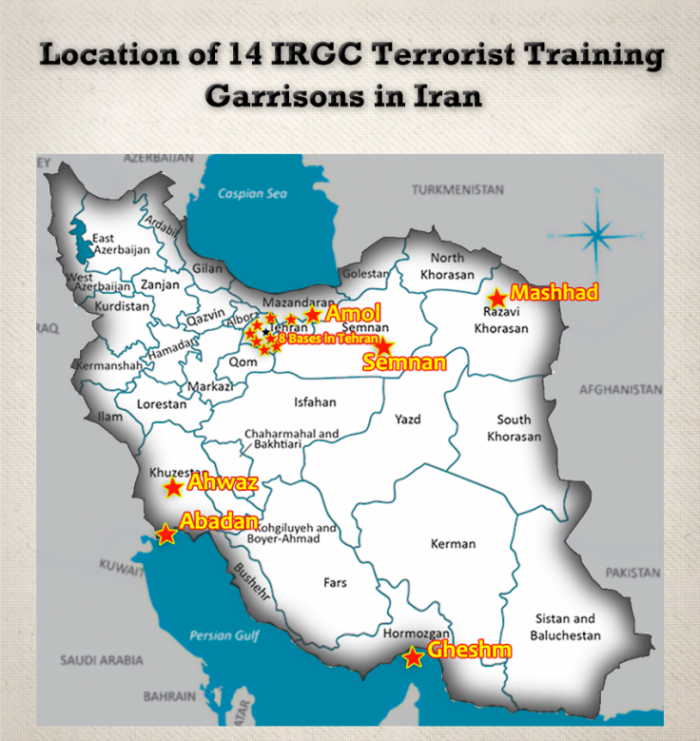
The latest disclosures of the IRGC’s operation of a vast network of training camps for its own and foreign fighters to be deployed in conflicts abroad by a network of Iranian dissident groups only solidifies the argument that the Iranian regime is done with the pretense of trying to be a more moderate nation.

The dissident groups, led by the National Council of Resistance of Iran, have issued calls for the IRGC to be designated a Foreign Terrorist Organization as a whole.

Iran already is part of the U.S. State Department’s State Sponsors of Terrorism list, along with Syria and Sudan. However, new calls are coming from leading critics of the regime to designate the IRGC as a foreign terrorist organization – and the Trump administration is said to be considering that.

“The people of Iran would welcome the designation of the IRGC, which is responsible for thousands of political executions and tortures in prison. It is also responsible for training terrorists supporting and engaging in terrorist activities outside Iran,” said Maryam Rajavi, the leader of the NCRI, which is the largest Iranian opposition group.

“I believe the time has come for a firm policy on Iran. The failed policy of appeasement has hurt the Iranian people, as well as global peace and security,” she said.

To emphasize the suffering of the Iranian people under the mullahs’ medieval rule, news reports came out of a 14-year old girl suffering a savage beating by the regime’s morality police for wearing ripped jeans.

Zahra*, who The Independent is not identifying for fear she may suffer reprisals, was celebrating her birthday with friends last week when a patrol of “morality police” pulled up.

The teenager said officers tried to force her and her friends into their car in the city of Shiraz, beating them when they resisted.

“There were two women and two men in a huge van and they pushed us into it with the force of their beatings,” she recalled. “Their objection was to the ripped jeans that we were wearing. There were really no other issues concerning my friends and I.”

“I still carry the bruises sustained from their beatings on my face,” she said. “I still feel their pressure on my arm and my ribs still hurt.”

In an exclusive interview with The Independent, her mother described the ordeal as “the worst day of my life, as if the world has ended for me”.

Rules are enforced by thousands of visible and undercover religious or “morality” police, who patrol the streets to check for violations.

Women found to have their hair or bodies inadequately covered can be publicly admonished, warned, fined or even arrested, while vigilantes are also active.

This is why any discussion of a moderate Iran under its current leadership is simply another case of “fake news.”

Laura Carnahan

Filed Under: Blog, News Tagged With: Featured, Iran Mullahs, Iran Talks, Iran Terrorism, IRGC, Moderate Mullahs, Nuclear Deal, Rouhani

Case For Designating the IRGC as Terrorists Builds

February 15, 2017 by admin

Case For Designating the IRGC as Terrorists Builds

Case For Designating the IRGC as Terrorists Builds

Momentum continues to build for the U.S. to designate the Iranian Revolutionary Guard Corps a Foreign Terrorist Organization as a whole. Much of that momentum stems from the IRGC’s own actions over the years in supporting terrorism worldwide as well as initiating, supplying and controlling many of the proxy wars breaking out throughout the Middle East.

Even though there has already been well-documented disclosures about the IRGC’s illicit activities, new information continues to come to light as was the case on Tuesday when the National Council of Resistance of Iran (NCRI), a leading global organization of Iranian dissident and human rights groups, held a press conference in Washington, DC to disclose details of the IRGC’s terrorist training activities.

Alireza Jafarzadeh, deputy director of the Washington Office of the NCRI, presented information to reporters gathered by the social network of the People’s Mojahedin Organization of Iran, a dissident group located inside Iran. He said that information shows that since 2012, the NCRI has seen an increase in the training of foreign nationals in its terrorist training camps, which threatens a wide scope of countries, not just those beset by conventional warfare.

Using intelligence gleaned from sources within Iran, the NCRI claimed that the IRGC had created a training command operating dozens of military bases across Iran specializing in all aspects of warfare with units divided by national origin and specialization such as missile and naval operations to insurgency and urban warfare.

The IRGC that is answerable only to the Iranian regime’s top mullah, Ali Khamenei. It specializes in insurgency and guerilla tactics and is notorious for having supplied most of the IEDs used by Iranian-controlled Shiite militias in Iraq targeting U.S. and foreign troops; resulting in the deaths and wounding of thousands of Americans.

The IRGC was the initial unit that came to the rescue of the Assad regime in Syria as it teetered on the brink of collapse by smuggling in weapons and cash, as well as recruiting and directing Hezbollah fighters. It eventually expanded its role to include Iranian military, as well as the recruitment of Afghan mercenaries and deployment of Shiite militias from Iraq.

According to the NCRI, every month, hundreds of forces from Iraq, Syria, Yemen, Afghanistan and Lebanon — countries where the regime is involved in frontline combat — receive military training and are subsequently dispatched to the various frontlines. For operations in countries where there is no open warfare – including Persian Gulf countries, such as Bahrain and Kuwait – terrorists cells are trained instead.

The NCRI highlighted 14 IRGC training camps, as well as described the command structure, detailing how the commander of the Training Directorate, reports directly to Quds Force Commander, Qassem Soleimani.

Terrorist training for operatives from across the globe is commanded by Colonel Tahmasebi. Codenamed ‘320’, the commander of heavy weapons training at Imam Ali military base is Colonel Ali Mohammad. In charge of ‘VIP Security’ is Colonel Ramky, the NCRI said.

The sheer scale of the Training Directorate’s efficiency in producing fighters is underscored by the fact that just one of its training camps is currently sending 2,000 Afghans to Syria every week, according to the NCRI.

“The IRGC is actually the entity that runs the whole show when it comes to terrorism,” even though they are spearheaded by the Quds force, Jafarzadeh said. “You cannot do the separation. You cannot have the Quds force designated as a terrorist entity, but not the IRGC.”

Jafarzadeh said there is bipartisan support in Congress for the designation of the IRGC as a terrorist group, and suggested that with the new Trump administration, there is “a better possibility for those measures to move forward.”

The disclosures by the NCRI are significant since they provide first-hand and eyewitness accounts of the IRGC and Quds Force activities as it relates to the active support of terrorism and terror-related operations. It also points out with disturbing clarity the efforts by the Iranian regime to ramp up its military activities outside of its borders during the time it sought to portray itself as a “moderate” nation intent on resolving disputes peacefully.

Another example of those destabilizing activities has been the IRGC’s initiation of the revolt in Yemen with Houthi rebels supplied by IRGC forces; mostly smuggled aboard non-descript fishing boats in the Gulf of Aden.

Many of these ships have been intercepted and weapons confiscated by Saudi Arabian and Gulf State warships; the arms eventually traced back to Iranian factories.

Sanam Vakil, Ph.D an Associate Fellow at Catham House told IBTimes UK that the PMOI report spoke to the extent of the IRGC’s training scheme, although she could not independently verify the numbers.

“What I take from this is that this is a very sophisticated operation,” Vakil said. “Iran’s strategic strength is in a-symmetrical proxy relationships. Its conventional military is weak particularly in Iraqi and Syria they have had success in the past. Of course we also know they are the God Parents of Hezbollah.”

It is becoming increasingly clear that in order to effect the growth of Islamic-inspired terrorism abroad, the restraint of the IRGC will be a key factor. Designating it a FTO would be an important step in the right direction.

Michael Tomlinson

Filed Under: Blog, News Tagged With: Featured, Iran, Iran deal, Iran Human rights, Iran Mullahs, Iran Terrorism, IRGC, Khamenei, Syria, Yemen

Rebuilding the Global Coalition Against Iran

February 14, 2017 by admin

Rebuilding the Global Coalition Against Iran

Rebuilding the Global Coalition Against Iran

The early days of the Trump administration have offered opponents of the Iranian regime hope that a significant change in U.S. policy towards the Islamic state will presage a similar shift in global opinion towards the mullahs in Tehran.

If we reset back to when the first talks took place over Iran’s nuclear program, the unity amongst the international community was one of the hallmarks of forcing the regime to the bargaining table in the first place.

Three consecutive American presidential administrations imposed ever growing harsh sanctions on the regime. Coupled with the sinking Iranian economy due to gross mismanagement and corruption, the regime was brought to the bargaining table in a position of weakness. The mullahs recognized this in rigging a presidential election to install Hassan Rouhani as a benevolent “moderate” face following the much-reviled Mahmoud Ahmadinejad.

Unfortunately, instead of seizing the opportunity to effect significant changes to the regime’s conduct—especially its brutal human rights record and support for terrorism—the P5+1 group of nations, led by the Obama administration, picked the appeasement policy as its policy forward and folded like a cheap suit in caving to regime demands.

Gone were any restrictions on Iran’s ballistic missile program. Say goodbye to improving human rights within Iran. Forget about stemming the flow of terrorism around the world.

The opportunity to solve so many troubling problems through the single chance to make change within the Iranian regime was missed and for the past six years the world has paid a heavy price for that oversight.

While Iran lobby supporters such as the National Iranian American Council have been busy trumpeting the “wins” from the agreement, cities around the world have witnessed a much more dismal result.

Paris, Ottawa, Brussels, Sydney, Nice, Berlin, San Bernardino, Boston and Orlando are only some of the cities subjected to Islamic extremist terror, but far worse has been the whole sale slaughter committed in places such as Aleppo at the hands of Iranian regime forces.

Now with the Trump administration in place with the first encouraging signs of reversing the flow of moves aimed at appeasing the regime to one that is more confrontational and accountable, the diplomatic board has been reset with a fresh opportunity to rebuild that global coalition that was so effective before.

Reassembling a global consensus against the Iranian regime will be difficult, but it is achievable. The first promising signs have come from a Trump administration that has found prominent policy making positions for noted and vocal critics of the regime, including Mike Pompeo at the Central Intelligence Agency, Jeff Sessions as Attorney General and James Mattis as Secretary of Defense.

There has also been a unifying response from Iran’s neighbors, especially Arab nations who have been subjected to the prospect of terror attacks and outright war, including Saudi Arabia and the Gulf states. Their inclusion in any global consensus building against Iran will be vital.

Also, unlike the prior administration, the Iran lobby has been frozen out of the equation and does not have the same access it enjoyed previously into the White House and State Department. White House visitor logs are unlikely to show the National Iranian American Council’s Trita Parsi traipsing through the West Wing anymore.

Already, we have seen some possible signs of the Trump administration’s efforts to rebuild a relationship with Russia and drive a wedge between Russia and Iran. Of course, separating the two may prove unachievable, but it does set the scenario for Trump to engage in some old fashioned horse trading in which the Vladimir Putin might be induced to give up his support for Iran in exchange for something else.

An editorial by a scholar at the Foundation for the Defense of Democracies, offered some thoughts on how Russia might be persuaded to change its support for Iran in an editorial in the Wall Street Journal.

“What, then, is the best American strategy? Iran continues its campaign against the U.S., and it won’t end so long as the regime endures. Therefore American policy must rely on dismantling the Khamenei regime as peacefully as possible, perhaps from the inside out,” the editorial writes.

“Antiregime demonstrations erupt in Iran all the time, and most experts believe the vast majority of Iranians detest Mr. Khamenei and his henchmen. With U.S. support, these millions of Iranians could topple the Islamic Republic and establish a secular government resembling those in the West,” he adds. “With the Islamic Republic gone, the Trump administration would be in a much stronger position to strike a deal with Mr. Putin. The road to Moscow runs through Tehran.”

The more troublesome part of any international coalition might be getting a unified Europe which has responded to the lifting of economic sanctions on Iran with an unbridled rush to tap Iranian markets. Who can forget the parade of EU officials leading trade delegations to Tehran in the aftermath of the deal while Iranian men, women and children were being publicly executed.

Even after the swelling in terrorist attacks and flood of refugees fleeing the Iranian-caused Syrian civil war, some European leaders still seem to be adopting a position of bowing to Iranian regime demands.

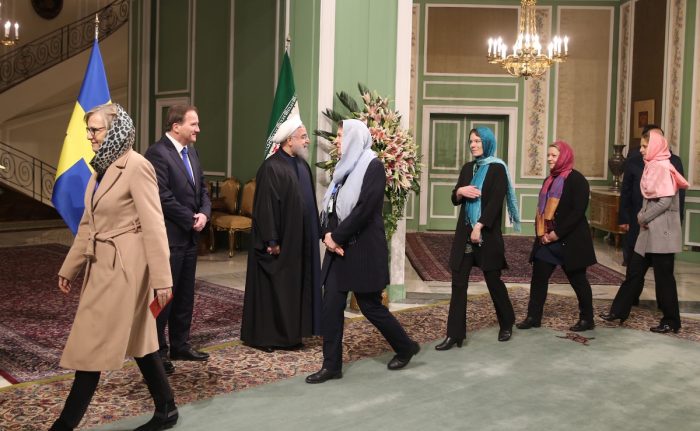
One such example was the much-criticized visit of the Swedish trade minister in which she and the female members of her delegation wore hijab coverings and met with Hassan Rouhani and an all-male team.

The irony of the photo opportunity was not lost on many human and women’s rights groups.

Considering that previous state visits to Saudi Arabia by female leaders such as Michelle Obama and German Defense Minister Ursula von der Leyen publicized their decisions to forgo wearing traditional head coverings, the willingness to acquiesce to Iranian demands is deeply troubling.

We can only hope that the rest of Europe realizes that winning a few dollars isn’t worth empowering more terrorism.

Laura Carnahan

Filed Under: Blog, News Tagged With: Featured, Iran deal, Iran Human rights, Iran Mullahs, Iran Terrorism, nuclear talks, Rouhani, Sanctions

Campaign of Disinformation by Iran Regime Revealed

February 14, 2017 by admin

Campaign of Disinformation by Iran Regime Revealed

Campaign of Disinformation by Iran Regime Revealed

Besides the much-discussed “echo chamber” that arose out of the negotiations for the Iran nuclear deal utilizing a network of so-called experts in academia and organizations such as the National Iranian American Council to push false narratives about the benefits of the deal, the Iranian regime itself has undertaken several initiatives to push other false and misleading narratives to defame the Iranian dissident movement.

At the center of that disinformation campaign lays the Iranian regime’s Ministry of Intelligence Services. If Hitler relied on Joseph Goebbels to help spread Nazi propaganda, the mullahs in Tehran rely on the MOIS to do the same job.

To say the MOIS is a shadowy organization is like saying grease is slippery. The MOIS was created out of the former Shah of Iran’s infamous SAVAK intelligence service which had been notorious for its brutal methods.

The mullahs opted to keep much of the former intelligence services more ruthless elements in support of the founding of their religious theocracy. As part of its first missions, it sought to infiltrate many of the democracy and opposition groups in those early years and insidiously target and even assassinate many of its leaders to help secure the mullahs’ rule.

Since then the MOIS has blazed a trail that included an infamous series of assassinations of dissident writers and intellectuals and Iranian political dissidents both inside and outside Iran. Of special importance were members of resistance groups such as the People’s Mojahedin Organization of Iran otherwise known as the Mojahedin-e Khalq.

For the MOIS and the mullahs it serves, nothing is more galling than to have fellow Iranians actively and aggressively resist their rule because as long as Iranians oppose their rule, the pathway exists for regime change and a transition to freedom and democracy.

One of the more aggressive tactics the MOIS has employed to distort the discussion about the Iranian regime’s policies has been the use of former dissident members who were either recruited or coerced into denouncing opposition movements.

Col. Wes Martin (US), former Anti-terrorism/Force Protection Officer of all Coalition forces in Iraq and a frequent news contributor, wrote about the MOIS use of disinformation in the U.S. in a piece in The Hill.

A report commissioned by the Pentagon and released by the Library of Congress provides an alarming look into the operations of Iran’s MOIS right here in the United States, he writes.

“MOIS recruited former members of the (People’s Mujahedin of Iran-PMOI, also known as MEK) in Europe and used them to launch a disinformation campaign against (PMOI),” the report reads.

Among those named in the Pentagon report are Massoud Khodabandeh and his British wife, Anne. They were recruited by the MOIS in the mid-1990s and used as assets against the opposition before launching the ‘Iran-Interlink’ website explicitly under Tehran’s orders, Martin adds.

“The MOIS resorts to character assassination against lawmakers and reporters who hold positive views of the Iranian opposition, aiming to silence their voices,” he said.

Martin cited a 2014 report by iSight Partners which uncovered a three-year espionage campaign, originating in Iran, that used an elaborate scheme involving a fabricated news agency, fake social media accounts and bogus journalist identities to deceive victims in the United States and elsewhere.

Martin went on to cite other fake news sites operated by Khodabandeh such as mesconult.com are hosted by Ravand Cybertech, an entity run by the Iranian regime directly. It is not a coincidence that postings from these sites are often cited in Iranian state-controlled media as “news sources.”

Dr. Majid Rafizadeh, an Iranian-American scholar, author and U.S. foreign policy specialist and president of the International American Council, also wrote about the more direct introduction of Iranian regime lobbyists and operatives into the U.S. and Europe on the ground to push the regime’s agenda.

“Many argue that some of Iran’s lobbyists work in plain sight and had access to top officials at the White House and State Department; they lobbied for the lifting of sanctions against the Islamic Republic, top state sponsor of terrorism, and subsequently lifting of sanctions against Iran’s Revolutionary Guards Corp (IRGC), while demonizing Iranian-Americans who called for firmness against Iran’s ruling clerics and ayatollahs,” he writes.

“Cutting to the chase, it seems that the lobbyists and advocates for the Islamic Republic, next dismiss anyone suggesting the US should respond to this appalling conduct with firmness as a warmonger. But nobody appears to want, or ask for, armed conflict with Iran, so that is not an option,” he adds.

The disconnect between the claims of the Iranian regime’s lobbyists and supporters and the reality of the day grows larger every day. Unfortunately, those who are capable of setting a new standard for disagreeing with the regime even on a subtle level seem to cave to the Iran lobby’s arguments.

One example was a visit by a delegation from Sweden’s self-declared “first feminist government” which folded and enshrouded themselves in head coverings as they met with Hassan Rouhani in a blatant blow to Iran’s feminist movement, which has been under severe attacks by the mullahs.

UN Watch declared in a press release its concern over Sweden’s failure to promote a “gender equality perspective.”

In doing so, the Swedish female politicians ignored the recent appeal by Iranian women’s right activists who urged Europeans female politicians “to stand for [their] own dignity” and refuse to wear the hijab when visiting Iran.

“European female politicians are hypocrites,” says one activist. “Because they stand up with French Muslim women and condemn the burkini ban—because they think compulsion is bad—but when it happens to Iran, they just care about money.”

The scene in Tehran on Saturday was also a sharp contrast to Deputy Prime Minister Isabella Lövin’s feminist stance against Trump, in a viral tweet and then in a Guardian op-ed last week, in which she wrote that “the world need strong leadership for women’s rights.”

Linde “sees no conflict” between her government’s human rights policy and signing trade deals with an oppressive dictatorship that tortures prisoners, persecutes gays, and is a leading executioner of minors, UN Watch declared.

We can only hope that world media attention is more tightly focused on the real machinations going on with the Iran lobby and its MOIS taskmasters.

Michael Tomlinson

Filed Under: Blog, News Tagged With: #NuclearDeal, Appeasement policy, Featured, Iran deal, Iran Human rights, Iran Lobby, Iran Terrorism, National Iranian American Council, NIAC, NIAC Action

Iran Lobby Echo Chamber Going Full Bore to Support Iran Regime

February 10, 2017 by admin

Iran Lobby Echo Chamber Going Full Bore to Support Iran Regime

Iran Lobby Echo Chamber Going Full Bore to Support Iran Regime

With the Trump White House announcing a series of new sanctions aimed at officials of the Revolutionary Guard Corps for the Iranian regime’s ballistic missile program, as well as contemplating broad new sanctions stemming from a possible designation of the IRGC as a terrorist organization, the Iran lobby and supporters of the regime have launched an all-out PR effort to prop up the faltering regime.

In a campaign similar to the infamous “echo chamber” of academics and advocates furiously penning editorials and giving interviews to sympathetic media outlets, the Iran lobby is trying anything to deflect attention on the regime’s militancy and instead claim anything aimed at punishing the regime is somehow racist or a prelude to armed conflict.

But the effort to come to the aid of the mullahs in Tehran isn’t just limited to the usual assorted Iran sympathizers as European Union foreign policy chief Federica Mogherini met with U.S. Secretary of State Rex Tillerson and spoke “at length” about the Iran nuclear deal according to Reuters.

Mogherini helped negotiate the 2015 nuclear deal with Iran, along with diplomats from Iran, the United States and other major world powers. The deal curbed Iran’s nuclear program in return for sanctions relief said Reuters.

Trump has said the deal is terrible, and Flynn put Iran “on notice” last week for test-firing a ballistic missile, raising the prospect of spiking tensions between Iran and the United States.

Since the deal, Mogherini has visited Tehran while the regime commenced a series of ghastly executions of men and women; none of which were protested by the EU.

Even Russia Today weighed in as well by publishing an opinion piece by John Wright, an outspoken supporter of the Iran nuclear deal, who took the Trump administration to task for focusing on Iran instead of the world’s “number one terrorist state” in his mind—Saudi Arabia.

“The Trump administration’s consistent and ongoing demonization of Iran flies in the face of reality in which Iran has stood, alongside Syria, Russia, the Kurds, and the Iranian-backed Lebanese resistance movement Hezbollah, as a pillar against the very same Salafi-jihadist terrorism that poses a threat to the American people,” Wright said in a splendid example of mimicking the very same messages consistently uttered by the National Iranian American Council and other Iran lobby members.

Wright went on to hammer Saudi Arabia, while essentially excusing the vile acts of ISIS and downplaying anything the Iranian regime has done by comparison. His logic or lack thereof defies commonsense and represent the intellectual vacuum that characterizes much of the Iran lobby’s arguments.

In a more flimsy example of casting doubt on efforts to designate the IRGC a terrorist organization, the Chicago Tribune offered up a story with the dubious headline of “Warnings for White House on terror designation for Iran Revolutionary Guard” and goes on to hint at warnings from defense officials, but neglects to mention anyone specifically, nor offer a single quote against the planned designation.

It does however rehash the discredited story of the terror designation of Iranian dissident groups in a message point repeatedly endlessly by the Iran lobby as part of the smear campaign against opposition groups.

Another Iran lobby message point was trolled out by William O. Beeman, an anthropology professor and not a national security expert, who nevertheless offered up the same silly arguments that folks like Trita Parsi and Reza Marashi of NIAC put forth, in an editorial.

“The tiny issue on which the US objection rests is whether the Iranian missiles are capable of carrying a nuclear warhead. Iran says: no! The United States (and Israel) say ‘maybe,’ because they can’t know for sure whether this is the case. In the latest missile test, the missile blew up, so no one can say one way or the other,” he writes.

Beeman should stick to teaching about dead civilizations.

The issue of ballistic missiles is not a “tiny” one. Iran’s development of longer-range missiles based on illicitly acquired North Korean designs has produced missiles with over a 2,000-km range, giving it intercontinental reach. Tie this with the development of solid fuel boosters and you now approach the threshold weight necessary for a nuclear weapon. But put that aside, it is more than enough thrust and range for a chemical or biological weapon to be aimed at Eastern Europe, North Africa and India and China.

The Economist went even further claiming that Trump’s punitive actions against the Iranian regime were actually helping it.

Most incredulous of all was the opening line from the piece which claimed “the ritual chants of ‘Death to America’ had grown fainter in recent years. The feverish crowds had thinned. Some demonstrators seemed to wave Uncle Sam banners less to jeer America than to cheer it. Yet thanks to Donald Trump this year’s annual rally to commemorate Islamic Revolution Day on February 10th in Tehran looks set to be one of Iran’s biggest.”

The Economist fails to mention that the regime can ramp up attendance any time it needs to with help from the Basij paramilitaries to round up supporters under threat of beatings and the chants aimed at America have not stopped and will never stop under the mullahs.

It also makes the same mistake all media make who do not understand the dynamics of the mullahs’ hold over Iran by continuing to make a distinction between “hardliners” and “moderates” in Iran’s government.

Let’s set the record straight: There are no moderates in Iran’s government. Moderation within the regime is akin to making distinctions between the SS and Brown shirts in Hitler’s Reich. It’s only variations on the theme of extremism. One could say that compared to ISIS, Al-Qaeda looks like a Boy Scout troop.

The argument that Trump only emboldens the “hardliners” is a self-fulfilling prophecy since the hardliners have been and always will be in control of Iran.

Michael Tomlinson

Filed Under: Blog, News Tagged With: #NuclearDeal, Featured, Iran, Iran deal, Iran Lobby, Iran Mullahs, Iran Terrorism, National Iranian American Council, NIAC, NIAC Action, Reza Marashi, Trita Parsi

Possible Designation of IRGC as Terror Organization Huge Step Forward

February 9, 2017 by admin

Possible Designation of IRGC as Terror Organization Huge Step Forward

Possible Designation of IRGC as Terror Organization Huge Step Forward

The Trump White House’s deliberations over designating the Iranian regime’s Revolutionary Guard Corps as a Foreign Terrorist Organization (FTO) is a monumental and long overdue step on the road to finally blocking the expansion of extremism in the region.

For too long, past administrations have placed sanctions on aspects of the IRGC, including specific leaders and even units within it such as the Quds Force, but none had been willing to seriously raise the question about designating the IRGC as a whole.

For the U.S., this administration’s team is making a series of calculations based on the fundamental truth about the IRGC, which is that to solve the puzzle of rising Islamic extremism, you cannot nibble at the edges, but have to attack it at its center.

The White House is likely to move more quickly on the designation of the Islamic Revolutionary Guard Corps, which could be less of a challenge to implement, one person familiar with the discussions said. It was unclear when a decision would be made on that designation, according to the Wall Street Journal.

The Revolutionary Guard is the Iranian regime’s elite military unit and reports directly to top mullah, Ali Khamenei, with a command separate from Iran’s traditional military. It was established following the 1979 Islamic revolution in Iran and over the past decade has also grown to dominate Iran’s economy, with holdings in property, oil and gas and telecommunications. U.S. officials estimate the IRGC controls as much as 50% of Iran’s economy.

The Trump administration last week imposed new sanctions on more than two dozen Iranian individuals and entities in retaliation for the country’s latest ballistic missile test launch, in January.

Taking the step of designating the Revolutionary Guard as a terrorist organization would give the U.S. further latitude to target the IRGC’s finances and companies, which would affect large sectors of Iranian regime’s economy.

Emanuele Ottolenghi, an expert at the Foundation for Defense of Democracies who supports the move to designate the IRGC, said it would go beyond efforts by the Bush administration to more narrowly target the military group’s illicit trade and funding for terrorism.

“The net effect would be more significant. It would cast the net more widely,” he said.

According to the Journal, there is broad and bipartisan support within Congress to designate the IRGC and levy additional sanctions much to the chagrin of the Iran lobby which went into full-defense mode and scrambled to block this latest in a string of moves aimed at the regime.

Loyal regime ally, the National Iranian American Council issued talking points opposing the designation which was a verbatim regurgitation of past defenses of the regime and offered nothing new; hanging its hat on the sole prospect that the nuclear deal would be jeopardized.

The move to designate the IRGC strikes at the very heart of the economic engine that fuels the mullahs rule and expansion of terrorism in the region.

Without access to the ill-gotten gains they secure from the industries controlled by the IRGC, the mullahs could not support their proxy wars, could not upgrade its military and could not continue to funnel cash to the Assad regime in Syria or keep Hezbollah afloat.

As pointed at in a piece for the Daily Caller, targeting the IRGC is the culmination of a long series of militant actions by the IRGC that has resulted in loss of U.S. lives.

Iran and elements of the IRGC were implicated several times in assisting in the killing of U.S. soldiers in Iraq. Marine Gen. Joseph Dunford, chairman of the Joint Chiefs of Staff, told Congress a year ago, “I know the total number of soldiers, sailors, airmen and Marines that were killed by Iranian activities, and the number has been recently quoted as about 500.”

It could also cripple the Iranian regime to a point where the prospect of true democratic reforms could finally emerge.

Of course all of this is only hopeful speculation at this point, but the prospect of aggressive action against the regime after years of trying to appease the mullahs bore no fruit is a welcome turnaround for critics of the regime and should provide a valuable morale boost to the long struggle against the regime waged by Iranian dissident groups.


Shahriar Kia, a political analyst and member of the Iranian opposition, the People’s Mujahedin Organization of Iran (PMOI, also known as the MEK), wrote in the Hill that the Kayhan daily, the known Khamenei mouthpiece, revealed the Iranian regime’s terrified status quo, describing this as a “historic turn.”

“There are times when developments take such an unprecedented pace, making any forecasting about the future quite difficult,” the piece reads.

Iranian Deputy Foreign Minister Abbas Araqchi said in a recent TV interview Tehran’s foreign policy will face serious crises with Donald Trump coming to the White House.

Ali Khorram, an Iranian Foreign Ministry official, suggested the mullahs’ regime should use “common sense” and keep a low profile during such times.

The state-run Iran daily wrote, “This measure by Iran provides an excuse for Trump to take actions against Iran, increasing his intention to disrupt the status quo resulting from the Iran nuclear deal.”

That has to be pretty disturbing to them.

Laura Carnahan

Filed Under: Blog, Current Trend, National Iranian-American Council, News Tagged With: Featured, Iran, Iran deal, Iran Human rights, Iran Lobby, Iran Terrorism, National Iranian American Council, NIAC, NIAC Action, Sanctions

The News Keeps Getting Worse for Iran Regime and Lobby

February 9, 2017 by admin

The News Keeps Getting Worse for Iran Regime and Lobby

The News Keeps Getting Worse for Iran Regime and Lobby

To say things aren’t looking so great for the Iranian regime would be stating the obvious at the moment. Even before Donald Trump was sworn in as president, the regime suffered setbacks in Syria requiring the intervention of Russia and at home where gross mismanagement of the economy and rampant corruption coupled with plunging prices for oil sank the Iranian economy further in the red.

Protests mounted at home requiring even more brutal crackdowns, sending another spiral of discontent against the mullahs spreading out like ripples in a pond with a stone tossed in it, but now the mullahs are facing the full brunt of the end of Obama’s appeasement era.

The discussion of designating the regime’s Revolutionary Guard Corps as a terrorist organization can be the most effective act if undertaken by the new administration so far and if true, would be a welcome boon to the Iranian dissident movement that have been fighting the IRGC for decades.

According to Reuters officials said several U.S. government agencies have been consulted about such a proposal, which if implemented would add to measures the United States has already imposed on individuals and entities linked to the IRGC.

The IRGC is by far Iran’s most powerful security entity, which also has control over large stakes in Iran’s economy and huge influence in its political system.

Reuters has not seen a copy of the proposal, which could come in the form of an executive order directing the State Department to consider designating the IRGC as a terrorist group. It is unclear whether Trump would sign such an order.

Some of Trump’s more hawkish advisors in the White House have been urging him to increase sanctions on Iran since his administration began to take shape. After tightening sanctions against Iran last week in response to a ballistic missile test, White House officials said the measures were an “initial” step.

The United States has already blacklisted dozens of entities and people for affiliations with the IRGC. In 2007, the U.S. Treasury designated the IRGC’s Quds Force, its elite unit in charge of its operations abroad, “for its support of terrorism,” and has said it is Iranian regime’s “primary arm for executing its policy of supporting terrorist and insurgent groups.”

A designation of the entire IRGC as a terrorist group would potentially have much broader implications, including for the 2015 nuclear deal negotiated between Iran and the United States and other major world powers.

Because the IRGC controls huge swathes of the Iranian economy through a complex web of shell companies, the designation as a terrorist organization could expose almost all of the Iranian economy to potential sanctions, separate and apart from the nuclear deal. This includes industries such as petroleum, telecommunications, healthcare, aviation and agriculture.

Officials said that rather than tearing up the nuclear agreement, the White House might turn instead toward punishing Iranian regime for its support for Lebanese militant group Hezbollah, the Houthi rebels in Yemen, and some Shiite forces in Iraq, as well as covert support for Shiites who oppose the Sunni regime in Bahrain, and cyberattacks on Saudi and other Gulf Arab targets.

Top mullahs Ali Khamenei took his turn to try and blast President Trump in remarks on Tuesday saying the U.S. leader had exposed his country’s “political, economic, ethical and social corruption.”

“We are grateful to this gentleman who has come, grateful because he made it easy for us and showed the U.S.’s real face,” Khamenei said referring to Trump.

On Tuesday White House spokesman Sean Spicer said Mr. Trump would take action “as he sees fit” and “will not take anything off the table.”

“Iran is kidding itself if they don’t realize that there’s a new president in town,” Spicer said.

Middle East security analyst Ilan Berman of the American Foreign Policy Council told VOA Persian’s NewsHour program on Tuesday that the Trump administration’s approach toward Iran was very different from that of its predecessor.

“Under the Obama administration, Iran had enormous latitude politically and economically in terms of reaping benefits from the nuclear deal,” said Berman, who serves as senior vice president of the Washington-based conservative research institute.”Under the Trump White House, it is not known whether the nuclear deal is off the table completely, but it is very clear that the new administration is going to pursue a more confrontational approach [toward implementing it].”

Berman based his assessment of the new U.S. policy on what he called the Trump national security team’s “remarkable … commonality of views” about Iran.

“From Defense Secretary Jim Mattis to national security adviser Michael Flynn, there is very deep skepticism about Iranian intentions and whether or not it’s a good idea to continue the nuclear deal, and there’s very deep apprehension about the destabilizing role that Iran can play in the Persian Gulf region,” Berman said. “So I think you see a much more realistic view of Iran beginning to take shape.”

The unpredictability of the new U.S. administration’s future plans may be the motivating factor in the decision by the Iranian regime to hastily scrap a planned missile launch of a longer-range ballistic missile.

The New York Post editorial board attributed the last-minute change to the regime blinking in the face of the tough talk coming from the White House.

“Fox News reports that new satellite imagery, verified by US officials, shows Iran has abruptly removed a new missile that was being prepared for launch as recently as Friday.

“It was a long-range Safir missile — a class that Tehran last launched into space two years ago, and that uses the same components as those needed for an intercontinental ballistic missile.

“The images showed a flurry of activity, including a host of visitors, on the launchpad Feb. 3, the day the missile was first spotted.

“Then, on Tuesday, the missile was gone,” the Post said.

The tough response from Trump was “unlike anything Tehran saw in eight years under President Barack Obama — whose State Department routinely issued reports critical of Iran, but turned a blind eye to the Islamic Republic’s nefarious behavior, not to mention its repeated violations of the sweetheart nuclear deal.”

“It’s a sign that for Iran, the days of wine and roses — and blind-eye treatment — are over. And perhaps an even more welcome sign that tough talk, combined with tough action, really does work,” the Post added.

We couldn’t agree more.

Michael Tomlinson

Filed Under: Blog, News Tagged With: #NuclearDeal, Appeasement policy, Featured, Iran Mullahs, Iran sanctions, Iran Talks, Iran Terrorism, IRGC, Nuclear Deal, Sanctions

  • « Previous Page
  • 1
  • …
  • 20
  • 21
  • 22
  • 23
  • 24
  • …
  • 72
  • Next Page »

National Iranian-American Council (NIAC)

  • Bogus Memberships
  • Survey
  • Lobbying
  • Iranians for International Cooperation
  • Defamation Lawsuit
  • People’s Mojahedin
  • Trita Parsi Biography
  • Parsi/Namazi Lobbying Plan
  • Parsi Links to Namazi & Iranian Regime
  • Namazi, NIAC Ringleader
  • Collaborating with Iran’s Ambassador

Recent Posts

  • NIAC Trying to Gain Influence On U.S. Congress
  • While Iran Lobby Plays Blame Game Iran Goes Nuclear
  • Iran Lobby Jumps on Detention of Iranian Newscaster
  • Bad News for Iran Swamps Iran Lobby
  • Iran Starts Off Year by Banning Instagram

© Copyright 2026 IranLobby.net · All Rights Reserved.