Iran Lobby

Exposing the Activities of the lobbies and appeasers of the Mullah's Dictatorship ruling Iran

  • Home
  • About
  • Current Trend
  • National Iranian-American Council(NIAC)
    • Bogus Memberships
    • Survey
    • Lobbying
    • Iranians for International Cooperation
    • Defamation Lawsuit
    • People’s Mojahedin
    • Trita Parsi Biography
    • Parsi/Namazi Lobbying Plan
    • Parsi Links to Namazi& Iranian Regime
    • Namazi, NIAC Ringleader
    • Collaborating with Iran’s Ambassador
  • The Appeasers
    • Gary Sick
    • Flynt Leverett & Hillary Mann Leverett
    • Baroness Nicholson
  • Blog
  • Links
  • Media Reports

Iran Lobby Picks and Chooses Hostages to Support

February 9, 2016 by admin

Iran Lobby Picks and Chooses Hostages to Support

Iran Lobby Picks and Chooses Hostages to Support

Five Iranian-American groups sent a letter to U.S. Secretary of State John Kerry urging him to work for the release of an Iranian-American being held by the Iranian regime and not part of the prisoner swap that occurred last month.


The signatories to the letter were the Public Affairs Alliance of Iranian Americans, the Pars Equality Center, the National Iranian American Council, Iranian Alliances Across Borders, and the International Campaign for Human Rights in Iran. Most of these groups actively supported the nuclear agreement with the Iranian regime and have campaigned on behalf of it; most notably the NIAC.

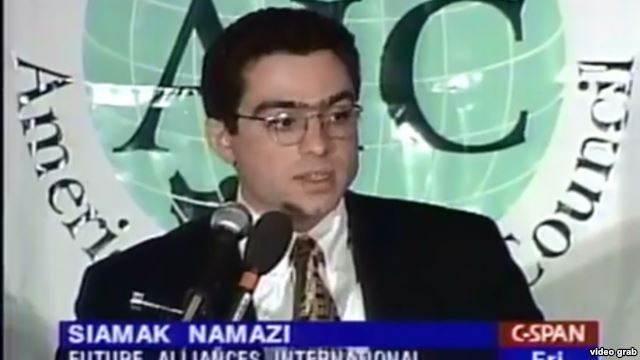
Siamak Namazi has been held in Iranian prison since last October and his continued imprisonment has now become something of a cause amongst groups such as NIAC who have previously not dared to voice any public disagreement with the regime on previous occasions, including the imprisonment of other more notable Iranian-Americans such as Washington Post reporter Jason Rezaian, Christian pastor Saeed Abedini and former U.S. Marine Amir Hekmati, who had been subjected to torture and released as part of the prisoner swap.

The U.S. released seven Iranian nationals held in the U.S., in return and agreed to drop international arrest warrants and charges against 14 Iranians outside of the U.S. who had been involved in the smuggling of arms and nuclear components.

Other Iranian-Americans, some of whom spoke on the condition of anonymity to the New York Times, said they were postponing or scrapping planned trips to Iran until Namazi was released, or at least until the circumstances surrounding his case were clearer since his arrest has stirred anxiety among those who thought the nuclear deal portended a new era.

Trita Parsi traveled with Siamak Namazi to Isfahan, Iran’s third largest city, in August 2000. They also toured the Zoroastrian “Fire of Victory” Temple in Yazd. At the time, Siamak was living in Tehran, working for Atieh Bahar, a consultant company with close ties to the government. In 1999, Parsi and Siamak co-authored a paper that recommended setting up a lobbying organization in Washington to influence US-Iran policy. Siamak took a sabbatical in 2005 to complete a fellowship at the Woodrow Wilson Center in Washington, DC. While at the Center, Siamak helped Parsi formulate NIAC policies supportive of the Iranian regime.

Trita Parsi traveled with Siamak Namazi to Isfahan, Iran’s third largest city, in August 2000. They also toured the Zoroastrian “Fire of Victory” Temple in Yazd.
At the time, Siamak was living in Tehran, working for Atieh Bahar, a consultant company with close ties to the government.
In 1999, Parsi and Siamak co-authored a paper that recommended setting up a lobbying organization in Washington to influence US-Iran policy. Siamak took a sabbatical in 2005 to complete a fellowship at the Woodrow Wilson Center in Washington, DC. While at the Center, Siamak helped Parsi formulate NIAC policies supportive of the Iranian regime.

The ties between Namazi and Trita Parsi of the NIAC previously exposed by Iranlobby.net were also revealed in a Daily Beast expose that detailed how in 1999, Namazi got together with Parsi at a conference in Cyprus. The conference, titled, “Dialogue and Action Between the People of Iran and America,” was convened to help ameliorate U.S.-Iranian relations in advance of reconciliation by forming an aggressive public relations and lobbying response to any anti-Iranian regime policies and legislation.

Two years later Parsi founded the NIAC, which long advocated opening up commercial and financial lines back to Iran with Namazi’s family companies offering to provide foreign companies and investors with connections and access to regime officials in a cozy relationship that no longer appears that cozy.

This is especially ironic since in March 2006 (at the height of the covert Iranian war with the U.S. in Iraq), Parsi told a colleague not to worry about a trip to Tehran, “NIAC has a good name in Iran and your association with it will not harm you.” When the colleague was briefly questioned by the regime, then released, he reported back (PDF) to Parsi that he’d been told the reason he was let go was “that they knew NIAC had never done anything seriously bad against the Islamic Republic.”

The shifting political winds within the Iranian regime have been reflected in the mass dismissals of thousands of proposed candidates for parliamentary election seats, but of more immediate concern is the prospect of mass demonstrations by ordinary Iranians – not over election issues, but because a large number of Iranians who receive public payments have not been paid by the regime. This also shows that as far as the ordinary Iranians are concerned, they have no illusion about the existence of a moderate or any moderation within the mullah’s regime.

An extraordinary directive from the Herasat Office, the regime’s domestic intelligence and security forces, entitled: “Issue: Paying workers’ wages in the final days of the year”:

“With greeting and respect, you are hereby informed that given that the end of the [Persian calendar] year is approaching and taking note of the instructions handed down by the minister and competent authorities regarding timely payment of workers’ wages and back pay, you must instruct that all wages, bonuses, back pay and overtime pay be paid no later than February 24, 2016 in order to prevent any possible gatherings or sit-ins and their related negative consequences.

“You are reminded that given the upcoming elections of the Assembly of Experts and Islamic Assembly (Parliament), this issue must be treated with especial importance and sensitivity in order to prevent any misuse of this matter for publicity in particular in the realm of workers’ protests.”

In other words, a lot of Iranians haven’t been paid their salaries, and the Khamenei regime is ordering that they be paid the money they’re owed by February 24, two days before the election, in the hope of defusing any potential mass protests.

The prospect of election protests is worrisome to regime leaders, especially since these elections will be held at the same time International Women’s Day is observed, which is all the more problematic for the regime when one considers the abysmal state of women’s rights in the regime today.

Nothing exemplifies this more than reports that Press TV, the regime’s state-run, English language news channel, suspended two executives on Monday after a prominent newscaster exposed that she had endured years of sexual harassment from them.

The newscaster, Sheena Shirani, has fled the country according to the New York Times.

Press TV is a part of the Voice and Vision organization of Iran, a powerful state media organization that is widely seen as a tool of the country’s hardline factions. One expatriate journalist who previously worked for Newsweek said that Emadi doubled as an interrogator in the Evin prison and once interrogated him. Emadi was later placed on a European blacklist of human rights violators.

The incident has also led to debate on social media. Several women have said such forms of harassment are commonplace in Iran under the mullahs rule, where unemployment is high and laws overwhelmingly favor men.

By Michael Tomlinson
Filed Under: News Tagged With: Featured, National Iranian American Council, NIAC, siamak Namazi, Trita Parsi

What the Iran Lobby Will Not Talk About

February 8, 2016 by admin

What the Iran Lobby Will Not Talk About

What the Iran Lobby Will Not Talk About

While most of the U.S. and a good chunk of the global sports audience watched the Denver Broncos defeat the Carolina Panthers in Super Bowl 50 on Sunday, the rest of the world continued to struggle with the daily hardships that have come with the rise of Islamic extremism flowing out of the Iranian regime.

That extremism has come to take many forms including the world’s largest refugee crisis since World War II as Syrians flee the civil war that Iranian forces have exacerbated. It has also resulted in rising tensions with the Iranian regime since the completion of a nuclear deal that was sold as being an instrument for moderation by the Iran lobby – most notably the National Iranian American Council.

Those tensions have included the blatant violation of existing United Nations Security Council sanctions banning the development of nuclear-capable ballistic missiles and the continued crackdown on Iranians in advance of upcoming parliamentary elections, including the imprisonment of Iranian-Americans, Christians, dissidents, journalists, artists, bloggers and scores of others deemed a danger to the ruling mullahs.

Even after a prisoner swap that allowed for the release of long-time American prisoners Jason Rezaian, Saeed Abedini and Amir Hekmati, the specter of other Americans becoming prisoners in Iran has loomed to such an extent that the U.S. State Department updated its travel warning for Iran recently “to reiterate and highlight the risk of arrest and detention of U.S. citizens, particularly dual national Iranian Americans, in Iran.”

“Various elements in Iran remain hostile to the United States.  Since the United States and Iran reached a Joint Comprehensive Plan of Action to address the international community’s concerns over Iran’s nuclear program on July 14, 2015, Iran has continued to harass, arrest, and detain U.S. citizens, in particular dual national,” read the State Department warning.

“The Iranian government continues to repress some minority religious and ethnic groups, including Christians, Baha’i, Arabs, Kurds, Azeris, and others.  Consequently, some areas within the country where these minorities reside, including the Baluchistan border area near Pakistan and Afghanistan, the Kurdish northwest of the country, and areas near the Iraqi border, remain unsafe. Iranian authorities have detained and harassed U.S. citizens, particularly those of Iranian origin.  Former Muslims who have converted to other religions, religious activists, and persons who encourage Muslims to convert are subject to arrest and prosecution,” added the statement.

Naturally the Iran lobby is completely silent on this issue since there is really nothing it can say to defend the Iranian regime, unless of course it did a public service by reprinting the State Department warning on their own websites to provide a heads up to Iranian-Americans.

The only public pronouncements the Iran lobby has made on travel is to condemn the notion of requiring background checks on those wishing to secure a visa to travel to the U.S. from nations such as Iran.

The plight of those with dual citizenship being detained and imprisoned in Iran was made more public when Reuters confirmed that a number of these dual citizens were being charged with espionage similar to what Washington Post reporter Rezaian was charged.

“We have several dual citizens in jail. Their charges are mostly the same (as Rezaian’s),” the judiciary spokesman Gholamhossein Mohseni Ejei was quoted as saying by the Fars news agency. “It is still important to know what he and those related to him were doing in Iran. So their case is still open.”

The fact that the mullahs still view the holding of dual citizens as a form of political gamesmanship and bartering leaves little room for the Iran lobby to make any case for a new wave of “moderation” sweeping over the Iranian regime.

In an odd twist, Siamak Namazi, an Iranian-American with strong ties to the Iran lobby and others supportive of the regime and the nuclear deal, was arrested and is still being held in Iran. Namazi’s friends and supporters, including the NIAC, have attempted to portray his plight as being a pawn in the political power struggle between so-called “moderate” and “hardline” factions within the Iranian regime, but the simple truth may be he is just another bargaining chip the regime may want to use in the future.

But his arrest does send a clear signal to the Iran lobby that their utility to the regime is only as worthwhile as the mullahs deem fit and they – like any other Iranian – could just as quickly and easily find themselves in Evin Prison even after being a loyal supporter of the regime.

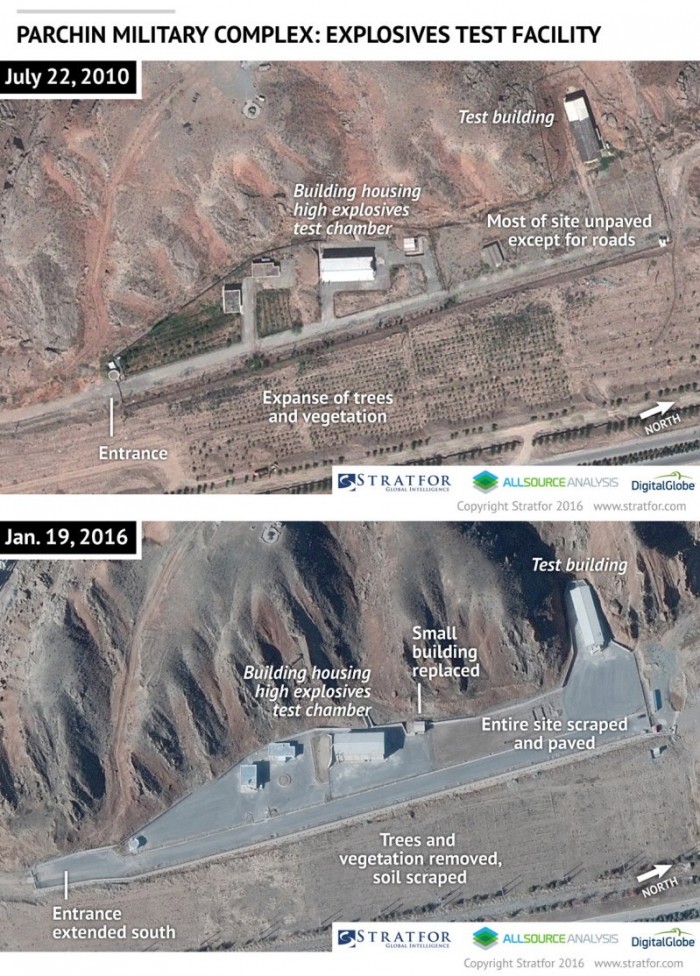
That nefarious nature of the regime was reinforced by disclosures that even as the Iranian regime was working to negotiate a nuclear deal, it was working to hide its atomic work at its Parchin military complex which has been used to test high explosives necessary for ignitors for nuclear warheads according to various intelligence agencies and Iranian dissident groups.

Forecasting site Stratfor.com says the images published Monday show Iran building a tunnel into a heavily guarded mountain complex inside the Parchin facility, some 20 miles southeast of Tehran, while also working to erase signs of alleged high-explosive testing at another area on the site.

“We’re not saying they’re cheating on the nuclear deal,” Stratfor analyst Sim Tack told The Daily Beast. “The images show Iran was going through the motions to hide what it’s done before, and it is still…developing facilities that the IAEA may or may not have access to,” Tack said, referring to the International Atomic Energy Agency.

The progression of satellite images tracking construction at Parchin from 2012 to 2015 show how Iran’s leaders apparently worked to keep regime hardliners happy by moving forward with weapons programs, even as the leadership worked to erase signs of an illegal nuclear weapons program, Tack said.

The imagery reveals new paving around a building alleged to be used for high-explosive testing, while another shows plants and trees removed and soil scraped and hauled away as possible evidence of radioactive contamination was removed in advance of inspections.

The simultaneous construction of a tunnel entrance into the mountain complex is also worrisome since the regime has since released new photos showing its inventory of ballistic missiles stored in new underground bunkers.

Yet even with all of these acts and revelations, the Iran lobby remains silent. We can only assume it has been waiting for the Super Bowl so they can relax while their fellow Iranian citizens undergo more torture.

By Michael Tomlinson

Filed Under: Blog, News Tagged With: #NuclearDeal, Featured, Iran Lobby, NIAC

Iran Lobby Cannot Hide Growing Discontent Within Iran Regime

February 5, 2016 by admin

Iran Lobby Cannot Hide Growing Discontent Within Iran Regime

Iran Lobby Cannot Hide Growing Discontent Within Iran Regime

The Iran lobby, led by the squawking voices of luminaries such as Trita Parsi and Reza Marashi of the National Iranian American Council and so-called journalists Jim Lobe and Ali Gharib, promised a new moderate Iran after the nuclear deal was announced, which was met with loud demonstrations and honking car horns on the streets of Tehran by Iranians hoping for a new shift in the regime’s policies moving forward.

That hope has slowly been strangled and has led to widespread disillusionment among ordinary Iranians, especially Iranian youth who face appalling high unemployment rates, are subjected to internet cyberwalls and live in constant fear of arrest and torture for engaging in counter-revolutionary acts such as posting photos on Instagram.

Their hopes had been bolstered by the false promise offered by the election of Hassan Rouhani, who has become the false face of a regime which has no intention of changing course. Reuters took a deeper look at the dissatisfaction running through Iranian society and the lack of progress towards the moderate promises made by Rouhani’s ascension.

Rouhani won the presidency in 2013, bolstered by the support of many women and young people who were encouraged by his comments that Iranians deserved to live in free country and have the rights enjoyed by other people around the world, said Reuters.

“I am not going to make the same mistake twice. I have decided not to vote,” said Setareh, a university graduate in the northern city of Rasht. “I voted for Rouhani – was he able to improve my situation? No.”

According to the Reuters reporting, Rouhani’s supporters hoped that his election victory would lead to social change in country where women have lesser rights than men in areas including inheritance, divorce and child custody and are subject to travel and dress restrictions, and strict Islamic law is enforced by a “morality police.”

But rights campaigners say there have been little, if any, moves to bring about greater political and cultural freedoms as the president has focused on striking the nuclear accord with world powers to end the international sanctions that have crippled Iran’s economy with no guarantees the financial windfalls would benefit the consumer economy.

Reuters found significant irony among young Iranians that Rouhani’s promises to loosen Internet restrictions have not been met. Access to social media remains officially blocked, though Rouhani and Khamenei have their own Twitter accounts.

This has been a particular grievance among those under 30, who represent more than two-thirds of the 78 million people living in Iran and were born after the 1979 Islamic revolution.

“I am not going to vote. What is the use of voting? My hopes are shattered,” said a 27-year-old engineer in Tehran, who refused to give his name.

The situation for Iranian women remains abysmal and shows no signs of improvement after parliamentary elections. Under regime law, men can divorce their spouses far more easily than women, while custody of children over seven automatically goes to the father.

Women have to get permission from their husbands to travel abroad. They are obliged to cover their hair and the shape of their bodies, their testimony as a legal witness is worth half that of a man’s and daughters inherit half of what sons do.

“What will change if I vote?” said Miriam, 26, who could not win custody of her eight-year-old son after getting divorced in the central city of Isfahan. “Can reformist candidates give me equal rights?”

A report by the U.N. special rapporteur on Iran last year said human rights in the country “remained dire” under Rouhani, while separately a U.N. child rights watchdog said this month that girls faced discriminatory treatment “in family relations, criminal justice system, property rights”.

Support for that nuclear deal may also appear to be cracking based on a new poll conducted by the University of Maryland’s Center for International and Security Studies in January. Another question asked whether the deal was a victory for Iran or a defeat for Iran. In August, 36.6 percent of Iranians said it was a victory, but that number has now dropped to 27.4 percent. Interestingly, the numbers of Iranians who felt it was a defeat also dropped. Instead, a third answer – that the deal is beneficial for both Iran and the world powers that agreed to it – gained adherents, rising 43 percent of Iranians to 54 percent between August and January.

Both are significant erosions of confidence by the Iranian people in what they believe from the Mullah’s regime and the fact they do not see any of the alleged benefits touted by the mullahs flowing to them and are unlikely to see any as the regime focuses on business deals benefitting industries controlled by the Revolutionary Guards Corps.

That focus on benefits for the ruling elites was highlighted by criticisms voiced by regime publications affiliated with the IRGC which criticized a number of the contracts signed by Rouhani on his recent European tour in an effort to justify the removal of almost 90 percent of candidates from election ballots who might be viewed as moderates or even outright dissenters from being able to run for office.

That militant and aggressive behavior was reinforced by comments made by the head of the regime army in the Fars news agency in he promised the regime would continue development of its ballistic missile program even though the international community has widely condemned it as a violation of existing sanctions, according to Reuters.

In October, Iran violated a United Nations ban by testing a precision-guided ballistic missile, prompting a U.S. threat to impose more sanctions. In December, Rouhani ordered Iran’s missile program to be expanded.

“Iran’s missile capability and its missile program will become stronger. We do not pay attention and do not implement resolutions against Iran, and this is not a violation of the nuclear deal,” Fars quoted commander-in-chief Ataollah Salehi as saying.

He was referring to Iran’s deal with world powers last year to curb a nuclear program that the West feared, despite Tehran’s denials, was aimed at acquiring atomic weapons.

But even as the Iranian regime was making these threatening statements, its foreign minister Javad Zarif was demanding that the U.S. make clear a public pledge not to penalize any European banks engaging in trade with the regime, according to Reuters.

Many foreign banks are cautious about resuming trade with Iran following January’s nuclear deal because they fear being caught up in ongoing U.S. sanctions.

Although world powers lifted many crippling sanctions against Iran in return for the country complying with a deal to curb its nuclear ambitions, some restrictions remain in place

Washington still prevents U.S. nationals, banks and insurers from trading with Iran and also prohibits any trades with Iran in U.S. dollars from being processed via the U.S. financial system.

This is a significant complication given the dollar’s role as the world’s main business currency.

European banks are also cautious – with some, including Deutsche Bank, remembering past fines from U.S. regulators for breaking sanctions, Reuters said.

European businesses should be wary of jumping too quickly back in bed with the regime given its aggressive actions and engagement in escalating conflicts in Syria, Iraq and Yemen, especially since the upcoming parliamentary elections will be just another act of political theater with no real benefit or relief for the Iranian people.

By Michael Tomlinson

Filed Under: Blog, News Tagged With: #NuclearDeal, Featured, Iran Lobby, Reza Marashi, Trita Parsi

Iran Lobby Ignores Continued Human Rights Violations by Iran Regime

February 4, 2016 by admin

Iran Lobby Ignores Continued Human Rights Violations by Iran Regime

Iran Lobby Ignores Continued Human Rights Violations by Iran Regime

As the world convenes in Geneva to discuss the chaos that is the civil war in Syria, the Iranian regime continues to recruit and export thousands of undocumented Afghans to fight in Syria on behalf of the regime of Bashar al-Assad in a continuation of the unconditional support the mullahs in Tehran have given the Syrian dictator according to Human Rights Watch and the ongoing genocide.

Human Rights Watch in late 2015 interviewed more than two dozen Afghans who had lived in Iran about recruitment by Iranian officials of Afghans to fight in Syria. Some said they or their relatives had been coerced to fight in Syria and either had later fled and reached Greece, or had been deported to Afghanistan for refusing. One 17-year-old said he had been forced to fight without being given the opportunity to refuse. Others said they had volunteered to fight in Syria in Iranian-organized militias, either out of religious conviction or to regularize their residence status in Iran.

“Iran has not just offered Afghan refugees and migrants incentives to fight in Syria, but several said they were threatened with deportation back to Afghanistan unless they did,” said Peter Bouckaert, emergencies director at Human Rights Watch. “Faced with this bleak choice, some of these Afghan men and boys fled Iran for Europe.”

The Iranian regime hosts an estimated 3 million Afghans, most fleeing violence and persecution in Afghanistan; only 950,000 have formal legal status in Iran as refugees. The regime excludes the remainder from accessing asylum procedures, leaving many who may want to seek asylum undocumented or dependent on temporary visas and at the tender mercies of the mullahs.

HRW went on to document several instances of minor children being coerced into service and fight in Iranian-controlled and led militias in Syria. The Iranian regime, already cited by Amnesty International for executing juveniles in Iran, has adopted a similar attitude when it comes to using children as cannon fodder.

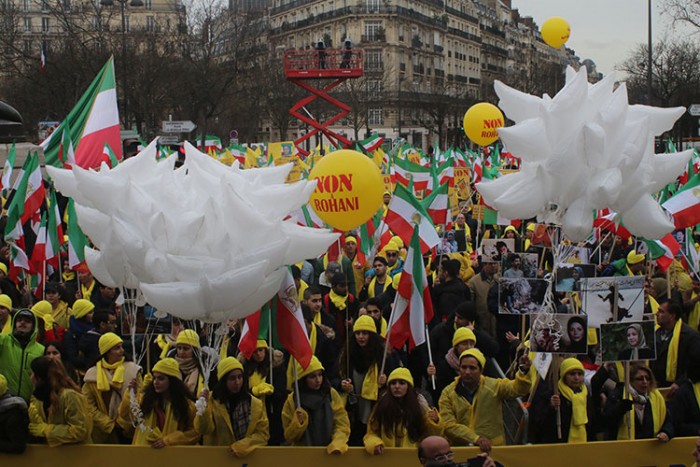
These practices by the Iranian regime have drawn broader attention in the wake of Hassan Rouhani’s European tour which was met by large demonstrations by thousands of Iranian dissidents and human rights groups in Paris.

Many Iranian expatriates and former victims of the regime participated in elaborate street performances and exhibitions to portray the human rights violations that are still running rampant in the country to this day. 2,200 people have been put to death during his tenure, most of them for non-violent offenses, and many for vague, political crimes like “insulting the Prophet” or “enmity against God”. Western diplomacy to solve this problem is missing- in what can only be called criminal negligence, according to the National Council of Resistance of Iran, a leading dissident group.

Even against the backdrop of business deals being announced and praise from the Iran lobby about the “moderate” turn by the regime, the mullahs continued to crackdown in advance of upcoming parliamentary elections, but are not satisfied with just arresting Iranians as they arrested a former BBC journalist on the eve of visit by regime foreign minister Javad Zarif to London.

Washington Post reporter Jason Rezaian must be feeling a case of déjà vu hearing this news.

Bahman Daroshafaei was taken to jail on Wednesday after facing a series of interrogations, according to sources in Tehran. Daroshafaei is of dual Iranian-British nationality and is a former employee of the BBC’s Persian service according to the Guardian.

Zarif is due to participate at a high-profile summit on Syria in London on Thursday, in the first visit to the UK by an Iranian foreign minister in 12 years. It comes after Britain and Iran reopened embassies in their respective capitals last August following the landmark nuclear deal.

The Iranian regime appears to have an active campaign that involves harassing BBC Persian journalists directly or indirectly by summoning their family members who live in Iran. A number of staff members at the BBC’s Persian service have been victims of false allegations of sexual misconduct, duplicated Facebook accounts, fake blogs and online identity theft designed to discredit them, this is while BBC Persian service is considered a program that mainly advocates an appeasement policy towards Iran and is actually referred to by most Iranian’s as “Ayatollah BBC” for its pro mullah’s programs.

The Guardian took the regime to task in an editorial in which it condemned the regime’s human rights violations, saying:

“Iran may have a president with a “moderate” profile – one whose smooth approach comes as a relief after the Ahmadinejad years – but that does not mean the authoritarian nature of the regime or the objectives of its foreign policy have changed. Iran still ranks as one of the most repressive states in the world, and there has been no improvement.

“The government was probably looking for a public relations bonus in the west when it recently released a number of journalists, but the statistics tell another story: in 2015 Iran executed at least 830 people, including juveniles, many for non-violent crimes. The security services continue to harass and detain activists, writers and journalists.

“Nor has Iran become in any way more “moderate” in its behaviour in the Middle East. In Syria, Iran’s militias and Republican Guards are direct participants in the war crimes that the Assad regime inflicts on its own population. Iran’s close ally Hezbollah played a key role in the siege of Madaya, where children died of hunger as a result, and it is part of similar operations elsewhere.”

It is encouraging to see more international media seeing past the charades offered by the Iran lobby and exposing the horrors that are still continuing in Iran.

By Michael Tomlinson

Filed Under: Blog, News Tagged With: Featured, Iran Talks, Irantalks, Moderate Mullahs

Iran Lobby Silent as Iranian Regime Promises More Humiliation of US

February 3, 2016 by admin

Iran Lobby Silent as Iranian Regime Promises More Humiliation of US

Iran Lobby Silent as Iranian Regime Promises More Humiliation of US

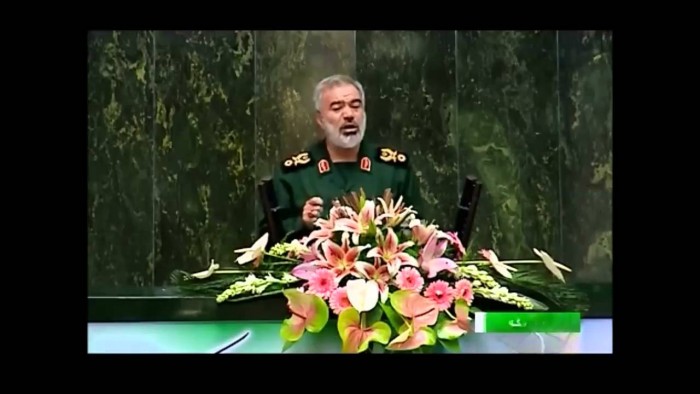
After awarding medals to Iranian navy commanders who had detained ten U.S. sailors, Sardar Fadavi, head of the regime’s Revolutionary Guards Corps Navy, addressed regime lawmakers about the incident, telling them his personnel had collected information from the sailors’ laptops and cell phones that had not yet been released, in addition to more footage. This information would be released if the United States ever sought to humiliate Iran, he said.

“If U.S. officials say they are angry with and frustrated by the footage released, they would be 100 times more embarrassed if the IRGC releases other films of the capture, the Iranian commander said,” Tasnim, the regime-owned news agency reported.

“Iran does not seek to humiliate any nation, he said, but stressed that if they want to humiliate Iran, the IRGC would publish the footage and make them even more embarrassed and humiliated,” it continued.

One could argue successfully that these are not the comments of a government interested in smoothing over differences and becoming an engaged, moderate member of the community of nations, but rather a regime that still views the world in a hostile, militant way and intent on enforcing its superiority in any manner possible.

But not everyone is buying the party line of the Iran lobby of Iran’s moderation and good intentions. The House of Representatives took up a new vote on legislation to prevent the Obama administration from lifting sanctions on Iranian entities unless it certifies they aren’t affiliated with terrorism or ballistic missile development technically already passed in the House last month, but a revote occurred on Tuesday to allow the full House to vote.

The Obama administration predictably issued a veto threat of the Iran legislation and warned it would hinder its ability to implement the nuclear accord.

“By preventing the United States from fulfilling its JCPOA commitments, H.R. 3662 could result in the collapse of a comprehensive diplomatic arrangement that peacefully and verifiably prevents Iran from acquiring a nuclear weapon,” the White House said in a Statement of Administration Policy.

Paradoxically though, the administration had previously imposed new sanctions on the regime for the test launching of illegal nuclear-capable ballistic missiles. If you confused by now, you’re not the only one.

The Senate Foreign Relations Committee also is taking fresh aim at Tehran with stepped-up sanctions to punish the regime for aggressive non-nuclear activities.

Chairman Bob Corker (R-Tenn.) and at least one other senator are crafting new measures to address everything from Iran’s recent ballistic missile tests to the country’s human rights violations to a reauthorization of the soon-expiring Iran Sanctions Act (ISA). The measures, which are likely to come up in February, will be Congress’ latest attempts to ensure President Obama punishes mullahs in Tehran for bad behavior in the wake of the now-implemented nuclear deal.

“We are looking at ways of having a much stronger pushback on the violations that took place,” Corker said of his proposed sanctions aimed at Iran’s recent ballistic missile tests.

The ballistic missile measure is part of a trio Corker is readying, along with a reauthorization of ISA — a sweeping, longstanding law to curb Iran’s nuclear and missile activities as well as its support for terrorism through sanctions on the trade, energy, defense and banking sectors. Corker is also crafting a third measure, but declined to identify its content.

Sen. Bob Menendez (D-N.J.) is also planning a package of “actions that we should be considering against Iran outside the nuclear portfolio.” Menendez has already co-authored, along with Sen. Mark Kirk (R-Ill.), legislation to extend ISA past 2016, and wants to step up sanctions against Tehran for its ballistic missile tests and human rights violations.

Their actions mark the first significant move by lawmakers against Iranian regime since the pact took effect as they seek to keep Tehran on a tight leash. It remains to be seen how the congressional pushback will be greeted by the White House.

The move by Congress are being motivated in part by the clear signals being sent by the Iranian regime in advance of parliamentary elections with the selective removal of any potential dissidents among candidates and to deliver a slate that is ideologically pure.

David Gardner, writing in the Financial Times, put it best:

“Iran’s rulers are best seen not so much as convinced theocrats but as a post-revolutionary elite of vested interests using religion as their standard. The institutions of theocracy, such as the Guardian Council or the Assembly of Experts that selects the supreme leader, guarantee their own hegemony over the republican institutions, such as the elected majlis…”

The upcoming elections then are just a formality for the ruling mullahs to legitimize their rule in their eyes and provide the illusion of democracy as they reap the financial rewards of the lifting of economic sanctions.

Ultimately the Iran lobby, led by the National Iranian American Council chooses to ignore these facts and instead continuing carrying the water for the mullahs.

By Michael Tomlinson

Filed Under: Blog, News Tagged With: #NuclearDeal, Featured, Iran deal

Iran Lobby Continues to Ignore Human Rights Violations

February 2, 2016 by admin

Iran Lobby Continues to Ignore Human Rights Violations

Iran Lobby Continues to Ignore Human Rights Violations

The Iran lobby’s leading cheerleaders seem to have a problem with selective memory recall as evidenced by the latest editorial by Reza Marashi from the National Iranian American Council in the National Interest in which he praised Hassan Rouhani’s European tour and boasted of the Iranian regime’s plans for its newfound wealth as a result of the nuclear deal.

“Iran is pursuing this agenda in an effort to increase government legitimacy and security among Iranian society through improved economic conditions,” Marashi says in of the more inane comments he makes.

“Alliances and enmities shift regularly in Iranian politics, but survival of the system is the shared goal of all stakeholders. Thus far, Rouhani’s political coalition has won Iran’s internal political debate by arguing that survival is better guaranteed through flexibility than intransigence,” he adds in typical think tank-speak.

What Marashi is missing from his less than eloquent dissertation is the reality that is going on within Iran now which is the swift action by the Guardian Council to remove from parliamentary election ballots upwards of 90 percent of all candidates perceived to be moderate or opposed to the current mullah leadership. Even the grandson of the regime’s founder, Ruhollah Khomeini, was tossed off the ballot for being too moderate!

Marashi’s piece is titled “Can Iran Get Out of Its Own Way?” That much he got right, since it is clear the mullahs in Tehran have absolutely no desire to halt their steady stream of militant and aggressive actions in solidifying their hold on power, continue their crackdown on human rights and internal dissent and utilize its newfound wealth to rebuild its infrastructure and enrich themselves at the same time.

The upcoming parliamentary elections are now set to deliver a hand-picked slate of loyalists beholden to the mullahs and Ali Khamenei and Rouhani – far from being the moderate struggling to preserve the future of democracy in Iran – has ably served in his capacity as the puppet face for Khamenei.

It’s also worth noting that Marashi’s claim of the regime realigning to provide an economic boon to ordinary Iranians is also a farce since the deals being signed are lined up to funnel billions back into the coffers of the Revolutionary Guard which controls the heavy industries such as petroleum, aviation and manufacturing.

Marashi also doesn’t address the unseen corruption so deeply rooted in the regime economy that any foreign investor is likely to face barriers. He also does not dare mention the sophisticated cyberwall cutting Iran off from the rest of the world and the high degree of surveillance conducted by the regime’s intelligence agencies that monitor virtually all traffic in and out of the country and often leads them to dissidents and other activists.

Despite the deals and the desire of European governments to begin trading with Iran, financing remains a big issue as major European banks remain reluctant to handle Iranian payments, deterred by previous huge fines from the US treasury. Nuclear-related sanctions have been lifted but other US measures relating to terrorism and human rights are still in place, according to The Guardian.

In typical regime fashion indicative of the corruption within it, far from being a political fight between “hard line” and “moderate” factions, the fight within the regime can be viewed as a fight over the spoils of getting the nuclear deal since the vast majorities of Iranian industries are controlled in whole or part through shell companies belonging to the Revolutionary Guard, which in turn has provided a steady source of illicit income to regime officials for the past two decades.

Even as Khamenei has still called for a “resistance economy,” his intent and those of the mullahs is not to resist any American threat, but instead keep the Iranian people under the boot of oppression and not allow the full benefits of a reopened economy to flow to them.

Evidence of this schism was shown as the regime cancelled plans for a conference set for London where new contracts for foreign oil companies to drill in Iran. Regime officials ostensibly claimed the cancellation was due to British visa requirements, but in fact political turmoil domestically was to blame as various regime groups jockeyed for their share of the corrupt spoils.

Some oil officials are worried the contracts won’t be attractive enough to offset the majors’ reluctance to invest globally due to low oil prices. Others fear mounting criticism by hard-liners who say the deals would give too much away of the country’s natural wealth, according to the Wall Street Journal.

The new deals have been criticized by the Basij, the paramilitary oppressive forces, formed to uphold the principles of the mullah’s rule. On Saturday, members of Basij’s student wing were arrested after protesting against the contracts, the semiofficial Tasnim news agency reported.

Political crackdowns in Iran are so commonplace and for so many trivial acts, that some Iranians who have been repeatedly arrested have developed handbook to help those who might face arrest in the regime.

One of the student activists jailed three times and tortured, believes there are steps activists in Iran can take to better protect themselves, both inside and outside prison walls. He belongs to a group of over a dozen activists who used their hard-earned personal experiences to create a 19-chapter booklet in Farsi and English titled “Safe Activism: Reducing the Risks and Impact of Arrest,” according to the Guardian.

Designed to teach activists and journalists how to avoid careless behaviors that could endanger them and those around them, the booklet, now online, also offers guidelines on what to do in case of arrest and how to mitigate the consequences of incarceration,” the Guardian added.

Basic safety measures are highlighted in the first chapters of the ‘Safe Activism’ booklet. Readers are reminded to take precautions before meeting with other activists and not communicate important information over the phone. They are advised to keep sensitive documents as well as identification papers and travel documents at a safe place outside their residence, and to clear their homes of illegal items like drugs, alcohol and banned media.

The fact that ordinary Iranians would need a handbook like these speaks volumes about conditions in Iran and is damning proof that Marashi’s optimistic views are really flights of fantasy.

It would be more of a service if the NIAC published the handbook on its website so future Iranian-Americans visiting Iran are not imprisoned like so many others have been.

By Michael Tomlinson

Filed Under: Blog, Current Trend, News Tagged With: #NuclearDeal, Featured, Iran deal, Iran Economy, Iran Human rights, Iran Lobby, Marashi, NIAC, Reza Marashi, Rouhani

Iran Regime Continues to Stir Controversy

February 1, 2016 by admin

Iran Regime Continues to Stir Controversy

Iran Regime Continues to Stir Controversy

As Hassan Rouhani completed his European tour and was busy basking in the perceived glow of adulation and business deals, his boss back home, top mullah Ali Khamenei, again undermined his message by taking the opportunity to hand out medals to the regime navy commanders who captured and held ten U.S. sailors earlier this month.

Khamenei maintained that the regime needed to remain wary of its arch-enemy in the U.S. even after completion of the nuclear deal that enabled Rouhani’s trip.

“The Guards released the boats and crew, but not before deliberately embarrassing the sailors, the Navy, and the U.S. by broadcasting photos of the Americans in captivity, including the one nearby of the U.S. sailors on their knees with their hands behind their heads under armed Iranian guard,” said the Wall Street Journal in an editorial.

Secretary of State John Kerry later said he was “infuriated” by the footage of the U.S. sailors and that “I immediately contacted my counterpart. And we indicated our disgust,” the Journal added. “Apparently that disgust didn’t register with the people who really run Iran—that is, the Revolutionary Guards and the Ayatollah, who has now slapped the U.S. again by awarding medals to those who humiliated our sailors.”

The regime’s actions since completion of the nuclear deal have left little doubt as to what the true intentions are of the mullahs in charge; choosing to respond to new sanctions for example levied in the wake of the testing of illegal ballistic missiles by vowing to redouble its missile development efforts.

Brigadier Gen. Amir Ali Hajizadeh, commander of the IRGC’s missile force, made his comments in the Iranian capital of Tehran on Saturday, reports Iran’s Fars News Agency. Hajizadeh’s comments come after the Obama administration put new sanctions on Iran’s missile program into effect on Jan. 17.

“They [the U.S.] keep raising the issue of sanctions against Iran over its missile program and they expect us to retreat,” warned Hajizadeh, “Far from it, the IRGC response to the US demands will be offensive. As explicitly stated before, the Islamic Republic of Iran will respond to the [U.S.] propaganda and annoying move by further pursuing its completely legal missile program. Iran will strengthen national defense and security capabilities.”

Iran’s missile program is controlled by the IRGC, which takes orders directly from Iranian regime’s supreme leader, Khameini. Iran’s president Rouhani has essentially no control over the organization, which has been actively undermining Rouhani since his election, according to the Daily Caller.

That aggressive militant stance was reinforced on Sunday by regime saying it still wanted to promote a self-reliant economy even though the sanctions against it have been lifted and its doors are now open to foreign investors.

The regime’s minister of industry, mines and trade Mohammad-Reza Nematzadeh in a letter to Khamenei emphasized that the removal of the sanctions have created no change in plans to strengthen domestic industries and enhance their technical capabilities.

Nematzadeh added that his ministry will continue to consider the guidelines put forward by Khamenei to move toward the establishment of the resistance economy, which promises to emphasis industrial sectors controlled by the Revolutionary Guard and at the expense of consumer growth that might alleviate the economic suffering of the Iranian people.

In another show of escalating tensions with the U.S., the regime media released a video purportedly showing a drone flying over a U.S. aircraft carrier. The video shows a ship covered in fighter jets steaming through the blue seas. Cmdr. William Marks, a U.S. Navy spokesman, said in a statement that he could not confirm the authenticity of the video, but he added that an Iranian drone was spotted flying around the French carrier Charles de Gaulle and the American carrier USS Harry S. Truman on Jan. 12 in the Persian Gulf. The drone was unarmed and determined not to be a threat, but Marks said the incident is still considered “abnormal and unprofessional.”

That incident occurred on the same day the regime’s navy detained the U.S. sailors for which Khamenei handed out his medals.

With the emphasis on renewed aggressive acts and a commitment to a resistance economy, the political situation domestically within the regime grew more precarious for dissidents and any moderates opposing the regime’s mullahs.

“Next month’s elections in Iran do not bode well for Iranians eager for more political and social freedoms or for the promising new relationship with the West symbolized by the recent deal limiting Iran’s nuclear program,” said the New York Times in an editorial that almost sounded like a mea culpa in supporting the nuclear deal in the hopes of a more moderate Iranian regime.

“The hard-liners are in a good position to prevail in the Feb. 26 polls because of political manipulation and a nominating process that gives a small group of people enormous power over who can and cannot run,” the Times wrote. “In a sign of heightened interest in electoral politics, some 12,000 Iranians registered to run in the election for Parliament, more than double the 5,405 who registered in 2012. Yet, more than 7,000 of those would-be candidates were disqualified by the Council of Guardians, a 12-member group appointed partly by the supreme leader and partly by the judiciary.”

Rouhani, who won election in 2013, has yet to deliver on campaign pledges to restore basic freedoms, including free speech and the release of political prisoners. Hundreds of political activists and journalists remain in prison, according to various Human Rights organizations; “Iran is a leading executioner of prisoners, including juveniles,” noted the Times of the worsening situation within Iran. Not to mention that under Rouhani well over 2000 people have been executed in Iran, including at least 63 women, and at least 73 people who were under the age of 18 when committed the alleged crime.

We can only hope that more people who bought into the promises of the Iran lobby about a new moderate Iran will now realize the folly of that hope as the regime tries to cash in on the deal.

By Michael Tomlinson

Filed Under: Blog, News Tagged With: Appeasement policy, Featured, Rouhani

Iran-Rouhani Paris Visit Met by Thousands of Protestors

January 29, 2016 by admin


Rouhani Paris Visit Met by Thousands of Protestors

Rouhani Paris Visit Met by Thousands of Protestors

As Iranian regime leader Hassan Rouhani arrived in Paris for the second half of his European tour, thousands of protestors gathered at Place Denfert-Rochereau to demonstrate against his presence and give voice to the brutality that has been meted out during his term against dissidents, religious minorities, women, children and ordinary Iranians in gross violations of human rights.

The protests included French political figures, Iranians, human rights groups and other activists who called on French leaders to reprimand Rouhani for the terrible human rights conditions in Iran, as well as the long-term policies of support for terror groups and the spread of Islamic extremism including the long-running Syrian civil war.

The list of noteworthy participants at the protests included:

  • Sid Ahmad Ghozali, former Algerian Prime Minister;
  • Gilbert Mitterrand, President of France Libertés Foundation and son of the late French President Francois Mitterrand;
  • Senator Jean-Pierre Michel;
  • Giulio Maria Terzi, former Italian Foreign Minister;
  • Alejo Vidal-Quadras, President of the International Committee In Search of Justice (ISJ) and former Vice-President of the European Parliament;
  • José Bové, Member of the European Parliament from France;
  • Rama Yade, former French Secretary of State for Human Rights;
  • Henri Leclerc, prominent French lawyer and jurist;
  • Dominique Lefevbre, member of French National Assembly;
  • Jean- François Legaret and Jacques Boutault, Mayors of 1st and 2nd districts of Paris;
  • Struan Stevenson, President of European Iraqi Freedom Association (EIFA);
  • Michel Kilo, member of Syrian opposition; and
  • Marzieh Babakhani, member of PMOI/MEK Central Council

The large demonstration represented a tangible reminder to world media that Rouhani was not being welcomed with open arms in Europe, as a sizable contingent of French citizens joined in protests amid the still resonating pain of the Paris attacks that left 130 dead. Rouhani’s presence – far from being a PR coup for the regime – provided the opportunity for news media to see a visceral opposition to Rouhani and the theocratic regime as a whole.


It was also a reminder that far from being the “moderate” portrayed by the regime, Rouhani faithfully tows the party line in pushing unpopular positions such as the Iranian regime’s insistence that Syrian dictator Bashar al-Assad stay in power; dashing hopes for a quick political resolution to the bloody conflict that has forced the largest mass migration of refugees since World War II.

Asked at a news conference in the Élysée Palace whether Tehran would drop its support for Assad, Rouhani called the question “strange.”

“Syria’s problem is not a question of people. The problem is terrorism and Islamic State,” Rouhani said, standing beside French President François Hollande, who has repeatedly called for Assad to step down.

The stalemate over Assad bodes ill for a meeting set for Friday in Vienna, where Western governments hope to meet with Russia, Iran and other countries in the region as well as the Syrian regime and opposition to push for an end to the nearly five-year war.

Another further illustration of the harsh nature of the regime came in a three-minute video released by top mullah Ali Khamenei in which he questioned the Nazi Holocaust. The video – entitled “Holocaust: Are the Dark Ages Over?” – plays on of Khamenei’s speeches in which he said “No one in European countries dares to speak about the Holocaust, while it is not clear whether the core of this matter is reality or not. Even if it is reality, it is not clear how it happened.”

The questioning of the Holocaust is a matter of rote exercise for the regime as famously uttered by Holocaust denier Mahmoud Ahmadinejad and has almost become an article of faith among the mullahs in Tehran and a perennial sore point in relations with the West.

That lack of concern over such deplorable events in human history carries over in the regime’s day-to-day disregard for human rights in virtually all phases of Iranian society and jurisprudence. The Daily Mail ran a powerful photographic series from Sadegh Souri who shot pictures documenting the harsh treatment and plight of young girls and women awaiting death sentences in Iranian prisons.

In Iran, the second-biggest user of capital punishment in the world, young women can be hanged for crimes, following unfair trials, including those based on forced confessions extracted through torture and other ill-treatment.

The frightened girls are imprisoned in a Juvenile Delinquents Correction Centre after their sentence verdict and a large number of the inmates are then killed when they reach 18.

In Time magazine, Matthew Trevithick, one of the American hostages released in the prisoner swap with Iran, recounted his arrest and 41 day imprisonment, in which he was studying Farsi in Tehran only to be placed under surveillance, then arrested and told he was never going to be leaving Iran again.

During his imprisonment, Trevithick was told to lie to his mother about his whereabouts and then regime interrogators demanded he videotape a confession that he worked for the CIA and had access to arms and cash. He said no and then was sent back to Evin prison where interrogators questioned him about any ties to journalists he might have had.

Trevithick noticed that the other prisoners he was with were all artists, dissidents and intellectuals; everyone who could be viewed as a problem for the regime was being locked up. Even as he is finally released, the regime officials at the airport make him pay a fee for overstaying his student visa.

The absurdity of the situation is balanced by the fact that virtually no news organization knew of his incarceration, nor of the efforts to coerce a confession from the American student who had traveled to Tehran lured by the false sense of security promulgated by the Iran lobby such as the National Iranian American Council and ended up spending 41 days in prison.

Unfortunately for the thousands of other dissidents, women and children languishing in Iranian prison, their hopes for release are much dimmer.

By Michael Tomlinson

Filed Under: Blog, News Tagged With: Featured, Iran, Iran appeasers, Iran Human rights, Rouhani

Rouhani Meeting with Pope Francis Underscores Mistreatment of Religious Minorities

January 29, 2016 by admin

Rouhani Meeting with Pope Francis Underscores Mistreatment of Religious Minorities

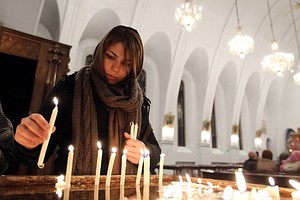
An Iranian Christian woman lights candles during the Christmas Eve mass at the St. Gregor Armenian Catholic church in Tehran on December 24, 201, as Christians around the world are celebrating Christmas. AFP PHOTO/ATTA KENARE (Photo credit should read ATTA KENARE/AFP/Getty Images)

Iranian regime president Hassan Rouhani concluded the second day of his European tour with a 40 minute meeting with Pope Francis at the Vatican in which the Pope raised the question of the “promotion of human dignity and freedom of religion”—sensitive topics for the regime, which has been under fire for its human-rights record.

Only yesterday international human rights group Amnesty International issued a blistering report denouncing the Iranian regime’s record-setting pace of executing juveniles, while Iranian dissident groups stage protests of Rouhani’s tour and freed Christian pastor Saeed Abedini going public with revelations about his brutal torture over the past several years before his release as part of a prisoner swap.

No one can fault Pope Francis for praying and hoping for a more peaceful world with Iran’s participation, unfortunately the stark political realities of the regime’s government and rock-solid devotion to its particular virulent strain of extremist Islam makes the Pope’s wishes problematic.

For his part, Rouhani came out of the meeting with the Pontiff proclaiming that the pathway to solving instability in the Middle East and suppressing Islamic extremism and terrorism would come from supporting Iran economically; as if a job and car would be sufficient inhibitors to Extremism.

“If we want to combat extremism and violence in the world, if we want to fight against terrorism, one of the paths that we have is economic development and creating jobs,” Rouhani said.

It’s a curious position for Rouhani to advocate since the economic policies of his administration have so crippled the Iranian economy, widespread dissatisfaction over low wages, deep-rooted government corruption and a yawning gap between the privileged families of the mullahs and Revolutionary Guard Corps have led to large-scale protests and demonstrations throughout Iran involving everyone from striking teachers to small business owners.

There is no broad movement towards economic reforms even with the influx of an estimated $100 billion in cash being released under the terms of the nuclear agreement according to most economists and Rouhani’s shopping list on his European tour reflects that with deals being signed mostly in heavy industries completely under the control of the Revolutionary Guard Corps including aviation, petroleum, manufacturing and shipping.

Industrial sectors benefitting ordinary Iranians such as agriculture, consumer technology, pharmaceuticals and entertainment are not part of the announced economic revitalization Rouhani has outlined.

Meanwhile the plight of religious minorities continues to be a sore spot as dozens of Christians remain in regime prisons, many for simply holding religious services in their own homes. Rouhani’s government currently requires Christians to register with the regime authorities, while their religious practices are carefully monitored by regime intelligence and security forces.

Other religious minorities such as those who practice the Baha’i faith are also dealt with harshly in Iran, as well as those Muslims diverging from the regime’s Shia faith as Abedini noted in which he and other prisoners were forced to watch hangings of Sunni prisoners on Wednesdays in the prison he was being held in.

Abedini noted how during his captivity, he had come to believe his jailers were ready to execute him as well, but recalled how Rep. Robert Pittinger (R-NC) had spoken at a mass protest rally sponsored by the National Council of Resistance of Iran in which he invoked Abedini’s name causing – he believed – the regime to reconsider killing him now that he had become a higher profile prisoner.

“That speech, you mentioned my name,” Pittinger recalls Abedini as saying. “At that time, I really believe they were thinking about killing me. All of a sudden they let up. They got afraid.”

In the last months of Abedini’s detention, while diplomats were negotiating the terms of his release, his captors began treating him very well, taking good care of him and feeding him regularly, Pittenger relays.

“He thought maybe he was headed out, perhaps they were going to release him,” Pittenger says. “’When I left here, they wanted me to look good.’ Those were his words.”

Pittenger doubts Abedini will ever return to Iran.

“He saw the bigger picture. He was arrested because of his Christian faith. He’s Iranian. He understands the government, he understands what these mullahs do. They’re tyrants and they’re very rigid sectarian Shiite Muslims, and they have no respect or tolerance for other sects, much less Christianity,” Pittenger says.

The lack of tolerance within the Iranian regime will be further exposed as the United Nation’s cultural agency, UNESCO, will challenge Rouhani on Wednesday, International Holocaust Remembrance Day, over the regime’s plans to host a cartoon contest for caricatures of the Holocaust.

The contest, scheduled for June and announced last December by the regime’s Islamic Republic News Agency (IRNA), will be held at the Tehran International Cartoon Biennial and offers a prize of up to $50,000.

The atmosphere of intolerance is emblematic of the simple fact that the Iranian regime is not opening up in the wake of the nuclear deal as promised by Iran lobby supporters such as the National Iranian American Council.

Anne Applebaum, writing her column in the Washington Post, pointed out the extremes in Iranian actions towards more intolerance and abuse.

“President Hassan Rouhani is not Mikhail Gorbachev, and this is not a perestroika moment. Iran is not “opening up” or becoming “more Western” or somehow more liberal,” Applebaum writes. “On the contrary, the level of repression inside the country has grown since the “moderate” Rouhani was elected in 2013. The number of death sentences has risen. In 2014, Iran carried out the largest number of executions anywhere in the world except for China.”

“Political pressure and religious discrimination have increased, too. Women who don’t wear veils are still vulnerable to arrest and sentencing. The penalties for apostasy, adultery and homosexuality are still high, up to and including capital punishment,” Applebaum added. “Cultural dissidents are under pressure, too, even more so since the sanctions-lifting deal was announced. On Jan. 7, the poet a poet was arrested after landing at Tehran airport and detained for 48 hours, presumably as a warning. In October, a Kurdish filmmaker received six years and 223 lashes for “insulting the sacred.”

And now with the disappearance of three more Americans in Iraq at the hands possibly of Iranian-controlled Shiite militia groups, the lack of cooperation from Tehran has been noticeable.

As Rouhani continues his tour of Europe, the evidence of regime malfeasance continues to pile up.

By Michael Tomlinson

Filed Under: Blog, News Tagged With: Featured, Iran, Iran Human rights, pop, Rouhani

As Rouhani Tour Starts Amnesty International Exposes Juvenile Executions

January 26, 2016 by admin

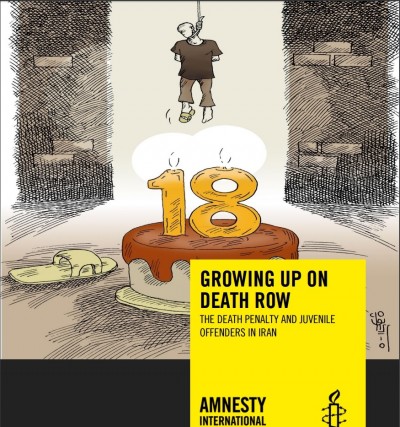
Amnesty International Report: Growing up under death row

Amnesty International Report: Growing up under death row

The Magical Mystery Tour of Hassan Rouhani got off to a start in Italy against the stark backdrop of a new report issued by human rights group Amnesty International calling the Iranian regime one of the leading executioners of juveniles in the world.

In a new report, Amnesty International said that it had documented the execution of at least 73 juveniles in Iran from 2005 to 2015, and that 160 juvenile offenders are languishing on the country’s death row.

According to the New York Times, Amnesty International released its report as a United Nations committee is reviewing compliance with the Convention of the Rights of the Child. In 1994, Iran ratified that treaty, which prohibits capital punishment and life imprisonment without the possibility of release for offenses committed by people younger than 18.

“This report sheds light on Iran’s shameful disregard for the rights of children,” Said Boumedouha, deputy director of Amnesty International’s Middle East and North Africa Program, said in a statement released with the report. “Despite some juvenile justice reforms, Iran continues to lag behind the rest of the world, maintaining laws that permit girls as young as 9 and boys as young as 15 to be sentenced to death.”

Elise Auerbach, an Iran specialist in Amnesty International’s United States branch, said Iran had in the past sought to sidestep criticism of its juvenile death-penalty practices by saying that offenders were not executed until after they had reached adulthood.

“They have executed juvenile offenders,” she said. “If the person commits a crime at age 15 and is not executed until age 21, they’re still executed as juvenile offenders.”

This brutal record of killing young people is only a small part of a much larger record of human rights abuses that has only worsened under Rouhani; the alleged “moderate” face of the regime. According to Iranian dissident groups such as the National Council of Resistance of Iran, the total number of executions under Rouhani’s watch has skyrocketed to over 2,000 people, dwarfing what his universally-reviled predecessor Mahmoud Ahmadinejad accomplished.

The release of the report comes at an inconvenient time for Rouhani as he made his first stop in Italy in the hopes of securing business deals now that sanctions had begun to be lifted as a result of the nuclear deal.

Italian and Iranian regime-controlled companies signed deals valued at about $18.36 billion late Monday ahead of a formal dinner between Rouhani and Italian Prime Minister Matteo Renzi. Earlier in the day, Italian steel firm Danieli said it would sign deals worth about $6.18 billion during the visit. Other firms signing agreements on Monday included oil-field services company Saipem SpA, energy group Ansaldo Energia and ship maker Fincantieri SpA, but further details weren’t available according to the Wall Street Journal.

The rush to lock in deals for many of these European companies who previously had ties to Iran prior to the Islamic revolution in 1979, ignores the fluid state of sanctions still in place from the U.S. and the prospect of additional sanctions that could still be imposed for issues left outstanding from the nuclear agreement such as the regime’s ballistic missile program, support of terror and brutal human rights record.

One of the nasty surprises waiting for companies rushing into doing business with the regime was the insistence of the regime to delink these issues from the nuclear deal. While the deal allowed the removal of a significant number of sanctions, it did not address other thorny issues of the regime’s behavior that could become problematic for anyone looking to do business in Iran.

Thousands of Iranian dissidents are planning to counter Rouhani’s charm offensive by attending a rally in Paris Thursday, said Shahin Gobadi of the NCRI, to protest Tehran’s human rights violations as well as its support of Syrian President Bashar al-Assad, whom France has accused of massacring his own people.

“We need to show to the world Rouhani is anything but a moderate,” Gobadi said.

So the question for many of these companies is whether or not the rush to be first in market is worth the risk of facing new rounds of sanctions should the regime undertake additional aggressive and militant actions such as launching more ballistic missiles in violation of UN sanctions as it has said it would do or take more American sailors prisoner as it did two weeks ago?

The difficulty for any company is that it is now dependent on the choices the Iranian regime leadership makes in the future for the success or failure of its business opportunity and given the track record of the mullahs so far, that is a gamble that many shareholders and investors will find hard to take.

The most compelling peek into the regime’s policies and brutality was given by Christian pastor Saeed Abedini who endured repeated beatings, torture and mistreatment since his arrest in 2012 on charges he was attempting to overthrow the regime by spreading Christianity, and was released along with other American hostages as part of a prisoner swap.

As Rouhani Tour Starts Amnesty International Exposes Juvenile Executions

As Rouhani Tour Starts Amnesty International Exposes Juvenile Executions

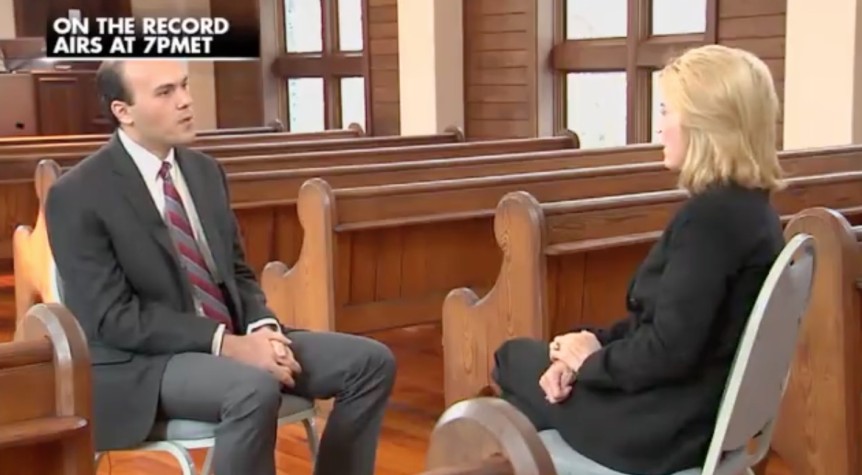
Abedini broke his silence with an interview with Fox News’ Greta Van Susteren by recounting his initial encounter with regime justice when he was brought before a judge.

“He said you are here because you want to use Christianity to remove government and it was like no, I don’t want to do that, I just came here to start orphanage, loving people and share the gospel with people and just that,” he said.

Abedini said the judge then told him he was using Christianity to “remove the government,” and yelled at him after saying he would pray for the judge.

According to Abedini, his Iranian captors gave him no clothing or reading material the entire time he was in the solitary confinement.

“Once they beat me very badly because they wanted me to write something I didn’t want,” he told Van Susteren.

He was also subject to the threat of death by his interrogators, and was taken to watch several executions.

“The worst thing I saw was when they took some Sunnis for execution, it was in front of our eyes, and they took like tens of them to hang, every Wednesday,” he said.

When he was imprisoned for 60 days with retired U.S. Marine Amir Hekmati, Abedini said he felt “very heartbroken” to see what happened when he first saw him, but said it was the best time in captivity to be with someone else.

“I made a plan that I could talk to him, encourage him,” he said. “The best thing I could do over there was praying.”

Abedini’s disclosures, coupled with the Amnesty International report and the demonstrations by Iranian dissidents paint a very different picture than Rouhani wishes portrayed and leaves an uncertain future for companies looking to do business with the regime with an American presidential election looming and the prospect of more sanctions still on the horizon.

By Michael Tomlinson

Filed Under: Blog, News Tagged With: #NuclearDeal, Featured, Iran deal, Iran Economy, Iran Human rights

  • « Previous Page
  • 1
  • …
  • 42
  • 43
  • 44
  • 45
  • 46
  • …
  • 72
  • Next Page »

National Iranian-American Council (NIAC)

  • Bogus Memberships
  • Survey
  • Lobbying
  • Iranians for International Cooperation
  • Defamation Lawsuit
  • People’s Mojahedin
  • Trita Parsi Biography
  • Parsi/Namazi Lobbying Plan
  • Parsi Links to Namazi & Iranian Regime
  • Namazi, NIAC Ringleader
  • Collaborating with Iran’s Ambassador

Recent Posts

  • NIAC Trying to Gain Influence On U.S. Congress
  • While Iran Lobby Plays Blame Game Iran Goes Nuclear
  • Iran Lobby Jumps on Detention of Iranian Newscaster
  • Bad News for Iran Swamps Iran Lobby
  • Iran Starts Off Year by Banning Instagram

© Copyright 2026 IranLobby.net · All Rights Reserved.