Iran Lobby

Exposing the Activities of the lobbies and appeasers of the Mullah's Dictatorship ruling Iran

  • Home
  • About
  • Current Trend
  • National Iranian-American Council(NIAC)
    • Bogus Memberships
    • Survey
    • Lobbying
    • Iranians for International Cooperation
    • Defamation Lawsuit
    • People’s Mojahedin
    • Trita Parsi Biography
    • Parsi/Namazi Lobbying Plan
    • Parsi Links to Namazi& Iranian Regime
    • Namazi, NIAC Ringleader
    • Collaborating with Iran’s Ambassador
  • The Appeasers
    • Gary Sick
    • Flynt Leverett & Hillary Mann Leverett
    • Baroness Nicholson
  • Blog
  • Links
  • Media Reports

The Proxy War of the Regime in Iran

March 27, 2015 by admin

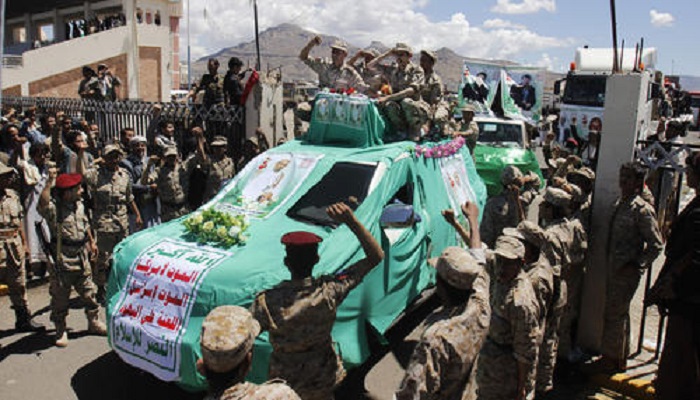
Houthi RebelsEvents in the Mideast are moving fast as Yemen is toppled by Iran-backed Houthi rebels, inviting a response by Saudi Arabia which launched air strikes in Yemen alongside Gulf State allies in an effort to check the progress being made by another Iranian regime proxy.

The stunning advances made by the Houthis shined a spotlight on a favorite tactic of Iran’s mullahs which is the use of proxies to fight their wars. It’s a tactic that harkens back to the Cold War-era fights in Southeast Asia and Africa between the West and old Soviet empire as Third World countries supplied the cannon fodder for countless wars, large and small.

The Iranian regime took a page out of the history books in funding, arming, training and then directing terror networks over the past three decades, most notably Hezbollah which has chalked up several ignominious victories, including:

  • Bombings of the U.S. Embassy and barracks in Beirut, Lebanon in 1983 killing 241 Americans and another bombing of the embassy annex in 1984;
  • Hijacking of TWA Flight 847 in 1985;
  • Systematic kidnapping and hostage taking of Americans and Europeans from 1982 to 1992 in Lebanon;
  • Khobar Towers bombing in 1996 killing 19 American servicemen; and
  • Training and arming of insurgents during the Iraq War targeting thousands of innocent Iraqis and also American service personnel.

Iran’s mullahs have used Hezbollah fighters to prevent the fall of Syria’s President Assad and target moderate rebels which has resulted in ISIS to rise up and form.

The Iranian regime has also used its virtual puppeteering of Shiite militias in Iraq in fighting ISIS that gave it the excuse necessary to move its military wholesale into Iraq and take over vast parts of that country’s military and political arms.

Though the recent Yemen attack by the gulf countries shows that the mullahs will pay a price for overreaching themselves, yet the regime in Iran, desperate to create crisis outside (to cover up the already exploding discontent of the Iranians against mullah’s dictatorship), has moved its proxies on the chessboard and enabled it to now interfere in a swath of territory stretching from the Mediterranean with Lebanon, through Syria and Iraq and now down through Yemen.

Yet, given the long and bloody history of the Iranian regime’s use of proxies to wage war, terror and murder, the regime’s lobbying and PR machine continually seeks to gloss over that record and instead attempt to rehabilitate its leaders. It’s akin to hiring a PR firm to try and redo the brand image of the Nazis.

The most recent example is an editorial from the National Iranian American Council’s Trita Parsi who wrote in The Atlantic that the regime’s top mullah, Ali Khamenei was a misunderstood softie who really wanted peace with the West. Parsi offers as logic, Iran’s historical interactions with the world going back to 1813 as reason for the regime’s natural suspicions of the rest of the world’s motives

Now, I am willing to concede that Khamenei is an old man, but I doubt he was around to be personally offended by anything that happened in the early 19th century. Parsi also never mentions Khamenei’s direction of Iran’s proxies, or his oversight of one of the most brutal human rights periods in Iranian history

Parsi also skips over Khamenei’s annual verbal calisthenics of leading chants of “Death to America” or his angry pronouncements that Iran will give no quarter in its efforts to preserve its multi-billion nuclear development program that was conceived in secret, violating international agreements and to this day, still largely uninspected by international agencies.

One would love to ask Parsi why, if Iran’s history is so important to understanding the motivations of the regime’s leadership, can’t the West use the Iranian regime’s bloody history of using proxies in its wars as evidence of the regime’s desire to wage war until it achieves its goals of establishing an Islamic extremist empire for itself?

Of course, he would probably tell us Iran doesn’t have any proxies.

By Laura Carnahan

Filed Under: Blog Tagged With: Iran deal, Iran Lobby, Iran Proxies, Iran Talks, Proxy war

Yemen as Warning for Iran Regime Nuclear Deal

March 26, 2015 by admin

WarningAs the old saying goes, “Fool me once, shame on you. Fool me twice, shame on me.” But what do you say when you’ve been fooled over and over again? “I’m an idiot?” Maybe and in this case, it almost certainly applies to anyone thinking they can trust the Iranian regime.

News came out of Yemen that Iranian-backed Houthi rebels had taken over the capital Sana and also moved south forcing the popularly-elected President Abdu Rabbu Mansour Hadi to reportedly flee by boat from the port city of Aden.

Yemeni intelligence officers still loyal to Hadi’s failing government attempted to burn secret files in a scene reminiscent of the effort to destroy files in the American embassy in Tehran in 1979 as militants stormed the building before the Iranian revolution was hijacked by radical extremist mullahs.

The fact that the Iranian regime has been deeply involved in the financing, training, equipping and leadership of Hezbollah fighters in Syria, Shiite militias in Iraq and now Houthi rebels in Yemen, all the while pushing for a rapid lifting of economic sanctions as part of ongoing nuclear weapons talks with the P5+1 group of nations, leads any rational person to deeply suspect the West is being played for fools by Iran’s mullahs.

It is hard to imagine anyone at the negotiating table in Switzerland being blind and oblivious to what is happening in Yemen, Iraq and Syria, and yet we know little, if anything, about the substance of these talks or if Iran’s conduct around the world has even been mentioned in a cursory way.

What we do know is that the track record of Iran’s mullahs is soaked in blood and is unquestionably focused on fomenting more of the sectarian violence rippling across the Mideast as Iran pushes its extremist ideology everywhere. No doubt the colossal expenditure of money necessary to fund all of these wars is draining Iranian coffers, which is one reason why Iran’s mullahs are almost frantic in their demands for an immediate lifting of all sanctions immediately.

News agencies report upwards of 18 Iranian oil tankers sitting off the coast filled to the brim with 30 million barrels of Iranian oil waiting to depart for market deliveries the minute sanctions are lifted with an agreement; bringing in billions of dollars to fund its war efforts.

The presence of Iranian military and intelligence officers on the ground in Yemen to take possession of classified files related to intelligence activities against Al Qaeda in the Arabian Peninsula, widely regarded as the terrorist network’s most dangerous branch, can only lead to a single conclusion: Iran’s leadership remains committed to its long-term plan of preserving and even growing terror networks around the world endangering the global peace.

While the White House can easily dismiss Supreme Leader Ali Khamenei’s recent “Death to America” chants and tweets as something for “domestic political consumption,” it is impossible to ignore the active security threats the Iranian regime presents in nations where the U.S. is literally running out the door such as Syria and Yemen.

Trust. It’s a simple word, but one filled with powerful meaning. It is earned and often only after demonstrations to earn trust over a long period of time. We know how trust works in our work lives, families, personal relationships, even in our choices of which brands to buy. Trust is a singularly important human emotion.

If the U.S. closes a deal with the Iranian regime without any pre-conditions on Iranian terror activities, let along relief for its gross human rights abuses at home, then the real fools will be those who support such an agreement and place their trust in Iran’s mullahs to keep their word when their past betrays them.

By Michael Tomlinson


Filed Under: Blog Tagged With: Houthies, Iran deal, Iran Talks, Iran Terrorism, Yemen

Iran Regime Not Complying with Watchdog

March 25, 2015 by admin

IAEAIn an interview with the Washington Post, Yukiya Amano, the head of the International Atomic Energy Agency, detailed the Iranian regime’s continued failure to provide answers to international inspectors or allow access to suspected nuclear facilities as previously agreed to in prior agreements.

On the eve of the end of March deadline for a technical framework for an agreement between the P5+1 negotiation nations and Iran, the regime has consistently failed to live up to its agreements to allow access to facilities suspected of housing nuclear component research. The extensive effort by the regime to deny inspectors access is nothing new, but casts a dark shadow over the ability of any agreement to be fully implemented.

Amano said the regime had only provided “very limited” information about two issues out of a dozen that were submitted by his agency dealing with “possible military dimensions” of past Iranian nuclear activities, while the other queries had not been addressed at all.

Amano’s concern is vital for any nuclear agreement, since the IAEA is the United Nations’ nuclear watchdog and its inspections are considered the key safeguard against future nuclear development. He insisted that the P5+1 group ensure that any agreement carry a provision allowing IAEA inspectors to go anywhere in Iran at any time to examine sites suspected of hiding secret nuclear weapons work.

What makes critics of an agreement with the Iranian regime suspicious, including a large bipartisan majority in Congress, is that Iran had signed a protocol in December of 2003 and initially complied with inspections, but then abruptly ended its compliance in 2006 as it ramped up additional research work at facilities such as the Parchin military complex.

Amano cited Parchin at the top of the IAEA’s wishlist of facilities to inspect. The massive complex has long been thought to harbor the regime’s key work with high explosives necessary to trigger a nuclear warhead. The IAEA sought entrance to Parchin as late as 2011 because of extensive satellite reconnaissance revealing large-scale landscaping, demolition and new construction throughout the site.

He described Parchin as “a jigsaw puzzle,” pointing to the IAEA’s failure to detect Iran’s original nuclear work in the 1980s which led to the agency’s continued requests for unfettered access in order to avoid a repeat of missing key elements again.

The IAEA also recently released a report February 19 complaining of the Iranian regime’s continued stonewalling of inspections, saying:

“The Agency remains concerned about the possible existence in Iran of undisclosed nuclear related activities involving military related organizations, including activities related to the development of a nuclear payload for a missile.”

The Post article concluded that “although Iran has declared to the IAEA 18 nuclear facilities and nine other locations where nuclear material is used, the agency said in its report that it ‘is not in a position to provide credible assurance about the absence of undeclared nuclear material and activities in Iran, and therefore to conclude that all nuclear material in Iran is in peaceful activities.’”

In light of all these failures at complying, is it any wonder fewer and fewer journalists, diplomats and politicians are heeding the screeching coming from the Iranian regime’s lobbying groups such as the National Iranian American Council?

If the aim of the NIAC was to advocate for regional peace and accommodating, one would think its leader, Trita Parsi, might take the opportunity to tweet a note of concern to Supreme Leader Ali Khamenei and urge access for international inspectors.

But such a tweet might be ignored since Khamenei has been busy tweeting “Death to America.”

By Michael Tomlinson

Filed Under: Blog

The Iran Lobby vs. Congress

March 24, 2015 by admin

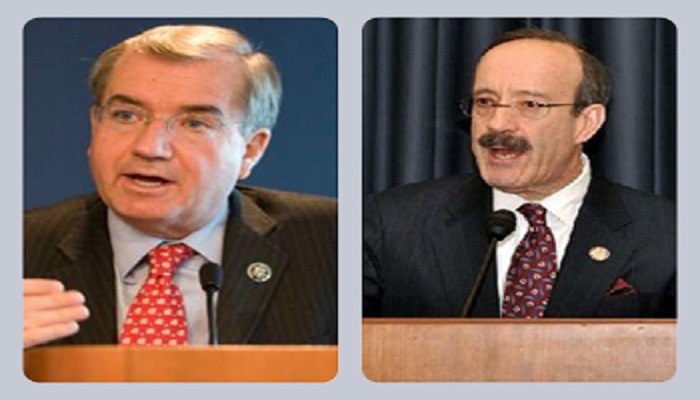
Royce and EngelA veto-proof, bipartisan majority of House lawmakers signed an open letter to President Barack Obama yesterday warning him that any agreement reached with the Iranian regime on its nuclear weapons program will require congressional approval for implementation.

While the Senate has begun considering bipartisan legislation mandating review of any agreement by Congress, the House letter outlined another possible venue for halting an agreement by refusing to roll back any sanctions levied on Iran.

The letter, signed by 367 members of the House represented a large bipartisan swath of both sides of the political aisle, putting efforts by the Iranian lobby working hard to forestall any such congressional action as fruitless so far.

‘Should an agreement with the regime in Iran be reached, permanent sanctions relief from congressionally-mandated sanctions would require new legislation. In reviewing such an agreement, Congress must be convinced that its terms foreclose any pathway to a bomb, and only then will Congress be able to consider permanent sanctions relief,” members wrote in the letter which was led by Foreign Affairs Committee Chairman Ed Royce (R-CA) and ranking member Eliot Engel (D-NY).

The House letter follows a letter sent by 47 Republican Senators to the Iranian regime and precedes what will likely be Senate action after the recess where Senate Foreign Relations Committee Chairman Bob Corker (R-TN) announced on Friday he would schedule a committee vote April 14 on a bill that would allow Congress 60 days to review any deal before its implementation.

The momentum for congressional review and approval continues to grow as the situation in the Middle East continues to deteriorate rapidly, largely because of the Iranian regime’s manipulations and involvement.

Yemen, which had been held up as a showcase in the fight against terror by the Obama administration six months ago, has collapsed with the U.S. embassy closing and all U.S. Special Forces being hastily withdrawn as Iranian-backed Houthi rebel extremists swiftly took over the government. Yemen, which shares a border with Iranian regime foe Saudi Arabia, now appears headed towards a Syria-like civil war.

Meanwhile, Iran’s Quds Force and other Revolutionary Guard Corps units have effectively taken over Iraq and are busy entrenching Shiite militias, supplanting Iraqi army units in the war with ISIS.

The situation with ISIS grows more anxious as Boko Haram and other extremist groups pledge their allegiance and enable the terror group to expand its reach into Libya, Tunisia, Nigeria, Chad, Sudan, Afghanistan and even into Turkey.
All of which has rightly caused Democrat and Republican lawmakers to worry about where the P5+1 negotiations are going. Not helping has been the veritable cloak of secrecy that have covered these talks and failed to win any confidence from the American public faced with growing fears of terrorism and an Iranian regime seemingly with a finger in every terror pie around the world.

In the face of all this, the Iranian lobby, led by the National Iranian American Council, has failed to make much of an appreciable dent. It’s only ally, and arguably its most important, seems to be an Obama administration bent on grasping onto any deal in order to trumpet a foreign policy win amidst a dearth of good news from around the world.

By Michael Tomlinson

Filed Under: Blog Tagged With: Congress open letter, Iran, Iran deal, Irantalks

How Does Iran Lobby Respond to khamenei’s “Death to America?”

March 23, 2015 by admin

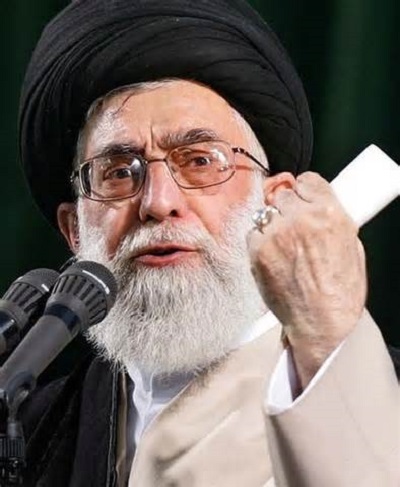
Angry KhameneiOne of the most reliably consistent events in all the world is the annual Nowruz New Year message from the Iranian regime’s mullah-in-chief, Ali Khamenei, in which he serves as mullah’s national cheerleader for the annual “Death to America” chants that is usually part of regime’s weekly ceremony in mullah’s Friday prayers.

This weekend was no different in which Khamenei made his remarks in the northern city of Mashhad where he demanded that any nuclear deal end all economic sanctions against Iran at its outset, rather than gradually as the P5+1 working group of nations have long supported.

“Sanctions must be lifted immediately,” Khamenei is quoted as saying in a Los Angeles Times article. A sentiment shared I’m sure by his fellow ruling mullahs and also a key issue at the heart of these negotiations. It is also worth noting Khamenei attacked President Obama’s Nowruz message as well.

The Americans “want to turn the people against the government,” Khamenei said, calling Obama’s message “dishonest.”

It is an ironclad fact that stiff, relentless economic sanctions have crippled the Iranian regime’s economy, even more so with the massive expenditures it is making to support military operations and terrorist groups in Syria, Afghanistan, Lebanon, Iraq, Yemen, Sudan, Libya and Nigeria. The costs have been massive and the mullahs’ decision to siphon capital from the consumer economy and force the Iranian people to bear the burden has sparked mass discontent throughout the nation.

This discontent boiled up in fraudulent elections and mass demonstrations harshly put down by the regime in 2009 and 2013 and serve as a warning to the regime since it was a similar economic freefall that helped spark the street protests of the original Iranian revolution in 1979 which was quickly subverted by extremist Islamists.

All of which leads to an interesting juxtaposition. As Iran’s top leader leads annual chants of “Death to America” and demands an all-or-nothing approach to any nuclear deal, the regime’s lobby in the U.S. led by groups such as the National Iranian American Council, are strangely and universally silent. It’s almost like these groups believe Khamenei to be some crazy uncle you ignore at family gatherings, rather than the supreme leader of mullahs in thrall to religious lunatics.

But the lack of criticism or event acknowledgement of these tirades and demands yields more evidence that the NIAC’s goals are not aligned with finding peace in the world, but more in tune with supporting a corrupted regime intent on spreading its gospel of Islamic extremists across the region and imposing it on its neighbors, including its medieval views on women, misogyny, a free press and the use of terror to achieve political goals.

No matter how “moderate” and nice President Hassan Rouhani tries to portray the Iranian regime, the simple truth is that his boss, Khamenei, is still in fine form urging death to America and demanding a complete lifting of sanctions and for what? Allowing his regime to keep 6,000 centrifuges, the ability to conduct R&D on newer ones? Not even putting ballistic missile technology on the table and no changes to its support of Hezbollah, Shiite militia terror groups in Iraq and the Houthis that are now making Yemen into another Libya? And Iranian government is still holding Americans in prison without trial or charge. On what planet do we think we can trust mullahs in Iran? Sanctions were working; they brought Iran’s mullahs to the table and instead of using that leverage to force real democratic change, are we simply going to take their word for it?

If groups like the NIAC cannot pen an open letter to the regime and ask Khamenei, politely of course, to lay off calling for the destruction of America, then what can we really believe from the NIAC in the first place?

Is the NIAC so enslaved to Tehran that it cannot simply send a tweet saying “For the love of God, stop demanding Death to America! #peaceloving?”

No, it seems even such a small act would be too rebellious for NIAC and its religious masters.

By Michael Tomlinson

Filed Under: Blog

For Iran Lobby 65% Human Rights Is Enough

March 20, 2015 by admin

65 percentThe United Nations’ Special Rapporteur on human rights in Iran, Dr. Ahmed Shaheed, issued a new report last week documenting the worsening human rights situation in Iran. In it, he detailed the sharp increase in the numbers of executions, mass arrests of political dissidents and religious minorities.

He puts plainly the lie that was the promise of moderation with the start of Hassan Rouhani’s presidency, but now we know the truth which is the Iranian regime remains as hardline, unyielding and cruel as before. On that score, nothing has really changed.

All of which poses a problem for the Iranian lobby, which has continually attempted to sell the same fabrication to the world that Iran’s mullahs were indeed a changed lot and willing to be moderate and peace loving. What were they to do with this stinker of a report for their taskmasters in Tehran?

After a week of saying nothing, which for the National Iranian American Council is unusual on any other topic relating to Iran, the NIAC finally published an item on its website discussing Dr. Shaheed’s critical report. The article, authored by Michael Kameras, is unusual in a few regards.

First of all is the author. According to his LinkedIn profile, Mr. Kameras is a foreign policy and outreach intern at the NIAC and studying at the University of Pittsburgh. While I’m sure he is an accomplished intern, his authoring of this particular item critical of the regime’s human rights record speaks volumes about NIAC’s view of the importance of such an issue.

Normally, issues of grave import to NIAC are penned under Trita Parsi, Tyler Cullis, Jamal Abdi or Reza Marashi’s authorship. A review of NIAC’s previous blog entries reveal that the items at the top of the regime’s wish list, i.e. pending nuclear negotiations, get the full treatment from NIAC’s senior leadership.

Also of note is the effort to skirt the broader issue of the regime’s abysmal human rights violations and instead focus on the concept that a nuclear deal would help foster change in Iran by opening a diplomatic dialogue.

A noble idea, but one that again falls flat on its face when confronted by the simple facts of the Iranian regime’s past and current actions, which demonstrate if it really did care about international opinion, it would not be doing what it is doing.

Clearly a regime concerned about international opinion would not rush to send troops, arms and cash to prop up a genocidal regime in Syria widely condemned for its use of chemical weapons. A concerned regime would also not increase the pace and rate of grisly public executions for political dissidents, women, gays and religious minorities.

It also wouldn’t arrest journalists, bloggers, foreign tourists or American missionaries and throw in prison without charge, trial or hearings. And it certainly would not be the chief patron and sponsor of terrorist groups throughout the region.

But the Iranian regime is indeed doing all those things and hence Dr. Shaheed’s report is an indictment and confirmation of the not-so subtle truth about Iran’s mullahs, which also probably explains the delay of the week for a response from NIAC on its issuance.

If the NIAC were a true human rights organization such as Amnesty International, it would have joined the call on Tehran to change its ways and demand the international community safeguard the men, women and children living in such abhorrent conditions. It would have sought to use the leverage of nuclear talks to demand improvements in human rights.

Curiously, when confronted by the report, the Iranian regime communicated back to Dr. Shaheed that it supported 65 percent of the recommendations in the United Nations human rights review. It leaves one wondering just what 65 percent of human rights the regime is comfortable with giving.

It reminds one of the infamous Three-Fifths Compromise during the 1787 U.S. Constitutional Convention which apportioned slaves in southern states as three-fifths of the actual population when determining representation.

By Laura Carnahan

Filed Under: Blog

The False Promise of the Iranian Lobby

March 19, 2015 by admin

SurrenderThe Iranian regime lobby, led by the National Iranian American Council, has long pushed the idea that Iran’s religious leaders are battling a split within Iran’s government between moderate forces of reform and hardline reactionary conservatives.

It has been a convenient and important fiction for regime proponents since it provides the moral flexibility they need to at once ignore the regime’s most heinous human rights abuses and military adventures, while at the same time professing support for a government intent on changing itself.

This effort was again on display by NIAC with an editorial authored by TritaParsi and Reza Marashi in HuffintonPost with the odd title of “Why Iran Won’t Capitulate.”

The use of the term “capitulate” is an interesting one by Parsi and Marashi since the definition of the word is “to stop fighting an enemy or opponent” and both have held that the U.S. and the Iranian regime are not at war, but striving for peace. Consequently, the effort to ramp up pressure on the regime will yield no results since Iran’s mullahs are steadfast in showing that they are not bowing to Western demands as the authors insist.

They point to Iran’s moves to build its nuclear infrastructure during a period of increasing sanctions and with each escalation cycle, Iran double downed and increased its nefarious activities.

And then miraculously, they argue the turning point came when President Obama in 2013 suddenly woke up in bed and saw the world through Supreme Leader Ali Khamenei’s eyes and realized “Gee, we should be nicer to them.”

An interesting thought considering that in 2013, Iran stepped up its rate of public executions of political dissidents, it went all in with military support for Assad in Syria right after the international community condemned it for using chemical weapons, and it continued refusing access of its military nuclear research facilities to international inspectors.

The core piece of logic for this sudden reversal offered by Parsi and Marashi is the infamous 2009 fraudulent election as an explanation for a regime suddenly faced with diminished support. It is a silly argument for two basic reasons:

• All elections under the regime are inherently fraudulent since Iran’s mullahs maintain the power to decide who actually can go on the ballot. This was apparent just with Hassan Rouhani’s election when scores of other candidates were ditched in favor of regime supporters; and
• Despite the rifts within the regime that is due to their infighting over more share of power, since the Velayat-e-Faqih is the dominant rule the major policies of the regime are decided by the mullah’s supreme leader and the religious authorities maintains all power in the economy, military, judiciary, news media, internet access, law enforcement and all aspects of civil and cultural life.

Given that Iran’s governmental structure is as inflexible, rigid, unyielding and unbending as Mssrs. Parsi and Marashi portray it as being, it begs the next logical question “Why are we even bothering to talk to them?”

The authors seem to think the West will be the ones to capitulate and give the Iranian regime all it wants:

• Allow it to keep the massive nuclear infrastructure it has spent billions building;
• Allow it to maintain political control at home without changing its human rights abuses;
• Allow it to continue to funding terrorist groups;
• Allow it to continue controlling Iraq through its Shiite militias now empowered in their fight with ISIS;
• Allow it to manipulate events in Syria and Yemen as it builds a sphere of “Islamic” states loyal to Tehran; and
• Most importantly, maintain the capability to enrich fuel to build a nuclear warhead in as little as one year and as long as ten years.

What does the U.S. get out of capitulating? They get Mssrs. Parsi and Marashi’s undying gratitude for earning their pay from the mullahs.

By Michael Tomlinson

Filed Under: Blog

Iran Regime’s Get Out of Jail Card

March 18, 2015 by admin

Free JailThere are certain things people have come to believe are truisms in life such as if you eat too much sugar you will get cavities or that unicorns don’t really exist. There are also many urban legends we know are not true, but sometimes allow our imaginations to roam free a bit such as Area 51 and UFOs or the existence of Bigfoot.

Well, now we can add a doozy of a fairy tale to the list: the Obama administration – in its latest Worldwide Threat Assessment of the U.S. Intelligence Communities – left the Iranian regime and its terrorist group proxy Hezbollah off the terror threat watch list. Incredibly, the assessment only cites Hezbollah in regards to the threats it faces from radical Sunni groups such as ISIS and al-Nusra Front and only mentions Iran in the context of cyberthreats.

It does however mention Iran favorably in its efforts to fight ISIS from gaining large swathes of territory in Iraq. The report adds that the Islamic state has “intentions to dampen sectarianism, build responsive partners, and deescalate tensions with Saudi Arabia.”

That is a claim the Saudis might find fault with as they recently entered into a pact with South Korea to develop nuclear technology as an offset to the Iranian regime’s imminent acquisition of nuclear weapons and its newly aggressive military operations in neighboring Iraq, Yemen and Syria.

Stunningly, the report fails to mention Hezbollah is labeled a terrorist organization by the U.S. and European Union and receives virtually all of its money, arms and training from the Iranian regime. The omissions have raised red flags both in the U.S. and abroad as the Obama administration works feverishly to close a deal with the Iranian regime over its nuclear weapons program.

Critics have called the report a whitewash in order to bolster Iranian support in the fight against ISIS, even though it was the Iranian regime’s initial intervention and support of Bashar Al-Assad in Syria that eventually spawned ISIS and broadened the war from Syria and into Iraq.

The removal of the terror designation is even more appalling when you consider the Iranian regime’s arming and funding of Houthi rebels who overthrew the elected government in Yemen, only recently held up by the Obama administration as a shining example of successful counter-terror operations.

As Katie Pavlich writes in Townhall.com:

“So what’s going on here? Why strip Hezbollah and its funding parent Iran, from their terrorism label? Especially now? It all points back to getting President Obama his deal with Iran at all costs. This reclassification of Iran and Hezbollah without the terrorism label is a certain warning sign the deal the White House is working on to appease the rogue regime doesn’t have the best interests of the United States as a top priority.”

The fact that the 2014 national intelligence report was harsh in its assessment of the Iranian regime and its Hezbollah proxies makes this year’s report even more puzzling:

For example, last year’s report contained a section on Iran and Hezbollah that stated “[o]utside the Syrian theater, Iran and Lebanese Hizballah (sic) continue to directly threaten the interests of US allies. Hizballah (sic) has increased its global terrorist activity in recent years to level we have not seen since the 1990s.”

All of this continues to be part of the massive lobbying and PR campaign being orchestrated by Iranian regime allies in an effort to sugarcoat the appallingly bad record Iran has in an effort to win public support for a bad nuclear deal and jump through a hoop of executive action without Congressional review, let alone approval.

It also is part of the effort to cover up the Iranian regime’s dismal human rights record and instead paint it as a staunch ally in the war against ISIS. How could the world be turned upside down so fast and so completely?

It can only mean one thing: Unicorns are indeed real.

By Laura Carnahan

Filed Under: Blog

Iran Lobby Memo: Tell Congress to Drop Dead

March 17, 2015 by admin

Memo (1)Tyler Cullis, a policy associate for the National Iranian American Council and frequent Iranian regime apologist, penned a memo on his views on the choices before Congress in regards to a potential agreement between the regime and the P5+1 working group of nations attempting to rein in Iran’s nuclear ambitions.

Right off the bat he launches into his missive with some distortions of fact the Iranian lobbying network has worked hard to perpetuate; namely that there is growing confidence a framework of a deal will be reached by a March 31 deadline.

The fact that Cullis uses March 31st as a deadline is misleading since it was NIAC and other lobbies who praised one another for efforts before the Senate Foreign Relations Committee last January in cobbling together a loose coalition of Senate Democrats that created a new deadline of March 24th from the original June 30th deadline in the interim agreement now in place.

NIAC’s own statement at the time said:

“Today, the chief Democratic sponsor of new Iran sanctions legislation, Senator Bob Menendez (D-NJ), relented in his effort to pass new sanctions. He announced that he and a group of his Democratic colleagues sent a letter to the President in which they pledged to vote against new sanctions prior to March 24, the target date for a political agreement with Iran.”

But then again, the truth hasn’t seemed to stop NIAC in its relentless efforts on behalf of – not Iranian Americans – but Iranian regime mullahs.

Another misleading point from Cullis was the idea there is growing agreement on a framework. In fact, as late as today, the Wall Street Journal, Washington Post, Reuters and Huffington Post, amongst other media reported sharp differences still remaining that threaten these talks.

In fact, Politico ran a story over the weekend in which more than a dozen Senate Democrats such as Sen. Heidi Heitkamp (D-ND) and Sen. Michael Bennet (D-CO) remain at odds with President Obama on the issue of shifting approval from a deal away from Congress and leave it solely in the hands of the administration.

Cullis attempts to navigate this nuance by making a distinction between a bipartisan bill, The Corker-Menendez Bill (S. 615 the “Iran Nuclear Agreement Review Act’) and one authored by Sen. Barbara Boxer (D-CA) (S. 669, the “Iran Congressional Oversight Act’). The Corker-Menendez vests Congress with the authority to vote up or down on any proposed deal, while the Boxer bill simply requires the President to report to Congress on progress and leaves Congress with no other authority should it disagree with the President’s findings.

Cullis hopes, as the Iranian regime does too, that the American people will turn a blind eye to this distinction and instead grasp onto the simple concept of “Trust in Obama” as the only mantra necessary. The unfortunate result of this positioning is to turn what had been a bipartisan issue – preventing Iran from gaining a nuclear weapon – into a highly partisan squabble that threatens to detract from the key issue at hand, which is can the American people afford to trust the President when the Iranian regime has never demonstrated itself to be trustworthy in the first place.

Which leads us back to Cullis’ last point; his regurgitation of the Helsinki Accords example which was fashioned by President Ford and the old Soviet Union without Congressional approval as being a template for this Iranian deal. As we previously explained in a prior column, Cullis’ use of the Helsinki example is a gravely flawed one because while he focuses on the “mechanism” of approval, he ignores the “effect” of the agreement which was its focus on human rights and its use by liberal dissident elements both within and without the Soviet Union to demand regime change.

Similarly, the mechanism of Congressional approval or executive order would be largely irrelevant if any proposed agreement contained the essential elements for a successful agreement, such as: dismantling of the regime’s nuclear infrastructure, call for a cessation of support of terror groups, halt to public executions and human rights abuses, open international inspections of all Iranian facilities and withdrawal of Iranian forces from all neighboring countries.

If an agreement contained these elements, it would be a shoo-in for the White House to pass without ever needing a Senate vote, but unfortunately the proposed agreement does not which is why a Senate vote has now become mandatory.
By Michael Tomlinson

Filed Under: Blog

Iran Regime Supporters Can’t Handle the Truth

March 16, 2015 by admin

Iran Regime Supporters Can’t Handle the Truth

Iran Regime Supporters Can’t Handle the Truth

In the Hollywood blockbuster “A Few Good Men,” there is a pivotal courtroom scene in which Tom Cruise’s character, Navy Lt. Daniel Kaffee, presses Jack Nicholson’s hard bitten Marine Col. Nathan R. Jessup on the witness stand of a court martial as to whether or not he violated regulations and ordered a “code red” resulting in the death of a young Marine.

Col. Jessup asks Lt. Kaffee, “You want answers?” to which he replies “I want the truth!” and then Jessup’s explodes “You can’t handle the truth!”

It’s a turning point in the movie since it precedes Jessup’s admission that he indeed ordered the code red and broke the law, but his argument was that it was for the greater good of his command and the security of the nation.

The scene is a microcosm of the conundrum faced by the supporters of the Iranian regime as they enter the final two weeks before a self-imposed deadline to deliver a framework of an agreement for halting Iran’s nuclear weapons program. While regime loyalists such as the National Iranian American Council and its leaders, including Trita Parsi, Tyler Cullis and others have taken to the blogs and editorial pages of progressive media sympathetic to their cause, to push hard for an agreement granting the regime everything it wants and exempting it from Congressional review and approval.

In response, there has been a substantial backlash from both sides of the political aisle in the Senate and an unmistakable warning from Senate Republicans not to disregard the need for public comment, review and approval of any agreement. Arab nations with primarily Sunni populations such as Saudi Arabia have also publicly voiced growing concern about the impending deal to the extent that even after a hand-holding mission by Secretary of State John Kerry, the kingdom moved ahead with an agreement with South Korea to explore nuclear reactor development of its own.

On top of which Aviation Week reported over the weekend that the Iranian regime had produced its first-ever long-range cruise missile with a range of 1,300 miles. As the regime advances its missile technology, it is notable that its ballistic missile program which can deliver nuclear payloads has never been a part of ongoing nuclear talks.

Which leads us back to the central issue at hand which is the Iranian lobbying effort is built entirely of falsehoods because it cannot defend itself against the truth and it uses the veil of “peace” and “moderation” in a false attempt to justify the onward and steady march to nuclear capability the regional supremacy.

The truth has been that Iran’s mullahs have engaged in a decades-long effort to hide the truth of their nuclear weapons program. Even after having it revealed by intelligence agencies and resistance groups, it continued to stonewall inspections by international agencies even after pretending to cave in conceding to negotiations.

During that time, its lobbyists have sought to portray a changed Iran committed to peace, all the while it engaged a harsh and brutal stepped up crackdown at home on human rights, especially targeting political dissent, women and religious minorities. It has also been the cornerstone of expanded terror activities throughout the region.

All of which has been building to a classic confrontation to see if the regime’s lies can hold up against the mounting truth being told around the world; a truth expressed now in open calls by regime opponents to hold the mullahs publicly accountable and not give in to a “bad deal.”

The final truth people like Mssrs. Parsi and Cullis cannot handle is that if a proposed deal ever saw the light of public debate and scrutiny by the American people, it would die faster than a box office flop.

By Laura Carnahan

Filed Under: Blog

  • « Previous Page
  • 1
  • …
  • 62
  • 63
  • 64
  • 65
  • 66
  • …
  • 72
  • Next Page »

National Iranian-American Council (NIAC)

  • Bogus Memberships
  • Survey
  • Lobbying
  • Iranians for International Cooperation
  • Defamation Lawsuit
  • People’s Mojahedin
  • Trita Parsi Biography
  • Parsi/Namazi Lobbying Plan
  • Parsi Links to Namazi & Iranian Regime
  • Namazi, NIAC Ringleader
  • Collaborating with Iran’s Ambassador

Recent Posts

  • NIAC Trying to Gain Influence On U.S. Congress
  • While Iran Lobby Plays Blame Game Iran Goes Nuclear
  • Iran Lobby Jumps on Detention of Iranian Newscaster
  • Bad News for Iran Swamps Iran Lobby
  • Iran Starts Off Year by Banning Instagram

© Copyright 2026 IranLobby.net · All Rights Reserved.