Iran Lobby

Exposing the Activities of the lobbies and appeasers of the Mullah's Dictatorship ruling Iran

  • Home
  • About
  • Current Trend
  • National Iranian-American Council(NIAC)
    • Bogus Memberships
    • Survey
    • Lobbying
    • Iranians for International Cooperation
    • Defamation Lawsuit
    • People’s Mojahedin
    • Trita Parsi Biography
    • Parsi/Namazi Lobbying Plan
    • Parsi Links to Namazi& Iranian Regime
    • Namazi, NIAC Ringleader
    • Collaborating with Iran’s Ambassador
  • The Appeasers
    • Gary Sick
    • Flynt Leverett & Hillary Mann Leverett
    • Baroness Nicholson
  • Blog
  • Links
  • Media Reports

As Rouhani Goes on European Shopping Trip Dissidents Raise Voices

November 13, 2015 by admin


As Rouhani Goes on European Shopping Trip Dissidents Raise Voices

As Rouhani Goes on European Shopping Trip Dissidents Raise Voices

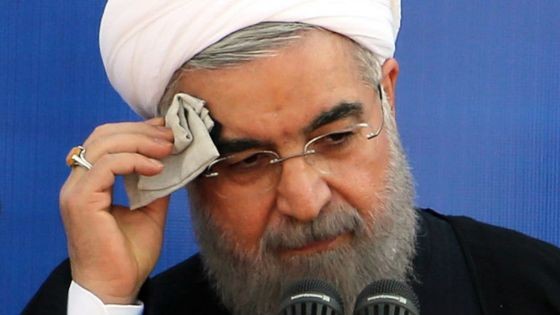
This week regime’s assigned president, Hassan Rouhani will become the first leader of the mullah’s regime to travel to Europe in a decade as part of effort to establish trade and foreign investment pacts in the wake of the nuclear agreement completed last July.

To say the tour begins on a rocky footing is an understatement. In France, a diplomatic row over French wine erupted when Rouhani snubbed the French with a demand for no alcohol at an official state dinner. Telling the French they can’t serve wine in their own palace is like telling a French chef he cannot use truffles.

A counterproposal by French officials for a breakfast was snubbed by Rouhani’s delegation as being a “cheap” offering by the French. Rouhani and French President Francois Hollande will instead just have a simple meet and greet moment for the cameras.

All of which underscores an important point for the regime: everything will always be on Iran’s terms.

While Hollande’s advisors have called the situation “ridiculous,” it is anything but ridiculous for Rouhani who has been busy trying to keep up the charade that he is a champion of opening Iran to the West, while at the same time towing the party line from top mullah Ali Khamenei on the brutal crackdown happening at home as scores of journalists are harassed and arrested.

Rouhani’s European trip has a more practical and important aspect for the regime. Rouhani hopes to pursue deals in car manufacturing, agriculture and most importantly Airbus aircraft to upgrade its aging fleet of airliners.

But his trip will be met with that is expected to be a week-long series protests from human rights and dissident groups aimed at raising the issue of the regime’s harsh human rights records; especially the dramatic rise in executions being carried out in Iran.

A large march and rally is planned for November 16th in Paris with other actions planned during the week to include:

  • Declarations by human rights organizations, including sponsors of this week’s protests, on the deteriorating human rights situation in Iran under Rouhani and the need for immediate action;
  • Delivery of a letter by 100 French MPs from different parties to the French president insisting that relations with the regime in Tehran must be contingent upon a moratorium on executions and improvement of the human rights situation in Iran;
  • Release of a statement by French political, social and intellectual figures condemning the deterioration of the human rights situation in Iran and the regime’s export of fundamentalism and terrorism;
  • Street exhibitions and displays in central Paris explaining the human rights situation in Iran.

In a reminder of just how much the Iran regime expects the rest of the world to dance to its tune, Rouhani said in an interview with the Italian newspaper, Corriere della Sera, that the U.S. and Iran could normalize relations but that the U.S. should “apologize” first without going into further detail as to what kind of apology the regime was demanding.

It’s an odd demand to make considering that the regime currently holds several Americans hostage and in a report just released this week, was identified as the source of manufacturing bombs that killed hundreds of U.S. service personnel in Iraq through its Quds Forces.

But nothing this outrageous would be unexpected from a regime that has been growing more aggressive towards the world since the nuclear deal was completed.

The discontent in the U.S. has grown substantially as the Iran regime acts so belligerently. The New York Observer ran an editorial warning of the regime’s actions, saying:
“Since President Obama pushed through his Iran nuclear deal without a congressional vote, the folks in Tehran have responded in some mighty unusual ways.

“First, they’ve jailed five visiting Americans—and are holding them hostage. Then they launched a massive cyberattack against the U.S. State Department, Aramco and several American banks. Plus, they are cracking down on Iranians who advocate better ties with the United States, even shutting down businesses that have American connections—including a KFC knock-off in Tehran. But most significantly, the Ayatollahs are threatening to renege on the nuclear deal if we push too hard to get our citizens back.

“We hope this gives pause to President Obama and the deal’s supporters in Congress. If this is how Iran acts before we have released the $100 billion-plus in frozen funds, how might they behave when we have no more Iranian funds to use as leverage?”

As Rouhani tours Europe, we can only hope Pope Francis raises the issue of executions, the Italian prime minister stresses the importance of human rights and the French president discusses the need for an end to executions in Iran and releasing all political prisoners in Iran’s prisons.

By Michael Tomlinson
 

Filed Under: Blog, News Tagged With: #NuclearDeal, Appeasement policy, Featured, Iran deal, Iran Lobby

If You Never Talk About Human Rights, Maybe It Doesn’t Exist?

November 10, 2015 by admin

parsi-MarashiThe first thing they teach you in any 12-step recovery program is that you have to admit you have a problem before you can start the road to getting better. The Iran lobby suffers from the basic problem that it cannot admit it has a problem backing a regime that has absolutely no intention of ever abiding by international norms of civility and normality.

Depending on your point of view, Iran regime supporters such as Trita Parsi of the National Iranian American Council or Jim Lobe of Lobelog, or Gareth Porter is either partners with the regime or unwitting dupes who are hopelessly locked into a myopic point of view regardless of the facts disputing their worldview.

If we take the more charitable view and give them the benefit of the doubt about their motivations, then it is a head scratching moment to think of why they virtually ignore human rights violations in Iran in almost all of their public pronouncements, media interviews and social media postings. Why would anyone proclaiming deep interest in the well-being of the Iranian people never say a contrary word about record levels of arrests, imprisonments and executions?

Take for example the NIAC, which any casual perusal of its website would reveal little criticism of the Iran regime on the issue of human rights. In fact, if you type in “human rights” in its search box, you’ll find the bulk of any mention about human rights issues occurs during the run up with nuclear talks, but after the deal is done…nothing.

Even more impressive, for the entire year of 2015 so far, NIAC only issued one statement even mildly criticizing Iran on the issue of Washington Post reporter Jason Rezaian who was arrested and falsely accused by the regime of espionage.

Considering the litany of human rights abuses so far in 2015 in Iran, including over 1,000 public executions, the holding of five Americans illegally, the suppression of mass demonstrations and the support for terrorist acts and proxy wars in three different countries, it’s a wonder the NIAC could even be bothered to issue the single statement it did.

But like the age-old philosophy question posed by professors everyone, “if a tree falls in the forest and no one is around to hear it, does it make a sound?” The same question could be applied to the NIAC and other regime supporters within the Iran lobby. If you never talk about human rights, do you think they don’t exist?

The only substantial mention about human rights from NIAC comes within the context of passing the nuclear agreement with Iran as a pathway towards a more moderate and forgiving Iran.

As we have seen, the true nature of the Iranian regime has been revealed since passage of the agreement with a wide range of bewildering, militant and aggressive acts ranging from the alarming such as the test firing of new ballistic missile design capable of carrying nuclear warheads to defending the meaning of keeping its “Death to America” chants.

In all of these cases, the NIAC and other regime supporters have been silent as a tomb in raising any concern or these aggressive acts by the regime and in the one specific case where Iranian-American businessman Siamak Namazi, a key supporter of the NIAC and the regime, was arrested in Iran and tossed into the infamous Evin Prison, NIAC issued a statement expressing how “deeply troubled” it was by the report, but then spent most of the statement trying mightily to distance itself from Namazi.

You have to pity Namazi. On the one hand he had devoted considerable time and effort working with Trita Parsi and Reza Marashi during their collective time together at the consulting company Atieh on opening up avenues for the regime past sanctions imposed by the rest of the world, but then once he wears out his own welcome with the regime and gets tossed in prison, his old friends claim no knowledge of him.

You’d think Namazi would have chosen more reliable friends.

But the NIAC’s lack of concern over human rights is more likely a function of the fact that any deep discussion of human rights is ultimately embarrassing to the regime and hinders the process of gaining advantages for the mullahs in Tehran. Since the Obama administration was readily agreeable to the idea of un-linking human rights from nuclear talks, the regime has been essentially freed from the pesky restraints of being sanctioned or held accountable for anything it does from now on.

This explains why the Iran regime has closed its deal with Russia to buy advanced S-300 anti-aircraft missile batteries, launched a series of cyberattacks on U.S. and European computer systems,  broadened its offensive in Syria, and attempted smuggling even more weapons to support Houthi rebels in its proxy war in Yemen aimed at Saudi Arabia next door.

The alarming increase and speed in actions by the Iran regime has spawned a broad and equally alarmed reaction from many and warnings are now being raised on the eve of the presidential election in 2016 that restraining and controlling Iranian regime may now rank as serious a foreign policy issue as combatting ISIS for most Americans.

These reactions come from small community newspapers such as the Staten Island Advance editorializing against the flaws in the nuclear deal to major market editorials such as the New York Post warning how mullahs in Iran have used the nuclear deal as a blank check to go wild.

The negative reactions have also come from both sides of the political aisle as evidenced by an editorial by Reps. Gerald E. Connolly (D-VA) and Richard Hanna (R-NY) in Huffington Post advocating their proposal for a new joint commission to monitor and verify Iran’s compliance with the nuclear deal as an additional safeguard to what they call a flaw in the nuclear agreement.

We can only hope it is not an example of too little, too late.

By Michael Tomlinson


Filed Under: Blog, Current Trend, National Iranian-American Council, News, The Appeasers Tagged With: Featured, Iran, Iran deal

Myth of Hardliners vs. Moderates in the Iran Regime

November 9, 2015 by admin

Myth of Hardliners vs. Moderates in the Iran Regime

Myth of Hardliners vs. Moderates in the Iran Regime

One of the cornerstones of the arguments made by the Iran lobby in favor of the nuclear agreement with the Iran regime was that its passage would empower “moderate” coalitions within Iran to push against “hardliners” in opening up the regime to the outside world.

It was a nice fairy tale, but like most children’s stories, it’s not based in facts or the real world. Regime advocates such as Trita Parsi and Reza Marashi of the National Iranian American Council and Joseph Cirincione of the Ploughshares Fund yelled from the rooftops that the nuclear deal would serve as the bridge towards a more open and inclusive relationship between the regime and the rest of the world.

But the reality has been very different and well documented as the mullahs in Tehran doubled down on a policy of aggressive militarism in Syria and Yemen, while also launching a new brutal crackdown at home with scores of new arrests and executions that have been widely condemned by human rights and dissident groups.

But for Iran, the mythology of the “moderate” factions within a fractured government is just too good to let go, so the regime continues to push the story of a “battle” within the regime as personified by Hassan Rouhani leading the charge for moderation and inclusiveness vs. Ali Khamenei and the hardline elements in the military and judiciary.

Many Western news media are lulled into the same storyline by giving it plenty of play such events over the weekend in which Rouhani gave a broadcast speech in which he criticized “hardline media” hinting that some outlets are connected to security forces responsible for a wave of recent arrests in the country aimed at crippling Western influence, according to the New York Times.

The Times dutifully reported that Rouhani had spoken out against the wave of arrests and leveled a veiled criticism at the regime’s 12-member Guardian Council at the potential exclusion of candidates in the upcoming elections.

First of all, the mere fact that Rouhani could be criticizing the Guardian Council for restricting candidates is particularly ironic since it was the Council that cleared the pathway for Rouhani to become president by eliminating hundreds of potential candidates.

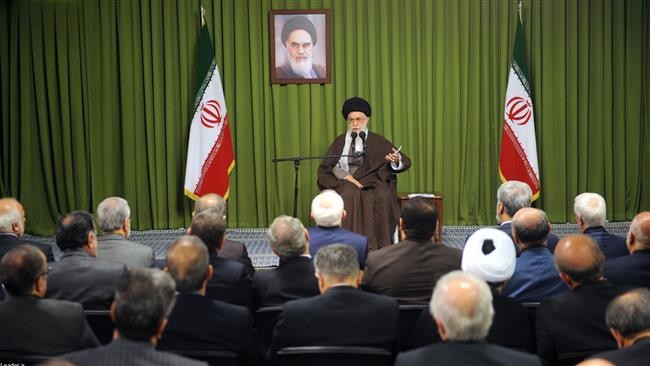
Also, the reporting of this so-called rift reveals the knowledge and cultural gap Western news media have about the workings of the regime government. The authority vested in Khamenei is near absolute, as is his control over the military, judiciary and economy. Rouhani’s portfolio by comparison is Spartan at best and serves largely to fulfill the policies and goals of the religious cadre of mullahs that run Iran.

Khamenei, and by extension the mullahs, were interested in a nuclear deal solely to relieve the regime of crippling economic sanctions that were threatening their grip on power by inciting an increasingly restive Iranian people to protests against the impoverished lives they were living.

The object for Khamenei was to secure release of billions of dollars in frozen assets and be given a free pass by the West to pursue his goals without fear of retaliation of threatened new sanctions. To that end, Khamenei achieved his goals which is why he has embarked on his latest plans to secure his domestic base by cracking down on dissidents and the media; even going so far as to arrest another American, Siamak Namazi who is closely tied to Rouhani, and launch a deadly attack on Camp Liberty in Iraq which houses members of the Iranian resistance.

Given the regime’s past history of dealing with internal dissent, including the ouster of officials who speak out against Khamenei or imprisonment of dissenters, one wonders why Rouhani would risk censure or even expulsion by Khamenei for his perceived bold statements supporting a free press and opposing Khamenei.

Simply put: Because it’s just a show. Rouhani always has been and remains a loyal foot solider for the regime and was hand selected by Khamenei for his post. His value to Khamenei comes from being perceived by the West as a “moderate” face. This allows Khamenei the luxury of running the oldest scam anyone watching a police procedural like “Law and Order” would recognize.

Rouhani is the good cop to Khamenei’s bad cop.

Together they have manipulated the West into believing the idea of a schism within Iran to the extent the West needs to do more to help empower Rouhani against the “hardliners.” In essence, the nuclear negotiations are not over for Iran; they never stopped. For Khamenei and Rouhani, the nuclear agreement is still being negotiated and the West needs to deliver in order to gain the regime’s continued “compliance.”

This was evident in the inspection of the Parchin military site by the International Atomic Energy Agency after it had been scrubbed and sanitized. It was also shown by the invitation from the U.S. to include Iran in international talks on Syria even after Iran mullahs mounted a large-scale offensive there alongside Russia.

Sadly Western governments seem to be playing the game the mullah Rouhani and Khamenei want them to, pretending that there are “moderates” within a regime that has plus 2000 executions on his record just during the recent two years.

By Michael Tomlinson


Filed Under: Blog, News Tagged With: #NuclearDeal, Appeasement policy, Featured, Iran, National Iranian American Council, NIAC, NIAC Action, nuclear talks, Parchin, Reza Marashi, Sanctions, Trita Parsi

The Clenched Fist of the Iran Regime

November 7, 2015 by admin


The Clenched Fist of the Iran Regime

The Clenched Fist of the Iran Regime

The Wall Street Journal editorialized yesterday about the downfall of the hopes of backers of the Iran nuclear deal in a new, more moderate Iran opening up to the West in the wake of the landmark agreement. It even included a non-too slightly snarky aside about the anticipation the New York Times had about the potential of leading guided tours of the wonders of Iran.

Instead, the Journal rightly outlines the abrupt downward spiral the mullahs in Tehran have charted instead; most especially the spat of arrests the regime has undertaken targeting journalists, dissidents and most disturbing of all: American citizens.

“In recent days Tehran has arrested two U.S. citizens, bringing to five the number of Americans known to be under Iranian lock and key. They include Washington Post reporter Jason Rezaian, who has spent nearly 500 days in prison. Former U.S. Marine Amir Hekmati has been imprisoned since 2011 on espionage charges, and Saaed Abedini, a Muslim-born convert to Christianity, was arrested in 2012 on charges of leading an underground house-church movement,” the Journal said.

Interestingly though was the Journal’s insight into the arrest of Siamak Namazi, an Iranian-born American businessman who has been an outspoken advocate of closer U.S.-Iranian ties, even collaborating with Trita Parsi in help support the National Iranian American Council, one of the regime’s chief lobbying vehicles.

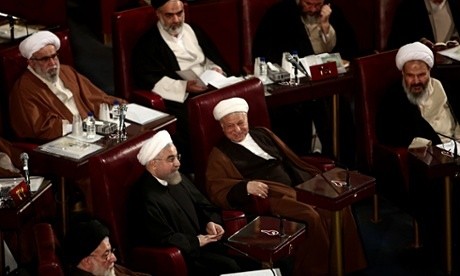
Namazi had even worked in the Iranian Housing Ministry under the presidency of Akbar Hashemi Rafsanjani, now perceived to be a moderate, but widely considered a theological hardliner back in the day; all of which goes to prove that the Iran regime is undergoing the same ideological purges that marked the worst of the Stalinist purges of the 1930s.

“Some speculate that the arrests are part of Mr. Khamenei’s effort to underscore his regime’s ideological purity and beat back domestic calls for reform. But the Islamic Republic has been in the business of taking hostages since its beginning, no matter whether the president is a reputed moderate like current leader Hasan Rouhani, or a firebrand like predecessor Mahmoud Ahmadinejad,” said the Journal.

“When it comes to the Islamic Republic, international goodwill is invariably met with contempt and cruelty. In the wake of the nuclear deal, this is a lesson the West will have to learn all over again,” it added.

The Journal’s lesson is plain to see now as the evidence is now overwhelming that for the mullahs, the nuclear deal isn’t worth the paper it was printed on, but the mullahs recognize correctly that the Obama administration is willing to overlook virtually any violations or aggressions by Iran in order to protect the appearance of preserving a historic foreign policy win.

The mullahs have also correctly calculated that the time remaining before U.S. presidential elections in 2016 literally amounts to a fire sale and they are racing to sweep anything and everything they can before the sale ends.

This includes a number of moves that have come to light further illustrating just how far Ali Khamenei and his fellow mullahs are willing to go to secure their goals.

The Guardian printed a story in which it tracked the recruitment, training and flow of Afghan refugees living in Iran and Syria by the regime and sent to die on Syrian battlefields.

“Iran is recruiting Afghan refugees to fight in Syria, promising a monthly salary and residence permits in exchange for what it claims to be a sacred endeavor to save Shia shrines in Damascus,” Dehghan writes. “The Fatemioun military division of Afghan refugees living in Iran and Syria is now the second largest foreign military contingent fighting in support of Bashar al-Assad, the Syrian president, after the Lebanese militia Hezbollah.”

Horrifically enough, the Guardian revealed that the Iran regime was accepting Afghans below the age of 18. At least one 16-year-old Iran-based Afghan refugee was killed in Syria earlier this year. The allowance for child fighters is a tactic that both the Iran regime, ISIS and Al-Qaeda all share.

Most Iran-based Afghans, who are also Shia, are not going to Syria to risk their lives on religious grounds but because of the financial and stability benefits that their involvement will bring to them and their families. Nearly 1 million Afghans are registered as refugees in Iran but the country is believed to host at least 2 million more that are living there illegally.

In another sign of the growing provocations by the regime, Bahrain convicted five Bahrainis of conspiring with Iran to carry out attacks within the country. Bahrain charged that Tehran was trying to foment unrest in their country by providing training to two of the Bahrainis involved and communicating with the others through the regime’s Revolutionary Guard Corps.

This follows an incident last month in which Bahrain security forces uncovered a large bomb-making factory and arrested a number of suspects linked to the Revolutionary Guards.

All of which shows that not only there are no signs of moderation in Iran, but its moving more and more in the opposite direction.

By Michael Tomlinson

Filed Under: Blog, News Tagged With: Iran, Iran deal, Iran Lobby, National Iranian American Council, NIAC, Trita Parsi

The Trade Off of Human Rights with Iran Regime

November 4, 2015 by admin

fed22222-8dbe-49e4-81eb-20be645b4830-460x276Even though the Iran regime has consistently disregarded basic human rights since the revolution in 1979, the world has evolved its approach to this blatant brutality from stern opposition to debased appeasement.

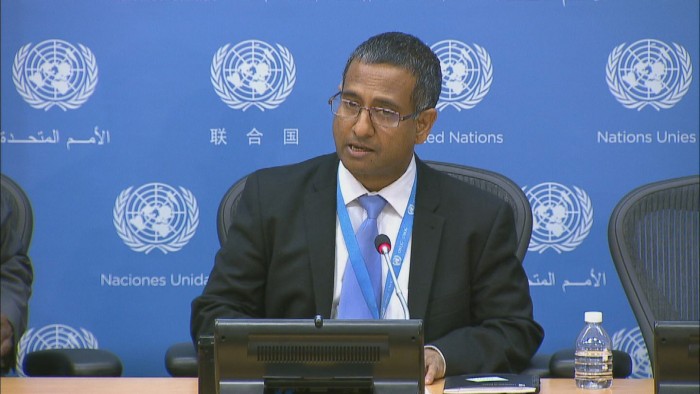
The human rights situation in Iran has gotten progressively worse to a point where the United Nations appointed a Special Rapporteur for Human Rights just for Iran. Dr. Ahmed Shaheed, the special rapporteur, released another in a series of critical reports documenting human rights abuses within the regime.

Entitled “The Situation of Human Rights in the Islamic Republic of Iran,” the report reveals that Iranians are worse off under the allegedly “moderate” reign of Hassan Rouhani than under the despised Mahmoud Ahmadinejad.

While the regime is on pace to execute an astounding 1,000 people this year, the report discusses other brutal acts such as “more than 480 persons flogged during the first 15 days of Ramadan for not fasting.” Also, two people convicted of theft had their limbs amputated mere weeks before the concluded nuclear deal. This is while money laundering and embezzlements by high rank mullahs and officials of the regime, worth of billions of dollars continue unabated.

A man identified as “Hamid S.” reportedly had his left eye and right ear surgically removed in January of this year after being found guilty of attacking another man with acid in 2005, which caused the victim to lose the same body parts. Another man was also forcibly blinded in March of this year in a process known as qisas, or “retribution-in-kind,” for throwing acid on another man in 2009, according to Breitbart News.

While these human rights violations continue relentlessly and have actually increased in severity and frequency after passage of the nuclear agreement, the Obama administration has oddly continued to make qualitative distinctions in picking and choosing options in dealing with a militant Iran regime.

Those distinctions were on display when Rick Stengel, the U.S. undersecretary of state for diplomacy and public affairs, appeared on MSNBC’s “Morning Joe” program to promote “The International Day to End Impunity for Crimes Against Journalists.”

Under questioning by hosts Joe Scarborough and Mike Brezinski, Stengel struggled to answer why the U.S. had not been able to secure the release of Washington Post reporter Jason Rezaian and other American hostages.

He spent some of the interview explaining why Rezaian’s plight was less important than the overall nuclear issue, according to Business Insider.

He ended up implying that crimes against even American journalists are, at best, a midlevel priority for US foreign policy — an especially awkward tactic, considering the point of his appearance was to discuss US efforts to end impunity for crimes against journalists.

“Stengel perhaps didn’t intend to do this, but he bluntly illustrated the trade-offs in the US’s Iran policy. If you’re going to prioritize arms control above everything else, then it stands to reason that press freedom — and even the freedom and protection of US citizens — is secondary to other, supposedly higher concerns,” writes Armin Rosen in the Business Insider piece.

“Taken one way, Stengel is giving opponents of the US a recipe for getting a relatively free pass on both human rights and the harassment of American citizens. But he’s also admitting that there are unsavory trade-offs at the heart of the Obama administration’s biggest foreign-policy accomplishment,” he concludes.

Rosen is correct and points out why American policy towards the Iran regime is flawed from the start, because it does not recognize the monolithic nature of regime policy as formulated and pursued by the mullahs in Tehran.

As a religious theocracy, Iranian regime is uniformly and unconditionally devoted to its first and primary goal; preserving the Velayat-e-Faqih rule (supremacy of regime’s Supreme Leader on all aspects of the Iranian people’s lives) and the state it spawned.

Efforts to appease Tehran such as the nuclear deal, inviting Iran to talks on Syria, rescinding calls to remove Assad from power, and failing to tie human rights to agreements, all feed into the regime belief that it does not have to do anything to accommodate the West in order to achieve its goals.

This has been shown in yet another way when the International Atomic Energy Agency claimed that the regime had begun the process of shutting down its nuclear centrifuges as part of the nuclear agreement, only to have the spokesman for the Atomic Energy Organization of Iran contradict those claims.

“AEOI’s goal in nuclear negotiations was to minimize the limitations so that they would not deprive the country from nuclear technology, said Behrooz Kamalvandi as quoted in regime-run media. “He pointed out that Iran also wanted its enrichment program to be recognized and the sanctions to be terminated at the same time.”

The regime also showed its disregard for international concerns as it arrested a Lebanese-born tech executive with ties to U.S. businesses. The announcement was the first word from Iran on Nizar Ahmad Zakka, whose colleagues said he did not board a scheduled flight from Tehran on Sept. 18 after attending a conference. Zakka’s organization is an information and communications technology group that has offices in Lebanon, Iraq and Washington.

The arrest follows the arrest of Siamak Namazi, a regime supporter with close ties to the Iran lobby through the National Iranian American Council and its head, Trita Parsi.

On top of which also comes word that an Iranian actress was forced to flee after being criticized for publishing pictures on social media showing her without traditional Muslim head coverings, or hijab.

Her situation is even more striking given the recent leadership conference for the NIAC, which devoted a large section to a discussion on the arts in Iran and why there should be optimism about them.

Paradoxically, while artists, actors and journalists are forced to flee Iran, NIAC notes its belief that economic sanctions have hurt the arts in Iran and never mentions the crackdown on the Iranian creative community by the regime.

We can only hope for a day when Iran’s religious government is changed to a democratic, secular one that respects the rights of women and journalists.

By Michael Tomlinson

Filed Under: Blog, News Tagged With: Appeasement policy, Featured, Iran, Jason Rezaian, National Iranian American Council, NIAC, Rouhani, Trita Parsi

Iran Regime Picks and Chooses What It Wants

November 3, 2015 by admin

Iran Regime Picks and Chooses What It Wants

Iran Regime Picks and Chooses What It Wants

There are many aspects to the collective decision-making of the mullahs in Tehran. On the one hand, they support opening up negotiations on a nuclear deal to help unlock the bank vaults to billions in frozen assets. Then on the other hand, they denounce the terms of the deal and claim it doesn’t apply to them unless all sanctions are lifted at once.

The same double standard applies to what is happening in Syria. The Iran regime has fought endlessly to keep Assad in power there to the extent it even begged the Russians for military support to save him from being overthrown as rebels made serious inroads. The mullahs sought to legitimize the idea of Assad staying in power and seemed to reach a breakthrough by finally being invited to multilateral talks on finding a political solution to the crisis.

But now the regime has threatened to walk away from talks if it found them unconstructive, specifically citing Saudi Arabia’s role in the talks as the bitter rivals escalate their growing conflicts that now stretch from Yemen to Syria.

“In the first round of talks, some countries, especially Saudi Arabia, played a negative and unconstructive role … Iran will not participate if the talks are not fruitful,” regime media cited deputy Foreign Minister Hossein Amir Abdollahian as saying.

Delivering unusually personal criticism, regime president Hassan Rouhani appeared to reprimand Saudi Foreign Minister Adel al-Jubeir, who, on Saturday, lashed out at Tehran for what he termed its interference in regional countries.

“An inexperienced young man in a regional country will not reach anywhere by rudeness in front of elders,” Rouhani was quoted as saying by state news agency IRNA on Monday. He did not name the ‘young man’ but Jubeir was assumed to be his target according to Reuters.

It’s this kind of “I’ll take my ball and play elsewhere” response that has come to typify Iranian regime’s reactions in foreign affairs now. It pushed for a nuclear agreement and then complained about it and threatened to walk away. It pushed for a role for Assad and a seat at the table and now that it has it, it threatens to walk away.

While some psychologists might label this bipolar behavior, long-time regime watchers within the Iranian dissident community have long warned this was how the mullahs do business by pushing a false façade and then changing the rules at the last minute.

It was behavior that typified nearly two years of nuclear talks in which Iran refused to commit to the fine print in order to avoid being boxed in; resulting in a 159-page agreement that is dwarfed by the thousands of pages in similar nuclear agreements with the old Soviet Union and North Korea.

That split behavior has been most explicit in Ali Khamenei, the regime’s top mullah, who has persistently and publicly undercut Rouhani following the nuclear agreement in order to demonstrate his firm control over regime matters and relegate Rouhani to the figurehead status many have claimed he remains.

According to Dr. Majid Rafizadeh, head of the International American Council, writing in Huffington Post, Khamenei has ruled out any “snap-back” option with regards to the sanctions.

“First, he wants sanctions to be lifted at the outset, then he wants to make sure that the international community will not have any mechanism through which it can re-impose sanctions in the very likely scenario that Iran decides to pull out of the nuclear agreement and go full speed ahead on uranium enrichment,” he writes.

“But wait, that’s not all, there is another condition to be met as well. After Khamenei had his president and nuclear team add the condition of the removal of an arms embargo to the nuclear agreement in the eleventh hour, he is now adding the removal of all sanctions (including the ones linked to Iran’s terrorism and human rights violations) to the already-done nuclear deal,” he added.

Another sign of the growing tightening of control by Khamenei was discussed by Gerald F. Seib in the Wall Street Journal.

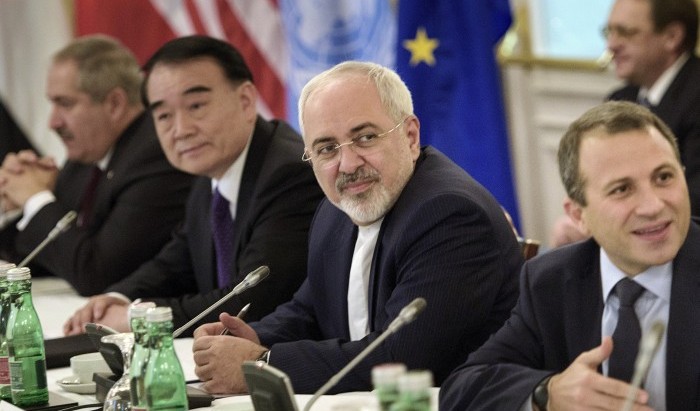
“Iran also has arrested Nizar Zakka, a Lebanese information-technology specialist who lives in Washington and has permanent-resident status in the U.S. At the same time, Iranian businessmen with ties to foreign firms are being harassed by Iran’s state-security apparatus,” Seib writes. “These detentions are likely the work of Iran’s Revolutionary Guards, who function as a kind of parallel government operating alongside—and apparently beyond the influence of—the official government of President Hassan Rouhani and Foreign Minister Javad Zarif, with whom the U.S. and other world powers negotiated the nuclear deal.”

The broad range of actions by the regime over the last few months leaves very little doubt about the intentions of the mullahs and Khamenei in particular.

He is not interested in accommodation. He has no time for negotiations. He has no belief in moderation.

The regime has even stepped up arrests domestically, including two journalists, one a former deputy culture minister who was jailed in the 2009 crackdown that followed the disputed reelection of then-President Mahmoud Ahmadinejad.

The son of ex-official Issa Saharkhiz told news media his father was arrested this week at his residence in Tehran on charges that include “insulting the supreme leader” and “propaganda against the regime.” The arrests are likely to have a chilling effect on journalists and activists ahead of major elections early next year in Iran.

Meanwhile, a relative of Ehsan Mazandarani, editor in chief of the Iranian regime’s daily Farhikhtegan, said that Mazandarani was detained the same day, also in the capital by agents of the Revolutionary Guards Corps.

Even as these crackdowns increase – and in spite of criticism from human rights and dissident groups – in a vote held Monday, regime lawmakers opted overwhelmingly to continue pushing the “Death to America” slogan chanted across the country on Fridays, after regime ally’s Friday prayer services, and with special zeal every November 4th – the day Iranian mullahs commemorates the beginning of the 1977 siege on the U.S. Embassy in Tehran.

Khamenei picks and chooses his fights and he clearly intends on fighting any notion of moderation.

By Michael Tomlinson

Filed Under: Blog, News Tagged With: #NuclearDeal, Appeasement policy, Featured, hassan rouhani, Iran sanctions, Irantalks, Nuclear Deal, Rouhani, Sanctions

What the Taking of Another American by Iran Regime Tells Us

November 2, 2015 by admin

What the Taking of Another American by Iran Regime Tells Us

What the Taking of Another American by Iran Regime Tells Us

The sudden and surprising arrest by Iran regime officials of Siamak Namazi raised the eyebrows of many veteran Iran watchers; not the least because Namazi has been an integral part of efforts to build a lobbying force in the U.S. used to support the regime’s political goals, namely passage of a just-completed nuclear agreement.

In fact, the ties between Namazi and Trita Parsi, the founder of the National Iranian American Council and leading lobbyist for the regime, have been well documented, all of which raised the question of why would regime leaders order the arrest of one of their own?

The very question indicates how wrong most analysts are about Iranian mullahs in the first place. Many people, including apparently Namazi, long assumed that if you towed the party line of the mullahs, you were always going to be in their good graces and in Namazi’s case, he hoped to reap the financial rewards that came from that association in the form of guiding foreign investment into Iran following the nuclear deal.

But what he failed to understand and what many others have failed to grasp even as they tried appeasing these same mullahs is that they are never going to allow anyone into their tight circle of control who does not follow their proscribed fundamentalist and extremist religious beliefs.

For the mullahs in Tehran, the coin of the realm is not just money; the constitution vests absolute authority with Ali Khamenei and his cadre of mullahs who oversee the judiciary, military and foreign affairs and vast tracts of the economy, while have an unrelaxing temptation for expansion of their authorities in to neighboring countries.

The Iranian Revolutionary Guard Corps wields disproportionate influence through its monopolistic control of entire industries such as telecommunications, petroleum, finance and agriculture. Iran’s theocracy controls planning of the economy and dispenses its meager rewards to the Iranian people, while reserving the bulk of the financial gains for its elites, their families and the military campaigns it funds overseas in Lebanon, Syria, Iraq and Yemen.

For Namazi and Parsi and their fellow Iran lobbyists, the suddenness of the arrest was jarring, but it should have not comes as a complete surprise since the mullahs have long practiced the art of score-settling amongst their factions with sham trials, imprisonments and even executions.

But unlike what Parsi and his ilk would have the rest of the world believe, the fight in Iran’s leadership is not between “moderates” and “hardliners,” but in fact is between factions of corrupt mullahs bickering over the booty they rob from the Iranian people. The fact that every effort to promote a “moderate” faction within Iran has met with utter failure is indicative not of the lack of passion within the Iranian people for regime change, but rather the ruthless willingness of the mullahs to use deadly force against their own people to keep tight their grip on power.

Also since signing of the nuclear agreement, Khamenei has made it his mission to remind the world the he does not view adherence to the terms of the agreement to be beneficial to the regime, nor indispensable. In fact, in his mind, anything that compromises the extremist Islamic fanaticism is the antithesis of what the mullahs want. For Khamenei, getting a $150 billion check from unfrozen assets with no strings attached is the best possible alternative.

Khamenei is eager for the money in order to continue funding his vision of an expanding Islamic sphere of influence stretching from the Mediterranean to the Indian Ocean, but he does not want to jeopardize it with young Iranians clamoring for access to Snapchat on their iPhones while wearing clothes from Old Navy, which is why the arrest of Namazi, a putative supporter of the regime, tells us clearly that the regime intends to be the one calling the shots and not the other way around.

By Michael Tomlinson

Filed Under: Blog, National Iranian-American Council, News, The Appeasers Tagged With: #NuclearDeal, Appeasement policy, Featured, Iran, Iran deal, Iran Lobby, Iran sanctions, Khamenei, National Iranian American Council, NIAC, Trita Parsi

What Camp Liberty Tells Us About the Iran Regime

October 30, 2015 by admin

What Camp Liberty Tells Us About the Iran Regime

What Camp Liberty Tells Us About the Iran Regime

Camp Liberty, located near Baghdad International Airport, was originally built by the U.S. military as a base for coalition forces during the Iraq war. Since 2012, it has served as home to over 2,200 Iranian refugees; most are members of the People’s Mujahedin of Iran (PMOI/MEK) a longtime resistance group to the current Iran regime.

It has also been subject to an almost endless barrage of attacks from forces aligned with the Iran regime; with the most recent attack coming last night in the form of some 80 rockets falling on the compound and killing at least 23 people with dozens more injured according to the National Council of Resistance of Iran, an umbrella group of dissident and resistance groups.

This is the fifth attack on the camp since 2003 with international inquiries pointing to Iraqi paramilitary forces, Shiite militia and other terror groups backed by Iran as being responsible. Attacks included four separate mortar and rocket attacks in 2013 alone.

According to NCRI-US office deputy director Alireza Jafarzadeh, some of the missiles used in this week’s attack are Falaq missiles manufactured by the Iran regime.

“The Iraqi Government and the United Nations, which signed a memorandum of understanding in December 2011, guaranteeing the protection of the residents of Camp Liberty, must be held to account,” said opposition spokesman Shahin Gobadi.

The refugees were relocated to Camp Liberty from Camp Ashraf two years ago after suffering similar attacks and under an agreement with the UN Assistance Mission for Iraq to resettle them through the UN High Commissioner for Refugees (UNHCR). The Iraqi government and UN ostensibly were responsible for the safety and security of the residents, but despite calls by the UNHCR, the Iraqi government has failed to provide adequate security.

The UNHCR issued a statement condemning the attacks saying “This is a most deplorable act, and I am greatly concerned at the harm that has been inflicted on those living at Camp Liberty,” said High Commissioner for Refugees António Guterres. “Every effort must continue to be made for the injured and to identify and bring to account those responsible.”

Mrs. Maryam Rajavi, the head of the NCRI, also condemned the attack saying “The government of Iraq and the United Nations who signed a Memorandum of Understanding and built a Temporary Transit Location (TTL) since 2011, are formally and legally accountable for this attack. In our view, however, as was the case in the six previous bloodbaths in Ashraf and Liberty, the Iranian regime’s agents in the government of Iraq are responsible for this attack and the United States and the United Nations are well aware of this fact.”

The timing of the attack is interesting because it follows a string of provocative and aggressive actions by the Iran regime after agreeing to a nuclear agreement that proponents and members of the Iran lobby had touted as ushering in a new era of moderation and openness with the mullahs in Tehran.

In a few short months, Iran has:

  • Convicted Washington Post reporter Jason Rezaian and continue to hold three other Americans as potential hostage bargaining chips to exchange for 19 Iranian agents convicted of arms trading and smuggling nuclear components;
  • Spurred a military alliance with Russia to come to the rescue of Assad in Syria and launch a new offensive aimed at rebels with Iranian troops, Hezbollah terrorists, Shiite militias and Afghan mercenaries;
  • Launched a new ballistic missile capable of carrying nuclear payloads in direct violation of UN Security Council sanctions against their development;
  • Stonewalled inspections and questioning by International Atomic Energy Agency officials on the military dimensions of its nuclear program and scrubbed its Parchin site prior to inspection;
  • Stepped up executions and is on pace to kill over 1,000 people this year alone as revealed in a critical report by the Special Rapporteur for Human Rights in Iran and Amnesty International.

And ironically enough, agents of the regime’s Revolutionary Guards Corps even arrested and tossed into Evin Prison one of the key builders of its lobbying network in the U.S. in a bid to reassert the domination of regime policies by Ali Khamenei, its top mullah.

The attack on Camp Liberty is nothing more than a continuation of the same aggressive policies of the mullahs who have increased efforts to stifle any form of dissent and opposition by attacking members of the resistance outside of Iran and cracking down at home against those who foolishly believed in the propaganda of a more moderate Iran post-nuclear deal.

The fact that Iran has been invited to multilateral international talks on Syria is more evidence that the regime is pressing its agenda on all fronts as broadly as possible including its top priority of keeping the Assad regime firmly in power in order to maintain the corridor of for the extremist groups it has built from Lebanon to Iraq to Yemen.

The attack on Camp Liberty is just another reminder that the West should act to restrain the Iran regime and not appease it.

By Laura Carnahan

Filed Under: Blog, News Tagged With: Appeasement policy, Featured, Iran, NIAC, NIAC Action

Iran Regime Turns on Its Own

October 29, 2015 by admin

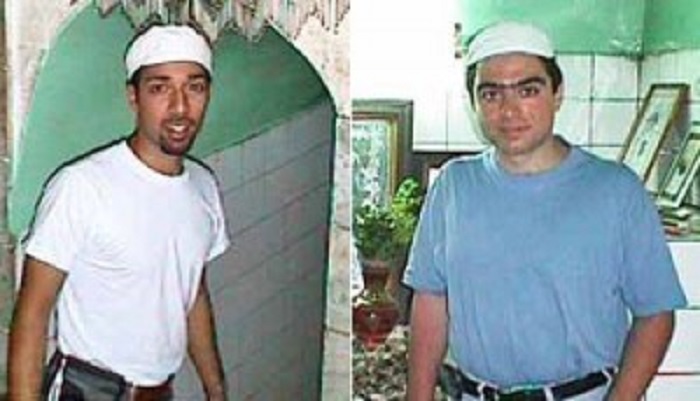
Trita Parsi traveled with Siamak Namazi to Isfahan, Iran’s third largest city, in August 2000. They also toured the Zoroastrian “Fire of Victory” Temple in Yazd. At the time, Siamak was living in Tehran, working for Atieh Bahar, a consultant company with close ties to the government. In 1999, Parsi and Siamak co-authored a paper that recommended setting up a lobbying organization in Washington to influence US-Iran policy. Siamak took a sabbatical in 2005 to complete a fellowship at the Woodrow Wilson Center in Washington, DC. While at the Center, Siamak helped Parsi formulate NIAC policies supportive of the Iranian regime.

Trita Parsi traveled with Siamak Namazi to Isfahan, Iran’s third largest city, in August 2000. They also toured the Zoroastrian “Fire of Victory” Temple in Yazd.
At the time, Siamak was living in Tehran, working for Atieh Bahar, a consultant company with close ties to the government.
In 1999, Parsi and Siamak co-authored a paper that recommended setting up a lobbying organization in Washington to influence US-Iran policy. Siamak took a sabbatical in 2005 to complete a fellowship at the Woodrow Wilson Center in Washington, DC. While at the Center, Siamak helped Parsi formulate NIAC policies supportive of the Iranian regime.

Siamak Namazi, an Iranian-American citizen, has been credited with helping found the Iran lobby including the creation of the National Iranian American Council alongside Trita Parsi as the primary vehicle for advocating for a nuclear agreement lifting economic sanctions on the regime.

The Daily Beast chronicled his family’s involvement as an “intellectual architect” for the NIAC as a pathway for empowering those within the regime whom he had a close relationship with and believed by helping secure an agreement it would boost his fortunes within the regime.

In the immortal words of Kevin Spacey who plays the scheming Frank Underwood on Netflix’s “House of Cards,” “We’re all victims of our own hubris at times.”

Truer words were never spoken about the Iran lobby because on the verge of reaping their perceived successes, they discover all they really are, are puppets for a regime of mullahs whose intent is only focused on preserving their own power.

That is because according to regime media reports, while visiting family in Tehran, Namazi was arrested by Revolutionary Guards Corp soldiers and tossed into the notorious Evin Prison.

There is an irony here on par with Alfred Nobel inventing dynamite and then creating the Nobel Peace Prize after his invention was used in war.

Namazi joins four other Americans who are being held hostage by the regime, including Washington Post reporter Jason Rezaian, Christian pastor Saeed Abedini, former Marine Amir Hekmati and the former FBI agent Robert Levinson.

According to a piece in American Thinker, Parsi and Namazi founded NIAC as a way to lobby for the removal of sanctions against the regime and promote its foreign policy while combatting anti-regime forces in the U.S.

Both Parsi and Namazi reportedly enjoyed close ties and access to Hassan Rouhani and Javad Zarif, the regime’s president and foreign minister, with Parsi being seen traveling with and in close discussions with the regime delegation during nuclear talks.

Conspicuously, the NIAC have been silent on the issue, declining comment and social media feeds for Parsi and other NIAC staff is devoid of any mention of the arrest.

But Hassan Dai, editor of the Iranian American Forum who won a defamation lawsuit filed against him by Parsi, speculated that the arrest suggests a power struggle of sorts within the regime’s leadership.

Dai explained in an interview with Breitbart News that Namazi had consistently “lobbied in favor of a faction of the regime,” which upset the mullahs because it would only be acceptable to “lobby for the whole regime.”

The fight between the factions in Iran is a fight for “the best solution to preserve the regime,” he explained, adding that groups like NIAC have never sided with true “reformists,” but with people who wish to employ a different strategy to empower the regime, such as Rouhani and former President Akbar Rafsanjani.

Because Namazi and NIAC prefer one faction over the other, “they are undermining the Supreme Leader. They are undermining the Revolutionary Guard,” Dai explained. “When you lobby U.S. policymakers to remove sanctions against Iran with the rationale that it will help reform the regime, you undermine the Supreme Leader, because he wants them to accommodate to the regime now.”

The arrest of Namazi sends a message from Iran’s rulers that “Rouhani has no power,” Dai concluded. “He cannot even protect his own friend.”

Breitbart News further speculates – and rightly so – that the arrest pours cold water on the notion that securing the nuclear deal would empower “moderates” within the regime and help reform it. Evidence since agreeing to the nuclear contradicts that idea completely with the conviction of Rezaian, the test launch of an illegal ballistic missile and the launching of a new offensive in Syria alongside Russian forces.

The arrest of Namazi demonstrates that the leadership of the Iran regime is of one mind and firmly in the control of Ali Khamenei and his religious cohorts and that any idea of moderation within the regime is a pipe dream; which may go to explain why coming off of the NIAC’s recent leadership conference to celebrate the nuclear deal, Parsi’s Twitter feed was filled with posts condemning Saudi Arabia, a bitter enemy of Iran and locked in fighting in Yemen.

If Parsi doesn’t tow the mullahs’ line, he might find a different kind of reception party the next time he travels to Tehran and end up sitting next to his buddy Namazi.

By Michael Tomlinson


Filed Under: Blog, Latest from Lobbies & Appeasers, National Iranian-American Council, News Tagged With: #NuclearDeal, Appeasement policy, Featured, hassan rouhani, Iran, Iran deal, Iran Economy, Iran Lobby, Irandeal, Jason Rezaian, Khamenei, Moderate Mullahs, National Iranian American Council, NIAC, Nuclear Deal, Rouhani, siamak Namazi, Syria, Trita Parsi

Human Rights Report Puts Focus on Iran Regime

October 28, 2015 by admin


Human Rights Report Puts Focus on Iran Regime

Human Rights Report Puts Focus on Iran Regime

Ahmed Shaheed, the United Nations Special Rapporteur for Human Rights in Iran issued a new report saying that the Iran regime was on track to execute more than 1,000 people in 2015 in an unrelenting campaign of brutal human rights suppression that continues unabated after agreeing to a nuclear agreement that proponents said would shift the regime to a more moderate stance.

Calling it an “unprecedented assault on the right to life in Iran,” Shaheed described a surge in executions over the past year. He said Iran hanged nearly 700 people since January.

Shaheed said that within the past two weeks, the Islamic Republic violated international law by hanging two juvenile offenders. He added “there are dozens more waiting a similar fate on death row.”

According the New York-based Committee to Protect Journalists, at the end of last year, at least 30 journalists were held in Iranian prisons, including Washington Post reporter Jason Rezaian. Others have been detained since, and in August state media accused a senior Wall Street Journal reporter who once served as a correspondent in Iran of conspiring against the government. The Journal called the claims “completely false, outlandish and irresponsible.”

Sherif Mansour, the Middle East and North Africa program coordinator for the Committee to Protect Journalists, said in an interview with the Associated Press, reporters often get targeted because they are “much easier to frame” as spies.

Additionally, in more signs of a brutal crackdown, the regime jailed and sentenced two Iranian poets. Fatemeh Ekhtesari, a practicing obstetrician, and Mehdi Mousavi, a trained doctor who teaches literature and poetry, were first arrested in December 2013, months after Hassan Rouhani took office and sentenced to 99 lashes apiece for shaking hands with members of the opposite sex. Ekhtesari received an 11½-year prison sentence, while Mousavi got nine years on charges ranging from propaganda against the state to “insulting sanctities,” as well as the lashings, according to PEN America, an organization promoting literature and freedom of speech.

“I think people thought with the nuclear deal, there would be sort of a bit of a thaw as well or a bit of an opening up,” said Karin Deutsch Karlekar, the director of Free Expression Programs at PEN America. “I think the judiciary is sort of pushing back and trying to make clear that there isn’t going to be that opening people were hoping for.”

Shaheed’s report detailed a grisly butcher’s bill of death by the regime:

  • Between Jan. 1 to Sept. 15 this year, Tehran hanged at least 694 people, the highest rate of executions under the regime in 25 years;
  • The bulk of the crimes committed by those executed were for non-violent, political or drug offenses;
  • By way of comparison, in the last year of Mohammad Khatami’s term as president in 2005, the regime carried out a total of 91 executions according to the report; nearly doubling in the first year of Mahmoud Ahmadinejad’s term to 177 executions;
  • According to Shaheed, the Iran regime executes more people per capita than any other country on the planet.

In addition to drug crimes, Iranian law applies the death penalty for a range of offenses: from threats to “the security of the state” to “enmity towards God,” also known as moharebeh, to “insults against the memory of Imam Khomeini and against the supreme leader of the Islamic Republic,” according to the State Department’s 2014 human rights report on Iran. “Prosecutors frequently used moharebeh as a criminal charge against political dissidents and journalists, accusing them of struggling against the precepts of Islam and against the state that upholds those precepts.”

Shaheed said a “deeply flawed justice system” that violates international standards and national laws sits at the heart of Iran’s human rights troubles. He said he continues “to receive frequent, alarming reports” about the mistreatment of detainees and the use of torture to obtain confessions. Many of the accused lack access to defense lawyers.

The authorities, he said, have also refused to acknowledge rights for gay, lesbian, or transgender individuals, saying it is incompatible with sharia law. And authorities have imposed harsh sentences, including the death penalty, for posting articles on social media deemed offensive to the government. A semi-official news outlet reported that more than 480 people were flogged during the first two weeks of Ramadan for not fasting.

The regime refused comment on Shaheed’s report and in fact has consistently refused to allow entry into Iran by Shaheed or any member of his office to see first-hand the human rights abuses going on in Iran.

In fact, while Shaheed was issuing his report, Rouhani was holding forth with state-controlled media IRNA in a ceremony welcoming the new Spanish ambassador to Iran, saying he believed sanctions on the regime would be lifted as early as the end of this year, again contradicting assurances by the nuclear deal proponents that the sanctions removal would only come after the regime had met its obligations for dismantling its nuclear infrastructure.

Clearly the regime remains committed to its policy of public executions and cares not a whit about international opinion on the matter.

By Michael Tomlinson

Filed Under: Blog, News Tagged With: Featured, Iran, Iran deal, Iran Human rights, Iran Talks, Irandeal, Jason Rezaian, Khamenei

  • « Previous Page
  • 1
  • …
  • 44
  • 45
  • 46
  • 47
  • 48
  • …
  • 64
  • Next Page »

National Iranian-American Council (NIAC)

  • Bogus Memberships
  • Survey
  • Lobbying
  • Iranians for International Cooperation
  • Defamation Lawsuit
  • People’s Mojahedin
  • Trita Parsi Biography
  • Parsi/Namazi Lobbying Plan
  • Parsi Links to Namazi & Iranian Regime
  • Namazi, NIAC Ringleader
  • Collaborating with Iran’s Ambassador

Recent Posts

  • NIAC Trying to Gain Influence On U.S. Congress
  • While Iran Lobby Plays Blame Game Iran Goes Nuclear
  • Iran Lobby Jumps on Detention of Iranian Newscaster
  • Bad News for Iran Swamps Iran Lobby
  • Iran Starts Off Year by Banning Instagram

© Copyright 2026 IranLobby.net · All Rights Reserved.