Iran Lobby

Exposing the Activities of the lobbies and appeasers of the Mullah's Dictatorship ruling Iran

  • Home
  • About
  • Current Trend
  • National Iranian-American Council(NIAC)
    • Bogus Memberships
    • Survey
    • Lobbying
    • Iranians for International Cooperation
    • Defamation Lawsuit
    • People’s Mojahedin
    • Trita Parsi Biography
    • Parsi/Namazi Lobbying Plan
    • Parsi Links to Namazi& Iranian Regime
    • Namazi, NIAC Ringleader
    • Collaborating with Iran’s Ambassador
  • The Appeasers
    • Gary Sick
    • Flynt Leverett & Hillary Mann Leverett
    • Baroness Nicholson
  • Blog
  • Links
  • Media Reports

What the Detention of 10 US Navy Sailors Tells Us About Iran Regime

January 15, 2016 by admin

What the Detention of 10 US Navy Sailors Tells Us About Iran Regime

What the Detention of 10 US Navy Sailors Tells Us About Iran Regime

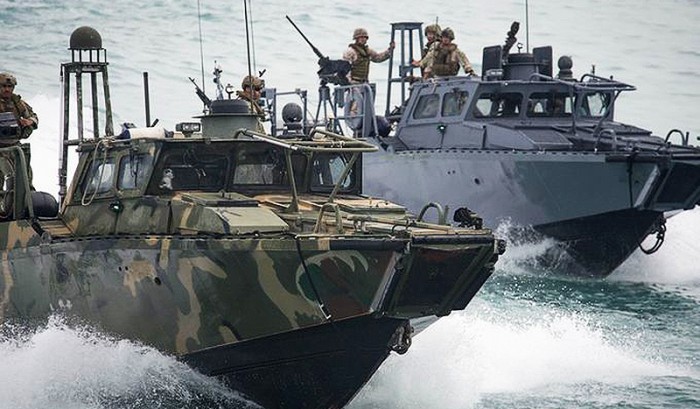
The arrest and detention of 10 U.S. Navy sailors by the Iranian regime and their release after 24 hours is being hailed by some regime supporters as proof of how a new cooperative relationship exists between the U.S. and Iran and how a similar situation might have led to armed conflict before the nuclear deal was agreed to last July.

Regime supporters and members of the Obama administration have even attempted to characterize the Iranian detention as a helpful assist to sailors lost in the waters of the Persian Gulf after allegedly suffering mechanical difficulties, but the images released by the regime are anything but designed to reassure Americans.

The detention was a political act and one designed to convey a specific message considering its timing just before President Obama’s State of the Union speech. It has been a hallmark of the mullahs in Tehran to invest heavily in message, meaning and symbolism. They do not do things haphazardly or without purpose.

The founding of the revolutionary Islamic state even had symbolic meaning with the release of 52 American hostages during the swearing in ceremony for President Ronald Reagan and the continued holding of Iranian-American hostages today also has meaning and symbolism for the regime.

When the regime paints an American flag on the streets of Tehran to be marched over, or builds a model of a U.S. aircraft carrier so it can be sunk on live television, or holds weekly prayer meetings to shout “Death to America,” they are all important symbolic acts for a regime controlled by mullahs deeply concerned over appearances and perception.

The mistake made by those who otherwise support the regime in its efforts to re-enter the international community is that they de-link all of the regime’s actions and treat them as specific, individual events with no relationship to one another.

The test firing of illegal ballistic missiles followed by the launching of rockets near U.S. Navy warships followed by the interception and detention of U.S. Navy sailors are not related according to these supporters of the regime.

They could not be more wrong.

Take for example the election of Hassan Rouhani as president of Iranian regime. Even though he served extensively in intelligence and national security capacities within the regime and was regarded as a trusted ally of top mullah Ali Khamenei, his election was portrayed as a win for moderates by the Iran lobby, led by the National Iranian American Council; forgetting that the previous slate of candidates, was wiped off the ballot by the Guardian Council, allowing Rouhani to win with virtually no opposition.

The mullahs learned their lesson from the disputed election of 2009 where street battles throughout Tehran showed the true nature of the regime to the world. Being mindful of appearances, the mullahs simply took everyone off the ballot that could be a problem.

Which is why the response by the Iran lobby has been interesting, as Shireen Hunter, a professor at Georgetown University, writes in the regime supporting Lobelog.com, that “both the tone and the behavior of the IRGC was quite mild, at least according to the institution’s usual standards. It insisted on treating the US personnel with respect and housing them in a comfortable and safe place.”

Anyone who has watched the video released by the Revolutionary Guard Corps can plainly see the U.S. sailors on their knees, being held at gunpoint with their hands clasped above their heads. They can also see video of a Navy Lieutenant apologizing on camera and saying how all of them have been treated well by their captors.

Oddly, the logic of the Iran lobby is that we should be thankful the regime treated their captives well instead of being upset they captured them in the first place. It’s the same bizarre logic applied to most of the regime’s actions where the Iran lobby has argued that the regime’s involvement in Syria has stemmed the tide of ISIS while neglecting to mention Iran’s intervention in Syria gave birth to ISIS in the first place.

You don’t thank a burglar for being neat after he’s robbed your home.

For the Iranian regime, the videos are powerful symbolism depicting the regime’s ability to confront and embarrass the U.S. military.

It also adds to the growing perception by the mullahs that the U.S. will do nothing in response to any provocation they choose to engage in. The litany of aggressive acts by the regime since the nuclear deal was signed leading up to the capture of the U.S. sailors has merited almost no consequences for the regime.

Ironically enough, even though the regime’s own officials deny the filling in of the Arak heavy-water nuclear reactor’s core with concrete, the U.S. is due to release up to $150 billion in cash before Iran’s parliamentary elections in February.

Common sense would dictate you don’t release the money until you know the election results to see who are you dealing with, even though we can already guess since the slates of candidates in the Assembly of Experts have to be approved by the Guardian Council and most dissidents that could have won seats in the lower house have already been rounded up and arrested at Khamenei’s orders.

As Sean Davis writes in The Federalist, “our military personnel were captured, forced to surrender on their knees, blindfolded, and photographed. Their images were then broadcast to the world on Wednesday morning by the Iranian regime, a clear violation of the Geneva Conventions. The American woman who was captured was forced to submit to Islamic law and don a hijab. State-run Iranian media announced that the whole affair was meant to be a “lesson” to “troublemakers” in the U.S. Congress.”

One would think if the Iranian regime really wanted to be helpful, why not just give the Americans a tow out of the area?

By Michael Tomlinson
Filed Under: Blog, Latest from Lobbies & Appeasers, News Tagged With: Appeasement policy, Featured, Iran Lobby

Iran Regime Deserves No Leeway after Holding Sailors

January 15, 2016 by admin

Iran Regime Deserves No Leeway after Holding Sailors

Iran Regime Deserves No Leeway after Holding Sailors

Ten U.S. Navy sailors were detained by the Iranian Revolutionary Guards Corps after their patrol boats lost contact with U.S. commanders and may have lost power and drifted into waters claimed by the Iranian regime.

The two small boats were traveling between Kuwait and Bahrain when contact was lost according to the Defense Department. Regime officials have assured U.S. officials that the sailors would be released shortly…at least that’s the hope.

The regime accused the sailors of “snooping” according to regime-controlled FARS state media.

Recent history would give most people pause though considering that since the Iranian regime negotiated a nuclear agreement with the P5+1 group of nations, it has acted aggressively in both domestic and foreign policy affairs to such an extent, many analysts have noted a new level of tension in the region exceeding recent memory.

Since July of last year, the Iranian regime has:

  • Begun the mass arrest of dissidents, journalists, artists, students, opposition political leaders and social media professionals in a broad effort to tamp down any dissent in advance of parliamentary elections next February;
  • Convicted Washington Post reporter Jason Rezaian of espionage in a secret revolutionary court, while continuing to hold four other Iranian-Americans on trumped up charges and arresting another who has been identified as being supportive of the Iran lobby in the U.S.;
  • Test fired two new ballistic missiles capable of carrying nuclear warheads in defiance of United Nations Security Council resolutions prohibiting such launches;
  • Fired rockets in international waters in the Strait of Hormuz near U.S. warships, including the aircraft carrier USS Harry S. Truman, and commercial vessels;
  • Threatened to walk away from the nuclear deal should the U.S. impose new sanctions over the test firing of ballistic missiles;
  • Recruited Russia to enter into the Syrian conflict in an effort to target anti-Assad rebel forces in a bid to keep the regime in place instead of targeting ISIS;
  • Stepped up supply of Houthi rebel forces in Yemen and supporting new offensives near the Saudi Arabian border forcing a response from Saudi Arabia; and
  • Allowing Saudi embassies to be attacked and burned in Iran while state police stood idly by in a repeat of similar attacks on British and U.S. embassies.

These provocations follow a series of diplomatic breaks between the Iranian regime and most of its Arab neighbors including Saudi Arabia, Kuwait, Bahrain, Sudan and United Arab Emirates.

Unlike the promises made by Trita Parsi and Reza Marashi of the National Iranian American Council, one of the leading lobbyists for the Iranian regime, the nuclear deal did not produce any turn to moderation by the mullahs in Tehran. If anything, the past six months have provided ample proof that the Iranian regime has no intention of altering its course, but instead is intent on flexing its muscle in taking advantage of this period of appeasement.

At the heart of that appeasement lies the proverbial pot of gold at the end of the rainbow in the form of $150 billion in frozen assets the mullahs are due to receive as early as next week as part of the nuclear agreement.

That cash has no restrictions on it, so the regime can use it to purchase military equipment, send it to terrorist groups such as Hezbollah or benefit companies controlled by the Revolutionary Guard Corps such as petroleum and telecommunications shell companies. The ordinary Iranian citizen will most likely see no improvement in their economic status as a result of the windfall much to chagrin of those who believed in the propaganda being spouted by the Iran lobby.

Even as news media report that the regime is complying with provisions of the nuclear deal including the closing of its Arak nuclear reactor, regime officials themselves disputed that compliance.

Iran’s deputy nuclear chief denied yesterday a report that technicians had dismantled the core of the country’s nearly finished heavy water reactor and filled it with concrete as part of Tehran’s obligations under the nuclear deal with the West.

Ali Asghar Zarean, in remarks to state TV Tuesday, dismissed the report by the Fars news agency from the previous day. He said the regime would sign an agreement with China to modify the Arak reactor, a deal that is expected next week.

The fact that the regime can’t seem to get its own story straight about the condition of its heavy-water reactor ably describes the inability of the rest of world to properly monitor exactly what the regime is doing with its nuclear facilities.

By Michael Tomlinson

Filed Under: Blog, News Tagged With: Appeasement policy, Featured, Iran deal, Sanctions

New Year Starts Off With Predictable Iran Regime Bullying

January 5, 2016 by admin

New Year Starts Off With Predictable Iran Regime Bullying

New Year Starts Off With Predictable Iran Regime Bullying

As 2015 rolled into 2016, the world celebrated with fireworks, parties, countdowns and even offered prayers for a peaceful new year, but the Iran regime dashed those hopes and threw cold water on the festivities by once again flexing its ideological muscle in regards to its illegal ballistic missile program.

Regime president Hassan Rouhani kicked off the New Year by delivering an order to his defense minister to expedite development of the regime’s ballistic missile program in response to threatened new U.S. sanctions set to be imposed on Iranian defense companies.

Rouhani made his comments on his official Twitter account throwing into confusion the nuclear agreement completed last July. It was a confusing situation being created since the Obama administration had been moving aggressively to begin dismantling economic sanctions under the agreement as early as this month, while at the same time it was set to impose new sanctions for the illegal test firing of two new ballistic missiles in violation of United Nations Security Council sanctions.

The schizophrenic nature of the situation illustrates perfectly the almost comical nature of the nuclear agreement where on the one hand the Obama administration is almost tripping over itself to grants relief to the Iran regime, while at the same time rattling its sword over illegal missile development; development it allowed to happen in the first place by removing them as a condition of the same nuclear agreement.

It also brings into sharp focus the essential nature of the Iranian regime which is to push the proverbial envelope as far as it can in taking advantage of its adversaries’ disarray.

“If U.S. continues its illegitimate interference with Iran’s right to defend itself, a new program will be devised to enhance missile capabilities,” Rouhani said in his tweet. “We have never negotiated regarding our defense capabilities including our missile program and will not accept any restrictions in this regard.”

Regime defense minister Hossein Dehghan spoke on state television saying he intended to make the regime’s missiles more powerful.

“Given the current circumstances in the region and the world, we believe peace and security can only be achieved through strength,” he said. “Therefore, we are going to expand our missiles in terms of range and accuracy.”

But in a contest of who might blink first, the Obama administration opted to delay implementation of the proposed sanctions amid threats by the mullahs in Tehran that any fresh U.S. sanctions might force the regime to pull out of the deal; a deal promising to deliver over $100 billion in badly needed cash to the regime.

While Obama officials offered no definitive timeline as to when these sanctions might be imposed, the announcement to impose them was originally scheduled for last Wednesday. By Thursday, members of Congress criticized the administration’s decision to pull back as another capitulation and appeasement to the mullahs.

Top U.S. lawmakers, including White House allies, said they believed failing to respond to Tehran’s two recent ballistic missile tests would diminish the West’s ability to enforce the nuclear agreement reached between global powers and Tehran in July.

“I believe in the power of vigorous enforcement that pushes back on Iran’s bad behavior,” Democratic Sen. Chris Coons of Delaware, a supporter of the nuclear deal, said Friday. “If we don’t do that, we invite Iran to cheat.”

Critics of the White House accused President Obama of backing down on his promises to take action in the face of Iranian provocations such as missile launches. They drew parallels to Mr. Obama’s failure to follow through on threats to launch military strikes on Syrian President Bashar al-Assad’s regime in 2013 in response to its use of chemical weapons against civilians.

“I fear that pressure from our ‘partners’—or threats from the Iranian government that it will walk away from the deal or threaten the U.S. in other ways—have caused the administration to rethink imposing sanctions for Iran’s violations of the testing ban,” said Sen. Bob Corker (R., Tenn.), chairman of the Senate Foreign Relations Committee.

The on-again, off-again nature of these new sanctions does little to strike fear in the hearts of the mullahs and if anything, emboldens them into believing nothing they do will earn a rebuke from Washington.

The United States has also accused Iran’s Revolutionary Guards of recklessly and provocatively firing rockets this week in the vicinity of American warships in the heavily trafficked Strait of Hormuz, a vital international waterway bordering southern Iran that connects with the Persian Gulf, in another sign of belligerent activity from the mullahs.

The confrontation over ballistic missiles and increased level of animosity between the regime and the U.S. in the wake of the nuclear deal points out the incredible pile of falsehoods pushed by the Iran lobby – most notably the National Iranian American Council – which promised a new era of moderation and cooperation and instead has seen fresh terror attacks in Paris and San Bernardino inspired by Islamic extremism, launches of new ballistic missiles and the near state of war between the Iran regime and Saudi Arabia.

Hardly a recipe for peace and stability in 2016 regime supporters such Trita Parsi of NIAC and Jim Lobe at Lobelog promised.

By Michael Tomlinson

Filed Under: Blog, The Appeasers Tagged With: Appeasement policy, Featured, Iran, Iran deal, Iran Lobby, Trita Parsi

Iran Regime Hack on U.S. Power Grid Underscores Cyberwar

December 22, 2015 by admin


Iran Regime Hack on U.S. Power Grid Underscores Cyberwar

Iran Regime Hack on U.S. Power Grid Underscores Cyberwar

One of the most consistent points offered by the Iran lobby in support of the nuclear agreement with the Iranian regime and the rest of the world was that it would usher in a new era of moderation and stability and open the pathway to a rapprochement. Regime supporters such as Trita Parsi of the National Iranian American Council contended that if the U.S. would see fit to delink noxious and troublesome issues such as human rights abuses, support for terrorism and cyberwarfare that things would improve and everyone would join hands in singing a chorus of “We Are the World.”

Nothing could be further from the truth. In fact, new disclosures from former and current U.S. officials clearly show the Iranian regime has been behind some of the most disturbing and threatening cyberattacks against the U.S. in recent memory.

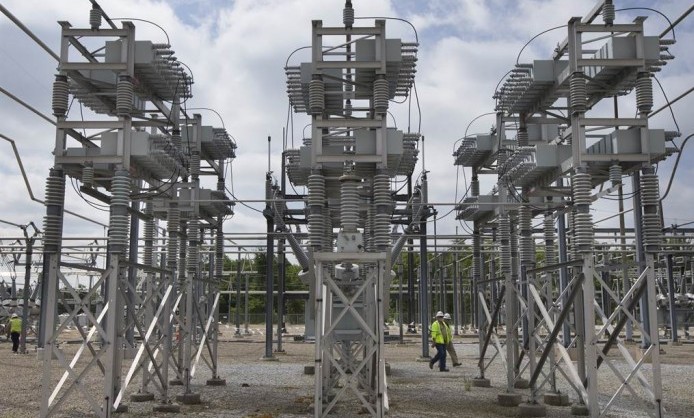
According to the Wall Street Journal, Iranian hackers infiltrated the control system of a small dam less than 20 miles from New York City two years ago. The breach came amid attacks by hackers linked to Iran’s government against the websites of U.S. banks.

“These systems control the flow in pipelines, the movements of drawbridges and water releases from dams. A hacker could theoretically cause an explosion, a flood or a traffic jam,” said the Wall Street Journal. “The incident at the New York dam was a wake-up call for U.S. officials, demonstrating that Iran had greater digital-warfare capability than believed and could inflict real-world damage, according to people familiar with the matter.”

U.S. intelligence agencies noticed the intrusion as they monitored computers they believed were linked to Iranian hackers targeting American firms, according to people familiar with the matter. U.S. officials had linked these hackers to repeated disruptions at consumer-banking websites, including those of Capital One Financial Corp., PNC Financial Services Group and SunTrust Banks Inc., the Journal reported at the time.

The escalation in cyberattacks by Iranian-based hackers represents a new phase in aggressive hostilities punctuated by increases in actual armed conflict with the launching of a new offensive in Syria in support of the Assad regime by the mullahs in Tehran.

While the Obama administration has long held to the idea that Assad needed to go in order to bring about an eventual political solution in Syria, the military support coming from Russia has potentially altered the political calculus of the administration to finding a way to keep Assad in power as a bulwark against the perceived greater threat of ISIS.

“The calculation that the White House has made is that working with Assad is less bad than the alternative of going to war with Russia over Assad, or of sending in a large number of American troops to fight the Islamic State on the ground,” says Joshua Landis, who heads the Center for Middle East Studies at the University of Oklahoma, to the Washington Times.

The administration’s approach is facing biting criticism from lawmakers on Capitol Hill, several of whom argue that the White House has no clear strategy for defeating the terrorist group also known as ISIS and ISIL and is badly following Russia’s lead on Syria as a whole.

The issue also has become a divisive one on the presidential campaign trail. President Obama’s former top diplomat, Hillary Clinton, is aligned with Republican contenders Marco Rubio, Jeb Bush and Chris Christie in asserting that Assad’s ouster should be a top U.S. priority in any serious strategy to defeat the Islamic State.

Tied to that is the prickly question of what to do about the Iranian regime’s total support of Assad in terms of foreign fighters, cash and weapons. It is a question that is increasingly being answered by critics as requiring a strong response from the U.S. and allied countries to back Iran off from supporting Assad and allowing a reduction in fighting for a political solution to take shape.

According to the Michael Singh writing in then Wall Street Journal, Sen. Bob Corker has noted, since the agreement was signed in July, the regime has sentenced Washington Post reporter Jason Rezaian–who has been in jail for more than a year–and imprisoned another Iranian-American. It has defied United Nations sanctions by exporting arms to Yemen and Syria; by dispatching Qasem Soleimani, chief of the regime’s Quds Force, and other sanctioned officials to Russia, Iraq, and elsewhere; and by conducting two ballistic missile launches. Iranian hackers have reportedly engaged in cyberattacks on the State Department. Tehran also refused to fully cooperate with the International Atomic Energy Agency investigation into its nuclear weapons research.

The Washington Post editorial board took an even tougher stance, writing in Sunday’s edition:

“Iran is following through on the nuclear deal it struck with a U.S.-led coalition in an utterly predictable way: It is racing to fulfill those parts of the accord that will allow it to collect $100 billion in frozen funds and end sanctions on its oil exports and banking system, while expanding its belligerent and illegal activities in other areas — and daring the West to respond.

“Unfortunately, the Obama administration’s response to these provocations has also been familiar. It is doing its best to downplay them — and thereby encouraging Tehran to press for still-greater advantage.”

“By flouting the U.N. resolutions, Iran is clearly testing the will of the United States and its allies to enforce the overall regime limiting its nuclear ambitions. If there is no serious response, it will press the boundaries in other areas — such as the inspection regime. It will take maximum advantage of Mr. Obama’s fear of undoing a legacy achievement, unless and until its bluff is called. That’s why the administration would be wise to take firm action now in response to the missile tests rather than trying to sweep them under the carpet,” warned the Washington Post.

That effort to appease the mullahs at all costs has manifested itself in the manner the Obama administration is literally prostrating itself before the mullahs over the issue of the visa waiver program changes contained in the recently passed omnibus funding bill.

As Eli Lake and Josh Rogin point out in Bloomberg View:

“In the latest example of the U.S. effort to reassure Iran, the State Department is scrambling to confirm to Iran that it won’t enforce new rules that would increase screening of Europeans who have visited Iran and plan to come to America,” they write.

“House staffers who spoke with us say Iran was included for good reason, because it remains on the U.S. list of state of sponsors of terrorism for its open support for Hezbollah and Hamas. The White House did not object until the Iranian government told the administration last week that the bill would violate the nuclear agreement, according to correspondence on these negotiations shared with us,” Lake and Rogin added.

The willingness for the U.S. to not press the Iran regime on these and a wide range of issues, including the most recent cyberattacks, only reinforces the same bad behavior by the mullahs.

But on a more personal level, the plight of individual families was highlighted by an editorial written by Daniel Levinson, son of retired FBI agent Robert Levinson, who disappeared in Iran in 2007 and has not been produced by regime despite repeated demands.

“Any foreign national considering a trip to Iranian-controlled territory risks arbitrary detention, potentially without access to any basic human rights or their loved ones for years to come. This is what happened to my father,” Levinson writes in the Washington Post. “We were devastated that he was not released in the aftermath of the accord. Now we fear that the United States has squandered its best opportunity for leverage in ensuring my father’s safe return home.”

For the Levinsons and countless other families impacted by the barbaric cruelty of the Iranian regime, the price of not standing up to the mullahs only goes up with each new act of appeasement.

By Michael Tomlinson

Filed Under: Blog, News, The Appeasers Tagged With: Appeasement policy, Featured, Iran, Iran deal, Iran sanctions

When Past Conduct Means Nothing for Future Actions

December 15, 2015 by admin

When Past Conduct Means Nothing for Future Actions

When Past Conduct Means Nothing for Future Actions

In all facets of our daily lives, we always take into consideration past conduct. If the plumber you hired did a lousy job fixing a leak, you aren’t going to hire them again. If the chef at a restaurant leaves a fly in your soup, you’re liable to walk out without paying and post a nasty review on Yelp.


But only in the case of the Iranian regime does this rule somehow not apply as evidenced by the turmoil over the recently completed nuclear agreement.


As Judith Miller and Charles Duelfer point out in an editorial for Fox News, “is Iran’s past – its habit of cheating on its international nuclear agreements — prologue? Should the Obama Administration accept Iran’s lies about its earlier efforts to design and develop a bomb in exchange for insisting on its strict compliance with the new deal it has made limiting the size, scale and nature of its nuclear program?”


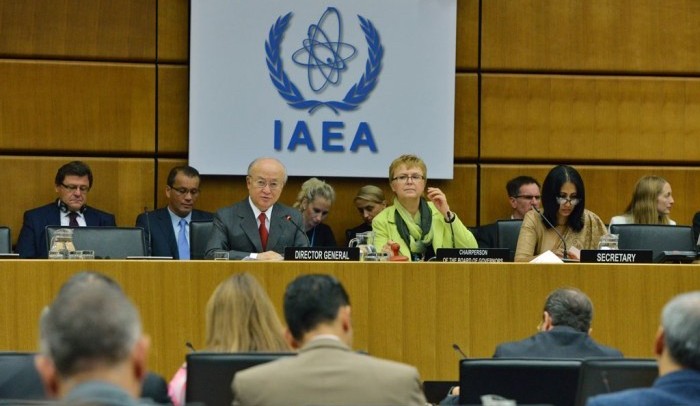
The question is an important one as the International Atomic Energy Agency board of governors meets today to vote on a final report that largely overlooks the Iranian regime’s past history of lying and deceit over its nuclear program and instead rubber stamp approval of closing the file on the regime’s case even though the mullahs have not complied with the original scope of questions the IAEA had about its program.


As Miller and Duelfer explain, the IAEA’s own report damns the mullahs with faint praise:


The IAEA report states that Iran provided only partial or incorrect answers to some questions about efforts to design and test components of a nuclear weapon design (as distinct from the process of enriching the component nuclear material). Specifically, it concludes, Iran’s cover up has “seriously undermined the agency’s ability to conduct effective verification” at Parchin, a military site where Iran is thought to have tested implosion devices in a now-missing chamber. Based partly on a visit there which did not conform to usual Agency inspection procedures, satellite imagery and sampling at the site conducted by Iran but supervised remotely by the IAEA, inspectors dispute Iran’s assertions that only chemical weapons were stored there. The evidence to date, the report declares, “does not support Iran’s statements.”


“Overlooking Iranian stonewalling about aspects of its earlier work,” Miller and Duelfergo on to write. “Only makes it harder to devise an effective monitoring scheme for Iran’s current nuclear program, but also establishes a terrible precedent for arms control accords with other states. Because Washington and its allies are permitting Iran to begin implementing the new deal and get sanctions lifted with a lie, Iran’s past cheating is destined to be prologue.”


The fact that – moving forward – the agreement with the regime is built on a lie only means the mullahs have been given the green light to continue the same behavior in the future. It is a fact already made apparent with Tehran’s recent test firings of two ballistic missiles that violated United Nations sanctions prohibiting the development of nuclear-capable missiles.


Add to that the rest of the world basically did nothing about it except use harsh language.

It is a crucial point that Michael Singh, managing director of the Washington Institute for Near East Policy, and Simond de Galbert, a French diplomat and visiting fellow at the Center for Strategic and International Studies, elaborate on in an editorial in the Wall Street Journal.


“Continuing to insist on a complete investigation into Iran’s nuclear weapons activities is the first test of international determination to strictly implement the nuclear deal. Failing this test would signal to Tehran that the West will allow it to dictate the terms under which the agreement is implemented in the coming years. It would also undermine the credibility of international non-proliferation mechanisms, encouraging other would-be nuclear powers that they can escape scrutiny. If these mechanisms are to succeed in deterring Iran and others in the future, their integrity must be zealously guarded,” they write.


James Phillips, senior research fellow for Middle Eastern affairs at the Douglas and Sarah Allison Center for Foreign Policy Studies at the Heritage Foundation, was even more blunt in a piece in the Daily Signal.


“In short, Tehran is actively undermining longstanding U.S. nonproliferation goals on two fronts. Yet the Obama administration has done little to push back for fear of jeopardizing its risky nuclear agreement, which it believes will enhance its foreign policy legacy,” Phillips writes. “But the administration’s complacent acquiescence to Tehran’s disturbing actions is likely to result in a dangerous and unwanted legacy: an arsenal of nuclear-tipped missiles in the hands of the world’s foremost state sponsor of terrorism.”


Even members of President Obama’s own party are expressing alarm at the free pass being given the Iranian regime.


“I understand that most of Congress and the administration are very distracted by the global refugee crisis, by the terrorist attacks in Paris, by our conflicts with ISIS,” said Sen. Chris Coons (D-Del.) “The reality is with this deal, I’m on the administration’s side, but they need to be doing more…. We have to have a menu of responses that we and our allies have agreed on and that we will take. Or the Iranians will pocket it and keep moving.”


“We know even from the IAEA reports that they were engaged in a program — they weren’t truthful about that,” said Rep. Jan Schakowsky adding that “we need to be on top of what Iran is doing and do everything we can to have full compliance”


It is against this potential future where the Iranian regime is not held accountable that holds the greatest threat to global security and peace. It is a future that is zealously protected by the Iran lobby which has ignored the Paris attacks, the San Bernardino murders and the rise of extremist Islam fueled by the mullahs in Tehran who preach far and wide their radical beliefs.


It is also why even as San Bernardino attack victim Bennetta Bet-Badal, an Iranian who fled at age 18 during the Islamic revolution, was laid to rest at her funeral in California, the Iran lobby such as the National Iranian American Council could not even issue a simple tweet commemorating her death or the acknowledge the suffering of her family.


So while TritaParsi or Reza Marashi cannot send their condolences, we do on behalf of everyone around the world who yearns for peace and stands up to the threat of Islamic extremism.


To the family of Bet-Badal, we send our sincerest condolences and hope you will see a day when the world is free of mullahs issuing fatwas and dispensing brutality in the name of a faith of peace and love.

By Michael Tomlinson

Filed Under: Blog, News Tagged With: #NuclearDeal, Appeasement policy, Featured, Iran deal, Nuclear Deal, Sanctions

Elections in U.S. and Iran Pose Question of What Next?

December 14, 2015 by admin

Elections in U.S. and Iran Pose Question of What Next?

Elections in U.S. and Iran Pose Question of What Next?

With the upcoming presidential elections in the U.S. and regional “elections” in Iran, the question of who will lead both countries remains a hot topic of discussion. From the perspective of looking at the actions of the Iranian regime since a nuclear deal was concluded by the Obama administration last July, it seems readily apparent that the mullahs in Tehran are eager to get on with the busy of antagonizing the U.S. and spreading their form of extremist Islamic beliefs around the world as quickly as possible.


The mullahs wasted little time in taking provocative acts that the Iran lobby has been hard pressed to explain or cover for. This includes the secret trial and sentencing of Washington Post reporter Jason Rezaian and continued holding of several Iranian-American hostages, as well as the recent arrest of another who had previously been linked to creating Iran lobby group, the National Iranian American Council.


The mullahs also went all in with a new offensive in Syria and buying spree with the Russians for military hardware to replenish badly outdated stocks and the marshalling of new fighters, Afghan mercenaries and Hezbollah proxies into that war zone.


The mullahs even launched not one, but two banned ballistic missiles in defiance of United Nations Security Council restrictions preventing the development of missiles capable of carrying a nuclear warhead.


Besides the direct actions the regime has taken, social media has been flooded by messages from various regime officials, most notably top mullah Ali Khamenei’s social feeds, denouncing the U.S. and accusing the Western nations of sedition, using “sexual attractions” to distract the regime and even creating ISIS. If it wasn’t for the fact Khamenei is the commander-in-chief of one of the largest militaries in the Middle East, we might be tempted to chalk his rants off to the ravings of a senile old man battling dementia.


Unfortunately, we’re stuck with Khamenei for a little while longer, but his recent prostate cancer surgery and upcoming elections in the Assembly of Experts has led to more open speculation of who will succeed the aging tyrant.


The assembly of 82 elected clerics is charged with electing, supervising and even disqualifying the religious leader for the regime and represents a high stakes game of poker amongst the mullahs as they jockey for power.


Reuters pointed out that over past decade, conservatives have gained more seats both in the assembly and parliament, because all candidates are vetted by the Guardian Council, who’s most influential members are chosen directly and indirectly by the Khamenei to interpret the constitution.


Khamenei is commander-in-chief of the armed forces and appoints the heads of the judiciary. Key ministers are selected with his agreement and he has the ultimate say on Iran’s foreign policy and nuclear program. By comparison, the president has little power, which largely explains why Hassan Rouhani is generally regarded as a figurehead puppet for Khamenei.


All of which raises the question of whether or not real regime change is possible within Iran. Long-time Iranian dissident leaders such as Mrs. Maryam Rajavi of the National Council of Resistance of Iran have maintained that global support of dissidents within Iran was a pathway to creating a new, more moderate, secular Iran, but if the rest of the world falls into the trap of trying to discern “moderate” versus “hardline” elements within the Iranian regime, real change will not be possible since the mullahs have worked hard to create the fiction that there are clear divisions within the government.


The fact of the matter is that as long as Iran’s foundation for government rests on a religious mandate granting mullahs absolute power over civil, political, economic, judicial and military matters, real change and reform is not possible.


You can already see this fictionalized treatment of Iran’s politics already at play with Gareth Smyth’s piece in the Guardian in which he depicts “broad support for President Hassan Rouhani’s government is not just over its foreign policy but also its desire to revive the economy and private sector. From this follows all the speculation in Tehran that principle-ists like Ali Larijani, the parliamentary speaker, and Ali Akbar Nategh-Nouri, a seasoned strategist, will help organise an electoral list for parliament broadly backing the president.”


Smyth’s observations which are the stereotype justifications for the appeasers of the mullah’s regime are understandable since he focuses only on those regime elements available to his eyes which are not so much factions within the regime government as much as muted shades of the same color. A policy that is actually very much favored by the Iranian regime, as it promotes more collaboration with the mullahs and prolongs its rule. Trying to persuade the concept that any slate of candidates would be allowed on the ballot without the express approval of Khamenei himself is slightly silly since Khamenei is as intent on preserving the extremist rule as his predecessor Ruhollah Khomeini was.


The tea-leaf reading of potential regime candidates such as Mohammad TaqiMesbah-Yazdi and Hassan Khomeini is fairly useless given the central control the mullahs will still exert through the selection process of placing names on the ballot.


What is not in dispute is that regime has taken a newly aggressive posture that the incoming U.S. president, whoever that may be, will have to deal with. It will be an Iran ruled by another mullah and enriched by billions in fresh cash, open trade pouring investment dollars in and a military upgraded with sophisticated new hardware.


He or she will also be faced with an Iranian regime that may very well be cheating on the nuclear deal it agreed to in July, which raises the next logical question: What will the new president do in the face of Iranian regime’s aggression?

By Michael Tomlinson

Filed Under: Blog, News Tagged With: Appeasement policy, Featured, Iran Election

Iran Regime Thumbs Nose at World with New Missile Launch

December 8, 2015 by admin

Iran Regime Thumbs Nose at World with New Missile Launch

Iran Regime Thumbs Nose at World with New Missile Launch

The old saying goes “The definition of insanity is doing the same thing over and over again and expecting a different outcome.”

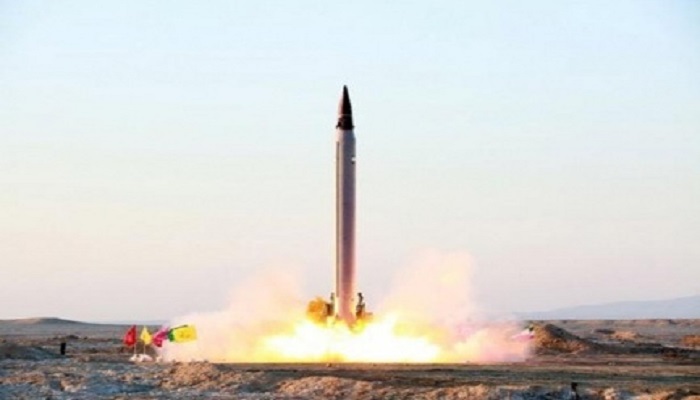
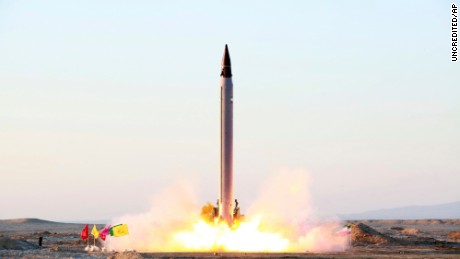
If the world expects the Iranian regime to change its ways in the wake of a completed nuclear deal last July, the answer it is getting from the mullahs in Tehran is depressingly the same as evidenced by yet another test launch of a new ballistic missile design in violation of United Nations sanctions against the testing of ballistic missiles capable of carrying a nuclear warhead.

According to Fox News, western intelligence sources say the test was held Nov. 21 near Chabahar, a port city in southeast Iran’s Sistan and Baluchestan Province near the border with Pakistan. The launch took place from a known missile test site along the Gulf of Oman.

The missile, known as a Ghadr-110, has a range of 1,800 – 2000 km, or 1200 miles, and is capable of carrying a nuclear warhead. The missile fired in November is an improved version of the Shahab 3, and is similar to the precision guided missile tested by the regime on Oct. 10, which elicited strong condemnation from members of the U.N. Security Council.

“The United States is deeply concerned about Iran’s recent ballistic missile launch,” Samantha Power, U.S. Ambassador to the U.N., said in a statement after the last Iranian ballistic missile test in October.

The regime appears to be in a race against the clock to improve the accuracy of its ballistic missile arsenal in the wake of the nuclear agreement signed in July.

The Security Council is still debating how to respond to the regime’s last test in October and therein lays the problem. While the world debates what to do in responding to the regime’s provocations, the regime continues on blissfully uninterrupted in its preparations.

The same scenario plays out in regards to the regime’s new offensive in Syria and its crackdown at home in an alarming rise in human rights abuses; all of which has been met by mostly silence and hand wringing in the rest of the world.

The regime’s new-found militancy has included a buying binge with Russia for new arms as a top aide to Russian president Vladimir Putin confirmed.

“When all the restrictions are removed and all the sanctions are lifted we will have quite a serious development in the field of military-industrial cooperation. It is already taking place in fields that are not covered by sanctions, and in future we are expecting to enter very large projects,” Vladimir Kozhin, a top military-industrial cooperation aide said in an interview with Izvestia daily.

The official added that Iran has shown great interest in cooperation with Russian weapons companies because practically all of its military forces require a major overhaul.

“Considering the fact that this is a large country with large military forces, we are talking very big contracts, worth billions,” Kozhin noted.

And now that the regime is due to receive a $100 billion payout as early as January because of the nuclear deal and a rushed incomplete investigation by the International Atomic Energy Agency that rubberstamped the regime’s compliance, the mullahs are due to get a huge payday.

The continued lack of action in the face of regime’s actions covers the large-scale such as military weapons to the small issues affecting individuals and their families as Washington Post reporter Jason Rezaian continues to languish in a regime prison on trumped up espionage charges; his incarceration now passing 500 days in captivity.

Even more disturbing is a report from cybersecurity firm Symantec which claims that regime hackers are using malware to spy on individuals including Iranian dissidents and activists.

The attacks aren’t particularly sophisticated, but the hackers have had access to their targets’ computers for more than a year, Symantec said, which means they may have gained access to “an enormous amount of sensitive information.”

Two groups of hackers, named Cadelle and Chafer, distributed malware that steals information from PCs and servers, including from airlines and telcos in the region, Symantec said.

“Reports have shown that many Iranians avail of these services to access sites that are blocked by the government’s Internet censorship,” Symantec wrote. “Dissidents, activists, and researchers in the region may use these proxies in an attempt to keep their online activities private.”

All of which means the regime is stepping up its efforts to identify specific and individual activists and dissidents, especially those living within Iran who may be communicating with outside dissident groups, as a means of tracking them down and arresting them.

It is a bitter irony that International Human Rights Day is approaching this week in light of this increased activity by the Iranian regime and highlights that no matter how the international community might buy the propaganda being spewed by regime lobbyists such as the National Iranian American Council; the reality has been much different.

If the attacks in Paris and San Bernardino do not wake up those who still refuse to believe that the rising tide of Islamic extremism is flowing from radical safe havens such as Syria and Iran is an imminent threat, then the Iranian regime’s actions in firing another missile in direct violation of sanctions should be an urgent alarm bell

By Michael Tomlinson

Filed Under: Blog, News Tagged With: Appeasement policy, Featured, Iran deal, Iran Human rights, Iran Lobby, Nuclear Iran, nuclear talks, Syria

Human Rights and Nuclear Issues Move to Forefront of Iran

November 21, 2015 by admin


Human Rights and Nuclear Issues Move to Forefront of Iran

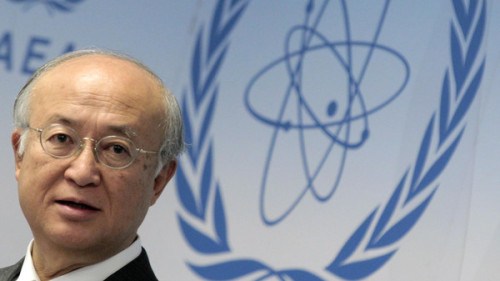
International Atomic Energy Agency (IAEA) Director General Yukiya Amano reacts as he attends a news conference during a board of governors meeting at the UN headquarters in Vienna November 29, 2012. The U.N. nuclear agency made no progress in a year-long push to find out if Iran worked on developing an atomic bomb, its chief said on Thursday, calling for urgent efforts to end Tehran’s standoff with the West. Amano said he would not give up seeking to end what Western diplomats describe as Iranian stonewalling of the agency’s investigation into possible military dimensions to the Islamic state’s nuclear programme. REUTERS/Herwig Prammer (AUSTRIA – Tags: POLITICS ENERGY HEADSHOT TPX IMAGES OF THE DAY) – RTR3B0LF

Like twin hammer blows, breaking news concerning the Iranian regime came out revealing that the two issues the Iran lobby have tried mightily to keep separate and growing more entwined; namely human rights and the nuclear agreement given to the regime last July.

The Iran lobby, led by the National Iranian American Council, rabidly argued that human rights issues – which the regime has an abysmal record on – needed to be decoupled from any nuclear agreement because it could jeopardize momentum for an accord and was outweighed by the perceived benefit of gaining an agreement with the regime.

The logic being, as advanced by regime stalwarts such as Trita Parsi, was that an agreement would empower “moderate” elements led by Hassan Rouhani and usher in a new period of cooperation with the West.

Unfortunately for Parsi, the opposite has come to happen. Reuters reported on a confidential International Atomic Energy Agency report it gained access to which describes that the regime’s stockpile of low-enriched uranium has actually increased instead of decreased under the terms of the agreement.

Iran’s stockpile of low-enriched uranium had increased by 460.2 kg in the past three months to 8,305.6 kg, the report said. Under the deal with major powers, that stockpile must be slashed to no more than 300 kg.

Additionally, the centrifuges being dismantled are only ones previously unused by the regime and those that have been dismantled are only being stored, not destroyed, allowing the regime the flexibility to quickly put them back into service whenever it wants.

That quick restart ability is being preserved also at the Arak nuclear reactor where a regime member of Parliament said it could be reactivated within as little as six months unless all sanctions against the regime were lifted quickly.

“If the Americans break the terms of the Joint Comprehensive Plan of Action (JCPOA) regarding lifting the sanctions, Iran will activate the Arak reactor within six months,” ISNA news agency quoted head of National Security and Foreign Policy Commission, Alaeddin Boroujerdi, as saying.

The threats have only increased as top mullah Ali Khamenei has voiced displeasure over the slow pace of lifting sanctions repeatedly warned the regime would restart its nuclear program unless all sanctions were lifted at once. This is of course at odds with what was actually agreed to last July under the Joint Comprehensive Plan of Action (JCPOA), but it fits with the regime’s pattern of rewriting international accords even before the ink dries to suit its needs.

This pattern of purposeful evasion by the regime also applies to its callous treatment of human rights of its own people, including religious minorities such as those who follow the Baha’i faith who recently have been subjected to mass arrests, Iranian women who have been threatened with arrest for driving cars without proper coverings, and even social media administrators getting rounded up.

But the world is beginning to take notice and coming on the heels of the Friday the 13th massacres in Paris, showing a greater willingness to confront extremist views prevalent in the Iran regime and terror networks such as ISIS, as evidenced by a vote by the United Nations General Assembly’s human rights committee which approved a resolution expressing deep concern about rights violations in Iran by a 76 to 35 vote.

The resolution is the 62nd resolution the UN has adopted censuring the regime for its ongoing human rights violations. This resolution stemmed from the recent report issued by Ahmad Shaheed, the UN Special Rapporteur for human rights in Iran.

It calls on the Iranian regime “to abolish, in law and in practice, public executions… and executions carried out in violation of its international obligations” and “to ensure, in law and in practice, that no one is subjected to torture or other cruel, inhuman or degrading treatment or punishment.”

The victims of such treatment include political opponents, human rights defenders, women’s and minority rights activists, labor leaders, students’ rights activists and others, the resolution said.

The regime’s notorious Revolutionary Guards Corps has rounded up artists, journalists and U.S. citizens as part of a crackdown on what it has called Western infiltration.

The crackdown includes announcements this week of 170 people arrested in Qazvin Province in Iran, a number of others in Gilan Province, and five journalists in Tehran, all by Iran’s Revolutionary Guards, amounts to the largest crackdown since the violent state suppression of the protests that followed the disputed 2009 presidential election in Iran.

The 170 arrested were called “managers of groups active in mobile social networks,” which the regime claimed for acting “against moral security” and distributing “indecent and immoral” content in the form of text and images that “encouraged people to commit obscene acts” and “insult ethnic minorities, officials and distinguished national figures,” according to the Fars news service.

Even with the increased criticism over human rights, the mullahs in Tehran may believe they have an ace up their sleeve with the Paris attacks which they believe may aid the regime in keeping Assad in power and shifting attention away from its involvement in the civil war.

The Guardian in an interview with a MacArthur fellow at King’s College London, said:“I think Iran might think that the Paris attacks give it an upper hand over Syria because naturally it gives a little bit more credibility to the rhetoric that combating Isis is more important than combating Assad.

“Iran will think that its position will be strengthened as the result of the attack but I am not sure it necessarily will. The only thing that the Paris attacks will really change is rhetoric in the west but I’m not sure if it changes much on the ground. France is going to say that the focus is going to be on attacking Isis. To be fair, that’s always been the focus but that hasn’t detracted away [from] trying to get rid of Assad,” she said.

Ultimately, the West must focus on tying the Iranian regime’s human rights record back into judging its progress towards dismantling its nuclear infrastructure as well as its support for terrorism abroad. Without that linkage, the regime is as well shielded against any meaningful reforms as ISIS is from attack if it was using human shields.

By Michael Tomlinson

Filed Under: Blog, News Tagged With: #NuclearDeal, Appeasement policy, Featured, Iran deal, Iran Human rights, Iran sanctions, NIAC, Parchin, Trita Parsi

Iran Lobby Ramps Up Efforts to Influence US Presidential Campaign

November 19, 2015 by admin

Iran Lobby Ramps Up Efforts to Influence US Presidential Campaign

Iran Lobby Ramps Up Efforts to Influence US Presidential Campaign

The silly season is upon us and we don’t mean the College Football Playoff selection process. We mean the quadrennial presidential election season and with it, what promises to be a year filled with debates, poll results, gaffes, blizzard of television advertising and a healthy barrage of social media postings.

But the stakes for this election cycle are enormous and carry with it a sense of gravity we have not seen since during the height of the Cold War when Lyndon B. Johnson famously aired the “Daisy” ad against Barry Goldwater hinting that electing the Arizona conservative would start World War III.

Even though the ad only aired once, it has become one of the most controversial political ads ever aired used in American politics, but it did show what some political candidates are willing to entertain in terms of tackling controversial topics and issues.

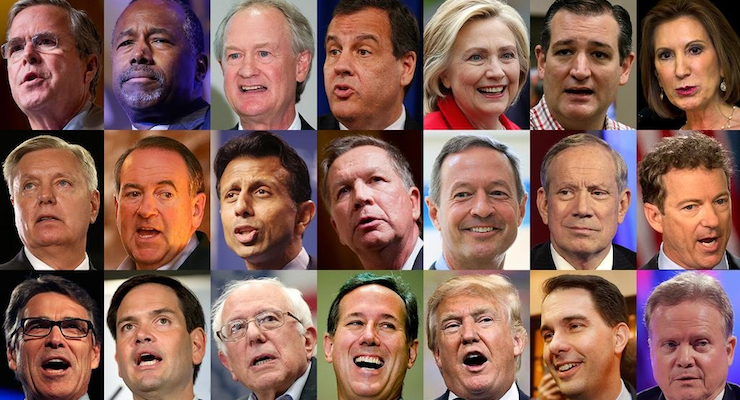
Every campaign season has its own rhythms and rollercoaster swings in emotions and momentum. This season has been no different starting with a Republican field of candidates that has been dominated by two total outsiders in Donald Trump and Ben Carson, while the Democratic side was stuck in relative limbo while Vice President Joe Biden was deciding if he was in or out of the race and Hillary Clinton waded through her email controversy as Sen. Bernie Sanders rallied huge numbers of supporters.

But with the recent nuclear deal with the Iranian regime and the bloody Friday the 13th massacre in Paris, terrorism and what to do with Syria has moved front and center in the consciousness of American voters.

According to a new Reuters/lpsos poll done after the Paris attacks, showed that terrorism had moved to the front of all topics of concern to voters (20.5%), ahead of the economy (15.9%) and healthcare (8.8%) and unemployment (8.6%).

The five-day tracking showed concern over terror effectively doubled over the weekend of the Paris attacks and shows only signs of increasing as France battles additional terror cells in its suburbs while French warplanes bomb targets in Syria.

“What is almost certain is that the demands on the candidates will grow more exacting. As previous presidential campaigns jarred by outside events have demonstrated, how a candidate responds can be as important to a campaign as the event itself,” speculated Jonathan Martin in the New York Times.

What is certain has been the tepid response from the Iran lobby which has gone virtually mute and deaf over the Paris attacks. Iranian regime loyalists such as Trita Parsi and Reza Marashi of the National Iranian American Council, Jim Lobe of Lobelog, The Ploughshares Fund, just to name a few, have offered little in the way of sympathy over the victims, nor condemnation of the terrorists themselves.

If anything, their social media feeds and public statements have been largely focused on centering blame for the attacks and creation of ISIS on the doorstep of Saudi Arabia as the primary regional rival to the mullahs in Tehran.

It’s a curious stand to make since clearly sectarian violence is at the heart of most of what ails the Middle East both historically and moving forward. In fact, Iran’s all-in support for Assad in Syria help spawn ISIS in the first place as Al-Qaeda fighters pushed out of Afghanistan and Iraq by the U.S. surge flocked to Syria and splintered off to form their own groups, eventually coalescing into the ISIS we know today.

The fact that the Iranian regime has also served as a terror blueprint of sorts through its longtime sponsorship of Hezbollah in Lebanon and Shiite militias in Iraq has given ISIS a roadmap for exploiting the shock value of its attacks and dominate the news cycle; gives it the dubious honor of being a “godfather” to ISIS.

This in turn has placed a burden on the Iranian lobby to step up to the proverbial plate to try and influence the presidential elections since a new president – especially if it’s a Republican – will feel no obligation to stay the course President Obama has set with the nuclear deal with Iranian regime and the hands-off policy he has largely taken in Syria and Iraq.

To that end, NIAC Action, the official lobbying arm of NIAC, launched a petition drive directed at all presidential candidates to refrain from using rhetoric that would be deemed “hostile” at the Iranian regime.

The letter it is circulating reads in part:

“That is why we urge you and everyone running for the White House to retire the hostile rhetoric of the past. This hostile rhetoric often makes no distinction between the Iranian government and the Iranian people. It empowers hardliners, undermines those working to resolve challenges, and promotes conflict.

“Instead, we urge you to articulate how you will seize the opportunity created by the diplomatic breakthrough with Iran to build a more peaceful future.”

To say it is a shameful misdirection of the truth would be generous, because the mullahs in Iran have been very open and specific since the nuclear agreement was secured last July in venting their vitriol about the U.S., let alone keeping up the ritual “Death to America” chants at Friday prayers.

As we move deeper into the election cycle, we can be assured of increased action by the Iran lobby as it seeks to keep a lid on American voters’ concerns over terrorism and it combats any damaging news coming out of the Middle East such as more terror attacks or the Iranian regime’s complicity in some new human rights atrocity.

But from the early signs, it seems that Republican candidates have firmly chosen to not swallow the Kool-Aid on a “moderate” Iran and the Democrats will hedge their bets and set terms for Iran that only aid in ensuring a more stable and cooperative Middle East – both goals that the mullahs are opposed to.

By Laura Carnahan

Filed Under: Blog, News Tagged With: #NuclearDeal, Appeasement policy, Featured, Iran deal, Iran Lobby, National Iranian American Council, NIAC, NIAC Action, Reza Marashi, Trita Parsi

As Rouhani Goes on European Shopping Trip Dissidents Raise Voices

November 13, 2015 by admin


As Rouhani Goes on European Shopping Trip Dissidents Raise Voices

As Rouhani Goes on European Shopping Trip Dissidents Raise Voices

This week regime’s assigned president, Hassan Rouhani will become the first leader of the mullah’s regime to travel to Europe in a decade as part of effort to establish trade and foreign investment pacts in the wake of the nuclear agreement completed last July.

To say the tour begins on a rocky footing is an understatement. In France, a diplomatic row over French wine erupted when Rouhani snubbed the French with a demand for no alcohol at an official state dinner. Telling the French they can’t serve wine in their own palace is like telling a French chef he cannot use truffles.

A counterproposal by French officials for a breakfast was snubbed by Rouhani’s delegation as being a “cheap” offering by the French. Rouhani and French President Francois Hollande will instead just have a simple meet and greet moment for the cameras.

All of which underscores an important point for the regime: everything will always be on Iran’s terms.

While Hollande’s advisors have called the situation “ridiculous,” it is anything but ridiculous for Rouhani who has been busy trying to keep up the charade that he is a champion of opening Iran to the West, while at the same time towing the party line from top mullah Ali Khamenei on the brutal crackdown happening at home as scores of journalists are harassed and arrested.

Rouhani’s European trip has a more practical and important aspect for the regime. Rouhani hopes to pursue deals in car manufacturing, agriculture and most importantly Airbus aircraft to upgrade its aging fleet of airliners.

But his trip will be met with that is expected to be a week-long series protests from human rights and dissident groups aimed at raising the issue of the regime’s harsh human rights records; especially the dramatic rise in executions being carried out in Iran.

A large march and rally is planned for November 16th in Paris with other actions planned during the week to include:

  • Declarations by human rights organizations, including sponsors of this week’s protests, on the deteriorating human rights situation in Iran under Rouhani and the need for immediate action;
  • Delivery of a letter by 100 French MPs from different parties to the French president insisting that relations with the regime in Tehran must be contingent upon a moratorium on executions and improvement of the human rights situation in Iran;
  • Release of a statement by French political, social and intellectual figures condemning the deterioration of the human rights situation in Iran and the regime’s export of fundamentalism and terrorism;
  • Street exhibitions and displays in central Paris explaining the human rights situation in Iran.

In a reminder of just how much the Iran regime expects the rest of the world to dance to its tune, Rouhani said in an interview with the Italian newspaper, Corriere della Sera, that the U.S. and Iran could normalize relations but that the U.S. should “apologize” first without going into further detail as to what kind of apology the regime was demanding.

It’s an odd demand to make considering that the regime currently holds several Americans hostage and in a report just released this week, was identified as the source of manufacturing bombs that killed hundreds of U.S. service personnel in Iraq through its Quds Forces.

But nothing this outrageous would be unexpected from a regime that has been growing more aggressive towards the world since the nuclear deal was completed.

The discontent in the U.S. has grown substantially as the Iran regime acts so belligerently. The New York Observer ran an editorial warning of the regime’s actions, saying:
“Since President Obama pushed through his Iran nuclear deal without a congressional vote, the folks in Tehran have responded in some mighty unusual ways.

“First, they’ve jailed five visiting Americans—and are holding them hostage. Then they launched a massive cyberattack against the U.S. State Department, Aramco and several American banks. Plus, they are cracking down on Iranians who advocate better ties with the United States, even shutting down businesses that have American connections—including a KFC knock-off in Tehran. But most significantly, the Ayatollahs are threatening to renege on the nuclear deal if we push too hard to get our citizens back.

“We hope this gives pause to President Obama and the deal’s supporters in Congress. If this is how Iran acts before we have released the $100 billion-plus in frozen funds, how might they behave when we have no more Iranian funds to use as leverage?”

As Rouhani tours Europe, we can only hope Pope Francis raises the issue of executions, the Italian prime minister stresses the importance of human rights and the French president discusses the need for an end to executions in Iran and releasing all political prisoners in Iran’s prisons.

By Michael Tomlinson


Filed Under: Blog, News Tagged With: #NuclearDeal, Appeasement policy, Featured, Iran deal, Iran Lobby

  • « Previous Page
  • 1
  • …
  • 8
  • 9
  • 10
  • 11
  • 12
  • 13
  • Next Page »

National Iranian-American Council (NIAC)

  • Bogus Memberships
  • Survey
  • Lobbying
  • Iranians for International Cooperation
  • Defamation Lawsuit
  • People’s Mojahedin
  • Trita Parsi Biography
  • Parsi/Namazi Lobbying Plan
  • Parsi Links to Namazi & Iranian Regime
  • Namazi, NIAC Ringleader
  • Collaborating with Iran’s Ambassador

Recent Posts

  • NIAC Trying to Gain Influence On U.S. Congress
  • While Iran Lobby Plays Blame Game Iran Goes Nuclear
  • Iran Lobby Jumps on Detention of Iranian Newscaster
  • Bad News for Iran Swamps Iran Lobby
  • Iran Starts Off Year by Banning Instagram

© Copyright 2026 IranLobby.net · All Rights Reserved.