Iran Lobby

Exposing the Activities of the lobbies and appeasers of the Mullah's Dictatorship ruling Iran

  • Home
  • About
  • Current Trend
  • National Iranian-American Council(NIAC)
    • Bogus Memberships
    • Survey
    • Lobbying
    • Iranians for International Cooperation
    • Defamation Lawsuit
    • People’s Mojahedin
    • Trita Parsi Biography
    • Parsi/Namazi Lobbying Plan
    • Parsi Links to Namazi& Iranian Regime
    • Namazi, NIAC Ringleader
    • Collaborating with Iran’s Ambassador
  • The Appeasers
    • Gary Sick
    • Flynt Leverett & Hillary Mann Leverett
    • Baroness Nicholson
  • Blog
  • Links
  • Media Reports

Iran Regime Breaks Nuclear Agreement Already

November 11, 2015 by admin

Iran Regime Breaks Nuclear Agreement Already

Iran Regime Breaks Nuclear Agreement Already

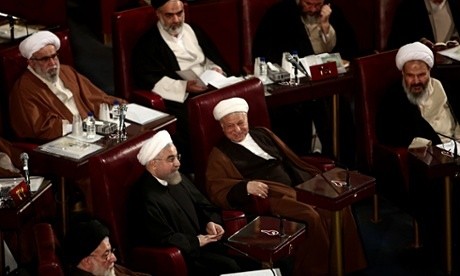
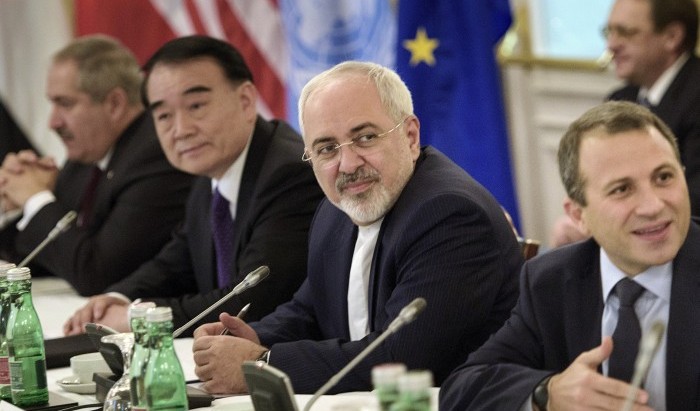
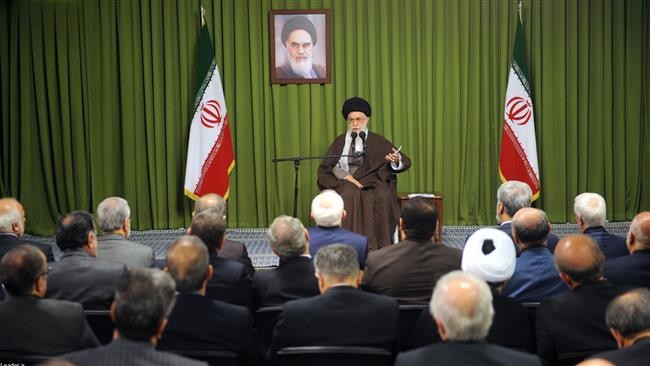
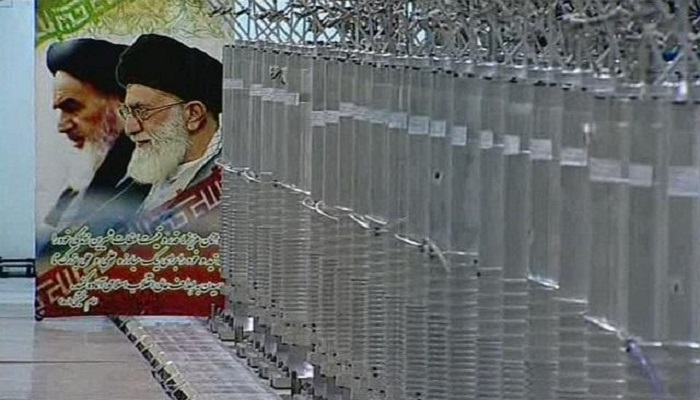
The 159 pages in the nuclear agreement with the Iran regime is by the standards of most international agreements, pretty flimsy, but even its meager few pages specify clearly the expectations the rest of the world has for the regime’s centrifuges used to enrich uranium: dismantling them.

Reuters reported that the regime has halted work in dismantling centrifuges at the Natanz and Fordow nuclear enrichment plants. The nuclear agreement struck last July specified that initial dismantling work would begin on some 10,000 decommissioned centrifuges at the two facilities.

The halt in work was announced by Ali Shamkhani, secretary of the National Security Council for the regime, who was quoted as saying by the ISNA student news agency that “the (dismantling) process stopped with a warning.”

He did not specify what the warning was or who issued it, but the head of the regime parliament’s nuclear deal commission, Alireza Zakani, told Mehr news agency that the dismantling had stopped in Fordow because of a letter to Hassan Rouhani from a group of lawmakers complaining that the dismantling process was moving too swiftly and contradicted directives from top mullah Ali Khamenei.

Khamenei has publicly stated his opposition to several terms within the treaty, including refusal to allow regime military facilities to be inspected and the need for all Western sanctions to be lifted at once before the regime would comply fully with the agreement.

Khamenei has also said the deal should only be implemented once allegations of past military dimensions of the regime’s nuclear program had been settled.

The International Atomic Energy Agency is expected to announce its conclusions on PMD by Dec. 15, according to Reuters.

The 10,000 older, decommissioned centrifuges are only half of what the regime has available to it to enrich low-grade uranium into highly enriched weapons-grade fuel. The nuclear agreement only allows for the regime to actively use a few thousand centrifuges for medical and scientific research purposes.

As Rick Moran in American Thinker notes, “there’s very little difference between the so-called ‘hardliners’ and those the Western press has designated as ‘moderates.’ And Rouhani may try to use the hardliners as an excuse to not fully implement the deal.  Supreme Leader Khamenei has already redefined key elements of the deal to favor Iran’s nuclear program, which Rouhani will probably cite when he violates the terms of the agreement as we go along.”

It is clear now that the regime has no intention of complying with the nuclear agreement and in fact is doing everything it can to push the West with aggressive moves designed to take advantage of the Obama administration’s lame duck political status and lack of desire to force a confrontation on the eve of U.S. presidential elections.

This is why the mullahs in Tehran have doubled down on wiping out opposition to Assad in Syria with a new offensive alongside Russia, test fired a new ballistic missile that violates United Nations Security Council restrictions, attacked and killed Iranian resistance members in Iraq, smuggled new arms to Houthi rebels in Yemen, completed the sale of advanced anti-aircraft missiles from Russia, and cracked down at home by arresting and jailing dissidents and inflaming ethnic tensions with the Azeri minority group in northern Iran.

All of this has been done because the mullahs have already decided to break from the nuclear agreement and see the opportunity for significant gains in the absence of any real threat of retaliation from the U.S. and the rest of the world.

As the Iran lobby, led by the National Iranian American Council, put so eloquently during the debate over the nuclear agreement, the choice for Americans was between “war” and “peace.”

In fact, they were correct, but only in reverse. Approving the pact has surely put the world on a more dangerous path towards greater conflict, while rejecting it may very well have stopped Iranian aggression and brought about stability in the region.

By Michael Tomlinson
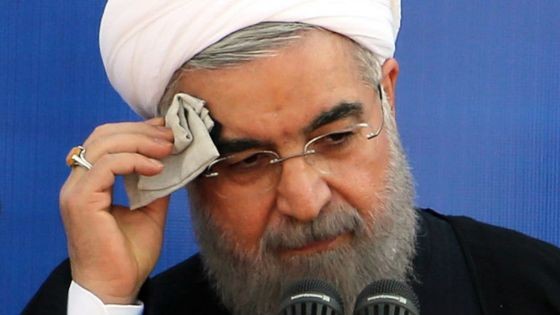
Filed Under: News Tagged With: #NuclearDeal, Appeasement policy, Featured, hassan rouhani, Iran, Iran deal, Iran Human rights, Iran Lobby, Iran sanctions, National Iranian American Council, NIAC, NIAC Action, nuclear talks, Parchin

Myth of Hardliners vs. Moderates in the Iran Regime

November 9, 2015 by admin

Myth of Hardliners vs. Moderates in the Iran Regime

Myth of Hardliners vs. Moderates in the Iran Regime

One of the cornerstones of the arguments made by the Iran lobby in favor of the nuclear agreement with the Iran regime was that its passage would empower “moderate” coalitions within Iran to push against “hardliners” in opening up the regime to the outside world.

It was a nice fairy tale, but like most children’s stories, it’s not based in facts or the real world. Regime advocates such as Trita Parsi and Reza Marashi of the National Iranian American Council and Joseph Cirincione of the Ploughshares Fund yelled from the rooftops that the nuclear deal would serve as the bridge towards a more open and inclusive relationship between the regime and the rest of the world.

But the reality has been very different and well documented as the mullahs in Tehran doubled down on a policy of aggressive militarism in Syria and Yemen, while also launching a new brutal crackdown at home with scores of new arrests and executions that have been widely condemned by human rights and dissident groups.

But for Iran, the mythology of the “moderate” factions within a fractured government is just too good to let go, so the regime continues to push the story of a “battle” within the regime as personified by Hassan Rouhani leading the charge for moderation and inclusiveness vs. Ali Khamenei and the hardline elements in the military and judiciary.

Many Western news media are lulled into the same storyline by giving it plenty of play such events over the weekend in which Rouhani gave a broadcast speech in which he criticized “hardline media” hinting that some outlets are connected to security forces responsible for a wave of recent arrests in the country aimed at crippling Western influence, according to the New York Times.

The Times dutifully reported that Rouhani had spoken out against the wave of arrests and leveled a veiled criticism at the regime’s 12-member Guardian Council at the potential exclusion of candidates in the upcoming elections.

First of all, the mere fact that Rouhani could be criticizing the Guardian Council for restricting candidates is particularly ironic since it was the Council that cleared the pathway for Rouhani to become president by eliminating hundreds of potential candidates.

Also, the reporting of this so-called rift reveals the knowledge and cultural gap Western news media have about the workings of the regime government. The authority vested in Khamenei is near absolute, as is his control over the military, judiciary and economy. Rouhani’s portfolio by comparison is Spartan at best and serves largely to fulfill the policies and goals of the religious cadre of mullahs that run Iran.

Khamenei, and by extension the mullahs, were interested in a nuclear deal solely to relieve the regime of crippling economic sanctions that were threatening their grip on power by inciting an increasingly restive Iranian people to protests against the impoverished lives they were living.

The object for Khamenei was to secure release of billions of dollars in frozen assets and be given a free pass by the West to pursue his goals without fear of retaliation of threatened new sanctions. To that end, Khamenei achieved his goals which is why he has embarked on his latest plans to secure his domestic base by cracking down on dissidents and the media; even going so far as to arrest another American, Siamak Namazi who is closely tied to Rouhani, and launch a deadly attack on Camp Liberty in Iraq which houses members of the Iranian resistance.

Given the regime’s past history of dealing with internal dissent, including the ouster of officials who speak out against Khamenei or imprisonment of dissenters, one wonders why Rouhani would risk censure or even expulsion by Khamenei for his perceived bold statements supporting a free press and opposing Khamenei.

Simply put: Because it’s just a show. Rouhani always has been and remains a loyal foot solider for the regime and was hand selected by Khamenei for his post. His value to Khamenei comes from being perceived by the West as a “moderate” face. This allows Khamenei the luxury of running the oldest scam anyone watching a police procedural like “Law and Order” would recognize.

Rouhani is the good cop to Khamenei’s bad cop.

Together they have manipulated the West into believing the idea of a schism within Iran to the extent the West needs to do more to help empower Rouhani against the “hardliners.” In essence, the nuclear negotiations are not over for Iran; they never stopped. For Khamenei and Rouhani, the nuclear agreement is still being negotiated and the West needs to deliver in order to gain the regime’s continued “compliance.”

This was evident in the inspection of the Parchin military site by the International Atomic Energy Agency after it had been scrubbed and sanitized. It was also shown by the invitation from the U.S. to include Iran in international talks on Syria even after Iran mullahs mounted a large-scale offensive there alongside Russia.

Sadly Western governments seem to be playing the game the mullah Rouhani and Khamenei want them to, pretending that there are “moderates” within a regime that has plus 2000 executions on his record just during the recent two years.

By Michael Tomlinson


Filed Under: Blog, News Tagged With: #NuclearDeal, Appeasement policy, Featured, Iran, National Iranian American Council, NIAC, NIAC Action, nuclear talks, Parchin, Reza Marashi, Sanctions, Trita Parsi

The Trade Off of Human Rights with Iran Regime

November 4, 2015 by admin

fed22222-8dbe-49e4-81eb-20be645b4830-460x276Even though the Iran regime has consistently disregarded basic human rights since the revolution in 1979, the world has evolved its approach to this blatant brutality from stern opposition to debased appeasement.

The human rights situation in Iran has gotten progressively worse to a point where the United Nations appointed a Special Rapporteur for Human Rights just for Iran. Dr. Ahmed Shaheed, the special rapporteur, released another in a series of critical reports documenting human rights abuses within the regime.

Entitled “The Situation of Human Rights in the Islamic Republic of Iran,” the report reveals that Iranians are worse off under the allegedly “moderate” reign of Hassan Rouhani than under the despised Mahmoud Ahmadinejad.

While the regime is on pace to execute an astounding 1,000 people this year, the report discusses other brutal acts such as “more than 480 persons flogged during the first 15 days of Ramadan for not fasting.” Also, two people convicted of theft had their limbs amputated mere weeks before the concluded nuclear deal. This is while money laundering and embezzlements by high rank mullahs and officials of the regime, worth of billions of dollars continue unabated.

A man identified as “Hamid S.” reportedly had his left eye and right ear surgically removed in January of this year after being found guilty of attacking another man with acid in 2005, which caused the victim to lose the same body parts. Another man was also forcibly blinded in March of this year in a process known as qisas, or “retribution-in-kind,” for throwing acid on another man in 2009, according to Breitbart News.

While these human rights violations continue relentlessly and have actually increased in severity and frequency after passage of the nuclear agreement, the Obama administration has oddly continued to make qualitative distinctions in picking and choosing options in dealing with a militant Iran regime.

Those distinctions were on display when Rick Stengel, the U.S. undersecretary of state for diplomacy and public affairs, appeared on MSNBC’s “Morning Joe” program to promote “The International Day to End Impunity for Crimes Against Journalists.”

Under questioning by hosts Joe Scarborough and Mike Brezinski, Stengel struggled to answer why the U.S. had not been able to secure the release of Washington Post reporter Jason Rezaian and other American hostages.

He spent some of the interview explaining why Rezaian’s plight was less important than the overall nuclear issue, according to Business Insider.

He ended up implying that crimes against even American journalists are, at best, a midlevel priority for US foreign policy — an especially awkward tactic, considering the point of his appearance was to discuss US efforts to end impunity for crimes against journalists.

“Stengel perhaps didn’t intend to do this, but he bluntly illustrated the trade-offs in the US’s Iran policy. If you’re going to prioritize arms control above everything else, then it stands to reason that press freedom — and even the freedom and protection of US citizens — is secondary to other, supposedly higher concerns,” writes Armin Rosen in the Business Insider piece.

“Taken one way, Stengel is giving opponents of the US a recipe for getting a relatively free pass on both human rights and the harassment of American citizens. But he’s also admitting that there are unsavory trade-offs at the heart of the Obama administration’s biggest foreign-policy accomplishment,” he concludes.

Rosen is correct and points out why American policy towards the Iran regime is flawed from the start, because it does not recognize the monolithic nature of regime policy as formulated and pursued by the mullahs in Tehran.

As a religious theocracy, Iranian regime is uniformly and unconditionally devoted to its first and primary goal; preserving the Velayat-e-Faqih rule (supremacy of regime’s Supreme Leader on all aspects of the Iranian people’s lives) and the state it spawned.

Efforts to appease Tehran such as the nuclear deal, inviting Iran to talks on Syria, rescinding calls to remove Assad from power, and failing to tie human rights to agreements, all feed into the regime belief that it does not have to do anything to accommodate the West in order to achieve its goals.

This has been shown in yet another way when the International Atomic Energy Agency claimed that the regime had begun the process of shutting down its nuclear centrifuges as part of the nuclear agreement, only to have the spokesman for the Atomic Energy Organization of Iran contradict those claims.

“AEOI’s goal in nuclear negotiations was to minimize the limitations so that they would not deprive the country from nuclear technology, said Behrooz Kamalvandi as quoted in regime-run media. “He pointed out that Iran also wanted its enrichment program to be recognized and the sanctions to be terminated at the same time.”

The regime also showed its disregard for international concerns as it arrested a Lebanese-born tech executive with ties to U.S. businesses. The announcement was the first word from Iran on Nizar Ahmad Zakka, whose colleagues said he did not board a scheduled flight from Tehran on Sept. 18 after attending a conference. Zakka’s organization is an information and communications technology group that has offices in Lebanon, Iraq and Washington.

The arrest follows the arrest of Siamak Namazi, a regime supporter with close ties to the Iran lobby through the National Iranian American Council and its head, Trita Parsi.

On top of which also comes word that an Iranian actress was forced to flee after being criticized for publishing pictures on social media showing her without traditional Muslim head coverings, or hijab.

Her situation is even more striking given the recent leadership conference for the NIAC, which devoted a large section to a discussion on the arts in Iran and why there should be optimism about them.

Paradoxically, while artists, actors and journalists are forced to flee Iran, NIAC notes its belief that economic sanctions have hurt the arts in Iran and never mentions the crackdown on the Iranian creative community by the regime.

We can only hope for a day when Iran’s religious government is changed to a democratic, secular one that respects the rights of women and journalists.

By Michael Tomlinson

Filed Under: Blog, News Tagged With: Appeasement policy, Featured, Iran, Jason Rezaian, National Iranian American Council, NIAC, Rouhani, Trita Parsi

Iran Regime Picks and Chooses What It Wants

November 3, 2015 by admin

Iran Regime Picks and Chooses What It Wants

Iran Regime Picks and Chooses What It Wants

There are many aspects to the collective decision-making of the mullahs in Tehran. On the one hand, they support opening up negotiations on a nuclear deal to help unlock the bank vaults to billions in frozen assets. Then on the other hand, they denounce the terms of the deal and claim it doesn’t apply to them unless all sanctions are lifted at once.

The same double standard applies to what is happening in Syria. The Iran regime has fought endlessly to keep Assad in power there to the extent it even begged the Russians for military support to save him from being overthrown as rebels made serious inroads. The mullahs sought to legitimize the idea of Assad staying in power and seemed to reach a breakthrough by finally being invited to multilateral talks on finding a political solution to the crisis.

But now the regime has threatened to walk away from talks if it found them unconstructive, specifically citing Saudi Arabia’s role in the talks as the bitter rivals escalate their growing conflicts that now stretch from Yemen to Syria.

“In the first round of talks, some countries, especially Saudi Arabia, played a negative and unconstructive role … Iran will not participate if the talks are not fruitful,” regime media cited deputy Foreign Minister Hossein Amir Abdollahian as saying.

Delivering unusually personal criticism, regime president Hassan Rouhani appeared to reprimand Saudi Foreign Minister Adel al-Jubeir, who, on Saturday, lashed out at Tehran for what he termed its interference in regional countries.

“An inexperienced young man in a regional country will not reach anywhere by rudeness in front of elders,” Rouhani was quoted as saying by state news agency IRNA on Monday. He did not name the ‘young man’ but Jubeir was assumed to be his target according to Reuters.

It’s this kind of “I’ll take my ball and play elsewhere” response that has come to typify Iranian regime’s reactions in foreign affairs now. It pushed for a nuclear agreement and then complained about it and threatened to walk away. It pushed for a role for Assad and a seat at the table and now that it has it, it threatens to walk away.

While some psychologists might label this bipolar behavior, long-time regime watchers within the Iranian dissident community have long warned this was how the mullahs do business by pushing a false façade and then changing the rules at the last minute.

It was behavior that typified nearly two years of nuclear talks in which Iran refused to commit to the fine print in order to avoid being boxed in; resulting in a 159-page agreement that is dwarfed by the thousands of pages in similar nuclear agreements with the old Soviet Union and North Korea.

That split behavior has been most explicit in Ali Khamenei, the regime’s top mullah, who has persistently and publicly undercut Rouhani following the nuclear agreement in order to demonstrate his firm control over regime matters and relegate Rouhani to the figurehead status many have claimed he remains.

According to Dr. Majid Rafizadeh, head of the International American Council, writing in Huffington Post, Khamenei has ruled out any “snap-back” option with regards to the sanctions.

“First, he wants sanctions to be lifted at the outset, then he wants to make sure that the international community will not have any mechanism through which it can re-impose sanctions in the very likely scenario that Iran decides to pull out of the nuclear agreement and go full speed ahead on uranium enrichment,” he writes.

“But wait, that’s not all, there is another condition to be met as well. After Khamenei had his president and nuclear team add the condition of the removal of an arms embargo to the nuclear agreement in the eleventh hour, he is now adding the removal of all sanctions (including the ones linked to Iran’s terrorism and human rights violations) to the already-done nuclear deal,” he added.

Another sign of the growing tightening of control by Khamenei was discussed by Gerald F. Seib in the Wall Street Journal.

“Iran also has arrested Nizar Zakka, a Lebanese information-technology specialist who lives in Washington and has permanent-resident status in the U.S. At the same time, Iranian businessmen with ties to foreign firms are being harassed by Iran’s state-security apparatus,” Seib writes. “These detentions are likely the work of Iran’s Revolutionary Guards, who function as a kind of parallel government operating alongside—and apparently beyond the influence of—the official government of President Hassan Rouhani and Foreign Minister Javad Zarif, with whom the U.S. and other world powers negotiated the nuclear deal.”

The broad range of actions by the regime over the last few months leaves very little doubt about the intentions of the mullahs and Khamenei in particular.

He is not interested in accommodation. He has no time for negotiations. He has no belief in moderation.

The regime has even stepped up arrests domestically, including two journalists, one a former deputy culture minister who was jailed in the 2009 crackdown that followed the disputed reelection of then-President Mahmoud Ahmadinejad.

The son of ex-official Issa Saharkhiz told news media his father was arrested this week at his residence in Tehran on charges that include “insulting the supreme leader” and “propaganda against the regime.” The arrests are likely to have a chilling effect on journalists and activists ahead of major elections early next year in Iran.

Meanwhile, a relative of Ehsan Mazandarani, editor in chief of the Iranian regime’s daily Farhikhtegan, said that Mazandarani was detained the same day, also in the capital by agents of the Revolutionary Guards Corps.

Even as these crackdowns increase – and in spite of criticism from human rights and dissident groups – in a vote held Monday, regime lawmakers opted overwhelmingly to continue pushing the “Death to America” slogan chanted across the country on Fridays, after regime ally’s Friday prayer services, and with special zeal every November 4th – the day Iranian mullahs commemorates the beginning of the 1977 siege on the U.S. Embassy in Tehran.

Khamenei picks and chooses his fights and he clearly intends on fighting any notion of moderation.

By Michael Tomlinson

Filed Under: Blog, News Tagged With: #NuclearDeal, Appeasement policy, Featured, hassan rouhani, Iran sanctions, Irantalks, Nuclear Deal, Rouhani, Sanctions

What the Taking of Another American by Iran Regime Tells Us

November 2, 2015 by admin

What the Taking of Another American by Iran Regime Tells Us

What the Taking of Another American by Iran Regime Tells Us

The sudden and surprising arrest by Iran regime officials of Siamak Namazi raised the eyebrows of many veteran Iran watchers; not the least because Namazi has been an integral part of efforts to build a lobbying force in the U.S. used to support the regime’s political goals, namely passage of a just-completed nuclear agreement.

In fact, the ties between Namazi and Trita Parsi, the founder of the National Iranian American Council and leading lobbyist for the regime, have been well documented, all of which raised the question of why would regime leaders order the arrest of one of their own?

The very question indicates how wrong most analysts are about Iranian mullahs in the first place. Many people, including apparently Namazi, long assumed that if you towed the party line of the mullahs, you were always going to be in their good graces and in Namazi’s case, he hoped to reap the financial rewards that came from that association in the form of guiding foreign investment into Iran following the nuclear deal.

But what he failed to understand and what many others have failed to grasp even as they tried appeasing these same mullahs is that they are never going to allow anyone into their tight circle of control who does not follow their proscribed fundamentalist and extremist religious beliefs.

For the mullahs in Tehran, the coin of the realm is not just money; the constitution vests absolute authority with Ali Khamenei and his cadre of mullahs who oversee the judiciary, military and foreign affairs and vast tracts of the economy, while have an unrelaxing temptation for expansion of their authorities in to neighboring countries.

The Iranian Revolutionary Guard Corps wields disproportionate influence through its monopolistic control of entire industries such as telecommunications, petroleum, finance and agriculture. Iran’s theocracy controls planning of the economy and dispenses its meager rewards to the Iranian people, while reserving the bulk of the financial gains for its elites, their families and the military campaigns it funds overseas in Lebanon, Syria, Iraq and Yemen.

For Namazi and Parsi and their fellow Iran lobbyists, the suddenness of the arrest was jarring, but it should have not comes as a complete surprise since the mullahs have long practiced the art of score-settling amongst their factions with sham trials, imprisonments and even executions.

But unlike what Parsi and his ilk would have the rest of the world believe, the fight in Iran’s leadership is not between “moderates” and “hardliners,” but in fact is between factions of corrupt mullahs bickering over the booty they rob from the Iranian people. The fact that every effort to promote a “moderate” faction within Iran has met with utter failure is indicative not of the lack of passion within the Iranian people for regime change, but rather the ruthless willingness of the mullahs to use deadly force against their own people to keep tight their grip on power.

Also since signing of the nuclear agreement, Khamenei has made it his mission to remind the world the he does not view adherence to the terms of the agreement to be beneficial to the regime, nor indispensable. In fact, in his mind, anything that compromises the extremist Islamic fanaticism is the antithesis of what the mullahs want. For Khamenei, getting a $150 billion check from unfrozen assets with no strings attached is the best possible alternative.

Khamenei is eager for the money in order to continue funding his vision of an expanding Islamic sphere of influence stretching from the Mediterranean to the Indian Ocean, but he does not want to jeopardize it with young Iranians clamoring for access to Snapchat on their iPhones while wearing clothes from Old Navy, which is why the arrest of Namazi, a putative supporter of the regime, tells us clearly that the regime intends to be the one calling the shots and not the other way around.

By Michael Tomlinson

Filed Under: Blog, National Iranian-American Council, News, The Appeasers Tagged With: #NuclearDeal, Appeasement policy, Featured, Iran, Iran deal, Iran Lobby, Iran sanctions, Khamenei, National Iranian American Council, NIAC, Trita Parsi

What Camp Liberty Tells Us About the Iran Regime

October 30, 2015 by admin

What Camp Liberty Tells Us About the Iran Regime

What Camp Liberty Tells Us About the Iran Regime

Camp Liberty, located near Baghdad International Airport, was originally built by the U.S. military as a base for coalition forces during the Iraq war. Since 2012, it has served as home to over 2,200 Iranian refugees; most are members of the People’s Mujahedin of Iran (PMOI/MEK) a longtime resistance group to the current Iran regime.

It has also been subject to an almost endless barrage of attacks from forces aligned with the Iran regime; with the most recent attack coming last night in the form of some 80 rockets falling on the compound and killing at least 23 people with dozens more injured according to the National Council of Resistance of Iran, an umbrella group of dissident and resistance groups.

This is the fifth attack on the camp since 2003 with international inquiries pointing to Iraqi paramilitary forces, Shiite militia and other terror groups backed by Iran as being responsible. Attacks included four separate mortar and rocket attacks in 2013 alone.

According to NCRI-US office deputy director Alireza Jafarzadeh, some of the missiles used in this week’s attack are Falaq missiles manufactured by the Iran regime.

“The Iraqi Government and the United Nations, which signed a memorandum of understanding in December 2011, guaranteeing the protection of the residents of Camp Liberty, must be held to account,” said opposition spokesman Shahin Gobadi.

The refugees were relocated to Camp Liberty from Camp Ashraf two years ago after suffering similar attacks and under an agreement with the UN Assistance Mission for Iraq to resettle them through the UN High Commissioner for Refugees (UNHCR). The Iraqi government and UN ostensibly were responsible for the safety and security of the residents, but despite calls by the UNHCR, the Iraqi government has failed to provide adequate security.

The UNHCR issued a statement condemning the attacks saying “This is a most deplorable act, and I am greatly concerned at the harm that has been inflicted on those living at Camp Liberty,” said High Commissioner for Refugees António Guterres. “Every effort must continue to be made for the injured and to identify and bring to account those responsible.”

Mrs. Maryam Rajavi, the head of the NCRI, also condemned the attack saying “The government of Iraq and the United Nations who signed a Memorandum of Understanding and built a Temporary Transit Location (TTL) since 2011, are formally and legally accountable for this attack. In our view, however, as was the case in the six previous bloodbaths in Ashraf and Liberty, the Iranian regime’s agents in the government of Iraq are responsible for this attack and the United States and the United Nations are well aware of this fact.”

The timing of the attack is interesting because it follows a string of provocative and aggressive actions by the Iran regime after agreeing to a nuclear agreement that proponents and members of the Iran lobby had touted as ushering in a new era of moderation and openness with the mullahs in Tehran.

In a few short months, Iran has:

  • Convicted Washington Post reporter Jason Rezaian and continue to hold three other Americans as potential hostage bargaining chips to exchange for 19 Iranian agents convicted of arms trading and smuggling nuclear components;
  • Spurred a military alliance with Russia to come to the rescue of Assad in Syria and launch a new offensive aimed at rebels with Iranian troops, Hezbollah terrorists, Shiite militias and Afghan mercenaries;
  • Launched a new ballistic missile capable of carrying nuclear payloads in direct violation of UN Security Council sanctions against their development;
  • Stonewalled inspections and questioning by International Atomic Energy Agency officials on the military dimensions of its nuclear program and scrubbed its Parchin site prior to inspection;
  • Stepped up executions and is on pace to kill over 1,000 people this year alone as revealed in a critical report by the Special Rapporteur for Human Rights in Iran and Amnesty International.

And ironically enough, agents of the regime’s Revolutionary Guards Corps even arrested and tossed into Evin Prison one of the key builders of its lobbying network in the U.S. in a bid to reassert the domination of regime policies by Ali Khamenei, its top mullah.

The attack on Camp Liberty is nothing more than a continuation of the same aggressive policies of the mullahs who have increased efforts to stifle any form of dissent and opposition by attacking members of the resistance outside of Iran and cracking down at home against those who foolishly believed in the propaganda of a more moderate Iran post-nuclear deal.

The fact that Iran has been invited to multilateral international talks on Syria is more evidence that the regime is pressing its agenda on all fronts as broadly as possible including its top priority of keeping the Assad regime firmly in power in order to maintain the corridor of for the extremist groups it has built from Lebanon to Iraq to Yemen.

The attack on Camp Liberty is just another reminder that the West should act to restrain the Iran regime and not appease it.

By Laura Carnahan

Filed Under: Blog, News Tagged With: Appeasement policy, Featured, Iran, NIAC, NIAC Action

Iran Regime Turns on Its Own

October 29, 2015 by admin

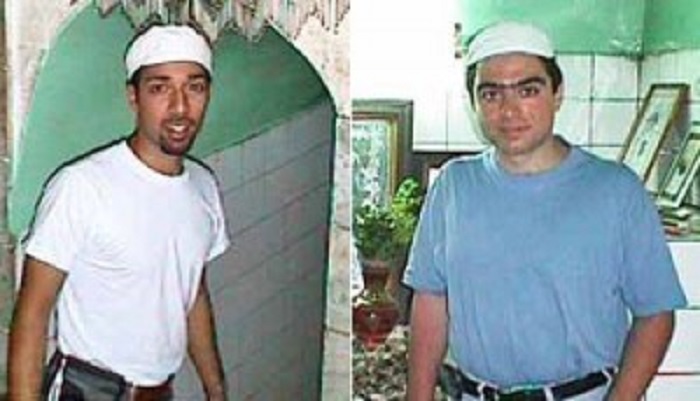
Trita Parsi traveled with Siamak Namazi to Isfahan, Iran’s third largest city, in August 2000. They also toured the Zoroastrian “Fire of Victory” Temple in Yazd. At the time, Siamak was living in Tehran, working for Atieh Bahar, a consultant company with close ties to the government. In 1999, Parsi and Siamak co-authored a paper that recommended setting up a lobbying organization in Washington to influence US-Iran policy. Siamak took a sabbatical in 2005 to complete a fellowship at the Woodrow Wilson Center in Washington, DC. While at the Center, Siamak helped Parsi formulate NIAC policies supportive of the Iranian regime.

Trita Parsi traveled with Siamak Namazi to Isfahan, Iran’s third largest city, in August 2000. They also toured the Zoroastrian “Fire of Victory” Temple in Yazd.
At the time, Siamak was living in Tehran, working for Atieh Bahar, a consultant company with close ties to the government.
In 1999, Parsi and Siamak co-authored a paper that recommended setting up a lobbying organization in Washington to influence US-Iran policy. Siamak took a sabbatical in 2005 to complete a fellowship at the Woodrow Wilson Center in Washington, DC. While at the Center, Siamak helped Parsi formulate NIAC policies supportive of the Iranian regime.

Siamak Namazi, an Iranian-American citizen, has been credited with helping found the Iran lobby including the creation of the National Iranian American Council alongside Trita Parsi as the primary vehicle for advocating for a nuclear agreement lifting economic sanctions on the regime.

The Daily Beast chronicled his family’s involvement as an “intellectual architect” for the NIAC as a pathway for empowering those within the regime whom he had a close relationship with and believed by helping secure an agreement it would boost his fortunes within the regime.

In the immortal words of Kevin Spacey who plays the scheming Frank Underwood on Netflix’s “House of Cards,” “We’re all victims of our own hubris at times.”

Truer words were never spoken about the Iran lobby because on the verge of reaping their perceived successes, they discover all they really are, are puppets for a regime of mullahs whose intent is only focused on preserving their own power.

That is because according to regime media reports, while visiting family in Tehran, Namazi was arrested by Revolutionary Guards Corp soldiers and tossed into the notorious Evin Prison.

There is an irony here on par with Alfred Nobel inventing dynamite and then creating the Nobel Peace Prize after his invention was used in war.

Namazi joins four other Americans who are being held hostage by the regime, including Washington Post reporter Jason Rezaian, Christian pastor Saeed Abedini, former Marine Amir Hekmati and the former FBI agent Robert Levinson.

According to a piece in American Thinker, Parsi and Namazi founded NIAC as a way to lobby for the removal of sanctions against the regime and promote its foreign policy while combatting anti-regime forces in the U.S.

Both Parsi and Namazi reportedly enjoyed close ties and access to Hassan Rouhani and Javad Zarif, the regime’s president and foreign minister, with Parsi being seen traveling with and in close discussions with the regime delegation during nuclear talks.

Conspicuously, the NIAC have been silent on the issue, declining comment and social media feeds for Parsi and other NIAC staff is devoid of any mention of the arrest.

But Hassan Dai, editor of the Iranian American Forum who won a defamation lawsuit filed against him by Parsi, speculated that the arrest suggests a power struggle of sorts within the regime’s leadership.

Dai explained in an interview with Breitbart News that Namazi had consistently “lobbied in favor of a faction of the regime,” which upset the mullahs because it would only be acceptable to “lobby for the whole regime.”

The fight between the factions in Iran is a fight for “the best solution to preserve the regime,” he explained, adding that groups like NIAC have never sided with true “reformists,” but with people who wish to employ a different strategy to empower the regime, such as Rouhani and former President Akbar Rafsanjani.

Because Namazi and NIAC prefer one faction over the other, “they are undermining the Supreme Leader. They are undermining the Revolutionary Guard,” Dai explained. “When you lobby U.S. policymakers to remove sanctions against Iran with the rationale that it will help reform the regime, you undermine the Supreme Leader, because he wants them to accommodate to the regime now.”

The arrest of Namazi sends a message from Iran’s rulers that “Rouhani has no power,” Dai concluded. “He cannot even protect his own friend.”

Breitbart News further speculates – and rightly so – that the arrest pours cold water on the notion that securing the nuclear deal would empower “moderates” within the regime and help reform it. Evidence since agreeing to the nuclear contradicts that idea completely with the conviction of Rezaian, the test launch of an illegal ballistic missile and the launching of a new offensive in Syria alongside Russian forces.

The arrest of Namazi demonstrates that the leadership of the Iran regime is of one mind and firmly in the control of Ali Khamenei and his religious cohorts and that any idea of moderation within the regime is a pipe dream; which may go to explain why coming off of the NIAC’s recent leadership conference to celebrate the nuclear deal, Parsi’s Twitter feed was filled with posts condemning Saudi Arabia, a bitter enemy of Iran and locked in fighting in Yemen.

If Parsi doesn’t tow the mullahs’ line, he might find a different kind of reception party the next time he travels to Tehran and end up sitting next to his buddy Namazi.

By Michael Tomlinson


Filed Under: Blog, Latest from Lobbies & Appeasers, National Iranian-American Council, News Tagged With: #NuclearDeal, Appeasement policy, Featured, hassan rouhani, Iran, Iran deal, Iran Economy, Iran Lobby, Irandeal, Jason Rezaian, Khamenei, Moderate Mullahs, National Iranian American Council, NIAC, Nuclear Deal, Rouhani, siamak Namazi, Syria, Trita Parsi

The Ongoing Appeasement of the Iran Regime

October 23, 2015 by admin

The Ongoing Appeasement of the Iran Regime

The Ongoing Appeasement of the Iran Regime

During the run up towards the completion of negotiations over the nuclear agreement with the Iran regime, the Obama administration and the Iran lobby likened it to the most significant foreign policy issue of our time. The words used by proponents in advocating the deal included “historic,” “transformational,” “ground breaking,” “momentous,” “consequential” and “important.”

You almost thought Trita Parsi, head of the National Iranian American Council and chief cheerleader for the regime, had a word-a-day calendar on his desk with new synonyms for “historic.”

The fact that proponents of the deal characterized the choices as being between “war” and “peace” helped to get the agreement passed, but it also gave the Iran regime the opening to hold the West linguistic hostages since by framing the agreement in that manner, supporters found themselves beholden to the mullahs in Tehran to the extent no matter what they did, supporters of the deal were going to have to cover for them in order to keep the agreement alive.

This leverage cleared the way for the continuing acts of appeasement being afforded to the mullahs in the run up towards implementing the agreement. The perception of needing to keep this deal alive quickly became more important than addressing how much the Iran regime might cheat and what to do in response if the mullahs did cheat.

Two recent developments made that appeasement abundantly clear.

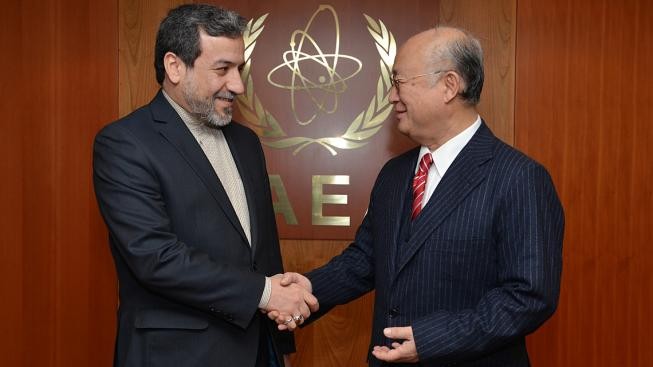
The first was the completion of a secret side agreement between the Iran regime and the International Atomic Energy Agency, the arm of the United Nations Security Council responsible for inspections and compliance of nuclear issues.

The IAEA has worked for the past decade to gain access to regime nuclear facilities, its scientists and technicians, as well as documentation to ascertain the full scope and nature of Iran’s nuclear program. It has been stymied and stonewalled at every turn by the regime.

Beyond the obfuscation by the regime, it is imperative to any future compliance to the nuclear agreement that the IAEA establish a baseline of where Iran’s nuclear program stands. Without it, there is no way to make comparisons to see if the regime is indeed cheating.

The IAEA “is committed under the deal to release a report by year-end about the status of Iran’s alleged weaponization work. U.S. officials over the weekend said the IAEA report would have no bearing on moves by the international community to lift sanctions,” according to the Wall Street Journal.

“That final assessment, which the IAEA is aiming to complete by December 15th, is not a prerequisite for implementation day,” a senior U.S. official said Saturday. “We are not in a position to evaluate the quality…of the data. That is between Iran and the IAEA.”

The irony here is that the U.S. is basing its decision to move ahead with implementing the agreement with the regime on the findings of the IAEA inquiry, but at the same time is not going to evaluate the veracity of those findings. In essence, the U.S. and other nations will simply shrug and say “we believe you” even if Iran provides no information or complete access as per the agreement.

So on December 15th, if the IAEA certifies Iran as being in compliance even though it has no tangible proof the regime is in compliance, the political pressure will be such that the IAEA will rubberstamp the report and allow implementation to move forward.

As Armin Rosen writes in Business Insider: “In the process, the US has essentially decided that the investigation of past nuclear-weapons work, and the state of current Iranian weaponization expertise, is nonbinding on a treaty specifically meant to prevent Iran from obtaining a nuclear weapon.”

If it wasn’t such a serious issue, it would be Orwellian in nature.

The second issue was the recent test firing of a new ballistic missile by the regime which violated a UN ban on development of nuclear-capable ballistic missiles. The ban is tied to the nuclear agreement and sets an eight year ban on ballistic missiles after the agreement is implemented.

The U.S., Britain, France and Germany called on UN Security Council’s Iran sanctions committee to take action over the missile test by Tehran. Diplomats have said it was possible for the sanctions committee to blacklist additional Iranian individuals or entities if it determined that the missile launch had breached the U.N. ban. However, they said Russia and China, which have opposed the sanctions on Iran’s missile program, might block any such moves.

All of which sets up the most obvious question facing everyone. What if Iran cheats? What should the response be?

Even though the U.S. asked the Security Council to take action over the missile test, U.S. officials said in the next breath that the missile test itself didn’t violate the nuclear deal.

Let that sink in for a second. We sent a letter calling for action for a violation of the UN ban, but in the same moment said the launch did not violate the nuclear agreement. So we are scolding the mullahs, but also letting them off the hook.

It’s a bipolar approach to foreign policy worthy of analysis by a psychiatrist.

In both cases, the Iran regime is clearly acting to breach terms of not only the nuclear agreement, but existing sanctions that will remain in effect after the nuclear deal goes into effect and the repercussions of those violations appear to be non-existent or minimal. This does nothing to deter the mullahs and only empowers them into believing they can continue to press their advantage.

By Michael Tomlinson

Filed Under: News Tagged With: #NuclearDeal, Appeasement policy, Featured, Iran, Iran deal, Iran Lobby, Iran Talks, Irandeal, NIAC, NIAC Action, Nuclear Deal, Trita Parsi

As Iran Regime Approves Nuke Deal, It Bulks Up Militarily

October 23, 2015 by admin

As Iran Regime Approves Nuke Deal, It Bulks Up Militarily

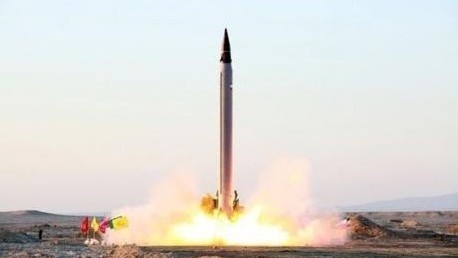
A new Iranian precision-guided ballistic missile is launched as it is tested at an undisclosed location October 11, 2015. REUTERS/farsnews.com/Handout via ReutersThe Iran regime’s top mullah, Ali Khamenei, added his tepid support to the nuclear deal that the regime’s Parliament also approved, clearing the pathway for the regime to get its payday of $150 billion plus billions more in foreign investment and economic activity.

But nothing is ever simple with the inscrutable mullahs of Tehran as Khamenei added the caveat that all sanctions had to be lifted or Iran would walk away from the deal. This reinforces the key stumbling block he placed in front of negotiators when he maintained that the regime had to first receive the benefits of lifted sanctions before it would begin any dismantling of its nuclear infrastructure.

The chicken and egg argument he poses is deliberately cloaked in the obscurity it needs to allow both sides proof of his adherence to the terms of the deal from both sides perspective, while allowing the wiggle room Khamenei wants to set the implementation of the agreement any way he sees fit.

This is readily apparent in the deluge of provocative acts the regime has undertaken since the agreement was signed, including:

  • The conviction of Washington Post reporter Jason Rezaian on trumped up spying charges and then offering to swap him for convicted Iranian arms smugglers;
  • The test firing of a new ballistic missile violating United Nations Security Council resolutions prohibiting development of new nuclear-capable missiles;
  • Coordination of a military alliance with Russia through a mission to Moscow by Quds Force commander Qassem Soleimani in violation of UN travel restrictions; and
  • Launching of a new offensive in Syria against forces opposing the Assad regime including the use of thousands of Iranian fighters and proxies from Hezbollah in Lebanon, Shiite militias from Iraq and Afghan mercenaries.

These acts put to a lie the claims long made by the Iran lobby during the nuclear negotiations that the regime was only interested in becoming a moderating force within the region. Led by the National Iranian American Council, those same supportive voices for the regime have been struck deaf and dumb in the face of these new violations by the regime.

The test firing of the new ballistic missile was especially provocative and so concerning that the U.S., Great Britain, France and Germany called on the UN Security Council’s Iran sanctions committee to take action over the violation.

In a letter obtained by Reuters containing details on the launch, the nations said the ballistic missile was “inherently capable of delivering a nuclear weapon.”

Is it too late to say “We told you so?”

Even now, news media that once editorialized in support of the nuclear deal have reversed course in noting the worrisome developments by the Iran regime.

“But the Syrian offensive is certainly more than message-sending. If successful, it could eliminate the chance to construct a moderate, secular alternative to the Assad regime, and send hundreds of thousands more refugees across Syria’s borders. It was just such aggression that Mr. Obama acknowledged might be a byproduct of the nuclear deal — and that he vowed to resist. If he remains passive as Maj. Gen. Soleimani’s forces press forward, both Iranian and U.S. allies across the Middle East will conclude that there will be no U.S. check on an Iranian push for regional hegemony,” said the Washington Post in an editorial.

There was also a move by 11 Senate Democrats to push the Obama administration to respond forcefully to the regime’s missile test, pressing the case that a response would set a precedent for how the U.S. would react to any future violations of the nuclear deal.

“We are concerned about the military significance of this test, which is part of a long-term Iranian program that seeks to improve the range and capabilities of its ballistic missiles,” the senators wrote. “We are also convinced that the launch is an attempt to test the world’s will to respond to Iranian violations of its international commitments.”

It is worth noting that several of these same Senators had voted in favor of the deal.

Joshua Keating at Slate raised a similar concern about the fallout from the nuclear deal saying “it certainly doesn’t bode well for the optimistic notion that the deal could lead to U.S.-Iranian security cooperation beyond the narrow areas laid out in the agreement and it certainly doesn’t look good for the administration. Iranian leaders were presumably well aware of this.”

This understanding of the regime’s intentions puts into perspective the potential use of the billions of dollars about to be released into the control of the mullahs and as the International Business Times puts it:

“Pushed by a combination of its own outdated military equipment and the formidable military buying power of its oil-rich Middle East rivals, analysts said Tehran is urgently plotting to upgrade and replace its own antiquated defense technology in favor of Russian- and Chinese-made military equipment by spending oil revenue that’s been trapped in an assortment of banks worldwide for the last three years.”

“Those options range from providing Hezbollah fighters, who are supporting Syrian President Bashar Assad in the Syrian civil war, to boosting aerospace efforts, including space-based platforms such as satellites, to advance its military into the 21st century,” according to Ariel Cohen, senior fellow at the Atlantic Council, an international affairs think tank based in Washington, D.C.

It is clear that the foxes let loose by the nuclear deal are now coming home to hunt.

By Michael Tomlinson


Filed Under: News Tagged With: Appeasement policy, Featured, Iran, Iran deal, Iran Lobby, Iran Mullahs, Iraq, Sanctions, Syria, Yemen

The Price of Failure in Syria for Iran Regime

October 20, 2015 by admin

The Price of Failure in Syria for Iran Regime

The Price of Failure in Syria for Iran Regime

With the Iran regime’s all-in move in Syria through the commitment of thousands of additional troops, the loss of top commanders killed in fighting by Syrian rebels and the new alliance with Russia, the mullahs in Tehran have painted themselves into something of a corner.

The most obvious price to be paid by the regime will be whether or not a military campaign against the broad coalition of rebels, Islamic groups and secular opponents actually succeeds or fails. If it fails, the price will be extraordinarily high for Tehran. It will deal a crushing blow to the carefully crafted image of military supremacy the regime cultivates and it will send its leadership into an inevitable round of finger pointing and blame.

Failure in Syria will also carry a financial price tag since the regime’s previous support in propping up the Assad regime has tallied over $15 billion so far and with the stepped up reinforcements and new offensive, the costs are likely to spiral into the upper atmosphere. Depending on how long the fight takes, that $150 billion the mullahs are eager to get their hands on as the result of the nuclear deal could shrink very quickly.

The stakes for the regime are unquestionably high as it has put Maj. Gen. Qasem Soleimani, the leader of its Quds Forces, at the frontlines to direct Shiite forces from three countries including Iraq, Lebanon and Afghan proxies in what is shaping up as a major assault on the rebel stronghold of Aleppo.

The fact that Russia has been bombing rebel forces and not areas controlled by ISIS, and that Iran is targeting Aleppo, a strategic economic hub controlled by rebel forces early in the civil war, tells us all we need to know about the priorities of the regime.

The fact that Soleimani, who only recently was a frequent visitor to the battlefields in Iraq where victories for the regime grew scarce as the war stagnated, was shifted over to Syria shows the changing priorities of the Iran regime as it struggles to find a military victory anywhere in the conflicts it has started.

Just as its fight in Iraq and ground to a halt, the Houthi rebels Iran supports in Yemen have been thrown back under the combined assault of an air and ground campaign backed by Saudi Arabia and other Gulf states.

As the fighting in Syria went badly for Iranian-backed forces, the mullahs sent Soleimani to Moscow to beg for Russian intervention and have set up this new offensive as a last-ditch effort to salvage any kind of good military news.

Kitaeb Hezbollah, an Iranian-backed Shiite militia designated a terrorist organization by the United States, sent 1,000 troops to Aleppo last weekend, said a senior official with the militia. He spoke on the condition of anonymity, citing orders that the deployment not be made public yet according to the Washington Post.

He said the men were part of the group’s elite forces, which have experience from fighting the United States in Iraq. They have done previous rotations in Syria, he said.

“They were sent based on a demand from Soleimani,” he said. “He specifically requested them for the launch of the operation of Aleppo, which is going to be led by Kitaeb directly under the supervision of Soleimani.”

The militia official said the Syrian army would have a “minor role.”

The rapid ramp up in Iranian aggressiveness with the offensive in Syria, launching of new ballistic missiles and conviction of Washington Post reporter Jason Rezaian have all taken on a certain manic quality as the regime attempts to literally spit out as much vitriol as it can in the shortest amount of time.

It’s a stunning period of chest beating at a time when the regime would be normally seen celebrating what it touts as a victory in its recently completed nuclear negotiations, but this almost bipolar behavior demonstrates the deep schism in regime politics as the religious forces headed by Ali Khamenei exert their control over the political puppets of leaders such as Hassan Rouhani. In many ways, the militant nature of the regime’s recent actions is a reaffirmation that there are no such a thing as moderates within the Iranian regime.

This idea was reinforced when an influential Iranian lawmaker delivered inflammatory new accusations on Monday against Jason Rezaian, The Washington Post’s Tehran reporter convicted of espionage this month, asserting that he had plotted with seditionists.

The New York Times reported that in an interview with Iran’s semiofficial Fars News Agency, the lawmaker, Javad Karimi-Qoddusi, also sought to depict Rezaian as a nefarious spy who had used his credentials as a journalist as a ruse to gain insights that would be valuable to the Iranian government’s enemies.”

It’s indicative of the deep-seated paranoia that runs throughout the regime’s government and why any agreement negotiated with Iran is doomed to failure as there is very little rational thought within the top ranks of the regime’s leadership.

By Michael Tomlinson

Filed Under: News Tagged With: #NuclearDeal, Appeasement policy, Iran, Iran deal, Jason Rezaian

  • « Previous Page
  • 1
  • …
  • 9
  • 10
  • 11
  • 12
  • 13
  • Next Page »

National Iranian-American Council (NIAC)

  • Bogus Memberships
  • Survey
  • Lobbying
  • Iranians for International Cooperation
  • Defamation Lawsuit
  • People’s Mojahedin
  • Trita Parsi Biography
  • Parsi/Namazi Lobbying Plan
  • Parsi Links to Namazi & Iranian Regime
  • Namazi, NIAC Ringleader
  • Collaborating with Iran’s Ambassador

Recent Posts

  • NIAC Trying to Gain Influence On U.S. Congress
  • While Iran Lobby Plays Blame Game Iran Goes Nuclear
  • Iran Lobby Jumps on Detention of Iranian Newscaster
  • Bad News for Iran Swamps Iran Lobby
  • Iran Starts Off Year by Banning Instagram

© Copyright 2026 IranLobby.net · All Rights Reserved.