Iran Lobby

Exposing the Activities of the lobbies and appeasers of the Mullah's Dictatorship ruling Iran

  • Home
  • About
  • Current Trend
  • National Iranian-American Council(NIAC)
    • Bogus Memberships
    • Survey
    • Lobbying
    • Iranians for International Cooperation
    • Defamation Lawsuit
    • People’s Mojahedin
    • Trita Parsi Biography
    • Parsi/Namazi Lobbying Plan
    • Parsi Links to Namazi& Iranian Regime
    • Namazi, NIAC Ringleader
    • Collaborating with Iran’s Ambassador
  • The Appeasers
    • Gary Sick
    • Flynt Leverett & Hillary Mann Leverett
    • Baroness Nicholson
  • Blog
  • Links
  • Media Reports

Iran Lobby Tries to Spin Continued Blacklisting of Iran Regime

June 27, 2016 by admin

Iran Lobby Tries to Spin Continued Blacklisting of Iran Regime

Iran Lobby Tries to Spin Continued Blacklisting of Iran Regime

An international group that monitors and combats money laundering worldwide decided this weekend to keep the Iranian regime on its blacklist of high-risk countries, which included notably Syria, Iraq, Yemen and Afghanistan; all countries the regime is currently engaged in proxy wars.

At a meeting of its 37 members in South Korea, the Financial Action Task Force also moved to keep North Korea on its blacklist and urged countries to be on guard against Pyongyang’s attempts to bypass sanctions to finance illicit weapons programs.

“The FATF, therefore, calls on its members and urges all jurisdictions to continue to advise their financial institutions to apply enhanced due diligence to business relationships and transactions with natural and legal persons from Iran,” read the statement FATF issued.

The FATF deferred to the potential for the Iran nuclear deal to help motivate Iran’s support of terrorism, and opted to defer further sanctions for another 12 months to see if the Iranian regime follows through on its promises.

But it is interesting to note the FATF only list 11 nations as being high-risk or non-cooperative in the areas of money laundering and support for terrorism and the Iranian regime is affiliated in its support with five of them. Almost half of the nations on the planet engaged in these activities are tied to the mullahs in Tehran.

That is a remarkable achievement for any regime to take, especially one that is constantly defended by the Iran lobby as a peaceful and moderate nation.

The absurdity of that defense reached new levels with a statement issued by the National Iranian American Council’s Tyler Cullis, which welcomed the deferred action by the FATF, but ignored the continued presence of the regime on the blacklist; choosing instead to look at the glass half-full scenario.

“FATF has suspended its call for Member-States and other jurisdictions to impose counter-measures against Iran and its financial institutions, which should send a clear signal to international banks and businesses that economic opportunities with Iran can move forward,” Cullis said.

It’s a rather willfully ignorant statement since the FATF clearly warned member countries to exercise due diligence when dealing with anyone connected to Iran. When applied to financial institutions such as commercial banks, that is a clear warning to stay away from Iranian regime, which virtually all major banks have opted to do given the uncertainty raised by the FATF.

Cullis claims that the regime has made meaningful steps to counter the financing of terrorism in what has to be the biggest obfuscation since Adolf Hitler said Czechoslovakia invited the Nazis in.

Cullis ignores the interception of several Iranian boats attempting to smuggle guns, rockets and ammunition to Houthi rebels in Yemen. Cullis ignores the arming and support Shiite militias in Iraq which are now meting out retribution against Sunni tribes in furthering sectarian bloodshed. Cullis ignores the long-term funding of Hezbollah and the use of terror in the Syrian conflict in targeting civilians and Doctors Without Borders hospitals.

There is good reason why Transparency International ranks the Iranian regime 130th out of 168 countries in the world for corruption with a score of 27 out of 100. Cullis claiming there are meaningful reforms coming from the mullahs in Tehran to combat terrorism is like claiming a butcher shop is trying to go vegan.

Sanctions experts, banking sources and Western officials say little will change regarding financial institutions’ “hands off” approach to Iran, above all due to concerns about the Islamic Revolutionary Guard Corps’ (IRGC) omnipresence in the Iranian economy. The IRGC is still under international sanctions, according to Reuters.

“Practically speaking the FATF decision changes little since global financial institutions will continue to voluntarily implement strict counter-measures given their serious concerns over Iran’s illicit financial conduct,” said sanctions expert Mark Dubowitz of the Foundation for Defense of Democracies.

To further illustrate how Cullis and the rest of the Iran lobby is wrong, the regime’s top mullah Ali Khamenei obliged with yet another warning of violence to a neighbor, in this case Bahrain.

He blasted as “foolishness” a decision by Bahrain’s leaders to strip a top Shi’ite Muslim cleric of his citizenship, and said it could provoke violence from Shi’ites, who make up the majority in the Sunni-ruled Gulf kingdom.

The speech by Khamenei, carried by state media, came after Bahrain’s Sunni authorities stepped up measures against the island’s Shi’ites and stripped their spiritual leader, Ayatollah Isa Qassim, of his citizenship.

“This is blatant foolishness and insanity. When he still could address the Bahraini people, Sheikh Isa Qassim… would advise against radical and armed actions,” Khamenei said in remarks carried by state television on Sunday.

“Attacking Sheikh Isa Qassim means removing all obstacles blocking heroic Bahraini youths from attacking the regime,” he said.

Of course he neglected to mention that Bahrain has long maintained that Iran funnels financial material support to would-be insurgents.

Again, that pesky “funding terrorism” problem.

Aside from funding terrorism, the Iranian regime still remains a black hole for human rights and its continued arrests of foreign nationals alone should keep it in the sanctions pokey.

In the case of Montreal-based university professor, Homa Hoodfar is being held in an Iranian jail and being investigated for “dabbling in feminism and security matters,” according to her family, while in the case of Nazanin Zaghari-Ratcliffe, a British woman arrested by regime authorities, who claimed she was being held in solitary confinement for three months because she helped to “design a website.”

If the Iranian regime is afraid of women like these, its days in power are surely numbered.

By Michael Tomlinson
Filed Under: Blog, News Tagged With: Featured, Iran, Iran deal, Iran Human rights, Iran Lobby, Iran sanctions, Iran Terrorism, IRGC, Khamenei, National Iranian American Council, NIAC, Tyler Cullis

Iran Lobby Tries to Pivot to Immigration to Hide Abuses

June 27, 2016 by admin


Iran Lobby Tries to Pivot to Immigration to Hide Abuses

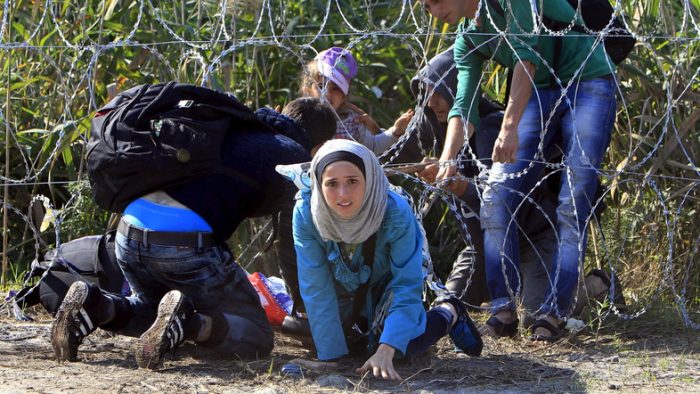
A Syrian migrant family enters Hungary at the border with Serbia near Roszke, Hungary August 28, 2015. REUTERS/Bernadett Szabo

Political events in Europe and the U.S. have pushed immigration issues to the forefront of talk shows and government agendas, but many of the most pressing immigration have their roots not in an escape from economic poverty, but rather the specter of terrorism and war, especially as a result of the Iranian regime’s involvement in the three largest wars going on right now in Syria, Iraq and Yemen.

It was not an accident that in the wake of World Refugee Day, there was broad acknowledgement that the source of most of the world’s refugee problem comes from the instability sweeping across the Middle East.

While the political discussion of immigration in the U.S. presidential election and the controversial Brexit vote has revolved around the impact mass immigration is posing to countries, the real underlying discussion is only now starting to focus on the roots causes of these mass movements of people fleeing violence in their own lands.

Also, in the wake of numerous terrorist attacks ranging from San Bernardino, California to Sydney, Australia and Paris, France to Ottawa, Canada, the infectious and noxious influence of spreading Islamic extremism is being felt; much of it flowing from the mullahs in Tehran and through their agents in the Revolutionary Guards and Quds Forces who organize, recruit, train, arm and fund extremists.

Predictably though, the Iran lobby has sought to capitalize on the immigration debate by focusing the discussion not on the root causes of these mass displacements. It’s a necessary gambit and typical of the Iran lobby to deflect attention from the real core issue of bloody sectarian conflict fueled by the mullahs.

The National Iranian American Council took the lead with several editorials and statements it has issued attempting to blame everyone else but the Iranian regime for the misery being inflicted on the millions of refugees fleeing these conflict zones.

Sarah Sakha offered up the idea on NIAC’s website that Americans opposed any bans on Muslims and refugees based on a Brookings Institute poll, but failed to address the core concern these same Americans have which is how to stop the spread of Islamic-inspired terrorism washing across the U.S. through Boston, Fort Hood, Chattanooga, San Bernardino and now Orlando.

She also fails to discuss the increase in terrorism and the harshness of the treatment of men, women and children in Iran by the regime is disingenuous and ignores the root causes of these problems. Likewise it lays bare how transparent the Iran lobby is in defending the regime from any criticism of its policies.

Similarly, the NIAC gave space to cover a recent meeting by the Atlantic Council and Iran Project with national security staffer Ben Rhodes who was famously revealed to have crafted the “echo chamber” supporting the Iran nuclear deal on a foundation of lies. The symposium was designed to defend the faltering nuclear deal from blistering criticism that it has failed to moderate Iran and instead has led to the great instability and bloodshed we see now.

Rhodes even used the examples of the openings made to Cuba and Burma as templates for why Iran should be treated in of those countries agreed to renounce terrorism h of those countries agreed to renounce terrorism and in Burma’s case actually held free elections that installed long-time dissidents in control of the government for the first time.

The Iran regime has done none of those things.

The NIAC even took on the recently unveiled the House Republican’s policy paper listing its priorities in the upcoming election including the re-imposition of sanctions on Iran for continued violations of human rights and sponsorship of terrorism, as well as its deliberate efforts to violate the nuclear agreement with ballistic missile tests and the clandestine sanitizing of sites of any evidence of prior testing of nuclear materials.

Ironically, while the NIAC attacks the idea that imposing new sanctions for continued human rights violations, it never denies that severe human rights violations are taking place in Iran. Instead, it attributes the suffering and misery being inflicted on the Iranian people with mass arrests and executions not to the actions of the mullahs, but rather the lack of U.S. currency flowing to the regime as a result of the nuclear deal.

It is the height of stupidity to equate torture in Iran to a lack of cash.

That seems to be the mantra being repeated most often by the Iran lobby these days as it pushes to get cash into the hands of the regime as quickly as possible, but not for the benefit of ordinary Iranians it seems as the regime is being rocked by protests over disclosures that high-ranking executives at state-owned businesses are being paid obscene salaries while Iranians are being exhorted by the mullahs to continue a “resistance economy” of deprivation.

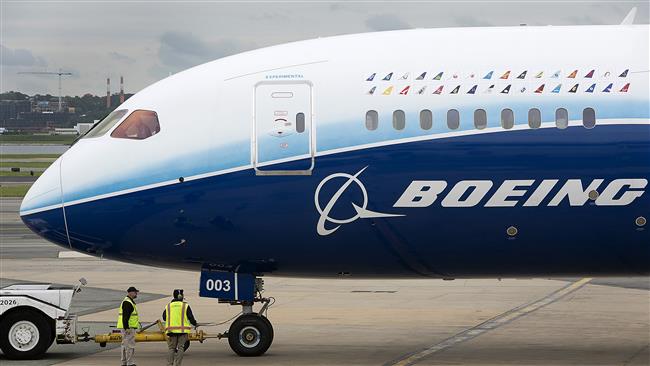
The Daily Beast also disclosed that a former Clinton administration official has been on the payroll of Boeing as it strived to close a deal with Iran to sell $25 billion worth of commercial airliners.

Thomas Pickering, one of the country’s most famous diplomats and a former ambassador to Israel and the United Nations, has been quietly taking money from Boeing while vocally supporting the Iran nuclear deal—testifying before Congress, writing letters to high-level officials, and penning op-eds for outlets like The Washington Post.

Pickering confirmed via email—from his Boeing corporate email address—that he was on staff at the company from 2001 to 2006 and has been a paid consultant for them ever since.

Neil Gordon—an investigator for the Project on Government Oversight, a Washington watchdog organization—said Pickering should have been upfront about his work for Boeing when testifying before Congress on the Iran nuclear deal and making the case for it in op-eds for major publications.

“In Pickering’s case, he has a direct connection to Boeing, which I think should be disclosed,” he said.

Over the past few years, Pickering has been one of the most vocal and visible advocates for the nuclear agreement with Iran. On June 19, 2014, he testified before the House Armed Services Committee about his views on the need for a comprehensive agreement with Iran. He did not mention Boeing in the disclosure form he provided to the committee prior to his testimony. Boeing also isn’t mentioned in his bio that the House kept on file.

The lack of disclosure of his work in support of the nuclear deal and his participation in Rhodes’ “echo chamber” is disturbing and shows the complicated and extraordinary efforts made by the Iran lobby to secure the nuclear deal for Iran.

Most disturbing, his bio on the NIAC website where he serves as an advisory board member, notes that he worked at Boeing until 2006 but does not note that he still consults for the company. Same for his bio at the anti-nuclear weapon group Global Zero. His bio at The Iran Project doesn’t mention Boeing at all.

The lack of disclosure and his active work with leading members of the Iran lobby while also collecting fees from Boeing which the Obama administration is doing all it can to facilitate business with the regime raises alarm bells everywhere of conflicts of interest and outright deception.

Trita Parsi of the NIAC also using the same scape goat, blamed the suffering of Iranians on the lack of business deals with Iran following the nuclear deal.

“If the Iranians end up de facto not getting sanctions relief, the deal will collapse,” he said. “That’s right now the biggest threat to the sustainability of the deal.”

He is right, but the threat isn’t coming from foreign companies, but rather the mullahs themselves as they pursue policies turning most of Europe into a massive refugee center.

By Michael Tomblinson

Filed Under: Blog, Current Trend, News Tagged With: #NuclearDeal, Ben Rhodes, Featured, Iran, Iran deal, Iran Human rights, Iran Lobby, Iran sanctions, National Iranian American Council, NIAC, Sarah Sakha, Thomas Pickering, Trita Parsi

Uranium Discovery at Iran Facility Shows Depth of Regime Deception

June 24, 2016 by admin

Uranium Discovery at Iran Facility Shows Depth of Regime Deception

Uranium Discovery at Iran Facility Shows Depth of Regime Deception

The Wall Street Journal reported the discovery of uranium particles at the Iranian regime’s secretive Parchin military facility during inspections last year which tied the regime to its past, covert nuclear weapons program contradicting the arguments made by the mullahs in Tehran and the Iran lobby that it was not developing nuclear weapons.

Traces of man-made uranium were found at the Parchin facility, southeast of Tehran, by investigators from the International Atomic Energy Agency, the United Nations’ nuclear watchdog, as part of an investigation tied to the landmark nuclear deal reached last year.

The regime long claimed the site was only used for developing and testing conventional weapons; not nuclear ones, but the particles are the first physical evidence—on top of satellite imagery and documents from defectors and dissident groups—to support the charge that Iran had been pursuing a bomb there in the past.

Unsurprisingly, the U.S. administration didn’t comment about the uranium in December when the IAEA released its report; the finding got only one brief mention in the 16 pages. The lack of attention could be attributed to the administration’s recent efforts to appease the regime and not rock the boat with any embarrassing disclosures giving ammunition to critics of the nuclear deal.

But in recent interviews, current and former U.S. officials asked about the uranium finding said the working assumption now is that it is tied to nuclear weapons development that Iran is believed to have pursued more than a decade ago.

The fact that the IAEA discovered the particles even after the regime had engaged in a massive clean and sanitizing effort at the Parchin site, which included the removal of tons of topsoil and dismantling of all infrastructure that may have been exposed to radiation, leaves the impression that the size and scope of Iranian nuclear activities there were extensive. Much of that clean-up effort was documented on satellite imagery.

According to the Journal, the man-made uranium found at Parchin, which has only low-levels of fissionable isotopes, can be used as a substitute for weapons-grade materials in developing atomic bombs, according to nuclear experts. It can also be used as component in a neutron initiator, a triggering device for a nuclear weapon.

While the Obama administration has refrained from making an issue of the uranium discovery, the fact of its existence buries a key argument made by the Iran lobby groups such as the Ploughshares Fund and National Iranian American Council that the Iranian regime was not engaged in any nuclear weapons development.

The significance of exposing that lie by the lobby, coupled with recent admissions from national security staffer Ben Rhodes of the creation of an “echo chamber” built on falsehoods to support the nuclear deal, shows that the basis for the nuclear deal was clearly false.

It also means that at a fundamental level, the Iranian regime cannot be trusted.

Jennifer Rubin, writing in the Washington Post’s Right Turn column, put in correctly when she called the willful ignorance of the evidence of uranium a “bait and switch” approach to negotiations.

“After the administration repeatedly promised Congress and the American people that Iran would need to reveal possible military dimensions (PMDs) of its nuclear program, the final deal did not do so. The administration claimed it was unrealistic to expect Iran to come clean, and besides, we would know everything about Iran’s program. Now we know at least at Parchin there is evidence of precisely what we suspected all along. What we do not know — because the administration let Iran off the hook — is the extent of that program, other sites that might have been used and any information that would have come had the IAEA been allowed to interview scientists,” she writes.

“It should be clear to both Democrats and Republicans that the Iran deal allowed Iran to escape scrutiny of past violations and left plenty of room to maneuver and evade future inspections. It should likewise be clear that fear of losing the deal has led the administration to countenance Iran’s non-nuclear misbehavior. With a new president should come a new Iran policy, one that halts new concessions (e.g. dollar transactions), applies new economic pressure and, where possible, claws back concessions the prior administration made. If nothing else, a tougher stance against Iran will persuade our Sunni allies that we have stopped deluding ourselves about the nature of the Iranian regime,” she adds.

It is clear that if there is to be any meaningful accountability of the Iranian regime, it will have to come from a new incoming administration which has been freed from any preconceived notions of believing in the fairy tale of a moderate Iran and benevolence within the mullahs in Tehran.

Next month, Iranian dissident groups will gather in Paris to hold a gathering aimed at demonstrating the vast opposition to the Iranian regime and give voice to all those who have suffered, been tortured and died at the hands of the mullahs. Many of these groups have helped supply international authorities with the evidence implicating the regime in nuclear weapons development.

It is only right the world give them the same attention it gave the Iran lobby during negotiations last year now that we know the real truth about Iran and nuclear weapons development.

By Michael Tomlinson

Filed Under: News Tagged With: Featured, Iran, Iran deal, Iran Human rights, Iran Lobby

Iran Regime Finding Itself Alone on an Island

June 24, 2016 by admin


Iran Regime Finding Itself Alone on an Island

Iran Regime Finding Itself Alone on an Island

For the past 16 years, the American-version of the hit reality television series “Survivor” has enthralled audiences with its competitions pitting contestants against each other in a remote location where food is scarce, alliances are formed and broken instantly, no one trusts anyone else, everyone fights for immunity and the goal is winning bundles of cash.

Sound familiar? It should to anyone who has watched the leadership of the Iranian regime over the same decade and a half period because it pretty much describes what is happening to the ruling mullahs in Tehran.

Like the contestants on Survivor, the aim and goal for the mullahs is a simple one: protect your own skin, backstab anyone and everyone and go home with the loot at the end of the game.

In Iran’s case, that has meant expunging all opponents – either by kicking them off election ballots or tossing them in jail or even hanging them – making overtures for peace to its neighbors and enemies and bringing in as many business deals as possible to fatten their bank accounts.

For the Iranian regime, the doctrine of “survival of the fittest” might be slightly altered to say “survival of the craftiest” since the mullahs have built their careers since the 1979 revolution in deception, misdirection and outright lying to the rest of the world and their own people.

Take for example the recent revelations from Iran that senior executives at top state-owned companies have been collecting lavish paychecks and perks at a time when ordinary Iranians are reaching levels of desperation for food, medicine and other goods almost on par with the chaos erupting in Venezuela.

The general director of state-run Bank Tejarat took home approximately $270,000 last year, according to one newspaper report this week. Another paper obtained a pay stub showing that an executive at the government-owned Iran Central Insurance Company pocketed $25,000 in one month – nearly 100 times the wage of the lowest-paid government employees.

Working stiffs everywhere believe their bosses are overpaid. But the disclosures carry particular significance in Iran, where egalitarianism was a mantra of the 1979 revolution, and where perceived moderate President Hassan Rouhani has staked his administration on promises to improve ordinary citizens’ lives, according to the Los Angeles Times.

Under Iranian law, no government employee can be paid more than seven times what the lowest paid worker earns. Apparently the law doesn’t seem to apply to the leadership of the regime, nor to the companies and industries controlled by it and the Revolutionary Guard Corps.

While laborers in some state-run factories go months without receiving paychecks and stage regular protests in front of parliament in Tehran, a small elite continues to live large off of chronic mismanagement and cronyism in the bloated public sector.

Last year there was a public outcry when several social media profiles showed photos and videos of young Iranians flaunting the affluence of their families with exotic cars, foreign trips, designer clothes and extravagant parties, with many of them tied to well-connected regime officials.

Media reports said three managers at the state insurance company together earned nearly $60,000 in a month earlier this year, while the average salary of a high school graduate is about $300 a month. The insurance company said the amounts included bonuses, family allowances and other perks in addition to salary – an explanation that did not diminish public anger.

Mohammad Reza Zabalipour, a businessman and head of Tehran’s World Trade Center, said the leaks exposed the lack of meritocracy in Iran’s public sector.

“Many managers are enjoying vast salaries not because of their merits and qualifications but because of their connections to this or that politician or political party,” Zabalipour said. “And because they anticipate dismissal anytime, once they are at the helm of a state-run enterprise they do their best to fill their pockets as much and as soon as possible.”

The growing isolation of the regime’s leadership from the people of Iran resembles the shrinking tribes on Survivor as contestants are voted off the island each week until only there are only a few left standing to fight for the prize. You get the feeling that Rouhani might become the odd man out as his usefulness to top mullah Ali Khamenei as a moderate puppet is exhausted amidst growing domestic unrest.

Much of these signs have come in the form of harsher, broader and deadlier crackdowns in Iran against dissenters; although perceived dissent now comes in all forms, not just political.

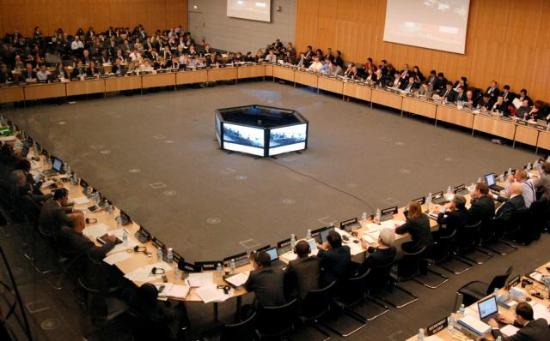
The news that an international group that monitors money laundering worldwide is expected to decide this week to keep Iran on its blacklist of high-risk countries despite aggressive lobbying by Tehran to come off the list to help it access the global financial system portends even more trouble for the regime, Western officials said.

The Financial Action Task Force (FATF), established in 1989 to combat money laundering and the financing of terrorism and weapons of mass destruction, compiles the list, which it regularly updates. Its 37 member states are meeting in South Korea.

“No changes to Iran’s status on the blacklist are imminent, though I think perhaps we can expect some words of encouragement and recognition of Iran’s attempts to make progress,” said one Western official familiar with FATF discussions, who asked not to be named. Two other Western officials concurred this week with the opinion that Iran would not be taken off the blacklist at this time.

Soon that Survivor island in Tehran may just include Khamenei and a few bodyguards with no one else left to imprison or torture.

By Michael Tomlinson

Filed Under: News Tagged With: Featured, Iran, Iran Human rights, Iran Lobby

Iran Regime Looks to Expand Into Latin America

June 22, 2016 by admin

Iran Regime Looks to Expand Into Latin America

Iran Regime Looks to Expand Into Latin America

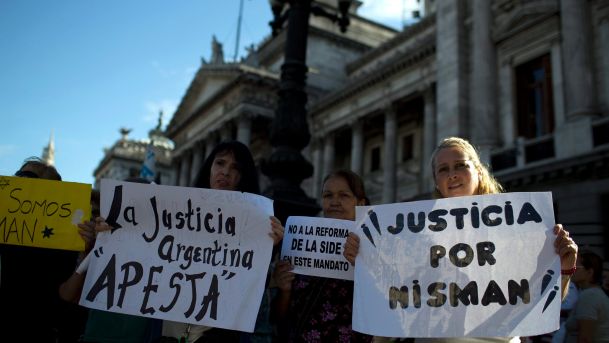
In 1994, a Buenos Aires Jewish community center was bombed by terrorists. Speculation focused on the Iranian regime and its terrorist proxy Hezbollah, as well as the long reach of the Revolutionary Guard Corps and its specialized Quds Forces.

Argentine prosecutor Alberto Nisman had doggedly pursued the investigation into the bombing, leading up to his indicting eight former Iranian regime officials and one Lebanese national in 2006. The following year, at Nisman’s behest, Interpol issued “red notices” for the arrest of six of the accused. But the Iranian regime predictably took no action.

The Wall Street Journal reported on Nisman’s efforts this week culminating to his death under suspicious circumstances when he died from a single gunshot to the head in January 2015, a day before he was scheduled to testify to Argentina’s Congress about an alleged government cover-up of the bombing.

Using legal wiretaps, Nisman later built a case that then-President Cristina Kirchner’s government had a covert agreement with Iran to wipe Tehran’s fingerprints off the AMIA attack, as the center was known, in exchange for Iranian oil and reopening Iran’s market to Argentine grain and beef.

Nisman had filed a criminal complaint against members of the Kirchner government the week before he died. Killing him did nothing to stop the public from learning of the contents of his report. Yet his death did put the brakes on his plan to bring the Iranian regime’s crime into the international arena. It had the potential to undermine the key foreign-policy objectives of Tehran, especially plans by the mullahs to engage the West in a nuclear agreement to lift economic sanctions.

The lifting of sanctions and the re-engagement of commercial activity is a crucial element to Tehran’s long-term plans since it allows the regime to deploy political and military operatives specializing in propaganda, intelligence, terrorism and insurgency to finance their illicit activities under the guise of normal everyday business.

Months after Nisman’s death, a safe-deposit box was discovered with a signed document by him formally requesting the United Nations to intervene in the investigation.

Joseph Humire, the executive director of the Washington, D.C., based Center for a Secure Free Society, uses thousands of documents and legal wiretaps released to the public to show how the prosecutor’s death eliminated a key stumbling block for Iran and “paved the way for [it] to move into a new phase of its information and intelligence operations in Latin America.” If the theocracy, which is the No. 1 state-sponsor of terrorism in the world, did not murder Nisman, it was the biggest beneficiary of his death.

The timing of Nisman’s death was thus critical as the Iranian regime entered intense negotiations by 2015 for a nuclear deal. An investigation in Argentina showing the regime’s culpability in terrorist acts abroad would severely damage the arguments being made by the regime and the Iran lobby that the incoming administration of Hassan Rouhani was only focused on peaceful and moderate accommodation with the rest of the world.

Authoritarian governments in Venezuela, Bolivia and Nicaragua have welcomed the presence and influence of Iran, but Latin American countries have been surreptitiously invaded, beginning with embassies, cultural centers and mosques. Peru’s southern rural communities are typical targets for launching networks. Front companies in the beef and oil industries in Brazil and Uruguay are used to provide cover for Iranian regime’s operatives, according to Humire, who also cited the rise of Iranian mullahs’ infiltration of universities.

Surely the mullahs in Tehran see the opportunity and have aggressively moved to expand their influence in a region with a U.S. administration pursuing a policy of appeasing the regime.

The linchpin of  those efforts remain the nuclear deal reached last year which is giving the Iranian regime the legal fig leaf to seek out commercial agreements providing it the opportunity to expand its influence throughout the world.

The situation in Argentina of suppressing a terrorist attack in exchange for business deals was a dark foreshadowing of what is happening today with recent announcements by companies such as Boeing in new agreements with the regime.

The nuclear agreement has been under severe criticism though with revelations and disclosures coming almost daily undercutting the arguments made by the Iran lobby and other regime supporters in favor of it. These include:

  • The promise of empowering Iranian “moderates” in upcoming elections, only to see the overwhelming majority of perceived moderates knocked off the ballot and hardliners in firm control of all leadership positions;
  • The promise that Iran would be an influence for peace in the region, but instead has widened the war in Syria, brought Russia into the fighting and started the civil war in Yemen, while boosting sectarian conflict in Iraq between Sunni tribes and Shiite militias; and
  • The promise of improving the plight of the Iranian people economically and in human rights, have been dashed as mass arrests and executions have reached an all-time high while the economy and standard of living in Iran have reached an all-time low.

But the Iran lobby continues to fight for the survival of the nuclear deal and by extension the survival of the regime’s leadership as evidenced by an editorial penned by Seyed Hossein Mousavian, former head of the Foreign Relations Committee of Iran’s National Security Council, and Reza Nasri, a scholar at the Graduate Institute of International and Development Studies in Geneva in the New York Times.

They predictably blamed the U.S. for not living up to its end of the nuclear agreement bargain by keeping in place sanctions not related to the nuclear program, but instead human rights violations and sponsorship of terrorism, thereby threatening to undermine Iranian confidence in the deal.

In essence, they are saying the U.S. should be at fault if the mullahs walk away from the deal because it restricts their ability to fund terror.

It is an inane argument and one quickly losing its appeal as the spread of Islamic extremism from Iran now reaches into the Americas.

By Michael Tomlinson

Filed Under: Blog, News Tagged With: Featured, Iran, Iran deal, Iran Human rights, Iran Lobby, Nisman, Seyed Hossein Mousavian

Islamic Extremism and Iran Regime Center of Refugee Crisis

June 20, 2016 by admin

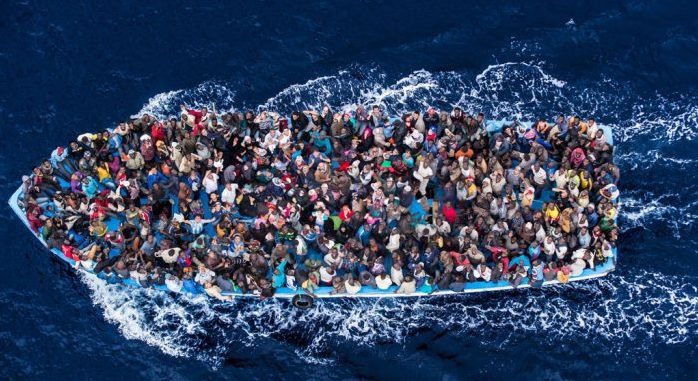
4/Hundreds of refugees and migrants aboard a fishing boat are pictured moments before being rescued by the Italian Navy as part of their Mare Nostrum operation in June 2014. Among recent and highly visible consequences of conflicts around the world, and the suffering they have caused, has been a dramatic growth in the number of refugees seeking safety by undertaking dangerous sea journeys, including on the Mediterranean.  The Italian Coastguard / Massimo Sestini

4/Hundreds of refugees and migrants aboard a fishing boat are pictured moments before being rescued by the Italian Navy as part of their Mare Nostrum operation in June 2014. Among recent and highly visible consequences of conflicts around the world, and the suffering they have caused, has been a dramatic growth in the number of refugees seeking safety by undertaking dangerous sea journeys, including on the Mediterranean.
The Italian Coastguard / Massimo Sestini

According to the United Nations refugee agency, 2015 marked the highest level ever recorded for the number of refugees around the world with an estimated 65.3 million people either refugees, asylum seekers or internally displaced; an huge increase of five million people over the year before.

This represents one out of every 113 people on the planet according to the UN; a stunning number and one that puts into sharp relief the existential refugee crisis facing not just the Middle East, but the entire world today. The report, entitled Global Trends, noted that on average 24 people were forced to flee each minute in 2015, four times more than a decade earlier, when six people fled every 60 seconds.

At the heart of that refugee crisis lie the root cause which is the rise of Islamic extremism and the wide number of wars and conflicts being waged by groups supported and affiliated with the Iranian regime.

In its annual report marking World Refugee Day, the UN said it was the first time the number of refugees worldwide had passed the 60 million mark.

“More people are being displaced by war and persecution and that’s worrying in itself, but the factors that endanger refugees are multiplying too,” said UN High Commissioner for Refugees Filippo Grandi.

Over half of the total comes from just three countries: Syria, Afghanistan and Somalia.

The Iranian regime’s involvement in coming to the aid of the Assad regime in Syria turned what was once peaceful demonstrations into what has now becoming one of the bloodiest wars on the planet. The Iranian regime’s recruitment of Russia to enter the fight in support of Assad only worsened the crisis and spurred the exodus of over half of Syria’s entire population.

The Iranian regime’s involvement in Afghanistan has also included using Afghan refugees to serve as mercenaries and cannon fodder for the fight in Syria. The other areas feeding into the refugee stream fleeing Iranian-inspired violence includes Yemen and Iraq, which accounted for a stunning 4.4 million people who were displaced due to the sectarian conflict fed by Iranian-supported Shiite militias.

Sadly, over half of the total refugees in the world are young children who are caught in the middle of these bloody conflicts. It also shows the Iranian regime’s callous disregard for youth since its own laws now allow for the execution of juveniles in Iran, which its religious courts have carried out with considerable vigor, hanging young boys and girls.

The Iran lobby has vigorously sought to defend the Iranian regime and attempted to portray the government of Hassan Rouhani of being a possible solution for the refugee crisis by attempting to moderate the hardline policies of the regime.

The reality has been the complete opposite as the mullahs have widened the Syrian war and initiated new ones in Yemen and Iraq.

At the heart of the increase in spreading Islamic extremism out of Iran have been the Revolutionary Guard Corps and its notorious Quds Force. Ray Takeyh, a senior fellow for Middle Eastern studies at the Council on Foreign Relations, examined the deepening role of the IRGC in Defense One in pushing the mullahs’ agenda and destabilizing the entire region.

“Iran seeks to become the most important player in Iraq and Syria and a commanding voice in the Gulf. The Guards, particularly the Quds Brigade, now numbering about fifteen thousand, are in the forefront of projecting Iranian influence. Among other tasks, they help train and provide intelligence for forces fighting on behalf of Bashar al-Assad’s regime in Syria and assisting Shia militias arrayed against Islamic State forces in Iraq,” he writes.

“In the coming years, the Guards are likely to be a force in both Iranian as well as regional politics. The Guards and the hardline clerics have a relationship of mutual dependence. As deeply pious men, the Guards need the approbation of the priestly class. And as politicians seeking power and regional preeminence, the clerics need the reliable muscle of the Guards. The region’s future may yet be defined by the compact between these two forces,” Takeyh adds.

The oppressive power of the Guards is necessary given the rising dissatisfaction of the Iranian people who have yet to witness any tangible benefits from the nuclear deal reached last year and instead have fumed at severe human rights crackdowns and deep corruption coming to light.

Revelations that senior Iranian government employees were being paid astronomical salaries have rocked the country and threatened popular support for the president, Rouhani. The revelations, which have sparked widespread anger, have continued to dominate front pages across the country, and even led to the resignation of the head of the state insurance regulator, Mohammad Ebrahim Amin.

The scandal first erupted two months ago when a series of payslips surfaced online, which showed a number of top executives at the state insurance company were being paid monthly wages roughly 50 times higher than the lowest government salary.

In a letter to his vice-president, Rouhani sought to deflect blame to previous administrations for the high salaries, but he cannot escape the deeply rooted belief among Iranians that the mullahs and Rouhani’s administration are corrupt and only invested in protecting themselves and their families.

Discontent with the Rouhani-led regime has bubbled to the surface among Iran’s young people who resent the lack of economic opportunity, the strictures against women in terms of jobs, education, dress and social activities, and the harsh treatment of anyone using social media inappropriately or engaging in activities deemed subversive by the mullahs.

The Financial Times examined one growing area of protest as Iran’s youth have sought to find more ways to express their discontent with the regime’s policies.

It is happening as growing numbers of young, city-dwelling Iranians push back against conservative traditions and religious restrictions.

Iran’s hardliners consider secular social movements by young men and women a conspiracy encouraged by outside forces — notably the US — to undermine the Islamic society. Ayatollah Ali Khamenei, Iran’s supreme leader and ultimate decision maker, warned earlier this month against “vulgarism in cultural issues”.

The widespread use of smartphones means teenagers spend most of their spare time on social media, notably Telegram, a popular messaging app, and Instagram. They join Telegram groups that have thousands of members across the country, the FT added.

Ultimately, the hope and future for Iran’s freedom may very well lie with these future generations.

By Michael Tomlinson

Filed Under: Blog, News Tagged With: Featured, Iran, Iran Human rights, IRGC

Why New Business Deals with Iran Should Be Tied to Human Rights

June 18, 2016 by admin

Why New Business Deals with Iran Should Be Tied to Human Rights

Why New Business Deals with Iran Should Be Tied to Human Rights

Although the nuclear deal with the Iranian regime reached last April lifted economic sanctions related to trade and released $100 billion in frozen assets back to the control of the mullahs in Tehran, it did not lift sanctions put in place for Iran’s abysmal human rights record and sponsorship of terrorism.

These sanctions largely affect U.S. currency exchanges and the ability to transact business through financial institutions connected to U.S. exchanges where currency would need to be converted, transmitted or deposited.

The sanctions lifted as part of the nuclear accord permits Iran to sell its oil back on the open market (even though it had already been doing so illicitly for some time), allow foreign firms to invest in Iran’s oil and gas industry and other industrial sectors such as automobiles and hotels, as well as allow Iran access to the global banking system known as SWIFT.

Predictably there has been a rush of foreign companies looking to get back into the Iranian marketplace; primarily firms that had pre-existing relationships within Iran prior to the imposition of most sanctions.

These largely comprised European, Chinese and Russian firms looking to announce deals, but most financial institutions in those same countries have been reluctant to jump in and engage in business with the regime; largely because of the regime’s unstable record on worsening human rights and the turbulence created by its involvement in proxy wars in Syria, Yemen and Iraq.

Now comes word – premature it seems – that U.S.-based Boeing was negotiating to sell 100 commercial aircraft to the regime in one of the largest re-entries into the Iranian market by a U.S. company.

There is already significant opposition building in Congress on both sides of the aisle to the deal since Iran’s previous use of commercial airlines such as Mahan Air to ferry troops and supplies to Hezbollah in Syria makes the potential high that American-made aircraft could be used in a similar military capacity, not to mention the technology transfer involved in advanced navigation, communications and avionics systems that the regime’s Revolutionary Guard Corps could take and adapt to their own purposes.

All of which raises a simple question: Should any business deal with the Iranian regime be predicated on improvements in human rights or the halt of sponsoring terror?

Two former U.S. Treasury officials cast doubt Wednesday on the prospects of the deal between Iran and Boeing, claiming concerns about Iranian money laundering and terrorism financing activities are likely to scuttle the agreement.

“The risks associated with doing business with Iran haven’t changed,” said Chip Poncy, who headed Treasury’s office of strategic policy for terrorist financing and financial crimes through 2013.

Eric Lorber, a former attorney in Treasury’s office of foreign assets control, said the Boeing deal will likely face the same problem that has kept a similar deal between Tehran and Airbus, Boeing’s European rival, from getting off the ground for the past seven months.

The mullahs have complained vigorously that the nuclear deal implementation applied to the lifting of all sanctions and that any sanctions still in place or the threatened imposition of new sanctions such as those proposed for its violation of ballistic missile testing would jeopardize the nuclear agreement.

The regime’s top mullah, Ali Khamenei, regularly threatens to tear up the nuclear deal each week for one reason or another. This past weekend it was because he didn’t like presidential candidate Donald Trump. The week before that it was because he thought Iran was being shortchanged by the U.S. on cash. Next week it will probably be about his inability to comprehend Snapchat.

The fact that the Obama administration inserted language in the nuclear deal specific to allowing investments in aircraft is seen as an effort to boost Boeing’s chances of doing the deal, but in the year since that deal was reached, the Iranian regime has been anything but compliant with efforts to moderate itself.

The litany of aggressive and illegal actions it has taken range from detaining American sailors on the high seas to widening the war in Syria to arresting just about any dual citizen it feels like including mothers, aid workers, journalists and businessmen without trial or charge.

The difficulty in many of these deals lies in the fact that the Revolutionary Guard Corps owns most of the economic and industrial capacity within Iran through a myriad of shell companies. In telecommunications for example, the IRGC owns the state phone company and controls virtually all internet access in Iran. The same goes for the oil and gas industry and airlines, which makes the Boeing deal problematic in many ways.

If we know the IRGC is engaged in supporting terrorism aggressively around the world and if we know its intelligence units and court system regularly sentences dissidents to death and uses torture on a mass scale on the Iranian people, then how can any U.S. entity conduct business in Iran without stepping on existing sanctions?

Jonathan S. Tobin writes in Commentary Magazine that Mark Dubowitz of the Foundation for the Defense of Democracies told the New York Times, despite the exception for aircraft sales in the text of the nuclear deal, much of Iran’s civilian aviation industry is run by companies linked to or run by the IRGC, which also operates the regime’s terror network.

Business with the IRGC and everything related to it is still very much against U.S. law and nothing in the Iran deal supersedes that fact. As Dubowitz notes, that makes any Boeing-Iran transaction a “due-diligence nightmare” for any U.S. companies as well as the banks that will also be involved, he added.

The conundrum is one that the Iran lobby is attempting to tackle head on with its typical subterfuge as evidenced by a piece written by Tyler Cullis of the National Iranian American Council in Foreign Policy, in which he makes the inane argument that since the nuclear deal is in danger of collapse, the U.S. should double down on it and go even further in accommodating the regime.

Cullis makes the argument that the Obama administration must provide foreign companies essentially a “get out of jail card” in terms of setting out guidelines essentially setting a legal standard for compliance with sanctions in order to engage in activities expressly forbidden by those same sanctions!

As Cullis is loath to mention, sanctions still in place are not related to the nuclear deal! In order for those sanctions to be lifted, the mullahs need to stop butchering their own people, stop arresting American businessmen, British mothers and Canadian professors and they need to stop sending guns, rockets and ammunition to terrorists around the world.

Is that too hard? For Cullis and the rest of the Iran lobby, it apparently is.

By Michael Tomlinson

Filed Under: Blog, News Tagged With: Featured, Iran, Iran deal, Iran Human rights, Iran Lobby, National Iranian American Council, Tyler Cullis

Iran Accuses British Mother of Trying to Overthrow Regime

June 16, 2016 by admin

Iran Accuses British Mother of Trying to Overthrow Regime

Iran Accuses British Mother of Trying to Overthrow Regime

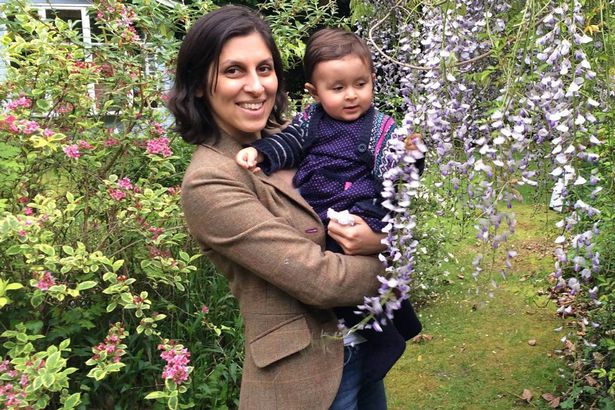
There are many perceived threats that the mullahs in Tehran see around them. Nazanin Zaghari-Ratcliffe, an aid worker for the Thomson Reuters Foundation, was accused of trying to “overthrow” the government in a statement published Wednesday after having been arrested since April 3, 2016 on the day she was to leave to go back home in Britain.

“This person had membership in foreign companies and organizations and planned and carried out media and cyber projects with the intent of a soft overthrow of the holy Islamic Republic government,” the statement said. It was published by a Revolutionary Guard office in Kerman province, where Zaghari-Ratcliffe is being held.

Zaghari-Ratcliffe “carried out criminal activities with the guidance and protection of media and spy services of foreign governments,” according to the statement. She was arrested after “massive intelligence operations” by the Guard.

Her husband Richard Ratcliffe dismissed the accusation that Nazanin was trying to bring down the government as “preposterous.”

“To my understanding there are still no formal charges. It seems like this is a political case,” he said.

The Revolutionary Guards statement seemed directed at the Thomson Reuters company, a global media powerhouse regarded with suspicion and hostility in Iran because of its British foundations. Reuters merged with Canada’s Thomson company in 2008.

“The media corporations of hegemonic governments, especially the evil-minded British media, have made their best efforts in the recent months to support her in order to weaken the Islamic Revolutionary Guards Corps’ determination but this false hope will never come true,” the statement added.

The fact that Zaghari-Ratcliffe worked for the Thompson Reuters Foundation and not the news company may indicate that the Revolutionary Guards intelligence unit is not so intelligent, but didn’t read the fine print and arrested her thinking she worked for the news organization in an effort to replicate the Rezaian snatch and grab with the Washington Post.

Ratcliffe said the family had contact with Zaghari-Ratcliffe earlier this week and she’d been moved to the notorious Evin prison in Tehran.

Monique Villa, the Chief Executive of the Foundation, said that Zaghari-Ratcliffe has been employed for four years as a project coordinator in charge of grant applications and training, and had no dealing with Iran in her professional capacity.

“The Thomson Reuters Foundation has no dealings with Iran whatsoever,” she said, and has no plans to.

Villa said that Zaghari-Ratcliffe “had traveled to Iran in a personal capacity. She was on a family holiday with her two-year-old-daughter Gabriella.”

Since Zaghari-Ratcliffe was a dual British-Iranian citizen, it should come as no surprise that regime officials scooped her up since it does not recognize dual status and has regularly arrested and imprisoned large numbers of dual citizens to be used as political pawns for prisoner swaps for example such as what the U.S. did for Washington Post reporter Jason Rezaian, Christian pastor Saeed Abedini and former U.S. Marine Amir Hekmati as a result of the nuclear agreement.

The Iranian regime has already plucked other dual citizens to replenish its prison cells including Siamak Namazi, a longtime supporter of the Iran lobby and Homa Hoodfor, a Canadian university professor, and now Zaghari-Ratcliffe.

No charges have been filed in the case, but Zaghari-Ratcliffe has told family members in Iran that she was forced to sign a confession under duress, her husband said last month.

Zaghari-Ratcliffe’s file has been sent to Tehran to begin judicial proceedings but officials from the intelligence wing of the Revolutionary Guard are still interrogating her, according to the statement.

The all-too-familiar pattern by the Iranian regime is being repeated here:

  • Step 1) Arrest a dual citizen;
  • Step 2) Apply pressure and even torture to get them to confess to a false crime;
  • Step 3) Try them as an Iranian citizen in a show court;
  • Step 4) Begin negotiations to get something in return for them.

For the regime, it has been a recipe for success and until the rest of the world puts a halt to this despicable practice, it will continue.

By Laura Carnahan

Filed Under: Blog, News Tagged With: Featured, Iran, Iran Human rights, Iran Talks

Rush to do Business with Iranian Regime Carries High Cost

June 16, 2016 by admin

Rush to do Business with Iranian Regime Carries High Cost

Rush to do Business with Iranian Regime Carries High Cost

Since the Iranian nuclear accord was brokered last April, the Iran lobby has been breathlessly pushing the idea of the doors to Iran being thrown open to commerce empowering the moderates in the government to a position of strength.

Hassan Rouhani quickly embarked on a European tour to enhance that perception and announce several high profile deals with European companies in a carefully orchestrated show of economic success and many companies have followed that message with dreams of riches to be made in the Iranian marketplace.

The reality has not lived up to the hype though. Even though the nuclear deal lifted sanctions related to Iran’s nuclear program, it did not touch sanctions imposed on Iran related to violations of human rights or its sponsorship and support for terrorism, including groups such as Hezbollah.

The disconnect has thrown the proverbial monkey wrench into the regime’s plans to quickly profit off the nuclear deal. In their haste to secure a nuclear agreement, the mullahs in Tehran pressed for a deal that was not linked to any issue other than the nuclear infrastructure itself. The regime did not want to face scrutiny over its human rights record and the growth of terrorism it sponsored.

The Iran lobby, including leading advocates such as the National Iranian American Council and Ploughshares Fund, was happy to oblige in pushing that narrative. The inconvenient truth for them though was that even though they got a nuclear deal, Iran was still restricted from accessing U.S. currency exchanges which crippled its ability to conduct international business since virtually all European, U.S. and Asian financial institutions resisted handling transactions for the regime out of fear of being sanctioned later for enabling terrorism.

The issue has become such an obstacle, the regime has taken the unusual step of attempting to set an offshore bank on a small island Iran controls in the Persian Gulf in an effort to skate around the financial sanctions.

This is why most of the business deals announced by the regime with foreign companies involve investments in the regime, but sales outside of it and even then most companies are approaching this process cautiously since Iran is a notoriously corrupt government and economy, ranking in the top ten in most transparency indexes.

The mullahs realize their perceived windfall could evaporate just as quickly as the sharp rise in Islamic extremist attacks in Paris, Orlando, San Bernardino and other cities around the world have made world capitals skittish about appearing to funnel cash to countries that support terrorism. Add to that the backdrop of a highly contentious U.S. presidential election in which both leading candidates in Hillary Clinton and Donald Trump have talked tough about radical Islam and its spread from Iran, then the outlook for the mullahs in Tehran appears even bleaker.

All of which makes the rush to announce a preliminary deal by the Iranian regime to purchase passenger aircraft from U.S. manufacturer Boeing all the more perplexing. Could it be the Iranian regime is worried Congress would intervene to block the sale in the wake of the Orlando mass killings and needed to jump the gun so to speak?

Details of the agreement were left vague, but Western and Middle East sources said that once approved, it would involve flag carrier Iranair acquiring more than 100 Boeing jets, both directly from Boeing and from leasing companies, according to Reuters.

“In coming days details of the deal with this company will be announced,” Roads and Urban Development Minister Abbas Akhoundi said, according to the semi-official Mehr news agency.

The sources said the agreement was so far only a broad outline of what a formal deal would look like once Boeing has the necessary U.S. government approvals to sell planes to Iran, which has been banned from buying U.S. jets for almost 40 years.

The concern over the sale to Iran not includes potential technology transfers to the regime, but the potential for the regime to use these commercial aircraft for military or illicit purposes as in previous cases in which state airliners have been used to ferry troops and weapons to Syria as part of the civil war effort there.

Rep. Peter Roskam (R., Ill.), who has criticized Boeing and others for pursuing business with Iran, told the Washington Free Beacon that Congress could take action to stop the sale.

“We’ve heard reports of a pending deal between an iconic American company and terrorism’s central bank,” Roskam said. “To say we have national security concerns would be an understatement. Boeing and the Islamic Republic should know the U.S. Congress will not look favorably upon any deal that jeopardizes the safety and security of the American people.”

Several GOP lawmakers recently summoned the heads of Boeing and French air manufacturer Airbus for a meeting about their dealings with Iran.

Three House members from Washington state, a major base for Boeing operations, wrote to the company in May to request a meeting.

“We write to express our serious concerns over the sale of airplanes, parts, and other aircraft-related services to the Islamic Republic of Iran,” wrote Republican Reps. Cathy McMorris Rodgers, the GOP conference chair, Dave Reichert, chair of the House committee that regulates trade, and Dan Newhouse.

Predictably, Trita Parsi of the NIAC hailed the Boeing deal and ignored the past use of Iranian commercial airliners for illicit purposes.

“The Iranian-American community not only has had to fear for the safety of loved ones flying in Iran, but has also flown on many of the outdated craft when visiting friends and family in the country,” Parsi said.

It’s notable that the most significant threat to Iranian-Americans traveling to Iran is not the safety of their aircraft, but rather the high probability they would be arrested and imprisoned without charge or trial or explanation by the regime as it has already done to a large number of dual citizen Iranians, such as Americans Jason Rezaian, Saeed Abedini and Amir Hekmati.

By Michael Tomlinson

Filed Under: Blog, News Tagged With: Featured, Iran, Iran deal, Iran Lobby, Iran sanctions, NIAC, Trita Parsi

Iran Attendance at Oslo Forum is Height of Hypocrisy

June 15, 2016 by admin

Iran Attendance at Oslo Forum is Height of Hypocrisy

Iran Attendance at Oslo Forum is Height of Hypocrisy

The Oslo Forum was created in 2003 as a gathering for mediation practitioners to meet and share their expertise. It was aimed at the hope of building a larger community of mediation experts and increase learning, serving as an incubator for testing and honing future peacemakers hoping to resolve conflicts around the world.

It has grown from its first meeting of 17 practitioners to now include over 100 notable key players from the United Nations, intergovernmental and private organizations, journalists, analysts and other experts.

Among its participants has been a veritable who’s who of global ambassadors for peace, including former UN General Secretary Kofi Annan, President Jimmy Carter, new Myanmar leader Aung San Suu Ki and many others.

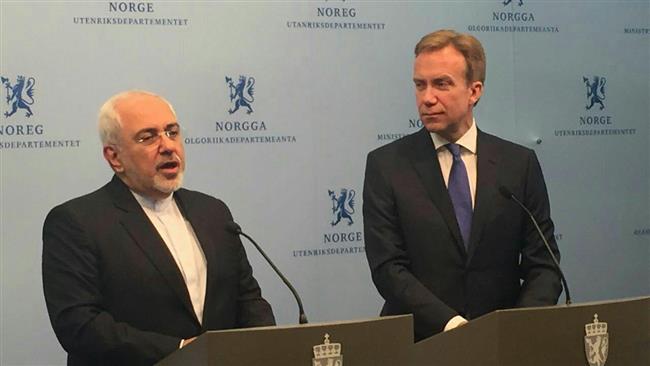
And like any progressive project, it has some more far-fetched ideas it has tried to implement including inviting Javad Zarif, the foreign minister for the Iranian regime to this year’s conclave in Norway.

While we know Norwegians are a kind, generous and thoughtful people, earnestly hoping and working for peace around the world, the participation of Zarif at this Forum to ostensibly share ideas for peace is one of the more incredulous things anyone has heard.

The Iranian regime stands alone in the world as the leading supplier and exporter for terrorism and proxy wars. Its Quds Forces and Revolutionary Guard are on the battlefields and shipping cash, arms and mercenaries to Syria, Iraq, Afghanistan and Yemen.

It has managed to become the second largest executioner of prisoners on the planet and regularly abuses its own men, women, children, ethnic and religious minorities, journalists, dissidents and just about anyone else the mullahs in Tehran have a disagreement with.

Zarif’s crowning achievement has foreign minister has been to snooker the world into supporting a nuclear agreement that essentially preserves Iran’s entire nuclear infrastructure, open the floodgates to billions in fresh cash and does not mandate any changes in its barbaric human rights practices.

That’s a neat trick and if the participants at the Oslo Forum are looking for tips on how to obscure the truth, they’ve invited the right man in Zarif.

No one can deny that Iran’s intervention in Syria is the single largest reason why the civil war has lasted this long and expanded so far. It is also the reason why Islamic extremist groups such as Al-Nusra and ISIS were able to spring into existence and expand.

The heavy military and economic involvement by the Iranian regime and refusal to engage in multilateral peace talks that involve any discussion of removing the bloody Assad regime from power has certainly shaped and molded the Syrian conflict into the bloody affair it is today.

All of which makes Iran’s participation in the Forum that much more curious since top mullah Ali Khamenei has been definitive and expressive in his beliefs concerning the use of violence and terror to achieve the regime’s aims. Compromise, negotiation, mediation and discussion are not words in the vocabulary of the mullahs.

That is certainly true when you look at the recent spate of arrests and imprisonments of dual-national Iranians who have been tossed into Iranian prison without charge or access to counsel, including a Canadian professor and a British mother.

It is also notable that during recent visits by various European leaders to Iran to seek out commercial trade opportunities with the nuclear agreement in effect, the Iranian regime did not slow down one bit the pace of executions, imprisonments and abuses during any of those visits.

Take for example Federica Mogherini, European Union policy chief, who visited Iran this past April only to see the regime execute three prisoners the day she arrived or Matteo Renzi, the Prime Minister of Italy, who visited Iran only to have the regime hang 17 people, including three juveniles at the same time.

These visits by European leaders and the inclusion of Zarif at a conference for peace negotiators makes a mockery of the human suffering in Iran and only emboldens the mullahs to continue with these practices since there seems to be no downside.

His participation is even stranger when you consider that the Iranian regime has opened up a recruiting center in Heart, Afghanistan to persuade and even coerce thousands of Afghans to fight in Syria.

The Christian Science Monitor visited the center and reported on what is no longer a secret in Iran as the regime seeks to bolster the number of mercenaries sent to fight for the Assad regime.

Some Afghans fight willingly for religious reasons, eager to take up a cause of “defending” Shiite shrines in Syria. Others fight for cash, upwards of $700 per month, or choose to realize promises of Iranian citizenship, schooling for their children, and jobs, if they survive the frontline – benefits usually beyond reach for Afghan migrants in Iran, the Christian Science Monitor reported.

Still other Afghans report coercion and intimidation, and say their second-class status inside Iran – among an estimated 3 million Afghans, only one-third are legal migrants – is taken advantage of. Afghans’ “vulnerable legal position in Iran and the fear of deportation may contribute to their decision [to join militias in Syria], making it less than voluntary,” Human Rights Watch said in a January report.

None of these revelations should be ignored at the Forum and in fact, Zarif should be confronted with these facts and asked why the regime has failed to work for peace in Syria instead of seeking to escalate the conflict.

Ultimately, as Zarif continues this European tour, he should be met with hard and tough questions and not platitudes and open arms.

By Michael Tomlinson

Filed Under: Blog, News Tagged With: Featured, Iran, Iran deal, Iran Human rights, Khamenei, oslo forum, Sanctions, zarif

  • « Previous Page
  • 1
  • …
  • 32
  • 33
  • 34
  • 35
  • 36
  • …
  • 50
  • Next Page »

National Iranian-American Council (NIAC)

  • Bogus Memberships
  • Survey
  • Lobbying
  • Iranians for International Cooperation
  • Defamation Lawsuit
  • People’s Mojahedin
  • Trita Parsi Biography
  • Parsi/Namazi Lobbying Plan
  • Parsi Links to Namazi & Iranian Regime
  • Namazi, NIAC Ringleader
  • Collaborating with Iran’s Ambassador

Recent Posts

  • NIAC Trying to Gain Influence On U.S. Congress
  • While Iran Lobby Plays Blame Game Iran Goes Nuclear
  • Iran Lobby Jumps on Detention of Iranian Newscaster
  • Bad News for Iran Swamps Iran Lobby
  • Iran Starts Off Year by Banning Instagram

© Copyright 2026 IranLobby.net · All Rights Reserved.