Iran Lobby

Exposing the Activities of the lobbies and appeasers of the Mullah's Dictatorship ruling Iran

  • Home
  • About
  • Current Trend
  • National Iranian-American Council(NIAC)
    • Bogus Memberships
    • Survey
    • Lobbying
    • Iranians for International Cooperation
    • Defamation Lawsuit
    • People’s Mojahedin
    • Trita Parsi Biography
    • Parsi/Namazi Lobbying Plan
    • Parsi Links to Namazi& Iranian Regime
    • Namazi, NIAC Ringleader
    • Collaborating with Iran’s Ambassador
  • The Appeasers
    • Gary Sick
    • Flynt Leverett & Hillary Mann Leverett
    • Baroness Nicholson
  • Blog
  • Links
  • Media Reports

NIAC Gets It Wrong About President Trump and Hassan Rouhani Again

October 26, 2017 by admin

NIAC Gets It Wrong About President Trump and Hassan Rouhani Again

NIAC Gets It Wrong About President Trump and Hassan Rouhani Again

The National Iranian American Council has become one of the most vocal and ardent purveyors of shameless cheerleading for the mullahs in Tehran and has established itself with a solid track record of making statements and promises about future behavior from the Iranian regime only to see virtually all of them proven false over time.

Yet, the NIAC’s continued churning of so-called “fake news” still finds a home in some publications and blogs—albeit a shrinking circle from the heady heydays enjoyed during the Obama administration’s policy of appeasing the regime.

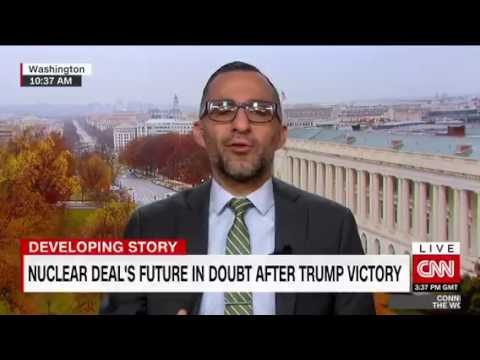
The latest missive comes from Reza Marashi, NIAC’s research director, who has built an uncanny ability to publish “researched” editorials that are consistently wrong, in Al-Monitor in which he makes the claim that recent actions by President Donald Trump against Iran may have helped Hassan Rouhani.

Marashi bases his claim that President Trump’s decision not to recertify Iran in compliance with the nuclear deal, known as the Joint Comprehensive Plan of Action (JCPOA), and sending the matter for Congressional review, has helped fortify Rouhani’s troubled administration because it has rallied Iranian stakeholders against the U.S.

Let’s be very clear on a very important point Marashi ignores: There are no factions within the Iranian regime’s government that are even remotely favorably disposed towards the U.S.

This is an Islamic theological state run by clerics that mandate weekly “Death to America” observances, openly and actively fund terrorist groups that target and kill American service personnel in Iraq and Afghanistan, have taken American citizens hostage and held them for ransom, and have built a ballistic missile capability designed to deliver nuclear payloads as far away as Europe and Asia.

Marashi also claims that Rouhani and top mullah Ali Khamenei are united in a strategic vision to maintain a unified policy towards the U.S. regardless of whatever the outcome of nuclear deal negotiations.

On this point, he is partially correct since Rouhani is the handpicked front man for Khamenei to offer the West a kinder, gentler face of the regime that also tweets in order to build a perception that Iran was a moderate state when in fact it was plotting to massively expand its military operations in Syria, Iraq and Yemen.

“Whatever their differences, Khamenei needs Rouhani and his technocrats to repair the damage wrought by former President Mahmoud Ahmadinejad, and Rouhani needs Khamenei to provide political protection while he does so,” Marashi writes.

It’s a silly statement to make, especially for someone who purports to be a “research director” since it doesn’t take much research to know that the damage Khamenei needed for Rouhani to repair was an Iranian economy crippled by sanctions aimed at its secret nuclear program and the enormous drain on its treasury by bankrolling the Assad regime’s desperate war to hold onto power in Syria.

Marashi makes it sound that Rouhani is merely trying to rebuild an economy hurt by the mismanagement of the Ahmadinejad administration, when in fact Khamenei was desperate to gain an injection of billions of dollars in fresh capital to stave off a total collapse of the economy and consequently the Islamic state.

“Since entering office four years ago, Rouhani has maintained arguably the most diverse and inclusive political coalition in the 38-year history of the Islamic Republic,” Marashi adds.

This is one of the more astounding claims he makes since the Iranian regime allows no dissident political activities, and openly and aggressively rounds up dissenting voices and tosses them into prison, as noted by the harsh crackdown of journalists, artists, students and others by the Rouhani administration prior to parliamentary elections.

The contention Marashi makes that Rouhani was somehow in jeopardy has never been real in fact since Rouhani serves only at the pleasure of Khamenei and it is up to the supreme leader to decide when his usefulness is at an end. For as long as Khamenei perceives Rouhani can maintain the fiction of a more moderate Iran then Rouhani and his allies in the Iran lobby will continue to push their false messages.

The strategy Rouhani employs that Marashi defends in outlining support for the JCPOA had little to do with nuclear power and more with lifting economic sanctions to save the regime with a fresh infusion of capital.

The fact that the Obama administration were eager to do a deal with little consequences attached to its support for terrorism, abysmal human rights and the build out of ballistic missiles only served to reinforce the perception among the mullahs that Rouhani was useful in keeping up the perception that Iran was genuinely interested in becoming a “moderate” player when in fact it was only seeking massive piles of cash.

Marashi does not credit the Obama administration’s unsavory willingness to kowtow to the regime and even arrange for a midnight flight of pallets stuffed with cash sent to Tehran on the eve of the agreement as evidence not of Rouhani’s acumen, but rather American miscalculation that has been borne out over the last two years.

What Rouhani “sold” to Khamenei was a vision that Iran could have its cake and eat it too by negotiating a nuclear agreement that never eliminated its nuclear development—only delayed it—and freed it to move aggressively forward with its missile program to someday threaten its neighbors with ballistic missiles armed with nuclear warheads,

The only kernel of truth Marashi does offer is the idea that Iranians would not blame Rouhani for the nuclear agreement’s failure. The Iranian people would certainly not blame him since they live under a repressive government that punishes contrary thinking with stiff prison sentences and quick trips to the gallows mandated by clerical courts.

Marashi also failed to note how under Rouhani, Iran’s pace of public executions set a record-breaking pace pushing it far beyond almost every nation on Earth. It’s no wonder no Iranian would openly blame Rouhani since to do so almost guarantees a prison sentence.

Michael Tomlinson
Filed Under: Blog, News Tagged With: Appeasement policy, Featured, hassan rouhani, Iran, Iran deal, Iran Lobby, Iran sanctions, Khamenei, Moderate Mullahs, National Iranian American Council, NIAC, NIAC Action, Reza Marashi, Rouhani, Sanctions

Tillerson Visit Carries Deeper Meaning for Iran Meddling

October 24, 2017 by admin

Tillerson Visit Carries Deeper Meaning for Iran Meddling

Tillerson Visit Carries Deeper Meaning for Iran Meddling

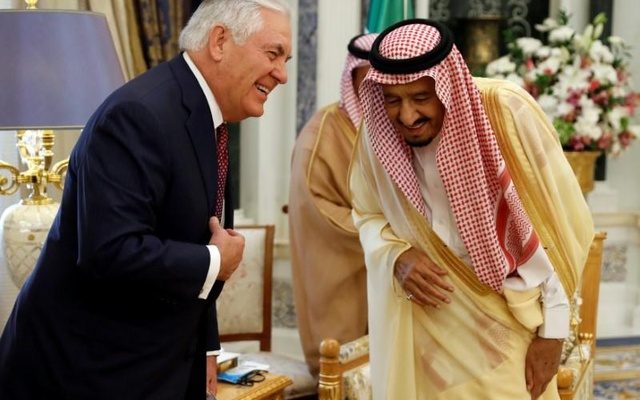
Secretary of State Rex Tillerson dived deep into Middle East politics at a time where the threat from ISIS was diminishing after battlefield victories against the Islamic extremists. His whirlwind stops in Saudi Arabia, Afghanistan and Iraq were designed to hold the line in a post-ISIS world against the encroaching influence of the Iranian regime.

In Saudi Arabia, Secretary Tillerson urged Saudi Arabia to counter Iran’s influence in Iraq by strengthening its ties with Baghdad in a meeting with King Salman of Saudi Arabia and Iraqi prime minister Haider al-Abadi.

His meeting included a call for Iranian-backed Shiite militias fighting in Iraq to leave and go back to their homes.

“Certainly Iranian militias that are in Iraq, now that the fight against Daesh and ISIS is coming to a close, those militias need to go home,” Tillerson said, using two other names for Islamic State. “Any foreign fighters in Iraq need to go home and allow the Iraqi people to regain control of areas that had been overtaken.”

Tillerson’s focus on these militias, known as Popular Mobilization Forces, he was taking aim at the growing influence of the Iranian regime’s Revolutionary Guard Corps and its Quds Force which has operated in Iraq in an increasingly visible way during the war against ISIS.

During the conflict, Tehran has sought to exert more influence in Iraq through participation in Iraq’s political process; a fraught process that nearly collapsed Iraq when former prime minister Nouri al-Maliki acted on Iranian wishes in expelling Sunni power sharing in his government, sparking a new round of sectarian conflict and empowering ISIS with the collapse of Mosul.

But Tillerson’s visit highlighted a new initiative to counter Iranian influence as Saudi Arabia has taken several steps to deepen ties between Riyadh and Baghdad.

Saudi Arabia has reopened its border with Iraq for the first time in decades and restarted direct flights between Riyadh and Baghdad. Washington is hoping the political and economic ties will deepen through the newly minted Saudi-Iraq Coordination Council, reported the Wall Street Journal.

“We believe this will in some ways counter some of the unproductive influences of Iran inside of Iraq,” Tillerson said during a news conference in Riyadh.

He urged Saudi Arabia’s involvement in Iraq’s reconstruction, as Baghdad looks to rebuild the country after a three-year war against Islamic State that destroyed cities across the nation, and called economic revitalization vital to keeping a hard-won peace.

The full-court press to normalize relations also goes a long way to counter persistent arguments made by the Iran lobby and other regime supporters that U.S. policy in the Middle East during the Trump administration was only reactionary and intent on starting a new conflict with Iran.

The diplomatic efforts led by Tillerson represent another watershed moment for President Trump in the Middle East.

His earlier announcement to not certify the Iranian regime in compliance with the Iran nuclear deal to trigger Congressional review more correctly puts the question of how to address Iran’s larger militant actions such as development of ballistic missiles in the arena of public debate where President Barack Obama had previously sought to steer clear of when negotiating the agreement originally.

Iranian regime advocates such as the National Iranian American Council had laboriously tried to shield the mullahs in Tehran from facing questions about Iran’s dismal human rights record or support for terrorist groups during the original talks two years ago, but in the intervening time the mullahs have stepped up their efforts in swinging the Syrian civil war over to the Assad regime, as well as rapidly build and deploy powerful new ballistic missiles.

The wreckage left behind by Iranian regime has solidified the decision-making process in the Trump administration to focus on containment and rolling back Iranian regime’s advances more aggressively than the policy of appeasement the Obama administration followed.

The decertification of the Iran nuclear deal is only one of several other initiatives being made by the Trump administration to roll back Iranian regime’s influence including:

  • Step up international efforts to garner international support to condemn and halt the Iranian regime’s ballistic missile program and prevent another North Korea scenario from taking root in the Middle East;
  • Encourage building stronger ties among U.S. allies such as Saudi Arabia and Iraq and the Gulf states to redraw lines of influence away from Iran and repair decades-long schisms;
  • Offer more military and intelligence support for U.S. allies in confrontations with Iranian regime forces and their proxies in hot spots such as Syria, Iraq, Afghanistan, Yemen, Qatar and Saudi Arabia.

More importantly, the U.S. is again openly warning companies from doing business with Iranian regime’s “Revolutionary Guard Corps” (IRGC) as it considers broader terrorist designations against the main tool of the mullahs.

The U.S. last week announced tough new sanctions against the IRGC because of its support for terrorism, effectively excluding it from the US financial system. Companies doing business with the group also risk penalties.

The push for expanded sanctions against the IRGC recalled the effectiveness of broad economic sanctions placed by the former administrations of presidents Bill Clinton and George W. Bush that put a stranglehold on the Iranian regime’s economy and brought the mullahs to the bargaining table in the first place.

Unlike the Obama administration, President Trump seems intent on not replaying the mistake of appeasement made by his predecessor and instead forge a new deal that finally brings Iranian regime’s extremism to heel.

Filed Under: Blog, News Tagged With: #NuclearDeal, Appeasement policy, Featured, Iran, Iran deal, Iran Human rights, Iran Lobby, Iran Mullahs, Iran Terrorism, IRGC, National Iranian American Council, NIAC, Nuclear Deal, nuclear talks, Sanctions, Syria

What Happens If the Iran Nuclear Deal Stays?

October 5, 2017 by admin

President Donald Trump has been beset by a tumultuous September and now October with hurricanes battering Texas, Florida and Puerto Rico, North Korean belligerence and the horrific massacre in Las Vegas. No one would question that the burdens of being president right now are great

President Donald Trump has been beset by a tumultuous September and now October with hurricanes battering Texas, Florida and Puerto Rico, North Korean belligerence and the horrific massacre in Las Vegas. No one would question that the burdens of being president right now are great

President Donald Trump has been beset by a tumultuous September and now October with hurricanes battering Texas, Florida and Puerto Rico, North Korean belligerence and the horrific massacre in Las Vegas. No one would question that the burdens of being president right now are great.

But President Trump faces a self-imposed Oct. 15th deadline as well to decide what he wants to do with the Iran nuclear deal, which he has previously described as a terrible deal and with that decision comes a whole new raft of challenges.

In many ways, he has options that other presidents would not have since he comes at this point with essentially a clean slate. He can take several options such as continuing to certify the Iranian regime in compliance with the deal, but continuing to hold the mullahs over a proverbial cliff edge; threatening to pull out at any time. The agreement’s renewal window gives him the opportunity to continually threaten the mullahs.

Secretary of State Rex Tillerson offered that the president would have multiple options in addressing the Iranian conundrum.

What is clear though is that while the nuclear agreement is being widely hailed by the Iran lobby and regime supporters as a success, the issues many critics and even the president have with it is that the deal was too narrow and gave a free pass to the regime on a whole host of issues such as development of ballistic missiles that were nuclear-capable.

Much of the instability the Middle East is experiencing has its central roots planted in Iranian soil where the mullahs have sought to use their Revolutionary Guards and Quds Forces to actively initiate and carry out military conflicts on multiple fronts, including Syria, Iraq, and Yemen.

Those militant acts drew the U.S., Russia and Saudi Arabia into armed conflict and pitched the world dangerously closer to global confrontation.

The funneling of cash to the Assad regime in Syria and terrorist operations such as Hezbollah and Shiite militias in Iraq have been a fundamental reason for why sectarian conflicts have sprouted all around the world like noxious weeds.

The mullahs have always viewed the use of funded third-parties as a legitimate tool of state-craft, which is why Iran has consistently been at the top of the U.S. State Department’s list of states that sponsor terrorism.

But not only has Iran’s foreign policy been a source of consternation for the world, but its internal domestic policies have also fueled this militancy because the nuclear deal left in place all of the mechanisms of the theocratic regime and provided no boost or reprieve from embattled democracy and dissident advocates within Iran.

If anything, the deal only emboldened Hassan Rouhani and his puppet master, Ali Khamenei, to crack down even harder on internal dissident with impunity; leaving human rights within Iran shambles and subjecting the Iranian people to enormous hardship and deprivation.

Dissident groups such as the National Council of Resistance of Iran have long documented the steep, downward spiral of human rights in Iran since the nuclear deal was agreed to and lack of movement within Iran.

This disconnect between the nuclear deal and lack of any inclusion of restrictions on Iran beyond the very narrow scope centrifuges and uranium explains much of what has gone terribly wrong with Iran. In many ways, its failures mirror the failures of efforts to control North Korea whose own flawed nuclear agreements served as the templates for the Iran deal.

What is clear though is that the Iran lobby is working feverishly to frame the debate of a post-deal world as being an abysmal one for the U.S.

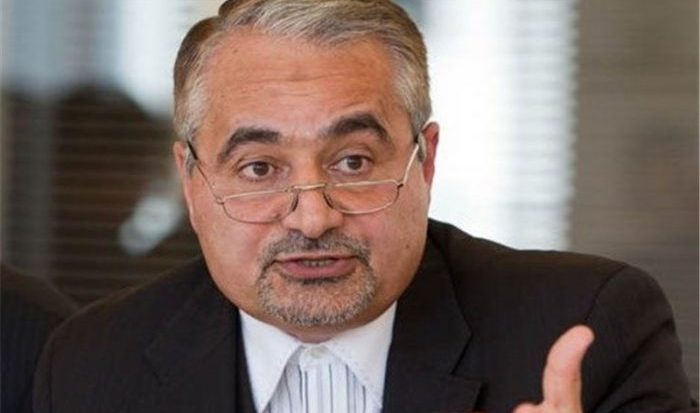
Take for example an editorial in the Los Angeles Times by Seyed Hossein Mousavian, a Princeton University scholar and a former Iranian regime official, in which he portrayed Rouhani’s 2013 election as an act of moderation now threatened by the nuclear deal’s demise.

Mousavian neglects to note Rouhani’s re-election against the backdrop of President Trump’s widely publicized views on the nuclear deal. If “hardliners” in Iran were empowered by the president’s rhetoric, then by Mousavian’s own standards, Rouhani’s 2017 campaign should have gone down in flames.

But as a former regime official, Mousavian’s insights are pointless since they do little to illustrate any opinions contrary to the wishes of Khamenei and his mullah brethren. Indeed, it would be explosive if Mousavian voiced any criticism of the regime’s support for terrorism and its quick build-up of ballistic missiles as excuses the president is using to dump the deal.

If Mousavian was truly an agent for global peace efforts, he would have encouraged his former colleagues to abandon the most odious portions of the regime’s abuses to give the president less ammunition to derail the deal.

Mousavian’s lack of any discernible criticism in any area places him squarely in the camp of Iran loyalists.

“Because Trump has put the deal in his crosshairs, advocates of diplomatic engagement with the West in Iran are being discredited. If he goes ahead with his stated wish to undo it, a domestic consensus will form not to trust, negotiate or cooperate with the United States on any future issue,” Mousavian writes.

It’s a ludicrous statement to make since everybody knows that when it comes to Iranian regime’s policies, it’s the Supreme Leader, Ali Khamenei who makes all the decisions; and the rift between various rivals within the regime is due to the power struggle they have on who gets a bigger share. It’s long known that it’s the Iranian lobby’s narrative to advocate more dialogue with the regime, to strengthen the so-called moderates within the regime, whereas when it comes to the foreign policies of the regime, Iran has done more in support of terrorism during the “reformist” Rouhani’s tenure, in its meddling in Syria, Yemen, Iraq and in employing the Hezbollah and other extremist proxy forces in those countries, than his predecessor, hardliner Ahmadinejad. Likewise,  human rights organizations reports show that under Rouhani, there have been a lot more executions than any of his predecessors in the past 25 years.

The reality is that the Iranian regime has squeezed everything it could get from the nuclear deal in terms of pallets of cash delivered by the Obama administration to a lifting of economic sanctions to allow foreign companies to broker deals.

Even if the president were to dump the deal, the reality is that very little would initially change except the rhetoric coming from Tehran and from supporters such as Mousavian.


Filed Under: Blog, News Tagged With: #NuclearDeal, Appeasement policy, Featured, hassan rouhani, Iran, Iran deal, Iran Human rights, Iran Lobby, Iran Mullahs, Iran Terrorism, Khamenei, Seyed Hossein Mousavian

President Trump UN Address Sets Stage for Iran Action

September 21, 2017 by admin

President Trump UN Address Sets Stage for Iran Action

President Trump UN Address Sets Stage for Iran Action

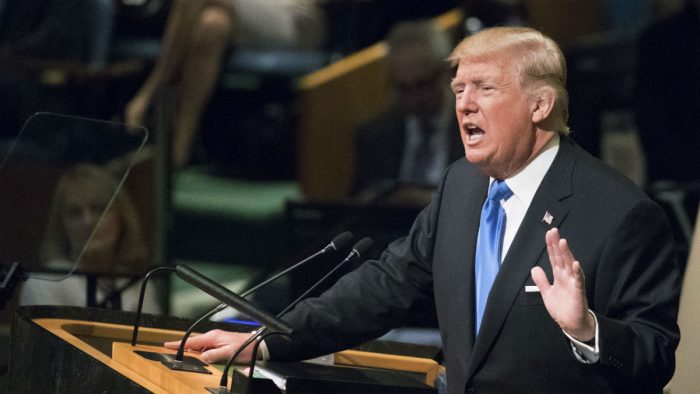
President Donald Trump delivered his first address to the opening session of the United Nations General Assembly and garnered the predictable range of reactions based on whether you support his administration or not.

For critics, especially the Iranian regime, his speech was filled with dark imagery that threatened to tear up the Iran nuclear deal, while for his supporters he offered a clear vision of American foreign policy based on conservative values he detailed on the campaign trail.

The fallout from the speech has been predictable from the media pundits to think-tank analysts to foreign leaders. From his supporters, such as former House speaker Newt Gingrich, the president’s speech echoed the themes of conservative stalwarts such as President Ronald Reagan, Britain’s Margaret Thatcher and France’s Charles de Gaulle.

“The chief nationalist in this administration is Donald J. Trump. And he knows what he’s trying to say,” Gingrich said. “It’s not a one-sided American nationalism, it’s a re-centering on sovereignty that’s really, really important.”

The president grounded his speech in re-statement of American principles based on the sovereign right of nations to act in their own interests, but so long as they respected the rights of their people and the other nations. He drew a sharp distinction with the few rogue nations that acted to oppress their own people and cause regional and global instability.

He singled out the Iranian regime, North Korea and Venezuela and expanded on the threats facing the world beyond terrorism and conventional warfare to include the more modern threats posed by “international criminal networks traffic drugs, weapons, people, force dislocation and mass migration, threaten our borders and new forms of aggression exploit technology to menace our citizens.”

This was an interesting focus for the president since Iran and North Korea have been at the forefront of state-backing of criminal enterprises, including smuggling arms, aiding the global narcotics trade and supporting a thriving black-market economy. Both regimes have used profits from these illicit activities to fund their respective nuclear and ballistic missile programs.

The fact that North Korea licensed its missile technology to Iran and hosted Iranian military and science personnel is proof of the deep relationship between the two regimes; a fact that President Trump finally called out into the open.

While many critics have tried to make hay over the president’s emphasis on national sovereignty, they neglected to understand the context of his statements which was strong, independent nations were necessary to forming a more effective United Nations. Weak or timid nations are not going to stand as guardians for international peace and history has taught us that harsh lesson many times from the appeasement of Hitler’s Germany in the 1930s to the collapse of any opposition to a tough Iran nuclear deal.

President Trump’s call for sovereignty was also a direct challenge to the Iranian regime’s efforts to create a Shiite sphere of influence from Lebanon and Syria to Iraq and Yemen. His recognition of the mullahs’ territorial appetites also set the stage for the larger debate about the Iran nuclear deal which is the fatal flaws in it in the first place.

The argument that critics of the nuclear deal have long made was that it was badly flawed in the first place. It never set restrictions on delivery systems such as ballistic missiles and it never sought to tie Iran’s human rights record or support for terrorism to the agreement.

Most glaringly, it did nothing to curb Iran’s appetite for regional conquest as exemplified by the regime’s accelerated push into Syria to support the Assad regime once it was signed. Iran’s Hassan Rouhani himself boasted that Iran’s nuclear program could be restarted in a matter of hours if the deal was torn up by the U.S.; hardly a guarantee of international security.

French President Emmanuel Macron said on Wednesday the Iran nuclear deal was not enough given that Tehran had increased its influence in the region and pressed ahead with ballistic missile tests, and offered to mediate between the United States and Iran, according to Reuters.

His statements offered more validation for President Trump’s contention that supporting a flawed deal in the first place was no sure pathway to nuclear peace.

“Is this agreement enough? No. It is not, given the evolution of the regional situation and increasing pressure that Iran is exerting on the region, and given increased activity by Iran on the ballistic level since the accord,” Macron told reporters in New York.

“Let’s be honest, the tensions are on the rise, look at the activities of Hezbollah and Iran’s pressure on Syria. We need a clear framework to be able to reassure regional countries and the United States,” Macron said.

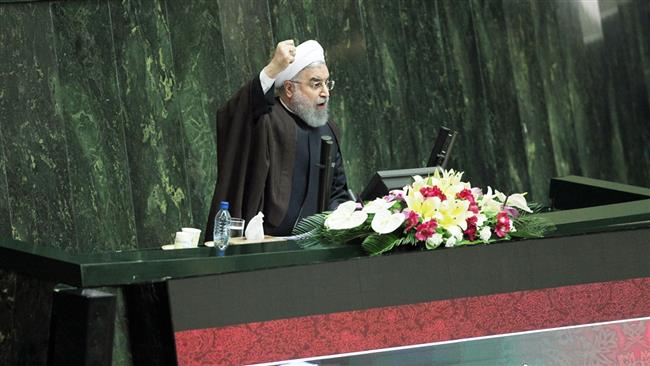
The Iranian response was predictable as Rouhani attacked President Trump’s remarks in his own address to the UN General Assembly calling it “ignorant, absurd and hateful rhetoric.”

Rouhani expanded on his attacks in an interview with NBC News claiming that “no one will trust America again” should the Trump administration walk away from the Iran nuclear deal.

It is a silly argument to make since the mullahs in Tehran have never trusted the U.S. no matter who was president. They only viewed the nuclear deal as a vehicle to gain breathing room and relief from crippling economic sanctions and gain a huge financial windfall of billions of dollars they used to fund wars in Syria and Yemen and quickly accelerate their ballistic missile program.

Rouhani speaking of “trust” is comical given the Iranian regime’s pathetic record on making grandiose promises to its own people and cruelly breaking every one of them.

In fact, Rouhani himself made bold promises of reforms in the regime and expanding the role of women in the government; yet in picking his own cabinet, he did not select a single woman for any senior leadership role and filled it with old, veteran hands of the Revolutionary Guards and Ministry of Intelligence.

In many ways President Trump’s blunt assessment of the Iran, North Korea and Venezuela is bold departure from the normal flowery language of the UN and diplomacy, but the world has already seen that over the past two years diplomacy has yielded nothing from those three regimes, especially Iran.

It may be time to try a different tack and actually hold Iranian regime accountable.


Filed Under: Blog, News Tagged With: Featured, hassan rouhani, Iran, Iran deal, Iran Human rights, Iran Mullahs, Iran sanctions, Iran Talks, Iran Terrorism

Iran Lobby Tries to Separate North Korea from Iran Regime

August 19, 2017 by admin

Iran Lobby Tries to Separate North Korea from Iran Regime

Iran Lobby Tries to Separate North Korea from Iran Regime

In the long-running battle to combat the falsehoods of the Iran lobby, this site has uncovered the facts behind some of the most ridiculous assertions made by Iranian regime advocates such as the National Iranian American Council.

We’ve unveiled the inner workings of the lobby, its intertwined relationships with families of regime officials and the consistency its messages are aligned with those pushed by the regime.

Since the start of negotiations for the nuclear agreement over two years ago, we’ve documented the multiple falsehoods uttered by the Iran lobby in support of the deal, such as that it would help empower “moderate” elements in Iran’s government and usher in an age of international cooperation and good will.

Of course, none of that has come to pass and we’ve hit the Iran lobby hard on the utter failure of their promises. Iran has become arguably the most destabilizing force in the Middle East right now next to the Islamic State.

While ISIS has time and again spread its terror operations around the world, including most recently in Barcelona, Spain, the real linchpin to regional destabilization has been the Iranian regime and its proxy wars in Syria, Iraq and Yemen.

Most importantly though, Iran has helped fuel the sectarian nature of the conflicts going on, introducing the deep schism dividing Sunni and Shia populations and setting their respective governments against each other.

The mullahs in Tehran have sought to divide and conquer the Arab world and the result has been widespread chaos. Throughout all this, the Iran lobby has steadfastly sought to shift blame to more traditional whipping posts including the U.S., Israel and Saudi Arabia.

It didn’t matter which U.S. administration was in office or which political party controlled Congress; the Iran lobby always found it convenient to shift blame away from Iran no matter what the transgression was such as appalling human rights violations or the deepening wars in neighboring countries.

The arrest of dual-national Iranians? Blame the U.S. policy on immigration.

The execution of Iranians convicted as children with false confessions extracted under torture? Blame the opium trade from neighboring Afghanistan.

The miserable economic conditions strangling the Iranian people? Blame U.S. sanctions.

The Iran lobby has consistently always shifted blame and never affixed it squarely where it belonged: the mullahs in Tehran.

Now comes one of the more incredibly ridiculous claims made yet by the Iran lobby in the form of an editorial by Reza Marashi of the NIAC in Haaretz, which warned the U.S. from using the North Korean threat as a tie-in to Iran.

“First, conflating Pyongyang and Tehran is troublesome for an obvious reason: One has the bomb, and the other does not,” writes Marashi in one of the more glaring misstatements ever uttered by a member of the Iran lobby.

Iran’s own president, Hassan Rouhani, declared to Iranian lawmakers this week that Iran could walk away from the nuclear deal and restart its nuclear program in a “matter of hours” and bring a weapon to fruition in short order.

The gap between North Korea and Iran’s nuclear capabilities was supposed to be measured in years according to the Iran lobby, but in reality it’s only a matter of hours.

Marashi then goes on to claim that American policies in confronting other rogue regimes with nuclear ambitions such as Libya and Iraq have only motivated the Iranian regime to work harder to build their nuclear program.

Let’s think about that piece of fetid logic for a minute.

Iran only pursues a nuclear program because of American efforts to restrain other rogue regimes to create their own nuclear arsenals? Rarely have we read a more bizarre theory than that one.

But Marashi doesn’t stop there. He tries to tie in the Trump administration’s decision to kill the Transpacific trade deal and pull out of the Paris climate change agreements as motivating factors for Iran not to trust the U.S. on the nuclear deal.

The cherry on top of Marashi’s bloviating is the contention that the North Korea deal was doomed to failure since the U.S. never had any intention of ever allowing the Hermit Kingdom to ever develop a nuclear capability and thus provides an impetus for Iran to believe the U.S. is similarly disingenuous with its deal.

“If Trump corrects course and fully implements Washington’s JCPOA obligations, the risk of Tehran pursuing Pyongyang’s path is slim to none. The longer he continues violating the terms of the deal, the more likely it becomes that Iran resumes systemically advancing the technical aspects of its nuclear program – without the unprecedented, state-of-the-art monitoring and verification regime currently in place,” Marashi added.

These claims by Marashi are not even worth calling an obfuscation. They are clearly falsehoods. Tehran always intended to follow a nuclear pathway and ensured that the nuclear deal would preserve its enrichment infrastructure and allow it to restart quickly without any serious interruption.

Also, the “state-of-the-art monitoring” Marashi cites is neither state of the art, nor is it any meaningful monitoring. The agreement gave away any serious oversight by prohibiting international inspectors from most of Iran’s military bases and allowing collection of soil samples only after extensive scrubbing and removal of topsoil and only by Iranian hands to be handed over to inspectors.

But what is most appalling is how Marashi never mentions the word “missile” which is the most glaring connection between Iran and North Korea and the real reason why the two nations are indeed joined at the hip.

North Korea jump started Iran’s ballistic missile program by licensing its technology in the first place and has provided steady upgrades, improvements and technical advice. Iran is now following the exact playbook North Korea has followed in building ever-increasingly powerful missiles that can now reach the U.S. mainland.

North Korean officials have made regular visits to Iran and vice versa to exchange technical data and now there have been increasing news reports of the potential for Iranian scientists working in North Korea on learning its manufacturing processes for building nuclear warheads for its missiles.

Marashi is not only wrong, he is again engaging in the art of misdirection in trying to divert attention from the real alliance between Iran and North Korea.

Staff writer

Filed Under: Current Trend, National Iranian-American Council, News Tagged With: Appeasement policy, Featured, Iran, Iran deal, Iran Human rights, Iran Lobby, Iran Mullahs, Khamenei, National Iranian American Council, NIAC, NIAC Action, Reza Marashi, Rouhani

Iran Tries Blackmail in Threatening Failed Nuclear Deal

August 16, 2017 by admin

Iran Tries Blackmail in Threatening Failed Nuclear Deal

Iran Tries Blackmail in Threatening Failed Nuclear Deal

One of the key provisions of the Iran nuclear deal was an agreement to not include so-called “side issues” into the agreement such as the regime’s sponsorship of terrorism or any improvement in its human rights record.

The mullahs in Tehran knew they would instantly fail any of those litmus tests and fought hard to keep them out of the agreement, but in doing so they set themselves up for failure down the road when continued abuses would force the U.S. to act in levying new sanctions for terrorism support and Iran’s burgeoning ballistic missile program.

The mullahs found themselves stuck between a rock and a hard place. The nuclear agreement did not contain any language prohibiting economic sanctions on non-core nuclear issues per the mullahs’ demands so as the Trump administration and U.S. Congress imposed new sanctions the mullahs were left to cry foul without any basis to stand on.

The Iran lobby then went to work trying to stave off sanctions by pushing the message that these additional sanctions would threaten the “essence” of the agreement and cause its collapse leading to Iran building a nuclear arsenal.

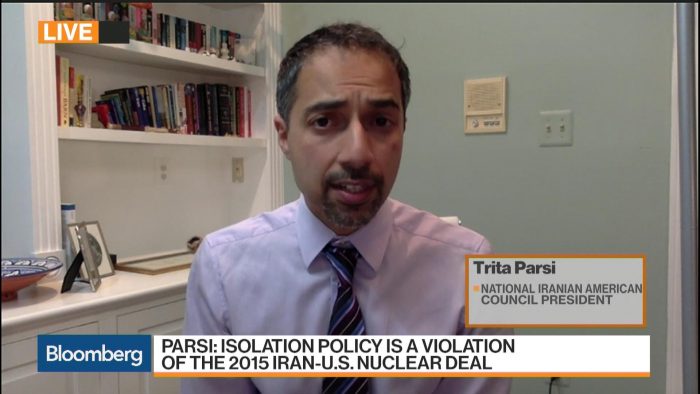
Trita Parsi of the National Iranian American Council tried to blame President Donald Trump for the potential collapse of the deal and issued a statement that reeked of falsehoods commonly trotted out by the Iran lobby.

“It should now be clear that Donald Trump’s moves to violate and hold certification of the Iran nuclear deal in doubt are actively destabilizing the accord. Unfortunately, in response to Trump’s increasingly hostile rhetoric, as well as Congress’ moves to escalate sanctions, Iran is now warning that it has its own options to back out of the deal if the U.S. continues to undermine it,” Parsi said.

Let’s be clear: Iranian regime, not the U.S., is responsible for destabilizing the nuclear deal with their bloody war in Syria, efforts to sow insurrection in the Gulf states, and start launching ballistic missiles at a clip rivaling North Korea. The U.S. did nothing to inspire those acts and all those acts began actually years ago and under the Obama administration.

Also, the U.S. Congress and American electorate has had the luxury to see how the nuclear deal has turned out after two years and their answer has been overwhelmingly negative. While Parsi may try to affix blame on President Trump, the real culprits are in Tehran.

But Parsi didn’t stop there.

“We have repeatedly warned that President Trump’s beating of the war drum with Iran, even if confined to rhetoric, in addition to new Congressional sanctions and zero diplomatic outreach, could only produce negative consequences. Iran’s parliament has now voted to increase spending on its ballistic missile program and the IRGC in direct response to new sanctions on the country,” Parsi added.

Incredibly, Parsi tries to also blame the U.S. President for Iranian regime’s decision to ramp up its missile program; ignoring the fact the regime’s missile program was begun a decade ago with technology licensing agreements with North Korea and fully funded by illicit oil sales.

It is a blatant example of how the Iran lobby tries to rewrite history to protect the Iranian regime after it acts to toss away the international agreements it signs.

Regime president Hassan Rouhani did his part in warning the regime could quickly ramp up its nuclear program and achieve an advanced level if the U.S. continued its “threats and sanctions.”

Rouhani’s remarks to Iranian regime lawmakers were his most direct warning that the deal could fall apart and risked ratcheting up tensions with the United States.

While most media focused on Rouhani’s threats, virtually no one picked up on the key inconsistency he made which is that Iran could “quickly” build nuclear weapons. This simple declaration proves the biggest lie offered by the regime and Iran lobby supporters such as Parsi: the nuclear deal did not push back the much-debated “breakout” period for Iran to build a nuclear device.

“In an hour and a day, Iran could return to a more advanced (nuclear) level than at the beginning of the negotiations” that preceded the 2015 deal, Rouhani said.

The nuclear deal has been a complete and utter failure.

United Nations ambassador Nikki Haley issued a stern and forceful rebuke to Rouhani’s comments and accurately pointed out the problem with the arguments being made by the Iran lobby about saving the nuclear deal at all costs.

Haley said on Tuesday Iran must be held responsible for “its missile launches, support for terrorism, disregard for human rights, and violations of U.N. Security Council resolutions.”

“Iran cannot be allowed to use the nuclear deal to hold the world hostage … The nuclear deal must not become ‘too big to fail’,” Haley said in a statement, adding that new U.S. sanctions were unrelated to the Iran nuclear deal.

What is ironic in all this debating about Iran is how North Korea is widely reviled, heavily sanctioned and appropriately feared by the rest of the world over its ballistic missile program, but in the case of Iran’s missile program, the European Union has struggled to stay mute and not offend the mullahs.

Why does North Korea’s missile program drive the world to the brink of striking back, but in the case of Iran, many American partners refuse to criticize Iran?

Part of the answer lies in the Iranian regime’s aggressive efforts to open its markets to European firms to make investment and economic hamstring themselves from taking future action against Iran. Another explanation comes from EU policy makers who naively believe in the lies of the Iran lobby and hope for the best while ignoring the evidence of Iranian regime’s extremism.

Europe’s reaction is eerily similar to the reaction their predecessors had to the rise of Adolf Hitler’s Nazi Germany in the 1930s.

We can only hope the world doesn’t pay again for that same policy of appeasement.

Michael Tomlinson

Filed Under: Blog, Current Trend, National Iranian-American Council, News Tagged With: #NuclearDeal, Appeasement policy, Featured, Iran, Iran deal, Iran Human rights, Iran Lobby, Iran Missile program, Iran Mullahs, Iran sanctions, Iran Talks, Iran Terrorism, National Iranian American Council, NIAC, NIAC Action, Rouhani, Sanctions, Trita Parsi

Iran Regime Adds Funds for Missile and Terrorism Programs

August 15, 2017 by admin

Iran Regime Adds Funds for Missile and Terrorism Programs

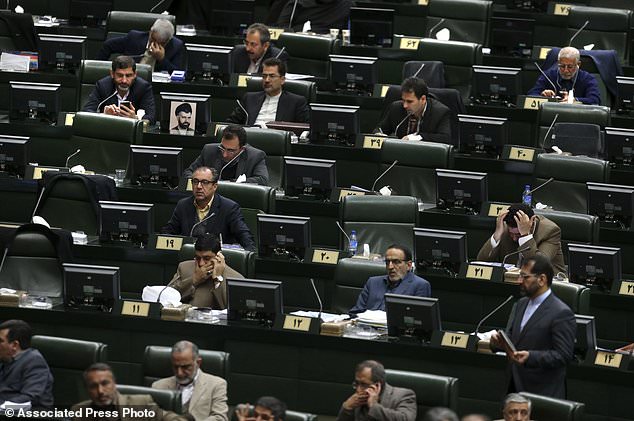
In this photo taken on Sunday, Feb. 19, 2017, lawmakers attend an open session of the Iranian parliament in Tehran, Iran. Iran’s parliament voted overwhelmingly Sunday, Aug. 13, to increase spending on its ballistic missile program and the foreign operations of its paramilitary Revolutionary Guard, chanting “Death to America” in a direct challenge to Washington’s newest sanctions on the Islamic Republic. (AP Photo/Vahid Salemi)

The Iranian regime parliament burnished its hardline credentials by approving an enormous boost in spending for its ballistic missile program and its Quds Forces within the Revolutionary Guard Corps, which has been at the heart at virtually all the proxy wars Iran is currently fighting throughout the Middle East.

The estimated $609 million boost will be divided evenly between the Quds Forces and missile effort, which the regime called the nation’s “deterrent capability,” according to regime-controlled Tasmin news agency.

Some lawmakers chanted, “death to America” as the bill was passed, according to state media.

The increase in funding comes as no surprise as the Iranian regime has steadily been funneling millions of dollars to fund its growing military commitments and support for proxies and terrorist organizations such as Hezbollah in Syria, Shiite militias in Iraq and Houthi rebels in Yemen.

If we think back to the completion of the Iranian nuclear agreement two years ago, the Obama administration shipped pallets full of cash via Iranian airliners in exchange for the release of American hostages. There were no conditions attached to the money which undoubtedly found its way to support Iran’s efforts to save the Assad regime in Syria.

Also, the Iranian regime does not report funding for its military nor for its paramilitary operations through its Quds Forces so we really don’t know how much money Iran really is spending on its missile and terror programs, but there can be little doubt the mullahs consider both high priorities.

Hassan Rouhani, the regime’s president, essentially tried to blame the Trump administration’s levying of new economic sanctions as the reason for the increase in funding, as well as the president’s public statements promising to rip up the nuclear deal.

“Anyone who harms the accord harms himself and his country,” Rouhani was quoted as saying by the Iranian Students News Agency. If the U.S. seeks to act against the agreement “everyone will side with us and against the person who wants to weaken it” he said in reference to other signatories to the deal including Germany and France, which have expressed their support for its continuation.

The move by the regime to boost its missile program comes in the wake of fellow rogue state North Korea’s rapid push into launching ballistic missiles capable of reaching the U.S. mainland, as well as intelligence reports that North Korea now possesses at least one nuclear device capable of being mounted on a missile.

It also follow’s North Korea’s threats to turn waters around the island of Guam and home to a sprawling U.S. naval base into a sea of fire with multiple missile strikes.

The roadmap North Korea has laid out in its missile and nuclear development is being closely followed by the Iranian regime in spite of the false promises consistently made by the Iran lobby that Iran was not pursuing nuclear capability.

North Korea’s licensing of its missile technology to Iran gave the regime a head start on missile development and provided a much-needed source of cash to the North Korean regime as it become the most isolated and sanctioned nation in the world.

In fact, North Korea’s Kim Yong Nam, the speaker of the parliament, attended Rouhani’s swearing in ceremony last week in a sign of the hermit kingdom’s close ties with the Iranian regime.

This isn’t Yong Nam’s first trip to Iran. He also visited in 2012 to attend the Non-Aligned Movement’s summit in Tehran. Then as now he was in the country for about 10 days, making many official visits and appearances, signing agreements for technical and educational cooperation between Iran and North Korea, according to the Daily Beast.

The connections between North Korea and Iran extend beyond building a missile fleet together as explained by David French in the National Review. The 1994 “Framework Agreement” between North Korea and the U.S. was almost a carbon copy of the Iran nuclear deal.

Like the Iran Deal, it sought to halt the pursuit of nuclear weaponry. Like the Iran Deal, it was supposed to bring a rogue nation back into the “global community.” Like the Iran Deal, it allegedly had enough safeguards to prevent cheating, French writes.

“Unfortunately, North Korea cheated. It maintained a secret uranium-enrichment program, and the deal collapsed soon after the Bush administration confronted the North Koreans with evidence of their noncompliance,” French added.

French goes on to point out that given this history, the Iran Deal may have been the worst possible model. For example, agreement with Iran famously provides the regime up to 24 days of notice before inspectors are allowed access to some suspect cites, and a regime with a record of cheating like North Korea’s is the worst possible regime to grant any leeway or any trust.

Moreover, the same deal granted Iran enormous economic benefits, access to international arms markets, and the ability to build ballistic missiles. A similar deal with North Korea would have the potential to supercharge the DPRK threat.

Instead, the Iran deal has pumped hundreds of millions of dollars into Iran which the mullahs are now funneling into the IRGC. North Korea demonstrates clearly that relying on “trust” to verify a nuclear agreement fails miserably when the rogue regime in question can’t be trusted in the first place.

The bolstering of Iran’s missile fleet and Quds Forces comes at the worst possible time for hopes of regional stability as Iran is now deeply involved in full-blown war and covert subversive campaigns in Syria, Iraq, Bahrain, Qatar, Kuwait, Yemen and now recently fired mortars and rockets along the Pakistan border.

All of the promises made by groups such as the National Iranian American Council that Iran would be a moderate force with the nuclear deal passed have been proven false and the world is now going to live under the threat of Iranian missiles because of it.

Michael Tomlinson

Filed Under: Blog, News Tagged With: #NuclearDeal, Featured, hassan rouhani, Iran, Iran deal, Iran Lobby, Iran Mullahs, Iran sanctions, Iran Terrorism, Khamenei, National Iranian American Council, NIAC, NIAC Action

Hassan Rouhani Starts Second Term with False Threats

August 8, 2017 by admin

Hassan Rouhani Starts Second Term with False Threats

Hassan Rouhani Starts Second Term with False Threats

Hassan Rouhani must be feeling like he’s stuck in the movie “Groundhog Day” as he was sworn in for a second term as the Iranian regime’s handpicked puppet president of Ali Khamenei and his fellow mullahs.

Four years ago, he was handpicked by his fellow clerics to be the “moderate” face of the regime and push for a lifting of economic sanctions that were crippling Iran through a nuclear agreement with the West.

With the help from the Iran lobby and a misguided Obama administration, he shepherded a deal through that saved him and his fellow mullahs from being tossed out on a wave of broad discontent among the Iranian people.

Now he begins a second term finding himself once again trying to promote a nuclear deal that is in danger of going the way of the dodo bird; only this time he finds a much different world stage he stands on in which the Iranian regime’s true colors have been on vivid display.

He finds President Donald Trump clearly skeptical of the regime’s intentions and efficacy of the nuclear deal.

He finds a U.S. Congress voting overwhelmingly to impose new economic sanctions because of Iran’s ballistic missile program.

He finds a Trump administration moving quickly to impose economic sanctions targeting Revolutionary Guard Corps leaders and companies involved in ballistic missile development.

Most worrisome, he finds a weakened Iran lobby machine that has lost much of its punch and influence with the transition of the Obama administration leaving many regime advocates cut off from the West Wing and cabinet agencies.

Rouhani attempted to offer up some tough-sounding rhetoric, but only ended up reminding watchers of his precarious position within the regime as his own brother was arrested on corruption charges.

“Today is the time for the mother of all negotiations, not the mother of all bombs,” Rouhani said, referring to the US dropping its largest non-nuclear bomb ever used in combat in Afghanistan in April. The Afghan president, Ashraf Ghani, was among those present at Rouhani’s inauguration.

“The US has showed a lack of commitment in its implementation of the nuclear deal because its policymakers are addicted to the illegal and futile policy of sanctions and humiliation,” Rouhani said. “This has proved the US to be an unreliable partner to the world and even to its longtime allies.”

Referring to Trump, he added: “We do not wish to engage with political novices … Those who want to tear up the nuclear deal should know that they will be ripping up their own political life by doing so and the world won’t forget their noncompliance.”

Tehran has complained the US is reneging on its obligations. Iran’s parliamentary speaker, Ali Larijani, said last week that Tehran had formally complained to the joint commission supervising implementation of the accord over the US senate’s new sanctions against Iranian entities, imposed over Tehran’s testing of missiles.

It is a curiously ironic stand for the regime to make since Iran was adamant during negotiations over the nuclear deal two years ago that “side issues” such as the regime’s ballistic missile program, sponsorship of terrorism and human rights abuses should not be part of the agreement.

When the Obama administration caved into those requests and took them out, the stage was unwittingly set for the Trump administration and Congress to act on those same “side issues” separately and apart from the nuclear deal and now the mullahs are crying foul like squealing babies whose milk bottle has been yanked from their mouths by a stern father.

The Iranian regime clearly wants a double standard on its conduct and now that it isn’t getting it, the mullahs cry foul and threaten to pack up and leave like petulant children.

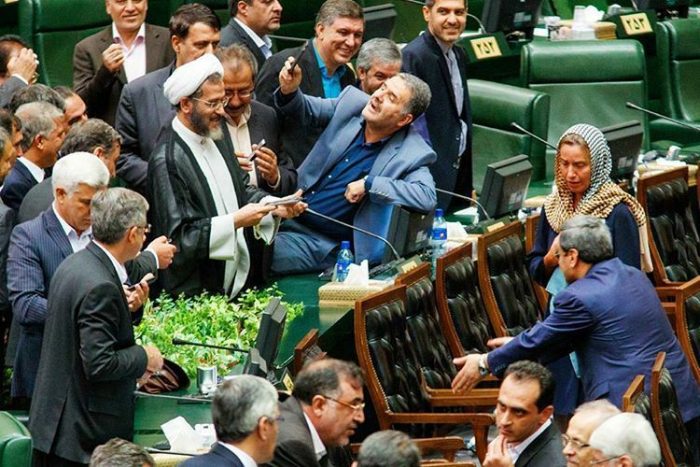
It’s an appropriate metaphor given how Iranian parliament members acted when European Union policy chief Federica Mogherini showed up for the swearing in ceremony and was promptly surrounded by them in a rush of sophomoric selfies.

The scene was roundly criticized in Iranian state media and on social media for the “strange” behavior being exhibited.

The Fars news agency posted a photo which many social media users felt showed Mogherini unimpressed – and labelled the MPs’ behavior “strange”. One MP, Alireza Salimi, called the behavior “self-surrender to the West”, and said that a committee on the conduct of members may probe the incident – if other MPs complain that the selfies caused “contempt” for parliament.

One popular tweet compared the image to a scene from the film “Malena,” where crowds of men rush to light actress Monica Belluci’s cigarette.

Another made the same point using of an iconic image from Walt Disney’s “Snow White and the Seven Dwarves.”

But the irony was not in the rush for selfies, but rather the fact that most Iranians are barred from using social media platforms such as Facebook, Snapchat and Twitter because of their widespread use by political opponents and dissidents.

It is also ironic to see Iranian MPs swarm a female politician when so many Iranian women are brutalized by misogyny laws passed by the same parliament permitting underage child marriages and restricting job opportunities and educational choices for women.

In fact, women are still prohibited from riding bicycles on public streets throughout Iran.

Now that is more compelling irony.

Laura Carnahan

Filed Under: Blog, News, The Appeasers Tagged With: #NuclearDeal, Appeasement policy, Featured, Federica Mogherini, Iran, Iran deal, Iran Lobby

Why Does the Iran Lobby Care About the Nuke Deal?

August 1, 2017 by admin

Why Does the Iran Lobby Care About the Nuke Deal?

Why Does the Iran Lobby Care About the Nuke Deal?

The Iran lobby, including the National Iranian American Council and other groups, invested heavily in supporting the Iran nuclear deal. They lobbied for it, wrote editorials, sent out loads of press releases, made appearances on news programs, held meetings with elected officials and coordinated strategy with the Obama White House through countless meetings.

The Iran lobby ostensibly was doing all this in the name of peace and in support of a whole host of promised positives coming from its passage, including:

  • Bolstering moderate elements within the Iranian regime and aiding their cause in upcoming elections;
  • Shifting Iran back towards diplomacy and serving as a moderating force in a deeply destabilized Middle East;
  • Empower international inspectors to keep Iran under close scrutiny and push back its development of a nuclear weapon; and
  • Propel Iran’s re-entry in the community of nations and become a partner economically and politically with the world once again.

It was a nice idea and attractive to many in Congress. Unfortunately, like most good intentions, it fell flat on its face when confronted by the evil nature inherent within the ruling mullahs in Tehran.

The one thing everyone seemed to forget and the Iran lobby was careful to obscure was that the Iranian regime never really cared about a nuclear deal since the mullahs knew it would never halt their nuclear program, only postpone it slightly.

What they and their Iran lobbyist allies really cared about was the lifting of crippling sanctions that, more than anything else, was and still is the true goal of the regime and its allies.

Preserving the nuclear deal is not the real concern of the regime. It is the potential for the re-imposition of economic sanctions under a skeptical Trump administration and a reset back to 2012 in which the Iranian regime was on the verge of collapse and widespread dissatisfaction among the Iranian people still simmered from the violent crackdown on the 2009 democracy protests.

This is why the deal was crafted to preserve Iranian regime’s missile program and never take up the issues of human rights and terrorism since the mullahs had always planned to use the cash it received from the nuclear deal to jumpstart their ballistic missile program and keep the Assad regime afloat in Syria.

The mullahs and by extension the Iran lobby relied on the passiveness of the U.S. under Obama. As British politician Edmund Burke once famously said: “The only thing necessary for the triumph of evil is for good men to do nothing.”

In this, the Iran lobby sought to dissuade action against Iran by promising a changed regime, but since none of that has happened and the situation throughout the Middle East has clearly gotten worse under the expansion of several proxy wars by Iran, the Iran lobby has shifted its tone and tactics to a much darker and fear-based message.

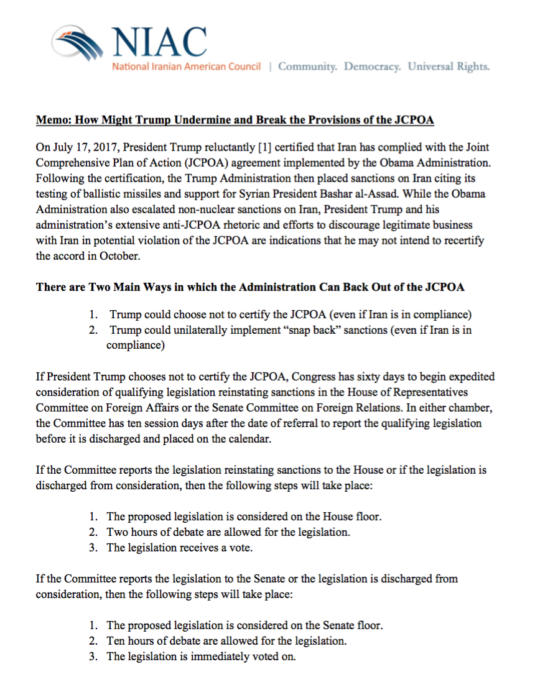
It now relies on the banging of war fears in trying to keep the nuclear deal alive as evidenced by the mounting PR push by groups such as the NIAC which put out a policy memo outlining how the Trump administration could undermine the nuclear agreement.

It is typically long-winded and rests its logic on the notion that President Trump can kill the Joint Comprehensive Plan of Action (JCPOA) agreement by choosing not to certify the JCPOA or implementing “snap back” sanctions.

The NIAC memo then goes on to exhaustively explain the various steps the Congress would take in reviewing either action by the president.

What the NIAC does not discuss is the fact the Congress voted to pass new sanctions on Iran by stunningly huge bipartisan majorities that made clear no one actually believes in any of the promises made by the NIAC earlier.

Iranian regime has clearly become a threat not only to the U.S., but to the entire region as its ballistic missiles can now reach targets throughout Europe, Asia and Africa.

The NIAC briefing also glaringly misses the essential point of what is happening now which is the Iranian regime’s actions on human rights violations, sponsorship of terror and accelerating a missile program that will soon surpass North Korea is what is driving the debate about Iran; not the nuclear agreement.

But the NIAC hopes that focus on the JCPOA will deflect attention on these other areas where Iranian regime is so blatantly awful on right now. It is akin to pointing at the crack den and ignoring the building on fire right next to it.

You can see how the Iran lobby is trying to push issues such as terrorism and missiles off the front pages by talking about the nuclear deal, when the nuclear deal isn’t even the issue being debated by Congress and the Trump administration.

This is the “new” grand lie of the Iran lobby and its supporters. They hope that by focusing on the JCPOA and Iranian regime’s continued “compliance” with the agreement that mullahs’ regime in Iran is somehow still a good global citizen. The lobby never addresses the ballistic missile program or the threat it poses, especially with heightened concerns over North Korea. It also never deals with the horrific human rights violations Iranian regime and its IRGC has perpetuated in the Syrian conflict.

Unfortunately for the NIAC and other Iran lobby members, everyone has pretty much caught on to the lie and ignoring what they say which explains the overwhelming bipartisan push to target Iran.

For the NIAC, it quickly finds itself alone in Washington’s Beltway with few open supporters and even less leverage in trying to boost Iranian regime’s fortunes. It’s time for the NIAC to pack it in.

Michael Tomlinson

Filed Under: Blog, Current Trend, Latest from Lobbies & Appeasers, National Iranian-American Council, News Tagged With: Appeasement policy, Featured, Iran, Iran deal, Iran Human rights, Iran Lobby, Iran Mullahs, Iran sanctions, Iran Talks, Iran Terrorism, IRGC, National Iranian American Council, NIAC, NIAC Action, Trita Parsi

More Sanctions Levied on Iran for Missile ProgramMore Sanctions Levied on Iran for Missile Program

July 31, 2017 by admin

More Sanctions Levied on Iran for Missile Program

More Sanctions Levied on Iran for Missile Program

Iran’s recent launch of a rocket carrying a satellite into space served more as a test for the regime’s accelerating ballistic missile program in terms of lofting heavier payloads over greater distances.

In many ways, the Iranian regime’s missile program has mirrored the development of the North Korean program which now threatens the continental U.S. with its own launch of a ballistic missile last Friday.

Intelligence agencies have long believed that Iran’s missile program was kickstarted by a technology licensing agreement between the two rogue regimes, but Iran’s larger industrial capacity and ample financial resources due to illicit sales of its embargoed oil supplies over the years have enabled Iran to leapfrog the pace of development by North Korea.

It also explains why the mullahs were so intent on ensuring that the nuclear deal had no explicit restrictions on their missile program; an omission by the Obama administration in the false hope of fanning the flames of moderation.

All of which means a mess has been left to the Trump administration to sift through and it has done so with an admirable degree of incremental steps designed to slowly isolate the regime and target the most problematic parts of the regime’s terror industry.

For every provocation by the Iranian regime, the Trump administration has responded in direct proportion to send an unmistakable message to the Tehran.

A joint statement on Friday from the United States, France, Germany and Britain said Iran’s launch was inconsistent with a U.N. Security Council resolution calling on Iran not to conduct such tests.

The U.S. Treasury’s Office of Foreign Assets Control imposed new sanctions on six Iranian firms owned or controlled by the Shahid Hemmat Industrial Group. The move enables the U.S. government to block any company property under its jurisdiction and prevents U.S. citizens from doing business with the firms, according to Reuters.

“These sanctions … underscore the United States’ deep concerns with Iran’s continued development and testing of ballistic missiles and other provocative behavior,” Treasury Secretary Steve Mnuchin said in a statement.

“The U.S. government will continue to aggressively counter Iran’s ballistic missile-related activity, whether it be a provocative space launch … or likely support to Yemeni Houthi missile attacks on Saudi Arabia such as occurred this past weekend,” Mnuchin said.

The six Shahid Hemmat units targeted by the U.S. sanctions manufacture missile components, missile airframes, liquid-propellant ballistic missile engines, liquid propellant, guidance and control systems. They also do missile-related research and maintenance.

The move comes on the heels of the Congress passing by overwhelming majorities legislation to impose new sanctions on Iran, North Korea and Russia, as well as sanctions imposed last July 18 directed at 18 people and entities for supporting Iran’s missile program or—more importantly—the Revolutionary Guard Corps which directly supports terrorism.

The moves from the Trump administration are slowly rolling back all the moves made by the Obama administration, but smartly are being done in a manner not to give the Iranian regime an excuse to claim the U.S. is violating the nuclear deal.

That of course has not stopped Iran lobby members such as Trita Parsi of the National Iranian American Council from claiming that the U.S. was indeed trying to wreck the deal.

Parsi took to Lobelog, another well-worn Iran lobby booster blog, to bray away that President Trump was actively seeking a war with Iran in another pathetic attempt at trying to drum up war fears.

“The American public knows the Iraq playbook quite well. Trump’s own supporters remain enraged by the disastrous war with Iraq. They know how they got played. It’s difficult to imagine why they would allow themselves to get played again by a president who has left little doubt about his intent to deceive,” Parsi said.

Parsi tries to press home the point that President Trump is some crazed warmonger, but even he admits that his presidential campaign was propelled in part by America’s dissatisfaction with the war in Iraq and the pretext for it.

Parsi cannot have both sides of the argument. He either must believe the president is actively seeking a war with Iran and is thumbing his nose at the very voters who put him in office, or Parsi must acknowledge the truth; which is that President Trump isn’t seeking a war, but is repairing the damage done by the Obama administration in enabling the mullahs in Tehran to act with impunity.

The president certainly doesn’t want a war, but he must correct the course set by the previous administration by attempting to restrain the Iranian regime, begin the laborious process of rebuilding the international coalition against the regime, cut off the flow of money funding its missile program and either hold the regime strictly accountable to the nuclear deal or force a better deal to be crafted.

In essence, President Trump is trying to get a do-over from the fumble made by the Obama administration and reset the terms of engaging with Iran to place issues such as ballistic missiles, human rights and terrorism back at the top of the agenda where they belonged in the first place.

It is an argument that has been made for years now by the Iranian opposition movement which warned that Iran would take advantage of the nuclear deal to rebuild its armed forces and fund its proxy war efforts rather than invest it back into the economy for the benefit of the Iranian people.

In hindsight, opposition leaders such as Mrs. Maryam Rajavi of the National Council of Resistance of Iran look almost prescient now in light of how the regime has acted in the two years since the deal was crafted.

For the regime, it must seem like they are trying to hold off the inevitable with the ever-rising tide of sanctions now being imposed almost daily.

This ultimately gives the Trump administration significant leverage to force back an expansionist Iran; leverage that the Obama administration never sought to use much to the dismay of the peoples of Syria, Yemen, Iraq and Afghanistan.

Michael Tomlinson

Filed Under: Blog, News Tagged With: Featured, Iran, Iran deal, Iran Human rights, Iran Lobby, Iran Mullahs, Iran sanctions, Iran Terrorism, NIAC, NIAC Action, Syria, Trita Parsi, Yemen

  • « Previous Page
  • 1
  • …
  • 3
  • 4
  • 5
  • 6
  • 7
  • …
  • 29
  • Next Page »

National Iranian-American Council (NIAC)

  • Bogus Memberships
  • Survey
  • Lobbying
  • Iranians for International Cooperation
  • Defamation Lawsuit
  • People’s Mojahedin
  • Trita Parsi Biography
  • Parsi/Namazi Lobbying Plan
  • Parsi Links to Namazi & Iranian Regime
  • Namazi, NIAC Ringleader
  • Collaborating with Iran’s Ambassador

Recent Posts

  • NIAC Trying to Gain Influence On U.S. Congress
  • While Iran Lobby Plays Blame Game Iran Goes Nuclear
  • Iran Lobby Jumps on Detention of Iranian Newscaster
  • Bad News for Iran Swamps Iran Lobby
  • Iran Starts Off Year by Banning Instagram

© Copyright 2026 IranLobby.net · All Rights Reserved.