Iran Lobby

Exposing the Activities of the lobbies and appeasers of the Mullah's Dictatorship ruling Iran

  • Home
  • About
  • Current Trend
  • National Iranian-American Council(NIAC)
    • Bogus Memberships
    • Survey
    • Lobbying
    • Iranians for International Cooperation
    • Defamation Lawsuit
    • People’s Mojahedin
    • Trita Parsi Biography
    • Parsi/Namazi Lobbying Plan
    • Parsi Links to Namazi& Iranian Regime
    • Namazi, NIAC Ringleader
    • Collaborating with Iran’s Ambassador
  • The Appeasers
    • Gary Sick
    • Flynt Leverett & Hillary Mann Leverett
    • Baroness Nicholson
  • Blog
  • Links
  • Media Reports

Mullahs in Tehran Only Have Themselves to Blame

April 21, 2016 by admin

Mullahs in Tehran Only Have Themselves to Blame

Mullahs in Tehran Only Have Themselves to Blame

Iran’s economy still struggles along anemically. The Iranian people find commodities in short supply with high prices and poor job prospects. Thousands of young Iranian men are being shipped off to fight in the deepening Syrian war, while at home Iranian women continue to be oppressed and denied job opportunities and any freedom to decide their own lives.

The mullahs in Tehran and the regime leaders such as Ali Khamenei and Hassan Rouhani have sought to blame at various times: the U.S., the U.S. Congress, Hollywood movies, decadent American culture, Starbucks, American consumerism, Christians, Jews, Sunnis, Donald Trump and even each other for the ills that plague Iran.

What they have failed to do is look themselves in the mirror and focus blame squarely where it belongs: themselves.

The New York Times editorial board published a piece that questions the deep level of corruption that still pervades the regime government and economy, as well as the regime’s commitment to support terrorism and human rights abuses that remain rampant.

“One impediment is that most American sanctions remain in place because of Iran’s involvement in terrorism and human rights abuses and its testing of ballistic missiles. Iran knew that lifting all American sanctions was never part of the nuclear deal,” the Times wrote.

“Experts say Iranian banks are badly run, politicized and lack transparency — warning signs for risk-averse foreign banks. Iran’s warlike behavior in the region — supporting President Bashar al-Assad in Syria, arming Hezbollah and testing missiles — further discourages investment.”

As President Obama said recently, “Businesses want to go where they feel safe, where they don’t see massive controversy, where they can be confident that transactions are going to operate normally.”

The Times is correct in that Iran’s behavior is the source of most of the problems it encounters, but it only scratches the surface of the true problems plaguing Iran since the Times diagnoses the symptom, but not the cause.

That cause lies in the foundation of the velayat-e-Faqih system in the first place as a religious theocracy dominated by a strict interpretation of Islam that allows no compromise or quarter. It regards even other Muslim faiths as blasphemous and generally seeks to solve its problems through the use of terror, war and violence.

The collision of religious rule and commerce do not produce good results on the whole and while the Times correctly points the obstacles to foreign companies and banks face in trying to restart business in Iran, it misses the correct prescription to fix it, which is regime change and the implementation of a true, non-secular democratic government in which religion plays no part in its governance.

As many Iranian dissident groups such as the National Council of Resistance of Iran have long pointed out, the transition of Iran from a theocracy to a true democracy is the only viable pathway for regional stability and peace.

The fact that Iran’s extremist rulers have sought to shift blame for the nation’s woes onto anyone they can blame hides the fact that corruption and violence have become so ingrained within the policies and practices of the Iranian regime, the rest of world has come to accept it as a status quo; much in the same way we’ve become accustomed to the paranoid vitriol that often flows from North Korea.

Human rights groups such as Amnesty International and the United Nations human rights monitors have long documented the cruelty and barbarism that occurs within Iran, but over time even the most despicable acts such as the execution of juveniles have become commonplace and no longer merit worldwide media scrutiny.

Maybe that is the regime’s game plan, to play the long game and bore the rest of the world with endless streams of violence and inhumanity we take it as common practice and no longer react with revulsion?

Recently, some news media reported on an Iranian teenager who was told to “retain her chastity,” but instead bravely shared her account of being stopped by morality police for having the wrong hairstyle, amid a crackdown on women veiling incorrectly.

The 15-year-old and her 12-year-old friend from school reported seeing the morality police and hiding while they attempted to tuck their hair under their veils, but were stopped for having hair too close to their faces and wearing make-up.

After the ordeal, described by the 15-year-old as “humiliating and harrowing,” she decided to share a video account of what happened on social media.

Anywhere else in the world, viral social media such as this would generate firestorms of attention, but in Iran where a great cyber wall keeps social media in check, incidents large and small like this are only intermittingly revealed.

It is also through the diligent work of the Iran lobby network of columnists, bloggers, lobbyists and PR spinners that continually fight to keep a lid on such incidents and discount them as isolated ones and not representative of the regime as a whole.

But such actions are par for the course with the Iranian regime, which uses threats to try and force agreements.

The governor of Iran’s central bank, Valiollah Seif, threatened to walk away from the nuclear deal if the United States did not give Iran access to the American financial system during a 90-minute speech in Washington last week.

In response, Matthew Levitt, a former Treasury Department official and who now works at the Washington Institute for Near East Policy, wrote in The Wall Street Journal on Monday that “Iran seems to expect the Obama administration to provide benefits beyond those in the nuclear deal.” Levitt noted that Seif admitted that Iran has not changed how it does business, and added “that Iran has not changed is at the core of its problem.”

As the New York Times notes, the problem is not with the rest of the world, but with the mullahs themselves.

By Michael Tomlinson
Filed Under: Blog, News Tagged With: Featured, Iran, Iran Human rights, Iran sanctions

Iranian Regime Executions of Juveniles Does Not Stop

April 16, 2016 by admin

There is no surer sign of a government’s barbarity than the execution of people who should not be executed. There is no surer sign of a government’s lack of trustworthiness than in its inability to change or improve how it treats its own citizens.

In the case of the Iranian regime, repeated reports, investigations and reviews have documented and chronicled the catalog of abuses and horrors the mullahs visit on ordinary Iranian citizens every day.

Human rights groups such as Amnesty International and Iranian dissident groups such as the National Council of Resistance of Iran have long reported of arrests, imprisonment, torture and executions of many people whose only crimes have been to defend themselves against an abusive spouse, criticize the government or attempt to improve their economic condition.

Like so many other despotic governments such as North Korea, the Iranian regime has blithely ignored such criticism and continued on its barbaric ways. The litany of woe has almost become problematic to the extent the rest of the world has become numb to it; much as American news media have become numb to urban crime reporting.

Human rights and dissident groups have sought to shock the social consciousness of the world about Iran at times through the personal stories of those being tortured or executed – often at great personal risk to tell these stories – but even the most horrific tales are now consigned to obscure blogs or the back pages of newspapers.

Even when high profile prisoners such as the Washington Post’s Jason Rezaian or Christian pastor Saeed Abedini have been released and tell their stories or mistreatment and abuse, it often doesn’t go anywhere beyond the obligatory debriefing interview upon their release.

It does not result in governments changing their policies towards the regime and it does not advance efforts to improve the human rights situation in Iran. In fact, the example of the nuclear agreement reached last year is a glaring example of how low priority human rights seem to have become in that the Iranian regime specifically demanded and received a provision not to link human rights with the agreement.

Now the U.S. State Department has released its annual country survey of human rights practices for 2015 and Iran continues to be perpetrator of severe abuses. The listing of abuses is too numerous to recount here, but it is all too familiar. It reads in part:

“The most significant human rights problems were severe restrictions on civil liberties, including the freedoms of assembly, association, speech (including via the internet), religion, and press; limitations on citizens’ ability to choose the government peacefully through free and fair elections; and abuse of due process combined with escalating use of capital punishment for crimes that do not meet the threshold of most serious crime or are committed by juvenile offenders.”

“Other reported human rights problems included disregard for the physical integrity of persons, whom authorities arbitrarily and unlawfully detained, tortured, or killed; disappearances; cruel, inhuman, or degrading treatment or punishment, including judicially sanctioned amputation and flogging; politically motivated violence and repression; harsh and life-threatening conditions in detention and prison facilities, with instances of deaths in custody; arbitrary arrest and lengthy pretrial detention, sometimes incommunicado; continued impunity of the security forces; denial of fair public trial, sometimes resulting in executions without due process; the lack of an independent judiciary; political prisoners and detainees; ineffective implementation of civil judicial procedures and remedies; arbitrary interference with privacy, family, home, and correspondence; harassment and arrest of journalists; censorship and media content restrictions; severe restrictions on academic freedom; restrictions on freedom of movement; official corruption and lack of government transparency; constraints on investigations by international and nongovernmental organizations (NGOs) into alleged violations of human rights; legal and societal discrimination and violence against women, ethnic and religious minorities, and lesbian, gay, bisexual, transgender, and intersex (LGBTI) persons based on perceived sexual orientation and gender identity; incitement to anti-Semitism; trafficking in persons; and severe restrictions on the exercise of labor rights.”

And all that is just in the summary page with much more detailed in the report. Yet even with the acknowledgement of all of Iran’s violations, there is not enough movement to rectify these terrible problems, nor hold the regime accountable for them.

A Reuters story highlighted one case to illustrate the appalling act of executing juveniles. In the southern province of Fars, Fatemeh Salbehi suffocated her husband after drugging him, a capital crime in the Islamic Republic.

What made the case controversial is that Salbehi was only 17, a minor by international legal standards, when she allegedly committed the crime. Her alleged confession also came during a series of interrogations where there was no lawyer present.

The case was retried but Salbehi was hanged in the Adel Abad prison in Shiraz last October.

The issue has come under scrutiny because of a scathing U.N. report on human rights in Iran last month which highlighted what it called the “alarmingly high” rate of executions in the country, including juveniles.

That report, along with an Amnesty International report in January, spurred commentary from ordinary Iranians on social media at least some of which criticized the administration of Hassan Rouhani for not doing more to stop the juvenile executions.

Iran has the highest rate of juvenile executions in the world, despite being a signatory to the Convention on the Rights of the Child, an international human rights treaty that forbids capital punishment for anyone under 18.

“The fact that there were two executions in less than two weeks just shows how indifferent and contemptuous the Iranian authorities are of their obligations,” said Raha Bahreini, the Iran researcher for Amnesty International.

In the past decade, Iran has executed at least 73 juvenile offenders, according to the January Amnesty report.

Clearly the regime has little regard for international agreements when it does not suit its needs and until the world unites in holding Iran accountable, human rights abuses or development of new ballistic missiles or

Iranian Regime Executions of Juveniles Does Not Stop

Iranian Regime Executions of Juveniles Does Not Stop

deepening of the Syrian war will only continue unabated.

By Michael Tomlinson

Filed Under: News Tagged With: Featured, Iran, Iran deal, Iran Human rights, Juvenile execution

One Year after Nuclear Agreement Iran Is Worse

April 6, 2016 by admin

One Year after Nuclear Agreement Iran Is Worse

One Year after Nuclear Agreement Iran Is Worse

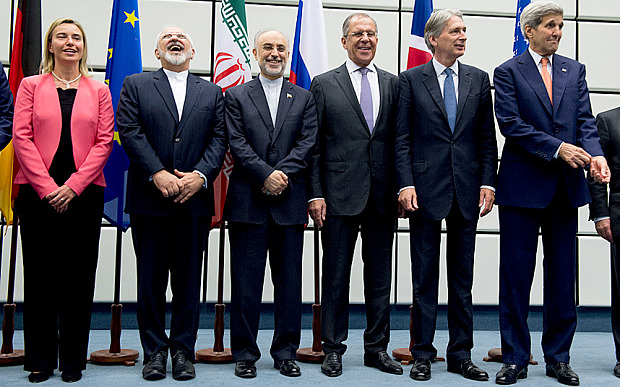
This weekend marked one year since the nuclear agreement with the Iranian regime – known as the Joint Comprehensive Plan of Action – was reached between Iran and the group of nations known as the P5+1 and subsequently adopted by the United Nations Security Council and European Union.

The Iran lobby made it a life or death struggle between forces of good and moderation versus dark and hardliners. The Iran lobby promised a new era of rising moderate political influence and an opening to the West. The Iran lobby warned that failure to approve the agreement would plunge the region into chaos and open the door for decades of unremitting violence and turmoil.

The Iran lobby promised that failure to approve a deal would lead to a cataclysmic war with Iran that could unleash nuclear weapons. It warned of a war-mongering hunger within the U.S. government intent on eradicating the poor, peaceful mullahs.

“War against Iran has been on the agenda in Washington since at least 2005. The 2007 National Intelligence Estimate is credited with thwarting the George W. Bush administration’s plans — confirmed to me by administration officials — to attack Iran by revealing that the U.S. intelligence community had concluded that Iran did not have an active nuclear weapons program,” wrote Trita Parsi of the National Iranian American Council last June 2015 in Foreign Policy.

His warnings were part of the “good cop, bad cop” playbook the Iran lobby used in praising Iran’s intentions and denouncing the threat of war from those opposed to the deal.

Unfortunately for the rest of the world, they were spectacularly wrong in their promises and warnings. One year later the Middle East is in chaos with three full blown wars raging across Syria, Iraq and Yemen, causing the largest refugee crisis the world has seen since Adolf Hitler went goose-steeping across Europe.

Yousef al-Otaiba, the ambassador of the United Arab Emirates to the U.S., wrote in this weekend’s Wall Street Journal of the uncertainty and angst being felt throughout the region with a newly empowered and aggressive Iranian regime since the nuclear deal.

“Since the nuclear deal, however, Iran has only doubled down on its posturing and provocations. In October, November and again in early March, Iran conducted ballistic-missile tests in violation of United Nations Security Council resolutions.

“In December, Iran fired rockets dangerously close to a U.S. aircraft carrier in the Strait of Hormuz, just weeks before it detained a group of American sailors. In February, Iranian Defense Minister Hossein Dehghan visited Moscow for talks to purchase more than $8 billion in Russian fighter jets, planes and helicopters.

“In Yemen, where peace talks now hold some real promise, Iran’s disruptive interference only grows worse. Last week, the French navy seized a large cache of weapons on its way from Iran to support the Houthis in their rebellion against the U.N.-backed legitimate Yemeni government. In late February, the Australian navy intercepted a ship off the coast of Oman with thousands of AK-47s and rocket-propelled grenades. And last month, a senior Iranian military official said Tehran was ready to send military ‘advisers’ to assist the Houthis,” Otaiba writes.

The laundry list of militant acts by the Iranian regime grows longer each day to include smuggling warheads and arms to Shiite cells in Bahrain and Saudi Arabia, widespread crackdowns at home aimed at political dissidents and religious minorities, large-scale human rights violations including historic levels of executions of women and children, and rigging of parliamentary elections to remove over half of the candidates from even appearing on the ballot, including the most loyal agents and officials of the same regime in the past few decades.

The swiftness of the transformation of the Iranian regime since the nuclear deal was approved last year has been stunning. The mullahs are flush with cash, they’ve invited foreign companies to invest billions, not suffered any repercussions from human rights violations or involvement in proxy wars, kept their nuclear enrichment infrastructure intact and elevated development of their ballistic missiles to reach Europe, Africa and American military bases from the Indian Ocean to the Mediterranean.

And the regime has no intentions of taking its foot off the gas, especially in the area of boosting its missile capability.

Ali Larijani, the regime’s parliamentary speaker and someone lauded by the Iran lobby as a “born-again moderate” said that Iran should continue to develop its missile capabilities despite opposition from western countries.

“Although some excuses recently raised by a number of Western countries about Iran’s missile [tests] are flimsy and legally worthless, they are indicative of their long-term policy which [shows] that they do not want the Islamic Republic to be powerful enough to ensure regional security,” he said according to Tasnim News on Saturday.

“For this reason,” he added, “we should insist on strengthening the country’s defense capability, especially in the field of missiles.”

There is a certain irony that last year the world was worried about nuclear warheads and now it has to worry about missiles to carry those warheads and battlefields across the region, as well as a sharp rise in terror attacks striking at cities around the world killing hundreds.

The ultimate irony came in President Obama’s remarks at the so-called National Security Summit this weekend in Washington in which he criticized the regime for undermining the “spirit” of the agreement even as they stick to the “letter” of the deal.

“Iran so far has followed the letter of the agreement, but the spirit of the agreement involves Iran also sending signals to the world community and businesses that it is not going to be engaging in a range of provocative actions that are going to scare businesses off,” Obama said at a press conference.

“When they launch ballistic missiles with slogans calling for the destruction of Israel, that makes businesses nervous.”

“Iran has to understand what every country in the world understands, which is businesses want to go where they feel safe, where they don’t see massive controversy, where they can be confident that transactions are going to operate normally,” he added. “And that’s an adjustment that Iran’s going to have to make as well.”

I can’t tell if the president is naïve or just-plain dumb when he equates a burgeoning missile program and threat of nuclear annihilation to a need to improve Iran’s business climate. The problem the world is dealing with in Iran is not that businesses are skittish of investing, but rather that the mullahs are intent on remaking the world in their own image.

We can only hope that come November, a new administration will be more intent on reigning in Iranian extremism rather than the opening of a new McDonalds or Starbucks in Tehran.

By Michael Tomlinson

Filed Under: Blog, News Tagged With: #NuclearDeal, Featured, Iran deal, Iran Human rights, Iran Lobby, National Iranian American Council, NIAC Action, Trita Parsi

Pressure Mounts to Keep Iranian Regime Out of Financial System

April 6, 2016 by admin

Pressure Mounts to Keep Iranian Regime Out of Financial System

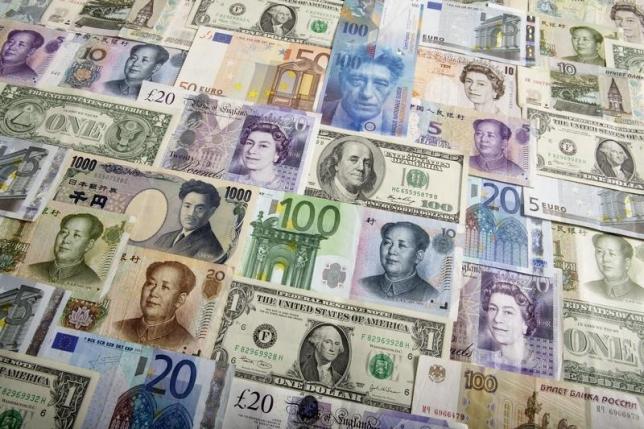
Arrangement of various world currencies including Chinese Yuan, Japanese Yen, US Dollar, Euro, British Pound, Swiss Franc and Russian Ruble pictured in Warsaw January 26, 2011. REUTERS/Kacper Pempel

The American dollar is the world standard for global currencies. Its fluctuations set the pricing in currency markets, allows companies and governments to transact business around the world and provide certainty in holding reserves and assets in turbulent times.

The role of U.S. currency is so integral to conducting business, the Iranian regime’s removal from the global banking system and access to U.S. dollars crippled its export economy and was one of the most significant drivers in forcing the mullahs back to the negotiating table after putting enormous pressure on their finances.

The nuclear agreement with the Iranian regime reached last year provided for an easing of sanctions including allowing the regime access to previously frozen assets, but the agreement did not affect certain restrictions that remained in place keeping Iran out of U.S. currency markets for non-nuclear sanctions such as support and sponsorship of terrorism.

This has proven to be somewhat of an Achilles heel for the mullahs since not having complete and unfettered access to U.S. dollars hampers its ability to conduct international exports such as exchanging euros for dollars for taking advantage of currency floats to earn additional money from the estimated $100 billion in assets it now has access to in overseas accounts.

Relaxation of those restrictions would also greatly ease the ability of family members of the ruling mullahs and members of the Revolutionary Guard Corps to move the illicit funds they have squirrelled away over the past decade in engaging in black market petroleum sales and transfers of weapons and other banned technologies to enrich themselves.

This has become such a thorny issue for the regime that virtually all of its leaders, including Ali Khamenei, Hassan Rouhani and Javad Zarif, have denounced the U.S. for not fully lifting access and threatened to walk away from the nuclear agreement as a result. To say their complaints carry a hint of desperation would be understatement.

The Iran lobby has followed similarly in calling for a complete lifting of all sanctions and warning of a collapse of the agreement that could threaten the region with more disorder, which any rational person would find hard to believe when you look at Syria, Yemen, Libya and Iraq.

The Obama administration has typically floated some trial balloons to give the regime access to U.S. currency through loopholes creating offshore clearing houses not tied to the U.S. banking system that foreign banks could access to exchange dollars.

The reaction from Congress has been unified and uniformly negative to the idea. A senior State Department official reassured concerned lawmakers on Tuesday that the Obama administration is not planning to allow Iran access to the U.S. financial system or use of the U.S. dollar for transactions.

“The rumors and news that have appeared in the press … are not true,” Under Secretary of State for Political Affairs Thomas Shannon told the Senate Foreign Relations Committee.

U.S. lawmakers have expressed deep concern about recent reports that the administration might let Iran use the dollar in some business transactions.

That concern was reinforced in an editorial by Rep. Ed Royce (R-CA), the chairman of the House Foreign Affairs Committee, in the Washington Post.

“Iran has yet to see the economic growth it wants from President Obama’s nuclear deal, and it’s demanding additional concessions — above and beyond the agreement — in return for nothing. Specifically, Ayatollah Ali Khamenei wants the United States to end sanctions aimed at curbing Iran’s funding for terrorism and illicit weapons so Iran can gain access to the U.S. financial system, where the majority of international business is conducted,” Royce said.

“This is an alarming departure from the Obama administration’s position just months ago. Indeed, when selling the nuclear deal to the American people last year, the administration repeatedly stressed to Congress that key terrorism, missile and human rights sanctions against Iran would continue to be vigorously enforced,” he added.

“Iran has seen what Obama will do to preserve his nuclear deal, and it’s taking full advantage. The United States cannot cave again. Congress should make clear that until the Iranian regime drops its illicit missile program and funding of terrorism, it won’t receive another dime of sanctions relief,” Royce said.

Royce is correct in pointing out how the world has gotten virtually nothing in return for the nuclear agreement after one year with Iran engaging in a broad range of militant and aggressive moves both home and abroad. The sheer number of provocative acts has dismayed supporters of the regime and put them on the defensive in trying to explain away everything from missile launches to mass executions to interception of illegal weapons shipments.

For Iran lobby supporters such as the National Iranian American Council and media boosters such as Jim Lobe of Lobelog, their task has been to focus on the idea that the U.S. is failing the nuclear agreement and not the other way around.

Lobe attempted to use results from public opinion polls done in Iran to show how the Iranian people were growing more distrustful of the U.S.

“Confidence that the U.S. will abide by the deal has also slipped—from 45% in a September survey by the Gallup organizations to 29%, according to CISSM. Although 41% of respondents said in September that they were either ‘not very’ or ‘not at all’ confident about Washington’s compliance, the new poll found that figure had risen to 66%. The pollsters did not probe the reasons for the increase in skepticism, although it may relate either to the continuing imposition of sanctions as well as coverage of the election campaign here,” Lobe writes.

His reasoning is as silly as the mullahs blaming the U.S. for the threat of new sanctions for launching illegal ballistic missiles.

The Iranian people live in a society under harsh control by the mullahs where online activities are tracked and they are subjected to withering amounts of anti-American propaganda on a daily basis.

Is it any wonder they feel negative upon seeing no improvement in their lives one year after the deal as Rouhani has promised to keep unfrozen assets overseas to help purchase new weapons and Khamenei has vowed to maintain a “resistance economy?”

These are not the acts of a regime interested in improving the lives of the Iranian people and we should not be swayed their continued propaganda.

By Michael Tomlinson

Filed Under: Blog, News Tagged With: Featured, Iran, Iran deal, Iran Human rights, Iran Lobby, Lobelog

Iran Lobby Blaming US for Failure of Nuclear Accord

April 1, 2016 by admin


Iran Lobby Blaming US for Failure of Nuclear Accord

Iran Lobby Blaming US for Failure of Nuclear Accord

Like the erupting of Old Faithful or the certainty of the tides and moon, the Iran lobby is now attempting to blame the failure of the nuclear agreement reached with the Iranian regime squarely on the Obama administration and the U.S.

It’s an absurd and bitterly ironic move since it was these same supporters of the Iranian regime who lauded President Obama for disregarding the opinions of the American people, his military and national security advisors and a majority of Congressmen to do a deal with a nation firmly in the thrall of religious extremists.

Since the deal was done last summer, the evidence of Iran’s complete lack of compliance has been laid bare to see ranging from the testing of illegal ballistic missiles and narrowing of inspections to carefully stage-managed media events to the imposition of a vicious human rights crackdown and rigging of parliamentary elections that delivered continued control of Iran to the ruling mullahs.

And in a complete demonstration of weak intestinal fortitude, the doors were opened for Iran to access over $100 billion in cash which is promptly used to begin buying advanced new weapons from Russia, as well as host North Korean officials connected to that regime’s nuclear and missile programs.

Meanwhile, the Iranian people have seen no benefits or improvements in their lives, only greater oppression as detailed by Amnesty International and the UN Special Rapporteur for human rights in Iran who have noted a dizzying climb in executions, including among children and women, and severe crackdowns against religious minorities such as Christians, Sunni Muslims and Bahai, as well as journalists, artists, students and political dissidents.

Now the Iran lobby is blaming the U.S. for the failure of the nuclear accord?

“The nuclear accord between the U.S., other major world powers, and Iran is under threat. But the source of this risk might upset expectations: it is the Obama administration that has failed to resolve persistent ambiguities with the U.S. sanctions relief and, as a result, major foreign banks continue to refuse to handle transactions involving Iran, frustrating the expectations of Iran’s people for economic reprieve and plaguing the ultimate sustainability of the nuclear accord,” said Tyler Cullis of the National Iranian American Council in a piece in Huffington Post.

Last week, Iran’s Supreme Leader Ayatollah Ali Khamenei publicly alleged that the United States was failing to “respect its commitments” under the nuclear accord, particularly by “using roundabout paths to prevent the Islamic Republic” from achieving economic re-integration with the rest of the world. Specifically, the Supreme Leader decried the reticence of foreign banks to re-engage with their Iranian counterparts, chalking it up to pernicious efforts by U.S. sanctions authorities to undermine the benefit of the sanctions relief for Iran, wrote Cullis.

It’s an absurd series of statements that would take an encyclopedia to deconstruct, but let’s take a shot at the highlights or rather, the lowlights:

  • Ali Khamenei, the religious dictator in control of Iran, has long hammered the U.S. and the rest of the world for that matter not only for sanctions and policies aimed against the regime, but also for the failure to free Iran to interact with the rest of the world, even though he has consistently called upon Iranians to embrace a “resistance economy” built on the idea that the regime could be self-sustaining and not subject to future sanctions; thereby freeing it to pursue any policies it wanted free from reprisals;
  • Khamenei and Cullis’ claim that Iran is being kept from re-entering the international financial system is partly true in that the Obama administration is still debating whether or not to lift those restrictions. The problem is that since the regime insisted that the nuclear deal not be tied to other contentious issues such as support for terrorism and human rights violations, the similar lifting of sanctions in place for those “unrelated” activities might violate U.S. laws on the books;
  • Cullis’ contention that failure to lift access to the financial system is burdensome on the Iranian people is a farce since the government of Hassan Rouhani has already announced it is going to keep the bulk of its new-found wealth abroad to be used to buy planes, missiles, telecommunications equipment and other items the regime was prohibited from buying beforehand. Virtually none of that money will find its way back to Iran to provide healthcare for Iranians, boost the consumer economy or even help protect Iran’s environment devastated by gross mismanagement by the mullahs.

Khamenei and Cullis can’t have it both ways. You cannot demand to have items delinked from the deal and then demand the lifting of sanctions not related to the nuclear deal as well. In this case, both are whining like bully children being denied the ability to smack around another child that already waved the white flag.

While Cullis urges to provide foreign banks with clear guidelines on how to tap Iran back into the financial system, he neglects to focus on the real issue which is by treating the nuclear deal by itself and not addressing the vast number of other collateral issues, the sanctions program against Iran regime is frankly a mess and vast loopholes and uncertainty everywhere.

In fact, the Obama administration and U.S. Treasury Dept. have already had to levy additional sanctions and criminal charges against individuals and companies for violating existing sanctions, as well as for brand new cyberattacks on U.S. financial institution and a New York dam.

“Without taking steps such as these, the Obama administration will continue to frustrate Iran’s expectations and risk the nuclear accord in the process. When it comes to U.S.-Iran relations, perceptions matter; and the perception in Iran right now is that the U.S. — whether acting out of malice or negligence — is hindering the practical benefit to Iran of the sanctions relief. Should this perception grow in Tehran that the United States is not a good-faith actor with which Iran can deal, both the historic nuclear accord and the progress in relations between the two bitter adversaries will be placed in bitter peril,” Cullis adds.

It’s a silly statement to make because it pre-supposes that the burden of compliance falls on the U.S. and its allies, not on Iran mullahs which violated international law in the first place by pursuing nuclear weapons!

This is like a serial killer being paroled from prison and then suing the state for not providing him with a beachfront home in Malibu and brand new Tesla in the garage.

Cullis’ gumption is admirable, it’s takes a special kind of chutzpah to push for a terror regime to gain access to the world’s ATM machine.

By Laura Carnahan

Filed Under: Blog, Current Trend, Latest from Lobbies & Appeasers, News Tagged With: Featured, Iran, Iran deal, Iran Human rights, Iran Lobby, Iran Mullahs, Tyler Cullis

“Eye for an Eye” is Literal to Iran’s Mullahs

March 30, 2016 by admin

“Eye for an Eye” is Literal to Iran’s Mullahs

“Eye for an Eye” is Literal to Iran’s Mullahs

Proving that “an eye for an eye” is more than just an Old Testament verse, the Iranian Supreme Court has sentenced a man to have his eye gouged out after blinding another man in a street fight, according to the Independent.

The 28-year-old, identified only as Saman, was convicted under the regime’s strict retribution laws after fighting in the street with his then 25-year-old victim when he was 23.

According to Iran Human Rights, a Norway-based NGO, Saman claimed he had unintentionally blinded the man with a metal rod.

The regime – controlled by a group of religious clerics – uses a strict interpretation of sharia law of “an eye for eye.” Last year, a man convicted of attacking another man with acid – blinding and disfiguring him for life in the city of Qoms – was sedated and had his left eye gouged out.

The regime’s reliance on barbaric and grotesque punishments more akin to the Dark Ages is a product of the mullahs’ utter devotion to their strict extremist ideology which continues unabated during the so-called moderate administration of Hassan Rouhani.

Since coming to power as a supposed moderate in 2013, Rouhani has presided over the execution of more than 2,300 people as well as public beatings, floggings and amputations.

In 2014, a Christian man was sentenced to having his lips burnt off with a cigarette for eating during daylight hours in the Muslim holy month of Ramadan.

In June last year, authorities at the Central Prison in Mashhad, Khorasan Province, amputated four fingers from the right hands of two men sentenced for theft without anesthetic, Amnesty International reports.

These ongoing acts have failed to garner the scrutiny they deserve, but some are beginning to question why Western governments are eager to normalize relations with a regime that regularly engages in such despicable acts.

Case in point was in Australia which has extended diplomatic overtures to the Iranian regime in the wake of the nuclear agreement. On Wednesday, government senators Cory Bernardi and James Paterson expressed their concerns about Saman’s case. Senator Bernardi questioned whether Australia should be cozying up to Iran.

“How can we justify opening diplomatic relations with a country that wants Israel destroyed, imprisons Christians and hangs people for being homosexual?” Senator Bernardi said.

“The world needs to wake up to the reality of what is happening in the Middle East.”

“We should never turn a blind eye to such injustices,” he added.

Senator Paterson said it showed Iran had a long way to go before it would be “recognized and respected” in the international community.

“As Australia and other Western nations seek to normalize our relations with Iran, we cannot ignore its appalling record of human rights abuses and medieval justice,” Senator Paterson said.

The increase in such inhuman punishments, coupled with more violations of sanctions against ballistic missile development and the downward spiral of nearby wars in Syria, Iraq and Yemen are convincing some nations that the Iranian regime needs to be reined in despite the nuclear agreement which the Iran lobby claimed would moderate the regime.

The U.S. and its European allies issued a joint letter saying Iran’s recent ballistic tests involved missiles capable of delivering nuclear weapons and were “inconsistent with” and “in defiance of” council resolution 2231, adopted last July.

The joint U.S., British, French, German letter was sent to Spain’s U.N. Ambassador Roman Oyarzun Marchesi and U.N. chief Ban Ki-moon.

In spite of the clear violations by the regime and the clear lack of regard for human rights, the four powers’ carefully worded letter stopped short of calling the Iranian launches a “violation” of the resolution, which “calls upon” Iran to refrain for up to eight years from activity, including launches, related to ballistic missiles designed with the capability of delivering nuclear weapons in an another sign of continued weakness in the face of Iranian aggression.

That aggression has directly led to the destabilization of much of the Middle East and contributed to the mass exodus of refugees that have flooded into Europe which has helped conceal a reported 400 foreign fighters the terror group ISIS has claimed to slip back into several countries to stage attacks similar to the Paris and Brussels strikes.

This helped set the stage for the ultimate irony of Rouhani canceling his planned state visit to Austria because of “security concerns” since his policies and those of his fellow mullahs have been a largely responsible for causing the terror surge the world is experiencing now.

The postponement appeared to catch Iranian media by surprise as most had prepared special sections detailing trade links between the two nations.

Another area where the promise of a moderate Iran by the Iran lobby has failed to live up to the reality has been the inability of foreign companies to lure Iranian expatriates into going back to Iran to work on new ventures.

According to Reuters, some expatriates whose families left Iran before or soon after the 1979 revolution are skeptical about career prospects and worry that Tehran’s refusal to recognize their dual citizenship status makes them vulnerable to arbitrary arrest.

Security forces have arrested some dual nationals who hold U.S. and European passports in recent years on unspecified national security charges.

Others hesitate because of concerns over the bureaucratic regime, the lower standard of living in traffic-clogged Tehran and restrictions enforced by the “morality police” on Islamic dress and behavior codes.

For many Iranians living inside Iran and abroad, the harsh truth is that as long as the mullahs remain in charge, conditions will not be improving.

By Michael Tomlinson

Filed Under: Blog, News Tagged With: Appeasement policy, Featured, Iran, Iran Human rights, Iran Talks

Iranian Regime Presses Harder Human Rights Crackdowns

March 28, 2016 by admin

Iranian Regime Presses Harder Human Rights Crackdowns

Iranian Regime Presses Harder Human Rights Crackdowns

While Christians celebrated Easter this weekend with prayers and hopes for peace, love and redemption, the Iranian regime stood alone in its wide ranging efforts to crackdown on human rights, stir up confrontation and foment strife around the world.

In spite of promises made by regime officials such as Hassan Rouhani and loyal supporters such as the National Iranian American Council that Iran was a model of moderation and accommodation for religious and ethnic minorities, the opposite has been the case as the regime showed little tolerance for anyone outside of its own narrow ideology that fuels an extremist fervor.

Take for example the plight of Christian converts in Iran who risk prison or death by secretly worshipping as Christians in Iran’s house church movement. According to watchdog groups, the number of Christians in Iran worshipping in secret has surpassed one million people.

The London-based Pars Theological Center is training at least 200 Iranian Christians to become the next generation of Iran’s church leaders, the Christian Post reported.

The persecution of Christians has persisted in Iran since the 1979 rise of the country’s theocratic government — with Christians facing the threat of death, lashing and torture. About 100 Christians currently remain imprisoned under Rouhani’s rule.

In 2010, top mullah Ali Khamenei said the country’s underground house churches “threaten the Islamic faith and deceive young Muslims.”

Sources describe Iranian house churches as consisting only of about four to five members — due to the threat of detection — and that they are forced to their place of gathering every time they meet.

“If they want to sing, they have to sing very quietly or not sing at all,” the source told the Post.

While Iran has released high-profile Christian pastors from captivity — most notably Iranian American Saeed Abedini — other Christian ministers still languish in the country’s prisons.

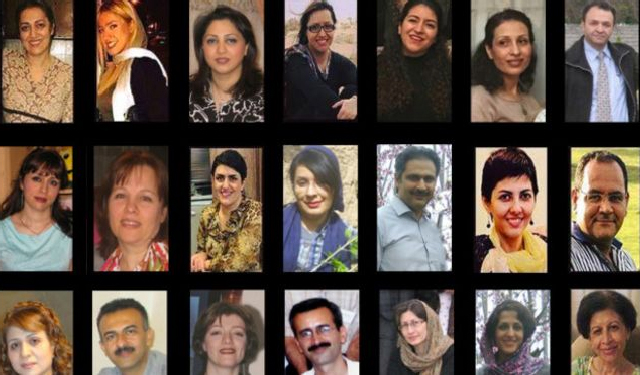
Regime punishment and torture of religious minorities has included brutal treatment of Sunni Muslims and those who follow the Baha’i faith, in which details of torture inflicted upon twelve Baha’is by interrogators three years ago at Amir Abad prison and detention centers in Iran’s Golestan Province—and the Iranian Judiciary’s complete lack of any response to the formal letter of complaint that was sent in 2012 by the victims of that torture to the head of the Judiciary of Golestan Province, were recently revealed in the media.

Twelve Baha’i citizens described harrowing instances of torture by their interrogators at the Amir Abad Prison, in the city of Gorgan, and other unnamed detention centers in Golestan province, northeast of Tehran.

“On the first day of his interrogation, Mr. Behnam Hassani’s wrist was tied very tightly with a rope and attached to a metal ring. The ring was raised to a nail above his head such that only his toes could touch the ground. He was in so much pain that he started to scream and shout,” said the letter.

“Then they brought him down and dragged him into a room and beat him. They pressed a pen between his fingers and hit him behind the head and on his mouth… Then they kept him under the rain for several hours on a cold night,” continued the letter.

These twelve Baha’is were among the 24 Baha’is (the other 12 were arrested in February and March 2013, also in Golestan Province), who recently received long prison sentences in January 2016.

Meanwhile, Ellie Silverman reporting for McClatchy News Service, detailed some of the brutal treatment regime prisoners received and how many were threatened before being released not to reveal any details of their mistreatment.

“A detailed picture of life inside Evin can be put together from interviews with former prisoners” Silverman writes. “Solitary confinement was one aspect they all had in common. All were blindfolded whenever they were taken from their cells, according to the Canadian, American and Iranian prisoners who spoke about their experiences,” Silverman continues.

“Another key aspect: Each prisoner was assigned to one principal interrogator who exercised authority over virtually every aspect of a prisoner’s life and served as that prisoner’s only contact with the outside world,” she added.

The former prisoners all recounted a difficult time adjusting to normal life after their release, including nightmares, flashbacks and other symptoms of post-traumatic stress. The prisoners released in January likely are enduring a similar adjustment period, said J. Wesley Boyd, associate professor of psychiatry at Harvard Medical School.

The scars and pain inflicted by the regime’s mistreatment of prisoners lingers long after their confinement ends and serves as a warning to others of what could happen to any other dissidents who dare oppose the mullahs.

The regime’s attacks and systemic marginalization of Sunni Muslims is also another example of how widespread the regime’s human rights crackdown is and how it is not limited to those outside of the Islamic faith.

According to Dr. Majid Rafizadeh, president of the International American Council writing in Huffington Post, Iran’s Sunni are the largest minority in the country. Some of the discrimination that the Sunnis have suffered, according the UN report, are that the Sunni communities in Iran “have long complained that Iranian authorities do not appoint or employ them in high ranking government positions such as cabinet-level ministers or governors. They have also raised concerns regarding reported restrictions on the construction of Sunni mosques in Shia-majority areas, including the capital Tehran, and the execution or imminent execution of Sunni activists the government alleges were involved in terrorist-related activities.”

The regime’s abuses are aimed at virtually anyone not subscribing to its own extremist view of Islam and serves to remind us that the claims made by the Iran lobby about the regime’s moderate intentions are simply a smokescreen to hide the brutality it metes out on a daily basis.

By Michael Tomlinson

Filed Under: Blog, News Tagged With: Baha'is, Featured, Iran, Iran Human rights, Moderate Mullahs

Human Rights in Iran Get Worse and Ignored

March 25, 2016 by admin

Human Rights in Iran Get Worse and Ignored

Human Rights in Iran Get Worse and Ignored

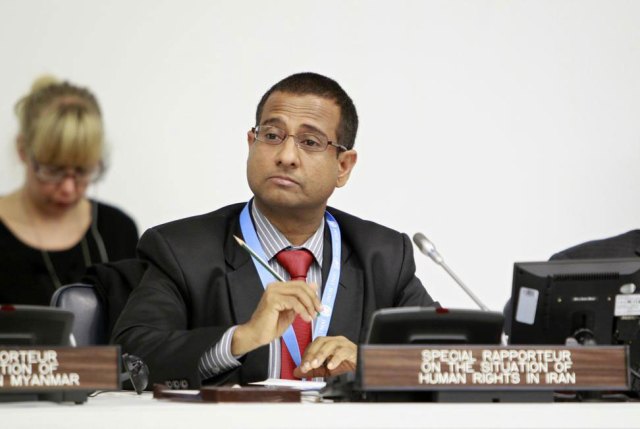
An attempt by allies of the Iranian regime at the U.N. Human Rights Council to block the renewal of the appointment of a special investigator into Tehran’s human rights record failed and reinforced the bid to keep a spotlight on the regime’s dismal human rights record.

Support for renewing the five-year-old mandate of Ahmed Shaheed, the independent “special rapporteur” for human rights in Iran, was far from overwhelming, however. The 47-member HRC approved the resolution by a 20-15 vote, with 11 countries abstaining.

The regime got more support now than it did at the time the special rapporteur mandate was first established in 2011, when the measure passed by a 22-7 vote, with 14 abstentions after a furious lobbying effort by the regime.

Shaheed has angered the regime with annual reports highlighting severe violations, while receiving the backing of mainly European and Latin American democracies, in addition to that of the regime’s regional Arab rivals, including Saudi Arabia, Qatar and the United Arab Emirates.

Iranian and international human rights advocacy organizations say Tehran’s human rights record has worsened in recent years, notwithstanding the election in 2013 of the ostensibly “moderate” President Hassan Rouhani, and despite the diplomacy that led to the nuclear agreement last year.

The attempt to vote down the Iran human rights mandate alarmed these groups. Previous such efforts succeeded in getting special rapporteur mandates for human rights in Cuba and Belarus halted in 2007.

Shaheed submitted his annual report prior to the vote, recording abuses in Iran including mistreatment of religious minorities, a “widening crackdown on freedom of expression and opinion,” and a 20-year high in executions.

The regime dismissed the charges contained in the report as “imaginary.”

“The report on the Islamic Republic of Iran is politically-motivated, discriminatory and biased,” foreign ministry spokesman Hossein Jaberi Ansar said last week. “It has been written on unwarranted information and not existing realities.”

Iran for the past five years has refused permission for Shaheed, a former Maldivian foreign minister, to visit the country in the exercise of his mandate.

“Change won’t happen overnight, as the Iranian state is based on principles that discriminate against women, ethnic and religious minorities, gays and numerous others,” UN Watch said. “Yet this important step keeps the item prominently on the international agenda and gives hope to oppressed citizens in Iran.”

Meanwhile Human Rights Watch took exception to a new criminal procedure for those charged with national security and political crimes that denied people charged access to independent legal counsel.

Human Rights Watch interviewed lawyers, political prisoners, family members, and sources familiar with cases of detainees facing national security and political charges. Human Rights Watch documented several instances over the past year in which the detainees were denied access to lawyers during investigations or were forced to change their legal advocate under pressure by judiciary officials.

“While Iran claims the new criminal code has improved defendants’ rights, these efforts are meaningless if parliamentary amendments completely undermine the spirit of fair judicial proceedings,” said Sarah Leah Whitson, HRW Middle East director. “The incoming parliament should ensure that the criminal procedure law is actually a step forward rather than two steps back for the rights of its own citizens.”

According to HRW, Iran has consistently failed to prevent torture in detention and to investigate allegations of such abuse. Revolutionary courts use confessions obtained under torture as evidence in court. As a result, the right to access a lawyer from the time of an arrest is an important safeguard against abuses in detention.

A glaring example of this injustice came when brothers Mehdi and Hossein Rajabian, 26 and 31, and their friend Yousef Emadi, 35, were found guilty of “insulting Islamic sanctities”, “spreading propaganda against the system” and “illegal audio-visual activities” in a 2015 trial that activists said lasted no longer than three minutes. They were condemned to lengthy prison sentences without having access to lawyers whilst being interrogated, nor during the course of their trial.

According to Amnesty International, the three men were subjected to beatings and electric shocks to make forced confessions against themselves on camera while being in custody. Those confessions were then used as basis for their conviction in court, a familiar pattern used against prisoners of conscience in Iran.

“These sentences lay bare the absurdity of Iran’s criminal justice system, which brands individuals as criminals merely for peacefully exercising their rights to freedom of expression through making music and films. These young men should never have been arrested, let alone brought to trial,” said Said Boumedouha, deputy director at Amnesty International’s Middle East and North Africa program.

While the renewal of Shaheed’s mandate gives continuing hope of reversing these atrocities by the Iranian regime, the real answer for a change in Iran will only come when the world unites and works with the various Iranian dissident groups both within Iran and around the world to empower the Iranian people to achieve democracy and freedom for themselves in the future.

By Michael Tomlinson

Filed Under: News Tagged With: Featured, Iran, Iran Human rights

 Iranian Regime Presents Two Faces to World

March 18, 2016 by admin

 Iranian Regime Presents Two Faces to World

Iranian Regime Presents Two Faces to World Iranian Regime Presents Two Faces to World

There are many descriptions throughout history of governments or leaders presenting two different sides of their personalities. Ancient Rome even created the god Janus to describe the two-faced nature of looking into the past and future, while in our modern vernacular we describe people who are “two-faced” as being duplicitous or deceitful.

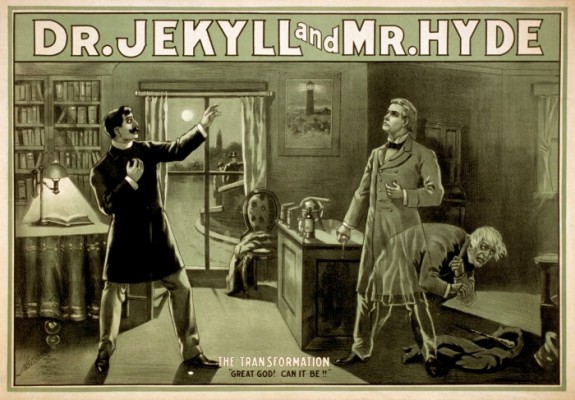
In literature, the story of Dr. Jekyll and Mr. Hyde takes this split personality idea to the extreme in depicting a man who could possess vastly different moral character through a transformation that turned him from an ambitious physician to a demented killer.

In many ways, the Iranian regime presents a similar split personality to the world in which on one hand – aided by the Iran lobby – the mullahs seek to portray themselves as a modern nation bent on joining the international community with a leadership focused on moderation and peaceful goals. On the other hand, the regime’s actions in terms of its support of proxy wars, terrorist groups and human rights crackdowns shows a regime intent on an almost murderous path of destruction.

This “Jekyll and Hyde” nature was examined by Marc Champion in a Bloomberg View editorial in which he said:

“The Hyde part of this analogy seems clear: it’s Iran’s clerical regime. It retains power by dictating who can stand for election, repressing and censoring political and cultural opposition and executing about 1,000 people per year. Abroad, it arms terrorist groups and tests ballistic missiles emblazoned with the words ‘Israel must be wiped out.’

“The Jekyll side is less understood. This is the Iran where an American is more likely to get an enthusiastic reception than in any other country I’ve visited in the Middle East; as far back as 2002, survey data suggested that three quarters of Iranians wanted closer relations with the U.S. Iranians are better educated than citizens of other countries in the region and women make up 60 percent of the university student body (enough for the regime to try to start excluding them from certain courses). The economy, though far too oil dependent, is more diversified than others in the Persian Gulf. Above all, Iran is a stable nation state with thousands of years of history in a region of shifting sands.”

And there lies the conundrum of Iran, a nation filled with millions of people who yearn for normalcy, freedom, peace and access to the rest of the world without fear of censorship or oppression, but all of whom are under the collective thumbs of a religious theocracy dominated by mullahs and backed by the Revolutionary Guards and religious courts.

Champion interviewed Ali Kedery, the longest-serving senior U.S. official in Iraq from 2003 to 2009, after which he went to work for ExxonMobil. From there went on to set up Dragoman Partners, a consultancy based in Dubai, on his views on this split personality.

“You cannot separate Dr. Jekyll from Mr. Hyde. President Obama and his very inexperienced and ideological team have bet the farm on their ability to separate the regime from the Iranian people. But you are dealing with a real regime, one that has deep roots planted since 1979.”

Kedery went on to describe the regime’s vice-like grip on political power — proved by its crushing of pro-democracy protests in 2009 — and over Iran’s economy. As a result, he said, the idea that hardliners will allow Western capital and interaction penetrate the country to such an extent that it can erode their power and change the nature of the regime is dangerously wrong:

“They are not stupid. The model they have adopted is something like Russia’s or China’s. There will be a lot of foreign direct investment, but they will make sure it is directed towards the government.”

The grip the mullahs have over the Iranian people is almost absolute through the rigorous use of arrest, imprisonment and execution as the primary means of domestic crowd control. Often times the use of such tools rises in concert with the rise of political movements within Iran for political liberalization or even regime change.

The current regime of Hassan Rouhani has been especially brutal in meting out the ultimate punishment as human rights groups such as Amnesty International and the United Nations has noted as Iran has sought to control any dissent during the run up to the nuclear deal.

Dr. Majid Rafizadeh, an Iranian-American political scientist and Harvard University scholar, is president of the International American Council and wrote about the surge in executions in Al-Arabiya.

“The Islamic Republic of Iran has hit the highest rate of executing people since the year 1989. The official number indicates that Iran executed nearly two times more people in 2015 in comparison to 2010 when the hardline president Mahmoud Ahmadinejad was in office, as well as roughly 10 times more than the number of executions in 2005,” he wrote.

Michael G. Bochenek, senior counsel of the children’s rights division at Human Rights Watch pointed out “Iran is almost certainly the world leader in executing juvenile offenders.” Some articles in Iran’s criminal code allows girls as young as 9 and boys as young as 15 to receive death sentences. In addition, ethnic and religious minority communities, including the Sunni, Arabs, and Bahai continue to be systematically targeted and discriminated against, he added.

The use of lethal punishment as a means of statecraft and controlling a population is the Mr. Hyde nature of the regime and the face that the Iran lobby works diligently to keep covered up.

Nowhere is the dual nature of the Iranian regime on display better than in Syria, where on the one hand its direct involvement in keeping the Assad regime alive with arms, fighters and cash led to a bloody civil war that has claimed the lives of over 300,000 people and led to half of the population of Syria becoming displaced and turned into refugees.

Yet the Iranian regime has the temerity to insist any resolution of Syria’s conflict that does not include Assad could lead to “Armageddon” in one of the biggest examples of hyperbole since the Greeks claimed the Trojan Horse was a gift to Troy.

Iranian regime foreign minister Javad Zarif said that every country in the Middle East needed to think about ways to end decades of military and sectarian conflict, but that this must not include a redrawing of post-World War II borders to give groups such as the Kurds or the Islamic Alawite sect their own regions.

“Change in how we govern, change in how we interact with each other. That is what requires change,” Zarif said during a speech at the Australian National University in Canberra. “Changing borders will only make the situation worse. That will be the beginning – if you believe [in religious texts] – of Armageddon.”

Zarif also reaffirmed Iran’s view that negotiations aimed at ending Syria’s conflict shouldn’t be derailed by premature demands for the ouster of Bashar al-Assad, warning that the Syrian president’s future must not be a precondition of negotiations among the regime and opposition groups.

Given the two-faced nature of the regime, we can only assume that Zarif’s comments mean the actual opposite.

By Michael Tomlinson

Filed Under: News Tagged With: Armageddon, Featured, Iran, Iran deal, Iran Human rights, Rouhani

Iran Lobby Excuses Get Stranger and Stranger

March 17, 2016 by admin


Iran Lobby Excuses Get Stranger and Stranger

Iran Lobby Excuses Get Stranger and Stranger

The Iran lobby has offered up a variety of excuses for the actions and militant behavior of the Iranian regime ranging from pleas of peace-loving intent and political moderation to feigned ignorance and indignation over escalating human rights abuses and proxy wars throughout the Middle East.

One of the newest lines being trotted out by the Iran lobby is the absurd notion that Iran has never started a war.

A scholar at the American Enterprise Institute, took that claim to task in a column for Commentary Magazine.

He showcased comments made by Iranian regime apologists Juan Cole, a University of Michigan professor, and retired Congressman Ron Paul who said “There’s no history to show that Iran are aggressive people. When’s the last time they invaded a country? Over 200 years ago!”

“Iran has not launched an aggressive war in modern history (unlike the US or Israel), and its leaders have a doctrine of ‘no first strike.’ This is true of Supreme Leader Ali Khamenei, as well as of Revolutionary Guards commanders,” said Cole.

The Iranian regime knows when it has got a good thing going. Foreign Minister Mohammad Javad Zarif yesterday tweeted, “Iran hasn’t attacked any country in 250 years. But when Saddam rained missiles on us and gassed our people for 8 yrs, no one helped us.”

These are absurd comments when looked at in the context of what the mullahs have wrought since the Islamic revolution in 1979. The mullahs preferred method of aggression is to use proxies, either in the form of terrorist groups such as Hezbollah or local militias such as in Iraq and Yemen.

Hezbollah alone has served as a conduit of death and destruction for decades by carrying acts of terror either under the direction of or direct cooperation with Revolutionary Guards and Quds Forces personnel. In the most recent Syrian conflict, senior Iranian commanders have been in the field directing combat operations and even getting killed.

It’s noteworthy that Syria never posed a direct conflict with Iran, not even sharing borders, but the mullahs felt it necessary to engage in armed conflict there and even expanded it by calling for Russia to join in the bloodshed and widen the war.

Since the revolution, Iran has been involved in military campaigns in:

  • 1982-present: Lebanon
  • 2003-present: Iraq
  • 2006: Israel (via Hezbollah)
  • 2011-present: Syria
  • 2015-present: Yemen

Not exactly a record of pacifism, but certainly in line with the extremist nature of the regime and the duplicitous nature of the excuses made by the Iran lobby.

Another example of that stranger than fiction messaging came when regime-controlled media blasted the report issued by Ahmed Shaheed, the UN special rapporteur for human rights in Iran, which blistered the regime for appalling human rights abuses, including a near historic 1,000 executions in 2015 and a distressing willingness of the mullahs to kill children and women.

Iran Foreign Ministry Spokesman Hossein Jaber Ansari criticized the recent report as “biased,” “politically motivated” and “prejudicial, Tasnim news agency reported.

He said that the report is “imbalanced” and has been prepared based on “unreliable information.”

Those criticisms fell on deaf ears though as the Committee to Protect Journalists joined 34 other organizations in calling on the U.N. Human Rights Council to vote in favor of renewing the mandate Shaheed’s term as special rapporteur. The vote is scheduled to take place during the 31st session of the council, which ends March 24.

In the joint letter, the organizations drew attention to the range of “serious and systematic violations” of civil and political rights in Iran, as well as the need for the council to urge Iranian authorities to implement long overdue legal changes that would address the grievances of those who have borne the brunt of human rights abuses.

Journalists and other political and civic actors are “arbitrarily detained and given increasingly harsh prison sentences, often for trumped-up national security-related charges,” the letter said. Iran is one of the leading jailers of journalists, with 19 behind bars as of CPJ’s annual prison census on December 1. Ahead of last month’s legislative elections, journalists were arrested and at least one publication was banned, CPJ research shows.

In the meantime, even the modest “moderate” election wins hailed by the Iran lobby were under assault as several women who won seats were being verbally attacked for making comments deemed threatening to the regime, such as criticizing laws mandating women wear traditional veils and coverings.

All of which provides additional proof that any hope of moderation offered up by the Iran lobby is never really going to happen. This was put on bold display when Reza Marashi, research director for the National Iranian American Council, published a plaintive editorial in Huffington Post pleading for the release of his fellow regime supporter, Siamak Namazi, who was arrested and imprisoned by the regime and not part of the prisoner swap resulting from the nuclear deal.

“After finishing his graduate studies abroad, he again returned to Iran in 1999, this time as a consultant. Most people in his shoes returned to try and make a quick buck as a big fish in a small pond. Not Siamak. He helped run a world-renowned consulting firm – staffed predominantly with Iranian-born citizens – that facilitated badly-needed foreign investment from blue-chip multinational corporations,” Marashi said.

Unfortunately, Marashi neglects to mention how that firm, Atieh Consulting, become embroiled in regime politics since his family had deep connections to various parts of the regime’s leadership and actively cooked up the idea of creating an Iran lobby in the U.S. through the NIAC to help advocate for the lifting of international sanctions and far from being a selfless act, Namazi and others had hoped to position themselves to serve as middlemen to funnel foreign investment back into the regime and steer it towards their political allies as described in several investigative pieces.

It is also noteworthy how Marashi did not write similar heartfelt pieces on behalf of other Americans held captive in Iranian prisons such as Amir Hekmati or Saeed Abedini or endured years of torture in Iran.

It would certainly be interesting to see Marashi put his feet where his mouth is and go to Iran himself to plead with the mullahs and see if he can avoid a lengthy prison term as well as another political pawn for them.

By Michael Tomlinson

Filed Under: Blog, News Tagged With: Featured, Iran, Iran deal, Iran Human rights, Iran Lobby, Iran sanctions, National Iranian American Council, NIAC, NIAC Action, Reza Marashi

  • « Previous Page
  • 1
  • …
  • 16
  • 17
  • 18
  • 19
  • 20
  • …
  • 22
  • Next Page »

National Iranian-American Council (NIAC)

  • Bogus Memberships
  • Survey
  • Lobbying
  • Iranians for International Cooperation
  • Defamation Lawsuit
  • People’s Mojahedin
  • Trita Parsi Biography
  • Parsi/Namazi Lobbying Plan
  • Parsi Links to Namazi & Iranian Regime
  • Namazi, NIAC Ringleader
  • Collaborating with Iran’s Ambassador

Recent Posts

  • NIAC Trying to Gain Influence On U.S. Congress
  • While Iran Lobby Plays Blame Game Iran Goes Nuclear
  • Iran Lobby Jumps on Detention of Iranian Newscaster
  • Bad News for Iran Swamps Iran Lobby
  • Iran Starts Off Year by Banning Instagram

© Copyright 2026 IranLobby.net · All Rights Reserved.