Iran Lobby

Exposing the Activities of the lobbies and appeasers of the Mullah's Dictatorship ruling Iran

  • Home
  • About
  • Current Trend
  • National Iranian-American Council(NIAC)
    • Bogus Memberships
    • Survey
    • Lobbying
    • Iranians for International Cooperation
    • Defamation Lawsuit
    • People’s Mojahedin
    • Trita Parsi Biography
    • Parsi/Namazi Lobbying Plan
    • Parsi Links to Namazi& Iranian Regime
    • Namazi, NIAC Ringleader
    • Collaborating with Iran’s Ambassador
  • The Appeasers
    • Gary Sick
    • Flynt Leverett & Hillary Mann Leverett
    • Baroness Nicholson
  • Blog
  • Links
  • Media Reports

Iran Regime Continues on Path of Extremism

May 27, 2016 by admin

Iran Regime Continues on Path of Extremism

Iran Regime Continues on Path of Extremism

Recent revelations of the fraudulent nature of the debate about the Iran nuclear deal have forced news media outlets to rethink coverage of the Iranian regime and members of Congress from both sides of the political aisle to crackdown on ever rising acts of extremism coming from Iran.

Conventional wisdom would dictate that once the Iran lobby’s efforts to buy favorable media coverage, push false messages about moderation in Iran and hopeful scenarios of a more stable Middle East, were discovered that the lobby and mullahs in Tehran would retreat to preserve their ill-gotten gains.

Instead, the opposite has happened as the Iranian regime has widened the conflict in neighboring countries, cracked down at dissent at home, and is seeking to forge more military sales to bolster its weakened military.

The regime’s top leader, Ali Khamenei, has spent considerable television time reiterating the policy of opposing the West, warning of infiltration and corruption of its clerical tyranny through American pop culture and social media, and maintained the need to keep up a “resistance economy” to meet the demands for continued proxy wars in Syria, Iraq and Yemen, as major parts of countries resources are spent on these wars.

Khamenei expanded on that militancy by calling for vigilance against what he described as a “soft war” mounted by the West and aimed at weakening the clerical establishment, state television reported on Thursday.

“Our officials and all parts of the establishment should be vigilant about the West’s continued soft war against Iran…the enemies want to weaken the system from inside,” Khamenei said.

In a meeting with members of the Assembly of Experts, with authority to appoint and dismiss the supreme Leader, Khamenei told Iranian officials:

“By impairing centers of powers in Iran, it will be easy to harm the establishment from inside.”

The 88-member assembly, consisting mostly of elderly clerics, is expected to choose any successor to Khamenei, who has the final say on all state matters.

“The only way to materialize the (1979) revolution’s goals is national unity and not to obey the enemy,” he said.

The fact that Khamenei continues to describe the U.S. as the “enemy” demonstrates clearly his views on the relationship between the two countries and undermines the narrative put forward by groups such as the National Iranian American Council of an improvement in relations with Iran.

That desire to continue ruling Iran with an iron fist has led to such a widespread crackdown on human rights that the only avenues of informal protest left to ordinary Iranians are becoming few and far between as the regime deploys new morality police squads and arrests women, journalists, artists, bloggers and pretty much anyone else expressing a divergent opinion.

For example, last Saturday, the Independent reported how a number of women living in Iran chose to cut their hair short and dress as men in a bid to bypass morality police and evade hijabs which are a legal requirement in all public places and strictly enforced, often with public beatings.

But in recent weeks, women have started sharing photos of themselves with their hair short in some images and dressed in clothes more typically associated with men in others, which campaigns against compulsory hijab, in order to move freely in public.

Enforced hijab is just one of a number of laws in Iran which discriminate against women, who need permission from male relatives to study after marrying and leave the country in some cases. Single mothers are left equally disempowered as Iranian law gives all legal rights to the father after children turn seven.

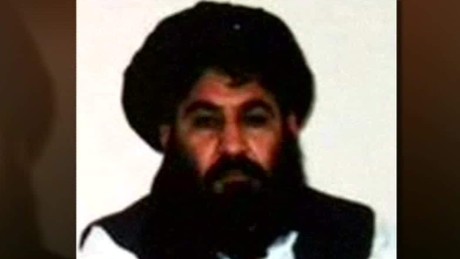
On the foreign policy front, new revelations came out in the wake of the death of mullah Akhtar Mohammad Mansour, the Taliban leader who was recently killed in a U.S. drone strike along the Iran-Afghanistan border, showing he had several trips to Iran as part of efforts to raise funds for the terrorist organization.

Mansour’s death is a major blow to Pakistan and possibly also Iran, which may have forged links with the Taliban to spread extremism in the region, according to Waheed Muzhda, a former Foreign Ministry official in the Taliban regime who is now a political analyst in Kabul.

“Iran may also have been behind the curtain to stab the U.S. in the back using Taliban militants.” Muzhda said.

Although it is Pakistan that has traditionally been condemned for secretly supporting Afghan insurgents, analysts say Iranian regime also provides weapons, cash and sanctuary to the Taliban. Despite the deep ideological antipathy between a hardline Sunni group and cleric-run Shia state the two sides have proved themselves quite willing to cooperate where necessary against mutual enemies and in the pursuit of shared interests.

Mansoor first entered Iran almost two months ago, according to immigration stamps in a Pakistani passport found in a bag near the wreckage of the taxi he was travelling in when he was killed by a US drone strike.

The potential of close coordination between the Taliban and the Iranian regime would offer more proof of the regime’s chief role in supporting virtually all of the major Middle Eastern terrorist groups such as Hezbollah, Houthis, Shiite militias and now the Taliban.

Nonetheless police and intelligence officials in western Afghanistan often complain the local insurgency is being managed and supplied with weapons and training from Iran.

We can only hope more truth emerges from the wreckage of the Iran nuclear deal’s “echo chamber” revelations.

By Michael Tomlinson
Filed Under: Blog, News Tagged With: #NuclearDeal, Featured, Iran, Iran deal, Iran Human rights, Iran Lobby, Khamenei, National Iranian American Council, NIAC

Iran Lobby Paying Price for Echo Chamber of Lies

May 26, 2016 by admin

Iran Lobby Paying Price for Echo Chamber of Lies

Iran Lobby Paying Price for Echo Chamber of Lies

The much-discussed article in the New York Times Magazine describing the Iran Lobby orchestrating of the push for the Iran nuclear deal has set off a chain of events throughout American politics and news media have begun digging deeper into the Iran lobby’s role in the effort to portray the Iranian regime as a moderate government.

Revelations have rippled out like so many stones dropped into a still pond, intersecting and converging as more news reports have come out detailing the flow of cash throughout the Iran lobby and into news organizations to help promote the nuclear deal.

Other stories have gone on to examine in great detail the organization and structure of the Iran lobby’s plans years before actual negotiations began with the Iranian regime, all of which goes to demonstrate the long view the mullahs have in achieving their goals.

Now Congress has stepped up its scrutiny, including demands for greater accountability from the Obama administration, as well as the Iranian regime’s compliance of a nuclear deal that is now suspected of being badly and deeply flawed.

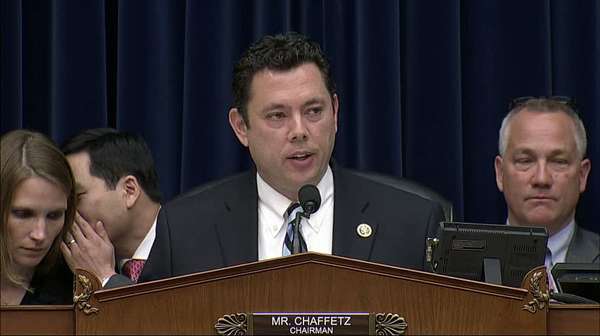
This all came to the forefront as Treasury and State Department officials appeared before the House Foreign Affairs Committee in an effort to reassure skeptical Republican and Democratic lawmakers.

“We need to make sure it’s implemented to the letter,” said New York Democratic Rep. Eliot Engel, “and hold Iran’s feet to the fire with respect to” what he called its troublemaking in the region.

Engel and other lawmakers cited Iran’s support for the militant groups like Hezbollah, as well as Shiia militants in Iraq, Houthi rebels in Yemen and the regime of Syria’s President Bashar al-Assad. They also raised Iran’s ballistic missile tests in March, in particular two test-fired rockets inscribed with the Hebrew phrase “Israel must be wiped off the Earth,” according to the regime’s semi-official Fars News Agency.

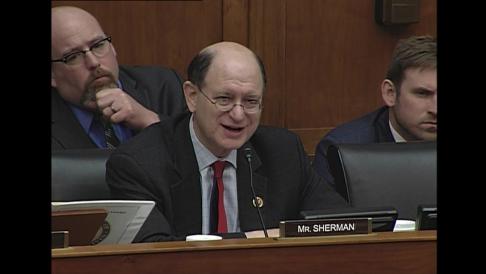
Rep. Brad Sherman (D., Calif.) heaped criticism on the Iranian nuclear deal at the hearing, calling for more sanctions on Iran to punish its military involvement in Syria.

“People in this country want us to get along with everyone around the world. We long for peace. And there are those who say that sanctions contradict that,” Sherman said. “But when you look at what Iran has done in Syria, hundreds of thousands, perhaps a million people killed by Assad, with funds provided, weapons provided, thugs provided by the Iranian government, when you see people killed by barrel bombs and sarin gas, we realize that the right response to the Iranian regime cannot be ‘kumbaya.’”

Sherman and Rep. Ed Royce (R-Calif.), the committee chairman, raised the potential for the reauthorization of the Iran Sanctions Act to keep the bulk of financial restrictions in place, especially in light of the regime’s actions following the completion of the nuclear deal.

Mark Dubowitz of the Foundation for Defense of Democracies, gave blistering testimony explaining how the Iranian regime is taking advantage of a weak nuclear deal and the Obama administration’s persistent efforts to assist the regime.

“Iran is engaged in a robust effort to legitimize its financial sector despite a decades-long rap sheet of financial crimes and illicit financial activities that it shows no sign of curbing. Since the conclusion of the JPCOA, the Obama administration has missed numerous opportunities to push back against Iran’s legitimization campaign,” Dubowitz said.

“Instead of insisting on an end to Iran’s continuing malign activities (terrorism, human rights violations, and other destabilizing activities in Syria, Iraq, Yemen, Lebanon, and other countries across the Middle East), and using non-nuclear sanctions to deter and punish these activities, the administration is now effectively acting as Iran’s trade promotion and business development authority. Indeed, the administration may be departing from its original JCPOA negotiating position that it would only suspend or lift so-called U.S. “nuclear sanctions” under its executive authority. Rather, the administration is allowing Iran to hold the U.S. responsible for delivering financial and economic outcomes,” Dubowitz added.

Dubowitz’s testimony also highlighted the awkwardness of Secretary of State John Kerry’s trips around the world recently as he found himself in the odd position of negotiating on behalf of promoting investment in the Iranian regime.

It is a situation that Rep. Royce highlighted at the hearing that Kerry was taking “the odd step” of reassuring foreign firms that Iran is open for business, Royce said, while “other administration officials go so far as to say that Iran economic growth is in our national security interest.”

It’s now a fact that the reassurances by the Iran lobby have less impact now that the full scope of their efforts have come to light. Coupled with the regime’s own actions over the past year, the entire basis of the Iran nuclear agreement – that the mullahs could be trusted to adhere to any international agreement – was built on an “echo chamber” of lies.

By Michael Tomlinson

Filed Under: Blog, News Tagged With: Brad Sherman, Featured, Iran, Iran deal, Iran Human rights, Iran Lobby, Iran sanctions, Iran Talks, JCPOA, National Iranian American Council, NIAC, NIAC Action

The Echo Chamber of Iran Rings with Hardliners

May 25, 2016 by admin

The Echo Chamber of Iran Rings with Hardliners

The Echo Chamber of Iran Rings with Hardliners

In the now-infamous article by the New York Times Magazine on how a network of Iranian regime lobbyists, activists and journalists was created to feed a false narrative about the Iran nuclear deal. National security staffer Ben Rhodes called it an “echo chamber” where so-called independent experts were in actuality actively working at the direction of the White House media operation.

The key messages, social media postings and parade of so-called “experts” was designed to put forward the story that the nuclear deal would put a stop to Iran’s nuclear development, empower moderate elements within the Iranian government and stabilize the Middle East.

Alternatively, this same echo chamber fought against any effort to link human rights, sponsorship of terrorism or strict guidelines on inspections of Iran military facilities as being destabilizing the prospects of an agreement.

Since the deal was struck last year, the world has discovered how completely wrong all those assumptions were, but worse, how the Iran lobby, directly funded with cash from groups aligned with Iran, was essentially lying.

The avalanche of disclosures now come fast and furious as we begin to see the scope, size and sophistication of the Iran lobby’s efforts, especially in swaying favorable media coverage by paying news outlets such as National Public Radio hundreds of thousands of dollars for positive coverage of the deal.

Bloomberg in a report examined the full scale of the Iran lobby’s network and operations in supporting the Iran nuclear deal based a series of leaked emails he received.

It discovered that the actual campaign for the nuclear deal did not start in 2015 with negotiations as Iran regime supporters claim, but rather launched a full four years earlier with Ploughshares Fund leading the initial organization long before Rhodes began meeting with progressive groups on shaping the Iran narrative, which may indicate that the administration itself may have been played for fools by the mullahs in Tehran all along.

Beginning in August 2011, Ploughshares and its grantees formed the Iran Strategy Group. Over time this group created a sophisticated campaign to reshape the national narrative on Iran. That campaign sought to portray skeptics of diplomacy as “pro-war,” and to play down the dangers of the Iranian nuclear program before formal negotiations started in 2013 only to emphasize those dangers after there was an agreement in 2015, Bloomberg writes.

The strategy group, which included representatives of the Arms Control Association, the National Security Network, the National Iranian American Council, the Federation of American Scientists, the Atlantic Council and others, sought to “develop process and mechanism to implement Iran campaign strategies, tactics and narrative,” according to an agenda for the first meeting of the group on Aug. 17, 2011, Lake adds.

The fact that Ploughshares funds the NIAC, the chief lobbyist for the Iran regime, and convened these strategy sessions back in 2011 clearly shows the planning by the Iran lobby to create a false narrative and then sell it to the White House. That sales job was undoubtedly helped in no small part by the inclusion of former NIAC staffers hired into the National Security Council, with one former Iran lobby staffer now heading up the NSC’s Iran desk.

The centerpiece of those early strategy meetings was that the Iran lobby needed to change the “message” narrative, even though facts on the ground in Iran proved otherwise. While Iran was developing links to Al-Qaeda and exporting terrorism via Hezbollah and Houthi proxies, the Iran lobby needed to kill those stories in the media and substitute a more favorable one.

According to Bloomberg, in an Aug. 20, 2013, e-mail to the Iran Strategy Group, Joseph Cirincione, president of Ploughshares, encouraged the Ploughshares grantees to “create a social media, web, expert push that carries our main points into the media and policy discussions in the first 12-24 hours.”

The rest is – as they say – history, as the Iran lobby, led by Ploughshares money and NIAC staff, began pushing alternative messages into the media and spread around cash to news media, as well as recruiting supportive journalists such as Laura Rozen of Al-Monitor to serve as mouthpieces.

The group relied on their own network of “experts” such as Paul Pillar to serve as “impartial” third-party analysts to discuss the nuclear deal on news outlets such as NPR which was receiving funding from Ploughshares.

The sad truth is that the Middle East is by far more chaotic and dangerous than at any other time in recent memory. The international community essentially has no idea what Iranian regime’s military is doing in developing ballistic missiles or nuclear warheads in fortified bunkers that no one even knew existed until the regime showed them off in videos.

Human rights in Iran are abysmal and thousands of innocent Iranian men, women and children have been hanged, had limbs amputated, acid thrown into their faces and eyes gouged out as part of the normal Iranian justice system.

And yet, the Iran lobby utters not one word of protest. Makes no harsh remark and takes no blame for essentially creating the world we have today.

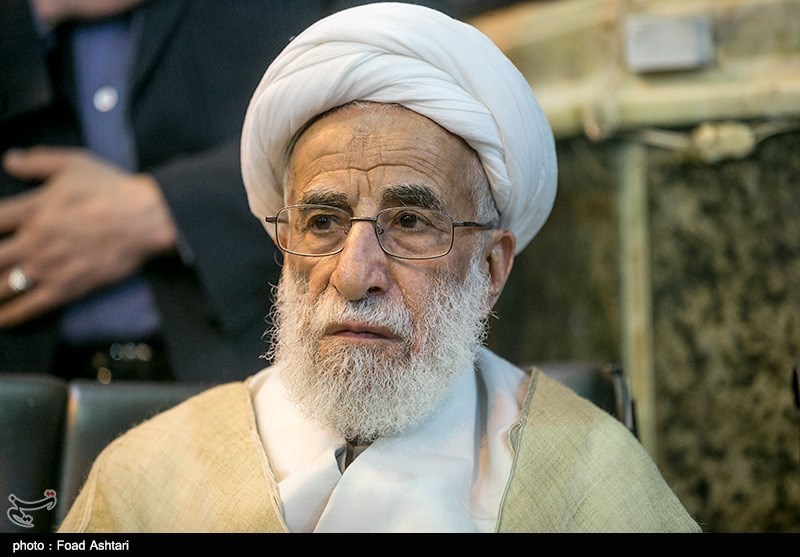
Even their most basic claim of empowering moderate elements in Iran’s government was slapped hard in the face by the announcement of the appointment of Ahmad Jannati to head up the powerful Assembly of Experts.

The 89-year old hardliner is well known for being a religious radical devoutly committed to exporting the Islamic extremism and protecting the mullahs and their ill-gotten gains.

In addition to his new post, Jannati leads the influential Guardian Council, a vetting body that disqualified over 3,000 less loyal candidates for the February elections, which were held in parallel with the vote for the Assembly of Experts.

All of which just goes to show how there are really no moderates within Iranian politics and government and to make any such distinction is to play into the narrative the Iran lobby has so studiously cultivated over the last five years.

By Michael Tomlinson


Filed Under: Blog, News Tagged With: Featured, Iran, Iran deal, Iran Human rights, Iran Lobby, Iran sanctions, Iran Talks, Joseph Cirincione, National Iranian American Council, NIAC, NIAC Action, Paul Pillar, Ploughshares

Iran Lobby Scrambles to Save Nuclear Deal

May 19, 2016 by admin

Iran Lobby Scrambles to Save Nuclear Deal

Iran Lobby Scrambles to Save Nuclear Deal

The Iran lobby is in full damage control mode as it seeks to defuse the time bomb left by the New York Times Magazine article on national security staffer Ben Rhodes who detailed how the campaign to push through the Iran nuclear deal was built on essentially lies to the American public and Congress in concert with Iranian regime supporters.

The fallout from the damaging disclosures has the Iran lobby scrambling to develop a credible retort for accusations now being leveled at the nuclear deal and its lead advocate, the National Iranian American Council, has been in the forefront of throwing anything against the proverbial wall hoping something sticks or at least distracts.

The latest effort at damage control was offered by Ryan Costello from NIAC who offered up an editorial decrying the latest revelations as nothing more than partisan bickering in a contentious election year.

“Republican lawmakers focused much of their arguments on the claim that the White House only won the bruising battle over the deal because of spin from Rhodes, suggesting, for instance, that Rhodes and other White House officials had actually invented the notion that there are factional divides between moderates and hardliners in Iran. (Former George W. Bush official Michael) Doran cited NIAC as one of the administration’s allies in this effort,” Costello writes.

It’s a woeful response and short on one incredibly important fact: any denunciation that the Times piece was in error in any way.

It’s remarkable that in Costello piece he never once called what Rhodes did as wrong, nor did he say anything said by Rhodes in the article was incorrect or in error. The lack of any defense of the actual facts in the article contrasts sharply with Costello’s defense which is basically to say this is a rhetorical pie fight between Democrats and Republicans.

The article also skips over the inconvenient truth of that debate which includes the mobilization of the NIAC and other Iran lobby supporters mentioned in the article such as the hearty cooperation of so-called journalists such as Laura Rozen who served as a RSS feed for Rhodes and his team.

What is revealing in the article appearing at Huffington post about Rhodes participation in selling the deal where he “played an important role as well, answering sophisticated questions from skeptical House members in the White House situation room — detailed questions about types of centrifuges, duration of each part of the agreement, facilities at Parchin and Arak, ‘snap-back’ provisions for reinstating sanctions of Iran cheated, and every aspect of the inspection regime.”

This includes Rhodes infamous interviews in which he promised the agreement contained provisions for “anytime, anywhere” inspections of all facilities, which turned out to be untrue and which Secretary of State John Kerry had to walk back the next day.

We now know the agreement does not allow for inspections of military facilities, seals off the Parchin facility from international inspectors, only stores centrifuges instead of destroying them and permits Iranian regime to develop ballistic missile systems to deliver nuclear warheads.

This episode frames the basic problem with the Iran nuclear deal and the promises made by the Iran lobby about the regime’s future behavior: None of it turned out to be true. The facts on the ground have irrevocably refuted everything the Iran lobby promised.

The embarrassing truth of Rhodes statements in the Times article have made him radioactive for any public appearances as he declined to appear before House Oversight and Government Reform Committee; a refusal the White House characterized as being part of its “executive privilege,” but in reality is a face-saving move to prevent a scene where Rhodes is confronted with the truth of his false claims about the nuclear deal.

Rhodes himself echoed the message of the NIAC when, responding to a question Tuesday at an event hosted by the Center for a New American Security, he described the backlash to his comments as “part of what happens in Washington;” caulking it up to partisan politics.

Now that we have had one year to assess the effects of the nuclear deal, we see plainly that is a complete failure, not only for the Middle East and the world, but for the Iranian people too.

Another article in The American Enterprise Institute blog, correctly pointed out that “if there’s any silver lining to the Joint Comprehensive Plan of Action (JCPOA), the Iran nuclear deal, it is that it raised the Iranian people’s expectations that financial benefits would trickle down to them.”

“This was never going to happen, however, because the Islamic Revolutionary Guard Corps (IRGC) dominates the Iranian economy and monopolizes the sectors which benefit most from both assets unfrozen and new investment. Simply put, little if any of the $50 billion or more which the JCPOA enables Iran to collect will ever reach the Iranian people,” The article writes.

The mullahs in Tehran have sought to blame the U.S. and existing sanctions on Iran stemming from human rights violations and sponsorship of terrorism – separate from the nuclear deal agreement – as being the reason why the Iranian economy continues to be at a standstill in spite of the flurry of much-publicized deals Hassan Rouhani proclaimed in the wake of the deal.

The truth is that the mullahs’ inept leadership and devout support of three ongoing proxy wars in Syria, Yemen and Iraq make any turnaround for the Iranian people impossible. This also explains why Rouhani has kept cash reserves abroad to be used as collateral to buy Russian weapons and not brought back home to stimulate the domestic consumer economy.

A fact that Costello and the rest of the Iran lobby have not mentioned in their diatribes.

By Michael Tomlinson

Filed Under: Blog, News Tagged With: Appeasement policy, Featured, Iran, Iran deal, Iran Human rights, Iran Lobby, Iran Talks, NIAC, NIAC Action, Rhodes, Ryan Costello

Iran Lobby Struggles to Keep Message off Bad News

May 12, 2016 by admin

Iran Lobby Struggles to Keep Message off Bad News

Iran Lobby Struggles to Keep Message off Bad News

The week could not go much worse for the Iran lobby. Revelations about the outright fabrications concocted by national security staffer Ben Rhodes in pressing for passage of the Iran nuclear deal blew battleship-sized holes in the idea that the deal was a good one.

Political pressure ratcheted up quickly as Republicans denounced the alleged lying, while Democrats that supported the deal scrambled to distance themselves and urged tougher accountability of the Iranian regime.

The situation worsened as the State Department admitted to a “glitch” that erased over six minutes of video in which an answer to a question posed by Fox News reporter James Rosen as to whether or not the Obama administration had engaged in secret negotiations with the Iranian regime a full year before it said it did mysteriously disappeared only to reappear after scrutiny.

The Iran lobby has furiously tried to hold the line on the false narrative. Joseph Cirincione of the Ploughshares Fund offered an editorial in Politico that was absurd as it was desperate in trying to denounce the New York Times piece that Rhodes interview was published in.

Trita Parsi of the National Iranian American Council was left to offering weak opinions as to why most European and Asian financial institutions have halted efforts to open up transactions with the Iranian regime.

Those same institutions were scheduled to meet with Secretary of State John Kerry this week in an apparent attempt to “save” the nuclear deal by convincing banks to do business with Iran even though they are reluctant given the tangled web of Iranian human rights violations, support for the war in Syria and violations of international sanctions against developing ballistic missiles.

Financial institutions are in the business of assessing risk. They make lending decisions solely on the basis on the risk versus the reward. For many of the world’s banks, doing business with the Iranian regime is a bad bet.

Bankers doubt Kerry will be able to change their cautious approach to Iran. They fear that even if they receive assurances from the Treasury Department, U.S. prosecutors and independent regulators might adopt a different and stricter interpretation of the rules.

They add that Iran presents multiple challenges for banks other than the prospect of breaching U.S. sanctions, including the risk of inadvertently aiding money laundering, financing terrorism and financial crime in a country that almost all the economy is run by the IRGC, and has for many years been in the financial wilderness and remains “off the grid” for most compliance systems. Also

Not helping has been a near-constant stream of dubious arrests of dual citizenship nationals by the regime which has only heightened tensions and raised even more red flags about the regime and the leadership of Hassan Rouhani.

Is the Iranian regime committed to opening up to the rest of the world or is it the same regime relying on Islamic extremism and militants? The answer so far since the nuclear deal was signed seems unequivocally the latter.

The Obama administration argues that the real issues are Iran’s poor business environment and policies that undermine investor confidence — including ballistic missile tests, arms shipments to rebels in Yemen and the imprisonment of businessmen accused of espionage.

Iranian regime officials complain that the United States has warned bankers away from deals that could run afoul of U.S. sanctions that still target the country.

The United States says that those sanctions were imposed because of Iran’s continuing human rights violations and ties to terrorist groups.

And U.S. officials said Iran needs to look to its own practices. The country routinely scores low on a number of indexes ranking countries’ business climates, including those by the World Bank, the International Monetary Fund and Transparency International.

“The most pressing concern about doing business in Iran does not have to do with sanctions but with really grave and long-standing concerns about the risks of doing business there,” said Elizabeth Rosenberg, a fellow with the Center for a New American Security. “Inadequate transparency, potential money laundering and garden-variety corruption have nothing to do with nuclear proliferation.”

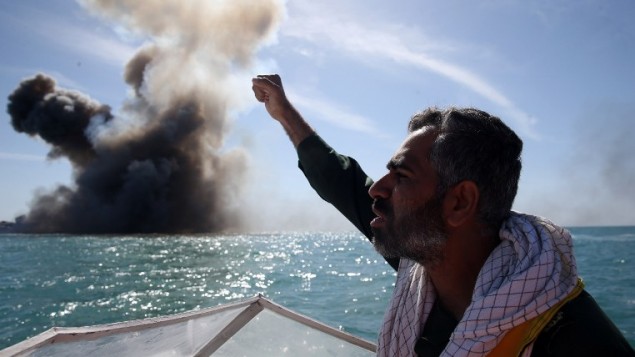
Adding to the ever increasing levels of tension were statements made by Revolutionary Guards commanders to sink American ships if they approached Iranian waters.

The senior naval officer making the threat referenced a “secret arsenal” of weapons Iran has developed or acquired that would be effective against American naval vessels.

Most likely the Iranian regime officials are referencing anti-ship missiles acquired from China or Russia according to the Washington Times, whose navies have long pursued a “carrier killer” missile capability to deter Western power projection capabilities.

“We have informed Americans that their presence in the Persian Gulf is an absolute evil,” Rear Admiral Ali Fadavi stated to state media. “Americans are aware that Iran would destroy their warships if they take a wrong measure in the region.”

His statements follow an incident in which Iranian forces captured and detained 10 U.S. sailors before parading them for propaganda purposes on state-run media.

Obviously none of this reassures anxious bankers who prize stability more than anything else. The mullahs in Tehran have demonstrated they are far from being stable.

By Michael Tomlinson

Filed Under: Blog, News Tagged With: Featured, Iran, Iran deal, Iran Human rights, Iran Lobby, Iran sanctions

Iran, Torture, Prison and a Small Baby

May 11, 2016 by admin

In Iran, a 22-month old baby girl waits. She waits to see her mother who languishes in an Iranian prison. She waits to see her father who sits in the United Kingdom, unable to see his wife or baby girl. She waits in a kind of limbo with her grandmother caring for her because she cannot leave Iran. She is a helpless pawn of the mullahs in Tehran who exercise with cruel indifference their whims to seize dual-citizen Iranians who take a risk to come back to Iran to visit friends and relatives or do work.

The mother being held in prison is Nazanin Zaghari-Ratcliffe, the British-Iranian mother who has been held in solitary confinement for more than five weeks.

According to the Guardian newspaper, Zaghari-Ratcliffe, who works for the Thomson Reuters Foundation as a project manager, was arrested at Tehran’s international airport by members of the regime’s Revolutionary Guard on April 3rd. She and her baby daughter, Gabriella, were about to return to the UK from a family visit in her home country.

Zaghari-Ratcliffe has since been taken to an unknown location in Kerman, 600 miles south of the Iranian capital, but officials have not yet commented on the reasons behind her arrest. She has not yet been charged even after five weeks in prison.

According to her family, she is not allowed access to a lawyer and is under pressure to confess to unspecified crimes.

“Nazanin’s parents have been told that they will be allowed a family visit tomorrow in Kerman,” her husband, Richard Ratcliffe, said on Tuesday. Ratcliffe took the decision to make his wife’s ordeal public on Monday against what he said was the advice of the British Foreign Office.

Gabriella, who is solely British-nationality, has been placed in the care of Zaghari-Ratcliffe’s family. The authorities have confiscated the girl’s British passport. Although Zaghari-Ratcliffe is a British citizen, she is not allowed access to diplomats from the British embassy in Tehran because Iran does not recognize dual nationality, thus treating her solely as Iranian.

“She is waking up in the middle of the night screaming and looking for mummy,” her husband Richard told the Sun newspaper.

The policy by the regime has been used time and time again to arrest other citizens, the most notable being Americans such as Jason Rezaian, a Washington Post reporter, Saeed Abedini, a Christian pastor, and Amir Hekmati, a former U.S. Marine. All had been imprisoned by the Iranian regime, even though they are U.S. citizens and were only released after a controversial prisoner swap after the nuclear deal was completed, including granting clemency to seven Iranians and withdrawing arrest warrants for 14 others.

The chief executive of the Thomson Reuters Foundation, Monique Villa, has urged Iran to release her immediately. “At the Thomson Reuters Foundation she has no professional dealings with Iran whatsoever,” Reuters quoted her as saying. “In fact, the Thomson Reuters Foundation has no dealings with Iran and does not operate in the country.”

An online petition posted on Change.org calls on David Cameron to intervene and use his position to press Iran for Zaghari-Ratcliffe’s release. It has garnered more than 64,000 signatures in less than two days.

Villa’s statements eerily echo those made by the publisher of the Washington Post over Rezaian’s imprisonment and demonstrate the callous disregard the Iranian regime has for international law. Arrest of dual nationals and failure to recognize their legal status also mimics the policy followed by North Korea which often arrests foreigners on the same basis and denies them any access to legal representation or contact with the outside world.

In the case of Hekmati, he has decided to do something about the mistreatment he received at the hands of his Iranian regime jailers deciding to sue Iran for what he says was the brutal torture he endured during more than four years as a hostage, according to reports.

Hekmati filed a lawsuit in D.C. federal court on Monday.

Iranian authorities kept Hekmati in solitary confinement in a small cell for 17 months, whipped the bottoms of his feet, tased his kidney area, put him in stress positions for hours, hit him with batons, and severely deprived him of sleep, according to the lawsuit, reported by the Marine Corps Times.

In addition, Hekmati was forced to take lithium and other addictive pills, then stop taking them to induce withdrawal symptoms, the lawsuit said. He was also denied proper medical care and suffered severe malnutrition, it said.

Hekmati’s captors also told him his sister had been in a serious car crash, while his mother had been killed, but that he could not call his family unless he confessed being a spy for the CIA, the lawsuit claims. He was also moved to another prison where his cell was infested with rats, lice, fleas and bed bugs, it said.

The torture Hekmati and other prisoners receive often goes unreported as regime officials threaten prisoners with reprisals against family members should word get out about a prisoner’s mistreatment. The abuse is compounded by the tacit agreement by nations negotiating the nuclear deal not to link human rights abuses to the deal, thereby giving the regime what amounts to a free hand to abuse prisoners.

That broad appeasement of the Iranian regime was confirmed by news reports detailing how the Obama administration began negotiations with the Iranian regime’s most hardline leadership years before the election of Hassan Rouhani and how national security staff Ben Rhodes orchestrated a campaign of deception in securing a deal while pushing false messages about Iranian moderation.

The obscuring of the administration’s campaign over the details of the nuclear deal underwent even more scrutiny as Fox News reporter James Rosen revealed that video from a State Department press briefing two years ago showing possible deception by the administration had been deleted for unknown reasons.

So while baby Gabriella sits and waits, separated from her mother and father, the controversy escalates over the deception used to pass the Iran nuclear deal.

By Michael Tomlinson

Filed Under: Blog, News Tagged With: Featured, Iran Human rights

Iranian Regime Increases US Tensions Despite Promises by Iran Lobby

May 5, 2016 by admin

Iranian Regime Increases US Tensions Despite Promises by Iran Lobby

Iranian Regime Increases US Tensions Despite Promises by Iran Lobby

The Strait of Hormuz connects the Persian Gulf to the rest of the world and through it flows about 20 percent of the world’s petroleum supplies making it one of the most important trading routes in the world.

According to the U.S. Energy Information Administration, an average of 14 tankers per day transit the Strait carrying 17 million barrels of crude oil, representing a hefty 35 percent of the world’s seaborne shipments of oil. The vast majority of that oil, over 85 percent, goes to Asian markets such as Japan, China, India and South Korea.

It is a chokepoint that the Iranian regime has used as a threat to the rest of the world repeatedly since 1988 when it first laid mines in the Strait contrary to all international agreements. Iranian regime has been involved in a series of confrontations there, including:

  • 2008 with a series of stand-offs with the U.S. Navy and threats to close the Strait;
  • 2011-12 Iranian regime again threatened to close the gulf forcing a coalition of navies to send ships to confront regime vessels;
  • 2015 Iran seized the Maersk Tigris container ship; and
  • Earlier this year, Iranian vessels seized a U.S. Navy patrol boat with its 10 sailors and detained them.

The Iranian regime has used the threat of war and violence in the Strait as a form of diplomacy and regards such aggression as a tool of statecraft.

According to the New York Times, tensions between Iran and the United States, never far from the surface, showed signs of worsening on Wednesday, with the Iranians threatening to block a vital Persian Gulf access route and protesting what they called the American “meddling approach and tone.”

The Iranian regime messages, conveyed in statements by a commander of the Revolutionary Guards Corps and by the Foreign Ministry, came a few days after top mullah Ali Khamenei expressed exasperation with the U.S., questioning the longstanding deployment of the Navy’s Fifth Fleet in the Persian Gulf.

“It is Americans who should explain why they have come here from the other side of the world and stage war games,” Khamenei said in remarks widely reported in Iran’s state news media.

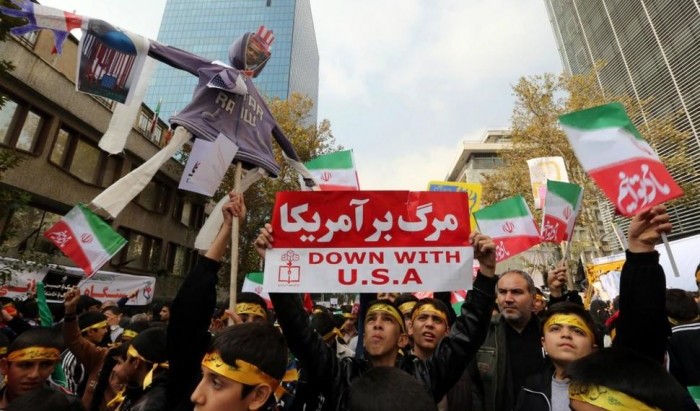
Together, the messages appeared to reflect a steady buildup of anti-American sentiment in Iran recently despite the nuclear agreement that took effect in January, which, on paper at least, eased the country’s economic isolation and was hailed by the Iran lobby as a force for moderation, which seems to have been a false promise so far.

The warning from the Revolutionary Guards about blocking American access to the Persian Gulf waterway appeared to be partly a response to a congressional resolution introduced April 28 by Representative J. Randy Forbes, Republican of Virginia.

The resolution condemned what it called Iran’s illegal detention of American sailors patrolling near Iran in January and said Iran had “undermined stability in the Arabian Gulf.”

On Wednesday, Iran’s Fars News Agency, which has links to the Revolutionary Guards, said Lt. Cmdr. Brig. Gen. Hossein Salami had issued a warning to the United States to avoid escalation.

“Iran will decisively confront any menacing passage through the Strait of Hormuz,” Fars quoted him as saying. “We warn the Americans not to repeat their past mistakes, and they should learn from historical realities.”

The aggressive statements made by regime officials underscore the de facto methodology employed by the mullahs in Tehran to state their case which is always by way of threat and coercion. The siren song promises made by Iran lobby supporters

By Michael Tomlinson

Filed Under: Blog, News Tagged With: Featured, Iran, Iran Human rights, NIAC Action, Reza Marashi, Strait of Hormuz, Trita Parsi

Human Rights Worsen in Iran and so Does Accountability

May 5, 2016 by admin


Human Rights Worsen in Iran and so Does Accountability

Human Rights Worsen in Iran and so Does Accountability

What price is the Iranian regime willing to pay to achieve its goals such as keeping the Assad regime firmly in power in Syria?

It has been willing to funnel billions of dollars in hard currency to keep Assad afloat.

It has been willing to order its Hezbollah proxy to send fighters there.

It has been willing to recruit Afghan refugees to fight as mercenaries, even threaten to deport their family members back to Afghanistan if they refused to fight in Syria.

It has been willing to send in its own Quds Force members and now even its regular army soldiers to fight and die and celebrate their martyrdom.

It has even been willing to recruit Russia to fight alongside its forces to target Western-backed rebels, including the deliberate targeting of civilians and relief agencies.

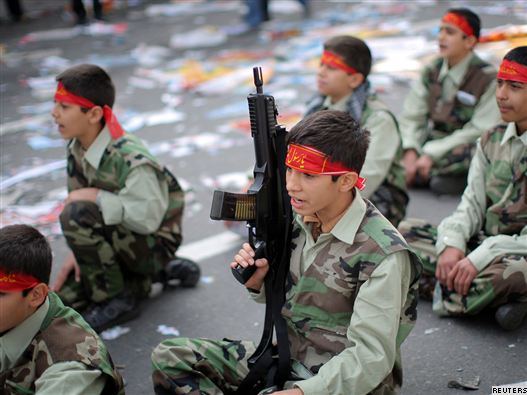
Now to top it all off, the Iranian regime has released a slick music video made by the Basij militia recruiting children to fight in Syria as well in a clear demonstration of how desperate the mullahs in Tehran have become to protect their partner in crime.

The lyrics, as translated by the National Council of Resistance of Iran, a leading dissident group, say:

“On my leader [Ayatollah Khamenei’s] orders I am ready to give my life.

The goal is not just to free Iraq and Syria;

My path is through the sacred shrine [in Syria], but my goal is to reach Jerusalem.

… I don’t regret parting from my country;

In this just path I am wearing my martyrdom shroud.”

Michael J. Totten, writing in World Affairs Journal, explained the regime’s past history of using children for war.

“Iran’s regime has done this before. During the Iran-Iraq War, which killed around a million people between 1980 and 1988, the Basij recruited thousands of children to clear minefields.

“After lengthy cult-like brainwashing sessions, the poor kids placed plastic keys around their necks, symbolizing martyrs’ permission to enter paradise, and ran ahead of Iranian ground troops and tanks to remove Iraqi mines by detonating them with their feet and blowing their small bodies to pieces,” he writes.

The Iranian government desperately needs the Assad regime in Damascus and the Abadi government in Iraq because they’re Iran’s only allies in the entire Arab world. A moderate and democratic Iran would have no trouble forging normal and friendly relations with moderate Arabs governments like Jordan’s, Tunisia’s, Morocco’s and possibly even Egypt’s, but the revolutionary state that’s been entrenched there since 1979 isn’t tolerated any better in capitals like Cairo and Riyadh than it is in Tel Aviv and Jerusalem, he added.

More than 280 Iranian troops have been killed in Syria since September of last year, according to an analysis by the Levantine Group of casualties reported by Iranian media.

The willingness to sustain such a heavy rate of losses is evidence of Tehran’s commitment to the Assad regime, but also seems to show that Iran is counting on its forces to stand in for what the Levantine Group describes as a “decomposing” regime army.

“Iranian operatives are not mere military advisers spread out along regime lines,” said geopolitical and security analyst Michael Horowitz.

The use of Afghan refugees as cannon fodder in Syria highlights the plight of these refugees who sought to escape violence in Afghanistan only to experience violence in Iran as shown by the brutal and ghastly rape and murder of a six-year old Afghan girl.

Her case could have disappeared in the Iranian regime’s court system — Afghan migrants, who number about two million, often face discrimination by the mullah’s judiciary and other institutions.

Instead, her death provoked a social media storm, with an online outpouring of grief and a show of solidarity with Afghan migrants. A vigil for the murdered child was organized via Telegram, a popular messaging app in Iran, and eventually the judiciary was forced to fast-track her case; finally succumbing to intense pressure to act in this particular case where so many others had been previously ignored.

There are other small slivers of hope as another successful social media campaign is helping a detainee of the notorious Evin Prison.

Omid Kokabee, an Iranian physicist associated with the University of Texas, has been in the jail since being arrested on charges of espionage in 2011. He is currently suffering from kidney cancer, and Iranians blame the regime for delaying treatment two years ago that could have helped prevent its spread.

A #freeomid Twitter campaign has prompted a response from Gholam-Hossein Mohseni-Ejei, a hardline spokesman of the judiciary who has denied any failure on the part of the authorities but said the prisoner’s 10-year sentence could be reconsidered depending on his medical condition.

We can only hope that more social media campaigns can lead to activism and pressure to bring about a fundamental change to the Iranian regime, which is what the mullahs ruling Iran are fearing from. An overwhelming majority of young and discontent Iranians who have lived under the iron fist and are now using every opportunity to revolt against the ruling theocracy.

By Michael Tomlinson

Filed Under: Blog, News Tagged With: Featured, Iran, Iran Human rights, Iran Mullahs

Iran Lobby Tries to Influence Presidential Campaign

May 2, 2016 by admin

The Iranian lobby, led by the National Iranian American Council, has decided to up its efforts to influence the ongoing U.S. presidential election by directing messages at the campaigns of the front runners.

The reason for this is simple: The NIAC and other Iranian regime supporters want to do whatever they can to ensure that a new incoming administration continue to toe the line in appeasing the mullahs in Tehran and support a deeply flawed nuclear agreement that has allowed the regime to continue its militant ways without serious repercussions.

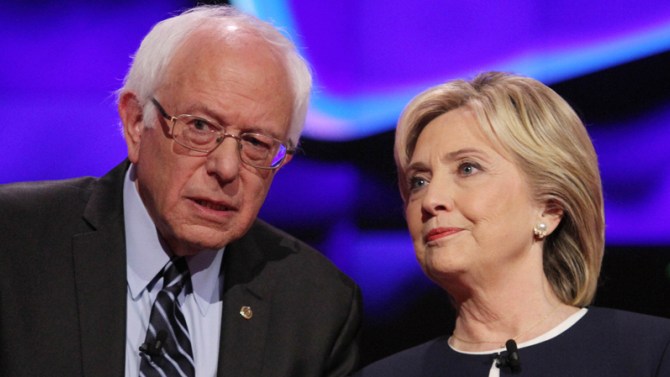
In an editorial by Tyler Cullis and Ryan Costello, the NIAC laid out a presumptive roadmap for Democratic frontrunner Hillary Clinton on how to “woo back Iranian Americans,” but in reality it should be viewed more as a roadmap to “helping the Iranian regime.”

Cullis and Costello spell out how her rival, Sen. Bernie Sanders, garnered overwhelming support from an internal poll of NIAC supporters – Sanders received 62 percent vs. 19 percent for Clinton – based on a perception he was more anti-war.

“Clearly, Iranian Americans who have gravitated towards Sanders have largely done so for the same reasons as other Sanders supporters – because of a distrust of the Washington establishment, anti-war and anti-interventionist sentiments, disillusion with incrementalist political change and concerns about increased economic injustice,” Cullis and Costello write.

“But Clinton’s approach toward Iran is also a major reason why she lagged behind Sanders among Iranian Americans.”

What is amazing is how the NIAC is attempting to portray support for Sanders principally being driven by foreign policy concerns when almost every poll taken during the primary season has shown his supporters backing his domestic views on the economy, wage inequality and regulation of Wall Street as the energizing factors in his campaign.

The NIAC is taking this position largely because it can read public opinion polls and see how American opinion has shifted on the Iranian regime and the rise of Islamic extremism in the wake of a worsened Syrian situation and almost regular terrorist attacks in Paris and Brussels since the deal.

Cullis and Costello have taken Clinton to task for her previous statements against normalizing relations with the Iranian regime, especially if the regime continued its support for terrorism and regional conflict.

“The dispute reflected the debate eight years ago when Clinton, along with other candidates, attacked Obama for his statement that he would sit down with hostile nations, including Iran, without preconditions,” they write.

“Clinton’s stance toward further Iran negotiations might not ultimately be that different than Sanders, but her attacks on normalization send a worrying signal that engagement would be the exception rather than the rule,” they add.

One cannot help but notice a slight hint of desperation in the NIAC and other Iranian regime supporters as they take a deeper dive into the U.S. presidential campaign as they are faced with the very real possibility of having either a Clinton or Trump administration already publicly committed to opposing Iranian extremism.

The lobby’s efforts also highlight the one significant weakness of the Iran nuclear deal in that it is an executive action by President Obama and can just as easily be undone by a new president. The tenuous nature of the deal providing the mullahs in Tehran with relief from sanctions is worrisome to supporters such as Cullis and Costello.

The fact that the NIAC is upping its game in order to try and shape the public perception of how these candidates should perceive the Iranian regime is – on the surface – pretty pathetic and indicative of how weak its position is.

It also explains why other parts of the Iran lobby are making blatant warnings that failure of the deal will lead to serious consequences; although one finds it hard to believe things could get much worse in the Middle East right now.

One of those making those statements is Seyed Hossein Mousavian, formerly of the regime’s National Security Council who wrote in Huffington Post:

“If the deal collapses, not only would there be no chance for any compromise between Iran and the U.S on any other issue, but Iran would also lose its faith in the Security Council,” he writes in the hyperbole that has become typical of the lobby’s efforts.

“Unfortunately, there are powerful forces in U.S. politics that seek to increase U.S.-Iran enmity and revert Iran and the United States back onto the path to war. These special interest groups are doing everything in their power to destroy the landmark diplomatic agreement and have strong sway over Congress, which is pushing for over a dozen new sanctions against Iran,” he added.

These efforts may end up being futile gestures as the Iranian regime seems intent on proving wrong every promise the Iran lobby makes.

For example Iran’s parliament voted to boost the country’s missile capabilities. Members approved an additional article to the next five-year development plan. The article will see Iran’s missile production grow and anti-missile capabilities enhanced even though the United Nations and U.S. considers such missile development in violation of existing sanctions banning them.

Iranian state-run news also reported that an Iranian woman was reportedly publicly flogged 100 times in the Iranian state of Isfahan for an alleged extramarital affair four years ago. The incident earned condemnation from human rights and Iranian dissident groups and continues to highlight the regime’s disregard for human rights.

No matter what the Iran lobby says about the presidential campaign, it’s almost a given the regime will act to contradict it.

By Michael Tomlinson

Iran Lobby Tries to Influence Presidential Campaign

Iran Lobby Tries to Influence Presidential Campaign

Filed Under: Blog, News Tagged With: Featured, Iran, Iran deal, Iran Human rights, Iran Lobby, Iran sanctions, Iran Talks, NIAC, NIAC Action, Ryan Costello, Tyler Cullis

Iranian Regime Dictionary is not Webster’s

April 22, 2016 by admin

Iranian Regime Dictionary is not Webster’s

Iranian Regime Dictionary is not Webster’s

Noah Webster has been called the father of American English dictionaries, publishing the first edition of his dictionaries in 1828. Since then, his name has become synonymous for dictionaries and has become the bedrock for understanding and correcting the English language.

Language and its precise use have determined everything from lawsuits to love poems and most recently language has been at the heart of much of the disputes going on with the Iranian regime. For the mullahs in Tehran, language and the semantic differences it brings has been their lifeline in a sense because it allows them to argue one thing, while agreeing to something totally different.

Take for example the Iranian position in the Syrian conflict. Hassan Rouhani’s government has always maintained that no peaceful solution could happen without guarantees that Syrian leader Assad was still in power. To that end, Iran has targeted the rebel opposition and identified them as “terrorists” and tied them to ISIS and Al-Qaeda, even those moderate elements backed by the U.S. and its allies.

The mullahs have even used deceptive language in describing Iranian military units fighting in Syria, calling them “volunteers” when in fact the regime is now shipping regular army units for the first time. The regime has even recruited tens of thousands of paid mercenaries from the ranks of Afghan refugees seeking shelter in Iran from the war that rages in their country; sometimes signing up only under threat of expulsion of their families.

Iran’s army chief said on Wednesday the forces it had deployed in Syria in the first such operation abroad since the 1979 revolution were volunteers working under Revolutionary Guards supervision, and the regular army was not directly involved.

It announced this month that it had sent commandos from the army’s Brigade 65 to Syria as advisers, suggesting it was using its regular army as well as forces from the Revolutionary Guards to help Assad’s forces in the country’s civil war.

“Some volunteers have been sent to Syria, under the supervision of the related organization, and among them there might be some of the Brigade 65 forces,” armed forces chief Ataollah Salehi was quoted by the Tasnim news agency as saying.

“The army has no responsibility in the military advice given to Syria,” Salehi added.

The talking points are a clear example of how the Iranian regime obscures its real intentions with nuanced language. It’s a tactic adopted by the Iran lobby and its supporters as well in trying to divert attention through misnomers such as the use of the term “moderate” in describing certain elements within the Iranian government.

Moderation does not exist within the Iranian government. It is like making a distinction between the SS and Brown shirts of Hitler’s Nazi Germany and calling one more moderate than the other.

Nowhere is that tactic more apparent than during the recent parliamentary elections in which thousands of “moderates” were kicked off ballots and in their place, candidates loyal to the regime’s leadership were left to run virtually unchallenged, yet they were hailed as “moderates.”

The Iran lobby uses those distinctions in its efforts to distort the truth in Iran. Groups such as the National Iranian American Council have long sought to portray a clear distinction within Iran of an active moderate faction seeking change, but it has gone out of its way to attack all dissident groups not aligned with the regime in some manner.

Entities such as the National Council of Resistance of Iran which is one of the largest Iranian dissident groups in the world has long been vilified by the Iran lobby and portrayed in various nefarious ways in order to denigrate their claims and protests.

The Iranian regime continues this practice in how it makes threats all the time, including warnings by Rouhani of a “serious reaction” should the U.S. not make good on what it perceives as promises to grant Iran expanded sanctions relief under the nuclear agreement such as access to U.S. currency exchanges, while the U.S. steadfastly maintains that no such conditions existed.

Should the rest of the world be worried about these linguistic differences? Yes, to the extent they provide the Iranian regime the excuses necessary to engage in its aggressive behavior.

Iran, much like regimes such as North Korea, use language as a first-line of excuses in justifying any sort of bad behavior.

Test fire ballistic missiles capable of carrying nuclear warheads in violation of international sanctions?

Call it “defensive testing.”

Round up journalists, ethnic and religious minorities and toss them in prison?

Call it “protecting the faith.”

Hang a 13-year-old girl?

Call it “protecting virtue and purity.”

The absurdity of it all makes a mockery of language. We can only assume that Noah Webster is turning in his grave.

By Michael Tomlinson

Filed Under: Blog, News Tagged With: Featured, Iran, Iran deal, Iran Human rights, Iran Lobby, National Iranian American Council, Syria

  • « Previous Page
  • 1
  • …
  • 15
  • 16
  • 17
  • 18
  • 19
  • …
  • 22
  • Next Page »

National Iranian-American Council (NIAC)

  • Bogus Memberships
  • Survey
  • Lobbying
  • Iranians for International Cooperation
  • Defamation Lawsuit
  • People’s Mojahedin
  • Trita Parsi Biography
  • Parsi/Namazi Lobbying Plan
  • Parsi Links to Namazi & Iranian Regime
  • Namazi, NIAC Ringleader
  • Collaborating with Iran’s Ambassador

Recent Posts

  • NIAC Trying to Gain Influence On U.S. Congress
  • While Iran Lobby Plays Blame Game Iran Goes Nuclear
  • Iran Lobby Jumps on Detention of Iranian Newscaster
  • Bad News for Iran Swamps Iran Lobby
  • Iran Starts Off Year by Banning Instagram

© Copyright 2026 IranLobby.net · All Rights Reserved.