Iran Lobby

Exposing the Activities of the lobbies and appeasers of the Mullah's Dictatorship ruling Iran

  • Home
  • About
  • Current Trend
  • National Iranian-American Council(NIAC)
    • Bogus Memberships
    • Survey
    • Lobbying
    • Iranians for International Cooperation
    • Defamation Lawsuit
    • People’s Mojahedin
    • Trita Parsi Biography
    • Parsi/Namazi Lobbying Plan
    • Parsi Links to Namazi& Iranian Regime
    • Namazi, NIAC Ringleader
    • Collaborating with Iran’s Ambassador
  • The Appeasers
    • Gary Sick
    • Flynt Leverett & Hillary Mann Leverett
    • Baroness Nicholson
  • Blog
  • Links
  • Media Reports

Iran Lobby Turns Attention to Protecting Iranian Regime

May 26, 2017 by admin

Iran Lobby Turns Attention to Protecting Iranian Regime

Iran Lobby Turns Attention to Protecting Iranian Regime

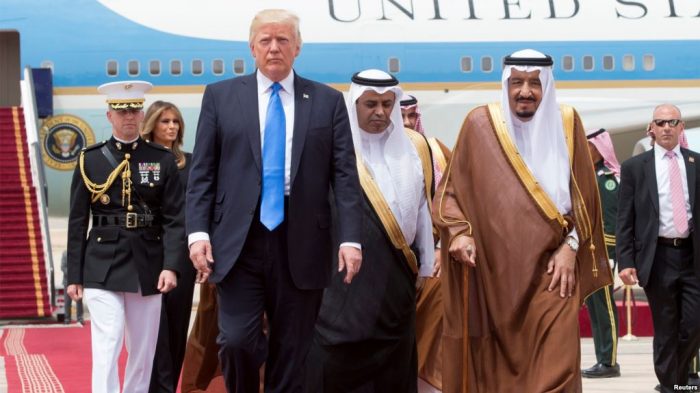
The effort by President Trump to build a new international coalition to confront and contain the Iranian regime got off to a solid start with summits and meetings in Saudi Arabia and Israel. The warm welcome he received from Arab leaders must have unnerved the mullahs in Tehran since the Iran lobby has turned its attention a full-throated defense of the regime.

Trita Parsi of the National Iranian American Council took to authoring an editorial on the NIAC website that attempts to downplay Trump’s efforts.

“A key factor explaining the violence in the Middle East in the past few decades is that the region has lacked a sustainable, indigenous order. The process of establishing an order is by definition disruptive and the Middle East has almost continuously been in this state since the end of the Cold War,” Parsi writes.

“To make matters worse, the temporary equilibriums that briefly provided a resemblance of order were established and sustained by an external power – the United States – rather than by the states of the region themselves. As a result, these temporary periods of stability could only last as long as the external power was willing to sustain the order with its own blood and treasure,” he adds.

Parsi’s logic is perverse since he effectively argues for a process in which Iranian regime institutes order by eradicating everyone else that stands in its path. Of course, Parsi claims that Iran only has the best of intentions for its neighbors, but the track record does not show that as Iran is now embroiled in three wars in Syria, Iraq and Yemen.

Parsi goes on to blame Saudi Arabia for Middle East turmoil all in an effort to isolate Iran, but Parsi never admits to Iranian regime’s own culpability in setting the region ablaze in bloodshed and sectarian violence.

We have seen the profound loss of life after the Obama administration abdicated any role in fixing Syria in favor of the Iranian regime settling issues through barrel bombs and chemical gas attacks.

Parsi’s colleague, Reza Marashi, takes up the cause of whitewashing Iran in his own editorial reiterating the tired old refrain of Hassan Rouhani of being a tried and true moderate, whose real goal is only alleviating the economic malaise gripping Iran.

Unfortunately, no one told Marashi it seems that Iran’s economy will not improve so long as the mullahs continue to siphon billions for their own personal enrichment, as well as ship off more billions to prop up the Assad regime in Syria and pay to support Hezbollah and Houthi rebels in their wars.

Marashi even dubs the newly formed partnership against Iran as an “Axis of Rejection” a nifty piece of word play that reminds us of President George W. Bush’s “Axis of Evil” speech.

“Rouhani’s track record demonstrates that sustained engagement can lower tensions and produce peaceful solutions to conflict,” Marashi writes.

It is a claim that is both surreal and fantasy since Rouhani has presided over a massive escalation in wars that Iranian regime is fighting with no discernible pathway to peace other than to kill off Iran’s enemies.

But the NIAC isn’t through trying to support Iran as Ryan Costello weighed in with a press release lauding tweets made by former Secretary of State John Kerry who negotiated the horrific Iran nuclear agreement in the first place opposing proposed Senate legislation to levy new sanctions on the regime.

“Sec. Kerry’s public intervention cautioning against new Iran sanctions legislation should be another wake-up call that this is the wrong bill at the wrong time. Sec. Kerry would not be turning to the microphones unless the bill was an Iran deal-killer and private efforts to remove poison pills had failed,” Cosello writes.

“Lawmakers must ask themselves why they would give President Trump a mandate to undermine the Iran nuclear deal, ratchet up tensions in the region and undermine Iran’s moderates on the heels of their election victory. Tens of millions of Iranians voted in favor of openness and engagement with the outside world while Trump danced with unelected Saudi monarchs and called for Iran’s isolation,” he adds.

The more appropriate question back to Costello would be “why would lawmakers ever think they could trust the Iranian regime anymore after its commitment to waging proxy wars on its neighbors.”

The NIAC wasn’t the only Iran lobby supporter busy propping up the mullahs. Hooman Majd, a former advisor to Mahmoud Ahmadinejad, offered up the fairy tale that Iran had opted for peaceful co-existence with Rouhani’s re-election in a piece for Foreign Policy.

“Iran’s presidential election also proved the adage that the only thing predictable about Iranian politics is its unpredictability. Which, to the consternation of the Washington foreign-policy class, puts Iran experts on the same professional level as astrologers or palm readers,” Majd writes.

Again, Iranian regime supporters like Majd show their silliness when the election outcome in Iran was far from unpredictable. In fact, no incumbent Iranian president has ever lost re-election, not even Ahmadinejad when his re-election had to be rigged with widespread ballot tampering.

Iranian elections are so predictable, they remind us of the old Soviet Union-style elections with 99 percent voter participation and zero percent uncertainty.

The more the Iran lobby tries to prop up the Iranian regime the more it reveals how weak and vulnerable the mullahs have become.
 

Filed Under: Blog, News Tagged With: Appeasement policy, Featured, hassan rouhani, Iran Lobby, Iran Mullahs, National Iranian American Council, NIAC, NIAC Action, Reza Marashi, Rouhani, Trita Parsi, Tyler Cullis

Iranian Regime Uniting the World…Against It

May 23, 2017 by admin

Iranian Regime Uniting the World…Against It

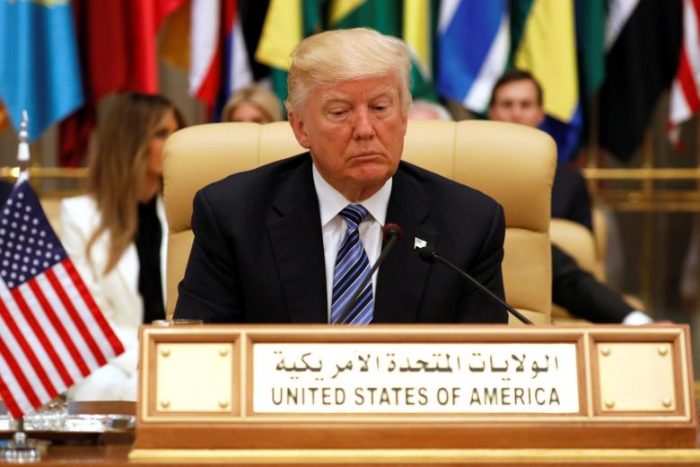
U.S. President Donald Trump takes his seat before his speech to the Arab Islamic American Summit in Riyadh, Saudi Arabia May 21, 2017. REUTERS/Jonathan Ernst

The Iranian regime election has given the world another dose of Hassan Rouhani, but in and of itself, his election to another term is meaningless since the world has seen that Ali Khamenei and his close circle of mullahs set policy, backed by the muscle of the Revolutionary Guard Corps.

The arguments against the Iranian government have never been directed at its people. For the most part, the Iranian people have been manipulated, coerced, bullied and even brutalized into submission. It has been the conduct of the leadership of the mullahs that have brought so much misery to that part of the world.

The leadership of Iran has pursued a policy that emphasizes harsh suppression of internal dissent, while using brute force to enact a foreign policy of war and terrorism to advance its aims, which is to expand the sphere of influence for its form of radicalized Shia theology.

But in an interesting twist of irony, Iran’s very actions to unite underneath its own banner have yielded the opposite effect: countries that have previously been adversaries are now aligning to form an international coalition to halt Iranian regime’s expansion.

President Trump’s first overseas trip started off with Saudi Arabia and extended into Israel, two countries that have not only been at odds and even war, but are also under their own scrutiny. Now both they and other countries, including the Gulf states, have begun the tenuous process of working together at keeping the Iranian regime contained.

The ancient proverb: “The enemy of my enemy is my friend” is finding utility now among countries that are being confronted by Iranian extremism and for President Trump, the opportunity exists to redefine a new order in the Middle East predicated at halting Iranian expansion and bring about a political realignment within the Iranian regime.

Trump’s visit to Saudi Arabia was the first to a Muslim majority nation for an incoming U.S. president and set the tone for reaching out to the Muslim world in a manner his predecessor never managed to achieve.

Trump said on Monday that shared concern about Iran was driving Israel and many Arab states closer and demanded that Tehran immediately cease military and financial backing of “terrorists and militias”.

In stressing threats from Iran, Trump echoed a theme laid out during weekend meetings in Saudi Arabia with Muslim leaders from around the world, many wary of the Islamic state’s growing regional influence and financial muscle.

Trump said there were opportunities for cooperation across the Middle East: “That includes advancing prosperity, defeating the evils of terrorism and facing the threat of an Iranian regime that is threatening the region and causing so much violence and suffering.”

Worried about the movement being made in realigning against the Iranian regime, newly minted Rouhani claimed that regional stability could not happen without Iran.

He said the summit in Saudi Arabia “had no political value, and will bear no results”.

“Who can say the region will experience total stability without Iran? Who fought against the terrorists? It was Iran, Syria, Hezbollah and Syria. But who funded the terrorists?”

In this one area, Rouhani is correct, but not for the reasons he claimed. Regional stability is dependent on Iran, but only if Iran stopped fueling the instability it has caused across the Middle East in Iraq, Syria and Yemen.

Rouhani also trotted out the time-worn claim that Saudi Arabia was in fact more dangerous because of the rise of Sunni-dominant terrorist groups such as ISIS, but ignored his own country’s role in helping spawn ISIS with the downfall of the Sunni-Shia coalition government of Nouri al-Maliki in Iraq.

While Rouhani tries to diminish the importance of Arab states aligning against Iran, the broader and more important strategic implications are more troubling for Rouhani and his fellow clerics. A clear alliance among fellow Muslim nations with non-Arab states such as Israel, the U.S. and Turkey would represent a sea change in relations among countries with long histories of opposing each other.

It also puts to a lie the message Rouhani and his Iran lobby supporters have long pushed which is that opposition to Iran has always been built around sectarian issues and as such lack legitimacy. The opposite is now true; a coalition of diverse nations with varying beliefs all share the same concerns over an Iran that stands at the center of virtually all the instability now wreaking havoc there.

The real proof of Iran’s intentions will not come from words but deeds. If the Iranian regime continues to fling ballistic missiles and supply its various proxies in their ongoing wars, then the regime has no intention of altering its course.

It is ironic that Rouhani pointed a finger at Saudi Arabia claiming it held no free elections when Iran’s own history of elections is more checkered, including the debacle of the 2009 disputed elections.

“Mr. Trump has come to the region at a time when 45 million Iranian people went to polling stations, and he went to a country where they don’t know what elections are about,” Rouhani said. “It’s not in their dictionary.

“Hopefully the day will come when Saudi Arabia will adopt this path.”

His triumphant comments neglected to mention that Iran’s elections are hardly free or fair, with candidates chosen by an unelected 12-man council, according to the Los Angeles Times, not to mention that the figure made up by the regime could not be verified, given no independent monitoring has been present, and Iran’s state media are full of facts on how both rivals have made unprecedented deceits in the ballots. The opposition to the Iranian regime has estimated the total number of participants in the fake election, to have been increased by four in order to cover, the regime’s isolation at home.

Rouhani for his part deflected questions about Trump’s calls to isolate Iran over its support for militant groups and its ballistic missile program, suggesting that the new U.S. administration had yet to “settle down” and formulate a coherent policy in the Middle East.

“We are waiting for this new U.S. government to be settled in terms of their stances, posture and future plans,” Rouhani said.

“Hopefully things will be settled down and well established in the U.S. so that we can actually pass judgments on the new administration.”

We can only assume Rouhani hopes to squeeze a few more months out of the appeasement policy pursued by the Obama administration before things go south on him and his fellow mullahs.

Michael Tomlinson

Filed Under: Blog, News Tagged With: Appeasement policy, Featured, hassan rouhani, Iran Lobby, Iran Mullahs, Iran sanctions, Iran Talks, National Iranian American Council, NIAC Action, Rouhani

As If We Expected a Different Result in Iran Election?

May 22, 2017 by admin

As If We Expected a Different Result in Iran Election?

As If We Expected a Different Result in Iran Election?

Without much drama, Hassan Rouhani was re-elected to a second term as president of the Iranian regime. The result didn’t come as a surprise to any experienced Iran watcher since no incumbent has ever lost a bid for a second term, even if the results had to be faked to get the job done as was the case with Mahmoud Ahmadinejad.

But what has been lost on a large part of the global media is now the mullahs manage to always stage a convenient drama to be played out for them in terms of a fateful showdown between “reformist and moderate” forces against “hardline and conservative” ones bent on rolling back the freedoms of the Iranian people.

If Nazi Germany had staged an election between Adolf Hitler and Joseph Goebbels, the latter probably would have looked like a moderate too.

The same was true here in which a careful choreography ensued. First thousands of candidates filing to be on the ballot had to be summarily tossed aside to clear the field.

That left only six men to move forward—no women and no active or known dissidents—and then several dropped out to throw their support to one of the two remaining choices: Rouhani and Ebrahim Raisi.

Conveniently, Raisi was portrayed as the “hardline” choice of Ali Khamenei and was portrayed by media as the man who would roll back all the “positive” achievements wrought by Rouhani over the past four years.

Given Raisi’s bloody history as a special prosecutor that oversaw the executions of tens of thousands of Iranian dissidents, it’s easy to see why he might be viewed as slightly more bloodthirsty than Rouhani who oversaw only the execution of mere thousands of dissidents.

It was a Hobson’s choice and a well-played one.

While the Iran lobby focused on Rouhani’s achievements in securing the nuclear deal and opening Iran back up to Western investment, never were there any mentions of the broad human rights crackdowns during his tenure including the largest number of public executions since the 1979 revolution.

In fact, global media were eager to eat up the narrative of a “moderate” win which is exactly what Khamenei and his fellow mullahs wanted to see portrayed.

How easily the world has forgotten the parliamentary elections only last year in which tens of thousands of candidates were knocked off ballots and faithful followers of the mullahs were re-elected.

The Iranian regime smartly chooses to fight its public battles only after the game has been rigged.

Trita Parsi of the National Iranian American Council brayed like a wild animal over the results as the NIAC quickly issued statements lauding the outcome.

“President Rouhani’s convincing win is a sharp rebuke to Iran’s unelected institutions that were a significant brake on progress during Rouhani’s first term. It is also a rebuke of Washington hawks who openly called for either a boycott of the vote or for the hardline candidate Ebrahim Raisi to win in order to hasten a confrontation,” Parsi said.

“In addition to Trump’s America, there are two other countries that will continue to form an Axis of Rejection in response to Rouhani’s foreign policy. One is Saudi Arabia. Despite Tehran’s repeated outreach, Riyadh has refused to respond in kind,” said Parsi’s NIAC colleague Reza Marashi in a piece for Huffington Post.

Fortunately for the rest of the world, many countries are not hearkening to Parsi and Marashi’s messages.

During President Trump’s state visit to Saudi Arabia, he found common ground with the Saudis on the need to confront Iranian regime’s aggression since Rouhani has clearly followed a foreign policy of engaging in wars in Syria, Iraq and Yemen; coupled with a North Korea-like ramp up in ballistic missile testing.

The king said on Sunday Saudi Arabia had not witnessed terrorism until the 1979 Revolution in Iran. Instead of accepting good-faith initiatives, Iran has “pursued expansionary ambitions, and criminal practices and the meddling of other countries’ internal affairs,” he said. The kingdom, however, respects the Iranian people and won’t judge them “by the crimes of their regime,” he said, according to Bloomberg.

Trump later singled out Iran as a terror sponsor. Iran’s leaders speak “openly” of mass murder, Trump said in his keynote speech before dozens of Muslim leaders gathered in the Saudi capital, Riyadh. He said the Iranian government gives terrorists “safe harbor, financial backing, and the social standing needed for recruitment.”

Sen. John McCain lauded President Trump’s trip to Saudi Arabia this weekend saying it sent a strong message to Iran that the U.S. and its allies are ready to block Iran’s efforts to destabilize the region.

“There’s no doubt that if we’re going to impede the Iranian’s continued efforts to exert, certainly, significant strength in the region that this is an important step forward,” the Arizona Republican said on “Fox News Sunday.”

Orde Kittrie, a professor of law at Arizona State University and a senior fellow at the Foundation for Defense of Democracies, lauded the Trump administration’s approach to the Iranian regime and how—in this one area—bipartisan cooperation with Congress seems to be taking root.

“The Trump administration’s different approach is very consistent with that advocated by leading members of Congress including Senate Foreign Relations Committee Chair Bob Corker (R-Tenn.) and Ranking Member Ben Cardin (D-Md.) in their S. 722, and House Committee on Foreign Affairs Chair Ed Royce (R-Calif.) and Ranking Member Elliot Engel (D-N.Y.) in their H.R. 1698,” he writes in the Hill.

“The Trump administration has been accused by some of acting impulsively at times. Its apparently careful, measured and thoughtful approach to Iran policy is encouraging. Tearing up the JCPOA, without a better strategy for preventing an Iranian nuclear bomb and a broader strategy for combating non-nuclear malign Iranian behavior, would make no sense,” he added.

While the world discusses the “moderate” victory in Iran, it would do well to remember how bloody the past four years have been around the Middle East under Rouhani’s term.


Filed Under: Blog, News Tagged With: Featured, hassan rouhani, Iran, Iran Human rights, Iran Lobby, Iran Mullahs, Iran Terrorism, McCain, National Iranian American Council, NIAC, NIAC Action, Trita Parsi, Trump visit to Saudi Arabia

Why Nothing Changes in Iranian Regime Elections

May 9, 2017 by admin

Why Nothing Changes in Iranian Regime Elections

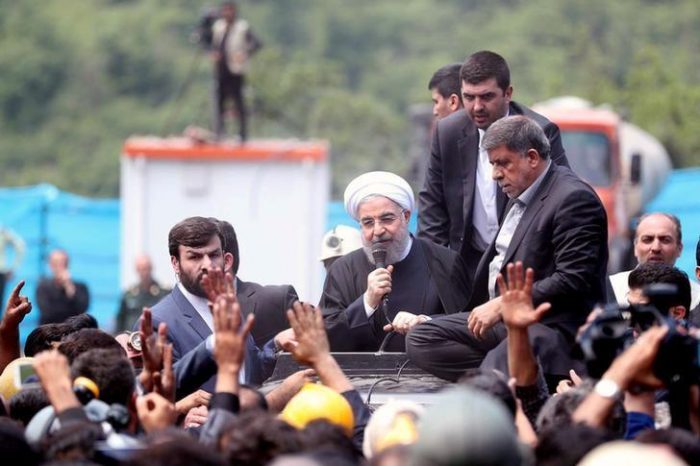
Iran’s President Hassan Rouhani speaks as he visits Azadshahr mine explosion site in Azadshahr, Golestan Province, Iran May 7, 2017. Picture taken May 7, 2017. President.ir/Handout via REUTERS

What ‘s the line? Same stuff, different day? That’s accurate when it comes to describing the so-called “presidential election” scheduled for May 19th. Elections in Iran are neither fair nor free and because of their illegitimacy, they invariably result in further weakening the already embattled regime; like a cancer eating away at a patient.

The most common fallacy being trumpeted around about how the regime government works, especially by Iran lobby advocates such as the National Iranian American Council, is that Iranian elections are democratic.

Nothing could be further from the truth.

When elections are held, all candidates are vigorously vetted by the Guardian Council, a body of 12 clerics, six of whom are appointed directly and the other six indirectly by top mullah Ali Khamenei. When the president is selected, he is nothing more than a puppet, acting according to the will of the supreme leader. Based on the Islamic state’s constitution, the president must be confirmed by the supreme leader no matter what the people voted.

It’s the kind of absolute control that campaign managers in Western nations must envy. Democracy can be such a messy experience that the mullahs in Tehran have done away with the inconvenience.

The idea that “moderates” are going to be empowered is silly when you consider that Khamenei, has final veto power over foreign policy, treaties, military commitments, economic policy, the judiciary and culture. These are enforced through state mechanisms appointed by him including the Revolutionary Guards and Quds Force (which owns over two-thirds of the industrial capacity of the economy through shell companies), Basji paramilitaries and morality police that enforce, arrest and imprison anyone violating generic sharia laws designed to stamp out dissent.

And all candidates, including the incumbent Hassan Rouhani and leading pro-Khamenei camp loyalist Ebrahim Raisi, are in line with all the regime’s strategic objectives. Otherwise, their candidacy would not enjoy Khamenei’s necessary approval.

The citizens of Iran are defined as people without rights or voice. Their choices in the upcoming elections can’t get any worse:

  • Ebrahim Raisi, known for his role in the “Death Commission” ordered by regime founder Ruhollah Khomeini, presided over the1988 massacre of over 30,000 political prisoners, mainly members and supporters of the opposition People’s Mojahedin Organization of Iran;
  • Hassan Rouhani, although portrayed as a moderate by the Iran lobby, he is known for key roles in supporting terrorism; his support for chemical, biological, and nuclear weapons; how he duped the West when he was Iran’s top nuclear negotiator; his early years as a fundamentalist activist and protege of Khomeini. His record during his current term clearly demonstrated his hardline opposition to human rights, freedom, and democracy.

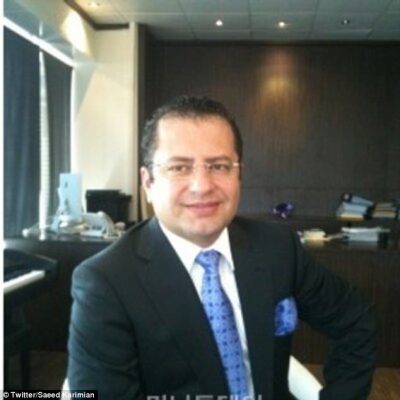
The lengths that the Iran regime will go to keep its grip on power may be shown in the grisly April 29th assassination of exiled Iran TV executive Saeed Karimian in Istanbul.

Saeed Karimian, born in Tehran, the manager and owner of GEM TV group, was assassinated along with a Kuwaiti business partner while in his car after he was sentenced in absentia for “spreading propaganda.”

The regime claimed that Karimian had close relations with the Iranian opposition; going so far as to photoshop an image showing Karimian meeting with Iranian opposition leader Maryam Rajavi.  Karimian had strongly denied such reports in the past, but all Iranians know that linking anyone to the PMOI/MEK is tantamount to an undeclared execution order.

The killing of Karimian is indicative of the new paranoia gripping the theocratic regime; the ruling mullahs are now looking like they are in their death throes. After eight years of appeasement by the Obama administration, the plethora of human rights violations within Iran has increased. More than 3,000 people have been executed since the “so-called” moderate Hassan Rouhani took office as president in 2013.

It would not be surprising that the mullahs anticipate another uprising, similar to what occurred following the fraudulent second election of Mahmoud Ahmadinejad in 2009. With this presidential election, they are terrified that the people of Iran will once again take to the streets to protest the oppression and corruption that have been the modality of the Iranian regime since the 1979 revolution.

Nevertheless, whether Rouhani or Raisi becomes president, one thing is clear: the April 29 assassination in Istanbul and political discontent among the populace is a political signal indicating where the Iranian theocracy is heading after the elections.

The only solution for the people of Iran is to seek change from within. This can be achieved by supporting opposition groups such as National Council of Resistance of Iran, which is largest opposition against Tehran.  This coalition enjoys the most support among Iranians inside the country and abroad, as seen vividly in its annual 100,000-strong rallies, where supporters gather in Paris from all four corners of the globe.

Michael Tomlinson


Filed Under: Blog, News Tagged With: Featured, hassan rouhani, Iran Election 2017, Iran Human rights, Iran Lobby, Iran Mullahs

Announcement of “De-Escalation Zones” in Syria Just More Hot Air from Iran

May 6, 2017 by admin

Announcement of “De-Escalation Zones” in Syria Just More Hot Air from Iran

Announcement of “De-Escalation Zones” in Syria Just More Hot Air from Iran

Russia, Turkey and the Iranian regime jointly announced the establishment of so-called “de-escalation zones” in Syria in which the Assad regime would allegedly halt military flights over designated areas according to the Washington Post.

As officials from the three countries — Russia, Iran and Turkey — that back rival sides in the conflict signed the agreement at Syria talks in Kazakhstan on Thursday, some members of the Syrian opposition delegation shouted in protest and walked out of the conference room in Astana, the Kazakh capital.

The opposition is protesting Iranian regime’s participation at the conference and role as a guarantor of the agreement, accusing it of fueling the sectarian nature of the conflict that has killed some 400,000 people and displaced half the country’s population.

“Iran is a country that is killing the Syrian people and the killer cannot be the rescuer,” said Abu Osama Golani, a rebel commander who attended the gathering in Astana.

The Iranian regime’s role in the carnage and escalation in Syria makes it a dubious guarantor of safety and security, especially since it was Iran that begged Russia into intervening in the war in a last-ditch effort to save the Assad regime from being toppled by opposition forces.

The Syrian government has said that although it will abide by the agreement, it would continue fighting “terrorism” wherever it exists, code for most armed rebel groups fighting government troops.

It’s the reason why a previous cease-fire agreement signed in Astana on Dec. 30 eventually collapsed. Other attempts at a cease-fire in Syria have all ended in failure largely because of Iran and Syria’s willingness to continue attacking rebel-controlled areas, including those with large civilian populations.

Past efforts at protecting “safe zones” have had a pretty dismal record, largely because combatants are still allowed to engage in attacks without serious repercussions.

“Iran’s activities in Syria have only contributed to the violence, not stopped it, and Iran’s unquestioning support for the Assad regime has perpetuated the misery of ordinary Syrians,” said U.S. State Department spokeswoman Heather Nauert.

The problems in Syria are only one aspect of the larger difficulties of Iranian influence and activities throughout the region and as such requires a more comprehensive solution attacking the instability at its source: Iranian regime itself.

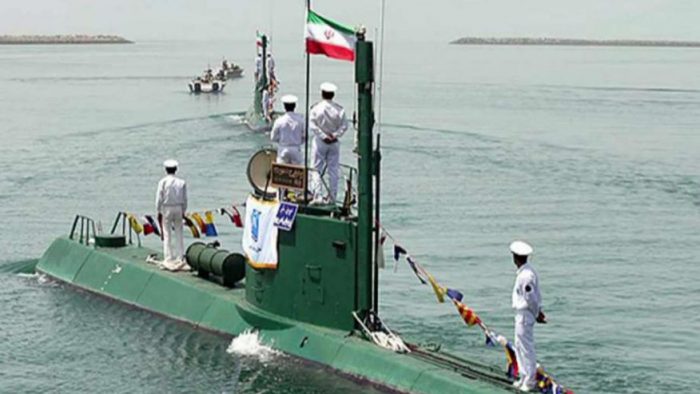
When Iran attempted to launch a cruise missile from a “midget” submarine earlier this week, Pentagon officials saw more evidence of North Korean influence in the Islamic Republic – with intelligence reports saying the submarine was based on a Pyongyang design, the same type that sank a South Korean warship in 2010, according to Fox News.

According to U.S. defense officials, Iran was attempting to launch a Jask-2 cruise missile underwater for the first time, but the launch failed. Nonproliferation experts have long suspected North Korea and Iran are sharing expertise when it comes to their rogue missile programs.

Only two countries in the world deploy the Yono-class submarine – North Korea and Iran. Midget subs operate in shallow waters where they can hide.

“When those midget subs are operating underwater, they are running on battery power—making themselves very quiet and hard to detect,” said a U.S. defense official who declined to be identified.

Perhaps most worrisome for the United States is that Iran attempted this latest missile launch from a midget sub Tuesday in the narrow and crowded Strait of Hormuz, where much of the world’s oil passes each day, Fox News said.

Over a year ago, Iran fired off a number of unguided rockets near the USS Harry Truman aircraft carrier as she passed through the Strait of Hormuz in late December 2015. The U.S. Navy called the incident “highly provocative” at the time and said the American aircraft carrier was only 1,500 yards away from the Iranian rockets.

In July 2016, two days before the anniversary of the nuclear agreement between Iran and world powers, the Islamic Republic attempted to launch a new type of ballistic missile using North Korean technology, according to multiple intelligence officials.

Even with this overwhelming evidence of collusion between the two rogue nations, some Iran lobby apologists continue to make the case of appeasement. In this case, Robert S. Litwak, the vice president for scholars and the director of international security studies at the Woodrow Wilson International Center for Scholars in Washington, D.C., argued that an “Iran-style nuclear deal” with North Korea was a viable solution.

Buying into the false narrative of moderation within the Iranian regime, Litwak argues that making a diplomatic effort to cap North Korea’s nuclear capability—similar to the Iran nuclear deal—is the “least bad” option.

Unfortunately for Litwak, history demonstrates that this least bad option stinks to high heaven and has done nothing to curb Iran’s regional ambitions, thirst for bloodshed or improved its dismal human rights record.

A repeat of the Iran deal for North Korea would no doubt similar disastrous results.

Michael Tomlinson

Filed Under: Blog, News Tagged With: #NuclearDeal, Appeasement policy, Featured, Iran, Iran deal, Iran Human rights, Iran Lobby, Iran Mullahs, Iran sanctions, North Korea, Robert S. Litwak

Iran Military Buildup Continues Obscured by Election

May 6, 2017 by admin

Iran Military Buildup Continues Obscured by Election

Iran Military Buildup Continues Obscured by Election

It’s no secret that while the Iran lobby was busy promising more moderation and accommodation from the Iranian regime during nuclear talks two years ago, the mullahs in Tehran were busy working over their calculators figuring out what they were going to buy with their newfound cash coming from relief from economic sanctions and the bonus of billions coming from a prisoner swap with the U.S.

Since the completion of the deal, the Iranian regime has been busy replenishing its military which was drained from years of fighting in Syria and Yemen, as well as supplying its proxies with weapons and ammunition including Hezbollah, Shiite militias and the Houthis.

More worrisome though is analysis indicating that Iran has sought to not only rebuild its military, but transform it primarily from tactical, regional actions to a more strategic, offensive posture posing a menacing threat to its neighbors, especially long-time rivals Saudi Arabia and the Gulf states.

Iranian officials announced late last month that Iran’s defense budget had increased by 145 percent under President Hassan Rouhani and that the military is moving forward with a massive restructuring effort aimed at making it “a forward moving force,” according to regional reports.

Regime leaders have stated since the Iran deal was enacted that they are using the massive amounts of cash released under the agreement to fund the purchase of new military equipment and other armaments. Iran also has pursued multi-million dollar arms deals with Russia since economic sanctions were nixed as part of the deal, according to the Washington Free Beacon.

Leading members of Congress and U.S. officials working on the Iran portfolio suspect that at least a portion of the Obama administration’s $1.7 billion cash payment to Iran  has been used to fund and support terrorists in the Middle East.

The latest disclosure about Iran’s military buildup is further fueling concerns that U.S. cash assets returned to the country—which were released with no strings attached by the Obama administration—are helping Iran pursue a more aggressive military stance against U.S. forces in the region.

Iranian Brigadier General Kiumars Heidari announced the military buildup during Iran’s annual Army Day. While the announcement did not grab many headlines in the Western media, national security insiders have been discussing the announcement for weeks, according to conversations with multiple sources.

Iran’s goal is to turn its army into an “offensive” force, a major shift from its historic role as a support agent for the Iranian Revolutionary Guards Corps, or IRGC, Iran’s extremely well funded primary fighting force.

Iran hopes to revamp its army from top to bottom, including improving logistical capabilities, weaponry, and other armaments.

The regime has also escalated its attempts to demonstrate additional military capabilities including the launching of ballistic missiles.

Another sign was an Iranian Yono-class “midget” submarine attempted to launch a cruise missile from the Strait of Hormuz on Tuesday, according to U.S. officials.  The only two countries in the world that operate this type of submarine are Iran and North Korea. The test launch was not successful, reported Fox News.  Iran had previously announced it had successfully tested a sea-launched missile and it is not known if this was the first actual submarine launch of the weapon.

The increase in military activity and emphasis on first-strike weapons and tactics is leading many to speculate what path the Trump administration will pursue to stymie the mullahs.

Much crystal-ball gazing has been going on lately, not the least of which coming from Iran lobby members such as the National Iranian American Council who hope to shape the narrative much as it did during the nuclear negotiations.

Secretary of State Rex Tillerson said last month that Iran is complying with the terms of the 2015 nuclear agreement. The positive finding of the State Department’s routine periodic review of the nuclear agreement, known formally as the Joint Comprehensive Plan of Action (JCPOA), was surprising given President Trump’s assessment that it was “the worst deal ever negotiated.” Some analysts believed Tillerson was signaling that the Trump administration would let the agreement stand rather than “rip it up” as the president had promised.

But according to James S. Robbins, a member of USA TODAY’s Board of Contributors, who served as a special assistant to the secretary of defense in the George W. Bush administration, there is something deeper going on. The key language in Tillerson’s statement dealt with the National Security Council’s inter-agency review to determine whether continued suspension of the sanctions is “vital to the national security interests of the United States.” This phrasing points to the key weakness in the structure of the deal, said Robbins.

“In addition, previously secret aspects of the deal have begun to be revealed, such as the Obama administration freeing Iranian prisoners accused of major crimes related to the nuclear and missile programs. These shady aspects of the bargain make it easier for the Trump administration to make the political case against it, which Americans opposed by wide margins to begin with,” he added.

If the National Security Council determines that Iran’s activities are not in U.S. national security interests, the president can lift the sanctions waivers. This puts Iran in a bind. Tehran has threatened it could restart its nuclear program “in a new manner that would shock Washington.” But if Iran chooses openly to violate the terms of the deal, this would activate the agreement’s Article 37 “snap back” mechanism which restores all the pre-JCPOA international sanctions. The only way the “snap back” would not happen is if the UN Security Council votes otherwise, but the United States could veto any resolution that keeps the deal alive, according to Robbins.

This puts Iran in a lose/lose position: accept renewed and potentially tougher U.S. sanctions while staying within the framework of the JCPOA; or breach the deal and suffer the “snap back” consequences. Of course, Iran could just attempt to go full-bore to develop nuclear-armed missiles as quickly as possible and hope for the best. But the developing crisis with North Korea should be instructive to Tehran. The Trump administration is less willing than its predecessors to accommodate or ignore the nuclear ambitions of rogue states.

All of which places the Iranian regime squarely in the sights of the international community for the first time in nearly four years when Iran was dragged unwillingly to the bargaining table because of the effectiveness of previous sanctions.

We shouldn’t let this opportunity slip away like the last one.

Michael Tomlinson

Filed Under: Blog, News Tagged With: Featured, Iran Lobby, Iran Mullahs, Iran sanctions, Iran Talks, Iran Terrorism, IRGC, Khamenei, National Iranian American Council, Nuclear Deal

Middle East Headed for More Instability Courtesy of Iran Regime

May 3, 2017 by admin

Middle East Headed for More Instability Courtesy of Iran Regime

Middle East Headed for More Instability Courtesy of Iran Regime

To say that Saudi Arabia and the Iranian regime are at odds is to make one of the bigger understatements of the decade. For the Iranian regime, its adherence to its own particular extremist faith and expansionism, drives it to view any other country in the region with deep suspicion if not outright hostility.

Its relationship with Saudi Arabia has been fraught with peril as the mullahs in Tehran have consistently waged a silent war to destabilize the kingdom in a myriad of ways, including resorting to terror strikes such as the bombing of the Khobar Towers to insurrection in neighboring Yemen through Houthi rebel proxies.

From Saudi Arabia’s perspective, it has been in open—if not yet declared—war with the Iranian regime and for some powerful members of the ruling family, they’ve had enough.

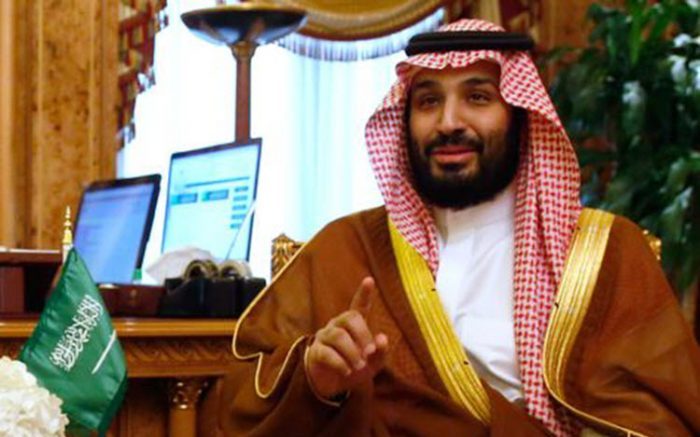
Saudi Arabia’s deputy crown prince closed off the potential for more dialogue with the Iranian regime accusing it of following an “extremist ideology” and seeking to take over the Muslim world, according to the New York Times.

The prince, Mohammed bin Salman, is second in line to the throne and serves as defense minister and said the kingdom would fight Iran’s efforts to extend its influence in the region.

“We are the primary target for the Iranian regime,” Prince Mohammed said in describing efforts by Iran to take control of Islamic holy sites in Saudi Arabia. He vowed Saudi Arabia would not wait for Iran to attack Saudi Arabia, but would instead battle the regime in Iran.

The proxy wars between the two Islamic nations have already been waged on opposite sides in Syria and Yemen with both sides blaming the other for supporting terror and extremist groups.

The war in Syria doesn’t appear to be winding down in any meaningful way as Iran announced it would be providing more troops to fight there on behalf of the Assad regime according to a senior commander in the Revolutionary Guard Corps.

Iran has provided military support to Assad’s forces since at least 2012, but initially did not comment publicly on its role. But as the military support increased and Iranian casualties also rose, officials began to speak more openly.

“The advisory help isn’t only in the field of planning but also on techniques and tactics,” the Fars news agency quoted Mohammad Pakpour, head of the Revolutionary Guard ground forces, as saying. “And because of this the forces have to be present on the battlefield.”

An Iranian official said late last year that more than 1,000 Iranians had been killed in the Syrian civil war. These include a handful of senior commanders of the Revolutionary Guards, according to Iranian media reports.

Iran has helped to train and organize thousands of Shi’ite militia fighters from Iraq, Afghanistan and Pakistan in the Syrian conflict. Fighters from Lebanon’s Hezbollah are also working closely with Iranian military commanders in Syria, according to Reuters.

While the conflict continues to grind on in Syria, the prospect of stopping Iran’s expansion in Yemen might provide the leverage necessary to roll back the regime as outlined in an editorial by Gerald Feierstein, former U.S. ambassador to Yemen, in Defense One.

Feierstein pointed out differences in how to confront Iran between Saudi Arabia and its partner Gulf states may be easing as Yemen has proving to be common ground for agreement.

“Yemen may be the key to solving the GCC’s Iran problem. After last year’s Kuwait round of Yemeni negotiations ended in stalemate, the Saudi-led coalition determined that only a shift in the military balance would bring the Houthis and their allies, loyalists of former President Ali Abdullah Saleh, back to the negotiating table. A strategy was derived to push the Houthis off the Red Sea coast — the Yemeni terminus of the arms-smuggling route that begins in Iran — and seize the vital port of Hodeidah,” he said.

Return of the port to government or even UN control would be a big step towards thwarting Iran in Yemen and eventually turn the tide in its struggle against Saudi Arabia.

The hammer could be a Trump administration review of Iranian policy that could mark a significant shift back towards valuing human rights improvements within Iran as a condition of future economic sanctions relief.

Amir Basiri, a contributor to the Washington Examiner’s Beltway Confidential blog and an Iranian human rights activist, touted the potential of this shift in a column.

While Iran does pose a major military threat, through supporting what has been described by Trump as “radical Islamist terrorism,” Tehran’s ongoing human rights abuses should finally receive the long overdue attention they deserve. In fact, U.S. interests can be advanced through a robust challenging of Iran’s domestic dissent crackdown. U.S. strategy seeking to confront Iran would receive a correct boost through combating Tehran’s authoritarian dogma, Basiri said.

“Parallel to such policy overhauls, the U.S. should stand alongside the Iranian people and their organized resistance, represented for decades by the National Council of Resistance of Iran, the umbrella group of different organizations and individuals led by Maryam Rajavi, advocating regime change and peaceful transition to democracy,” he said.

“Increasing sanctions on Iranian regime elements involved in human rights violations is another aspect that would complete the canvas of Trump’s policy vis a vis Iran. Such measures would also send messages to the international community regarding the dangers in seeking short-term economic interests at the cost of the Iranian people’s long and ongoing misery,” he added.

By realigning U.S. interests to valuing human rights, we could also effectively sideline the Iran lobby which has been loath to discuss Iran’s human rights record knowing it to be dismal.

Michael Tomlinson

Filed Under: Blog, News Tagged With: Featured, Iran, Iran Human rights, Iran Lobby, Iran Mullahs, Iran Terrorism, IRGC, Khamenei

Iran Regime Up to Old Tricks of Assassination Overseas

May 3, 2017 by admin

Iran Regime Up to Old Tricks of Assassination Overseas

Iran Regime Up to Old Tricks of Assassination Overseas

The Iranian regime has a long history of committing violence around the world either through its terrorist proxies such as Hezbollah, its intelligence operatives and Quds Forces, as well as its own Revolutionary Guard Corps.

The mullahs have long adopted the use of deadly force as a tool of statecraft. Not since the medieval age when monarchs plotted assassinations of rivals, has a nation used killing as part of an ordinary foreign policy tool.

The only other nation that seems to share that same affinity for killing is fellow rogue state North Korea which was implicated of the assassination of its leader Kim Jong Un’s half-brother in a brazen chemical attack at an airport in Malaysia in front of passers-by.

The use of chemical weapons seems to be a common trait shared by North Korea, Iran and its client state of Syria.

Now comes word that a dissident British-Iranian television executive was assassinated in Istanbul over the weekend only a few months after being sentenced in absentia to a six-year prison term by an Iranian court for allegedly spreading subversive propaganda, according to the New York Times.

Saeed Karimian was the owner of Gem TV, a network of television channels broadcasting in Farsi and other languages. He was shot “minutes after leaving his office,” Gem announced on Sunday. Also killed was his Kuwaiti business partner, whose name has not been released.

The assailants fled, and their vehicle was found abandoned and partly destroyed in another part of Istanbul, according to reports by Gem and several Turkish news outlets.

While there was an effort to spin the killing as a dispute over money, others saw the Iranian regime’s dark hand at work.

The National Council of Resistance of Iran, one of the largest Iranian dissident groups, claimed that Karimian was assassinated by Iran’s Revolutionary Guard on the orders of top mullah Ali Khamenei. Iran has been accused of assassinating Iranian exiles in the past, most recently Abbas Yazdi, an Anglo-Iranian businessman who was kidnapped in Dubai in 2013 and is now thought to be dead.

Karimian had long been the target of propaganda and smears by media outlets linked to Iranian security services, the NCRI statement said.

His network has been aggressively expanding lately, recently adding several new channels and recruiting Iranian artists and staff from inside Iran and abroad.

Several regime-controlled Iranian media reports meanwhile said Karimian was linked in the past to The People’s Mujahedeen of Iran (PMOI), an Iranian dissident group which is part of the NCRI coalition, which may be one explanation for the assassination since the Iranian regime has allegedly instigated several documented attacks on refugee camps housing PMOI dissidents in Iraq resulting in massacres of unarmed civilians.

Turkey and Iran are neighbors and major trade partners, but relations have recently been strained. The two are regional rivals and have backed opposing sides in the Syrian civil war, according to the Washington Post.

Reporters Without Borders, a press freedom watchdog, ranks Iran as one of the worst oppressors of journalists in the world. The motive behind the killings, however, remains unclear.

The BBC reported that Karimian’s family said that the Iranian government had threatened him in recent months and that he had planned to leave Istanbul for London.

According to the New York Times, an Iranian court announced last January in a judicial newspaper that Karimian had been sentenced to six years in prison for spreading propaganda against the country’s Islamic government, and acting against national security.

What was so threatening to the mullahs? Apparently soap operas and other entertainment broadcast by Karimian’s networks are a threat to the religious theocracy the mullahs built in Iran since seizing power in 1979.

The potential pollution of the mullahs’ harsh religious control is so precarious that the regime bans satellite dishes and regularly sends militia and police out to rip them off rooftops; they are widely used, and millions of Iranians watch dissident’s “subversive” programming.

Karimian had previously suggested that he hoped his work would change Iranian society. “We will do our best to create an Iran one day that we can take pride in,” Karimian said in comments that were broadcast posthumously on his own network on Sunday following his killing.

The potential for change in Iran must have been seen as too threatening to the control of the mullahs it seems.

Michael Tomlinson

Filed Under: Blog, News Tagged With: Featured, hassan rouhani, Iran Mullahs, Iran Terrorism, IRGC, Khamenei

Iran Lobby Attacks Claims of Prisoner Concessions as Regime Talks Hostages

May 3, 2017 by admin

Iran Lobby Attacks Claims of Prisoner Concessions as Regime Talks Hostages

Iran Lobby Attacks Claims of Prisoner Concessions as Regime Talks Hostages

Josh Meyer wrote a story in Politico that exposed a series of concessions granted by the Obama administration to the Iranian regime as part of its ill-fated nuclear talks that have caused an uproar in Congress and in the intelligence and law enforcement communities.

Predictably, the Iran lobby—led by Trita Parsi of the National Iranian American Council—attacked the story and attempted to discredit the idea of concessions being granted to the Iran regime.

Writing in Huffington Post, Parsi makes the argument that not all “concessions” are alike and those tied to the release of Iranian agents were not linked to the nuclear agreement.

“From the outset, Meyer commits a critical error: He insinuates that any concessions in terms of dropping charges against potential Iranian smugglers were made as part of the nuclear deal. In reality, to the extent any concessions were made, they were made to win the release of Americans held in Iranian jails,” Parsi writes.

Parsi attempts to do what the mullahs in Tehran insisted on from the start of negotiations, which is that the issues of its nuclear program and hostages should be separate and apart from the agreement, but in fact the two were intimately related from the regime’s perspective.

The mullahs were especially keen to keep thorny issues apart from the deal because they did not want to grant the U.S. and other nations any leverage to influence issues such as Iran’s support for terrorism, human rights abuses or the lack of any political reforms within Iran.

Allowing Iran to get off the hook for those items relieved the regime of a substantial obstacle to completing the nuclear deal while preserving the mullahs power over the Iranian people.

Parsi even uses the detention of American sailors as an example of quick resolution when in fact Iranian regime squeezed them for all their propaganda value with videotaped interviews and admissions of wrongdoing. Iran mullahs even built a monument to the humiliation of the “Great Satan.”

Parsi characterizes the Iranians who were released as just a “few alleged Iranian smugglers” and ignores the nearly decades-long investigative work done by FBI agents and Justice Department attorneys who meticulously built cases involving large networks of Iranian operatives attempting to smuggle everything from nuclear weapon components to computers and weapons.

He discounts the allegations made by the Politico article as coming from “mid-level operatives in the Justice Department” as if law enforcement agents, investigators and U.S. attorneys were simply mindless drones.

But Parsi’s attempts to deflect and cover up the facts are nothing new to the Iran lobby when the mullahs get into trouble.

For the mullahs in Tehran though, the deal served its purposes in gaining billions in cash and allowing Iranian oil to flow back on the open market. It also gave Iranian regime a free pass to create havoc and shed the blood of tens of thousands in Syria and Yemen.

Now the stage is set for the Iran presidential election which some analysts have speculated could be the end of the road for Hassan Rouhani since he has served his purpose in portraying Iran as a friendly, moderate country during nuclear talks, but now that the façade is off Iran has no reason to be so “moderate” anymore.

This may explain why Ebrahim Raisi, a mullah with a long and sordid history of leading commissions that ordered the execution of over 30,000 Iranian dissidents in the 1980s may be poised to win the election should top mullah Ali Khamenei wish it.

Of course, Parsi authored yet another editorial in Al-Monitor contending that Khamenei has no influence on the election. He even laughably argues that Raisi is not a true contender nor supported by Khamenei.

What Parsi does not mention is the fact that the Iranian regime in addition to manipulating the votes, primarily opts to simply eliminate thousands of candidates from the very beginning to cull down the ballot to a select handful in order to ensure a preferred candidate’s “election”.

It is a formula that worked in 2013 and being used in this year’s election. Nothing unforeseen ever happens under the watchful gaze of the mullahs.

In another development that shows more promise, the Iranian regime admitted for the first time that the topic of dual national hostages was taken up at the first face-to-face meeting between regime representatives and those of the Trump administration in Vienna during meetings of the joint commission monitoring the implementation of the Iran nuclear deal.

The comments by Iranian Foreign Ministry spokesman Bahram Ghasemi mark the first official government confirmation it discussed prisoners with the U.S. at a recent meeting in Vienna over the nuclear deal.

While falling far short of signaling any sort of movement on freeing those with Western ties held in Iran, Ghasemi’s acknowledgement fits the pattern of past prisoner negotiations with the Islamic Republic. It signals more behind-the-scene negotiations could be possible if the Trump administration, already skeptical of Iranian intentions, is willing to deal.

Speaking to journalists, Ghasemi mentioned no specific names of the inmates brought up by the Americans.

“In the past … we had talks for humanitarian reasons with Americans over (swapping) some (American) prisoners with Iranian prisoners jailed in the U.S. and it had positive results too,” he said.

Last week, State Department spokesman Mark Toner had said American officials at the meeting had “called on Iran to immediately release these U.S. citizens so they can be reunited with their families.”

Dual nationals in detention have been used as bargaining chips in negotiations with the West. Under Iranian law, they are not entitled to consular support.

We can only hope the Trump administration can force their release without having to pay Iran billions in cash or release terrorists in exchange, since past concessions have only emboldened the mullahs to do more.

Laura Carnahan

Filed Under: Blog, News Tagged With: Featured, hassan rouhani, Iran, Iran deal, Iran Human rights, Iran Lobby, Iran Mullahs, National Iranian American Council, NIAC, NIAC Action, Trita Parsi

NIAC Busy Peddling Same Old Lies About Iran Resistance

April 29, 2017 by admin

NIAC Busy Peddling Same Old Lies About Iran Resistance

NIAC Busy Peddling Same Old Lies About Iran Resistance

That old reliable warhorse for the Iranian regime—the National Iranian American Council—served up a tired old, disproven platter of lies about the Iranian resistance movement in an opinion piece published on its website this time by the name Pouya Parsian.

But first it’s important to remember that the NIAC has been a consistent cheerleader and arch-defender of the mullahs in Tehran, especially in the face of withering revelations about its founder, Trita Parsi, and his close ties to Iranian regime officials and its abysmal track record of not criticizing the regime for its abundant human rights violations.

Even though it purports to work on behalf of Iranian-Americans, it barely bothered to issue a press release objecting to the string of Iranian-Americans that have been arrested, imprisoned and tortured by Iran.

During the run up to negotiations for the Iran nuclear deal, the NIAC had consistently urged the removal of any non-core issues such as support for terrorism, human rights abuses and involvement in foreign wars from any deal; thereby removing any and all leverage the rest of the world had over the Iranian regime due to effective sanctions that crippled Iran’s economy.

Now the NIAC has put out a pithy little missive criticizing revelations by the National Council of Resistance of Iran, the largest Iranian resistance group in the world today, that the Iranian regime had taken steps to weaponize its purportedly civilian nuclear program.

Parsian’s piece was rife with errors and fabrications. First off were errors in who was actually revealing these facts. The piece attacked the Mojahedin-e Khalq (MEK) even though the disclosures were being made by the NCRI which is an umbrella group representing a large number of Iranian dissident groups, as well as international human rights and special interest groups such as those advocating for women’s rights and religious and ethnic minorities.

The piece attempts to discredit the NCRI’s findings—not by disputing the truth of the revelations—but instead dredging up old claims of the MEK being listed by the U.S. State Department as a foreign terrorist organization; all of which was proven in error and politically motivated and eventually rescinded by then-Secretary of State Hillary Clinton.

Parsian never disputes past disclosures by the NCRI of Iran’s nuclear program and investigations into the regime’s use of military forces in the Syrian conflict; all proven to be true by independent news sources and national intelligence agencies.

The NIAC is even more inane in criticizing Camp Ashraf, one of two main relocation centers used by Iranian refugees and political dissidents seeking asylum from persecution by the regime, as treating its members inhumanely.

It’s an absurd point when Parsian never mentions the targeting of those same members in Camps Liberty and Ashraf by Iranian and Iraqi security forces resulting in bloody massacres of unarmed men and women and drew universal condemnation by the United Nations, Amnesty International and other human rights groups.

If anything, the NIAC should be thanking countries such as Albania who graciously agreed to resettle these oppressed Iranians and remove them from the threat of murder by Iranian intelligence services.

The irony of the NIAC passionately arguing for Iranians to be allowed to travel to the U.S. over the visa restrictions ordered by the Trump administration and in the same breath trashing these Iranian refugees is not only disingenuous, but fully reveals the NIAC’s bias as a staunch and blind supporter of the Iranian regime’s policies.

Parsian tries to frame the press conference outlining claims about the regime’s efforts to conduct military applications work at its Parchin nuclear facility as “discredited attempts,” but neglects to mention in any detail Parchin’s central role in Iran’s nuclear program.

Parchin served as a primary facility for Iran’s military to test conventional explosives designed as primary initiators for nuclear warheads. Parsian also fails to mention the regime’s blocking of international inspectors on numerous occasions at Parchin.

Parsian doesn’t mention how the Iranian regime conducted extensive earthmoving and destruction of facilities prior to opening Parchin to international inspection again to remove traces of its prior military nuclear work.

Parsian fails to discuss the fact that international inspectors were prohibited by the regime from collecting its own soil samples and instead had to “observe” hand-picked regime teams and then look at their results, which even then still showed trace amounts of radioactive elements even after sanitizing by the regime.

All of these revelations were confirmed by the International Atomic Energy Agency and other nuclear watchdog groups that were highly critical of the Iranian regime’s handling of Parchin and its inspection.

Of course, Parsian mentions none of these damning pieces of history because the truth would only diminish the NIAC’s attacks on the Iranian dissident movement.

The real question that needs to be asked though is “why?”

Why does the NIAC feel so compelled to attack the NCRI and yet ignore the past history of Parchin?

Why does the NIAC feel the urge to belittle the NCRI, but ignore the proven track record of lying by the Iranian regime?

All of this only reinforces the real truth about the NIAC, which is that it is first and foremost a loyal member of the Iran lobby and will defend the mullahs at all costs without any regard for the truth.

Laura Carnahan

Filed Under: Blog, National Iranian-American Council Tagged With: #NuclearDeal, Featured, Iran deal, Iran Human rights, Iran Lobby, Iran Mullahs, Iran Terrorism, National Iranian American Council, NIAC, NIAC Action, Parchin

  • « Previous Page
  • 1
  • …
  • 5
  • 6
  • 7
  • 8
  • 9
  • …
  • 16
  • Next Page »

National Iranian-American Council (NIAC)

  • Bogus Memberships
  • Survey
  • Lobbying
  • Iranians for International Cooperation
  • Defamation Lawsuit
  • People’s Mojahedin
  • Trita Parsi Biography
  • Parsi/Namazi Lobbying Plan
  • Parsi Links to Namazi & Iranian Regime
  • Namazi, NIAC Ringleader
  • Collaborating with Iran’s Ambassador

Recent Posts

  • NIAC Trying to Gain Influence On U.S. Congress
  • While Iran Lobby Plays Blame Game Iran Goes Nuclear
  • Iran Lobby Jumps on Detention of Iranian Newscaster
  • Bad News for Iran Swamps Iran Lobby
  • Iran Starts Off Year by Banning Instagram

© Copyright 2026 IranLobby.net · All Rights Reserved.