Iran Lobby

Exposing the Activities of the lobbies and appeasers of the Mullah's Dictatorship ruling Iran

  • Home
  • About
  • Current Trend
  • National Iranian-American Council(NIAC)
    • Bogus Memberships
    • Survey
    • Lobbying
    • Iranians for International Cooperation
    • Defamation Lawsuit
    • People’s Mojahedin
    • Trita Parsi Biography
    • Parsi/Namazi Lobbying Plan
    • Parsi Links to Namazi& Iranian Regime
    • Namazi, NIAC Ringleader
    • Collaborating with Iran’s Ambassador
  • The Appeasers
    • Gary Sick
    • Flynt Leverett & Hillary Mann Leverett
    • Baroness Nicholson
  • Blog
  • Links
  • Media Reports

Iran Denies British Aid Worker Appeal and Keeps Her Imprisoned

April 25, 2017 by admin

Iran Denies British Aid Worker Appeal and Keeps Her Imprisoned

Iran Denies British Aid Worker Appeal and Keeps Her Imprisoned

In another display of the cold-blooded nature of the Iranian regime, Iran’s supreme court up held the conviction of a British-Iranian women sentenced to five years in jail on vague charges relating to national security. The decision ends her last legal avenue to ending her harsh imprisonment.

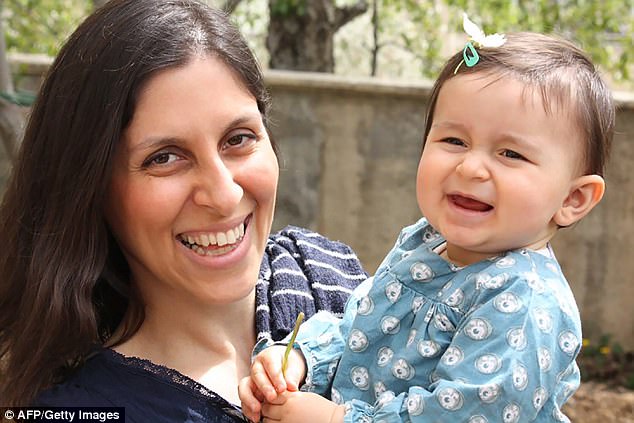
Nazanin Zaghari-Ratcliffe, a project manager with the Thomson Reuters Foundation, the news agency’s charitable arm, had lodged a final appeal in January after the confirmation of her sentence in a lower court. Her husband, Richard Ratcliffe, said on Monday that the supreme court had rejected her appeal.

“I hadn’t had great hopes for the supreme court appeal,” he told the Guardian. “Now, realizing that that’s it, that all options are gone … in the middle of an election cycle, it’s hard to get attention on Nazanin’s case.”

According to the Guardian, Zaghari-Ratcliffe, 38, has spent 387 days behind bars, most of which have been in the notorious Evin prison. The regime’s Revolutionary Guards arrested her in April 2016 while she and her two-year-old daughter, Gabriella, were about to return to the UK after a family visit to Iran. She was tried and found guilty on the unspecified charges relating to national security last September.

Although the exact reasons behind Zaghari-Ratcliffe’s incarceration remain unclear, the Guards have accused her of attempting to orchestrate a “soft overthrow” of the Islamic Republic. An Iranian news agency affiliated to the country’s judiciary also said in April that she was a spy. Richard Ratcliffe has vehemently denied both allegations.

It also reinforces the regime’s dubious practice—articulated by Hassan Rouhani in media interviews—that it does not recognize the dual-national status of any Iranian and as such maintains the rights to arrest anyone.

The use of imprisoned American-Iranians as hostage bargaining chips during nuclear negotiations yielded billions of dollars in cash and sanctions relief and only emboldened the regime to go on another spree of arrests shortly after the deal was reached.

New revelations by Politico also revealed disturbing information about that prisoner swap by the Obama administration with the Iranian regime.

Obama announced the “one-time gesture” of releasing Iranian-born prisoners who “were not charged with terrorism or any violent offenses” last year, his administration presented the move as a modest trade-off for the greater good of the Iran nuclear agreement.

Obama portrayed the seven men he freed as “civilians.” The senior official described them as businessmen convicted of or awaiting trial for mere “sanctions-related offenses, violations of the trade embargo.”

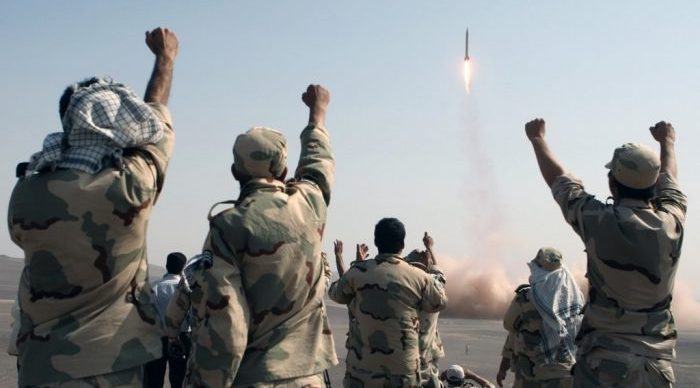
In reality, some were accused by Obama’s own Justice Department of posing threats to national security. Three allegedly were part of an illegal procurement network supplying Iran with U.S.-made microelectronics with applications in surface-to-air and cruise missiles like the kind Tehran test-fired recently. Another was serving an eight-year sentence for conspiring to supply Iran with satellite technology and hardware, according to Politico.

And in a series of unpublicized court filings, the Justice Department dropped charges and international arrest warrants against 14 other men, all of them fugitives. The administration didn’t disclose their names or what they were accused of doing, noting only in an unattributed, 152-word statement about the swap that the U.S. “also removed any Interpol red notices and dismissed any charges against 14 Iranians for whom it was assessed that extradition requests were unlikely to be successful.”

Three of the fugitives allegedly sought to lease Boeing aircraft for an Iranian airline that authorities say had supported Hezbollah, the U.S.-designated terrorist organization. A fourth, Behrouz Dolatzadeh, was charged with conspiring to buy thousands of U.S.-made assault rifles and illegally import them into Iran.

A fifth, Amin Ravan, was charged with smuggling U.S. military antennas to Hong Kong and Singapore for use in Iran. U.S. authorities also believe he was part of a procurement network providing Iran with high-tech components for an especially deadly type of IED used by Shiite militias to kill hundreds of American troops in Iraq.

The most worrisome prisoner was Seyed Abolfazl Shahab Jamili, who had been charged with being part of a conspiracy that from 2005 to 2012 procured thousands of parts with nuclear applications for Iran via China, including hundreds of U.S.-made sensors for the uranium enrichment centrifuges in Iran whose progress had prompted the nuclear deal talks in the first place.

The revelations were devastating to federal prosecutors and cast a dark shadow over the claims constantly made by the Obama administration and the Iran lobby about the nature of concessions granted to the Iranian regime and proved the promises of “moderation” to be illusory.

The damage to long-running investigations into the regime’s illicit efforts to procure technologies to boost its ballistic missile program and military capabilities was severe, but the more important question yet to be answered is how to repair the damage to refocus efforts on pushing democracy forward in Iran.

Dr. Majid Sadeghpour, political director of the Organization of Iranian American Communities (OIACUS), a non-profit organization that works to promote human rights and democratic freedoms in Iran, emphasized that one positive that came from the Obama administration was the saving of Iranian dissidents under constant attack in Iraq by the regime in a piece for The Hill.

“Recently, Senate Armed Service Committee Chairman Sen. John McCain (R-Ariz.) met with Maryam Rajavi, the president-elect of the National Council of Resistance of Iran (NCRI) and addressed members of the People’s Mojahedin Organization of Iran (PMOI/MEK) in a rally in Tirana, Albania,” he said.

“Senator McCain’s visit represents a turning point in the plight of the Iranian dissidents now in Albania, but more importantly, marks a significant milestone in their struggle to bring about democratic change in Iran,” Sadeghpour added.

“Despite years of delays and several deadly attacks by mercenaries loyal to the Iranian regime, the MEK left Camp Liberty in Iraq with help from the previous occupants of the White House — perhaps the only piece of former President Obama’s Iran policy that will prove to have a lasting positive effect. As many as 3,000 lives were saved.”

It’s unfortunate the Obama administration could exercise the same foresight in confronting the Iran regime instead of appeasing it on the nuclear deal.

Michael Tomlinson
Filed Under: Blog, News Tagged With: Featured, Iran, Iran deal, Iran Human rights, Iran Lobby, Iran Mullahs, Iran sanctions, Iran Terrorism, Khamenei, Nazanin Zaghari-Ratcliffe

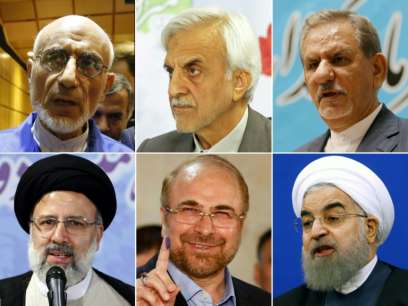
Iran Election Slate Set and It’s a Disaster

April 25, 2017 by admin

Iran Election Slate Set and It’s a Disaster

Iran Election Slate Set and It’s a Disaster

What do you get when over 1,600 candidates register to run for president in Iran?

You get just six guys on the ballot representing the absolute worst of the Iranian regime.

Democracy at work right? Only in Iran.

What is stunning about the electoral process in Iran is how the world’s news media tend to fall flat on their collective faces in covering it and missing the most important aspects. Namely that it is essentially a fixed race with no real dissenters allowed and only those candidates deemed to be the most loyal to the regime and its ruling mullahs, especially the guy at the top, Ali Khamenei.

News media fell over themselves announcing that 1,626 applicants registered, including 137 women; the highest number ever of female candidates to register since the Islamic revolution back in 1979.

Exactly how many women made the final ballot? Zero. Nada. Zip.

This is not earth-shattering news since the 12-member, all-male Guardian Council—half of whom are handpicked by Khamenei himself—was never going to approve a woman for the ballot, but is certainly happy to milk the publicity of having these many women register.

While the women who registered may have been making a statement and doing their best to protest the electoral process in the only meaningful way that won’t land them in Evin Prison or the gallows, the mullahs only see a PR opportunity in them.

According to The New Arab, Sha’la Tabrizi, who has a PhD in Political Science, was the first woman to register for this year’s presidential race.

“Women constitute 60 percent of Iranian society, so they should strive for one of them to become a powerful president some day,” she told local media, adding that she is aware of how bleak her chances are.

Similarly, A’zam Taleghani, daughter of prominent Islamic Revolution leader Mahmoud Taleghani and Iran’s first-ever female presidential candidate, registered her candidacy for the third time this year. Taleghani is a former regime MP who heads the Regime’s “Society of Islamic Revolution Women of Iran”.

The Guardian Council has disqualified every female presidential candidate since 1979.

You do have to hand it to them for persistence.

It is not without irony that the most prominent female Iranian political leader is Mrs. Maryam Rajavi who leads the largest Iranian opposition group, the National Council of Resistance of Iran. If the regime were ever to allow her on the ballot, it is likely she might end up being the first female president of Iran.

The six candidates who did make it onto the final ballot are a who’s who of regime henchmen and brutal human rights abusers. The more serious choices that will probably make their way out of the election show are:

  • Hassan Rouhani: The incumbent president presided over what has been called by international human rights groups as the largest and fastest rise in public executions in recent Iranian memory. He has also direct the regime’s support for the Assad regime and its military involvement in three wars raging in Syria, Iraq and Yemen;
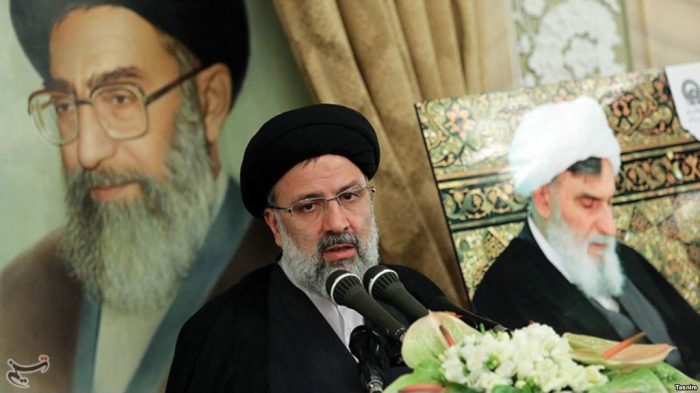
  • Ebrahim Raisi: arguably one of the regime’s worst human rights abusers who was known to be part of a “Death Commission” that massacred over 30,000 Iranian dissidents in the ‘80s. He now heads Astan Quds Razavi, the wealthiest charity foundation in charge of a holy shrine and provides the financial muscle for Khamenei;
  • Eshaq Jahangiri: the current vice president to Rouhani, he is likely to drop out to back another candidate, but he is especially close to Qassem Soleimani, the head of the Revolutionary Guard’s Quds Force and has played a key role in Iran’s efforts to bolster President Bashar Assad’s forces in Syria as well bring in Russia to fight in Syria;
  • Mohammad Bagher Ghalibaf, a pilot and former commander of Revolutionary Guards air force and Iran’s chief of police. He has been the infamous mayor of Tehran since 2005 and this is his third bid for the presidency. He is blamed for the January’s massive fire at the Plasco building, a historic high-rise in downtown Tehran. The fire caused the building to collapse and killed 26 people, including 16 firefighters.

The inclusion of candidates such as Jahangiri and Hashemitaba are almost assuredly on the ballot to provide a perceived “balance” of “moderates” to “hardliners” even though they have no chance at winning.

The history of Iranian elections proves that with the rigged win for Mahmoud Ahmadinejad in 2009 that led to widespread protests and massive crackdowns.

This election will be no different since the Guardian Council have rendered the ordinary Iranian citizen’s vote moot with a slate designed to ensure only the most devout and devoted will be elected.

For most Iranians, already severely disillusioned by the unfilled promises of Rouhani, the best and most obvious choice on the ballot might be “none of the above.”

Laura Carnahan

Filed Under: Blog, News Tagged With: Featured, hassan rouhani, Iran, Iran deal, Iran Lobby, Iran Mullahs

Iran Lobby Frantically Tries to Counter Trump Administration Warnings

April 21, 2017 by admin

Iran Lobby Frantically Tries to Counter Trump Administration Warnings

Iran Lobby Frantically Tries to Counter Trump Administration Warnings

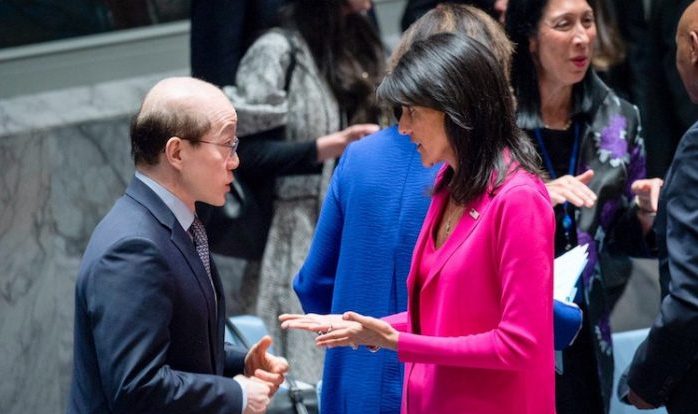
Less than 24 hours the Iran lobby was crowing about the Trump administration’s decision to re-certify the Iranian regime in compliance for another 90 days with the nuclear agreement, it went on the offensive as it faced a barrage of explicit statements from high-ranking officials denouncing the Iranian regime including United Nations ambassador Nikki Haley, Defense Secretary James Mattis and Secretary of State Rex Tillerson.

All three, top foreign policy and defense officials made the same statement that the source of trouble in the Middle East today was based in Tehran and that only a policy comprehensively dealing with all aspects of the Iranian regime was going to work moving forward in returning stability to the region.

For the mullahs in Tehran and their Iran lobby supporters, the objective has always been to divide and conquer the issues the rest of the world finds objectionable towards Iran; such as its support for terrorist groups like Hezbollah and dictators like Bashar al-Assad in Syria, as well as a dismal human rights record that would make Joseph Goebbels proud.

Which is why the Iran lobby’s cheering for the 90-day compliance notice had a lifespan of a gnat since it was merely a formality while the administration conducts a national security review of policy towards Iran.

But that didn’t stop the National Iranian American Council from bloviating like a water buffalo in heat.

“It’s a significant contradiction to first come out and say that the Iranians – contrary to all of their claims that Iran would be cheating – actually is living up to the deal only to come out the day after and saying, well, we hate the deal anyways and signaling that the U.S. might actually be walking away from the deal, unless of course the aim is to get rid of the deal without the U.S. having to pay the cost for it, meaning instead of the U.S. violating the deal directly by not renewing these sanctions waivers, killing the deal by escalating tensions in Yemen and elsewhere in the region and hoping that that will force the Iranians out of the deal,” said Trita Parsi, NIAC president on NPR.

Parsi is trying to have it both ways in separating the nuclear from other issues such as human rights or Iran’s meddling in wars raging in Syria and Yemen, but he deliberately skips over the most glaring consequence of the nuclear deal which is because we separated these issues, the mullahs were free to act without fear of reprisal in their ambitions for Syria or in the crushing of dissent at home.

The cold hard truth is that these are all connected issues like the strings of a spider web; the web would never succeed or exist unless all the strands were connected and working together.

The Iranian regime, for lack of a better comparison, is a legal criminal enterprise on a national scale. It concentrates power ruthlessly at the very top, uses the judicial system and religion to enforce disciple and stifle dissent while its military owns just about every industrial activity and skims off the top to line the pockets of the elites.

It’s like the Sopranos on steroids, except Ali Khamenei isn’t seeing a shrink unfortunately.

Of course other members of the Iran lobby weighed in too as Reza Marashi from the NIAC penned a ludicrous piece on TopTopic in which he claimed the European Union was galvanized and united in supporting the Iranian regime.

Unfortunately, yesterday’s terror attack on the Champs-Elysees in Paris only reinforced a growing uncertainty throughout a Europe that has been rattled by Islamic extremists attacks in Berlin, Brussels, Paris and elsewhere.

“While U.S. policy congeals, most European stakeholders remain in wait-and-see mode before making policy decisions – rather than taking steps to shape American policy,” Marashi writes.

We’re sure Marashi wishes for the good old Obama days when the NIAC could pick up the phone and call the White House and find a receptive audience, but it and Europe and finding that shaping policy in the White House now is not about lobbying, but about answering the central question the Obama administration never bothered to ask: “How do we rein in Iranian excesses across the board?”

Parsi reinforced that complete lack of understanding in an editorial in the New York Times in which he cited “a number of potential land mines on the near horizon. The first is in Congress, where a bipartisan effort is underway to introduce new sanctions on Iran that, despite the protestations of the legislation’s sponsors, would violate the terms of the nuclear agreement by adding new conditions onto the deal.”

Once again Parsi ignores the inconvenient truth for the Iran lobby which is that in their mind anything “new” in terms of sanctions levied against the Iranian regime would be considered a violation of the terms of the agreement, even though the agreement was purposely devoid of any clauses or mention of issues such as human rights.

Their twisted pretzel logic has them boxed in where now they are forced to denounce any and all efforts to sanction Iran as a threat to the regime. If Iranian warplanes dropped sarin gas on Sunni refugees in Iraq, Parsi and his colleagues would undoubtedly argue against any sanctions as a violation of the agreement; a convenient catch-all.

It’s also hilarious Parsi raises the prospect of a “moderate” Hassan Rouhani being defeated at the ballot box in next month’s elections since he ignores Iran’s long history of rigging every election. In fact, the regime’s Guardian Council only yesterday tossed former president Mahmoud Ahmadinejad off the ballot after much fanfare of him registering as a candidate.

In Iran, you don’t get on the ballot unless you are expected to get the blessing of the mullahs.

The most absurd comment Parsi makes is the assertion that if the U.S. reneges on the deal, Iran will undoubtedly move forward with its nuclear ambitions.

We hate to break it to the regime lackey, but the deal—by Parsi’s own admission—was never designed to halt Iranian nuclear work, only slow it down by a decade before the much ballyhooed “breakout period,” but even that has been whittled down by most analysts to just a few years.

All of which makes the statement issued by the NIAC in response to Secretary Tillerson’s remarks the other day even more laughable.

“There is little room to interpret this statement as anything less than a proclamation of the Trump administration’s intent to scrap the nuclear deal and reset the United States on a path to war,” said the NIAC.

Have they not been paying attention to Syria, Iraq, Yemen or Bahrain lately?

Michael Tomlinson

Filed Under: Blog, Current Trend, National Iranian-American Council, News Tagged With: #NuclearDeal, Appeasement policy, Featured, Iran, Iran deal, Iran Human rights, Iran Lobby, Iran Mullahs, Iran sanctions, National Iranian American Council, NIAC, NIAC Action, Reza Marashi, Syria, Trita Parsi, Yemen

US Steps Up Sanctions Against Iran Prison Industry

April 19, 2017 by admin

US Steps Up Sanctions Against Iran Prison Industry

US Steps Up Sanctions Against Iran Prison Industry

Each passing day seems to bring more evidence that the Trump administration intends to chart a very different path than the Obama administration when it comes to dealing with the Iranian regime.

The first clue was the harsh rhetoric directed at the mullahs and the nuclear agreement, as well as the multi-billion dollar payment made by the Obama administration as part of the deal.

Then came the first series of sanctions in response to Iran’s launching of ballistic missiles; a move the Obama administration did not make for fear of upsetting the mullahs and threatening the nuclear deal.

Next came the cruise missile strike against a Syrian airbase in response to a chemical attack against civilians, including young children and infants.

In less than three months, President Trump has acted aggressively and swiftly against Iran and its interests in Syria in a bold departure from the feckless policies of trying to appease the mullahs in Tehran practiced by President Obama.

Now the Trump administration is leveling new economic sanctions against senior Iranian officials and its prison system for widespread human rights abuses, including the systematic torture of those being held in these facilities, according to White House officials familiar with the matter.

The latest sanctions target the Tehran Prisons Organization and Sohrab Suleimani, a senior official in the prison system and the brother of Qassem Soleimani, a senior Iranian military figure responsible for operating Iran’s rogue activities in Syria and elsewhere.

Sohrab Soleimani is responsible for overseeing Iran’s notorious Evin Prison, which is known for torturous interrogations, forced interrogations, and widespread mistreatment of inmates.

The latest sanctions are certain to rankle Tehran, already the subject of a range of new sanctions under the Trump administration, which is currently conducting a widespread review of all matters related to the landmark nuclear agreement.

A senior official on the White House National Security Council told the Washington Free Beacon that the Soleimani family has a history of fomenting violence and unrest both inside and outside Iran.

“It’s no coincidence that Sohrab Suleimani is the brother of the notorious Qasem Soleimani, the head of the IRGC’s Quds Forces, who has been responsible for so much of the violent disruption Iran has been spreading through the region,” said the official, who was not authorized to speak on record.

U.S. intelligence agencies believe Gen. Soleimani is overseeing Iran’s military operations in Syria, which are designed to prop up the regime of President Bashar al-Assad. The U.S. and its Middle East allies also said they have seen Gen. Soleimani’s hand in Revolutionary Guard military activities in Iraq, Yemen, Lebanon and the Palestinian territories.

Iranian human rights abuses have only grown under the leadership of so-called reformist President Hassan Rouhani, the official said. This includes the detention of U.S. citizens

“There has been a disturbing and significant increase in the number of detentions and executions of Iranian citizens under President Rouhani, and the infamous Evin Prison under Sohrab Suleimani’s control has been a key facility in this program of domestic repression,” the official said.

The Trump administration is holding meetings with the family members of American citizens still being detained in Iran and believed to be subjected to torture.

Soleimani’s role in Iran’s prison system makes him one of the foremost human rights abusers worldwide.

Soleimani oversaw an April 2014 incident at the Evin Prison in which dozens of security guards and prison officials beat a number of political prisoners. The attack is believed to have lasted several hours and impacted more than 30 prisoners. Many of these prisoners were later denied medical treatment.

Evin Prison is home to large number of Iranian political dissidents and other government opponents, who are routinely shut down and arrested by the Iranian regime for political activities targeting those in power.

The sanctioning of someone so central to the regime’s enforcement system against dissidents and a family member to a key figure in Iran’s military represent a significant escalation in attempts to push and contain the Iranian regime’s influence.

More importantly, the move once again highlights human rights as a central policy concern for the U.S. moving forward and redefines the need for the regime to improve its human rights practices.

U.S. lawmakers have been calling in recent week for the U.S. to further impose sanctions on Iran for its nonnuclear activities. They specifically cited Iran’s continued detention of four U.S. nationals and two U.S. green-card holders as justification for more penalties. Iran has accused most of these Americans of espionage, a charge they have denied.

A bipartisan group of U.S. lawmakers wrote Treasury Secretary Steven Mnuchin last week and noted that Iran hadn’t been sanctioned for any human-rights violations since the nuclear agreement was reached in July 2015.

“Failing to sanction individuals and entities committing flagrant abuses of human rights against the Iranian people not only goes against our most cherished values and principles but also undermines the credibility of our government,” they wrote.

This is an important step, but it’s only a step forward to finally bringing hope and democracy back to the Iranian people. We can only hope the pressure continues to build through next month’s presidential election in Iran.

Laura Carnahan

Filed Under: Blog, News Tagged With: Featured, hassan rouhani, Iran, Iran deal, Iran Human rights, Iran Lobby, Iran Mullahs, Iran sanctions, Iran Terrorism, IRGC, Khamenei, soleimani

Trump Administration Must Move to Sanction IRGC

April 18, 2017 by admin

Trump Administration Must Move to Sanction IRGC

Trump Administration Must Move to Sanction IRGC

With recent moves such as the launching of a cruise missile attack against a Syrian airfield, the dynamics of the how to confront the Iranian regime are inevitably changing in the transition from the Obama administration to the Trump administration.

The pressure on the Iranian regime can be seen in the stepped-up attacks by the Iran lobby to try and dissuade U.S. policymakers from shifting to a more aggressive stance against the mullahs in Tehran.

How and in what form that stance will be is taking shape internally within the administration and in the halls of Congress and the mullahs are desperate to influence that debate. Unfortunately the easy access Iran enjoyed through the open door policy at the Obama White House through multiple visits by Trita Parsi of the National Iranian American Council and other members of the Iran lobby is now shut off.

The Trump White House is poised to ratchet up existing sanctions against Iran and is weighing a much stricter interpretation of the nuclear agreement between Tehran and major world powers, according to Foreign Policy.

The administration is inclined to adopt a “more rigorous application of the tools at its disposal,” a senior White House official told Foreign Policy, referring to sanctions policy. Among the options under consideration: broadening U.S. sanctions to include much larger chunks of the Iranian economy linked to the Islamic Revolutionary Guard Corps (IRGC).

No final decision has been taken by the president or the cabinet. But officials said some decisions will need to be taken soon. On April 25, Iran and the six governments that negotiated the nuclear deal with Tehran, including the United States, are due to meet in Vienna for a quarterly review of the accord.

How President Donald Trump decides to proceed on sanctions and the nuclear deal more broadly carries high stakes for the United States, Iran, and the wider Middle East. A concerted U.S. effort to squeeze Iran would represent a gamble that Tehran’s regional push for power, particularly in Syria and Yemen, could be checked in part by increasing economic pressure.

Another major decision facing President Trump is whether or not to stick with the nuclear deal that he so roundly criticized on the campaign trail. The calculation of whether or not to keep it will have to rely on a central question which is are the mullahs abiding by it or simply using it as a smokescreen to rebuild their military as many suspect.

But the president doesn’t have to shred the deal to put pressure on the Iranian regime. As Foreign Policy pointed out, the agreement is not a binding treaty as such he has broad leeway to interpret its provisions. Under President Obama, that flexibility allowed him to grant Iran broad leniency in areas such as enriched fuel and heavy water. Trump could choose to close those loopholes.

Evidence of that tougher stance has cropped up as the Treasury Department announced new sanctions last week, including the brother of the powerful head of the special forces arm of the IRGC, Sohrab Soleimani, for his role in abuses at the country’s prisons. And in February, the Treasury Department blacklisted eight organizations linked to the Revolutionary Guards, as well as one of its officials based in Lebanon.

The focus on the IRGC and its Quds Forces signal a significant change that could hold the promise of increased effectiveness because of the deep roots the organizations have throughout Iran and its economy.

At the moment, any entity that has a 50 percent ownership stake or more held by the IRGC is subject to sanctions, but the administration is mulling a change that would drop the threshold to a lower percentage.

Such a move would break with long-standing policy at Treasury, which has traditionally defined ownership as above 50 percent for any category of sanctions. A lower threshold would mean blacklisting hundreds and possibly thousands of additional Iranian companies and organizations with links to the IRGC, experts said.

The mere threat of a lower threshold has helped stifle potential investments into the Iranian regime as banks and companies from Europe and Asia fret about possible sanctions being levied by the U.S. down the road should they invest.

That has had a ripple effect as the much-promised economic benefits from the nuclear deal have failed to materialize leading to speculation that top mullah Ali Khamenei may have decided to abandon the pretense of moderation in favor of a harder line as evidenced by who makes the presidential ballot for next month’s election in Iran.

Emanuele Ottolenghi, Ph.D., a senior fellow and expert on Iran at the Foundation for Defense of Democracies, wrote in The Hill of the need to close one loophole benefitting the regime now which the lifting of sanctions restricting the sale of commercial airliners to Iran.

The activities of Iran’s aviation sector have exposed the inadequacy of the nuclear agreement’s caveat that licensed items and services must be used “exclusively for commercial passenger aviation.” Currently, at least five Iranian and two Syrian commercial airlines are engaged in regular military airlifts to Syria, he writes.

These carriers have been crisscrossing Iraqi airspace since 2011, but have increased their tempo since the summer of 2015, when Iran and Russia coordinated their efforts to save Assad’s regime. Flight tracking data indicate that, from the nuclear deal’s implementation day on Jan. 16, 2016 to March 30, 2017, there were at least 696 flights from Iran to Syria, only six of which were carried out by Iran’s air force, she added.

She points out that it is extremely likely that Iran Air is still an active participant in the Syria airlifts. First, there is no justification for frequent commercial flights to Damascus: Syria is a war zone with little tourism or commerce, yet it is served almost twice daily by Iranian airlines. Iran Air, for example, flies to Damascus twice a week. It is doubtful Iranian tourists are posing for selfies in the ruins of bombed cities.

The flight cannot be purchased on Iran Air’s booking website or through travel agencies and the booking website does not include Damascus among its destinations from Tehran’s international airport, where the flights originate. Finally, Iran Air flights to Damascus occasionally make unscheduled stopovers in Abadan, an IRGC logistical hub for the Syria airlifts.

The next few months will show whether or not the Trump administration will follow through on its campaign promises and finally begin the hard work of stopping the mullahs.

Michael Tomlinson

Filed Under: Blog, News Tagged With: #NuclearDeal, Featured, hassan rouhani, Iran deal, Iran Mullahs, Iran sanctions, Iran Terrorism, IRGC, Khamenei

Over 1,600 Presidential Candidates in Iran and None Are Moderates

April 18, 2017 by admin

The Iranian regime has over 1,600 people registered as candidates for next month’s presidential election, but like all previous elections in the mullah’s regime, the outcome is predetermined and not a single moderate or dissident will end up on the final ballot.

The logjam of registered candidates is typical of a system that offers the false veneer of inclusive democracy when it in fact is anything but. It’s emblematic of the root problems within the Iranian regime and why any idea of appeasement or rapprochement is just plain fantasy.

The Associated Press provided a nuts and bolts overview of the election process in Iran.

Under Iranian law, there’s no fee for registering. Hopefuls only must swear allegiance to Iran’s government and be Shiite Muslims. That gives gadflies and publicity seekers the chance to smile and wave to gathered journalists. It’s still a lot of candidates, though. The last similar turnout was Iran’s 2005 election, which saw more than 1,000 register, according to the AP.

All the candidates will be vetted by the Guardian Council, a 12-member panel half selected by the top mullah Ali Khamenei and half nominated by the judiciary and approved by parliament. The council controls elections and must approve all laws passed by parliament. It has never allowed a woman to run for president and routinely rejects candidates calling for dramatic reform. The panel also declared Ahmadinejad won the 2009 election despite widespread fraud allegations.

And who sits at the top of this pyramid? Khamenei of course. The supreme leader also serves as the country’s commander in chief over its military and the powerful Revolutionary Guard, a paramilitary force involved in the wars in Iraq and Syria that also has vast economic holdings across Iran. An 88-member elected clerical panel called the Assembly of Experts appoints the supreme leader and can remove one as well, although that’s never going to happen.

Iran does not allow international observers to monitor its elections. Security forces answering only to the supreme leader also routinely arrest dual nationals and foreigners, using them as pawns in international negotiations, according to AP.

All of which brings us back to the central point people need to remember as these elections unfold, which is that there is no democracy in Iran. The Iranian people have very little choice and fewer real options and nothing happens without Khamenei’s direct approval.

Iran’s election system puts to a lie the arguments long made by Iran lobby members such as the National Iranian American Council which has consistently argued the fiction that real factions and splits occur between “moderate” and “hardline” elements there; when in fact the differences in Iran’s political and religious elite is basically comprised of fights over who’s snout can dig deepest into the trough of ill-gotten gains. The fact is that Iran’s government consistently ranks as one of the most corrupt on the planet and no matter who’s sit on president’s seat, the regime has continued to be the number of executor of its people per capita and the number one state sponsor of terrorism in the world.

The fact that the Iranian people’s top choices right now are its current president, Hassan Rouhani, who promised many reforms including a liberalization of the economy and more economic benefits to the people—all of which has actually gotten worse—and former president Mahmoud Ahmadinejad who was widely reviled during his tenure.

The other choice being Ebrahim Raisi, custodian of Iran’s wealthiest charity, Astan Quds Razavi in Iran’s holiest shrine of Imam Reza in Mashhad, northeastern Iran, who was also tied to massacres of 30,000 Iranian dissidents in the 1988.

These are not great choices for the Iranian people, nor do they spell any kind of relaxation in the regime’s often barbaric policies in terms of human rights abuses and more foreign policy misadventures.

That is because the regime mandates fealty to the principle of obedience to Supreme Guardianship (Velayat-e faqih), meaning, the rule of the ayatollahs. It would be akin to eliminating all political parties in the U.S. and forcing every candidate to swear allegiance to one ruler who can never to drummed out of office.

In many ways the election of a president means relatively little since the real power resides within Khamenei and the position of supreme leader, which is why no matter who gets elected on May 19th, how to deal with Iran, especially its military is the real concern for Iran’s neighbors and the U.S.

Mohammad Amin, an analyst in Iranian affairs and fellow at the Paris-based Middle East Research Foundation, examined the wide-ranging reach of the Iranian Revolutionary Guard Corps and how confronting it is the biggest challenge facing the West.

“The IRGC, the Leviathan of Terror, which has the financial and military resources that exceed the wildest dreams of ISIS, now lurks in the Middle East. Its tentacles extend well beyond the geographical borders of Iran. While ISIS claimed parts of Syria and northern Iraq, the IRGC’s Shiite militias have an extensive presence in almost every country in the region,” he writes in the Daily Caller.

The main Iranian opposition the National Council of Resistance of Iran (NCRI) has revealed a list of 31,690 Iraqi mercenaries of the IRGC, all of whom receive their salaries from Iran.

Last year, U.S. military officials said that as many as 100,000 Iranian-backed Shiite militia are now fighting on the ground in Iraq, “raising concerns that should the Islamic State be defeated, it may only be replaced by another anti-American force that fuels further sectarian violence in the region,” he added.

Amin adds that an essential first step in the direction of controlling the IRGC is for the Trump administration designating the IRGC as a Foreign Terrorist Organization (FTO). Failure to adopt this critical measure will only serve to embolden the regime while the region and the wider world continue to grapple with the menace of religious extremist and terrorism.

For any chance of democracy in Iran, the West needs to support Iranian opposition groups such as the NCRI and cut off the financial support the regime receives from the IRGC. That is surest pathway to eventual freedom for the Iranian people.

Michael Tomlinson

Filed Under: Blog, News Tagged With: Featured, hassan rouhani, Iran, Iran Mullahs, Iran Terrorism, Khamenei, National Iranian American Council, NIAC, NIAC Action

Years of Obama Compromise Finally Come to End

April 10, 2017 by admin

Years of Obama Compromise Finally Come to End

Years of Obama Compromise Finally Come to End

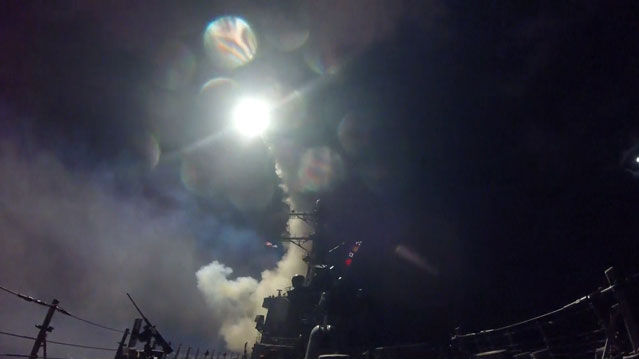
With the launching of 59 Tomahawk cruise missiles from two U.S. Navy warships aimed at a Syrian airbase last week, the Trump administration took an enormous step in reversing the policies of appeasement and accommodation that marked the Obama administration’s approach to Middle East conflicts.

The airstrike was done in response to a chemical weapons attack in which at least 87 people were killed – including women and children – in the assault on the Syrian town of Khan Shaykhun last Tuesday. Medical personnel on the ground indicated the chemical agent was sarin, a nerve agent so deadly that mere drops inhaled or absorbed on skin kill within minutes.

U.S. military personnel allegedly tracked the aircraft launched from the airbase in question and took a flight path to the town, dropping its ordinance and returning.

The chemical attack was not the only one the Assad regime has been accused of conducting since a much-publicized deal that Russia brokered to remove Syria’s chemical weapons stockpile. These recent attacks demonstrate clearly that the Assad regime retains its chemical weapons and is unafraid of using them.

These incidents demonstrate clearly the utter failure of the Obama administration’s past policies that sought to broker agreements with regimes that have no intention of abiding by them; be it Syria with chemical weapons or Iran with its nuclear program.

As the New York Post editorial board pointed out in a scathing piece pointing out that administration’s failures and more importantly what it means for the nuclear agreement with the Iranian regime.

Last week’s horrific attack in Syria disproved the Obama administration’s boast of stripping Bashar al-Assad of “100 percent” of his chemical weapons. And that has big implications for the nuclear deal with Iran. After all, the nuke deal relies on the same kind of verification and accountability system entailed in the agreement with Assad, the Post said.

“We will, for the first time, be in a position to verify all of [Iran’s] commitments,” President Barack Obama said at the time, insisting the deal had at least temporarily halted Tehran’s pursuit of nuclear weapons.

Critics insist it did no such thing. Just as many refused to believe Team Obama’s claim that it had fully rid Syria of its weapons of mass destruction. The Syria accord allowed Obama to save face for failing to enforce his “red line” against Assad’s use of chems after the dictator got caught using sarin nerve gas to kill up to 1,500 Syrian civilians, the Post added.

“We are getting chemical weapons out of Syria without initiating a strike,” said Obama. And Secretary of State John Kerry: “We got 100 percent of the chemical weapons out.”

Just this past January, former National Security Adviser Susan Rice insisted, “We were able to get the Syrian government to voluntarily and verifiably give up its chemical weapons stockpile” in a way “that the use of force would never have accomplished.”

The Post summed up by saying “Just how wrong they all were has now become dead obvious. So why should anyone still believe the same team’s assurances on Iran’s ability to produce nukes?”

While the strike by the Trump administration didn’t do much tactical damage to the airbase since American officials warned the Russians of the pending attack, who then promptly tipped off their Syrian allies who quickly moved most of their assets out of harm’s way, the attack was a major strategic masterstroke by President Trump.

The attack was the first by the U.S. against Syrian regime assets and crosses the “red line” that President Obama had previously laid down the first time the Assad regime used chemical weapons, only to infamously balk at crossing its own line.

The airfield bombed is significant, because it is also used by members of Islamic Revolutionary Guard Corps (IRGC) and the Quds Force, according to a report from Asharq Al-Awsat Arabic language website. The field has been used for a long time by IRGC to operate not only in Syria but also in Iraq.

It also neatly puts the Iranian regime on notice that the conditions of the conflict have shifted dramatically. The U.S. was willing to take unilateral military action without U.N. approval or consultation with regional partners in response to a clear and present danger.

For Bashar al-Assad and Hassan Rouhani, the prospect of a surprising and swift U.S. response must have come as a shock.

Of course that did not stop Iran from doubling down on its bets on a murderous Assad regime.

Iranian regime rallied around the Syrian strongman and pledged to respond to US “aggression” after the Trump administration bombed a military airfield in retaliation for a poisonous gas attack.

Assad has drawn heavily on foreign Shi’ite militias sponsored by Iran, led by Lebanon’s Hezbollah group, for his most important gains since the Russian intervention.

In Iran, Supreme Leader Ayatollah Ali Khamenei said the U.S. missile strike was a “a strategic error, and a repeat of the mistakes of the past,” the state news agency IRNA reported.

“The Islamic Republic has shown that … it does not back off and its people and officials … do not retreat in the face of threats,” said Khamenei.

Many Syrians opposed to Assad’s rule consider Lebanon’s Hezbollah and Iranian-backed troops as occupiers seeking to drive out mainly Sunni Syrians from the areas they live in. They hold Iran and its allies responsible for the displacement of millions outside the country, according to Reuters.

Allies including the United Kingdom and Australia Friday, applauded Trump’s decision to launch the strike.

Michael Tomlinson

Filed Under: Blog, News Tagged With: Featured, Iran, Iran Mullahs, Iran Terrorism, IRGC, Khamenei, Syria

Upcoming Presidential Elections in Iran Just More of the Same

April 10, 2017 by admin

Upcoming Presidential Elections in Iran Just More of the Same

Upcoming Presidential Elections in Iran Just More of the Same

Elections in the Iranian regime are not left up to chance or to the Iranian people for that matter. The ruling mullahs have always wanted a neat, tidy election process that harbors no dissent and provides for no surprises.

In practicality, the mullahs admire the no-contest elections where the ruling elite often hold all the cards. This may explain why Iran has worked closely with North Korea in exporting that regime’s ballistic missile technology, while it seeks to be a major oil trading partner to China and a major arms buyer to Russia.

The history of Iranian elections has been less than spectacular. Last year during parliamentary elections, the regime wiped off the ballots thousands of candidates deemed unsuitable for running. The most common attribute of the eliminated candidates was a disturbing tendency to being a dissident voice.

In the infamous presidential election of 2009, the much-reviled Mahmoud Ahmadinejad was re-elected in what was widely regarded as a rigged election that resulted in massive protests harshly put down by the regime’s military resulting in thousands of deaths, arrests and prison sentences.

The mullahs learned their lesson in 2013 by installing Hassan Rouhani as an affable, cheery candidate in contrast to the typical regime clerical candidate.

Now with presidential elections looming on May 19th, Iran is entering into another familiar cycle of political speculation. Unfortunately, none of it will matter much since the regime’s leadership, led by top mullah Ali Khamenei, controls the councils which will decide who will be allowed to run in the first place.

But the Western media will again make the same mistake as it did before in trying to parse the Iranian regime’s politics into “moderate” and “hardline” camps, of which there are none. Iran has no viable opposition parties and all members and candidates swear the same allegiance to the Shia revolution and Khamenei.

It is akin to essentially trying to find nuances between members of the same Nazi party in World War II-era Germany.

Just because Rouhani likes to use Twitter does not excuse the fact his tenure is marked by the highest rate of public executions ever, putting Ahmadinejad to shame, nor does it make him a “moderate.”

The best example of this mislabeling comes in the form of coverage over the announcement that certain candidates were put forward to challenge Rouhani as being part of the regime’s “hardline, conservative” blocs.

As Reuters described it: “A bloc of conservative Iranian political parties has nominated a powerful cleric as their candidate to run in next month’s presidential election to try to unseat the moderate Hassan Rouhani, Iran’s state news agency IRNA said.

“Seeking to regain the presidency by stopping Rouhani winning a second four-year term, Iran’s powerful hardliners have been gearing up for a showdown in the May 19 vote.”

Five candidates were nominated, including Ebrahim Raisi, a powerful cleric who last year was appointed custodian of the shrine of Imam Reza in Mashhad, Iran’s second city. He also controls what is believed to be the Islamic state’s wealthiest institution: Astan-e Qods Razavi, a religious foundation that owns properties and land across the country.

The 56-year-old cleric has held senior judicial positions, including prosecutor-general. Dissidents accuse him of authorizing a brutal crackdown against the opposition in the 1980s.

The National Council of Resistance of Iran, the largest Iranian dissident groups, detailed Raisi’s bloody history on behalf of the regime.

“In 1988, when he was Deputy Prosecutor of Tehran, he was one of the four individuals who Khomeini appointed to carry out his order to massacre the activists of the People’s Mojahedin Organization of Iran (PMOI/MEK). During that massacre, 30,000 political prisoners, who were primarily from the PMOI, were executed within a few months. An audio tape surfaced last summer, after 28 years, of Hossein-Ali Montazeri, Khomeini’s designated successor at the time, meeting with the ‘death committee’ in Tehran, including with Raisi, about 20 days after the start of the massacre. Montazeri told them that these executions were the biggest crimes committed by the Islamic Republic,” the NCRI said in a statement on its website.

In that meeting Montazeri talked about how pregnant women and 15-year-old girls were executed during the massacre. Those who attended the meeting (including Raisi) condoned the mass executions. It was subsequently exposed that Raisi was the most active and most ruthless member of the committee. The audio file of the meeting between Khomeini’s then-successor and the “death committee” also corroborated this reality, the NCRI added.

The Guardian Council, a powerful body controlled by Khamenei, will announce later this month which candidates are qualified to contest the election. All contenders must be deemed loyal to the Islamic republic and the final candidates appearing on the ballot will go a long way in showing what Khamenei’s thinking is moving forward for the regime.

Raisi’s elevation and election to president could very well set him up as the successor to Khamenei which from the perspective of the mullahs makes sense since he is a steadfast loyalist to preserving the mullahs power and has demonstrated a willingness to massacre dissidents and rivals.

All of which does not bode well for the future of the Iranian people.

Michael Tomlinson

Filed Under: Blog, News Tagged With: Featured, Iran, Iran Election 2017, Iran Mullahs, Iran Terrorism, Raisi

The Double Standard of the Iran Lobby

April 3, 2017 by admin

The Double Standard of the Iran Lobby

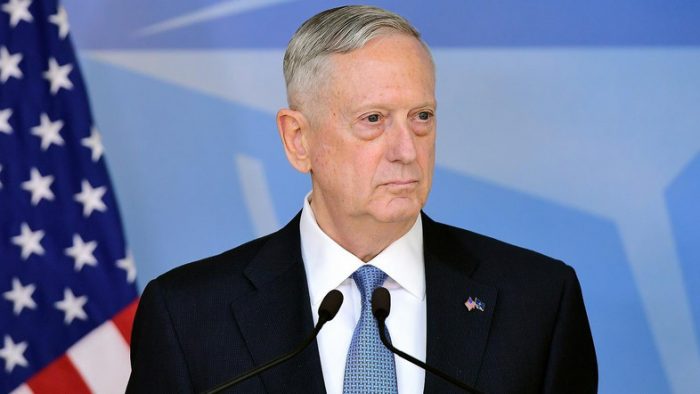
US Defence Minister James Mattis addresses the press during a NATO defence ministers’ meetings at the NATO headquarters in Brussels on February 15, 2017. / AFP PHOTO / EMMANUEL DUNAND

Consistency of thought has never been the strong suit for members of the Iran lobby such as the National Iranian American Council. Often staffers from the NIAC write editorials that passionately argue to right some perceived wrong being perpetrated by the U.S. government, while at the same time ignoring the exact same violation being committed by the Iranian regime.

Take for example the issue of detention of Iranians within the U.S. under the Trump administration’s new immigration rules versus the long-running policy of the mullahs in Tehran of snatching up and imprisoning dual-national citizens.

The NIAC issued a statement by Ryan Costello arguing against the arrest of an Iranian citizen holding a U.S. visa in Michigan. According to the statement, the “news comes amidst an uptick in government harassment of visa holders and citizens entering the U.S. We are concerned this is further evidence of a discriminatory culture being promoted by Donald Trump and his administration, particularly towards people of Middle Eastern descent.”

While the attention to this case seems to be the primary focus of the NIAC, the notorious supporters of the Iranian regime are virtually silent on the same practice by the mullahs in arresting dual-nationals such as Iranian-Americans on bogus or secret charges and held in deplorable conditions.

Consider the long-running saga of British charity worker Nazanin Zaghari-Ratcliffe who was arrested at Tehran Airport on April 3 last year while visiting family with daughter Gabriella.

She was imprisoned for five years in September for allegedly plotting to topple the Iranian government and lost an appeal against her sentence in January but maintains her innocence.

On Sunday – the 365th day since the arrest – family and friends gathered at Fortune Green close to Zaghari-Ratcliffe’s home in north-west London according to the Standard.

Supporters tied yellow ribbons to a tree in the park along with quotes from inmates at Evin prison in Iran, where Zaghari-Ratcliffe is being held, describing what they would do with one day of freedom.

Her painful and heartfelt wish reads: “My fondest dream has always been to arrive at our home, you ask me if I want to have a cup of tea, then make me one.”

“I just sit back and watch you two play. This is the image I had most when in solitary confinement.

“How I wish I could watch you both dance in the middle of our sitting room to the Michael Jackson music – like when Gabriella was only tiny.”

The NIAC makes no mention of her incarceration, not even a plea for humanitarian release because of her sharply declining health and denial of adequate medical care. Why the double standard?

One of the more stunning double standards was an editorial in the Atlantic Council by NIAC’s Adam Weinstein which argued why Iran views its ballistic missile program as a “red line” that warrants full protection by the mullahs.

He predictably recounts the same old arguments from Iran’s experiences in the Iran-Iraq War in which Saddam Hussein showered Iranian troops with missile barrages and how the mullahs in Tehran vowed to develop their own missile capability to defend themselves in the future, especially as a deterrent from perceived enemies such as the U.S. and Saudis.

Weinstein argues—incredibly—that alleviating Iran’s sense of vulnerability might be a better way to approach Iran.

Using his logic, if your neighbor has decided to arm himself and occasionally takes shots at you, Weinstein argues that you should be the one of reassure your violent neighbor, not the other way around?!

Weinstein even stretches his bizarre logic by trying to tie into a historically revisionist view of Shi’ism portraying it as choosing pragmatism over ideology.

Not many Syrians or Yemen civilians being subjected to Iranian bombs, mortars, rockets, drones and militia would find any proof of that sentiment.

What Weinstein never discusses though is the rapid development of Iran’s missile program in creating and testing ever more powerful boosters designed to reach intercontinental distances and lift capability approaching via nuclear payload capabilities.

Why Iran needs a ballistic missile with the range to reach into New Delhi or Rome is never mentioned by Weinstein because there is no reason other than to hold a dagger over Europe, Asia and the rest of the Middle East like the sword of Damocles.

But that double standard is nothing new to the Iranian regime as Iran’s Foreign Ministry called on the United States to pressure its regional allies into abandoning their support for terrorism and not level “malicious” allegations against the Islamic state.

Foreign Ministry Spokesman Bahram Qasemi made the statement on Saturday, reacting to earlier comments by US Defense Secretary James Mattis claiming that Iran continued to sponsor terror, Press TV reported.

Asked about comments Mattis made in 2012 that the three primary threats the United States faced were “Iran, Iran, Iran,” Mattis told reporters in London on Friday that Iranian regime’s behavior had not changed in the years since.

“At the time when I spoke about Iran I was a commander of US central command and that (Iran) was the primary exporter of terrorism, frankly, it was the primary state sponsor of terrorism and it continues that kind of behavior today,” Mattis said.

Laura Carnahan


Filed Under: Blog, News Tagged With: Adam Weinstein, Featured, Iran, Iran Lobby, Iran Mullahs, Iran Terrorism, IRGC, National Iranian American Council, Nazanin Zaghari-Ratcliffe, NIAC, NIAC Action, Ryan Costello, Tyler Cullis

Bipartisan Consensus Forming on Dealing with Iran Regime

March 30, 2017 by admin

Bipartisan Consensus Forming on Dealing with Iran Regime

Bipartisan Consensus Forming on Dealing with Iran Regime

In today’s turbulent political environment there is not much anyone agrees on, except that maybe the New England Patriot comeback in the Super Bowl was astounding or that the Chicago Cubs win of the World Series was historic.

Other than that, most politicians can’t even seem to agree on the weather and what causes a shift in temperature day to day.

On one topic though there seems to be a growing bipartisan consensus, not just in the U.S. but around the world and that is more needs to be done to rein in the intransigence of the Iranian regime and the threat posed by its burgeoning military and ballistic missile program.

Monday’s Senate Foreign Relations Committee hearing on Iran was an example of a political environment with a rare and welcomed unanimity. Ranking member Sen. Benjamin L. Cardin (D-Md.) remarked that although he voted against the Joint Comprehensive Plan of Action on Iran, he doesn’t think it would be wise to withdraw, saying:

“Iran’s activities today are as bad as they have ever been and probably worse. They are certainly increasing their terrorist sponsorship in the Middle East as we see in so many different countries in that region. Their record on violating the ballistic missile obligations are well known and well understood. Their human rights violations against their own citizens are horrible, one of the worst countries in the world. They violate the arms embargo and the list goes on and on. So, it is appropriate to get this Committee to look at what we can do to make sure that first, the Iran nuclear agreement is honored so that Iran does not become a nuclear weapons state, but then secondly, look at those activities that were not covered under the JCPOA as to how we can play a stronger role.”

He was joined by his Republican colleague, Sen. Bob Corker (R-Tenn.), chairman of the committee who said:

“One of my criticisms of the JCPOA was that it would become our de facto Middle East policy and Iran would expand their destabilizing activities. I think we are seeing a lot of that today. Regionally, we’ve seen an escalation in Iranian intervention. Iran, along with its allies in Russia, has continued to prop up Assad at the cost of countless lives in Syria. Iran’s support to the Shia militias in Iraq threatens the interests of Sunnis and Kurds alike, not to mention the Shia in Iraq that don’t subscribe to the anti-American, zero-sum politics of the militias that are there.”

Jennifer Rubin in the Washington Post’s Right Turn blog opined that “given this shared assessment of Iran — the JCPOA is not going away but the United States needs to confront Iran in other arenas — it’s not surprising that a bipartisan bill, the Countering Iran’s Destabilizing Activities Act of 2017, with seven co-sponsors from each party, was introduced last week.”

“The act establishes new sanctions targeting Iran’s testing of ballistic missiles and its backing for terrorism, and also seeks to block the property of any entity involved in the sale of arms to or from Iran. It does not reintroduce sanctions lifted from Iran as part of the 2015 nuclear deal.”) In a summary released last week, senators described potentially far-reaching measures including mandatory sanctions on those involved with Iran’s ballistic missile program, new sanctions against the Islamic Revolutionary Guard Corps and a requirement for the president “to block the property of any person or entity involved in specific activities related to the supply, sale, or transfer of prohibited arms and related material to or from Iran,” Rubin added.

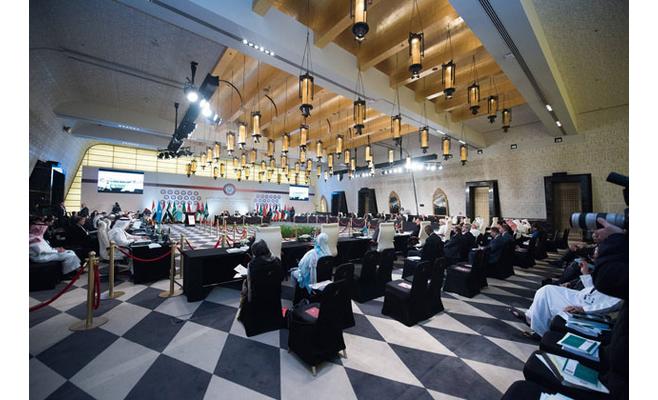
But it wasn’t just on Capitol Hill where there was unanimous consent as all 15 resolutions passed by the Arab summit which took place in Jordan Wednesday were devoted to an indictment of Iran, its Revolutionary Guards Corps and Lebanese surrogate, Hezbollah. They were a testament to the depth of Arab-Iranian animosity and exposed the extent of the rift between the Sunni and Shiite Muslim worlds.

Iran was accused of meddling in the internal affairs of Arab nations, inciting Shiites against Sunnis, and arming and training Shiite terrorist groups for operations against legitimate Arab governments. The Arab rulers combined to put Tehran in the dock for its interference in the Syrian civil war and assault on its sovereignty.

It was notable that at an Arab summit that has in the past concerned itself with issues related to Israel and the plight of the Palestinian people, the entire focus of the summit was on the Iranian regime; demonstrating how important the issue of confronting Tehran has become to the wider Arab world.

In the annual AIPAC conference a clearer united vision of the importance to oppose the Iranian regime was surfaced. American authorities and law makers used the opportunity to show their unanimous visions on the threat they feel from the Iranian regime and the need to take action to contain the growing destabilizing activities of the mullahs in the region.

The speaker of the US House of Representatives, Paul Ryan, called to designate the Revolutionary Guards as a terrorist group, describing it as a “terrorist army.” He said “Iran supports the terrorist dictator of Damascus and the militias in Yemen, Baghdad and Beirut.”

Furthermore, Nikki Hailey, the US ambassador to the United Nations asserted at the conference that “Iran’s nuclear deal is worrisome because it empowered Russian and Iran and encouraged the latter to act freely without fear of accountability.”

Mitch McConnell, the Republican majority leader in the Senate added: “Today we must adopt a different approach. We must combat Iran’s ability to finance, arm and train terrorists, such as Hezbollah, Hamas and its proxies in Syria.”

McConnell criticized Iranian regime’s nuclear deal, saying that it disabled the United States from taking more aggressive steps against Iran.

Meanwhile the Iran lobby was once again beating the war drum in an editorial in Huffington Post by Jamal Abdi of NIAC Action and Adam Weinstein of the National Iranian American Council, in which they claimed that this bipartisan consensus would only provide incentives for the U.S. to be plunged into a war with Iran at the behest of President Trump.

They go on to argue that if the proposed sanctions bill passes, Tehran would respond negatively and all the positive gains made by the nuclear deal would evaporate. What positive gains?

Since the deal was agreed to, the Iranian regime has broken every promise of moderation, stability, peace and partnership made by the NIAC and other Iran lobby supporters.

The harsh proof of Iranian regime’s track record over the past years has been so convincing that a bipartisan consensus is seen among both houses of congress to try to oppose the mullahs in Tehran.

All we can say is that it’s about time.

Michael Tomlinson

Filed Under: Blog, News Tagged With: #NuclearDeal, Adam Weinstein, Featured, Iran deal, Iran Lobby, Iran Mullahs, Iran sanctions, Iran Terrorism, IRGC, Jamal Abdi, National Iranian American Council, NIAC, NIAC Action, Syria, Yemen

  • « Previous Page
  • 1
  • …
  • 6
  • 7
  • 8
  • 9
  • 10
  • …
  • 16
  • Next Page »

National Iranian-American Council (NIAC)

  • Bogus Memberships
  • Survey
  • Lobbying
  • Iranians for International Cooperation
  • Defamation Lawsuit
  • People’s Mojahedin
  • Trita Parsi Biography
  • Parsi/Namazi Lobbying Plan
  • Parsi Links to Namazi & Iranian Regime
  • Namazi, NIAC Ringleader
  • Collaborating with Iran’s Ambassador

Recent Posts

  • NIAC Trying to Gain Influence On U.S. Congress
  • While Iran Lobby Plays Blame Game Iran Goes Nuclear
  • Iran Lobby Jumps on Detention of Iranian Newscaster
  • Bad News for Iran Swamps Iran Lobby
  • Iran Starts Off Year by Banning Instagram

© Copyright 2026 IranLobby.net · All Rights Reserved.