Iran Lobby

Exposing the Activities of the lobbies and appeasers of the Mullah's Dictatorship ruling Iran

  • Home
  • About
  • Current Trend
  • National Iranian-American Council(NIAC)
    • Bogus Memberships
    • Survey
    • Lobbying
    • Iranians for International Cooperation
    • Defamation Lawsuit
    • People’s Mojahedin
    • Trita Parsi Biography
    • Parsi/Namazi Lobbying Plan
    • Parsi Links to Namazi& Iranian Regime
    • Namazi, NIAC Ringleader
    • Collaborating with Iran’s Ambassador
  • The Appeasers
    • Gary Sick
    • Flynt Leverett & Hillary Mann Leverett
    • Baroness Nicholson
  • Blog
  • Links
  • Media Reports

Is the Open for Business Sign for Iran Now Closed?

July 11, 2017 by admin

Is the Open for Business Sign for Iran Now Closed?

Is the Open for Business Sign for Iran Now Closed?

One of the primary reasons why the Iran lobby was conceived and brought to life was a recognition by the mullahs in Tehran that they lacked all credibility when it came to the Western news media and needed surrogates to help shape the world’s perception of them as more open, accommodating and moderate than they really were.

This was especially important in light of the crippling economic sanctions that were bringing the Iranian regime’s economy to its knees, which was part of the discontent that was on display in the aftermath of the scandalous 2009 presidential election.

The massive street protests came at the height of the Arab Spring protests toppling governments throughout the Middle East and threatened to take down the mullahs in Tehran.

After brutally putting down the protests, the mullahs figured out they needed help to keep their grip on power which led to the election of “moderate” Hassan Rouhani in 2013 and a massive PR push aimed at the Obama administration to craft a nuclear deal that would lift the economic sanctions on Iran.

Much has already been written about the launching of Iran lobby advocates such as the National Iranian American Council and its prominent role in pushing for the nuclear deal by working in coordination with the Obama administration in creating the much-discussed “echo chamber” of supporters.

The aftermath of the nuclear deal and hasty implementation by the outgoing Obama administration created a narrow window of opportunity for the Iranian regime to get what it needed most at that time: cash and lots of it.

The regime was bleeding cash in its support of wars in Syria, Iraq and Yemen so accessing frozen assets, as well as the planeloads of cash paid as part of ransom payments for American hostages, helped stave off imminent collapse.

The next aim for the regime and Iran lobby was the lifting of economic sanctions so that business and investment deals could be struck to provide steady future sources of revenue.

After an initial rush by some European companies, later followed by Russian and Chinese military sales, the proverbial land rush slowed to a crawl amid uncertainty that the Trump administration and U.S. Congress might reinstitute sanctions because of Iranian regime’s support for terrorism and an alarming increase in ballistic missile launches.

It didn’t help the mullahs that their technological partner, North Korea, was busy flinging ballistic missiles into orbit faster than reruns of Real Housewives of Orange County, and alarming most of the nations in the Pacific.

The prospect that the U.S. might levy new sanctions slowed investment to a crawl, aside from a few high-profile sales of commercial jetliners, there has been few business deals announced.

That drought of new investment once again stirred ordinary Iranians to anger in the most recent presidential election a few months ago which saw mass protests throughout Iran; even including harsh demonstrations aimed at Rouhani himself.

The poor condition of the Iranian economy was also a contributing factor to the implosion of the candidacy of Ebrahim Raisi, the handpicked would-be successor by top mullah Ali Khamenei, leading to broad speculation that the mullahs’ grip on power was slipping.

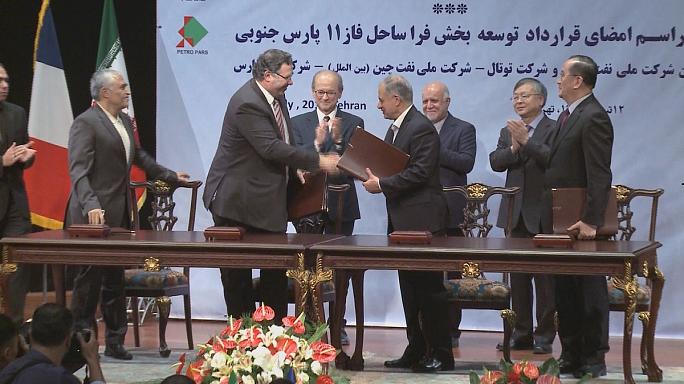
The most recent high-profile deal announced by Iran was with French petroleum giant Total, which agreed to a deal to jointly develop Iran’s massive South Pars gas field. Total was the first, and so far, only major oil player to commit to returning to Iran, while other firms, especially U.S. and British ones remain on the sidelines uncertain of the potential of the re-imposition of economic sanctions.

The risks for Total, and for that matter any other foreign company, doing business with Iran are substantial, as outlined in an insightful editorial by Dr. Majid Rafizadeh, president of the International American Council, in Arab News.

“U.S. pressure and sanctions on Tehran will likely continue to escalate, affecting American and non-American companies. The US may re-impose its sanctions bill that targets non-American companies doing business with Iran. If a company does business with both countries, its investments could be in peril. Quitting Iran’s market would not be easy for those with long-term investments,” Rafizadeh said.

He also alludes to the increasing political instability within Iran, as well as the tightening grip on the Iranian economy by Khamenei and the Revolutionary Guard Corps. That grip exists because of the rising need by the IRGC to funnel even more funds for its foreign adventures which have expanded in various fronts.

Also, as Iranian regime ramps up its ballistic missile program, the United Nations may feel compelled to act and sanction Iran lest it has to deal with both an Iran and North Korea crisscrossing the sky with ballistic missiles.

Recognizing the threat of possibly having its economy shutdown once again, the mullahs are moving rapidly to take advantage of the Total deal to ready an additional 14 oil and gas exploration for tender offers to foreign companies.

Sitting on some of the world’s biggest energy reserves, Iran has already been working on deals to develop fields such as South Pars, South Azadegan, Yadavaran, West Karoun, Mansouri and Abteymour, Reuters reported.

France’s Total last week became the first major to sign a post-sanctions development deal with Iran. Russia’s Lukoil and Denmark’s Maersk are also potential investors.

“Next on the horizon is the search for new oil, with the National Iranian Oil Company planning to tender 14 oil and gas blocks for exploration in the next two to three months,” NIOC’s deputy director for exploration blocks, Rahim Nematollahi, said in Istanbul.

But these deals may become moot should either the U.S. or UN act to impose new sanctions, especially any sanctions once again removing Iran from accessing the international wire transfer network or currency exchanges.

All of which places any foreign entity in a precarious position should it decide to invest in Iran. A company also runs the risk being labelled a supporter of terrorism since the vast majority of revenue Iran generates from one of these deals would inevitably be used to fund its proxy wars and support its terrorist allies.

This may mean that for the short-term at least, the “open for business” sign for Iran may be just another example of fake news.

Laura Carnahan
Filed Under: Blog, Current Trend, News Tagged With: #NuclearDeal, Appeasement policy, Featured, hassan rouhani, Iran, Iran deal, Iran Economy, Iran Lobby, Iran Mullahs, Iran sanctions, Iran Talks, Iran Terrorism, IRGC, Khamenei, National Iranian American Council

Iran Regime Efforts to Control Middle East Gets Pushback

July 10, 2017 by admin

Iran Regime Efforts to Control Middle East Gets Pushback

Iran Regime Efforts to Control Middle East Gets Pushback

The mullahs in Tehran have never made a secret of their lust for controlling the Middle East, especially the countries surrounding Iran. Part of the reasoning has been to create a buffer protecting the Islamic state from its perceived enemies, including regional rival Saudi Arabia, but it also was designed to provide the mullahs with a steady supply of proxies that could be used as cannon fodder for conflicts.

The Iranian regime, through its Revolutionary Guard Corps and its Quds Forces, have historically relied on third parties to do its dirty work be it Hezbollah in Lebanon, Shiite militias in Iraq, Houthi rebels in Yemen or Afghan mercenaries in Syria.

The willingness of the Iranian regime to use these proxies demonstrates its callous disregard for human life and take no prisoners attitude in achieving its goals. It also ably demonstrates why any agreement reached with the mullahs is essentially worthless since they will always seek to circumvent any accord should it suit their purposes.

Which is why any effort to resolve the civil war in Syria must first and foremost force the expulsion of Iranian forces from that war-torn country. Similarly, as ISIS is defeated in Iraq with the liberation of Mosul, a similar kicking out of Iranian forces would be a positive first step to returning that beleaguered country to normality.

None of this will be easy though since the mullahs are loath to give up their hard-fought gains in securing a so-called “land bridge” linking Tehran to Damascus through Baghdad, which fulfills the long sought-after vision of Shia control from the Mediterranean to the Indian Ocean.

The strategic vision of the Iranian regime includes the establishment of permanent naval bases along the Syrian and Yemen coastlines, giving its navy unfettered access to the crowded international shipping lanes in the Mediterranean and through the Persian Gulf and Suze Canal.

The mullahs see themselves being able to keep a loaded pistol pointed at the economic lifeblood of Europe through its use of its military and navy. It also explains why Iran has invested so heavily and fought hard to protect its ballistic missile program from the threat of economic sanctions.

Just as the control of territory and sea lanes are crucial to the mullahs’ vision of maintaining control, its ballistic missile fleet is the hammer necessary to enforce that control by placing Eastern Europe, North Africa and Southeast Asia under threat of attack.

The firing of ballistic missiles for the first time at purported ISIS targets in Syria was less about actually striking at ISIS forces, as much as it was a practical demonstration and testing of its missiles by Iran.

In many ways, the opening salvos are eerily similar to Nazi Germany’s involvement in the Spanish Civil War in 1936, not to support the rule of General Francisco Franco in as much the ability to test new German tactics and weapons that would later be employed in the blitzkrieg of World War II.

The civil war was also notable for the bombing of Guernica in 1937 in which Germany tested out new warplanes in killing hundreds of civilians; a prelude to the mass slaughters to follow. Famed artist Pablo Picasso immortalized the attack with his eponymous painting, but if he were alive today, he could have painted similar works memorializing places such as Mosul, Raqqa or Ramadi where Iranian-backed forces have left swathes of destruction that made Guernica look paltry by comparison.

But all of these efforts by the Iranian regime to exert its control over its neighbors may have finally forced pushback among many of these former perceived allies of Iran.

In Pakistan, tensions have sharply escalated with a serious of border conflicts that got another dose of violence in the form of rocket attacks by Iranian border guards aimed at Pakistan.

“The incident took place in the wee hours of Saturday,” Panjgur’s Deputy Commissioner Jabbar Baloch told The Nation. He confirmed no loss of life or property was caused by the Iranian shelling. The rockets exploded with powerful bang after landing in the area, prompting fear and panic among the residents.

The adjacent areas of Panjgur and Chagai close to Pak-Iran border have repeatedly witnessed rocket shells fired by the Iranian security forces followed by strong protest from the Pakistani side. The regular violation of Pakistani territory by Iranian guards and allegations of cross-border infiltration by Pakistani side has strained ties between the two neighboring countries which share a 900-km long porous border.

This was followed by news from Iraq of threats being made by one of the largest tribes in Karbala against Iranian forces after one of its prominent leaders,  Sheikh Nema Hadi al-Issawi, was killed in the Iranian city of Mashhad.

In order to calm the tribe, Hadi al-Amiri, the leader of Al- Badr militia and who is close to the Iranian regime and the commander of Al- Quds Force, asked to attend the funeral of the killed Sheikh but the al-Issa tribe refused the request and prevented Amiri from entering its houses in Karbala, according to Al-Arabiya.

This comes after massed protests in southern Afghanistan by locals denouncing Iranian regime president Hassan Rouhani over disparaging comments he made in criticizing Afghan water management and dam projects, according to the Voice of America.

Hundreds of demonstrators peacefully marched through the streets of Lashkargah, capital of Helmand province near the Iranian border. They chanted, “Death to Hassan Rouhani” and “Death to enemies of Afghanistan.”

These actions don’t even include the active losses being suffered by Iranian-backed forces in Syria and Yemen at the hands of U.S. and Saudi-backed forces.

All of which points to a turning of fortune for the mullahs that may see their hopes for a Shiite sphere of influence go up like puffs of smoke.

Michael Tomlinson

Filed Under: Blog, News Tagged With: Featured, hassan rouhani, Iran, Iran Human rights, Iran Mullahs, Iran Terrorism, Moderate Mullahs, Syria, Yemen

Iran Regime Continues to Suffer Setbacks at Home and Abroad

July 4, 2017 by admin

Iran Regime Continues to Suffer Setbacks at Home and Abroad

Iran Regime Continues to Suffer Setbacks at Home and Abroad

It must be tough to be a ruling mullah within the Iranian regime these days. Only a few months ago you must have been feeling on top of the world.

Syria was a carnal house of chaos that was diverting global attention away from all of your schemes and plots.

ISIS was busy destroying everything and everyone in its path and you got plaudits for claiming to fight them.

You had a nuclear deal in hand that flooded your depleted bank accounts with billions in cash enabling you to go on personal shopping sprees for new weapons and upgrade your ballistic missiles and you didn’t have to give anything away for it!

Your lobbying and PR machine were running an echo chamber braying loudly in support of your causes and portraying your handpicked puppet president as a paragon of moderation.

What a difference a few months make.

ISIS is being pushed back by determined Iraqi troops and Syrian rebel groups backed by U.S. forces who have now shown a willingness to shoot Iranian drones, convoys and troops if threatened.

The incoming Trump administration has openly called for and getting a legislation imposing new economic sanctions for Iran’s support for terrorism and its development of ballistic missiles.

The cash flow may soon run dry as European countries, eager to invest in Iran, are now confronted with the stark possibility of running afoul of U.S. Treasury officials.

Your latest presidential campaign where your boss, Ali Khamenei, tried to engineer the election of his hardline successor fell flat on its face.

Worst of all, the longest-running Iranian dissident group is experiencing a resurgence in support not only in many world capitals, but more distressingly on the streets of Iranian cities.

It’s enough to make a mullah want to cry, except the mullahs that control Iran and its people aren’t likely to get sentimental or panic. If anything, they will do what they have always done which is crack down on its people, engineer more attacks abroad and use its overseas lobbyists to threaten global leaders.

But that same old recipe may no longer find much traction as the ground has shifted considerably on the regime.

One big blow came when U.S. federal prosecutors won a courtroom victory in their nine-year effort to seize a midtown Manhattan office tower owned by an Iranian charity.

A jury on Wednesday found that the charity, the Alavi Foundation, was controlled by the Iranian government. It also agreed with prosecutors that the charity’s management of the Fifth Avenue office building, which has generated millions of dollars in rental income annually, constituted a violation of U.S. sanctions against Iran, according to Bloomberg.

The verdict, which came after a day of deliberations, means that Manhattan prosecutors can move ahead with their attempt to seize the building at 650 Fifth Avenue, a prime location. The government plans to sell the property, which is valued at more than $500 million, and distribute much of the proceeds to victims of Iranian regime-sponsored terrorist attacks.

The finding “represents the largest civil forfeiture jury verdict and the largest terrorism-related civil forfeiture in U.S. history,” Joon H. Kim, the acting U.S. Attorney in Manhattan, said in a statement.

In 2014, U.S. District Judge Katherine Forrest granted summary judgment to prosecutors’ forfeiture request, agreeing that the government had established that the building’s primary owners — the Alavi Foundation and a shell company controlled by the government of Iran — had been violating Iran sanctions laws since 1995.

The blow is especially big for the Iran lobby since the Alavi Foundation was a prime financial supporter of noted lobbying groups such as the National Iranian American Council and the Ploughshares Fund, both of which are likely to be crippled by the loss of cash.

This comes in contrast to the strong growth of the Iranian resistance movement within Iran, which has fought hard to stifle any news of protests from getting out, but lately those acts of defiance have grown bolder and been more publicized thanks to social media.

The National Council of Resistance of Iran (NCRI)/People’s Mujahedeen Organization of Iran (MEK) says hundreds of videos and photos of the incidents have been taken in dozens of towns and cities, and compiled a sample in a video clip.

Photos of NCRI leaders Maryam and Massoud Rajavi feature prominently, along with slogans which the NCRI translated as saying, among other things, “My vote regime change, down with Khamenei, our choice Maryam Rajavi.”

Such demonstrations are highly risky in Iran, a repressive state that has outlawed the NCRI/MEK as a “terrorist” group and executes hundreds of people each year for crimes including political and security offenses.

Shabnam Madadzadeh, a young Iranian woman and former political prisoner who just recently was able to exit Iran, has written articles and delivered remarks in different events shedding light on Iran’s dungeons atrocious conditions and gave a powerful interview to Forbes describing conditions in Iran’s prisons.

“I was a college student in Iran and like my brother I spent five years in the regime’s jails as a political prisoner. Long interrogations, solitary confinement, forced to witness my brother being beaten, deprived of any contact with my family, death threats and mock executions were the tortures I was placed through,” she said.

“During my time behind bars I was deprived of any furlough. I witnessed many crimes by the regime authorities, many executions and tortures inflicted not only on political prisoners, but also ordinary inmates arrested on other charges,” she added.

It may be time for the mullahs to pull out the tissue and have a good cry.

Laura Carnahan

Filed Under: Blog, National Iranian-American Council, News Tagged With: Alavi Foundation, Featured, Iran, Iran Human rights, Iran Lobby, Iran Mullahs, Iran Terrorism, National Iranian American Council, NIAC, NIAC Action, Ploughshares

The Iranian Resistance Movement is Stronger than Ever

July 4, 2017 by admin

The Iranian Resistance Movement is Stronger than Ever

The Iranian Resistance Movement is Stronger than Ever

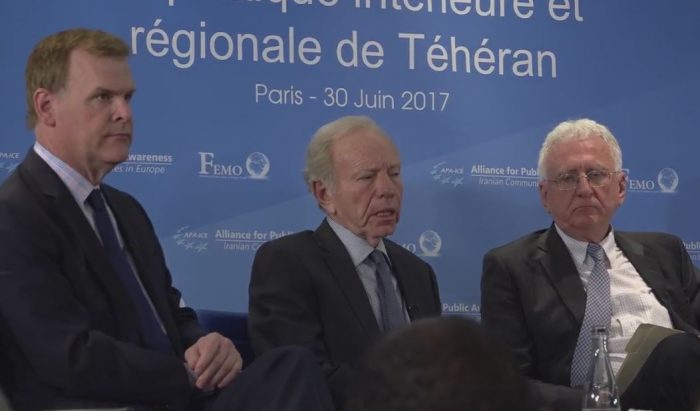
In a crowded hotel ballroom near Charles de Gaulle airport in France, speakers on three separate panels discussed the conundrum of Iran and the problems the regime poses for the region and the world.

While speakers came from different countries, from political and academic backgrounds, the message was the same: the Iranian regime was the key source of the region’s problems and that the Iranian resistance movement was the most viable pathway for regime change within Iran to a secular, democratic and pluralistic society.

The panel discussion, entitled: “Where is Iran Heading? Tehran’s Domestic and Regional Politics” was sponsored by The Foundation for Middle Eastern Studies (La Fondation d’Etudes pour le Moyen- Orient FEMO), an independent organization providing analysis on the Middle East to European institutions, international organizations and individuals, and the Alliance for Public Awareness, Iranian Communities in Europe (APA), comprised of various associations and individual expatriate Iranians living in Europe including a large number of second generation of Iranian expatriates.

The line up was a who’s-who is policy wonks, politicians and global influencers who weighed in on Iran’s influence in the Middle East and the role of the Iranian opposition (MEK) movement, especially the best pathway to regime change.

Regime change in Iran no longer seems to be a taboo word as U.S. Secretary of State Rex Tillerson cited it in recent testimony; a verbal leap forward from the reluctance of the Obama administration to utter anything that might offend Tehran.

Panelists all cited that the environment has shifted so dramatically over the last few months that the prospect no longer seems a fantasy, but now part of concrete policy discussions in capitals around the world.

Linda Chavez, founder and chairwoman of the Center for Equal Opportunity and a former White House staffer, cited a need for a “critical mass” of support for a burgeoning resistance movement being led by the National Council of Resistance of Iran, an umbrella group of several Iranian dissident and human rights groups.

It was a sentiment echoed by former Democratic Sen. Robert Torricelli who discussed his own experience in seeing the evolution of Iranian resistance groups such as the Mojahedin-e Khalq (MEK) from being ostracized unjustly as part of the appeasement policy towards Iran’s mullahs, to now being welcomed by world leaders seeking a strong partner in dealing with Iran.

The speakers reminded audience members that meaningful change was only going to happen from within Iran itself and not through any external manipulation which would only serve the interests of the mullahs in deflecting any efforts from outside as being meddling by foreign governments.

Former vice presidential candidate and Sen. Joe Lieberman expounded on the need for the Trump administration to hold the Iranian regime accountable for its actions and end the free hall pass the Obama administration gave in order to facilitate the nuclear agreement.

That realization lent a sense of focus and urgency on the day’s discussions on galvanizing the energy created by protests in the recent presidential election in Iran in which outsized banners and posters of NCRI leader Mrs. Maryam Rajavi where seen hanging from freeway overpasses in Tehran; an almost unthinkable act just a few months ago that would have earned any perpetrator a quick sentence to the gallows.

Struan Stevenson, president of the European Iraqi Freedom Association and former president of the European Parliament’s Delegation for Relations with Iraq, hit a key note when he called Iran the “godfather” of Islamic extremist groups likened Tehran’s influence among them.

With the rise of ISIS enabled by Tehran’s interference in the Syrian civil war and political meddling in Iraq, coupled with the use of terrorist proxies such as Hezbollah and Houthi rebels in Yemen, the Iranian regime manipulated the global stage to create a map for itself of Shiite control ranging from the Mediterranean to the Indian Ocean.

Michael Pregent, a fellow at the Hudson Institute and foreign policy analyst and former intelligence officer, described how the Iranian regime’s goals were to hold a navy base along Yemen’s coastline to control the flow of international commerce through the Suez Canal, and the creation of a land bridge running from Tehran, Baghdad and Damascus to move troops, goods, arms and supplies effortlessly.

The military muscle flexing by Iran was cited also by former Gen. Jack Keane, former vice chief of staff of the U.S. Army, who discussed how President Donald Trump’s election has set the stage for regime change with a halt to the concessions granted the mullahs by the Obama administration and an increased willingness to confront Tehran in Syria, Yemen and other fronts.

The panel discussion came in advance of a massive annual gathering held on July 1st by the NCRI and other groups to demonstrate the breadth and depth of the opposition movement and the broad international coalition supporting democratic change in Iran.

Part of the current policy discussion in Trump’s administration will have to take into account that there is no single, simple solution to the Iran problem as pointed out by the panelists, but instead would take a comprehensive approach including:

  • Re-imposing economic sanctions tying the regime’s support for terrorism and its ballistic missile program to improved relations;
  • Designating the Iranian Revolutionary Guard Corps (IRGC) as a Foreign Terrorist Organization and put the supply of easy cash for the regime’s activities at risk; and
  • Opening up greater support and recognition of the Iranian opposition movement to spur its growth within Iran similar to U.S. support of key dissidents such as Lech Walesa in Poland and Aung San Suu Kyi in Burma.

The NCRI has listed a more complete 10-point plan for a peaceful democratic future in Iran and with the changing political landscape around the world, we may be as close to seeing it happen as ever before.

Michael Tomlinson

Filed Under: Blog, News Tagged With: Featured, Free Iran Rally, Iran, Iran Human rights, Iran Mullahs, Iran Terrorism, IRGC, Joe Lieberman, Khamenei, mek, Struan Stevenson

Why Regime Change in Iran is Gaining Momentum

June 26, 2017 by admin

Why Regime Change in Iran is Gaining Momentum

Why Regime Change in Iran is Gaining Momentum

Regime change is a phrase that sends the Iranian regime’s mullahs into an apoplectic rage. One can imagine spittle flying and foaming mouths as they chew on the idea of their regime ending and being replaced by a secular democratic government.

At most points during the mullah’s regime’s history, the idea of regime change might very well seem like a distant idea or even outright fantasy except to ardent Iranian dissidents who have fought an often-lonely battle for freedom, but slowly and inexorably under the Trump administration the idea of regime change is gaining power and currency.

Unlike the Obama administration which viewed appeasing the mullahs as a viable foreign policy position, the Trump administration is skeptical of the mullahs and tempered by seeing what Iran has accomplished over the past eight years under that appeasement policy.

Some supporters of the president are now openly floating the idea of toppling the Iranian regime’s leadership as a policy initiative.

Supporters of dislodging Iran’s iron-fisted clerical leadership say it’s the only way to halt Tehran’s dangerous behavior, from its pursuit of nuclear weapons to its sponsorship of terrorism, according to Politico.

“The policy of the United States should be regime change in Iran,” said Sen. Tom Cotton (R-Ark.), who speaks regularly with White House officials about foreign policy. “I don’t see how anyone can say America can be safe as long as you have in power a theocratic despotism,” he added.

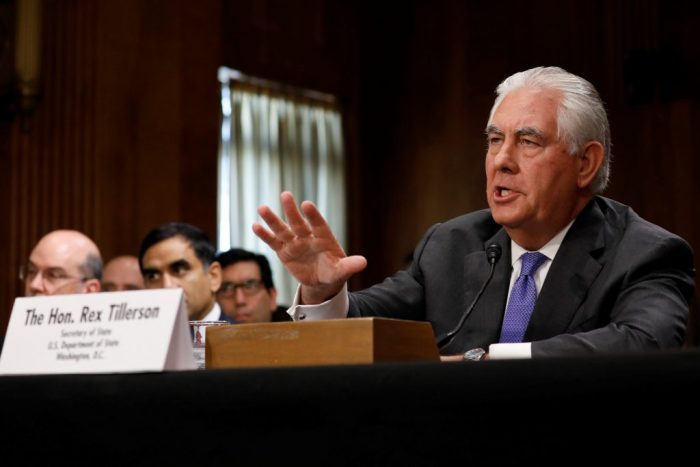
Secretary of State Rex Tillerson appeared to endorse subverting the Iranian regime during recent testimony about the State Department’s budget when Rep. Ted Poe (R-Texas) asked the diplomat whether the Trump administration supports “a philosophy of regime change” in Iran.

Noting that Trump’s Iran policy is still under review, Tillerson said the U.S. would work with Iranian opposition groups toward the “peaceful transition of that government.”

The case for political subversion in Iran has also been pressed to the White House by the Foundation for the Defense of Democracies, a Washington think tank strenuously opposed to Obama’s 2015 nuclear deal with Tehran.

Soon after Trump’s inauguration, FDD’s CEO, Mark Dubowitz, submitted a seven-page Iran policy memo to Trump’s National Security Council. The memo — which was circulated inside the Trump White House and recently obtained by POLITICO — included a discussion of ways to foment popular unrest with the goal of establishing a “free and democratic” Iran.

“Iran is susceptible to a strategy of coerced democratization because it lacks popular support and relies on fear to sustain its power,” the memo argued. “The very structure of the regime invites instability, crisis and possibly collapse.”

Another administration voice forcefully speaking out against Iran is CIA Director Mike Pompeo who said on Saturday that Iran is not only the world’s top terrorism sponsor, but it’s support has also grown over the last several years, according to the Daily Caller.

The Islamic state’s influence across the Middle East “has expanded considerably ” in the last six or seven years, said Pompeo during an interview with MSNBC. This influence and support of terrorism makes Iran a threat to national security, he added.

“Whether it’s the influence they have over the government in Baghdad, whether it’s the increasing strength of Hezbollah and Lebanon, their work alongside the Houthis in Iran, the Iraqi Shias that are fighting along now the border in Syria — certainly the Shia forces that are engaged in Syria. Iran is everywhere throughout the Middle East,” said Pompeo.

Because of this malign influence, Iran is playing an increasingly “destructive role” in the region, according to the director.

Also, recent revelations by leading Iranian dissident group, the National Council of Resistance of Iran, revealed 12 previously undisclosed missile production sites across Iran.

The NCRI identified 42 independent missile centers involved in the production, testing and launching of missiles, in a report published on June 20. Some of these bear the hallmarks of Iran’s nuclear comrade, North Korea.

The report identifies 15 sites related to missile manufacturing. Many of these sites have several factories churning out weapons components.

Combined, the other 27 sites house 25 storage facilities, 13 launch pads, and eight sites for training and deployment brigades.

The effort to expand its missile capabilities are just part and parcel of the Iranian regime’s efforts to push its influence across the region in an effort to stave off growing discontent at home.

Laura Carnahan

Filed Under: Blog, News Tagged With: Featured, hassan rouhani, Iran, Iran Mullahs, Iran Terrorism

Iranian Ballistic Missiles Take Center Stage in Global Debate

June 21, 2017 by admin

Iranian Ballistic Missiles Take Center Stage in Global Debate

Iranian Ballistic Missiles Take Center Stage in Global Debate

Iranian regime ballistic missiles have moved to the forefront of discussions and military action around the world as events shifted rapidly putting a spotlight on the mullahs’ use of the weapons for the first time on the battlefield.

All of the debate and editorials produced by the Iran lobby has always consistently tried defusing Iran’s escalating supply of longer range ballistic missiles as nothing more than a defensive armament, but the recent launching of these missiles at targets in Syria moved them from the theoretical to the practical.

There can be no argument now that Iran possesses and has shown the willingness to use weapons that can prove just as destabilizing to the region as nuclear weapons. In fact, the mullahs’ willingness to continue investing heavily in the development of longer-range missiles with heavier lift capabilities and more sophisticated targeting systems makes Iran the pre-eminent threat in the Middle East.

The fact that the Iranian regime fought hard to exclude ballistic missile development from the nuclear talks two years ago demonstrates the value the mullahs and the Revolutionary Guard Corps places on these weapon systems.

In a practical sense, ballistic missiles provide a longer reach for the IRGC to attack targets far from Iran’s borders and gives the mullahs the political leverage to blackmail neighboring Gulf states for example into compliant behavior.

Previous sanctions on Iran’s ballistic missile program from the United Nations Security Council have been largely ignored by the mullahs and the sheer size and scope of its program has been largely unknown to the rest of the world.

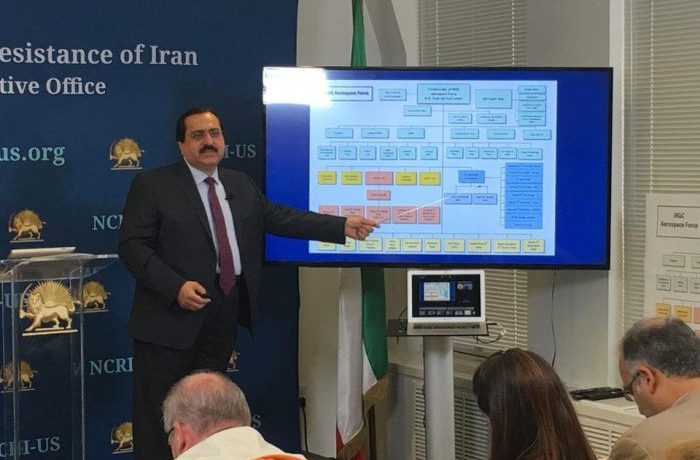
But Iranian opposition groups did hold a press conference the other day in Washington, DC to disclose additional missile sites previously unknown to the rest of the world.

The National Council of Resistance of Iran (NCRI), an umbrella group for Iranian opposition groups, citing sources of coalition member the People’s Mojahedin Organization of Iran (PMOI/MEK) network inside Iran, in this case in Iran’s Defense Ministry & the Islamic Revolutionary Guards Corps (IRGC), has a history of blowing the whistle on Tehran’s ballistic missile program, nuclear weapons drive, terrorism and meddling across the Middle East and beyond, and human rights violations, according to Heshmat Alavi in Forbes.

Various aspects of the dozen hitherto-unknown sites involved in ballistic missile production, testing and launches, all controlled by the IRGC, were also unveiled.

NCRI U.S. Office Deputy Director Alireza Jafarzadeh presented satellite imagery on the sites and details of North Korean experts who took part in the construction of such highly essential centers.

The scope of Iran’s IRGC-pursued missile program is far more extensive than previously perceived. In this press conference the NCRI identified the locations of 42 IRGC sites, of which 15 are involved in missile manufacturing and containing several factories linked to a missile industry group.

Four of Iran’s most important missile sites are located in the cities of Semnan (east of Tehran), Lar (southcentral Iran), Khorramabad (western Iran) and near Karaj (west of Tehran), according to the PMOI/MEK sources. Iran has only acknowledged the existence of two of these sites to this day, Alavi said.

The Semnan site has been actively associated to SPND, Iran’s organization in charge of building a nuclear weapon, PMOI/MEK sources revealed. SPND has carried out many of its tests at this site.

SPND is the Persian acronym for the Organization of Defensive Innovation and Research, including Iran’s nuclear weapons program engineering unit. The NCRI first unveiled the existence of SPND in July 2011, leading to its sanctioning three years later.

IRGC missile sites have all been constructed based on North Korean blueprints, according to PMOI/MEK sources, adding Pyongyang’s experts have also been present at sites assisting their Iranian counterparts.

The existence of the Iranian missile program and North Korean cooperation is not news, but the ramp up in size of the missile fleet and Iran’s willingness to use it now are deeply disturbing to policymakers from Washington to Riyadh.

U.S. senators who passed tough new legislation imposing sanctions for Iran’s missile program stated flatly that the Iranian regime now poses the greatest security threat to the U.S. as U.S. warplanes shot down yet another Iranian drone over Syria.

“The Iranians never like sanctions, but if they don’t like them, then they should stop testing ballistic missiles in violation of U.N. resolutions,” said Connecticut senator Chris Murphy.

Texas senator Ted Cruz warned Tuesday that Iran and the potential for a nuclear Iran are “the single greatest national security threat facing America.”

The discussion over Iranian missiles didn’t stop the regime’s ardent supporters from weighing in and coming to the mullahs’ defense, as well as opponents in verbal fireworks rivaling what is happening on the battlefield.

Dennis Ross, a former U.S. Mideast negotiator and author, laid out the unpleasant choices left on the table as Iran steps up its military involvement in Syria, Iraq and now the Gulf region.

“Amid this confusion, Iran is pressing ahead to strengthen its grip on Syria, even as Trump goes after ISIS. Iran’s intervention to save President Bashar al-Assad’s regime has involved sending not just elite Iranian military advisers but also bringing in Lebanese Hezbollah and other Shia militias from as far away as Afghanistan. While estimates vary on the size of these forces, the numbers are in the tens of thousands. Iran’s sectarian shock troops are being used to extend the regime’s writ, especially as the Syrian regime’s deployable military manpower has shrunk to about 20,000 forces,” he writes in Politico.

“Iran is actively trying to create a land corridor through Iraq and Syria to Lebanon. To that end, Iran is pushing from within Iraq and Syria, using its Shia militia proxies on both sides of the border. On the Iraqi side, the Shia militias have now largely cleared ISIS from border crossings. Within Syria, Iran has sent significant Hezbollah forces eastward to Deir ez-Zour, a major Syrian city along the Euphrates River. With the U.S.-supported effort to liberate Raqqa under way, Iran wants to prevent any U.S.-backed groups from establishing themselves in eastern Syria—something that could preclude the Iranian aim of controlling Syria’s borders with Iraq and Jordan. (With Hezbollah also now active in the area of Deraa, a southern Syrian city close to the Golan Heights, the Iranians have their eye on the Syrian-Israeli border as well,)” Ross adds.

The implications are clear. The price of not confronting Iranian aggression will soon become very expensive, which is what the mullahs are hoping for; a victory without cost is their mantra.

The world should make the mullahs have to pay a very heavy price.

Laura Carnahan


Filed Under: Blog, News Tagged With: Featured, Iran, Iran Missile program, Iran Mullahs, Iran sanctions, Iran Terrorism, IRGC, Khamenei

Confrontations with Iran Escalate Throughout Middle East

June 21, 2017 by admin

Confrontations with Iran Escalate Throughout Middle East

Confrontations with Iran Escalate Throughout Middle East

Incidents involving confrontations with the Iranian regime and its proxies are beginning to sharply escalate around the Middle East as tensions are ratcheted up by the mullahs in Tehran. It is almost like a high stakes poker game with Iran upping its bets because it’s too far in with a weak hand to fold.

Most worrisome has been the rise in direct incidents with Iran and its chief rival, Saudi Arabia, as illustrated in the latest incident.

Saudi Arabia says that it captured three members of Iran’s Revolutionary Guards Corps aboard a boat approaching the kingdom’s offshore Marjan oil field.

The three “are now being questioned by Saudi authorities,” the Information and Culture Ministry said in a statement.

The vessel, seized by the Saudi Navy on June 16, was carrying explosives and intended to conduct a “terrorist act” in Saudi territorial waters, the statement said.

Saudi media earlier said that the navy had fired warning shots when three small boats entered Saudi territorial waters and headed at high speed toward the platforms.

Relations between the two countries are at their worst in years, as they support opposite sides in conflicts in Syria, Yemen and Iraq, and each accuses the other of destabilizing regional security.

The incident comes on the heels of the Iranian regime launching missiles purportedly at ISIS positions in Syria in retaliation for terror attacks in Tehran. Iran blamed Saudi Arabia for those attacks which makes this incident in Saudi waters suspicious as to whether or not Iran’s Quds Forces might have been mounting an attack against Saudi installations in response to the ISIS attack.

Meanwhile in Syria itself, open warfare seems to be breaking out as a U.S. fighter jet shot down a Syrian air force jet after it had bombed positions occupied by U.S.-backed rebel groups. This was followed by a declaration from Russian forces that U.S. warplanes would be potential targets if they attacked Russian elements.

It’s worth noting that Iran brought Russia into the Syrian conflict on behalf of the Assad regime when it was facing imminent defeat on the battlefield. That escalation has now proven to be potentially disastrous as Russian and U.S. units increasingly come close to shooting at each other.

All of this was preceded when U.S. forces opened fire on Syrian militias backed by Tehran three times in the past month. All of the incidents took place at al-Tanf, a remote desert outpost near the border with Iraq and Jordan, where U.S. and British special operations forces have been training Syrian rebel fighters.

Earlier in May, U.S. warplanes attacked a Syrian Army motorcade moving to al-Tanf. As a result of the strike, two servicemen were killed and 15 were injured. A similar incident also took place on May 18, killing six.

The series of clashes has demonstrated how the eastern Syrian desert is becoming an arena for confrontation between the U.S. and Iran, a potential flashpoint alongside Yemen. Following the attacks on Damascus positions, an operational headquarters of the allied forces of the Syrian government army threatened the U.S.-led coalition with a retaliatory strike.

The fight in Syria is becoming even more high stakes as it becomes clear that the Iranian regime has shown no intention of giving up any territory it wins from ISIS; intending to become a permanent presence there in a similar manner to how it exercises control in Iraq through Shiite militias it backs.

Fox analyst and author Charles Krauthammer called the Iranian land grab a mirror image of the fight for territory following the collapse of Nazi Germany at the end of World War II.

“This is like the last year of World War II. We’re all fighting the Nazis but we know they’re finished,” he said.

Krauthammer said that like the 1940s, the Americans and the Soviets know the Germans will soon be defeated, but are battling for who takes what when the war ends.

While Iran maneuvers to preserve its gains, the Iran lobby has also stepped up its rhetoric in shifting from defending the Iran nuclear deal to now defending Iran’s ballistic missile program as outlined in an editorial by Reza Marashi of the National Iranian American Council in HuffingtonPost.

“Much to the chagrin of leaders in Washington, Tel Aviv and Riyadh, Iran launched ballistic missiles into Syria on Sunday, targeting ISIS in retaliation for its terror attacks in Tehran two weeks ago. These strikes are the first time that Iran has launched missiles since its 1980-1988 war with Iraq, which begs the question: Why has Tehran shifted its three decades-long policy of testing, but not using missiles? The answer should now be clear: It’s a reaction to Trump’s escalation in the Middle East,” Marashi said.

Marashi claims that Trump’s stepped-up military activity in Syria while simultaneously criticizing Iran has only created a “recipe for war.” A silly assertion since it was Iran’s intervention in Syria in the first place that started the entire Syrian conflagration.

Marashi is correct in his assertion that Iran’s missile strike was intended to communication a wider message that the mullahs are willing to fight to preserve their gains in Syria and not allow it to slip away from them. They understand that a defeat in Syria will likely lead to regime change at home.

Understandably Marashi tries to also tie Saudi Arabia to the ISIS attacks in Tehran and by extension tries to lay blame on regional instability on U.S. allies and deflect any responsibility away from Tehran.

Shockingly Marashi even mentions the direct possibility of Iran attacking “exposed American troops operating in Syria, Iraq, Afghanistan, and Yemen” directly in response to American attacks on Iranian interests.

Marashi delivers the final justification for Iranian bloodletting when he says the U.S. support for regime change in Iran eliminates the possibility of any further U.S.-Iran cooperation in the future.

Only the Iran lobby would make the argument that seeking democratic change in Iran is a pathway that inevitably leads to war.

This certainly demonstrates how much the NIAC values freedom for the Iranian people.

Michael Tomlinson

Filed Under: Blog, News Tagged With: Featured, Iran, Iran Human rights, Iran Lobby, Iran Mullahs, Iran Terrorism, IRGC, Khamenei, NIAC, Reza Marashi

Iran Lobby Attacks Trump Administration for Favoring Regime Change

June 16, 2017 by admin

Iran Lobby Attacks Trump Administration for Favoring Regime Change

Iran Lobby Attacks Trump Administration for Favoring Regime Change

U.S. Secretary of State Rex Tillerson gave testimony to the House and Senate Foreign Affairs Committees this week in detailing the State Department budget priorities for the upcoming year. While the bulk of his testimony concerned the issues such as North Korea and Russian relations, Tillerson made a few comments on Iran that engendered a full-fledged response from the Iran lobby.

While the majority of news media gave ample coverage to Tillerson’s testimony concerning Russia, he was asked a question regarding Iran by Rep. Ted Poe (R-TX), a noted critic of the Iranian regime and the mullahs who control it, that drew scant attention, but clearly worried the Iran lobby.

Tillerson was asked about future plans to enter into negotiations with the Iranian regime and he replied the administration had no immediate plans to do so and expressed support for elements within Iran working towards regime change and a transition to democracy in Iran.

Predictably, the National Iranian American Council, staunch supporters of the Iranian regime, led the charge against Tillerson’s comments; literally breathing fire.

It appears that the concept of promoting democracy in Iran strikes mortal terror in the hearts of Trita Parsi and his fellow travelers at the NIAC.

Darius Namazi at NIAC whipped out a statement condemning Tillerson’s remarks and taking a swipe at Iranian dissident movements, namely the Mujahedin-e-Khalq (MEK), which had supporters in attendance at the hearings to express support for democratic change in Iran.

Poe asked Tillerson whether the U.S. supports “a peaceful regime change” and whether it is U.S. policy “to lead things as they are or set up a peaceful long-term regime change.”

Namazi claimed that Tillerson implied that it was U.S. policy to move toward supporting regime change, stating the U.S. would “work toward support of those elements inside of Iran that would lead to a peaceful transition of those governments.”

Only the NIAC would have a problem with the concept of a “peaceful regime change,” but that is par for the course for the Iran lobby.

The NIAC contends that any effort to force regime change would naturally be tantamount to an open declaration of war on the mullahs in Tehran, which is understandable considering the last time there was a mass effort for regime change following the disputed 2009 presidential elections, protests were brutally put down and innocent Iranians killed in the streets.

Of course, Namazi accuses the MEK of seeking to “violently overthrow the Iranian government,” as part of the Iran lobby’s continuing efforts to denigrate any organized opposition movement to the mullahs’ rule.

Namazi goes on to criticize Tillerson’s statements that the administration had no plans to negotiate with Iran on a range of issues such as the situations in Syria and Yemen, but Tillerson only correctly pointed out that granting Iran a seat at the bargaining table when it is the key agent causing the chaos in the first place was a pointless exercise.

According to Tillerson, “The Iranians are part of the problem…They are not directly at the table because we do not believe they have earned a seat at that table. We would like for the Iranians to end their flow of weapons to the Houthis, in particular their flow of sophisticated missiles to the Houthis. We need for them to stop supplying that, and we are working with others as to how to get their agreement to do that.”

These are not unreasonable sentiments, but apparently for the NIAC they are totally unreasonable.

Not that their efforts mattered since the Senate passed new sanctions on the Iranian regime by near unanimous margins in a further sign that the U.S. is moving past the failed policies of appeasing the Iranian regime under the Obama administration.

The Senate passed the sanctions bill by a 98-2 margin. The bill places new sanctions on Iran over its ballistic missile program and other activities not related to the international nuclear agreement reached with the United States and other world powers.

To become law, the legislation must pass the House of Representatives and be signed by Trump. House aides said they expected the chamber would begin to debate the measure in coming weeks, according to Reuters.

The Iranian regime itself didn’t waste time in attacking Tillerson’s assertions that Iran has “aspirations of hegemony in the region.”

The top U.S. diplomat’s remarks are “interventionist, in gross violation of the compelling rules of international law, unacceptable and strongly condemned,” Foreign Ministry spokesman Bahram Qassemi said in Tehran Thursday.

Qassemi went on to blame a history of U.S. “meddling in Iran in different forms” since the 1950s, saying the policy has only brought about “defeat and global shame” for Washington.

For all the bombastic the Iranian regime and its allies are hurling, the plain truth is that the U.S. is moving quickly and broadly on a number of fronts to rein in Iranian expansionism and militancy.

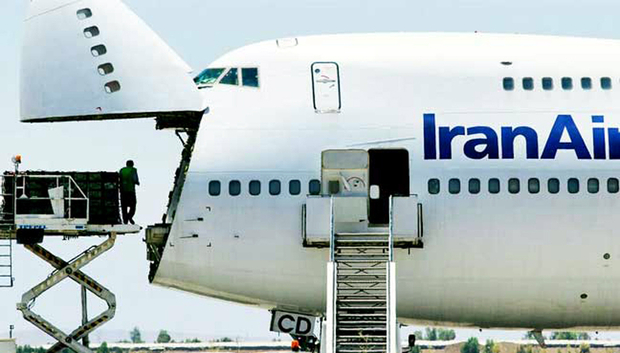
Congress is seeking new authorities that would enable it to expose and crack down on an Iranian state-controlled commercial airline known for transporting weapons and terrorist fighters to hotspots such as Syria, where Iranian-backed forces have begun launching direct attacks on U.S. forces in the country, according to new legislation obtained by the Washington Free Beacon.

Congressional efforts to expose Iran’s illicit terror networks more forcefully come as U.S. and European air carriers such as Boeing and Airbus move forward with multi-billion dollar deals to provide the Islamic Republic with a fleet of new airplanes, which lawmakers suspect Iran will use to amplify its terror operations.

The new sanction legislation targets Iran’s Mahan Airlines, which operates commercial flights across the globe while transporting militants and weapons to fighters in Syria, Yemen, and other regional hotspots.

A crackdown on Mahan could indicate that Congress is more seriously eyeing ways to thwart Iran’s mainly unchecked terror pipeline in the region.

We breathlessly await the NIAC’s next bout of hyperbole.


Filed Under: Blog, Latest from Lobbies & Appeasers, National Iranian-American Council, News Tagged With: Darius Namazi, Featured, Iran, Iran Human rights, Iran Lobby, Iran Mullahs, Iran sanctions, Iran Terrorism, IRGC, National Iranian American Council, NIAC, NIAC Action, ُTillerson. Ted Poe, Trita Parsi

Iran Regime Desperation Shows as It Blames US for ISIS

June 13, 2017 by admin

Iran Regime Desperation Shows as It Blames US for ISIS

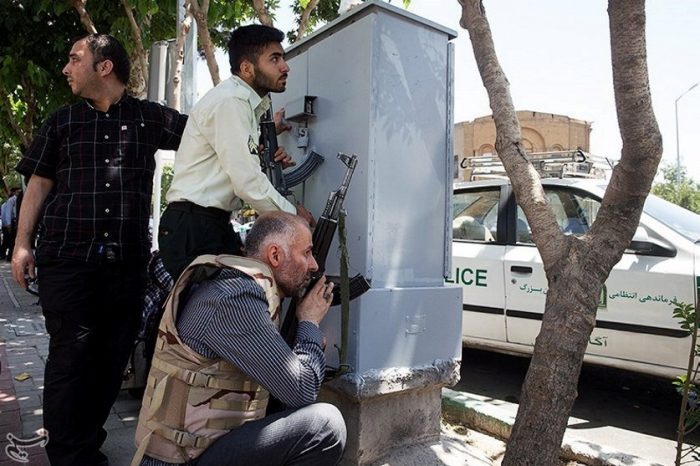
Members of Iranian forces take cover during an attack on the Iranian parliament in central Tehran, Iran, June 7, 2017. Tasnim News Agency/Handout via REUTERS

The Iranian regime pushed out an absurd theory over the weekend blaming the U.S. for the birth and growth of ISIS and continues to push the inane message even though virtually every intelligence and news report refutes the notion.

Of course, the reason the mullahs are pursuing this silly argument is simple: They must blame the recent ISIS attacks in Tehran on someone else otherwise they will face the uncomfortable truth that the terror they have wrought on the rest of the world is finally coming home.

Armstrong Williams, an advisor and spokesman for the presidential campaign of Dr. Ben Carson and a radio host, took that notion to task in a piece in the Hill.

While he correctly sympathizes with the victims killed and wounded in the ISIS attacks, Williams points out that the attacks were less about raining death and destruction on the Iranian regime, as much as making a propaganda point against the mullahs.

“It is also important to recognize the significant role that symbolism plays in both Iranian and Middle Eastern cultures. Which is why the second terrorist attack targeting Ayatollah Ruhollah Khomeini’s tomb complex, the leader of Iran’s Islamic revolution, was a veritable attack at Iran’s core,” he writes.

“These twin terror attacks, striking the mullahs’ parliament and shrine to the Khomeini, represent a very painful bitter pill for the Iranian regime to swallow.”

It’s a harsh wake-up call to the mullahs who have consistently used terror and proxies such as Hezbollah and Shiite militias to wage war on their enemies to see the same thing happen right in their backyard.

“ISIS, the Taliban and al Qaeda have also received support from the extremist Iranian mullahs, which is ironic since each of these terrorist groups’ ideologies are determined to eradicate Shi’ism, which just happens to be the religious backbone of the Iranian regime,” Williams said.

“And the reason for this twisted terrorist support is sickening: Tehran sees benefit in forming tactical alliances with these terrorist entities because they too loath America, and are motivated by a virulent anti-West agenda.”

Many news media and even the Iran lobby often try to portray the combatants in Syria as split on sectarian lines; Sunni vs. Shia with Iran firmly and bravely fighting ISIS, but in truth, Iran sees and has used ISIS as an effective foil for the West, diverting attention from its own actions in Yemen, Iraq and the Persian Gulf.

In fact, the Iranian regime could not have it both ways anymore. It could not—on the one hand—sponsor and export terror and not expect to that to rebound on them down the road. It’s the ultimate act of hubris on the scale of a Greek tragedy.

Amir Basiri, a contributor to the Washington Examiner’s Beltway column, explained how the Iranian regime and ISIS both benefitted from each other.

“The Islamic State clearly owes its rise to Tehran. The violence caused by Iran’s Revolutionary Guards and its affiliates in Iraq and Syria created the perfect breeding ground for the emergence of the Islamic State and allowed it to occupy large swathes of land in both countries,” he writes.

“Reciprocally, the Islamic State returned the favor, causing rampage that provided Iran with the perfect excuse to increase its meddling in neighboring countries. Under the pretext of fighting the Islamic State, Tehran founded and legalized the Popular Mobilization Forces, an umbrella for extremist Shiite groups backed by Iran. The Islamic State also became Iran’s excuse to openly intervene in the Syrian conflict and shore up the Assad regime against opposition forces,” he added.

That recognition by both sides is what has allowed both to flourish as Iran expanded its control over Syria, Iraq and Yemen, while ISIS grew from a small collection of jihadi fighters to a vast terror-nation state with access to cash reserves, oil exports and a tax system.

Only when ISIS began to suffer losses on the battlefield and engaged in inspiring terror attacks worldwide over the past two years have nations finally coalesced in trying to exterminate the group.

The problem for the mullahs in Tehran is what happens if ISIS is eventually eradicated? The excuse they have used for so long in justifying their presence in Syria and Iraq will evaporate, which is why they are now trying to tie ISIS to the U.S. and long-time foe Saudi Arabia.

Only by framing the two as ISIS god parents can Iran hope to legitimize its continued occupation of its holdings.

“This is a reminder that Iran is not part of the solution in fighting the Islamic State or other extremist groups. Islamic fundamentalism can only be eradicated if it is fought in its entirety. This will require the eviction of the Iranian regime and the Revolutionary Guards from the region and the total dismantling of its terrorist proxies,” Basiri adds.

The Iranian regime is already working hard to beat the clock and solidify its foothold with the announcement of the appointment of a new Iranian ambassador to Iraq, not from the diplomatic corps, but from its Quds Forces.

Iran’s most prominent economic daily describes the arrival of Iraj Masjedi in Baghdad to take over Iran’s embassy there. Masjedi is a brigadier-general in the Quds Force who served in several leadership roles in forward operating bases during the Iran-Iraq War.

In recent years, the Iranian press has described him as a senior advisor to Quds Force leader Qassem Soleimani. His promotion to be Iranian ambassador to Iraq suggests that Tehran’s focus in Iraq in the coming years will be military.

That suspicion was amplified with news reports that a blast that killed three people and injured 15 others on Friday in the Iraqi city of Karbala had an Iranian link.

“After the explosion and during the investigation and inspection on Friday night, the Iraqi intelligence forces arrested five Iranians who had explosives and remote control devices at the area near the blast site, in the eastern Abbasid,” an official said on condition of anonymity.

“The security forces transferred the Iranian detainees to the Karbala intelligence headquarters for interrogation,” the source said. “But minutes later dozens of Brigade Ali Akbar and Badr Organization militias supported by Iran surrounded the headquarters of the intelligence of Karbala.”

The source said the militias demanded the release of the five Iranian detainees but their request was rejected by the head of intelligence, who emphasized that he will hand them back only to authorities in Baghdad.

The refusal led the armed militias to break into the intelligence headquarters, where they took the five detainees and the head of the intelligence department.

The strong-arm tactics are nothing new to Iranian-backed militias and heralds a disturbing new chapter in Iran’s involvement in Iraq.

We can only hope that the Quds Forces do not turn Iraq into another Syria in order to find a new distraction for the world.

Michael Tomlinson

Filed Under: Blog, News Tagged With: Featured, hassan rouhani, Iran, IRGC, Khamenei, Syria

Iran Regime Moving Quickly to Exploit Multiple Crises

June 12, 2017 by admin

Iran Regime Moving Quickly to Exploit Multiple Crises

Iran Regime Moving Quickly to Exploit Multiple Crises

The ancient Chinese saying that there is “opportunity in crisis” seems to be have no bigger believer than the mullahs in Tehran lately as the Middle East continues to sink deeper into turmoil and the Iranian regime seeks to exploit the chaos and suffering for its own benefit.

In Syria, there is no argument that Iranian intervention in support of the Assad regime has turned that country into a slaughterhouse and now the mullahs are pushing their advantage through their Shiite militia proxies who now appear to have secured a road link from the Iranian border all the way to Syria’s Mediterranean coastline according to the New Yorker.

The new land route will allow the Iranian regime to resupply its allies in Syria by land instead of air, which is both easier and cheaper.

“The road network, which starts on Iran’s border with Iraq and runs across that country and Syria, was secured last week, when pro-Iranian Shiite militias captured a final string of Iraqi villages near the border with Syria. The road link zigs and zags across the two countries, but it appears to give Iran direct, uninhibited access to Damascus and the government of Bashar al-Assad, which the Iranians have been supporting since the uprising there began, in 2011. Since then, the Iranians have been Assad’s primary backer, sending men, guns, and other material by air and sea,” the New Yorker reported.

The development is potentially momentous, because, for the first time, it would bind together, by a single land route, a string of Iranian allies, including Hezbollah, in Lebanon; the Assad regime, in Syria; and the Iranian-dominated government in Iraq. Those allies form what is often referred to as the Shiite Crescent, an Iranian sphere of influence in an area otherwise dominated by Sunni Muslims.

The Iranian regime has sought to create such a sphere since the end of the Iran-Iraq War, in 1988, which it saw as a Western-backed effort to destroy the regime. That’s why Iran helped create Hezbollah, the Shiite militia that dominates Lebanon, and trained and directed Shiite militias that attacked American soldiers during their occupation of Iraq.

The one significant obstacle standing in the way of this Iranian arms superhighway are the Kurds in the semiautonomous area of Iraq which has plainly stated they don’t want Shiite militias or Iranians transiting their territory.

This may explain why the Iranian regime’s foreign ministry has vehemently opposed a plan by the Kurds to hold an independence referendum.

“The principal and clear position of the Islamic Republic of Iran is to support Iraq’s territorial integrity and solidarity,” Foreign Ministry spokesman Bahram Qassemi said on Saturday in state media.

The Kurdish move was spurred in part by growing Iranian influence within the Iraqi government, culminating the split with Sunni partners by the government of Nouri al-Maliki at the reported behest of Tehran. That split drive Iraqi Sunnis into the arms of a fledging ISIS that secured its first major victory with the fall of Mosul.

Meanwhile the growing standoff between Qatar and fellow Gulf states and Saudi Arabia escalated as the Iranian regime made a show of flying several planeloads of food into the embattled Gulf nation.

Iran sent four cargo planes of food to Qatar and plans to provide 100 tons of fruits and vegetables every day, according to Iranian officials, amid concerns of shortages after Qatar’s biggest suppliers severed ties with the import-dependent country. This is in addition to reports Iran was shipping meat and other less perishable items by small boats.

Qatar has been in talks with Iran and Turkey to secure food and water supplies after Saudi Arabia, the United Arab Emirates, Egypt and Bahrain cut links, accusing Doha of supporting terrorism.

The split could present a rare opportunity for Iran to drive a wedge between its usually tightly allied Sunni adversaries on the other side of the Persian Gulf, analysts said. Iran and the Gulf states are on opposing sides in a number of regional battlefields, including in Yemen and Syria.

Qatar is a member of the Gulf Cooperation Council, along with Saudi Arabia, the U.A.E., Bahrain, Kuwait and Oman. Most of the GCC countries oppose Iran’s regional aims, including its support for Shiite militia Hezbollah in Lebanon and its backing of the Assad regime against a long-running challenge by Sunni rebels.

The Associated Press examined Qatar’s alleged ties to extremist groups including Al-Qaeda and ISIS finding that Qatari finances have indirectly propped up both terrorist groups. Qatar’s support for the Muslim Brotherhood and Hamas have also been problematic as both groups have been destabilizing forces in many Arab countries.

Most worrisome for Arab nations was Qatar’s payment of hundreds of millions of dollars in ransom to Iranian-backed Shiite militias that kidnapped 26 hostages, including members of the Qatar ruling family.

Egypt has asked the U.N. Security Council to investigate reports that Qatar “paid up to $1 billion to a terrorist group active in Iraq” to free the hostages, which would violate U.N. sanctions.

The ransom payments continue a trend that began with President Barack Obama’s payments to Iran for the release of several American hostages as part of the nuclear deal in 2015.

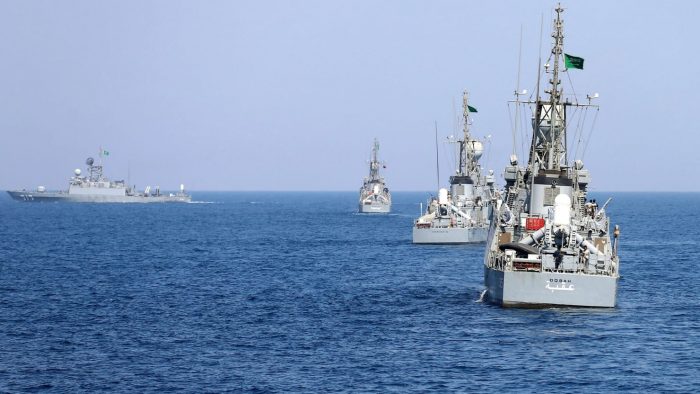
To top things off, Iran sent two warships to Oman before heading to the coast of Yemen in a not-too subtle warning to the Gulf states boycotting Qatar.

The Tasnim news agency reported that the two ships, an Alborz destroyer and a Bushehr logistics warship, will depart from the port city of Bandar Abbas on Sunday for an overseas mission to Oman and then on to international waters.

“An Iranian naval flotilla will depart to Oman on Sunday and then will go to the north of the Indian Ocean and Gulf of Aden,” the agency quoted the navy as saying.


The Gulf of Aden, which lies between the Horn of Africa and the southern tip of the Arabian Peninsula, is a strategic shipping lane which connects the Indian ocean with the Red Sea and Suez Canal.

Meanwhile on the hone front, the Iranian regime took steps to repair the public relations damage caused by the ISIS attacks in Tehran by announcing it has arrested almost 50 people in connection with twin attacks as security forces stepped up efforts to crack down on suspected militants.

Iran’s intelligence minister, Mahmoud Alavi, also declared on state television late Saturday night that Iranian intelligence operatives killed the “commander of the team” that carried out the strikes, the Washington Post reported. Alavi though refused to release the name of the so-called mastermind.

It would not be surprising to find that the Iranian regime used the pretext of the ISIS attacks to arrest and imprison bothersome Iranian dissidents, also the lack of identification of the attack’s planner left many believing there was no successful targeting of those responsible.

But none of this stopped the regime from again trying to point the finger at Saudi Arabia and the U.S. for the ISIS attacks and for the growth of the terrorist group itself.

Iranian armed forces deputy chief of staff Mostafa Izadi claimed that Tehran allegedly has evidence proving that the U.S. provided “direct support to Daesh,” Fars news agency reported.

This followed a similar statement from Russian media that accused the U.S. of aiding ISIS fighters in escaping capture in Syria.

Neither Iran nor Russia offered any proof to back those claims.

Laura Carnahan

Filed Under: Blog, News Tagged With: Featured, Hexbollah, Iran, Iran Terrorism, IRGC, Shiite Militias, Syria

  • « Previous Page
  • 1
  • 2
  • 3
  • 4
  • 5
  • 6
  • …
  • 34
  • Next Page »

National Iranian-American Council (NIAC)

  • Bogus Memberships
  • Survey
  • Lobbying
  • Iranians for International Cooperation
  • Defamation Lawsuit
  • People’s Mojahedin
  • Trita Parsi Biography
  • Parsi/Namazi Lobbying Plan
  • Parsi Links to Namazi & Iranian Regime
  • Namazi, NIAC Ringleader
  • Collaborating with Iran’s Ambassador

Recent Posts

  • NIAC Trying to Gain Influence On U.S. Congress
  • While Iran Lobby Plays Blame Game Iran Goes Nuclear
  • Iran Lobby Jumps on Detention of Iranian Newscaster
  • Bad News for Iran Swamps Iran Lobby
  • Iran Starts Off Year by Banning Instagram

© Copyright 2026 IranLobby.net · All Rights Reserved.