Iran Lobby

Exposing the Activities of the lobbies and appeasers of the Mullah's Dictatorship ruling Iran

  • Home
  • About
  • Current Trend
  • National Iranian-American Council(NIAC)
    • Bogus Memberships
    • Survey
    • Lobbying
    • Iranians for International Cooperation
    • Defamation Lawsuit
    • People’s Mojahedin
    • Trita Parsi Biography
    • Parsi/Namazi Lobbying Plan
    • Parsi Links to Namazi& Iranian Regime
    • Namazi, NIAC Ringleader
    • Collaborating with Iran’s Ambassador
  • The Appeasers
    • Gary Sick
    • Flynt Leverett & Hillary Mann Leverett
    • Baroness Nicholson
  • Blog
  • Links
  • Media Reports

Middle East Headed for More Instability Courtesy of Iran Regime

May 3, 2017 by admin

Middle East Headed for More Instability Courtesy of Iran Regime

Middle East Headed for More Instability Courtesy of Iran Regime

To say that Saudi Arabia and the Iranian regime are at odds is to make one of the bigger understatements of the decade. For the Iranian regime, its adherence to its own particular extremist faith and expansionism, drives it to view any other country in the region with deep suspicion if not outright hostility.

Its relationship with Saudi Arabia has been fraught with peril as the mullahs in Tehran have consistently waged a silent war to destabilize the kingdom in a myriad of ways, including resorting to terror strikes such as the bombing of the Khobar Towers to insurrection in neighboring Yemen through Houthi rebel proxies.

From Saudi Arabia’s perspective, it has been in open—if not yet declared—war with the Iranian regime and for some powerful members of the ruling family, they’ve had enough.

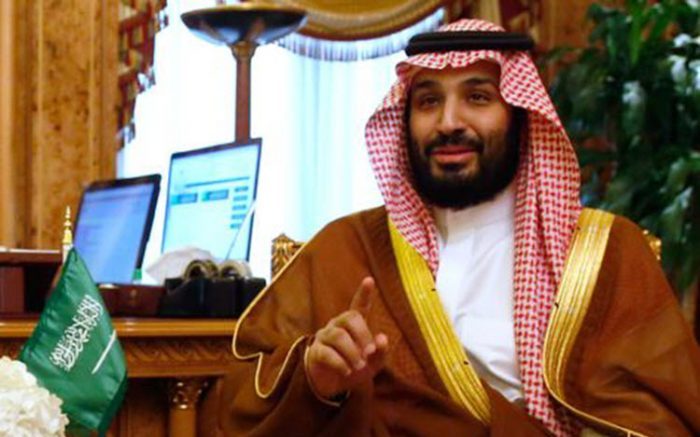
Saudi Arabia’s deputy crown prince closed off the potential for more dialogue with the Iranian regime accusing it of following an “extremist ideology” and seeking to take over the Muslim world, according to the New York Times.

The prince, Mohammed bin Salman, is second in line to the throne and serves as defense minister and said the kingdom would fight Iran’s efforts to extend its influence in the region.

“We are the primary target for the Iranian regime,” Prince Mohammed said in describing efforts by Iran to take control of Islamic holy sites in Saudi Arabia. He vowed Saudi Arabia would not wait for Iran to attack Saudi Arabia, but would instead battle the regime in Iran.

The proxy wars between the two Islamic nations have already been waged on opposite sides in Syria and Yemen with both sides blaming the other for supporting terror and extremist groups.

The war in Syria doesn’t appear to be winding down in any meaningful way as Iran announced it would be providing more troops to fight there on behalf of the Assad regime according to a senior commander in the Revolutionary Guard Corps.

Iran has provided military support to Assad’s forces since at least 2012, but initially did not comment publicly on its role. But as the military support increased and Iranian casualties also rose, officials began to speak more openly.

“The advisory help isn’t only in the field of planning but also on techniques and tactics,” the Fars news agency quoted Mohammad Pakpour, head of the Revolutionary Guard ground forces, as saying. “And because of this the forces have to be present on the battlefield.”

An Iranian official said late last year that more than 1,000 Iranians had been killed in the Syrian civil war. These include a handful of senior commanders of the Revolutionary Guards, according to Iranian media reports.

Iran has helped to train and organize thousands of Shi’ite militia fighters from Iraq, Afghanistan and Pakistan in the Syrian conflict. Fighters from Lebanon’s Hezbollah are also working closely with Iranian military commanders in Syria, according to Reuters.

While the conflict continues to grind on in Syria, the prospect of stopping Iran’s expansion in Yemen might provide the leverage necessary to roll back the regime as outlined in an editorial by Gerald Feierstein, former U.S. ambassador to Yemen, in Defense One.

Feierstein pointed out differences in how to confront Iran between Saudi Arabia and its partner Gulf states may be easing as Yemen has proving to be common ground for agreement.

“Yemen may be the key to solving the GCC’s Iran problem. After last year’s Kuwait round of Yemeni negotiations ended in stalemate, the Saudi-led coalition determined that only a shift in the military balance would bring the Houthis and their allies, loyalists of former President Ali Abdullah Saleh, back to the negotiating table. A strategy was derived to push the Houthis off the Red Sea coast — the Yemeni terminus of the arms-smuggling route that begins in Iran — and seize the vital port of Hodeidah,” he said.

Return of the port to government or even UN control would be a big step towards thwarting Iran in Yemen and eventually turn the tide in its struggle against Saudi Arabia.

The hammer could be a Trump administration review of Iranian policy that could mark a significant shift back towards valuing human rights improvements within Iran as a condition of future economic sanctions relief.

Amir Basiri, a contributor to the Washington Examiner’s Beltway Confidential blog and an Iranian human rights activist, touted the potential of this shift in a column.

While Iran does pose a major military threat, through supporting what has been described by Trump as “radical Islamist terrorism,” Tehran’s ongoing human rights abuses should finally receive the long overdue attention they deserve. In fact, U.S. interests can be advanced through a robust challenging of Iran’s domestic dissent crackdown. U.S. strategy seeking to confront Iran would receive a correct boost through combating Tehran’s authoritarian dogma, Basiri said.

“Parallel to such policy overhauls, the U.S. should stand alongside the Iranian people and their organized resistance, represented for decades by the National Council of Resistance of Iran, the umbrella group of different organizations and individuals led by Maryam Rajavi, advocating regime change and peaceful transition to democracy,” he said.

“Increasing sanctions on Iranian regime elements involved in human rights violations is another aspect that would complete the canvas of Trump’s policy vis a vis Iran. Such measures would also send messages to the international community regarding the dangers in seeking short-term economic interests at the cost of the Iranian people’s long and ongoing misery,” he added.

By realigning U.S. interests to valuing human rights, we could also effectively sideline the Iran lobby which has been loath to discuss Iran’s human rights record knowing it to be dismal.

Michael Tomlinson

Filed Under: Blog, News Tagged With: Featured, Iran, Iran Human rights, Iran Lobby, Iran Mullahs, Iran Terrorism, IRGC, Khamenei

Iran Lobby Attacks Claims of Prisoner Concessions as Regime Talks Hostages

May 3, 2017 by admin

Iran Lobby Attacks Claims of Prisoner Concessions as Regime Talks Hostages

Iran Lobby Attacks Claims of Prisoner Concessions as Regime Talks Hostages

Josh Meyer wrote a story in Politico that exposed a series of concessions granted by the Obama administration to the Iranian regime as part of its ill-fated nuclear talks that have caused an uproar in Congress and in the intelligence and law enforcement communities.

Predictably, the Iran lobby—led by Trita Parsi of the National Iranian American Council—attacked the story and attempted to discredit the idea of concessions being granted to the Iran regime.

Writing in Huffington Post, Parsi makes the argument that not all “concessions” are alike and those tied to the release of Iranian agents were not linked to the nuclear agreement.

“From the outset, Meyer commits a critical error: He insinuates that any concessions in terms of dropping charges against potential Iranian smugglers were made as part of the nuclear deal. In reality, to the extent any concessions were made, they were made to win the release of Americans held in Iranian jails,” Parsi writes.

Parsi attempts to do what the mullahs in Tehran insisted on from the start of negotiations, which is that the issues of its nuclear program and hostages should be separate and apart from the agreement, but in fact the two were intimately related from the regime’s perspective.

The mullahs were especially keen to keep thorny issues apart from the deal because they did not want to grant the U.S. and other nations any leverage to influence issues such as Iran’s support for terrorism, human rights abuses or the lack of any political reforms within Iran.

Allowing Iran to get off the hook for those items relieved the regime of a substantial obstacle to completing the nuclear deal while preserving the mullahs power over the Iranian people.

Parsi even uses the detention of American sailors as an example of quick resolution when in fact Iranian regime squeezed them for all their propaganda value with videotaped interviews and admissions of wrongdoing. Iran mullahs even built a monument to the humiliation of the “Great Satan.”

Parsi characterizes the Iranians who were released as just a “few alleged Iranian smugglers” and ignores the nearly decades-long investigative work done by FBI agents and Justice Department attorneys who meticulously built cases involving large networks of Iranian operatives attempting to smuggle everything from nuclear weapon components to computers and weapons.

He discounts the allegations made by the Politico article as coming from “mid-level operatives in the Justice Department” as if law enforcement agents, investigators and U.S. attorneys were simply mindless drones.

But Parsi’s attempts to deflect and cover up the facts are nothing new to the Iran lobby when the mullahs get into trouble.

For the mullahs in Tehran though, the deal served its purposes in gaining billions in cash and allowing Iranian oil to flow back on the open market. It also gave Iranian regime a free pass to create havoc and shed the blood of tens of thousands in Syria and Yemen.

Now the stage is set for the Iran presidential election which some analysts have speculated could be the end of the road for Hassan Rouhani since he has served his purpose in portraying Iran as a friendly, moderate country during nuclear talks, but now that the façade is off Iran has no reason to be so “moderate” anymore.

This may explain why Ebrahim Raisi, a mullah with a long and sordid history of leading commissions that ordered the execution of over 30,000 Iranian dissidents in the 1980s may be poised to win the election should top mullah Ali Khamenei wish it.

Of course, Parsi authored yet another editorial in Al-Monitor contending that Khamenei has no influence on the election. He even laughably argues that Raisi is not a true contender nor supported by Khamenei.

What Parsi does not mention is the fact that the Iranian regime in addition to manipulating the votes, primarily opts to simply eliminate thousands of candidates from the very beginning to cull down the ballot to a select handful in order to ensure a preferred candidate’s “election”.

It is a formula that worked in 2013 and being used in this year’s election. Nothing unforeseen ever happens under the watchful gaze of the mullahs.

In another development that shows more promise, the Iranian regime admitted for the first time that the topic of dual national hostages was taken up at the first face-to-face meeting between regime representatives and those of the Trump administration in Vienna during meetings of the joint commission monitoring the implementation of the Iran nuclear deal.

The comments by Iranian Foreign Ministry spokesman Bahram Ghasemi mark the first official government confirmation it discussed prisoners with the U.S. at a recent meeting in Vienna over the nuclear deal.

While falling far short of signaling any sort of movement on freeing those with Western ties held in Iran, Ghasemi’s acknowledgement fits the pattern of past prisoner negotiations with the Islamic Republic. It signals more behind-the-scene negotiations could be possible if the Trump administration, already skeptical of Iranian intentions, is willing to deal.

Speaking to journalists, Ghasemi mentioned no specific names of the inmates brought up by the Americans.

“In the past … we had talks for humanitarian reasons with Americans over (swapping) some (American) prisoners with Iranian prisoners jailed in the U.S. and it had positive results too,” he said.

Last week, State Department spokesman Mark Toner had said American officials at the meeting had “called on Iran to immediately release these U.S. citizens so they can be reunited with their families.”

Dual nationals in detention have been used as bargaining chips in negotiations with the West. Under Iranian law, they are not entitled to consular support.

We can only hope the Trump administration can force their release without having to pay Iran billions in cash or release terrorists in exchange, since past concessions have only emboldened the mullahs to do more.

Laura Carnahan

Filed Under: Blog, News Tagged With: Featured, hassan rouhani, Iran, Iran deal, Iran Human rights, Iran Lobby, Iran Mullahs, National Iranian American Council, NIAC, NIAC Action, Trita Parsi

Iran Denies British Aid Worker Appeal and Keeps Her Imprisoned

April 25, 2017 by admin

Iran Denies British Aid Worker Appeal and Keeps Her Imprisoned

Iran Denies British Aid Worker Appeal and Keeps Her Imprisoned

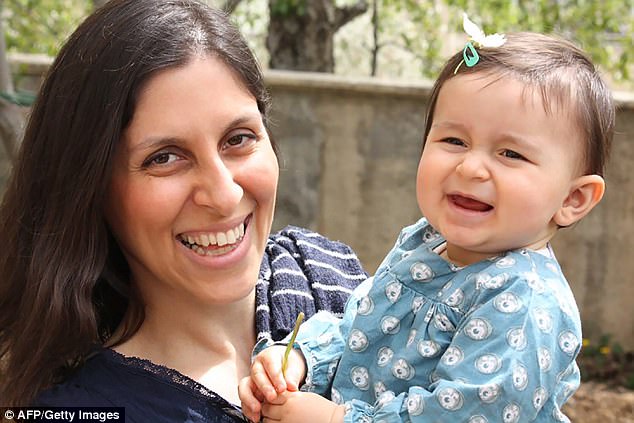
In another display of the cold-blooded nature of the Iranian regime, Iran’s supreme court up held the conviction of a British-Iranian women sentenced to five years in jail on vague charges relating to national security. The decision ends her last legal avenue to ending her harsh imprisonment.

Nazanin Zaghari-Ratcliffe, a project manager with the Thomson Reuters Foundation, the news agency’s charitable arm, had lodged a final appeal in January after the confirmation of her sentence in a lower court. Her husband, Richard Ratcliffe, said on Monday that the supreme court had rejected her appeal.

“I hadn’t had great hopes for the supreme court appeal,” he told the Guardian. “Now, realizing that that’s it, that all options are gone … in the middle of an election cycle, it’s hard to get attention on Nazanin’s case.”

According to the Guardian, Zaghari-Ratcliffe, 38, has spent 387 days behind bars, most of which have been in the notorious Evin prison. The regime’s Revolutionary Guards arrested her in April 2016 while she and her two-year-old daughter, Gabriella, were about to return to the UK after a family visit to Iran. She was tried and found guilty on the unspecified charges relating to national security last September.

Although the exact reasons behind Zaghari-Ratcliffe’s incarceration remain unclear, the Guards have accused her of attempting to orchestrate a “soft overthrow” of the Islamic Republic. An Iranian news agency affiliated to the country’s judiciary also said in April that she was a spy. Richard Ratcliffe has vehemently denied both allegations.

It also reinforces the regime’s dubious practice—articulated by Hassan Rouhani in media interviews—that it does not recognize the dual-national status of any Iranian and as such maintains the rights to arrest anyone.

The use of imprisoned American-Iranians as hostage bargaining chips during nuclear negotiations yielded billions of dollars in cash and sanctions relief and only emboldened the regime to go on another spree of arrests shortly after the deal was reached.

New revelations by Politico also revealed disturbing information about that prisoner swap by the Obama administration with the Iranian regime.

Obama announced the “one-time gesture” of releasing Iranian-born prisoners who “were not charged with terrorism or any violent offenses” last year, his administration presented the move as a modest trade-off for the greater good of the Iran nuclear agreement.

Obama portrayed the seven men he freed as “civilians.” The senior official described them as businessmen convicted of or awaiting trial for mere “sanctions-related offenses, violations of the trade embargo.”

In reality, some were accused by Obama’s own Justice Department of posing threats to national security. Three allegedly were part of an illegal procurement network supplying Iran with U.S.-made microelectronics with applications in surface-to-air and cruise missiles like the kind Tehran test-fired recently. Another was serving an eight-year sentence for conspiring to supply Iran with satellite technology and hardware, according to Politico.

And in a series of unpublicized court filings, the Justice Department dropped charges and international arrest warrants against 14 other men, all of them fugitives. The administration didn’t disclose their names or what they were accused of doing, noting only in an unattributed, 152-word statement about the swap that the U.S. “also removed any Interpol red notices and dismissed any charges against 14 Iranians for whom it was assessed that extradition requests were unlikely to be successful.”

Three of the fugitives allegedly sought to lease Boeing aircraft for an Iranian airline that authorities say had supported Hezbollah, the U.S.-designated terrorist organization. A fourth, Behrouz Dolatzadeh, was charged with conspiring to buy thousands of U.S.-made assault rifles and illegally import them into Iran.

A fifth, Amin Ravan, was charged with smuggling U.S. military antennas to Hong Kong and Singapore for use in Iran. U.S. authorities also believe he was part of a procurement network providing Iran with high-tech components for an especially deadly type of IED used by Shiite militias to kill hundreds of American troops in Iraq.

The most worrisome prisoner was Seyed Abolfazl Shahab Jamili, who had been charged with being part of a conspiracy that from 2005 to 2012 procured thousands of parts with nuclear applications for Iran via China, including hundreds of U.S.-made sensors for the uranium enrichment centrifuges in Iran whose progress had prompted the nuclear deal talks in the first place.

The revelations were devastating to federal prosecutors and cast a dark shadow over the claims constantly made by the Obama administration and the Iran lobby about the nature of concessions granted to the Iranian regime and proved the promises of “moderation” to be illusory.

The damage to long-running investigations into the regime’s illicit efforts to procure technologies to boost its ballistic missile program and military capabilities was severe, but the more important question yet to be answered is how to repair the damage to refocus efforts on pushing democracy forward in Iran.

Dr. Majid Sadeghpour, political director of the Organization of Iranian American Communities (OIACUS), a non-profit organization that works to promote human rights and democratic freedoms in Iran, emphasized that one positive that came from the Obama administration was the saving of Iranian dissidents under constant attack in Iraq by the regime in a piece for The Hill.

“Recently, Senate Armed Service Committee Chairman Sen. John McCain (R-Ariz.) met with Maryam Rajavi, the president-elect of the National Council of Resistance of Iran (NCRI) and addressed members of the People’s Mojahedin Organization of Iran (PMOI/MEK) in a rally in Tirana, Albania,” he said.

“Senator McCain’s visit represents a turning point in the plight of the Iranian dissidents now in Albania, but more importantly, marks a significant milestone in their struggle to bring about democratic change in Iran,” Sadeghpour added.

“Despite years of delays and several deadly attacks by mercenaries loyal to the Iranian regime, the MEK left Camp Liberty in Iraq with help from the previous occupants of the White House — perhaps the only piece of former President Obama’s Iran policy that will prove to have a lasting positive effect. As many as 3,000 lives were saved.”

It’s unfortunate the Obama administration could exercise the same foresight in confronting the Iran regime instead of appeasing it on the nuclear deal.

Michael Tomlinson

Filed Under: Blog, News Tagged With: Featured, Iran, Iran deal, Iran Human rights, Iran Lobby, Iran Mullahs, Iran sanctions, Iran Terrorism, Khamenei, Nazanin Zaghari-Ratcliffe

Iran Election Slate Set and It’s a Disaster

April 25, 2017 by admin

Iran Election Slate Set and It’s a Disaster

Iran Election Slate Set and It’s a Disaster

What do you get when over 1,600 candidates register to run for president in Iran?

You get just six guys on the ballot representing the absolute worst of the Iranian regime.

Democracy at work right? Only in Iran.

What is stunning about the electoral process in Iran is how the world’s news media tend to fall flat on their collective faces in covering it and missing the most important aspects. Namely that it is essentially a fixed race with no real dissenters allowed and only those candidates deemed to be the most loyal to the regime and its ruling mullahs, especially the guy at the top, Ali Khamenei.

News media fell over themselves announcing that 1,626 applicants registered, including 137 women; the highest number ever of female candidates to register since the Islamic revolution back in 1979.

Exactly how many women made the final ballot? Zero. Nada. Zip.

This is not earth-shattering news since the 12-member, all-male Guardian Council—half of whom are handpicked by Khamenei himself—was never going to approve a woman for the ballot, but is certainly happy to milk the publicity of having these many women register.

While the women who registered may have been making a statement and doing their best to protest the electoral process in the only meaningful way that won’t land them in Evin Prison or the gallows, the mullahs only see a PR opportunity in them.

According to The New Arab, Sha’la Tabrizi, who has a PhD in Political Science, was the first woman to register for this year’s presidential race.

“Women constitute 60 percent of Iranian society, so they should strive for one of them to become a powerful president some day,” she told local media, adding that she is aware of how bleak her chances are.

Similarly, A’zam Taleghani, daughter of prominent Islamic Revolution leader Mahmoud Taleghani and Iran’s first-ever female presidential candidate, registered her candidacy for the third time this year. Taleghani is a former regime MP who heads the Regime’s “Society of Islamic Revolution Women of Iran”.

The Guardian Council has disqualified every female presidential candidate since 1979.

You do have to hand it to them for persistence.

It is not without irony that the most prominent female Iranian political leader is Mrs. Maryam Rajavi who leads the largest Iranian opposition group, the National Council of Resistance of Iran. If the regime were ever to allow her on the ballot, it is likely she might end up being the first female president of Iran.

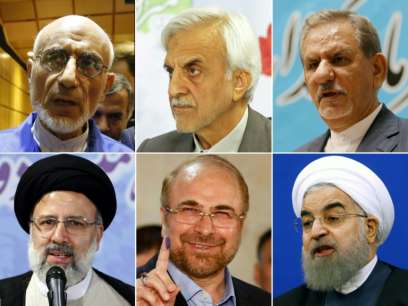
The six candidates who did make it onto the final ballot are a who’s who of regime henchmen and brutal human rights abusers. The more serious choices that will probably make their way out of the election show are:

  • Hassan Rouhani: The incumbent president presided over what has been called by international human rights groups as the largest and fastest rise in public executions in recent Iranian memory. He has also direct the regime’s support for the Assad regime and its military involvement in three wars raging in Syria, Iraq and Yemen;
  • Ebrahim Raisi: arguably one of the regime’s worst human rights abusers who was known to be part of a “Death Commission” that massacred over 30,000 Iranian dissidents in the ‘80s. He now heads Astan Quds Razavi, the wealthiest charity foundation in charge of a holy shrine and provides the financial muscle for Khamenei;
  • Eshaq Jahangiri: the current vice president to Rouhani, he is likely to drop out to back another candidate, but he is especially close to Qassem Soleimani, the head of the Revolutionary Guard’s Quds Force and has played a key role in Iran’s efforts to bolster President Bashar Assad’s forces in Syria as well bring in Russia to fight in Syria;
  • Mohammad Bagher Ghalibaf, a pilot and former commander of Revolutionary Guards air force and Iran’s chief of police. He has been the infamous mayor of Tehran since 2005 and this is his third bid for the presidency. He is blamed for the January’s massive fire at the Plasco building, a historic high-rise in downtown Tehran. The fire caused the building to collapse and killed 26 people, including 16 firefighters.

The inclusion of candidates such as Jahangiri and Hashemitaba are almost assuredly on the ballot to provide a perceived “balance” of “moderates” to “hardliners” even though they have no chance at winning.

The history of Iranian elections proves that with the rigged win for Mahmoud Ahmadinejad in 2009 that led to widespread protests and massive crackdowns.

This election will be no different since the Guardian Council have rendered the ordinary Iranian citizen’s vote moot with a slate designed to ensure only the most devout and devoted will be elected.

For most Iranians, already severely disillusioned by the unfilled promises of Rouhani, the best and most obvious choice on the ballot might be “none of the above.”

Laura Carnahan

Filed Under: Blog, News Tagged With: Featured, hassan rouhani, Iran, Iran deal, Iran Lobby, Iran Mullahs

Iran Lobby Frantically Tries to Counter Trump Administration Warnings

April 21, 2017 by admin

Iran Lobby Frantically Tries to Counter Trump Administration Warnings

Iran Lobby Frantically Tries to Counter Trump Administration Warnings

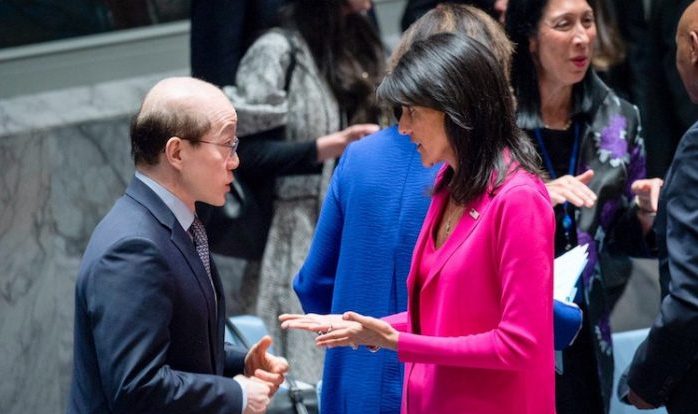
Less than 24 hours the Iran lobby was crowing about the Trump administration’s decision to re-certify the Iranian regime in compliance for another 90 days with the nuclear agreement, it went on the offensive as it faced a barrage of explicit statements from high-ranking officials denouncing the Iranian regime including United Nations ambassador Nikki Haley, Defense Secretary James Mattis and Secretary of State Rex Tillerson.

All three, top foreign policy and defense officials made the same statement that the source of trouble in the Middle East today was based in Tehran and that only a policy comprehensively dealing with all aspects of the Iranian regime was going to work moving forward in returning stability to the region.

For the mullahs in Tehran and their Iran lobby supporters, the objective has always been to divide and conquer the issues the rest of the world finds objectionable towards Iran; such as its support for terrorist groups like Hezbollah and dictators like Bashar al-Assad in Syria, as well as a dismal human rights record that would make Joseph Goebbels proud.

Which is why the Iran lobby’s cheering for the 90-day compliance notice had a lifespan of a gnat since it was merely a formality while the administration conducts a national security review of policy towards Iran.

But that didn’t stop the National Iranian American Council from bloviating like a water buffalo in heat.

“It’s a significant contradiction to first come out and say that the Iranians – contrary to all of their claims that Iran would be cheating – actually is living up to the deal only to come out the day after and saying, well, we hate the deal anyways and signaling that the U.S. might actually be walking away from the deal, unless of course the aim is to get rid of the deal without the U.S. having to pay the cost for it, meaning instead of the U.S. violating the deal directly by not renewing these sanctions waivers, killing the deal by escalating tensions in Yemen and elsewhere in the region and hoping that that will force the Iranians out of the deal,” said Trita Parsi, NIAC president on NPR.

Parsi is trying to have it both ways in separating the nuclear from other issues such as human rights or Iran’s meddling in wars raging in Syria and Yemen, but he deliberately skips over the most glaring consequence of the nuclear deal which is because we separated these issues, the mullahs were free to act without fear of reprisal in their ambitions for Syria or in the crushing of dissent at home.

The cold hard truth is that these are all connected issues like the strings of a spider web; the web would never succeed or exist unless all the strands were connected and working together.

The Iranian regime, for lack of a better comparison, is a legal criminal enterprise on a national scale. It concentrates power ruthlessly at the very top, uses the judicial system and religion to enforce disciple and stifle dissent while its military owns just about every industrial activity and skims off the top to line the pockets of the elites.

It’s like the Sopranos on steroids, except Ali Khamenei isn’t seeing a shrink unfortunately.

Of course other members of the Iran lobby weighed in too as Reza Marashi from the NIAC penned a ludicrous piece on TopTopic in which he claimed the European Union was galvanized and united in supporting the Iranian regime.

Unfortunately, yesterday’s terror attack on the Champs-Elysees in Paris only reinforced a growing uncertainty throughout a Europe that has been rattled by Islamic extremists attacks in Berlin, Brussels, Paris and elsewhere.

“While U.S. policy congeals, most European stakeholders remain in wait-and-see mode before making policy decisions – rather than taking steps to shape American policy,” Marashi writes.

We’re sure Marashi wishes for the good old Obama days when the NIAC could pick up the phone and call the White House and find a receptive audience, but it and Europe and finding that shaping policy in the White House now is not about lobbying, but about answering the central question the Obama administration never bothered to ask: “How do we rein in Iranian excesses across the board?”

Parsi reinforced that complete lack of understanding in an editorial in the New York Times in which he cited “a number of potential land mines on the near horizon. The first is in Congress, where a bipartisan effort is underway to introduce new sanctions on Iran that, despite the protestations of the legislation’s sponsors, would violate the terms of the nuclear agreement by adding new conditions onto the deal.”

Once again Parsi ignores the inconvenient truth for the Iran lobby which is that in their mind anything “new” in terms of sanctions levied against the Iranian regime would be considered a violation of the terms of the agreement, even though the agreement was purposely devoid of any clauses or mention of issues such as human rights.

Their twisted pretzel logic has them boxed in where now they are forced to denounce any and all efforts to sanction Iran as a threat to the regime. If Iranian warplanes dropped sarin gas on Sunni refugees in Iraq, Parsi and his colleagues would undoubtedly argue against any sanctions as a violation of the agreement; a convenient catch-all.

It’s also hilarious Parsi raises the prospect of a “moderate” Hassan Rouhani being defeated at the ballot box in next month’s elections since he ignores Iran’s long history of rigging every election. In fact, the regime’s Guardian Council only yesterday tossed former president Mahmoud Ahmadinejad off the ballot after much fanfare of him registering as a candidate.

In Iran, you don’t get on the ballot unless you are expected to get the blessing of the mullahs.

The most absurd comment Parsi makes is the assertion that if the U.S. reneges on the deal, Iran will undoubtedly move forward with its nuclear ambitions.

We hate to break it to the regime lackey, but the deal—by Parsi’s own admission—was never designed to halt Iranian nuclear work, only slow it down by a decade before the much ballyhooed “breakout period,” but even that has been whittled down by most analysts to just a few years.

All of which makes the statement issued by the NIAC in response to Secretary Tillerson’s remarks the other day even more laughable.

“There is little room to interpret this statement as anything less than a proclamation of the Trump administration’s intent to scrap the nuclear deal and reset the United States on a path to war,” said the NIAC.

Have they not been paying attention to Syria, Iraq, Yemen or Bahrain lately?

Michael Tomlinson

Filed Under: Blog, Current Trend, National Iranian-American Council, News Tagged With: #NuclearDeal, Appeasement policy, Featured, Iran, Iran deal, Iran Human rights, Iran Lobby, Iran Mullahs, Iran sanctions, National Iranian American Council, NIAC, NIAC Action, Reza Marashi, Syria, Trita Parsi, Yemen

There is No Difference Between North Korea and Iran Regime

April 19, 2017 by admin

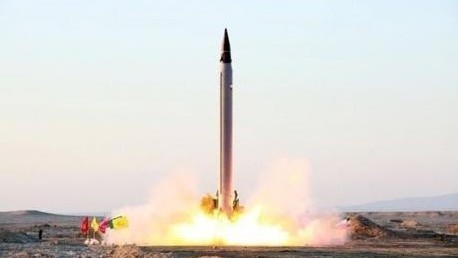
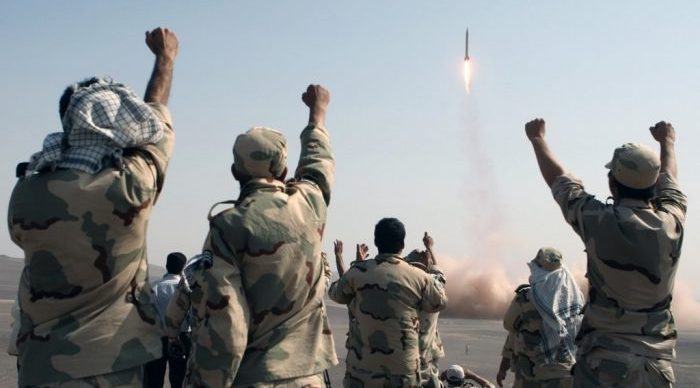
An Iranian precision-guided ballistic missile is launched as it is tested at an undisclosed location October 11, 2015. REUTERS/farsnews.com/Handout via Reuters

An Iranian precision-guided ballistic missile is launched as it is tested at an undisclosed location October 11, 2015. REUTERS/farsnews.com/Handout via Reuters

When you compare North Korea and Iran there seems to be little that connects the two rogue nations except a strict adherence to human rights abuses, but the links and similarities between the two are disturbingly close and provide a foreshadowing of the path Iranian regime is headed on.

In many important ways, North Korea and the Iranian regime are kindred spirits. They are both governments built to consolidate power in the hands of a few elites and ruthlessly dedicated to eradicating all dissent.

Whereas North Korea’s Kim Jong-un had his future laid out for him by his grandfather and father in a kind of dynastic megalomaniacal family hand-me-down, Iran’s leadership has flowed from one scheming mullah to another in a religiously based enterprise with Ali Khamenei at the top of the pyramid.

Both regimes are totalitarian in the strictest sense, utilizing a system of government that includes firm backing from the military and a judicial system designed less for crime prevention than dissident detection.

Both regimes also heavily invest in their respective militaries, especially in developing weapons of mass destruction and delivery systems for them. In fact, the ties between the two are especially close in this area as intelligence agencies around the world have tracked the sale of North Korean nuclear and ballistic missile technology to Iran.

And just as North Korea threatens its neighbors such as Japan and the U.S. with multiple missile launches and test detonations of nuclear warheads, Iran also flexes its muscle with displays of missile launches, as well as direct intervention with its own troops in Syria, Iraq and Yemen.

But North Korea is limited in many ways that Iran is not. The most significant being that North Korea’s economy is anemic compared to Iran’s with its oil wealth. This is why North Korea resorts to illicit activities such as cybercrime, counterfeiting and narcotics trafficking to raise money.

Iran by comparison has used its oil wealth to fund a massive military and prop up the Assad regime in Syria as well as fund the terrorist group Hezbollah and the Houthi rebellion in Yemen. Recent reports also show Iran’s military supplying terror cells in neighboring Gulf states such as Bahrain with explosives and funding.

Which is why Iran remains the most pressing and problematic rogue regime in the world today facing the U.S. Jennifer Rubin in the Washington Post’s Right Turn column explored the strange relationship between North Korea, Iran and Syria and why the Iranian regime remains the most serious threat to regional security and global stability.

The esteemed historian Michael Oren recently wrote:

“The framework agreements with North Korea and Syria, concluded respectively in 1994 and 2013, were similar in many ways. Both recognized that the regimes already possessed weapons of mass destruction or at least the means to produce them. Both assumed that the regimes would surrender their arsenals under an international treaty and open their facilities to inspectors. And both believed that these repressive states, if properly engaged, could be brought into the community of nations.”

All those assumptions were wrong, according to Rubin.

Oren’s recommendations echo the suggestions of both Republican and Democratic lawmakers and outside experts. (“The remaining American sanctions on Iran must stay staunchly in place and Congress must pass further punitive legislation. Above all, a strong link must be established between the JCPOA and Iran’s support for terror…”)

Congress and the Trump administration need to move expeditiously on sanctions, Rubin said.

“On one hand, we are properly worried over Syria and North Korea. On the other hand, our current policy toward Iran, a much greater threat, is such that we are helping to rebuild and enrich a country that is supporting Assad, is exporting terrorism, is fomenting regional chaos and — even without cheating — can eventually obtain nuclear weapons. We are concerned about North Korea’s puny and inept ballistic missile program but have done nothing since pinprick sanctions to respond to Iran’s illegal missile tests. We have lots of challenges to address, to be sure, but we shouldn’t take our eyes off of the worst and most dangerous rogue state,” she added.

Rubin correctly points out that the nuclear agreement forged by the Obama administration has helped strengthen the Iranian regime at a time when it was in very serious danger of collapsing from the weight of supporting Assad in Syria, while also faced with plunging global oil prices that could have bankrupted the ruling theocracy.

This theme of North Korean lessons for Iran was carried by famed human rights attorney Alan Dershowitz in a piece for the Gatestone Institute.

“The hard lesson from our failure to stop North Korea before they became a nuclear power is that we MUST stop Iran from ever developing or acquiring a nuclear arsenal. A nuclear Iran would be far more dangerous to American interests than a nuclear North Korea. Iran already has missiles capable of reaching numerous American allies. They are in the process of upgrading them and making them capable of delivering a nuclear payload to our shores,” Dershowitz writes.

The deal signed by Iran in 2015 postpones Iran’s quest for a nuclear arsenal, but it doesn’t prevent it, despite Iran’s unequivocal statement in the preamble to the agreement that “Iran reaffirms that under no circumstances will Iran ever seek, develop or acquire nuclear weapons.” (Emphasis added). Recall that North Korea provided similar assurances to the Clinton Administration back in 1994, only to break them several years later — with no real consequences. The Iranian mullahs apparently regard their reaffirmation as merely hortatory and not legally binding. The body of the agreement itself — the portion Iran believes is legally binding — does not preclude Iran from developing nuclear weapons after a certain time, variously estimated as between 10 to 15 years from the signing of the agreement. Nor does it prevent Iran from perfecting its delivery systems, including nuclear tipped inter-continental ballistic missiles capable of reaching the United States,” he adds.

It is not a coincidence that both North Korea and Iran held massive military parades in a show of force in an effort to rattle the saber to a Trump administration that has made it clear it is NOT the Obama administration.

Both regimes are controlled by power-crazed men with homicidal tendencies. It will be a hazardous path to navigate for President Trump, but confronting Iran forcefully now will assuredly head off worse problems down the road; a bitter lesson we have learned from the Obama administration’s policies of appeasement.

Michael Tomlinson

Filed Under: Blog, News Tagged With: Ballistic Missiles, Featured, Iran, Iran-North korea

US Steps Up Sanctions Against Iran Prison Industry

April 19, 2017 by admin

US Steps Up Sanctions Against Iran Prison Industry

US Steps Up Sanctions Against Iran Prison Industry

Each passing day seems to bring more evidence that the Trump administration intends to chart a very different path than the Obama administration when it comes to dealing with the Iranian regime.

The first clue was the harsh rhetoric directed at the mullahs and the nuclear agreement, as well as the multi-billion dollar payment made by the Obama administration as part of the deal.

Then came the first series of sanctions in response to Iran’s launching of ballistic missiles; a move the Obama administration did not make for fear of upsetting the mullahs and threatening the nuclear deal.

Next came the cruise missile strike against a Syrian airbase in response to a chemical attack against civilians, including young children and infants.

In less than three months, President Trump has acted aggressively and swiftly against Iran and its interests in Syria in a bold departure from the feckless policies of trying to appease the mullahs in Tehran practiced by President Obama.

Now the Trump administration is leveling new economic sanctions against senior Iranian officials and its prison system for widespread human rights abuses, including the systematic torture of those being held in these facilities, according to White House officials familiar with the matter.

The latest sanctions target the Tehran Prisons Organization and Sohrab Suleimani, a senior official in the prison system and the brother of Qassem Soleimani, a senior Iranian military figure responsible for operating Iran’s rogue activities in Syria and elsewhere.

Sohrab Soleimani is responsible for overseeing Iran’s notorious Evin Prison, which is known for torturous interrogations, forced interrogations, and widespread mistreatment of inmates.

The latest sanctions are certain to rankle Tehran, already the subject of a range of new sanctions under the Trump administration, which is currently conducting a widespread review of all matters related to the landmark nuclear agreement.

A senior official on the White House National Security Council told the Washington Free Beacon that the Soleimani family has a history of fomenting violence and unrest both inside and outside Iran.

“It’s no coincidence that Sohrab Suleimani is the brother of the notorious Qasem Soleimani, the head of the IRGC’s Quds Forces, who has been responsible for so much of the violent disruption Iran has been spreading through the region,” said the official, who was not authorized to speak on record.

U.S. intelligence agencies believe Gen. Soleimani is overseeing Iran’s military operations in Syria, which are designed to prop up the regime of President Bashar al-Assad. The U.S. and its Middle East allies also said they have seen Gen. Soleimani’s hand in Revolutionary Guard military activities in Iraq, Yemen, Lebanon and the Palestinian territories.

Iranian human rights abuses have only grown under the leadership of so-called reformist President Hassan Rouhani, the official said. This includes the detention of U.S. citizens

“There has been a disturbing and significant increase in the number of detentions and executions of Iranian citizens under President Rouhani, and the infamous Evin Prison under Sohrab Suleimani’s control has been a key facility in this program of domestic repression,” the official said.

The Trump administration is holding meetings with the family members of American citizens still being detained in Iran and believed to be subjected to torture.

Soleimani’s role in Iran’s prison system makes him one of the foremost human rights abusers worldwide.

Soleimani oversaw an April 2014 incident at the Evin Prison in which dozens of security guards and prison officials beat a number of political prisoners. The attack is believed to have lasted several hours and impacted more than 30 prisoners. Many of these prisoners were later denied medical treatment.

Evin Prison is home to large number of Iranian political dissidents and other government opponents, who are routinely shut down and arrested by the Iranian regime for political activities targeting those in power.

The sanctioning of someone so central to the regime’s enforcement system against dissidents and a family member to a key figure in Iran’s military represent a significant escalation in attempts to push and contain the Iranian regime’s influence.

More importantly, the move once again highlights human rights as a central policy concern for the U.S. moving forward and redefines the need for the regime to improve its human rights practices.

U.S. lawmakers have been calling in recent week for the U.S. to further impose sanctions on Iran for its nonnuclear activities. They specifically cited Iran’s continued detention of four U.S. nationals and two U.S. green-card holders as justification for more penalties. Iran has accused most of these Americans of espionage, a charge they have denied.

A bipartisan group of U.S. lawmakers wrote Treasury Secretary Steven Mnuchin last week and noted that Iran hadn’t been sanctioned for any human-rights violations since the nuclear agreement was reached in July 2015.

“Failing to sanction individuals and entities committing flagrant abuses of human rights against the Iranian people not only goes against our most cherished values and principles but also undermines the credibility of our government,” they wrote.

This is an important step, but it’s only a step forward to finally bringing hope and democracy back to the Iranian people. We can only hope the pressure continues to build through next month’s presidential election in Iran.

Laura Carnahan

Filed Under: Blog, News Tagged With: Featured, hassan rouhani, Iran, Iran deal, Iran Human rights, Iran Lobby, Iran Mullahs, Iran sanctions, Iran Terrorism, IRGC, Khamenei, soleimani

Over 1,600 Presidential Candidates in Iran and None Are Moderates

April 18, 2017 by admin

The Iranian regime has over 1,600 people registered as candidates for next month’s presidential election, but like all previous elections in the mullah’s regime, the outcome is predetermined and not a single moderate or dissident will end up on the final ballot.

The logjam of registered candidates is typical of a system that offers the false veneer of inclusive democracy when it in fact is anything but. It’s emblematic of the root problems within the Iranian regime and why any idea of appeasement or rapprochement is just plain fantasy.

The Associated Press provided a nuts and bolts overview of the election process in Iran.

Under Iranian law, there’s no fee for registering. Hopefuls only must swear allegiance to Iran’s government and be Shiite Muslims. That gives gadflies and publicity seekers the chance to smile and wave to gathered journalists. It’s still a lot of candidates, though. The last similar turnout was Iran’s 2005 election, which saw more than 1,000 register, according to the AP.

All the candidates will be vetted by the Guardian Council, a 12-member panel half selected by the top mullah Ali Khamenei and half nominated by the judiciary and approved by parliament. The council controls elections and must approve all laws passed by parliament. It has never allowed a woman to run for president and routinely rejects candidates calling for dramatic reform. The panel also declared Ahmadinejad won the 2009 election despite widespread fraud allegations.

And who sits at the top of this pyramid? Khamenei of course. The supreme leader also serves as the country’s commander in chief over its military and the powerful Revolutionary Guard, a paramilitary force involved in the wars in Iraq and Syria that also has vast economic holdings across Iran. An 88-member elected clerical panel called the Assembly of Experts appoints the supreme leader and can remove one as well, although that’s never going to happen.

Iran does not allow international observers to monitor its elections. Security forces answering only to the supreme leader also routinely arrest dual nationals and foreigners, using them as pawns in international negotiations, according to AP.

All of which brings us back to the central point people need to remember as these elections unfold, which is that there is no democracy in Iran. The Iranian people have very little choice and fewer real options and nothing happens without Khamenei’s direct approval.

Iran’s election system puts to a lie the arguments long made by Iran lobby members such as the National Iranian American Council which has consistently argued the fiction that real factions and splits occur between “moderate” and “hardline” elements there; when in fact the differences in Iran’s political and religious elite is basically comprised of fights over who’s snout can dig deepest into the trough of ill-gotten gains. The fact is that Iran’s government consistently ranks as one of the most corrupt on the planet and no matter who’s sit on president’s seat, the regime has continued to be the number of executor of its people per capita and the number one state sponsor of terrorism in the world.

The fact that the Iranian people’s top choices right now are its current president, Hassan Rouhani, who promised many reforms including a liberalization of the economy and more economic benefits to the people—all of which has actually gotten worse—and former president Mahmoud Ahmadinejad who was widely reviled during his tenure.

The other choice being Ebrahim Raisi, custodian of Iran’s wealthiest charity, Astan Quds Razavi in Iran’s holiest shrine of Imam Reza in Mashhad, northeastern Iran, who was also tied to massacres of 30,000 Iranian dissidents in the 1988.

These are not great choices for the Iranian people, nor do they spell any kind of relaxation in the regime’s often barbaric policies in terms of human rights abuses and more foreign policy misadventures.

That is because the regime mandates fealty to the principle of obedience to Supreme Guardianship (Velayat-e faqih), meaning, the rule of the ayatollahs. It would be akin to eliminating all political parties in the U.S. and forcing every candidate to swear allegiance to one ruler who can never to drummed out of office.

In many ways the election of a president means relatively little since the real power resides within Khamenei and the position of supreme leader, which is why no matter who gets elected on May 19th, how to deal with Iran, especially its military is the real concern for Iran’s neighbors and the U.S.

Mohammad Amin, an analyst in Iranian affairs and fellow at the Paris-based Middle East Research Foundation, examined the wide-ranging reach of the Iranian Revolutionary Guard Corps and how confronting it is the biggest challenge facing the West.

“The IRGC, the Leviathan of Terror, which has the financial and military resources that exceed the wildest dreams of ISIS, now lurks in the Middle East. Its tentacles extend well beyond the geographical borders of Iran. While ISIS claimed parts of Syria and northern Iraq, the IRGC’s Shiite militias have an extensive presence in almost every country in the region,” he writes in the Daily Caller.

The main Iranian opposition the National Council of Resistance of Iran (NCRI) has revealed a list of 31,690 Iraqi mercenaries of the IRGC, all of whom receive their salaries from Iran.

Last year, U.S. military officials said that as many as 100,000 Iranian-backed Shiite militia are now fighting on the ground in Iraq, “raising concerns that should the Islamic State be defeated, it may only be replaced by another anti-American force that fuels further sectarian violence in the region,” he added.

Amin adds that an essential first step in the direction of controlling the IRGC is for the Trump administration designating the IRGC as a Foreign Terrorist Organization (FTO). Failure to adopt this critical measure will only serve to embolden the regime while the region and the wider world continue to grapple with the menace of religious extremist and terrorism.

For any chance of democracy in Iran, the West needs to support Iranian opposition groups such as the NCRI and cut off the financial support the regime receives from the IRGC. That is surest pathway to eventual freedom for the Iranian people.

Michael Tomlinson

Filed Under: Blog, News Tagged With: Featured, hassan rouhani, Iran, Iran Mullahs, Iran Terrorism, Khamenei, National Iranian American Council, NIAC, NIAC Action

After Syria Strike Next Move Should be Pushing Iran Out

April 13, 2017 by admin

After Syria Strike Next Move Should be Pushing Iran Out

After Syria Strike Next Move Should be Pushing Iran Out

You can almost pinpoint to the day when things turned really bad in Syria. For much of the fall and spring of 2012-2013, the Assad regime was on the ropes from a series of victories by rebel forces including the loss of a key airbase and provincial capital.

The Syrian army suffered from several publicized defections of key leaders and the rebel coalition had grown significantly around moderate groups backed by the U.S.

Then in April of 2013, the Iranian regime directed its terrorist proxy Hezbollah to join in the fray, along with advisors and commanders from the Iranian Revolutionary Guard Corps. Coupled with a massive influx of cash and weapons, the restocked Syrian army launched a series of counteroffensives that began to turn the tide.

Up until that point, the rebels had pushed to within eyesight of Damascus and Assad was frantically figuring out where his exile should take place.

For the mullahs in Tehran, it was an equally scary time as its major Shia partner was about to fall.

But with the reinforcements and direct intervention by Iran, the tide of the war changed and with it the situation we are now mired in.

Not only did Syria alongside Iranian forces fight rebels, they specifically targeted, moderate Western-backed units in order to decimate their numbers and leave only radical Islamic groups on the battlefield forcing the U.S. and its allies to pick between a certifiable mass murderer in Assad or groups such as ISIS and Al-Nusra.

It was a clever strategy and one that worked too well given the Obama’s support of the corrupt Al-Maliki government in Iraq, preserving ISIS at a critical time when its numbers were small and lacked cash and weapons. It gained both when it exploited the divided government in Iraq; split apart by Iranian regime’s insistence on a Shia only leadership thereby pushing some of the Sunnis straight into the waiting arms of ISIS and leading directly to the blitzkrieg that toppled Mosul and delivered ISIS its first major victories.

Less than two years later, as Iran was again on the ropes with its resources depleted and rebel forces on the verge of breaking out again in Syria, Iranian mullahs took the step of begging Russia to intervene and save its proverbial goat, which Vladimir Putin was all too happy to oblige, sensing an opportunity to preserve its naval base on the Mediterranean while filling the power vacuum left by the Obama administration’s total withdrawal from the region.

But President Trump’s decision to retaliate against Syria for the use of chemical weapons changed the game plan entirely and now raises the question of how to best move forward?

There is no doubt that the most desirable solution in Syria is a diplomatic one, but focusing on removing Assad from power is only treating the symptom. The real sickness that afflicts Syria is the presence of the Iranian regime there; it is so embedded many Syrians have taken to view Iranian soldiers as an occupation force.

By removing Iran from Syria, the situation resolves itself in a myriad of ways: Russia would lose its key partner on the ground; A peace deal with rebels will definitely prevail; and the Syrian people would have the chance to choose their own destiny.

It would also allow for the repatriation and resettlement of the four million refugees that have fled Syria since the war began.

And the key to pushing Iran out of Syria lies within supporting—fully—the dissident movement within Iran itself.

As Reuel Gerecht, a senior fellow at the Foundation for Defense of Democracies, and Ray Takeyh, a senior fellow at the Council on Foreign Relations, explained in an editorial in the New York Post:

“The regime’s survival is now dependent on unsteady security services and the power of patronage, which ebbs and flows with the price of oil. Iran’s continuing stage-managed elections and colorless apparatchiks, including President Hassan Rouhani, a founding father of the feared intelligence ministry who mimics reformist slogans, have failed to convince, much less inspire,” they said.

“Today, the Islamist regime resembles the Soviet Union of the 1970s — an exhausted entity incapable of reforming itself while drowning in corruption and bent on costly imperialism,” they added. “If Washington were serious about doing to Iran what it helped to do to the USSR, it would seek to weaken the theocracy by pressing it on all fronts. A crippling sanctions regime that punishes the regime for its human-rights abuses is a necessity. Such a move would not just impose penalties on Tehran for violating international norms but send a signal to the Iranian people that the United States stands behind their aspirations.”

Re-prioritizing human rights as a dominant issue with Iran moving forward would place the U.S. back on the moral high ground that the Obama administration vacated and serve as an effective counter to the ceaseless arguments made by the Iran lobby opining about potential economic benefits of trade with Iran.

A new report by human rights group Amnesty International showed that Iran remained a dominant executioner of its own people, second in the world only to China, which makes hammering the regime on human rights all the more critical.

That emphasis on human rights was boosted by the European Union’s decision to extend sanctions until April 2018 on Iran for “serious human rights violations.”

The bloc has also extended by a year its travel ban and an asset freeze on 82 Iranian people and one entity, as well as a ban on exports to Iran of equipment for monitoring telecommunications and other gear that “might be used for internal repression.”

Sir David Amess, a member of the British Parliament, pointed out in an editorial in the Washington Examiner that the key to confronting Iran ultimately is to cut off the IRGC’s commerce as outlined by a leading Iranian dissident group.

“The National Council of Resistance of Iran (NCRI) specifically identified the sites of some 90 docks operated exclusively by the IRGC within Iranian ports. The information was obtained from the network of the People’s Mojahedin Organization of Iran (PMOI/MEK), which has assets within the clerical regime and the IRGC itself and made international headlines in 2002 when it revealed key details about the regime’s nuclear program,” Amess said.

“Iran’s destabilizing regional influence and its subversive activities will only be diminished if the domestic and international power of the IRGC is confronted and constrained, first through the rightful designation of the organization as a terrorist organization and then through the sanctioning of all its economic activities followed by financing regional conflicts and threats against the West,” he added.

Ultimately the U.S. should use its influence to specifically diminish the IRGC and its influence in Syria if there is ever to be any hope of a lasting peace there.

Michael Tomlinson

Filed Under: Blog, News Tagged With: Featured, Hezbollah, Iran, Iran Terrorism, IRGC, Khamenei, Rouhani, Sanctions, Syria

Years of Obama Compromise Finally Come to End

April 10, 2017 by admin

Years of Obama Compromise Finally Come to End

Years of Obama Compromise Finally Come to End

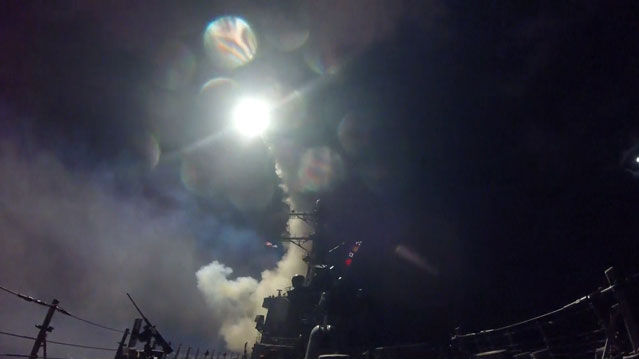
With the launching of 59 Tomahawk cruise missiles from two U.S. Navy warships aimed at a Syrian airbase last week, the Trump administration took an enormous step in reversing the policies of appeasement and accommodation that marked the Obama administration’s approach to Middle East conflicts.

The airstrike was done in response to a chemical weapons attack in which at least 87 people were killed – including women and children – in the assault on the Syrian town of Khan Shaykhun last Tuesday. Medical personnel on the ground indicated the chemical agent was sarin, a nerve agent so deadly that mere drops inhaled or absorbed on skin kill within minutes.

U.S. military personnel allegedly tracked the aircraft launched from the airbase in question and took a flight path to the town, dropping its ordinance and returning.

The chemical attack was not the only one the Assad regime has been accused of conducting since a much-publicized deal that Russia brokered to remove Syria’s chemical weapons stockpile. These recent attacks demonstrate clearly that the Assad regime retains its chemical weapons and is unafraid of using them.

These incidents demonstrate clearly the utter failure of the Obama administration’s past policies that sought to broker agreements with regimes that have no intention of abiding by them; be it Syria with chemical weapons or Iran with its nuclear program.

As the New York Post editorial board pointed out in a scathing piece pointing out that administration’s failures and more importantly what it means for the nuclear agreement with the Iranian regime.

Last week’s horrific attack in Syria disproved the Obama administration’s boast of stripping Bashar al-Assad of “100 percent” of his chemical weapons. And that has big implications for the nuclear deal with Iran. After all, the nuke deal relies on the same kind of verification and accountability system entailed in the agreement with Assad, the Post said.

“We will, for the first time, be in a position to verify all of [Iran’s] commitments,” President Barack Obama said at the time, insisting the deal had at least temporarily halted Tehran’s pursuit of nuclear weapons.

Critics insist it did no such thing. Just as many refused to believe Team Obama’s claim that it had fully rid Syria of its weapons of mass destruction. The Syria accord allowed Obama to save face for failing to enforce his “red line” against Assad’s use of chems after the dictator got caught using sarin nerve gas to kill up to 1,500 Syrian civilians, the Post added.

“We are getting chemical weapons out of Syria without initiating a strike,” said Obama. And Secretary of State John Kerry: “We got 100 percent of the chemical weapons out.”

Just this past January, former National Security Adviser Susan Rice insisted, “We were able to get the Syrian government to voluntarily and verifiably give up its chemical weapons stockpile” in a way “that the use of force would never have accomplished.”

The Post summed up by saying “Just how wrong they all were has now become dead obvious. So why should anyone still believe the same team’s assurances on Iran’s ability to produce nukes?”

While the strike by the Trump administration didn’t do much tactical damage to the airbase since American officials warned the Russians of the pending attack, who then promptly tipped off their Syrian allies who quickly moved most of their assets out of harm’s way, the attack was a major strategic masterstroke by President Trump.

The attack was the first by the U.S. against Syrian regime assets and crosses the “red line” that President Obama had previously laid down the first time the Assad regime used chemical weapons, only to infamously balk at crossing its own line.

The airfield bombed is significant, because it is also used by members of Islamic Revolutionary Guard Corps (IRGC) and the Quds Force, according to a report from Asharq Al-Awsat Arabic language website. The field has been used for a long time by IRGC to operate not only in Syria but also in Iraq.

It also neatly puts the Iranian regime on notice that the conditions of the conflict have shifted dramatically. The U.S. was willing to take unilateral military action without U.N. approval or consultation with regional partners in response to a clear and present danger.

For Bashar al-Assad and Hassan Rouhani, the prospect of a surprising and swift U.S. response must have come as a shock.

Of course that did not stop Iran from doubling down on its bets on a murderous Assad regime.

Iranian regime rallied around the Syrian strongman and pledged to respond to US “aggression” after the Trump administration bombed a military airfield in retaliation for a poisonous gas attack.

Assad has drawn heavily on foreign Shi’ite militias sponsored by Iran, led by Lebanon’s Hezbollah group, for his most important gains since the Russian intervention.

In Iran, Supreme Leader Ayatollah Ali Khamenei said the U.S. missile strike was a “a strategic error, and a repeat of the mistakes of the past,” the state news agency IRNA reported.

“The Islamic Republic has shown that … it does not back off and its people and officials … do not retreat in the face of threats,” said Khamenei.

Many Syrians opposed to Assad’s rule consider Lebanon’s Hezbollah and Iranian-backed troops as occupiers seeking to drive out mainly Sunni Syrians from the areas they live in. They hold Iran and its allies responsible for the displacement of millions outside the country, according to Reuters.

Allies including the United Kingdom and Australia Friday, applauded Trump’s decision to launch the strike.

Michael Tomlinson

Filed Under: Blog, News Tagged With: Featured, Iran, Iran Mullahs, Iran Terrorism, IRGC, Khamenei, Syria

  • « Previous Page
  • 1
  • …
  • 4
  • 5
  • 6
  • 7
  • 8
  • …
  • 34
  • Next Page »

National Iranian-American Council (NIAC)

  • Bogus Memberships
  • Survey
  • Lobbying
  • Iranians for International Cooperation
  • Defamation Lawsuit
  • People’s Mojahedin
  • Trita Parsi Biography
  • Parsi/Namazi Lobbying Plan
  • Parsi Links to Namazi & Iranian Regime
  • Namazi, NIAC Ringleader
  • Collaborating with Iran’s Ambassador

Recent Posts

  • NIAC Trying to Gain Influence On U.S. Congress
  • While Iran Lobby Plays Blame Game Iran Goes Nuclear
  • Iran Lobby Jumps on Detention of Iranian Newscaster
  • Bad News for Iran Swamps Iran Lobby
  • Iran Starts Off Year by Banning Instagram

© Copyright 2026 IranLobby.net · All Rights Reserved.