Iran Lobby

Exposing the Activities of the lobbies and appeasers of the Mullah's Dictatorship ruling Iran

  • Home
  • About
  • Current Trend
  • National Iranian-American Council(NIAC)
    • Bogus Memberships
    • Survey
    • Lobbying
    • Iranians for International Cooperation
    • Defamation Lawsuit
    • People’s Mojahedin
    • Trita Parsi Biography
    • Parsi/Namazi Lobbying Plan
    • Parsi Links to Namazi& Iranian Regime
    • Namazi, NIAC Ringleader
    • Collaborating with Iran’s Ambassador
  • The Appeasers
    • Gary Sick
    • Flynt Leverett & Hillary Mann Leverett
    • Baroness Nicholson
  • Blog
  • Links
  • Media Reports

Upcoming Presidential Elections in Iran Just More of the Same

April 10, 2017 by admin

Upcoming Presidential Elections in Iran Just More of the Same

Upcoming Presidential Elections in Iran Just More of the Same

Elections in the Iranian regime are not left up to chance or to the Iranian people for that matter. The ruling mullahs have always wanted a neat, tidy election process that harbors no dissent and provides for no surprises.

In practicality, the mullahs admire the no-contest elections where the ruling elite often hold all the cards. This may explain why Iran has worked closely with North Korea in exporting that regime’s ballistic missile technology, while it seeks to be a major oil trading partner to China and a major arms buyer to Russia.

The history of Iranian elections has been less than spectacular. Last year during parliamentary elections, the regime wiped off the ballots thousands of candidates deemed unsuitable for running. The most common attribute of the eliminated candidates was a disturbing tendency to being a dissident voice.

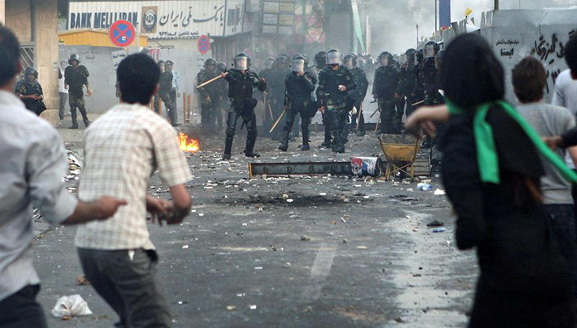
In the infamous presidential election of 2009, the much-reviled Mahmoud Ahmadinejad was re-elected in what was widely regarded as a rigged election that resulted in massive protests harshly put down by the regime’s military resulting in thousands of deaths, arrests and prison sentences.

The mullahs learned their lesson in 2013 by installing Hassan Rouhani as an affable, cheery candidate in contrast to the typical regime clerical candidate.

Now with presidential elections looming on May 19th, Iran is entering into another familiar cycle of political speculation. Unfortunately, none of it will matter much since the regime’s leadership, led by top mullah Ali Khamenei, controls the councils which will decide who will be allowed to run in the first place.

But the Western media will again make the same mistake as it did before in trying to parse the Iranian regime’s politics into “moderate” and “hardline” camps, of which there are none. Iran has no viable opposition parties and all members and candidates swear the same allegiance to the Shia revolution and Khamenei.

It is akin to essentially trying to find nuances between members of the same Nazi party in World War II-era Germany.

Just because Rouhani likes to use Twitter does not excuse the fact his tenure is marked by the highest rate of public executions ever, putting Ahmadinejad to shame, nor does it make him a “moderate.”

The best example of this mislabeling comes in the form of coverage over the announcement that certain candidates were put forward to challenge Rouhani as being part of the regime’s “hardline, conservative” blocs.

As Reuters described it: “A bloc of conservative Iranian political parties has nominated a powerful cleric as their candidate to run in next month’s presidential election to try to unseat the moderate Hassan Rouhani, Iran’s state news agency IRNA said.

“Seeking to regain the presidency by stopping Rouhani winning a second four-year term, Iran’s powerful hardliners have been gearing up for a showdown in the May 19 vote.”

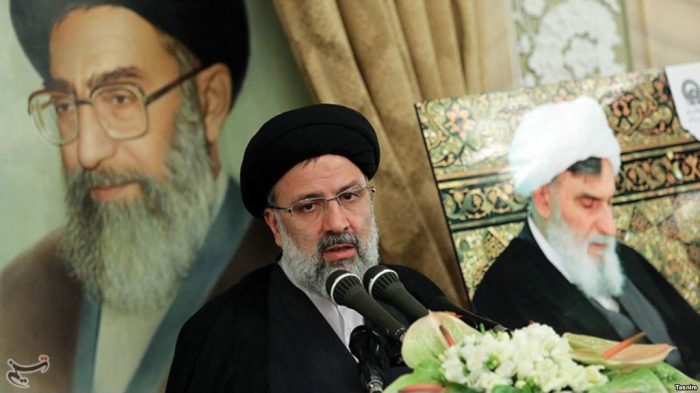
Five candidates were nominated, including Ebrahim Raisi, a powerful cleric who last year was appointed custodian of the shrine of Imam Reza in Mashhad, Iran’s second city. He also controls what is believed to be the Islamic state’s wealthiest institution: Astan-e Qods Razavi, a religious foundation that owns properties and land across the country.

The 56-year-old cleric has held senior judicial positions, including prosecutor-general. Dissidents accuse him of authorizing a brutal crackdown against the opposition in the 1980s.

The National Council of Resistance of Iran, the largest Iranian dissident groups, detailed Raisi’s bloody history on behalf of the regime.

“In 1988, when he was Deputy Prosecutor of Tehran, he was one of the four individuals who Khomeini appointed to carry out his order to massacre the activists of the People’s Mojahedin Organization of Iran (PMOI/MEK). During that massacre, 30,000 political prisoners, who were primarily from the PMOI, were executed within a few months. An audio tape surfaced last summer, after 28 years, of Hossein-Ali Montazeri, Khomeini’s designated successor at the time, meeting with the ‘death committee’ in Tehran, including with Raisi, about 20 days after the start of the massacre. Montazeri told them that these executions were the biggest crimes committed by the Islamic Republic,” the NCRI said in a statement on its website.

In that meeting Montazeri talked about how pregnant women and 15-year-old girls were executed during the massacre. Those who attended the meeting (including Raisi) condoned the mass executions. It was subsequently exposed that Raisi was the most active and most ruthless member of the committee. The audio file of the meeting between Khomeini’s then-successor and the “death committee” also corroborated this reality, the NCRI added.

The Guardian Council, a powerful body controlled by Khamenei, will announce later this month which candidates are qualified to contest the election. All contenders must be deemed loyal to the Islamic republic and the final candidates appearing on the ballot will go a long way in showing what Khamenei’s thinking is moving forward for the regime.

Raisi’s elevation and election to president could very well set him up as the successor to Khamenei which from the perspective of the mullahs makes sense since he is a steadfast loyalist to preserving the mullahs power and has demonstrated a willingness to massacre dissidents and rivals.

All of which does not bode well for the future of the Iranian people.

Michael Tomlinson
Filed Under: Blog, News Tagged With: Featured, Iran, Iran Election 2017, Iran Mullahs, Iran Terrorism, Raisi

The Double Standard of the Iran Lobby

April 3, 2017 by admin

The Double Standard of the Iran Lobby

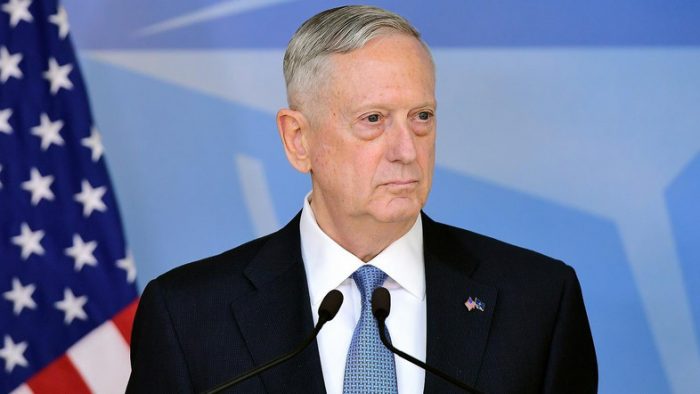
US Defence Minister James Mattis addresses the press during a NATO defence ministers’ meetings at the NATO headquarters in Brussels on February 15, 2017. / AFP PHOTO / EMMANUEL DUNAND

Consistency of thought has never been the strong suit for members of the Iran lobby such as the National Iranian American Council. Often staffers from the NIAC write editorials that passionately argue to right some perceived wrong being perpetrated by the U.S. government, while at the same time ignoring the exact same violation being committed by the Iranian regime.

Take for example the issue of detention of Iranians within the U.S. under the Trump administration’s new immigration rules versus the long-running policy of the mullahs in Tehran of snatching up and imprisoning dual-national citizens.

The NIAC issued a statement by Ryan Costello arguing against the arrest of an Iranian citizen holding a U.S. visa in Michigan. According to the statement, the “news comes amidst an uptick in government harassment of visa holders and citizens entering the U.S. We are concerned this is further evidence of a discriminatory culture being promoted by Donald Trump and his administration, particularly towards people of Middle Eastern descent.”

While the attention to this case seems to be the primary focus of the NIAC, the notorious supporters of the Iranian regime are virtually silent on the same practice by the mullahs in arresting dual-nationals such as Iranian-Americans on bogus or secret charges and held in deplorable conditions.

Consider the long-running saga of British charity worker Nazanin Zaghari-Ratcliffe who was arrested at Tehran Airport on April 3 last year while visiting family with daughter Gabriella.

She was imprisoned for five years in September for allegedly plotting to topple the Iranian government and lost an appeal against her sentence in January but maintains her innocence.

On Sunday – the 365th day since the arrest – family and friends gathered at Fortune Green close to Zaghari-Ratcliffe’s home in north-west London according to the Standard.

Supporters tied yellow ribbons to a tree in the park along with quotes from inmates at Evin prison in Iran, where Zaghari-Ratcliffe is being held, describing what they would do with one day of freedom.

Her painful and heartfelt wish reads: “My fondest dream has always been to arrive at our home, you ask me if I want to have a cup of tea, then make me one.”

“I just sit back and watch you two play. This is the image I had most when in solitary confinement.

“How I wish I could watch you both dance in the middle of our sitting room to the Michael Jackson music – like when Gabriella was only tiny.”

The NIAC makes no mention of her incarceration, not even a plea for humanitarian release because of her sharply declining health and denial of adequate medical care. Why the double standard?

One of the more stunning double standards was an editorial in the Atlantic Council by NIAC’s Adam Weinstein which argued why Iran views its ballistic missile program as a “red line” that warrants full protection by the mullahs.

He predictably recounts the same old arguments from Iran’s experiences in the Iran-Iraq War in which Saddam Hussein showered Iranian troops with missile barrages and how the mullahs in Tehran vowed to develop their own missile capability to defend themselves in the future, especially as a deterrent from perceived enemies such as the U.S. and Saudis.

Weinstein argues—incredibly—that alleviating Iran’s sense of vulnerability might be a better way to approach Iran.

Using his logic, if your neighbor has decided to arm himself and occasionally takes shots at you, Weinstein argues that you should be the one of reassure your violent neighbor, not the other way around?!

Weinstein even stretches his bizarre logic by trying to tie into a historically revisionist view of Shi’ism portraying it as choosing pragmatism over ideology.

Not many Syrians or Yemen civilians being subjected to Iranian bombs, mortars, rockets, drones and militia would find any proof of that sentiment.

What Weinstein never discusses though is the rapid development of Iran’s missile program in creating and testing ever more powerful boosters designed to reach intercontinental distances and lift capability approaching via nuclear payload capabilities.

Why Iran needs a ballistic missile with the range to reach into New Delhi or Rome is never mentioned by Weinstein because there is no reason other than to hold a dagger over Europe, Asia and the rest of the Middle East like the sword of Damocles.

But that double standard is nothing new to the Iranian regime as Iran’s Foreign Ministry called on the United States to pressure its regional allies into abandoning their support for terrorism and not level “malicious” allegations against the Islamic state.

Foreign Ministry Spokesman Bahram Qasemi made the statement on Saturday, reacting to earlier comments by US Defense Secretary James Mattis claiming that Iran continued to sponsor terror, Press TV reported.

Asked about comments Mattis made in 2012 that the three primary threats the United States faced were “Iran, Iran, Iran,” Mattis told reporters in London on Friday that Iranian regime’s behavior had not changed in the years since.

“At the time when I spoke about Iran I was a commander of US central command and that (Iran) was the primary exporter of terrorism, frankly, it was the primary state sponsor of terrorism and it continues that kind of behavior today,” Mattis said.

Laura Carnahan


Filed Under: Blog, News Tagged With: Adam Weinstein, Featured, Iran, Iran Lobby, Iran Mullahs, Iran Terrorism, IRGC, National Iranian American Council, Nazanin Zaghari-Ratcliffe, NIAC, NIAC Action, Ryan Costello, Tyler Cullis

Iran Economy Delivering Only for Military and Regime Elites

April 2, 2017 by admin

Iran Economy Delivering Only for Military and Regime Elites

Iran Economy Delivering Only for Military and Regime Elites

The Iranian economy should be an economic powerhouse backed by one of the largest petroleum reserves in the Middle East and a population that historically has been one of the best educated and entrepreneurial.

The Iranian people have spread throughout the world as part of the diaspora stemming from the Islamic revolution and have helped make scientific advances, create masterpieces of art and build globe-spanning industries.

Yet, given all of these accomplishments, the Iranian economy remains mired in stagnant growth with huge unemployment numbers, especially for Iranian youth who face a bleak future. All too often their choices are to struggle in finding jobs or join the regime as part of its military to be sent off to fight and die in far-flung battlefields far from home.

The truth of the Iranian economy is that it has been shaped and molded to serve not the Iranian people, but to fund the whims and lavish lifestyles of the ruling elites, including the families of mullahs in a dynastic fashion, as well as prime the engine of war for the Revolutionary Guard Corps.

In Al-Arabiya, Tony Duheaume examined the contradictions in the economic windfalls benefitting the elites and the hopelessness and poverty being experienced by Iran’s poor.

“While many of Iran’s citizens have suffered all of the hardships of a failing economy, in a land of increasing unemployment and low pay, the ruling mullahs lead the lives of past emperors, living in absolute luxury, with billions they have made off the backs of the Iranian people, now insulating them from the crumbling nation they reside over,” he writes.

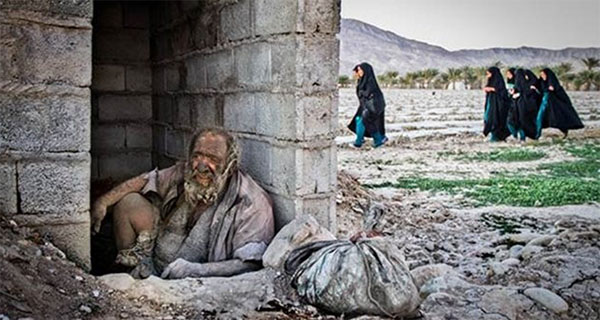
“Beggars wander the streets of Iran in droves, drug addicts with nothing to live for litter the thoroughfares, while the homeless find shelter where they can, some known to have taken up residence living under bridges, or in the sewerage canals that run alongside the country’s highways,” Duheaume added.

Duheaume pointed out a shocking photo essay published in the Shahrvand Daily last year that depicted many of these hapless vagrants sleeping in empty graves in Shahriar, a town about 12 miles from Tehran, the nation’s capital, in images that shocked the nation.

Reports suggested that at least 50 men, women and children were living in this cemetery, with many of their number addicted to drugs. Dressed in grimy rags, their emaciated, dirt-streaked features stare vacantly out of open graves, with only tattered tarpaulins or sheets of well-worn polythene covering the holes to protect them from the elements, in an area where the temperature in winter can drop to well below freezing, he said.

With hundreds of millions of dollars already pouring into the Iranian administrations coffers from released frozen assets, which could eventually total $150 billion, none of this has yet been designated to relieve the suffering of its people. Already billions have been earmarked to spend purchasing Russian T-90 tanks, artillery, advanced Su-30 fighter jets, and helicopters, and during 2016, Iran’s defence sector grew by 45 percent, with the regime spending billions on its long-range missile program, and the development of indigenous weapons systems, Duheaume pointed out.

There is also the delivery of long-promised S-300 air defence systems, said to have cost the Iranian government $900 million. On top of this there are the multi-billion dollars the regime is using to prop up Syrian President Bashar al-Assad, the $60-$100 million a year it is paying in financial assistance to Hezbollah, plus its expenditure in financial support or weapons to aid terror groups such as Hamas and the Houthis, he explained.

But at the other end of the social scale, Duheaume correctly pointed out the group that is siphoning off large amounts of the nation’s assets, are the ultra-rich mullahs that rule Iran, all of them claiming to live frugal lives, but who are in fact living in the lap of luxury, and are said to be squirreling away vast fortunes in foreign bank accounts.

The pictorial evidence of this lavish lifestyle appeared on social media as these children of the mullahs shamelessly posted selfies as they tore down Tehran streets in exotic sports cars swathed in haute couture fashion more appropriate to the catwalks of Paris and Milan.

Top mullah Ali Khamenei himself sits at the top of the ladder as far as the millionaire mullahs are concerned, known to be in control of a financial empire worth $95 billion, which far exceeds the accumulated wealth of the late Shah Mohammad Reza Pahlavi. It was Khamenei’s predecessor Ayatollah Ruhollah Khomeini, the founder of the Iranian Islamic Republic, who used the Shah’s plundering of the Iranian economy, and his unequal distribution of wealth, as one of the main excuses to depose him, and now this plundering has been repeated by his ousters, Duheaume said.

But as far as Iran’s leadership is concerned, all are worthy of the Rich List. To name but a few of Iran’s richest mullahs, Akbar Hashemi Rafsanjani was said to have netted $1.2 billion, Mohammad Ali Taskhiri $90 million, Mohammad Khatami $84 million, Ali Larijani $70 million, Mir Hossein Mousavi $58 million, Mohammad Hossein Adeli $43 million, Mohammad Javad Zarif $32 million, Ahmed Bourghani $19 million, and a little further down the scale, Mahmoud Ahmadinejad with $5 million.

The mullahs have concentrated this wealth into their own pockets and have created a system designed to preserve their wealth and power. The Islamic regime does not tolerate dissent, nor does it provide for its people.

It deals with desperate pleas for jobs and aid from the Iranian people with crackdowns, mass arrests and imprisonment.

Any government that has to maintain control through fear and intimidation is not long for success.

Laura Carnahan

Filed Under: Blog, News Tagged With: Featured, hassan rouhani, Iran, Iran Economy

Iran Regime Plays Absurd Sanctions Game

March 27, 2017 by admin

Iran Regime Plays Absurd Sanctions Game

Iran Regime Plays Absurd Sanctions Game

In what has to be considered one of the more absurd acts by the Iranian regime, the mullahs decided to impose their own sanctions on 15 U.S. companies for alleged human rights violations and cooperating with Israel, the state news agency IRNA reported on Sunday, in a tit-for-tat reaction to a move by Washington, according to Reuters.

The agency quoted Iran’s foreign ministry as saying the companies had “flagrantly violated human rights” and cooperated with Israel in its “terrorism” against the Palestinians and the expansion of Jewish settlements.

It was not immediately clear if any of the companies, which included defense technology firm Raytheon, had any dealings with Iran or whether they would be affected in any way by Tehran’s action, which IRNA said would include seizure of their assets and a ban on contacts with them.

The sanctioned companies also included ITT Corporation, United Technologies and specialty vehicles maker Oshkosh Corp. For a full list click on: bit.ly/2noZWNo

The Iranian move came two days after the United States imposed sanctions on 11 companies or individuals from China, North Korea or the United Arab Emirates for technology transfers that could boost Tehran’s ballistic missile program. This was on top of sanctions levied against 30 foreign companies or individuals for transferring sensitive technology to Iran for its missile program or for violating export controls on Iran, North Korea and Syria.

Iran could face tighter U.S. sanctions over ballistic missile launches and other non-nuclear activities under a bill announced on Thursday by a bipartisan group of senators, echoing a harder line on Tehran espoused by President Donald Trump.

While the move by the Iranian regime has practically no effect on the U.S. economy, nor on the companies being sanctioned since few have any assets or business dealings with the regime, who is not on the list is telling.

Boeing for example is not on the list of firms sanctioned, even though it is one of the largest military suppliers to Israel, but also happens to be selling Iran new commercial airliners to replace its aging fleet.

The hypocrisy of the Iranian regime doesn’t end there since it ostensibly is imposing these sanctions for human rights violations against the Palestinian people by Israel, but excuses its own blatant human rights violations against the Syrian people through its proxies and armed forces fighting on behalf of the Assad regime.

It is also hypocritical for the Iran lobby and the regime to consistently oppose any new sanctions and claim they threaten the nuclear agreement with Iran, but in this case the regime has no problem in engaging in the same behavior it condemns.

We have no doubt that if any of the U.S. companies on Iran’s list wanted to sell equipment or arms to Iran, the mullahs would be eager to do business with them.

As with the constant harassment of U.S. Navy ships throughout the Persian Gulf by Iranian speed boats, the net effect is akin to a gnat bothering a bear and these sanctions are typical of the real strength of the Iranian regime which is in propaganda and visuals and not in practical effect.

It is interesting though how the Iran lobby, especially the National Iranian American Council is silent on these new sanctions since it has been so vocal about the threat U.S. sanctions would have on the nuclear deal and the future of relations between the two countries.

In fact, a casual Google search would reveal a trove of apocalyptic warnings from Trita Parsi and his cohorts at the NIAC about the damage future sanctions could bring and yet when Iran engages in the same practice there is not a signal note of dissent from them.

It is damning proof once again that the Tehran can do no wrong in their eyes and how they are solely a mouthpiece for the mullahs in Tehran.

It is also interesting how U.S. sanctions were aimed specifically for effect at Iranian Revolutionary Guard Corps leaders directly involved in ballistic missile activities or control of terrorist activities, including past actions that killed American service personnel, while these Iranian sanctions are aimed at the Israeli-Palestinian conflict.

Iran has frequently trotted out the plight of the Palestinian people as a Trojan horse to try and galvanize support within the Arab world, but it has lost much of its morale standing since it now engages in wars in Syria and Yemen that are setting Muslims to kill Muslims on a wholesale basis.

Ultimately the mullahs in Tehran care not a whit about the Palestinian people and use them in the same way they have used Afghan refugees to serve as mercenaries in Syria or Shiite militias or Houthi rebels to serve their twisted purposes.

Michael Tomlinson


Filed Under: Blog, News Tagged With: Featured, Iran, Iran Human rights, Iran Mullahs, Iran sanctions, IRGC, National Iranian American Council, Nuclear Iran

Bipartisan Senators Move New Iran Sanctions Bill Forward

March 24, 2017 by admin

Bipartisan Senators Move New Iran Sanctions Bill Forward

Bipartisan Senators Move New Iran Sanctions Bill Forward

While the political divide between Democrats and Republicans may feel like the Grand Canyon, one at least one subject both sides seem to be able to agree: New sanctions need to be levied against the Iranian regime.

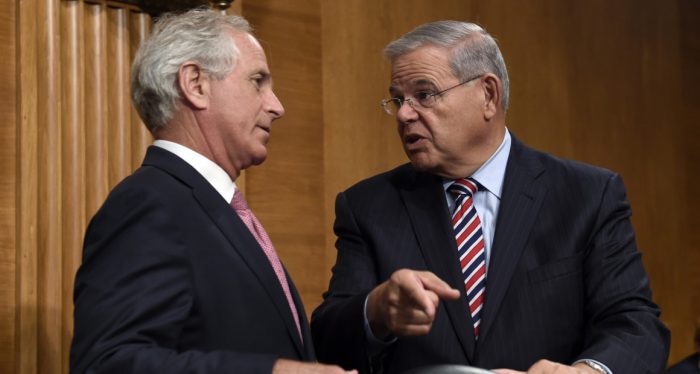
Senate Foreign Relations Chairman Bob Corker (R-Tenn.) on Thursday unveiled a bipartisan bill to slap the Iranian regime with new sanctions because of the country’s ballistic missile development, support for U.S.-designated terrorist groups and human rights violations, according to Politico.

Democratic co-sponsors, including Robert Menendez of New Jersey and Foreign Relations ranking member Ben Cardin of Maryland, emphasized that the measure was designed explicitly so as not to undermine the 2015 Iran nuclear deal.

The bill is supported by more than a dozen senators, according to a news release, including Marco Rubio (R-Fla.), Tom Cotton (R-Ark.), Bob Casey (D-Pa.) and Chris Coons (D-Del.) — giving it a strong chance of being taken up in the Senate.

“This legislation demonstrates the strong bipartisan support in Congress for a comprehensive approach to holding Iran accountable by targeting all aspects of the regime’s destabilizing actions,” Corker said in a statement. “These steps will allow us to regain the initiative on Iran and push back forcefully against this threat to our security and that of our allies.”

Menendez, who didn’t vote for the nuclear deal, said that the legislation was crafted to specifically avoid any sanctions lifted as part of the nuclear agreement, according to the Hill.

“This legislation was carefully crafted not to impede with the United States’ ability to live up to its commitments under the JCPOA, while still reaffirming and strengthening our resolve by imposing tough new sanctions,” he said.

Lawmakers were expected to roll out new sanctions on the Iranian regime ahead of a key foreign policy conference taking place early next week, Reuter reported.

The Senate legislation, according to an outline from Corker’s office, would include mandatory new sanctions on individuals tied to Iranian regime’s ballistic missile program and would expand terrorism-related sanctions to include the Islamic Revolutionary Guard Corps (IRGC).

It would also codify who is sanctioned over Iranian regime’s support for terrorism and force President Trump to enforce an arms embargo by blocking property for anyone tied to Iran’s sale or transfer of military arms.

In February, the Trump administration imposed sanctions on 25 individuals and entities in Iran, which it said were just “initial steps” in response to the regime’s repeated testing of ballistic missiles, which the United States maintains is in violation of UN resolutions.

Tehran has been supporting Yemen’s rebel Houthi movement, and Syrian President Bashar al-Assad in his country’s six-year-long civil war.

Menendez told Reuters the bill was intended to take a “regional” strategy because of the breadth of Iran’s activities in the Middle East.

“It calls for a regional strategy because Iran is obviously involved in the region in various ways, whether it be in Yemen or Syria and beyond,” he said.

The bipartisan action taken in the Senate is a response to the growing provocations coming from the Iranian regime as it prepares for its presidential election in May.

On Tuesday, the aircraft carrier USS George W. Bush entered the Strait of Hormuz from the Indian Ocean, a vital waterway that handles about 30 percent of the world’s oil shipping. As it has done so often over the past few years, Iran sent a swarm of speedboats to harass the carrier, according to Breitbart News.

“What reason were they to be in an international corridor, other than to harass us? Was today the day they were going to come out and potentially deploy kinetic actions against us?” asked Rear Admiral Kenneth Whitesell, commander of Carrier Strike Group 2, as reported by Japan Times.

Captain Will Pennington of the George W. Bush said the U.S. Navy changed its security procedures after a Saudi ship was attacked off the coast of Yemen by what some describe as a “drone” boat, roughly comparable in size to the Iranian Revolutionary Guard Corps patrol boats.

“It’s unprofessional behavior, it’s harassment behavior and it’s something you wouldn’t expect when you’ve got a hundred giant vessels per day going through the Strait of Hormuz, and – at least from the flow of oil – the most critical strait in the world,” Whitesell said. “This is their routine behavior, which in any other area of the world, any other maritime environment, this would be seen as a violation of international law.”

The allegations of Iranian-made drones extended to ones used by Houthi rebel forces to attack Saudi and UAE missile defense sites in Yemen, an arms research organization said in a report Wednesday, according to the Washington Post.

The report, put out by the group Conflict Armament Research, or CAR, looks at seven Houthi Qasef-1 drones and one drone engine recovered by forces from the United Arab Emirates. Six of the drones were captured in October on a known Iranian smuggling route that runs through Oman, while another was found after an attack by Houthi forces near Aden, Yemen, last month.

The Qasef-1 is “consistent with descriptions and imagery” of an Iranian drone called the Ababil-T, produced by Iran’s Aircraft Manufacturing Industrial Company, according to the report.

The identification of the Qasef-1 as a possible Iranian drone variant comes almost two months after Houthi forces used an explosive drone boat to attack a Saudi frigate. Vice Adm. Kevin M. Donegan, commander of the U.S. Fifth Fleet, told Defense News that the drone boat probably had been supplied by Iran. The attack killed one, and the frigate returned to port with minor damage.

On Tuesday, Reuters reported that Maj. Gen. Qasem Soleimani, the head of Iranian regime’s Quds Force, recently met with top military officials in the Iranian capital in a bid to explore ways to better assist the Houthis. The outcome of the meeting appears to be an influx of military equipment and advisers into the civil war, which has now been running for two years.

Michael Tomlinson


Filed Under: Blog, News Tagged With: Featured, Iran, Iran deal, Iran Human rights, Iran Mullahs, Iran sanctions, Sanctions

Khamenei Promises More Crackdowns on Election Protests

March 22, 2017 by admin

Khamenei Promises More Crackdowns on Election Protests

Khamenei Promises More Crackdowns on Election Protests

Back in 2009, the Middle East was being rocked by the Arab Spring, a pro-democracy movement that toppled governments throughout the region and put despotic regimes on the defensive.

At the time, the Iranian regime’s much despised president Mahmoud Ahmadinejad was running for “re-election” in a contest widely viewed as unlikely for him given the historic disapproval of the Iranian people and their deep desire for democratic change.

But as with all things under the careful watch of the mullahs, his election was essentially guaranteed in what the international community dubbed a rigged election.

In response, Iran was rocked with mass protests and demonstrations the likes of which the Iranian regime had not seen before in the most serious threat to the iron rule of the religious establishment. Alarmed and in response to keep their hold on power, the top mullah Ali Khamenei ordered a widespread crackdown that set human rights back in Iran decades in resulted in scores killed and thousands beaten, arrested and imprisoned.

The mass protests were aided in large part by the emergence of social media which helped rally young and old Iranians alike to dispute the election and served as a splash of cold water in the regime’s face that it would have to change as well, but not in terms of granting more freedoms.

By the time 2013 rolled around, the mullahs had gotten wise to international opinion and instead staged an election by removing anyone from the ballot that could even be considered a dissident and instead offered up an old loyalist in Hassan Rouhani repackaged as a smiling, tweeting, kindly “moderate.”

The end result was another sham election and in comparison to 2009 with favorable media attention abroad. It was also aided by the creation of an Iran lobby apparatus designed to push forward more positive narratives about the regime in news media and among elected officials, especially the National Iranian American Council.

Since then, while Rouhani has paraded himself as ca champion of the oppressed, Iran has plunged even further into disrepair.

It is involved now in two full-blown wars in Syria and Yemen, while spending billions of dollars in cash to support the Assad regime, Shiite militias in Iraq, its long-time Hezbollah proxy, and a rebuilding of its vast military.

It has also cracked down viciously at home, oppressing women, religious and ethnic minorities and even going on a binge of hostage taking amongst dual-national citizens including Americans, Canadians and Brits.

Now the stage is set for another election this May and once Khamenei has set the table by declaring that the regime would not tolerate any interference; meaning only the regime’s candidate will be elected and everyone should stay off the streets.

“I will confront anyone who wants to tamper with the results of the people’s vote. In previous years and previous elections …, it was the same. Some of it was in front of people’s eyes and they became aware of it. And some of it they were not aware of but I was informed about it,” he said in Iranian New Year remarks carried live on state television, according to Reuters.

“It was revealed in 2009 – they came out and drew battle lines. And in other years in other ways, but in all these years I stood against them and said whatever the results of the election are, they must be carried out.”

Two of the candidates from the 2009 presidential election, which put hardliner Mahmoud Ahmadinejad into office for a second term despite large protests over alleged vote fraud that shook the Islamic Republic, have been under house arrest since 2011. Although part of the regime apparatus, they were detained for calling for street protests at the same time that pro-democracy uprisings were convulsing Tunisia and Egypt.

This year’s election will never be in doubt. Whoever Khamenei wants is going to win, this is a matter of course since he controls the policy making body that will have final say on whoever gets on the ballot in the first place.

Imagine if the Democratic or Republican parties had final say on who got on a presidential ballot without having to suffer through the rigors of a primary contest? In essence, that is what the Iranian regime does on a regular basis; it’s a rigged game.

But the Iranian regime is becoming more sophisticated in the ways of politics. Just as it adjusted to the brutal crackdowns following the 2009 elections, it is following up on the initial creation of the Iran lobby with a broader call for more Iranians in the West to become active lobbyists for the regime’s causes as outlined in an editorial by Michael Rubin in Commentary.

“An Iran watcher and Iranian citizen recently alerted me to this clip showing Mahmoud Alavi, Iran’s intelligence minister, on Iranian national television suggesting there are Iranians in the West who have a lobby for the regime,” Rubin said.

“Alavi does not mention NIAC, but the number of politically active groups that focus on issues of sanctions, defending Iran’s ballistic missile program, and Iran’s nuclear program can like be counted not only on one hand but rather on one finger. If Iran’s intelligence minister believes that Tehran can leverage a specific lobby in the West on behalf not of Iranians but rather of the Islamic Republic, perhaps it is time for American counterintelligence authorities to take a far harder look at whatever lobby to which Alavi might be referring,” he added.

Rouhani’s election will be critical as the regime enters a new phase of expansion and aggression as it puts its newfound billions in cash it received as part of the nuclear deal to good use in furthering the war in Yemen and securing Syria as part of its Shiite sphere of influence.

According to Reuters, Iran is sending advanced weapons and military advisers to Yemen’s rebel Houthi movement, stepping up support for its Shiite ally in a civil war whose outcome could sway the balance of power in the Middle East, regional and Western sources say.

Sources with knowledge of the military movements, who declined to be identified, say that in recent months Iran has taken a greater role in the two-year-old conflict by stepping up arms supplies and other support. This mirrors the strategy it has used to support its Lebanese ally Hezbollah in Syria.

A senior Iranian official said Major General Qassem Soleimani, commander of the Qods Force – the external arm of the Islamic Revolutionary Guard Corps – met top IRGC officials in Tehran last month to look at ways to “empower” the Houthis.

We may very soon see the Arabian Peninsula erupt in a war not unlike what has convulsed Syria if the mullahs have their way.

Michael Tomlinson

Filed Under: Blog, News Tagged With: Appeasement policy, Featured, Iran, Iran Human rights, Iran Lobby, Iran Mullahs, Iran Terrorism, IRGC, Khamenei, National Iranian American Council, NIAC, NIAC Action, Rouhani

Nowruz Should Bring Hope to Iranian People

March 16, 2017 by admin

Nowruz Should Bring Hope to Iranian People

Nowrouz Should Bring Hope to Iranian People

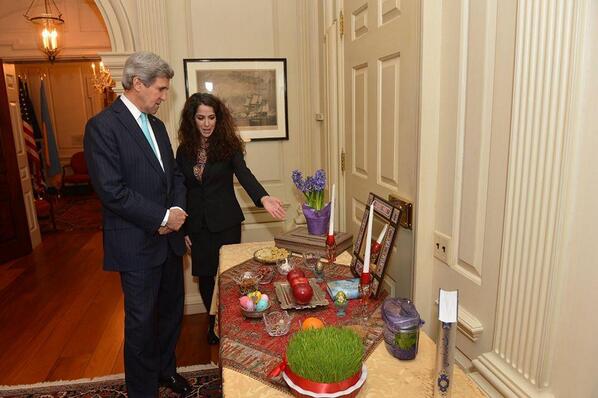
The Iranian New Year is marked with the feast of Nowrouz and falls on March 21. Translated, Nowrouz means “new day” and fittingly it should be a new day for the oppressed Iranian people as the effort begins to reverse the damage caused by years of efforts by the Obama administration to appease the mullahs in Tehran.

F.H. Buckley, a professor at the Scalia Law School, wrote an editorial in the New York Post about this need to provide the Iranian people with hope during this year’s Nowrouz observances.

“It would be a good opportunity for President Trump to mark a new day in US-Iran relations — one that corrects his predecessor’s poor treatment of the Iranian people,” Buckley writes.

“Last year at this time, the regime announced that an additional 7,000 undercover officers would patrol the streets to arrest women who had too much hair showing from under a headscarf or were out walking with a boyfriend,” he added.

“That’s why change will come to Iran, if at all, from the streets, from an Iranian Spring. And the Iranians who want to rid their country of its oppressive regime must be told that America shares their goals.” Buckley offered.

Buckley took to task the Obama administration for failing to support mass protests against the Iranian regime during the disputed presidential elections in 2009; a missed opportunity for the U.S. and urged the Trump administration to demonstrate its support for the Iranian people.

“I have a suggestion for Trump. After we ignored the street protests against the Iranian dictatorship, after we cut our disastrous Iran deal, after we abandoned Israel to the threat of medium-range missiles from the Iranian Revolutionary Guards, after American hostages were allowed to rot in Iranian jails, let the president welcome NowRuz with a message to the Iranian people,” Buckley said.

“Let him wish them a happy and prosperous new year, and the freedom that all men deserve from their cruel oppressors.”

It’s a noble sentiment and an important one since the Obama administration was quick to offer Iranians a traditional Nowrouz greeting, but never one directed specifically at the Iranian people’s desires for more freedom and democracy in their country. Such a message from the Trump administration would be an important symbol and one that would go a long way to putting the mullahs on notice that this administration will act in a much more conservative manner towards the regime.

Trump has already offered the political rhetoric chastising the regime and the much-maligned nuclear deal, but he needs to keep that momentum going in order to restore stability and balance in the Middle East; a process that Nathan Field, founder and former CEO of Industry Arabic, a translation company that provided services to over 300 high-profile customers throughout the Middle East, praised in a piece for The Hill.

“President Trump’s hardline but pragmatic approach to Iran is paving the way for the restoration of a semblance of order and regional stability. That’s a significant accomplishment for an administration still in its first 100 days,” Field writes.

“Effective foreign policy is not necessarily a matter of complicated treaties that take years to negotiate or opaque theories on international relations that only PhDs can understand. A simple message and tone set at the top is often all that’s needed.”

Field notes how President Trump has made Iranian adventurism throughout the Middle East an issue requiring a coordinated, but firm response, thereby correcting the errors made by the Obama administration.

The deal not only does not “guarantee that Iran will never obtain nuclear weapons, in the process of negotiating it, Iranian leaders, sensing that the U.S. wanted the deal more than they did, felt emboldened throughout the region in countries such as Syria, Lebanon and Yemen,” he said.

One telling example was the American non-response to a series of Iranian cyber-attacks on U.S. banks because, as one official noted, “If we had unleashed the fury in response to that DDoS attack, I don’t know if we would have gotten an Iran deal.”

“The Obama administration, by contrast, alienated nearly every traditional U.S. Middle East ally. Having thrown all of its prestige into a nuclear deal with Iran, opposed by most of the countries of the region, Washington had no leverage.”

The payoffs for the Trump administration’s tougher line against Iran has already yielded some benefits with Saudi Arabia’s willingness to send more troops to Syria and set up safe zones for refugees to stem the flood of a Syrian exodus from the war.

In many ways, Iran is slowly finding itself nudged back onto an island of isolation, even as the mullahs desperately reach out to Russia, China and Turkey in efforts to remain politically and diplomatically relevant.

We can only hope this Nowrouz brings a much better new year to the Iranian people; one that will eventually see them freed from the oppression of the mullahs.

Laura Carnahan

Filed Under: Blog, News Tagged With: #NuclearDeal, Featured, Iran, Iran deal, Iran Human rights, Iran Lobby, Iran Mullahs, Irandeal, Nowrouz, Sanctions

Former Iran Lobby Staffer Burrowing Deeper into State Department

March 15, 2017 by admin

Former Iran Lobby Staffer Burrowing Deeper into State Department

Former Iran Lobby Staffer Burrowing Deeper into State Department

Sahar Nowrouzzadeh, the Iran director for former President Obama’s National Security Council (NSC), has burrowed into the government under President Trump. She’s now in charge of Iran and the Persian Gulf region on the policy planning staff at the State Department, according to Conservative Review.

The reason why this is of concern is because of her previous employment at the National Iranian American Council, an organization with well-documented ties to the Iranian regime and a long-time supporter and advocate as part of the larger Iran lobby apparatus created to help support the loosening of sanctions on the regime.

In February, a group of over 100 prominent Iranian dissidents called for Congress to investigate NIAC’s ties to the Iranian regime.

“One of Nowrouzzadeh’s primary duties under President Obama was to promote initiatives that pushed the Iran deal. As President Obama’s NSC director for Iran, Nowrouzzadeh sat in on high-level briefings along with President Obama, former VP Joe Biden, and former Secretary of State John Kerry, as top White House staff crafted false narratives on the Iran deal to sell to the American public,” reported Jordan Schachtel.

According to the head of a state-run Iranian newspaper, Nowrouzzadeh was an essential element to pushing through the Iran deal. Editor-in-Chief Emad Abshenass said that she opened up a direct line of communication with the Iranian president’s brother. “She helped clear a number of contradictions and allowed the entire endeavor to succeed,” Abshenass said of her efforts.

Towards the end of President Obama’s tenure, Nowrouzzadeh was embedded into the State Department and for a brief time served as its Persian language spokesperson.

Breitbart News had earlier investigated Nowrouzzadeh’s prior employment with NIAC, finding that a person with the same name has previously written several publications on behalf of NIAC. According to what appears to be her LinkedIn account, Nowrouzzadeh became an analyst for the Department of Defense in 2005 before moving her way up to the National Security Council in 2014.

A NIAC profile from 2007 reveals that Sahar Nowrouzzadeh appears to be the same person as the one who is currently the NSC Director for Iran. The profiles indicate that she had the same double major and attended the same university (George Washington).

Critics have alleged that NIAC is a lobby for the current Iranian dictatorship under Ayatollah Khamenei. A dissident journalist revealed recently that NIAC’s president and founder, Trita Parsi, has maintained a years-long relationship with Iranian Foreign Minister, Javad Zarif.

The rise of this NIAC mole within the State Department is troubling since it allows a member of the Iran lobby to still maintain a position of significant influence in developing U.S. policy towards Iran.

The timing of her continued work within the State Department coincides with the upcoming Iranian election for president which is already shaping up to be another rigged cakewalk for Hassan Rouhani to continue as parliament speaker Ali Larijani publicly threw his support behind Rouhani.

Of further note, Rouhani has been selected as the only candidate of the so-called “Reformists” for the election by the Electoral Supreme Council of Reformists for Policymaking, headed by Mohammad-Reza Aref, who was the sole candidate of the Reformists in the 2013 presidential elections but in the final days ahead of that vote withdrew in favor of Rouhani.

The coronation of Rouhani comes as estimates of the Iranian regime’s military expenditures in Syria have risen a whopping $6 billion a year to $20 billion a year, including $4 billion in direct costs as well as subsidies for Hezbollah and other Iranian-controlled irregulars, according to an editorial by David P. Goldman in Asia Times.

“The Iranian regime is ready to sacrifice the most urgent needs of its internal economy in favor of its ambitions in Syria. Iran cut development spending to just one-third of the intended level as state income lagged forecasts during the three quarters ending last December, according to the country’s central bank. Iran sold $29 billion of crude during the period, up from $25 billion the comparable period last year,” Goldman added.

Goldman went on to describe Iran’s financial system as a “black hole,” and how the regime cannot refinance its arrears, recapitalize its bankrupt banks, and finance a substantial budget deficit at the same time. Its infrastructure requirements are not only urgent, but existential.  The country’s much-discussed water crisis threatens to empty whole cities and displace millions of Iranians, particularly the farmers who consume more than nine-tenths of its disappearing water supply. Despite what the Tehran Times called “a desperate call for action” by Iranian environmental scientists, the government slashed infrastructure spending by two-thirds during the last fiscal year.

This leaves American policy in a quandary. The Obama administration— as Lieutenant General Michael Flynn warned in this and numerous other statements — inadvertently stood godfather to the birth of ISIS by blundering into the milieu of Syrian Sunni rebels.

All of which places a greater emphasis on just who is developing U.S. policy moving forward and why a housecleaning of former Iran lobby associates is necessary.

Michael Tomlinson

Filed Under: Blog, News Tagged With: #NuclearDeal, Appeasement policy, Featured, hassan rouhani, Iran, Iran deal, Iran Lobby, Moderate Mullahs, National Iranian American Council, NIAC, nuclear talks, Sanctions

Fierce Debate on Iran Obscures Pain of Hostage Families

March 10, 2017 by admin

Fierce Debate on Iran Obscures Pain of Hostage Families

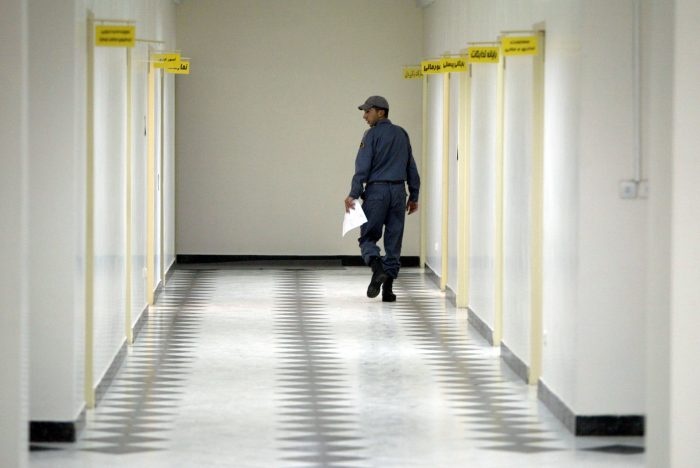
File photo shows an Iranian soldier walking in a corridor of Evin prison during a journalist’s visit to the prison in Tehran, Iran on June 13, 2006. Esha Momeni, 28, an Iranian-American student from Los Angeles is imprisoned in Tehran and is not being allowed to talk to her family, her attorney says. Momeni, described as a researcher looking into the status of women in Iran, was pulled over for a traffic infraction in Tehran on October 15 and is now being held at the notorious Evin prison. Momeni has been allowed one phone conversation since her arrest, which her attorney says may have been related to the One Million Signatures campaign, in which women in Iran are pressing for more rights. Several Iranian-Americans were held for months in Iran last year because the government suspected them of working for a “velvet revolution,” and were eventually released without being charged, the BBC reported. (UPI Photo/Mohammad Kheirkhah) (Newscom TagID: upiphotos893509.jpg) [Photo via Newscom]

The debate that rages over U.S. policy towards the Iranian regime under the Trump administration has been marked by a near-constant war of words on social media, editorial pages and blogs with the Iran lobby rising up to challenge every assertion made by Iran critics, as well as deflect from any horrific act committed by the mullahs in Tehran.

The rancor has obscured one important and painful reminder of personal suffering which is the plight of dual-nationals being held as hostages in Iranian prisons by the regime.

These citizens of other countries were arbitrarily snatched up by the regime’s Revolutionary Guard Corps, tossed into prison, and in some cases given secret trials without access to counsel, while others have simply been held without charge or trial.

Most have been subjected to physical, emotional and mental abuses that we would find appalling and even denied much needed medical care as their health has deteriorated as in the case of a British mother who works for a charity organization.

There are five Americans reportedly being held in Iran who were arrested almost immediately after another batch of American hostages were released shortly after the nuclear deal was agreed to and pallets of cold hard cash were flown to Tehran on Iranian jets in a blatant swap.

Iranian officials even boasted of not selling these new hostages for less than $1 billion.

The Iran lobby has been quick to gloss over their plight, only issuing the briefest of rebukes at the beginning and never raising the issue again. The National Iranian American Council has been the most ridiculous in playing this game even through its founder, Trita Parsi, claims one of these hostages, Siamak Namazi, as a close personal friend.

If this is how hard Parsi fights for a friend, I’d hate to see what he does for a relative.

But for the families of these hostages, their pain is real and the struggle to maintain hope is often elusive. They petition the world’s media and beg for the release of their family members from regime officials who ignore them.

This week though, attention has shifted back as family members press their cases again in the media and we observe the passing of the grim decade milestone of one missing American, Robert Levinson.

“I ask myself and my fellow American neighbors: Where is the justice I have come to associate with America?” Robin Shahini, 46, wrote to his family from an Iranian jail.

Shahini was convicted of collaborating with “a hostile government,” the U.S – an accusation his family denies. He was reportedly sentenced to 18 years in prison.

“This charge is unjust and the Iranian government intended to commit this wrong against me, an innocent American citizen, for political purposes. I ask of you, please to not let Iranian government use me,” Shahini wrote in his letter.

“I ask you beloved citizens and all human-loving individuals to not leave me alone and defend my rights, which is also the right of each and every one of you. Defending me is defending yourselves. Do not let me be alone.”

The number of arrests and detentions of visitors…especially dual-citizens… has spiked, warns Lisa Daftari, the editor of the website “The Foreign Desk,” who has followed Shahini’s case.

“In the aftermath of the nuclear deal with Iran, we would expect things to get better,” she said. “But we’ve seen an increase in executions, we’ve seen an increase in crackdowns against journalists, against dual-citizens, against academics, political dissidents, women’s human rights leaders. And this is not what we expected.”

Daftari also said the arrest and trial of Shahini, and other dual-U.S. citizens like him, serves as a broader propaganda purpose for Tehran, according to Fox News.

“The Iranian regime is delivering a stern message to Iranians living abroad, not to get involved in political activity, not to speak out against the regime, and they want Iranians to know that they are in fact being watched.”

Dan Levinson, the son of missing former FBI agent Robert Levinson, penned an editorial in the Washington Post, lamenting his father’s disappearance in Iran for the past 10 years.

“The United Nations Working Group on Arbitrary Detention, which investigates cases of arrest that may be in violation of international human rights law, did something in January that the previous two U.S. presidents failed to do: It announced a finding that my father, retired FBI agent Robert Levinson, was arrested by Iranian authorities without any legal grounds in March 2007 on Kish Island, and it called on the Iranian government to release him immediately,” he writes.

“In finding that Iran has violated international law — and fundamental human decency — by detaining a U.S. citizen and providing him no rights whatsoever, the U.N. working group is being far more aggressive than our own U.S. government has been in 10 years. This is shameful,” Levinson added.

Levinson went on to encourage the new president to pressure Iran for his father’s release.

“If Iran continues to deny holding him and fails to act, Trump can pressure it with tools such as sanctions — which he demonstrated his willingness to use already – or labeling Iran’s Islamic Revolutionary Guard Corps, which was very likely involved in my father’s detention, a terrorist organization. Trump can put my father at the center of every single discussion he has with or about Iran and finally make him a top priority — not just in words like the previous administration, but in action,” he said.

We hope these families can be reunited with their loved ones soon and believe that is only going to happen by applying heavy pressure on the Iranian regime and its leaders.

Laura Carnahan

Filed Under: Blog, News Tagged With: Featured, Iran, Iran deal, Iran Lobby, Iran sanctions, National Iranian American Council, NIAC, Trita Parsi, Tyler Cullis

In Iran the Plight of Women Contradicts International Women’s Day

March 8, 2017 by admin

In Iran the Plight of Women Contradicts International Women’s Day

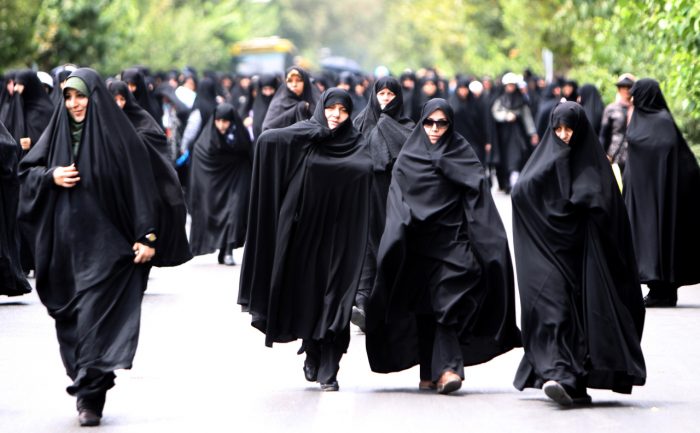
Iranian demonstrators march after weekly Friday prayers in Tehran on July 8, 2011 during a protest asking the government to intensify its crackdown on women and men to enforce the Islamic dress code. AFP PHOTO/ATTA KENARE (Photo credit should read ATTA KENARE/AFP/Getty Images)

The world is taking part in International Women’s Day in a myriad of ways; some of it commercial offering to donate $100 to the cause of your choice, and other’s political with marches planned in the U.S. protesting a wide range of issues from reproductive rights to opposition to administration’s policies.

Women the world over are gathering to reinforce their solidarity with their gender and to support issues of concern to them. It’s an annual spectacle that for many celebrates the freedom and opportunities women are now enjoying everywhere…except in the Iranian regime.

Although International Women’s Day has been around since 1908, its origins as a fight for equal pay and voting rights has morphed into the hashtag #IWD and lost some of its fervor. It’s also at times celebrated not as a call to political arms, but now used to tout corporate branding campaigns emphasizing a product or company’s openness to women.

Unfortunately, the harsh reality is that in many places in the world, women continue to be treated as second-class citizens or even property of their husbands and fathers. Nowhere is that more brutally explicit than in Iran where the ruling mullahs have consistently passed laws that would make any Western feminist breath fire in reaction.

The Iran lobby has tried to cover up this fact by praising window-dressing efforts to empower women in Iran, but those efforts have rung hollow in the face of escalating brutality aimed specifically at women.

Shahriar Kia, a political analyst and member of the Iranian opposition, the People’s Mujahedin Organization of Iran, outlined some of these practices in a piece for American Thinker.

“Iranian regime President Hassan Rouhani has recently been making remarks about women’s rights (!) in an attempt to cloak his portion of the Iranian regime’s misogynist report card,” Kia writes. “In his own memoirs, from page 571 to 573, Rouhani explains in detail how in 1980 he began enforcing mandatory hijab regulations as the mullahs began their historical campaign against Iranian women.”

Rouhani’s tenure has also been the hallmark home of systematic oppression against women, workers, college students, writers, journalists, dissident bloggers; imposing poverty and unemployment on a majority of Iranians; continuous threats made against the media; punishment of political prisoners have increased significantly even in comparison to the years of Iran’s firebrand Mahmoud Ahmadinejad. During Rouhani’s human rights violations-stained tenure, an average of two to three people have been executed on a daily basis, Kia adds.

The mistreatment of women in Iran extends also to non-Iranian women citizens as in the appalling treatment of Nazanin Zaghari-Ratcliffe, a British charity worker who was sentenced to prison for five years by a secret Iranian regime court and has been abused and denied much-needed medical care and given the option of only be able to see her child in prison.

Last year a UN body of human rights experts described her detention as “arbitrary” and said she had been denied a fair trial, according to the Telegraph.

This week, the UN released a new report on human rights in Iran, written by Asma Jahangir, the Special Rapporteur for Human Rights in Iran.

From the outset, it is clear that there has been no marked improvement in human rights in the Gulf nation, despite President Hassan Rouhani signing a Citizens’ Rights Charter in December 2016.

The 14,000-word report discusses both ongoing cases of abuse (like the execution of juveniles) and urgent situations (like the fate of political prisoners denied medical care).

Jahangir, who spoke to non-governmental organizations, intellectuals, lawyers and victims to ensure the accuracy of this report, also covers torture, the bias judicial system, free speech and women’s rights and clearly details just how far human rights, especially for women, have sunk in Iran.

For its part, the Iranian regime as usual blasted the UN report and defended the indefensible in its human rights situation.

In an address to a high-level meeting of the Human Rights Council in Geneva, Iran’s Deputy Foreign Minister Abbas Araqchi denounced a recent resolution raised in the council as “totally baseless and unacceptable,” claiming that political use of human rights by certain countries would pose a real challenge to the council’s goals and undermine and discredit the UN body, according to regime-controlled Tasnim News.

The UN report stated that “the Islamic Republic of Iran has reportedly executed the highest number of juvenile offenders in the world during the past decade. Despite an absolute ban on the practice under international law, the penal code continues to explicitly retain the death penalty for boys of at least fifteen lunar years of age and girls of at least 9 lunar years for qisas (retribution in kind) or hudud crimes, like homicide, adultery or sodomy.”

“The Special Rapporteur urges the Islamic Republic of Iran to take proactive steps to promote the full realization of the rights of human rights defenders and to refrain from any acts that violate the rights of human rights defenders because of their human rights work. The government should take strict measures to ensure that the security and intelligence apparatus does not use reprisals against families of those who monitor or campaign against human rights violations or express views that are contrary to government policies,” the report added.

Aside from the cruelty of human rights in Iran, which includes severe punishments for even minor infractions such as not wearing traditional hijab head coverings, Iranian women are denied economic growth and access to good paying jobs.

According to a Pew Research Center analysis of labor force statistics from 114 nations from 2010 to 2016, the median female share of a nation’s workforce was 45.4%, but in the case of Iran, women made up only a paltry 17.4% of the workforce, ranking near the bottom among all countries.

For all of the talk of empowerment and moderation in Iran by the regime and its Iran lobby supporters, the truth is dismal and the outlook for women even bleaker.

The next time women march for Women’s Day, it might be worth remembering the millions of Iranian women who are denied their futures and can’t even march in protest for fear of arrest and imprisonment.


Filed Under: Blog, News Tagged With: hassan rouhani, international Women's Day, Iran, Iran Lobby, Iran Terrorism, Khamenei, National Iranian American Council, Rouhani, Women's Day

  • « Previous Page
  • 1
  • …
  • 5
  • 6
  • 7
  • 8
  • 9
  • …
  • 34
  • Next Page »

National Iranian-American Council (NIAC)

  • Bogus Memberships
  • Survey
  • Lobbying
  • Iranians for International Cooperation
  • Defamation Lawsuit
  • People’s Mojahedin
  • Trita Parsi Biography
  • Parsi/Namazi Lobbying Plan
  • Parsi Links to Namazi & Iranian Regime
  • Namazi, NIAC Ringleader
  • Collaborating with Iran’s Ambassador

Recent Posts

  • NIAC Trying to Gain Influence On U.S. Congress
  • While Iran Lobby Plays Blame Game Iran Goes Nuclear
  • Iran Lobby Jumps on Detention of Iranian Newscaster
  • Bad News for Iran Swamps Iran Lobby
  • Iran Starts Off Year by Banning Instagram

© Copyright 2026 IranLobby.net · All Rights Reserved.