Iran Lobby

Exposing the Activities of the lobbies and appeasers of the Mullah's Dictatorship ruling Iran

  • Home
  • About
  • Current Trend
  • National Iranian-American Council(NIAC)
    • Bogus Memberships
    • Survey
    • Lobbying
    • Iranians for International Cooperation
    • Defamation Lawsuit
    • People’s Mojahedin
    • Trita Parsi Biography
    • Parsi/Namazi Lobbying Plan
    • Parsi Links to Namazi& Iranian Regime
    • Namazi, NIAC Ringleader
    • Collaborating with Iran’s Ambassador
  • The Appeasers
    • Gary Sick
    • Flynt Leverett & Hillary Mann Leverett
    • Baroness Nicholson
  • Blog
  • Links
  • Media Reports

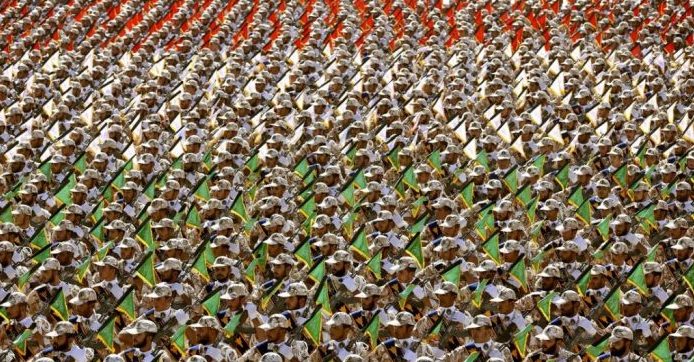
Iranian Revolutionary Guard Corps Stands at Center of Terror

March 7, 2017 by admin

Iranian Revolutionary Guard Corps Stands at Center of Terror

Iranian Revolutionary Guard Corps Stands at Center of Terror

Like the beating heart of a wild animal, the Iranian regime’s Revolutionary Guard Corps stands at the center of almost every piece of chaos, violence and extremism happening in the Middle East today it seems.

The IRGC pumps the engine that powers all the arms of the Iranian war machine that results in terrible human rights abuses and proxy wars raging throughout the region. Its tentacles stretch into almost every part of Iranian society and have been well documented over the past three decades.

Its control of all aspects of Iran’s military and its leadership position in instigating almost every violent act militarily is impressive and deeply disturbing. Needless to say, its conducts warrants nary a word of protest from the Iran lobby. Not even the allegedly peace-loving Ploughshares Fund utters any protests over the IRGC’s worst military excesses.

Just recently, the Pentagon blasted the “unprofessional” behavior of the Iranian navy after two separate incidents in the Strait of Hormuz last week.

According to the Pentagon, an Iranian frigate on Thursday came within 150 yards of the civilian-crewed USNS Invincible.

Then on Saturday, a number of small assault craft came within 350 yards of the Invincible and other ships.

“This was assessed to be a combination of unsafe or unprofessional behavior,” Pentagon spokesman Navy Captain Jeff Davis said.

In both cases, the US ship had to change course to avoid any collision, he added.

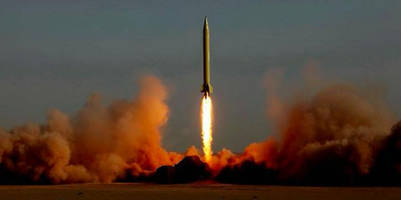
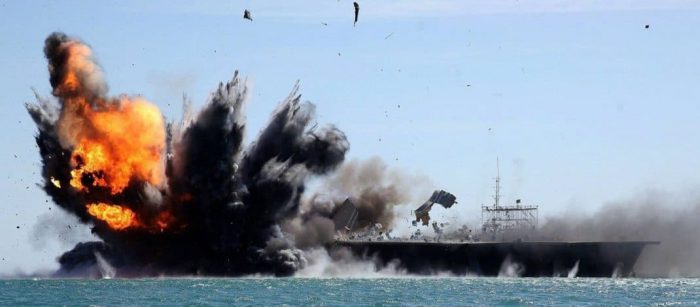
According to Fox News, Iran test-fired a pair of ballistic missiles into the Gulf of Oman over the weekend as well. It was the first time Fateh-110 short-range ballistic missiles have been tested in two years. One of the missiles successfully destroyed a target barge at a range of 155 miles.

One of the missiles launched from the IRGC base in Bandar-e-Jask successfully destroyed a target barge at a range of 155 miles. The other missed its target. U.S. officials told Fox News the latest version of the Fateh-110 missile has an “active seeker” system that helps it target ships at sea.

The new Iranian short-range ballistic missile launches come a week after Iran successfully test-fired Russian surface-to-air missiles, part of the S-300 air defense system Russia sent to Iran recently.

According to the Foundation for Defense of Democracies, Iran has conducted as many as 14 ballistic missile launches since the landmark nuclear agreement in July 2015.

A senior U.S. military official told Fox News that Iran had made great advances in its ballistic missile program over the past decade.

Domestically, the IRGC also leads in the brutal crackdowns that have targeted political dissidents, journalists, artists, women and religious minorities.

The Center for Human Rights in Iran (CHRI) reported that two Iranian Catholic converts were arrested in their home by the IRGC in West Azerbaijan Province.

“At 7 a.m. on February 20 (2017), two plainclothes intelligence agents of the Islamic Revolutionary Guards Corps (IRGC) entered the home of Christian converts Anoohe Rezabakhsh and her son Sohail (Augustin) Zargarzadeh in Oroumiyeh (city) without prior notice and searched the premises and took away personal items such as religious and holy books,” Mansour Borji, the spokesperson for the Alliance of Iranian Churches known as Hamgam, told CHRI on March 3, 2017.

Despite President Hassan Rouhani’s pledges during his election campaign in 2013 that “all ethnicities, all religions, even religious minorities, must feel justice,” the targeting of Christian converts has continued unabated under his administration according to the CHRI.

The central role the IRGC plays in all of these actions means that its leaders are key players in the destabilization going on throughout the Middle East. As Dr. Majid Rafizadeh points out in an editorial in Arab News, the Quds Forces Qassem Soleimani could be called Iran’s “Osama Bin Laden” for his key role in directing much of this chaos.

“He is well-known as the Middle East’s deadliest and Iran’s most dangerous man. He prioritizes offensive tactics and operations over defensive ones, and rejoices in taking overconfident selfies with his troops and proxies in battlefields in many countries, including Iraq, Syria, Yemen and Lebanon,” Rafizadeh said. “When it comes to authority, he is Iran’s second man after Supreme Leader Ali Khamenei. Being a staunchly loyal confidante to Khamenei, Qassem Soleimani has great influence over foreign policy.”

“Soleimani commands at least 150,000 militants, many designated as terrorists and belonging to designated terrorist groups. This is why Iran has been repeatedly ranked as the top state sponsor of terrorism by the US State Department,” he added. “Based on my research, there are more than 250 terrorist groups worldwide, with different religious and sociopolitical backgrounds. Roughly 25 percent of them are funded, trained or supported by only one entity, the Quds Force.”

All of this is important as the Trump administration debates whether or not to designate the IRGC as a Foreign Terrorist Organization as a whole rather than simply designating individuals such as Soleimani.

No doubt the Iran lobby will raise its collective voices into another shrill call opposing any designation and warning of dire consequences, but this time the push back is coming strongly from many quarters.

Michael Tomlinson
Filed Under: Blog, News Tagged With: Featured, Iran, Iran deal, Iran Terrorism, IRGC, Khamenei, Sanctions

Case For Designating the IRGC as Terrorists Builds

February 15, 2017 by admin

Case For Designating the IRGC as Terrorists Builds

Case For Designating the IRGC as Terrorists Builds

Momentum continues to build for the U.S. to designate the Iranian Revolutionary Guard Corps a Foreign Terrorist Organization as a whole. Much of that momentum stems from the IRGC’s own actions over the years in supporting terrorism worldwide as well as initiating, supplying and controlling many of the proxy wars breaking out throughout the Middle East.

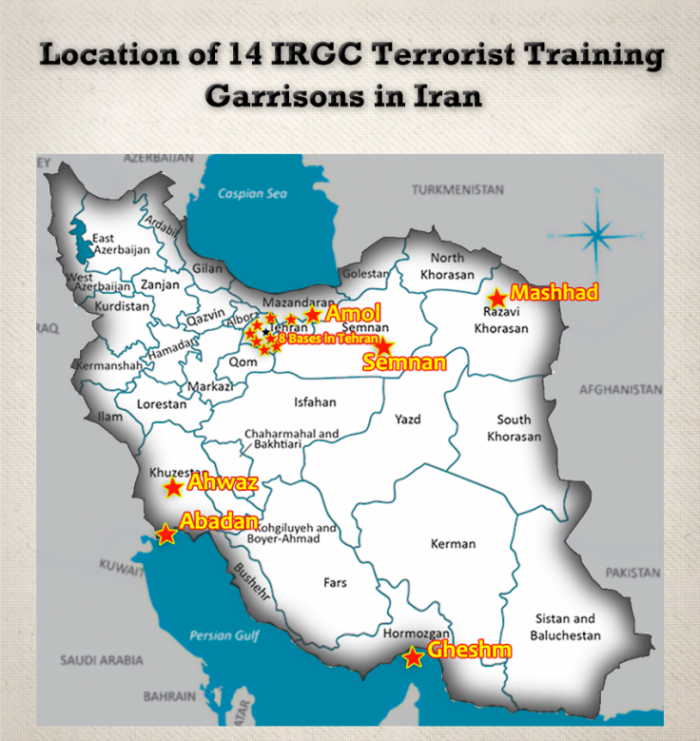
Even though there has already been well-documented disclosures about the IRGC’s illicit activities, new information continues to come to light as was the case on Tuesday when the National Council of Resistance of Iran (NCRI), a leading global organization of Iranian dissident and human rights groups, held a press conference in Washington, DC to disclose details of the IRGC’s terrorist training activities.

Alireza Jafarzadeh, deputy director of the Washington Office of the NCRI, presented information to reporters gathered by the social network of the People’s Mojahedin Organization of Iran, a dissident group located inside Iran. He said that information shows that since 2012, the NCRI has seen an increase in the training of foreign nationals in its terrorist training camps, which threatens a wide scope of countries, not just those beset by conventional warfare.

Using intelligence gleaned from sources within Iran, the NCRI claimed that the IRGC had created a training command operating dozens of military bases across Iran specializing in all aspects of warfare with units divided by national origin and specialization such as missile and naval operations to insurgency and urban warfare.

The IRGC that is answerable only to the Iranian regime’s top mullah, Ali Khamenei. It specializes in insurgency and guerilla tactics and is notorious for having supplied most of the IEDs used by Iranian-controlled Shiite militias in Iraq targeting U.S. and foreign troops; resulting in the deaths and wounding of thousands of Americans.

The IRGC was the initial unit that came to the rescue of the Assad regime in Syria as it teetered on the brink of collapse by smuggling in weapons and cash, as well as recruiting and directing Hezbollah fighters. It eventually expanded its role to include Iranian military, as well as the recruitment of Afghan mercenaries and deployment of Shiite militias from Iraq.

According to the NCRI, every month, hundreds of forces from Iraq, Syria, Yemen, Afghanistan and Lebanon — countries where the regime is involved in frontline combat — receive military training and are subsequently dispatched to the various frontlines. For operations in countries where there is no open warfare – including Persian Gulf countries, such as Bahrain and Kuwait – terrorists cells are trained instead.

The NCRI highlighted 14 IRGC training camps, as well as described the command structure, detailing how the commander of the Training Directorate, reports directly to Quds Force Commander, Qassem Soleimani.

Terrorist training for operatives from across the globe is commanded by Colonel Tahmasebi. Codenamed ‘320’, the commander of heavy weapons training at Imam Ali military base is Colonel Ali Mohammad. In charge of ‘VIP Security’ is Colonel Ramky, the NCRI said.

The sheer scale of the Training Directorate’s efficiency in producing fighters is underscored by the fact that just one of its training camps is currently sending 2,000 Afghans to Syria every week, according to the NCRI.

“The IRGC is actually the entity that runs the whole show when it comes to terrorism,” even though they are spearheaded by the Quds force, Jafarzadeh said. “You cannot do the separation. You cannot have the Quds force designated as a terrorist entity, but not the IRGC.”

Jafarzadeh said there is bipartisan support in Congress for the designation of the IRGC as a terrorist group, and suggested that with the new Trump administration, there is “a better possibility for those measures to move forward.”

The disclosures by the NCRI are significant since they provide first-hand and eyewitness accounts of the IRGC and Quds Force activities as it relates to the active support of terrorism and terror-related operations. It also points out with disturbing clarity the efforts by the Iranian regime to ramp up its military activities outside of its borders during the time it sought to portray itself as a “moderate” nation intent on resolving disputes peacefully.

Another example of those destabilizing activities has been the IRGC’s initiation of the revolt in Yemen with Houthi rebels supplied by IRGC forces; mostly smuggled aboard non-descript fishing boats in the Gulf of Aden.

Many of these ships have been intercepted and weapons confiscated by Saudi Arabian and Gulf State warships; the arms eventually traced back to Iranian factories.

Sanam Vakil, Ph.D an Associate Fellow at Catham House told IBTimes UK that the PMOI report spoke to the extent of the IRGC’s training scheme, although she could not independently verify the numbers.

“What I take from this is that this is a very sophisticated operation,” Vakil said. “Iran’s strategic strength is in a-symmetrical proxy relationships. Its conventional military is weak particularly in Iraqi and Syria they have had success in the past. Of course we also know they are the God Parents of Hezbollah.”

It is becoming increasingly clear that in order to effect the growth of Islamic-inspired terrorism abroad, the restraint of the IRGC will be a key factor. Designating it a FTO would be an important step in the right direction.

Michael Tomlinson

Filed Under: Blog, News Tagged With: Featured, Iran, Iran deal, Iran Human rights, Iran Mullahs, Iran Terrorism, IRGC, Khamenei, Syria, Yemen

Iran Lobby Echo Chamber Going Full Bore to Support Iran Regime

February 10, 2017 by admin

Iran Lobby Echo Chamber Going Full Bore to Support Iran Regime

Iran Lobby Echo Chamber Going Full Bore to Support Iran Regime

With the Trump White House announcing a series of new sanctions aimed at officials of the Revolutionary Guard Corps for the Iranian regime’s ballistic missile program, as well as contemplating broad new sanctions stemming from a possible designation of the IRGC as a terrorist organization, the Iran lobby and supporters of the regime have launched an all-out PR effort to prop up the faltering regime.

In a campaign similar to the infamous “echo chamber” of academics and advocates furiously penning editorials and giving interviews to sympathetic media outlets, the Iran lobby is trying anything to deflect attention on the regime’s militancy and instead claim anything aimed at punishing the regime is somehow racist or a prelude to armed conflict.

But the effort to come to the aid of the mullahs in Tehran isn’t just limited to the usual assorted Iran sympathizers as European Union foreign policy chief Federica Mogherini met with U.S. Secretary of State Rex Tillerson and spoke “at length” about the Iran nuclear deal according to Reuters.

Mogherini helped negotiate the 2015 nuclear deal with Iran, along with diplomats from Iran, the United States and other major world powers. The deal curbed Iran’s nuclear program in return for sanctions relief said Reuters.

Trump has said the deal is terrible, and Flynn put Iran “on notice” last week for test-firing a ballistic missile, raising the prospect of spiking tensions between Iran and the United States.

Since the deal, Mogherini has visited Tehran while the regime commenced a series of ghastly executions of men and women; none of which were protested by the EU.

Even Russia Today weighed in as well by publishing an opinion piece by John Wright, an outspoken supporter of the Iran nuclear deal, who took the Trump administration to task for focusing on Iran instead of the world’s “number one terrorist state” in his mind—Saudi Arabia.

“The Trump administration’s consistent and ongoing demonization of Iran flies in the face of reality in which Iran has stood, alongside Syria, Russia, the Kurds, and the Iranian-backed Lebanese resistance movement Hezbollah, as a pillar against the very same Salafi-jihadist terrorism that poses a threat to the American people,” Wright said in a splendid example of mimicking the very same messages consistently uttered by the National Iranian American Council and other Iran lobby members.

Wright went on to hammer Saudi Arabia, while essentially excusing the vile acts of ISIS and downplaying anything the Iranian regime has done by comparison. His logic or lack thereof defies commonsense and represent the intellectual vacuum that characterizes much of the Iran lobby’s arguments.

In a more flimsy example of casting doubt on efforts to designate the IRGC a terrorist organization, the Chicago Tribune offered up a story with the dubious headline of “Warnings for White House on terror designation for Iran Revolutionary Guard” and goes on to hint at warnings from defense officials, but neglects to mention anyone specifically, nor offer a single quote against the planned designation.

It does however rehash the discredited story of the terror designation of Iranian dissident groups in a message point repeatedly endlessly by the Iran lobby as part of the smear campaign against opposition groups.

Another Iran lobby message point was trolled out by William O. Beeman, an anthropology professor and not a national security expert, who nevertheless offered up the same silly arguments that folks like Trita Parsi and Reza Marashi of NIAC put forth, in an editorial.

“The tiny issue on which the US objection rests is whether the Iranian missiles are capable of carrying a nuclear warhead. Iran says: no! The United States (and Israel) say ‘maybe,’ because they can’t know for sure whether this is the case. In the latest missile test, the missile blew up, so no one can say one way or the other,” he writes.

Beeman should stick to teaching about dead civilizations.

The issue of ballistic missiles is not a “tiny” one. Iran’s development of longer-range missiles based on illicitly acquired North Korean designs has produced missiles with over a 2,000-km range, giving it intercontinental reach. Tie this with the development of solid fuel boosters and you now approach the threshold weight necessary for a nuclear weapon. But put that aside, it is more than enough thrust and range for a chemical or biological weapon to be aimed at Eastern Europe, North Africa and India and China.

The Economist went even further claiming that Trump’s punitive actions against the Iranian regime were actually helping it.

Most incredulous of all was the opening line from the piece which claimed “the ritual chants of ‘Death to America’ had grown fainter in recent years. The feverish crowds had thinned. Some demonstrators seemed to wave Uncle Sam banners less to jeer America than to cheer it. Yet thanks to Donald Trump this year’s annual rally to commemorate Islamic Revolution Day on February 10th in Tehran looks set to be one of Iran’s biggest.”

The Economist fails to mention that the regime can ramp up attendance any time it needs to with help from the Basij paramilitaries to round up supporters under threat of beatings and the chants aimed at America have not stopped and will never stop under the mullahs.

It also makes the same mistake all media make who do not understand the dynamics of the mullahs’ hold over Iran by continuing to make a distinction between “hardliners” and “moderates” in Iran’s government.

Let’s set the record straight: There are no moderates in Iran’s government. Moderation within the regime is akin to making distinctions between the SS and Brown shirts in Hitler’s Reich. It’s only variations on the theme of extremism. One could say that compared to ISIS, Al-Qaeda looks like a Boy Scout troop.

The argument that Trump only emboldens the “hardliners” is a self-fulfilling prophecy since the hardliners have been and always will be in control of Iran.

Michael Tomlinson

Filed Under: Blog, News Tagged With: #NuclearDeal, Featured, Iran, Iran deal, Iran Lobby, Iran Mullahs, Iran Terrorism, National Iranian American Council, NIAC, NIAC Action, Reza Marashi, Trita Parsi

Possible Designation of IRGC as Terror Organization Huge Step Forward

February 9, 2017 by admin

Possible Designation of IRGC as Terror Organization Huge Step Forward

Possible Designation of IRGC as Terror Organization Huge Step Forward

The Trump White House’s deliberations over designating the Iranian regime’s Revolutionary Guard Corps as a Foreign Terrorist Organization (FTO) is a monumental and long overdue step on the road to finally blocking the expansion of extremism in the region.

For too long, past administrations have placed sanctions on aspects of the IRGC, including specific leaders and even units within it such as the Quds Force, but none had been willing to seriously raise the question about designating the IRGC as a whole.

For the U.S., this administration’s team is making a series of calculations based on the fundamental truth about the IRGC, which is that to solve the puzzle of rising Islamic extremism, you cannot nibble at the edges, but have to attack it at its center.

The White House is likely to move more quickly on the designation of the Islamic Revolutionary Guard Corps, which could be less of a challenge to implement, one person familiar with the discussions said. It was unclear when a decision would be made on that designation, according to the Wall Street Journal.

The Revolutionary Guard is the Iranian regime’s elite military unit and reports directly to top mullah, Ali Khamenei, with a command separate from Iran’s traditional military. It was established following the 1979 Islamic revolution in Iran and over the past decade has also grown to dominate Iran’s economy, with holdings in property, oil and gas and telecommunications. U.S. officials estimate the IRGC controls as much as 50% of Iran’s economy.

The Trump administration last week imposed new sanctions on more than two dozen Iranian individuals and entities in retaliation for the country’s latest ballistic missile test launch, in January.

Taking the step of designating the Revolutionary Guard as a terrorist organization would give the U.S. further latitude to target the IRGC’s finances and companies, which would affect large sectors of Iranian regime’s economy.

Emanuele Ottolenghi, an expert at the Foundation for Defense of Democracies who supports the move to designate the IRGC, said it would go beyond efforts by the Bush administration to more narrowly target the military group’s illicit trade and funding for terrorism.

“The net effect would be more significant. It would cast the net more widely,” he said.

According to the Journal, there is broad and bipartisan support within Congress to designate the IRGC and levy additional sanctions much to the chagrin of the Iran lobby which went into full-defense mode and scrambled to block this latest in a string of moves aimed at the regime.

Loyal regime ally, the National Iranian American Council issued talking points opposing the designation which was a verbatim regurgitation of past defenses of the regime and offered nothing new; hanging its hat on the sole prospect that the nuclear deal would be jeopardized.

The move to designate the IRGC strikes at the very heart of the economic engine that fuels the mullahs rule and expansion of terrorism in the region.

Without access to the ill-gotten gains they secure from the industries controlled by the IRGC, the mullahs could not support their proxy wars, could not upgrade its military and could not continue to funnel cash to the Assad regime in Syria or keep Hezbollah afloat.

As pointed at in a piece for the Daily Caller, targeting the IRGC is the culmination of a long series of militant actions by the IRGC that has resulted in loss of U.S. lives.

Iran and elements of the IRGC were implicated several times in assisting in the killing of U.S. soldiers in Iraq. Marine Gen. Joseph Dunford, chairman of the Joint Chiefs of Staff, told Congress a year ago, “I know the total number of soldiers, sailors, airmen and Marines that were killed by Iranian activities, and the number has been recently quoted as about 500.”

It could also cripple the Iranian regime to a point where the prospect of true democratic reforms could finally emerge.

Of course all of this is only hopeful speculation at this point, but the prospect of aggressive action against the regime after years of trying to appease the mullahs bore no fruit is a welcome turnaround for critics of the regime and should provide a valuable morale boost to the long struggle against the regime waged by Iranian dissident groups.


Shahriar Kia, a political analyst and member of the Iranian opposition, the People’s Mujahedin Organization of Iran (PMOI, also known as the MEK), wrote in the Hill that the Kayhan daily, the known Khamenei mouthpiece, revealed the Iranian regime’s terrified status quo, describing this as a “historic turn.”

“There are times when developments take such an unprecedented pace, making any forecasting about the future quite difficult,” the piece reads.

Iranian Deputy Foreign Minister Abbas Araqchi said in a recent TV interview Tehran’s foreign policy will face serious crises with Donald Trump coming to the White House.

Ali Khorram, an Iranian Foreign Ministry official, suggested the mullahs’ regime should use “common sense” and keep a low profile during such times.

The state-run Iran daily wrote, “This measure by Iran provides an excuse for Trump to take actions against Iran, increasing his intention to disrupt the status quo resulting from the Iran nuclear deal.”

That has to be pretty disturbing to them.

Laura Carnahan

Filed Under: Blog, Current Trend, National Iranian-American Council, News Tagged With: Featured, Iran, Iran deal, Iran Human rights, Iran Lobby, Iran Terrorism, National Iranian American Council, NIAC, NIAC Action, Sanctions

Iran Lobby Tries to Deflect from More Sanctions With Smear Campaign

February 6, 2017 by admin

Iran Lobby Tries to Deflect from More Sanctions With Smear Campaign

Iran Lobby Tries to Deflect from More Sanctions With Smear Campaign

The mullahs in Tehran are probably wondering how things went so bad, so fast for them as the Trump administration followed up it’s tough talk of putting the Iranian regime “on notice” with new sanctions aimed at its ballistic missile program.

The difference from the accommodating Obama administration to the Trump approach to Iran has been night and day and one that must be causing consternation in Tehran. It has also spurred the Iran lobby into action to try and defuse the rising tide of momentum against the Iranian regime.

For the Iran lobby, it is taking a page out of their old playbook to attack and smear anyone even remotely associated with the Iranian resistance movement. The latest example has been the effort to try and smear one of President Trump’s cabinet secretaries and his circle of advisories. In this case, Elaine Chao, confirmed last week as transportation secretary, and former New York mayor Rudy Giuliani.

The Associated Press’ Jon Gambrell ran a story saying that Chao, while as a private citizen, was paid a speaking fee from a human rights group associated with an Iranian dissident group that had at one time been placed on the U.S. State Department’s terrorism watch list only to be removed after the facts in question were proven untrue.

Chao herself confirmed she received $50,000 in 2015 for delivering a speech to a rally held in support of human rights in Iran sponsored by a coalition of human rights and dissident groups under the umbrella of the National Council of Resistance of Iran.

One of the groups belonging to the coalition is the Mujahedeen-e-Khalq (MEK), otherwise known as the People’s Mujahedin Organization of Iran. Giuliani was also a featured speaker and paid an honorarium.

The list of supporters of the Iranian dissident movement though is much broader and bipartisan than the AP intimates, including prominent Republicans such as former speaker of the House Newt Gingrich and Democrats such as former Sen. Robert Torricelli.

From these loose “facts” the Iran lobby has consistently attempted to peddle a “guilt-by-association” theory, which might work if there was anything to be guilty about. The true facts are that former secretary of state Hillary Clinton’s own State Department made the decision to remove these Iranian dissident groups from any watch or terror lists and since then, these groups have worked tirelessly on behalf of the Iranian people.

Moreover, these Iranian dissident groups have proven instrumental in revelations about the Iranian regime’s secret practices, including the first leaks made to the public about Iran’s secret nuclear weapons program and its horrific human rights abuses.

All of which makes Gambrell’s story even more ludicrous since he writes himself that the “nothing was prohibited” about the paid speeches both Chao and Giuliani made. He also neglects to make any comparisons on the other side.

For example, even though the Iranian regime and its functionaries such as the Revolutionary Guard Corps and its Quds Force remain on the U.S. list of designated sponsors of terrorism and that these groups supplied the IEDs to Shiite militias in Iraq that killed and wounded thousands of U.S. men and women service personnel, the Obama administration felt it okay to engage in active diplomacy and agree to a nuclear deal.

The difference is appalling.

What is even more curious about Gambrell’s article is how he takes the Iranian dissident groups to task for cheerleading against the Iranian regime and recruiting American political leaders to the cause.

Last time we checked, we didn’t see any problems in opposing the public execution of women and children in Iran or the arrest and imprisonment of dual national citizens, including Americans or the use of terrorist proxies such as Hezbollah to eradicate entire Syrian villages of men, women and children.

Gambrell even goes to the deepest, darkest well of lies promoted by the Iran lobby in trying to link these dissident groups to attacks on Americans in 1975 (which he admits, has been rejected by the organization, as all its leaders were in Shah’s SAVAK prisons), but fails to mention the Americans killed by Iranian agents in Lebanon, Syria, Saudi Arabia, Afghanistan and Iraq. At some point, any reasonable journalist would ask the question why is it okay to excuse Iranian regime-sponsored killing of Americans, yet try to appease and accommodate that same regime.

Gambrell’s biggest complaint about the Iranian dissident movement seems to be its effectiveness in fundraising and communicating its message to global media. In that regard, these groups are no different than environmental activists or free trade protestors.

To say these claims have been discredited over and over again would be redundant and eventually pointless since Chao, as transportation secretary, has no influence over foreign policy, unless the U.S. plans on building a new subway in Tehran, but it seems this is the best the Iran lobby can come up with these days as it sees the Trump administration take its first firm steps in finally holding Iran accountable once again.

While the initial sanctions announced by the Trump administration seem relatively minor in scope and effect by targeting Iranian officers and executives tied to the IRGC, it also included related Chinese, Emirati and Iranian business executives for their role as well.

The expansion is important since it broadens the scope of what the U.S. is looking for in terms of suppliers to the regime, but it also signals that the administration is open to widening the net in the future.

U.S. lawmakers are drafting legislation that would require the White House to designate Iran’s elite military unit, the Revolutionary Guard Corps, as a terrorist organization. Companies owned by the IRGC control large sectors of the Iranian economy, according to the Wall Street Journal.

This is a significant step since a broad terror designation for the IRGC, linked to its web of companies in support of an illicit ballistic missile program could make wide sectors of the Iranian regime’s economy open to new sanctions separate and apart from the nuclear deal.

Hence it would be able to sanction Iran’s most corrupt organizations without having to scrap the nuclear deal as the Iran lobby has warned the new U.S. administration would.

All of which is sure to worry the Iran lobby even more and spur even more scandalous lies and falsehoods.

Michael Tomlinson

Filed Under: News Tagged With: #NuclearDeal, Appeasement policy, Featured, Iran, Iran deal, Iran Lobby, Iran Terrorism, IRGC

Iranian Regime Keeps Pushing Extremism In Spite of Controversy

February 1, 2017 by admin

Iranian Regime Keeps Pushing Extremism In Spite of Controversy

Iranian Regime Keeps Pushing Extremism In Spite of Controversy

While fierce debate rages over President Trump’s executive orders on immigration from seven nations with ties to terrorism, including Iran and Syria, the Iranian regime is using this as a distraction while it continues its efforts to keep pushing its extremist actions across the region.

Chief among them was a resumption of ballistic missile test launches in violation of existing restrictions by the U.S. and United Nations. The launch, which took place at a site more than 130 miles east of Tehran, is Iran’s first real test of the Trump administration.

The missile was tracked flying southward 650 miles before exploding when its reentry vehicle failed, according to officials who weren’t authorized to speak publicly on intelligence.

The missile has been tested before, officials said, most recently in July 2016, according to the Los Angeles Times.

White House spokesman Sean Spicer told reporters Monday that the administration was aware the test took place, but wouldn’t provide additional information.

“We’re looking into that,” he said. “We’re aware that Iran fired that missile. We’re looking into the exact nature of it, and I’ll try to have more for you later.”

Christopher Harmer, a military analyst at the Institute for the Study of War, a nonpartisan public policy group in Washington, said that it’s impossible to know if Tehran conducted the test as a response to the president’s action, but that the test also serves as propaganda.

“Iran is always working on every aspect of its missile program: better guidance, more payload capacity, and better reliability,” he said. “They test often so it’s difficult to say for sure whether this is a response to the travel ban, but the timing is suspect.”

Trump, as a presidential candidate, was deeply critical of the landmark 2015 nuclear deal with Iran, calling it “the worst deal ever negotiated.”

U.N. Resolution 2231, passed shortly after the nuclear deal was signed, calls on Iran “not to undertake any activity related to ballistic missiles designed to be capable of delivering nuclear weapons, including launches using such ballistic missile technology.”

The U.N. will now determine whether the launch was a violation at an emergency meeting of the U.N. Security Council to be held Tuesday.

Sen. Bob Corker, chairman of the Senate Foreign Relations Committee, condemned Iran for the missile test.

“No longer will Iran be given a pass for its repeated ballistic missile violations, continued support of terrorism, human rights abuses and other hostile activities that threaten international peace and security,” Corker, a Republican from Tennessee, said in a written statement.

President Trump on Sunday spoke with King Salman of Saudi Arabia, a conversation in which the two “agreed on the importance of rigorously enforcing the Joint Comprehensive Plan of Action with Iran and of addressing Iran’s destabilizing regional activities,” the White House said in a statement.

A ballistic missile launch could potentially fall under “destabilizing regional activities.”

The launch also came a day before Jordan’s King Abdullah arrived in Washington for meetings with Vice President Pence and Defense Secretary Mattis as the administration ramped up meetings with Iran’s neighbors to forge a consensus on dealing with the Iranian regime.

The ballistic missile launch wasn’t the end of Iran’s aggressions as Iran-backed Houthi rebels attacked a Saudi warship in the Red Sea Monday killing two sailors and wounding two others according to Fox News.

The Saudi frigate, Al Madinah, was conducting routine operations in the southern Red Sea when the attack occurred.

In October, U.S. Navy warships came under missile attack by Iran-backed Houthi rebels in the same area of the southern Red Sea just north of the Bab al Mandab Strait.

For the first time in history, a U.S. destroyer successfully shot down incoming enemy missiles using SM-2 missiles in the October attack.

Days later Tomahawk cruise missile launched from the USS Nitze destroyed the Houthi radar installations responsible for firing on the U.S. warships.

The Iranian kept up its loud propaganda efforts by issuing official statements saying it would stop using the U.S. dollar in its official statements; an and ultimately futile gesture.

The decision was announced by Central Bank of Iran governor Valiollah Seif during a television interview on the evening of January 29 and, according to the paper, is due to take effect from the start of the new fiscal year on 21 March. It will affect all official financial and foreign exchange reports.

No doubt the move was aimed at making a response to the visa controversy, but if this was the extent of the Iranian regime’s response, it clearly demonstrates how feeble and weak it is in protesting the decision.

It also underscores the fact that the Iranian regime is already excluded from accessing U.S. currency exchanges as part of existing sanctions placed for the regime’s role in supporting terrorism.

Michael Tomlinson

Filed Under: Blog, News Tagged With: #NuclearDeal, Featured, hassan rouhani, Iran, Iran sanctions, Iran Terrorism, nuclear talks

Obama White House Logs Disclose Access to Iran Lobbyists

January 26, 2017 by admin

Obama White House Logs Disclose Access to Iran Lobbyists

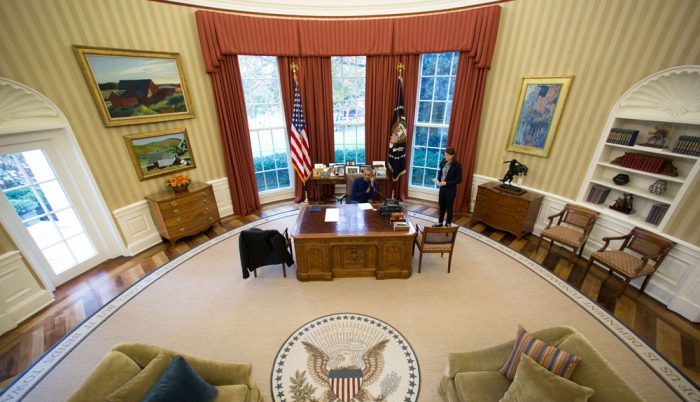
President Barack Obama makes Thanksgiving Day phone calls from the Oval Office to U.S. troops stationed around the world, Nov. 24, 2016. The President’s Coast Guard military aide, LCDR Ginny Nadolny is at right.
(Official White House Photo by Pete Souza)

The Washington Free Beacon disclosed that a former Iranian regime official and a leader in the Iran lobby enjoyed unprecedented access to the White House under the Obama administration.

The two were hosted at the White House for more than 30 meetings with top officials at key junctures in the former administration’s contested diplomacy with Iran, according to White House visitor logs that provide a window into the former administration’s outreach to leading pro-Iran advocates, according to the Free Beacon.

Seyed Mousavian, a former Iranian diplomat and head of the regime’s national security council, was hosted at the White House at least three times, while Trita Parsi, a pro-Iran advocate long accused of hiding his ties to the Iranian government, met with Obama administration officials a stunning 33 times, according to recently updated visitor logs.

Sources familiar with the nature of the meetings told the Washington Free Beacon that both Parsi and Mousavian helped the White House craft its pro-Iran messaging and talking points that helped lead to the nuclear agreement with Iran. These efforts were part of a larger pro-Iran deal “echo chamber” led by senior Obama administration officials who were tasked with misleading Congress about the nature of the deal.

Mousavian, who also served as Iran’s spokesperson during negotiations with the international community on the Iran deal, visited with White House National Security Council official Robert Malley, who advised the former president about the Middle East and the Islamic State terror group.

“Mousavian was Iran’s ambassador to Germany back in the 1990s, when that embassy was the central node of Iran’s European terror network and those in Germany were murdering dissidents in Berlin,” one veteran Iran analyst who frequently works with Congress on the issue told the Free Beacon. “Later he came to the U.S., where he’s being paid for with tens of thousands of dollars from the Ploughshares Fund, which funded the Ben Rhodes echo chamber.”

Parsi, head of the National Iranian American Council, a group tied to the broader Iran lobbying movement and tied to the Obama White House that helped spearhead a pro-Iran narrative, met with several senior Obama administration officials during dozens of visits to the White House, the logs show.

This included private, one-on-one meetings with Obama adviser Ben Rhodes, who helmed what he described as the White House’s pro-Iran deal “echo chamber,” as well as meetings with Malley and Colin Kahl, national security adviser to former Vice President Joe Biden. Parsi also met with the White House NSC’s director for Iran, its senior director, legislative liaisons, and public engagement officials, according to sources familiar with the nature of these meetings.

In one instance, Parsi was signed into the White House by Solomon Tarlin, a West Wing intern and supporter of the Middle East advocacy group J Street.

Free Beacon quoting an expert on Pentagon writes: “Talk about letting the fox into the hen house. Letting the head of an organization whose foreign policy positions are indistinguishable from the Islamic Republic more than 30 times would be analogous to letting the Soviet Union’s chief lobbyist help guide policy during the Cold War.”

“During the Bush administration, Parsi thought nothing of dining with [Former Iranian President] Mahmoud Ahmadinejad, and his private emails, released as part of a court-ordered discovery process, show that he lied to the U.S. press and coached Iranian officials in order to weaken sanctions and promote the Islamic Republic,” The expert said.

The visitor’s logs reveal the depth of Parsi’s involvement in building the false narrative of the Iran nuclear deal and also may explain why the Obama administration was quick to appease the mullahs in Tehran, by forgoing linking such important issues as ballistic missiles, human rights and terrorism.

With the incoming Trump administration, it is almost assured that Parsi’s access to the White House and key advisors has been reduced to zero, which explains why Parsi now has taken to authoring editorials in a tedious effort to influence a monumental shift in American foreign policy.

In many ways Parsi efforts are more akin to the Little Dutch Boy sticking his finger in dike than his previous august position as White House visitor.

In a piece for Foreign Policy, Parsi trotted out the same, tired talking points: Iran is good. Saudi Arabia is bad. Hard liners will be empowered in Iran. Trump’s cabinet picks are war mongers. Iran does not support proxies.

Parsi’s efforts to try and convince everyone that Iran does not fund and control Hezbollah or Shiite militias in Iraqi or Houthi rebels in Yemen is pathetic and patently false. All anyone has to do is follow the trail of cash and arms from Tehran to all parts of the Middle East and you can see how the Iranian regime sits at the center of the proxy wars in the region.

But Parsi’s efforts may be waning as he and his Iran lobby colleagues shift chaotically from issue to issue in an effort to keep up with the wide ranging agenda of the Trump administration which called for a moratorium on Syrian refugees pending verification of their backgrounds in a nod to the Islamic extremist terror attacks taking place across Europe in Paris, Nice, Brussels and Berlin.

A new poll revealed in the Wall Street Journal that support for Hassan Rouhani among the Iranian people has plummeted as years of war and economic stagnation coupled with unrelenting human rights abuses had sapped his favorability.

The survey results paint a picture of an Iranian public wary and skeptical about the economic benefits they thought it would bring as a result of the Iran Deal.

Conducted in December for the University of Maryland, the survey is based on telephone interviews with 1,000 Iranians and provides a gauge of public opinion in a country where independent polling is rare.

“Rouhani’s popularity is taking a hit primarily because he is perceived to have failed to deliver on his campaign promises,” said the president and chief executive of Toronto-based company which conducted the survey on the school’s behalf.

About 51% said the country’s economic conditions were worsening, up from 43% in June. Almost three-quarters of the Iranians surveyed said the deal hadn’t improved people’s living conditions.

With the presidential election looming in May, it is almost assured that the regime will once again rig the election to deliver a candidate in lock-step with the mullahs’ policies and those of top mullah Ali Khmenei.

Michael Tomlinson

Filed Under: Blog, Current Trend, Latest from Lobbies & Appeasers, National Iranian-American Council, News Tagged With: Appeasement policy, Featured, hassan rouhani, Iran, Iran deal, Iran Human rights, Iran Lobby, National Iranian American Council, NIAC, NIAC Action, Rouhani, Trita Parsi

Iran Regime Suffering Setbacks on Multiple Fronts

January 24, 2017 by admin

Iran Regime Suffering Setbacks on Multiple Fronts

Iran Regime Suffering Setbacks on Multiple Fronts

The start of the Trump administration is coinciding with a tougher time for the Iranian regime as it begins to suffer setbacks large and small, causing anxiety amongst the mullahs in Tehran as they try to figure out how to deal with President Trump.

Their initial comments to the new president were cautious and low key as Iranian regime Foreign Ministry spokesman Bahram Ghasemi told reporters on Monday that the Islamic state had no immediate pronouncement on Trump.

Ghasemi says that it’s “too soon to assess him and analyze his remarks, stance and the framework of his viewpoints.”

Ghasemi’s remarks mark the first official comment from Iran on Trump since his inauguration as the 45th American president.

That lack of response may be calculated to minimize the risk of antagonizing Trump or be placed in the infamous target of his tweeting habits which have laid low his political opponents, but for Iran the news to start the week only looked worse.

In the Syrian peace talks that began in Astana, Kazakhstan, Syrian rebel groups have rejected a plan that allows the Iranian regime to play a role in monitoring the ceasefire.

The proposal for a trilateral ceasefire commission, overseen jointly by the talks’ sponsors, is the most specific new measure set out in a draft communique the Russians hope to release on Tuesday, the second and closing day of the talks.

The Syrian fighting groups believe militia linked to Iran, such as Lebanon’s Hezbollah, are – along with Bashar al-Assad’s government – systematically breaching the ceasefire agreed on 29 December. The Syrian fighters believe Iranian regime, as perpetrators of innumerable ceasefire breaches, cannot credibly monitor or enforce a ceasefire, according to the Guardian.

As well as the ceasefire commission proposal, the leaked draft communique also broadly supports the existing UN talks process and calls for joint action to defeat Islamic State and other terrorist groups in Syria.

The fact that Syrian rebel groups actively engaged in fighting Syrian and Iranian regime military units have a seat at the table at last marks a significant step forward in diminishing Iranian influence in the long conflict.

The Syrian civil war erupted over opposition to harsh crackdowns by the Assad regime on the Syrian people and gaining momentum when Iranian regime opted to back Assad with Hezbollah fighters and cash to prop up the regime. The conflict escalated when the Iranian regime recruited Afghan mercenaries, Iraqi Shiite militias and eventually brought Russia into the civil war.

The prospect of peace talks moving forward that pushes the Iranian regime out of the way must be causing severe handwringing in Tehran, but more bad news came for Iran as Ukrainian authorities have confirmed that they seized a shipment of missile system components bound for Iran, according to official statements that could put the Islamic state in violation of international bans on such behavior.

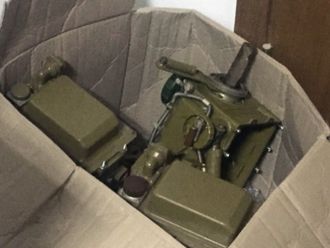
The State Border Guard Service of Ukraine, or DPSU, announced late last week that it had seized at least 17 boxes filled with missile components bound for Iran, according to IHS Jane’s.

“The DPSU said that, during an inspection of the aircraft on 19 January, its personnel had found 17 boxes with no accompanying documents, which the aircraft’s crew said contained an aircraft repair kit,” according to the report. “Three boxes contained components that were believed to be for a Fagot anti-tank guided missile system, the rest contained aircraft parts.”

Days after this finding, the DPSU said that it had confirmed the missile components were destined for Iran’s Fagot system.

Michael Rubin, a former Pentagon adviser and expert on rogue regimes, said that Iran has been illicitly moving such weapons for quite some time.

“This isn’t the first time Iran has gotten caught red handed smuggling weapons with false manifests, for example, in 2010 in Nigeria,” Rubin said. “The question is how often does Iran get away with such smuggling and for what purpose? After all, if the weaponry is legal, there’s no reason for lying. If it’s not, Iran is violating international agreements. Either way, only fools and secretaries of state would trust Iran to uphold its agreements.”

While many countries around the world listened with concern to Trump’s protectionist inaugural address, Gulf Arab officials appear optimistic. In Gulf Arab eyes, that involves above all checking what they see as a surge of Iranian support for paramilitary allies in Syria, Iraq, Yemen and Lebanon and for fellow Shi’ite Muslims in Bahrain and Saudi Arabia’s oil-producing Eastern Province.

There have been tensions over Syria, where Obama dismissed Gulf Arab urgings to give more aid to rebels fighting President Bashar al-Assad, who has survived thanks to Iranian backing.

“Perception is important: Trump does not look like the kind of guy who will bend towards Iran or anyone else,” said Abdulrahman al-Rashed, a veteran Saudi commentator.

“If he behaves as he says, then we will see another Ronald Reagan, someone all the forces in the region will take seriously. That’s what we have missed in the past eight years, unfortunately.”

We can only hope that the Gulf States are right about the new president.

Michael Tomlinson

Filed Under: Blog, News Tagged With: #NuclearDeal, Appeasement policy, Featured, Iran, Iran deal, Iran Terrorism, IRGC, Syria, Yemen

Iranian Regime Under Pressure Everywhere

January 20, 2017 by admin

Iranian Regime Under Pressure Everywhere

Iranian Regime Under Pressure Everywhere

Like some rodent prey being squeezed by a python, the Iranian regime’s mullahs are finding themselves under pressure from all quarters as they find themselves under scrutiny for human rights violations, its militant actions and the deeply flawed nuclear agreement.

The central and most consistent issue confronting the Iranian regime has been its abysmal human rights record which continually has drawn international condemnation for the oppression of dissidents, abuse of women and children, heinous public execution of prisoners and widespread use of torture on political prisoners.

Groups such as Amnesty International have consistently documented these abuses and tried to draw international attention to the suffering at the hands of the mullahs. In its most recent report, Amnesty International described the widespread of medieval punishments including some of the most barbaric practices.

Iran’s persistent use of cruel and inhuman punishments, including floggings, amputations and forced blinding over the past year, exposes the authorities’ utterly brutal sense of justice, said Amnesty International.

Hundreds are routinely flogged in Iran each year, sometimes in public. In the most recent flogging case recorded by Amnesty International, a journalist was lashed 40 times in Najaf Abad, Esfahan Province, on 5 January after a court found him guilty of inaccurately reporting the number of motorcycles confiscated by police in the city.

“The authorities’ prolific use of corporal punishment, including flogging, amputation and blinding, throughout 2016 highlights the inhumanity of a justice system that legalizes brutality. These cruel and inhuman punishments are a shocking assault on human dignity and violate the absolute international prohibition on torture and other ill-treatment,” said Randa Habib, Amnesty International’s Regional Director for the Middle East and North Africa.

“The latest flogging of a journalist raises alarms that the authorities intend to continue the spree of cruel punishments we have witnessed over the past year into 2017.”

According to Amnesty International, under Iranian regime law, more than 100 “offenses” are punishable by flogging. These cover a wide array of acts, ranging from theft, assault, vandalism, defamation and fraud to acts that should not be criminalized at all such as adultery, intimate relationships between unmarried men and women, “breach of public morals” and consensual same-sex sexual relations.

Many of those flogged in Iran are young people under the age of 35 who have been arrested for peaceful activities such as publicly eating during Ramadan, having relationships outside of marriage and attending mixed-gender parties.

The Amnesty International report goes on to document a long list of heinous punishments inflicted by the regime on its own people.

Besides pressure being brought Amnesty International, potential avenues of dialogue may finally be opening between an incoming U.S. administration and Iranian resistance groups that have helped shine a bright light on transgressions by the Iranian regime, not only human rights abuses, but also its then-secret nuclear weapons program.

With the Trump administration taking office, a ripple effect has been moving out affecting the Iranian regime in all sorts of ways, including concern coming from commercial aircraft leasing companies that may be having second thoughts about doing business with the Iranian regime in these uncertain times.

Even though Iran’s flag carrier, Iran Air, last week received the first new jetliner from Airbus, and last year finalized deals to buy 100 planes from the European plane maker and another 80 from Boeing, big aircraft lessors still are reluctant to do business in Iran. “We will remain cautious,” said John Plueger, chief executive of Air Lease Corp.

Trump has voiced skepticism about the Iran accord and “we have to be mindful of that,” Air Lease Corp.’s Plueger said Tuesday at an Airline Economics forum.

U.S. critics of the Iran deal have tried to block financing of the planes. Members of the House of Representatives this week introduced a bill to force the Trump administration’s director of national intelligence to investigate whether planes operated by Iran Air or other carriers are being used to support terrorism.

“We’re asking the intelligence community to provide a full accounting of Iran’s use of commercial airlines to support its global network of terror proxies” including in Syria, Rep. Peter J. Roskam (R-IL) said in a statement Tuesday.

Businesses are worried the U.S. may reimpose sanctions. “There is a substantial snap-back risk,” said Olaf Sachau, chief executive of Intrepid Aviation. Although he sees Iran as an attractive market for plane-leasing companies to do businesses, the U.S. election outcome means tapping the market isn’t on the agenda for now.

These uncertainties have taken the shine off of the anniversary of the nuclear agreement as Hassan Rouhani has tried to celebrate it. Rohani has been saddled by the high expectations he set, as Iran’s economy continues to struggle and the great boost in foreign investment and other benefits he envisioned has so far failed to materialize mostly as a result of the lack of capabilities within the ruling elite and for spending much of the cash in promoting the war in Syria, Iraq, Yemen, etc and on empowering the IRGC at home for domestic repression.

The Iranian currency, the rial, hit a record low against the dollar in recent weeks, prompting fears that efforts to boost the exports of industrial goods will suffer and anticipated foreign goods will be prohibitively costly. The unemployment rate is on the rise, reaching 11.3 percent in 2016 compared to 10.8 in 2015.

In a nutshell, the limited economic progress Rohani’s government has made has yet to trickle down to the average Iranian household in terms of jobs, salaries, and the prices of basic goods. This is something that none other than top mullah Ali Khamenei had to admit, saying in August that Iranians had yet to see a “tangible effect” in their daily lives.

Khamenei has sharpened his criticism. He has continued to emphasize a “resistance economy” aimed at boosting domestic production for export and warned against Western “infiltration” by way of the agreement, highlighting the fact that the mullah’s regime is incapable of making any radical change in country’s economy.

He may be recognizing that as the Iranian regime is getting squeezed again, he and his fellow mullahs will need to crack down harder to keep their tenuous hold on the Iranian people.

Laura Carnahan

Filed Under: Blog, News Tagged With: #NuclearDeal, Appeasement policy, Featured, hassan rouhani, Iran, Iran deal, Iran Lobby, Iran sanctions, IRGC

Trump Effect on Iran Already Seen in Syrian Talks

January 18, 2017 by admin

Trump Effect on Iran Already Seen in Syrian Talks

Trump Effect on Iran Already Seen in Syrian Talks

Donald Trump hasn’t even been inaugurated yet and his effect on U.S. foreign policy is already being felt throughout the Middle East:

  • Saudi Arabia is cautiously optimistic that the policy of trying to appease the Iranian regime under the Obama administration is at an end and that U.S. policy will once again shift back to traditional alliances in the regime that provided security for U.S. allies for the past 50 years;
  • After inserting itself into the Syrian civil war at the behest of the Iranian regime, Russia is now preparing to open new avenues of cooperation with the Trump administration even if Iran is vehemently opposed to them; and
  • The Iranian regime has reaped quick benefits from the Obama administration and the nuclear deal it negotiated including receiving $10 billion in cash and gold, but now is desperate to rake in as much cash as possible with the looming potential of the spigot being shut off by Trump.

A much ballyhooed summit is planned in the Kazakhstan capital of Astana this weekend to discuss a pathway for peaceful resolution of the Syrian conflict, involving Russia, Iran and Turkey, but now Iran is protesting Russia’s proposal to include the U.S. in these talks once Trump assumes office.

Iranian regime foreign minister Javad Zarif stated the regime’s opposition to the U.S. participating in what the regime hoped would be a photo opp moment in the diplomatic limelight for the mullahs in Tehran with these talks.

“We have not invited the U.S. and oppose their presence” at the talks, Zarif said, according to Iran’s Press TV.

Whether Iran would refuse to attend if the United States were invited was not immediately clear. The talks are part of a three-way process led by Russia and including Turkey and Iran — now the three most powerful international players on the ground in Syria. The process is aimed at forging a settlement in Syria after the failure of the Obama administration’s diplomacy, according to the Washington Post.

The opening round is expected to be a modest affair, with representatives of Syrian rebels meeting with members of the Syrian government to discuss the modalities of a shaky cease-fire that went into effect on Dec. 29, Russian Foreign Minister Sergei Lavrov told reporters in Moscow. Representatives of the invited countries will attend in the role of observers, rather than participants.

Although Iran is one of the three sponsors of the peace talks, it has not signed the agreement reached between Russia and Turkey that launched the cease-fire, suggesting that Tehran has reservations about an effort that could potentially erode its extensive influence in Syria.

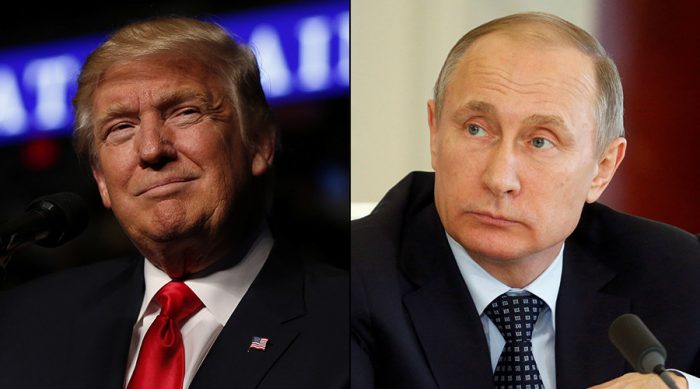
Both Trump and Russian President Vladimir Putin have said they regard Syria as one of the areas in which the United States and Russia could cooperate more closely. Trump has said on a number of occasions that he hopes better relations with Moscow will help counterbalance Iran’s expanding regional role.

That expansion and deepening relationship between Russia and the U.S. could very well leave the Iranian regime out in the cold and without the ability to leverage the two superpowers against each other for its own gain.

Iran has been instrumental in providing the manpower and resources that have helped Assad’s government hold the rebellion at bay. Thousands of Iranian-trained Shiite militia fighters from Iraq and Afghanistan are on the front lines, the Iranian-backed Lebanese Shiite militia Hezbollah is at the forefront of most of the major battles, and Iranian military advisers and commanders are embedded with them in many locations around the country.

All of those gains could be erased should Trump and Putin see eye-to-eye on the necessity to rein in Islamic extremism and view Iran as the regional godfather of radicalized Islamic terror.

That prospect is frankly freaking out the Iranian regime and Hassan Rouhani took to state-owned airwaves to try and keep its attachment to Russia as close as Siamese twins.

“Iran, Russia and Turkey managed to bring a ceasefire to Syria … It shows these three powers have influence,” Rouhani said. “The (Syrian) armed groups have accepted the invitation of these three countries and are going to Astana.”

Asked why the United States and Saudi Arabia had no direct role in the talks, Rouhani said: “Some countries are not attending the talks, and their role was destructive. They were helping the terrorists.”

The prospect of a Trump presidency and realignment with Russia has caused the mullahs to issue pronouncements on a daily basis to try and spin the potential outcomes for the regime after January 20th; most of them bad for the mullahs.

Rouhani went on television to insist that any effort to “renegotiate” the nuclear agreement by Trump is “meaningless” and attributed it simply to Trump making campaign slogans, while his boss, Ali Khamenei, insisted that if the U.S. were to alter the agreement “we will light it on fire.”

Even European Union leaders are coming to the realization that the outcomes over the nuclear deal no longer rely on them, but rather now rest firmly on Trump’s decisions.

Federica Mogherini, the EU high representative for foreign affairs and security policy, who received withering criticism for trips to Iran while political prisoners were being executed, penned an editorial in the Guardian praising the nuclear deal in the hope of staving off its elimination.

It is worthy to note that Mogherini places her support squarely on the economic benefits towards European firms, but makes no mention of the year of terrorism and human rights abuses perpetrated by the Iranian regime and is silent on Syria and the absolute disaster for Europe from millions of refugees that has flooded in.

That kind of silence on important issues of terrorism and war are precisely why Europe has been blistered with multiple attacks in Brussels, Paris, Nice and Berlin and why solving the problem of Iran’s Islamic extremism is the surest path to peace.

Michael Tomlinson

Filed Under: Blog, News Tagged With: #NuclearDeal, Appeasement policy, Featured, hassan rouhani, Iran, Iran deal, Iran sanctions, Iran Terrorism, Khamenei, Rouhani, Syria

  • « Previous Page
  • 1
  • …
  • 6
  • 7
  • 8
  • 9
  • 10
  • …
  • 34
  • Next Page »

National Iranian-American Council (NIAC)

  • Bogus Memberships
  • Survey
  • Lobbying
  • Iranians for International Cooperation
  • Defamation Lawsuit
  • People’s Mojahedin
  • Trita Parsi Biography
  • Parsi/Namazi Lobbying Plan
  • Parsi Links to Namazi & Iranian Regime
  • Namazi, NIAC Ringleader
  • Collaborating with Iran’s Ambassador

Recent Posts

  • NIAC Trying to Gain Influence On U.S. Congress
  • While Iran Lobby Plays Blame Game Iran Goes Nuclear
  • Iran Lobby Jumps on Detention of Iranian Newscaster
  • Bad News for Iran Swamps Iran Lobby
  • Iran Starts Off Year by Banning Instagram

© Copyright 2026 IranLobby.net · All Rights Reserved.