Iran Lobby

Exposing the Activities of the lobbies and appeasers of the Mullah's Dictatorship ruling Iran

  • Home
  • About
  • Current Trend
  • National Iranian-American Council(NIAC)
    • Bogus Memberships
    • Survey
    • Lobbying
    • Iranians for International Cooperation
    • Defamation Lawsuit
    • People’s Mojahedin
    • Trita Parsi Biography
    • Parsi/Namazi Lobbying Plan
    • Parsi Links to Namazi& Iranian Regime
    • Namazi, NIAC Ringleader
    • Collaborating with Iran’s Ambassador
  • The Appeasers
    • Gary Sick
    • Flynt Leverett & Hillary Mann Leverett
    • Baroness Nicholson
  • Blog
  • Links
  • Media Reports

Iran Regime Desperation Shows as It Blames US for ISIS

June 13, 2017 by admin

Iran Regime Desperation Shows as It Blames US for ISIS

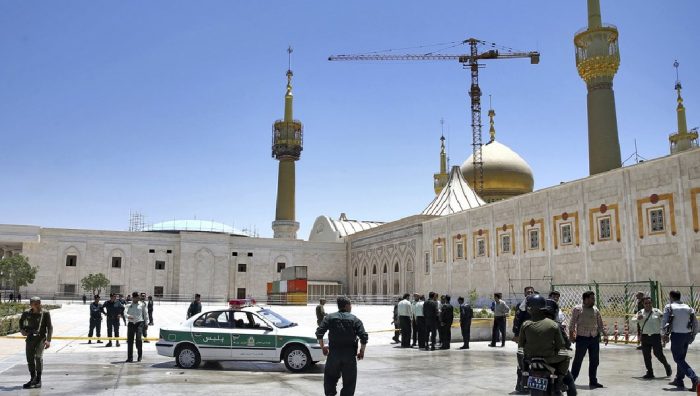
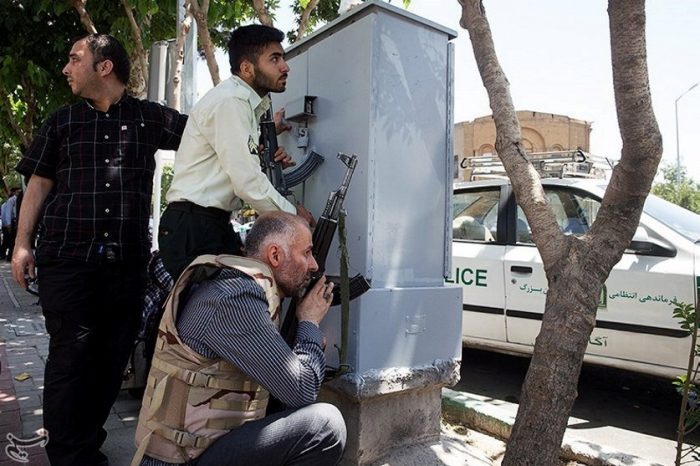
Members of Iranian forces take cover during an attack on the Iranian parliament in central Tehran, Iran, June 7, 2017. Tasnim News Agency/Handout via REUTERS

The Iranian regime pushed out an absurd theory over the weekend blaming the U.S. for the birth and growth of ISIS and continues to push the inane message even though virtually every intelligence and news report refutes the notion.

Of course, the reason the mullahs are pursuing this silly argument is simple: They must blame the recent ISIS attacks in Tehran on someone else otherwise they will face the uncomfortable truth that the terror they have wrought on the rest of the world is finally coming home.

Armstrong Williams, an advisor and spokesman for the presidential campaign of Dr. Ben Carson and a radio host, took that notion to task in a piece in the Hill.

While he correctly sympathizes with the victims killed and wounded in the ISIS attacks, Williams points out that the attacks were less about raining death and destruction on the Iranian regime, as much as making a propaganda point against the mullahs.

“It is also important to recognize the significant role that symbolism plays in both Iranian and Middle Eastern cultures. Which is why the second terrorist attack targeting Ayatollah Ruhollah Khomeini’s tomb complex, the leader of Iran’s Islamic revolution, was a veritable attack at Iran’s core,” he writes.

“These twin terror attacks, striking the mullahs’ parliament and shrine to the Khomeini, represent a very painful bitter pill for the Iranian regime to swallow.”

It’s a harsh wake-up call to the mullahs who have consistently used terror and proxies such as Hezbollah and Shiite militias to wage war on their enemies to see the same thing happen right in their backyard.

“ISIS, the Taliban and al Qaeda have also received support from the extremist Iranian mullahs, which is ironic since each of these terrorist groups’ ideologies are determined to eradicate Shi’ism, which just happens to be the religious backbone of the Iranian regime,” Williams said.

“And the reason for this twisted terrorist support is sickening: Tehran sees benefit in forming tactical alliances with these terrorist entities because they too loath America, and are motivated by a virulent anti-West agenda.”

Many news media and even the Iran lobby often try to portray the combatants in Syria as split on sectarian lines; Sunni vs. Shia with Iran firmly and bravely fighting ISIS, but in truth, Iran sees and has used ISIS as an effective foil for the West, diverting attention from its own actions in Yemen, Iraq and the Persian Gulf.

In fact, the Iranian regime could not have it both ways anymore. It could not—on the one hand—sponsor and export terror and not expect to that to rebound on them down the road. It’s the ultimate act of hubris on the scale of a Greek tragedy.

Amir Basiri, a contributor to the Washington Examiner’s Beltway column, explained how the Iranian regime and ISIS both benefitted from each other.

“The Islamic State clearly owes its rise to Tehran. The violence caused by Iran’s Revolutionary Guards and its affiliates in Iraq and Syria created the perfect breeding ground for the emergence of the Islamic State and allowed it to occupy large swathes of land in both countries,” he writes.

“Reciprocally, the Islamic State returned the favor, causing rampage that provided Iran with the perfect excuse to increase its meddling in neighboring countries. Under the pretext of fighting the Islamic State, Tehran founded and legalized the Popular Mobilization Forces, an umbrella for extremist Shiite groups backed by Iran. The Islamic State also became Iran’s excuse to openly intervene in the Syrian conflict and shore up the Assad regime against opposition forces,” he added.

That recognition by both sides is what has allowed both to flourish as Iran expanded its control over Syria, Iraq and Yemen, while ISIS grew from a small collection of jihadi fighters to a vast terror-nation state with access to cash reserves, oil exports and a tax system.

Only when ISIS began to suffer losses on the battlefield and engaged in inspiring terror attacks worldwide over the past two years have nations finally coalesced in trying to exterminate the group.

The problem for the mullahs in Tehran is what happens if ISIS is eventually eradicated? The excuse they have used for so long in justifying their presence in Syria and Iraq will evaporate, which is why they are now trying to tie ISIS to the U.S. and long-time foe Saudi Arabia.

Only by framing the two as ISIS god parents can Iran hope to legitimize its continued occupation of its holdings.

“This is a reminder that Iran is not part of the solution in fighting the Islamic State or other extremist groups. Islamic fundamentalism can only be eradicated if it is fought in its entirety. This will require the eviction of the Iranian regime and the Revolutionary Guards from the region and the total dismantling of its terrorist proxies,” Basiri adds.

The Iranian regime is already working hard to beat the clock and solidify its foothold with the announcement of the appointment of a new Iranian ambassador to Iraq, not from the diplomatic corps, but from its Quds Forces.

Iran’s most prominent economic daily describes the arrival of Iraj Masjedi in Baghdad to take over Iran’s embassy there. Masjedi is a brigadier-general in the Quds Force who served in several leadership roles in forward operating bases during the Iran-Iraq War.

In recent years, the Iranian press has described him as a senior advisor to Quds Force leader Qassem Soleimani. His promotion to be Iranian ambassador to Iraq suggests that Tehran’s focus in Iraq in the coming years will be military.

That suspicion was amplified with news reports that a blast that killed three people and injured 15 others on Friday in the Iraqi city of Karbala had an Iranian link.

“After the explosion and during the investigation and inspection on Friday night, the Iraqi intelligence forces arrested five Iranians who had explosives and remote control devices at the area near the blast site, in the eastern Abbasid,” an official said on condition of anonymity.

“The security forces transferred the Iranian detainees to the Karbala intelligence headquarters for interrogation,” the source said. “But minutes later dozens of Brigade Ali Akbar and Badr Organization militias supported by Iran surrounded the headquarters of the intelligence of Karbala.”

The source said the militias demanded the release of the five Iranian detainees but their request was rejected by the head of intelligence, who emphasized that he will hand them back only to authorities in Baghdad.

The refusal led the armed militias to break into the intelligence headquarters, where they took the five detainees and the head of the intelligence department.

The strong-arm tactics are nothing new to Iranian-backed militias and heralds a disturbing new chapter in Iran’s involvement in Iraq.

We can only hope that the Quds Forces do not turn Iraq into another Syria in order to find a new distraction for the world.

Michael Tomlinson
Filed Under: Blog, News Tagged With: Featured, hassan rouhani, Iran, IRGC, Khamenei, Syria

Iran Regime Moving Quickly to Exploit Multiple Crises

June 12, 2017 by admin

Iran Regime Moving Quickly to Exploit Multiple Crises

Iran Regime Moving Quickly to Exploit Multiple Crises

The ancient Chinese saying that there is “opportunity in crisis” seems to be have no bigger believer than the mullahs in Tehran lately as the Middle East continues to sink deeper into turmoil and the Iranian regime seeks to exploit the chaos and suffering for its own benefit.

In Syria, there is no argument that Iranian intervention in support of the Assad regime has turned that country into a slaughterhouse and now the mullahs are pushing their advantage through their Shiite militia proxies who now appear to have secured a road link from the Iranian border all the way to Syria’s Mediterranean coastline according to the New Yorker.

The new land route will allow the Iranian regime to resupply its allies in Syria by land instead of air, which is both easier and cheaper.

“The road network, which starts on Iran’s border with Iraq and runs across that country and Syria, was secured last week, when pro-Iranian Shiite militias captured a final string of Iraqi villages near the border with Syria. The road link zigs and zags across the two countries, but it appears to give Iran direct, uninhibited access to Damascus and the government of Bashar al-Assad, which the Iranians have been supporting since the uprising there began, in 2011. Since then, the Iranians have been Assad’s primary backer, sending men, guns, and other material by air and sea,” the New Yorker reported.

The development is potentially momentous, because, for the first time, it would bind together, by a single land route, a string of Iranian allies, including Hezbollah, in Lebanon; the Assad regime, in Syria; and the Iranian-dominated government in Iraq. Those allies form what is often referred to as the Shiite Crescent, an Iranian sphere of influence in an area otherwise dominated by Sunni Muslims.

The Iranian regime has sought to create such a sphere since the end of the Iran-Iraq War, in 1988, which it saw as a Western-backed effort to destroy the regime. That’s why Iran helped create Hezbollah, the Shiite militia that dominates Lebanon, and trained and directed Shiite militias that attacked American soldiers during their occupation of Iraq.

The one significant obstacle standing in the way of this Iranian arms superhighway are the Kurds in the semiautonomous area of Iraq which has plainly stated they don’t want Shiite militias or Iranians transiting their territory.

This may explain why the Iranian regime’s foreign ministry has vehemently opposed a plan by the Kurds to hold an independence referendum.

“The principal and clear position of the Islamic Republic of Iran is to support Iraq’s territorial integrity and solidarity,” Foreign Ministry spokesman Bahram Qassemi said on Saturday in state media.

The Kurdish move was spurred in part by growing Iranian influence within the Iraqi government, culminating the split with Sunni partners by the government of Nouri al-Maliki at the reported behest of Tehran. That split drive Iraqi Sunnis into the arms of a fledging ISIS that secured its first major victory with the fall of Mosul.

Meanwhile the growing standoff between Qatar and fellow Gulf states and Saudi Arabia escalated as the Iranian regime made a show of flying several planeloads of food into the embattled Gulf nation.

Iran sent four cargo planes of food to Qatar and plans to provide 100 tons of fruits and vegetables every day, according to Iranian officials, amid concerns of shortages after Qatar’s biggest suppliers severed ties with the import-dependent country. This is in addition to reports Iran was shipping meat and other less perishable items by small boats.

Qatar has been in talks with Iran and Turkey to secure food and water supplies after Saudi Arabia, the United Arab Emirates, Egypt and Bahrain cut links, accusing Doha of supporting terrorism.

The split could present a rare opportunity for Iran to drive a wedge between its usually tightly allied Sunni adversaries on the other side of the Persian Gulf, analysts said. Iran and the Gulf states are on opposing sides in a number of regional battlefields, including in Yemen and Syria.

Qatar is a member of the Gulf Cooperation Council, along with Saudi Arabia, the U.A.E., Bahrain, Kuwait and Oman. Most of the GCC countries oppose Iran’s regional aims, including its support for Shiite militia Hezbollah in Lebanon and its backing of the Assad regime against a long-running challenge by Sunni rebels.

The Associated Press examined Qatar’s alleged ties to extremist groups including Al-Qaeda and ISIS finding that Qatari finances have indirectly propped up both terrorist groups. Qatar’s support for the Muslim Brotherhood and Hamas have also been problematic as both groups have been destabilizing forces in many Arab countries.

Most worrisome for Arab nations was Qatar’s payment of hundreds of millions of dollars in ransom to Iranian-backed Shiite militias that kidnapped 26 hostages, including members of the Qatar ruling family.

Egypt has asked the U.N. Security Council to investigate reports that Qatar “paid up to $1 billion to a terrorist group active in Iraq” to free the hostages, which would violate U.N. sanctions.

The ransom payments continue a trend that began with President Barack Obama’s payments to Iran for the release of several American hostages as part of the nuclear deal in 2015.

To top things off, Iran sent two warships to Oman before heading to the coast of Yemen in a not-too subtle warning to the Gulf states boycotting Qatar.

The Tasnim news agency reported that the two ships, an Alborz destroyer and a Bushehr logistics warship, will depart from the port city of Bandar Abbas on Sunday for an overseas mission to Oman and then on to international waters.

“An Iranian naval flotilla will depart to Oman on Sunday and then will go to the north of the Indian Ocean and Gulf of Aden,” the agency quoted the navy as saying.


The Gulf of Aden, which lies between the Horn of Africa and the southern tip of the Arabian Peninsula, is a strategic shipping lane which connects the Indian ocean with the Red Sea and Suez Canal.

Meanwhile on the hone front, the Iranian regime took steps to repair the public relations damage caused by the ISIS attacks in Tehran by announcing it has arrested almost 50 people in connection with twin attacks as security forces stepped up efforts to crack down on suspected militants.

Iran’s intelligence minister, Mahmoud Alavi, also declared on state television late Saturday night that Iranian intelligence operatives killed the “commander of the team” that carried out the strikes, the Washington Post reported. Alavi though refused to release the name of the so-called mastermind.

It would not be surprising to find that the Iranian regime used the pretext of the ISIS attacks to arrest and imprison bothersome Iranian dissidents, also the lack of identification of the attack’s planner left many believing there was no successful targeting of those responsible.

But none of this stopped the regime from again trying to point the finger at Saudi Arabia and the U.S. for the ISIS attacks and for the growth of the terrorist group itself.

Iranian armed forces deputy chief of staff Mostafa Izadi claimed that Tehran allegedly has evidence proving that the U.S. provided “direct support to Daesh,” Fars news agency reported.

This followed a similar statement from Russian media that accused the U.S. of aiding ISIS fighters in escaping capture in Syria.

Neither Iran nor Russia offered any proof to back those claims.

Laura Carnahan

Filed Under: Blog, News Tagged With: Featured, Hexbollah, Iran, Iran Terrorism, IRGC, Shiite Militias, Syria

Iran Lobby Tries to Take Advantage of ISIS Attack to Reset Debate

June 9, 2017 by admin

Iran Lobby Tries to Take Advantage of ISIS Attack to Reset Debate

Iran Lobby Tries to Take Advantage of ISIS Attack to Reset Debate

The attack claimed by ISIS on Iranian targets the other day, including the Parliament building that killed 17 people, would normally be cause for universal condemnation and sympathy for the dead and wounded, but only the Iran lobby can find a way to use tragedy for its own purposes as various groups stepped up the rhetorical assaults against Saudi Arabia and the U.S.

Most notable was the National Iranian American Council which issued a full broadside of press statements, tweets, editorials and media interviews all focused on blaming Saudi Arabia, the U.S. and Iranian dissident groups for the attack.

“ISIS has had very little success striking inside Iran. Main reason is they can’t recruit Iranians easily, so no local knowledge,” said Trita Parsi, president of the NIAC. “Only group with local knowledge that can slip into Iran easily is the Iranian terror group the MEK.”

It is interesting Parsi uses the same language as the Iranian regime in depicting Iranian dissident groups as “terror groups” knowing full well these groups are largely engaged in humanitarian efforts, information and news gathering and exposing the corrupt practices the regime government.

But more interesting is how attempting to reset the debate away from the recent history of Iran’s involvement in the bloody civil war that helped spawn ISIS in the first place, but instead pivot to accusations against Saudi Arabia and foreshadowing military action against the kingdom from Iran.

“Iranians believe there has been a lot of provocation, but they’ve been very restrained so far vis-a-vis Saudi Arabia,” Parsi said to the Washington Times. “Now the nation’s leaders are going to be under a lot of pressure from the Iranian public to respond in some way.”

Parsi said aggressive statements by Saudi leaders have “created a context in which the IRGC can convince the Iranian public not only that the Saudis were connected to Wednesday’s attack, but that the U.S. is also connected,” even if there may not be any evidence for such.

According to Vice News, hours before Wednesday’s attacks, Saudi Foreign Minister Adel al-Jubeir characterized Iran as the leading sponsor of terrorism and called for action to be taken against it over its destabilizing actions in the region, where it is involved in Lebanon and Yemen, as well as Syria and Iraq. In turn, Iran blamed Saudi Arabia for supporting the rise of Sunni extremist groups in the region.

Parsi has laid out the argument justifying military action against Saudi Arabia now that the mullahs in Tehran feel they have justification now to engage in even more provocative action. Whereas supplying the Houthis in Yemen to threaten Saudi Arabia’s border was seen as the extent of Iranian actions, Parsi is now laying the intellectual foundation for an ever-widening war.

A curious position for the NIAC to take since its stated purpose is to help resolve differences among Iranian-Americans.

But there is a broader agenda at play here since legislation is moving through the U.S. Senate now to impose new sanctions on Iran for violations of ballistic missile testing. Parsi and his cohorts in the Iran lobby see new sanctions as an existential threat to the Iranian regime and doing all they can to reset the debate away from Iran and even cull some sympathy from the attacks.

The NIAC is now vigorously attacking the sanctions bill and attempting to leverage the ISIS attack into an argument that passing the legislation would even hamper the fight against ISIS.

A corollary to that argument is the opposition by the NIAC to the designation of the Iranian Revolutionary Guard Corps as a Foreign Terrorist Organization (FTO) by the Trump administration.

The NIAC’s Adam Weinstein authored an opinion piece in Defense One arguing that the IRGC was a key element in the fight to oust ISIS from Mosul, Iraq.

“The success of this offensive is in large part due to the ability of the Iraqi army to act as an intermediary between Iran-backed militias and U.S. troops. However, a Senate bill, the Countering Iran’s Destabilizing Activities Act of 2017, will likely lead the Trump administration to label the IRGC as a terrorist group. Combined with the administration’s increased alignment with Saudi Arabia against Iran, this step threatens to fracture this de facto coalition in Mosul, detract from the fight against ISIS, and recklessly endanger the lives of U.S. forces,” he writes.

It’s a stretch of an argument since IRGC troops are now in the forefront in Syria engaging with U.S.-led forces, even to the point where the U.S. warplanes attacked an Iranian-backed convoy of Shiite militias as it approached U.S. bases.

That hardly sounds like the actions of a U.S. ally determined to fight ISIS.

In fact, the truth is Iran’s play in Syria has always been to target anti-Syrian regime forces and largely leave ISIS forces unscathed. Even after persuading Russia to enter the fray, Iranian officers providing targeting data to Russian warplanes not of ISIS positions, but often anti-regime forces and civilian targets in areas controlled by rebels.

What Weinstein, Parsi and their colleagues fail to recognize is that Iran’s own actions are the determining factor in how the U.S. is going to shape its foreign policy. So long as Iran continues the slaughter in Syria, pushes Saudi Arabia with the Houthi rebellion in Yemen, and broadens tensions with its support for Qatar, as well as increasing turmoil in Bahrain, then the regime is going to reap what it has sown.

Michael Tomlinson


Filed Under: Blog, News Tagged With: Adam Weinstein, Featured, IRGC, Khamenei, National Iranian American Council, NIAC, Trita Parsi

Iran Regime Tries to Blame ISIS Attacks on Opposition

June 8, 2017 by admin

Iran Regime Tries to Blame ISIS Attacks on Opposition

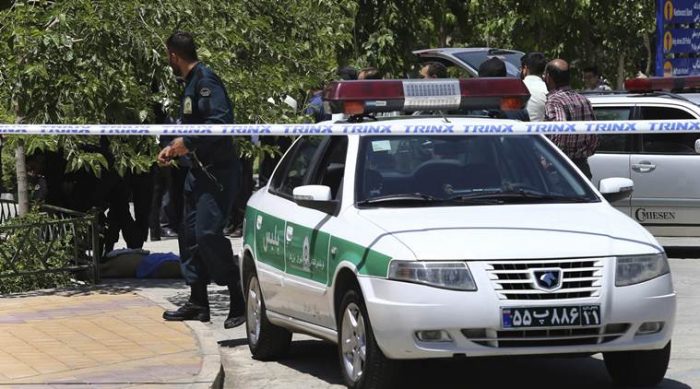
The body of a terrorist, at background left, lies on the ground while police control the scene at the shine of late Iranian revolutionary founder Ayatollah Khomeini, just outside Tehran, Iran, Wednesday, June 7, 2017. Several attackers stormed into Iran’s parliament and a suicide bomber targeted the shrine of Ayatollah Ruhollah Khomeini on Wednesday, killing a security guard and wounding 12 other people in rare twin attacks, with the shooting at the legislature still underway. (AP Photo/Ebrahim Noroozi)

An attack by six assailants armed with rifles and explosives took Iranian regime security forces by surprise the other day in a series of attacks aimed at the heart of the government, including a takeover of the Parliament building and the tomb of the regime’s founder, leaving a dozen dead and 46 wounded that shook the religious theocracy ruling Iran.

The attacks lasted for hours and was claimed by ISIS, which if true, would represent the first successful attack by the terror group on Iranian soil and a significant and somewhat ironic turn of events in the growing sectarian conflict between and extremist Sunni and extremist Shiite ideologies.

Predictably, the default response from Iranian officials was to point the finger of blame at regional rival Saudi Arabia and even Iranian dissident groups such as the Mujahedeen-e Khalq. As Iranian officials struggled in the wake of the attack, one could sense confusion and even a slight note of panic setting in as the prospect of Tehran joining the ranks of cities such as London, Paris and Berlin as prime terror targets began to seep.

For the Iranian regime, much of the blame for the notable rise in Islamic extremist groups lies squarely on its doorstep. The mullahs constant vitriol aimed at Israel, the U.S. and the its Sunni Arab neighbors has only made routine the kind of hate that groups like Hezbollah have acted on for decades.

The use of proxies and terrorist groups has always been a part of the statecraft toolbox for Iran as it has used Hezbollah and the Houthis to conduct open warfare in Syria and Yemen, meanwhile bolstering Shiite militias in Iraq to push Sunnis out of the coalition government there and into the waiting arms of ISIS recruiters.

According to the New York Times, tensions in the Middle East were already high following a visit by President Trump last month, in which he exalted and emboldened Saudi Arabia, Iran’s regional rival. Saudi Arabia and several Sunni allies led a regional effort on Monday to isolate Qatar, the tiny Persian Gulf country that maintains good relations with Iran

In a statement, the Revolutionary Guards Corps said, “The public opinion of the world, especially Iran, recognizes this terrorist attack — which took place a week after a joint meeting of the U.S. president and the head of one of the region’s backward governments, which constantly supports fundamentalist terrorists — as very meaningful,” a reference to Saudi Arabia’s ruling monarchy.

Saudi Arabia swiftly rejected the claim and the Trump White House, while expressing sympathy for the victims, was quick to note that “states that sponsor terrorism risk falling victim to the evil they promote” in a statement.

The MEK also denied any involvement and accused regime officials of a smear attack saying “their intention is to either use this event” against the group or justify their own previous crimes” in a statement.

But that didn’t stop members of the Iran lobby from stepping up to also blame Iranian dissident groups for the attack either directly or indirectly.

Paul R. Pillar, a stalwart for the Iran lobby, wrote in Consortium News blaming the MEK for alleged terrorist attacks in Iran and claiming that prior attacks had left the regime much better prepared to counter terrorism.

We hate to tell Pillar that his measure of “preparedness” by Iranian security forces leaves much to be desired judging by the daylong standoff at the Parliament building.

Pillar even begins laying the ground work for the Iranian regime to step up its terrorist activities in the wake of the attacks saying “in the months ahead, Iran may take actions outside its borders in response to the attacks.”

“Iran may see a need to be more aggressive in places such as Iraq or Syria in the interest of fighting back against ISIS,” Pillar said.

His comments are instructive since the mullahs are likely to use the attacks as an excuse to step up their fights in Syria in to preserve the Assad regime and in Yemen to continue destabilizing the border to Saudi Arabia.

It is not inconceivable that the Iranian regime will use the attacks as a pretext to launch fresh initiatives in places such as Bahrain and Qatar to further split apart the Gulf states and weaken opposition to its regional ambitions to build a Shiite sphere of influence.

Pillar wasn’t alone in trying to drag the MEK into the mud, as Trita Parsi of the National Iranian American Council, gleefully attacked the resistance group in interviews claiming that the MEK was equipped to carry out these attacks because of its channels into the regime and its ties to Saudi Arabia.

“If the goal was to penetrate and destabilize Iran, the MEK clearly was Saudi Arabia’s best bet,” Parsi said. “Still unclear who’s behind the current attack in Iran, but the MEK (and their Saudi backers) are a main suspect. Timing is of course curious. Just last month, A Saudi Crown Prince said Riyadh is working hard to take battle to inside of Iran.”

Parsi and Pillar offered no proof, only suspicions that read like they came from a talking points memo from Ali Khamenei’s office as Iran struggles with the aftermath of the attacks and desperately seeks any scapegoat other than its own support for terrorism.

The roots for these attacks lie squarely in the Iranian regime’s long history of exporting terror as a tool and it has finally come home to bite them.

Michael Tomlinson

Filed Under: Blog, Current Trend, News Tagged With: Featured, hassan rouhani, Iran Attacks, Iran Lobby, Iran Mullahs, Iran Terrorism, IRGC, Khamenei, National Iranian American Council, NIAC, Paul Pillar, Syria, Trita Parsi

Qatar Crisis Has Roots in Iranian Regime

June 6, 2017 by admin

Qatar Crisis Has Roots in Iranian Regime

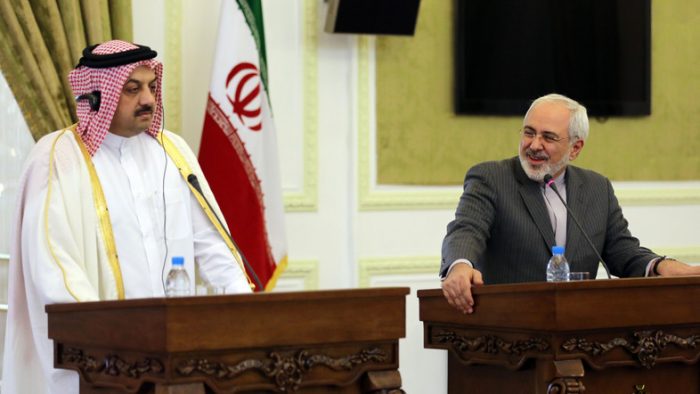
Qatar’s Foreign Minister Khalid al-Attiyah (L) holds a joint press conference with his Iranian counterpart Mohammad Javad Zarif on February 26, 2014 in Tehran. AFP PHOTO/ATTA KENARE

President Barack Obama had long viewed the conflicts raging in the Middle East as having their roots in the classical expansionism of Western powers exerting control over their former colonies and territorial holdings. He also viewed American military use in the region problematic and an incentive for countries such as Iran to oppose U.S. ambitions any way possible, including terrorism.

President Obama understood the rationale for terror and adjusted his foreign policy accordingly in the mistaken belief that openness would be rewarded with cooperation and civility.

This was a driving belief in his quest to negotiate a nuclear agreement with the Iranian regime and caused him to grant concession after concession to secure a deal. His willingness to disconnect issues such as Iran’s support for terror or its abysmal human rights record to the deal cleared a runway for Iranian extremism to become an export product as legitimate as its oil.

While you can’t fault his motives, his judgment was clouded by the allure of a landmark deal that could cement his status in history books as a peacemaker. It’s also why he steered away from every seriously wading into the Israeli-Palestinian conflict; seeing no end game resolution for that problem. This also carried the price of sending the U.S.-Saudi relationship to a historic low point.

The problem is that his basic assumptions about the nature of the Middle East was wrong and the new calculus of a new order in the region is quickly taking shape.

For many decades, the Arab world was uniformly united in using the Israeli-Palestinian conflict as the primary talking point in diplomatic circles, but with the ascendance of the Iranian regime over the last few years, the Arab world and Iran’s neighbors have quickly re-calculated the risks of allowing Iran unfettered freedom.

For the Syrian people, that price has been exorbitant as Iran has used its own Revolutionary Guard Corps and Quds Force troops, alongside Hezbollah fighters, Iraqi Shiite militias and recruited Afghan mercenaries to fight on behalf of the Assad regime.

In Yemen, Iran has armed Houthi rebels to open another front against Saudi Arabia and pose a very real and significant threat to the Kingdom. Add to that efforts to control Iraq as a Shiite proxy and you get the birth of ISIS and other extremist groups.

The Middle East has quickly devolved into a free-fire zone of wars breaking out everywhere.

It doesn’t take a rocket scientist to see the mullahs in Tehran behind much of the machinations taking place aimed at their Sunni rivals, which explains why the latest flare up involving the tiny Gulf state of Qatar exploded this week.

The Atlantic spelled out the problems Qatar’s neighbors have had with the oil-rich nation over the past decade.

Bahrain, Saudi Arabia, and the UAE, last cut ties with Qatar in 2014, withdrawing their ambassadors from the country for nine months. But this latest standoff has gone markedly further. For one thing, it includes economic sanctions—and given that Qatar’s only land border is with Saudi Arabia, any disruption to the flow of goods and people by air, land, or sea, could cause rapid economic dislocation and lead to social or political unrest, the Atlantic reported.

While it remains unclear what the Saudi and Emirati endgame is, the roots of the tensions between Qatar and its neighbors go deep, predating the Arab Spring in 2011 and Qatar’s subsequent high-profile support for Islamist transitions in North Africa and Syria. In fact, nearly every “crisis” in the six-member Gulf Cooperation Council (GCC) over the past quarter-century has, in some way, involved Qatar. The other Gulf leaders’ patience with Doha’s sometimes-maverick regional policies may have finally snapped.

A key preoccupation of Qatar’s post-1995 leadership has been the pursuit of autonomous regional policies designed to bring the country out of the Saudi shadow. Qatar’s support for regional Islamists, notably but not only the Muslim Brotherhood, and provision of Doha-based Al Jazeera as a platform for groups criticizing regional states, incited periods of intense friction.

The history of tension between Qatar and the rest of its neighbors has been fraught which explains why the Iranian regime sees an opportunity to extend its influence to Qatar.

Iran immediately blamed President Donald Trump for setting the stage during his recent trip to Riyadh.

“What is happening is the preliminary result of the sword dance,” Hamid Aboutalebi, deputy chief of staff of Iran’s President Hassan Rouhani, tweeted in a reference to Trump’s recent visit to Saudi Arabia.

Trump and other U.S. officials participated in a traditional sword dance during the trip in which he called on Muslim countries to stand united against Islamist extremists and singled out Iranian regime as a key source of funding and support for militant groups.

The prospect of a U.S. president forging a new Arab coalition against Iran must be freaking out the mullahs in Tehran which may explain their near hysterical response to Trump in blaming him for everything.

The fact that Iran and Qatar share a massive gas field in the Persian Gulf provides a strong economic incentive tying them together which may help explain why Qatar has embraced radical Islamist groups.

For Iran’s part, the mullahs are hoping to gain an opportunity to strengthen its relationship with Qatar and drive a deeper wedge into the Gulf states by offering to move food and supplies by convoy into Qatar; a move that Saudi Arabia is blocking.

While the public spat with Qatar may be about regional issues, the underlying central issue has always been about the Iranian regime.

Michael Tomlinson

Filed Under: Blog, News Tagged With: Featured, Iran Mullahs, Iran Terrorism, IRGC, Qatar

London Bridge Attacks Puts Spotlight on Iran Extremism

June 5, 2017 by admin

London Bridge Attacks Puts Spotlight on Iran Extremism

London Bridge Attacks Puts Spotlight on Iran Extremism

The terrorist attacks that have struck London and Manchester have reinforced the essential problem facing nations confronted with homegrown radicalization: How to stem the tide of extremism flowing from a few select terrorist actors in the world.

The core truism about extremism is that it is not something that magically springs into a young man’s mind. It is something created by example and revealed as a pathway of redemption for the disenfranchised, the unhappy, the mentally unstable.

While ISIS and before it, Al-Qaeda, spewed out hate-filled propaganda designed to energize and slightly dement these men and women around the world, the pathfinder for this process has always been the Iranian regime.

Radicalization begins with an idea. From such innocuous beginnings can spring forth great horrors. Nazism in Germany plunged the world into a cataclysmic war. The Iranian regime’s twisted perversion of Islam has created a similar tidal wave of misery around the world.

From its earliest days when the religious clerics took over the leadership of a revolution that meant to topple the Shah’s dictatorship and turned it into a referendum on dictatorial religious power, Iran has been at the epicenter of conflicts not only with the West, but its neighboring Muslim neighbors.

The ruling mullahs have always operated with a fervent belief in the expansion of their control and theocracy; partly to gain material control of funds and assets, but also to build buffer between Iran and the rest of the world.

The mullahs sought to build alliances or simply overthrow governments to create a Shiite sphere of influence in Lebanon, Syria, Afghanistan, Iraq and Yemen; stretching from the Mediterranean to the Indian Ocean.

It has used proxies and terrorist organizations to help fights battles, assassination political rivals, destabilize governments and provide a safe landing zone for Iranian Revolutionary Guard Corps and Quds Force troops to jump in and consolidate its gains.

But for all its successes, Iran now faces a very basic problem: the rest of world now knows the true colors of the Iranian regime.

With each terrorist attack, the world asks a simple question: Why?

The answer is increasingly: Islamic extremism.

The equation is simple to understand; expose potential subjects to an ideology of hate and intolerance and you can turn anyone into a guided weapon.

Iran mullahs have excelled at the practice for decades through their own terrorist proxies and espousing the language of hate. It didn’t matter who the mullahs directed their vitriol at since everyone was fair game.

Death to the Great Satan.

Death to Sunni apostates.

Destroy Israel.

Overthrow the Kingdom.

The targets changed, but the message never did.

Now the mullahs are sensing the tide is changing on them around the world and they are trying to do a backstroke upstream.

That was evident when top mullah Ali Khamenei declared that the London terror attacks were a “wake-up call” for Western nations to go after the sources of terrorism.

Rarely has anyone said something so completely correct and so wildly wrong.

“Repeated blind terror attacks around the world are a wake-up call for the world community,” the official Iranian news agency IRNA quoted Foreign Ministry spokesman Bahram Qasemi as saying.

“To uproot terror, it is necessary that they (Western states) address the root causes as well as the main financial and ideological sources of extremism and violence, which are clear to everyone,” Qasemi was quoted as saying by Press TV.

Iran denies Western charges of sponsoring terrorism, and it is no coincidence that Khamenei tried to hoist blame on Saudi Arabia since the U.S. under the Trump administration has set its sights squarely on containing Iran and forming a new international coalition.

That opposition began with a renewed military commitment in Syria where U.S. forces actively targeted and engaged Iranian-backed forces for the first time.

U.S. military said on Thursday it had bolstered its “combat power” in southern Syria, warning that it viewed Iran-backed fighters in the area as a threat to nearby coalition troops fighting Islamic State.

The remarks by a Baghdad-based spokesman for the U.S.-led coalition battling Islamic State was the latest sign of tension in the region, where the United States has forces at the base around the Syrian town of Al Tanf supporting local fighters.

“We have increased our presence and our footprint and prepared for any threat that is presented by the pro-regime forces,” said the spokesman, U.S. Army Colonel Ryan Dillon, referring to Iran-backed forces supporting Syrian President Bashar al-Assad.

Trump has begun the laborious process of building a new coalition in halting Iranian expansion.

Most recently, during his trip to Saudi Arabia, Trump called for unity against Tehran and told assembled Arab leaders that, “For decades, Iran has fueled the fires of sectarian conflict and terror.”

Under its new director, former Republican Rep. Mike Pompeo, who was a ardent foe of the Iran deal, the intelligence agency has made moves toward more aggressive spying and covert operations.

And, according to The New York Times, Pompeo has found a skilled leader for his Iran operations: Michael D’Andrea, an experienced intelligence officer known as the “Dark Prince” or “Ayatollah Mike.”

D’Andrea, a Muslim convert, has gotten much of the credit for US efforts to weaken Al Qaeda.

Robert Eatinger, a former CIA lawyer who was involved in the agency’s drone program, told The Times it would not be “the wrong read” to see D’Andrea’s appointment as step toward a more hardline policy on Iran.

The attacks in London are only a symptom of the much larger disease of Islamic extremism fueled by Tehran and it’s time to rein it in.

Michael Tomlinson

Filed Under: Blog, News Tagged With: Featured, Iran, Iran Mullahs, Iran Terrorism, IRGC, Khamenei

Iran Regime Expands Its Militant Activities

June 1, 2017 by admin

Iran Regime Expands Its Militant Activities

Iran Regime Expands Its Militant Activities

With Hassan Rouhani ensconced for another four years, the mullahs in Tehran can turn their attention back to the work at hand which is continuing the expansion of the Iranian regime’s extremism and secure the gains it made during four years of an Obama administration’s failed policy of appeasement.

That expansion is on a variety of fronts. First and foremost, the regime is focused on expanding its military capabilities and has made aggressive moves to do so. It’s a vital step for the regime since the Revolutionary Guard Corps and its related units, such as the Quds Force, are the tip of the spear that also happen to control the economic purse strings of the country.

Through an elaborate network of shell companies, the IRGC control most of the major industrial sectors such as oil, manufacturing, telecommunications and financial services. It regularly uses the profits from these enterprises to pay for its military expenditures as well as the proxies it uses in its fighting.

The IRGC also pushed hard for the nuclear deal for one specific purpose which was to lift crippling economic sanctions that were cutting off its supplies of cash and arms. That was vital since the handwriting was on the wall since the Arab Spring democracy protests and the disputed Iranian presidential election of 2009 that the regime was under significant pressure that threatened the rule of the mullahs.

The flawed nuclear offered unjustified concessions for the regime not only because it lifted sanctions and flooded cash back into the mullahs’ coffers, but also it allowed the regime to unlink its abysmal human rights record and support for terrorism from the agreement itself.

This essentially gave the regime a blank check to continue to engage in militant actions without fear of reprisal.

Part of that military support has been a destructive expansion on Iran’s use of proxies such as the terrorist group Hezbollah to fight its battles, especially in the ever-widening Syrian civil war and the insurgency in Yemen with the Houthi.

News reports have pointed towards a fresh influx of support for Hezbollah and what that may mean for U.S.-backed rebel forces in Syria.

A top U.S. military official says rather than using any additional monies to invest more heavily in conventional forces, there are indications Tehran continues to focus on cultivating special operators to help lead and direct proxy forces, according to Voice of America.

“If anything, increased defense dollars in Iran are likely to go toward increasing that network, looking for ways to expand it,” U.S. Special Operation Forces Vice Commander Lieutenant General Thomas Trask told an audience in Washington late Tuesday.

“We’ve already seen evidence of them taking units and officers out of the conventional side that are working with the IRGC in Syria,” Trask added. “We’re going to stay focused on these proxies and the reach that Iran has well past Syria and Yemen but into Africa, into South America, into Europe as well.”

Yet despite Iran’s heavy involvement in Syria to help prop up the regime of President Bashar al-Assad, U.S. military officials see no indications much of that money has been set aside for bolstering Tehran’s conventional forces.

Nor do they see that as a likely scenario, even though the latest estimates from the U.S. intelligence community warn Iran is trying to develop “a range of new military capabilities,” including ballistic missiles, cruise missiles and armed drones.

Already, Iran is supplementing its own forces inside Syria by providing arms, financing and training for as many as 10,000 Shia militia fighters, including units from Iraq, Afghanistan and Pakistan, according to U.S. intelligence officials.

Military and intelligence officials further worry about the sway Iran has over tens of thousands of additional fighters who are part of Shia militias fighting in Iraq.

Fighting involving U.S. aircraft against Iranian-backed forces in the border town of al Tanf where Syria, Jordan and Iraq meet gave a prelude to what may be a wider war as Iran continues to pour resources into Syria to consolidate gains made by the Assad regime with the backing of Russia.

But conventional warfare isn’t the only area the mullahs want to expand as Steve King, COO and CTO of Netswitch Technology Management, pointed out Tehran’s investment in cyberattacks in Lifezette.

Since 2015, Iran has been conducting a sophisticated online cyberattack campaign that uses custom-built malware to deliberately infect and gain access to sensitive industrial control systems and critical infrastructure in companies across the globe, King writes.

All of this activity during the last two years has been like spring training for the Iranians: mostly practice attacks designed to sharpen their skills, he added.

King noted that according to a 2016 Defense Department report, Iran has evolved its cybersecurity operations to become the primary pillar of its national security strategy and has been testing the limits of sanctions and repercussions associated with the nuclear deal as they might be applied to their activities in cyberspace. So far, no reaction from the West.

Cyberwarfare is now as important to Iran’s military strategy as its ballistic missile program used to be, he warns.

The broad array of threats being presented by the Iranian regime is becoming readily apparent even though the Iran lobby and its supporters continue to work to obscure all of the regime’s actions.

One example is a piece by Cornelius Adebahr in Carnegie Europe that extols the virtues of a Rouhani win and what it means for Europe. It’s a puff piece for the regime and ignores the historical record of Iranian extremism.

Sadly, Adebahr only regurgitates the same false messages offered by groups such as the National Iranian American Council. The brutal reality of Iranian policy can’t be seen in the ballot box but in the battlefields across the Middle East.

Michael Tomlinson

Filed Under: Blog, News Tagged With: Appeasement policy, Cornelius Adebahr, Featured, hassan rouhani, Iran Human rights, Iran Lobby, Iran Mullahs, Iran Terrorism, IRGC, National Iranian American Council, NIAC, NIAC Action

Iran Lobby Peddles False Narratives for Iran Elections

May 16, 2017 by admin

Iran Lobby Peddles False Narratives for Iran Elections

Iran Lobby Peddles False Narratives for Iran Elections

With only scant days before the Iran presidential election, the Iran lobby’s most ardent supporters weighed in on the race with typical obsequiousness. The best example was an editorial by Trita Parsi, founder and president of the National Iranian American Council, in Foreign Affairs.

Predictably he offered up one of the more ridiculous spin lines in the history of disinformation on behalf of the Iranian regime. Parsi actually tried to push the idea that top mullah Ali Khamenei had no influence on the outcome of the election and that “reformist” former president Mohammad Khatami was the real power in this election.

Parsi bases that silly idea on the concept that Khamenei represents the “establishment” and as such his perceived candidates are constantly defeated at the polls by the Iranian people.

To say Parsi’s reasoning is flawed is like saying President Trump likes to tweet.

First of all is the idiotic idea that Khamenei has no influence on the election.

The Supreme Council has the final say in terms of vetting candidates to appear on the ballot for any election right down to a lowly provincial seat. Khamenei has the right to directly select half of the Council’s members. The others are appointed indirectly by him as well.

So right off the bat, Khamenei exercises a monopoly on who even goes on the ballot before the first vote is cast.

Secondly, the regime’s constitution itself ensures that only candidates meeting specific loyalty tests to the regime and its theocracy are allowed to run for office, thus ensuring adherence to preserving the mullah’s rule in Iran.

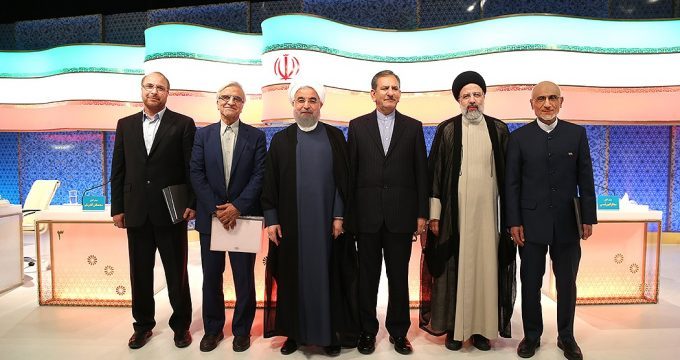
Control of who appears on the ballot allows Khamenei to control the narrative as to which candidates are perceived to be “moderate.” By stacking the ballot with four candidates who essentially have no chance at all, Khamenei can create the perception of a clear choice between a “moderate” Hassan Rouhani or a “hardline” Ebrahim Raisi.

Over 1,636 people registered to appear on the ballot for president. Only six were approved by Khamenei’s council.

Both of these men are dyed-in-the-wool insiders who are dedicated to serving the religious theocracy and Khamenei’s wishes, but Iran, with the help of the Iran lobby, creates a false perception of a real “choice” in the election.

“Another unknown candidate by the name of Mahmoud Ahmadinejad defeated the presumed favorite, the late Ali Akbar Hashemi Rafsanjani, who is considered one of the pillars of the revolutionary regime. But precisely because Rafsanjani was perceived as an embodiment of the establishment, the antiestablishment vote went to Ahmadinejad,” Parsi writes.

Of course, Parsi tries to posit that the 2009 race, which was widely considered rigged for Ahmadinejad causing widespread mass protests, was in fact actually a portrayal of the former “outsider” to be an “insider” now which caused the vote discrepancy.

Far from being honest with the reader, Parsi tries yet again to pull the wool over everyone by slicing Iran’s politicians into neat little camps opposed to each other and representing widely divergent viewpoints.

The reality is that there is very little difference between these candidates since are all loyal members of the regime.

Take Rouhani for instance. He was elected on the platform of being a moderate vowing reforms, but during his tenure, Iran has taken a huge step backward in human rights and now is involved in three wars sending thousands of young Iranians to fight and die, while the mullahs and elites skim huge personal fortunes through a massive network of corrupt shell companies.

These are not the facts that Parsi wants people to know about since it would ruin his carefully constructed fantasy.

Benny Avni writes in the New York Post how this election may be one where Khamenei decides the pretense of a moderate face for the regime is no longer necessary since Iran gained concessions from the nuclear deal already.

“Just as Americans and others are reorienting themselves for the age of President Trump, so are the mullahs. In their calculation, they now need to replace the friendly sounding voices, like those of Rouhani and his sidekick, Foreign Minister Javad Zarif, with angrier men,” Avni writes.

“Raisi is an insider who has climbed the political ladder. Supreme Leader Ali Khamenei is said to favor him as successor, when the time comes,” he adds.

“But before Raisi follows Khamenei and his predecessor, Ayatollah Ruholla Khomeini, at the top of the mullahs’ greasy poll, Raisi first needs a bit of public exposure. He could also use some governing experience, which he currently lacks. The position of president, which doesn’t have nearly as much power as Supreme Leader, is a perfect stepping stone.”

More evidence in the manipulation of the outcome was on display when Raisi’s path to the presidency became easier Monday, when a fellow hardliner, Tehran’s Mayor Mohammad-Baghar Ghalibaf, dropped out of the race.

Analysts believe Ghalibaf won the TV debates and is clearly more qualified, but, under pressure, he’s now calling on supporters to vote for Raisi.

What is clear from all this is that Parsi makes no mention of Raisi in his editorial which only demonstrates how close Raisi is to becoming elected and returning a public hardliner back into power to confront a U.S. administration no longer committed to a policy of appeasing Tehran.

We can be assured that if Raisi is elected, Parsi will no doubt ascribe his election as resulting from being a “outsider.”

Michael Tomlinson

Filed Under: Blog, National Iranian-American Council, News Tagged With: Ebrahim Raisi, Featured, Iran Election 2017, Iran Lobby, Iran Terrorism, IRGC, Khamenei, National Iranian American Council, NIAC, NIAC Action, Qalibaf, Rouhani, Trita Parsi

What If Iran Held an Election and No One Voted?

May 15, 2017 by admin

What If Iran Held an Election and No One Voted?

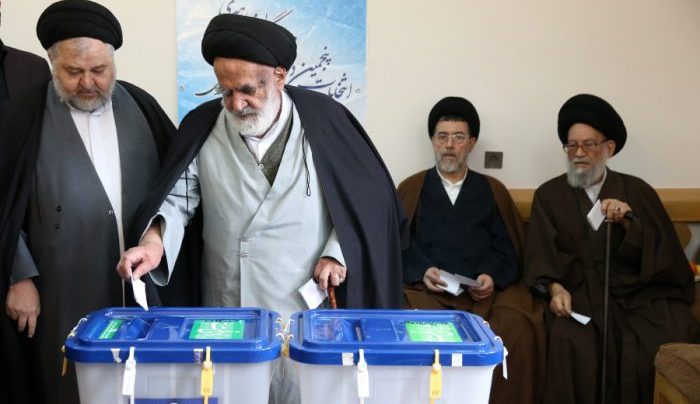
Iranian clergymen vote in the parliamentary and Experts Assembly elections at a polling station in Qom, 125 kilometers (78 miles) south of the capital Tehran, Iran, Friday, Feb. 26, 2016. Iranians across the Islamic Republic voted Friday in the country’s first election since its landmark nuclear deal with world powers, deciding whether to further empower its moderate president or side with hard-liners long suspicious of the West. The election for Iran’s parliament and a clerical body known as the Assembly of Experts hinges on both the policies of President Hassan Rouhani, as well as Iranians worries about the country’s economy, long battered by international sanctions. (AP Photo/Ebrahim Noroozi)

The Iranian regime’s presidential election is fast approaching on May 19th and with it comes expectations around the world of what the election will mean.

For the mullahs in Tehran and their overlord, Ali Khamenei, it has meant staging an election that gives the world the appearance of being fair and free, but in fact is anything but. They have even sought to create the aura of tension and debate by offering up “hardliners” to run against “moderate Hassan Rouhani.

In reality, this election—like so many others before it—has already been pre-ordained. The difference is that the mullahs learned their lesson from the disastrous 2009 re-election of Mahmoud Ahmadinejad which convulsed Iran in massive street protests that had to be put down ruthlessly and aired live on then-novel fledgling social media networks around the world.

Since then the mullahs offered up a less contentious election in 2013 with Rouhani being foisted on the world as a paragon of moderation and friendly attitudes through the removal and disqualification of any other threatening candidates to make the ballot.

The parliamentary elections last year saw a massive crackdown against journalists, dissidents, artists, students, and just about anyone else that might have Twitter on their cellphone.

Now the mullahs are staging an election where the outcome has already been pre-determined and the rest of the world just has not been clued in yet.

Slater Bakhtavar, an attorney, foreign policy analyst and political commentator, described the election farce in a piece for Forbes.

Western media are bafflingly enamored of extolling the virtues of Iran’s “free” and “democratic” electoral process, seemingly oblivious to the fact that it is neither. Anyone holding naive notions of any and all Iranians having some unalienable right to submit their name for election, then have a fair and equal chance to earn votes through rigorous campaigning and the debate of ideas, would do well to abandon such lofty fantasies, he writes.

“The actual voting process is riddled with fraud, too. The government meticulously plans initiatives to transport poor people (whose political leanings are known beforehand) to the polling stations, and official government employees are essentially ordered to vote. Tactics such as these allow officials to report enormous voter turnout numbers, pleasing journalists and maintaining the facade of Iran’s democratic international image,” Bakhtavar adds.

Bakhtavar notes how the Obama administration fell for the façade or the mullahs in supporting a flawed nuclear deal that did not reform the regime’s government and shockingly enabled the mullahs by paying cash ransoms for American hostages, thereby convincing the mullahs their path of squashing human rights was the correct one and carried no repercussions.

He does note however that the election of President Trump provides an opportunity to reset the scales with Iran and empower an Iranian dissident movement that has been under constant assault by the mullahs for three decades.

“President Trump is correct in his backing of the Iranian people, both morally and pragmatically. It has always been the right thing to do to support these oppressed people as they increasingly seek reform and the formation of a freer society, but now, in the early 21st century, the timing is perfect,” Bakhtavar said.

“New technologies exist now that allow communications on a wider scale than ever before, enabling the proliferation and exchange of new ideas and ways of thinking. Free thought is a danger to Iran’s theocratic regime, as it is to all dictatorships. These technologies are to be encouraged among the people of Iran, and those people should be afforded the dignity and respect of being addressed directly – not through their tyrannical rulers,” he added.

This explains why the mullahs spend such an inordinate amount of the regime’s time and resources to confiscating satellite dishes, blocking access to social media apps, tracking illegal online activity and trying to break the encryption of communications platforms such as Telegram and WhatsApp.

The mullahs live with the very real fear that if the Iranian people were ever able to organize and communicate effectively, especially with the outside world and dissident and human rights groups, their tenuous hold on power would slip away.

Mohammad Mohaddessin, chair of Foreign Affairs Committee of the National Council of Resistance of Iran (NCRI), one of the largest Iranian dissident groups, answered this very real concern of the mullahs.

“Over the past 38 years the clerical regime has entirely relied on execution and prison to stay in power and all regime’s officials, including Rouhani who has been one of the decision makers in the regime during this period, are directly responsible for the crimes committed,” Mohaddessin said.

To that end, the Iranian resistance movement has offered an alternative to the Iranian people dissatisfied with their choices in the election: Simply boycott the vote.

An online campaign has been picking up steam with photos of demonstrations in Iran beginning to leak out on social media of Iranians calling for a boycott of the elections.

While it’s doubtful the mullahs would even reveal the effects of any boycott since returns are usually suspected of being falsified in the first place, any boycott is a sign of growing resistance, especially in a regime where any overt act of defiance often lands one in prison or worse yet at the end of the hangman’s noose.

But some intrepid Iranians are talking to Western media about participating in such a boycott over their disgust with their choices.

“I will not vote,” said Hossein Ghasemi, a 35-year-old taxi driver who voted for Rouhani in 2013 told Bloomberg. “None of them care about our demands and difficulties linked to daily increasing prices.”

There are already warning signs on the horizon for Rouhani. A report Monday by the state-run IRNA news agency said a survey of over 6,000 eligible voters found over a third saying they would not be voting, while another 46 percent said they would pick their candidate later. It offered no margin of error on the nationwide random survey, according to Bloomberg.

We can only hope that on May 20th the full extent of the dissatisfaction of the Iranian people is heard.

Michael Tomlinson

Filed Under: Blog, News Tagged With: Featured, Iran, Iran Election 2017, Iran Terrorism, IRGC, Khamenei, Sham Election

Will Pakistan Become the Next Yemen?

May 14, 2017 by admin

Will Pakistan Become the Next Yemen?

Will Pakistan Become the Next Yemen?

The Iranian regime has turned inciting civil wars into an art form. It got its start early with the bloody sectarian conflict in Lebanon that saw Iran fund and nurture Hezbollah as it grew from a ragtag militia into a globe-spanning proxy for Iran to fight its wars.

Within the last decade, the Iranian regime has refined its mischief-making to new highs in starting the Houthi insurrection in Yemen and drawing Saudi Arabia perilously close to an all-out war with Iran, while in Syria the regime went all-in for the Assad regime.

The mullahs in Tehran used Afghan mercenaries, Shiite militias from Iraq, Hezbollah fighters from Lebanon and its own Revolutionary Guard Corps and Quds Force troops to cut a swath of blood and death across most of Syria.

At the same time, Iran manipulated the government of Nouri al-Maliki in Iraq to collapse the government, launch a sectarian conflict against Sunni tribes and indirectly fuel the rise of ISIS through the swift fall of Mosul.

Now comes worrisome signs that Iran may be turning its sights on neighboring Pakistan in a formula that has worked so well before.

A senior Iranian military commander said the country reserves the right to destroy suspected havens for terrorists in Pakistan following a recent alleged terrorist attack against Iranian border guards serving on the country’s southeastern frontier, according to regime-controlled news services.

“The Armed Forces of the Islamic Republic of Iran condemn such measures and if the Pakistani government does not take serious measures, they (Iranian forces) reserve the absolute and legal right to resolutely counter and destroy the lairs of terrorists however deep inside the neighboring country’s soil,” Iranian Army’s Ground Forces Commander Brigadier General Ahmad Reza Pourdastan said on Tuesday.

He added that Iranian Armed Forces would spare no efforts to safeguard the country’s security.

For Pakistan, the comments are no mere idle threat as the mullahs have acted on past warnings to its neighbors. The turmoil in Iraq and Yemen are prime examples.

A shocked Pakistan foreign office summoned the Iranian ambassador to record a formal protest over the provocative comments.

Relations between Islamabad and Tehran have been complex and full of mistrust for a while now. The two countries, however, have avoided aggressive posturing through public statements in the past, which makes these Iranian comments even more disturbing to Pakistani officials.

At least 10 Iranian border guards were killed in an ambush near the town of Mirjaveh in the southeastern Iranian province of Sistan Balochistan last month. Following the assault, an anti-Iran Sunni Muslim militant group called Jaish al Adl, or the Army of Justice, claimed responsibility for the attack.

Pakistan’s recent decision to join a Saudi Arabia-led military coalition of 41 predominantly Sunni Muslim nations also has upset Iran. Tehran sees the military alliance as an anti-Iran group and an attempt to expand Saudi influence in the region. Saudi and Pakistani officials reject the assertions as unfounded.

The tensions the Iranian regime are creating amongst its neighbors stands as the primary driver of instability throughout the Middle East, contrary to the promises made repeatedly by the Iran lobby which only promised Iranian cooperation and moderation in the wake of the nuclear agreement reached in April 2015.

But the instability outside its borders are only a mirror of the tensions within Iran, especially in the run up to presidential elections on May 19th, but another significant event is going to take place beforehand on May 14th.

May 14 will mark the ninth anniversary of the arrests of the Iranian Baha’i leadership, known as the Yaran. These seven men and women managed the religious and worldly needs of Iran’s Baha’i, who make up the country’s largest non-Muslim minority. Iranian authorities condemned them to 20-year prison terms for their alleged misdeeds—charges that included “corruption on earth,” “insulting religious sanctities,” “espionage for Israel,” and “propaganda against the system.” The group’s secretary was arrested on March 5, 2008, and was also sentenced to 20 years in prison.

Elliott Abrams detailed the plight of the Baha’i in a piece for Foreign Affairs.

From the Iranian revolution in 1979 to this day, the regime has shown the Baha’i no mercy. The Iranian Baha’i community has faced continued oppression on the economic front and in the denial of educational opportunities.

Last November, Iranian authorities shut down more than 100 Baha’i-owned businesses throughout Iran after those businesses were briefly shuttered by their owners to observe the Baha’i holidays.

In December and January alone, more than a dozen Baha’i students were kicked out of Iranian universities because of their faith. As one student put it, “This has been going on for 37 years [since the Iranian revolution].

Every year, university security officials identify new Baha’i students and find excuses to throw them out.” Meanwhile, hundreds of students took the national entrance exam for universities, passed, and were denied entry into any university.

The unjust imprisonment of Baha’i continues, with new arrests by the Intelligence Ministry as recently as April. It is estimated that 80 to 90 Baha’is remain imprisoned in Iran solely due to their religious beliefs. The effort to smear the Baha’i and their religion continues as well, with thousands of anti-Baha’i articles running in Iranian media in the last 12 months.

The plight of these people, coupled with the opening up of a new front against Pakistan shows the willingness of the Iranian regime to disregard world opinion and act according to its own twisted agenda.

Laura Carnahan

Filed Under: Blog, News Tagged With: Featured, hassan rouhani, Iran, Iran Terrorism, IRGC

  • « Previous Page
  • 1
  • …
  • 3
  • 4
  • 5
  • 6
  • 7
  • …
  • 12
  • Next Page »

National Iranian-American Council (NIAC)

  • Bogus Memberships
  • Survey
  • Lobbying
  • Iranians for International Cooperation
  • Defamation Lawsuit
  • People’s Mojahedin
  • Trita Parsi Biography
  • Parsi/Namazi Lobbying Plan
  • Parsi Links to Namazi & Iranian Regime
  • Namazi, NIAC Ringleader
  • Collaborating with Iran’s Ambassador

Recent Posts

  • NIAC Trying to Gain Influence On U.S. Congress
  • While Iran Lobby Plays Blame Game Iran Goes Nuclear
  • Iran Lobby Jumps on Detention of Iranian Newscaster
  • Bad News for Iran Swamps Iran Lobby
  • Iran Starts Off Year by Banning Instagram

© Copyright 2026 IranLobby.net · All Rights Reserved.