Iran Lobby

Exposing the Activities of the lobbies and appeasers of the Mullah's Dictatorship ruling Iran

  • Home
  • About
  • Current Trend
  • National Iranian-American Council(NIAC)
    • Bogus Memberships
    • Survey
    • Lobbying
    • Iranians for International Cooperation
    • Defamation Lawsuit
    • People’s Mojahedin
    • Trita Parsi Biography
    • Parsi/Namazi Lobbying Plan
    • Parsi Links to Namazi& Iranian Regime
    • Namazi, NIAC Ringleader
    • Collaborating with Iran’s Ambassador
  • The Appeasers
    • Gary Sick
    • Flynt Leverett & Hillary Mann Leverett
    • Baroness Nicholson
  • Blog
  • Links
  • Media Reports

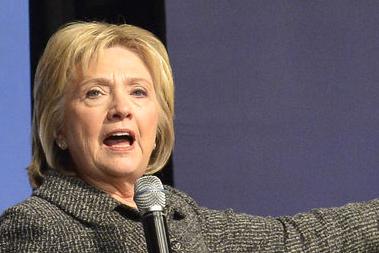
WikiLeaks Reveals a Much Tougher Hillary Clinton on Iran Regime

October 19, 2016 by admin

WikiLeaks Reveals a Much Tougher Hillary Clinton on Iran Regime

WikiLeaks Reveals a Much Tougher Hillary Clinton on Iran Regime

The Iran Lobby, led by the National Iranian American Council, have often publicly argued for a more moderate approach to the Iranian regime and encouraged efforts by the Obama administration to appease the mullahs in Tehran in the hopes of changing their historically extremist behavior and policies.

The past two years have shown how foolish it was to believe those promises as the Iranian regime is now the central player in three wars raging across Syria, Iraq and Yemen; all conflicts in which the world is increasingly being dragged into the crosshairs of a shooting war.

The Obama administration has called for another increase in US forces in Iraq to combat ISIS insurgents, yet now find that Iraqi militias it trained are now fighting in Syria against rebel forces the US supports.

Now in Yemen the US Navy is exchanging missile fire with Iranian-backed Houthi rebels. Not exactly a recipe for “moderation.”

The NIAC and other Iran lobbyist members have gone all in with the Democratic Party in backing their candidates for House and Senate races in the hopes of overturning a Republican majority that is skeptical of Iran’s professed moderate intentions, but that hope might prove just as illusory as the idea of Iranian moderation.

WikiLeaks has been dumping thousands of emails and documents from the Democratic National Committee, party officials and members of the Clinton campaign, including from Hillary Clinton itself.

What they reveal is a much different picture of the candidate’s opinions on Iran that what the NIAC would have everyone believe.

According to a speech transcript made public this weekend by WikiLeaks, Clinton on October 28, 2013, told the Jewish United Fund of Metropolitan Chicago: “I believe that Rouhani was allowed to be elected by the two major power sources in Iran, the supreme leader and the clerics and the Revolutionary Guard … in part because the sanctions were having a quite damaging effect on the economy.”

She continued: “I don’t think anyone should have any illusions as to the motives of the Iranian leadership. What they really want to do is get sanction relief and give as little as possible for that sanction relief.”

According to Eli Lake in Bloomberg, Clinton, in private at least, has taken a more realistic view since leaving the administration. In her Chicago speech, she called Rouhani’s outreach to the West a “charm offensive,” and argued that U.S. negotiations were important as a sign of good faith to the international community, but not as a way to influence Iranian internal politics.

In another speech sure to dismay NIAC and other Iranian supporters, Clinton even advocated privately for U.S.-led strikes against Iranian regime nuclear facilities and acknowledged regime’s ability to terrorize the United States through Iranian regime’s Revolutionary Guard Corps (IRGC) operatives and other proxies in Latin and North America.

Clinton expressed a willingness to bomb the Iranian regime facilities as an “option” to prevent the Shiite powerhouse from developing a nuclear weapon in a June 4, 2013 speech to Goldman Sachs and elaborated further about the threat Iranian regime, the IRGC, and its proxies pose to the United States in a separate speech on October 24, 2013.

She warned that there would be “consequences” carried out through the IRGC and Iranian regime’s other proxies if the United States took military action against it. Although she did not specifically mention Hezbollah by name, it is the most active Iranian mullah’s terror proxy across the world, including the Western Hemisphere.

In a bit of prescience, Clinton reiterated:  “So it’s a wicked problem, as we like to say, because Iran is not only troubling because of its nuclear program, although that’s the foremost threat, it’s the primary conductor and exporter of terrorism.”

“I mean, if you had a big map here behind us, literally from North America to Southeast Asia, there are so many thoughts, so many bombs, so many arrests that are all traced back to the Iranian regime’s revolutionary guard, and their constant efforts to sell (inaudible)….So even if a miracle were to happen and we came up with a verifiable nuclear deal, there would still be problems that Iran is projecting and causing around the world that had real consequences for our friends and ourselves.”

Her recognition of the Iranian regime’s true nature is a welcome boost to those that have opposed the entreaties of NIAC and other Iranian regime supporters. It is also understandable that her comments were private since they were at odds with her party’s leader in President Obama, but with her possible election as president, her core beliefs that the Iranian regime is not a huggable, fluffy teddy bear, but rather a central conduit for the exporting of death, destruction and terrorism is heartening to regime opponents and Iranian dissidents.

On another accout, the Iranian regime blasted comments made by Secretary of State John Kerry who blamed Iran’s provocative actions in Syria and Yemen as being the creator of uncertainty to the extent foreign banks and businesses are reluctant to invest in Iran and not US sanctions on currency exchanges.

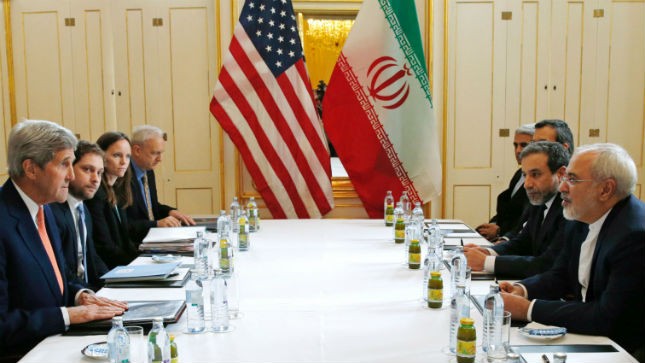
In an interview published Friday, Kerry told Foreign Affairs magazine that Iranian regime’s support for Syrian President Bashar Al-Assad, Lebanon’s Hezbollah movement and Yemen’s Houthi rebels made it “very difficult” to help Iran improve its banking system and business practices.

“Mr. Kerry’s comments are totally unacceptable,” Iranian regime’s deputy foreign minister, Abbas Araghchi, told state television on Sunday night.

“We are surprised. During the nuclear negotiations, we clearly said that questions of security, defense, ballistic missiles and our regional policies were not negotiable and are not linked to the nuclear talks,” he said.

“It is unacceptable that Mr. Kerry is today talking of new conditions.”

No matter how the regime wants to spin it, these problems are problems of its own creation.

By Michael Tomlinson
Filed Under: Blog, News Tagged With: Featured, Iran, Iran deal, Iran Lobby, Iran Terrorism, IRGC, National Iranian American Council, NIAC, Sanctions

Iran Lobby Working Feverishly to Save Nuclear Deal

October 11, 2016 by admin

treasury-logo

Since talks began with the Iranian regime on a potential nuclear agreement, the Obama administration has redefined generously its interpretations of “sanctions” on the regime to the point where billions of dollars have flowed to Tehran in ways unthinkable just a year ago.

The justification for the broad easing of sanctions has been the mantra that the alternative would be worse for the world; that failure to do so would empower “hardline” elements in Iran to seize the opportunity to take control and force out “moderates” and abandon the deal and start a nuclear arms race.

The administration’s position echoes the positions pushed by the Iran lobby, including prominent supporters such as the National Iranian American Council, which repeatedly claimed that the deal was helping cement support for perceived moderates such as Hassan Rouhani.

In response, the Obama administration has ignored, overlooked and even enabled a long string of accommodations for the Iranian regime that has emboldened the mullahs in Tehran. While no one disputes the intentions of the president in wanting to make a world free from nuclear weapons, we respectfully judge his efforts to have been a monumental waste of time.

The misguided belief by the US that Rouhani is a moderate that needs to be supported and whose re-election should be a priority is dumbfounding given the year of bloodshed caused by Rouhani’s policies including the massive escalation in the Syrian war, severe domestic crackdowns on human rights and the unprecedented executions of almost 3,000 Iranians, including women and children ranking Iran second in the world in state-sanctioned killing.

The latest act of appeasing the regime comes in the form of new guidance from the Treasury Department that effectively lifts the last remaining sanctions on the regime’s access to US currency exchanges.

The New York Post editorial board issued a blistering response to the action:

“The latest betrayal: The Treasury Department just lifted key restrictions on Iran’s ability to do business in US dollars and access world financial markets — breaking Team Obama’s explicit vows as it lobbied Congress not to nix the deal.

“Iran’s banks weren’t even cut off from the US financial system over the nuclear issue — but over Tehran’s funding of terrorism, its regional aggression and so on.

“Which makes another Treasury move even more squalid: It will now also let foreign firms and branches of US firms do business with Iranian groups like the Revolutionary Guard.

“The Guard is the chief conduit for Tehran’s support of terrorism, tied to numerous plots, including one in DC aimed at a Saudi envoy. And it’s also a prime force helping Syria’s Bashar al-Assad massacre civilians in his bloody bid to keep power.”

The guidance offered by the Treasury Department was designed to provide reassurance to foreign banks which have been skittish about conducting business in US dollar transactions with Iran.

According to Reuters, the guidance comes after months of complaints from Tehran, which says that remaining US sanctions have frightened away trade partners and robbed Iran of the benefits it was promised under the nuclear deal it concluded with world powers last year.

The guidelines, issued by the US Treasury Department’s Office of Foreign Assets Control on Friday, clarify that non-U.S. banks can do dollar trades with Iran, provided those transactions don’t pass through financial institutions in the United States.

What is even more incredible was that Michael Mosier, the associate director at the Office of Sanctions Policy & Implementation of Foreign Assets Control, and Christopher Backemeyer, deputy coordinator of Sanctions Policy, both were featured speakers at the NIAC’s Leadership Conference in an appalling act of conflict of interest.

The timing of their appearance before the leading lobbying arm of the Iranian regime shortly before the release of guidelines that effectively encourages and shows foreign banks how to avoid existing US sanctions put in place to stem the flood of cash flowing to terrorist groups such as Hezbollah is mind boggling.

Ironically, in an effort to minimize the impact of the Treasury Department’s guidance, the NIAC quickly issued a press release in an attempt to explain that this was not an evasion of existing sanctions, as well as encouraged the expansion of even more channels to accommodate the regime.

“The administration should take steps consistent with the U.S.’s stated policy that it will not stand in the way of legitimate business involving Iran.  Such measures include licensing U.S. person employees of foreign companies to engage in transactions involving Iran and licensing U.S. persons in general to facilitate transactions between foreign persons and Iran,” read the NIAC’s statement from Tyler Cullis.

Of course, the NIAC neglected to mention that any dual-national Iranian-American that traveled to Iran on business was likely to be arrested and held for ransom or a future prisoner swap.

The guidelines earned a quick rebuke from Congressional critics who warned of dire consequences in allowing the Iranian regime easier access to US dollars.

“The new guidance overturns the long-running understanding that the U.S. dollar cannot be used to facilitate international trade with any Iranian entities, let alone sanctioned entities. And by allowing foreign subsidiaries of U.S. companies to transact business with Iranian entities, the president is ignoring the clear text of a law passed by Congress,” Sen. Tom Cotton (R., Ark.) said on Sunday.

Sen. Mark Kirk of Illinois, who chairs a Senate banking committee with oversight over Iran sanctions law, said the new guidelines amounted to the White House granting Tehran new concessions.

Meanwhile, Rep. Mike Pompeo (R., Kan.) said Treasury’s changes “green-light business with terrorists. The updated FAQs remove barriers for foreigners to engage with firms the Islamic Revolutionary Guard Corps controls.”

By Michael Tomlinson

Filed Under: Blog, News Tagged With: Appeasement policy, Featured, Iran Human rights, Iran Terrorism, IRGC, National Iranian American Council, NIAC, NIAC Action, Nuclear Deal, Rouhani, Sanctions, Tyler Cullis

Key to Syrian Solution Lies in Pushing Iran Out

October 10, 2016 by admin


Key to Syrian Solution Lies in Pushing Iran Out

Key to Syrian Solution Lies in Pushing Iran Out

Sunday night’s presidential debate between Hillary Clinton and Donald Trump is sure to be analyzed, dissected and poured over for days, but while both candidates traded accusations on Syria and its effect to refugees, terrorism and geopolitics, neither candidate hit the mark when it came to highlighting the real solution to the Syrian civil war.

The real solution to stopping the bloodshed in Syria lies in getting the Iranian regime out of Syria.

The Syrian civil war has been raging since 2011 and it is easy to forget its beginnings and how it grew into the global conflagration it has become, but what has been indisputable has been the influence of the Iranian regime from the very beginning.

It is useful to recall that the source of the original unrest were protests by ordinary Syrians demanding democratic reforms in March of 2011 and the release of political prisoners. In many respects, the protests taking place on the streets of Damascus were eerily similar to protests on the streets of Tehran by Iranians protesting similar issues in the wake of a presidential election widely recognized as being fraudulent.

Within a month protests had spread throughout Syria and the Assad regime responded just as the mullahs in Tehran did two years earlier; with massive crackdowns by the military that included the indiscriminate shooting of civilians in the streets.

The images of dead and dying civilians in Tehran and Damascus are not the only things that connected the two regimes.

The Iranian regime acted quickly to funnel funds to the cash-strapped Assad regime after a series of punishing international sanctions were imposed for the regime’s use of chemical weapons and mass killing weapons such as barrel bombs on civilians, including hospitals; that support was estimated by the UN to be as high as $6 billion annually, with other human rights groups doubling that amount.

Additionally, the Iranian regime sent senior commanders from its Quds Forces to plan and lead operations involving Hezbollah terrorists to help repel the gains of Syrian rebels. This level of involvement increased with the forced recruitment of thousands of Afghan refugees as mercenaries, along with the shifting of Shiite militias from Iraq to fight in Syria.

The involvement of so much Iranian military capacity led to declarations from Syrian military officials that Syria might as well become a province of Iran.

Even with all of that Iranian regime interferences, the rebels were still making gains leading up to the actual shelling of Assad regime buildings in Damascus, which led to the now not-so-secret trip to Moscow by Quds Force commanders to beg for Russian intervention in Syria.

The increasing tempo of military actions collapsed a proposed cease-fire and led to claims and counter charges between the US and Russia reminiscent of the Cold War. Nothing illustrated that confusion more than the situation in the northern Syrian city of Aleppo.

The New York Times examined the zany alliances at work in Aleppo where there are Iraqi Shiite militiamen cheering for clerics who liken the enemy to foes from seventh-century battles. There are Iranian Revolutionary Guards fighting on behalf of a Shiite theocracy. There are Afghan refugees hoping to gain citizenship in Iran, and Hezbollah militants whose leaders have long vowed to fight “wherever needed.”

The messy mosaic of ground fighters on both sides has challenged Washington’s tangled allegiances. The United States is effectively allied with Iraqi Shiite militias to thwart the Islamic State in Iraq, but in Syria, some of those same militias are fighting on the side of the Assad government, which the United States opposes, and against a mix of rebel groups, some of them backed by the Obama administration.

The Daily Caller discussed the vast increases in Shiite militias in Syria.

“Most estimates of the total number of Shi’a militia fighters in all of Syria now exceed 60,000,” U.S. strategic advisory firm The Soufan Group notes. The Soufan Group highlights that this number may even exceed that of the actual Syrian Arab Army under command of Assad. These Shiite militias take orders only from Iran’s Revolutionary Guard Corps.

Alarmingly, even though the evidence is overwhelming that the only viable solution to Syria’s war lies in containing and ultimately removing Iran’s control of the Assad regime, the Washington Post reported efforts were underway by the Obama administration to actually weaken sanctions imposed on Syria.

According to lawmakers and staffers in both parties, the White House is secretly trying to water down the Caesar Syria Civilian Protection Act, a bipartisan bill that would sanction the Assad regime for mass torture, mass murder, war crimes and crimes against humanity. The bill, guided by House Foreign Affairs Committee ranking Democrat Eliot Engel (N.Y.), would also sanction entities that aid the Syrian government in these atrocities; that includes Russia and Iran.

The bill, named after a Syrian defector who presented the world with 55,000 pictures documenting Assad’s mass torture and murder of more than 11,000 civilians in custody, has 70 co-sponsors, a majority of whom are Democrats.

Now the White House has told members and staffers that the bill’s sanctions on Iran could violate the nuclear agreement the Obama administration struck with Tehran last year and the Russia sanctions could hurt any future efforts to work with Moscow diplomatically on Syria.

It is a stunning position to take and one disturbingly similar to arguments made by Iran lobby members such as the National Iranian American Council.

It seems that the similarities between Syria and Iran be beyond just murdered civilians in the street.

By Michael Tomlinson

Filed Under: Blog, News Tagged With: Featured, Iran, Iran deal, Iran Human rights, Iran Lobby, Iran Mullahs, Iran sanctions, Iran Talks, Iran Terrorism, IRGC, National Iranian American Council, NIAC, NIAC Action, Sanctions, Syria

How Did the Iran Nuclear Deal Become a Partisan Talking Point?

October 6, 2016 by admin


How Did the Iran Nuclear Deal Become a Partisan Talking Point?

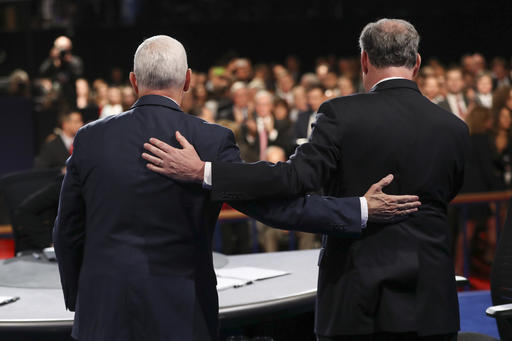
Republican vice-presidential nominee Gov. Mike Pence and Democratic vice-presidential nominee Sen. Tim Kaine stand after the vice-presidential debate at Longwood University in Farmville, Va., Tuesday, Oct. 4, 2016. (Joe Raedle/Pool via AP)

Last night’s vice presidential debate had its usual highs and lows, sprinkled with verbal fisticuffs and even some thoughtful answers, but the most interesting tidbit that came through was the sharp disparity over the Iran nuclear deal in which Democratic running mate, Sen. Tim Kaine (D-VA) all but gushed over the deal’s alleged stoppage of nuclear weapons versus Gov. Mike Pence’s (R-ID) blistering retorts against it.

Putting aside the relative merits of each side’s arguments, the larger question that needs addressing is “how did the nuclear deal ever become a partisan talking point?”

In many ways, it’s lamentable and regrettable that it has gotten to this point. For much of the past three decades both parties have been uniformly united over confronting Iran. That lock-step solidarity is what has driven the vast majority of successes against the Iranian regime such as the imposition of stiff sanctions following the crackdown on demonstrators to the stolen 2009 presidential elections.

Even top mullah Ali Khamenei recognized the terrible blows to the regime’s economy that resulted from those bipartisan sanctions when he summarily decided that the regime needed a new “moderate” face to win back international support after a deplorable eight years of Mahmoud Ahmadinejad.

The regime also recognized that in putting forth a “moderate” face, it had to cobble together a better lobbying effort to drive wedges in the united political front America and its allies had presented for much of the regime’s existence.

Those twin goals led to Hassan Rouhani’s selection and the creation of lobbying groups such as the National Iranian American Council and its offspring, NIAC Action.

Happily for the mullahs, the Obama administration was looking for a foreign policy win to close out its term having been unable to solve the puzzle of wars in Iraq and Afghanistan and the rising tide of Islamic extremism that sprang forth from the Syrian civil war and Iranian regime’s use of terror proxies throughout the region.

It was an unfortunate decision because it enabled the Iran lobby to begin driving that wedge between Democrats and Republicans and shaping a message that if you supported Iran deal you were for peace and if you were against Iran deal you had to be for war.

Most Democrats frankly didn’t buy it as leading members of Congress such as Sen. Robert Menendez (D-NJ), Sen. Ben Cardin (D-MD), Sen. Chuck Schumer (D-NY) and Rep. Eliot Engel (D-NY) opposed the Iran nuclear deal, but the Iran lobby worked furiously to try and shape the debate as a Democrat vs. Republican one when in fact it wasn’t.

For other Democrats, the choices were simpler in which they chose party loyalty in an election cycle, many privately hoping to impose additional sanctions after the presidential elections.

In fact, in the year since the Iran deal was approved, and the mullahs have showed their true nature with the widening of the wars in Syria, Iraq and Yemen, as well as the renewed crackdowns and human rights violations at home and escalation of its ballistic missile program, many of these same Democrats have offered up new proposals to impose new watchdogs or sanctions on Iranian regime.

Coupled with the fact that the mullahs have obliged by going on a binge of militant and aggressive acts including threatening US warships in the Persian Gulf and snatching up even more dual nationals for future hostage swapping, it is almost certain that after the November elections, the US will once again present a united front in confronting Iranian regime’s extremism.

But that prospect hasn’t stopped the Iran lobby from desperately trying to make Iran a partisan issue as NIAC head, Trita Parsi was busy tweeting out his enthusiastic support for Kaine’s comments in support of the nuclear deal, probably had to make many Clinton supporters cringe slightly.

In regards to the actual facts surrounding the nuclear deal, the media fact checkers waded through the statements and found some by Kaine to be slightly wanting of clarity.

From the Washington Post: “The deal, which has been sharply criticized by Republicans, did increase the amount of time that Iran would need to build a nuclear weapon by reducing its centrifuges for uranium enrichment and its stockpile of enriched uranium. But the deal expires in 15 years, and Iran’s nuclear infrastructure remains in place.

“While Iran has insisted it has no interest in building nuclear weapons, the deal does not eliminate the risk that it will obtain nuclear bombs.”

The New York Times called the claim that the Iran nuclear deal eliminated Iran’s nuclear weapons program an “exaggeration.”

A report released this September by the Institute for Science and International Security found that the deal will also allow, through an exemption, Iran to keep 50 tons of heavy water and “continue operating 19 ‘hot cell’ radiation containment chambers.”

Possessing materials such as enriched uranium and heavy water does not necessarily mean Iran will have the capacity to restore its nuclear program. The deal will not allow nuclear inspectors to confirm, however, whether or not Iran is complying with the deal. Iran got negotiators to agree that no U.S. nuclear inspectors will be allowed on Iranian soil, according to Breitbart News.

Ultimately, the issue of containing and confronting the Iranian regime has historically been a bipartisan effort. We hope that after November, it once again becomes bipartisan.

By Michael Tomlinson

Filed Under: Blog, News Tagged With: #NuclearDeal, Featured, hassan rouhani, Iran, Iran deal, Iran Human rights, Iran Lobby, Iran Mullahs, Iran sanctions, Iran Terrorism, National Iranian American Council, NIAC, Trita Parsi

Why Does the Iran Lobby Want to Make Iran a Partisan Issue?

September 27, 2016 by admin

Why Does the Iran Lobby Want to Make Iran a Partisan Issue?

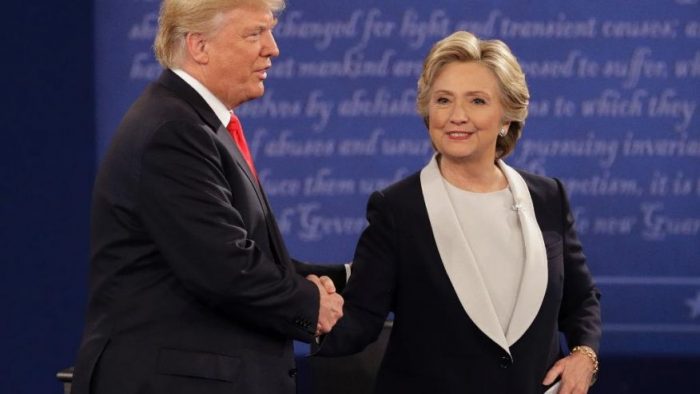
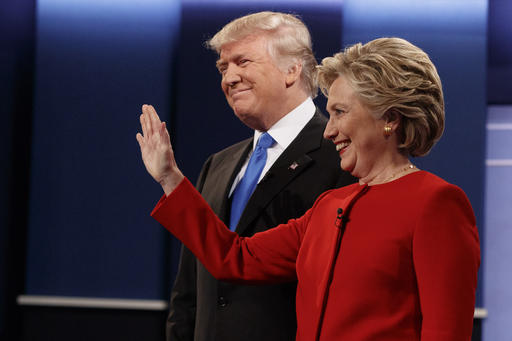
Republican presidential candidate Donald Trump, left, stands with Democratic presidential candidate Hillary Clinton before the first presidential debate at Hofstra University, Monday, Sept. 26, 2016, in Hempstead, N.Y. (AP Photo/ Evan Vucci)

The first debate between Hillary Clinton and Donald Trump was billed as literally the fight of the century; bigger than Ali vs. Frazier, bigger than Coke vs. Pepsi. While an innumerable number of columnists, analysts, lobbyists and anyone else with “-sts” at the end of their job description will critique this debate to death, we should be asking a question that didn’t come up in the debate.

Why does the Iran lobby want to make the issue of Iran a partisan political issue?

From the moment the Iran lobby was created, especially the launch of its principal leader—the National Iranian American Council—it has sought to wedge itself into the partisan political environment by trying to align itself with Democrats and attacking Republicans for the past several years.

At first it may have been because Republicans were the most visibly opposed to accommodating the mullahs in Tehran, but the NIAC even held its fire when it came to criticizing prominent Democrats opposed to Iran accommodation such as Sen. Robert Menendez (D-NJ), a prominent critic of the Iranian regime.

It was also no coincidence that many of NIAC’s staffers formerly worked for Democratic office holders and organizations, but that is a superficial reason for its efforts to politicize Iran issues.

The blueprint for this tactic comes from the mullahs themselves as displayed in their energetic efforts to tar and feather Saudi Arabia and portray its chief regional rival as the source of all terrorism and evil in the world. It’s a blatant effort at diverting attention away from Iran’s own failings and blunt criticism for its long support for terrorism and brutal human rights record.

If you treat any criticism of the Iranian regime as merely political point scoring, the NIAC and other supporters are hoping it diminishes the power and effectiveness of the criticism. The only problem with that argument is when both Democrats and Republicans both take aim at the regime anyway.

In stark contrast to that cynical tactic, Iranian dissident and opposition groups such as the National Council of Resistance of Iran have worked diligently to build bridges on both sides of the political aisle and worked on unifying themes such as human rights, support for women and opposition to sponsorship of terrorism.

Those efforts have won over many on both sides of the aisle with members such as Democratic House Leader Nancy Pelosi (D-CA), former Democratic Sen. Joe Lieberman, House Foreign Affairs Committee chair Ed Royce (R-CA), and former New York mayor Rudy Giuliani just to name a few.

Ultimately the Iran lobby must pursue this diversion strategy since its typical message points about Iranian cooperation and moderation have dissolved in a flurry of aggressive, militant and shocking moves by the mullahs since the nuclear deal was sealed and the “echo chamber” of support was revealed by the news media.

With the news coming out of Iran since the passage of the nuclear deal being mostly bad and only getting worse, the Iran lobby finds itself in a pickle with the upcoming presidential election promising a new president who plans to hold the Iranian regime much more accountable whoever wins.

For the Iranian regime, the pressure is on to grab as much as it can before that happens so the news coming out of Tehran is fast and furious. In the last day alone, we have seen:

  • The proposed cease-fire in Syria collapse as Russian and Syria aircraft have resumed massive bombing of primarily civilians in rebel-controlled areas, such as Aleppo as a major ground has been observed moving into the area with as many as 3,000 Iranian-backed fighters hoping to crush the rebellion against the Assad regime;
  • Iran will continue to test and improve the range and accuracy of its ballistic missiles to deter or coerce potential adversaries — the United States operating in the region, Gulf Arab states, Turkey and Israel – four Middle East experts said in a meeting of the Atlantic Council;
  • Hassan Rouhani and other regime leaders are under intense pressure back home from dissatisfied Iranians upset with the lack of benefits trickling down to them from the nuclear agreement and the perception that rampant corruption is siphoning off any economic improvement;
  • The head of Iran’s atomic energy agency warned that the landmark nuclear deal could be jeopardized by perceived foot-dragging on sanctions relief, promised in exchange for Tehran’s commitment to curb key atomic activities, even though US officials said those commitments were fulfilled but uncertainty over investing in Iran has been responsible for the delays; and
  • The regime’s top mullah, Ali Khamenei, tried to snuff out an insurgent return to the political stage by widely reviled past president Mahmoud Ahmadinejad who has hinted at a challenge to Khamenei’s handpicked minion, Rouhani.

The turmoil the Iranian regime is facing highlights the schisms that are running through Iranian society and the deepening split between the mullahs and the Iranian people. It also explains why the Iran lobby is so intent on trying to portray Iran policy issues as partisan political ones and not worthy of the attention of media.

Unfortunately for the Iran lobby, the American people, who have been subjected to near constant attacks inspired by extremist Islamists and worry about the growing carnage around the Middle East caused by Iranian regime’s active support of three proxy wars, have begun to suspect any supporter of the mullahs.

This may explain why the only people in America openly supporting the Iranian regime are those directly connected to the Iran lobby such as the NIAC, Ploughshares Fund and their cohorts.

By Michael Tomlinson

Filed Under: Blog, News Tagged With: Featured, Iran, Iran deal, Iran Human rights, Iran Lobby, Iran Mullahs, Iran sanctions, National Iranian American Council, NIAC, NIAC Action, Ploughshares

“NIAC Leadership” Conference Showcases Influence Pedaling

September 26, 2016 by admin

“NIAC Leadership” Conference Showcases Influence Pedaling

“NIAC Leadership” Conference Showcases Influence Pedaling

How much does it cost to meet your lawmakers in a venue where you can exert the influence of the mullahs in Tehran? Apparently only $349 and that also gets you three lunches and two breakfasts!

What a deal.

But if you’re strapped for cash, maybe because you have to pitch in for your family to hire a lawyer in an effort to reach your dual-nationality relative who is sitting in Evin prison in Iran, for only $175 you can still get access to lawmakers, but you miss out on a “Gala Reception” and hors d’oeuvres.

So less pizazz, but still you can buy access and who is selling this access at such bargain rate prices? The National Iranian American Council which held its “Leadership Conference” this weekend in Washington, DC.

The conference was a veritable who’s who of Iranian regime activists and lobbyists, all previously dedicated foot soldiers in the fight for securing a nuclear deal with Iran, as well as the fight to buy reprieves for the regime from ongoing sanctions for violations of human rights and sponsorship of terrorism.

Some of the more notable speakers included Joseph Cirincione of the Ploughshares Fund,which received and distributed cash to various members of the Iran lobby including NIAC according to investigative media reports, Ben Rhodes, deputy national security advisor to President Obama and architect of the now-infamous “echo chamber” of supporters used to deceive media and the American people as to the inherent flaws of the nuclear agreement.

Other key participants curiously included Christopher Backemeyer, deputy coordinator of sanctions policy in the State Department, and Michael Mosier, associate director at the Office of Sanctions Policy & Implementation in the Office of Foreign Assets Control. These two men hold considerable power over the question of whether or not Iran is complying with the nuclear agreement and whether or not certain sanctions should be enforced such as bans against the regime accessing US currency exchanges.

The fact that such key regulatory officials are participating in a conference sponsored by an organization identified as having strong links to high ranking Iranian officials should prove troubling. It is similar to having members of the Treasury Department’s securities enforcement division having drinks with executives from Enron or Lehman Brothers prior to the mortgage meltdown.

What is always fascinating about the NIAC’s annual confab is the packing of the speakers list with its own staffers, in this case Trita Parsi, Reza Marashi and Tyler Cullis, each of whom have worked diligently to carry Iran’s water and make excuses for the worst excesses of the regime. Watching these three “stooges” try to divert attention away from ballistic missile launches, mass arrests of journalists, public hangings of Iranians or arrests of Americans, Brits and other citizens is like watching a bad sketch comedy troupe.

Considering that one of the self-proclaimed mandates of the NIAC is “to ensure that human rights are upheld in Iran and that civil rights are protected in the US. NIAC believes that the principles of universal rights – Freedom of assembly, religion, and speech, as well as dignity, due process and freedom from violence – are the cornerstones of a civil society” one might ask why NIAC never invites any of the Iranian-Americans who can tell their story first hand of what Iranian justice is like.

Why is it that NIAC never has people such as Saeed Abedini, the Christian pastor held and tortured in Iran, or Amir Hekmati, the former US Marine brutalized in prison, or Jason Rezaian, the Washington Post reporter, to attend a conference and tell their story in furthering an understanding of the terrible forces at work within Iran’s religious leadership?

Of course the NIAC would never showcase any of these Americans since their presence would be a terrible embarrassment and highlight the true nature of the Iranian regime which is cruelty, punishment, abuse and control. Even though these Americans were released in exchange for $1.7 billion in cash, more Americans have been taken this year and the NIAC holds no fundraiser for them; launches no grassroots campaign for their release and holds no protest in their honor.

Even after the regime’s president, Hassan Rouhani, appeared on NBC prior to his speech before the United Nations General Assembly, he confidently admitted to Chuck Todd that Iran did not recognize dual nationalities.

“Therefore those who have dual citizenship, from the interpretation of the Iranian laws, are Iranian citizens solely and only,” Rouhani said. “And any legal prosecution is carried out on the foundation that they are Iranian citizens subject to Iranian law.”

And yet the NIAC issued no condemnation, no rebuke, not even a single tweet objecting to the extralegal procedures against Iranian-Americans, which the NIAC was ostensibly working on behalf of.

The height of absurdity was reached and exceeded by several speakers at this weekend’s proceedings, including this juicy quote from Rhodes.

“Acceleration of tensions between Gulf partners and Iran is a serious problem across the region,” said Rhodes as quoted by NIAC.

You think? It might be one of the better understatements, ranking up there with “peace in our time” by Neville Chamberlain.

The Iranian regime has pushed the possibility of all-out conflict with regional rival Saudi Arabia, while at the time supporting three proxy wars in Syria, Iraq and Yemen that have claimed the lives of almost 750,000 people. NIAC’s promises that Iran would be a partner for peace and moderation following the nuclear deal have turned out to be false and alarmingly so.

What was promising was the position taken by Philip Gordon, a senior foreign policy advisor to Hillary Clinton and senior fellow at the Council of Foreign Relations, who reiterated the presidential candidates public statements of skepticism about Iran’s conduct and the need to “distrust and verify” when it comes to enforcing the nuclear deal, much to the chagrin of Parsi who tried everything short of begging to get Gordon to make positive statements about the regime.

Gordon’s reticence provides hope that the next president will approach Iran with a clean slate and not be motivated to the falsehoods and “echo chamber” of the NIAC.

By Laura Carnahan

Filed Under: Blog, News Tagged With: #NuclearDeal, Ben Rhodes, Featured, hassan rouhani, Iran, Iran deal, Iran Human rights, Iran Lobby, Jason Rezaian, Joseph Cirincione, Marashi, National Iranian American Council, NIAC, NIAC Action, Ploughshares, Reza Marashi, Rouhani, Trita Parsi, Tyler Cullis, Yemen

State Dept. Concedes Nuclear Deal May Have Fed Iran Regime Aggression

September 15, 2016 by admin

State Dept. Concedes Nuclear Deal May Have Fed Iran Regime Aggression

State Dept. Concedes Nuclear Deal May Have Fed Iran Regime Aggression

Ever since the U.S. and other nations entered into negotiations with the Iranian regime over a nuclear deal and completed it more than a year ago, critics including the Iranian resistance movement have been warning that a deal that did not also address the regime’s poor human rights record, oppressive government and support of terrorism would inevitably prove fruitless and only empower and embolden the mullahs in Tehran.

The Iran lobby also argued strongly that the nuclear deal would help “moderate” the regime and open the door for more liberal elements of the government to make gains. Notable regime supporters such as Trita Parsi of the National Iranian American Council and Ali Gharib pushed the idea that Iran could help stabilize the volatile Middle East once a deal had been passed.

Even sympathetic editorial pages and commentators were actively encouraged by the administration to support the deal on the basis that it would bring economic benefits to the Iranian people long beleaguered by crippling sanctions and gross corruption and mismanagement by regime officials.

Over the past year, reality has set in and the world has discovered that virtually none of those promises and assurances ever came true and in fact the litany of woe heaped on the world by the rising tide of radicalized extremism flowing from Iran since the nuclear deal has all but reshaped the landscape of the U.S., Europe, the Middle East, Africa and even touched Latin America.

The luxury of 20/20 hindsight has allowed the world to see the results of the nuclear deal and it is hard for even the most ardent member of the Iran lobby to put a positive spin that is remotely believable.

Things are so blatantly obvious that even the State Department has finally conceded that the nuclear deal may have in fact emboldened the Iranian regime to commit even more aggressive and militant acts; not diminish it.

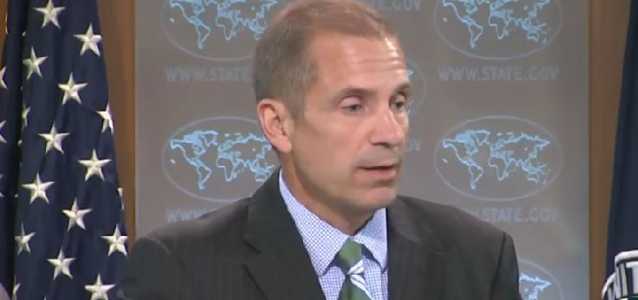
Under questioning from Fox News reporter James Rosen, State Department spokesman Mark Toner could not rule out that the deal “has served as a cause for this more aggressive posture” by the regime.

Rosen noted, Iran had recently threatened to shoot down two US Navy surveillance planes in international airspace. This was just the latest in a growing list of provocations, including taking 10 US sailors hostage and abusing them in violation of international law.

The New York Post editorial board was flabbergasted by the admission since if the Obama administration had even an inkling of this aberrant behavior on the part of the mullahs, it made no sense to continue a policy of appeasing them, including bending over backwards to ship the regime $1.7 billion in hard cash in exchange for American hostages.

The Post said that of course, after citing incidents that “needlessly escalate tensions” Toner then said it all makes the deal even “more important, because the last thing anyone would want to see in the region is a nuclear-armed Iran.”

“Especially, we’d add, an Iran grown even more aggressive and hostile precisely because of that very deal.

“The logic here is just mind-boggling.

“Yes, Iran has been emboldened by a deal that gives it billions in cash now and an easy road to going nuclear in a few years — thanks to a president who won’t dare challenge Tehran’s behavior and risk undoing his dubious diplomatic legacy.

“Nice to see someone finally admitting as much,” the Post added.

The Iranian regime isn’t taking the potential for blowback lightly. Iran’s semi-official ISNA news agency reports that the country’s foreign minister and his international counterparts will meet this month to discuss “some differences” over the implementation of the landmark nuclear deal.

The Wednesday report says they will focus on banking sanctions, which Iran complains have not been fully lifted. The meeting will take place Sep. 22, on the sidelines of the United Nations General Assembly, where the regime’s Hassan Rouhani is scheduled to speak in what we can only assume will be a verbal tongue lashing blaming the U.S. for a wide range of problems resulting from a now failed nuclear deal.

It has been clear from statements made by regime officials such as Ali Khamenei and members of the Iran lobby that the regime has shifted focus now to condemning the U.S. for the inability of the regime to participate in U.S. currency exchanges because of sanctions put in place for its support of terrorism and not related to the original nuclear deal.

The Iranian regime also recognizes that since the deal was passed, its conflict with Saudi Arabia, especially in Syria and Yemen, is stalling its plans for regional hegemony under a radicalized Shiite banner. The influence of Saudi Arabia in standing up to Iran including its active fighting in Yemen and interception of Iranian boast trying to smuggle illicit weapons through the Persian Gulf to Houthi rebels in Yemen has been effective and annoying to the mullahs in Tehran.

This helps explain why the Iranian regime has turned its attention and that of the Iran lobby into a full-blown smear campaign aimed at Saudi Arabia, and by association the U.S.

This can be seen in an editorial appearing in the New York Times penned by Mohammad Javad Zarif, the regime’s foreign minister, blaming Wahhabism and Saudi Arabia in particular for literally every terrorist act being committed around the world and chastised the Kingdom’s large lobbying efforts.

It is a preposterous piece since it blames Saudi Arabia for exactly what the Iranian regime is doing itself with its own substantial investment in PR firms, lobbyists, paid analysts, bloggers and commentators, as well as spreading cash to a large number of so-called grassroots organizations such as the Ploughshares Fund which strongly advocated for the nuclear deal.

Danielle Pletka, senior vice president for foreign and defense policy studies at the American Enterprise Institute, took Zarif to task and ticked off the Iranian regime’s own bloody history of support for terrorism around the world in a piece appearing on AEI’s site.

“It was the Islamic Republic that created Hezbollah and sponsored the groups that kidnapped and murdered Americans through Lebanon’s long civil war,” Pletka writes. “It is Iran that props up the murderous Assad regime — you know, the guys that have repeatedly gassed their own people. It is Iran that has assassinated its enemies the world over, and it is Iran’s own Islamic Revolutionary Guard Corps (and its expeditionary Quds Force) that was responsible, during the Iraq war, for hundreds of US servicemen dying.”

The first step in recovery for any addict is to admit they have a problem. We can only hope this admission by the State Department will be the first step in confronting the Iranian regime forcefully, honestly and openly again.

By Michael Tomlinson

Filed Under: Blog, News Tagged With: #NuclearDeal, Appeasement policy, Featured, Iran, Iran deal, Iran Human rights, Iran Lobby, Iran Mullahs, National Iranian American Council, Ploughshares, Sanctions, Trita Parsi, Yemen

Shocking Report Reveals Secret Side Deals to Iran Nuke Agreement

September 2, 2016 by admin

Shocking Report Reveals Secret Side Deals to Iran Nuke Agreement

Shocking Report Reveals Secret Side Deals to Iran Nuke Agreement

In what is bound to be one of the most startling revelations made about the Iran nuclear agreement, the Institute for Science and International Security, a Washington-based non-profit, non-partisan institution dedicated to informing the public about science and policy issues affecting international security, issued a damning report outlining “secret” concessions granted to the Iranian regime.

In the report, the United States and its negotiating partners agreed “in secret” to allow the Iranian regime to evade some restrictions in last year’s landmark nuclear agreement in order to meet the deadline for it to start getting relief from economic sanctions, according to the think tank’s report published on Thursday.

“The exemptions or loopholes are happening in secret, and it appears that they favor Iran,” said David Albright, the group’s president, in an interview with Reuters.

Among the exemptions outlined in the think tank’s report were two that allowed Iran to exceed the deal’s limits on how much low-enriched uranium (LEU) it can keep in its nuclear facilities, the report said. LEU can be purified into highly enriched, weapons-grade uranium.

Other provisions would allow Iran to continue operating 19 “hot cell” radiation containment chambers; and permission for Iran to store 50 tons of heavy water in Oman under its control, instead of selling it, as required by the nuclear deal.

The exemptions, the report said, were approved by the joint commission the deal created to oversee implementation of the accord. The commission is comprised of the United States and its negotiating partners — called the P5+1 — and Iran.

The Institute noted that the low-enriched uranium could be processed into weapons-grade material, so the secret side deal makes it effectively impossible to know how much bomb material Iran could produce, on fairly short notice. The hot cells can also be “misused for secret, mostly small-scale plutonium separation efforts,” according to the report.

The White House claims these changes to the JCPOA were not kept secret from Congress, but at least one prominent critic of the nuclear deal, Senator Bob Menendez (D-NJ), who is a senior member of the Foreign Relations Committee, told Reuters he was “not aware” of the exemptions, and was never briefed on them.

Sen. Kelly Ayotte, (R-N.H.), who sits on the Armed Services Committee, also issued a statement. Ayotte argued that the new evidence of “secret exemptions” underscores “the willingness of the Obama administration to bend over backwards to accommodate Tehran, conceal information from the American people, and protect a fundamentally flawed and deeply dangerous agreement that is only getting worse.”

Rep. Ileana Ros-Lehtinen (R-Fla.), who formerly chaired the House Foreign Affairs Committee, was far harsher: “Secret exemptions, ballistic missile tests, ransom payments, heavy water purchases but no sanctions. #Iran’s bent + broken horrid nuke deal,” she tweeted.

“Since the JCPOA is public, any rationale for keeping these exemptions secret appears unjustified. Moreover, the Joint Commission’s secretive decision making process risks advantaging Iran by allowing it to try to systematically weaken the JCPOA. It appears to be succeeding in several key areas,” wrote Albright and his co-author, Andrea Stricker, who has written extensively on the illegal nuclear trade and Iran’s nuclear program.

State Department spokesman John Kirby declined to comment on the work of the joint commission, saying it was confidential, but the lack of transparency flies in the face of the original promises made by the Iran lobby, such as the Ploughshares Fund and National Iranian American Council, which reassured skeptical members of Congress that there were no other provisions in the deal other than what was presented to Congress for review.

That assertion was proven false within days when secret appendices were revealed by the media to exist and now follow up decisions by the join commission can now carve out wide exemptions for the mullahs in Tehran without public review or knowledge.

“The current arrangement has been overly secret and amounts to the generation of additional secret or confidential arrangements directly linked to the JCPOA that do not have adequate oversight and scrutiny,” the report states. “Moreover, the process in general raises the question of whether Iran is exploiting the exemption mechanism, outside of any public oversight, to systematically weaken as many JCPOA limitations as possible.”

A “senior knowledgeable official” quoted by the report said that without the secret exemptions, Iran’s nuclear facilities would not have been in compliance with the nuclear deal by Jan. 16, which was set as the implementation day.

That statement alone should give people pause since it clearly indicates that the Iranian regime was not prepared to abide by the agreement from Day One and since then it has used the commission to receive more and more exemptions allowing it to violate the agreement without penalty.

At every step of the negotiations and through the implementation of the Iranian nuclear agreement, both U.S. and European officials have been consistently misled by the regime and yet bizarrely accommodating of the mullahs, granting exemptions, leading trade delegations to Tehran even while political prisoners are being executed, keeping mum about a rash of hostage-takings of dual-national citizens and refusing to demand the halt of Iran’s participation in proxy wars in Syria, Yemen and Iraq.

The world has given the Iranian regime so many second-chances, the mullahs must be wondering how they can keep this gravy train of appeasement going into 2017.

By Michael Tomlinson

Filed Under: Blog, News Tagged With: #NuclearDeal, Appeasement policy, Featured, Iran, Iran deal, Iran Human rights, Iran Lobby, Iran Talks, National Iranian American Council, Nuclear Deal

British Official in Hot Water Over $26,000 Payment from Iran

September 1, 2016 by admin

British Official in Hot Water Over $26,000 Payment from Iran

British Official in Hot Water Over $26,000 Payment from Iran

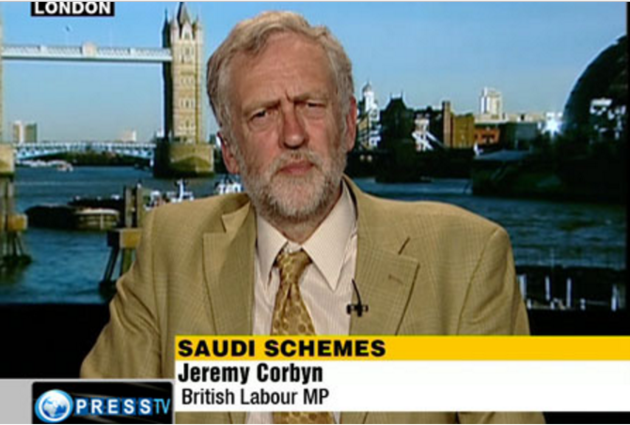
British Labor Party Leader Jeremy Corbyn found himself in some hot water when he admitted in a televised interview on Pink News that he took a $26,000 payment to appear on the Iranian regime’s state broadcaster as a pundit in which he criticized other countries human rights record.

He accepted these payments after hosting five shows on Press TV between 2009 and 2012. The irony of his admission on Pink News, a news outlet focusing on LGBT community issues, wasn’t lost on one viewer who called into the show calling him a “hypocrite” for appearing on a channel that was banned from the UK for its role in filming the torture of an Iranian journalist according to the Daily Mail.

What was even more incredible was Corbyn’s attempt to defend the payment, insisting it “wasn’t an enormous amount” of money.

Corbyn was rightly challenged by viewers considering the regime’s dismal human rights record.

It was during one of his appearances on Press TV when he made his much-criticized comments saying it was a “tragedy” that Osama bin Laden had been killed and not put on trial.

Famed Harry Potter author, JK Rowling, who has long been an opponent of Corbyn, commented when a fan tried to compare him to the Hogwarts headmaster of her books, that “Corbyn. Is. Not. Dumbledore.”

Corbyn’s appearances and the timing of his appearances reinforces what has recently been revealed about then depth and scope of efforts by the Iranian regime to influence Western countries during the run-up to the negotiations for the nuclear agreement last year.

Corbyn’s recruitment and payment is especially troubling since he is a sitting member of government and his appearances came shortly after the brutal crackdown over the disputed elections of 2009 in Iran and the crushing of democracy demonstrations as part of the so-called Arab Spring movement.

The fact that the regime was paying Corbyn, coincides with its support of the broader Iran lobby including support for institutions such as the National Iranian American Council and Ploughshares Fund that were part of the Obama administration’s “echo chamber” of support for the nuclear deal.

The Iran lobby’s shadowy connections to various bloggers and journalists such as Jim Lobe and Ali Gharib, as well as academics and members of so-called think tanks have been examined by many news organizations that have worked to uncover the tentacles of the regime’s effort to influence government policies in the West.

Now the NIAC’s official lobbying arm, NIAC Action, is actively trying to influence various U.S. Senate races this fall in an effort to unseat opponents of the Iran nuclear deal and replace them with other candidates more publicly sympathetic and supportive of the regime.

The Iran lobby has also sought to provide more political cover for those supporters and elected officials who are feeling the heat of critics of the regime, especially in light of the past year since the deal, which has seen the situation in the Middle East deteriorate badly and the Iranian regime at the center of three proxy wars in Syria, Iraq and Yemen.

One supporter of the Iran agreement is Sen. Cory Booker (D-NJ) who was on the receiving end of blistering editorial by Shmuley Boteach, executive director of The World Values Network in The Hill.

“Would Cory condone the Obama Administration sending Iran $400 million in cash in January, which experts say is utterly unprecedented, and which will undoubtedly be funneled to terror groups like Hezbollah”? Boteach writes.

“And speaking of Hezbollah, how could Cory, on the one hand, tell us that on his trip he saw firsthand the terrible humanitarian disaster of Syrian refugees, yet on the other defend giving $150 billion to Iran which is being used to prop up the genocidal government of Bashar Assad? Assad’s government, and its wholesale slaughter of the Syrian people, is what created this humanitarian disaster in the first place, along with nearly half a million Arab dead and millions of refugees. And Iran is a key ally keeping Assad in power. Cory could easily have condemned Iran’s support of Assad’s Arab genocide. Instead, he chose to remain silent,” he added.

The ability of regime supporters and the Iran lobby to cover for the regime’s bad actions is proving more difficult as the regime obliges by engaging in more provocative behavior, such as the recent deployment of Russian S-300 missile batteries at its Fordow nuclear facilities; an action the Wall Street Journal said was clear sign of the failure of the nuclear agreement in an editorial.

“Iran seems bent on exposing the nuclear-deal illusions of President Obama even before he leaves office. The latest sign came Sunday, when Iran’s state-run media aired footage of the S-300 air-defense system maneuvering around Fordow,” the Journal said.

“Meanwhile, the Obama Administration refuses to sanction Moscow for the transfer. Congress has enacted at least three bills either requiring or authorizing the President to sanction actors that help Iran acquire or develop advanced, destabilizing weapons like the S-300. Yet so far Washington has done little more than grumble and vow to ‘monitor’ Iran’s S-300 capability. President Obama made nonproliferation one of his priorities, but he will leave office amid a spreading nuclear threat thanks in part to his infinite patience with global rogues,” the paper added.

There is going to be a price to be paid for supporting the Iranian regime. We only hope officials such as Corbyn and Booker figure out they should stop being beholden to the mullahs in Tehran.

By Michael Tomlinson

Filed Under: Blog, News Tagged With: #NuclearDeal, Featured, Iran Lobby, National Iranian American Council, NIAC Action, Ploughshares

Iran Regime Cannot Stop From Arresting Everyone

August 30, 2016 by admin

Iran Regime Cannot Stop From Arresting Everyone

Iran Regime Cannot Stop From Arresting Everyone

The famous physicist Albert Einstein is credited with coining the phrase: “Insanity: doing the same thing over and over again and expecting different results.”

While Einstein was referring to the area of physics, quantum theories and the nature of the universe, his quote is very much appropriate for something a bit more rooted in the here and now: the Iranian regime.

It seems the mullahs in Tehran have an addiction to arresting people. They arrest dual nationals visiting from other countries. They arrest journalists. They arrests dissidents. They arrest Christians and other religious minorities. They arrest bloggers. They arrest women, children, students, artists, professors and just about anyone else that annoys them.

They even arrest members of their own government that helped bring them a nuclear deal that lined their pockets with billions of dollars in sanctions relief.

Yes, sometimes it doesn’t even protect you from being arrested if you are even part of the regime.

The regime said on Sunday that a person close to the government team that negotiated the nuclear agreement with foreign powers had been arrested on accusations of espionage and released on bail.

The disclosure, reported in the state media, appeared to be the latest sign of the Iranian regime’s leadership’s frustration over the agreement, which has failed so far to yield the significant economic benefits for the country that the accord’s advocates had promised. Regime officials and members of the Iran lobby have blamed the United States for that problem.

According to the New York Times, there had been unconfirmed reports last week that regime authorities arrested Abdolrasoul Dorri Esfahani, who has dual Iranian and Canadian citizenship, on espionage suspicions. Esfahani, an adviser to Iran’s central bank, was involved in helping the Iranian nuclear negotiators bargain for sanctions relief in exchange for Iran’s pledges of verifiably peaceful nuclear work.

The official Islamic Republic News Agency said a spokesman for Iran’s judiciary, Gholam Hossein Mohseni Ejei, speaking at a weekly news conference on Sunday in Tehran, had “confirmed the arrest of an individual from the negotiating team.”

There was no immediate comment on Esfahani’s fate from the government of Canada, which already has wrestling with the arrest of another dual citizen in Iran; Homa Hoodfar, a Canadian-Iranian anthropologist who studies the role of women in Muslim societies. There has been no announcement from the regime as to why she was arrested.

This new arrest occurrs against the backdrop of other hostile actions from regime, including:

  • Regime officials announced the execution of a nuclear scientist who had returned home from the United States, where, he claimed, he had been kidnapped by the U.S. government. The Iranians said the scientist had betrayed secrets to the enemy;
  • Last week, a series of run-ins with high-speed boats from the regime’s Islamic Revolutionary Guard Corps Navy harassed American warships patrolling international waters in the Persian Gulf region at least four times, U.S. Navy officials called the actions dangerous, unsafe, unprofessional and illegal.

The rash of arrests, especially of dual national citizens who seem to be the latest targets of the regime, has caused consternation among supporters of the regime within the Iran lobby and the Obama administration’s vaunted “echo chamber” all of whom have remained studiously silent on the matter.

The uptick in arrests is worrisome given the contention that the $400 million cash payment made by the U.S. was done explicitly in exchange for U.S. hostages and has convinced the mullahs in Tehran that this is a more profitable and quicker tactic for recouping gains than tiresome diplomatic forays, which many in the regime leadership, including top mullah Ali Khamenei, have openly called a waste of time.

Khamenei himself seems perfectly happy in his usual vein of saber rattling and lengthy denunciations of the West as the regime’s Tasnim News Service issued a press release this weekend of his remarks in which again threatened the world.

The fact that Khamenei and the rest of the clerical leadership of the Iranian regime seems intent on committing the Islamic state to a course regional proxy wars, conflict, hostility and unremitting bombastic hatred of the liberal and pluralistic West, the obvious question now is just what the heck should the next Congress and president do about it next year?

That question seems to preoccupy the Iran lobby to no end as its official lobbying arms, such as NIAC Action, have fully engaged in U.S. Congressional races, especially Senate ones to ensure that candidates supportive of the nuclear deal and of maintaining friendly relations with the Iranian regime are elected.

What is interesting is that NIAC Action has clearly decided on a partisan course in only supporting Democratic candidates in key races who have come out in favor of the Iran nuclear deal, even though many of those same candidates, when questioned about Iran’s human rights situation and support for terrorism, quickly disavow any support for the mullahs.

The real litmus test is not going to be in who controls the Senate, but in ensuring that no matter what party controls the Congress and White House, they continue to hold the regime accountable for these transgressions or face more multi-million dollar ransom payments for our citizens.

By Michael Tomlinson

Filed Under: Blog, News Tagged With: #NuclearDeal, Featured, Iran, Iran deal, Iran Human rights, Iran Lobby, National Iranian American Council, NIAC Action

  • « Previous Page
  • 1
  • …
  • 11
  • 12
  • 13
  • 14
  • 15
  • …
  • 20
  • Next Page »

National Iranian-American Council (NIAC)

  • Bogus Memberships
  • Survey
  • Lobbying
  • Iranians for International Cooperation
  • Defamation Lawsuit
  • People’s Mojahedin
  • Trita Parsi Biography
  • Parsi/Namazi Lobbying Plan
  • Parsi Links to Namazi & Iranian Regime
  • Namazi, NIAC Ringleader
  • Collaborating with Iran’s Ambassador

Recent Posts

  • NIAC Trying to Gain Influence On U.S. Congress
  • While Iran Lobby Plays Blame Game Iran Goes Nuclear
  • Iran Lobby Jumps on Detention of Iranian Newscaster
  • Bad News for Iran Swamps Iran Lobby
  • Iran Starts Off Year by Banning Instagram

© Copyright 2026 IranLobby.net · All Rights Reserved.