Iran Lobby

Exposing the Activities of the lobbies and appeasers of the Mullah's Dictatorship ruling Iran

  • Home
  • About
  • Current Trend
  • National Iranian-American Council(NIAC)
    • Bogus Memberships
    • Survey
    • Lobbying
    • Iranians for International Cooperation
    • Defamation Lawsuit
    • People’s Mojahedin
    • Trita Parsi Biography
    • Parsi/Namazi Lobbying Plan
    • Parsi Links to Namazi& Iranian Regime
    • Namazi, NIAC Ringleader
    • Collaborating with Iran’s Ambassador
  • The Appeasers
    • Gary Sick
    • Flynt Leverett & Hillary Mann Leverett
    • Baroness Nicholson
  • Blog
  • Links
  • Media Reports

Devastating Report Shows Obama Blocked Hezbollah Sting

December 20, 2017 by admin

Devastating Report Shows Obama Blocked Hezbollah Sting

Devastating Report Shows Obama Blocked Hezbollah Sting

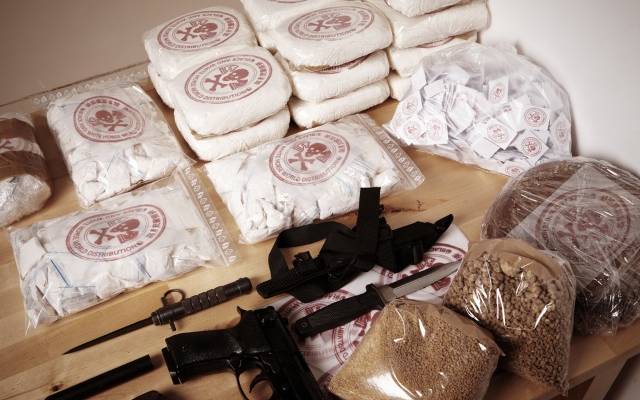
Politico published a devastating story of how the Obama administration derailed a Drug Enforcement Administration operation aimed at Hezbollah, a Lebanese-based, Iranian-backed terrorist group, which used trafficking in drugs and weapons to fund its operations, in order to prevent jeopardizing the Iran nuclear deal.

The blockbuster revelation came in an exhaustive three-part series by Politico’s Josh Meyer who delved deep into Hezbollah’s criminal and terrorist operations, its support from the Iranian regime and the Obama administration’s desperate moves to keep the DEA’s investigation from jeopardizing a flawed nuclear deal alive.

Known as Project Cassandra, the DEA’s extensive campaign was aimed at toppling the terrorist group’s elaborate network smuggling and selling narcotics and weapons around the world; whose profits were used to fund the terror network worldwide.

“This was a policy decision, it was a systematic decision,” David Asher, who helped establish Project Cassandra as a Defense Department illicit finance analyst in 2008, told Politico. “They serially ripped apart this entire effort that was very well supported and resourced, and it was done from the top down.”

When Project Cassandra leaders, who were working out of a DEA’s Counter facility in Chantilly, Virginia, sought an OK for some significant investigations, prosecutions, arrests and financial sanctions, Justice and Treasury Department officials delayed, hindered or rejected their requests, according to Politico.

Project Cassandra members said Obama officials blocked or undermined their efforts to chase down top Hezbollah operatives, including one of the world’s biggest cocaine traffickers who was also a top supplier of conventional and chemical weapons used by Syrian President Bashar Assad against his own citizens.

Former Obama administration officials told Politico their decisions were guided by improving relations with Iran, stalling its nuclear weapons program and freeing four American hostages held by the country.

According to Politico, the DEA followed cocaine shipments, some from Latin America to West Africa and on to Europe and the Middle East, and others through Venezuela and Mexico to the United States. They tracked the river of dirty cash as it was laundered by, among other tactics, buying American used cars and shipping them to Africa. And with the help of some key cooperating witnesses, the agents traced the conspiracy, they believed, to the innermost circle of Hezbollah and its state sponsors in Iran.

It is ironic that the other countries involved in the smuggling operation include countries such as Venezuela who is closely tied to the Iranian regime.

It is even more ironic that the Iran lobby has been deaf, dumb and mute on the disclosures since they fly directly in the face of the claims made by Iran advocates such as Trita Parsi of the National Iranian American Council who extolled the virtues of the nuclear deal as a moderating force within Iran and throughout the Middle East, but now we know that the promise of the deal in fact persuaded the Obama administration to give Hezbollah a free pass in shipping narcotics to Western nations and arms to proxies who later used them in conflicts stretching from Syria to Yemen to Nigeria.

The Obama-led Justice Department declined requests by Project Cassandra and other authorities to file criminal charges against major players such as Hezbollah’s high-profile envoy to Iran, a Lebanese bank that allegedly laundered billions in alleged drug profits, and a central player in a U.S.-based cell of the Iranian paramilitary Quds force. And the State Department rejected requests to lure high-value targets to countries where they could be arrested, according to Politico.

In hindsight, the Obama administration’s Pollyanna-ish view of the Iranian regime and Hezbollah since at best naive, and at worst deliberately obstructive.

Obama’s then CIA director, John Brennan, even recommended that Obama “has the opportunity to set a new course for relations between the two countries” through not only a direct dialogue, but “greater assimilation of Hezbollah into Lebanon’s political system.”

The logic that believed the mullahs in Tehran could be trusted to act in a civilized manner also seemed to guide the belief that Hezbollah could be assimilated into a normal political party in war-torn Lebanon.

The disclosure that Brennan actually believed that “moderate elements” within Hezbollah could be cultivated is a shocking echo of the same arguments made about empowering “moderate elements” within the Iranian regime through a negotiated nuclear agreement.

It is clear now that the pervasive idea of appeasement was hatched almost from the day President Obama was sworn into office and guided U.S. policy moving forward and eventually set the stage for the carnage and bloodshed Iran has unleashed over the past three years.

Politico cited the example of Lebanese arms dealer Ali Fayad, a suspected top Hezbollah operative whom agents believed reported to Russian President Vladimir Putin as a key supplier of weapons to Syria and Iraq, who was arrested in Prague in the spring of 2014.

But for the nearly two years Fayad was in custody, top Obama administration officials declined to apply serious pressure on the Czech government to extradite him to the United States, even as Putin was lobbying aggressively against it.

Fayad, who had been indicted in U.S. courts on charges of planning the murders of U.S. government employees, attempting to provide material support to a terrorist organization and attempting to acquire, transfer and use anti-aircraft missiles, was ultimately sent to Beirut. He is now believed by U.S. officials to be back in business, and helping to arm militants in Syria and elsewhere with Russian heavy weapons.

We know that the Obama administration’s policy of appeasement has been a complete failure in reining in Iranian extremism. It has made the world a much more dangerous place and resulted in the deaths of hundreds of thousands of people.

We can only hope that the Politico story revelations will serve as a harsh reminder for the Trump administration not to make the same mistakes.

Michael Tomlinson
Filed Under: Blog, News Tagged With: Featured, Hezbollah, Iran, Iran Terrorism, IRGC, Khamenei, National Iranian American Council, NIAC, Rouhani, Trita Parsi

Iran Lobby Shows its Hypocrisy in Latest Attacks on US

December 4, 2017 by admin

Iran Lobby Shows its Hypocrisy in Latest Attacks on US

Iran Lobby Shows its Hypocrisy in Latest Attacks on US

The recent media speculation over U.S. Secretary of State Rex Tillerson’s alleged precarious employment status has given rise to a cottage industry overnight of second-guessing by various talking heads and analysts over what a potential change at Foggy Bottom might look like in terms of future US policy.

The Iran lobby, specifically the National Iranian American Council, was swift to jump on the bandwagon and raise the specter of a push by “neocons” to put one of their own into the seat and go to war against the Iranian regime.

The focus of that smear attack was Sen. Tom Cotton (R-Arkansas) who has been a vocal critic of the Iranian regime, especially the nuclear agreement.

It serves the Iran lobby’s purposes to push the narrative that Trump administration’s primary focus is to somehow foment a war with Iran; even though no administration official—from the president on down—has never even hinted at such an outcome, let alone advocated it.

The narrative though helps the Iran lobby by feeding into the fear factor it has long used in warning against taking any aggressive actions to restrain the mullahs in Tehran. Remember how during the run up in negotiations over the nuclear agreement how the NIAC and its allies pushed the image of a war between Iran and the US as the reason for completing the deal?

The Iran lobby has always used fear mongering as a PR tactic and in the case of Secretary Tillerson, it is going all out to push it again.

The best example was an editorial authored by Trita Parsi and Ryan Costello of the NIAC on its website with the provocative headline of: “Cotton, Pompeo and Trump are a Recipe for War with Iran.”

Hyperbole aside, Parsi and Costello argue a scenario where Tillerson is replaced by current CIA director Mike Pompeo and he is replaced at the intelligence agency by Cotton. Of course Parsi and Costello offer no proof for such a scenario other than a vague “reported plan.”

There is no better example of trolling fake news than what Parsi and Costello are doing.

They go on to recite a history of Pompeo and Cotton’s record—which is already well known—of their doubts about the Iran nuclear deal and of the ability to rein in Iranian extremism, but couch it in a way to convey the idea that both are some crazed blood thirsty war mongers.

“What of the man that Pompeo would replace, Rex Tillerson? It is indisputable that Tillerson has been a disaster on many fronts, in particular, his campaign to gut the State Department which will do untold damage to American diplomacy for years to come. Yet, on the Iran nuclear deal, Tillerson has actually allied with Secretary of Defense James Mattis to urge Trump against ripping up the deal. The loss of Tillerson, combined with Cotton’s elevation, would mean that Pompeo and Cotton could face little resistance in their campaign to unravel a nuclear accord that is working and downplay the likely alternative ― war,” Parsi and Costello write.

In the twisted little world that Parsi and Costello are trying to fabricate, they stick to the logic that unraveling the nuclear accord can only lead to war; a preposterous idea when considered alongside the reality of since the deal was passed.

In the wake of the Iran nuclear deal, the Middle East has devolved into a region-wide war zone due largely to actions by Tehran, including the bloody civil war in Syria that sent four million refugees flooding across Europe and another sectarian uprising in Yemen that now threatens to bring Saudi Arabia into direct conflict with Iran.

Far from producing a peaceful world, Iranian regime has been at the epicenter of some of the worst conflicts taking place now; a far cry from the absurdist claims made by Parsi and Costello.

Of course, neither ever takes Tehran to task for supporting those wars, nor for its North Korean-like fanatical support for developing ballistic missiles; a point reinforced by a regime spokesman in denouncing comments made by French president Emmanuel Macron criticizing the missile expansion program.

“French official, other officials, who want to speak about Iran’s affairs need to pay attention to the deep developments that have come to pass in the region in past decades and the big changes between the current situation and the past,” said Bahram Qassemi, regime foreign ministry spokesman, according to state media.

“The Islamic Republic of Iran will definitely not negotiate on defense and missile issues,” he added.

Tension between Iran and France increased last month when Macron said that Iran should be less aggressive in the region and should clarify its ballistic missile program. His foreign minister also denounced, during a visit to Saudi Arabia, Iran’s “hegemonic temptations.”

France’s criticisms only echo those made by then-candidate Donald Trump and his current administration’s positions, and yet Parsi and Costello avoid criticizing the French on the same issue.

The hypocrisy of their positions is readily apparent as they fabricate Tillerson’s potential demise in order to create a false narrative, but not apply the same standard in criticizing the much-more revealing truth behind Iranian actions over the past four years.

Pompeo and national security adviser HR McMaster spoke at length about Iranian expansion in “weak states” in the Middle East at the 2017 Reagan National Defense Forum in California this weekend.

Pompeo confirmed he sent a letter recently to Maj. Gen Qassem Soleimani, head of the Iranian Revolutionary Guard’s foreign operations arm or Quds Force.

“I sent a note. I sent it because he had indicated that forces under his control might in fact threaten US interests in Iraq,” Pompeo said.

“He refused to open the letter. It didn’t break my heart to be honest with you. What we were communicating to him in that letter was that we will hold he and Iran accountable for any attacks on American interests in Iraq by forces that are under their control. We wanted to make sure he and the leadership in Iran understood that in a way that was crystal clear.”

Far from being a call to war, Pompeo’s effort to reach out to Soleimani only illustrated the focus of the Trump administration to rein in Iranian expansionism, not start a shooting war.

If there are any real war mongers here, they live in Tehran, not Washington.

Michael Tomlinson

Filed Under: Blog, News Tagged With: Featured, Iran deal, Iran Lobby, Iran Talks, IRGC, Khamenei, National Iranian American Council, NIAC, NIAC Action, Pompeo, Ryan Costello, Tom Cotton, Trita Parsi

Why the Iran Earthquake Illustrates Shortcomings of Regime

November 18, 2017 by admin

Why the Iran Earthquake Illustrates Shortcomings of Regime

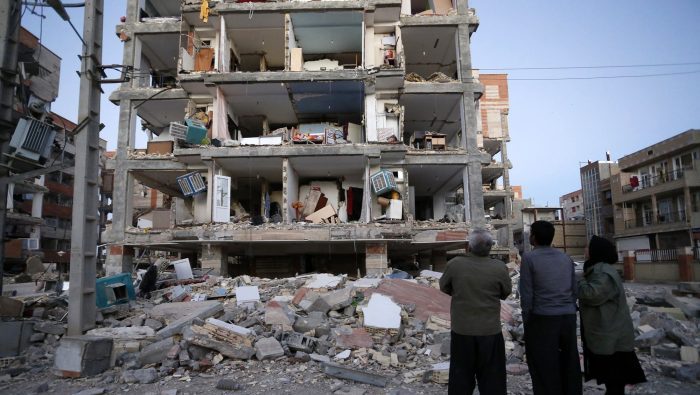
In this photo provided by the Iranian Students News Agency, ISNA, people look at destroyed buildings after an earthquake at the city of Sarpol-e-Zahab in western Iran, Monday, Nov. 13, 2017. A powerful earthquake shook the Iran-Iraq border late Sunday, killing more than one hundred people and injuring some 800 in the mountainous region of Iran alone, state media there said. (Pouria Pakizeh/ISNA via AP)

This past Sunday night a massive 7.3 Richter magnitude earthquake struck the mountainous border region between Iran and Iraq, shaking many provinces and killing over 530 people and leaving tens of thousands homeless as winter weather conditions set in.

In terms of power and sheer destructiveness, this earthquake surpassed the recent temblor that hit Mexico City last September. For most people around the world, televised scenes of devastation, heartbreak and loss caused by these natural disasters are common fare on news programs, as well as appeals for help to the international community.

But in Iran, under the strict rule of the mullahs, such normally ordinary actions are often difficult at best and impossible at worst as the Iranian regime seeks to project an air of competent government response, while struggling with massive incompetence that costs lives daily.

It is the sad testimonial of ineptness that often runs rampant within the theocratic state that values global reputation more than actual results on the ground.

By accident of geography and tectonic plates, Iran sits in one of the most active earthquake zones on the planet with a long history of devastating earthquakes. Some of the more notorious earthquakes and their subsequent death tolls include:

  • 11, 2012: Iran’s East Azerbaijan province, magnitude 6.4; Over 300 killed
  • 26, 2003: Southeastern Iran, Bam, magnitude 6.5; Over 26,000 killed
  • 28, 1997: Northeast Iran, Ardabil, magnitude 6.1; Over 1,100 killed
  • May 10, 1997: Eastern Iran, Birjand-Qaen, magnitude 7.3; Over 1,560 killed
  • June 21, 1990: Northwest Iran, Rudbar, magnitude 7.4; 50,000 killed

What is remarkable given this history of seismic disaster is how utterly incompetent the regime has been in pushing tougher building standards and inspections to protect its citizens from these kinds of devastating losses.

In similar earthquake-prone areas such as Japan and California, strict building codes have historically minimized loss of life, property destruction and disruption to infrastructure and public services.

Even massive quakes measuring over 6 on the Richter scale often leave local residents yawning with minimal disruptions. Why then is Iran so different?

Much of the fault lies at the footsteps of the mullahs who have built a government based on intimidation and fear and riven deep with corruption, nepotism and lack of transparency. Agencies that track transparency and government corruption have consistently ranked Iran at or near the bottom.

Most ordinary Iranians are all-too aware of the corruption that infests all levels of Iranian society where the families of powerful mullahs or members of the Revolutionary Guard Corps have access to capital and favorable influence through the myriad number of shell companies they control that cover most of the Iranian economy.

What this often means is the pursuit of profit to skim and line their family bank accounts often takes precedence over the need to spend more on construction materials to build earthquake resistant and fire-safe buildings.

The history of shoddy construction and lax accountability is well documented in Iran with a high-rise tower recently catching on fire and collapsing last January killing scores of firefighters inside. The building was owned by the Mostazafan Foundation, an extension of the IRGC, which apologized for its role in the building’s collapse, but no officer or member of the foundation was ever arrested or put on trial.

A report issued the following April stated that regime ministries had failed to enforce a reported 22 violations of national building regulations leading up to the fire and collapse.

With this weekend’s earthquake, the regime has again demonstrated how it values its own grip on power rather than show any signs of weakness as it declared it would not accept aid offered from other nations even though an estimated 30,000 homes were damaged or destroyed.

“We are hungry. We are cold. We are homeless. We are alone in this world,” a weeping Maryam Ahang, who lost 10 members of her family in the hardest hit town of Sarpol-e Zahab, told Reuters by telephone.

“My home is now a pile of mud and broken tiles. I slept in the park last night. It is cold and I am scared.”

Her story is all-too common in the Iranian regime and demonstrates the undercurrents of deep anger, frustration and desperation that has been seeping into the Iranian population for years now; hungry for regime change and more freedom and accountability.

The torrent of angry and desperate pleas for help have flooded social media as journalists reporting from the disaster area have shown interviews of homeless residents and local officials blasting the relief effort and complaining of little media attention from the tightly controlled state media.

Even the hardline Fars news agency posted a video of angry residents in Sarpol-e Zahab, complaining of what they described as a lack of attention and news coverage of their plight. “People need water and food. Help us,” a man says in the video from the town, which is located in a largely Kurdish-populated area.

“There’s not even a good team covering the news about us, and there’s no one removing the debris, people here are not part of Iran? Are we not part of this nation?” another man asks.

“A gentleman in a suit comes here and tells the media that all has been resolved,” alleged another.

Interestingly enough, the Iran lobby led by the National Iranian American Council took the opportunity to use the natural disaster to take a swipe at the economic sanctions levied against Iran for its missile program and support for terrorism by blaming the lack of aid flowing to the region on sanctions.

The NIAC conveniently ignores the regime’s refusal to let in any foreign assistance and its own ineptitude in handling the response.

In an interview with Al Jazeera, Reza Marashi of NIAC, said he expects Iranians to rally behind the country’s leadership amid the disaster.

“I think you are going to see a more robust government response in the coming days,” Marashi told Al Jazeera.

“If you don’t see that response from the government, then you will start to see outrage from the people, which is the last thing the Iranian government is going to want.”

Clearly Marashi got it wrong.

Laura Carnahan

Filed Under: Blog, News Tagged With: Featured, Iran, Iran Earthquake, Iran Human rights, Iran Lobby, Iran Mullahs, Iran sanctions, National Iranian American Council, NIAC, NIAC Action, Reza Marashi

Iran Regime Pushing Saudi Arabia to Brink of War

November 14, 2017 by admin

Iran Regime Pushing Saudi Arabia to Brink of War

Iran Regime Pushing Saudi Arabia to Brink of War

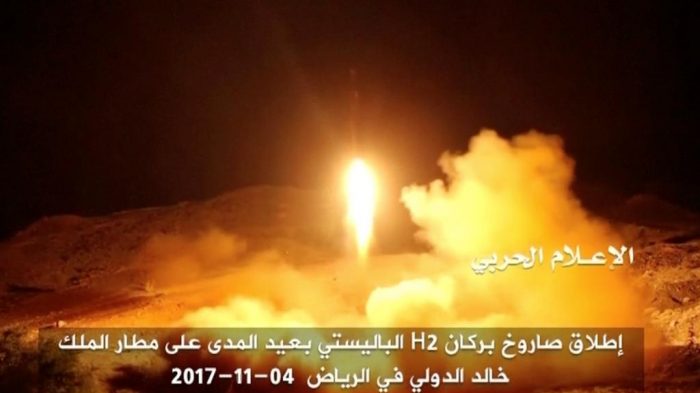
Over the weekend, Iranian regime-backed Houthi rebels lobbed a missile at the Saudi Arabian capital of Riyadh from Yemen in what is being described as an “act of war” by Saudi officials by the Iranian regime.

While tensions have long simmered between Saudi Arabia and Iran—rising to a boiling point with confrontations between the two in the Syrian civil war and Yemen—this is the marks the first-time theater-wide weapons have been introduced aimed at either countries’ capitals.

“We see this as an act of war,” said Adel Jubair, Saudi Arabia’s foreign minister, in a CNN interview. “Iran cannot lob missiles at Saudi cities and towns and expect us not to take steps.”

This latest provocation seems to be part of the larger chess game being played out between the two countries that includes clashes in Lebanon and Iraq as Saudi Arabia seems determined to step up to the plate and blunt the Iranian regime’s expansionist moves over the past several years as part of an effort to build a Shiite sphere of influence controlled by Tehran.

The two countries had only recently appeared to be working towards a rapprochement offered by the Iranians only to see the regime launch proxy military efforts in backing Houthi rebels in Yemen and using Hezbollah fighters from Lebanon in Syria; both moves seemingly aimed at isolating and diminishing Saudi influence.

The missile launched by the Houthis was intercepted before reaching the capital and while causing no damage, pushed the region dangerously closer to all-out war between the two countries.

The move by Iranian regime to allow such an act underlines how vastly stupefying promises were made earlier by Iran supporters and advocates such as the National Iranian American Council two years ago during negotiations over the Iran nuclear agreement that passage of the deal would embolden moderate forces within Iran and usher in a more moderate and stabilizing Iran.

It’s worth noting again how utterly wrong people such as Trita Parsi of the NIAC have been since then.

While it may be eminently satisfying to call out Parsi and his cohorts on how blatantly obvious it was to simply be shilling for the mullahs, the ramifications of the PR push to essentially grant Tehran a hall pass to sow terror and conflict throughout the Middle East are coming home to bear poisonous fruit.

Far from accepting the blame and pushing for moderation from the mullahs in Tehran, Parsi and the NIAC have only doubled down by aggressively going after the Saudi regime with a spate of editorials, social media posts and statements blasting Riyadh for everything from manipulating the Trump administration’s policies towards Iran to conspiring with conservative Republicans to start to eradicate Iran.

On the surface, the NIAC’s claims are ludicrous, but given the dark history of complicity by it and its allies within the Iran lobbying machine, it’s no wonder that Tehran feels emboldened enough to start lobbing missiles at Saudi Arabia.

Jubair detailed how the missile was smuggled into Yemen in parts and assembled by Hezbollah and Iran’s Revolutionary Guard Corps operatives and fired by Hezbollah from Yemen.

The fact that U.S., Saudi and other coalition naval warships have periodically caught Iranian fishing and commercial vessels smuggling weapons, ammunition and parts to Yemen from Iran have only strengthened these claims over the years of direct Iranian activity in the escalating war in Yemen.

Hezbollah’s participation is worrisome since the IRGC has often used the Lebanese-based terror group as its shock troops in conflicts such as Syria and in targeting U.S. service personnel over the past three decades around the world.

Earlier news disclosures of U.S. State Department cables published on WikiLeaks show that Yemen had acquired stockpiles of missiles from North Korea and that Iran may have shipped components of North Korean missiles to its Houthi allies who in 2015, with the support of Tehran, toppled the internationally-recognized government of President Abdu Rabbu Mansour Hadi and now control much of the countryside since then.

This new-found “Axis of Evil” between Iran, North Korea and terror groups such as Hezbollah, point out the highly volatile nature of Iranian regime’s expansion plans and how it has built a formula for conquest around using terror groups and insurgents to destabilize a country and then move in to consolidate its power and use it as a base of operations to stage even more actions.

It is a model used effectively in Lebanon, Syria and Yemen and has gained traction in Iraq, but was stymied in the Gulf states by swift action by Saudi Arabia.

Saudi Arabia has called for an urgent meeting of Arab League foreign ministers in Cairo next week to discuss Iran’s intervention in the region, an official league source told Egypt’s MENA state news agency.

The call came after the resignation of Lebanon’s prime minister pushed Beirut back into the center of a rivalry between Saudi Arabia and Iran and threatens to re-open that country to bloody conflict.

Even French President Emmanuel Macron is blaming Iran for the missile attack targeting Riyadh and said it illustrates the need for negotiations with Tehran over its missile development.

“The missile which was intercepted by Saudi Arabia launched from Yemen, which obviously is an Iranian missile, shows precisely the strength of their” program, Macron said late as he visited the United Arab Emirates and Saudi Arabia.

“There are extremely strong concerns about Iran” among its Arab neighbors in the Persian Gulf region over the missile launch, and “there are negotiations we need to start on Iran’s ballistic missiles,” he said.

All this flies in the face of the false promises made by Parsi and the NIAC and demonstrates clearly why any reputable news organization should think twice before providing air time or space for them to make such disreputable claims.

Clearly the Iran lobby has become one of the largest machines churning out “fake news” today.

Michael Tomlinson

Filed Under: Blog, News Tagged With: Ballistic Missiles, Featured, Hezbollah, Houthis, Iran, Iran Lobby, Iran Terrorism, IRGC, National Iranian American Council, NIAC, NIAC Action, Syria, Trita Parsi, Yemen

CIA Release of Osama bin Laden Files Shows Links to Iran

November 6, 2017 by admin

CIA Release of Osama bin Laden Files Shows Links to Iran

CIA Release of Osama bin Laden Files Shows Links to Iran

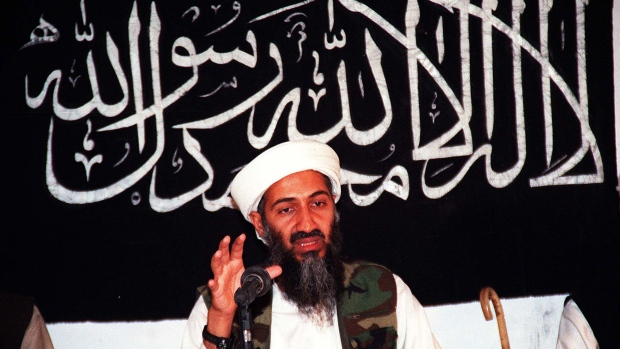
U.S. intelligence officials have long suspected ties existed between the Iranian regime and Osama bin Laden and his al-Qaeda terrorist network, even though Iran and its supporters in the Iran lobby have vigorously denied it.

Now the Central Intelligence Agency has released a trove of some 47,000 documents taken from bin Laden’s computer by U.S. special forces during the mission that killed the notorious terrorist leader in 2011 in his compound in Abbottabad, Pakistan.

Within that document dump was a 19-page al-Qaeda report in Arabic showing how bin Laden looked towards Iran in an alliance against the U.S.

“Anyone who wants to strike America, Iran is ready to support him and help him with their frank and clear rhetoric,” the report reads.

The Associated Press examined a copy of the report released by the Long War Journal, a publication backed by the Washington-based Foundation for Defense of Democracies, a think tank fiercely critical of Iran and skeptical of its nuclear deal with world powers. The CIA gave the Long War Journal early access to the material.

The material also included never-before-seen video of bin Laden’s son Hamza, who may be groomed to take over al-Qaida, getting married. It offers the first public look at Hamza bin Laden as an adult. Until now, the public has only seen childhood pictures of him.

Equally significant is the apparent location of the wedding: Iran. An analysis of the video from Long War Journal’s Thomas Joscelyn notes that Hamza bin Laden was technically in Iranian custody until 2010 but does not seem to regard himself as a prisoner in letters he wrote to his father. Furthermore, Hamza reported being mentored in the ways of jihad by several senior al-Qaeda men who were supposedly in detention in Iran.

Iranian regime officials have always vigorously denied any connection to al-Qaeda and consistently pointed to the alleged incarceration of al-Qaeda members as proof of the regime’s commitment against terrorism, but bin Laden’s own computer files shine a damning light on how false that narrative has been.

Among the most interesting revelations are details of Iran’s collusion with al-Qaeda and bin Laden’s citation of the Muslim Brotherhood as a formative influence on his political thought.

More clearly authentic are such items as bin Laden’s handwritten personal journal. The Long War Journal cites passages that indicate bin Laden hoped al-Qaeda could capitalize on the 2011 Arab Spring uprisings to expand its influence.

The document recovered from bin Laden’s system provides an extensive description of al-Qaeda’s collusion with Iran, as summarized by the Long War Journal:

The author explains that Iran offered some “Saudi brothers” in al Qaeda “everything they needed,” including “money, arms” and “training in Hezbollah camps in Lebanon, in exchange for striking American interests in Saudi Arabia and the Gulf.” Iranian intelligence facilitated the travel of some operatives with visas while sheltering others. Abu Hafs al-Mauritani, an influential ideologue prior to 9/11, helped negotiate a safe haven for his jihadi comrades inside Iran.

But the author of the file, who is clearly well-connected, indicates that al Qaeda’s men violated the terms of the agreement and Iran eventually cracked down on the Sunni jihadists’ network, detaining some personnel. Still, the author explains that al Qaeda is not at war with Iran and some of their “interests intersect,” especially when it comes to being an “enemy of America.”

Bin Laden was clear that Iran was a major covert supporter of al-Qaeda, providing funds, shelter for al-Qaeda operatives, and communications infrastructure. Two U.S. intelligence officials characterized the newly-released documents to NBC News as “evidence of Iran’s support for al-Qaeda’s war with the United States.”

Iranian regime Foreign Minister Mohammad Javad Zarif, chief Iranian architect of the nuclear deal with President Barack Obama, quickly denounced the documents as “fake news” selectively released by the CIA to “whitewash the role of U.S. allies in 9/11.”

Unfortunately for Zarif the documents are not a fabrication of the U.S. government, but rather come straight from the keyboard of one of Iranian regime’s terrorist partners.

This coincides with an account offered by the U.S. government’s 9/11 Commission, which said Iranian officials met with al-Qaeda leaders in Sudan in either 1991 or early 1992. The commission said al-Qaeda militants later received training in Lebanon from the Shiite militant group Hezbollah, which Iranian regime backs to this day and has used as its primary military forces in the Syrian civil war.

U.S. prosecutors also said al-Qaeda had the backing of Iran and Hezbollah in their 1998 indictment of bin Laden following the al-Qaeda truck bombings of the U.S. Embassies in Kenya and Tanzania that killed 224 people, including 12 Americans.

“The relationship between al-Qaeda and Iran demonstrated that the Sunni-Shiite divisions did not necessarily pose an insurmountable barrier to cooperation in terrorist operations,” the 9/11 Commission report would later say.

This is an important conclusion, made years ago, that drew the starkest line from al-Qaeda to the Iranian regime and discounted the messaging from the Iran lobby that Sunni and Shiite differences would keep Shiite Iran away from Sunni dominated al-Qaeda.

The reason why this now-proven fact is so important is because it is the exact same argument made to deny any connections between the Iranian regime and ISIS.

The unmistakable truth now with these disclosures is that the Iranian regime has been and remains the single largest supporter and partner of terror in the world and operates freely with any terrorist group aligned against the U.S.

Michael Tomlinson

Filed Under: Blog, News Tagged With: al Qaeda, Bin Laden, Featured, Iran Lobby, Iran Mullahs, Iran Terrorism, National Iranian American Council, Trita Parsi

Why Ballistic Missiles Matter to the World

November 1, 2017 by admin

Why Ballistic Missiles Matter to the World

Why Ballistic Missiles Matter to the World

Ever since German rocket scientists developed the world’s first ballistic missile in the V-2 rocket that rained down destruction on London during World War II, the world has grappled with the implications of the threat ballistic missiles pose to global security now since they can deliver nuclear warheads or biological and chemical agents.

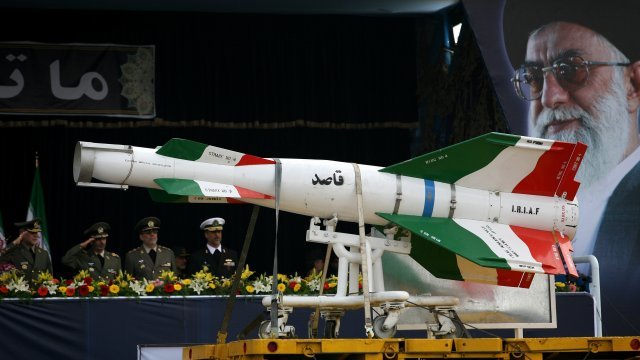
Today roughly 30 countries have operationally deployed ballistic missiles with the Iranian regime and North Korea leading the pack in missile test flights. Images of missiles racing skyward in massive flaming plumes have become standard programming on television channels beamed from Tehran and Pyongyang.

Beyond their propaganda value, ballistic missiles are a serious security threat to all nations because of their ability to leave the atmosphere, travel vast distances in a short amount of time and deliver their payload without a serious chance of being intercepted.

The threat North Korea poses to its Asian neighbors and the West Coast of the U.S. has pushed global instability to the brink over the past decade. A similar crash program by the Iranian regime to develop its own ballistic missile fleet based on North Korean designs has brought the Gulf region to a similar head.

The deeply flawed nuclear deal negotiated with the Iranian regime two years ago neglected to make ballistic missiles part of the restrictions sought by the U.S. and its allies. Many reasons have been given by negotiators and the Obama administration as to why such an allowance was given to the mullahs in Tehran.

The results have been disastrous since it essentially gave them a free pass to develop a missile capability that prior to the nuclear deal was nascent at best. The fact that the nuclear agreement also funneled billions of dollars in fresh capital to the regime to provide it with the funds necessary to scale up its missile construction on a national scale.

It is not coincidental that after the nuclear deal the world soon saw larger and more powerful missiles launch from sites throughout Iran in displays that the mullahs were not shy about using as threats against their Sunni neighbors such as Saudi Arabia, as well as to the U.S.

Ballistic missiles are also critical to any nuclear program since they are the only delivery system that can make good on any nation’s threats to strike at its enemies with near impunity. Now as the Trump administration has moved to decertify Iran’s participation in the nuclear agreement, the question of how to deal with the Iranian missile threat is moving front and center with policymakers.

The U.S. House of Representatives voted nearly unanimously recently for new sanctions on Iranian regime’s ballistic missile program, part of an effort to clamp down on Tehran.

The vote was 423 to two for the “Iran Ballistic Missiles and International Sanctions Enforcement Act.” Among other things, it calls on the U.S. president to report to Congress on the Iranian and international supply chain for Iran’s ballistic missile program and to impose sanctions on Iranian government or foreign entities that support it, according to Reuters.

The House passed three other Iran-related measures last week, including new sanctions on Lebanon’s Iranian regime-backed Hezbollah militia and a resolution urging the European Union to designate Hezbollah as a terrorist organization.

The moves underscore the U.S. resolve to confront the Iranian regime on a broader set of issues than the Obama administration addressed during nuclear talks.

It has become abundantly clear that by not addressing Iranian actions on a range of issues such as support of terrorism, ballistic missiles and human rights, the mullahs essentially acted with the assurance they would be free of any international repercussions.

They decision to wade into the Syrian civil war in support of the Assad regime is the centerpiece example of that calculus; even after Assad brutally used chemical weapons on his own people, there was no consequence for that heinous act, only emboldening the mullahs in Tehran.

But now the stage is set for confrontation with Iran as the regime’s leadership has planted a proverbial flag in the ground over its ballistic missile program.

Regime leader Hassan Rouhani said Sunday, after the House of Representatives approved its missile sanctions legislation in a speech carried on nationwide television, that no international agreements prohibit the development of non-nuclear weapons such as ballistic missiles, and that Iran has a right to produce them for its own defense.

“We will build, produce and store any weapon of any kind we need to defend ourselves, our territorial integrity and our nation, and we will not hesitate about it,” he said, according to a translation provided by the Iranian Students News Agency.

What is quickly shaping up is a test of wills between the Trump administration and the mullahs not only over the fate of ballistic missiles, but over the larger question of whether or not the U.S. will be able to rein in Iranian excesses moving forward.

For President Trump, the more strategic issue facing him is how to curb Iranian regime’s influence in places such as Syria, Iraq, Yemen and Afghanistan and hold the line against the spread of its radicalized Islamic religion.

In this regard, the battle over the nuclear deal and ballistic missiles are inextricably linked together and any future scenario of resolving them will most likely have to be done together.

This problem is precisely what experts had warned about two years ago when the ill-fated nuclear agreement was being negotiated in the first place. Iranian dissidents and groups such as the National Council of Resistance of Iran warned of the regime’s duplicity and actively countered the false promises made by Iran lobby supporters such as the National Iranian American Council.

Ultimately, the real tests facing the Trump administration and U.S. lawmakers are only now being confronted. We hope they choose a different path from the one charted earlier.

Laura Carnahan

Filed Under: Blog, News Tagged With: Appeasement policy, Ballistic Missiles, Featured, hassan rouhani, Iran, Iran Human rights, Iran Mullahs, Iran Terrorism, IRGC, National Iranian American Council

NIAC Gets It Wrong About President Trump and Hassan Rouhani Again

October 26, 2017 by admin

NIAC Gets It Wrong About President Trump and Hassan Rouhani Again

NIAC Gets It Wrong About President Trump and Hassan Rouhani Again

The National Iranian American Council has become one of the most vocal and ardent purveyors of shameless cheerleading for the mullahs in Tehran and has established itself with a solid track record of making statements and promises about future behavior from the Iranian regime only to see virtually all of them proven false over time.

Yet, the NIAC’s continued churning of so-called “fake news” still finds a home in some publications and blogs—albeit a shrinking circle from the heady heydays enjoyed during the Obama administration’s policy of appeasing the regime.

The latest missive comes from Reza Marashi, NIAC’s research director, who has built an uncanny ability to publish “researched” editorials that are consistently wrong, in Al-Monitor in which he makes the claim that recent actions by President Donald Trump against Iran may have helped Hassan Rouhani.

Marashi bases his claim that President Trump’s decision not to recertify Iran in compliance with the nuclear deal, known as the Joint Comprehensive Plan of Action (JCPOA), and sending the matter for Congressional review, has helped fortify Rouhani’s troubled administration because it has rallied Iranian stakeholders against the U.S.

Let’s be very clear on a very important point Marashi ignores: There are no factions within the Iranian regime’s government that are even remotely favorably disposed towards the U.S.

This is an Islamic theological state run by clerics that mandate weekly “Death to America” observances, openly and actively fund terrorist groups that target and kill American service personnel in Iraq and Afghanistan, have taken American citizens hostage and held them for ransom, and have built a ballistic missile capability designed to deliver nuclear payloads as far away as Europe and Asia.

Marashi also claims that Rouhani and top mullah Ali Khamenei are united in a strategic vision to maintain a unified policy towards the U.S. regardless of whatever the outcome of nuclear deal negotiations.

On this point, he is partially correct since Rouhani is the handpicked front man for Khamenei to offer the West a kinder, gentler face of the regime that also tweets in order to build a perception that Iran was a moderate state when in fact it was plotting to massively expand its military operations in Syria, Iraq and Yemen.

“Whatever their differences, Khamenei needs Rouhani and his technocrats to repair the damage wrought by former President Mahmoud Ahmadinejad, and Rouhani needs Khamenei to provide political protection while he does so,” Marashi writes.

It’s a silly statement to make, especially for someone who purports to be a “research director” since it doesn’t take much research to know that the damage Khamenei needed for Rouhani to repair was an Iranian economy crippled by sanctions aimed at its secret nuclear program and the enormous drain on its treasury by bankrolling the Assad regime’s desperate war to hold onto power in Syria.

Marashi makes it sound that Rouhani is merely trying to rebuild an economy hurt by the mismanagement of the Ahmadinejad administration, when in fact Khamenei was desperate to gain an injection of billions of dollars in fresh capital to stave off a total collapse of the economy and consequently the Islamic state.

“Since entering office four years ago, Rouhani has maintained arguably the most diverse and inclusive political coalition in the 38-year history of the Islamic Republic,” Marashi adds.

This is one of the more astounding claims he makes since the Iranian regime allows no dissident political activities, and openly and aggressively rounds up dissenting voices and tosses them into prison, as noted by the harsh crackdown of journalists, artists, students and others by the Rouhani administration prior to parliamentary elections.

The contention Marashi makes that Rouhani was somehow in jeopardy has never been real in fact since Rouhani serves only at the pleasure of Khamenei and it is up to the supreme leader to decide when his usefulness is at an end. For as long as Khamenei perceives Rouhani can maintain the fiction of a more moderate Iran then Rouhani and his allies in the Iran lobby will continue to push their false messages.

The strategy Rouhani employs that Marashi defends in outlining support for the JCPOA had little to do with nuclear power and more with lifting economic sanctions to save the regime with a fresh infusion of capital.

The fact that the Obama administration were eager to do a deal with little consequences attached to its support for terrorism, abysmal human rights and the build out of ballistic missiles only served to reinforce the perception among the mullahs that Rouhani was useful in keeping up the perception that Iran was genuinely interested in becoming a “moderate” player when in fact it was only seeking massive piles of cash.

Marashi does not credit the Obama administration’s unsavory willingness to kowtow to the regime and even arrange for a midnight flight of pallets stuffed with cash sent to Tehran on the eve of the agreement as evidence not of Rouhani’s acumen, but rather American miscalculation that has been borne out over the last two years.

What Rouhani “sold” to Khamenei was a vision that Iran could have its cake and eat it too by negotiating a nuclear agreement that never eliminated its nuclear development—only delayed it—and freed it to move aggressively forward with its missile program to someday threaten its neighbors with ballistic missiles armed with nuclear warheads,

The only kernel of truth Marashi does offer is the idea that Iranians would not blame Rouhani for the nuclear agreement’s failure. The Iranian people would certainly not blame him since they live under a repressive government that punishes contrary thinking with stiff prison sentences and quick trips to the gallows mandated by clerical courts.

Marashi also failed to note how under Rouhani, Iran’s pace of public executions set a record-breaking pace pushing it far beyond almost every nation on Earth. It’s no wonder no Iranian would openly blame Rouhani since to do so almost guarantees a prison sentence.

Michael Tomlinson

Filed Under: Blog, News Tagged With: Appeasement policy, Featured, hassan rouhani, Iran, Iran deal, Iran Lobby, Iran sanctions, Khamenei, Moderate Mullahs, National Iranian American Council, NIAC, NIAC Action, Reza Marashi, Rouhani, Sanctions

Tillerson Visit Carries Deeper Meaning for Iran Meddling

October 24, 2017 by admin

Tillerson Visit Carries Deeper Meaning for Iran Meddling

Tillerson Visit Carries Deeper Meaning for Iran Meddling

Secretary of State Rex Tillerson dived deep into Middle East politics at a time where the threat from ISIS was diminishing after battlefield victories against the Islamic extremists. His whirlwind stops in Saudi Arabia, Afghanistan and Iraq were designed to hold the line in a post-ISIS world against the encroaching influence of the Iranian regime.

In Saudi Arabia, Secretary Tillerson urged Saudi Arabia to counter Iran’s influence in Iraq by strengthening its ties with Baghdad in a meeting with King Salman of Saudi Arabia and Iraqi prime minister Haider al-Abadi.

His meeting included a call for Iranian-backed Shiite militias fighting in Iraq to leave and go back to their homes.

“Certainly Iranian militias that are in Iraq, now that the fight against Daesh and ISIS is coming to a close, those militias need to go home,” Tillerson said, using two other names for Islamic State. “Any foreign fighters in Iraq need to go home and allow the Iraqi people to regain control of areas that had been overtaken.”

Tillerson’s focus on these militias, known as Popular Mobilization Forces, he was taking aim at the growing influence of the Iranian regime’s Revolutionary Guard Corps and its Quds Force which has operated in Iraq in an increasingly visible way during the war against ISIS.

During the conflict, Tehran has sought to exert more influence in Iraq through participation in Iraq’s political process; a fraught process that nearly collapsed Iraq when former prime minister Nouri al-Maliki acted on Iranian wishes in expelling Sunni power sharing in his government, sparking a new round of sectarian conflict and empowering ISIS with the collapse of Mosul.

But Tillerson’s visit highlighted a new initiative to counter Iranian influence as Saudi Arabia has taken several steps to deepen ties between Riyadh and Baghdad.

Saudi Arabia has reopened its border with Iraq for the first time in decades and restarted direct flights between Riyadh and Baghdad. Washington is hoping the political and economic ties will deepen through the newly minted Saudi-Iraq Coordination Council, reported the Wall Street Journal.

“We believe this will in some ways counter some of the unproductive influences of Iran inside of Iraq,” Tillerson said during a news conference in Riyadh.

He urged Saudi Arabia’s involvement in Iraq’s reconstruction, as Baghdad looks to rebuild the country after a three-year war against Islamic State that destroyed cities across the nation, and called economic revitalization vital to keeping a hard-won peace.

The full-court press to normalize relations also goes a long way to counter persistent arguments made by the Iran lobby and other regime supporters that U.S. policy in the Middle East during the Trump administration was only reactionary and intent on starting a new conflict with Iran.

The diplomatic efforts led by Tillerson represent another watershed moment for President Trump in the Middle East.

His earlier announcement to not certify the Iranian regime in compliance with the Iran nuclear deal to trigger Congressional review more correctly puts the question of how to address Iran’s larger militant actions such as development of ballistic missiles in the arena of public debate where President Barack Obama had previously sought to steer clear of when negotiating the agreement originally.

Iranian regime advocates such as the National Iranian American Council had laboriously tried to shield the mullahs in Tehran from facing questions about Iran’s dismal human rights record or support for terrorist groups during the original talks two years ago, but in the intervening time the mullahs have stepped up their efforts in swinging the Syrian civil war over to the Assad regime, as well as rapidly build and deploy powerful new ballistic missiles.

The wreckage left behind by Iranian regime has solidified the decision-making process in the Trump administration to focus on containment and rolling back Iranian regime’s advances more aggressively than the policy of appeasement the Obama administration followed.

The decertification of the Iran nuclear deal is only one of several other initiatives being made by the Trump administration to roll back Iranian regime’s influence including:

  • Step up international efforts to garner international support to condemn and halt the Iranian regime’s ballistic missile program and prevent another North Korea scenario from taking root in the Middle East;
  • Encourage building stronger ties among U.S. allies such as Saudi Arabia and Iraq and the Gulf states to redraw lines of influence away from Iran and repair decades-long schisms;
  • Offer more military and intelligence support for U.S. allies in confrontations with Iranian regime forces and their proxies in hot spots such as Syria, Iraq, Afghanistan, Yemen, Qatar and Saudi Arabia.

More importantly, the U.S. is again openly warning companies from doing business with Iranian regime’s “Revolutionary Guard Corps” (IRGC) as it considers broader terrorist designations against the main tool of the mullahs.

The U.S. last week announced tough new sanctions against the IRGC because of its support for terrorism, effectively excluding it from the US financial system. Companies doing business with the group also risk penalties.

The push for expanded sanctions against the IRGC recalled the effectiveness of broad economic sanctions placed by the former administrations of presidents Bill Clinton and George W. Bush that put a stranglehold on the Iranian regime’s economy and brought the mullahs to the bargaining table in the first place.

Unlike the Obama administration, President Trump seems intent on not replaying the mistake of appeasement made by his predecessor and instead forge a new deal that finally brings Iranian regime’s extremism to heel.

Filed Under: Blog, News Tagged With: #NuclearDeal, Appeasement policy, Featured, Iran, Iran deal, Iran Human rights, Iran Lobby, Iran Mullahs, Iran Terrorism, IRGC, National Iranian American Council, NIAC, Nuclear Deal, nuclear talks, Sanctions, Syria

Iran Lobby Tries to Separate North Korea from Iran Regime

August 19, 2017 by admin

Iran Lobby Tries to Separate North Korea from Iran Regime

Iran Lobby Tries to Separate North Korea from Iran Regime

In the long-running battle to combat the falsehoods of the Iran lobby, this site has uncovered the facts behind some of the most ridiculous assertions made by Iranian regime advocates such as the National Iranian American Council.

We’ve unveiled the inner workings of the lobby, its intertwined relationships with families of regime officials and the consistency its messages are aligned with those pushed by the regime.

Since the start of negotiations for the nuclear agreement over two years ago, we’ve documented the multiple falsehoods uttered by the Iran lobby in support of the deal, such as that it would help empower “moderate” elements in Iran’s government and usher in an age of international cooperation and good will.

Of course, none of that has come to pass and we’ve hit the Iran lobby hard on the utter failure of their promises. Iran has become arguably the most destabilizing force in the Middle East right now next to the Islamic State.

While ISIS has time and again spread its terror operations around the world, including most recently in Barcelona, Spain, the real linchpin to regional destabilization has been the Iranian regime and its proxy wars in Syria, Iraq and Yemen.

Most importantly though, Iran has helped fuel the sectarian nature of the conflicts going on, introducing the deep schism dividing Sunni and Shia populations and setting their respective governments against each other.

The mullahs in Tehran have sought to divide and conquer the Arab world and the result has been widespread chaos. Throughout all this, the Iran lobby has steadfastly sought to shift blame to more traditional whipping posts including the U.S., Israel and Saudi Arabia.

It didn’t matter which U.S. administration was in office or which political party controlled Congress; the Iran lobby always found it convenient to shift blame away from Iran no matter what the transgression was such as appalling human rights violations or the deepening wars in neighboring countries.

The arrest of dual-national Iranians? Blame the U.S. policy on immigration.

The execution of Iranians convicted as children with false confessions extracted under torture? Blame the opium trade from neighboring Afghanistan.

The miserable economic conditions strangling the Iranian people? Blame U.S. sanctions.

The Iran lobby has consistently always shifted blame and never affixed it squarely where it belonged: the mullahs in Tehran.

Now comes one of the more incredibly ridiculous claims made yet by the Iran lobby in the form of an editorial by Reza Marashi of the NIAC in Haaretz, which warned the U.S. from using the North Korean threat as a tie-in to Iran.

“First, conflating Pyongyang and Tehran is troublesome for an obvious reason: One has the bomb, and the other does not,” writes Marashi in one of the more glaring misstatements ever uttered by a member of the Iran lobby.

Iran’s own president, Hassan Rouhani, declared to Iranian lawmakers this week that Iran could walk away from the nuclear deal and restart its nuclear program in a “matter of hours” and bring a weapon to fruition in short order.

The gap between North Korea and Iran’s nuclear capabilities was supposed to be measured in years according to the Iran lobby, but in reality it’s only a matter of hours.

Marashi then goes on to claim that American policies in confronting other rogue regimes with nuclear ambitions such as Libya and Iraq have only motivated the Iranian regime to work harder to build their nuclear program.

Let’s think about that piece of fetid logic for a minute.

Iran only pursues a nuclear program because of American efforts to restrain other rogue regimes to create their own nuclear arsenals? Rarely have we read a more bizarre theory than that one.

But Marashi doesn’t stop there. He tries to tie in the Trump administration’s decision to kill the Transpacific trade deal and pull out of the Paris climate change agreements as motivating factors for Iran not to trust the U.S. on the nuclear deal.

The cherry on top of Marashi’s bloviating is the contention that the North Korea deal was doomed to failure since the U.S. never had any intention of ever allowing the Hermit Kingdom to ever develop a nuclear capability and thus provides an impetus for Iran to believe the U.S. is similarly disingenuous with its deal.

“If Trump corrects course and fully implements Washington’s JCPOA obligations, the risk of Tehran pursuing Pyongyang’s path is slim to none. The longer he continues violating the terms of the deal, the more likely it becomes that Iran resumes systemically advancing the technical aspects of its nuclear program – without the unprecedented, state-of-the-art monitoring and verification regime currently in place,” Marashi added.

These claims by Marashi are not even worth calling an obfuscation. They are clearly falsehoods. Tehran always intended to follow a nuclear pathway and ensured that the nuclear deal would preserve its enrichment infrastructure and allow it to restart quickly without any serious interruption.

Also, the “state-of-the-art monitoring” Marashi cites is neither state of the art, nor is it any meaningful monitoring. The agreement gave away any serious oversight by prohibiting international inspectors from most of Iran’s military bases and allowing collection of soil samples only after extensive scrubbing and removal of topsoil and only by Iranian hands to be handed over to inspectors.

But what is most appalling is how Marashi never mentions the word “missile” which is the most glaring connection between Iran and North Korea and the real reason why the two nations are indeed joined at the hip.

North Korea jump started Iran’s ballistic missile program by licensing its technology in the first place and has provided steady upgrades, improvements and technical advice. Iran is now following the exact playbook North Korea has followed in building ever-increasingly powerful missiles that can now reach the U.S. mainland.

North Korean officials have made regular visits to Iran and vice versa to exchange technical data and now there have been increasing news reports of the potential for Iranian scientists working in North Korea on learning its manufacturing processes for building nuclear warheads for its missiles.

Marashi is not only wrong, he is again engaging in the art of misdirection in trying to divert attention from the real alliance between Iran and North Korea.

Staff writer

Filed Under: Current Trend, National Iranian-American Council, News Tagged With: Appeasement policy, Featured, Iran, Iran deal, Iran Human rights, Iran Lobby, Iran Mullahs, Khamenei, National Iranian American Council, NIAC, NIAC Action, Reza Marashi, Rouhani

Iran Regime Provokes Confrontation with US

August 16, 2017 by admin

Iran Regime Provokes Confrontation with US

Iran Regime Provokes Confrontation with US

Trita Parsi of the National Iranian American Council has been a consistent and vocal supporter of the Iranian regime and its claims to want a pathway to peace. The lunacy of his comments has been laid bare repeatedly over the last two years since the Iran nuclear deal was signed and Iran plunged deeper into wars in Syria and Yemen.

Over the past two years the mullahs in Tehran have focused their efforts at saving the Assad regime in Syria and putting enormous pressure on Saudi Arabia through the Houthi rebellion in Yemen and attempting to destabilize the Gulf states with the smuggling of weapons and explosives.

They have also sought to expand Iran’s power through a rapid development of its ballistic missile program to increase the range and payload capacity to send an unmistakable threat to Europe, Asia and throughout the Middle East.

So far, the Iranian regime has been careful to focus its efforts and its most militant actions against traditional rivals such as Saudi Arabia or to keep allies in place such as Assad or continue cracking down on internal political dissent, but a new trend has emerged lately as Iran directs its provocations directly at the U.S.

Over the past few months, Iran has steadily been ratcheting up the pace and frequency of actions aimed directly at the U.S. and its forces, including running its warships at U.S. Navy ships and using drone aircraft to buzz U.S. forces. It has also loosened the reins on its militias in Syria to provoke U.S. forces there.

In the past, Iran’s Quds Force arm of its Revolutionary Guard Corps took a direct role in supplying IEDs to Shiite militia fighting in Iraq and targeting U.S. personnel. Estimates of over 1,000 American casualties were blamed on explosive devices manufactured by Quds Force personnel in Iran and Iraq, 500 Americans killed alone during Operation Iraqi Freedom.

Iran most recently has been flying its drone aircraft dangerously close to U.S. ships in international waters, including close calls during flight operations by the USS Nimitz battle carrier.

There have now been 14 circumstances in 2017 in which unsafe interactions between the U.S. and Iranian maritime forces have occurred, the Navy said.

The increase in direct confrontations with the U.S. mirror the same tactics used by North Korea in its own ramp up in its missile program; leading many analysts to believe both rogue regimes are sharing the same playbook.

What is clear though is that these actions are not the type of actions a state interested in peace undertake as the NIAC has consistently claimed. The mullahs have essentially shed all pretense at showing the world a moderate veil and instead are flexing their muscle in a blatant attempt to trying to bully and strongarm their neighbors.

Coupled with the increase in missile testing comes news that Iranian mullahs are preparing send a naval flotilla to the Atlantic Ocean. This follows a move by the Iranian parliament to allocate an additional $609 million for its missile program and support of increased terror and proxy operations through the Quds Force.

“No military official in the world thought that we can go round Africa to the Atlantic Ocean through the Suez Canal but we did it as we had declared that we would go to the Atlantic and its Western waters,” Iranian Navy Commander Rear Admiral Habibollah Sayyari was quoted as saying over the weekend.

“We moved into the Atlantic and will go to its Western waters in the near future,” Sayyari said.

Iranian regime’s increasingly hostile behavior also follows a little-noticed United Nations report disclosing that Iran has repeatedly violated international accords banning ballistic missile work. Lawmakers in the U.S. Congress and some policy experts also believe that Iranian regime has been violating some provisions in the nuclear agreement governing nuclear-related materials, according to the Washington Free Beacon.

“Little-noticed biannual reporting by the UN Secretary General alleges that Iran is repeatedly violating these non-nuclear provisions,” Iran Watch, a nuclear watchdog group, reported on Monday.

“Thus far, the United States has responded to such violations with sanctions and designations of Iranian and foreign entities supporting Tehran’s ballistic missile development,” the organization found. “However, the U.N. and its member states have not responded. More must be done to investigate allegations of noncompliance and to punish violations of the resolution.”

Washington Free Beacon wrote that Iranian regime’s recent behavior shows the regime has not moderated since the nuclear deal was implemented. The Obama administration sold the deal in part on promises that it could help bring Tehran into the community of nations.

“Every time the Islamic Republic has cash, it chooses guns over butter,” told the Washington Free Beacon. “What the [nuclear deal] and subsequent hostage ransom did was fill Iran’s coffers, and now we see the result of that.”

“What [former President Barack] Obama and [former Secretary of State John] Kerry essentially did was gamble that if they funded a mad scientist’s lab, the scientist would rather make unicorns rather than nukes,” Washington Free Beacon continued. “News flash for the echo chamber: Iranian reformist are just hardliners who smile more. Neither their basic philosophy nor their commitment to terrorism have changed.”

Washington Free Beacon is right about how wrong the promises were made by the Iran lobby and Obama administration. We only hope it’s not too late to stop the mullahs and eventually start the process of regime change.

Laura Carnahan

Filed Under: Blog, News Tagged With: Featured, Iran Human rights, Iran Lobby, Iran Mullahs, National Iranian American Council, NIAC, NIAC Action, Sanctions, Syria, Trita Parsi, Yemen

  • « Previous Page
  • 1
  • …
  • 3
  • 4
  • 5
  • 6
  • 7
  • …
  • 20
  • Next Page »

National Iranian-American Council (NIAC)

  • Bogus Memberships
  • Survey
  • Lobbying
  • Iranians for International Cooperation
  • Defamation Lawsuit
  • People’s Mojahedin
  • Trita Parsi Biography
  • Parsi/Namazi Lobbying Plan
  • Parsi Links to Namazi & Iranian Regime
  • Namazi, NIAC Ringleader
  • Collaborating with Iran’s Ambassador

Recent Posts

  • NIAC Trying to Gain Influence On U.S. Congress
  • While Iran Lobby Plays Blame Game Iran Goes Nuclear
  • Iran Lobby Jumps on Detention of Iranian Newscaster
  • Bad News for Iran Swamps Iran Lobby
  • Iran Starts Off Year by Banning Instagram

© Copyright 2026 IranLobby.net · All Rights Reserved.