Iran Lobby

Exposing the Activities of the lobbies and appeasers of the Mullah's Dictatorship ruling Iran

  • Home
  • About
  • Current Trend
  • National Iranian-American Council(NIAC)
    • Bogus Memberships
    • Survey
    • Lobbying
    • Iranians for International Cooperation
    • Defamation Lawsuit
    • People’s Mojahedin
    • Trita Parsi Biography
    • Parsi/Namazi Lobbying Plan
    • Parsi Links to Namazi& Iranian Regime
    • Namazi, NIAC Ringleader
    • Collaborating with Iran’s Ambassador
  • The Appeasers
    • Gary Sick
    • Flynt Leverett & Hillary Mann Leverett
    • Baroness Nicholson
  • Blog
  • Links
  • Media Reports

Iranian Regime Cracks Down Harder on Journalists and Women

April 28, 2016 by admin

Iranian Regime Cracks Down Harder on Journalists and Women

Iranian Regime Cracks Down Harder on Journalists and Women

The Iranian lobby cobbled together a group of advocacy groups in sending a joint letter to leading technology companies urging them to boycott sponsorship of both the Democratic and Republican national conventions on the basis of “bigoted” comments made by both parties’ candidates.

“There is no room for hate and bigotry in our political discourse,” said Madihha Ahussain, Muslim Advocates staff attorney and lead for the Program to Counter Anti-Muslim Hate. “Here in Silicon Valley, companies take pride in standing up for what’s right and creating inclusive environments where diversity is not only respected, but also thrives. That is why it is critical for leaders like Google, Microsoft and Apple to send a powerful message by choosing not to support hateful rhetoric that has become commonplace in this election cycle.”

It is an unusual letter to send in that it targeted only technology companies and not the traditional companies and groups that often sponsor both parties such as labor unions, environmental groups, Wall Street firms and businesses with heavy regulatory issues such as manufacturing and natural resources.

A more cynical person might view the letter as a pre-emptive effort by the Iran lobby to get the attention of technology companies that are increasingly on the front lines battling terrorism and the rise of Islamic extremism.

  • Twitter has waged a war of whack-a-mole deleting accounts tied to ISIS as fast as ISIS is creating them;
  • The FBI has pressed Apple and Google to provide assistance in unlocking mobile devices associated with suspected terrorists;
  • Last February, the Obama administration reached out to Silicon Valley and Hollywood to enlist firms in combatting extremism and terrorism, especially in countering the online recruiting efforts of terror groups.

The National Iranian American Council was one of the organizing groups for the letter and while the letters are aimed at issues of discrimination, they neglect to point out the irony that many of the same issues these groups are pointing out in America are in fact par for the course in regimes such as Iran where women are brutally denied rights, juveniles are executed, journalists are mass arrested and dissidents are tortured and imprisoned.

It is the height of hypocrisy to attack both Democrats and Republicans, when at the same time these advocacy groups are silent on the human rights violations and injustices going on in Iran.

The most recent episodes of cruelty in Iran only highlight this disparity and misdirection going on in focusing on the American presidential campaign and not on Iran’s conduct.

  • Iran rejected calls for the release of political prisoner Omid Kokabee from prison after he had his right kidney removed. Kokabee, a graduate student in physics at the University of Texas at Austin who was arrested in Iran, convicted of collaboration with an enemy government and illegal earnings and sentenced to 10 years in prison, was diagnosed with renal cancer after reportedly being denied treatment for a kidney illness for years;
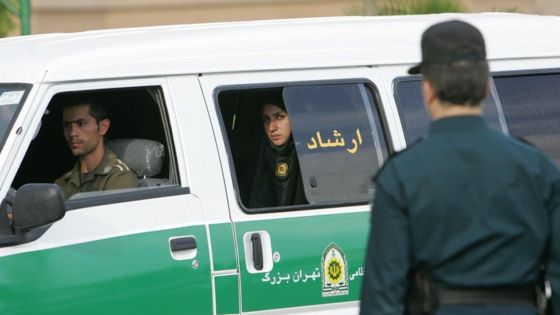
  • Tehran police chief Gen. Hossein Sajedinia recently announced his department had deployed 7,000 male and female officers for a new plainclothes division — the largest such undercover assignment in memory. The unit’s main focus will be enforcing the government-mandated Islamic dress code, which requires women be modestly covered from head to toe;
  • Iran is preparing to conduct a major ballistic missile test in February 2017, following the inauguration of the next U.S. president into the Oval Office, according to a timetable issued by the regime in an act designed to set a provocative tone when a new president is sworn in. Iran is continuing work on advanced ballistic missile technology and has been engaged in various tests to perfect this work;
  • Three journalists in Iran have been given lengthy prison sentences as the country’s hardline judiciary tightens its grip on press freedom by a revolutionary court in Tehran, which found the three Iranians guilty of charges including spreading propaganda against the ruling system, conspiring against officials and insulting authorities – charges often used against those held on political grounds;
  • A French-Iranian citizen who left Iran in 2009 after facing espionage charges has been sentenced to six years in jail following her return to the country to visit her critically ill mother. Several other dual-nationality citizens or expatriates have been arrested on returning to visit Iran. A spokesman for the Iranian judiciary said on Sunday that four had recently been sentenced for their connections to foreign countries;
  • The Iranian artist sentenced to 12 years and nine months in prison for her satirical cartoons critical of the Iranian government last year.

One would think with the litany of abuses and human rights going on in the Iranian regime just within the last few days, these so-called advocacy groups would have their hands full sending letters of protest to Iranian officials, the United Nations, World Court, global media and human rights groups.

But the Iran lobby is only vested in protecting the regime and it serves the mullahs purposes to continue trying to influence the American election as virtually all of the leading candidates have gone on record condemning the rule of the mullahs.

One also has to wonder if the other groups signing the letters and joining with the NIAC were aware of the NIAC’s leadership role as chief lobbyist for the Iranian regime. It would be worth asking the National LGBTQ Task Force, Arab American Institute, Feminist Majority Foundation, Military Religious Freedom Foundation, Bend the Arc, Progressive Congress, and the Labor Council for Latin American Advancement if they want to be associated with a group defending the abuses going on in Iran.

By Laura Carnahan
Filed Under: Blog, News Tagged With: Featured, Iran, Iran Lobby, NIAC, NIAC Action

Iranian Regime No Longer Hiding Its Military Intentions

April 18, 2016 by admin

Iranian Regime No Longer Hiding Its Military Intentions

Iranian Regime No Longer Hiding Its Military Intentions

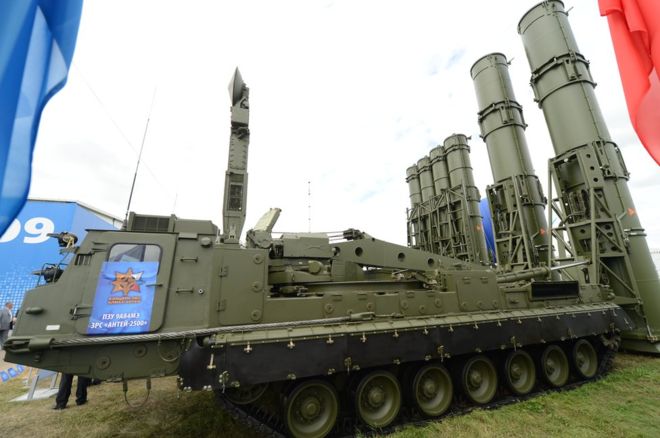
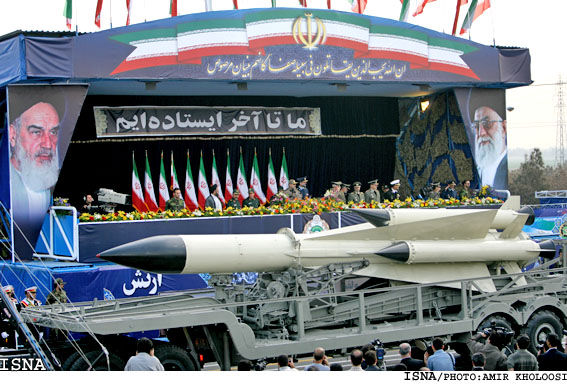
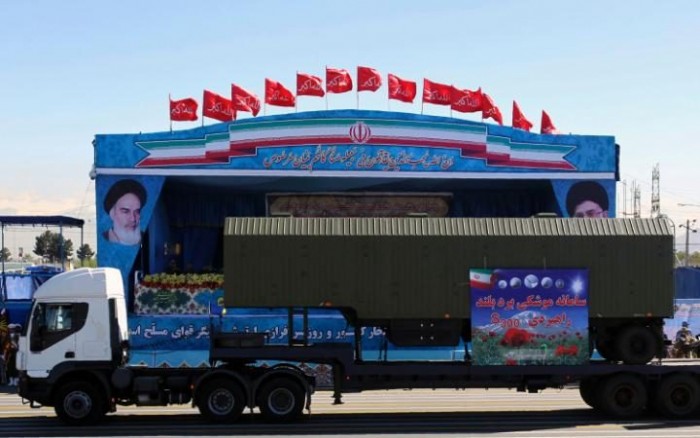
The Iranian regime held its annual Army Day parade as a showcase to pose itself as a mighty power in the region, but more importantly for the mullahs it provided an opportunity to show off parts of the long-awaited new S-300 air defense system from Russia.

While the advanced anti-aircraft missiles were originally ordered by Iran in 2007, their delivery was held up due to the imposition of sanctions related to Iranian regime’s violations concerning the development of nuclear weapons. Only after the nuclear agreement was reached last year was the delivery allowed to go through.

The delivery of the missile system is significant since it instantly brings the regime’s air defense to a much more modern and sophisticated level; a major issue for the mullahs and Revolutionary Guard since without it, any effort to restart its nuclear program would be subject to air attack by the U.S. and its allies.

The fact that the mullahs pushed hard to remove weapon systems such as this and the development of new ballistic missiles from the nuclear negotiations spoke volumes of their determination to upgrade their military capabilities far beyond where they stand today, particularly since they see this the only path to survival of the vast internal discontent.

According to pictures published by the semi-official ISNA news agency, S-300 missile tubes and the radar equipment were shown during the military parade held in southern Tehran.

Iran and Russia are also in talks on a sale of the advanced Sukhoi SU-30 fighter, another proposal criticized by the U.S. The regime’s current air force fleet dates from the pre-revolutionary era of the former Shah.

Speaking at Sunday’s parade, Hassan Rouhani insisted Iran’s plans to upgrade its military capabilities were defensive in nature, referring to the worst conflicts in the Middle East.

“Our military, political and economic power is not directed against neighboring countries and the countries of the Islamic world.

“When Baghdad was threatened by terrorists, the Islamic Republic of Iran responded to the call of the people, the army and the Iraqi government to defend Baghdad and the holy places,” he said, referring to the surge of the ISIL group in June 2014.

The argument he makes is similar to those consistently made by the Iran lobby from groups such as the National Iranian American Council which has sought to portray the Iranian regime as some sort of dedicated freedom fighter against Islamic extremism. The only difficulty with that portrayal is that Iran’s mullahs are the ones spreading it, not the other way around.

The beefing up of its military capability, including the multiple test launches of new ballistic missiles, comes at a time when the Iranian regime is also ramping up its military presence in Syria in support of the regime of Bashar al-Assad, except now the Iranians are not even trying to hide their deepening presence even as they pretend to advocate for peace talks.

Fearing that Russia may side with the U.S. and approve the removal of Assad from power, the Iranian government is now, more than ever, investing in propping up the regime’s dwindling army and air force.

“They [the Iranians] saw it as an opportunity to move closer to the regime,” one U.S. official told the Financial Times.

The Russian military pullback announced last month threatens Tehran’s position not only in Syria, but in the region. If Assad is ousted, Iranian military presence in the country will be diminished and Iran will no longer be able to present itself as a player in the region.

Iranian regime officials have in number of times reiterated that Syria is their front line and if they don’t fight the enemy in Syria, soon they have to do it in Tehran, referring to the strategic importance of Syrian dictatorship for the Ayatollahs in Iran. That’s why Iran is deploying more troops to Damascus. Those deployments, though, come at a cost. At least four Iranian soldiers have been killed in one week. Iranian media have reported that more than 150 Guards died in more than a year of fighting in Syria.

Tehran has kept its army at home for decades and tried to keep conflict at bay through a strategy — manned and managed by the Guards — of fighting its regional rivals through proxies in Iraq, Syria and Lebanon. Syria is crucial to its success. It is on the ‘frontline’ with Israel and is an important bridge to Hezbollah, Iran’s Shia proxy force in Lebanon.

Iran has vowed that it will not compromise on the fate of Assad, and backs his offer to include opposition figures in a national unity government while ruling out a “transitional governing body with full executive powers” — the formula agreed at talks in Geneva in 2012.

In the meantime, the high casualty rate among Revolutionary Guards — whose “military advisers” are reckoned by a western diplomat in Tehran to number fewer than 10,000 — has prompted Tehran to deploy its regular army to bolster Assad’s forces in Syria.

The stakes are high for the Iranian regime as it again sent Qassem Soleimani, the notorious leader of its Quds Force, to Moscow again in violation of international travel bans restricting his movements to discuss with Russian military officials on the deteriorating situation in Syria and the delivery of nearly $8 billion of new weapons just purchased by Iran.

The delivery of new military hardware is viewed by Tehran as an important adjunct to the use of Hezbollah proxies, Quds Force fighters, Basiji paramilitaries and thousands of paid mercenary Afghans that the Iranian regime has been sending to Syria in a desperate bid to keep Assad in power.

According to the BBC, the first Afghan militias began to arrive in 2012 in Syria.

“The Iranian Revolutionary Guards Corps decided that the Syrian military could not succeed on their own,” one former Afghan fighter told the BBC. “The frontlines were too depleted and men were trying to avoid conscription.”

The Iranians decided to set up a 50,000-strong National Defense Force to fight alongside the Syrian army.

With a shortage of willing fighters inside Syria, they began looking elsewhere – signing up Iranian Afghans, Lebanese, Iraqi and Pakistani Shia recruits. The fact that the mullahs are now committing Iranian regular army units to the Syrian fight shows a significant leap in their desperation over the situation there.

Mrs. Maryam Rajavi, the leader of the National Council of Resistance of Iran, one of the leading Iranian dissident groups in the world, took note of these changes in an interview with Asharq Al-Awsat on Sunday in which she pointed out that the Iranian regime would collapse consequentially should Assad be toppled in Syria, which is why Iran’s regime has been trying to keep Assad in power at any cost.

“If Assad falls out of power in Damascus, then the Iranian regime will evidently follow and collapse in Tehran,” Mrs. Rajavi said.

By Michael Tomlinson

Filed Under: Blog, News Tagged With: Ballistic Missiles, Featured, Ghassem Soleimani, Iran, Iran deal, Iran sanctions, NIAC, S300 Missiles

Iran Regime Gets New Missiles and Acts More Deadly

April 16, 2016 by admin

Iran Regime Gets New Missiles and Acts More Deadly

Iran Regime Gets New Missiles and Acts More Deadly

Russia has reportedly begun delivery of the first components in the new S-300 surface-to-air missile batteries to the Iranian regime as part of a larger military build-up utilizing a portion of the financial windfall the mullahs received from the nuclear deal reached last July allowing previously frozen deals to now go through.

The $800 million contract originally signed in 2007 was frozen due to international sanctions in 2010, but was unfrozen last year in the wake of the nuclear agreement.

The S-300, made by Rostec, can be used against multiple targets including jets, or to shoot down other missiles. It is one of the most advanced medium-range defensive weapons in the world. It can engage multiple aircraft at low to high altitude, up to 90 miles away. It is battle tested and in high demand from militaries around the world.

The S-300V4 variant, delivered to the Russian armed forces in 2014, can shoot down any medium-range missile in the world today, flies at five times the speed of sound and has a range of 400km (249 miles), Russia’s Tass news agency reports.

In addition to the S-300, Iran plans to license production of the Russian T-90 tank and has expressed interest in front-line Russian fighters like the SU-34. Russia is also assisting Iranian regime in rebuilding its nuclear energy capability.

The significant rebuilding and upgrading of Iran’s military capability in both offensive and defensive categories comes at the same time the regime has test fired new ballistic missile designs capable of carrying nuclear, chemical or biological payloads reaching deep into Europe, Africa and Asia.

The introduction of advanced missiles, anti-aircraft batteries, fighter jets and battle tanks clearly indicate the Iranian regime’s desire to significantly improve its combat capabilities as well as its military reach far beyond its own borders.

The delivery of S-300 systems is problematic for the U.S. and other nations concerned over Iran’s nuclear program since one of the promises made by the Iran lobby during nuclear talks was that the West would still retain the ability to bomb out of existence any illegal nuclear program. The introduction of the new missile systems makes such a response that much more difficult and protects the regime from military response should it cheat.

This points out the serious flaw in the arguments posed by Iran lobby supporters such as the National Iranian American Council and the Ploughshares Fund; by separating other corresponding acts by the regime – such as support of terrorism or proxy wars from the nuclear talks – the mullahs were empowered to engage in other provocative acts with impunity.

The next link in the chain of restrictions the mullahs are trying to break now involves accessing the international financial system, specifically trading and exchanging in and out of U.S. currency markets which would allow the mullahs to engage in commerce worldwide.

But many foreign banks remain uncertain about allowing the regime into their systems since the U.S. government still has sanctions in place related to Iran’s support of terrorism. This has proven to be a sore spot for the mullahs to such an extent that leaders such as Ali Khamenei and Hassan Rouhani have made the issue of access to U.S. dollars almost a “red line” in the sand and have threatened to walk away from the nuclear deal and restart its nuclear program.

It is clear however from the regime’s actions since the deal, that the mullahs have every intention of breaking the deal anyway after they get everything they want from West.

That possibility was only reinforced by repeated statements by senior regime leaders about its ballistic missile program, the most recent coming from regime foreign minister Javad Zarif who rejected making any concessions to the international community on the missile topic according to the Guardian newspaper.

“Secretary Kerry and the U.S. State Department know well that Iran’s missile and defense capabilities are not open to negotiation,” state media quoted Zarif as saying during a joint press conference with his visiting Estonian counterpart.

Meanwhile the regime continues a broad human rights crackdown at home and has now reached out beyond its borders to focus on its oldest enemies; Iranian dissident groups that have long worked to oppose the regime and bring democratic reforms to Iran.

German prosecutors on Friday accused two Iranian men, 31-year-old Maysam P. and 33-year-old Saied R., of spying on the People’s Mujahedin of Iran (MEK) and the National Council of Resistance of Iran (NCRI) on behalf of Iranian intelligence.

Prosecutors said both men infiltrated MEK with Maysam P. starting in January 2013 and Saied R. in August 2014 to gather information for Iranian intelligence on opposition members in Germany and other EU countries.

The NCRI welcomed “the fact that German prosecutor has brought the case of espionage targeting PMOI and NCRI to justice and calls on the German government and relevant officials to disclose and make public the details of the case of espionage and illegal activities of the Iranian regime and its agents in Germany. This is an imperative step to prevent these criminal activities.”

The crazy nature of the see-saw back and forth between lifting sanctions and imposing sanctions was highlighted as the European Union announced the extension of sanctions against 82 Iranian regime officials until 2017 because of deteriorating human rights in Iran.

The 28-nation bloc has had asset freezes and travel bans in place against Iranians since 2011 because of perceived violations of human rights.

By Michael Tomlinson


Filed Under: Blog, News Tagged With: Featured, Iran, Iran deal, NIAC, Ploughshares, S 300 Missiles, spying on people's Mojahedin

The Lie That Is Iranian Moderation

April 11, 2016 by admin

The Lie That Is Iranian Moderation

EDITORS’ NOTE: Reuters and other foreign media are subject to Iranian restrictions on their ability to report, film or take pictures in Tehran.
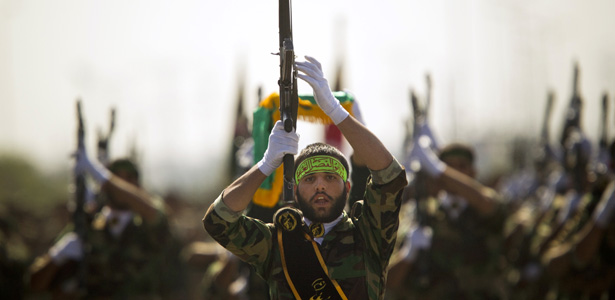
Members of Iran’s Basij militia march during a parade to commemorate the anniversary of the Iran-Iraq war (1980-88), in Tehran September 22, 2010. REUTERS/Morteza Nikoubazl (IRAN – Tags: ANNIVERSARY MILITARY POLITICS)

Nothing illustrates the confusion over the nuclear deal with the Iranian regime than one simple fact: Even as the Obama administration is encouraging new trade and investment opportunities with the regime as a reward for the deal, it is also at the same time seeking to impose new economic sanctions for violating prohibitions against developing nuclear-capable ballistic missiles.

The flip-flopping is emblematic of what makes diplomacy towards the mullahs in Tehran an exercise in frustration and futility because the truth of the matter is that they are not committed to a path towards true peace and civility. Rather Iranian leaders such as Ali Khamenei and Hassan Rouhani are playing the long game of chess moves designed to break down barriers; allowing the regime to access resources while playing off the desires of the West for peace vs. pushing the envelope of newly aggressive acts.

The mullahs and their allies in the Iran lobby recognize that time is running out to play this game since virtually all of the leading contenders to replace President Obama this fall have denounced the regime and have publicly staked out territory to hold the mullahs accountable.

Consequently, regime allies such as Trita Parsi and Reza Marashi of the National Iranian American Council have been usually quiet in their public statements and social media posts about what is happening with Iran such as the missile launchings, the smuggling of weapons to Yemen, the escalation in sending fighters to Syria and the continued incarceration of dissidents and journalists in Iran.

The strategy for them is to be as deaf and dumb as a lamp post and not provide fodder for the foes of Iran to tee off against them and expose the hypocrisy of their support for a regime which has ably shown itself to have intentions or desires for moderation.

Matthew Lee, the Associated Press’ diplomatic writer, examined this conundrum for the Obama administration over the weekend.

“Eager that a successful deal and a new era in the U.S.-Iran relationship be part of President Barack Obama’s legacy, his administration finds itself encouraging foreign trade with Iran even as it forbids most American commerce with the Islamic Republic. Those efforts are complicated by the fact that the United States continues to condemn and try to punish Iranian actions in non-nuclear arenas such as Tehran’s support of terrorist groups and belligerence toward Israel,” Lee writes.

“Asian and European government and companies, primarily banks, are balking at doing now-legal business with Iran, because of uncertainty over those remaining sanctions. They want written clarification about what current U.S. laws and financial regulations allow them to do. Essentially, they want a promise that the U.S. will not prosecute or punish them for transactions that involve Iran,” he added.

The fact that the Obama administration is trying to navigate a path for the Iranian regime to receive benefits from the nuclear deal even as it violates other international agreements demonstrates how ineffective U.S. policy has become in reigning in the mullahs and the Revolutionary Guard Corps.

What has not been focused on by most Western media is the intricate network of Iranian companies owned and operated by the Revolutionary Guard Corps and regime leaders and their families such as Khamenei.

In 2013, Reuters published a three-part investigation into what it called Ayatollah Assets. Now, Khamenei wants certain companies to be the main beneficiaries from lifting the sanctions, mainly the economic arm of the Revolutionary Guard — stamped by many around the globe as a terrorist organization.

The fact that Khamenei has been on a verbal rampage over the slow drip of funds into companies he controls is not so much a desire to help ordinary Iranians as much as it represents his frustration over not getting his payday and like a petulant child, Khamenei has ordered a paramilitary force comprised of zealot students loyal to him to fight in Syria.

A media group close to the Iranian government, Mehr News Agency, reported Tuesday at least 30 members of the regime’s Basij Resistance Force have been killed fighting in Syria and Iraq. Iran’s military influence in both countries is significant, with around 212 killed in both countries, according to a report by Al-Jazeera. Analysts conservatively estimate there are around 7,000 Iranian forces operating in Iraq and Syria.

While the Iranian regime escalates its military involvement in Syria, the Obama administration held its second Nowruz celebration observing the Persian New Year with First Lady Michelle Obama. It is worth noting the flood of social media messages coming in from activists and Iranian dissidents urging the First Lady not to forget about the terrible human rights abuses going on in Iran.

Protests over the regime’s policies though come in all sizes and shapes and its latest request comes in response to the plight of a group of female crew members at a French airline.

When it was announced that Air France would begin flying into Tehran after an eight year hiatus, a number of the female crew demanded the right to opt-out of working on the new route. Many objected to an internal memo asking them to wear a hijab when disembarking the plane in the Iranian capital.

The crew members have now won the battle. On Monday Air France announced it would allow its female staff to be reassigned to other flights, should they not wish to fly to Iran.

We can only hope that more acts of “soft power” defiance take place in support of those shackled by the regime.

By Michael Tomlinson

Filed Under: Blog, News Tagged With: Featured, Iran, Iran Lobby, NIAC, Reza Marashi, Trita Parsi

Meeting of Arab States Shows Challenge of Confronting Iran

April 8, 2016 by admin

Meeting of Arab States Shows Challenge of Confronting Iran

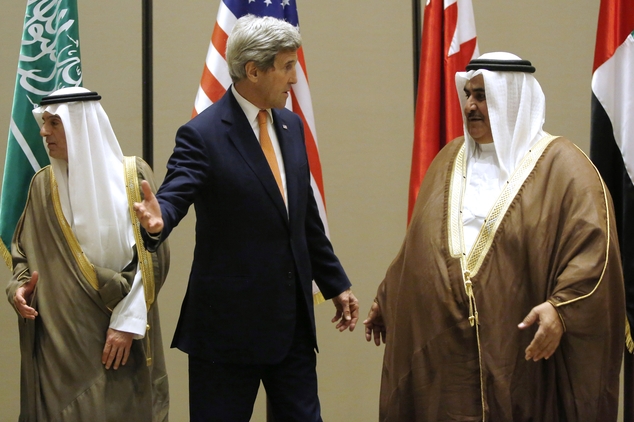
Secretary of State John Kerry talks with Bahrain Foreign Minister Khalid bin Ahmed Al Khalifa, right, after they and Saudi Arabia Foreign Minister Adel al-Jubeir, left, gathered for a family photo at the start of the Gulf Cooperation Council (GCC) Ministerial meetings in Manama, Bahrain, Thursday, April 7, 2016. (Jonathan Ernst/Pool Photo via AP)

The Gulf Cooperation Council (GCC) is a regional political and economic union of Arab States within the Persian Gulf and includes Bahrain, Kuwait, Oman, Qatar, Saudi Arabia and the United Arab Emirates. Since 1981 when it was founded, it has come to form a cohesive union of Arab states that share in the massive oil wealth of the Persian Gulf and within the last few years has created military alliances to combat the rise of ISIS and the increased militant forays of the Iranian regime.

These states have found themselves at the forefront of various Iranian provocations ranging from Bahrain battling insurgents armed by Iranian agents to Saudi Arabia which is trying to stem a full-scale insurrection on its border with neighboring Yemen fueled by Houthi rebels armed, trained and advised by Iran’s Revolutionary Guard Corps.

These Arab states have also intercepted considerable amounts of arms being smuggled by Iran to various proxies and terrorists to fuel insurrection and strikes at the various states in a stark reminder of how committed the mullahs in Tehran are in destabilizing their Arab neighbors.

All of this highlights one of the untruths uttered by the Iran lobby during the run up to the nuclear deal last year which was securing a deal would empower moderate forces within Iran to take greater control over Iran’s government and temper its more extreme elements.

We now know since the deal was agreed to last July, the Iranian regime has taken every opportunity to step up its military activities throughout the region; from Syria on the Mediterranean to Yemen on the Indian Ocean.

It is against this backdrop that U.S. Secretary of State John Kerry travels to Bahrain for a meeting of the GCC whose members are intent on reading Kerry the riot act about the rise of Iranian extremism.

Part of that process included statements from Kerry and Bahrain’s foreign minister on Thursday urging Iran to stop escalating its provocative behavior and pursue a more constructive foreign policy.

Kerry is in Bahrain to consult with officials from Bahrain and other Gulf Arab countries frustrated by Tehran’s policies and lay the groundwork for meetings between President Barack Obama and Gulf Arab leaders in Riyadh later this month. The president held a meeting in Washington last year with Gulf Arab leaders and senior officials to pledge military aid and calm allies’ nerves about Tehran as the nuclear deal neared completion.

“Today we are noticing two things that we kind have expected,” Sheik Khalid bin Ahmed Al Khalifa, Bahrain’s foreign minister, said, outlining the views of Bahrain and the GCC. “The missile program is moving forward with full support of the leadership of the Islamic Republic and we are seeing the hegemonic interventions through proxies in several parts of our region continuing unabated.”

While Kerry once again stressed the positive virtues of the nuclear agreement, the reality is that the almost slavish dedication to keeping afloat a nuclear deal that is already – for all intents and purposes – dead from the Iranian point of view has allowed the Iranian regime to move forward aggressively on several other fronts now that sanctions have been lifted and it can access a new credit line of $100 billion to replenish its military losses at a critical time for the mullahs.

That reality has forced Kerry to make a complex argument here to the ministers of the GCC, where he repeated that the U.S. would continue to lift the economic sanctions against Iran that it agreed to as part of the nuclear accord, even while imposing new ones to counter Tehran’s missile launches, an effort now underway in the United Nations Security Council.

The bipolar nature of American diplomacy has caused consternation and confusion among America’s allies such as the Gulf states and what can only be construed as unbridled joy amongst the mullahs who are taking advantage of the mixed messages.

But sentiment was hardening against Iran and the weak administration position as the editorial board for the Washington Post decried the ramp up in missile testing by Iran and the need to sanction the regime.

“Tehran’s behavior comes as no surprise to the many observers who predicted the deal would not alter its hostility to the West or its defiance of international norms. Unfortunately, the Obama administration’s response has also been much as critics predicted: It has done its best to play down Iran’s violations and avoid any conflict out of fear that the regime might walk away from a centerpiece of President Obama’s legacy,” the Post wrote.

In reference to a push by Iran to lift restrictions on accessing U.S. currency markets, the Post said “Secretary of State John F. Kerry, the accord’s architect, said Tuesday that the regime ‘deserves the benefits of the deal they struck.’ There’s logic to that. But there’s also a problem of reciprocity: Should the United States take steps not strictly mandated by the text of the nuclear accord at a time when Iran is testing nuclear-capable missiles?”

What has all this wrought? Not the peace and moderation promised by Iran lobby supporters such as Trita Parsi of the National Iranian American Council, but instead the world has witnessed a global military spending boost of nearly $1.7 trillion in 2015, the first increase in several years as a result of Iranian regime’s rise and increase in global terrorism and proxy wars fueled by Iran according to a new report.

Tiny Qatar has signed a deal for $7.6 billion to buy 24 Dassault Rafal fighter jets from France. Kuwait on Tuesday finalized a deal to purchase 28 Eurofighter Typhoons, a deal estimated to be worth around $8 billion; all in response to the uncertainty the Iranian regime is sowing.

By Laura Carnahan


Filed Under: Blog, News Tagged With: Featured, Iran, Iran deal, Iran Lobby, Iran Mullahs, Iran sanctions, National Iranian American Council, NIAC, Trita Parsi

Brussels Attacks Shows Need to Confront Islamic Extremism at its Source

March 23, 2016 by admin

Brussels Attacks Shows Need to Confront Islamic Extremism at its Source

Brussels Attacks Shows Need to Confront Islamic Extremism at its Source

An airport ticket counter and Starbucks location crowded with people were the scenes of devastating suicide bombings in Brussels, as was a crowded commuter train where ISIS quickly claimed responsibility for the devastating attacks that so far has killed at least 30 and injured over 200 in a stark reminder of the vulnerability of Europe to sophisticated attacks.

The Islamic State-affiliated news agency has issued a bulletin claiming responsibility for the deadly attacks Tuesday in Brussels.

The claim was disseminated on the group’s official channel on Telegram, a social media platform, and picked up by other official ISIS channels on Telegram and on Twitter.

“Islamic State fighters carried out a series of bombings with explosive belts and devices on Tuesday, targeting an airport and a central metro station in the center of the Belgian capital Brussels, a country participating in the coalition against the Islamic State,” the statement says. “Islamic State fighters opened fire inside the Zaventem airport, before several of them detonated their explosive belts, as a martyrdom bomber detonated his explosive belt in the Maalbeek metro station.”

A security camera image was released depicting three men, two of who wore black gloves that many security experts indicated could have hid the triggering devices or prevented a premature detonation; steps detailed in training manuals developed and distributed by ISIS indicating a high level of planning, coordination and sophistication.

Brussels has now entered the lexicon of Islamic terror attacks that include New York, London, Paris, Madrid, Sydney and Ottawa and adds to the mounting evidence that Islamic extremists and ISIS will not simply be defeated by smart bombs and drones.

To defeat any extremist ideology, one has to look for its sources and how it is nurtured and exported. The blueprint for ISIS was laid out long ago by the Iranian regime which pioneered state-sponsored terrorism by formalizing its deployment in its Quds Forces, backed by the resources of the Revolutionary Guard Corps and excused by the theological nonsense espoused by the regime’s mullahs.

To say the Iranian regime is the godfather of Islamic terror would be accurate. To say the Iranian regime gave birth to ISIS is even more accurate.

ISIS rise out of the quagmire of the Syrian civil war could not have been made possible without the Iranian regime’s support of the Assad regime that prolonged that conflict and reduced the effectiveness of moderate, Western-backed rebel groups in favor of Al-Qaeda affiliated militias.

The splintering and creation of ISIS from Al-Qaeda alone might not have been sufficient to launch the global army of terror we know face unless the meddling of the Iranian regime in Iraq forced the departure of Sunni tribes from the government of Nouri al-Maliki and created a power vacuum allowing for ISIS rapid advances in Iraq, culminating in the conquest of Mosul, which gave ISIS a quadrupling of territory, a ready-made labor force and fertile recruiting ground among disenfranchised Sunni communities.

The fact that Iran went all in by arming and deploying Shiite militias to fight ISIS initially in Iraq quickly turned this conflict into the bloody sectarian war it has now become.

The lack of an appropriate response from the Obama administration only intensified the conflict as Iran sought regional hegemony in a Shia crescent, thereby creating ISIS with a powerful recruiting tool among Sunnis.

Even as the evidence is clear and strong of the links between ISIS and the Iranian regime, the Iran lobby has ramped up to protect Iran from any criticism and have begun to mobilize to lobby the presidential candidates to protect the nuclear deal reached with Iran.

The National Iranian American Council (NIAC), strong advocates for Tehran, urged Hillary Clinton to follow President Obama’s lead in encouraging openings with Iran. It warned that “any deviation from Obama’s prudent and wise rhetoric and diplomacy will risk the significant progress achieved in the past few years.”

“At a time when President Obama is seeking to make his historic Iran policy change as irreversible as possible, we are concerned by Secretary Clinton downplaying the possibility of a larger diplomatic opening,” said Jamal Abdi, NIAC Action executive director.

The move to lobby Clinton is the clearest sign yet the NIAC and other Iran supporters are alarmed at the universal declarations coming from all the presidential candidates warning against accommodating the Iranian regime. Public opinion polls show Americans are leery of the regime and find little confidence in the mullahs promises of moderation that the Iran lobby have been flogging for the better part of three years.

The Brussels attacks are only another chapter in a long and bloody novel that is being authored in Tehran and the failure to connect the two will only result in more attacks and more deaths. Only by dealing effectively with Iran and pushing back its forces abroad back within Iran can we hope to curb the influence of the Revolutionary Guards and more importantly the nihilistic ideology the people like Ali Khamenei peddle in weekly chants of “Death to America” which still holds passionate meaning for him and his fellow clerics.

No matter how the Iran lobby tries to paper over the spread and growth of Islamic extremism, the root and source of that poisoned tree lies in Tehran with deep roots.

By Michael Tomlinson


Filed Under: News Tagged With: Featured, Iran, Iran deal, Iran Lobby, National Iranian American Council, NIAC, NIAC Action, Nuclear Deal

Iranian Regime Delivers Nowruz Message of Hostility

March 21, 2016 by admin

Iranian Regime Delivers Nowruz Message of Hostility

Iranian Regime Delivers Nowruz Message of Hostility

This weekend marks the start of Nowruz, the Persian New Year, which coincides with the spring equinox and includes many traditions such as a spring cleaning of one’s home, visiting with family and friends and feasting. It is regarded as the most important holiday in Iran and is always a prime opportunity for the Iranian regime to make a strategic and public point each year.

This year, top mullah Ali Khamenei did not disappoint in delivering a Nowruz message that could be considered an annual laundry list of grievances and perceived slights against the regime by the U.S. and was a reminder of just how ridiculous the Iran lobby’s contentions were of spurring a new “moderate” Iran after the nuclear deal.

Khamenei on Sunday said sanctions continue to bite the country’s economy, and again warned against trusting the U.S. — further indicating that the nuclear deal has not changed the mullah’s behavior towards West.

“They removed the sanctions in paper only,” Khamenei said in a televised address. “We don’t have any problem with the American people. What we are dealing with here is the politicians. They are the enemies.”

Khamenei’s remarks came after President Obama delivered his own Nowruz message to the Iranian people with his hopes for a more peaceful future. It obviously fell on the deaf ears of Khamenei.

“In Western countries and places which are under U.S. influence, our banking transactions and the repatriation of our funds from their banks face problems … because (banks) fear the Americans,” he said.

“The U.S. Treasury … acts in such a way that big corporations, big institutions and big banks do not dare to come and deal with Iran,” Khamenei added. The Central Bank of Iran has also said remaining U.S. sanctions have scared off European firms.

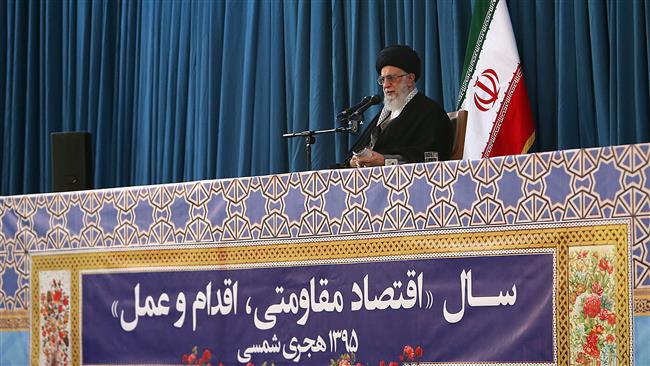
To drive the point home, the stage on which Khamenei sat carried a giant banner reading “the year of the Resistance Economy: Action and Implementation”, his chosen slogan for the Iranian year 1395 that began on Sunday. The banner was a not-too-subtle declaration of how the mullahs view the relationship the regime will have in the upcoming year with the rest of the world and it isn’t one of moderation.

“The candidates for the American presidency have competed to vilify Iran in their speeches, and this is a sign of hostility,” he added as he portrayed all of the candidates running for office as enemies of the regime.

Khamenei’s comments come also following an announcement that the regime’s Revolutionary Guard intends to build a statue commemorating the capture of ten U.S. sailors by the regime.

“There are very many photographs of the major incident of arresting US Marines in the Persian Gulf in the media and we intend to build a symbol out of them inside one of our naval monuments,” said Ali Fadavi, the head of the Guard’s naval forces in comments made to Iran’s Defense Press news agency.

It is expected the statue will built on Kharg, a small Iranian island in the Persian Gulf close to where the servicemen were captured, the Telegraph reported.

The regime never seems to miss an opportunity to publicly troll the U.S. and announce its antagonism and vitriol with almost child-like glee. It is a remarkable affirmation of how incredibly silly the Iran lobby’s positions on moderating Iran have been over the past several years.

Another example of that hypocrisy came in the form of an editorial published by the National Iranian American Council discussing Ahmed Shaheed, the UN special rapporteur for human rights in Iran, in which Shervin Vahedi lauded his most recent report criticizing the regime for brutal human rights abuses as somehow showing it was making clear progress towards improvements.

Vahedi bases those comments on a lone section discussing how the regime’s Supreme Court signaled it might take up the issue of executing citizens over drug-related offenses since the bulk of executions are said to be for similar offenses.

What Vahedi – and the most of the Iran lobby – ignore is how the regime uses trumped up drug offenses as a convenient means of executing and eliminating political dissidents, religious minorities and anyone else that opposes their rule.

Vahedi also reiterates much of what Shaheed has already cited in terms of the abuses and crackdowns aimed at journalists and artists, but does not make any comment condemning the abuses, nor calling for changes in Iran’s policies or in the regime’s leadership.

He only gives a limp and half-hearted endorsement from NIAC of continuing Shaheed’s mandate. You can almost imagine how difficult it was for the NIAC to utter even that small concession in the face of such overwhelming evidence.

For many languishing in the regime’s prisons, this is not a happy Nowruz for them or their families. The NIAC would do better to acknowledge their suffering and call for an end to it.

By Michael Tomlinson

Filed Under: Blog, News Tagged With: Featured, Iran, Iran deal, Iran sanctions, Khamenei, NIAC, Norooz, Norouz, Nowrouz, Nowruz

Iran Lobby Excuses Get Stranger and Stranger

March 17, 2016 by admin


Iran Lobby Excuses Get Stranger and Stranger

Iran Lobby Excuses Get Stranger and Stranger

The Iran lobby has offered up a variety of excuses for the actions and militant behavior of the Iranian regime ranging from pleas of peace-loving intent and political moderation to feigned ignorance and indignation over escalating human rights abuses and proxy wars throughout the Middle East.

One of the newest lines being trotted out by the Iran lobby is the absurd notion that Iran has never started a war.

A scholar at the American Enterprise Institute, took that claim to task in a column for Commentary Magazine.

He showcased comments made by Iranian regime apologists Juan Cole, a University of Michigan professor, and retired Congressman Ron Paul who said “There’s no history to show that Iran are aggressive people. When’s the last time they invaded a country? Over 200 years ago!”

“Iran has not launched an aggressive war in modern history (unlike the US or Israel), and its leaders have a doctrine of ‘no first strike.’ This is true of Supreme Leader Ali Khamenei, as well as of Revolutionary Guards commanders,” said Cole.

The Iranian regime knows when it has got a good thing going. Foreign Minister Mohammad Javad Zarif yesterday tweeted, “Iran hasn’t attacked any country in 250 years. But when Saddam rained missiles on us and gassed our people for 8 yrs, no one helped us.”

These are absurd comments when looked at in the context of what the mullahs have wrought since the Islamic revolution in 1979. The mullahs preferred method of aggression is to use proxies, either in the form of terrorist groups such as Hezbollah or local militias such as in Iraq and Yemen.

Hezbollah alone has served as a conduit of death and destruction for decades by carrying acts of terror either under the direction of or direct cooperation with Revolutionary Guards and Quds Forces personnel. In the most recent Syrian conflict, senior Iranian commanders have been in the field directing combat operations and even getting killed.

It’s noteworthy that Syria never posed a direct conflict with Iran, not even sharing borders, but the mullahs felt it necessary to engage in armed conflict there and even expanded it by calling for Russia to join in the bloodshed and widen the war.

Since the revolution, Iran has been involved in military campaigns in:

  • 1982-present: Lebanon
  • 2003-present: Iraq
  • 2006: Israel (via Hezbollah)
  • 2011-present: Syria
  • 2015-present: Yemen

Not exactly a record of pacifism, but certainly in line with the extremist nature of the regime and the duplicitous nature of the excuses made by the Iran lobby.

Another example of that stranger than fiction messaging came when regime-controlled media blasted the report issued by Ahmed Shaheed, the UN special rapporteur for human rights in Iran, which blistered the regime for appalling human rights abuses, including a near historic 1,000 executions in 2015 and a distressing willingness of the mullahs to kill children and women.

Iran Foreign Ministry Spokesman Hossein Jaber Ansari criticized the recent report as “biased,” “politically motivated” and “prejudicial, Tasnim news agency reported.

He said that the report is “imbalanced” and has been prepared based on “unreliable information.”

Those criticisms fell on deaf ears though as the Committee to Protect Journalists joined 34 other organizations in calling on the U.N. Human Rights Council to vote in favor of renewing the mandate Shaheed’s term as special rapporteur. The vote is scheduled to take place during the 31st session of the council, which ends March 24.

In the joint letter, the organizations drew attention to the range of “serious and systematic violations” of civil and political rights in Iran, as well as the need for the council to urge Iranian authorities to implement long overdue legal changes that would address the grievances of those who have borne the brunt of human rights abuses.

Journalists and other political and civic actors are “arbitrarily detained and given increasingly harsh prison sentences, often for trumped-up national security-related charges,” the letter said. Iran is one of the leading jailers of journalists, with 19 behind bars as of CPJ’s annual prison census on December 1. Ahead of last month’s legislative elections, journalists were arrested and at least one publication was banned, CPJ research shows.

In the meantime, even the modest “moderate” election wins hailed by the Iran lobby were under assault as several women who won seats were being verbally attacked for making comments deemed threatening to the regime, such as criticizing laws mandating women wear traditional veils and coverings.

All of which provides additional proof that any hope of moderation offered up by the Iran lobby is never really going to happen. This was put on bold display when Reza Marashi, research director for the National Iranian American Council, published a plaintive editorial in Huffington Post pleading for the release of his fellow regime supporter, Siamak Namazi, who was arrested and imprisoned by the regime and not part of the prisoner swap resulting from the nuclear deal.

“After finishing his graduate studies abroad, he again returned to Iran in 1999, this time as a consultant. Most people in his shoes returned to try and make a quick buck as a big fish in a small pond. Not Siamak. He helped run a world-renowned consulting firm – staffed predominantly with Iranian-born citizens – that facilitated badly-needed foreign investment from blue-chip multinational corporations,” Marashi said.

Unfortunately, Marashi neglects to mention how that firm, Atieh Consulting, become embroiled in regime politics since his family had deep connections to various parts of the regime’s leadership and actively cooked up the idea of creating an Iran lobby in the U.S. through the NIAC to help advocate for the lifting of international sanctions and far from being a selfless act, Namazi and others had hoped to position themselves to serve as middlemen to funnel foreign investment back into the regime and steer it towards their political allies as described in several investigative pieces.

It is also noteworthy how Marashi did not write similar heartfelt pieces on behalf of other Americans held captive in Iranian prisons such as Amir Hekmati or Saeed Abedini or endured years of torture in Iran.

It would certainly be interesting to see Marashi put his feet where his mouth is and go to Iran himself to plead with the mullahs and see if he can avoid a lengthy prison term as well as another political pawn for them.

By Michael Tomlinson

Filed Under: Blog, News Tagged With: Featured, Iran, Iran deal, Iran Human rights, Iran Lobby, Iran sanctions, National Iranian American Council, NIAC, NIAC Action, Reza Marashi

Iran Lobby Pushes Fiction of Moderate Win in Iran

March 15, 2016 by admin

Iran Lobby Pushes Fiction of Moderate Win in Iran

Iran Lobby Pushes Fiction of Moderate Win in Iran

That bastion of apologists for the Iranian regime’s abuses and extremists activity – the National Iranian American Council – has pushed vigorously the fiction that the recent parliamentary elections in Iran delivered a resounding win for the forces of moderation; all evidence to the contrary.

It’s a recognition by the NIAC and their fellow travelers that the rhetoric in the American presidential campaign has heated up against the recent actions of the mullahs with all the Republican candidates and now Democratic front runner Hillary Clinton all calling for new sanctions to be imposed in the wake of ballistic missile tests violating United Nations Security Council resolutions banning them.

For the NIAC, it’s a particularly thorny problem since the clock is now running on the end of the Obama presidency and what has been a policy of appeasement of the mullahs in Tehran. Coupled with that is growing public opinion that Iran has not shifted towards moderation in the wake of the nuclear deal, but in fact has grown more aggressive and hostile especially in human rights abuses and proxy wars with its neighbors.

The world has been subjected to the largest refugee crisis since World War II resulting from the Syrian civil war and has seen the Iranian regime go all in by begging Russia to intervene and target rebels to the regime of Bashar al-Assad and not ISIS as widely touted.

The Iranian elections were also a charade given the mass elimination of over half of the candidates submitted for approval. Even the most supportive news media have grudgingly admitted that the human rights situation in Iran and throughout the Middle East has grown more desperate.

Ahmad Shaheed, the UN special rapporteur for human rights in Iran, has issued yet another blistering report of human rights conditions within Iran following similar condemnations by Amnesty International and Iranian dissident and watchdog groups such as the National Council of Resistance of Iran (NCRI), all of whom have painted a bleak picture of the mass arrests, torture, imprisonment and execution of journalists, artists, bloggers, students, ethnic and religious minorities and political opponents and dissidents.

The picture of how bad things are in Iran has become so obvious it’s taken on the near-certainty of gospel. Ask any person on the street if things have improved in Iran, the answer will most likely be “No.”

And yet the NIAC and its allies cannot give up the fight and still try to push the fiction that things are better, even as their own allies such as Iranian-American businessman Siamak Namazi was arrested and tossed into prison without explanation by the same regime he was promoting in the ultimate irony.

With friends like these, who needs enemies?

But Jamal Abdi and Ryan Costello of the NIAC continued to push the party line with the publishing of a “policy memo” on the NIAC website cheerfully citing all the good news coming out of the Iranian elections such as:

  • Huge moderate wins in the parliament and Assembly of Experts, even go so far as saying Hassan Rouhani now has a plurality to enact his policies;
  • How Rouhani, newly empowered, will seek out new policies to open up bridges to the rest of the world; and
  • How so many notable hardliners were defeated as evidence of the mandate of the Iranian people for a new moderate future.

Unfortunately, none of that is true.

The dismissal of over 6,000 candidates left open the way for a field of candidates bulging with loyal supporters of the regime. If the Iranian people are only left with choices between bad and worse candidates, it stands to reason they would select the lesser of two evils.

What Abdi and Costello leave out is the simple fact that real power within the regime didn’t change at all. Supreme Leader Ali Khamenei still remains in charge, as does the Revolutionary Guards Corp (IRGC) which has been busy shooting missiles as fast as it can. The courts and police remain firmly in control and have been busy executing 2,300 people under Rouhani, as well as rounding up virtually any dissenter and locking them away.

Of course Abdi and Costello neglect to mention any of the extremist policies undertaken by Rouhani such as the level of executions than have surged higher than at any time in the history of the mullahs’ reign since 1989. Nor do they take up the lack of any progress on halting child executions, misogynist laws passed under Rouhani’s term or the continued use of Basiji paramilitaries to beat and arrest women for honor code violations such as driving alone or not wearing traditional hijabs.

Most galling of all are Abdi and Costello’s lack of any comment on the bloodshed caused by Rouhani’s policies in supporting three active wars in Syria, Iraq and Yemen and the complete lack of any momentum to halt the killing taking place at the hand of Iranian-backed Hezbollah fighters, Iranian-backed Shiite militia and Iranian-backed Houthi rebels.

Alireza Jafarzadeh, deputy director of the Washington office of the National Council of Resistance of Iran (NCRI), said in an editorial on Fox News:

“Rouhani has not been the only loyal servant of the theocracy throughout his career. The same can be said of all the well-known candidates from the supposedly moderate and reformist faction in the recent elections. They include men like former Chief Prosecutor of the Revolutionary Court Ali Razini and former Prosecutor General and Intelligence Minister Ghorbanali Dorri Najafabadi, both of whom oversaw the executions of political prisoners, the extrajudicial assassinations of dissidents and undesirables, and issued orders for shockingly inhumane punishments like stoning.

“Meanwhile, standing side-by-side with current president Hassan Rouhani is former president Ali Akbar Hashemi Rafsanjani, who has somehow come to be regarded as a leading reformist. This is a man for whom Interpol issued an arrest warrant due to his involvement in the 1994 bombing of the Jewish community center in Buenos Aires, which killed 85 people and wounded 300.”

The reality is that things have not changed in Iran and in fact are only getting worse.

By Michael Tomlinson

Filed Under: Blog, News Tagged With: Featured, Iran, Iran Human rights, Iran Lobby, Jamal Abdi, NIAC, NIAC Action, Ryan Costello

Holding Iran Accountable Starts by Not Believing Iran Lobby

March 11, 2016 by admin

Holding Iran Accountable Starts by Not Believing Iran Lobby

Holding Iran Accountable Starts by Not Believing Iran Lobby

The Iran lobby, consisting of lobbying groups such as the National Iranian American Council and media platforms like Lobelog.com, has long argued that agreement on a nuclear deal would bring about a new period of moderation within Iran and smooth the way for normalized relations.

Since the agreement was completed last summer, the Iranian regime has acted nothing like a moderate government engaging in a wide variety of foreign policy excesses such as going all-in on the Syrian civil war and stepping up support for Houthi rebels in Yemen, to instituting a harsh crackdown at home imprisoning dissidents and journalists and keeping the gallows busy by marching over 2,200 people to their deaths over the past two years.

Throughout it all, the Iran lobby has worked hard to maintain its charade and keep journalists believing in this false narrative no matter how incredible the proof has been otherwise. One example of this is a Q&A in the New York Times by Rick Gladstone in which he regurgitates many of the Iran lobby’s myths. For example, Gladstone asks:

  • Is Iran honoring the nuclear agreement? He writes it is according to the International Atomic Energy Agency, but neglects to mention admissions by the head of that agency that inspection protocols had been comprised at various points and full reporting may never be achievable;
  • Are recent missile tests prohibited under the nuclear agreement? He says no, such launchings are considered a separate issue, but neglects to mention that the regime pushed hard to unlink a host of issues such as ballistic missiles, human rights and support for terrorism from the deal, thereby allowing the regime a free hand to continue its illegal activities;
  • Iran’s parliamentary elections last month were supposed to have strengthened moderate supporters of Hassan Rouhani. So why is Iran provoking its critics by testing missiles? Gladstone explains that the launches are conducted by the Revolutionary Guard Corps which is outside of Rouhani’s control, but neglects to point out that Rouhani has been a willing supporter of these hardline tactics since his government has overseen one of the harshest crackdowns in 20 years against public dissent.

This militancy on the part of the Iranian regime was reinforced by boasts by senior military commanders that the tests would continue even though they are in violation of United Nations Security Council resolutions, which are being proven impotent by the lack of any consequences for these violations.

Brig. Gen. Amir Ali Hajizadeh, a senior commander for the Iranian Revolutionary Guard Corps that runs the regime’s missile program, told state television that it has more missiles ready to launch, and they are for defensive purposes.

“Iran’s missile program will not stop under any circumstances,” Hajizadeh said. “We are always ready to defend the country against any aggressor.”

The fact that the argument over the regime’s violations have shifted from calling for swift action to debates over whether or not imposition of sanctions might jeopardize a nuclear agreement that has already proven ineffectual in curbing the regime demonstrates how weak the international response has become.

This broad policy of appeasing the mullahs has already generated severe negative consequences as Iran seeks to aggressive upgrade its military and rearm in the wake of its deep involvement in three ongoing proxy wars in Syria, Iraq and Yemen as well as a potential new arms race with its chief regional rival, Saudi Arabia.

Hajizadeh also announced that Iran is calling its own version of a spy drone, “Simorgh,” which is Iranian for “Phoenix,” according to the country’s state controlled media.

Iran’s version of the drone “was manufactured through reverse engineering of the U.S. drone, which was tracked and hunted down in Iran late in 2011, and has been equipped by the IRGC with bombing capability,” according to Fars News Agency.

This comes on the heels of an $8 billion shopping spree in Moscow by the Iranian regime and the imminent delivery of an advanced S-300 anti-aircraft missile system.

Most disturbing of all was the announcement by Ahmed Shaheed, U.N. special rapporteur on human rights in Iran, that there had been a “staggering surge in the execution of at least 966 prisoners last year – the highest rate in over two decades,” Shaheed told a news briefing.

The number of executions are roughly double the number executed in 2010 and 10 times as many as were executed in 2005 and demonstrate how Rouhani’s promises of a more moderate government when he was elected were merely political window dressing.

“A large percentage of those executions are for drug offences and under Iran’s current drug laws, possession of 30 grams of heroin or cocaine would qualify for the death penalty. So there’s a number of draconian laws,” he said.

“Fundamental problems also exist with regard to the due process and fair trial rights of the accused,” Shaheed said.

“I continue to receive frequent and alarming reports about the use of prolonged solitary and incommunicado confinement, torture and ill-treatment, lack of access to lawyers and the use of confessions solicited under torture as evidence in trials – practices that clearly violate Iran’s own laws,” he said.

Hundreds of journalists, bloggers, activists and opposition figures “currently languish in Iran’s prisons and detention facilities,” he said.

None of which has stopped the Iran lobby from trying to divert attention to anything else as evidenced by an appearance by Jamal Abdi, of the NIAC, at a summit in Washington, DC aimed at criticizing the U.S. relationship with Saudi Arabia.

He spoke of how the Saudi regime tried to jeopardize the U.S. nuclear deal with Iran and criticized the visa restrictions the U.S. imposed on Iranians and Iranian dual nationals. He also spoke of how the U.S. is essentially “renting” the Saudi army to carry out the war in Yemen, and potentially even Syria, which is ironic considering that it was the Iranian regime’s support of the Assad regime in Syria and Houthi rebels in Yemen that started both conflicts in the first place.

All of which demonstrates how the Iran lobby will address any issue other than the current activities of the regime.

By Michael Tomlinson

Filed Under: Blog, News Tagged With: Featured, Iran Human rights, Iran Lobby, Iran sanctions, IRGC, Jamal Abdi, Lobelog, National Iranian American Council, NIAC, NIAC Action

  • « Previous Page
  • 1
  • …
  • 15
  • 16
  • 17
  • 18
  • 19
  • …
  • 26
  • Next Page »

National Iranian-American Council (NIAC)

  • Bogus Memberships
  • Survey
  • Lobbying
  • Iranians for International Cooperation
  • Defamation Lawsuit
  • People’s Mojahedin
  • Trita Parsi Biography
  • Parsi/Namazi Lobbying Plan
  • Parsi Links to Namazi & Iranian Regime
  • Namazi, NIAC Ringleader
  • Collaborating with Iran’s Ambassador

Recent Posts

  • NIAC Trying to Gain Influence On U.S. Congress
  • While Iran Lobby Plays Blame Game Iran Goes Nuclear
  • Iran Lobby Jumps on Detention of Iranian Newscaster
  • Bad News for Iran Swamps Iran Lobby
  • Iran Starts Off Year by Banning Instagram

© Copyright 2026 IranLobby.net · All Rights Reserved.