Iran Lobby

Exposing the Activities of the lobbies and appeasers of the Mullah's Dictatorship ruling Iran

  • Home
  • About
  • Current Trend
  • National Iranian-American Council(NIAC)
    • Bogus Memberships
    • Survey
    • Lobbying
    • Iranians for International Cooperation
    • Defamation Lawsuit
    • People’s Mojahedin
    • Trita Parsi Biography
    • Parsi/Namazi Lobbying Plan
    • Parsi Links to Namazi& Iranian Regime
    • Namazi, NIAC Ringleader
    • Collaborating with Iran’s Ambassador
  • The Appeasers
    • Gary Sick
    • Flynt Leverett & Hillary Mann Leverett
    • Baroness Nicholson
  • Blog
  • Links
  • Media Reports

Iran Lobby Turns Attention to Protecting Iranian Regime

May 26, 2017 by admin

Iran Lobby Turns Attention to Protecting Iranian Regime

Iran Lobby Turns Attention to Protecting Iranian Regime

The effort by President Trump to build a new international coalition to confront and contain the Iranian regime got off to a solid start with summits and meetings in Saudi Arabia and Israel. The warm welcome he received from Arab leaders must have unnerved the mullahs in Tehran since the Iran lobby has turned its attention a full-throated defense of the regime.

Trita Parsi of the National Iranian American Council took to authoring an editorial on the NIAC website that attempts to downplay Trump’s efforts.

“A key factor explaining the violence in the Middle East in the past few decades is that the region has lacked a sustainable, indigenous order. The process of establishing an order is by definition disruptive and the Middle East has almost continuously been in this state since the end of the Cold War,” Parsi writes.

“To make matters worse, the temporary equilibriums that briefly provided a resemblance of order were established and sustained by an external power – the United States – rather than by the states of the region themselves. As a result, these temporary periods of stability could only last as long as the external power was willing to sustain the order with its own blood and treasure,” he adds.

Parsi’s logic is perverse since he effectively argues for a process in which Iranian regime institutes order by eradicating everyone else that stands in its path. Of course, Parsi claims that Iran only has the best of intentions for its neighbors, but the track record does not show that as Iran is now embroiled in three wars in Syria, Iraq and Yemen.

Parsi goes on to blame Saudi Arabia for Middle East turmoil all in an effort to isolate Iran, but Parsi never admits to Iranian regime’s own culpability in setting the region ablaze in bloodshed and sectarian violence.

We have seen the profound loss of life after the Obama administration abdicated any role in fixing Syria in favor of the Iranian regime settling issues through barrel bombs and chemical gas attacks.

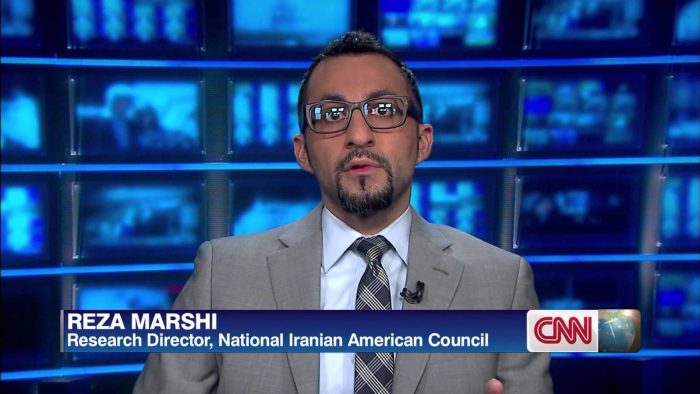
Parsi’s colleague, Reza Marashi, takes up the cause of whitewashing Iran in his own editorial reiterating the tired old refrain of Hassan Rouhani of being a tried and true moderate, whose real goal is only alleviating the economic malaise gripping Iran.

Unfortunately, no one told Marashi it seems that Iran’s economy will not improve so long as the mullahs continue to siphon billions for their own personal enrichment, as well as ship off more billions to prop up the Assad regime in Syria and pay to support Hezbollah and Houthi rebels in their wars.

Marashi even dubs the newly formed partnership against Iran as an “Axis of Rejection” a nifty piece of word play that reminds us of President George W. Bush’s “Axis of Evil” speech.

“Rouhani’s track record demonstrates that sustained engagement can lower tensions and produce peaceful solutions to conflict,” Marashi writes.

It is a claim that is both surreal and fantasy since Rouhani has presided over a massive escalation in wars that Iranian regime is fighting with no discernible pathway to peace other than to kill off Iran’s enemies.

But the NIAC isn’t through trying to support Iran as Ryan Costello weighed in with a press release lauding tweets made by former Secretary of State John Kerry who negotiated the horrific Iran nuclear agreement in the first place opposing proposed Senate legislation to levy new sanctions on the regime.

“Sec. Kerry’s public intervention cautioning against new Iran sanctions legislation should be another wake-up call that this is the wrong bill at the wrong time. Sec. Kerry would not be turning to the microphones unless the bill was an Iran deal-killer and private efforts to remove poison pills had failed,” Cosello writes.

“Lawmakers must ask themselves why they would give President Trump a mandate to undermine the Iran nuclear deal, ratchet up tensions in the region and undermine Iran’s moderates on the heels of their election victory. Tens of millions of Iranians voted in favor of openness and engagement with the outside world while Trump danced with unelected Saudi monarchs and called for Iran’s isolation,” he adds.

The more appropriate question back to Costello would be “why would lawmakers ever think they could trust the Iranian regime anymore after its commitment to waging proxy wars on its neighbors.”

The NIAC wasn’t the only Iran lobby supporter busy propping up the mullahs. Hooman Majd, a former advisor to Mahmoud Ahmadinejad, offered up the fairy tale that Iran had opted for peaceful co-existence with Rouhani’s re-election in a piece for Foreign Policy.

“Iran’s presidential election also proved the adage that the only thing predictable about Iranian politics is its unpredictability. Which, to the consternation of the Washington foreign-policy class, puts Iran experts on the same professional level as astrologers or palm readers,” Majd writes.

Again, Iranian regime supporters like Majd show their silliness when the election outcome in Iran was far from unpredictable. In fact, no incumbent Iranian president has ever lost re-election, not even Ahmadinejad when his re-election had to be rigged with widespread ballot tampering.

Iranian elections are so predictable, they remind us of the old Soviet Union-style elections with 99 percent voter participation and zero percent uncertainty.

The more the Iran lobby tries to prop up the Iranian regime the more it reveals how weak and vulnerable the mullahs have become.
 

Filed Under: Blog, News Tagged With: Appeasement policy, Featured, hassan rouhani, Iran Lobby, Iran Mullahs, National Iranian American Council, NIAC, NIAC Action, Reza Marashi, Rouhani, Trita Parsi, Tyler Cullis

Iran Lobby Sets Up Expectations of Moderate vs Hardliner

May 22, 2017 by admin

Iran Lobby Sets Up Expectations of Moderate vs Hardliner

Iran Lobby Sets Up Expectations of Moderate vs Hardliner

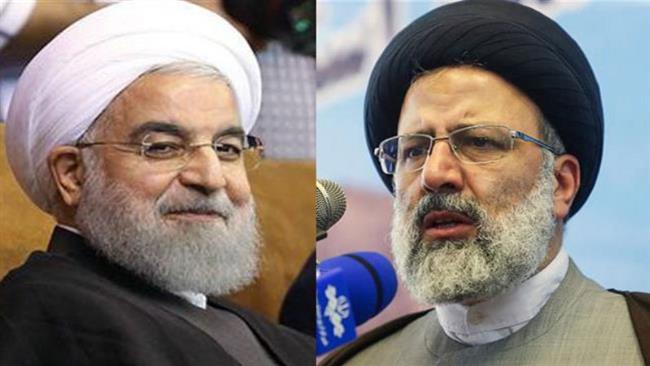
The Iran lobby has been posturing to depict the Iranian presidential election as a battle between “moderates” and “hardliners” as personified by Hassan Rouhani versus Ebrahim Raisi. It has also sought to downplay any role top mullah Ali Khamenei plays in determining the outcome of the election.

The National Iranian American Council has been the most vocal of these groups in pushing this narrative. Examples of this includes pieces appearing in Huffington Post.

The first one by Reza Marashi of the NIAC argues this central conceit of reformists and pragmatists fending off hardline conservatives. The way Marashi describes it, it is almost a heroic struggle. The only thing missing is a dramatic musical score.

Marashi argues that the Iranian people want moderation and reform in their president. Not an unreasonable idea and one that he argues is supported by the election history of Mohammad Khatami and Rouhani, as well as the dismal election effort of Mahmoud Ahmadinejad.

He even portrays Rouhani as a trailblazer in opening political discourse with his election in 2013.

“While it’s true that election season in Iran traditionally allows for an expansion of otherwise taboo political discourse, Rouhani taken it to uncharted waters. First, he publicly committed to engaging in the process of lifting all non-nuclear sanctions if he wins a second term. Then he told a rally that he had not forgotten his 2013 campaign promises, openly stating: ‘Either they have been achieved, or I have been prevented from keeping them.’ And remarkably, he directly told voters: ‘I’ll need votes higher than 51% in order to do certain things,’” Marashi writes.

He goes on to portray Rouhani’s statement as threatening to the regime and a minor miracle he wasn’t hauled off to Evin Prison for daring to utter such statements.

Pardon us while we laugh hysterically at Marashi.

Rouhani has never been, nor ever will be considered a true moderate. He is a loyal member of the regime, pledging allegiance to the same radical theology that all office holders swear to. His past record in military, religious and judicial matters have provided him with bona fides as a harsh punisher of dissent.

His term over the past four years clearly demonstrates his willingness to go to extraordinary lengths to protect the Islamic revolution. During his tenure, the pace of executions rose to the highest level since the revolution, earning annual condemnations from the United Nations, Amnesty International and just about every other human rights organization on the planet.

He has also enforced a broad crackdown on free speech that Iranians access to unmonitored internet access is non-existent. Add to that mass arrests of journalists, the shutdown of blogs and newspapers, and efforts to crack the encryption of social apps such as Telegraph and WhatsApp and you start getting the picture of how bleak things are in Iran right now.

Marashi is correct on one point, which is that this election really is not about the presidency, but rather the positioning going on to succeed Khamenei at the top of the mullah pyramid.

In that regard Marashi and the Iran lobby are getting their cake and eating it too. If Rouhani is elected, they will get to trumpet the victory of moderation even though Rouhani is no moderate.

If Raisi is elected, they can blame it on a newly muscular approach by the Trump administration towards Iran and Middle East policy and never address the horrific crimes of the Iranian regime.

It is a neat solution for the Iran lobby.

Tyler Cullis of the NIAC takes up this issue in his piece in Huffington Post when he questions why Democratic members of Congress seem willing to give the Trump administration leeway in leveling additional sanctions on Iran.

“Democrats have signed up as co-sponsors for Senate and House legislation, believing their political fortunes best lie in supporting aggressive action against Iran rather than acting as a buffer against the Trump administration’s efforts to derail a nuclear accord that, by all accounts, is working as intended,” Cullis writes.

“Democrats are risking a historic mistake – an error in judgment that could end up both alienating their progressive base and costing them hoped-for electoral gains, not to mention setting the stage for a new conflict in the Middle East,” he adds.

Cullis raises the apocalyptic specter of war with Iran as the inevitable path from tightening sanctions against Iran.

It’s the same argument the NIAC has made repeatedly ever since Congress moved to get tougher with Iran as the regime fired off ballistic missiles, sent ships to aggressively confront the U.S. Navy and supported bloody conflicts in Syria, Iraq and Yemen with men, arms and cash.

Cullis proclaims that war with Iran is the sure outcome from any effort to get tougher with Iran. Of course, that assumes that the mullahs only reaction is to go to war with the U.S by this logic.

In fact, the real story is that the mullahs purposely used the nuclear deal to buy time and get out from crushing economic sanctions that were threatening the very existence of the regime.

Now that Iran has received the benefits of billions in cash, foreign investment and the sale of its oil back on the open market, the usefulness and utility of keeping up the pretense of wanting to reach out to the global community is at an end.

Consequently, whether Rouhani or Raisi gets elected is a moot point, since the policies of the regime are not going to change no matter who gets elected. The NIAC has long acknowledged that the office of president in Iran lacks real power, which makes its impassioned arguments for “moderates” to win there even more incomprehensible.

Then again, logic was never a strong suit of the NIAC.

Cullis even makes the outrageous assumption that getting together on Iran will inevitably compel North Korea to take bolder action and not trust the word of the U.S. in any agreement.

“North Korea will view the U.S.’s abrogation of the Iran nuclear accord as clear evidence that the U.S. cannot be trusted to keep to its commitments and will refuse to deal with the Trump administration. In this case, peace will be impossible and war inevitable. Congress’s failings on Iran will spill over and deter peaceful settlement in other areas of conflict such as the Korean peninsula. Democrats will be on the hook once again,”

Really? Are we to assume that a North Korean regime that has broken every agreement it entered into, detonated nuclear devices and openly launches missiles with increasing range is going to be dissuaded by the U.S. commitment to Iran?

The lack of logic from the NIAC never ceases to amaze.

Filed Under: Blog, Current Trend, News Tagged With: Featured, hassan rouhani, Iran, Iran Human rights, Iran Lobby, National Iranian American Council, NIAC, NIAC Action, Reza Marashi, Tyler Cullis

Iran Lobby Frantically Tries to Counter Trump Administration Warnings

April 21, 2017 by admin

Iran Lobby Frantically Tries to Counter Trump Administration Warnings

Iran Lobby Frantically Tries to Counter Trump Administration Warnings

Less than 24 hours the Iran lobby was crowing about the Trump administration’s decision to re-certify the Iranian regime in compliance for another 90 days with the nuclear agreement, it went on the offensive as it faced a barrage of explicit statements from high-ranking officials denouncing the Iranian regime including United Nations ambassador Nikki Haley, Defense Secretary James Mattis and Secretary of State Rex Tillerson.

All three, top foreign policy and defense officials made the same statement that the source of trouble in the Middle East today was based in Tehran and that only a policy comprehensively dealing with all aspects of the Iranian regime was going to work moving forward in returning stability to the region.

For the mullahs in Tehran and their Iran lobby supporters, the objective has always been to divide and conquer the issues the rest of the world finds objectionable towards Iran; such as its support for terrorist groups like Hezbollah and dictators like Bashar al-Assad in Syria, as well as a dismal human rights record that would make Joseph Goebbels proud.

Which is why the Iran lobby’s cheering for the 90-day compliance notice had a lifespan of a gnat since it was merely a formality while the administration conducts a national security review of policy towards Iran.

But that didn’t stop the National Iranian American Council from bloviating like a water buffalo in heat.

“It’s a significant contradiction to first come out and say that the Iranians – contrary to all of their claims that Iran would be cheating – actually is living up to the deal only to come out the day after and saying, well, we hate the deal anyways and signaling that the U.S. might actually be walking away from the deal, unless of course the aim is to get rid of the deal without the U.S. having to pay the cost for it, meaning instead of the U.S. violating the deal directly by not renewing these sanctions waivers, killing the deal by escalating tensions in Yemen and elsewhere in the region and hoping that that will force the Iranians out of the deal,” said Trita Parsi, NIAC president on NPR.

Parsi is trying to have it both ways in separating the nuclear from other issues such as human rights or Iran’s meddling in wars raging in Syria and Yemen, but he deliberately skips over the most glaring consequence of the nuclear deal which is because we separated these issues, the mullahs were free to act without fear of reprisal in their ambitions for Syria or in the crushing of dissent at home.

The cold hard truth is that these are all connected issues like the strings of a spider web; the web would never succeed or exist unless all the strands were connected and working together.

The Iranian regime, for lack of a better comparison, is a legal criminal enterprise on a national scale. It concentrates power ruthlessly at the very top, uses the judicial system and religion to enforce disciple and stifle dissent while its military owns just about every industrial activity and skims off the top to line the pockets of the elites.

It’s like the Sopranos on steroids, except Ali Khamenei isn’t seeing a shrink unfortunately.

Of course other members of the Iran lobby weighed in too as Reza Marashi from the NIAC penned a ludicrous piece on TopTopic in which he claimed the European Union was galvanized and united in supporting the Iranian regime.

Unfortunately, yesterday’s terror attack on the Champs-Elysees in Paris only reinforced a growing uncertainty throughout a Europe that has been rattled by Islamic extremists attacks in Berlin, Brussels, Paris and elsewhere.

“While U.S. policy congeals, most European stakeholders remain in wait-and-see mode before making policy decisions – rather than taking steps to shape American policy,” Marashi writes.

We’re sure Marashi wishes for the good old Obama days when the NIAC could pick up the phone and call the White House and find a receptive audience, but it and Europe and finding that shaping policy in the White House now is not about lobbying, but about answering the central question the Obama administration never bothered to ask: “How do we rein in Iranian excesses across the board?”

Parsi reinforced that complete lack of understanding in an editorial in the New York Times in which he cited “a number of potential land mines on the near horizon. The first is in Congress, where a bipartisan effort is underway to introduce new sanctions on Iran that, despite the protestations of the legislation’s sponsors, would violate the terms of the nuclear agreement by adding new conditions onto the deal.”

Once again Parsi ignores the inconvenient truth for the Iran lobby which is that in their mind anything “new” in terms of sanctions levied against the Iranian regime would be considered a violation of the terms of the agreement, even though the agreement was purposely devoid of any clauses or mention of issues such as human rights.

Their twisted pretzel logic has them boxed in where now they are forced to denounce any and all efforts to sanction Iran as a threat to the regime. If Iranian warplanes dropped sarin gas on Sunni refugees in Iraq, Parsi and his colleagues would undoubtedly argue against any sanctions as a violation of the agreement; a convenient catch-all.

It’s also hilarious Parsi raises the prospect of a “moderate” Hassan Rouhani being defeated at the ballot box in next month’s elections since he ignores Iran’s long history of rigging every election. In fact, the regime’s Guardian Council only yesterday tossed former president Mahmoud Ahmadinejad off the ballot after much fanfare of him registering as a candidate.

In Iran, you don’t get on the ballot unless you are expected to get the blessing of the mullahs.

The most absurd comment Parsi makes is the assertion that if the U.S. reneges on the deal, Iran will undoubtedly move forward with its nuclear ambitions.

We hate to break it to the regime lackey, but the deal—by Parsi’s own admission—was never designed to halt Iranian nuclear work, only slow it down by a decade before the much ballyhooed “breakout period,” but even that has been whittled down by most analysts to just a few years.

All of which makes the statement issued by the NIAC in response to Secretary Tillerson’s remarks the other day even more laughable.

“There is little room to interpret this statement as anything less than a proclamation of the Trump administration’s intent to scrap the nuclear deal and reset the United States on a path to war,” said the NIAC.

Have they not been paying attention to Syria, Iraq, Yemen or Bahrain lately?

Michael Tomlinson

Filed Under: Blog, Current Trend, National Iranian-American Council, News Tagged With: #NuclearDeal, Appeasement policy, Featured, Iran, Iran deal, Iran Human rights, Iran Lobby, Iran Mullahs, Iran sanctions, National Iranian American Council, NIAC, NIAC Action, Reza Marashi, Syria, Trita Parsi, Yemen

Iran Lobby Working Overtime Pushing Fake News

March 21, 2017 by admin

Iran Lobby Working Overtime Pushing Fake News

Iran Lobby Working Overtime Pushing Fake News

Merriam-Webster defines “hypocrisy” as “a feigning to be what one is not or to believe what one does not: behavior that contradicts what one claims to be believe or feel.”

In the case of the Iran lobby, hypocrisy runs deep within its press releases, background papers, editorials and blog entries, especially the National Iranian American Council. In the aftermath of the end of the Obama administration’s policies of trying to appease the Iranian regime, the NIAC has been working overtime to push narratives that have come to define this era of “fake news.”

The NIAC website was busy this weekend pumping out several storylines, including attempting to shift blame for global terrorism from the Iranian regime to Saudi Arabia; attempting to character assassinate a vocal critic of the regime in the Trump administration; and tried to claim that Yemen was an example of a failed U.S. policy.

The most hypocritical position taken by the NIAC was an opinion piece by Adam Weinstein in which he called Saudi Arabia the world’s “biggest state sponsor of terrorism.” He makes this claim largely on the basis that many terrorist groups such as ISIS are comprised of Sunni members, while largely ignoring the magnitude of death and destruction meted out by Iranian-backed Shiite terror groups such as Hezbollah.

Weinstein goes on to try and specifically link Wahhabism to the Saudi government, while ignoring the direct support Shiite terror groups receive directly from the Iranian regime through the Revolutionary Guard Corps and its Quds Force operations.

While the Saudi government has a myriad of its own problems, such as the status and role of women in Saudi society and the need to rein in rogue Saudis that have engaged in terror, such as Osama bin Laden, the Saudi government does not purse and enact a policy of global terror, nor a systematic effort to attack and kill its enemies and dissidents at home and abroad; all things the Iranian regime does.

Weinstein delves into the complexities of the Islamic religion and its various offshoots and varieties in an attempt to confuse readers when in fact the issue is not about religion, but national policy instead.

What makes the Iranian regime the center point of terrorist activities is that the regime relies heavily on terrorist proxies to conduct military operations, terrorist attacks and assassinations. Notable examples include the bombing of the U.S. Marine barracks in Beirut, the bombing of the Khobar Towers in Saudi Arabia and the flood of Iranian-built IEDs into Iraq targeting U.S. service personnel.

Iran also provided shelter and support for Al-Qaeda leaders fleeing the U.S. invasion in Afghanistan and then later provided passage for these same fighters to enter Syria and from there spawned ISIS and other radical militant groups who were originally turned loose to attack U.S.-backed rebel groups.

But the NIAC’s fake news didn’t end there as Ryan Costello issued a press release attacking Trump national security aide Sebastian Gorka, a vocal and harsh critic of past policies towards the Iranian regime, especially the deeply flawed nuclear agreement.

The irony of Costello’s statement was his attempt to blame Gorka for anti-Semitism, a crazy concept considering the Iranian regime’s naked hostility to Jews and Israel; advocating for its destruction about as often as it holds public “Death to America” chants.

The effort to attack Gorka is not about racism, but about dislodging a strong opponent of the Iranian regime from any position of influence within the administration. This is an especially important consideration when viewed in light of recent disclosures that former Obama administration staffers have managed to burrow their way into the State Department to maintain influence over Iran policy; including one who was a former NIAC staffer.

The strangest piece was another one written by Adam Weinstein in which he attempted to show a clash of policy views over the conflict in Yemen amongst American legislators at a Senate Foreign Relations Committee hearing.

“As is too often the case on Capitol Hill, the hearing – which was framed as an examination of U.S. interests and risks to U.S. policy in the war in Yemen – devolved into a conversation dominated by Iran hawks who inflated Iran’s influence and sought to play down Saudi Arabia’s role in the conflict,” Weinstein writes.

During the hearing, former Ambassador to Yemen (2010-2013) Gerald Feierstein testified that Iran is benefiting from the conflict in Yemen and even claimed Saudi Arabia’s image was suffering as a result.

Weinstein then goes on to make the extraordinary claim that the Iranian regime attempted to persuade Houthi rebels from moving on Sanaa, the capital and blamed a Saudi naval blockade in 2015 for escalating the conflict.

It’s another silly argument to make since Iran’s Quds Forces have been the primary supplier of arms to the Houthis, with several Iranian fishing vessels being intercepted on their way to Yemen carrying guns, ammunition, mortars, rockets and missiles, many bearing Iranian serial numbers.

What Weinstein characterizes as an “obsession” by Saudi Arabia over Iran in Yemen, belies a basic aspect of Iran’s strategy which is to foment a civil war in a country sharing a border with Saudi Arabia in an effort to place the kingdom under duress even as it opposes Iranian forces in the Syrian conflict.

It is a strategy Iranian regime has used for decades in neighboring countries such as Lebanon and Iraq.

Weinstein goes on to claim the Houthis are not proxies for the Iranian regime because they are “indigenous” to Yemen as if accident of birth defines one as a proxy or not for the Islamic state. The true definition of an Iranian proxy is not where they are from, but rather if you are supplied, controlled and commanded by the mullahs in Tehran.

On that score, the Houthis are identical twins to Hezbollah, Shiite militias in Iraq and recruited Afghan mercenaries, all fighting on behalf of the Iranian regime.

Michael Tomlinson


Filed Under: Blog, Latest from Lobbies & Appeasers, National Iranian-American Council, News Tagged With: Featured, Iran deal, Iran Lobby, Iran Mullahs, Iran sanctions, National Iranian American Council, NIAC, NIAC Action, Nuclear Deal, Reza Marashi, Ryan Costello, Sanctions

Iran Lobby Echo Chamber Going Full Bore to Support Iran Regime

February 10, 2017 by admin

Iran Lobby Echo Chamber Going Full Bore to Support Iran Regime

Iran Lobby Echo Chamber Going Full Bore to Support Iran Regime

With the Trump White House announcing a series of new sanctions aimed at officials of the Revolutionary Guard Corps for the Iranian regime’s ballistic missile program, as well as contemplating broad new sanctions stemming from a possible designation of the IRGC as a terrorist organization, the Iran lobby and supporters of the regime have launched an all-out PR effort to prop up the faltering regime.

In a campaign similar to the infamous “echo chamber” of academics and advocates furiously penning editorials and giving interviews to sympathetic media outlets, the Iran lobby is trying anything to deflect attention on the regime’s militancy and instead claim anything aimed at punishing the regime is somehow racist or a prelude to armed conflict.

But the effort to come to the aid of the mullahs in Tehran isn’t just limited to the usual assorted Iran sympathizers as European Union foreign policy chief Federica Mogherini met with U.S. Secretary of State Rex Tillerson and spoke “at length” about the Iran nuclear deal according to Reuters.

Mogherini helped negotiate the 2015 nuclear deal with Iran, along with diplomats from Iran, the United States and other major world powers. The deal curbed Iran’s nuclear program in return for sanctions relief said Reuters.

Trump has said the deal is terrible, and Flynn put Iran “on notice” last week for test-firing a ballistic missile, raising the prospect of spiking tensions between Iran and the United States.

Since the deal, Mogherini has visited Tehran while the regime commenced a series of ghastly executions of men and women; none of which were protested by the EU.

Even Russia Today weighed in as well by publishing an opinion piece by John Wright, an outspoken supporter of the Iran nuclear deal, who took the Trump administration to task for focusing on Iran instead of the world’s “number one terrorist state” in his mind—Saudi Arabia.

“The Trump administration’s consistent and ongoing demonization of Iran flies in the face of reality in which Iran has stood, alongside Syria, Russia, the Kurds, and the Iranian-backed Lebanese resistance movement Hezbollah, as a pillar against the very same Salafi-jihadist terrorism that poses a threat to the American people,” Wright said in a splendid example of mimicking the very same messages consistently uttered by the National Iranian American Council and other Iran lobby members.

Wright went on to hammer Saudi Arabia, while essentially excusing the vile acts of ISIS and downplaying anything the Iranian regime has done by comparison. His logic or lack thereof defies commonsense and represent the intellectual vacuum that characterizes much of the Iran lobby’s arguments.

In a more flimsy example of casting doubt on efforts to designate the IRGC a terrorist organization, the Chicago Tribune offered up a story with the dubious headline of “Warnings for White House on terror designation for Iran Revolutionary Guard” and goes on to hint at warnings from defense officials, but neglects to mention anyone specifically, nor offer a single quote against the planned designation.

It does however rehash the discredited story of the terror designation of Iranian dissident groups in a message point repeatedly endlessly by the Iran lobby as part of the smear campaign against opposition groups.

Another Iran lobby message point was trolled out by William O. Beeman, an anthropology professor and not a national security expert, who nevertheless offered up the same silly arguments that folks like Trita Parsi and Reza Marashi of NIAC put forth, in an editorial.

“The tiny issue on which the US objection rests is whether the Iranian missiles are capable of carrying a nuclear warhead. Iran says: no! The United States (and Israel) say ‘maybe,’ because they can’t know for sure whether this is the case. In the latest missile test, the missile blew up, so no one can say one way or the other,” he writes.

Beeman should stick to teaching about dead civilizations.

The issue of ballistic missiles is not a “tiny” one. Iran’s development of longer-range missiles based on illicitly acquired North Korean designs has produced missiles with over a 2,000-km range, giving it intercontinental reach. Tie this with the development of solid fuel boosters and you now approach the threshold weight necessary for a nuclear weapon. But put that aside, it is more than enough thrust and range for a chemical or biological weapon to be aimed at Eastern Europe, North Africa and India and China.

The Economist went even further claiming that Trump’s punitive actions against the Iranian regime were actually helping it.

Most incredulous of all was the opening line from the piece which claimed “the ritual chants of ‘Death to America’ had grown fainter in recent years. The feverish crowds had thinned. Some demonstrators seemed to wave Uncle Sam banners less to jeer America than to cheer it. Yet thanks to Donald Trump this year’s annual rally to commemorate Islamic Revolution Day on February 10th in Tehran looks set to be one of Iran’s biggest.”

The Economist fails to mention that the regime can ramp up attendance any time it needs to with help from the Basij paramilitaries to round up supporters under threat of beatings and the chants aimed at America have not stopped and will never stop under the mullahs.

It also makes the same mistake all media make who do not understand the dynamics of the mullahs’ hold over Iran by continuing to make a distinction between “hardliners” and “moderates” in Iran’s government.

Let’s set the record straight: There are no moderates in Iran’s government. Moderation within the regime is akin to making distinctions between the SS and Brown shirts in Hitler’s Reich. It’s only variations on the theme of extremism. One could say that compared to ISIS, Al-Qaeda looks like a Boy Scout troop.

The argument that Trump only emboldens the “hardliners” is a self-fulfilling prophecy since the hardliners have been and always will be in control of Iran.

Michael Tomlinson

Filed Under: Blog, News Tagged With: #NuclearDeal, Featured, Iran, Iran deal, Iran Lobby, Iran Mullahs, Iran Terrorism, National Iranian American Council, NIAC, NIAC Action, Reza Marashi, Trita Parsi

Time for the NIAC to Pack It Up

January 27, 2017 by admin

Time for the NIAC to Pack It Up

Time for the NIAC to Pack It Up

The National Iranian American Council was born out of an idea hatched by Trita Parsi to develop a US-based group that could serve as an effective lobbying force for the interests of the Iranian regime. It could help provide “cover” for the mullahs by pushing a narrative seeking to reshape the public image of the Iranian regime.

It did so through editorials and press releases and through the use of NIAC staffers as so-called Iranian “experts” to news media. The intelligentsia and academia were regaled with lofty tales of how Iranian regime could be a friend to the US instead of an enemy and how the intractable problems of the Middle East could be solved through a moderate and willing Iranian partner.

The NIAC became part of the “echo chamber” created by the Obama administration to help push that narrative as it sought a nuclear deal with the mullahs in Tehran. NIAC staff such as Reza Marashi and Tyler Cullis obligingly offered up these fantasies even as Iran mullahs essentially set the stage for the Syrian civil war by jumping in to prop up the Assad regime.

The NIAC deepened its efforts by creating NIAC Action, a direct lobbying arm so it could knock on the doors of Congressmen and Senators and pressure them into supporting a badly flawed nuclear deal and promise them political cover by offering to say “Iranian-Americans” supported it.

Even as the death toll mounted by the thousands in Syria at the hands of Iranian forces and the barrels of Iranian guns and refugees flooded into Europe by the millions, the NIAC was resolutely pushing ahead to preserve the deal by blaming Saudi Arabia and other enemies of Iran for these problems.

Against the dubious backdrop of midnight flights of pallets loaded with cash in exchange for American hostages, the NIAC still kept at the narrative, ignoring the risk to Iranian-Americans and other dual nationals being arrested in Iran at an astonishing rate and Hassan Rouhani’s flat out refusal to recognize dual nationalities.

While the NIAC argued for loosening of restrictions to allow the freer flow of cash to Iran, the regime cracked down even harder on dissent at home with over 3,000 executions in four years and arrests of journalists, students, artists, bloggers and dissidents by the scores.

Even the US news media were getting the idea that NIAC did not have much to offer being apologists for the Iranian regime every time anything went wrong as NIAC staffers found less ink and air time on mainstream media and found themselves relegated to self-publishing blogs and fringe websites more prone to fake news than real news.

The election of Donald Trump and the sweep of Republicans into both houses of Congress put an even bigger damper on NIAC’s prospects to help the Iranian regime any more, which raises the most logical question: Is it time for the NIAC to close shop?

The question is not just rhetorical, but should prompt a serious discussion among supporters of the NIAC and its donors. What role will the NIAC play in a Trump presidency?

The same question must be vexing Parsi and his colleagues since we’ve seen a noticeable shift in their public comments on items. Instead of slavishly towing the party line of the mullahs in Tehran, the NIAC now has been busy commenting on issues related to Trump’s immigration proposes.

Some might argue that these topics should be the more traditional and appropriate topics for support and debate by an organization putatively claiming to support Iranian-Americans.

Unfortunately, the shift has less to do with genuine and sincere attention to a legitimate issue, but probably rather a need to justify the continued existence of NIAC.

One benchmark of that imperiled future will be the NIAC’s Bay Area fundraiser scheduled for February 12, 2017. The NIAC website states that the proceeds will be used “to support immediate efforts to combat discrimination, support civil rights, protect the US-Iran Nuclear Deal, and prevent war.”

Given the NIAC’s track record, virtually all the funds will be used to preserve the Iranian regime’s interest? Parsi and the NIAC have no real interest in the concerns and issues facing Iranian-Americans. They are more concerned about all facets of the Iranian regime and how to keep maintaining support for it. The NIAC’s checklist is absurdly limited given the state of the world:

  • Preserve the Iran nuclear deal so Iranian regime does not suffer renewed sanctions;
  • Oppose any new or re-imposition of sanctions on Iran;
  • Denounce and defend any accusation against the Iranian regime for sponsoring terror or human rights abuses;
  • Tie any effort to rein in Iran as a pathway to war and empowering “hardliners” in Iran; and
  • Keep the money flowing to Tehran and the mullah’s coffers at all costs.

These should not be the priorities of any group concerned with Iranian-American issues. They are the concerns only of an organization dedicated to doing the bidding of the mullahs in Tehran.

It’s time for the NIAC to go away and for a legitimate group to rise in its place to be a true advocate for Iranian-Americans and not a mouthpiece for Tehran.

Michael Tomlinson

Filed Under: Blog, National Iranian-American Council, News Tagged With: Featured, Iran deal, Iran Human rights, Iran sanctions, Iran Talks, Iran Terrorism, National Iranian American Council, NIAC, NIAC Action, nuclear talks, Reza Marashi, Sanctions, Trita Parsi, Tyler Cullis

NIAC Tries to Fool the Public on Iran Again

November 19, 2016 by admin

NIAC Tries to Fool the Public on Iran Again

NIAC Tries to Fool the Public on Iran Again

The National Iranian American Council is in overdrive using the proverbial firehouse to blanket websites, blogs and comment forums in the hope that the incoming Trump administration doesn’t undo the past three years of achievements on behalf of the Iranian regime.

It’s latest contribution was a piece appearing on CNN authored by Trita Parsi and Reza Marashi who again attempt to portray the choices facing the new administration in regards to the nuclear agreement reached with Iran as an either or proposition of leaving it alone or ripping it up and risking grave consequences.

It’s a Hobson’s choice that the NIAC has become adept at: Follow our suggestion and everything will be fine, but dare threaten Iran and risk cataclysm.

The 800,000 people killed in the Syrian conflict so far at the hands of the Assad regime, Hezbollah and Iranian fighters would be hard pressed to agree with those choices.

The Iranian regime has established itself clearly as uninterested in peaceful conflict resolution and instead has doubled down and gone all in using military force and violence in an effort to impose its religious will on its neighbors in Syria, Iraq and Yemen.

Parsi and Marashi argue that Trump should take the “political risk necessary to broaden the opening to Iran precisely to avoid replicating recent US policy failures in the Middle East.”

This may be the stupidest statement made yet by Parsi and Marashi.

Why on Earth would Donald Trump want to take a political risk on behalf of Iran, especially as he is already being assailed by the mainstream press and the political elites that turned their noses up at his candidacy (Parsi and Marashi included)?

Parsi and Marashi attempt to force the focus on the survival of the nuclear agreement with Iran when the issue has never been the agreement itself, but rather the behavior of the mullahs in Tehran.

No agreement is worth the paper it’s printed on if one of the participants in the agreement willfully ignores it right from the beginning. The fact that the Obama administration and European Union granted several waivers and exemptions right at the start made the agreement ineffectual and impotent.

During the campaign, Trump correctly focused not on the agreement itself, but the conduct of the mullahs after the agreement was reached. His criticism of the billions of dollars in cash released to Iran and its use in funding conflicts in Syria, Iraq and Yemen demonstrates he looked at the optics correctly, optics that Parsi and Marashi are trying hard to change now with their desperate lobbying campaign.

Parsi and Marashi attempt to frame the discussion around one of Trump’s biggest pledges which was to destroy ISIS and argue that “he cannot walk away or renegotiate the nuclear deal without undermining the coalition against the terror group.”

Unfortunately, Parsi and Marashi never acknowledge that Iranian regime itself is part of the axis of terrorist sponsors with its long-running support for Hezbollah and its sheltering of Al-Qaeda leaders in Iran after the U.S. invasion of Afghanistan drove them out.

They also incorrectly state that the Iran nuclear deal cannot be re-negotiated when in fact any agreement can be re-negotiated; a simple fact that the businessman in Trump knows full well. When you have a rotten deal on the table, it’s the idiot that accepts it as gospel. Trump is no idiot, much as Parsi and Marashi have claimed in the past.

Parsi and Marashi are correct when they characterize Iran as having “substantial latent power – population size and potential for wealth generation,” but miss the most crucial aspect of that power, which is “how will Iran’s leaders choose to apply it?”

Will clerical leaders such as Ali Khamenei and Hassan Rouhani seek to use that potential to improve the lives of ordinary Iranians? Of course not.

Iran’s economy has spiraled downward generating massive protests from small businessmen to school teachers, only to engender a broad and punishing crackdown on dissenters that have filled Iran’s prisons to capacity.

Will the Iranian regime seek to stabilize the Middle East and seek to reduce tensions and conflict? Absolutely not.

Iranian regime deepened the Syrian conflict and broadened it, while bringing Russia into the fight and setting the stage for a return to Cold War confrontations between the U.S. and Russian armed forces. Iran mullahs ignited the Yemen civil war with its clandestine military support for Houthi rebels and plunged Iraq back into sectarian conflict by raising Shiite militias in fighting Sunni insurgents tossed out of the power-sharing government of former president Nouri al-Maliki.

What is even more astonishing is Parsi and Marashi’s suggestion that the solution to the Middle East’s problems is to solve the “Saudi-Iran cold war”; an observation that is ludicrous given the fact that any solution to the current crop of problems in the Middle East starts and stops in Tehran.

Until Parsi and Marashi actually admit that Iran needs to curb its military adventures and support for insurgency and terrorism in order to advance the prospects for peace, nothing they say or write should be considered legitimate policy discussions and instead simply be viewed as propaganda for the mullahs in Tehran.

The quest for peace begins only when Tehran stops trying to rule its neighbors.

Laura Carnahan

Filed Under: Blog, News Tagged With: #NuclearDeal, Featured, hassan rouhani, Iran, Iran Mullahs, Khamenei, National Iranian American Council, NIAC, NIAC Action, Reza Marashi, Rouhani, Trita Parsi, Yemen

What Would Make the Iran Lobby Stop Supporting the Iran Regime?

November 4, 2016 by admin

What Would Make the Iran Lobby Stop Supporting the Iran Regime?

What Would Make the Iran Lobby Stop Supporting the Iran Regime?

One of the more interesting questions making the cocktail circuit in the Beltway is what would actually make the Iran lobby’s members, including the National Iranian American Council, Ploughshares Fund and others, stop supporting the Iranian regime?

While said mainly in jest and incredulity at the near slavish devotion maintained by the Iran lobby towards the regime, it does raise a legitimate question worth examination. Where would the NIAC for example draw a red line in the sand?

If we take the NIAC at its word in its own explanations and denials, we have to first start with the assumption that the NIAC’s very existence is not dependent on financial support from the regime or affiliated groups. That in of itself would make the question moot since you could not expect Trita Parsi, Reza Marashi or Tyler Cullis to kiss away their paychecks no matter how odious the source of the funding.

So assuming the NIAC is indeed funded through the generosity of independent-minded people who similarly are willing to overlook the excesses of the Iranian regime, what would make them change their minds?

It’s an important question since the mission statement of the NIAC reads that it supports Iranian-Americans and seeks to build bridges. We did not read anything about eliminating nuclear weapons in the mission statement, but we’ll let that slide.

From the NIAC’s own statements during the nuclear negotiations, it tried to sell the idea that reaching a nuclear agreement would usher in a new “moderate” Iran and this in turn would help Iranian-Americans. Indeed, one of the most compelling arguments used by the Iran lobby and echoed by Hassan Rouhani was the idea that Iranian-Americans and others in the Iranian diaspora could come home to help rebuild and revitalize their homeland.

How did that work out? The Iranian regime began arrested and sentencing dual national Iranians at a fast clip. In fact, Rouhani himself gave an interview in New York before his annual address to the United Nations General Assembly in which he emphatically pointed out that Iran did not recognize dual nationalities.

So for all of the Iranians yearning to come back home, the simple truth was that you were rolling the dice as to whether or not the Revolutionary Guard Corps was going to arrest you for visiting an ailing relative, toss you in prison, rush through a sham, secret trial and then sentence you to 18 years in prison as in the case of San Diegan, Reza “Robin” Shahini.

Obviously the arrest of Iranian-Americans and the statements made by regime officials to hold them hostage for a “few billion” dollars more isn’t enough to get NIAC off the regime wagon.

How about support for terrorism and proxy wars?

It has been well documented how the Iranian regime is now the primary supporter, sponsor and even combatant in three wars in Syria, Iraq and Yemen. Its use of terrorist allies in Hezbollah, recruited Afghan mercenaries, Shiite militias and Houthi rebels has caused a refugee crisis, brought Russia and the US into conflict, threatened the stability of Turkey and pushed Saudi Arabia to the brink of war.

So even though groups such as Ploughshares Fund ostensibly fight against nuclear proliferation for fear of killing people on a global scale, apparently it’s okay to massacre people on a regional scale.

The hypocrisy is rank, but let us be generous and say that “low-intensity” conflicts do not rise to the level of nuclear war. Fine. How about the much talked about moderation from the Iranian regime?

Well, on the anniversary of the US embassy takeover in Tehran in 1979, top mullah Ali Khamenei offered a few pointed comments about the regime’s opinion of the US.

“Negotiations with the US will not resolve our problems, because firstly, it is a liar, disloyal, cheater and stabber in the back, and secondly, the US itself is crisis-stricken – and how can a crisis-hit country resolve another country’s problems?” he said at a gathering of school students and teachers.

It’s nice to see how the Iranian regime’s highest official preaches the children of Iran on the regime’s viewpoint on the US.

Since the NIAC has never condemned any of these or endlessly similar volatile statements we can only assume that Parsi et al operate under the childhood motto of “sticks and stones” when it comes to calling for the destruction of the US.

How about the misery being caused by the regime at home during a ruthless crackdown on human rights including the mass arrests of students and young people using the social media, beating of women for violating dress codes and the execution of nearly 3,000 people (most by grisly public hangings in which children are encouraged to watch) since Rouhani came to power?

Not a peep from the Iran lobby, probably because these were only “Iranians” and not “Iranian-Americans” so we can only assume their human rights are less valuable according to the NIAC.

About the only Iranian-American that has warranted anything resembling ongoing support has been Siamak Namazi, a long-time friend and associate of Parsi and Marashi, who was snatched up by the IRGC along with his father.

Ironically his association with the NIAC was cited by revolutionary courts as the reason he was arrested!

No, it seems there are no real red lines in the sand the NIAC and other members of the Iran lobby would not cross.

It’s a shame really. We were hoping there might be a spark of defiance somewhere there against the injustices being wrought by the regime.

Michael Tomlinson

Filed Under: Blog, News Tagged With: Iran Lobby, Iran Terrorism, IRGC, Khamenei, National Iranian American Council, NIAC, NIAC Action, Reza Marashi, Trita Parsi, Tyler Cullis, Yemen

Why is the Iran Lobby Obsessed with Sanctions?

November 3, 2016 by admin

Why is the Iran Lobby Obsessed with Sanctions?

Why is the Iran Lobby Obsessed with Sanctions?

For an organization that considers itself an activist group fighting for the rights of Iranian-Americans, you would think the National Iranian American Council would be hard at work trying to build grassroots support for the release of Iranian-American hostages.

Maybe Trita Parsi, head of the NIAC, might offer a blistering editorial attacking the regime’s policies of not recognizing dual nationalities?

Maybe Reza Marashi or Tyler Cullis could take a break from giving interviews demanding a lifting of economic sanctions and instead question what else could be done to help get these Iranian-Americans released?

The stark reality is that the NIAC and its members cannot even be bothered to send out tweets, let alone press releases in support of these captive Iranian-Americans, nor try to persuade the Iranian regime to let go of such a damaging and harmful policy that puts countless Iranian-Americans at risk who travel back to Iran to visit relatives.

Instead, the most pressing priority for the Iran lobby—judging by the volume of press releases, statements, editorials, tweets, interviews and speeches—is the lifting of all economic sanctions against the Iranian regime, including all of those not included in the nuclear agreement and were originally imposed because of Iranian regime’s support of terrorism and abysmal human rights record.

The arguments being made by the Iran lobby, especially the NIAC, for lifting of economic sanctions still in place, such as restrictions on Iran’s use of US currency exchanges, resemble the kind of twisted pretzel logic you might find from an extremist that claims to be helping people as he beats them with a club.

One recent example is an editorial by Marashi on the self-publishing blog TopTopic (probably because no self-respecting mainstream publication could print it with a straight face), in which he makes the silly argument that the US is not in compliance with the noxious nuclear deal and is purposely dragging its feet because:

  • It is intentionally squeezing Iran because it has nothing better to do;
  • President Obama wants to protect Hillary Clinton from having to bear an unpleasant political cost of appearing friendly to a bloodthirsty regime widely untrusted by American voters; and
  • The US government is still fighting an internal battle between those committed to punishing Iran and those wanting to set it free.

It is an utterly inane position to advocate since it ignores the most basic and unavoidable truth about the Iranian regime which is compelling most Americans and their leaders to be remain wary of the mullahs in Tehran: the Iranian regime is simultaneously engaged in three wars, while grabbing dual citizens and trying them in secret courts, all during a human rights crackdown that abuses women, religious minorities, children and even gays.

About the only thing most Americans can agree on in this divided political season is that Iran should be restrained, not encouraged.

The sight of pallets full of cash delivered on midnight flights to buy the release of Americans left a sour taste that is hard to forget. The sight of American sailors made to kneel under the guns of Iranian Revolutionary Guard Corps soldiers was unforgettable.

The sight of Iranians hanged publicly almost on a daily basis, including women and children as young as 15 when convicted horrifies most Americans.

And yet, the Iran lobby does not tackle any of these issues. Instead, it focuses on trying to get the mullahs more cash. One might think NIAC’s fundraising budget is dependent on earning commissions for every billion raised for Iran’s coffers.

The fact that the Iran lobby ignores the almost daily pronouncements proving the regime’s true intentions demonstrates clearly it has no regard for the enormous human suffering being caused by the Iranian regime.

Take for example statements made by Salar Abnoush, deputy coordinator of Iran’s Khatam-al-Anbia Garrison, an IRGC command front, who was quoted as saying in an Iranian state-controlled publication closely tied to the IRGC that is sending assets to infiltrate the United States and Europe at the direction of Iran’s top mullah Ali Khamenei.

The IRGC “will be in the U.S. and Europe very soon,” according to Abnoush, who said that these forces would operate with the goal of bolstering Iran’s hardline regime and thwarting potential plots against the Islamic Republic.

“The whole world should know that the IRGC will be in the U.S. and Europe very soon,” he said.

According to Fox News, the military leader’s comments come as Iran is spending great amounts of money to upgrade its military hardware and bolster its presence throughout the Middle East and beyond. Iran intends to spend billions to purchase U.S.-made planes that are likely to be converted for use in its air force.

Given these developments, it’s easier to understand the rationale for NIAC’s emphasis on lifting sanctions and it’s not about the poor Americans being held in Iranian prisons.

It’s about cash for Iran, plain and simple.

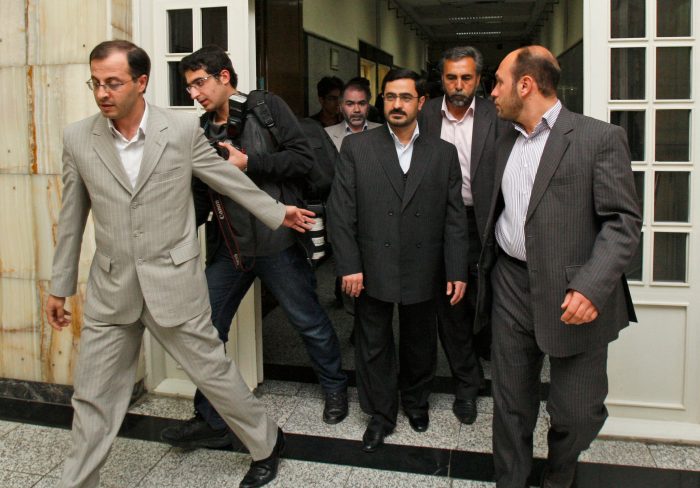
Not even the sham punishment of 135 lashes given to Saeed Mortazavi, former head of the regime’s Social Security, because of accusations of widespread financial violations and irregularities could cover from his past record as a former prosecutor who was responsible for the mass killings of detainees and political dissidents following the infamous 2009 protests over the stolen presidential election.

It seems in Tehran, you get punished for ripping off your fellow regime leaders, but not for killing innocent protestors.

Too bad the NIAC didn’t have anything to say about it.

Michael Tomlinson

Filed Under: Blog, News Tagged With: Featured, Iran, Iran deal, Iran Terrorism, IRGC, Khamenei, Marashi, Moderate Mullahs, National Iranian American Council, NIAC, NIAC Action, Nuclear Deal, nuclear talks, Reza Marashi, Sanctions, Trita Parsi, Tyler Cullis

Iran Regime Taunts US for More Ransom Payments to Free Americans

October 21, 2016 by admin

Iran Regime Taunts US for More Ransom Payments to Free Americans

Iran Regime Taunts US for More Ransom Payments to Free Americans

Who actually runs Iran?

It’s not a silly question. It’s an important one because it goes to the heart of the central assertions made repeatedly by the Iran lobby that there is an internal struggle between “moderates” and “hardliners” for the future of Iran.

If you listened to people such as Trita Parsi of the National Iranian American Council or bloggers such as Jim Lobe or Ali Gharib, the struggle was a titanic war being waged between good and evil with Hassan Rouhani carrying the banner for all the true moderates in Iran seeking a better life for every Iranian.

What a load of fragrant cattle by-products to put it nicely.

The reality has been quite starkly different as the Iranian regime now controls conflicts in three countries, woos foreign nations and countries to invest and snatches up even more dual national citizens from around the world.

The latest provocation was the sentencing of several Americans to extended prison sentences in secret trials, which earned condemnation from almost every quarter of the political and diplomatic spectrum, but instead of offering any olive branches, the Iranian regime went deeper into its extremism.

According to the Washington Free Beacon, the Iranian regime is seeking “many billions of dollars” in payments from the US in exchange for the release of several American hostages still being detained in Iran, according to reports by Iran’s state-controlled press that are reigniting debate over the Obama administration’s decision earlier this year to pay Iran $1.7 billion in cash.

Senior Iranian officials, including the Rouhani, have been floating the possibility of further payments from the US for months. Since the White House agreed to pay Tehran $1.7 billion in cash earlier this year as part of a deal bound up in the release of American hostages, Iran has captured several more U.S. citizens.

Future payments to Iran could reach as much as $2 billion, according to sources familiar with the matter, who said that Iran is detaining U.S. citizens in Iran’s notorious Evin prison where inmates are routinely tortured and abused.

Iranian news sources close to the regime’s Revolutionary Guard Corps, or IRGC, which has been handling prisoner swaps with the United States, reported on Tuesday that Iran expects “many billions of dollars to release” those U.S. citizens still being detained.”

Which leads us to the question we started with: Who’s calling the shots in Iran? Rouhani, who previously has served as a regime cheerleader for moderation now openly admits in interviews with Western journalists that Iran does not recognize dual nationalities, even though he previously issued a call for ex-pat Iranians to return and help rebuild its shattered economy.

“We should wait and see, the U.S. will offer … many billions of dollars to release” American businessman Siamak Namazi and his father Baquer, who was abducted by Iran after the United States paid Iran the $1.7 billion, according to the country’s Mashregh News outlet, which has close ties to the IRGC’s intelligence apparatus.

The Persian language news report was independently translated for the Washington Free Beacon.

Six hostages have been sentenced to 10 years in prison by Iran in the past months, including the Namazis.

One senior congressional adviser familiar with the issue told the Free Beacon that Iranian officials have been pressing for another $2 billion from the United States for months.

“Iranian officials including Foreign Minister [Mohammad Javad] Zarif have been bragging for months that they’re going to force the U.S. to pay them several billion dollars more,” the source said. “Now officials across the spectrum in Iran—from IRGC hardliners to the ostensibly moderate President Rouhani—are talking about those billions, and maybe several more, alongside chatter about the U.S. hostages.”

The Washington Post editorial board acknowledged the true nature of the regime with the harsh sentences handed down.

“The government of Hassan Rouhani, which negotiated the nuclear deal with the Obama administration, is often portrayed as opposed to this de facto hostage-taking. If so, the government appears powerless to prevent it. Instead, officials complain about the relatively slow return of Western investment and trade following the lifting of United Nations sanctions, even as some of those who promote the opening are unjustly imprisoned,” the Post said.

“Though it was officially part of a separate claims settlement, the Obama administration’s delivery of $400 million in cash to the Iranian regime at the time of the release of (Washington Post reporter Jason) Rezaian and other prisoners may have whetted the appetites of Tehran’s jailers.”

Clearly now, everyone can see Rouhani is not a moderate. When it comes to main policies of the regime, he was and still is merely no different than the top mullah Ali Khamenei and his Revolutionary Guard Corps which controls Iran and its people as tightly as a hangman’s noose wraps around a condemned prisoner’s neck.

Michael Tomlinson

Filed Under: Blog, News Tagged With: Featured, Iran, Iran deal, National Iranian American Council, NIAC, NIAC Action, Nuclear Deal, Reza Marashi, Trita Parsi, Tyler Cullis

  • « Previous Page
  • 1
  • 2
  • 3
  • 4
  • …
  • 6
  • Next Page »

National Iranian-American Council (NIAC)

  • Bogus Memberships
  • Survey
  • Lobbying
  • Iranians for International Cooperation
  • Defamation Lawsuit
  • People’s Mojahedin
  • Trita Parsi Biography
  • Parsi/Namazi Lobbying Plan
  • Parsi Links to Namazi & Iranian Regime
  • Namazi, NIAC Ringleader
  • Collaborating with Iran’s Ambassador

Recent Posts

  • NIAC Trying to Gain Influence On U.S. Congress
  • While Iran Lobby Plays Blame Game Iran Goes Nuclear
  • Iran Lobby Jumps on Detention of Iranian Newscaster
  • Bad News for Iran Swamps Iran Lobby
  • Iran Starts Off Year by Banning Instagram

© Copyright 2026 IranLobby.net · All Rights Reserved.