Iran Lobby

Exposing the Activities of the lobbies and appeasers of the Mullah's Dictatorship ruling Iran

  • Home
  • About
  • Current Trend
  • National Iranian-American Council(NIAC)
    • Bogus Memberships
    • Survey
    • Lobbying
    • Iranians for International Cooperation
    • Defamation Lawsuit
    • People’s Mojahedin
    • Trita Parsi Biography
    • Parsi/Namazi Lobbying Plan
    • Parsi Links to Namazi& Iranian Regime
    • Namazi, NIAC Ringleader
    • Collaborating with Iran’s Ambassador
  • The Appeasers
    • Gary Sick
    • Flynt Leverett & Hillary Mann Leverett
    • Baroness Nicholson
  • Blog
  • Links
  • Media Reports

Hassan Rouhani Cabinet Picks Reveal Campaign Lies

August 9, 2017 by admin

Hassan Rouhani Cabinet Picks Reveal Campaign Lies

Hassan Rouhani Cabinet Picks Reveal Campaign Lies

One of the hallmarks of the Iranian regime is to do whatever it takes to mollify the anger of the Iranian people and then go ahead and do what is in the best interests of the mullahs and the Revolutionary Guard Corps that backs their rule.

A large dose of that is promising everything under the sun during an election and then promptly ignore every one of those promises. The repercussions of those lies largely goes unnoticed because the regime uses harsh methods to punish dissent and keep protests at a minimum.

During the most recent presidential election, Hassan Rouhani, aided by the Iran lobby abroad, touted promises to advance the cause of Iranian women by addressing extreme gender imbalances that exist between men and women in Iranian society.

The idea was to continue promoting the idea that Rouhani was some enlightened moderate fighting hardline forces and promising a more open and inclusive society. Why anyone would believe him after the past four years of brutal crackdowns on almost every sector of Iranian society is beyond normal thinking.

But when faced with unremitting cruelty, in an environment of rampant corruption, under constant threat of death and imprisonment, hope is a challenging thing to keep alive and shows why many Iranians might be willing to even believe in lies because the alternative can be soul-crushing.

So, after Rouhani was sworn in for his second term, he released a list of cabinet appointments and unsurprisingly, not a single woman was named to a senior position.

Rouhani nominated men to fill 17 of 18 ministerial slots in his new government, according to the semi-official Tasnim news agency, with no one yet put forward for science minister. He appointed three women among a dozen vice presidents in his previous administration.

“Right now, many members are expressing their opposition,” Tayyebeh Siavashi, a reformist lawmaker who was among the 17 women elected last year to represent pro-Rouhani factions, said by phone to Bloomberg from inside parliament after the ministerial list was submitted. “It’s a big question for us: Why after all our efforts and hard work do we have no women at all?”

Most Western media attempted to frame the omission as an effort by Rouhani to appease hardliners within the government who oppose his “reformist” efforts, including the nuclear agreement and opening dialogue with the West.

Pardon us while we cough.

The truth of the matter is simple: This is who Rouhani is; a loyal, dedicated and faithful member of the regime going back to his earliest days.

Rouhani never had any intention of advancing a moderate agenda. He always has been a product of the regime and was constructed with a mythology that served the interests of the regime. The mullahs needed the nuclear deal to lift crippling economic sanctions to help fund their wars and keep the IRGC afloat.

Rouhani did not disappoint while he also actually stepped up the repression of the Iranian people; nearly tripling the rate of public executions from the much-reviled Mahmoud Ahmadinejad’s tenure; no small feat.

Not all Iranians were fooled as many took to social media to express their frustration at the lack of advancement for women on this significant social issue.

“Up until the last moment, serious efforts were underway to make sure there would be names on there,” said Amene Shirafkan, a journalist who campaigns on women’s issues and stood as a candidate in Tehran’s city council elections, referring to the list. “It’s a rather conservative cabinet, much like Rouhani himself.”

In many ways, with the nuclear deal behind him and the prospect of a Trump administration seeing through the false moderate façade and taking direct action against the regime, Rouhani and his fellow mullahs have figured out there may no longer be any need to continue with the fantasy of playing at moderation.

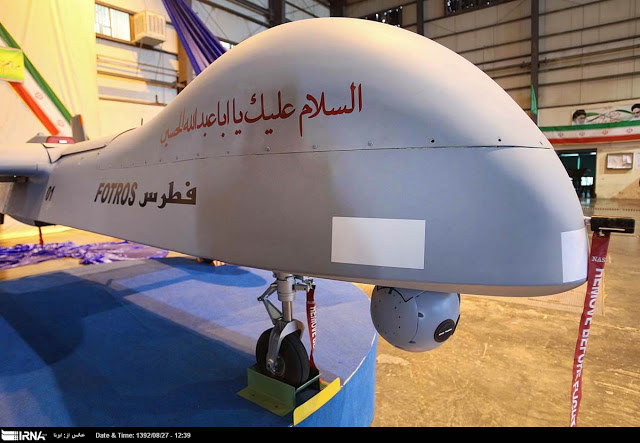
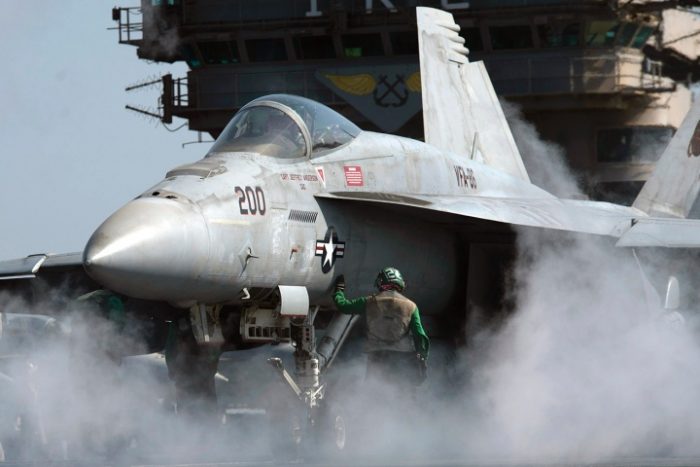
This may explain the rapid escalation in tensions between the Iranian regime and U.S. Navy as an Iranian drone buzzed a F/A-18E Super Hornet fighter as it prepared to land on the USS Nimitz in the Persian Gulf.

“Despite repeated radio calls to stay clear of active fixed-wing flight operations within the vicinity of USS Nimitz, the QOM-1 executed unsafe and unprofessional altitude changes in the close vicinity of an F/A-18E in a holding pattern preparing to land on the aircraft carrier,” said Commander Bill Urban, a spokesman for U.S. Naval Forces Central Command.

The Navy F/A-18E had to execute a quick maneuver to avoid contact with the drone, which at one point was roughly 200 feet away horizontally and about 100 feet vertically, according to the Washington Examiner.

According to the U.S. Navy, this is the thirteenth time this year there has been an unsafe or unprofessional interaction between U.S. and Iranian maritime forces.

This hasn’t been the only confrontation with an Iranian drone. Last June, U.S. forces shot down two Iranian-made drones that approached U.S.-backed troops in Syria.

It is important to note that all of these actions, plus the abduction of additional American hostages occurred well before President Trump ever took office, bringing out the untruth of the Iran lobby who claim his policies in confronting the regime are responsible for the escalation in tensions.

Most worrisome are reports that North Korea is deepening its ties to the Iranian regime with Kim Yong Nam, head of the rogue regime’s parliament attending Rouhani’s swearing in ceremony.

Kim’s trip though is expected to stretch to 10 days in Tehran, permitting a more detailed series of meetings about the military alliance the two nations share, as well as Western intelligence reports that say North Korea has constructed a nuclear warhead small enough to fit on one of its ballistic missiles.

It is reasonable to think since North Korea licensed its missile technology to Iran that it is also willing to share its nuclear technology in exchange for much-needed cash which Iran has thanks to the nuclear agreement.

Michael Tomlinson
Filed Under: Blog, News Tagged With: Featured, hassan rouhani, Iran and North Korea, Iran Ballistic Missile, Iran Human rights, Iran Lobby, Iran Mullahs, Iran Terrorism, IRGC, Rouhani, Syria

More Sanctions Levied on Iran for Missile ProgramMore Sanctions Levied on Iran for Missile Program

July 31, 2017 by admin

More Sanctions Levied on Iran for Missile Program

More Sanctions Levied on Iran for Missile Program

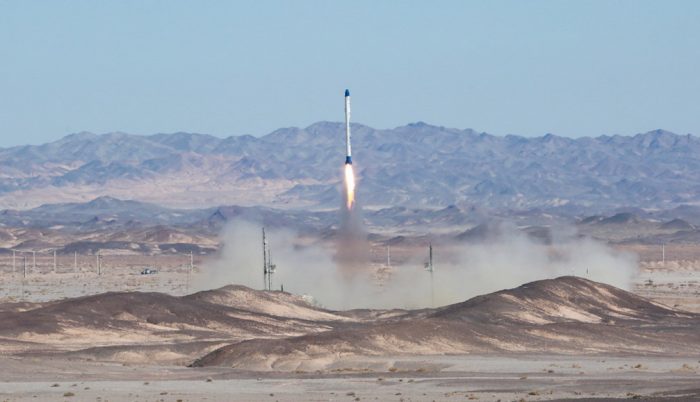
Iran’s recent launch of a rocket carrying a satellite into space served more as a test for the regime’s accelerating ballistic missile program in terms of lofting heavier payloads over greater distances.

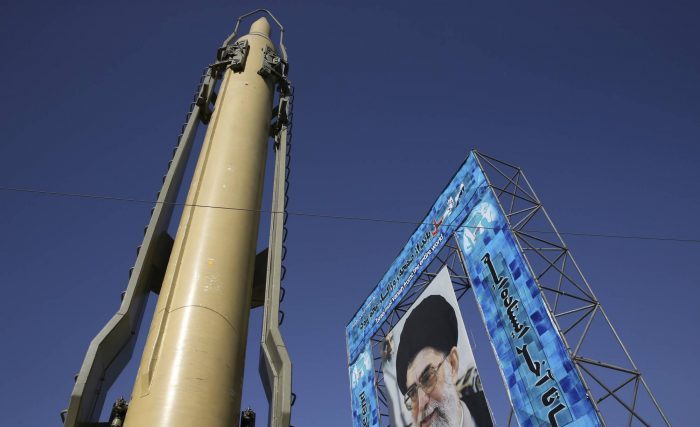
In many ways, the Iranian regime’s missile program has mirrored the development of the North Korean program which now threatens the continental U.S. with its own launch of a ballistic missile last Friday.

Intelligence agencies have long believed that Iran’s missile program was kickstarted by a technology licensing agreement between the two rogue regimes, but Iran’s larger industrial capacity and ample financial resources due to illicit sales of its embargoed oil supplies over the years have enabled Iran to leapfrog the pace of development by North Korea.

It also explains why the mullahs were so intent on ensuring that the nuclear deal had no explicit restrictions on their missile program; an omission by the Obama administration in the false hope of fanning the flames of moderation.

All of which means a mess has been left to the Trump administration to sift through and it has done so with an admirable degree of incremental steps designed to slowly isolate the regime and target the most problematic parts of the regime’s terror industry.

For every provocation by the Iranian regime, the Trump administration has responded in direct proportion to send an unmistakable message to the Tehran.

A joint statement on Friday from the United States, France, Germany and Britain said Iran’s launch was inconsistent with a U.N. Security Council resolution calling on Iran not to conduct such tests.

The U.S. Treasury’s Office of Foreign Assets Control imposed new sanctions on six Iranian firms owned or controlled by the Shahid Hemmat Industrial Group. The move enables the U.S. government to block any company property under its jurisdiction and prevents U.S. citizens from doing business with the firms, according to Reuters.

“These sanctions … underscore the United States’ deep concerns with Iran’s continued development and testing of ballistic missiles and other provocative behavior,” Treasury Secretary Steve Mnuchin said in a statement.

“The U.S. government will continue to aggressively counter Iran’s ballistic missile-related activity, whether it be a provocative space launch … or likely support to Yemeni Houthi missile attacks on Saudi Arabia such as occurred this past weekend,” Mnuchin said.

The six Shahid Hemmat units targeted by the U.S. sanctions manufacture missile components, missile airframes, liquid-propellant ballistic missile engines, liquid propellant, guidance and control systems. They also do missile-related research and maintenance.

The move comes on the heels of the Congress passing by overwhelming majorities legislation to impose new sanctions on Iran, North Korea and Russia, as well as sanctions imposed last July 18 directed at 18 people and entities for supporting Iran’s missile program or—more importantly—the Revolutionary Guard Corps which directly supports terrorism.

The moves from the Trump administration are slowly rolling back all the moves made by the Obama administration, but smartly are being done in a manner not to give the Iranian regime an excuse to claim the U.S. is violating the nuclear deal.

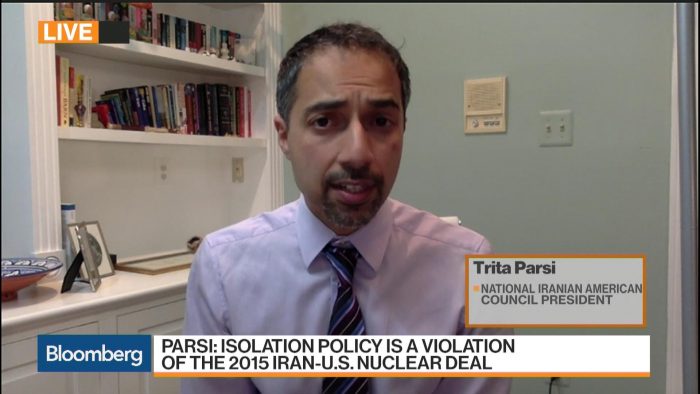
That of course has not stopped Iran lobby members such as Trita Parsi of the National Iranian American Council from claiming that the U.S. was indeed trying to wreck the deal.

Parsi took to Lobelog, another well-worn Iran lobby booster blog, to bray away that President Trump was actively seeking a war with Iran in another pathetic attempt at trying to drum up war fears.

“The American public knows the Iraq playbook quite well. Trump’s own supporters remain enraged by the disastrous war with Iraq. They know how they got played. It’s difficult to imagine why they would allow themselves to get played again by a president who has left little doubt about his intent to deceive,” Parsi said.

Parsi tries to press home the point that President Trump is some crazed warmonger, but even he admits that his presidential campaign was propelled in part by America’s dissatisfaction with the war in Iraq and the pretext for it.

Parsi cannot have both sides of the argument. He either must believe the president is actively seeking a war with Iran and is thumbing his nose at the very voters who put him in office, or Parsi must acknowledge the truth; which is that President Trump isn’t seeking a war, but is repairing the damage done by the Obama administration in enabling the mullahs in Tehran to act with impunity.

The president certainly doesn’t want a war, but he must correct the course set by the previous administration by attempting to restrain the Iranian regime, begin the laborious process of rebuilding the international coalition against the regime, cut off the flow of money funding its missile program and either hold the regime strictly accountable to the nuclear deal or force a better deal to be crafted.

In essence, President Trump is trying to get a do-over from the fumble made by the Obama administration and reset the terms of engaging with Iran to place issues such as ballistic missiles, human rights and terrorism back at the top of the agenda where they belonged in the first place.

It is an argument that has been made for years now by the Iranian opposition movement which warned that Iran would take advantage of the nuclear deal to rebuild its armed forces and fund its proxy war efforts rather than invest it back into the economy for the benefit of the Iranian people.

In hindsight, opposition leaders such as Mrs. Maryam Rajavi of the National Council of Resistance of Iran look almost prescient now in light of how the regime has acted in the two years since the deal was crafted.

For the regime, it must seem like they are trying to hold off the inevitable with the ever-rising tide of sanctions now being imposed almost daily.

This ultimately gives the Trump administration significant leverage to force back an expansionist Iran; leverage that the Obama administration never sought to use much to the dismay of the peoples of Syria, Yemen, Iraq and Afghanistan.

Michael Tomlinson

Filed Under: Blog, News Tagged With: Featured, Iran, Iran deal, Iran Human rights, Iran Lobby, Iran Mullahs, Iran sanctions, Iran Terrorism, NIAC, NIAC Action, Syria, Trita Parsi, Yemen

Two Years of Appeasing Iran Regime Officially Ends

July 28, 2017 by admin

Two Years of Appeasing Iran Regime Officially Ends

Two Years of Appeasing Iran Regime Officially Ends

Two years have passed since the Iran nuclear deal was agreed to by the U.S. and other nations and during that time virtually every promise made by the Iran lobby and the Obama administration about moderating the Iranian regime and improving the stability of the Middle East have fallen faster than Twitter’s stock price lately.

The practice of trying to appease the Iranian regime by conceding just about anything the mullahs wanted bought neither stability nor moderation. In fact, the opposite has occurred and places the Joint Comprehensive Plan of Action (JCPOA), as it is more formally known, on par with the Munich Agreement with Adolf Hitler or the Treaty of Versailles in terms of effectiveness.

History has demonstrated over again that rewarding tyranny only invites more tyranny and in the case of the Iranian regime, it has been a textbook case of that lesson.

Thankfully that period of appeasement is finally at an end with passage of a sanctions bill approved by a 97-2 margin targeting Iran, North Korea and Russia and headed to President Donald Trump’s desk for signature.

The U.S. House passed the sanctions package Tuesday in a 419-3 vote, sending the legislation to the Senate. The White House has not definitively said that President Trump will sign the bill, but the measure won a veto-proof majority in both the House and Senate, which makes his approval moot.

At its core is the imposition of economic sanctions on Iran for its ballistic missile program which violates a United Nations Security Council resolution, as well as the JCPOA which prohibited Iran’s development of a ballistic launch system with intercontinental range.

That fact was put on display with the announcement by the Iranian regime of its launching of a satellite into orbit on a ballistic missile.

Iranian state media confirmed the launch of a Simorgh rocket which the Trump administration considers a violation of the JCPOA.

State Department spokeswoman Heather Nauert said the launch appeared to be related to Iran’s attempts to develop ballistic missiles, which is not covered under the nuclear deal but is a subject of protest and sanctioning by the U.S.

“We would consider that a violation of UNSCR 2231,” Nauert said at a briefing with reporters when asked about the launch. “We consider that to be continued ballistic missile development. … We believe that what happened overnight, in the early morning hours here in Washington, is inconsistent with the Security Council resolutions.”

The Simorgh is a two-stage rocket first revealed in 2010. It is larger than an earlier model known as the Safir that Iran has used to launch satellites on previous occasions.

The U.S. National Air and Space Intelligence Center said in a report released last month that the Simorgh could act as a test bed for developing the technologies needed to produce an intercontinental ballistic missile, or ICBM.

“Tehran’s desire to have a strategic counter to the United States could drive it to field an ICBM. Progress in Iran’s space program could shorten a pathway to an ICBM because space launch vehicles (SLV) use inherently similar technologies,” the report said.

Iran’s satellite-launch program falls under the responsibility of the defense ministry, which has denied that the space program is a cover for weapons development, but such denials are silly on its surface since Iran has no civilian space agency.

Clearly the regime is using the guise of “scientific development” to advance its ballistic missile capability, especially now that the mullahs see their advantages disappear under an energized Congress and president intent on rolling back gains made by Iran.

For the mullahs, it is clearly a race now for the regime to develop additional technologies necessary to complete a nuclear delivery system such as heat shields and targeting systems designed to allow a payload to re-enter the Earth’s atmosphere to strike at targets thousands of miles away.

The table is now set for President Trump to walk away from the nuclear deal and news media have reported that he has instructed aides to closely re-examine the deal and evaluate against the regime’s actions over the past two years.

While the Iran lobby was nearly apoplectic over the news, it could not ignore the real possibility that all its hard work in securing the deal is about to be erased like tracks across sand dunes swept away by wind.

Trita Parsi of the National Iranian American Council issued a typically hysterical statement claiming that the president’s call for expanded inspections of Iran’s military installations for nuclear violations was a pretext to war.

“Clearly, facts don’t matter to the Trump administration – their desire to start a war trumps everything. Now, his team appears to be putting his desires into action,” Parsi said.

We advise Parsi to take a Xanax and calm down since his protestations have always been proven false in the past and this latest one is no different.

The fact that the JCPOA excluded large segments of Iran’s military-industrial complex allowed the regime ample room to hide its nuclear activities and the fact that international inspectors are restricted from accessing sites and many sites they were allowed to visit were scrubbed clean of any evidence months in advance shows how wrong Parsi is and how correct the president is in seeking additional inspections.

The Iranian regime predictably reacted with false anger and vitriol at the developments, but could not ignore the fact that the JCPOA is not a treaty and President Trump has wide latitude to simply walk away from the agreement.

Laura Carnahan

Filed Under: Blog, News Tagged With: #NuclearDeal, Featured, Iran, Iran Human rights, Iran Lobby, Iran sanctions, Iran Terrorism, IRGC, National Iranian American Council, NIAC Action, Sanctions, Syria, Trita Parsi

Iran Regime Efforts to Control Middle East Gets Pushback

July 10, 2017 by admin

Iran Regime Efforts to Control Middle East Gets Pushback

Iran Regime Efforts to Control Middle East Gets Pushback

The mullahs in Tehran have never made a secret of their lust for controlling the Middle East, especially the countries surrounding Iran. Part of the reasoning has been to create a buffer protecting the Islamic state from its perceived enemies, including regional rival Saudi Arabia, but it also was designed to provide the mullahs with a steady supply of proxies that could be used as cannon fodder for conflicts.

The Iranian regime, through its Revolutionary Guard Corps and its Quds Forces, have historically relied on third parties to do its dirty work be it Hezbollah in Lebanon, Shiite militias in Iraq, Houthi rebels in Yemen or Afghan mercenaries in Syria.

The willingness of the Iranian regime to use these proxies demonstrates its callous disregard for human life and take no prisoners attitude in achieving its goals. It also ably demonstrates why any agreement reached with the mullahs is essentially worthless since they will always seek to circumvent any accord should it suit their purposes.

Which is why any effort to resolve the civil war in Syria must first and foremost force the expulsion of Iranian forces from that war-torn country. Similarly, as ISIS is defeated in Iraq with the liberation of Mosul, a similar kicking out of Iranian forces would be a positive first step to returning that beleaguered country to normality.

None of this will be easy though since the mullahs are loath to give up their hard-fought gains in securing a so-called “land bridge” linking Tehran to Damascus through Baghdad, which fulfills the long sought-after vision of Shia control from the Mediterranean to the Indian Ocean.

The strategic vision of the Iranian regime includes the establishment of permanent naval bases along the Syrian and Yemen coastlines, giving its navy unfettered access to the crowded international shipping lanes in the Mediterranean and through the Persian Gulf and Suze Canal.

The mullahs see themselves being able to keep a loaded pistol pointed at the economic lifeblood of Europe through its use of its military and navy. It also explains why Iran has invested so heavily and fought hard to protect its ballistic missile program from the threat of economic sanctions.

Just as the control of territory and sea lanes are crucial to the mullahs’ vision of maintaining control, its ballistic missile fleet is the hammer necessary to enforce that control by placing Eastern Europe, North Africa and Southeast Asia under threat of attack.

The firing of ballistic missiles for the first time at purported ISIS targets in Syria was less about actually striking at ISIS forces, as much as it was a practical demonstration and testing of its missiles by Iran.

In many ways, the opening salvos are eerily similar to Nazi Germany’s involvement in the Spanish Civil War in 1936, not to support the rule of General Francisco Franco in as much the ability to test new German tactics and weapons that would later be employed in the blitzkrieg of World War II.

The civil war was also notable for the bombing of Guernica in 1937 in which Germany tested out new warplanes in killing hundreds of civilians; a prelude to the mass slaughters to follow. Famed artist Pablo Picasso immortalized the attack with his eponymous painting, but if he were alive today, he could have painted similar works memorializing places such as Mosul, Raqqa or Ramadi where Iranian-backed forces have left swathes of destruction that made Guernica look paltry by comparison.

But all of these efforts by the Iranian regime to exert its control over its neighbors may have finally forced pushback among many of these former perceived allies of Iran.

In Pakistan, tensions have sharply escalated with a serious of border conflicts that got another dose of violence in the form of rocket attacks by Iranian border guards aimed at Pakistan.

“The incident took place in the wee hours of Saturday,” Panjgur’s Deputy Commissioner Jabbar Baloch told The Nation. He confirmed no loss of life or property was caused by the Iranian shelling. The rockets exploded with powerful bang after landing in the area, prompting fear and panic among the residents.

The adjacent areas of Panjgur and Chagai close to Pak-Iran border have repeatedly witnessed rocket shells fired by the Iranian security forces followed by strong protest from the Pakistani side. The regular violation of Pakistani territory by Iranian guards and allegations of cross-border infiltration by Pakistani side has strained ties between the two neighboring countries which share a 900-km long porous border.

This was followed by news from Iraq of threats being made by one of the largest tribes in Karbala against Iranian forces after one of its prominent leaders,  Sheikh Nema Hadi al-Issawi, was killed in the Iranian city of Mashhad.

In order to calm the tribe, Hadi al-Amiri, the leader of Al- Badr militia and who is close to the Iranian regime and the commander of Al- Quds Force, asked to attend the funeral of the killed Sheikh but the al-Issa tribe refused the request and prevented Amiri from entering its houses in Karbala, according to Al-Arabiya.

This comes after massed protests in southern Afghanistan by locals denouncing Iranian regime president Hassan Rouhani over disparaging comments he made in criticizing Afghan water management and dam projects, according to the Voice of America.

Hundreds of demonstrators peacefully marched through the streets of Lashkargah, capital of Helmand province near the Iranian border. They chanted, “Death to Hassan Rouhani” and “Death to enemies of Afghanistan.”

These actions don’t even include the active losses being suffered by Iranian-backed forces in Syria and Yemen at the hands of U.S. and Saudi-backed forces.

All of which points to a turning of fortune for the mullahs that may see their hopes for a Shiite sphere of influence go up like puffs of smoke.

Michael Tomlinson

Filed Under: Blog, News Tagged With: Featured, hassan rouhani, Iran, Iran Human rights, Iran Mullahs, Iran Terrorism, Moderate Mullahs, Syria, Yemen

Iran Regime and Lobby Using Fear of War to Stave Off Action

June 23, 2017 by admin

Iran Regime and Lobby Using Fear of War to Stave Off Action

Iran Regime and Lobby Using Fear of War to Stave Off Action

The Iranian regime’s default argument in favor of its militant actions is usually for self-defense. Why did we save the Assad regime in Syria? For self-defense.

Why did we not object to Assad using chemical weapons against his own people? For self-defense.

Why did Iran supply the Houthis in Yemen and foment a revolution that threatened a war with Saudi Arabia? For self-defense.

Why did Iran crack down on journalists, dissidents, students, artists and even women who take Zumba dance classes? For self-defense.

The Iran lobby was no different with regime advocates such as the National Iranian American Council consistently excusing regime acts such as firing ballistic missiles as a necessary adjunct to national defense in the face of U.S. or Saudi aggression.

Few people around the world actually believe these are really acts designed for self-defense so for our purposes, let’s move past the false arguments and get to the real heart of the matter; Iranian regime is posing for the world stage.

Dr. Majid Rafizadeh, president of the International American Council, wrote about this in an editorial for the Arab News.

“Iran’s military adventurism and destabilizing behavior have reached an unprecedented level that could turn regional tensions into a conflagration. Tehran’s stepped-up interference in Yemen is a direct threat to the Bab Al-Mandab strait and the security of neighboring countries. US officials say Iran is now providing cruise missiles to Yemen’s Houthis,” he writes.

“In Iraq, Tehran is obstructing efforts by state and non-state actors to bridge Sunni-Shiite gaps. It seeks to control Iraq, and has started a widespread campaign to influence decision-making and secure a victory for Shiite groups in parliamentary elections,” he adds.

He also cites Iran’s first use of ballistic missiles on the battlefield as a disturbing development since it crosses the proverbial Rubicon for Iran in the mullahs’ willingness to use these weapons.

“Iran is beginning a new stage in its interventions in Arab countries via its ballistic missile capabilities. This will intensify sectarianism, radicalization and militarization of regional conflicts. If this is met with silence, Tehran will be further empowered and emboldened because it interprets silence as weakness,” Rafizadeh said.

“The US and the international community should hold Iranian leaders accountable. This can be accomplished by a combination of political pressure, economic sanctions and force. The US should seek assistance from European allies and a united front with several Middle Eastern powers; this would be a powerful bulwark against Tehran. Sanctions from Muslim countries would be a significant blow to Tehran’s self-portrayal as a leader of the Muslim world,” he added.

But none of that has stopped some world leaders from slipping back into questioning whether or not appeasing Iran might not still be a sound policy to follow; all evidence to the contrary.

Security Council Resolution 2231 called on Iran not to test ballistic missiles capable of carrying nuclear warheads. When Iran conducted missile tests in March 2016, critics led by the United States were infuriated, calling the country’s behavior a violation of the Security Council resolution and a sign that it would not honor provisions of the nuclear accord.

In a report to the Security Council last July on compliance with Resolution 2231, Ban Ki-moon, then the secretary general, said he was concerned that the missile tests might not be consistent with the “constructive spirit” demonstrated by the nuclear accord. He called on Iran to “refrain from conducting such launches, given that they have the potential to increase tensions in the region.”

Of course, with the missile launches in Syria, the Iranian regime basically burned Resolution 2231 in a dumpster.

Which leads us back to the original issue of the mullahs trying to distract attention from their extremist activities.

Brenda Shaffer, a professor with the Center for Eurasian, Russian and East European Studies at Georgetown and a fellow with the Atlantic Council’s Global Energy Center, discusses Iran’s use of ISIS to district from its actions in cracking down in dissidents in a piece for Fox News.

“Through recent news reports we’ve learned that those rounded-up as part of the attacks are all members of the Kurdish and Baluch ethnic minorities. The conflict with Iran’s Kurdish and Baluch minorities is not new: Tehran has been battling for close to a decade a much larger insurgency with both groups, without any evidence of direct links to ISIS,” Shaffer said.

“Tehran’s focus on ISIS as the driving force behind recent terror attacks is right out of the country’s playbook for dealing with ethnic conflict. Even if the Kurdish attackers cooperated with ISIS, their motivations and goals are very different than other affiliates. And even while dozens of Kurds and Baluch have now been jailed, this conflict is not going away anytime soon. Kurdish, Baluch and other domestic ethnic groups in Iran have extensive grievances and there continues to be fallout from the regular executions of activists from these communities,” she adds.

For Iran, the use of fear, distraction and misdirection all are tools to hide the truth.

Michael Tomlinson

Filed Under: Blog, News Tagged With: Featured, Iran Missile program, Iran Terrorism, Iraq, IRGC, National Iranian American Council, Syria, Yemen

Iranian Drones and Missiles Increase Tensions and Risk of US Conflict

June 23, 2017 by admin

Iranian Drones and Missiles Increase Tensions and Risk of US Conflict

Iranian Drones and Missiles Increase Tensions and Risk of US Conflict

The Iranian regime continues to invent innovative ways to destabilize the Middle East. First it relied on supporting terrorist groups such as Hezbollah and proxies such as Shiite militias in Iraq and Houthi rebels in Yemen.

Then it turned to technology to build a nuclear program in secret, then construct ballistic missiles using North Korean designs initially, but then adapted updated designs to increase their range, payload capacity and targeting.

Now the Iranian regime has turned to drones to widen the scope of its military and strike capabilities. In Syria, U.S. forces have already shot down Iranian drones being used in attacks against U.S.-backed forces.

In Pakistan, the Pakistan Air Force shot down an Iranian spy drone in its airspace. The incident is first of its kind in the history of two Islamic countries, which share a porous border.

Wajahat Khan, a journalist and security expert, tweeted: “Confirmed: Iranian spy drone shot down by PAF JF-17 over Panjgur, Balochistan, 45Km inside Pak territory. Unprecedented. New front opening?”

The drone’s downing was reported amid an emergency flag meeting between Pakistani and Iranian officials following the unprovoked firing of several mortar shells into Pakistani territory over the weekend.

On Sunday, Iranian border forces fired several shells near Prom, an area of Panjgur. No casualty was reported though. On May 27, a mortar shell fired from Iranian side in Panjgur district had killed one person. On May 21, at least five mortar shells were fired into Taftan from across the border.

Pakistan has accused Iranians of violating its territorial integrity and lodged protests several times in the last few years.

The increase in incidents ranging from Pakistan to Syria to the Persian Gulf to Yemen paints a disturbing picture of Iranian regime’s aggression on a wide front and threatens to trigger conflicts with and between the U.S., Russia, Saudi Arabia, Turkey, Pakistan and Iraq.

That heightened struggle was highlighted in a piece in USA Today as the Trump administration showed a willingness to confront Iranian regime’s aggression rather than the policies of appeasement by the previous Obama administration.

“The underlying problem is Iranian expansionism,” said James Jeffrey, a former U.S. ambassador to Iraq with extensive experience in the region. The Iranians are worried about who will fill the power vacuum after the defeat of the Islamic State, which is steadily losing territory, he said.

Jeffrey said the Trump administration is now grappling with developing a new strategy that takes into account efforts to blunt Iran’s actions to expand its influence at the same time the U.S. military is focused on defeating the Islamic State, also known as ISIS.

“They believe Iran must be contained, but what they haven’t worked out is the implications of that,” Jeffrey said.

Iranian-backed forces likely will continue to challenge the Syrian Democratic Forces (SDF), an alliance of about 50,000 local troops that the U.S.-led coalition has trained and equipped to combat ISIS.

The Iranians want to hold “an arc of influence” that runs from Iran through Iraq and Syria into Lebanon, said Jack Keane, a retired four-star Army general. “If that ground ends up held by U.S.-backed forces, that interferes with their strategic plans.”

In recent weeks, the United States shot down two Iranian-built armed drones and a Syrian aircraft over Syria. U.S. aircraft have also attacked ground forces around a coalition outpost in southeastern Syria.

Analysts say Iranian mullahs are directly challenging U.S. forces because controlling territory between Iran and Lebanon is critical to their strategic objectives.

That prize of controlling Syrian territory liberated from ISIS is also driving Iranian regime supporters to attack U.S. policy in order to build political pressure on the Trump administration to cave in to Iranian moves.

An editorial in MarketWatch by Faysal Itani, a senior fellow with the Atlantic Council’s Rafik Hariri Center for the Middle East and Ali Marhoon, a policy intern there, warns of the potential for confusion as all of these elements converge and collide and Iran’s willingness to test U.S. resolve in Syria.

“The (Assad) regime itself seems too weak and preoccupied to threaten the U.S.-led coalition in al-Tanf. However, Iran is far more capable, with large reserves of (proxy) manpower and little tolerance for a U.S.-backed de facto statelet in its Syrian client’s territory. It is more likely that Iran, acting through its local proxies, would test the coalition’s resolve through increasing provocations. If so, it would calculate that the United States would back down to avoid serious escalation, thereby curtailing its territorial advances,” they write.

They warn that U.S. policy remains muddled other than eliminating ISIS, which leaves open the potential for the mullahs in Tehran to test the limits of U.S. policy and essentially see what they can get away with.

This testing can be seen in Iraq as forces move to retake Mosul from ISIS, but at the same time Iranian-backed Shiite militias have begun moving into liberated territory to stake their claim to the villages and towns under their banner instead of ISIS.

“It is not clear what the Baghdad government can do about this territorial grab for power in Ba’aj. It has not had the military or security reach to enforce its authority in this region of Nineveh province for many years, and has relied on the goodwill of local tribal forces. It was those forces that were persuaded to take part in former United States president George W. Bush’s famous ‘Awakening’ that defeated the insurgency during the American occupation, but it was also those forces that were eventually betrayed by the sectarian policies of the Nouri Al Maliki government, which led them to acquiesce in (if not actively support) the Daesh takeover in 2014,” writes Francis Matthew in GulfNews.

As Iranian regimes’ drones continue to fly and be shot down, the question inevitably arises as to whether or not the mullahs will back down.

Laura Carnahan

Filed Under: Blog, News Tagged With: #NuclearDeal, Appeasement policy, Featured, Iran Mullahs, Iran sanctions, Iran Terrorism, Khamenei, Sanctions, Syria

Iran Regime Desperation Shows as It Blames US for ISIS

June 13, 2017 by admin

Iran Regime Desperation Shows as It Blames US for ISIS

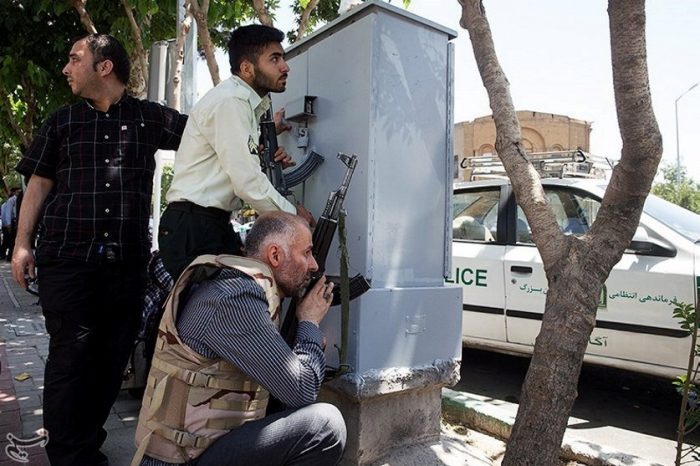
Members of Iranian forces take cover during an attack on the Iranian parliament in central Tehran, Iran, June 7, 2017. Tasnim News Agency/Handout via REUTERS

The Iranian regime pushed out an absurd theory over the weekend blaming the U.S. for the birth and growth of ISIS and continues to push the inane message even though virtually every intelligence and news report refutes the notion.

Of course, the reason the mullahs are pursuing this silly argument is simple: They must blame the recent ISIS attacks in Tehran on someone else otherwise they will face the uncomfortable truth that the terror they have wrought on the rest of the world is finally coming home.

Armstrong Williams, an advisor and spokesman for the presidential campaign of Dr. Ben Carson and a radio host, took that notion to task in a piece in the Hill.

While he correctly sympathizes with the victims killed and wounded in the ISIS attacks, Williams points out that the attacks were less about raining death and destruction on the Iranian regime, as much as making a propaganda point against the mullahs.

“It is also important to recognize the significant role that symbolism plays in both Iranian and Middle Eastern cultures. Which is why the second terrorist attack targeting Ayatollah Ruhollah Khomeini’s tomb complex, the leader of Iran’s Islamic revolution, was a veritable attack at Iran’s core,” he writes.

“These twin terror attacks, striking the mullahs’ parliament and shrine to the Khomeini, represent a very painful bitter pill for the Iranian regime to swallow.”

It’s a harsh wake-up call to the mullahs who have consistently used terror and proxies such as Hezbollah and Shiite militias to wage war on their enemies to see the same thing happen right in their backyard.

“ISIS, the Taliban and al Qaeda have also received support from the extremist Iranian mullahs, which is ironic since each of these terrorist groups’ ideologies are determined to eradicate Shi’ism, which just happens to be the religious backbone of the Iranian regime,” Williams said.

“And the reason for this twisted terrorist support is sickening: Tehran sees benefit in forming tactical alliances with these terrorist entities because they too loath America, and are motivated by a virulent anti-West agenda.”

Many news media and even the Iran lobby often try to portray the combatants in Syria as split on sectarian lines; Sunni vs. Shia with Iran firmly and bravely fighting ISIS, but in truth, Iran sees and has used ISIS as an effective foil for the West, diverting attention from its own actions in Yemen, Iraq and the Persian Gulf.

In fact, the Iranian regime could not have it both ways anymore. It could not—on the one hand—sponsor and export terror and not expect to that to rebound on them down the road. It’s the ultimate act of hubris on the scale of a Greek tragedy.

Amir Basiri, a contributor to the Washington Examiner’s Beltway column, explained how the Iranian regime and ISIS both benefitted from each other.

“The Islamic State clearly owes its rise to Tehran. The violence caused by Iran’s Revolutionary Guards and its affiliates in Iraq and Syria created the perfect breeding ground for the emergence of the Islamic State and allowed it to occupy large swathes of land in both countries,” he writes.

“Reciprocally, the Islamic State returned the favor, causing rampage that provided Iran with the perfect excuse to increase its meddling in neighboring countries. Under the pretext of fighting the Islamic State, Tehran founded and legalized the Popular Mobilization Forces, an umbrella for extremist Shiite groups backed by Iran. The Islamic State also became Iran’s excuse to openly intervene in the Syrian conflict and shore up the Assad regime against opposition forces,” he added.

That recognition by both sides is what has allowed both to flourish as Iran expanded its control over Syria, Iraq and Yemen, while ISIS grew from a small collection of jihadi fighters to a vast terror-nation state with access to cash reserves, oil exports and a tax system.

Only when ISIS began to suffer losses on the battlefield and engaged in inspiring terror attacks worldwide over the past two years have nations finally coalesced in trying to exterminate the group.

The problem for the mullahs in Tehran is what happens if ISIS is eventually eradicated? The excuse they have used for so long in justifying their presence in Syria and Iraq will evaporate, which is why they are now trying to tie ISIS to the U.S. and long-time foe Saudi Arabia.

Only by framing the two as ISIS god parents can Iran hope to legitimize its continued occupation of its holdings.

“This is a reminder that Iran is not part of the solution in fighting the Islamic State or other extremist groups. Islamic fundamentalism can only be eradicated if it is fought in its entirety. This will require the eviction of the Iranian regime and the Revolutionary Guards from the region and the total dismantling of its terrorist proxies,” Basiri adds.

The Iranian regime is already working hard to beat the clock and solidify its foothold with the announcement of the appointment of a new Iranian ambassador to Iraq, not from the diplomatic corps, but from its Quds Forces.

Iran’s most prominent economic daily describes the arrival of Iraj Masjedi in Baghdad to take over Iran’s embassy there. Masjedi is a brigadier-general in the Quds Force who served in several leadership roles in forward operating bases during the Iran-Iraq War.

In recent years, the Iranian press has described him as a senior advisor to Quds Force leader Qassem Soleimani. His promotion to be Iranian ambassador to Iraq suggests that Tehran’s focus in Iraq in the coming years will be military.

That suspicion was amplified with news reports that a blast that killed three people and injured 15 others on Friday in the Iraqi city of Karbala had an Iranian link.

“After the explosion and during the investigation and inspection on Friday night, the Iraqi intelligence forces arrested five Iranians who had explosives and remote control devices at the area near the blast site, in the eastern Abbasid,” an official said on condition of anonymity.

“The security forces transferred the Iranian detainees to the Karbala intelligence headquarters for interrogation,” the source said. “But minutes later dozens of Brigade Ali Akbar and Badr Organization militias supported by Iran surrounded the headquarters of the intelligence of Karbala.”

The source said the militias demanded the release of the five Iranian detainees but their request was rejected by the head of intelligence, who emphasized that he will hand them back only to authorities in Baghdad.

The refusal led the armed militias to break into the intelligence headquarters, where they took the five detainees and the head of the intelligence department.

The strong-arm tactics are nothing new to Iranian-backed militias and heralds a disturbing new chapter in Iran’s involvement in Iraq.

We can only hope that the Quds Forces do not turn Iraq into another Syria in order to find a new distraction for the world.

Michael Tomlinson

Filed Under: Blog, News Tagged With: Featured, hassan rouhani, Iran, IRGC, Khamenei, Syria

Iran Regime Moving Quickly to Exploit Multiple Crises

June 12, 2017 by admin

Iran Regime Moving Quickly to Exploit Multiple Crises

Iran Regime Moving Quickly to Exploit Multiple Crises

The ancient Chinese saying that there is “opportunity in crisis” seems to be have no bigger believer than the mullahs in Tehran lately as the Middle East continues to sink deeper into turmoil and the Iranian regime seeks to exploit the chaos and suffering for its own benefit.

In Syria, there is no argument that Iranian intervention in support of the Assad regime has turned that country into a slaughterhouse and now the mullahs are pushing their advantage through their Shiite militia proxies who now appear to have secured a road link from the Iranian border all the way to Syria’s Mediterranean coastline according to the New Yorker.

The new land route will allow the Iranian regime to resupply its allies in Syria by land instead of air, which is both easier and cheaper.

“The road network, which starts on Iran’s border with Iraq and runs across that country and Syria, was secured last week, when pro-Iranian Shiite militias captured a final string of Iraqi villages near the border with Syria. The road link zigs and zags across the two countries, but it appears to give Iran direct, uninhibited access to Damascus and the government of Bashar al-Assad, which the Iranians have been supporting since the uprising there began, in 2011. Since then, the Iranians have been Assad’s primary backer, sending men, guns, and other material by air and sea,” the New Yorker reported.

The development is potentially momentous, because, for the first time, it would bind together, by a single land route, a string of Iranian allies, including Hezbollah, in Lebanon; the Assad regime, in Syria; and the Iranian-dominated government in Iraq. Those allies form what is often referred to as the Shiite Crescent, an Iranian sphere of influence in an area otherwise dominated by Sunni Muslims.

The Iranian regime has sought to create such a sphere since the end of the Iran-Iraq War, in 1988, which it saw as a Western-backed effort to destroy the regime. That’s why Iran helped create Hezbollah, the Shiite militia that dominates Lebanon, and trained and directed Shiite militias that attacked American soldiers during their occupation of Iraq.

The one significant obstacle standing in the way of this Iranian arms superhighway are the Kurds in the semiautonomous area of Iraq which has plainly stated they don’t want Shiite militias or Iranians transiting their territory.

This may explain why the Iranian regime’s foreign ministry has vehemently opposed a plan by the Kurds to hold an independence referendum.

“The principal and clear position of the Islamic Republic of Iran is to support Iraq’s territorial integrity and solidarity,” Foreign Ministry spokesman Bahram Qassemi said on Saturday in state media.

The Kurdish move was spurred in part by growing Iranian influence within the Iraqi government, culminating the split with Sunni partners by the government of Nouri al-Maliki at the reported behest of Tehran. That split drive Iraqi Sunnis into the arms of a fledging ISIS that secured its first major victory with the fall of Mosul.

Meanwhile the growing standoff between Qatar and fellow Gulf states and Saudi Arabia escalated as the Iranian regime made a show of flying several planeloads of food into the embattled Gulf nation.

Iran sent four cargo planes of food to Qatar and plans to provide 100 tons of fruits and vegetables every day, according to Iranian officials, amid concerns of shortages after Qatar’s biggest suppliers severed ties with the import-dependent country. This is in addition to reports Iran was shipping meat and other less perishable items by small boats.

Qatar has been in talks with Iran and Turkey to secure food and water supplies after Saudi Arabia, the United Arab Emirates, Egypt and Bahrain cut links, accusing Doha of supporting terrorism.

The split could present a rare opportunity for Iran to drive a wedge between its usually tightly allied Sunni adversaries on the other side of the Persian Gulf, analysts said. Iran and the Gulf states are on opposing sides in a number of regional battlefields, including in Yemen and Syria.

Qatar is a member of the Gulf Cooperation Council, along with Saudi Arabia, the U.A.E., Bahrain, Kuwait and Oman. Most of the GCC countries oppose Iran’s regional aims, including its support for Shiite militia Hezbollah in Lebanon and its backing of the Assad regime against a long-running challenge by Sunni rebels.

The Associated Press examined Qatar’s alleged ties to extremist groups including Al-Qaeda and ISIS finding that Qatari finances have indirectly propped up both terrorist groups. Qatar’s support for the Muslim Brotherhood and Hamas have also been problematic as both groups have been destabilizing forces in many Arab countries.

Most worrisome for Arab nations was Qatar’s payment of hundreds of millions of dollars in ransom to Iranian-backed Shiite militias that kidnapped 26 hostages, including members of the Qatar ruling family.

Egypt has asked the U.N. Security Council to investigate reports that Qatar “paid up to $1 billion to a terrorist group active in Iraq” to free the hostages, which would violate U.N. sanctions.

The ransom payments continue a trend that began with President Barack Obama’s payments to Iran for the release of several American hostages as part of the nuclear deal in 2015.

To top things off, Iran sent two warships to Oman before heading to the coast of Yemen in a not-too subtle warning to the Gulf states boycotting Qatar.

The Tasnim news agency reported that the two ships, an Alborz destroyer and a Bushehr logistics warship, will depart from the port city of Bandar Abbas on Sunday for an overseas mission to Oman and then on to international waters.

“An Iranian naval flotilla will depart to Oman on Sunday and then will go to the north of the Indian Ocean and Gulf of Aden,” the agency quoted the navy as saying.


The Gulf of Aden, which lies between the Horn of Africa and the southern tip of the Arabian Peninsula, is a strategic shipping lane which connects the Indian ocean with the Red Sea and Suez Canal.

Meanwhile on the hone front, the Iranian regime took steps to repair the public relations damage caused by the ISIS attacks in Tehran by announcing it has arrested almost 50 people in connection with twin attacks as security forces stepped up efforts to crack down on suspected militants.

Iran’s intelligence minister, Mahmoud Alavi, also declared on state television late Saturday night that Iranian intelligence operatives killed the “commander of the team” that carried out the strikes, the Washington Post reported. Alavi though refused to release the name of the so-called mastermind.

It would not be surprising to find that the Iranian regime used the pretext of the ISIS attacks to arrest and imprison bothersome Iranian dissidents, also the lack of identification of the attack’s planner left many believing there was no successful targeting of those responsible.

But none of this stopped the regime from again trying to point the finger at Saudi Arabia and the U.S. for the ISIS attacks and for the growth of the terrorist group itself.

Iranian armed forces deputy chief of staff Mostafa Izadi claimed that Tehran allegedly has evidence proving that the U.S. provided “direct support to Daesh,” Fars news agency reported.

This followed a similar statement from Russian media that accused the U.S. of aiding ISIS fighters in escaping capture in Syria.

Neither Iran nor Russia offered any proof to back those claims.

Laura Carnahan

Filed Under: Blog, News Tagged With: Featured, Hexbollah, Iran, Iran Terrorism, IRGC, Shiite Militias, Syria

Iran Regime Tries to Blame ISIS Attacks on Opposition

June 8, 2017 by admin

Iran Regime Tries to Blame ISIS Attacks on Opposition

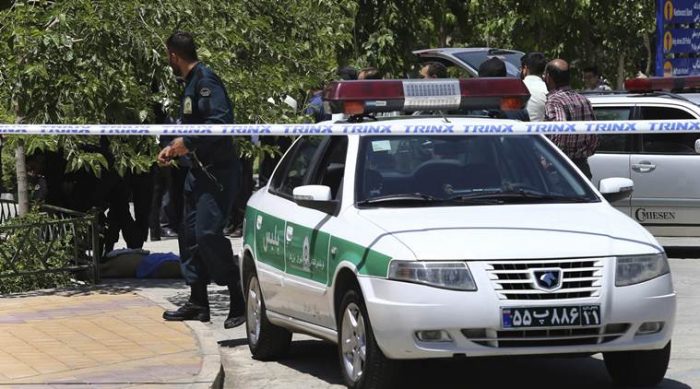
The body of a terrorist, at background left, lies on the ground while police control the scene at the shine of late Iranian revolutionary founder Ayatollah Khomeini, just outside Tehran, Iran, Wednesday, June 7, 2017. Several attackers stormed into Iran’s parliament and a suicide bomber targeted the shrine of Ayatollah Ruhollah Khomeini on Wednesday, killing a security guard and wounding 12 other people in rare twin attacks, with the shooting at the legislature still underway. (AP Photo/Ebrahim Noroozi)

An attack by six assailants armed with rifles and explosives took Iranian regime security forces by surprise the other day in a series of attacks aimed at the heart of the government, including a takeover of the Parliament building and the tomb of the regime’s founder, leaving a dozen dead and 46 wounded that shook the religious theocracy ruling Iran.

The attacks lasted for hours and was claimed by ISIS, which if true, would represent the first successful attack by the terror group on Iranian soil and a significant and somewhat ironic turn of events in the growing sectarian conflict between and extremist Sunni and extremist Shiite ideologies.

Predictably, the default response from Iranian officials was to point the finger of blame at regional rival Saudi Arabia and even Iranian dissident groups such as the Mujahedeen-e Khalq. As Iranian officials struggled in the wake of the attack, one could sense confusion and even a slight note of panic setting in as the prospect of Tehran joining the ranks of cities such as London, Paris and Berlin as prime terror targets began to seep.

For the Iranian regime, much of the blame for the notable rise in Islamic extremist groups lies squarely on its doorstep. The mullahs constant vitriol aimed at Israel, the U.S. and the its Sunni Arab neighbors has only made routine the kind of hate that groups like Hezbollah have acted on for decades.

The use of proxies and terrorist groups has always been a part of the statecraft toolbox for Iran as it has used Hezbollah and the Houthis to conduct open warfare in Syria and Yemen, meanwhile bolstering Shiite militias in Iraq to push Sunnis out of the coalition government there and into the waiting arms of ISIS recruiters.

According to the New York Times, tensions in the Middle East were already high following a visit by President Trump last month, in which he exalted and emboldened Saudi Arabia, Iran’s regional rival. Saudi Arabia and several Sunni allies led a regional effort on Monday to isolate Qatar, the tiny Persian Gulf country that maintains good relations with Iran

In a statement, the Revolutionary Guards Corps said, “The public opinion of the world, especially Iran, recognizes this terrorist attack — which took place a week after a joint meeting of the U.S. president and the head of one of the region’s backward governments, which constantly supports fundamentalist terrorists — as very meaningful,” a reference to Saudi Arabia’s ruling monarchy.

Saudi Arabia swiftly rejected the claim and the Trump White House, while expressing sympathy for the victims, was quick to note that “states that sponsor terrorism risk falling victim to the evil they promote” in a statement.

The MEK also denied any involvement and accused regime officials of a smear attack saying “their intention is to either use this event” against the group or justify their own previous crimes” in a statement.

But that didn’t stop members of the Iran lobby from stepping up to also blame Iranian dissident groups for the attack either directly or indirectly.

Paul R. Pillar, a stalwart for the Iran lobby, wrote in Consortium News blaming the MEK for alleged terrorist attacks in Iran and claiming that prior attacks had left the regime much better prepared to counter terrorism.

We hate to tell Pillar that his measure of “preparedness” by Iranian security forces leaves much to be desired judging by the daylong standoff at the Parliament building.

Pillar even begins laying the ground work for the Iranian regime to step up its terrorist activities in the wake of the attacks saying “in the months ahead, Iran may take actions outside its borders in response to the attacks.”

“Iran may see a need to be more aggressive in places such as Iraq or Syria in the interest of fighting back against ISIS,” Pillar said.

His comments are instructive since the mullahs are likely to use the attacks as an excuse to step up their fights in Syria in to preserve the Assad regime and in Yemen to continue destabilizing the border to Saudi Arabia.

It is not inconceivable that the Iranian regime will use the attacks as a pretext to launch fresh initiatives in places such as Bahrain and Qatar to further split apart the Gulf states and weaken opposition to its regional ambitions to build a Shiite sphere of influence.

Pillar wasn’t alone in trying to drag the MEK into the mud, as Trita Parsi of the National Iranian American Council, gleefully attacked the resistance group in interviews claiming that the MEK was equipped to carry out these attacks because of its channels into the regime and its ties to Saudi Arabia.

“If the goal was to penetrate and destabilize Iran, the MEK clearly was Saudi Arabia’s best bet,” Parsi said. “Still unclear who’s behind the current attack in Iran, but the MEK (and their Saudi backers) are a main suspect. Timing is of course curious. Just last month, A Saudi Crown Prince said Riyadh is working hard to take battle to inside of Iran.”

Parsi and Pillar offered no proof, only suspicions that read like they came from a talking points memo from Ali Khamenei’s office as Iran struggles with the aftermath of the attacks and desperately seeks any scapegoat other than its own support for terrorism.

The roots for these attacks lie squarely in the Iranian regime’s long history of exporting terror as a tool and it has finally come home to bite them.

Michael Tomlinson

Filed Under: Blog, Current Trend, News Tagged With: Featured, hassan rouhani, Iran Attacks, Iran Lobby, Iran Mullahs, Iran Terrorism, IRGC, Khamenei, National Iranian American Council, NIAC, Paul Pillar, Syria, Trita Parsi

Iran Lobby Frantically Tries to Counter Trump Administration Warnings

April 21, 2017 by admin

Iran Lobby Frantically Tries to Counter Trump Administration Warnings

Iran Lobby Frantically Tries to Counter Trump Administration Warnings

Less than 24 hours the Iran lobby was crowing about the Trump administration’s decision to re-certify the Iranian regime in compliance for another 90 days with the nuclear agreement, it went on the offensive as it faced a barrage of explicit statements from high-ranking officials denouncing the Iranian regime including United Nations ambassador Nikki Haley, Defense Secretary James Mattis and Secretary of State Rex Tillerson.

All three, top foreign policy and defense officials made the same statement that the source of trouble in the Middle East today was based in Tehran and that only a policy comprehensively dealing with all aspects of the Iranian regime was going to work moving forward in returning stability to the region.

For the mullahs in Tehran and their Iran lobby supporters, the objective has always been to divide and conquer the issues the rest of the world finds objectionable towards Iran; such as its support for terrorist groups like Hezbollah and dictators like Bashar al-Assad in Syria, as well as a dismal human rights record that would make Joseph Goebbels proud.

Which is why the Iran lobby’s cheering for the 90-day compliance notice had a lifespan of a gnat since it was merely a formality while the administration conducts a national security review of policy towards Iran.

But that didn’t stop the National Iranian American Council from bloviating like a water buffalo in heat.

“It’s a significant contradiction to first come out and say that the Iranians – contrary to all of their claims that Iran would be cheating – actually is living up to the deal only to come out the day after and saying, well, we hate the deal anyways and signaling that the U.S. might actually be walking away from the deal, unless of course the aim is to get rid of the deal without the U.S. having to pay the cost for it, meaning instead of the U.S. violating the deal directly by not renewing these sanctions waivers, killing the deal by escalating tensions in Yemen and elsewhere in the region and hoping that that will force the Iranians out of the deal,” said Trita Parsi, NIAC president on NPR.

Parsi is trying to have it both ways in separating the nuclear from other issues such as human rights or Iran’s meddling in wars raging in Syria and Yemen, but he deliberately skips over the most glaring consequence of the nuclear deal which is because we separated these issues, the mullahs were free to act without fear of reprisal in their ambitions for Syria or in the crushing of dissent at home.

The cold hard truth is that these are all connected issues like the strings of a spider web; the web would never succeed or exist unless all the strands were connected and working together.

The Iranian regime, for lack of a better comparison, is a legal criminal enterprise on a national scale. It concentrates power ruthlessly at the very top, uses the judicial system and religion to enforce disciple and stifle dissent while its military owns just about every industrial activity and skims off the top to line the pockets of the elites.

It’s like the Sopranos on steroids, except Ali Khamenei isn’t seeing a shrink unfortunately.

Of course other members of the Iran lobby weighed in too as Reza Marashi from the NIAC penned a ludicrous piece on TopTopic in which he claimed the European Union was galvanized and united in supporting the Iranian regime.

Unfortunately, yesterday’s terror attack on the Champs-Elysees in Paris only reinforced a growing uncertainty throughout a Europe that has been rattled by Islamic extremists attacks in Berlin, Brussels, Paris and elsewhere.

“While U.S. policy congeals, most European stakeholders remain in wait-and-see mode before making policy decisions – rather than taking steps to shape American policy,” Marashi writes.

We’re sure Marashi wishes for the good old Obama days when the NIAC could pick up the phone and call the White House and find a receptive audience, but it and Europe and finding that shaping policy in the White House now is not about lobbying, but about answering the central question the Obama administration never bothered to ask: “How do we rein in Iranian excesses across the board?”

Parsi reinforced that complete lack of understanding in an editorial in the New York Times in which he cited “a number of potential land mines on the near horizon. The first is in Congress, where a bipartisan effort is underway to introduce new sanctions on Iran that, despite the protestations of the legislation’s sponsors, would violate the terms of the nuclear agreement by adding new conditions onto the deal.”

Once again Parsi ignores the inconvenient truth for the Iran lobby which is that in their mind anything “new” in terms of sanctions levied against the Iranian regime would be considered a violation of the terms of the agreement, even though the agreement was purposely devoid of any clauses or mention of issues such as human rights.

Their twisted pretzel logic has them boxed in where now they are forced to denounce any and all efforts to sanction Iran as a threat to the regime. If Iranian warplanes dropped sarin gas on Sunni refugees in Iraq, Parsi and his colleagues would undoubtedly argue against any sanctions as a violation of the agreement; a convenient catch-all.

It’s also hilarious Parsi raises the prospect of a “moderate” Hassan Rouhani being defeated at the ballot box in next month’s elections since he ignores Iran’s long history of rigging every election. In fact, the regime’s Guardian Council only yesterday tossed former president Mahmoud Ahmadinejad off the ballot after much fanfare of him registering as a candidate.

In Iran, you don’t get on the ballot unless you are expected to get the blessing of the mullahs.

The most absurd comment Parsi makes is the assertion that if the U.S. reneges on the deal, Iran will undoubtedly move forward with its nuclear ambitions.

We hate to break it to the regime lackey, but the deal—by Parsi’s own admission—was never designed to halt Iranian nuclear work, only slow it down by a decade before the much ballyhooed “breakout period,” but even that has been whittled down by most analysts to just a few years.

All of which makes the statement issued by the NIAC in response to Secretary Tillerson’s remarks the other day even more laughable.

“There is little room to interpret this statement as anything less than a proclamation of the Trump administration’s intent to scrap the nuclear deal and reset the United States on a path to war,” said the NIAC.

Have they not been paying attention to Syria, Iraq, Yemen or Bahrain lately?

Michael Tomlinson

Filed Under: Blog, Current Trend, National Iranian-American Council, News Tagged With: #NuclearDeal, Appeasement policy, Featured, Iran, Iran deal, Iran Human rights, Iran Lobby, Iran Mullahs, Iran sanctions, National Iranian American Council, NIAC, NIAC Action, Reza Marashi, Syria, Trita Parsi, Yemen

  • « Previous Page
  • 1
  • 2
  • 3
  • 4
  • …
  • 6
  • Next Page »

National Iranian-American Council (NIAC)

  • Bogus Memberships
  • Survey
  • Lobbying
  • Iranians for International Cooperation
  • Defamation Lawsuit
  • People’s Mojahedin
  • Trita Parsi Biography
  • Parsi/Namazi Lobbying Plan
  • Parsi Links to Namazi & Iranian Regime
  • Namazi, NIAC Ringleader
  • Collaborating with Iran’s Ambassador

Recent Posts

  • NIAC Trying to Gain Influence On U.S. Congress
  • While Iran Lobby Plays Blame Game Iran Goes Nuclear
  • Iran Lobby Jumps on Detention of Iranian Newscaster
  • Bad News for Iran Swamps Iran Lobby
  • Iran Starts Off Year by Banning Instagram

© Copyright 2026 IranLobby.net · All Rights Reserved.