Iran Lobby

Exposing the Activities of the lobbies and appeasers of the Mullah's Dictatorship ruling Iran

  • Home
  • About
  • Current Trend
  • National Iranian-American Council(NIAC)
    • Bogus Memberships
    • Survey
    • Lobbying
    • Iranians for International Cooperation
    • Defamation Lawsuit
    • People’s Mojahedin
    • Trita Parsi Biography
    • Parsi/Namazi Lobbying Plan
    • Parsi Links to Namazi& Iranian Regime
    • Namazi, NIAC Ringleader
    • Collaborating with Iran’s Ambassador
  • The Appeasers
    • Gary Sick
    • Flynt Leverett & Hillary Mann Leverett
    • Baroness Nicholson
  • Blog
  • Links
  • Media Reports

Iran Regime Tries to Blame ISIS Attacks on Opposition

June 8, 2017 by admin

Iran Regime Tries to Blame ISIS Attacks on Opposition

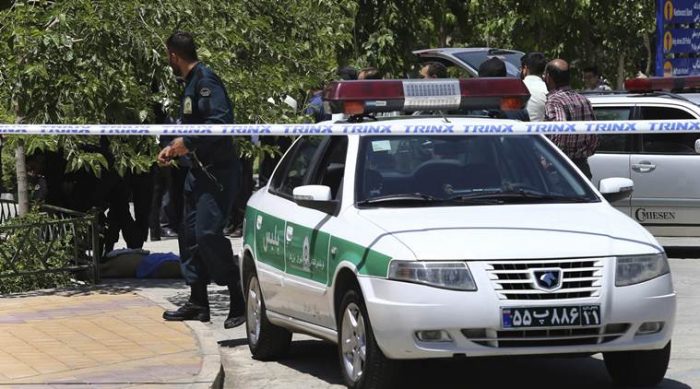
The body of a terrorist, at background left, lies on the ground while police control the scene at the shine of late Iranian revolutionary founder Ayatollah Khomeini, just outside Tehran, Iran, Wednesday, June 7, 2017. Several attackers stormed into Iran’s parliament and a suicide bomber targeted the shrine of Ayatollah Ruhollah Khomeini on Wednesday, killing a security guard and wounding 12 other people in rare twin attacks, with the shooting at the legislature still underway. (AP Photo/Ebrahim Noroozi)

An attack by six assailants armed with rifles and explosives took Iranian regime security forces by surprise the other day in a series of attacks aimed at the heart of the government, including a takeover of the Parliament building and the tomb of the regime’s founder, leaving a dozen dead and 46 wounded that shook the religious theocracy ruling Iran.

The attacks lasted for hours and was claimed by ISIS, which if true, would represent the first successful attack by the terror group on Iranian soil and a significant and somewhat ironic turn of events in the growing sectarian conflict between and extremist Sunni and extremist Shiite ideologies.

Predictably, the default response from Iranian officials was to point the finger of blame at regional rival Saudi Arabia and even Iranian dissident groups such as the Mujahedeen-e Khalq. As Iranian officials struggled in the wake of the attack, one could sense confusion and even a slight note of panic setting in as the prospect of Tehran joining the ranks of cities such as London, Paris and Berlin as prime terror targets began to seep.

For the Iranian regime, much of the blame for the notable rise in Islamic extremist groups lies squarely on its doorstep. The mullahs constant vitriol aimed at Israel, the U.S. and the its Sunni Arab neighbors has only made routine the kind of hate that groups like Hezbollah have acted on for decades.

The use of proxies and terrorist groups has always been a part of the statecraft toolbox for Iran as it has used Hezbollah and the Houthis to conduct open warfare in Syria and Yemen, meanwhile bolstering Shiite militias in Iraq to push Sunnis out of the coalition government there and into the waiting arms of ISIS recruiters.

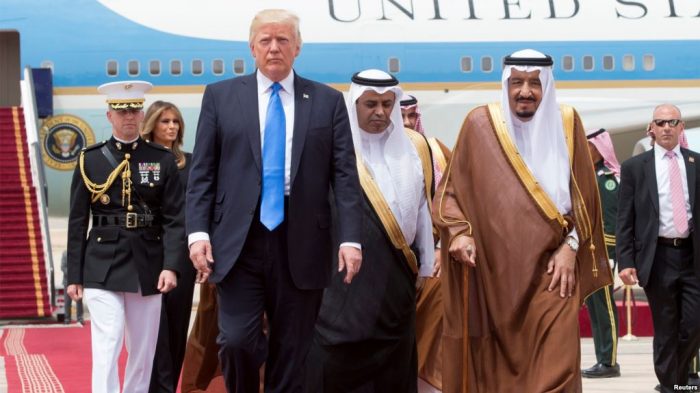
According to the New York Times, tensions in the Middle East were already high following a visit by President Trump last month, in which he exalted and emboldened Saudi Arabia, Iran’s regional rival. Saudi Arabia and several Sunni allies led a regional effort on Monday to isolate Qatar, the tiny Persian Gulf country that maintains good relations with Iran

In a statement, the Revolutionary Guards Corps said, “The public opinion of the world, especially Iran, recognizes this terrorist attack — which took place a week after a joint meeting of the U.S. president and the head of one of the region’s backward governments, which constantly supports fundamentalist terrorists — as very meaningful,” a reference to Saudi Arabia’s ruling monarchy.

Saudi Arabia swiftly rejected the claim and the Trump White House, while expressing sympathy for the victims, was quick to note that “states that sponsor terrorism risk falling victim to the evil they promote” in a statement.

The MEK also denied any involvement and accused regime officials of a smear attack saying “their intention is to either use this event” against the group or justify their own previous crimes” in a statement.

But that didn’t stop members of the Iran lobby from stepping up to also blame Iranian dissident groups for the attack either directly or indirectly.

Paul R. Pillar, a stalwart for the Iran lobby, wrote in Consortium News blaming the MEK for alleged terrorist attacks in Iran and claiming that prior attacks had left the regime much better prepared to counter terrorism.

We hate to tell Pillar that his measure of “preparedness” by Iranian security forces leaves much to be desired judging by the daylong standoff at the Parliament building.

Pillar even begins laying the ground work for the Iranian regime to step up its terrorist activities in the wake of the attacks saying “in the months ahead, Iran may take actions outside its borders in response to the attacks.”

“Iran may see a need to be more aggressive in places such as Iraq or Syria in the interest of fighting back against ISIS,” Pillar said.

His comments are instructive since the mullahs are likely to use the attacks as an excuse to step up their fights in Syria in to preserve the Assad regime and in Yemen to continue destabilizing the border to Saudi Arabia.

It is not inconceivable that the Iranian regime will use the attacks as a pretext to launch fresh initiatives in places such as Bahrain and Qatar to further split apart the Gulf states and weaken opposition to its regional ambitions to build a Shiite sphere of influence.

Pillar wasn’t alone in trying to drag the MEK into the mud, as Trita Parsi of the National Iranian American Council, gleefully attacked the resistance group in interviews claiming that the MEK was equipped to carry out these attacks because of its channels into the regime and its ties to Saudi Arabia.

“If the goal was to penetrate and destabilize Iran, the MEK clearly was Saudi Arabia’s best bet,” Parsi said. “Still unclear who’s behind the current attack in Iran, but the MEK (and their Saudi backers) are a main suspect. Timing is of course curious. Just last month, A Saudi Crown Prince said Riyadh is working hard to take battle to inside of Iran.”

Parsi and Pillar offered no proof, only suspicions that read like they came from a talking points memo from Ali Khamenei’s office as Iran struggles with the aftermath of the attacks and desperately seeks any scapegoat other than its own support for terrorism.

The roots for these attacks lie squarely in the Iranian regime’s long history of exporting terror as a tool and it has finally come home to bite them.

Michael Tomlinson
Filed Under: Blog, Current Trend, News Tagged With: Featured, hassan rouhani, Iran Attacks, Iran Lobby, Iran Mullahs, Iran Terrorism, IRGC, Khamenei, National Iranian American Council, NIAC, Paul Pillar, Syria, Trita Parsi

Iran Lobby Turns Attention to Protecting Iranian Regime

May 26, 2017 by admin

Iran Lobby Turns Attention to Protecting Iranian Regime

Iran Lobby Turns Attention to Protecting Iranian Regime

The effort by President Trump to build a new international coalition to confront and contain the Iranian regime got off to a solid start with summits and meetings in Saudi Arabia and Israel. The warm welcome he received from Arab leaders must have unnerved the mullahs in Tehran since the Iran lobby has turned its attention a full-throated defense of the regime.

Trita Parsi of the National Iranian American Council took to authoring an editorial on the NIAC website that attempts to downplay Trump’s efforts.

“A key factor explaining the violence in the Middle East in the past few decades is that the region has lacked a sustainable, indigenous order. The process of establishing an order is by definition disruptive and the Middle East has almost continuously been in this state since the end of the Cold War,” Parsi writes.

“To make matters worse, the temporary equilibriums that briefly provided a resemblance of order were established and sustained by an external power – the United States – rather than by the states of the region themselves. As a result, these temporary periods of stability could only last as long as the external power was willing to sustain the order with its own blood and treasure,” he adds.

Parsi’s logic is perverse since he effectively argues for a process in which Iranian regime institutes order by eradicating everyone else that stands in its path. Of course, Parsi claims that Iran only has the best of intentions for its neighbors, but the track record does not show that as Iran is now embroiled in three wars in Syria, Iraq and Yemen.

Parsi goes on to blame Saudi Arabia for Middle East turmoil all in an effort to isolate Iran, but Parsi never admits to Iranian regime’s own culpability in setting the region ablaze in bloodshed and sectarian violence.

We have seen the profound loss of life after the Obama administration abdicated any role in fixing Syria in favor of the Iranian regime settling issues through barrel bombs and chemical gas attacks.

Parsi’s colleague, Reza Marashi, takes up the cause of whitewashing Iran in his own editorial reiterating the tired old refrain of Hassan Rouhani of being a tried and true moderate, whose real goal is only alleviating the economic malaise gripping Iran.

Unfortunately, no one told Marashi it seems that Iran’s economy will not improve so long as the mullahs continue to siphon billions for their own personal enrichment, as well as ship off more billions to prop up the Assad regime in Syria and pay to support Hezbollah and Houthi rebels in their wars.

Marashi even dubs the newly formed partnership against Iran as an “Axis of Rejection” a nifty piece of word play that reminds us of President George W. Bush’s “Axis of Evil” speech.

“Rouhani’s track record demonstrates that sustained engagement can lower tensions and produce peaceful solutions to conflict,” Marashi writes.

It is a claim that is both surreal and fantasy since Rouhani has presided over a massive escalation in wars that Iranian regime is fighting with no discernible pathway to peace other than to kill off Iran’s enemies.

But the NIAC isn’t through trying to support Iran as Ryan Costello weighed in with a press release lauding tweets made by former Secretary of State John Kerry who negotiated the horrific Iran nuclear agreement in the first place opposing proposed Senate legislation to levy new sanctions on the regime.

“Sec. Kerry’s public intervention cautioning against new Iran sanctions legislation should be another wake-up call that this is the wrong bill at the wrong time. Sec. Kerry would not be turning to the microphones unless the bill was an Iran deal-killer and private efforts to remove poison pills had failed,” Cosello writes.

“Lawmakers must ask themselves why they would give President Trump a mandate to undermine the Iran nuclear deal, ratchet up tensions in the region and undermine Iran’s moderates on the heels of their election victory. Tens of millions of Iranians voted in favor of openness and engagement with the outside world while Trump danced with unelected Saudi monarchs and called for Iran’s isolation,” he adds.

The more appropriate question back to Costello would be “why would lawmakers ever think they could trust the Iranian regime anymore after its commitment to waging proxy wars on its neighbors.”

The NIAC wasn’t the only Iran lobby supporter busy propping up the mullahs. Hooman Majd, a former advisor to Mahmoud Ahmadinejad, offered up the fairy tale that Iran had opted for peaceful co-existence with Rouhani’s re-election in a piece for Foreign Policy.

“Iran’s presidential election also proved the adage that the only thing predictable about Iranian politics is its unpredictability. Which, to the consternation of the Washington foreign-policy class, puts Iran experts on the same professional level as astrologers or palm readers,” Majd writes.

Again, Iranian regime supporters like Majd show their silliness when the election outcome in Iran was far from unpredictable. In fact, no incumbent Iranian president has ever lost re-election, not even Ahmadinejad when his re-election had to be rigged with widespread ballot tampering.

Iranian elections are so predictable, they remind us of the old Soviet Union-style elections with 99 percent voter participation and zero percent uncertainty.

The more the Iran lobby tries to prop up the Iranian regime the more it reveals how weak and vulnerable the mullahs have become.


Filed Under: Blog, News Tagged With: Appeasement policy, Featured, hassan rouhani, Iran Lobby, Iran Mullahs, National Iranian American Council, NIAC, NIAC Action, Reza Marashi, Rouhani, Trita Parsi, Tyler Cullis

As If We Expected a Different Result in Iran Election?

May 22, 2017 by admin

As If We Expected a Different Result in Iran Election?

As If We Expected a Different Result in Iran Election?

Without much drama, Hassan Rouhani was re-elected to a second term as president of the Iranian regime. The result didn’t come as a surprise to any experienced Iran watcher since no incumbent has ever lost a bid for a second term, even if the results had to be faked to get the job done as was the case with Mahmoud Ahmadinejad.

But what has been lost on a large part of the global media is now the mullahs manage to always stage a convenient drama to be played out for them in terms of a fateful showdown between “reformist and moderate” forces against “hardline and conservative” ones bent on rolling back the freedoms of the Iranian people.

If Nazi Germany had staged an election between Adolf Hitler and Joseph Goebbels, the latter probably would have looked like a moderate too.

The same was true here in which a careful choreography ensued. First thousands of candidates filing to be on the ballot had to be summarily tossed aside to clear the field.

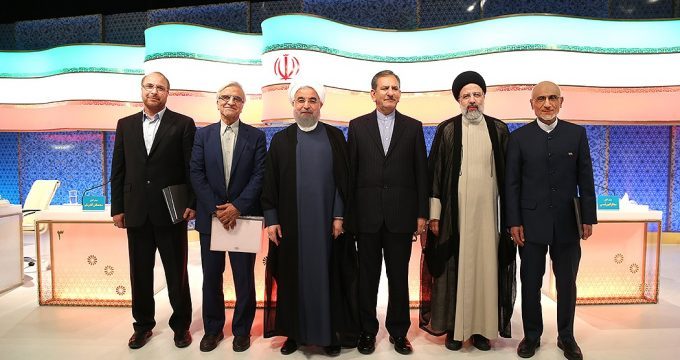
That left only six men to move forward—no women and no active or known dissidents—and then several dropped out to throw their support to one of the two remaining choices: Rouhani and Ebrahim Raisi.

Conveniently, Raisi was portrayed as the “hardline” choice of Ali Khamenei and was portrayed by media as the man who would roll back all the “positive” achievements wrought by Rouhani over the past four years.

Given Raisi’s bloody history as a special prosecutor that oversaw the executions of tens of thousands of Iranian dissidents, it’s easy to see why he might be viewed as slightly more bloodthirsty than Rouhani who oversaw only the execution of mere thousands of dissidents.

It was a Hobson’s choice and a well-played one.

While the Iran lobby focused on Rouhani’s achievements in securing the nuclear deal and opening Iran back up to Western investment, never were there any mentions of the broad human rights crackdowns during his tenure including the largest number of public executions since the 1979 revolution.

In fact, global media were eager to eat up the narrative of a “moderate” win which is exactly what Khamenei and his fellow mullahs wanted to see portrayed.

How easily the world has forgotten the parliamentary elections only last year in which tens of thousands of candidates were knocked off ballots and faithful followers of the mullahs were re-elected.

The Iranian regime smartly chooses to fight its public battles only after the game has been rigged.

Trita Parsi of the National Iranian American Council brayed like a wild animal over the results as the NIAC quickly issued statements lauding the outcome.

“President Rouhani’s convincing win is a sharp rebuke to Iran’s unelected institutions that were a significant brake on progress during Rouhani’s first term. It is also a rebuke of Washington hawks who openly called for either a boycott of the vote or for the hardline candidate Ebrahim Raisi to win in order to hasten a confrontation,” Parsi said.

“In addition to Trump’s America, there are two other countries that will continue to form an Axis of Rejection in response to Rouhani’s foreign policy. One is Saudi Arabia. Despite Tehran’s repeated outreach, Riyadh has refused to respond in kind,” said Parsi’s NIAC colleague Reza Marashi in a piece for Huffington Post.

Fortunately for the rest of the world, many countries are not hearkening to Parsi and Marashi’s messages.

During President Trump’s state visit to Saudi Arabia, he found common ground with the Saudis on the need to confront Iranian regime’s aggression since Rouhani has clearly followed a foreign policy of engaging in wars in Syria, Iraq and Yemen; coupled with a North Korea-like ramp up in ballistic missile testing.

The king said on Sunday Saudi Arabia had not witnessed terrorism until the 1979 Revolution in Iran. Instead of accepting good-faith initiatives, Iran has “pursued expansionary ambitions, and criminal practices and the meddling of other countries’ internal affairs,” he said. The kingdom, however, respects the Iranian people and won’t judge them “by the crimes of their regime,” he said, according to Bloomberg.

Trump later singled out Iran as a terror sponsor. Iran’s leaders speak “openly” of mass murder, Trump said in his keynote speech before dozens of Muslim leaders gathered in the Saudi capital, Riyadh. He said the Iranian government gives terrorists “safe harbor, financial backing, and the social standing needed for recruitment.”

Sen. John McCain lauded President Trump’s trip to Saudi Arabia this weekend saying it sent a strong message to Iran that the U.S. and its allies are ready to block Iran’s efforts to destabilize the region.

“There’s no doubt that if we’re going to impede the Iranian’s continued efforts to exert, certainly, significant strength in the region that this is an important step forward,” the Arizona Republican said on “Fox News Sunday.”

Orde Kittrie, a professor of law at Arizona State University and a senior fellow at the Foundation for Defense of Democracies, lauded the Trump administration’s approach to the Iranian regime and how—in this one area—bipartisan cooperation with Congress seems to be taking root.

“The Trump administration’s different approach is very consistent with that advocated by leading members of Congress including Senate Foreign Relations Committee Chair Bob Corker (R-Tenn.) and Ranking Member Ben Cardin (D-Md.) in their S. 722, and House Committee on Foreign Affairs Chair Ed Royce (R-Calif.) and Ranking Member Elliot Engel (D-N.Y.) in their H.R. 1698,” he writes in the Hill.

“The Trump administration has been accused by some of acting impulsively at times. Its apparently careful, measured and thoughtful approach to Iran policy is encouraging. Tearing up the JCPOA, without a better strategy for preventing an Iranian nuclear bomb and a broader strategy for combating non-nuclear malign Iranian behavior, would make no sense,” he added.

While the world discusses the “moderate” victory in Iran, it would do well to remember how bloody the past four years have been around the Middle East under Rouhani’s term.


Filed Under: Blog, News Tagged With: Featured, hassan rouhani, Iran, Iran Human rights, Iran Lobby, Iran Mullahs, Iran Terrorism, McCain, National Iranian American Council, NIAC, NIAC Action, Trita Parsi, Trump visit to Saudi Arabia

Iran Lobby Peddles False Narratives for Iran Elections

May 16, 2017 by admin

Iran Lobby Peddles False Narratives for Iran Elections

Iran Lobby Peddles False Narratives for Iran Elections

With only scant days before the Iran presidential election, the Iran lobby’s most ardent supporters weighed in on the race with typical obsequiousness. The best example was an editorial by Trita Parsi, founder and president of the National Iranian American Council, in Foreign Affairs.

Predictably he offered up one of the more ridiculous spin lines in the history of disinformation on behalf of the Iranian regime. Parsi actually tried to push the idea that top mullah Ali Khamenei had no influence on the outcome of the election and that “reformist” former president Mohammad Khatami was the real power in this election.

Parsi bases that silly idea on the concept that Khamenei represents the “establishment” and as such his perceived candidates are constantly defeated at the polls by the Iranian people.

To say Parsi’s reasoning is flawed is like saying President Trump likes to tweet.

First of all is the idiotic idea that Khamenei has no influence on the election.

The Supreme Council has the final say in terms of vetting candidates to appear on the ballot for any election right down to a lowly provincial seat. Khamenei has the right to directly select half of the Council’s members. The others are appointed indirectly by him as well.

So right off the bat, Khamenei exercises a monopoly on who even goes on the ballot before the first vote is cast.

Secondly, the regime’s constitution itself ensures that only candidates meeting specific loyalty tests to the regime and its theocracy are allowed to run for office, thus ensuring adherence to preserving the mullah’s rule in Iran.

Control of who appears on the ballot allows Khamenei to control the narrative as to which candidates are perceived to be “moderate.” By stacking the ballot with four candidates who essentially have no chance at all, Khamenei can create the perception of a clear choice between a “moderate” Hassan Rouhani or a “hardline” Ebrahim Raisi.

Over 1,636 people registered to appear on the ballot for president. Only six were approved by Khamenei’s council.

Both of these men are dyed-in-the-wool insiders who are dedicated to serving the religious theocracy and Khamenei’s wishes, but Iran, with the help of the Iran lobby, creates a false perception of a real “choice” in the election.

“Another unknown candidate by the name of Mahmoud Ahmadinejad defeated the presumed favorite, the late Ali Akbar Hashemi Rafsanjani, who is considered one of the pillars of the revolutionary regime. But precisely because Rafsanjani was perceived as an embodiment of the establishment, the antiestablishment vote went to Ahmadinejad,” Parsi writes.

Of course, Parsi tries to posit that the 2009 race, which was widely considered rigged for Ahmadinejad causing widespread mass protests, was in fact actually a portrayal of the former “outsider” to be an “insider” now which caused the vote discrepancy.

Far from being honest with the reader, Parsi tries yet again to pull the wool over everyone by slicing Iran’s politicians into neat little camps opposed to each other and representing widely divergent viewpoints.

The reality is that there is very little difference between these candidates since are all loyal members of the regime.

Take Rouhani for instance. He was elected on the platform of being a moderate vowing reforms, but during his tenure, Iran has taken a huge step backward in human rights and now is involved in three wars sending thousands of young Iranians to fight and die, while the mullahs and elites skim huge personal fortunes through a massive network of corrupt shell companies.

These are not the facts that Parsi wants people to know about since it would ruin his carefully constructed fantasy.

Benny Avni writes in the New York Post how this election may be one where Khamenei decides the pretense of a moderate face for the regime is no longer necessary since Iran gained concessions from the nuclear deal already.

“Just as Americans and others are reorienting themselves for the age of President Trump, so are the mullahs. In their calculation, they now need to replace the friendly sounding voices, like those of Rouhani and his sidekick, Foreign Minister Javad Zarif, with angrier men,” Avni writes.

“Raisi is an insider who has climbed the political ladder. Supreme Leader Ali Khamenei is said to favor him as successor, when the time comes,” he adds.

“But before Raisi follows Khamenei and his predecessor, Ayatollah Ruholla Khomeini, at the top of the mullahs’ greasy poll, Raisi first needs a bit of public exposure. He could also use some governing experience, which he currently lacks. The position of president, which doesn’t have nearly as much power as Supreme Leader, is a perfect stepping stone.”

More evidence in the manipulation of the outcome was on display when Raisi’s path to the presidency became easier Monday, when a fellow hardliner, Tehran’s Mayor Mohammad-Baghar Ghalibaf, dropped out of the race.

Analysts believe Ghalibaf won the TV debates and is clearly more qualified, but, under pressure, he’s now calling on supporters to vote for Raisi.

What is clear from all this is that Parsi makes no mention of Raisi in his editorial which only demonstrates how close Raisi is to becoming elected and returning a public hardliner back into power to confront a U.S. administration no longer committed to a policy of appeasing Tehran.

We can be assured that if Raisi is elected, Parsi will no doubt ascribe his election as resulting from being a “outsider.”

Michael Tomlinson

Filed Under: Blog, National Iranian-American Council, News Tagged With: Ebrahim Raisi, Featured, Iran Election 2017, Iran Lobby, Iran Terrorism, IRGC, Khamenei, National Iranian American Council, NIAC, NIAC Action, Qalibaf, Rouhani, Trita Parsi

Iran Lobby Attacks Claims of Prisoner Concessions as Regime Talks Hostages

May 3, 2017 by admin

Iran Lobby Attacks Claims of Prisoner Concessions as Regime Talks Hostages

Iran Lobby Attacks Claims of Prisoner Concessions as Regime Talks Hostages

Josh Meyer wrote a story in Politico that exposed a series of concessions granted by the Obama administration to the Iranian regime as part of its ill-fated nuclear talks that have caused an uproar in Congress and in the intelligence and law enforcement communities.

Predictably, the Iran lobby—led by Trita Parsi of the National Iranian American Council—attacked the story and attempted to discredit the idea of concessions being granted to the Iran regime.

Writing in Huffington Post, Parsi makes the argument that not all “concessions” are alike and those tied to the release of Iranian agents were not linked to the nuclear agreement.

“From the outset, Meyer commits a critical error: He insinuates that any concessions in terms of dropping charges against potential Iranian smugglers were made as part of the nuclear deal. In reality, to the extent any concessions were made, they were made to win the release of Americans held in Iranian jails,” Parsi writes.

Parsi attempts to do what the mullahs in Tehran insisted on from the start of negotiations, which is that the issues of its nuclear program and hostages should be separate and apart from the agreement, but in fact the two were intimately related from the regime’s perspective.

The mullahs were especially keen to keep thorny issues apart from the deal because they did not want to grant the U.S. and other nations any leverage to influence issues such as Iran’s support for terrorism, human rights abuses or the lack of any political reforms within Iran.

Allowing Iran to get off the hook for those items relieved the regime of a substantial obstacle to completing the nuclear deal while preserving the mullahs power over the Iranian people.

Parsi even uses the detention of American sailors as an example of quick resolution when in fact Iranian regime squeezed them for all their propaganda value with videotaped interviews and admissions of wrongdoing. Iran mullahs even built a monument to the humiliation of the “Great Satan.”

Parsi characterizes the Iranians who were released as just a “few alleged Iranian smugglers” and ignores the nearly decades-long investigative work done by FBI agents and Justice Department attorneys who meticulously built cases involving large networks of Iranian operatives attempting to smuggle everything from nuclear weapon components to computers and weapons.

He discounts the allegations made by the Politico article as coming from “mid-level operatives in the Justice Department” as if law enforcement agents, investigators and U.S. attorneys were simply mindless drones.

But Parsi’s attempts to deflect and cover up the facts are nothing new to the Iran lobby when the mullahs get into trouble.

For the mullahs in Tehran though, the deal served its purposes in gaining billions in cash and allowing Iranian oil to flow back on the open market. It also gave Iranian regime a free pass to create havoc and shed the blood of tens of thousands in Syria and Yemen.

Now the stage is set for the Iran presidential election which some analysts have speculated could be the end of the road for Hassan Rouhani since he has served his purpose in portraying Iran as a friendly, moderate country during nuclear talks, but now that the façade is off Iran has no reason to be so “moderate” anymore.

This may explain why Ebrahim Raisi, a mullah with a long and sordid history of leading commissions that ordered the execution of over 30,000 Iranian dissidents in the 1980s may be poised to win the election should top mullah Ali Khamenei wish it.

Of course, Parsi authored yet another editorial in Al-Monitor contending that Khamenei has no influence on the election. He even laughably argues that Raisi is not a true contender nor supported by Khamenei.

What Parsi does not mention is the fact that the Iranian regime in addition to manipulating the votes, primarily opts to simply eliminate thousands of candidates from the very beginning to cull down the ballot to a select handful in order to ensure a preferred candidate’s “election”.

It is a formula that worked in 2013 and being used in this year’s election. Nothing unforeseen ever happens under the watchful gaze of the mullahs.

In another development that shows more promise, the Iranian regime admitted for the first time that the topic of dual national hostages was taken up at the first face-to-face meeting between regime representatives and those of the Trump administration in Vienna during meetings of the joint commission monitoring the implementation of the Iran nuclear deal.

The comments by Iranian Foreign Ministry spokesman Bahram Ghasemi mark the first official government confirmation it discussed prisoners with the U.S. at a recent meeting in Vienna over the nuclear deal.

While falling far short of signaling any sort of movement on freeing those with Western ties held in Iran, Ghasemi’s acknowledgement fits the pattern of past prisoner negotiations with the Islamic Republic. It signals more behind-the-scene negotiations could be possible if the Trump administration, already skeptical of Iranian intentions, is willing to deal.

Speaking to journalists, Ghasemi mentioned no specific names of the inmates brought up by the Americans.

“In the past … we had talks for humanitarian reasons with Americans over (swapping) some (American) prisoners with Iranian prisoners jailed in the U.S. and it had positive results too,” he said.

Last week, State Department spokesman Mark Toner had said American officials at the meeting had “called on Iran to immediately release these U.S. citizens so they can be reunited with their families.”

Dual nationals in detention have been used as bargaining chips in negotiations with the West. Under Iranian law, they are not entitled to consular support.

We can only hope the Trump administration can force their release without having to pay Iran billions in cash or release terrorists in exchange, since past concessions have only emboldened the mullahs to do more.

Laura Carnahan

Filed Under: Blog, News Tagged With: Featured, hassan rouhani, Iran, Iran deal, Iran Human rights, Iran Lobby, Iran Mullahs, National Iranian American Council, NIAC, NIAC Action, Trita Parsi

Iran Lobby Frantically Tries to Counter Trump Administration Warnings

April 21, 2017 by admin

Iran Lobby Frantically Tries to Counter Trump Administration Warnings

Iran Lobby Frantically Tries to Counter Trump Administration Warnings

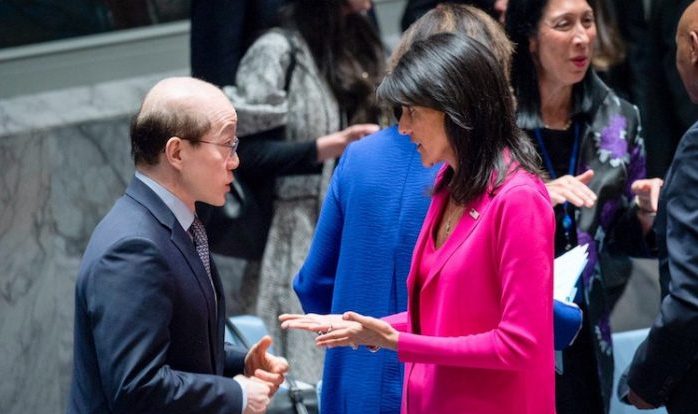
Less than 24 hours the Iran lobby was crowing about the Trump administration’s decision to re-certify the Iranian regime in compliance for another 90 days with the nuclear agreement, it went on the offensive as it faced a barrage of explicit statements from high-ranking officials denouncing the Iranian regime including United Nations ambassador Nikki Haley, Defense Secretary James Mattis and Secretary of State Rex Tillerson.

All three, top foreign policy and defense officials made the same statement that the source of trouble in the Middle East today was based in Tehran and that only a policy comprehensively dealing with all aspects of the Iranian regime was going to work moving forward in returning stability to the region.

For the mullahs in Tehran and their Iran lobby supporters, the objective has always been to divide and conquer the issues the rest of the world finds objectionable towards Iran; such as its support for terrorist groups like Hezbollah and dictators like Bashar al-Assad in Syria, as well as a dismal human rights record that would make Joseph Goebbels proud.

Which is why the Iran lobby’s cheering for the 90-day compliance notice had a lifespan of a gnat since it was merely a formality while the administration conducts a national security review of policy towards Iran.

But that didn’t stop the National Iranian American Council from bloviating like a water buffalo in heat.

“It’s a significant contradiction to first come out and say that the Iranians – contrary to all of their claims that Iran would be cheating – actually is living up to the deal only to come out the day after and saying, well, we hate the deal anyways and signaling that the U.S. might actually be walking away from the deal, unless of course the aim is to get rid of the deal without the U.S. having to pay the cost for it, meaning instead of the U.S. violating the deal directly by not renewing these sanctions waivers, killing the deal by escalating tensions in Yemen and elsewhere in the region and hoping that that will force the Iranians out of the deal,” said Trita Parsi, NIAC president on NPR.

Parsi is trying to have it both ways in separating the nuclear from other issues such as human rights or Iran’s meddling in wars raging in Syria and Yemen, but he deliberately skips over the most glaring consequence of the nuclear deal which is because we separated these issues, the mullahs were free to act without fear of reprisal in their ambitions for Syria or in the crushing of dissent at home.

The cold hard truth is that these are all connected issues like the strings of a spider web; the web would never succeed or exist unless all the strands were connected and working together.

The Iranian regime, for lack of a better comparison, is a legal criminal enterprise on a national scale. It concentrates power ruthlessly at the very top, uses the judicial system and religion to enforce disciple and stifle dissent while its military owns just about every industrial activity and skims off the top to line the pockets of the elites.

It’s like the Sopranos on steroids, except Ali Khamenei isn’t seeing a shrink unfortunately.

Of course other members of the Iran lobby weighed in too as Reza Marashi from the NIAC penned a ludicrous piece on TopTopic in which he claimed the European Union was galvanized and united in supporting the Iranian regime.

Unfortunately, yesterday’s terror attack on the Champs-Elysees in Paris only reinforced a growing uncertainty throughout a Europe that has been rattled by Islamic extremists attacks in Berlin, Brussels, Paris and elsewhere.

“While U.S. policy congeals, most European stakeholders remain in wait-and-see mode before making policy decisions – rather than taking steps to shape American policy,” Marashi writes.

We’re sure Marashi wishes for the good old Obama days when the NIAC could pick up the phone and call the White House and find a receptive audience, but it and Europe and finding that shaping policy in the White House now is not about lobbying, but about answering the central question the Obama administration never bothered to ask: “How do we rein in Iranian excesses across the board?”

Parsi reinforced that complete lack of understanding in an editorial in the New York Times in which he cited “a number of potential land mines on the near horizon. The first is in Congress, where a bipartisan effort is underway to introduce new sanctions on Iran that, despite the protestations of the legislation’s sponsors, would violate the terms of the nuclear agreement by adding new conditions onto the deal.”

Once again Parsi ignores the inconvenient truth for the Iran lobby which is that in their mind anything “new” in terms of sanctions levied against the Iranian regime would be considered a violation of the terms of the agreement, even though the agreement was purposely devoid of any clauses or mention of issues such as human rights.

Their twisted pretzel logic has them boxed in where now they are forced to denounce any and all efforts to sanction Iran as a threat to the regime. If Iranian warplanes dropped sarin gas on Sunni refugees in Iraq, Parsi and his colleagues would undoubtedly argue against any sanctions as a violation of the agreement; a convenient catch-all.

It’s also hilarious Parsi raises the prospect of a “moderate” Hassan Rouhani being defeated at the ballot box in next month’s elections since he ignores Iran’s long history of rigging every election. In fact, the regime’s Guardian Council only yesterday tossed former president Mahmoud Ahmadinejad off the ballot after much fanfare of him registering as a candidate.

In Iran, you don’t get on the ballot unless you are expected to get the blessing of the mullahs.

The most absurd comment Parsi makes is the assertion that if the U.S. reneges on the deal, Iran will undoubtedly move forward with its nuclear ambitions.

We hate to break it to the regime lackey, but the deal—by Parsi’s own admission—was never designed to halt Iranian nuclear work, only slow it down by a decade before the much ballyhooed “breakout period,” but even that has been whittled down by most analysts to just a few years.

All of which makes the statement issued by the NIAC in response to Secretary Tillerson’s remarks the other day even more laughable.

“There is little room to interpret this statement as anything less than a proclamation of the Trump administration’s intent to scrap the nuclear deal and reset the United States on a path to war,” said the NIAC.

Have they not been paying attention to Syria, Iraq, Yemen or Bahrain lately?

Michael Tomlinson

Filed Under: Blog, Current Trend, National Iranian-American Council, News Tagged With: #NuclearDeal, Appeasement policy, Featured, Iran, Iran deal, Iran Human rights, Iran Lobby, Iran Mullahs, Iran sanctions, National Iranian American Council, NIAC, NIAC Action, Reza Marashi, Syria, Trita Parsi, Yemen

Iran Lobby Covers for Chemical Attacks on Innocents in Syria

April 14, 2017 by admin

Iran Lobby Covers for Chemical Attacks on Innocents in Syria

Iran Lobby Covers for Chemical Attacks on Innocents in Syria

True to form, the Iran lobby—in this case the National Iranian American Council—dutifully stepped up to the plate to defend the Assad regime’s continued existence by bashing the Trump administration decision to attack a Syrian regime airbase that flew the strikes.

Trita Parsi, the NIAC’s founder and president, offered up some gems of disingenuousness in Huffington Post claiming that the decision to finally cross the red line that President Obama balked at would have serious consequences.

“By now, it is clear that the missile strike has not impeded Assad from using his air force to strike rebel strongholds. In fact, Syrian warplanes reportedly carried out strikes yesterday against rebels near the city of Homs — taking off from the very air base hit by U.S. missiles. Trump even gave Assad advanced notice via Russian President Vladimir Putin, which enabled the Syrian dictator to move his troops and bunker his planes. Moreover, Trump left one of the airstrips at the targeted base untouched, which is why Assad could quickly use the base to launch further attacks,” Parsi said.

To be blunt, that’s a pretty stupid observation, even for someone claiming to be as learned as Parsi.

President Trump’s decision to strike was not a military one, but a strategic political one. In the old parlance of diplomacy, the Syrian chemical attack was a “Casus Belli;” an act so egregious and reprehensible to the sensibilities of international community and American values that the U.S. had no choice but to act.

In the history of U.S. diplomacy, this kind of retaliation is a no-brainer until President Obama decided he wanted to test out his quaint theory of appeasement in modern diplomacy; much to the shame of human rights history as over 500,000 people have lost their lives now and over four million have flooded out as refugees.

Parsi is quick to point out the lack of military effectiveness of the strikes since he skips over the most obvious benefit, which is to put Bashar al-Assad, and his allies on notice that the U.S. is perfectly willing and able to blow the Syrian military back into the Stone Age and outside interference would be grounds to include their forces in the fracas.

In one fell swoop, President Trump has neatly turned the tables on the Syria-Allies axis and forced them to calculate their own response without setting off another violent U.S. response.

Referring to consequent assault on the rebel’s strong hold and the civilians living in those areas, Parsi concludes: “The end result will be a more intensified civil war with more civilian casualties and even greater difficulty for diplomatic efforts to bear fruit,”.

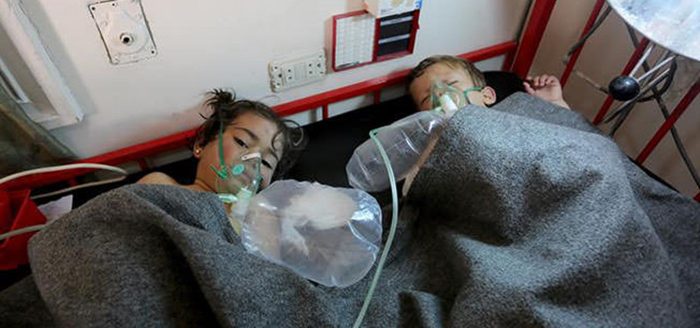
For the people of Syria, no one will claim that the Syria and Iranian bombardments, assaults and revenge killings against Sunni Muslims can “intensify” as Parsi claims. How do you step up from massive aerial bombardments and the pervasive use of sarin and chlorine gas attacks?

About the only thing the Iranians have not tried against Syrian rebels is using biological agents and we don’t put it past Tehran to go that far as the mullahs have already decided to militarize hospitals and health clinics in this fight by targeting them specifically for attack.

The key to solving the Syrian crisis has always been pushing out foreign elements and leaving the Syrian people to resolve their own dilemma and achieve a political solution. If Iran had not intervened in the first few months of the popular revolt against Assad’s rule, we would find ourselves in a very different situation.

But the fact that Iran has poured billions in cash, sent thousands of soldiers and terrorist fighters, along with planeloads of advanced weapons to keep Assad in power has been the principle reason why Syria is such a mess in the first place; a fact that Parsi never admits to.

“Helping ensure that children and civilians aren’t trapped in Syria should be the first and most obvious thing the U.S. can do to help,” Parsi said in what has to be one of his all-time inane comments.

Trying to find a way to export more Syrian refugees while allowing Syria to descend into more chaos is the recipe the mullahs in Tehran have followed and Parsi has preached. It has not been a recipe for success for the Syrian people though.

Of course, no Parsi editorial would be complete without a defense of the idiotic Iran nuclear deal.

With the revelation that the accord on Syrian chemical weapons turned out to be a complete falsehood, the obvious question everyone is asking—and Parsi never answers—is how can you expect the Iran nuclear deal to be working if the same people are guaranteeing it as guaranteed the Syrian chemical weapons deal?

David French in the National Review asks the same important question as he takes up Glenn Kessler’s fact-checking piece in the Washington Post which gave former National Security Advisor a whopping four Pinocchios for her assertion that the chemical weapons deal worked.

“Media accountability is worthwhile, but we don’t need fact-checkers to tell us that the Obama administration’s Syria policy was a miserable failure. We saw the evidence in the bodies of the children slain by sarin gas. However, we do need to remember the sorry recent track record for WMD deals with hostile countries… The Obama administration was supposed to have stripped Syria of chemical weapons. Syria gassed its citizens,” French writes.

“Vicious liars like the North Koreans, Syrians, and Iranians tend to be vicious liars no matter the documents they sign. That’s a truth worth remembering as another WMD deal collapses and further destabilizes and already-dangerous world,” he adds.

French is correct and Parsi is dead wrong—which isn’t a first for him.

Michael Tomlinson

Filed Under: Blog, News Tagged With: #NuclearDeal, Appeasement policy, Featured, Iran deal, Iran Lobby, NIAC, NIAC Action, Rouhani, Sanctions, Trita Parsi

Iran Regime Steps Up Global Spy and Lobbying Efforts

March 29, 2017 by admin

Iran Regime Steps Up Global Spy and Lobbying Efforts

Iran Regime Steps Up Global Spy and Lobbying Efforts

The Iranian regime is sensing an opportunity to expand its influence through its use of its operatives and proxies in the Ministry of Intelligence and its lobbying and public relations efforts that were used during the run up to the nuclear agreement reached with the U.S. and five other nations.

The regime’s own intelligence minister has been busy boasting about the regime’s ability to run a lobbying group in the very heart of the “Great Satan” in Washington, DC.

Amir Basiri, a contributor to the Washington Examiner’s Beltway Confidential blog and an Iranian human rights activist, detailed these claims in an editorial.

“Mahmoud Alavi, Iran’s spy chief, bragged about the regime’s capability to run a lobby group in Washington with the aim of promoting Tehran’s hardline agenda,” Basiri wrote.

According to Alavi, Iranian dual citizens in the United States, Canada and the United Kingdom have maintained their loyalty to the “Islamic revolution,” the mullahs’ hallmark motto ever since 1979, through which they have wreaked havoc across the region and beyond, he said.

A “lobby group for the Islamic Republic of Iran” is actively bolstering Tehran’s status in the international stage and helping to sell and legitimize its nuclear ambitions as just causes to the globe, Alavi claimed.

“The head of Iran’s intelligence apparatus did not bother to name the specific lobby entity. One certain group, however, the National Iranian American Council, has been the target of major criticism in the past several months, with accusations of the group lobbying on Tehran’s behalf. Various dissident organizations are demanding the Trump administration to launch an official probe digging into NIAC’s history and nature of its current events,” Basiri added.

What was interesting was that the NIAC, did not deny Alavi’s claims.

Basiri pointed out that Congress has also been petitioned to investigate ties between Iran and the NIAC, and the latter’s active drive to promote a pro-Tehran agenda in Washington. Sen. Bob Corker, R-Tenn., and Rep. Ed Royce, R-Calif., who chair the foreign affairs committees in each chamber of Congress, have received specific letters signaling the importance of urgent action in this regard.

NIAC was once again under the spotlight this January for its actions of presenting a positive image of the Iran nuclear deal and advocating a pro-diplomatic approach with Tehran. The media reported extensively on how two senior Iranian regime supporters, former Iranian nuclear diplomat Hossein Mousavian and NIAC founder and president Trita Parsi, enjoyed access to the Obama White House on more than 30 occasions, conducting meetings with senior administration officials, while a former NIAC staffer now directs Iran policy at the State Department.

Alavi’s recent remarks are source for serious concern as entities advocating Iran’s agenda in the American capital are obliged by the Foreign Agents Registration Act to disclose the nature of their work. This even includes conditions where the relationship does not involve money exchanges, at least not through legal and opaque channels.

For years Iran has been known to forward an official plot of boosting relations with groups promoting anti-war and pro-regime policies in the West. Improving contacts with Iranian dual nationals living in the West has been high on Tehran’s agenda on this matter.

One major task of this network has been discrediting those opposing the regime in Tehran and taking measures against any efforts voicing support for Iran regime change. The main Iranian opposition group, the National Council of Resistance of Iran, and its most important member, the People’s Mojahedin Organization of Iran (PMOI/MEK), have been the constant target of smear campaigns launched and orchestrated by the Iranian regime and NIAC, according to Basiri.

Not only has the Iranian regime worked hard to develop its lobbying resources, but it has continued to expand on its efforts to spy and conduct terror operations on its neighbors as the government of Bahrain announced Sunday that it had arrested over a dozen individuals believed to have planted a bomb on a police bus and received training from Hezbollah and the government of Iran.

Bahrain’s interior ministry issued a statement Sunday confirming the arrests of 14 individuals who “are suspected of receiving overseas military training under the supervision of the Iranian Revolutionary Guards and Hezbollah in Iraq,” according to the Associated Press. The men were arrested as part of a larger raid on a property that authorities claimed was stocked with weapons; police say the terror cell was planning assassinations, though they did not specify if they believed the men were targeting any officials in particular.

Al-Arabiya adds that authorities believe the alleged terrorists arrested were working under the supervision of Mortadha Majeed al-Sindi and Qassim Abdullah Ali, the latter of which has received a “Specially Designated Global Terrorist” label from the U.S. State Department. Reuters identifies both men as “exiled Bahrainis living in Iran.” In addition to being led by individuals living in Iran, the terror cell boasted a number of individuals with ties to Iranian terror groups. Voice of America cites local outlets who reported that official identified five alleged terrorists as having received training from Hezbollah, and another six who had been trained by IRGC leaders.

In another case, a Pakistani man was convicted in Germany on Monday of spying for Iran to search out potential attack targets for the Revolutionary Guards.

The defendant, 31-year-old Mustufa Haidar Syed-Naqfi, was sentenced to four years and three months in prison “for working for a foreign intelligence service”, a spokeswoman for Berlin’s superior court said.

The court found he spied “against Germany and another NATO member”, France, for the Quds Force, the foreign operations wing of the elite Revolutionary Guards.

Syed-Naqfi compiled dossiers on possible attack targets – a German lawmaker who is the former head of a German-Israeli organisation, and a French-Israeli economics professor.

Investigators found detailed dossiers on the men and their daily routines, with hundreds of photos and video clips.

A representative of Germany’s domestic intelligence service, which handles counterespionage, said it was alerted to the defendant by a “reliable” source.

The service suspected the Quds Force was preparing for a possible future conflict with the United States and Israel, when it could hit targets in Europe in a form of “asymmetrical warfare”.

Laura Caranahan

Filed Under: Blog, News Tagged With: Appeasement policy, Featured, Iran Lobby, Iran Terrorism, IRGC, National Iranian American Council, NIAC, NIAC Action, Trita Parsi

Iran Lobby Goes to Bat for IRGC and Ballistic Missiles

March 13, 2017 by admin

Iran Lobby Goes to Bat for IRGC and Ballistic Missiles

Iran Lobby Goes to Bat for IRGC and Ballistic Missiles

The twin pillars of the Iranian regime’s military future lies within the Revolutionary Guard Corps which puts boots on the ground to fight its battles and the development of intercontinental ballistic missiles capable of carrying out its biggest threats of global destruction.

They represent the center of power within the Iranian regime since without the IRGC to enforce its’ will, the mullahs in Tehran would be turned out like beggars in the streets by an oppressed Iranian people, while the threat of ballistic missiles hangs like a dagger over Europe and neighboring Arab countries.

It is no surprise then to see the Iran lobby going all out in pushing silly arguments in support of the IRGC and the regime’s missiles as evidenced by two pieces of fiction from the National Iranian American Council.

In one piece authored by Tyler Cullis and appearing in Foreign Affairs, the Iran lobby argues vehemently against designating the IRGC a “foreign terrorist organization, although many of its leaders and subsidiary commercial entities it controls have already been targeted for sanctions by the U.S. and other government for supporting terrorism.

Cullis argues that designating the IRGC would put “U.S. forces in Iraq” in danger and undermine the nuclear agreement reached with Iran, but Cullis argues against his own position when he readily admits that the IRGC is already heavily sanctioned because of its “Iran’s ballistic missile program, its human rights abuses around Iran’s June 2009 presidential election and its disruption and monitoring of Iranian citizens’ communications.”

He also calls any further sanctions a duplicate of current U.S. sanctions so why does he argue against this effort?

Because he knows, as does the rest of the Iran lobby, that designation of the IRGC as an organizational whole is vastly different that current sanctions which only target individuals within the IRGC and some entities. A designation of the whole effectively targets all of the criminal enterprises the IRGC is involved with that siphon monies away from the Iranian people and economy and directly into the coffers of the regime and the pocketbooks of the elites.

Cullis makes the same claim the Iran lobby has made over and over again which is that anything and everything needs to be done to preserve a badly flawed nuclear deal; including treating the chief sponsor of terrorism in Iran with kid gloves.

Cullis makes the absurd claim that Shiite militias controlled by the IRGC—which have been responsible for the deaths and attacks on American service personnel in Iraq through IEDs—would end up trying to frustrate American efforts against ISIS. It’s a claim so ridiculous that it doesn’t even deserve a response since we already know very well that Shiite militias already actively engage and fight American-backed forces and advisors in Iraq and Syria.

But the IRGC defense is only half the battle, as the NIAC’s Ryan Costello takes up the cause of defending Iran’s ballistic missile program in a briefing memo on NIAC’s website.

Costello bases his arguments on a lawyerly-like parsing of fine print to excuse Iran’s missile program, but ignores the intent of United Nations resolutions which seek to actively discourage Iran from becoming another North Korea. The fact that Costello is arguing against that development is deeply disturbing and indicative of how little the Iran lobby fears Iran’s crash course race to catch up to North Korea.

Where Costello falls in lock-step with his partner Cullis’ editorial, is in making the same silly argument that sanctions against ballistic missiles threatens the nuclear agreement. Using the same twisted pretzel logic virtually anything the mullahs dislikes threatens the nuclear agreement:

  • Protest the hanging of Iranian dissidents? That threatens the nuclear agreement;
  • Demand the freeing of American prisoners? That threatens the nuclear agreement;
  • Call for a halt to Iran’s support for Houthi rebels in Yemen? That threatens the nuclear agreement;
  • Force Iranian-backed Shiite militias to stop killing Sunnis in Iraq and Syria? That threatens the nuclear agreement;
  • Ask that Iran stop allowing its morality police to beat women on the streets? That threatens the nuclear agreement.

At a certain point, the NIAC’s logic becomes insanely stupid and that’s the point it has reached with Costello and Cullis’ propaganda pieces.

Costello even makes the excuse FOR the mullahs that Iran’s ballistic missiles program is “intrinsically” tied to its experience in the Iran-Iraq war and thus Iran has a right to these missiles to prevent any future attacks.

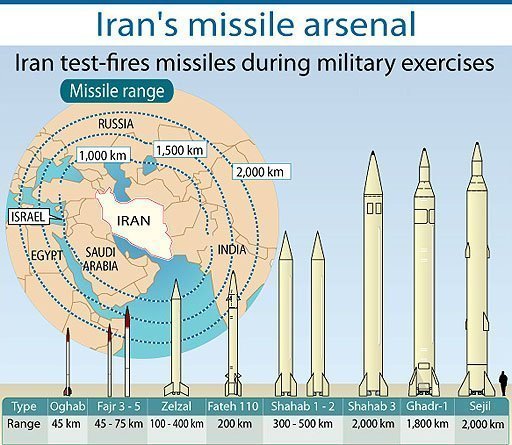
While Costello claims Iran has no interest in developing missiles with a range beyond 2,300 kilometers, he neglects to mention that allowing Iran to have a missile fleet with those ranges puts most of Europe, North Africa, the entire Middle East and virtually every important American military and naval base in the region in the crosshairs of Iranian missiles.

Neither Costello nor Cullis ever address the basic problem with their positions which is the lack of fundamental trust the world has in the religious leadership of Iran. The mullahs are fanatical in their pursuit of expanding the Islamic revolution and zealous in the crackdown of any dissenting opinions.

These heinous positions are illustrated in the decision over the weekend to sentence to death an Iranian and American-Iranian dual national on charges of promoting moral corruption.

The defendants, who have not been named, are believed to be a couple involved in the art industry who were arrested in July last year. They ran a leading art gallery in Tehran, the Iranian capital, and were known to associate with foreign diplomats, according to the Financial Times.

Iran has arrested several Iranians holding dual nationality in recent months in a move analysts suggest is intended to intimidate those associated with foreign businesses or who have social connections with foreigners, the Times said.

Abbas Jafari Dolatabadi, Tehran prosecutor-general, said on Sunday that the man and woman had been sentenced because they established “a new cult” and made “alcoholic beverages, encouraged vice . . . through throwing mixed parties [and] . . . exhibiting and selling obscene images at gallery”.

Laura Carnahan

Filed Under: Blog, Current Trend, News Tagged With: Featured, Iran Human rights, Iran Lobby, Iran Terrorism, IRGC, National Iranian American Council, NIAC, NIAC Action, Rouhani, Ryan Costello, Trita Parsi, Tyler Cullis

Fierce Debate on Iran Obscures Pain of Hostage Families

March 10, 2017 by admin

Fierce Debate on Iran Obscures Pain of Hostage Families

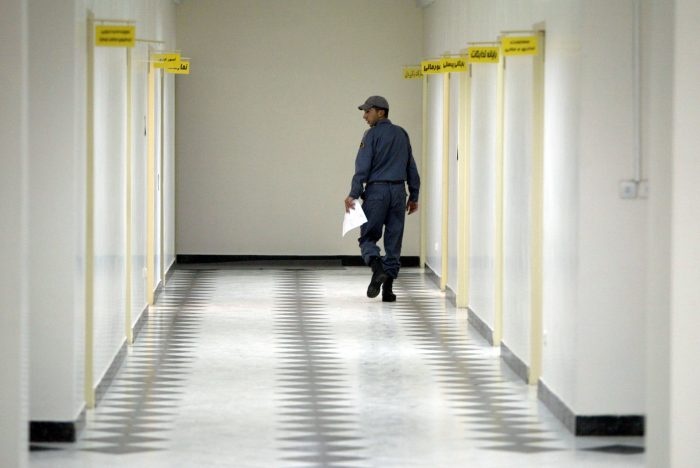
File photo shows an Iranian soldier walking in a corridor of Evin prison during a journalist’s visit to the prison in Tehran, Iran on June 13, 2006. Esha Momeni, 28, an Iranian-American student from Los Angeles is imprisoned in Tehran and is not being allowed to talk to her family, her attorney says. Momeni, described as a researcher looking into the status of women in Iran, was pulled over for a traffic infraction in Tehran on October 15 and is now being held at the notorious Evin prison. Momeni has been allowed one phone conversation since her arrest, which her attorney says may have been related to the One Million Signatures campaign, in which women in Iran are pressing for more rights. Several Iranian-Americans were held for months in Iran last year because the government suspected them of working for a “velvet revolution,” and were eventually released without being charged, the BBC reported. (UPI Photo/Mohammad Kheirkhah) (Newscom TagID: upiphotos893509.jpg) [Photo via Newscom]

The debate that rages over U.S. policy towards the Iranian regime under the Trump administration has been marked by a near-constant war of words on social media, editorial pages and blogs with the Iran lobby rising up to challenge every assertion made by Iran critics, as well as deflect from any horrific act committed by the mullahs in Tehran.

The rancor has obscured one important and painful reminder of personal suffering which is the plight of dual-nationals being held as hostages in Iranian prisons by the regime.

These citizens of other countries were arbitrarily snatched up by the regime’s Revolutionary Guard Corps, tossed into prison, and in some cases given secret trials without access to counsel, while others have simply been held without charge or trial.

Most have been subjected to physical, emotional and mental abuses that we would find appalling and even denied much needed medical care as their health has deteriorated as in the case of a British mother who works for a charity organization.

There are five Americans reportedly being held in Iran who were arrested almost immediately after another batch of American hostages were released shortly after the nuclear deal was agreed to and pallets of cold hard cash were flown to Tehran on Iranian jets in a blatant swap.

Iranian officials even boasted of not selling these new hostages for less than $1 billion.

The Iran lobby has been quick to gloss over their plight, only issuing the briefest of rebukes at the beginning and never raising the issue again. The National Iranian American Council has been the most ridiculous in playing this game even through its founder, Trita Parsi, claims one of these hostages, Siamak Namazi, as a close personal friend.

If this is how hard Parsi fights for a friend, I’d hate to see what he does for a relative.

But for the families of these hostages, their pain is real and the struggle to maintain hope is often elusive. They petition the world’s media and beg for the release of their family members from regime officials who ignore them.

This week though, attention has shifted back as family members press their cases again in the media and we observe the passing of the grim decade milestone of one missing American, Robert Levinson.

“I ask myself and my fellow American neighbors: Where is the justice I have come to associate with America?” Robin Shahini, 46, wrote to his family from an Iranian jail.

Shahini was convicted of collaborating with “a hostile government,” the U.S – an accusation his family denies. He was reportedly sentenced to 18 years in prison.

“This charge is unjust and the Iranian government intended to commit this wrong against me, an innocent American citizen, for political purposes. I ask of you, please to not let Iranian government use me,” Shahini wrote in his letter.

“I ask you beloved citizens and all human-loving individuals to not leave me alone and defend my rights, which is also the right of each and every one of you. Defending me is defending yourselves. Do not let me be alone.”

The number of arrests and detentions of visitors…especially dual-citizens… has spiked, warns Lisa Daftari, the editor of the website “The Foreign Desk,” who has followed Shahini’s case.

“In the aftermath of the nuclear deal with Iran, we would expect things to get better,” she said. “But we’ve seen an increase in executions, we’ve seen an increase in crackdowns against journalists, against dual-citizens, against academics, political dissidents, women’s human rights leaders. And this is not what we expected.”

Daftari also said the arrest and trial of Shahini, and other dual-U.S. citizens like him, serves as a broader propaganda purpose for Tehran, according to Fox News.

“The Iranian regime is delivering a stern message to Iranians living abroad, not to get involved in political activity, not to speak out against the regime, and they want Iranians to know that they are in fact being watched.”

Dan Levinson, the son of missing former FBI agent Robert Levinson, penned an editorial in the Washington Post, lamenting his father’s disappearance in Iran for the past 10 years.

“The United Nations Working Group on Arbitrary Detention, which investigates cases of arrest that may be in violation of international human rights law, did something in January that the previous two U.S. presidents failed to do: It announced a finding that my father, retired FBI agent Robert Levinson, was arrested by Iranian authorities without any legal grounds in March 2007 on Kish Island, and it called on the Iranian government to release him immediately,” he writes.

“In finding that Iran has violated international law — and fundamental human decency — by detaining a U.S. citizen and providing him no rights whatsoever, the U.N. working group is being far more aggressive than our own U.S. government has been in 10 years. This is shameful,” Levinson added.

Levinson went on to encourage the new president to pressure Iran for his father’s release.

“If Iran continues to deny holding him and fails to act, Trump can pressure it with tools such as sanctions — which he demonstrated his willingness to use already – or labeling Iran’s Islamic Revolutionary Guard Corps, which was very likely involved in my father’s detention, a terrorist organization. Trump can put my father at the center of every single discussion he has with or about Iran and finally make him a top priority — not just in words like the previous administration, but in action,” he said.

We hope these families can be reunited with their loved ones soon and believe that is only going to happen by applying heavy pressure on the Iranian regime and its leaders.

Laura Carnahan

Filed Under: Blog, News Tagged With: Featured, Iran, Iran deal, Iran Lobby, Iran sanctions, National Iranian American Council, NIAC, Trita Parsi, Tyler Cullis

  • « Previous Page
  • 1
  • …
  • 5
  • 6
  • 7
  • 8
  • 9
  • …
  • 21
  • Next Page »

National Iranian-American Council (NIAC)

  • Bogus Memberships
  • Survey
  • Lobbying
  • Iranians for International Cooperation
  • Defamation Lawsuit
  • People’s Mojahedin
  • Trita Parsi Biography
  • Parsi/Namazi Lobbying Plan
  • Parsi Links to Namazi & Iranian Regime
  • Namazi, NIAC Ringleader
  • Collaborating with Iran’s Ambassador

Recent Posts

  • NIAC Trying to Gain Influence On U.S. Congress
  • While Iran Lobby Plays Blame Game Iran Goes Nuclear
  • Iran Lobby Jumps on Detention of Iranian Newscaster
  • Bad News for Iran Swamps Iran Lobby
  • Iran Starts Off Year by Banning Instagram

© Copyright 2026 IranLobby.net · All Rights Reserved.