Iran Lobby

Exposing the Activities of the lobbies and appeasers of the Mullah's Dictatorship ruling Iran

  • Home
  • About
  • Current Trend
  • National Iranian-American Council(NIAC)
    • Bogus Memberships
    • Survey
    • Lobbying
    • Iranians for International Cooperation
    • Defamation Lawsuit
    • People’s Mojahedin
    • Trita Parsi Biography
    • Parsi/Namazi Lobbying Plan
    • Parsi Links to Namazi& Iranian Regime
    • Namazi, NIAC Ringleader
    • Collaborating with Iran’s Ambassador
  • The Appeasers
    • Gary Sick
    • Flynt Leverett & Hillary Mann Leverett
    • Baroness Nicholson
  • Blog
  • Links
  • Media Reports

Hypocrisy of Iran Lobby Extends to Criticizing Trump Speech to Congress

March 1, 2017 by admin

Hypocrisy of Iran Lobby Extends to Criticizing Trump Speech to Congress

Hypocrisy of Iran Lobby Extends to Criticizing Trump Speech to Congress

There is no doubt that President Donald Trump is a polarizing figure and has become a lightning rod for criticism for everything ranging from his affinity for tweeting to his policies such as his roll back of regulations and imposition of a temporary moratorium on visas from several countries in the Middle East.

The jury is still out on much of his agenda since he has yet to collaborate with Congress to bring forth specific legislative proposals, but that has not stopped the torrent of criticism being directed at him by the Iran lobby as it works to oppose anything that might be perceived as upsetting the goals and plans of the mullahs in Tehran.

This was true when Iran lobby advocates such as the National Iranian American Council’s Trita Parsi blasted Trump’s decision to impose fresh sanctions on members of the regime’s Revolutionary Guard Corps for its support for ballistic missile launches that violated United Nations sanctions.

It has also been true of the Iran lobby’s efforts to deflect attention away from the Iran regime’s litany of problems at home with increasing mass demonstration and protests to issues abroad as it encounters growing calls for resistance amongst its Sunni neighbors such as Saudi Arabia and the Gulf States; alarmed at the turmoil surrounding them caused by the Iranian regime.

The Iran lobby has been particularly focused on the debate over Trump’s immigration policies leveraging it to its advantage to raise funds and maintain its ties to progressive Democratic groups that it previously aligned with in the efforts to support the Iran nuclear deal.

The reasons for these efforts are simple: In a post-Obama world, the Iran lobby is desperately trying to stay relevant.

Since the electoral sweep that not only saw Trump elected, but also radically changed the complexion of the Congress, the Iran lobby has been on the defensive ever since. It has found little support within the much-vaunted “echo chamber” of support previously cobbled together to help push for negotiations with the regime.

Iranian regime’s ever growing militant actions in launching ballistic missiles, supplying proxy wars in Yemen and Syria and flexing its military muscle in expansive war games have proven to be almost impossible for the Iran lobby to defend.

Predictably, after President Trump’s first address to a joint session of Congress, the NIAC’s Jamal Abdi sent out a statement criticizing the speech, but in his criticism he revealed the bias and hypocrisy of the NIAC and the Iran lobby.

Abdi makes the claim that “no Iranian has ever been implicated in a terrorism-related death inside America,” which is a convenient distinction since it ignores the fact that the Iranian regime has been directly responsible for the deaths of hundreds of Americans in terrorist attacks in Beirut, Lebanon, the Khobar Towers in Saudi Arabia and in IED attacks throughout the Iraqi war.

In each case, Iranian regime controlled, supplied, participated or directed the attacks directly resulting in the deaths of Americans. In fact, several court decisions have held the Iranian regime responsible for these deaths and injuries and confiscated financial assets of the regime as part of court settlements to the victims and their families.

Abdi also fails to mention the violence fueled by the Iranian regime’s efforts to export its brand of extremist Islamic vision that has sparked sectarian violence between Sunnis and Shiites all across the Middle East, including the Syrian civil war, the Houthi coup attempt in Yemen and the expansion of ISIS arising out of the dissolution of the coalition government in Iraq.

All of these debacles were fueled by the Iranian regime and have cost the lives of hundreds of thousands of men, women and children and Abdi and his colleagues have remained stonily silent.

But the hypocrisy of criticizing Trump’s policies while ignoring the much harsher realities of the regime’s policies echoes the same treatment given by regime foreign minister Mohammad Javad Zarif who lauded the protest by Iranian filmmaker Asghar Farhadi who won the Oscar for best foreign film against Trump’s immigration policies, yet at the same time did not acknowledge the regime’s imprisonment and torture of several prominent Iranian filmmakers for engaging in acts against the Islamic state.

The rank hypocrisy of the Iranian regime and Iran lobby was taken to task by prominent journalists such as CNN anchor Jake Tapper and Human Rights Watch.

“Farhadi’s movie deserves the praise it has received – and much more. Iranian cinema has a long-established and well-earned reputation for providing a powerful, nuanced perspective into Iranian society,” said Sarah Leah Whitson, executive director for Human Rights Watch’s Middle East and North Africa Division in an editorial. “Yet while Iranian officials bask in pride on the international stage, their rhetorical support does not translate into respect for filmmakers at home, where they have harassed and jailed movie directors and other artists for work they find displeasing.”

“In the aftermath of the 2009 presidential elections, authorities arrested Jafar Panahi, a prominent director, for allegedly attempting to make a movie about protests that followed the vote. In December 2010, Tehran’s revolutionary court sentenced Panahi to six years in prison and a 20-year ban on all his artistic activities. Following international outcry, the government did not execute Panahi’s sentence but kept the ban in place, forcing him to make movies without an official permit,” Whitson added.

“These filmmakers could serve as powerful messengers for the diversity and talent in Iran today. But until the authorities stop censoring and imprisoning them, they put into question the Iranian government’s expressed commitment to supporting the country’s millennia of “culture & civilization,” she warned.

Michael Tomlinson
 

Filed Under: Blog, News Tagged With: Iran Mullahs, Iran Terrorism, IRGC, Jamal Abdi, National Iranian American Council, NIAC, NIAC Action, Nuclear Deal, Syria, Trita Parsi, Yemen

While Iran Regime Throws Roses It Denies Medical Treatment

February 19, 2017 by admin

While Iran Regime Throws Roses It Denies Medical Treatment

While Iran Regime Throws Roses It Denies Medical Treatment

Nothing illustrates the cold, calculating nature of the Iranian regime than two incidents happening this week.

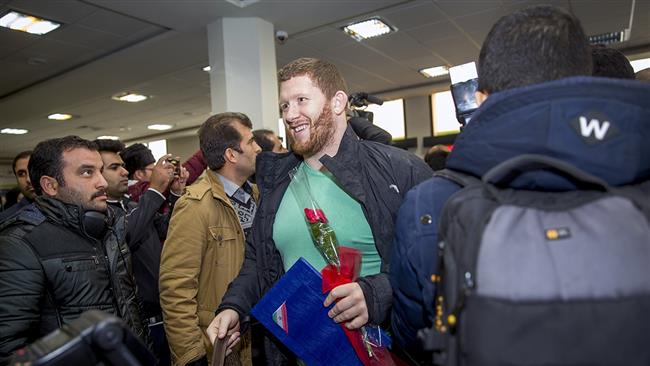
On the one hand, an American wrestling team was welcomed with open arms, red roses and a barrage of social media selfies as it arrived in Iran for a tournament that had been threatened in response to President Trump’s visa moratorium.

The two-day tournament began Thursday, when U.S. wrestlers faced off against Georgia, Russia and Azerbaijan. The Iranian regime didn’t miss the opportunity to stage photos of the Americans being surrounded by well-wishers and flooding social media with comments praising the team, but deriding the U.S. government.

“Welcome to Iran champ!!!!” one Iranian user, Saeed Mohammadi, commented on an Instagram photo.

Another, Nima Jan, said he was traveling to the stadium to cheer for the Americans,

“You proved that you are a noble man.… This is a big chance for us,”Nima Jan commented on an Instagram. “We do not pay attention to the behavior of America’s government” toward Iran, according to the Washington Post.

Widely considered a national sport, wrestling has been one venue to maintain a cultural channel between Iran and the U.S. In fact, a U.S. wrestling team became the first American sports team to visit Iran since the revolution.

In contrast to that public photo opportunity, in the dank, dark confines of Evin prison, a British-Iranian mother and an aid worker languishes, falling ill and being denied medical treatment by the regime.

According to the Times of London, Nazanin Zaghari-Ratcliffe, 38, who has been held in prison since April last year, was denied urgent medical treatment for a neck injury sustained in prison that has left her unable to lift her arms or carry her child.

Prison officials last week refused to refer the charity worker to a neurologist, despite an X-ray and MRI scan revealing that vertebrae in her neck were out of place.

She is unable to move her arms beyond a certain point or lift her two-year-old daughter Gabriella, who is also trapped in Iran after regime authorities confiscated her British passport.

The cruelty of Ratcliffe’s continued incarceration and denial of medical care has earned sharp rebukes from the British government and human rights groups, but it follows a typical pattern of abuse heaped on detained dual national citizens by the regime.

Repeated incidents like this, depict an essential truth of the Iranian regime which is that it is without compassion or mercy and utilizes innocent people to its political advantage on the world stage. It will willingly use a sports team to stage a photo opp to protest moves designed to restrict the movement of terrorists supported by the Iranian regime and it will also put the screws to an ailing mother to put pressure on a British government balking at opening up trade with the regime.

The mullahs are cruel and callous and any press releases or news interviews by Iran lobby supporters such as Trita Parsi of the National Iranian American Council cannot hide that simple truth.

The mullahs calculate every move and weigh every opportunity. They are less religious leaders and more like accountants and they count up the ill-gotten gains they receive from their various black market channels, especially with the nuclear agreement which opened up additional sources of funding to them.

Heshmat Alavi, an Iranian activist, penned a piece in Forbes looking at how the regime was benefitting from the nuclear agreement.

“Now in early 2017, however, signs indicate the main winners in Iran are none other than state-owned companies. This means Iranian Supreme Leader Ali Khamenei and the terrorist-supporting Revolutionary Guards are enjoying JCPOA benefits,” Alavi writes.  “At least 90 of the nearly 110 agreements, totaling nearly $80 billion, involve such state-controlled companies. This includes the National Iranian Oil Company, parallel to others run by regime pension funds and massive conglomerates of semi-public nature.”

“It is a known fact that Tehran maintains a heavy hand over the economy, providing circumstances allowing state-controlled firms to acquire most business deals made possible after sanctions were lifted. The private sector makes up a mere 20% of Iran’s economy, according to official estimates,” he added. “To this end, private companies have received a dismal 17 deals, including a hotel management contract sealed most probably because of the French partner’s chief executive being the brother of Eshaq Jahangiri, Iran’s vice president.”

For the Iranian regime, decision-making is all about perception, economic benefits and exporting its extremist brand of Islam.

Unfortunately, until the world joins together again to confront the Iranian regime, innocents such as Ratcliffe will continue to pay the price.

Laura Carnahan

Filed Under: Blog, News Tagged With: #NuclearDeal, Featured, Iran Mullahs, Moderate Mullahs, National Iranian American Council, NIAC, NIAC Action, nuclear talks, Trita Parsi

Iran Lobby Echo Chamber Going Full Bore to Support Iran Regime

February 10, 2017 by admin

Iran Lobby Echo Chamber Going Full Bore to Support Iran Regime

Iran Lobby Echo Chamber Going Full Bore to Support Iran Regime

With the Trump White House announcing a series of new sanctions aimed at officials of the Revolutionary Guard Corps for the Iranian regime’s ballistic missile program, as well as contemplating broad new sanctions stemming from a possible designation of the IRGC as a terrorist organization, the Iran lobby and supporters of the regime have launched an all-out PR effort to prop up the faltering regime.

In a campaign similar to the infamous “echo chamber” of academics and advocates furiously penning editorials and giving interviews to sympathetic media outlets, the Iran lobby is trying anything to deflect attention on the regime’s militancy and instead claim anything aimed at punishing the regime is somehow racist or a prelude to armed conflict.

But the effort to come to the aid of the mullahs in Tehran isn’t just limited to the usual assorted Iran sympathizers as European Union foreign policy chief Federica Mogherini met with U.S. Secretary of State Rex Tillerson and spoke “at length” about the Iran nuclear deal according to Reuters.

Mogherini helped negotiate the 2015 nuclear deal with Iran, along with diplomats from Iran, the United States and other major world powers. The deal curbed Iran’s nuclear program in return for sanctions relief said Reuters.

Trump has said the deal is terrible, and Flynn put Iran “on notice” last week for test-firing a ballistic missile, raising the prospect of spiking tensions between Iran and the United States.

Since the deal, Mogherini has visited Tehran while the regime commenced a series of ghastly executions of men and women; none of which were protested by the EU.

Even Russia Today weighed in as well by publishing an opinion piece by John Wright, an outspoken supporter of the Iran nuclear deal, who took the Trump administration to task for focusing on Iran instead of the world’s “number one terrorist state” in his mind—Saudi Arabia.

“The Trump administration’s consistent and ongoing demonization of Iran flies in the face of reality in which Iran has stood, alongside Syria, Russia, the Kurds, and the Iranian-backed Lebanese resistance movement Hezbollah, as a pillar against the very same Salafi-jihadist terrorism that poses a threat to the American people,” Wright said in a splendid example of mimicking the very same messages consistently uttered by the National Iranian American Council and other Iran lobby members.

Wright went on to hammer Saudi Arabia, while essentially excusing the vile acts of ISIS and downplaying anything the Iranian regime has done by comparison. His logic or lack thereof defies commonsense and represent the intellectual vacuum that characterizes much of the Iran lobby’s arguments.

In a more flimsy example of casting doubt on efforts to designate the IRGC a terrorist organization, the Chicago Tribune offered up a story with the dubious headline of “Warnings for White House on terror designation for Iran Revolutionary Guard” and goes on to hint at warnings from defense officials, but neglects to mention anyone specifically, nor offer a single quote against the planned designation.

It does however rehash the discredited story of the terror designation of Iranian dissident groups in a message point repeatedly endlessly by the Iran lobby as part of the smear campaign against opposition groups.

Another Iran lobby message point was trolled out by William O. Beeman, an anthropology professor and not a national security expert, who nevertheless offered up the same silly arguments that folks like Trita Parsi and Reza Marashi of NIAC put forth, in an editorial.

“The tiny issue on which the US objection rests is whether the Iranian missiles are capable of carrying a nuclear warhead. Iran says: no! The United States (and Israel) say ‘maybe,’ because they can’t know for sure whether this is the case. In the latest missile test, the missile blew up, so no one can say one way or the other,” he writes.

Beeman should stick to teaching about dead civilizations.

The issue of ballistic missiles is not a “tiny” one. Iran’s development of longer-range missiles based on illicitly acquired North Korean designs has produced missiles with over a 2,000-km range, giving it intercontinental reach. Tie this with the development of solid fuel boosters and you now approach the threshold weight necessary for a nuclear weapon. But put that aside, it is more than enough thrust and range for a chemical or biological weapon to be aimed at Eastern Europe, North Africa and India and China.

The Economist went even further claiming that Trump’s punitive actions against the Iranian regime were actually helping it.

Most incredulous of all was the opening line from the piece which claimed “the ritual chants of ‘Death to America’ had grown fainter in recent years. The feverish crowds had thinned. Some demonstrators seemed to wave Uncle Sam banners less to jeer America than to cheer it. Yet thanks to Donald Trump this year’s annual rally to commemorate Islamic Revolution Day on February 10th in Tehran looks set to be one of Iran’s biggest.”

The Economist fails to mention that the regime can ramp up attendance any time it needs to with help from the Basij paramilitaries to round up supporters under threat of beatings and the chants aimed at America have not stopped and will never stop under the mullahs.

It also makes the same mistake all media make who do not understand the dynamics of the mullahs’ hold over Iran by continuing to make a distinction between “hardliners” and “moderates” in Iran’s government.

Let’s set the record straight: There are no moderates in Iran’s government. Moderation within the regime is akin to making distinctions between the SS and Brown shirts in Hitler’s Reich. It’s only variations on the theme of extremism. One could say that compared to ISIS, Al-Qaeda looks like a Boy Scout troop.

The argument that Trump only emboldens the “hardliners” is a self-fulfilling prophecy since the hardliners have been and always will be in control of Iran.

Michael Tomlinson

Filed Under: Blog, News Tagged With: #NuclearDeal, Featured, Iran, Iran deal, Iran Lobby, Iran Mullahs, Iran Terrorism, National Iranian American Council, NIAC, NIAC Action, Reza Marashi, Trita Parsi

Time for the NIAC to Pack It Up

January 27, 2017 by admin

Time for the NIAC to Pack It Up

Time for the NIAC to Pack It Up

The National Iranian American Council was born out of an idea hatched by Trita Parsi to develop a US-based group that could serve as an effective lobbying force for the interests of the Iranian regime. It could help provide “cover” for the mullahs by pushing a narrative seeking to reshape the public image of the Iranian regime.

It did so through editorials and press releases and through the use of NIAC staffers as so-called Iranian “experts” to news media. The intelligentsia and academia were regaled with lofty tales of how Iranian regime could be a friend to the US instead of an enemy and how the intractable problems of the Middle East could be solved through a moderate and willing Iranian partner.

The NIAC became part of the “echo chamber” created by the Obama administration to help push that narrative as it sought a nuclear deal with the mullahs in Tehran. NIAC staff such as Reza Marashi and Tyler Cullis obligingly offered up these fantasies even as Iran mullahs essentially set the stage for the Syrian civil war by jumping in to prop up the Assad regime.

The NIAC deepened its efforts by creating NIAC Action, a direct lobbying arm so it could knock on the doors of Congressmen and Senators and pressure them into supporting a badly flawed nuclear deal and promise them political cover by offering to say “Iranian-Americans” supported it.

Even as the death toll mounted by the thousands in Syria at the hands of Iranian forces and the barrels of Iranian guns and refugees flooded into Europe by the millions, the NIAC was resolutely pushing ahead to preserve the deal by blaming Saudi Arabia and other enemies of Iran for these problems.

Against the dubious backdrop of midnight flights of pallets loaded with cash in exchange for American hostages, the NIAC still kept at the narrative, ignoring the risk to Iranian-Americans and other dual nationals being arrested in Iran at an astonishing rate and Hassan Rouhani’s flat out refusal to recognize dual nationalities.

While the NIAC argued for loosening of restrictions to allow the freer flow of cash to Iran, the regime cracked down even harder on dissent at home with over 3,000 executions in four years and arrests of journalists, students, artists, bloggers and dissidents by the scores.

Even the US news media were getting the idea that NIAC did not have much to offer being apologists for the Iranian regime every time anything went wrong as NIAC staffers found less ink and air time on mainstream media and found themselves relegated to self-publishing blogs and fringe websites more prone to fake news than real news.

The election of Donald Trump and the sweep of Republicans into both houses of Congress put an even bigger damper on NIAC’s prospects to help the Iranian regime any more, which raises the most logical question: Is it time for the NIAC to close shop?

The question is not just rhetorical, but should prompt a serious discussion among supporters of the NIAC and its donors. What role will the NIAC play in a Trump presidency?

The same question must be vexing Parsi and his colleagues since we’ve seen a noticeable shift in their public comments on items. Instead of slavishly towing the party line of the mullahs in Tehran, the NIAC now has been busy commenting on issues related to Trump’s immigration proposes.

Some might argue that these topics should be the more traditional and appropriate topics for support and debate by an organization putatively claiming to support Iranian-Americans.

Unfortunately, the shift has less to do with genuine and sincere attention to a legitimate issue, but probably rather a need to justify the continued existence of NIAC.

One benchmark of that imperiled future will be the NIAC’s Bay Area fundraiser scheduled for February 12, 2017. The NIAC website states that the proceeds will be used “to support immediate efforts to combat discrimination, support civil rights, protect the US-Iran Nuclear Deal, and prevent war.”

Given the NIAC’s track record, virtually all the funds will be used to preserve the Iranian regime’s interest? Parsi and the NIAC have no real interest in the concerns and issues facing Iranian-Americans. They are more concerned about all facets of the Iranian regime and how to keep maintaining support for it. The NIAC’s checklist is absurdly limited given the state of the world:

  • Preserve the Iran nuclear deal so Iranian regime does not suffer renewed sanctions;
  • Oppose any new or re-imposition of sanctions on Iran;
  • Denounce and defend any accusation against the Iranian regime for sponsoring terror or human rights abuses;
  • Tie any effort to rein in Iran as a pathway to war and empowering “hardliners” in Iran; and
  • Keep the money flowing to Tehran and the mullah’s coffers at all costs.

These should not be the priorities of any group concerned with Iranian-American issues. They are the concerns only of an organization dedicated to doing the bidding of the mullahs in Tehran.

It’s time for the NIAC to go away and for a legitimate group to rise in its place to be a true advocate for Iranian-Americans and not a mouthpiece for Tehran.

Michael Tomlinson

Filed Under: Blog, National Iranian-American Council, News Tagged With: Featured, Iran deal, Iran Human rights, Iran sanctions, Iran Talks, Iran Terrorism, National Iranian American Council, NIAC, NIAC Action, nuclear talks, Reza Marashi, Sanctions, Trita Parsi, Tyler Cullis

Obama White House Logs Disclose Access to Iran Lobbyists

January 26, 2017 by admin

Obama White House Logs Disclose Access to Iran Lobbyists

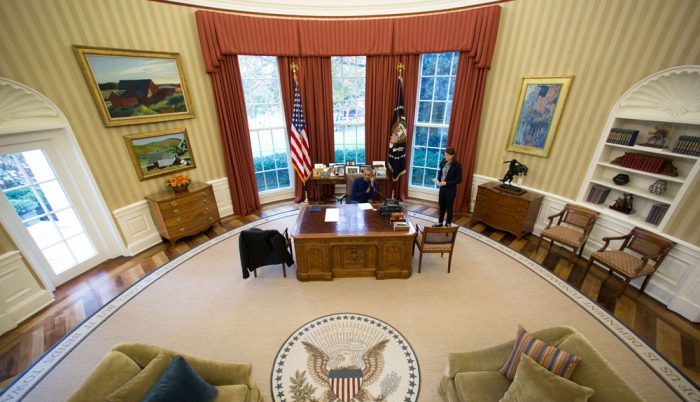
President Barack Obama makes Thanksgiving Day phone calls from the Oval Office to U.S. troops stationed around the world, Nov. 24, 2016. The President’s Coast Guard military aide, LCDR Ginny Nadolny is at right.
(Official White House Photo by Pete Souza)

The Washington Free Beacon disclosed that a former Iranian regime official and a leader in the Iran lobby enjoyed unprecedented access to the White House under the Obama administration.

The two were hosted at the White House for more than 30 meetings with top officials at key junctures in the former administration’s contested diplomacy with Iran, according to White House visitor logs that provide a window into the former administration’s outreach to leading pro-Iran advocates, according to the Free Beacon.

Seyed Mousavian, a former Iranian diplomat and head of the regime’s national security council, was hosted at the White House at least three times, while Trita Parsi, a pro-Iran advocate long accused of hiding his ties to the Iranian government, met with Obama administration officials a stunning 33 times, according to recently updated visitor logs.

Sources familiar with the nature of the meetings told the Washington Free Beacon that both Parsi and Mousavian helped the White House craft its pro-Iran messaging and talking points that helped lead to the nuclear agreement with Iran. These efforts were part of a larger pro-Iran deal “echo chamber” led by senior Obama administration officials who were tasked with misleading Congress about the nature of the deal.

Mousavian, who also served as Iran’s spokesperson during negotiations with the international community on the Iran deal, visited with White House National Security Council official Robert Malley, who advised the former president about the Middle East and the Islamic State terror group.

“Mousavian was Iran’s ambassador to Germany back in the 1990s, when that embassy was the central node of Iran’s European terror network and those in Germany were murdering dissidents in Berlin,” one veteran Iran analyst who frequently works with Congress on the issue told the Free Beacon. “Later he came to the U.S., where he’s being paid for with tens of thousands of dollars from the Ploughshares Fund, which funded the Ben Rhodes echo chamber.”

Parsi, head of the National Iranian American Council, a group tied to the broader Iran lobbying movement and tied to the Obama White House that helped spearhead a pro-Iran narrative, met with several senior Obama administration officials during dozens of visits to the White House, the logs show.

This included private, one-on-one meetings with Obama adviser Ben Rhodes, who helmed what he described as the White House’s pro-Iran deal “echo chamber,” as well as meetings with Malley and Colin Kahl, national security adviser to former Vice President Joe Biden. Parsi also met with the White House NSC’s director for Iran, its senior director, legislative liaisons, and public engagement officials, according to sources familiar with the nature of these meetings.

In one instance, Parsi was signed into the White House by Solomon Tarlin, a West Wing intern and supporter of the Middle East advocacy group J Street.

Free Beacon quoting an expert on Pentagon writes: “Talk about letting the fox into the hen house. Letting the head of an organization whose foreign policy positions are indistinguishable from the Islamic Republic more than 30 times would be analogous to letting the Soviet Union’s chief lobbyist help guide policy during the Cold War.”

“During the Bush administration, Parsi thought nothing of dining with [Former Iranian President] Mahmoud Ahmadinejad, and his private emails, released as part of a court-ordered discovery process, show that he lied to the U.S. press and coached Iranian officials in order to weaken sanctions and promote the Islamic Republic,” The expert said.

The visitor’s logs reveal the depth of Parsi’s involvement in building the false narrative of the Iran nuclear deal and also may explain why the Obama administration was quick to appease the mullahs in Tehran, by forgoing linking such important issues as ballistic missiles, human rights and terrorism.

With the incoming Trump administration, it is almost assured that Parsi’s access to the White House and key advisors has been reduced to zero, which explains why Parsi now has taken to authoring editorials in a tedious effort to influence a monumental shift in American foreign policy.

In many ways Parsi efforts are more akin to the Little Dutch Boy sticking his finger in dike than his previous august position as White House visitor.

In a piece for Foreign Policy, Parsi trotted out the same, tired talking points: Iran is good. Saudi Arabia is bad. Hard liners will be empowered in Iran. Trump’s cabinet picks are war mongers. Iran does not support proxies.

Parsi’s efforts to try and convince everyone that Iran does not fund and control Hezbollah or Shiite militias in Iraqi or Houthi rebels in Yemen is pathetic and patently false. All anyone has to do is follow the trail of cash and arms from Tehran to all parts of the Middle East and you can see how the Iranian regime sits at the center of the proxy wars in the region.

But Parsi’s efforts may be waning as he and his Iran lobby colleagues shift chaotically from issue to issue in an effort to keep up with the wide ranging agenda of the Trump administration which called for a moratorium on Syrian refugees pending verification of their backgrounds in a nod to the Islamic extremist terror attacks taking place across Europe in Paris, Nice, Brussels and Berlin.

A new poll revealed in the Wall Street Journal that support for Hassan Rouhani among the Iranian people has plummeted as years of war and economic stagnation coupled with unrelenting human rights abuses had sapped his favorability.

The survey results paint a picture of an Iranian public wary and skeptical about the economic benefits they thought it would bring as a result of the Iran Deal.

Conducted in December for the University of Maryland, the survey is based on telephone interviews with 1,000 Iranians and provides a gauge of public opinion in a country where independent polling is rare.

“Rouhani’s popularity is taking a hit primarily because he is perceived to have failed to deliver on his campaign promises,” said the president and chief executive of Toronto-based company which conducted the survey on the school’s behalf.

About 51% said the country’s economic conditions were worsening, up from 43% in June. Almost three-quarters of the Iranians surveyed said the deal hadn’t improved people’s living conditions.

With the presidential election looming in May, it is almost assured that the regime will once again rig the election to deliver a candidate in lock-step with the mullahs’ policies and those of top mullah Ali Khmenei.

Michael Tomlinson

Filed Under: Blog, Current Trend, Latest from Lobbies & Appeasers, National Iranian-American Council, News Tagged With: Appeasement policy, Featured, hassan rouhani, Iran, Iran deal, Iran Human rights, Iran Lobby, National Iranian American Council, NIAC, NIAC Action, Rouhani, Trita Parsi

Iran Lobby Reduced to Picking at Crumbs with Trump Inauguration

January 21, 2017 by admin

Iran Lobby Reduced to Picking at Crumbs with Trump Inauguration

Iran Lobby Reduced to Picking at Crumbs with Trump Inauguration

Isaac Newton’s Third Law of Physics is that “for every action, there is an equal and opposite reaction.” For the Iran lobby, after enjoying rare support for a policy of appeasing the Iranian regime under the Obama administration culminating in the nuclear deal reached last year, the pendulum has swung full circle with the swearing in of Donald Trump as the president of the United States.

Just as the Iran lobby worked to support the “echo chamber” of fabrications, fake news and misleading analysis used to help push the nuclear agreement, it now is left picking up the few crumbs thrown about in the hopes of salvaging anything it had gained.

A perusal of the website for the National Iranian American Council, one of the mainstays of the Iran lobby, revealed just how feeble life has become in the wake of Trump’s ascension with the posting of news articles designed to give to the impression that the Trump administration was backing away from tearing up the nuclear deal or confronting the Iranian regime:

  • CIA Pick Pompeo Backtracks on Politicized Opposition to Iran Deal
  • Trump Pivots From Muslim Registry but Targeting of All Iranian Visitors Remains on the Table
  • Trump Nominees Oppose Tearing Up Iran Deal But Signal Harder Line

The headlines are a far cry from last year in which the NIAC was busy trumpeting the good news of the mullahs set to receive billions of dollars as economic sanctions were being lifted.

Now Trita Parsi and his colleagues are left hoping for the best and trying to read the tea leaves of confirmation hearings knowing that Trump and his cabinet have already established the biggest single departure from the Obama administration which is Iran must be held accountable for its behavior and no longer given a free hall pass for its many abuses.

This is the essential difference between Trump and Obama in that Trump sees everything through the lens of a business deal and negotiation, whereas Obama saw it through the political lens of historical achievement and publicity.

For Trump, the Iran nuclear deal is not really a question of tearing it up or not, but rather asking the most basic question that Obama did not ask which is “what do we want Iran to do or not do in exchange for this agreement?”

Obama too easily caved in to Iranian demands to separate key issues such as human rights and support for terrorism and the mullahs knew the pressure of time and politics were pushing Obama. Trump does not seem to have any of those concerns as he starts his presidency. Therefore one possible scenario is that if Trump and Putin can agree on settling Syria by pushing Iran out of the equation, overnight the prospects for the mullahs’ political future becomes as dim as a burned out light bulb.

This realignment in the Middle East would eliminate the Iranian regime’s leverage of playing one superpower off against the other and leave it increasingly isolated.

Sir David Amess, a member of the British House of Commons, wrote in Forbes that to resolve the situation in Syria, Iranian influence has to be removed.

“The siege of Aleppo should prove to the international community how destructive the role of Assad’s Tehran backers are. For all the crimes of the Syrian army, it seemed poised to let rebels and civilians evacuate the city in the immediate aftermath of the conquest. The Russian defense ministry offered guarantees that a humanitarian pathway would remain open, and hundreds of evacuees went on to pass through a Russian checkpoint on their way out,” Amess said.

“However on a Wednesday in mid-December, at least 1,000 of those same people were stopped along the evacuation route, at a checkpoint controlled by Iranian Revolutionary Guards (IRGC) and their militant proxies. This move came after the Iranians single-handedly altered the ceasefire that had been agreed upon the day before. Within a day of that move, the ceasefire appeared to have been violated, with ambulance drivers and rescue workers coming under sniper fire. The Iranian opposition, the People’s Mojahedin Organization of Iran (PMOI/MEK) even identified the command base of the IRGC for Aleppo operations,” he added.

Amess is correct when he says the international community must compel Iran through political and financial pressure to step away from the conflict in order to negotiate a lasting ceasefire agreement. If Trump and Putin can achieve common group, a clear pathway would then exist to structure a lasting solution in Syria that does not involve Iran.

That scenario terrifies the mullahs in Tehran and rightly so.

Michael Tomlinson

Filed Under: Blog, News Tagged With: #NuclearDeal, Appeasement policy, Featured, Iran Mullahs, Iran sanctions, Iran Terrorism, IRGC, NIAC, Trita Parsi

Iran Lobby Working Feverishly to Avoid Collapse

January 17, 2017 by admin

Iran Lobby Working Feverishly to Avoid Collapse

Iran Lobby Working Feverishly to Avoid Collapse

As the sun sets on the Obama administration and its flawed policy of appeasing the Iranian regime, the Iran lobby is working in overdrive to do anything and everything it can to preserve the few wins it managed to snag over the past eight years; most notably the Iran nuclear deal.

Trita Parsi, the head of the National Iranian American Council, has been trying to insert himself into any Iranian-related news story he can find; most recently the death of Hashem Rafsanjani. He has also weighed in president-elect Donald Trump’s potential scrapping of the nuclear agreement, banking restrictions on Iranians in the U.S., the Boeing deal and if he could manage it discussing the potential of Iranian films in the Oscar race this year.

For Parsi and the rest of the Iran lobby, the biggest potential disaster looming is the possible revocation or alteration of the nuclear agreement once the Trump administration takes office next week. Parsi and the mullahs in Tehran seem resigned to the fact that Trump will almost certainly act on his campaign promise to trash or redo it.

“The deal is in tremendous danger,” Parsi said in the Washington Post. “Iranians are building a case to make sure that once the deal falls apart they can point to a strong record of the U.S. causing it. It’s going to be part of the cost the administration will have to decide if it’s willing to pay.”

Parsi is already trying to frame the debate as the fault of the U.S. knowing that Tehran’s free ride is coming to an end. Similarly, the jockeying for rhetorical position illustrates the key flaw in the nuclear agreement in the first place which was that it did not address the motivations of the Iranian regime in supporting terrorism, oppressive human rights abuses or proxy wars.

Without correcting the underlying behavior of the mullahs, the agreement was doomed from the start, something the Trump team has already publicly acknowledged.

“There’s a recognition in the incoming team that the regime cheats incrementally, not egregiously, even though the sum total of cheating turns out to be egregious,” said Mark Dubowitz, executive director of the Foundation for Defense of Democracies and a prominent critic of the agreement. “Trump should show a zero-tolerance policy to cheating. Which means, at a minimum, using U.S. sanctions to respond. At a maximum, it means building up a case there’s a history of incremental violations, and move to snap back sanctions.”

For the Iranian regime though the deal has served its purposes. It has enabled the regime to:

  • Replenish its coffers with over $100 billion in badly needed cash that was redirected to support the Assad regime in Syria on the brink of collapse and pay for Hezbollah fighters and Afghan mercenaries to fight a holding action there until Russia was dragged into the conflict by Iran;
  • Allowed the regime to burnish the public image of “moderates” winning in Iran when in fact there are virtually no real moderates left in Tehran, only various factions differentiated only by their fight for control of state industries and their piece of the trough of cash, kickbacks and skimmed funds; and
  • Support the renewal of sectarian wars in Iraq and Yemen aimed at building a Shiite sphere of influence there Iraqi Shiite militias and Houthi rebels through the purchase and shipping of massive quantities of guns, ammunition, rockets, mortars and missiles.

The mullahs in Tehran are not stupid. They saw the gravy train coming to an end and have worked to gain as much advantage as they can to jump start a nuclear program that never really stopped as Jennifer Rubin points out in the Washington Post.

We saw just how lopsided the U.S.-Iran relationship has become. “The 2015 nuclear deal obligated Iran to keep no more than 130 metric tons of heavy water, a material used in the production of weapons-grade plutonium,” explains Iran analyst Omri Ceren. “But the Iranians have continued to produce heavy water, and they exceeded the cap in February and November. The violations [are] functionally blackmailing the Obama administration: Either someone would purchase the excess heavy water, allowing Iran to literally profit from violating the deal, or the Iranians would go into formal noncompliance, endangering the deal,” she writes.

Now the Associated Press has reported:

“Iran is to receive a huge shipment of natural uranium from Russia to compensate it for exporting tons of reactor coolant, diplomats say, in a move approved by the outgoing U.S. administration and other governments seeking to keep Tehran committed to a landmark nuclear pact.

“Two senior diplomats said the transfer recently approved by the U.S. and five other world powers that negotiated the nuclear deal with Iran foresees delivery of 116 metric tons (nearly 130 tons) of natural uranium.”

Rather than police the deal to ensure compliance, the Obama administration is assisting Iran in violating the JCPOA. Ceren remarks, “That’s enough for more than 10 nuclear bombs.”  We both allow the Iranians to exceed the heavy-water limits in the deal — and then richly compensate them with uranium that can be used for bombs. Our allies would be excused for thinking we are now promoting Iran’s interests, not the West’s,” Rubin adds.

She also noted that Reuters reported, “Iranian lawmakers approved plans on Monday to expand military spending to five percent of the budget, including developing the country’s long-range missile program which U.S. President-elect Donald Trump has pledged to halt. The vote is a boost to Iran’s military establishment –– the regular army, the elite Islamic Revolutionary Guard Corps (IRGC) and defense ministry — which was allocated almost 2 percent of the 2015-16 budget.” This, of course, refutes the notion peddled by Iran and echoed by the administration that the deal would empower “moderates” and without the deal “hard-liners” would get the upper hand. It seems that the deal has empowered the hard-liners (the IRGC), just as critics of the deal anticipated.

So while Parsi spins away like an Olympic cyclist, the reality of how to confront a double-talking Iranian regime will soon face the Trump team.

Laura Carnahan

Filed Under: Blog, News Tagged With: Featured, Iran deal, Iran Lobby, Iran Mullahs, Iran sanctions, Iran Terrorism, IRGC, National Iranian American Council, NIAC, Trita Parsi

Momentum Builds for Trump to Reach Out to Iranian Opposition

January 17, 2017 by admin

Momentum Builds for Trump to Reach Out to Iranian Opposition

Momentum Builds for Trump to Reach Out to Iranian Opposition

A letter signed by 23 former officeholders calls on president-elect Donald Trump to consult with the Paris-based National Council of Resistance of Iran (NCRI), an umbrella organization representing several Iranian dissident and opposition groups. The group has called for free elections and freedom of religion in Iran, as well as an end to what it calls Tehran’s “religious dictatorship.”

According to Fox News, while the Iranian regime called the group terrorists, the NCRI’s network of supporters in Iran helped expose Iran’s nascent nuclear weapons program by revealing secret sites that had escaped detection from Western intelligence agencies.

“Iran’s rulers have directly targeted US strategic interests, policies and principles, and those of our allies and friends in the Middle East,” the letter reads, in part. “To restore American influence and credibility in the world, the United States needs a revised policy.”

The letter’s signatories include former New York City mayor Rudolph Giuliani; former Sen. Joe Lieberman; and retired Army Gen. Hugh Shelton, a former chairman of the Joint Chiefs of Staff under President Bill Clinton.

Organized opposition to the mullahs in Tehran has always been thorn in the side of the religious theocracy holding power in Iran and the regime has spent considerable resources in targeting, attacking and defaming these dissidents.

Until recently, the Iranian regime used Iraqi intelligence forces to mount attacks on unarmed members of various dissident groups at refugee camps located in Iraq leading to scores killed over the years until the refugees were finally moved to countries granting them asylum and refugee status.

Even membership or affiliation with any of these groups is punishable with imprisonment and even execution, a policy stretching back to an infamous massacre in 1988 in which the Iranian regime’s leadership ordered the mass executions of thousands of dissidents.

Ironically, many of the current leaders of the Iranian regime, including Hassan Rouhani and the recently deceased Hashem Rafsanjani, participated in the conducting the arrests, imprisonments and trials of these dissidents.

The prospect of the Iranian dissident movement having a seat at the table in Washington, DC with a Trump administration is driving the mullahs into an apoplectic state; one evidenced by the mobilization of the Iran lobby to attack members of Trump’s cabinet who may be perceived to be receptive to these opposition groups.

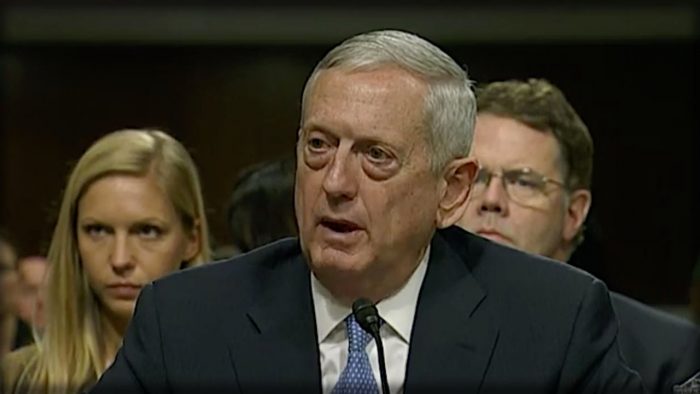
In Democracy Now, which aggressively supported the Iran nuclear deal, the blog characterized retired Gen. James Mattis’ confirmation hearings as being less about policy and more about a discussion of his personal wealth and the promise to preserve the military-industrial complex.

“It is interesting that this is among the many other issues that wasn’t really discussed during the hearing, that could have been discussed instead of the pork-barrel projects that you were talking about. And, you know, he could have been asked about these apparent conflicts of interest that might have developed as a result of his consulting work, and how he might deal with them,” said Aaron Glantz, a senior reporter at Reveal from The Center for Investigative Reporting.

Meanwhile, Iran lobby leader, Trita Parsi of the National Iranian American Council, took to doing more interviews, this time claiming that Mattis had promised to enforce the Iran nuclear deal in spite of Trump’s long criticism of it on the campaign trail, even though Mattis’ testimony was clearly not an endorsement of the deal.

The status of the nuclear deal is proving to be an important topic for the mullahs as they seek to position any break in it as the fault of the U.S. Iran’s deputy foreign minister says the nuclear deal between the Iranian regime and world powers “will not be renegotiated” ahead of U.S. President-elect Donald Trump taking office this week.

In a press conference Sunday marking the one-year anniversary of the agreement’s implementation, Abbas Araghchi told reporters that “the new U.S. administration cannot abandon the deal.”

Araghchi repeated an earlier warning by Iran’s Supreme Leader Ayatollah Ali Khamenei, who publicly stated, “If they tear it up, we will burn it,” without elaborating.

“There will be no renegotiation and the (agreement) will not be reopened,” said Araqchi, Iran’s top nuclear negotiator at the talks that led to the agreement in 2015, quoted by the state news agency IRNA.

“We and many analysts believe that the (agreement) is consolidated. The new U.S. administration will not be able to abandon it,” Araqchi told a news conference in Tehran, held a year after the deal took effect.

The potential for the Trump administration to scrap or renegotiate the nuclear deal, tied with the possibility of the incoming administration to build a rapport with Iranian dissident groups may prove to be a volatile mix of problems for the mullahs.

We can only hope that Trump extends to these Iranian dissidents the opportunity to talk and listen to their stories of the horror suffered by them and their loved ones at the hands of the mullahs and why ultimately any agreement with Iran must be based not on faith, but cold hard, verifiable facts.

Michael Tomlinson

Filed Under: Blog, News Tagged With: #NuclearDeal, Appeasement policy, Featured, Iran, Iran deal, Iran Lobby, Iran Talks, National Iranian American Council, NIAC Action, Nuclear Deal, Trita Parsi

Iran Lobby Voice Becoming Lonelier With New Congress

January 7, 2017 by admin

Iran Lobby Voice Becoming Lonelier With New Congress

Iran Lobby Voice Becoming Lonelier With New Congress

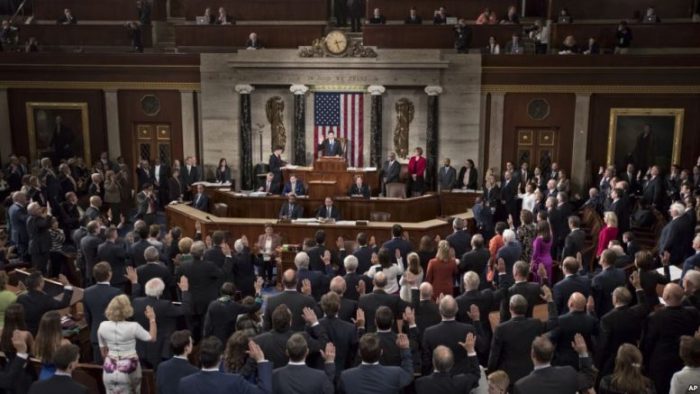
A new Republican-controlled Congress took office on Tuesday and with it comes the promise of sweeping changes in American foreign policy versus the last eight years. Most notable will be an almost certain end to the policy of appeasing the Iranian regime followed by the Obama administration in the hopes of moderating Iran’s behavior.

What is also sure to happen as well is a greatly diminished role for the Iran lobby in this new administration, especially for supporters such as the National Iranian American Council. Evidence of that reduced stature and influence has come in the downward spiral in media opportunities members of the NIAC are receiving.

Trita Parsi for example has been relegated to providing analysis on Russia Today segments and the self-blogging forum TopTopic has become the go-to publisher of NIAC commentary. Gone are the heady days of placements in the New York Times and CBS News and now they face the uncomfortable truth that they are in danger of becoming irrelevant.

One of those TopTopic pieces was written by Ryan Costello from NIAC in which he lamented the tidal wave of bills being introduced aimed at punishing various aspects of the Iranian regime such as a bill by Rep. Alcee Hastings (D-FL) authorizing the Trump administration to use military force against Iran should it be necessary.

Costello characterizes Hasting’s move as representative of a “small minority” of Democrats opposed to the nuclear deal with Iran, but what he fails to acknowledge is the fact that there is actually a growing nucleus of Democrats that the American people want to stop giving Iran endless concessions.

Costello goes on to mention additional bills being offered up including one proposal by Sen. Dean Heller (R-NV) that would impose sanctions on Iran for its ballistic missile program. While Costello laments the flood of bills coming to the fore with the change in Congress, he—and the rest of the Iran lobby—ignore the reasons why these bills are being offered up now.

The mood in America and frankly through most of Europe has swung dramatically since the nuclear agreement was reached with Iran from one of hopeful optimism to uncertainty and fear. The rise of Islamic extremism rippling across the globe, striking in cities such as Boston, San Bernardino, Orlando, Paris, Brussels, Nice and Berlin, have all been harsh reminders to elected officials that wishing for moderation does not yield moderation from extremist groups and hostile nations such as Iran.

The question of how to confront Iranian extremism has never been answered by the Iran lobby other than to repeatedly call for more accommodation and more restraint. That position has now lost its status and consigned to the political junk heap of obscure blogs and media controlled by Iran and its few allies.

Now the major media have turned their attention to the specific pathways open to Trump to restrain the Iranian regime and that is a fundamentally different approach from what the Iran lobby has tried to champion over the past five years.

The Wall Street Journal looked at the possibility of re-imposing economic sanctions, which may be opposed by European allies, is certainly available to Trump as a leverage tool at the very least.

President Trump could, among other things, re-impose the “secondary” sanctions that bar foreign companies from doing business with those individuals or entities on sanctions lists, the Journal said.

“The Iran sanctions program will be the one with the quickest attempt by the administration to put their mark on,” said Adam Smith, an attorney at Gibson Dunn & Crutcher LLP who previously served as a senior adviser at the U.S. Treasury Department’s Office of Foreign Assets Control, the main enforcement body for sanctions.

Heshmat Alavi, a political and rights activist, authored a piece in The Hill tackling this notion of Iranian “moderation” and declaring it a myth solely designed to gain Western support for a deal that would allow the mullahs access to billions of dollars in desperately needed cash.

“If Tehran truly bore the intent to not only embrace the nuclear agreement but the spirit of the accord with the West, they would not have test-fired missiles in March or October of this year,” he said.

“If the mullahs are actually sensitive about the human rights of ordinary Iranian citizens, then this regime would not have executed over 3,000 people in the past four years alone and nearly 1,000 in 2015.

“This regime, if actually sensitive about its ‘moderate’ image, would not be executing women and minors, and would not be sending opposition supporters to the gallows. This certainly doesn’t sound anything similar to ‘moderate’ behavior, at least not in the democratic world,” Alavi added.

Alavi calls for greater outreach by the Trump administration to avowed opposition and dissident groups such as the National Council of Resistance of Iran, a broad coalition of Iranian dissident and human rights groups opposed to the mullahs rule.

By switching from listening to the propaganda of the Iran lobby to the sound policy recommendations of the Iranian opposition, Trump can advance the cause of peace and democracy in the Middle East faster than anyone could imagine.

Michael Tomlinson

Filed Under: Blog, National Iranian-American Council, News Tagged With: #NuclearDeal, Appeasement policy, Featured, hassan rouhani, Iran Human rights, Iran Lobby, NIAC, NIAC Action, Trita Parsi, Tyler Cullis

Trump Can Fix Biggest Flaw in Iran Nuclear Deal

January 5, 2017 by admin

Trump Can Fix Biggest Flaw in Iran Nuclear Deal

Iran: Nuclear Force

A letter was delivered to incoming president Donald Trump signed by 37 people, most of them scientists who previously supported the Iran nuclear deal, urging him to maintain the agreement and refrain from dismantling it after he takes office. The signers included the cadre of academics who have previously joined with the Iran lobby in the debate over the flawed nuclear agreement.

As behooves a group of academics, their central argument was that the nuclear agreement was working effectively in preventing Iran from developing a nuclear weapon, saying that “as agreed, Iran has deactivated and put into storage under International Atomic Energy Agency (IAEA) seal about 2/3 of its centrifuges, and it has exported more than 95% of its stockpile of low-enriched uranium—a springboard to weapon-usable highly enriched uranium.”

The letter checks off the usual boxes mentioned by Iran supporters such as Trita Parsi of the National Iranian American Council and Joseph Cirincione of the Ploughshares Fund, who have consistently argued that the agreement would not only reduce the chance of Iran developing nuclear weapons, but would also help move it to become a moderating force in the Middle East and empower moderate elements in the Iranian government.

Therein lies the greatest failing in the scientists’ letter and the greatest opportunity Trump has been presented, which is that the Iran nuclear deal really had nothing to do with nuclear weapons, but rather about lifting sanctions in order for a reeling Iranian government to replenish its funds just as it was starting proxy wars in three different countries.

There was one absolute condition the Iranian regime had when it entered into negotiations with the P5+1 group of nations and that was for a clear separation of issues not-related directly to nuclear weapons. This included Iranian regime’s long history of support for terrorism, its harsh treatment of human rights, its crackdown on dissent at home and its eagerness to supply proxy military forces.

For the mullahs, there was nothing more important than in gaining relief from crippling economic sanctions that had pushed their iron grip to the edge with a population grown restless because of lowered wages, stagnant growth and diminished expectations for the future, including an unemployment rate among young Iranians that threatened to feed a revolt in a similar way it did in 1979 with the revolution.

And what was Tehran’s reward? According to the Wall Street Journal, over $10 billion in cash and gold was funneled to the mullahs since the deal passed in a variety of ways, some worthy of a spy novel including late night flights of jets stuffed with pallets of cash and transfers to small Iranian banks of currency converted into gold bullion.

This tallying of the sanctions relief to date includes payments previously announced and others that haven’t been. In one previously unreported payment, the U.S. authorized Iran to receive $1.4 billion in sanctions relief between when the final deal was struck in July 2015 and when it took effect, according to the U.S. officials,” the Journal said.

“Some U.S. lawmakers and Middle East allies contend that the shipments of cash and gold, a highly liquid form of money, can be used to fund Iran’s allies in the region, including the Assad regime in Syria, the Lebanese militia Hezbollah and the Houthi political movement in Yemen,” the Journal added.

This is precisely why the mullahs and their leaders Hassan Rouhani and Ali Khamenei were so desperate to complete a deal. The Iranian regime needed funds badly in order to provide Hezbollah with weapons to support the faltering Assad regime in Syria, as well as launch a civil war in Yemen with the Houthis to take on Saudi Arabia and support Shiite militias in Iraq as they launched a sectarian war against Sunni Muslims.

It also represents the greatest opportunity for Trump since the issue is not the dismantling of the nuclear agreement, but rather the threat of sanctions to link Iranian conduct back to the bargaining table.

This includes finally holding Iran accountable for items kept out of the nuclear agreement such as the development of long-range ballistic missiles capable of delivering nuclear payloads, as well as Iran’s support of three wars that have turned the Middle East into a bloodbath and large parts of Europe into refugee camps.

As part of the deal, Iran is entitled to a whopping $115 billion in sanctions relief over the past three years, but accessing those funds have been difficult since sanctions on currency transfers over the international financial network remain in place. This provides Trump with the greatest leverage possible over the mullahs.

Failure on the part of Tehran to halt its support of terrorism or lift the hammer of oppression at home is why the West should keep the firehose of funds from flowing to Tehran. This would make things problematic for the mullahs as they are facing a presidential election this spring.

Another round of broad discontent and protests again, as in 2009, could force the mullahs to once again engage in a bloody crackdown that turns international opinion firmly against them and away from the perception of moderation the Iran lobby has worked hard to try and preserve.

For the Iranian regime, the flow of cash is paramount to fulfilling its ambitions of extending its sphere of influence from the Mediterranean to Indian Ocean. A piece in Foreign Affairs examined the regime’s efforts to secure naval bases in Syria and Yemen to help its navy breakout of the Persian Gulf bubble it’s been locked in for decades.

This explains why supporting Assad in Syria and fomenting the civil war in Yemen were so crucial to the Iranian strategy for creating its own version of a Shiite Warsaw Pact.

“Bases in Syria and Yemen would be particularly important to Iran. Yemen sits on the strategic shipping route of the Bab el Mandeb Strait, one of the world’s most heavily trafficked waterways, and a naval outpost there would give Tehran unfettered access to the Red Sea and put it in a more advantageous position to threaten its main regional rival, Saudi Arabia,” Foreign Affairs said.

These are all facts the scientists who signed the letter to Trump failed to recognize or chose to ignore. It also underscores how incredibly wrong these people were in their original estimation of the success of the Iran nuclear deal.

Michael Tomlinson

Filed Under: Blog, News Tagged With: #NuclearDeal, Appeasement policy, Featured, hassan rouhani, Iran, Iran deal, Iran Human rights, Iran Lobby, NIAC, NIAC Action, Sanctions, Trita Parsi

  • « Previous Page
  • 1
  • …
  • 6
  • 7
  • 8
  • 9
  • 10
  • …
  • 21
  • Next Page »

National Iranian-American Council (NIAC)

  • Bogus Memberships
  • Survey
  • Lobbying
  • Iranians for International Cooperation
  • Defamation Lawsuit
  • People’s Mojahedin
  • Trita Parsi Biography
  • Parsi/Namazi Lobbying Plan
  • Parsi Links to Namazi & Iranian Regime
  • Namazi, NIAC Ringleader
  • Collaborating with Iran’s Ambassador

Recent Posts

  • NIAC Trying to Gain Influence On U.S. Congress
  • While Iran Lobby Plays Blame Game Iran Goes Nuclear
  • Iran Lobby Jumps on Detention of Iranian Newscaster
  • Bad News for Iran Swamps Iran Lobby
  • Iran Starts Off Year by Banning Instagram

© Copyright 2026 IranLobby.net · All Rights Reserved.