Iran Lobby

Exposing the Activities of the lobbies and appeasers of the Mullah's Dictatorship ruling Iran

  • Home
  • About
  • Current Trend
  • National Iranian-American Council(NIAC)
    • Bogus Memberships
    • Survey
    • Lobbying
    • Iranians for International Cooperation
    • Defamation Lawsuit
    • People’s Mojahedin
    • Trita Parsi Biography
    • Parsi/Namazi Lobbying Plan
    • Parsi Links to Namazi& Iranian Regime
    • Namazi, NIAC Ringleader
    • Collaborating with Iran’s Ambassador
  • The Appeasers
    • Gary Sick
    • Flynt Leverett & Hillary Mann Leverett
    • Baroness Nicholson
  • Blog
  • Links
  • Media Reports

What Happens After the Iran Presidential Elections?

May 17, 2017 by admin

What Happens After the Iran Presidential Elections?

What Happens After the Iran Presidential Elections?

The steady flow of analysis and opinion pieces regarding the upcoming Iranian presidential election keeps on coming and much of it is critical of anything really changing after the election no matter who gets elected.

One such piece comes in TIME magazine from Dennis B. Ross, co-founder of United Against a Nuclear Iran, and Jason M. Brodsky, policy director for UANI.

“Iran’s upcoming presidential election on May 19th has all the hallmarks of a Western-style democracy: a series of television debates, endorsements by elder statesmen and catchy campaign banners adorning cityscapes,” they write. “But it is all window dressing.”

“The Supreme Leader and the Islamic Revolutionary Guard Corps (IRGC) control much of the economy, and they continue to block deals that might build the strength of the private sector in Iran. Yes, there has been an infusion of cash, but following the money shows that funds have flowed to the Supreme Leader, to companies he controls and to the security services — not to ordinary Iranians,” they added.

The structural control of much of Iran remains firmly in the hands of the ruling clergy and the military that backs them. There is no opportunity for anyone rising to the top of the political pyramid without their explicit permission. This eliminates any real meaningful change from ever taking root within the regime’s government.

The evidence of that lack of change in direction has been on display for the last four years of Hassan Rouhani’s term when his much-anticipated election came with near-reverent promises of moderation and openness from the Iran lobby.

The only problem is that since his election, Iran has been anything but moderate. It’s track record since 2013 has been littered with a brutal and savage war in Syria that has claimed almost half a million lives and another insurrection in Yemen spurred by Iran that threatens to drag Saudi Arabia into direct conflict with the Islamic state.

Add to that a brutal crackdown on human rights that has all but wiped out any dissenters within Iran, and a rash of arrests and prison sentences for dual-national citizens, including five Americans, and things don’t look so great now.

The smoke signals moving forward after the election are just as bleak.

Ross and Brodsky point out that Rouhani has warned in this campaign cycle of increased “extremism” in Iran, saying “[w]e will not let them bring the security and police atmosphere back to the country.” But actions of the deep state inside the regime — the judiciary and security services — speak louder than words.

In March, to lay the groundwork before the presidential election, officials arrested administrators of twelve Telegram (an instant-messaging service) channels on unspecified charges, they noted.

Sonna Samsami, the U.S. representative for the National Council of Resistance of Iran, one of the largest Iranian dissident groups, wrote about the lack of changes coming in a piece for the Hill.

“In a recent survey of Iranians in 15 provinces, by the International American Council on the Middle East and North Africa, 79 percent of those asked said they don’t believe the outcome of the election will make any difference in their lives. Faces change, but policies remain the same,” Samsami writes.

“Meanwhile, the lot of the Iranian people remains dire as wages stagnate, needed investments in infrastructure are deferred and corruption runs rampant. These grievances have no real outlet and no real hope for redress. The greatest danger in a theocracy is that all state actions are sanctified by an authority for whom there is no higher appeal. Democracy is but a mirage under the theocracy,” Samsami adds.

The sorry state of the Iranian economy and rampant corruption has caused a simmering discontent among the Iranian people which explains why the mullahs exert such ruthless control over the electoral process for fear of an actual reformist candidate getting elected.

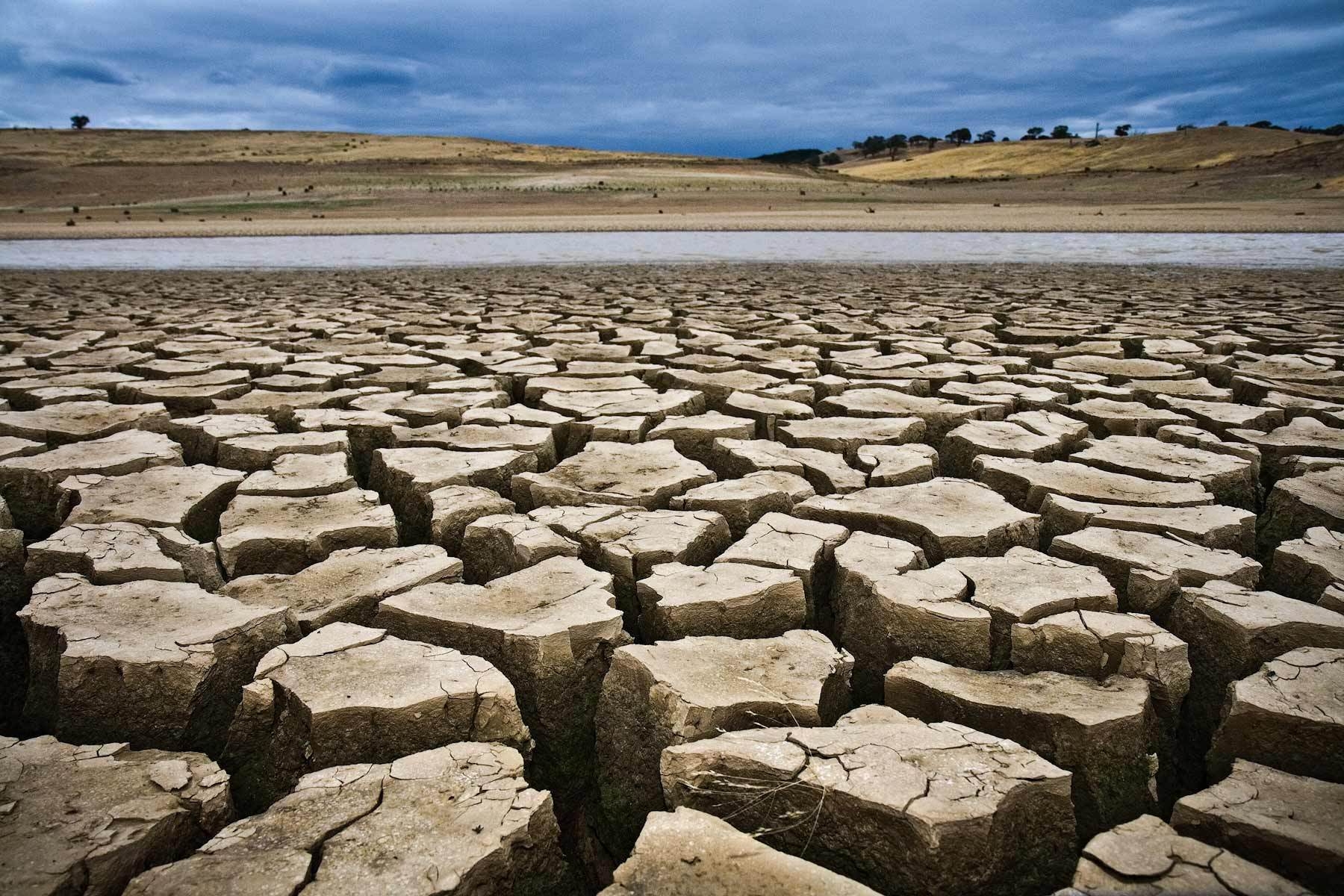
Author Seth M. Siegel writes about this deep dissatisfaction in an opinion piece in the Washington Post resulting from the collapse of the regime’s water supplies.

“Due to gross water mismanagement and its ruinous impact on the country, Iran faces the worst water future of any industrialized nation. After the fall of the shah in 1979, water policy became a victim of bad governance and corruption, putting the country on what may be an irreversible path to environmental doom and disruption that owes nothing to sanctions or years of war with its neighbors,” Siegel writes.

“Recklessly, these companies began damming major rivers, changing the historical water flows of Iran. This was done to give water preferences to powerful landowners and favored ethnic communities while also transferring billions from the public treasury to IRGC leaders’ accounts. In all, since the 1979 revolution, more than 600 dam projects have been completed, contrasted with 13 dams built in Iran prior to the shah’s fall,” he adds.

These policies after only a few years resulted in dammed rivers and over-drafted groundwater, aquifers began to go dry and lakes shriveled. Iran’s once massive Lake Urmia, until recently 2,000-square-mile expanse, contracted 90 percent between 1985 and 2015, creating cascading regional environmental problems. Other surface water resources experienced similar shrinkage and ecological consequences.

“With farmland ruined, topsoil blown away and insufficient water to grow crops, millions of farmers and herders have left the countryside to live in dismal conditions in Iran’s growing cities. Meanwhile, deserts have also expanded, and the environmental damage to the country continues,” Siegel said.

The end result has been a country on the path to ruin that no amount of militant police can control.

All of which means that the pathway to democracy may not lie in the ballot box, but in the parched soil of destroyed farmlands.

Laura Carnahan
 

Filed Under: Blog, News Tagged With: Featured, Iran sanctions, Lake Urmia, Raisi, Rouhani

Iran Lobby Peddles False Narratives for Iran Elections

May 16, 2017 by admin

Iran Lobby Peddles False Narratives for Iran Elections

Iran Lobby Peddles False Narratives for Iran Elections

With only scant days before the Iran presidential election, the Iran lobby’s most ardent supporters weighed in on the race with typical obsequiousness. The best example was an editorial by Trita Parsi, founder and president of the National Iranian American Council, in Foreign Affairs.

Predictably he offered up one of the more ridiculous spin lines in the history of disinformation on behalf of the Iranian regime. Parsi actually tried to push the idea that top mullah Ali Khamenei had no influence on the outcome of the election and that “reformist” former president Mohammad Khatami was the real power in this election.

Parsi bases that silly idea on the concept that Khamenei represents the “establishment” and as such his perceived candidates are constantly defeated at the polls by the Iranian people.

To say Parsi’s reasoning is flawed is like saying President Trump likes to tweet.

First of all is the idiotic idea that Khamenei has no influence on the election.

The Supreme Council has the final say in terms of vetting candidates to appear on the ballot for any election right down to a lowly provincial seat. Khamenei has the right to directly select half of the Council’s members. The others are appointed indirectly by him as well.

So right off the bat, Khamenei exercises a monopoly on who even goes on the ballot before the first vote is cast.

Secondly, the regime’s constitution itself ensures that only candidates meeting specific loyalty tests to the regime and its theocracy are allowed to run for office, thus ensuring adherence to preserving the mullah’s rule in Iran.

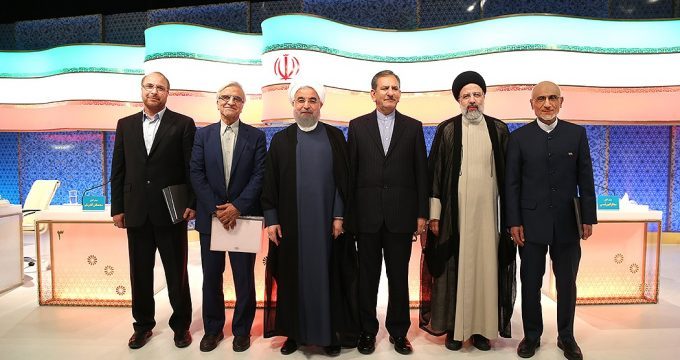
Control of who appears on the ballot allows Khamenei to control the narrative as to which candidates are perceived to be “moderate.” By stacking the ballot with four candidates who essentially have no chance at all, Khamenei can create the perception of a clear choice between a “moderate” Hassan Rouhani or a “hardline” Ebrahim Raisi.

Over 1,636 people registered to appear on the ballot for president. Only six were approved by Khamenei’s council.

Both of these men are dyed-in-the-wool insiders who are dedicated to serving the religious theocracy and Khamenei’s wishes, but Iran, with the help of the Iran lobby, creates a false perception of a real “choice” in the election.

“Another unknown candidate by the name of Mahmoud Ahmadinejad defeated the presumed favorite, the late Ali Akbar Hashemi Rafsanjani, who is considered one of the pillars of the revolutionary regime. But precisely because Rafsanjani was perceived as an embodiment of the establishment, the antiestablishment vote went to Ahmadinejad,” Parsi writes.

Of course, Parsi tries to posit that the 2009 race, which was widely considered rigged for Ahmadinejad causing widespread mass protests, was in fact actually a portrayal of the former “outsider” to be an “insider” now which caused the vote discrepancy.

Far from being honest with the reader, Parsi tries yet again to pull the wool over everyone by slicing Iran’s politicians into neat little camps opposed to each other and representing widely divergent viewpoints.

The reality is that there is very little difference between these candidates since are all loyal members of the regime.

Take Rouhani for instance. He was elected on the platform of being a moderate vowing reforms, but during his tenure, Iran has taken a huge step backward in human rights and now is involved in three wars sending thousands of young Iranians to fight and die, while the mullahs and elites skim huge personal fortunes through a massive network of corrupt shell companies.

These are not the facts that Parsi wants people to know about since it would ruin his carefully constructed fantasy.

Benny Avni writes in the New York Post how this election may be one where Khamenei decides the pretense of a moderate face for the regime is no longer necessary since Iran gained concessions from the nuclear deal already.

“Just as Americans and others are reorienting themselves for the age of President Trump, so are the mullahs. In their calculation, they now need to replace the friendly sounding voices, like those of Rouhani and his sidekick, Foreign Minister Javad Zarif, with angrier men,” Avni writes.

“Raisi is an insider who has climbed the political ladder. Supreme Leader Ali Khamenei is said to favor him as successor, when the time comes,” he adds.

“But before Raisi follows Khamenei and his predecessor, Ayatollah Ruholla Khomeini, at the top of the mullahs’ greasy poll, Raisi first needs a bit of public exposure. He could also use some governing experience, which he currently lacks. The position of president, which doesn’t have nearly as much power as Supreme Leader, is a perfect stepping stone.”

More evidence in the manipulation of the outcome was on display when Raisi’s path to the presidency became easier Monday, when a fellow hardliner, Tehran’s Mayor Mohammad-Baghar Ghalibaf, dropped out of the race.

Analysts believe Ghalibaf won the TV debates and is clearly more qualified, but, under pressure, he’s now calling on supporters to vote for Raisi.

What is clear from all this is that Parsi makes no mention of Raisi in his editorial which only demonstrates how close Raisi is to becoming elected and returning a public hardliner back into power to confront a U.S. administration no longer committed to a policy of appeasing Tehran.

We can be assured that if Raisi is elected, Parsi will no doubt ascribe his election as resulting from being a “outsider.”

Michael Tomlinson

Filed Under: Blog, National Iranian-American Council, News Tagged With: Ebrahim Raisi, Featured, Iran Election 2017, Iran Lobby, Iran Terrorism, IRGC, Khamenei, National Iranian American Council, NIAC, NIAC Action, Qalibaf, Rouhani, Trita Parsi

What If Iran Held an Election and No One Voted?

May 15, 2017 by admin

What If Iran Held an Election and No One Voted?

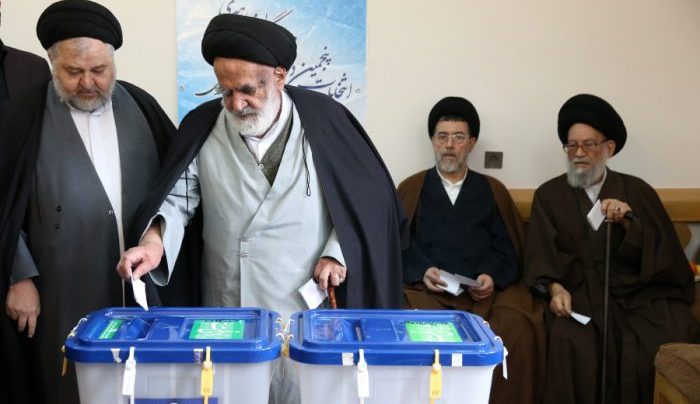
Iranian clergymen vote in the parliamentary and Experts Assembly elections at a polling station in Qom, 125 kilometers (78 miles) south of the capital Tehran, Iran, Friday, Feb. 26, 2016. Iranians across the Islamic Republic voted Friday in the country’s first election since its landmark nuclear deal with world powers, deciding whether to further empower its moderate president or side with hard-liners long suspicious of the West. The election for Iran’s parliament and a clerical body known as the Assembly of Experts hinges on both the policies of President Hassan Rouhani, as well as Iranians worries about the country’s economy, long battered by international sanctions. (AP Photo/Ebrahim Noroozi)

The Iranian regime’s presidential election is fast approaching on May 19th and with it comes expectations around the world of what the election will mean.

For the mullahs in Tehran and their overlord, Ali Khamenei, it has meant staging an election that gives the world the appearance of being fair and free, but in fact is anything but. They have even sought to create the aura of tension and debate by offering up “hardliners” to run against “moderate Hassan Rouhani.

In reality, this election—like so many others before it—has already been pre-ordained. The difference is that the mullahs learned their lesson from the disastrous 2009 re-election of Mahmoud Ahmadinejad which convulsed Iran in massive street protests that had to be put down ruthlessly and aired live on then-novel fledgling social media networks around the world.

Since then the mullahs offered up a less contentious election in 2013 with Rouhani being foisted on the world as a paragon of moderation and friendly attitudes through the removal and disqualification of any other threatening candidates to make the ballot.

The parliamentary elections last year saw a massive crackdown against journalists, dissidents, artists, students, and just about anyone else that might have Twitter on their cellphone.

Now the mullahs are staging an election where the outcome has already been pre-determined and the rest of the world just has not been clued in yet.

Slater Bakhtavar, an attorney, foreign policy analyst and political commentator, described the election farce in a piece for Forbes.

Western media are bafflingly enamored of extolling the virtues of Iran’s “free” and “democratic” electoral process, seemingly oblivious to the fact that it is neither. Anyone holding naive notions of any and all Iranians having some unalienable right to submit their name for election, then have a fair and equal chance to earn votes through rigorous campaigning and the debate of ideas, would do well to abandon such lofty fantasies, he writes.

“The actual voting process is riddled with fraud, too. The government meticulously plans initiatives to transport poor people (whose political leanings are known beforehand) to the polling stations, and official government employees are essentially ordered to vote. Tactics such as these allow officials to report enormous voter turnout numbers, pleasing journalists and maintaining the facade of Iran’s democratic international image,” Bakhtavar adds.

Bakhtavar notes how the Obama administration fell for the façade or the mullahs in supporting a flawed nuclear deal that did not reform the regime’s government and shockingly enabled the mullahs by paying cash ransoms for American hostages, thereby convincing the mullahs their path of squashing human rights was the correct one and carried no repercussions.

He does note however that the election of President Trump provides an opportunity to reset the scales with Iran and empower an Iranian dissident movement that has been under constant assault by the mullahs for three decades.

“President Trump is correct in his backing of the Iranian people, both morally and pragmatically. It has always been the right thing to do to support these oppressed people as they increasingly seek reform and the formation of a freer society, but now, in the early 21st century, the timing is perfect,” Bakhtavar said.

“New technologies exist now that allow communications on a wider scale than ever before, enabling the proliferation and exchange of new ideas and ways of thinking. Free thought is a danger to Iran’s theocratic regime, as it is to all dictatorships. These technologies are to be encouraged among the people of Iran, and those people should be afforded the dignity and respect of being addressed directly – not through their tyrannical rulers,” he added.

This explains why the mullahs spend such an inordinate amount of the regime’s time and resources to confiscating satellite dishes, blocking access to social media apps, tracking illegal online activity and trying to break the encryption of communications platforms such as Telegram and WhatsApp.

The mullahs live with the very real fear that if the Iranian people were ever able to organize and communicate effectively, especially with the outside world and dissident and human rights groups, their tenuous hold on power would slip away.

Mohammad Mohaddessin, chair of Foreign Affairs Committee of the National Council of Resistance of Iran (NCRI), one of the largest Iranian dissident groups, answered this very real concern of the mullahs.

“Over the past 38 years the clerical regime has entirely relied on execution and prison to stay in power and all regime’s officials, including Rouhani who has been one of the decision makers in the regime during this period, are directly responsible for the crimes committed,” Mohaddessin said.

To that end, the Iranian resistance movement has offered an alternative to the Iranian people dissatisfied with their choices in the election: Simply boycott the vote.

An online campaign has been picking up steam with photos of demonstrations in Iran beginning to leak out on social media of Iranians calling for a boycott of the elections.

While it’s doubtful the mullahs would even reveal the effects of any boycott since returns are usually suspected of being falsified in the first place, any boycott is a sign of growing resistance, especially in a regime where any overt act of defiance often lands one in prison or worse yet at the end of the hangman’s noose.

But some intrepid Iranians are talking to Western media about participating in such a boycott over their disgust with their choices.

“I will not vote,” said Hossein Ghasemi, a 35-year-old taxi driver who voted for Rouhani in 2013 told Bloomberg. “None of them care about our demands and difficulties linked to daily increasing prices.”

There are already warning signs on the horizon for Rouhani. A report Monday by the state-run IRNA news agency said a survey of over 6,000 eligible voters found over a third saying they would not be voting, while another 46 percent said they would pick their candidate later. It offered no margin of error on the nationwide random survey, according to Bloomberg.

We can only hope that on May 20th the full extent of the dissatisfaction of the Iranian people is heard.

Michael Tomlinson

Filed Under: Blog, News Tagged With: Featured, Iran, Iran Election 2017, Iran Terrorism, IRGC, Khamenei, Sham Election

Will Pakistan Become the Next Yemen?

May 14, 2017 by admin

Will Pakistan Become the Next Yemen?

Will Pakistan Become the Next Yemen?

The Iranian regime has turned inciting civil wars into an art form. It got its start early with the bloody sectarian conflict in Lebanon that saw Iran fund and nurture Hezbollah as it grew from a ragtag militia into a globe-spanning proxy for Iran to fight its wars.

Within the last decade, the Iranian regime has refined its mischief-making to new highs in starting the Houthi insurrection in Yemen and drawing Saudi Arabia perilously close to an all-out war with Iran, while in Syria the regime went all-in for the Assad regime.

The mullahs in Tehran used Afghan mercenaries, Shiite militias from Iraq, Hezbollah fighters from Lebanon and its own Revolutionary Guard Corps and Quds Force troops to cut a swath of blood and death across most of Syria.

At the same time, Iran manipulated the government of Nouri al-Maliki in Iraq to collapse the government, launch a sectarian conflict against Sunni tribes and indirectly fuel the rise of ISIS through the swift fall of Mosul.

Now comes worrisome signs that Iran may be turning its sights on neighboring Pakistan in a formula that has worked so well before.

A senior Iranian military commander said the country reserves the right to destroy suspected havens for terrorists in Pakistan following a recent alleged terrorist attack against Iranian border guards serving on the country’s southeastern frontier, according to regime-controlled news services.

“The Armed Forces of the Islamic Republic of Iran condemn such measures and if the Pakistani government does not take serious measures, they (Iranian forces) reserve the absolute and legal right to resolutely counter and destroy the lairs of terrorists however deep inside the neighboring country’s soil,” Iranian Army’s Ground Forces Commander Brigadier General Ahmad Reza Pourdastan said on Tuesday.

He added that Iranian Armed Forces would spare no efforts to safeguard the country’s security.

For Pakistan, the comments are no mere idle threat as the mullahs have acted on past warnings to its neighbors. The turmoil in Iraq and Yemen are prime examples.

A shocked Pakistan foreign office summoned the Iranian ambassador to record a formal protest over the provocative comments.

Relations between Islamabad and Tehran have been complex and full of mistrust for a while now. The two countries, however, have avoided aggressive posturing through public statements in the past, which makes these Iranian comments even more disturbing to Pakistani officials.

At least 10 Iranian border guards were killed in an ambush near the town of Mirjaveh in the southeastern Iranian province of Sistan Balochistan last month. Following the assault, an anti-Iran Sunni Muslim militant group called Jaish al Adl, or the Army of Justice, claimed responsibility for the attack.

Pakistan’s recent decision to join a Saudi Arabia-led military coalition of 41 predominantly Sunni Muslim nations also has upset Iran. Tehran sees the military alliance as an anti-Iran group and an attempt to expand Saudi influence in the region. Saudi and Pakistani officials reject the assertions as unfounded.

The tensions the Iranian regime are creating amongst its neighbors stands as the primary driver of instability throughout the Middle East, contrary to the promises made repeatedly by the Iran lobby which only promised Iranian cooperation and moderation in the wake of the nuclear agreement reached in April 2015.

But the instability outside its borders are only a mirror of the tensions within Iran, especially in the run up to presidential elections on May 19th, but another significant event is going to take place beforehand on May 14th.

May 14 will mark the ninth anniversary of the arrests of the Iranian Baha’i leadership, known as the Yaran. These seven men and women managed the religious and worldly needs of Iran’s Baha’i, who make up the country’s largest non-Muslim minority. Iranian authorities condemned them to 20-year prison terms for their alleged misdeeds—charges that included “corruption on earth,” “insulting religious sanctities,” “espionage for Israel,” and “propaganda against the system.” The group’s secretary was arrested on March 5, 2008, and was also sentenced to 20 years in prison.

Elliott Abrams detailed the plight of the Baha’i in a piece for Foreign Affairs.

From the Iranian revolution in 1979 to this day, the regime has shown the Baha’i no mercy. The Iranian Baha’i community has faced continued oppression on the economic front and in the denial of educational opportunities.

Last November, Iranian authorities shut down more than 100 Baha’i-owned businesses throughout Iran after those businesses were briefly shuttered by their owners to observe the Baha’i holidays.

In December and January alone, more than a dozen Baha’i students were kicked out of Iranian universities because of their faith. As one student put it, “This has been going on for 37 years [since the Iranian revolution].

Every year, university security officials identify new Baha’i students and find excuses to throw them out.” Meanwhile, hundreds of students took the national entrance exam for universities, passed, and were denied entry into any university.

The unjust imprisonment of Baha’i continues, with new arrests by the Intelligence Ministry as recently as April. It is estimated that 80 to 90 Baha’is remain imprisoned in Iran solely due to their religious beliefs. The effort to smear the Baha’i and their religion continues as well, with thousands of anti-Baha’i articles running in Iranian media in the last 12 months.

The plight of these people, coupled with the opening up of a new front against Pakistan shows the willingness of the Iranian regime to disregard world opinion and act according to its own twisted agenda.

Laura Carnahan

Filed Under: Blog, News Tagged With: Featured, hassan rouhani, Iran, Iran Terrorism, IRGC

Ali Khamenei Reinforces Why Things Will Not Change After Elections

May 11, 2017 by admin

Ali Khamenei Reinforces Why Things Will Not Change After Elections

Ali Khamenei Reinforces Why Things Will Not Change After Elections

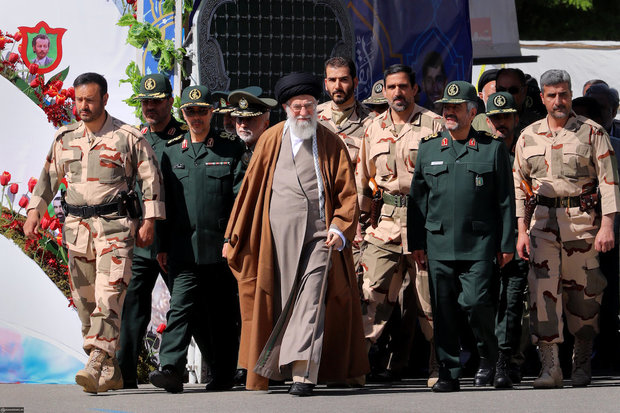
Ali Khamenei, the mullah at the top of the power pyramid in Iran, gave another of his vitriolic speeches in which he reinforced exactly why things won’t change much in the Iranian regime after presidential elections May 19th no matter who gets elected.

He warned that any disrupters of the election would receive a “slap in the face” which is a not so-veiled warning to anyone planning protests over the election results.

The warning came in remarks he made to graduating cadets of the Revolutionary Guard Corps, in which he stressed the importance of security as the dominant issue in the election. An emphasis that is at odds with protests around Iran by ordinary Iranians demanding better jobs wages and economic growth.

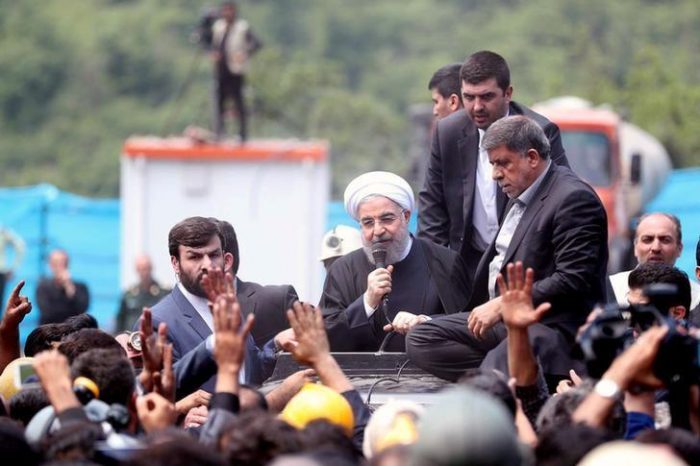
The tensions are so bad that Hassan Rouhani’s recent appearance at the scene of a mine collapse trapping and killing scores of miners was met with derision and protesting miners kicking and banging on his car.

Those underlying tensions are a clear signal to Khamenei and the other mullahs of the precarious nature of their hold on power, which is why Khamenei chose to deliver his comments before the regime’s military.

It is also why controls on this year’s elections are much stricter with street rallies banned and restrictions on televised debates.

The elections have also done nothing to alter the trajectory of the regime’s military build-up, which if anything has stepped up in tempo as evidenced by Iran’s communications minister recently announced plans to put two satellites into space, but the impending launch may be cover for ballistic missile research.

Mahmoud Vaezi announced on Monday that the two supposedly home-made satellites will be launched into orbit in the coming months. The launches may seem innocuous, but such space technology could be used to help advance Iran’s missile technology.

“Iran is certainly using its satellite program to shield the ICBM (inter-continental ballistic missile) program. The technology and challenges in the two programs are similar in many aspects and one can move from one to another,” Saeed Ghasseminejad, an Iran research fellow at the Foundation for Defense of Democracies, told The Daily Caller News Foundation.

Iran needs to disguise its ICBM program, he added, and satellite launches are an ideal method. The Islamic Republic has been sanctioned by the U.S. for its missile tests in the past, even since the signing of Joint Comprehensive Plan of Action nuclear agreement in 2015. Iran’s military has engaged in at least eight missile launches since the deal was inked.

Iran’s missile arsenal forms the backbone of its national defense. The Islamic Republic was cut off from Western military support after its revolution in 1979, diminishing the capabilities of its air force. The country instead focused on advancing its missile program, which was easier to maintain thanks to the help of North Korea. An Iranian missile tested in January had North Korean origins, according to the Pentagon.

That commitment to Iran’s missile capability was reinforced by Khamenei in the same remarks to the Revolutionary Guard Corps cadets.

“The hype over Iran’s missile capability is because of their (enemies) spite and anger about this element of power in Iran,” Khamenei said.

“We possess missiles which are very precise and can hit the targets with high precision from thousands of kilometres away,” he said, adding that “We will preserve this capability with all in power and will increase it powerfully.”

He said that Iran’s military power serves as a tool for “deterring purposes” and relies on domestic potentials.

Also, the regime test-fired a high speed torpedo, a senior U.S. defense official told Fox News, marking the latest provocative action from the Islamic Republic.

The Hoot torpedo, which has a range of six miles, was fired in the Strait of Hormuz, where much of the world’s oil passes each day.

It’s unclear if the torpedo test was successful.

It is not the first time Iran has tried to test this torpedo. The last time it did so was in February 2015. It also follows a cruise missile test from a midget submarine also based on North Korean designs.

Iranian officials announced in April that the regime’s defense budget increased 145 percent under Rouhani, hardly the sign of a government intent on becoming a “moderating” influence in the region as promised by the Iran lobby.

In the end, very little has changed in Iran and will remain so no matter who gets elected. The only real hope for democratic reforms and change remains empowering the global Iranian resistance movement and give it the international backing it needs to become a force within Iranian politics again.

Laura Carnahan

Filed Under: Blog, News Tagged With: Featured, Hoot, Iran, Iran Lobby, Iran Terrorism, IRGC, Khamenei

Why Nothing Changes in Iranian Regime Elections

May 9, 2017 by admin

Why Nothing Changes in Iranian Regime Elections

Iran’s President Hassan Rouhani speaks as he visits Azadshahr mine explosion site in Azadshahr, Golestan Province, Iran May 7, 2017. Picture taken May 7, 2017. President.ir/Handout via REUTERS

What ‘s the line? Same stuff, different day? That’s accurate when it comes to describing the so-called “presidential election” scheduled for May 19th. Elections in Iran are neither fair nor free and because of their illegitimacy, they invariably result in further weakening the already embattled regime; like a cancer eating away at a patient.

The most common fallacy being trumpeted around about how the regime government works, especially by Iran lobby advocates such as the National Iranian American Council, is that Iranian elections are democratic.

Nothing could be further from the truth.

When elections are held, all candidates are vigorously vetted by the Guardian Council, a body of 12 clerics, six of whom are appointed directly and the other six indirectly by top mullah Ali Khamenei. When the president is selected, he is nothing more than a puppet, acting according to the will of the supreme leader. Based on the Islamic state’s constitution, the president must be confirmed by the supreme leader no matter what the people voted.

It’s the kind of absolute control that campaign managers in Western nations must envy. Democracy can be such a messy experience that the mullahs in Tehran have done away with the inconvenience.

The idea that “moderates” are going to be empowered is silly when you consider that Khamenei, has final veto power over foreign policy, treaties, military commitments, economic policy, the judiciary and culture. These are enforced through state mechanisms appointed by him including the Revolutionary Guards and Quds Force (which owns over two-thirds of the industrial capacity of the economy through shell companies), Basji paramilitaries and morality police that enforce, arrest and imprison anyone violating generic sharia laws designed to stamp out dissent.

And all candidates, including the incumbent Hassan Rouhani and leading pro-Khamenei camp loyalist Ebrahim Raisi, are in line with all the regime’s strategic objectives. Otherwise, their candidacy would not enjoy Khamenei’s necessary approval.

The citizens of Iran are defined as people without rights or voice. Their choices in the upcoming elections can’t get any worse:

  • Ebrahim Raisi, known for his role in the “Death Commission” ordered by regime founder Ruhollah Khomeini, presided over the1988 massacre of over 30,000 political prisoners, mainly members and supporters of the opposition People’s Mojahedin Organization of Iran;
  • Hassan Rouhani, although portrayed as a moderate by the Iran lobby, he is known for key roles in supporting terrorism; his support for chemical, biological, and nuclear weapons; how he duped the West when he was Iran’s top nuclear negotiator; his early years as a fundamentalist activist and protege of Khomeini. His record during his current term clearly demonstrated his hardline opposition to human rights, freedom, and democracy.

The lengths that the Iran regime will go to keep its grip on power may be shown in the grisly April 29th assassination of exiled Iran TV executive Saeed Karimian in Istanbul.

Saeed Karimian, born in Tehran, the manager and owner of GEM TV group, was assassinated along with a Kuwaiti business partner while in his car after he was sentenced in absentia for “spreading propaganda.”

The regime claimed that Karimian had close relations with the Iranian opposition; going so far as to photoshop an image showing Karimian meeting with Iranian opposition leader Maryam Rajavi.  Karimian had strongly denied such reports in the past, but all Iranians know that linking anyone to the PMOI/MEK is tantamount to an undeclared execution order.

The killing of Karimian is indicative of the new paranoia gripping the theocratic regime; the ruling mullahs are now looking like they are in their death throes. After eight years of appeasement by the Obama administration, the plethora of human rights violations within Iran has increased. More than 3,000 people have been executed since the “so-called” moderate Hassan Rouhani took office as president in 2013.

It would not be surprising that the mullahs anticipate another uprising, similar to what occurred following the fraudulent second election of Mahmoud Ahmadinejad in 2009. With this presidential election, they are terrified that the people of Iran will once again take to the streets to protest the oppression and corruption that have been the modality of the Iranian regime since the 1979 revolution.

Nevertheless, whether Rouhani or Raisi becomes president, one thing is clear: the April 29 assassination in Istanbul and political discontent among the populace is a political signal indicating where the Iranian theocracy is heading after the elections.

The only solution for the people of Iran is to seek change from within. This can be achieved by supporting opposition groups such as National Council of Resistance of Iran, which is largest opposition against Tehran.  This coalition enjoys the most support among Iranians inside the country and abroad, as seen vividly in its annual 100,000-strong rallies, where supporters gather in Paris from all four corners of the globe.

Michael Tomlinson


Filed Under: Blog, News Tagged With: Featured, hassan rouhani, Iran Election 2017, Iran Human rights, Iran Lobby, Iran Mullahs

Iran Regime Ties With North Korea Requires a Marriage License

May 9, 2017 by admin

Iran Regime Ties With North Korea Requires a Marriage License

Iran Regime Ties With North Korea Requires a Marriage License

Iran’s recent failed ballistic missile  launch from a submerged “midget” submarine has once again bought up the specter of Iran’s military ties with North Korea.

The two rogue regimes are so joined at the hip, their relationship would require a marriage license to be this close.

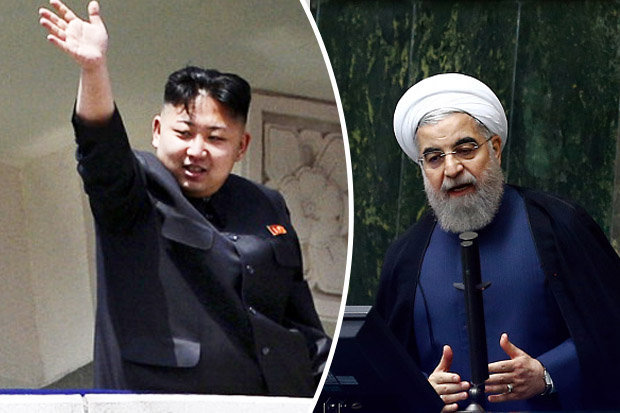
To say the mullahs in Tehran share a lot of the same values with Kim Jong-un would be an understatement of historic proportions. Both regimes have engaged in overseas assassinations and terrorist operations, especially killing dissidents and political opponents—and in the case of Kim, even family members.

Both have invested heavily in developing illicit nuclear programs, including extensive development of ballistic missile designs. The level of cooperation and sharing is akin to Intel designing microprocessors for Dell computers.

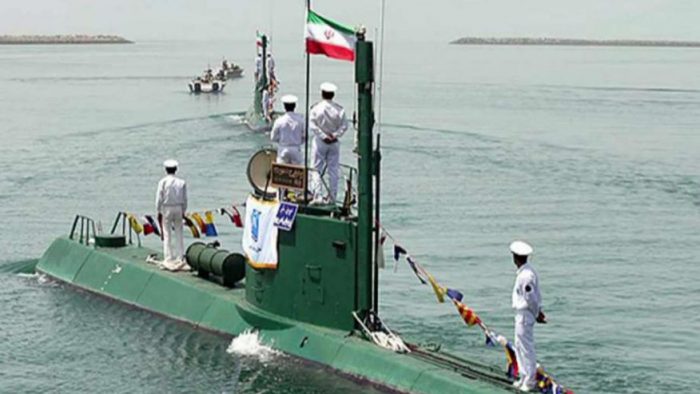
In the latest incident, the launch of what is being portrayed as Iran’s first with the Jask-2 underwater cruise missile, uses a missile design intelligence experts believe to be a copy of previous missiles tested in North Korea.

This revelation would hardly be a surprise, as the Ghadir class electric submarine used as a platform to launch the cruise missile is also a direct copy of the North Korean Yono class sub.

Both Iran and North Korea were part of the notorious A.Q. Kahn nuclear proliferation network, and bilateral trade in oil and weapons has continued despite UN resolutions designed to stop it. Ballistic missile cooperation is documented, and nuclear cooperation has been an unspoken theme in Washington.

According to Jeffrey Lewis of the Middlebury Institute of International Studies in Monterey, California, the evidence of collaboration between North Korea and Iran is ample and of long standing.

“The very first missiles we saw in Iran were simply copies of North Korean missiles,” he told Fox News “Over the years, we’ve seen photographs of North Korean and Iranian officials in each other’s countries, and we’ve seen all kinds of common hardware.”

With decades of previous cooperation between the two countries raises the concern that Iran —after its economic windfall from the nuclear agreement, including the $1.7 billion in cash it received from the U.S. for the swap of hostages. — could offer financial assistance to the cash-strapped hermit kingdom in exchange for missile technology.

Despite the overwhelming evidence of collusion between these two rouge nations the Iran lobby and its appeasers still make the false claim of moderation while Iran continues its aggressive behavior in the Persian Gulf and its meddling in the Middle East, as well as its continued efforts to develop missiles.

And North Korea has solidified its nuclear forces and is working on designing solid-fuel missiles that are much more easily concealed and dangerous than its current, liquid-fueled missile arsenal, as well as nuclear warheads that are small enough for missile delivery.

It is ironic that while Iran and North Korea share so much, they also share in the lack of condemnation or criticism from the Iran lobby. Supporters such as the National Iranian American Council can’t even be bothered to issue a press release condemning North Korea’s underground nuclear tests.

If the evidence cited in the  Fox News report is true, then the Trump administration will have to face the need to deal with two problems at once: North Korea’s active development of nuclear weapons and missiles and Iran’s use of North Korean technology to improve its own military might.

Therein lies the danger of one rogue nuclear armed state that has already been threatening nuclear war is now working with an aspirant nuclear armed state that is the world’s leading state sponsor of terrorism. The risk to U.S. and international security is greatly at risk unless steps can be taken to stop the collaboration in its tracks.

But the solution for both regimes long term lies in prying open the opportunity for domestic political reforms and enabling dissident groups to finally come in from exile. In the case of North Korea that means gaining support from China and for Iran it means empowering Iranian dissident groups to participate in Iranian society openly and freely again.

Laura Carnahan

Filed Under: Blog, News Tagged With: Featured, Iran, Iran Lobby, Iran-North korea, Jask-2

Announcement of “De-Escalation Zones” in Syria Just More Hot Air from Iran

May 6, 2017 by admin

Announcement of “De-Escalation Zones” in Syria Just More Hot Air from Iran

Announcement of “De-Escalation Zones” in Syria Just More Hot Air from Iran

Russia, Turkey and the Iranian regime jointly announced the establishment of so-called “de-escalation zones” in Syria in which the Assad regime would allegedly halt military flights over designated areas according to the Washington Post.

As officials from the three countries — Russia, Iran and Turkey — that back rival sides in the conflict signed the agreement at Syria talks in Kazakhstan on Thursday, some members of the Syrian opposition delegation shouted in protest and walked out of the conference room in Astana, the Kazakh capital.

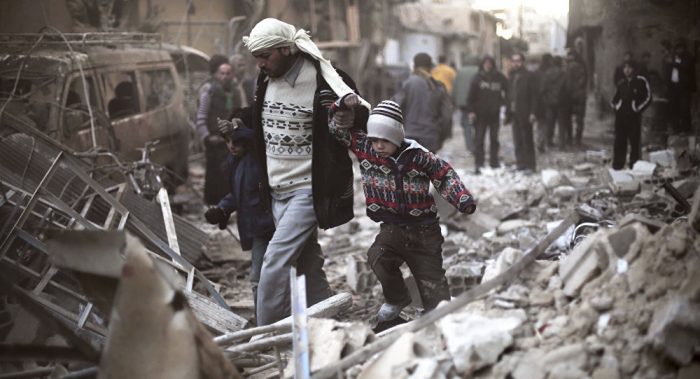
The opposition is protesting Iranian regime’s participation at the conference and role as a guarantor of the agreement, accusing it of fueling the sectarian nature of the conflict that has killed some 400,000 people and displaced half the country’s population.

“Iran is a country that is killing the Syrian people and the killer cannot be the rescuer,” said Abu Osama Golani, a rebel commander who attended the gathering in Astana.

The Iranian regime’s role in the carnage and escalation in Syria makes it a dubious guarantor of safety and security, especially since it was Iran that begged Russia into intervening in the war in a last-ditch effort to save the Assad regime from being toppled by opposition forces.

The Syrian government has said that although it will abide by the agreement, it would continue fighting “terrorism” wherever it exists, code for most armed rebel groups fighting government troops.

It’s the reason why a previous cease-fire agreement signed in Astana on Dec. 30 eventually collapsed. Other attempts at a cease-fire in Syria have all ended in failure largely because of Iran and Syria’s willingness to continue attacking rebel-controlled areas, including those with large civilian populations.

Past efforts at protecting “safe zones” have had a pretty dismal record, largely because combatants are still allowed to engage in attacks without serious repercussions.

“Iran’s activities in Syria have only contributed to the violence, not stopped it, and Iran’s unquestioning support for the Assad regime has perpetuated the misery of ordinary Syrians,” said U.S. State Department spokeswoman Heather Nauert.

The problems in Syria are only one aspect of the larger difficulties of Iranian influence and activities throughout the region and as such requires a more comprehensive solution attacking the instability at its source: Iranian regime itself.

When Iran attempted to launch a cruise missile from a “midget” submarine earlier this week, Pentagon officials saw more evidence of North Korean influence in the Islamic Republic – with intelligence reports saying the submarine was based on a Pyongyang design, the same type that sank a South Korean warship in 2010, according to Fox News.

According to U.S. defense officials, Iran was attempting to launch a Jask-2 cruise missile underwater for the first time, but the launch failed. Nonproliferation experts have long suspected North Korea and Iran are sharing expertise when it comes to their rogue missile programs.

Only two countries in the world deploy the Yono-class submarine – North Korea and Iran. Midget subs operate in shallow waters where they can hide.

“When those midget subs are operating underwater, they are running on battery power—making themselves very quiet and hard to detect,” said a U.S. defense official who declined to be identified.

Perhaps most worrisome for the United States is that Iran attempted this latest missile launch from a midget sub Tuesday in the narrow and crowded Strait of Hormuz, where much of the world’s oil passes each day, Fox News said.

Over a year ago, Iran fired off a number of unguided rockets near the USS Harry Truman aircraft carrier as she passed through the Strait of Hormuz in late December 2015. The U.S. Navy called the incident “highly provocative” at the time and said the American aircraft carrier was only 1,500 yards away from the Iranian rockets.

In July 2016, two days before the anniversary of the nuclear agreement between Iran and world powers, the Islamic Republic attempted to launch a new type of ballistic missile using North Korean technology, according to multiple intelligence officials.

Even with this overwhelming evidence of collusion between the two rogue nations, some Iran lobby apologists continue to make the case of appeasement. In this case, Robert S. Litwak, the vice president for scholars and the director of international security studies at the Woodrow Wilson International Center for Scholars in Washington, D.C., argued that an “Iran-style nuclear deal” with North Korea was a viable solution.

Buying into the false narrative of moderation within the Iranian regime, Litwak argues that making a diplomatic effort to cap North Korea’s nuclear capability—similar to the Iran nuclear deal—is the “least bad” option.

Unfortunately for Litwak, history demonstrates that this least bad option stinks to high heaven and has done nothing to curb Iran’s regional ambitions, thirst for bloodshed or improved its dismal human rights record.

A repeat of the Iran deal for North Korea would no doubt similar disastrous results.

Michael Tomlinson

Filed Under: Blog, News Tagged With: #NuclearDeal, Appeasement policy, Featured, Iran, Iran deal, Iran Human rights, Iran Lobby, Iran Mullahs, Iran sanctions, North Korea, Robert S. Litwak

Iran Military Buildup Continues Obscured by Election

May 6, 2017 by admin

Iran Military Buildup Continues Obscured by Election

Iran Military Buildup Continues Obscured by Election

It’s no secret that while the Iran lobby was busy promising more moderation and accommodation from the Iranian regime during nuclear talks two years ago, the mullahs in Tehran were busy working over their calculators figuring out what they were going to buy with their newfound cash coming from relief from economic sanctions and the bonus of billions coming from a prisoner swap with the U.S.

Since the completion of the deal, the Iranian regime has been busy replenishing its military which was drained from years of fighting in Syria and Yemen, as well as supplying its proxies with weapons and ammunition including Hezbollah, Shiite militias and the Houthis.

More worrisome though is analysis indicating that Iran has sought to not only rebuild its military, but transform it primarily from tactical, regional actions to a more strategic, offensive posture posing a menacing threat to its neighbors, especially long-time rivals Saudi Arabia and the Gulf states.

Iranian officials announced late last month that Iran’s defense budget had increased by 145 percent under President Hassan Rouhani and that the military is moving forward with a massive restructuring effort aimed at making it “a forward moving force,” according to regional reports.

Regime leaders have stated since the Iran deal was enacted that they are using the massive amounts of cash released under the agreement to fund the purchase of new military equipment and other armaments. Iran also has pursued multi-million dollar arms deals with Russia since economic sanctions were nixed as part of the deal, according to the Washington Free Beacon.

Leading members of Congress and U.S. officials working on the Iran portfolio suspect that at least a portion of the Obama administration’s $1.7 billion cash payment to Iran  has been used to fund and support terrorists in the Middle East.

The latest disclosure about Iran’s military buildup is further fueling concerns that U.S. cash assets returned to the country—which were released with no strings attached by the Obama administration—are helping Iran pursue a more aggressive military stance against U.S. forces in the region.

Iranian Brigadier General Kiumars Heidari announced the military buildup during Iran’s annual Army Day. While the announcement did not grab many headlines in the Western media, national security insiders have been discussing the announcement for weeks, according to conversations with multiple sources.

Iran’s goal is to turn its army into an “offensive” force, a major shift from its historic role as a support agent for the Iranian Revolutionary Guards Corps, or IRGC, Iran’s extremely well funded primary fighting force.

Iran hopes to revamp its army from top to bottom, including improving logistical capabilities, weaponry, and other armaments.

The regime has also escalated its attempts to demonstrate additional military capabilities including the launching of ballistic missiles.

Another sign was an Iranian Yono-class “midget” submarine attempted to launch a cruise missile from the Strait of Hormuz on Tuesday, according to U.S. officials.  The only two countries in the world that operate this type of submarine are Iran and North Korea. The test launch was not successful, reported Fox News.  Iran had previously announced it had successfully tested a sea-launched missile and it is not known if this was the first actual submarine launch of the weapon.

The increase in military activity and emphasis on first-strike weapons and tactics is leading many to speculate what path the Trump administration will pursue to stymie the mullahs.

Much crystal-ball gazing has been going on lately, not the least of which coming from Iran lobby members such as the National Iranian American Council who hope to shape the narrative much as it did during the nuclear negotiations.

Secretary of State Rex Tillerson said last month that Iran is complying with the terms of the 2015 nuclear agreement. The positive finding of the State Department’s routine periodic review of the nuclear agreement, known formally as the Joint Comprehensive Plan of Action (JCPOA), was surprising given President Trump’s assessment that it was “the worst deal ever negotiated.” Some analysts believed Tillerson was signaling that the Trump administration would let the agreement stand rather than “rip it up” as the president had promised.

But according to James S. Robbins, a member of USA TODAY’s Board of Contributors, who served as a special assistant to the secretary of defense in the George W. Bush administration, there is something deeper going on. The key language in Tillerson’s statement dealt with the National Security Council’s inter-agency review to determine whether continued suspension of the sanctions is “vital to the national security interests of the United States.” This phrasing points to the key weakness in the structure of the deal, said Robbins.

“In addition, previously secret aspects of the deal have begun to be revealed, such as the Obama administration freeing Iranian prisoners accused of major crimes related to the nuclear and missile programs. These shady aspects of the bargain make it easier for the Trump administration to make the political case against it, which Americans opposed by wide margins to begin with,” he added.

If the National Security Council determines that Iran’s activities are not in U.S. national security interests, the president can lift the sanctions waivers. This puts Iran in a bind. Tehran has threatened it could restart its nuclear program “in a new manner that would shock Washington.” But if Iran chooses openly to violate the terms of the deal, this would activate the agreement’s Article 37 “snap back” mechanism which restores all the pre-JCPOA international sanctions. The only way the “snap back” would not happen is if the UN Security Council votes otherwise, but the United States could veto any resolution that keeps the deal alive, according to Robbins.

This puts Iran in a lose/lose position: accept renewed and potentially tougher U.S. sanctions while staying within the framework of the JCPOA; or breach the deal and suffer the “snap back” consequences. Of course, Iran could just attempt to go full-bore to develop nuclear-armed missiles as quickly as possible and hope for the best. But the developing crisis with North Korea should be instructive to Tehran. The Trump administration is less willing than its predecessors to accommodate or ignore the nuclear ambitions of rogue states.

All of which places the Iranian regime squarely in the sights of the international community for the first time in nearly four years when Iran was dragged unwillingly to the bargaining table because of the effectiveness of previous sanctions.

We shouldn’t let this opportunity slip away like the last one.

Michael Tomlinson

Filed Under: Blog, News Tagged With: Featured, Iran Lobby, Iran Mullahs, Iran sanctions, Iran Talks, Iran Terrorism, IRGC, Khamenei, National Iranian American Council, Nuclear Deal

Middle East Headed for More Instability Courtesy of Iran Regime

May 3, 2017 by admin

Middle East Headed for More Instability Courtesy of Iran Regime

Middle East Headed for More Instability Courtesy of Iran Regime

To say that Saudi Arabia and the Iranian regime are at odds is to make one of the bigger understatements of the decade. For the Iranian regime, its adherence to its own particular extremist faith and expansionism, drives it to view any other country in the region with deep suspicion if not outright hostility.

Its relationship with Saudi Arabia has been fraught with peril as the mullahs in Tehran have consistently waged a silent war to destabilize the kingdom in a myriad of ways, including resorting to terror strikes such as the bombing of the Khobar Towers to insurrection in neighboring Yemen through Houthi rebel proxies.

From Saudi Arabia’s perspective, it has been in open—if not yet declared—war with the Iranian regime and for some powerful members of the ruling family, they’ve had enough.

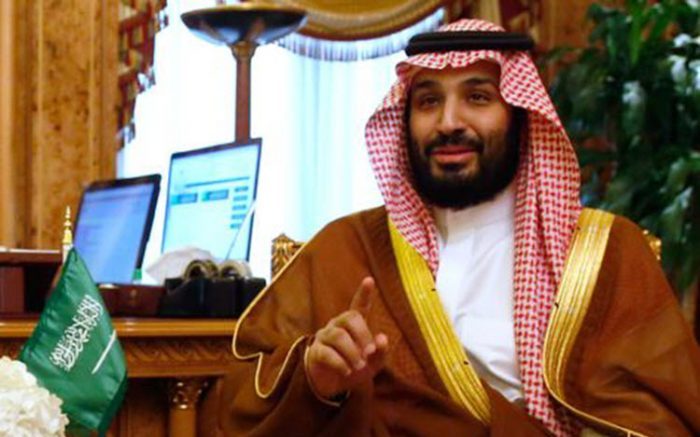
Saudi Arabia’s deputy crown prince closed off the potential for more dialogue with the Iranian regime accusing it of following an “extremist ideology” and seeking to take over the Muslim world, according to the New York Times.

The prince, Mohammed bin Salman, is second in line to the throne and serves as defense minister and said the kingdom would fight Iran’s efforts to extend its influence in the region.

“We are the primary target for the Iranian regime,” Prince Mohammed said in describing efforts by Iran to take control of Islamic holy sites in Saudi Arabia. He vowed Saudi Arabia would not wait for Iran to attack Saudi Arabia, but would instead battle the regime in Iran.

The proxy wars between the two Islamic nations have already been waged on opposite sides in Syria and Yemen with both sides blaming the other for supporting terror and extremist groups.

The war in Syria doesn’t appear to be winding down in any meaningful way as Iran announced it would be providing more troops to fight there on behalf of the Assad regime according to a senior commander in the Revolutionary Guard Corps.

Iran has provided military support to Assad’s forces since at least 2012, but initially did not comment publicly on its role. But as the military support increased and Iranian casualties also rose, officials began to speak more openly.

“The advisory help isn’t only in the field of planning but also on techniques and tactics,” the Fars news agency quoted Mohammad Pakpour, head of the Revolutionary Guard ground forces, as saying. “And because of this the forces have to be present on the battlefield.”

An Iranian official said late last year that more than 1,000 Iranians had been killed in the Syrian civil war. These include a handful of senior commanders of the Revolutionary Guards, according to Iranian media reports.

Iran has helped to train and organize thousands of Shi’ite militia fighters from Iraq, Afghanistan and Pakistan in the Syrian conflict. Fighters from Lebanon’s Hezbollah are also working closely with Iranian military commanders in Syria, according to Reuters.

While the conflict continues to grind on in Syria, the prospect of stopping Iran’s expansion in Yemen might provide the leverage necessary to roll back the regime as outlined in an editorial by Gerald Feierstein, former U.S. ambassador to Yemen, in Defense One.

Feierstein pointed out differences in how to confront Iran between Saudi Arabia and its partner Gulf states may be easing as Yemen has proving to be common ground for agreement.

“Yemen may be the key to solving the GCC’s Iran problem. After last year’s Kuwait round of Yemeni negotiations ended in stalemate, the Saudi-led coalition determined that only a shift in the military balance would bring the Houthis and their allies, loyalists of former President Ali Abdullah Saleh, back to the negotiating table. A strategy was derived to push the Houthis off the Red Sea coast — the Yemeni terminus of the arms-smuggling route that begins in Iran — and seize the vital port of Hodeidah,” he said.

Return of the port to government or even UN control would be a big step towards thwarting Iran in Yemen and eventually turn the tide in its struggle against Saudi Arabia.

The hammer could be a Trump administration review of Iranian policy that could mark a significant shift back towards valuing human rights improvements within Iran as a condition of future economic sanctions relief.

Amir Basiri, a contributor to the Washington Examiner’s Beltway Confidential blog and an Iranian human rights activist, touted the potential of this shift in a column.

While Iran does pose a major military threat, through supporting what has been described by Trump as “radical Islamist terrorism,” Tehran’s ongoing human rights abuses should finally receive the long overdue attention they deserve. In fact, U.S. interests can be advanced through a robust challenging of Iran’s domestic dissent crackdown. U.S. strategy seeking to confront Iran would receive a correct boost through combating Tehran’s authoritarian dogma, Basiri said.

“Parallel to such policy overhauls, the U.S. should stand alongside the Iranian people and their organized resistance, represented for decades by the National Council of Resistance of Iran, the umbrella group of different organizations and individuals led by Maryam Rajavi, advocating regime change and peaceful transition to democracy,” he said.

“Increasing sanctions on Iranian regime elements involved in human rights violations is another aspect that would complete the canvas of Trump’s policy vis a vis Iran. Such measures would also send messages to the international community regarding the dangers in seeking short-term economic interests at the cost of the Iranian people’s long and ongoing misery,” he added.

By realigning U.S. interests to valuing human rights, we could also effectively sideline the Iran lobby which has been loath to discuss Iran’s human rights record knowing it to be dismal.

Michael Tomlinson

Filed Under: Blog, News Tagged With: Featured, Iran, Iran Human rights, Iran Lobby, Iran Mullahs, Iran Terrorism, IRGC, Khamenei

  • « Previous Page
  • 1
  • …
  • 15
  • 16
  • 17
  • 18
  • 19
  • …
  • 72
  • Next Page »

National Iranian-American Council (NIAC)

  • Bogus Memberships
  • Survey
  • Lobbying
  • Iranians for International Cooperation
  • Defamation Lawsuit
  • People’s Mojahedin
  • Trita Parsi Biography
  • Parsi/Namazi Lobbying Plan
  • Parsi Links to Namazi & Iranian Regime
  • Namazi, NIAC Ringleader
  • Collaborating with Iran’s Ambassador

Recent Posts

  • NIAC Trying to Gain Influence On U.S. Congress
  • While Iran Lobby Plays Blame Game Iran Goes Nuclear
  • Iran Lobby Jumps on Detention of Iranian Newscaster
  • Bad News for Iran Swamps Iran Lobby
  • Iran Starts Off Year by Banning Instagram

© Copyright 2026 IranLobby.net · All Rights Reserved.