Iran Lobby

Exposing the Activities of the lobbies and appeasers of the Mullah's Dictatorship ruling Iran

  • Home
  • About
  • Current Trend
  • National Iranian-American Council(NIAC)
    • Bogus Memberships
    • Survey
    • Lobbying
    • Iranians for International Cooperation
    • Defamation Lawsuit
    • People’s Mojahedin
    • Trita Parsi Biography
    • Parsi/Namazi Lobbying Plan
    • Parsi Links to Namazi& Iranian Regime
    • Namazi, NIAC Ringleader
    • Collaborating with Iran’s Ambassador
  • The Appeasers
    • Gary Sick
    • Flynt Leverett & Hillary Mann Leverett
    • Baroness Nicholson
  • Blog
  • Links
  • Media Reports

Iran Regime Up to Old Tricks of Assassination Overseas

May 3, 2017 by admin

Iran Regime Up to Old Tricks of Assassination Overseas

Iran Regime Up to Old Tricks of Assassination Overseas

The Iranian regime has a long history of committing violence around the world either through its terrorist proxies such as Hezbollah, its intelligence operatives and Quds Forces, as well as its own Revolutionary Guard Corps.

The mullahs have long adopted the use of deadly force as a tool of statecraft. Not since the medieval age when monarchs plotted assassinations of rivals, has a nation used killing as part of an ordinary foreign policy tool.

The only other nation that seems to share that same affinity for killing is fellow rogue state North Korea which was implicated of the assassination of its leader Kim Jong Un’s half-brother in a brazen chemical attack at an airport in Malaysia in front of passers-by.

The use of chemical weapons seems to be a common trait shared by North Korea, Iran and its client state of Syria.

Now comes word that a dissident British-Iranian television executive was assassinated in Istanbul over the weekend only a few months after being sentenced in absentia to a six-year prison term by an Iranian court for allegedly spreading subversive propaganda, according to the New York Times.

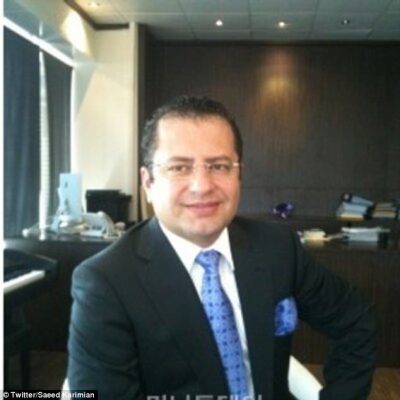
Saeed Karimian was the owner of Gem TV, a network of television channels broadcasting in Farsi and other languages. He was shot “minutes after leaving his office,” Gem announced on Sunday. Also killed was his Kuwaiti business partner, whose name has not been released.

The assailants fled, and their vehicle was found abandoned and partly destroyed in another part of Istanbul, according to reports by Gem and several Turkish news outlets.

While there was an effort to spin the killing as a dispute over money, others saw the Iranian regime’s dark hand at work.

The National Council of Resistance of Iran, one of the largest Iranian dissident groups, claimed that Karimian was assassinated by Iran’s Revolutionary Guard on the orders of top mullah Ali Khamenei. Iran has been accused of assassinating Iranian exiles in the past, most recently Abbas Yazdi, an Anglo-Iranian businessman who was kidnapped in Dubai in 2013 and is now thought to be dead.

Karimian had long been the target of propaganda and smears by media outlets linked to Iranian security services, the NCRI statement said.

His network has been aggressively expanding lately, recently adding several new channels and recruiting Iranian artists and staff from inside Iran and abroad.

Several regime-controlled Iranian media reports meanwhile said Karimian was linked in the past to The People’s Mujahedeen of Iran (PMOI), an Iranian dissident group which is part of the NCRI coalition, which may be one explanation for the assassination since the Iranian regime has allegedly instigated several documented attacks on refugee camps housing PMOI dissidents in Iraq resulting in massacres of unarmed civilians.

Turkey and Iran are neighbors and major trade partners, but relations have recently been strained. The two are regional rivals and have backed opposing sides in the Syrian civil war, according to the Washington Post.

Reporters Without Borders, a press freedom watchdog, ranks Iran as one of the worst oppressors of journalists in the world. The motive behind the killings, however, remains unclear.

The BBC reported that Karimian’s family said that the Iranian government had threatened him in recent months and that he had planned to leave Istanbul for London.

According to the New York Times, an Iranian court announced last January in a judicial newspaper that Karimian had been sentenced to six years in prison for spreading propaganda against the country’s Islamic government, and acting against national security.

What was so threatening to the mullahs? Apparently soap operas and other entertainment broadcast by Karimian’s networks are a threat to the religious theocracy the mullahs built in Iran since seizing power in 1979.

The potential pollution of the mullahs’ harsh religious control is so precarious that the regime bans satellite dishes and regularly sends militia and police out to rip them off rooftops; they are widely used, and millions of Iranians watch dissident’s “subversive” programming.

Karimian had previously suggested that he hoped his work would change Iranian society. “We will do our best to create an Iran one day that we can take pride in,” Karimian said in comments that were broadcast posthumously on his own network on Sunday following his killing.

The potential for change in Iran must have been seen as too threatening to the control of the mullahs it seems.

Michael Tomlinson

Filed Under: Blog, News Tagged With: Featured, hassan rouhani, Iran Mullahs, Iran Terrorism, IRGC, Khamenei

Iran Lobby Attacks Claims of Prisoner Concessions as Regime Talks Hostages

May 3, 2017 by admin

Iran Lobby Attacks Claims of Prisoner Concessions as Regime Talks Hostages

Iran Lobby Attacks Claims of Prisoner Concessions as Regime Talks Hostages

Josh Meyer wrote a story in Politico that exposed a series of concessions granted by the Obama administration to the Iranian regime as part of its ill-fated nuclear talks that have caused an uproar in Congress and in the intelligence and law enforcement communities.

Predictably, the Iran lobby—led by Trita Parsi of the National Iranian American Council—attacked the story and attempted to discredit the idea of concessions being granted to the Iran regime.

Writing in Huffington Post, Parsi makes the argument that not all “concessions” are alike and those tied to the release of Iranian agents were not linked to the nuclear agreement.

“From the outset, Meyer commits a critical error: He insinuates that any concessions in terms of dropping charges against potential Iranian smugglers were made as part of the nuclear deal. In reality, to the extent any concessions were made, they were made to win the release of Americans held in Iranian jails,” Parsi writes.

Parsi attempts to do what the mullahs in Tehran insisted on from the start of negotiations, which is that the issues of its nuclear program and hostages should be separate and apart from the agreement, but in fact the two were intimately related from the regime’s perspective.

The mullahs were especially keen to keep thorny issues apart from the deal because they did not want to grant the U.S. and other nations any leverage to influence issues such as Iran’s support for terrorism, human rights abuses or the lack of any political reforms within Iran.

Allowing Iran to get off the hook for those items relieved the regime of a substantial obstacle to completing the nuclear deal while preserving the mullahs power over the Iranian people.

Parsi even uses the detention of American sailors as an example of quick resolution when in fact Iranian regime squeezed them for all their propaganda value with videotaped interviews and admissions of wrongdoing. Iran mullahs even built a monument to the humiliation of the “Great Satan.”

Parsi characterizes the Iranians who were released as just a “few alleged Iranian smugglers” and ignores the nearly decades-long investigative work done by FBI agents and Justice Department attorneys who meticulously built cases involving large networks of Iranian operatives attempting to smuggle everything from nuclear weapon components to computers and weapons.

He discounts the allegations made by the Politico article as coming from “mid-level operatives in the Justice Department” as if law enforcement agents, investigators and U.S. attorneys were simply mindless drones.

But Parsi’s attempts to deflect and cover up the facts are nothing new to the Iran lobby when the mullahs get into trouble.

For the mullahs in Tehran though, the deal served its purposes in gaining billions in cash and allowing Iranian oil to flow back on the open market. It also gave Iranian regime a free pass to create havoc and shed the blood of tens of thousands in Syria and Yemen.

Now the stage is set for the Iran presidential election which some analysts have speculated could be the end of the road for Hassan Rouhani since he has served his purpose in portraying Iran as a friendly, moderate country during nuclear talks, but now that the façade is off Iran has no reason to be so “moderate” anymore.

This may explain why Ebrahim Raisi, a mullah with a long and sordid history of leading commissions that ordered the execution of over 30,000 Iranian dissidents in the 1980s may be poised to win the election should top mullah Ali Khamenei wish it.

Of course, Parsi authored yet another editorial in Al-Monitor contending that Khamenei has no influence on the election. He even laughably argues that Raisi is not a true contender nor supported by Khamenei.

What Parsi does not mention is the fact that the Iranian regime in addition to manipulating the votes, primarily opts to simply eliminate thousands of candidates from the very beginning to cull down the ballot to a select handful in order to ensure a preferred candidate’s “election”.

It is a formula that worked in 2013 and being used in this year’s election. Nothing unforeseen ever happens under the watchful gaze of the mullahs.

In another development that shows more promise, the Iranian regime admitted for the first time that the topic of dual national hostages was taken up at the first face-to-face meeting between regime representatives and those of the Trump administration in Vienna during meetings of the joint commission monitoring the implementation of the Iran nuclear deal.

The comments by Iranian Foreign Ministry spokesman Bahram Ghasemi mark the first official government confirmation it discussed prisoners with the U.S. at a recent meeting in Vienna over the nuclear deal.

While falling far short of signaling any sort of movement on freeing those with Western ties held in Iran, Ghasemi’s acknowledgement fits the pattern of past prisoner negotiations with the Islamic Republic. It signals more behind-the-scene negotiations could be possible if the Trump administration, already skeptical of Iranian intentions, is willing to deal.

Speaking to journalists, Ghasemi mentioned no specific names of the inmates brought up by the Americans.

“In the past … we had talks for humanitarian reasons with Americans over (swapping) some (American) prisoners with Iranian prisoners jailed in the U.S. and it had positive results too,” he said.

Last week, State Department spokesman Mark Toner had said American officials at the meeting had “called on Iran to immediately release these U.S. citizens so they can be reunited with their families.”

Dual nationals in detention have been used as bargaining chips in negotiations with the West. Under Iranian law, they are not entitled to consular support.

We can only hope the Trump administration can force their release without having to pay Iran billions in cash or release terrorists in exchange, since past concessions have only emboldened the mullahs to do more.

Laura Carnahan

Filed Under: Blog, News Tagged With: Featured, hassan rouhani, Iran, Iran deal, Iran Human rights, Iran Lobby, Iran Mullahs, National Iranian American Council, NIAC, NIAC Action, Trita Parsi

NIAC Busy Peddling Same Old Lies About Iran Resistance

April 29, 2017 by admin

NIAC Busy Peddling Same Old Lies About Iran Resistance

NIAC Busy Peddling Same Old Lies About Iran Resistance

That old reliable warhorse for the Iranian regime—the National Iranian American Council—served up a tired old, disproven platter of lies about the Iranian resistance movement in an opinion piece published on its website this time by the name Pouya Parsian.

But first it’s important to remember that the NIAC has been a consistent cheerleader and arch-defender of the mullahs in Tehran, especially in the face of withering revelations about its founder, Trita Parsi, and his close ties to Iranian regime officials and its abysmal track record of not criticizing the regime for its abundant human rights violations.

Even though it purports to work on behalf of Iranian-Americans, it barely bothered to issue a press release objecting to the string of Iranian-Americans that have been arrested, imprisoned and tortured by Iran.

During the run up to negotiations for the Iran nuclear deal, the NIAC had consistently urged the removal of any non-core issues such as support for terrorism, human rights abuses and involvement in foreign wars from any deal; thereby removing any and all leverage the rest of the world had over the Iranian regime due to effective sanctions that crippled Iran’s economy.

Now the NIAC has put out a pithy little missive criticizing revelations by the National Council of Resistance of Iran, the largest Iranian resistance group in the world today, that the Iranian regime had taken steps to weaponize its purportedly civilian nuclear program.

Parsian’s piece was rife with errors and fabrications. First off were errors in who was actually revealing these facts. The piece attacked the Mojahedin-e Khalq (MEK) even though the disclosures were being made by the NCRI which is an umbrella group representing a large number of Iranian dissident groups, as well as international human rights and special interest groups such as those advocating for women’s rights and religious and ethnic minorities.

The piece attempts to discredit the NCRI’s findings—not by disputing the truth of the revelations—but instead dredging up old claims of the MEK being listed by the U.S. State Department as a foreign terrorist organization; all of which was proven in error and politically motivated and eventually rescinded by then-Secretary of State Hillary Clinton.

Parsian never disputes past disclosures by the NCRI of Iran’s nuclear program and investigations into the regime’s use of military forces in the Syrian conflict; all proven to be true by independent news sources and national intelligence agencies.

The NIAC is even more inane in criticizing Camp Ashraf, one of two main relocation centers used by Iranian refugees and political dissidents seeking asylum from persecution by the regime, as treating its members inhumanely.

It’s an absurd point when Parsian never mentions the targeting of those same members in Camps Liberty and Ashraf by Iranian and Iraqi security forces resulting in bloody massacres of unarmed men and women and drew universal condemnation by the United Nations, Amnesty International and other human rights groups.

If anything, the NIAC should be thanking countries such as Albania who graciously agreed to resettle these oppressed Iranians and remove them from the threat of murder by Iranian intelligence services.

The irony of the NIAC passionately arguing for Iranians to be allowed to travel to the U.S. over the visa restrictions ordered by the Trump administration and in the same breath trashing these Iranian refugees is not only disingenuous, but fully reveals the NIAC’s bias as a staunch and blind supporter of the Iranian regime’s policies.

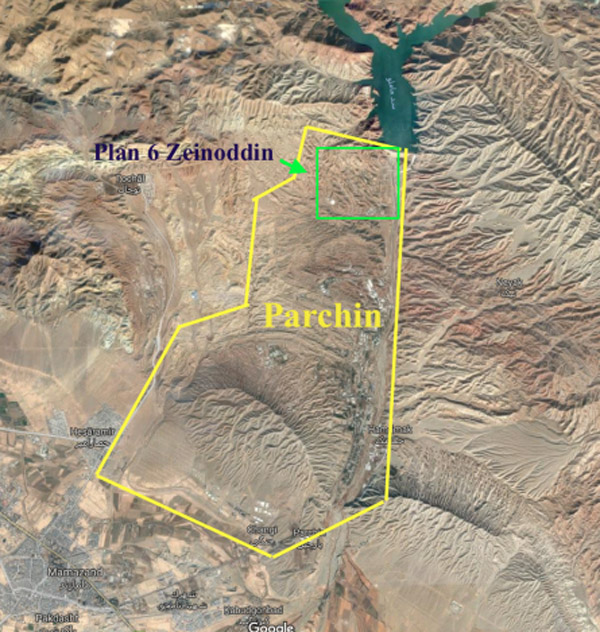
Parsian tries to frame the press conference outlining claims about the regime’s efforts to conduct military applications work at its Parchin nuclear facility as “discredited attempts,” but neglects to mention in any detail Parchin’s central role in Iran’s nuclear program.

Parchin served as a primary facility for Iran’s military to test conventional explosives designed as primary initiators for nuclear warheads. Parsian also fails to mention the regime’s blocking of international inspectors on numerous occasions at Parchin.

Parsian doesn’t mention how the Iranian regime conducted extensive earthmoving and destruction of facilities prior to opening Parchin to international inspection again to remove traces of its prior military nuclear work.

Parsian fails to discuss the fact that international inspectors were prohibited by the regime from collecting its own soil samples and instead had to “observe” hand-picked regime teams and then look at their results, which even then still showed trace amounts of radioactive elements even after sanitizing by the regime.

All of these revelations were confirmed by the International Atomic Energy Agency and other nuclear watchdog groups that were highly critical of the Iranian regime’s handling of Parchin and its inspection.

Of course, Parsian mentions none of these damning pieces of history because the truth would only diminish the NIAC’s attacks on the Iranian dissident movement.

The real question that needs to be asked though is “why?”

Why does the NIAC feel so compelled to attack the NCRI and yet ignore the past history of Parchin?

Why does the NIAC feel the urge to belittle the NCRI, but ignore the proven track record of lying by the Iranian regime?

All of this only reinforces the real truth about the NIAC, which is that it is first and foremost a loyal member of the Iran lobby and will defend the mullahs at all costs without any regard for the truth.

Laura Carnahan

Filed Under: Blog, National Iranian-American Council Tagged With: #NuclearDeal, Featured, Iran deal, Iran Human rights, Iran Lobby, Iran Mullahs, Iran Terrorism, National Iranian American Council, NIAC, NIAC Action, Parchin

Obama Prisoner Release Threatens Iran Nuke Deal

April 27, 2017 by admin

Obama Prisoner Release Threatens Iran Nuke Deal

Obama Prisoner Release Threatens Iran Nuke Deal

Revelations from an investigation by Politico led to damning disclosures of an Obama administration essentially opening up the prison doors to let loose over a dozen individuals subject to years-long investigations for crimes such as smuggling nuclear components and military hardware to the Iranian regime.

Even worse were reports that the Obama administration squashed wide ranging and complicated investigations into entire networks working on behalf of the Iranian regime.

All of this occurring while the administration, in lock step with the Iran lobby, consistently downplayed the prisoner releases as minor and barely reported the ending of the investigative work.

News of the accommodations for the Iranian regime has helped push even more criticism of the nuclear deal and added fuel to the fire to claims that Iran has spent the time since the agreement was put in place to bolster its military, crackdown on dissent at home and refill coffers depleted by wars in Syria and Yemen.

The criticism of the nuclear reached a crescendo this week and discussions on Iran policy in the Trump administration seem to be focused not on how to keep the nuclear deal alive, but rather how to confront and push back the mullahs in Tehran.

Columnist Benny Avni in the New York Post was one of several commentators to note the change in tone and direction with the new administration.

“American pressure on Iran is about to resume,” Avni said.

“It all but disappeared as President Barack Obama and Secretary of State John Kerry gave away one concession after another in the run-up to the completion of the Joint Comprehensive Plan of Action — the Iran nuclear deal — in 2015. Such pressure never really got going again, since Obama wanted Iran’s cooperation in implementing the deal and then flinched at anything the Iranians might use as a pretext to walk away from the agreement,” he added.

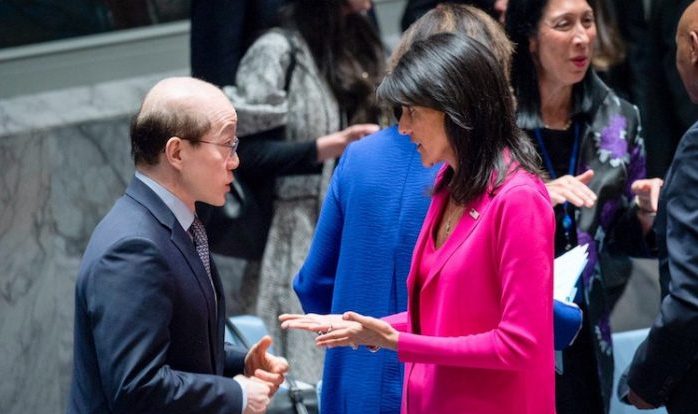
Avni pointed out—correctly—that UN ambassador Nikki Haley reminded representatives of already existing Security Council resolutions banning the regime from trafficking in weapons (which it violated with gusto in arming Hezbollah in Syria and Houthi rebels in Yemen) and halt any ballistic missile development, let alone testing.

“The United States will work closely with our partners to document and address any actions that violate these resolutions,” Haley said. “We must take a stand against Iran and Hezbollah’s illegal and dangerous behavior.”

The proof against the regime also continues to pour in, this time in the form of reporting from the National Council of Resistance of Iran (NCRI), one of the largest Iranian dissident groups in the world, which unveiled intelligence and satellite imagery in recent days that it says is proof of Iranian actions violating the Joint Comprehensive Plan of Action, or JCPOA. It also alleges that the activity is taking place in areas and facilities that are off limits to regular inspections from the International Atomic Energy Agency.
“These are the very same sources that have been proven accurate in the past. The network of the movement inside Iran, the MEK, was responsible for exposing the Natanz uranium enrichment facility and the Arak heavy water facility back in August of 2002,” said Alireza Jafarzadeh, deputy director of the NCRI’s Washington office.

Jafarzadeh said the specific facility shown in the satellite photos depicts a location specializing in detonators. Much of the secret activity is believed to be going on at Iran’s Parchin facility, a spot that Jafarzadeh said Iran blocked inspectors from for years until finally relenting two years ago. He said it makes sense for Iran to do clandestine work there.

“They thought they closed the chapter on Parchin. Now with this new information and new evidence, there is a renewed call among nuclear experts that the IAEA should be able to go back to this place among other locations that the IAEA has never inspected,” said Jafarzadeh.

The disclosures of the potential weaponization of nuclear materials by Iran is hardly a surprise to anyone closely tracking the regime’s past history, but it certainly reinforces the fresh narrative now coursing through Washington, DC and European capitals.

Rep. Lee Zeldin, one of the two Jewish Republicans in the House, is blasting the Obama administration prisoner swap with Iran as “brutally incompetent” following new disclosures about the troubling backgrounds of the Iranians who were set free.

“Once again we are reminded of how brutally incompetent President Obama’s foreign policy was, especially as it related to Iran,” Zeldin told The Post in a statement.

Zeldin has called for more pushback against all of Iran’s threatening activities.

“We must re-establish our leverage with sanctions and other tools that would force the Iranians to the table in the first place,” Zeldin said.

Most of the debate going on now among key analysts and policymakers is the proposal to extend sanctions to the Iranian Revolutionary Guard Corps which sits at the epicenter of the regime’s financial, economic and military infrastructure.

Ilan Berman, senior vice president of the American Foreign Policy Council in Washington, D.C., argued for President Trump to sanction the IRGC in an editorial in US News and World Report.

“If the legal case for designating the IRGC is airtight, the strategic rationale for such a blacklisting is even more compelling.,” Berman said.

“Most immediately, a ban on the IRGC would prevent a further normalization of international trade with Iran. As a result of its 2015 nuclear deal with the West, the Islamic Republic has reaped enormous economic dividends, with transformative effects on its economy and on the strategic aspirations of its leadership. But blacklisting the IRGC could change all that. The Guards, after all, are nothing short of an economic powerhouse, in control of a sprawling empire of companies and corporate entities within the Islamic Republic. All told, the IRGC is believed to command as much as one-third of Iran’s total economy. And because it does, a designation would send a major warning signal to those international firms and foreign nations beginning to dip their toes back into various sectors of the Iranian market that, by doing so, they could run afoul of U.S. counterterrorism laws, with potentially disastrous monetary and political consequences,” he added.

Ironically, Obama’s decision to go easy on the Iranian regime may eventually end up help speed up the demise of his most cherished foreign policy achievement and kill the Iran nuclear deal.

Laura Carnahan

Filed Under: Blog, News Tagged With: #NuclearDeal, Appeasement policy, Featured, hassan rouhani, Iran deal, Iran Human rights, Iran Lobby

Iran Denies British Aid Worker Appeal and Keeps Her Imprisoned

April 25, 2017 by admin

Iran Denies British Aid Worker Appeal and Keeps Her Imprisoned

Iran Denies British Aid Worker Appeal and Keeps Her Imprisoned

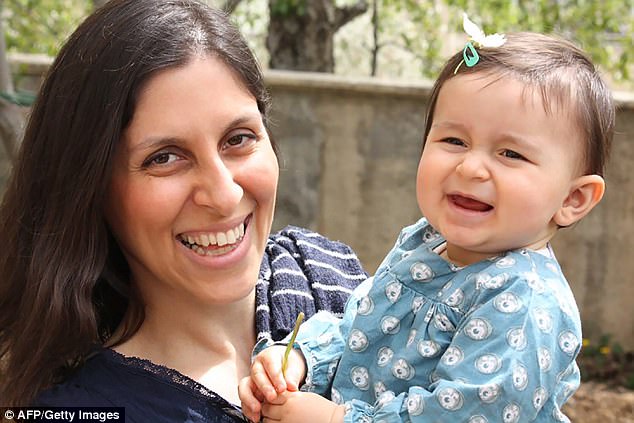
In another display of the cold-blooded nature of the Iranian regime, Iran’s supreme court up held the conviction of a British-Iranian women sentenced to five years in jail on vague charges relating to national security. The decision ends her last legal avenue to ending her harsh imprisonment.

Nazanin Zaghari-Ratcliffe, a project manager with the Thomson Reuters Foundation, the news agency’s charitable arm, had lodged a final appeal in January after the confirmation of her sentence in a lower court. Her husband, Richard Ratcliffe, said on Monday that the supreme court had rejected her appeal.

“I hadn’t had great hopes for the supreme court appeal,” he told the Guardian. “Now, realizing that that’s it, that all options are gone … in the middle of an election cycle, it’s hard to get attention on Nazanin’s case.”

According to the Guardian, Zaghari-Ratcliffe, 38, has spent 387 days behind bars, most of which have been in the notorious Evin prison. The regime’s Revolutionary Guards arrested her in April 2016 while she and her two-year-old daughter, Gabriella, were about to return to the UK after a family visit to Iran. She was tried and found guilty on the unspecified charges relating to national security last September.

Although the exact reasons behind Zaghari-Ratcliffe’s incarceration remain unclear, the Guards have accused her of attempting to orchestrate a “soft overthrow” of the Islamic Republic. An Iranian news agency affiliated to the country’s judiciary also said in April that she was a spy. Richard Ratcliffe has vehemently denied both allegations.

It also reinforces the regime’s dubious practice—articulated by Hassan Rouhani in media interviews—that it does not recognize the dual-national status of any Iranian and as such maintains the rights to arrest anyone.

The use of imprisoned American-Iranians as hostage bargaining chips during nuclear negotiations yielded billions of dollars in cash and sanctions relief and only emboldened the regime to go on another spree of arrests shortly after the deal was reached.

New revelations by Politico also revealed disturbing information about that prisoner swap by the Obama administration with the Iranian regime.

Obama announced the “one-time gesture” of releasing Iranian-born prisoners who “were not charged with terrorism or any violent offenses” last year, his administration presented the move as a modest trade-off for the greater good of the Iran nuclear agreement.

Obama portrayed the seven men he freed as “civilians.” The senior official described them as businessmen convicted of or awaiting trial for mere “sanctions-related offenses, violations of the trade embargo.”

In reality, some were accused by Obama’s own Justice Department of posing threats to national security. Three allegedly were part of an illegal procurement network supplying Iran with U.S.-made microelectronics with applications in surface-to-air and cruise missiles like the kind Tehran test-fired recently. Another was serving an eight-year sentence for conspiring to supply Iran with satellite technology and hardware, according to Politico.

And in a series of unpublicized court filings, the Justice Department dropped charges and international arrest warrants against 14 other men, all of them fugitives. The administration didn’t disclose their names or what they were accused of doing, noting only in an unattributed, 152-word statement about the swap that the U.S. “also removed any Interpol red notices and dismissed any charges against 14 Iranians for whom it was assessed that extradition requests were unlikely to be successful.”

Three of the fugitives allegedly sought to lease Boeing aircraft for an Iranian airline that authorities say had supported Hezbollah, the U.S.-designated terrorist organization. A fourth, Behrouz Dolatzadeh, was charged with conspiring to buy thousands of U.S.-made assault rifles and illegally import them into Iran.

A fifth, Amin Ravan, was charged with smuggling U.S. military antennas to Hong Kong and Singapore for use in Iran. U.S. authorities also believe he was part of a procurement network providing Iran with high-tech components for an especially deadly type of IED used by Shiite militias to kill hundreds of American troops in Iraq.

The most worrisome prisoner was Seyed Abolfazl Shahab Jamili, who had been charged with being part of a conspiracy that from 2005 to 2012 procured thousands of parts with nuclear applications for Iran via China, including hundreds of U.S.-made sensors for the uranium enrichment centrifuges in Iran whose progress had prompted the nuclear deal talks in the first place.

The revelations were devastating to federal prosecutors and cast a dark shadow over the claims constantly made by the Obama administration and the Iran lobby about the nature of concessions granted to the Iranian regime and proved the promises of “moderation” to be illusory.

The damage to long-running investigations into the regime’s illicit efforts to procure technologies to boost its ballistic missile program and military capabilities was severe, but the more important question yet to be answered is how to repair the damage to refocus efforts on pushing democracy forward in Iran.

Dr. Majid Sadeghpour, political director of the Organization of Iranian American Communities (OIACUS), a non-profit organization that works to promote human rights and democratic freedoms in Iran, emphasized that one positive that came from the Obama administration was the saving of Iranian dissidents under constant attack in Iraq by the regime in a piece for The Hill.

“Recently, Senate Armed Service Committee Chairman Sen. John McCain (R-Ariz.) met with Maryam Rajavi, the president-elect of the National Council of Resistance of Iran (NCRI) and addressed members of the People’s Mojahedin Organization of Iran (PMOI/MEK) in a rally in Tirana, Albania,” he said.

“Senator McCain’s visit represents a turning point in the plight of the Iranian dissidents now in Albania, but more importantly, marks a significant milestone in their struggle to bring about democratic change in Iran,” Sadeghpour added.

“Despite years of delays and several deadly attacks by mercenaries loyal to the Iranian regime, the MEK left Camp Liberty in Iraq with help from the previous occupants of the White House — perhaps the only piece of former President Obama’s Iran policy that will prove to have a lasting positive effect. As many as 3,000 lives were saved.”

It’s unfortunate the Obama administration could exercise the same foresight in confronting the Iran regime instead of appeasing it on the nuclear deal.

Michael Tomlinson

Filed Under: Blog, News Tagged With: Featured, Iran, Iran deal, Iran Human rights, Iran Lobby, Iran Mullahs, Iran sanctions, Iran Terrorism, Khamenei, Nazanin Zaghari-Ratcliffe

Iran Election Slate Set and It’s a Disaster

April 25, 2017 by admin

Iran Election Slate Set and It’s a Disaster

Iran Election Slate Set and It’s a Disaster

What do you get when over 1,600 candidates register to run for president in Iran?

You get just six guys on the ballot representing the absolute worst of the Iranian regime.

Democracy at work right? Only in Iran.

What is stunning about the electoral process in Iran is how the world’s news media tend to fall flat on their collective faces in covering it and missing the most important aspects. Namely that it is essentially a fixed race with no real dissenters allowed and only those candidates deemed to be the most loyal to the regime and its ruling mullahs, especially the guy at the top, Ali Khamenei.

News media fell over themselves announcing that 1,626 applicants registered, including 137 women; the highest number ever of female candidates to register since the Islamic revolution back in 1979.

Exactly how many women made the final ballot? Zero. Nada. Zip.

This is not earth-shattering news since the 12-member, all-male Guardian Council—half of whom are handpicked by Khamenei himself—was never going to approve a woman for the ballot, but is certainly happy to milk the publicity of having these many women register.

While the women who registered may have been making a statement and doing their best to protest the electoral process in the only meaningful way that won’t land them in Evin Prison or the gallows, the mullahs only see a PR opportunity in them.

According to The New Arab, Sha’la Tabrizi, who has a PhD in Political Science, was the first woman to register for this year’s presidential race.

“Women constitute 60 percent of Iranian society, so they should strive for one of them to become a powerful president some day,” she told local media, adding that she is aware of how bleak her chances are.

Similarly, A’zam Taleghani, daughter of prominent Islamic Revolution leader Mahmoud Taleghani and Iran’s first-ever female presidential candidate, registered her candidacy for the third time this year. Taleghani is a former regime MP who heads the Regime’s “Society of Islamic Revolution Women of Iran”.

The Guardian Council has disqualified every female presidential candidate since 1979.

You do have to hand it to them for persistence.

It is not without irony that the most prominent female Iranian political leader is Mrs. Maryam Rajavi who leads the largest Iranian opposition group, the National Council of Resistance of Iran. If the regime were ever to allow her on the ballot, it is likely she might end up being the first female president of Iran.

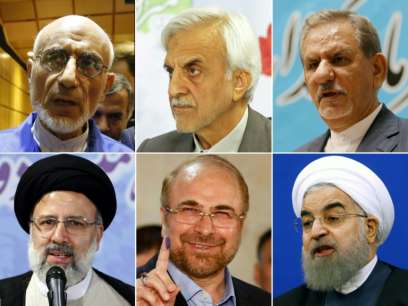
The six candidates who did make it onto the final ballot are a who’s who of regime henchmen and brutal human rights abusers. The more serious choices that will probably make their way out of the election show are:

  • Hassan Rouhani: The incumbent president presided over what has been called by international human rights groups as the largest and fastest rise in public executions in recent Iranian memory. He has also direct the regime’s support for the Assad regime and its military involvement in three wars raging in Syria, Iraq and Yemen;
  • Ebrahim Raisi: arguably one of the regime’s worst human rights abusers who was known to be part of a “Death Commission” that massacred over 30,000 Iranian dissidents in the ‘80s. He now heads Astan Quds Razavi, the wealthiest charity foundation in charge of a holy shrine and provides the financial muscle for Khamenei;
  • Eshaq Jahangiri: the current vice president to Rouhani, he is likely to drop out to back another candidate, but he is especially close to Qassem Soleimani, the head of the Revolutionary Guard’s Quds Force and has played a key role in Iran’s efforts to bolster President Bashar Assad’s forces in Syria as well bring in Russia to fight in Syria;
  • Mohammad Bagher Ghalibaf, a pilot and former commander of Revolutionary Guards air force and Iran’s chief of police. He has been the infamous mayor of Tehran since 2005 and this is his third bid for the presidency. He is blamed for the January’s massive fire at the Plasco building, a historic high-rise in downtown Tehran. The fire caused the building to collapse and killed 26 people, including 16 firefighters.

The inclusion of candidates such as Jahangiri and Hashemitaba are almost assuredly on the ballot to provide a perceived “balance” of “moderates” to “hardliners” even though they have no chance at winning.

The history of Iranian elections proves that with the rigged win for Mahmoud Ahmadinejad in 2009 that led to widespread protests and massive crackdowns.

This election will be no different since the Guardian Council have rendered the ordinary Iranian citizen’s vote moot with a slate designed to ensure only the most devout and devoted will be elected.

For most Iranians, already severely disillusioned by the unfilled promises of Rouhani, the best and most obvious choice on the ballot might be “none of the above.”

Laura Carnahan

Filed Under: Blog, News Tagged With: Featured, hassan rouhani, Iran, Iran deal, Iran Lobby, Iran Mullahs

Iran Lobby Frantically Tries to Counter Trump Administration Warnings

April 21, 2017 by admin

Iran Lobby Frantically Tries to Counter Trump Administration Warnings

Iran Lobby Frantically Tries to Counter Trump Administration Warnings

Less than 24 hours the Iran lobby was crowing about the Trump administration’s decision to re-certify the Iranian regime in compliance for another 90 days with the nuclear agreement, it went on the offensive as it faced a barrage of explicit statements from high-ranking officials denouncing the Iranian regime including United Nations ambassador Nikki Haley, Defense Secretary James Mattis and Secretary of State Rex Tillerson.

All three, top foreign policy and defense officials made the same statement that the source of trouble in the Middle East today was based in Tehran and that only a policy comprehensively dealing with all aspects of the Iranian regime was going to work moving forward in returning stability to the region.

For the mullahs in Tehran and their Iran lobby supporters, the objective has always been to divide and conquer the issues the rest of the world finds objectionable towards Iran; such as its support for terrorist groups like Hezbollah and dictators like Bashar al-Assad in Syria, as well as a dismal human rights record that would make Joseph Goebbels proud.

Which is why the Iran lobby’s cheering for the 90-day compliance notice had a lifespan of a gnat since it was merely a formality while the administration conducts a national security review of policy towards Iran.

But that didn’t stop the National Iranian American Council from bloviating like a water buffalo in heat.

“It’s a significant contradiction to first come out and say that the Iranians – contrary to all of their claims that Iran would be cheating – actually is living up to the deal only to come out the day after and saying, well, we hate the deal anyways and signaling that the U.S. might actually be walking away from the deal, unless of course the aim is to get rid of the deal without the U.S. having to pay the cost for it, meaning instead of the U.S. violating the deal directly by not renewing these sanctions waivers, killing the deal by escalating tensions in Yemen and elsewhere in the region and hoping that that will force the Iranians out of the deal,” said Trita Parsi, NIAC president on NPR.

Parsi is trying to have it both ways in separating the nuclear from other issues such as human rights or Iran’s meddling in wars raging in Syria and Yemen, but he deliberately skips over the most glaring consequence of the nuclear deal which is because we separated these issues, the mullahs were free to act without fear of reprisal in their ambitions for Syria or in the crushing of dissent at home.

The cold hard truth is that these are all connected issues like the strings of a spider web; the web would never succeed or exist unless all the strands were connected and working together.

The Iranian regime, for lack of a better comparison, is a legal criminal enterprise on a national scale. It concentrates power ruthlessly at the very top, uses the judicial system and religion to enforce disciple and stifle dissent while its military owns just about every industrial activity and skims off the top to line the pockets of the elites.

It’s like the Sopranos on steroids, except Ali Khamenei isn’t seeing a shrink unfortunately.

Of course other members of the Iran lobby weighed in too as Reza Marashi from the NIAC penned a ludicrous piece on TopTopic in which he claimed the European Union was galvanized and united in supporting the Iranian regime.

Unfortunately, yesterday’s terror attack on the Champs-Elysees in Paris only reinforced a growing uncertainty throughout a Europe that has been rattled by Islamic extremists attacks in Berlin, Brussels, Paris and elsewhere.

“While U.S. policy congeals, most European stakeholders remain in wait-and-see mode before making policy decisions – rather than taking steps to shape American policy,” Marashi writes.

We’re sure Marashi wishes for the good old Obama days when the NIAC could pick up the phone and call the White House and find a receptive audience, but it and Europe and finding that shaping policy in the White House now is not about lobbying, but about answering the central question the Obama administration never bothered to ask: “How do we rein in Iranian excesses across the board?”

Parsi reinforced that complete lack of understanding in an editorial in the New York Times in which he cited “a number of potential land mines on the near horizon. The first is in Congress, where a bipartisan effort is underway to introduce new sanctions on Iran that, despite the protestations of the legislation’s sponsors, would violate the terms of the nuclear agreement by adding new conditions onto the deal.”

Once again Parsi ignores the inconvenient truth for the Iran lobby which is that in their mind anything “new” in terms of sanctions levied against the Iranian regime would be considered a violation of the terms of the agreement, even though the agreement was purposely devoid of any clauses or mention of issues such as human rights.

Their twisted pretzel logic has them boxed in where now they are forced to denounce any and all efforts to sanction Iran as a threat to the regime. If Iranian warplanes dropped sarin gas on Sunni refugees in Iraq, Parsi and his colleagues would undoubtedly argue against any sanctions as a violation of the agreement; a convenient catch-all.

It’s also hilarious Parsi raises the prospect of a “moderate” Hassan Rouhani being defeated at the ballot box in next month’s elections since he ignores Iran’s long history of rigging every election. In fact, the regime’s Guardian Council only yesterday tossed former president Mahmoud Ahmadinejad off the ballot after much fanfare of him registering as a candidate.

In Iran, you don’t get on the ballot unless you are expected to get the blessing of the mullahs.

The most absurd comment Parsi makes is the assertion that if the U.S. reneges on the deal, Iran will undoubtedly move forward with its nuclear ambitions.

We hate to break it to the regime lackey, but the deal—by Parsi’s own admission—was never designed to halt Iranian nuclear work, only slow it down by a decade before the much ballyhooed “breakout period,” but even that has been whittled down by most analysts to just a few years.

All of which makes the statement issued by the NIAC in response to Secretary Tillerson’s remarks the other day even more laughable.

“There is little room to interpret this statement as anything less than a proclamation of the Trump administration’s intent to scrap the nuclear deal and reset the United States on a path to war,” said the NIAC.

Have they not been paying attention to Syria, Iraq, Yemen or Bahrain lately?

Michael Tomlinson

Filed Under: Blog, Current Trend, National Iranian-American Council, News Tagged With: #NuclearDeal, Appeasement policy, Featured, Iran, Iran deal, Iran Human rights, Iran Lobby, Iran Mullahs, Iran sanctions, National Iranian American Council, NIAC, NIAC Action, Reza Marashi, Syria, Trita Parsi, Yemen

There is No Difference Between North Korea and Iran Regime

April 19, 2017 by admin

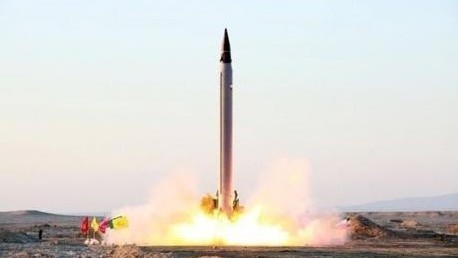
An Iranian precision-guided ballistic missile is launched as it is tested at an undisclosed location October 11, 2015. REUTERS/farsnews.com/Handout via Reuters

An Iranian precision-guided ballistic missile is launched as it is tested at an undisclosed location October 11, 2015. REUTERS/farsnews.com/Handout via Reuters

When you compare North Korea and Iran there seems to be little that connects the two rogue nations except a strict adherence to human rights abuses, but the links and similarities between the two are disturbingly close and provide a foreshadowing of the path Iranian regime is headed on.

In many important ways, North Korea and the Iranian regime are kindred spirits. They are both governments built to consolidate power in the hands of a few elites and ruthlessly dedicated to eradicating all dissent.

Whereas North Korea’s Kim Jong-un had his future laid out for him by his grandfather and father in a kind of dynastic megalomaniacal family hand-me-down, Iran’s leadership has flowed from one scheming mullah to another in a religiously based enterprise with Ali Khamenei at the top of the pyramid.

Both regimes are totalitarian in the strictest sense, utilizing a system of government that includes firm backing from the military and a judicial system designed less for crime prevention than dissident detection.

Both regimes also heavily invest in their respective militaries, especially in developing weapons of mass destruction and delivery systems for them. In fact, the ties between the two are especially close in this area as intelligence agencies around the world have tracked the sale of North Korean nuclear and ballistic missile technology to Iran.

And just as North Korea threatens its neighbors such as Japan and the U.S. with multiple missile launches and test detonations of nuclear warheads, Iran also flexes its muscle with displays of missile launches, as well as direct intervention with its own troops in Syria, Iraq and Yemen.

But North Korea is limited in many ways that Iran is not. The most significant being that North Korea’s economy is anemic compared to Iran’s with its oil wealth. This is why North Korea resorts to illicit activities such as cybercrime, counterfeiting and narcotics trafficking to raise money.

Iran by comparison has used its oil wealth to fund a massive military and prop up the Assad regime in Syria as well as fund the terrorist group Hezbollah and the Houthi rebellion in Yemen. Recent reports also show Iran’s military supplying terror cells in neighboring Gulf states such as Bahrain with explosives and funding.

Which is why Iran remains the most pressing and problematic rogue regime in the world today facing the U.S. Jennifer Rubin in the Washington Post’s Right Turn column explored the strange relationship between North Korea, Iran and Syria and why the Iranian regime remains the most serious threat to regional security and global stability.

The esteemed historian Michael Oren recently wrote:

“The framework agreements with North Korea and Syria, concluded respectively in 1994 and 2013, were similar in many ways. Both recognized that the regimes already possessed weapons of mass destruction or at least the means to produce them. Both assumed that the regimes would surrender their arsenals under an international treaty and open their facilities to inspectors. And both believed that these repressive states, if properly engaged, could be brought into the community of nations.”

All those assumptions were wrong, according to Rubin.

Oren’s recommendations echo the suggestions of both Republican and Democratic lawmakers and outside experts. (“The remaining American sanctions on Iran must stay staunchly in place and Congress must pass further punitive legislation. Above all, a strong link must be established between the JCPOA and Iran’s support for terror…”)

Congress and the Trump administration need to move expeditiously on sanctions, Rubin said.

“On one hand, we are properly worried over Syria and North Korea. On the other hand, our current policy toward Iran, a much greater threat, is such that we are helping to rebuild and enrich a country that is supporting Assad, is exporting terrorism, is fomenting regional chaos and — even without cheating — can eventually obtain nuclear weapons. We are concerned about North Korea’s puny and inept ballistic missile program but have done nothing since pinprick sanctions to respond to Iran’s illegal missile tests. We have lots of challenges to address, to be sure, but we shouldn’t take our eyes off of the worst and most dangerous rogue state,” she added.

Rubin correctly points out that the nuclear agreement forged by the Obama administration has helped strengthen the Iranian regime at a time when it was in very serious danger of collapsing from the weight of supporting Assad in Syria, while also faced with plunging global oil prices that could have bankrupted the ruling theocracy.

This theme of North Korean lessons for Iran was carried by famed human rights attorney Alan Dershowitz in a piece for the Gatestone Institute.

“The hard lesson from our failure to stop North Korea before they became a nuclear power is that we MUST stop Iran from ever developing or acquiring a nuclear arsenal. A nuclear Iran would be far more dangerous to American interests than a nuclear North Korea. Iran already has missiles capable of reaching numerous American allies. They are in the process of upgrading them and making them capable of delivering a nuclear payload to our shores,” Dershowitz writes.

The deal signed by Iran in 2015 postpones Iran’s quest for a nuclear arsenal, but it doesn’t prevent it, despite Iran’s unequivocal statement in the preamble to the agreement that “Iran reaffirms that under no circumstances will Iran ever seek, develop or acquire nuclear weapons.” (Emphasis added). Recall that North Korea provided similar assurances to the Clinton Administration back in 1994, only to break them several years later — with no real consequences. The Iranian mullahs apparently regard their reaffirmation as merely hortatory and not legally binding. The body of the agreement itself — the portion Iran believes is legally binding — does not preclude Iran from developing nuclear weapons after a certain time, variously estimated as between 10 to 15 years from the signing of the agreement. Nor does it prevent Iran from perfecting its delivery systems, including nuclear tipped inter-continental ballistic missiles capable of reaching the United States,” he adds.

It is not a coincidence that both North Korea and Iran held massive military parades in a show of force in an effort to rattle the saber to a Trump administration that has made it clear it is NOT the Obama administration.

Both regimes are controlled by power-crazed men with homicidal tendencies. It will be a hazardous path to navigate for President Trump, but confronting Iran forcefully now will assuredly head off worse problems down the road; a bitter lesson we have learned from the Obama administration’s policies of appeasement.

Michael Tomlinson

Filed Under: Blog, News Tagged With: Ballistic Missiles, Featured, Iran, Iran-North korea

US Steps Up Sanctions Against Iran Prison Industry

April 19, 2017 by admin

US Steps Up Sanctions Against Iran Prison Industry

US Steps Up Sanctions Against Iran Prison Industry

Each passing day seems to bring more evidence that the Trump administration intends to chart a very different path than the Obama administration when it comes to dealing with the Iranian regime.

The first clue was the harsh rhetoric directed at the mullahs and the nuclear agreement, as well as the multi-billion dollar payment made by the Obama administration as part of the deal.

Then came the first series of sanctions in response to Iran’s launching of ballistic missiles; a move the Obama administration did not make for fear of upsetting the mullahs and threatening the nuclear deal.

Next came the cruise missile strike against a Syrian airbase in response to a chemical attack against civilians, including young children and infants.

In less than three months, President Trump has acted aggressively and swiftly against Iran and its interests in Syria in a bold departure from the feckless policies of trying to appease the mullahs in Tehran practiced by President Obama.

Now the Trump administration is leveling new economic sanctions against senior Iranian officials and its prison system for widespread human rights abuses, including the systematic torture of those being held in these facilities, according to White House officials familiar with the matter.

The latest sanctions target the Tehran Prisons Organization and Sohrab Suleimani, a senior official in the prison system and the brother of Qassem Soleimani, a senior Iranian military figure responsible for operating Iran’s rogue activities in Syria and elsewhere.

Sohrab Soleimani is responsible for overseeing Iran’s notorious Evin Prison, which is known for torturous interrogations, forced interrogations, and widespread mistreatment of inmates.

The latest sanctions are certain to rankle Tehran, already the subject of a range of new sanctions under the Trump administration, which is currently conducting a widespread review of all matters related to the landmark nuclear agreement.

A senior official on the White House National Security Council told the Washington Free Beacon that the Soleimani family has a history of fomenting violence and unrest both inside and outside Iran.

“It’s no coincidence that Sohrab Suleimani is the brother of the notorious Qasem Soleimani, the head of the IRGC’s Quds Forces, who has been responsible for so much of the violent disruption Iran has been spreading through the region,” said the official, who was not authorized to speak on record.

U.S. intelligence agencies believe Gen. Soleimani is overseeing Iran’s military operations in Syria, which are designed to prop up the regime of President Bashar al-Assad. The U.S. and its Middle East allies also said they have seen Gen. Soleimani’s hand in Revolutionary Guard military activities in Iraq, Yemen, Lebanon and the Palestinian territories.

Iranian human rights abuses have only grown under the leadership of so-called reformist President Hassan Rouhani, the official said. This includes the detention of U.S. citizens

“There has been a disturbing and significant increase in the number of detentions and executions of Iranian citizens under President Rouhani, and the infamous Evin Prison under Sohrab Suleimani’s control has been a key facility in this program of domestic repression,” the official said.

The Trump administration is holding meetings with the family members of American citizens still being detained in Iran and believed to be subjected to torture.

Soleimani’s role in Iran’s prison system makes him one of the foremost human rights abusers worldwide.

Soleimani oversaw an April 2014 incident at the Evin Prison in which dozens of security guards and prison officials beat a number of political prisoners. The attack is believed to have lasted several hours and impacted more than 30 prisoners. Many of these prisoners were later denied medical treatment.

Evin Prison is home to large number of Iranian political dissidents and other government opponents, who are routinely shut down and arrested by the Iranian regime for political activities targeting those in power.

The sanctioning of someone so central to the regime’s enforcement system against dissidents and a family member to a key figure in Iran’s military represent a significant escalation in attempts to push and contain the Iranian regime’s influence.

More importantly, the move once again highlights human rights as a central policy concern for the U.S. moving forward and redefines the need for the regime to improve its human rights practices.

U.S. lawmakers have been calling in recent week for the U.S. to further impose sanctions on Iran for its nonnuclear activities. They specifically cited Iran’s continued detention of four U.S. nationals and two U.S. green-card holders as justification for more penalties. Iran has accused most of these Americans of espionage, a charge they have denied.

A bipartisan group of U.S. lawmakers wrote Treasury Secretary Steven Mnuchin last week and noted that Iran hadn’t been sanctioned for any human-rights violations since the nuclear agreement was reached in July 2015.

“Failing to sanction individuals and entities committing flagrant abuses of human rights against the Iranian people not only goes against our most cherished values and principles but also undermines the credibility of our government,” they wrote.

This is an important step, but it’s only a step forward to finally bringing hope and democracy back to the Iranian people. We can only hope the pressure continues to build through next month’s presidential election in Iran.

Laura Carnahan

Filed Under: Blog, News Tagged With: Featured, hassan rouhani, Iran, Iran deal, Iran Human rights, Iran Lobby, Iran Mullahs, Iran sanctions, Iran Terrorism, IRGC, Khamenei, soleimani

Trump Administration Must Move to Sanction IRGC

April 18, 2017 by admin

Trump Administration Must Move to Sanction IRGC

Trump Administration Must Move to Sanction IRGC

With recent moves such as the launching of a cruise missile attack against a Syrian airfield, the dynamics of the how to confront the Iranian regime are inevitably changing in the transition from the Obama administration to the Trump administration.

The pressure on the Iranian regime can be seen in the stepped-up attacks by the Iran lobby to try and dissuade U.S. policymakers from shifting to a more aggressive stance against the mullahs in Tehran.

How and in what form that stance will be is taking shape internally within the administration and in the halls of Congress and the mullahs are desperate to influence that debate. Unfortunately the easy access Iran enjoyed through the open door policy at the Obama White House through multiple visits by Trita Parsi of the National Iranian American Council and other members of the Iran lobby is now shut off.

The Trump White House is poised to ratchet up existing sanctions against Iran and is weighing a much stricter interpretation of the nuclear agreement between Tehran and major world powers, according to Foreign Policy.

The administration is inclined to adopt a “more rigorous application of the tools at its disposal,” a senior White House official told Foreign Policy, referring to sanctions policy. Among the options under consideration: broadening U.S. sanctions to include much larger chunks of the Iranian economy linked to the Islamic Revolutionary Guard Corps (IRGC).

No final decision has been taken by the president or the cabinet. But officials said some decisions will need to be taken soon. On April 25, Iran and the six governments that negotiated the nuclear deal with Tehran, including the United States, are due to meet in Vienna for a quarterly review of the accord.

How President Donald Trump decides to proceed on sanctions and the nuclear deal more broadly carries high stakes for the United States, Iran, and the wider Middle East. A concerted U.S. effort to squeeze Iran would represent a gamble that Tehran’s regional push for power, particularly in Syria and Yemen, could be checked in part by increasing economic pressure.

Another major decision facing President Trump is whether or not to stick with the nuclear deal that he so roundly criticized on the campaign trail. The calculation of whether or not to keep it will have to rely on a central question which is are the mullahs abiding by it or simply using it as a smokescreen to rebuild their military as many suspect.

But the president doesn’t have to shred the deal to put pressure on the Iranian regime. As Foreign Policy pointed out, the agreement is not a binding treaty as such he has broad leeway to interpret its provisions. Under President Obama, that flexibility allowed him to grant Iran broad leniency in areas such as enriched fuel and heavy water. Trump could choose to close those loopholes.

Evidence of that tougher stance has cropped up as the Treasury Department announced new sanctions last week, including the brother of the powerful head of the special forces arm of the IRGC, Sohrab Soleimani, for his role in abuses at the country’s prisons. And in February, the Treasury Department blacklisted eight organizations linked to the Revolutionary Guards, as well as one of its officials based in Lebanon.

The focus on the IRGC and its Quds Forces signal a significant change that could hold the promise of increased effectiveness because of the deep roots the organizations have throughout Iran and its economy.

At the moment, any entity that has a 50 percent ownership stake or more held by the IRGC is subject to sanctions, but the administration is mulling a change that would drop the threshold to a lower percentage.

Such a move would break with long-standing policy at Treasury, which has traditionally defined ownership as above 50 percent for any category of sanctions. A lower threshold would mean blacklisting hundreds and possibly thousands of additional Iranian companies and organizations with links to the IRGC, experts said.

The mere threat of a lower threshold has helped stifle potential investments into the Iranian regime as banks and companies from Europe and Asia fret about possible sanctions being levied by the U.S. down the road should they invest.

That has had a ripple effect as the much-promised economic benefits from the nuclear deal have failed to materialize leading to speculation that top mullah Ali Khamenei may have decided to abandon the pretense of moderation in favor of a harder line as evidenced by who makes the presidential ballot for next month’s election in Iran.

Emanuele Ottolenghi, Ph.D., a senior fellow and expert on Iran at the Foundation for Defense of Democracies, wrote in The Hill of the need to close one loophole benefitting the regime now which the lifting of sanctions restricting the sale of commercial airliners to Iran.

The activities of Iran’s aviation sector have exposed the inadequacy of the nuclear agreement’s caveat that licensed items and services must be used “exclusively for commercial passenger aviation.” Currently, at least five Iranian and two Syrian commercial airlines are engaged in regular military airlifts to Syria, he writes.

These carriers have been crisscrossing Iraqi airspace since 2011, but have increased their tempo since the summer of 2015, when Iran and Russia coordinated their efforts to save Assad’s regime. Flight tracking data indicate that, from the nuclear deal’s implementation day on Jan. 16, 2016 to March 30, 2017, there were at least 696 flights from Iran to Syria, only six of which were carried out by Iran’s air force, she added.

She points out that it is extremely likely that Iran Air is still an active participant in the Syria airlifts. First, there is no justification for frequent commercial flights to Damascus: Syria is a war zone with little tourism or commerce, yet it is served almost twice daily by Iranian airlines. Iran Air, for example, flies to Damascus twice a week. It is doubtful Iranian tourists are posing for selfies in the ruins of bombed cities.

The flight cannot be purchased on Iran Air’s booking website or through travel agencies and the booking website does not include Damascus among its destinations from Tehran’s international airport, where the flights originate. Finally, Iran Air flights to Damascus occasionally make unscheduled stopovers in Abadan, an IRGC logistical hub for the Syria airlifts.

The next few months will show whether or not the Trump administration will follow through on its campaign promises and finally begin the hard work of stopping the mullahs.

Michael Tomlinson

Filed Under: Blog, News Tagged With: #NuclearDeal, Featured, hassan rouhani, Iran deal, Iran Mullahs, Iran sanctions, Iran Terrorism, IRGC, Khamenei

  • « Previous Page
  • 1
  • …
  • 16
  • 17
  • 18
  • 19
  • 20
  • …
  • 72
  • Next Page »

National Iranian-American Council (NIAC)

  • Bogus Memberships
  • Survey
  • Lobbying
  • Iranians for International Cooperation
  • Defamation Lawsuit
  • People’s Mojahedin
  • Trita Parsi Biography
  • Parsi/Namazi Lobbying Plan
  • Parsi Links to Namazi & Iranian Regime
  • Namazi, NIAC Ringleader
  • Collaborating with Iran’s Ambassador

Recent Posts

  • NIAC Trying to Gain Influence On U.S. Congress
  • While Iran Lobby Plays Blame Game Iran Goes Nuclear
  • Iran Lobby Jumps on Detention of Iranian Newscaster
  • Bad News for Iran Swamps Iran Lobby
  • Iran Starts Off Year by Banning Instagram

© Copyright 2026 IranLobby.net · All Rights Reserved.