Iran Lobby

Exposing the Activities of the lobbies and appeasers of the Mullah's Dictatorship ruling Iran

  • Home
  • About
  • Current Trend
  • National Iranian-American Council(NIAC)
    • Bogus Memberships
    • Survey
    • Lobbying
    • Iranians for International Cooperation
    • Defamation Lawsuit
    • People’s Mojahedin
    • Trita Parsi Biography
    • Parsi/Namazi Lobbying Plan
    • Parsi Links to Namazi& Iranian Regime
    • Namazi, NIAC Ringleader
    • Collaborating with Iran’s Ambassador
  • The Appeasers
    • Gary Sick
    • Flynt Leverett & Hillary Mann Leverett
    • Baroness Nicholson
  • Blog
  • Links
  • Media Reports

Human Rights Worsen in Iran and so Does Accountability

May 5, 2016 by admin


Human Rights Worsen in Iran and so Does Accountability

Human Rights Worsen in Iran and so Does Accountability

What price is the Iranian regime willing to pay to achieve its goals such as keeping the Assad regime firmly in power in Syria?

It has been willing to funnel billions of dollars in hard currency to keep Assad afloat.

It has been willing to order its Hezbollah proxy to send fighters there.

It has been willing to recruit Afghan refugees to fight as mercenaries, even threaten to deport their family members back to Afghanistan if they refused to fight in Syria.

It has been willing to send in its own Quds Force members and now even its regular army soldiers to fight and die and celebrate their martyrdom.

It has even been willing to recruit Russia to fight alongside its forces to target Western-backed rebels, including the deliberate targeting of civilians and relief agencies.

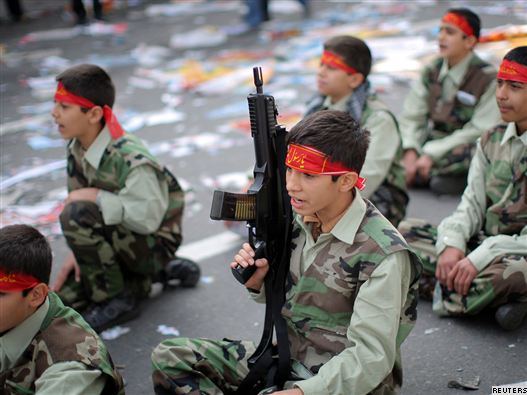
Now to top it all off, the Iranian regime has released a slick music video made by the Basij militia recruiting children to fight in Syria as well in a clear demonstration of how desperate the mullahs in Tehran have become to protect their partner in crime.

The lyrics, as translated by the National Council of Resistance of Iran, a leading dissident group, say:

“On my leader [Ayatollah Khamenei’s] orders I am ready to give my life.

The goal is not just to free Iraq and Syria;

My path is through the sacred shrine [in Syria], but my goal is to reach Jerusalem.

… I don’t regret parting from my country;

In this just path I am wearing my martyrdom shroud.”

Michael J. Totten, writing in World Affairs Journal, explained the regime’s past history of using children for war.

“Iran’s regime has done this before. During the Iran-Iraq War, which killed around a million people between 1980 and 1988, the Basij recruited thousands of children to clear minefields.

“After lengthy cult-like brainwashing sessions, the poor kids placed plastic keys around their necks, symbolizing martyrs’ permission to enter paradise, and ran ahead of Iranian ground troops and tanks to remove Iraqi mines by detonating them with their feet and blowing their small bodies to pieces,” he writes.

The Iranian government desperately needs the Assad regime in Damascus and the Abadi government in Iraq because they’re Iran’s only allies in the entire Arab world. A moderate and democratic Iran would have no trouble forging normal and friendly relations with moderate Arabs governments like Jordan’s, Tunisia’s, Morocco’s and possibly even Egypt’s, but the revolutionary state that’s been entrenched there since 1979 isn’t tolerated any better in capitals like Cairo and Riyadh than it is in Tel Aviv and Jerusalem, he added.

More than 280 Iranian troops have been killed in Syria since September of last year, according to an analysis by the Levantine Group of casualties reported by Iranian media.

The willingness to sustain such a heavy rate of losses is evidence of Tehran’s commitment to the Assad regime, but also seems to show that Iran is counting on its forces to stand in for what the Levantine Group describes as a “decomposing” regime army.

“Iranian operatives are not mere military advisers spread out along regime lines,” said geopolitical and security analyst Michael Horowitz.

The use of Afghan refugees as cannon fodder in Syria highlights the plight of these refugees who sought to escape violence in Afghanistan only to experience violence in Iran as shown by the brutal and ghastly rape and murder of a six-year old Afghan girl.

Her case could have disappeared in the Iranian regime’s court system — Afghan migrants, who number about two million, often face discrimination by the mullah’s judiciary and other institutions.

Instead, her death provoked a social media storm, with an online outpouring of grief and a show of solidarity with Afghan migrants. A vigil for the murdered child was organized via Telegram, a popular messaging app in Iran, and eventually the judiciary was forced to fast-track her case; finally succumbing to intense pressure to act in this particular case where so many others had been previously ignored.

There are other small slivers of hope as another successful social media campaign is helping a detainee of the notorious Evin Prison.

Omid Kokabee, an Iranian physicist associated with the University of Texas, has been in the jail since being arrested on charges of espionage in 2011. He is currently suffering from kidney cancer, and Iranians blame the regime for delaying treatment two years ago that could have helped prevent its spread.

A #freeomid Twitter campaign has prompted a response from Gholam-Hossein Mohseni-Ejei, a hardline spokesman of the judiciary who has denied any failure on the part of the authorities but said the prisoner’s 10-year sentence could be reconsidered depending on his medical condition.

We can only hope that more social media campaigns can lead to activism and pressure to bring about a fundamental change to the Iranian regime, which is what the mullahs ruling Iran are fearing from. An overwhelming majority of young and discontent Iranians who have lived under the iron fist and are now using every opportunity to revolt against the ruling theocracy.

By Michael Tomlinson
Filed Under: Blog, News Tagged With: Featured, Iran, Iran Human rights, Iran Mullahs

Iran Lobby Tries to Influence Presidential Campaign

May 2, 2016 by admin

The Iranian lobby, led by the National Iranian American Council, has decided to up its efforts to influence the ongoing U.S. presidential election by directing messages at the campaigns of the front runners.

The reason for this is simple: The NIAC and other Iranian regime supporters want to do whatever they can to ensure that a new incoming administration continue to toe the line in appeasing the mullahs in Tehran and support a deeply flawed nuclear agreement that has allowed the regime to continue its militant ways without serious repercussions.

In an editorial by Tyler Cullis and Ryan Costello, the NIAC laid out a presumptive roadmap for Democratic frontrunner Hillary Clinton on how to “woo back Iranian Americans,” but in reality it should be viewed more as a roadmap to “helping the Iranian regime.”

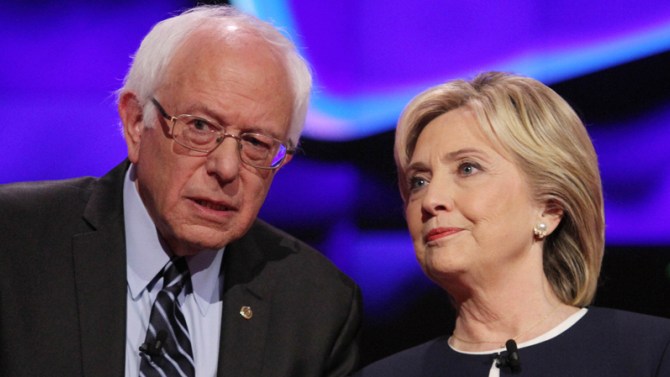
Cullis and Costello spell out how her rival, Sen. Bernie Sanders, garnered overwhelming support from an internal poll of NIAC supporters – Sanders received 62 percent vs. 19 percent for Clinton – based on a perception he was more anti-war.

“Clearly, Iranian Americans who have gravitated towards Sanders have largely done so for the same reasons as other Sanders supporters – because of a distrust of the Washington establishment, anti-war and anti-interventionist sentiments, disillusion with incrementalist political change and concerns about increased economic injustice,” Cullis and Costello write.

“But Clinton’s approach toward Iran is also a major reason why she lagged behind Sanders among Iranian Americans.”

What is amazing is how the NIAC is attempting to portray support for Sanders principally being driven by foreign policy concerns when almost every poll taken during the primary season has shown his supporters backing his domestic views on the economy, wage inequality and regulation of Wall Street as the energizing factors in his campaign.

The NIAC is taking this position largely because it can read public opinion polls and see how American opinion has shifted on the Iranian regime and the rise of Islamic extremism in the wake of a worsened Syrian situation and almost regular terrorist attacks in Paris and Brussels since the deal.

Cullis and Costello have taken Clinton to task for her previous statements against normalizing relations with the Iranian regime, especially if the regime continued its support for terrorism and regional conflict.

“The dispute reflected the debate eight years ago when Clinton, along with other candidates, attacked Obama for his statement that he would sit down with hostile nations, including Iran, without preconditions,” they write.

“Clinton’s stance toward further Iran negotiations might not ultimately be that different than Sanders, but her attacks on normalization send a worrying signal that engagement would be the exception rather than the rule,” they add.

One cannot help but notice a slight hint of desperation in the NIAC and other Iranian regime supporters as they take a deeper dive into the U.S. presidential campaign as they are faced with the very real possibility of having either a Clinton or Trump administration already publicly committed to opposing Iranian extremism.

The lobby’s efforts also highlight the one significant weakness of the Iran nuclear deal in that it is an executive action by President Obama and can just as easily be undone by a new president. The tenuous nature of the deal providing the mullahs in Tehran with relief from sanctions is worrisome to supporters such as Cullis and Costello.

The fact that the NIAC is upping its game in order to try and shape the public perception of how these candidates should perceive the Iranian regime is – on the surface – pretty pathetic and indicative of how weak its position is.

It also explains why other parts of the Iran lobby are making blatant warnings that failure of the deal will lead to serious consequences; although one finds it hard to believe things could get much worse in the Middle East right now.

One of those making those statements is Seyed Hossein Mousavian, formerly of the regime’s National Security Council who wrote in Huffington Post:

“If the deal collapses, not only would there be no chance for any compromise between Iran and the U.S on any other issue, but Iran would also lose its faith in the Security Council,” he writes in the hyperbole that has become typical of the lobby’s efforts.

“Unfortunately, there are powerful forces in U.S. politics that seek to increase U.S.-Iran enmity and revert Iran and the United States back onto the path to war. These special interest groups are doing everything in their power to destroy the landmark diplomatic agreement and have strong sway over Congress, which is pushing for over a dozen new sanctions against Iran,” he added.

These efforts may end up being futile gestures as the Iranian regime seems intent on proving wrong every promise the Iran lobby makes.

For example Iran’s parliament voted to boost the country’s missile capabilities. Members approved an additional article to the next five-year development plan. The article will see Iran’s missile production grow and anti-missile capabilities enhanced even though the United Nations and U.S. considers such missile development in violation of existing sanctions banning them.

Iranian state-run news also reported that an Iranian woman was reportedly publicly flogged 100 times in the Iranian state of Isfahan for an alleged extramarital affair four years ago. The incident earned condemnation from human rights and Iranian dissident groups and continues to highlight the regime’s disregard for human rights.

No matter what the Iran lobby says about the presidential campaign, it’s almost a given the regime will act to contradict it.

By Michael Tomlinson

Iran Lobby Tries to Influence Presidential Campaign

Iran Lobby Tries to Influence Presidential Campaign

Filed Under: Blog, News Tagged With: Featured, Iran, Iran deal, Iran Human rights, Iran Lobby, Iran sanctions, Iran Talks, NIAC, NIAC Action, Ryan Costello, Tyler Cullis

Iranian Regime Cracks Down Harder on Journalists and Women

April 28, 2016 by admin

Iranian Regime Cracks Down Harder on Journalists and Women

Iranian Regime Cracks Down Harder on Journalists and Women

The Iranian lobby cobbled together a group of advocacy groups in sending a joint letter to leading technology companies urging them to boycott sponsorship of both the Democratic and Republican national conventions on the basis of “bigoted” comments made by both parties’ candidates.

“There is no room for hate and bigotry in our political discourse,” said Madihha Ahussain, Muslim Advocates staff attorney and lead for the Program to Counter Anti-Muslim Hate. “Here in Silicon Valley, companies take pride in standing up for what’s right and creating inclusive environments where diversity is not only respected, but also thrives. That is why it is critical for leaders like Google, Microsoft and Apple to send a powerful message by choosing not to support hateful rhetoric that has become commonplace in this election cycle.”

It is an unusual letter to send in that it targeted only technology companies and not the traditional companies and groups that often sponsor both parties such as labor unions, environmental groups, Wall Street firms and businesses with heavy regulatory issues such as manufacturing and natural resources.

A more cynical person might view the letter as a pre-emptive effort by the Iran lobby to get the attention of technology companies that are increasingly on the front lines battling terrorism and the rise of Islamic extremism.

  • Twitter has waged a war of whack-a-mole deleting accounts tied to ISIS as fast as ISIS is creating them;
  • The FBI has pressed Apple and Google to provide assistance in unlocking mobile devices associated with suspected terrorists;
  • Last February, the Obama administration reached out to Silicon Valley and Hollywood to enlist firms in combatting extremism and terrorism, especially in countering the online recruiting efforts of terror groups.

The National Iranian American Council was one of the organizing groups for the letter and while the letters are aimed at issues of discrimination, they neglect to point out the irony that many of the same issues these groups are pointing out in America are in fact par for the course in regimes such as Iran where women are brutally denied rights, juveniles are executed, journalists are mass arrested and dissidents are tortured and imprisoned.

It is the height of hypocrisy to attack both Democrats and Republicans, when at the same time these advocacy groups are silent on the human rights violations and injustices going on in Iran.

The most recent episodes of cruelty in Iran only highlight this disparity and misdirection going on in focusing on the American presidential campaign and not on Iran’s conduct.

  • Iran rejected calls for the release of political prisoner Omid Kokabee from prison after he had his right kidney removed. Kokabee, a graduate student in physics at the University of Texas at Austin who was arrested in Iran, convicted of collaboration with an enemy government and illegal earnings and sentenced to 10 years in prison, was diagnosed with renal cancer after reportedly being denied treatment for a kidney illness for years;
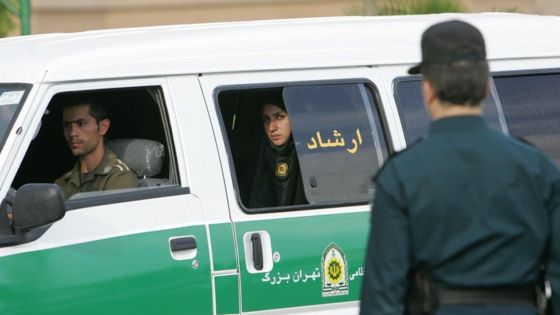
  • Tehran police chief Gen. Hossein Sajedinia recently announced his department had deployed 7,000 male and female officers for a new plainclothes division — the largest such undercover assignment in memory. The unit’s main focus will be enforcing the government-mandated Islamic dress code, which requires women be modestly covered from head to toe;
  • Iran is preparing to conduct a major ballistic missile test in February 2017, following the inauguration of the next U.S. president into the Oval Office, according to a timetable issued by the regime in an act designed to set a provocative tone when a new president is sworn in. Iran is continuing work on advanced ballistic missile technology and has been engaged in various tests to perfect this work;
  • Three journalists in Iran have been given lengthy prison sentences as the country’s hardline judiciary tightens its grip on press freedom by a revolutionary court in Tehran, which found the three Iranians guilty of charges including spreading propaganda against the ruling system, conspiring against officials and insulting authorities – charges often used against those held on political grounds;
  • A French-Iranian citizen who left Iran in 2009 after facing espionage charges has been sentenced to six years in jail following her return to the country to visit her critically ill mother. Several other dual-nationality citizens or expatriates have been arrested on returning to visit Iran. A spokesman for the Iranian judiciary said on Sunday that four had recently been sentenced for their connections to foreign countries;
  • The Iranian artist sentenced to 12 years and nine months in prison for her satirical cartoons critical of the Iranian government last year.

One would think with the litany of abuses and human rights going on in the Iranian regime just within the last few days, these so-called advocacy groups would have their hands full sending letters of protest to Iranian officials, the United Nations, World Court, global media and human rights groups.

But the Iran lobby is only vested in protecting the regime and it serves the mullahs purposes to continue trying to influence the American election as virtually all of the leading candidates have gone on record condemning the rule of the mullahs.

One also has to wonder if the other groups signing the letters and joining with the NIAC were aware of the NIAC’s leadership role as chief lobbyist for the Iranian regime. It would be worth asking the National LGBTQ Task Force, Arab American Institute, Feminist Majority Foundation, Military Religious Freedom Foundation, Bend the Arc, Progressive Congress, and the Labor Council for Latin American Advancement if they want to be associated with a group defending the abuses going on in Iran.

By Laura Carnahan

Filed Under: Blog, News Tagged With: Featured, Iran, Iran Lobby, NIAC, NIAC Action

Ties Between Iranian Regime and ISIS Exposed Through Syria

April 27, 2016 by admin

Ties Between Iranian Regime and ISIS Exposed Through Syria

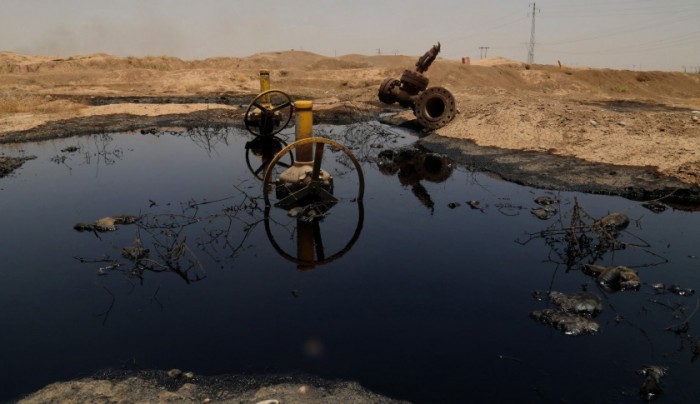
KIRKUK, IRAQ – JUNE 11: June 11 dated picture shows the the view of petroleum pipelines in Kone district, southern Kirkuk that the burglaries steal the crude oil during the clashes in Kirkuk, Iraq on June 11, 2014. Kurdish Peshmerga forces seize the control of Kirkuk where Iraqi army forces and Islamic State of Iraq and the Levant (ISIL) had clashes, and Iraqi forces abandoned the city after these clashes, in Iraq. (Photo by Stringer/Anadolu Agency/Getty Images)

It’s no secret that top Iranian regime leader Ali Khamenei placed preserving the regime of Syria’s Bashar al-Assad as a top priority and committed the Iran’s military and financial resources to keeping him afloat and alive as various rebel groups did battle with the government following the collapse of the Arab Spring protests.

That support to Assad from Iran included billions in cash, arms, ammunition, fighters ranging from Hezbollah terrorists to Afghan mercenaries to Shiite militia from Iraq. It also included Iran’s own Quds Force, Revolutionary Guard Corps fighters and most recently soldiers from its regular army.

Most importantly, the Iranian regime gave Assad its political backing on the world stage with Hassan Rouhani and Javad Zarif making it clear that Iran considered Assad’s removal a red line in the sand which it would not countenance no matter how many Syrian civilians were killed or turned into refugees by the escalating conflict.

For the mullahs in Tehran, the use of barrel bombs on civilians, the recruitment of Russian forces to attack Western-backed rebel groups and the lack of any real engagement against ISIS was not a cause of concern.

New documents just released to news media have shined a disquieting light on one reason why Iran made little or no effort to target ISIS for destruction although it gave much lip service to battling the terrorist group.

On May 16, 2015, U.S. Special Forces killed Abu Sayyaf, the nom de guerre for the number two man in ISIS’s oil operations who helped turn the terror group into the world’s wealthiest terror group, in Syria’s Deir Ezzour province.

The Wall Street Journal published an exhaustive story on Sayyaf’s rise in ISIS and his prodigious organizational skills in building and managing a multi-million oil operation that at its peak provided 72 percent of the terror group’s revenue from natural resources in territory it controlled.

Documents reviewed by The Wall Street Journal that were taken in the raid that killed Sayyaf describe the terror group’s construction of a multinational oil operation with help from officious terror-group executives obsessed with maximizing profits. They show how the organization deals with the Syrian regime, handles corruption allegations among top officials, and, most critically, how international coalition strikes have dented but not destroyed Islamic State’s income.

The responsibilities of Abu Sayyaf extended beyond oil. In September 2014, he was given custody of Kayla Mueller, a kidnapped American aid worker. Ms. Mueller, who had been sexually abused by Mr. Baghdadi after being taken hostage in 2013, was killed about five months later, U.S. officials said.

Memo No. 156 dated Feb. 11, 2015, from Islamic State’s treasury to Abu Sayyaf’s boss requested guidance on establishing investment relationships with businessmen linked to the regime of Syrian President Bashar al-Assad. The document said the terror group already had agreements allowing trucks and pipeline transit from regime-controlled fields through Islamic State-controlled territory.

The ties between ISIS and the Assad regime in a complex web of illicit oil transactions and payments made in U.S. dollars to allow for international money laundering explain much of why the Assad regime and Iranian forces have not targeted ISIS. For Assad, ISIS proved to be a reliable source of hard currency and an effective buffer against more moderate rebels backed by a coalition of Western nations including the U.S.

For Iran, the illicit partnership helped alleviate the financial burden of pumping money to keep the Assad regime propped up and allowed it direct its military forces against the less formidable rebel factions rather than the larger and better armed ISIS forces.

The connections prove the uncomfortable truth about the Iranian regime, which the Iran lobby has fought hard to keep out of the news, which is that it has helped maintain ISIS’s standing as the world’s leading terrorist group and has not sought to destroy it as claimed.

To this day, ISIS-controlled oil fields in Syria and Iraq still pump and sell roughly $1 million a day of oil with a significant portion of profits going to the Assad regime.

The Assad regime’s oil ties to the Islamic State have been well documented. At least two Syrian government officials, including a Russian-Syrian businessman named George Haswani, were sanctioned by the US last year for serving as middlemen between Assad and ISIS for oil deals.

The Daily Beast reported in December, meanwhile, that ISIS delivers both oil and natural gas to the regime. The report said the resources were transported via “midstream” service providers who move the resources from ISIS territory to government territory for profit.

“In exchange for gas, the regime provides utilities like electricity, which ISIS taxes accordingly,” wrote Matthew Reed, the vice president of Foreign Reports Inc., a Washington, D.C.-based consulting firm focused on oil and politics in the Middle East.

“At natural gas fields like those around Palmyra, which produce lighter liquid hydrocarbons in addition to gas, ISIS takes whatever it can turn into fuel,” he continued. “The gas goes west to Assad.”

These disclosures demonstrate the lack of honesty in claims made by the Iran lobby that the Iranian regime was intent on destroying ISIS and could prove to be a valuable ally to the U.S. the fight, when in reality the Iranian regime was an approving partner in Assad’s trade with ISIS.

The Journal only reviewed a small portion of the trove of documents captured in the raid to kill Sayyef. We can only assume even more incriminating material will still be revealed outlining the depth of cooperation between Assad and ISIS and by extension, Iran.

By Michael Tomlinson

Filed Under: Blog, News Tagged With: Featured, Iran, Iran Lobby, ISIS & Assad, Syria

Iran Lobby Starts Blame Game for Failed Nuclear Agreement

April 26, 2016 by admin

Iran Lobby Starts Blame Game for Failed Nuclear Agreement

Iran Lobby Starts Blame Game for Failed Nuclear Agreement

The Iran lobby is at it once again. The various supporters, apologists and columnists that make up the spider web of support for the mullahs in Tehran is now spinning away a tale blaming the U.S. for the current failure of the nuclear deal only reached last year.

The twisted logic being espoused by faithful regime supporters such as Paul R. Pillar and Tyler Cullis is that the U.S. is not fulfilling its end of the bargain by allowing the Iranian regime unfettered access to U.S. currency markets and promising not to go after any foreign entity that moves forward to do business with Iran for violations of sanctions and restrictions on U.S. currency.

The reek of the arguments being made by these regime supporters is about as foul as the stench coming off a landfill and just as pleasant to experience.

Writing in the National Interest, Pillar tries to make the inane argument that U.S. sanctions are the chief impediment to successfully implementing the nuclear deal.

“The extensive and complicated U.S.-imposed sanctions are still the chief impediment to implementation, thus continuing to demonstrate how U.S. sanctions can actually reduce U.S. influence,” Pillar writes.

“When the complicated and cumbersome U.S. sanctions scare European banks away from making possible the kind of renewed trade with Iran that the European allies understood to be an intended consequence of the agreement, this presents a problem of U.S. credibility not only with Iran but with the Europeans. Talk among JCPOA opponents on Capitol Hill about imposing still more sanctions on Iran, in the name of whatever cause, damages U.S. credibility even further,” he adds.

What Pillar neglects to mention is that the history of U.S. sanctions on Iran has been a cumulative process, each added as Iran commits another transgression or gross violation of human rights or international law. Sanctions did not appear magically in one fell swoop, they occurred over years of Iranian provocations.

Pillar also tries to posit the theory that U.S. credibility is on the line and it is, just not the way he is proposing. Since the nuclear deal was agreed to, the Iranian regime has made a mockery of compliance by pushing the boundaries in other areas such as launching ballistic missiles, widening the wars in Syria and Yemen, detaining and parading U.S. sailors and rigging elections to eliminate virtually all other condidates.

Of course Pillar cannot cite these since it would undermine his arguments and only serve as a reminder as to why U.S. sanctions have not all fallen completely away. He also neglects to mention that many sanctions, including those related to access to U.S. currency exchanges by Iran were never part of the nuclear agreement since they were put in place after human rights violations and sponsorship of terrorism incidents.

The fact that the Iran lobby and regime argued so strenuously against linking related issues to the nuclear agreement such as development of ballistic missiles and human rights to the nuclear deal now works against them in arguing that all sanctions need to be lifted.

The credibility of the U.S. would indeed be on the line if it lifted these restrictions in order to appease an Iranian regime that sees no reason to curtail its military and terrorism activities. The rest of the civilized world would come to realize that no one would stand in the way of the militancy of the mullahs of Tehran.

Tyler Cullis if the National Iranian American Council, another long-time supporter of the regime, makes a similar irrational argument in the regime-sympathetic blog Lobelog.com and echoes the party line Pillar is pushing almost word for word.

“Iran’s ballistic missile program is not a serious threat. Without any real offensive capabilities, the program is second-rate and possesses only deterrent value. Surely, when compared to the current problems in the region, Iran’s ballistic missile program ranks low as a factor playing into the ongoing tumult,” Cullis writes.

It is shocking how plainly stupid the logic he uses here in arguing that developing a ballistic missile capable of hitting most of Europe, Asia and Africa is not a problem. An intercontinental ballistic missile doesn’t have to carry a nuclear warhead to be devastating. A simple biological or chemical warhead or even a mere 2,000 pounds of high explosives can do more than enough damage.

How does Iran’s development of a missile capable of hitting Berlin, Rome or Vienna serve to deter threats to the regime? Do the Swiss plan to assault Tehran with chocolate thereby requiring the mullahs to need a missile that can strike at Geneva?

Ballistic missiles by their very nature are first-strike weapons. They cannot be recalled after launching. They are virtually impossible to bring down. What’s next? Iranian ballistic missile submarines?

Cullis neglects to mention that the development of such missiles is already restricted by the United Nations and their launching is a violation which is separate and apart from the nuclear deal. But Cullis most strongly mimics Pillar in decrying the lack of flowing American dollars to the regime.

“Iran is not merely failing to see substantial trade and investment in Iran by foreign parties, but it is also unable to fully access much of its overseas oil revenues. These diminished expectations in Tehran could ultimately undermine the Rouhani government,” he writes.

Cullis again neglects to mention that Iran’s first moves once the deal was in place was to purchase $8 billion in Russian military hardware and take delivery of advanced anti-aircraft missile batteries. It wasn’t to shore up a crippled economy, bring Iranian citizens better healthcare or improve their shattered environment. Not even buying an iPhone or bringing in a neighborhood Starbucks was on the mullahs shopping list.

Cullis blames the U.S. reaction to Tehran’s launching of illegal ballistic missiles as the root cause of new tensions, but gives a pass to Iranian mullahs for launching the missiles in the first place! That’s like blaming a pedestrian for getting in the way of a drunk driver while crossing a street only to get run over.

It is even funnier when Cullis blames the situation on “hawks” within Iran’s government who are seeking to kill the deal as a perceived threat to their power. Of course, Cullis not too long ago wrote glowing pieces about the results of the parliamentary elections detailing how the “hawks” had been defeated and a new era of moderation was being ushered in.

Cullis and Pillar cannot have it both ways and their verbal gymnastics cannot hide the fact that Iranian regime is acting in bad faith and is demanding even more as it uses the threats of walking away from a nuclear deal it already has broken as a leverage point.

Washington should ignore these threats and continue to hold the regime accountable for every deceitful act it commits.

By Michael Tomlinson

Filed Under: Blog, Current Trend, News Tagged With: Featured, Iran Lobby, Iran Mullahs, Iran sanctions, National Iranian American Council, Paul Pillar, Tyler Cullis

Iranian Regime Dictionary is not Webster’s

April 22, 2016 by admin

Iranian Regime Dictionary is not Webster’s

Iranian Regime Dictionary is not Webster’s

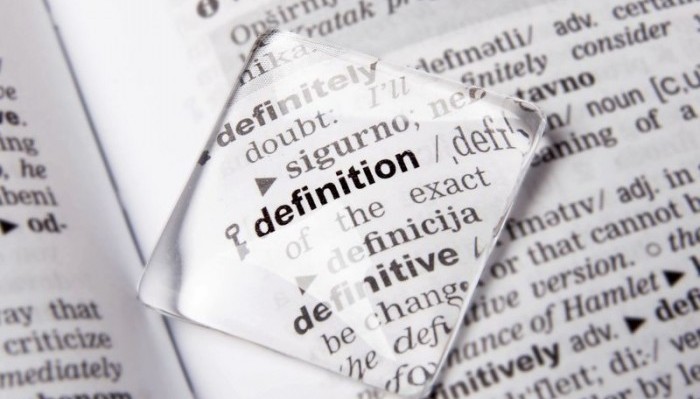
Noah Webster has been called the father of American English dictionaries, publishing the first edition of his dictionaries in 1828. Since then, his name has become synonymous for dictionaries and has become the bedrock for understanding and correcting the English language.

Language and its precise use have determined everything from lawsuits to love poems and most recently language has been at the heart of much of the disputes going on with the Iranian regime. For the mullahs in Tehran, language and the semantic differences it brings has been their lifeline in a sense because it allows them to argue one thing, while agreeing to something totally different.

Take for example the Iranian position in the Syrian conflict. Hassan Rouhani’s government has always maintained that no peaceful solution could happen without guarantees that Syrian leader Assad was still in power. To that end, Iran has targeted the rebel opposition and identified them as “terrorists” and tied them to ISIS and Al-Qaeda, even those moderate elements backed by the U.S. and its allies.

The mullahs have even used deceptive language in describing Iranian military units fighting in Syria, calling them “volunteers” when in fact the regime is now shipping regular army units for the first time. The regime has even recruited tens of thousands of paid mercenaries from the ranks of Afghan refugees seeking shelter in Iran from the war that rages in their country; sometimes signing up only under threat of expulsion of their families.

Iran’s army chief said on Wednesday the forces it had deployed in Syria in the first such operation abroad since the 1979 revolution were volunteers working under Revolutionary Guards supervision, and the regular army was not directly involved.

It announced this month that it had sent commandos from the army’s Brigade 65 to Syria as advisers, suggesting it was using its regular army as well as forces from the Revolutionary Guards to help Assad’s forces in the country’s civil war.

“Some volunteers have been sent to Syria, under the supervision of the related organization, and among them there might be some of the Brigade 65 forces,” armed forces chief Ataollah Salehi was quoted by the Tasnim news agency as saying.

“The army has no responsibility in the military advice given to Syria,” Salehi added.

The talking points are a clear example of how the Iranian regime obscures its real intentions with nuanced language. It’s a tactic adopted by the Iran lobby and its supporters as well in trying to divert attention through misnomers such as the use of the term “moderate” in describing certain elements within the Iranian government.

Moderation does not exist within the Iranian government. It is like making a distinction between the SS and Brown shirts of Hitler’s Nazi Germany and calling one more moderate than the other.

Nowhere is that tactic more apparent than during the recent parliamentary elections in which thousands of “moderates” were kicked off ballots and in their place, candidates loyal to the regime’s leadership were left to run virtually unchallenged, yet they were hailed as “moderates.”

The Iran lobby uses those distinctions in its efforts to distort the truth in Iran. Groups such as the National Iranian American Council have long sought to portray a clear distinction within Iran of an active moderate faction seeking change, but it has gone out of its way to attack all dissident groups not aligned with the regime in some manner.

Entities such as the National Council of Resistance of Iran which is one of the largest Iranian dissident groups in the world has long been vilified by the Iran lobby and portrayed in various nefarious ways in order to denigrate their claims and protests.

The Iranian regime continues this practice in how it makes threats all the time, including warnings by Rouhani of a “serious reaction” should the U.S. not make good on what it perceives as promises to grant Iran expanded sanctions relief under the nuclear agreement such as access to U.S. currency exchanges, while the U.S. steadfastly maintains that no such conditions existed.

Should the rest of the world be worried about these linguistic differences? Yes, to the extent they provide the Iranian regime the excuses necessary to engage in its aggressive behavior.

Iran, much like regimes such as North Korea, use language as a first-line of excuses in justifying any sort of bad behavior.

Test fire ballistic missiles capable of carrying nuclear warheads in violation of international sanctions?

Call it “defensive testing.”

Round up journalists, ethnic and religious minorities and toss them in prison?

Call it “protecting the faith.”

Hang a 13-year-old girl?

Call it “protecting virtue and purity.”

The absurdity of it all makes a mockery of language. We can only assume that Noah Webster is turning in his grave.

By Michael Tomlinson

Filed Under: Blog, News Tagged With: Featured, Iran, Iran deal, Iran Human rights, Iran Lobby, National Iranian American Council, Syria

Mullahs in Tehran Only Have Themselves to Blame

April 21, 2016 by admin

Mullahs in Tehran Only Have Themselves to Blame

Mullahs in Tehran Only Have Themselves to Blame

Iran’s economy still struggles along anemically. The Iranian people find commodities in short supply with high prices and poor job prospects. Thousands of young Iranian men are being shipped off to fight in the deepening Syrian war, while at home Iranian women continue to be oppressed and denied job opportunities and any freedom to decide their own lives.

The mullahs in Tehran and the regime leaders such as Ali Khamenei and Hassan Rouhani have sought to blame at various times: the U.S., the U.S. Congress, Hollywood movies, decadent American culture, Starbucks, American consumerism, Christians, Jews, Sunnis, Donald Trump and even each other for the ills that plague Iran.

What they have failed to do is look themselves in the mirror and focus blame squarely where it belongs: themselves.

The New York Times editorial board published a piece that questions the deep level of corruption that still pervades the regime government and economy, as well as the regime’s commitment to support terrorism and human rights abuses that remain rampant.

“One impediment is that most American sanctions remain in place because of Iran’s involvement in terrorism and human rights abuses and its testing of ballistic missiles. Iran knew that lifting all American sanctions was never part of the nuclear deal,” the Times wrote.

“Experts say Iranian banks are badly run, politicized and lack transparency — warning signs for risk-averse foreign banks. Iran’s warlike behavior in the region — supporting President Bashar al-Assad in Syria, arming Hezbollah and testing missiles — further discourages investment.”

As President Obama said recently, “Businesses want to go where they feel safe, where they don’t see massive controversy, where they can be confident that transactions are going to operate normally.”

The Times is correct in that Iran’s behavior is the source of most of the problems it encounters, but it only scratches the surface of the true problems plaguing Iran since the Times diagnoses the symptom, but not the cause.

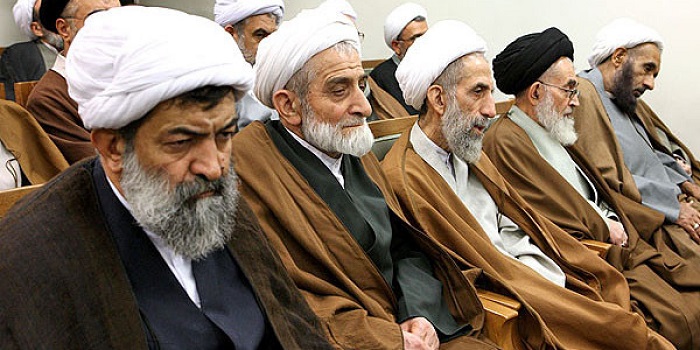
That cause lies in the foundation of the velayat-e-Faqih system in the first place as a religious theocracy dominated by a strict interpretation of Islam that allows no compromise or quarter. It regards even other Muslim faiths as blasphemous and generally seeks to solve its problems through the use of terror, war and violence.

The collision of religious rule and commerce do not produce good results on the whole and while the Times correctly points the obstacles to foreign companies and banks face in trying to restart business in Iran, it misses the correct prescription to fix it, which is regime change and the implementation of a true, non-secular democratic government in which religion plays no part in its governance.

As many Iranian dissident groups such as the National Council of Resistance of Iran have long pointed out, the transition of Iran from a theocracy to a true democracy is the only viable pathway for regional stability and peace.

The fact that Iran’s extremist rulers have sought to shift blame for the nation’s woes onto anyone they can blame hides the fact that corruption and violence have become so ingrained within the policies and practices of the Iranian regime, the rest of world has come to accept it as a status quo; much in the same way we’ve become accustomed to the paranoid vitriol that often flows from North Korea.

Human rights groups such as Amnesty International and the United Nations human rights monitors have long documented the cruelty and barbarism that occurs within Iran, but over time even the most despicable acts such as the execution of juveniles have become commonplace and no longer merit worldwide media scrutiny.

Maybe that is the regime’s game plan, to play the long game and bore the rest of the world with endless streams of violence and inhumanity we take it as common practice and no longer react with revulsion?

Recently, some news media reported on an Iranian teenager who was told to “retain her chastity,” but instead bravely shared her account of being stopped by morality police for having the wrong hairstyle, amid a crackdown on women veiling incorrectly.

The 15-year-old and her 12-year-old friend from school reported seeing the morality police and hiding while they attempted to tuck their hair under their veils, but were stopped for having hair too close to their faces and wearing make-up.

After the ordeal, described by the 15-year-old as “humiliating and harrowing,” she decided to share a video account of what happened on social media.

Anywhere else in the world, viral social media such as this would generate firestorms of attention, but in Iran where a great cyber wall keeps social media in check, incidents large and small like this are only intermittingly revealed.

It is also through the diligent work of the Iran lobby network of columnists, bloggers, lobbyists and PR spinners that continually fight to keep a lid on such incidents and discount them as isolated ones and not representative of the regime as a whole.

But such actions are par for the course with the Iranian regime, which uses threats to try and force agreements.

The governor of Iran’s central bank, Valiollah Seif, threatened to walk away from the nuclear deal if the United States did not give Iran access to the American financial system during a 90-minute speech in Washington last week.

In response, Matthew Levitt, a former Treasury Department official and who now works at the Washington Institute for Near East Policy, wrote in The Wall Street Journal on Monday that “Iran seems to expect the Obama administration to provide benefits beyond those in the nuclear deal.” Levitt noted that Seif admitted that Iran has not changed how it does business, and added “that Iran has not changed is at the core of its problem.”

As the New York Times notes, the problem is not with the rest of the world, but with the mullahs themselves.

By Michael Tomlinson

Filed Under: Blog, News Tagged With: Featured, Iran, Iran Human rights, Iran sanctions

Iranian Regime Begging for US Dollars

April 19, 2016 by admin

army-day-paradeThe famous physicist Albert Einstein once said “Too many of us look upon Americans as dollar chasers. This is a cruel libel, even if it is reiterated thoughtlessly by the Americans themselves.”
The sentiment still applies today to the extent that many people around the world assume Americans are infatuated with money and its pursuit and have built into a kind of urban legend and mythology that has come to dominate the perceptions of Americans around the world.

The mullahs in Tehran have used the same verbiage to draw a portrait of America as a nation bereft of morality, filled with infidels more intent on opening McDonalds and Starbucks locations than pursuing a “moral” life.

It is an image the mullahs wish to grow since it allows them to convey a perception of moral and ethical superiority and re-invests the Iranian people in the mythology of the religious theocracy; one founded on a single vision and interpretation of Islam.

It also happens to be a hypocritical view since the mullahs are just as obsessed about the almighty dollar as hedge fund managers and bond traders on Wall Street. That obsessing drives the mullahs as they use all of their PR and lobbying tools to press the Obama administration to lift sanctions restricting Iran’s access to U.S. currency exchanges as part of the nuclear agreement reached last year.

According to news reports, “Iranian and European officials say they are pushing the United States to grant the Islamic Republic unprecedented access to American financial markets and the U.S. dollar, working against promises by top Obama administration officials who had claimed Iran would never be granted such access, according to recent remarks.”

Regime foreign minister Javad Zarif, speaking at a joint press conference this weekend with European Union foreign policy chief Federica Mogherini, said that officials are pressuring the U.S. to grant Iran access to American markets.

“Iran and the EU will put pressure on the United States to facilitate the cooperation of non-American banks with Iran,” Zarif was quoted as saying at a briefing with reporters and Mogherini.

Both Iran and the EU said in a joint statement later in the day that the United States must work hard to uphold its obligations under the recent nuclear deal. The White House has argued that it is not mandated to provide dollar access under the agreement.
It is one of the rare occasions where the vagaries of the nuclear agreement, which the Iranian regime fought so hard to secure is now working against it.

In Foreign Policy, Eric Lorber and Peter Feaver pointed out the problems with the imprecise language in the nuclear agreement.

“In order to get a deal that had a chance of constraining Iran’s nuclear ambitions, the United States had to make significant concessions on nuclear-related sanctions. At the time, the Obama administration sold the deal with the assurance that the United States would retain enough coercive leverage on Iran to keep the regime in check on these other issues, including the Islamic Republic’s support for international terrorism, human rights abuses, and the development of its ballistic missile programs. And administration spokespeople emphasized again and again that they would be vigilant and vigorous in wielding this coercive leverage,” they write.

“In the past few weeks, however, the administration has signaled that it is on the cusp of making an additional and unexpected concession to Iran that significantly weakens remaining U.S. leverage: giving Iran backdoor access to financial transactions in dollars. The administration reportedly believes it needs to make this additional concession to honor the spirit of the agreement. Congress is crying foul, asserting that such dollar access was not included in the letter of the original deal and constitutes a gift to Iran that should not be given without additional Iranian concessions. As President Obama himself asked recently: Why should the United States offer additional concessions to honor the spirit of the deal if Iran is not also making additional concessions?” they added.

The inability of the Iranian regime to lift the restrictions on accessing U.S. currency has put a halt to their flood of deal making with European and Asian banks and companies leery of running afoul of U.S. regulators, especially with a pending election that could bring a new administration less favorable of the deal.

Members of Congress have been outraged. Many members on both sides of the aisle felt they had been misled by the administration, and that if the administration had been considering granting Iran access to U.S. dollars, it should been more forthcoming with this plan in the summer of 2015 and afterwards, rather than making statements that indicated that Iran would not have access to the benefits of the U.S. financial system.

All of which points towards the mullahs obsession about money: It is the grease that fuels its proxy wars in Syria, Yemen and Iraq. It arms terrorist groups like Hezbollah. It buys weapons that kill civilians and it helps oppress the Iranian people and lines the pockets of family members of the mullahs and other regime elites.

As the U.S. considers continuing the currency ban, it should remember what the regime will use those dollars for and it is not for buying every Iranian an air conditioner or Playstation.

By Michael Tomlinson

Filed Under: News Tagged With: Iran, Iran deal

Iranian Regime No Longer Hiding Its Military Intentions

April 18, 2016 by admin

Iranian Regime No Longer Hiding Its Military Intentions

Iranian Regime No Longer Hiding Its Military Intentions

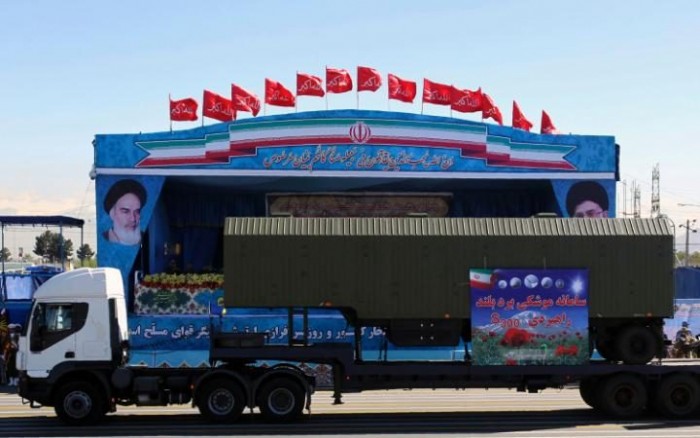
The Iranian regime held its annual Army Day parade as a showcase to pose itself as a mighty power in the region, but more importantly for the mullahs it provided an opportunity to show off parts of the long-awaited new S-300 air defense system from Russia.

While the advanced anti-aircraft missiles were originally ordered by Iran in 2007, their delivery was held up due to the imposition of sanctions related to Iranian regime’s violations concerning the development of nuclear weapons. Only after the nuclear agreement was reached last year was the delivery allowed to go through.

The delivery of the missile system is significant since it instantly brings the regime’s air defense to a much more modern and sophisticated level; a major issue for the mullahs and Revolutionary Guard since without it, any effort to restart its nuclear program would be subject to air attack by the U.S. and its allies.

The fact that the mullahs pushed hard to remove weapon systems such as this and the development of new ballistic missiles from the nuclear negotiations spoke volumes of their determination to upgrade their military capabilities far beyond where they stand today, particularly since they see this the only path to survival of the vast internal discontent.

According to pictures published by the semi-official ISNA news agency, S-300 missile tubes and the radar equipment were shown during the military parade held in southern Tehran.

Iran and Russia are also in talks on a sale of the advanced Sukhoi SU-30 fighter, another proposal criticized by the U.S. The regime’s current air force fleet dates from the pre-revolutionary era of the former Shah.

Speaking at Sunday’s parade, Hassan Rouhani insisted Iran’s plans to upgrade its military capabilities were defensive in nature, referring to the worst conflicts in the Middle East.

“Our military, political and economic power is not directed against neighboring countries and the countries of the Islamic world.

“When Baghdad was threatened by terrorists, the Islamic Republic of Iran responded to the call of the people, the army and the Iraqi government to defend Baghdad and the holy places,” he said, referring to the surge of the ISIL group in June 2014.

The argument he makes is similar to those consistently made by the Iran lobby from groups such as the National Iranian American Council which has sought to portray the Iranian regime as some sort of dedicated freedom fighter against Islamic extremism. The only difficulty with that portrayal is that Iran’s mullahs are the ones spreading it, not the other way around.

The beefing up of its military capability, including the multiple test launches of new ballistic missiles, comes at a time when the Iranian regime is also ramping up its military presence in Syria in support of the regime of Bashar al-Assad, except now the Iranians are not even trying to hide their deepening presence even as they pretend to advocate for peace talks.

Fearing that Russia may side with the U.S. and approve the removal of Assad from power, the Iranian government is now, more than ever, investing in propping up the regime’s dwindling army and air force.

“They [the Iranians] saw it as an opportunity to move closer to the regime,” one U.S. official told the Financial Times.

The Russian military pullback announced last month threatens Tehran’s position not only in Syria, but in the region. If Assad is ousted, Iranian military presence in the country will be diminished and Iran will no longer be able to present itself as a player in the region.

Iranian regime officials have in number of times reiterated that Syria is their front line and if they don’t fight the enemy in Syria, soon they have to do it in Tehran, referring to the strategic importance of Syrian dictatorship for the Ayatollahs in Iran. That’s why Iran is deploying more troops to Damascus. Those deployments, though, come at a cost. At least four Iranian soldiers have been killed in one week. Iranian media have reported that more than 150 Guards died in more than a year of fighting in Syria.

Tehran has kept its army at home for decades and tried to keep conflict at bay through a strategy — manned and managed by the Guards — of fighting its regional rivals through proxies in Iraq, Syria and Lebanon. Syria is crucial to its success. It is on the ‘frontline’ with Israel and is an important bridge to Hezbollah, Iran’s Shia proxy force in Lebanon.

Iran has vowed that it will not compromise on the fate of Assad, and backs his offer to include opposition figures in a national unity government while ruling out a “transitional governing body with full executive powers” — the formula agreed at talks in Geneva in 2012.

In the meantime, the high casualty rate among Revolutionary Guards — whose “military advisers” are reckoned by a western diplomat in Tehran to number fewer than 10,000 — has prompted Tehran to deploy its regular army to bolster Assad’s forces in Syria.

The stakes are high for the Iranian regime as it again sent Qassem Soleimani, the notorious leader of its Quds Force, to Moscow again in violation of international travel bans restricting his movements to discuss with Russian military officials on the deteriorating situation in Syria and the delivery of nearly $8 billion of new weapons just purchased by Iran.

The delivery of new military hardware is viewed by Tehran as an important adjunct to the use of Hezbollah proxies, Quds Force fighters, Basiji paramilitaries and thousands of paid mercenary Afghans that the Iranian regime has been sending to Syria in a desperate bid to keep Assad in power.

According to the BBC, the first Afghan militias began to arrive in 2012 in Syria.

“The Iranian Revolutionary Guards Corps decided that the Syrian military could not succeed on their own,” one former Afghan fighter told the BBC. “The frontlines were too depleted and men were trying to avoid conscription.”

The Iranians decided to set up a 50,000-strong National Defense Force to fight alongside the Syrian army.

With a shortage of willing fighters inside Syria, they began looking elsewhere – signing up Iranian Afghans, Lebanese, Iraqi and Pakistani Shia recruits. The fact that the mullahs are now committing Iranian regular army units to the Syrian fight shows a significant leap in their desperation over the situation there.

Mrs. Maryam Rajavi, the leader of the National Council of Resistance of Iran, one of the leading Iranian dissident groups in the world, took note of these changes in an interview with Asharq Al-Awsat on Sunday in which she pointed out that the Iranian regime would collapse consequentially should Assad be toppled in Syria, which is why Iran’s regime has been trying to keep Assad in power at any cost.

“If Assad falls out of power in Damascus, then the Iranian regime will evidently follow and collapse in Tehran,” Mrs. Rajavi said.

By Michael Tomlinson

Filed Under: Blog, News Tagged With: Ballistic Missiles, Featured, Ghassem Soleimani, Iran, Iran deal, Iran sanctions, NIAC, S300 Missiles

Iranian Regime Executions of Juveniles Does Not Stop

April 16, 2016 by admin

There is no surer sign of a government’s barbarity than the execution of people who should not be executed. There is no surer sign of a government’s lack of trustworthiness than in its inability to change or improve how it treats its own citizens.

In the case of the Iranian regime, repeated reports, investigations and reviews have documented and chronicled the catalog of abuses and horrors the mullahs visit on ordinary Iranian citizens every day.

Human rights groups such as Amnesty International and Iranian dissident groups such as the National Council of Resistance of Iran have long reported of arrests, imprisonment, torture and executions of many people whose only crimes have been to defend themselves against an abusive spouse, criticize the government or attempt to improve their economic condition.

Like so many other despotic governments such as North Korea, the Iranian regime has blithely ignored such criticism and continued on its barbaric ways. The litany of woe has almost become problematic to the extent the rest of the world has become numb to it; much as American news media have become numb to urban crime reporting.

Human rights and dissident groups have sought to shock the social consciousness of the world about Iran at times through the personal stories of those being tortured or executed – often at great personal risk to tell these stories – but even the most horrific tales are now consigned to obscure blogs or the back pages of newspapers.

Even when high profile prisoners such as the Washington Post’s Jason Rezaian or Christian pastor Saeed Abedini have been released and tell their stories or mistreatment and abuse, it often doesn’t go anywhere beyond the obligatory debriefing interview upon their release.

It does not result in governments changing their policies towards the regime and it does not advance efforts to improve the human rights situation in Iran. In fact, the example of the nuclear agreement reached last year is a glaring example of how low priority human rights seem to have become in that the Iranian regime specifically demanded and received a provision not to link human rights with the agreement.

Now the U.S. State Department has released its annual country survey of human rights practices for 2015 and Iran continues to be perpetrator of severe abuses. The listing of abuses is too numerous to recount here, but it is all too familiar. It reads in part:

“The most significant human rights problems were severe restrictions on civil liberties, including the freedoms of assembly, association, speech (including via the internet), religion, and press; limitations on citizens’ ability to choose the government peacefully through free and fair elections; and abuse of due process combined with escalating use of capital punishment for crimes that do not meet the threshold of most serious crime or are committed by juvenile offenders.”

“Other reported human rights problems included disregard for the physical integrity of persons, whom authorities arbitrarily and unlawfully detained, tortured, or killed; disappearances; cruel, inhuman, or degrading treatment or punishment, including judicially sanctioned amputation and flogging; politically motivated violence and repression; harsh and life-threatening conditions in detention and prison facilities, with instances of deaths in custody; arbitrary arrest and lengthy pretrial detention, sometimes incommunicado; continued impunity of the security forces; denial of fair public trial, sometimes resulting in executions without due process; the lack of an independent judiciary; political prisoners and detainees; ineffective implementation of civil judicial procedures and remedies; arbitrary interference with privacy, family, home, and correspondence; harassment and arrest of journalists; censorship and media content restrictions; severe restrictions on academic freedom; restrictions on freedom of movement; official corruption and lack of government transparency; constraints on investigations by international and nongovernmental organizations (NGOs) into alleged violations of human rights; legal and societal discrimination and violence against women, ethnic and religious minorities, and lesbian, gay, bisexual, transgender, and intersex (LGBTI) persons based on perceived sexual orientation and gender identity; incitement to anti-Semitism; trafficking in persons; and severe restrictions on the exercise of labor rights.”

And all that is just in the summary page with much more detailed in the report. Yet even with the acknowledgement of all of Iran’s violations, there is not enough movement to rectify these terrible problems, nor hold the regime accountable for them.

A Reuters story highlighted one case to illustrate the appalling act of executing juveniles. In the southern province of Fars, Fatemeh Salbehi suffocated her husband after drugging him, a capital crime in the Islamic Republic.

What made the case controversial is that Salbehi was only 17, a minor by international legal standards, when she allegedly committed the crime. Her alleged confession also came during a series of interrogations where there was no lawyer present.

The case was retried but Salbehi was hanged in the Adel Abad prison in Shiraz last October.

The issue has come under scrutiny because of a scathing U.N. report on human rights in Iran last month which highlighted what it called the “alarmingly high” rate of executions in the country, including juveniles.

That report, along with an Amnesty International report in January, spurred commentary from ordinary Iranians on social media at least some of which criticized the administration of Hassan Rouhani for not doing more to stop the juvenile executions.

Iran has the highest rate of juvenile executions in the world, despite being a signatory to the Convention on the Rights of the Child, an international human rights treaty that forbids capital punishment for anyone under 18.

“The fact that there were two executions in less than two weeks just shows how indifferent and contemptuous the Iranian authorities are of their obligations,” said Raha Bahreini, the Iran researcher for Amnesty International.

In the past decade, Iran has executed at least 73 juvenile offenders, according to the January Amnesty report.

Clearly the regime has little regard for international agreements when it does not suit its needs and until the world unites in holding Iran accountable, human rights abuses or development of new ballistic missiles or

Iranian Regime Executions of Juveniles Does Not Stop

Iranian Regime Executions of Juveniles Does Not Stop

deepening of the Syrian war will only continue unabated.

By Michael Tomlinson

Filed Under: News Tagged With: Featured, Iran, Iran deal, Iran Human rights, Juvenile execution

  • « Previous Page
  • 1
  • …
  • 37
  • 38
  • 39
  • 40
  • 41
  • …
  • 72
  • Next Page »

National Iranian-American Council (NIAC)

  • Bogus Memberships
  • Survey
  • Lobbying
  • Iranians for International Cooperation
  • Defamation Lawsuit
  • People’s Mojahedin
  • Trita Parsi Biography
  • Parsi/Namazi Lobbying Plan
  • Parsi Links to Namazi & Iranian Regime
  • Namazi, NIAC Ringleader
  • Collaborating with Iran’s Ambassador

Recent Posts

  • NIAC Trying to Gain Influence On U.S. Congress
  • While Iran Lobby Plays Blame Game Iran Goes Nuclear
  • Iran Lobby Jumps on Detention of Iranian Newscaster
  • Bad News for Iran Swamps Iran Lobby
  • Iran Starts Off Year by Banning Instagram

© Copyright 2026 IranLobby.net · All Rights Reserved.