Iran Lobby

Exposing the Activities of the lobbies and appeasers of the Mullah's Dictatorship ruling Iran

  • Home
  • About
  • Current Trend
  • National Iranian-American Council(NIAC)
    • Bogus Memberships
    • Survey
    • Lobbying
    • Iranians for International Cooperation
    • Defamation Lawsuit
    • People’s Mojahedin
    • Trita Parsi Biography
    • Parsi/Namazi Lobbying Plan
    • Parsi Links to Namazi& Iranian Regime
    • Namazi, NIAC Ringleader
    • Collaborating with Iran’s Ambassador
  • The Appeasers
    • Gary Sick
    • Flynt Leverett & Hillary Mann Leverett
    • Baroness Nicholson
  • Blog
  • Links
  • Media Reports

Iranian Regime Doubles Down on Missile Violations

March 29, 2016 by admin

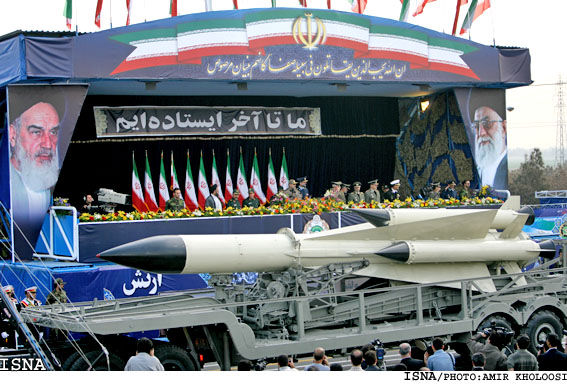
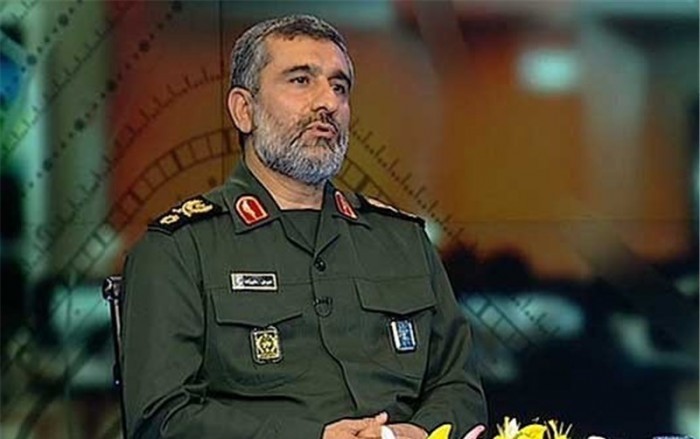
Ali HajizadehThe Iranian regime announced its intent to continue pursuing development of its illegal ballistic missiles despite the U.S. blacklisting of more Iranian companies linked to the program, according to multiple news sources.

The regime’s Revolutionary Guards Corps (IRGC) test-fired several ballistic missiles this month, drawing condemnation from Western leaders who believe the tests violate a United Nations resolution.

The U.S. Treasury Department blacklisted on Thursday two Iranian companies, cutting them off from international finance over their connection to the missile program. Washington had imposed similar sanctions on 11 businesses and individuals in January over a missile test carried out by the IRGC in October 2015.

“Even if they build a wall around Iran, our missile program will not stop,” Brigadier General Amir Ali Hajizadeh, commander of the IRGC’s aerospace arm, was quoted as saying by Tasnim news agency. “They are trying to frighten our officials with sanctions and invasion. This fear is our biggest threat.”

Hassan Rouhani, the regime president touted by the Iran lobby as a pragmatic conservative, said on Sunday that boosting Iran’s defense capabilities is a “strategic policy.”

“We will pursue any measure to boost our defense might and this is a strategic policy,” Rouhani was quoted as saying by Press TV in the first cabinet meeting in the new Persian year.

The fact that the regime fought hard to separate its ballistic missile program from the nuclear agreement reached last year created the kind of yawning loophole which now allows it to develop longer range missiles without fear of jeopardizing the flood of billions in cash now streaming into the regime as a result of the deal.

Hajizadeh downplayed the recent sanctions describing them as futile efforts to curb the regime’s missile program and he is correct in large measure because the deal struck by the Obama administration essentially only allows for pinprick sanctions in response to missile violations.

It also ignores the fact that the nuclear deal does not prevent the Iranian regime from using its new generation of missiles to use chemical or biological weapons payloads, increasing the lethality of what the mullahs can order up.

Another demonstration of the futility of patchwork sanctions was a visit to Iran by North Korean executives of the Korea Mining Development Trading Corp., which is under both UN Security Council and U.S. sanctions for exporting equipment related to ballistic missiles and other weapon systems.

The North Koreans met with the regime’s Shahid Hemat Industrial Group to sell valves, electronic components and measurement devices that are used in liquid-fueled ballistic missiles and space launch vehicles.

The continued commerce between North Korea and the Iranian regime shows how much things have not changed since the deal was signed and demonstrates the fundamental untruth pushed by regime allies such as the National Iranian American Council that the nuclear accord would dramatically alter Iran’s relationship with the world.

Nothing has changed and if anything the past few months have shown how much worse things have gotten with appalling terrorist attacks mounted by Islamic extremists in Paris, Brussels and San Bernardino and a refugee crisis that shows no sign of slowing down as Iran continues to send fighters to battlefields throughout the Middle East.

Ali Safavi, a member of the National Council of Resistance of Iran, a leading Iranian dissident group, wrote in the New York Daily News about the disconnect between the perception of reformers within the regime and the reality of their hardline practices.

“The leaders of this round’s so-called reformist faction include former President Ali Akbar Hashemi Rafsanjani and current President Hassan Rouhani. The former was famously embraced in the early 1990s by the West as a pragmatist willing to do business, before he we went on to preside over the worst period of the Iranian regime’s terrorist attacks and assassinations of dissidents and foreign nationals abroad,” he said.

Indeed, during his “moderate” presidency, Rafsanjani’s Iran was regarded by the U.S. State Department as the world’s number one state sponsor of terrorism, a dubious distinction maintained by the current president,” Safavi added. “When will Washington wake up and learn that perhaps the Iranian regime is fundamentally incapable of reform? When will it learn that it should invest in the Iranian people and the real opposition instead of the phony moderates?”

He poses the central problem with policymakers and elected officials dealing with the Iranian regime: failure to learn from past mistakes dooms us to keep repeating them.

Until the world stands firm against Iranian subterfuge, these types of sneaky acts will only continue.

By Michael Tomlinson
Filed Under: News Tagged With: Featured, Iran, Iran Ballistic Missile, Rouhani

Iranian Regime Presses Harder Human Rights Crackdowns

March 28, 2016 by admin

Iranian Regime Presses Harder Human Rights Crackdowns

Iranian Regime Presses Harder Human Rights Crackdowns

While Christians celebrated Easter this weekend with prayers and hopes for peace, love and redemption, the Iranian regime stood alone in its wide ranging efforts to crackdown on human rights, stir up confrontation and foment strife around the world.

In spite of promises made by regime officials such as Hassan Rouhani and loyal supporters such as the National Iranian American Council that Iran was a model of moderation and accommodation for religious and ethnic minorities, the opposite has been the case as the regime showed little tolerance for anyone outside of its own narrow ideology that fuels an extremist fervor.

Take for example the plight of Christian converts in Iran who risk prison or death by secretly worshipping as Christians in Iran’s house church movement. According to watchdog groups, the number of Christians in Iran worshipping in secret has surpassed one million people.

The London-based Pars Theological Center is training at least 200 Iranian Christians to become the next generation of Iran’s church leaders, the Christian Post reported.

The persecution of Christians has persisted in Iran since the 1979 rise of the country’s theocratic government — with Christians facing the threat of death, lashing and torture. About 100 Christians currently remain imprisoned under Rouhani’s rule.

In 2010, top mullah Ali Khamenei said the country’s underground house churches “threaten the Islamic faith and deceive young Muslims.”

Sources describe Iranian house churches as consisting only of about four to five members — due to the threat of detection — and that they are forced to their place of gathering every time they meet.

“If they want to sing, they have to sing very quietly or not sing at all,” the source told the Post.

While Iran has released high-profile Christian pastors from captivity — most notably Iranian American Saeed Abedini — other Christian ministers still languish in the country’s prisons.

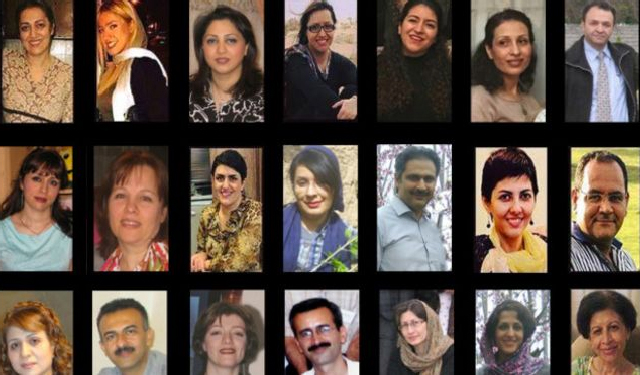
Regime punishment and torture of religious minorities has included brutal treatment of Sunni Muslims and those who follow the Baha’i faith, in which details of torture inflicted upon twelve Baha’is by interrogators three years ago at Amir Abad prison and detention centers in Iran’s Golestan Province—and the Iranian Judiciary’s complete lack of any response to the formal letter of complaint that was sent in 2012 by the victims of that torture to the head of the Judiciary of Golestan Province, were recently revealed in the media.

Twelve Baha’i citizens described harrowing instances of torture by their interrogators at the Amir Abad Prison, in the city of Gorgan, and other unnamed detention centers in Golestan province, northeast of Tehran.

“On the first day of his interrogation, Mr. Behnam Hassani’s wrist was tied very tightly with a rope and attached to a metal ring. The ring was raised to a nail above his head such that only his toes could touch the ground. He was in so much pain that he started to scream and shout,” said the letter.

“Then they brought him down and dragged him into a room and beat him. They pressed a pen between his fingers and hit him behind the head and on his mouth… Then they kept him under the rain for several hours on a cold night,” continued the letter.

These twelve Baha’is were among the 24 Baha’is (the other 12 were arrested in February and March 2013, also in Golestan Province), who recently received long prison sentences in January 2016.

Meanwhile, Ellie Silverman reporting for McClatchy News Service, detailed some of the brutal treatment regime prisoners received and how many were threatened before being released not to reveal any details of their mistreatment.

“A detailed picture of life inside Evin can be put together from interviews with former prisoners” Silverman writes. “Solitary confinement was one aspect they all had in common. All were blindfolded whenever they were taken from their cells, according to the Canadian, American and Iranian prisoners who spoke about their experiences,” Silverman continues.

“Another key aspect: Each prisoner was assigned to one principal interrogator who exercised authority over virtually every aspect of a prisoner’s life and served as that prisoner’s only contact with the outside world,” she added.

The former prisoners all recounted a difficult time adjusting to normal life after their release, including nightmares, flashbacks and other symptoms of post-traumatic stress. The prisoners released in January likely are enduring a similar adjustment period, said J. Wesley Boyd, associate professor of psychiatry at Harvard Medical School.

The scars and pain inflicted by the regime’s mistreatment of prisoners lingers long after their confinement ends and serves as a warning to others of what could happen to any other dissidents who dare oppose the mullahs.

The regime’s attacks and systemic marginalization of Sunni Muslims is also another example of how widespread the regime’s human rights crackdown is and how it is not limited to those outside of the Islamic faith.

According to Dr. Majid Rafizadeh, president of the International American Council writing in Huffington Post, Iran’s Sunni are the largest minority in the country. Some of the discrimination that the Sunnis have suffered, according the UN report, are that the Sunni communities in Iran “have long complained that Iranian authorities do not appoint or employ them in high ranking government positions such as cabinet-level ministers or governors. They have also raised concerns regarding reported restrictions on the construction of Sunni mosques in Shia-majority areas, including the capital Tehran, and the execution or imminent execution of Sunni activists the government alleges were involved in terrorist-related activities.”

The regime’s abuses are aimed at virtually anyone not subscribing to its own extremist view of Islam and serves to remind us that the claims made by the Iran lobby about the regime’s moderate intentions are simply a smokescreen to hide the brutality it metes out on a daily basis.

By Michael Tomlinson

Filed Under: Blog, News Tagged With: Baha'is, Featured, Iran, Iran Human rights, Moderate Mullahs

Human Rights in Iran Get Worse and Ignored

March 25, 2016 by admin

Human Rights in Iran Get Worse and Ignored

Human Rights in Iran Get Worse and Ignored

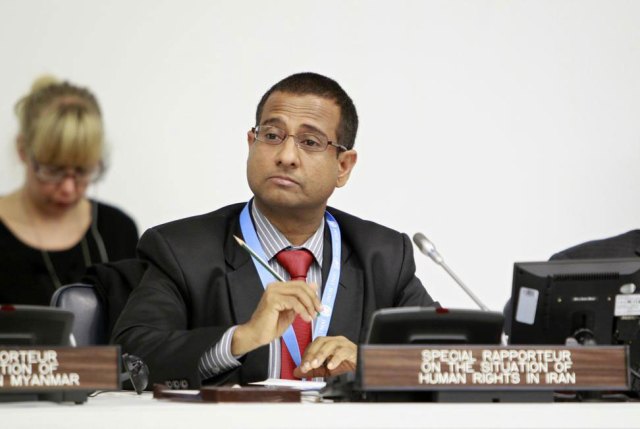
An attempt by allies of the Iranian regime at the U.N. Human Rights Council to block the renewal of the appointment of a special investigator into Tehran’s human rights record failed and reinforced the bid to keep a spotlight on the regime’s dismal human rights record.

Support for renewing the five-year-old mandate of Ahmed Shaheed, the independent “special rapporteur” for human rights in Iran, was far from overwhelming, however. The 47-member HRC approved the resolution by a 20-15 vote, with 11 countries abstaining.

The regime got more support now than it did at the time the special rapporteur mandate was first established in 2011, when the measure passed by a 22-7 vote, with 14 abstentions after a furious lobbying effort by the regime.

Shaheed has angered the regime with annual reports highlighting severe violations, while receiving the backing of mainly European and Latin American democracies, in addition to that of the regime’s regional Arab rivals, including Saudi Arabia, Qatar and the United Arab Emirates.

Iranian and international human rights advocacy organizations say Tehran’s human rights record has worsened in recent years, notwithstanding the election in 2013 of the ostensibly “moderate” President Hassan Rouhani, and despite the diplomacy that led to the nuclear agreement last year.

The attempt to vote down the Iran human rights mandate alarmed these groups. Previous such efforts succeeded in getting special rapporteur mandates for human rights in Cuba and Belarus halted in 2007.

Shaheed submitted his annual report prior to the vote, recording abuses in Iran including mistreatment of religious minorities, a “widening crackdown on freedom of expression and opinion,” and a 20-year high in executions.

The regime dismissed the charges contained in the report as “imaginary.”

“The report on the Islamic Republic of Iran is politically-motivated, discriminatory and biased,” foreign ministry spokesman Hossein Jaberi Ansar said last week. “It has been written on unwarranted information and not existing realities.”

Iran for the past five years has refused permission for Shaheed, a former Maldivian foreign minister, to visit the country in the exercise of his mandate.

“Change won’t happen overnight, as the Iranian state is based on principles that discriminate against women, ethnic and religious minorities, gays and numerous others,” UN Watch said. “Yet this important step keeps the item prominently on the international agenda and gives hope to oppressed citizens in Iran.”

Meanwhile Human Rights Watch took exception to a new criminal procedure for those charged with national security and political crimes that denied people charged access to independent legal counsel.

Human Rights Watch interviewed lawyers, political prisoners, family members, and sources familiar with cases of detainees facing national security and political charges. Human Rights Watch documented several instances over the past year in which the detainees were denied access to lawyers during investigations or were forced to change their legal advocate under pressure by judiciary officials.

“While Iran claims the new criminal code has improved defendants’ rights, these efforts are meaningless if parliamentary amendments completely undermine the spirit of fair judicial proceedings,” said Sarah Leah Whitson, HRW Middle East director. “The incoming parliament should ensure that the criminal procedure law is actually a step forward rather than two steps back for the rights of its own citizens.”

According to HRW, Iran has consistently failed to prevent torture in detention and to investigate allegations of such abuse. Revolutionary courts use confessions obtained under torture as evidence in court. As a result, the right to access a lawyer from the time of an arrest is an important safeguard against abuses in detention.

A glaring example of this injustice came when brothers Mehdi and Hossein Rajabian, 26 and 31, and their friend Yousef Emadi, 35, were found guilty of “insulting Islamic sanctities”, “spreading propaganda against the system” and “illegal audio-visual activities” in a 2015 trial that activists said lasted no longer than three minutes. They were condemned to lengthy prison sentences without having access to lawyers whilst being interrogated, nor during the course of their trial.

According to Amnesty International, the three men were subjected to beatings and electric shocks to make forced confessions against themselves on camera while being in custody. Those confessions were then used as basis for their conviction in court, a familiar pattern used against prisoners of conscience in Iran.

“These sentences lay bare the absurdity of Iran’s criminal justice system, which brands individuals as criminals merely for peacefully exercising their rights to freedom of expression through making music and films. These young men should never have been arrested, let alone brought to trial,” said Said Boumedouha, deputy director at Amnesty International’s Middle East and North Africa program.

While the renewal of Shaheed’s mandate gives continuing hope of reversing these atrocities by the Iranian regime, the real answer for a change in Iran will only come when the world unites and works with the various Iranian dissident groups both within Iran and around the world to empower the Iranian people to achieve democracy and freedom for themselves in the future.

By Michael Tomlinson

Filed Under: News Tagged With: Featured, Iran, Iran Human rights

Confrontations with Iran Regime Rise Sharply

March 24, 2016 by admin


Confrontations with Iran Regime Rise Sharply

Confrontations with Iran Regime Rise Sharply

The Obama administration is expected to blame Iranian hackers as soon as Thursday for a coordinated campaign of cyber attacks in 2012 and 2013 on several U.S. banks and a New York dam, sources familiar with the matter have told Reuters.

The Justice Department has prepared an indictment against about a half-dozen Iranians, said the sources, who spoke on condition of anonymity due to the sensitivity of the matter. It is one of the highest-profile U.S. indictments against a foreign nation on hacking charges.

The indictment follows a string of provocative acts the Iranian regime has undertaken ranging from illegal launches of new ballistic missiles to appalling human rights crackdowns to continued support of three proxy wars that have generated a massive refugee crisis.

The indictment was expected to directly link the hacking campaign to the Iranian government, one source said. The banks will not be identified in the indictment due to fear of retaliation, the source said.

Though a planned indictment for the breach of back-office computer systems at the Bowman Avenue Dam in Rye Brook, New York, has been reported, it was only part of a hacking campaign that was broader than previously known, as the indictment will show, the sources said.

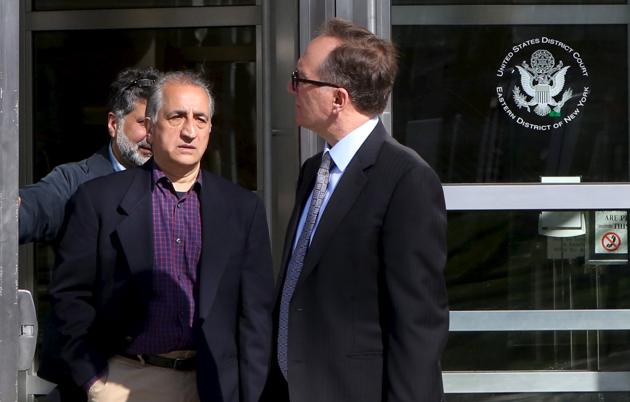
This follows the indictment of Ahmad Sheikhzadeh, 60, a consultant to the Iranian mission to the United Nations who is accused of charges related to sanctions violations, money laundering and tax matters, by the U.S. government in a Brooklyn, New York federal courthouse.

The string of legal actions signal an effort to respond to the new Iranian regime violations and incursions against the backdrop of rising terrorist attacks – namely in Brussels – and growing uncertainty over the nuclear deal reached with Iran and the much ballyhooed promise of moderation that is now evaporating quickly.

Calls to get tougher with the regime have become more common and include calls for the re-imposition of sanctions.

“The U.S. and our partners need to impose sanctions with real economic teeth. Some policymakers may be tempted to resolve the current situation by sending a symbolic message to Iran while avoiding antagonizing international partners, for example by imposing a narrow set of sanctions against individual Iranian military officials or small Iranian defense companies involved in the missile program,” said Peter Harrell, an adjunct senior fellow at the Center for a New American Security (CNAS) and the former deputy assistant secretary of State for Counter Threat Finance and Sanctions, in a piece in The Hill.

“But these kinds of sanctions rarely have meaningful economic bite, since most Iranian officials and defense companies have few economic ties to the U.S. or our allies. The Iranians would rightly perceive such sanctions as a largely symbolic message that refrained from imposing real costs on Tehran. Such sanctions would be unlikely to deter further Iranian aggression or prevent them from further testing the limits of the nuclear deal,” he added.

Some activists suggested that enthusiasm over the nuclear deal and prospects of future trade with Iran are causing the international community to turn a blind eye to Iran’s human rights violations. Since sanctions were lifted in January, foreign business delegations have flooded Iran and multibillion-dollar deals have been brokered.

Darya Safai, an Iranian women’s rights advocate who was invited to Geneva by the independent monitor U.N. Watch to address the Human Rights Council, said women’s rights are deteriorating by the year. Safai said the decline has been particularly dramatic since Rouhani, the architect of the nuclear deal, took office in 2013 on a platform of “moderation and prudence.”

Speaking from Geneva, Safai said that since Rouhani took office, a 50 percent quota had been imposed on the number of women studying at higher education institutions. Before Rouhani, 67 percent of students at universities were women, Safai said.

More worrisome were comments coming from the Revolutionary Guards who were supportive of calls by top mullah Ali Khamenei for a continuation of the regime’s “resistance economy” and called for a larger role for the Guards in Iran’s economy.

“The armed forces are ready to play a significant role in the resistance economy and implementing the supreme leader’s suggestions,” Brigadier General Masoud Jazayeri, deputy joint chief of staff of the armed forces was quoted as saying by Fars news agency.

Jazayeri added that Rouhani should see the Guards’ achievements in creating advanced ballistic missiles as an economic blueprint and evidence that Iran did not need foreign investment to succeed.

As the evidence mounts of growing confrontations with the Iranian regime on multiple fronts, the Iran lobby continues to remain silent on the rise in tensions since its claims of moderation in the wake of the nuclear have proven to be false.

By Michael Tomlinson

Filed Under: Blog, News Tagged With: Featured, Iran, Iran deal, Iran Terrorism

Brussels Attacks Shows Need to Confront Islamic Extremism at its Source

March 23, 2016 by admin

Brussels Attacks Shows Need to Confront Islamic Extremism at its Source

Brussels Attacks Shows Need to Confront Islamic Extremism at its Source

An airport ticket counter and Starbucks location crowded with people were the scenes of devastating suicide bombings in Brussels, as was a crowded commuter train where ISIS quickly claimed responsibility for the devastating attacks that so far has killed at least 30 and injured over 200 in a stark reminder of the vulnerability of Europe to sophisticated attacks.

The Islamic State-affiliated news agency has issued a bulletin claiming responsibility for the deadly attacks Tuesday in Brussels.

The claim was disseminated on the group’s official channel on Telegram, a social media platform, and picked up by other official ISIS channels on Telegram and on Twitter.

“Islamic State fighters carried out a series of bombings with explosive belts and devices on Tuesday, targeting an airport and a central metro station in the center of the Belgian capital Brussels, a country participating in the coalition against the Islamic State,” the statement says. “Islamic State fighters opened fire inside the Zaventem airport, before several of them detonated their explosive belts, as a martyrdom bomber detonated his explosive belt in the Maalbeek metro station.”

A security camera image was released depicting three men, two of who wore black gloves that many security experts indicated could have hid the triggering devices or prevented a premature detonation; steps detailed in training manuals developed and distributed by ISIS indicating a high level of planning, coordination and sophistication.

Brussels has now entered the lexicon of Islamic terror attacks that include New York, London, Paris, Madrid, Sydney and Ottawa and adds to the mounting evidence that Islamic extremists and ISIS will not simply be defeated by smart bombs and drones.

To defeat any extremist ideology, one has to look for its sources and how it is nurtured and exported. The blueprint for ISIS was laid out long ago by the Iranian regime which pioneered state-sponsored terrorism by formalizing its deployment in its Quds Forces, backed by the resources of the Revolutionary Guard Corps and excused by the theological nonsense espoused by the regime’s mullahs.

To say the Iranian regime is the godfather of Islamic terror would be accurate. To say the Iranian regime gave birth to ISIS is even more accurate.

ISIS rise out of the quagmire of the Syrian civil war could not have been made possible without the Iranian regime’s support of the Assad regime that prolonged that conflict and reduced the effectiveness of moderate, Western-backed rebel groups in favor of Al-Qaeda affiliated militias.

The splintering and creation of ISIS from Al-Qaeda alone might not have been sufficient to launch the global army of terror we know face unless the meddling of the Iranian regime in Iraq forced the departure of Sunni tribes from the government of Nouri al-Maliki and created a power vacuum allowing for ISIS rapid advances in Iraq, culminating in the conquest of Mosul, which gave ISIS a quadrupling of territory, a ready-made labor force and fertile recruiting ground among disenfranchised Sunni communities.

The fact that Iran went all in by arming and deploying Shiite militias to fight ISIS initially in Iraq quickly turned this conflict into the bloody sectarian war it has now become.

The lack of an appropriate response from the Obama administration only intensified the conflict as Iran sought regional hegemony in a Shia crescent, thereby creating ISIS with a powerful recruiting tool among Sunnis.

Even as the evidence is clear and strong of the links between ISIS and the Iranian regime, the Iran lobby has ramped up to protect Iran from any criticism and have begun to mobilize to lobby the presidential candidates to protect the nuclear deal reached with Iran.

The National Iranian American Council (NIAC), strong advocates for Tehran, urged Hillary Clinton to follow President Obama’s lead in encouraging openings with Iran. It warned that “any deviation from Obama’s prudent and wise rhetoric and diplomacy will risk the significant progress achieved in the past few years.”

“At a time when President Obama is seeking to make his historic Iran policy change as irreversible as possible, we are concerned by Secretary Clinton downplaying the possibility of a larger diplomatic opening,” said Jamal Abdi, NIAC Action executive director.

The move to lobby Clinton is the clearest sign yet the NIAC and other Iran supporters are alarmed at the universal declarations coming from all the presidential candidates warning against accommodating the Iranian regime. Public opinion polls show Americans are leery of the regime and find little confidence in the mullahs promises of moderation that the Iran lobby have been flogging for the better part of three years.

The Brussels attacks are only another chapter in a long and bloody novel that is being authored in Tehran and the failure to connect the two will only result in more attacks and more deaths. Only by dealing effectively with Iran and pushing back its forces abroad back within Iran can we hope to curb the influence of the Revolutionary Guards and more importantly the nihilistic ideology the people like Ali Khamenei peddle in weekly chants of “Death to America” which still holds passionate meaning for him and his fellow clerics.

No matter how the Iran lobby tries to paper over the spread and growth of Islamic extremism, the root and source of that poisoned tree lies in Tehran with deep roots.

By Michael Tomlinson


Filed Under: News Tagged With: Featured, Iran, Iran deal, Iran Lobby, National Iranian American Council, NIAC, NIAC Action, Nuclear Deal

Iranian Regime Delivers Nowruz Message of Hostility

March 21, 2016 by admin

Iranian Regime Delivers Nowruz Message of Hostility

Iranian Regime Delivers Nowruz Message of Hostility

This weekend marks the start of Nowruz, the Persian New Year, which coincides with the spring equinox and includes many traditions such as a spring cleaning of one’s home, visiting with family and friends and feasting. It is regarded as the most important holiday in Iran and is always a prime opportunity for the Iranian regime to make a strategic and public point each year.

This year, top mullah Ali Khamenei did not disappoint in delivering a Nowruz message that could be considered an annual laundry list of grievances and perceived slights against the regime by the U.S. and was a reminder of just how ridiculous the Iran lobby’s contentions were of spurring a new “moderate” Iran after the nuclear deal.

Khamenei on Sunday said sanctions continue to bite the country’s economy, and again warned against trusting the U.S. — further indicating that the nuclear deal has not changed the mullah’s behavior towards West.

“They removed the sanctions in paper only,” Khamenei said in a televised address. “We don’t have any problem with the American people. What we are dealing with here is the politicians. They are the enemies.”

Khamenei’s remarks came after President Obama delivered his own Nowruz message to the Iranian people with his hopes for a more peaceful future. It obviously fell on the deaf ears of Khamenei.

“In Western countries and places which are under U.S. influence, our banking transactions and the repatriation of our funds from their banks face problems … because (banks) fear the Americans,” he said.

“The U.S. Treasury … acts in such a way that big corporations, big institutions and big banks do not dare to come and deal with Iran,” Khamenei added. The Central Bank of Iran has also said remaining U.S. sanctions have scared off European firms.

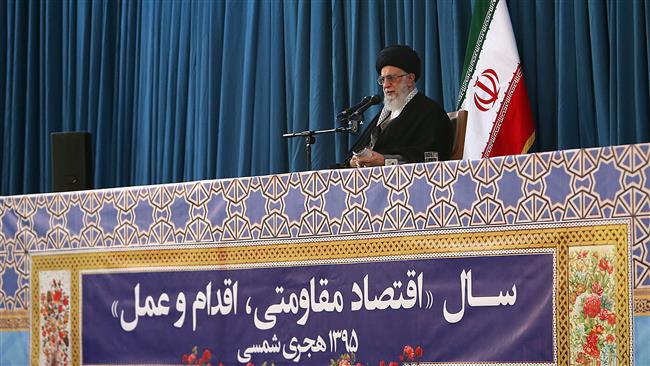
To drive the point home, the stage on which Khamenei sat carried a giant banner reading “the year of the Resistance Economy: Action and Implementation”, his chosen slogan for the Iranian year 1395 that began on Sunday. The banner was a not-too-subtle declaration of how the mullahs view the relationship the regime will have in the upcoming year with the rest of the world and it isn’t one of moderation.

“The candidates for the American presidency have competed to vilify Iran in their speeches, and this is a sign of hostility,” he added as he portrayed all of the candidates running for office as enemies of the regime.

Khamenei’s comments come also following an announcement that the regime’s Revolutionary Guard intends to build a statue commemorating the capture of ten U.S. sailors by the regime.

“There are very many photographs of the major incident of arresting US Marines in the Persian Gulf in the media and we intend to build a symbol out of them inside one of our naval monuments,” said Ali Fadavi, the head of the Guard’s naval forces in comments made to Iran’s Defense Press news agency.

It is expected the statue will built on Kharg, a small Iranian island in the Persian Gulf close to where the servicemen were captured, the Telegraph reported.

The regime never seems to miss an opportunity to publicly troll the U.S. and announce its antagonism and vitriol with almost child-like glee. It is a remarkable affirmation of how incredibly silly the Iran lobby’s positions on moderating Iran have been over the past several years.

Another example of that hypocrisy came in the form of an editorial published by the National Iranian American Council discussing Ahmed Shaheed, the UN special rapporteur for human rights in Iran, in which Shervin Vahedi lauded his most recent report criticizing the regime for brutal human rights abuses as somehow showing it was making clear progress towards improvements.

Vahedi bases those comments on a lone section discussing how the regime’s Supreme Court signaled it might take up the issue of executing citizens over drug-related offenses since the bulk of executions are said to be for similar offenses.

What Vahedi – and the most of the Iran lobby – ignore is how the regime uses trumped up drug offenses as a convenient means of executing and eliminating political dissidents, religious minorities and anyone else that opposes their rule.

Vahedi also reiterates much of what Shaheed has already cited in terms of the abuses and crackdowns aimed at journalists and artists, but does not make any comment condemning the abuses, nor calling for changes in Iran’s policies or in the regime’s leadership.

He only gives a limp and half-hearted endorsement from NIAC of continuing Shaheed’s mandate. You can almost imagine how difficult it was for the NIAC to utter even that small concession in the face of such overwhelming evidence.

For many languishing in the regime’s prisons, this is not a happy Nowruz for them or their families. The NIAC would do better to acknowledge their suffering and call for an end to it.

By Michael Tomlinson

Filed Under: Blog, News Tagged With: Featured, Iran, Iran deal, Iran sanctions, Khamenei, NIAC, Norooz, Norouz, Nowrouz, Nowruz

 Iranian Regime Presents Two Faces to World

March 18, 2016 by admin

 Iranian Regime Presents Two Faces to World

Iranian Regime Presents Two Faces to World Iranian Regime Presents Two Faces to World

There are many descriptions throughout history of governments or leaders presenting two different sides of their personalities. Ancient Rome even created the god Janus to describe the two-faced nature of looking into the past and future, while in our modern vernacular we describe people who are “two-faced” as being duplicitous or deceitful.

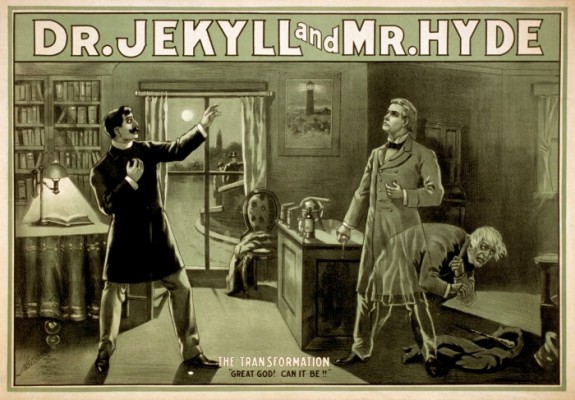
In literature, the story of Dr. Jekyll and Mr. Hyde takes this split personality idea to the extreme in depicting a man who could possess vastly different moral character through a transformation that turned him from an ambitious physician to a demented killer.

In many ways, the Iranian regime presents a similar split personality to the world in which on one hand – aided by the Iran lobby – the mullahs seek to portray themselves as a modern nation bent on joining the international community with a leadership focused on moderation and peaceful goals. On the other hand, the regime’s actions in terms of its support of proxy wars, terrorist groups and human rights crackdowns shows a regime intent on an almost murderous path of destruction.

This “Jekyll and Hyde” nature was examined by Marc Champion in a Bloomberg View editorial in which he said:

“The Hyde part of this analogy seems clear: it’s Iran’s clerical regime. It retains power by dictating who can stand for election, repressing and censoring political and cultural opposition and executing about 1,000 people per year. Abroad, it arms terrorist groups and tests ballistic missiles emblazoned with the words ‘Israel must be wiped out.’

“The Jekyll side is less understood. This is the Iran where an American is more likely to get an enthusiastic reception than in any other country I’ve visited in the Middle East; as far back as 2002, survey data suggested that three quarters of Iranians wanted closer relations with the U.S. Iranians are better educated than citizens of other countries in the region and women make up 60 percent of the university student body (enough for the regime to try to start excluding them from certain courses). The economy, though far too oil dependent, is more diversified than others in the Persian Gulf. Above all, Iran is a stable nation state with thousands of years of history in a region of shifting sands.”

And there lies the conundrum of Iran, a nation filled with millions of people who yearn for normalcy, freedom, peace and access to the rest of the world without fear of censorship or oppression, but all of whom are under the collective thumbs of a religious theocracy dominated by mullahs and backed by the Revolutionary Guards and religious courts.

Champion interviewed Ali Kedery, the longest-serving senior U.S. official in Iraq from 2003 to 2009, after which he went to work for ExxonMobil. From there went on to set up Dragoman Partners, a consultancy based in Dubai, on his views on this split personality.

“You cannot separate Dr. Jekyll from Mr. Hyde. President Obama and his very inexperienced and ideological team have bet the farm on their ability to separate the regime from the Iranian people. But you are dealing with a real regime, one that has deep roots planted since 1979.”

Kedery went on to describe the regime’s vice-like grip on political power — proved by its crushing of pro-democracy protests in 2009 — and over Iran’s economy. As a result, he said, the idea that hardliners will allow Western capital and interaction penetrate the country to such an extent that it can erode their power and change the nature of the regime is dangerously wrong:

“They are not stupid. The model they have adopted is something like Russia’s or China’s. There will be a lot of foreign direct investment, but they will make sure it is directed towards the government.”

The grip the mullahs have over the Iranian people is almost absolute through the rigorous use of arrest, imprisonment and execution as the primary means of domestic crowd control. Often times the use of such tools rises in concert with the rise of political movements within Iran for political liberalization or even regime change.

The current regime of Hassan Rouhani has been especially brutal in meting out the ultimate punishment as human rights groups such as Amnesty International and the United Nations has noted as Iran has sought to control any dissent during the run up to the nuclear deal.

Dr. Majid Rafizadeh, an Iranian-American political scientist and Harvard University scholar, is president of the International American Council and wrote about the surge in executions in Al-Arabiya.

“The Islamic Republic of Iran has hit the highest rate of executing people since the year 1989. The official number indicates that Iran executed nearly two times more people in 2015 in comparison to 2010 when the hardline president Mahmoud Ahmadinejad was in office, as well as roughly 10 times more than the number of executions in 2005,” he wrote.

Michael G. Bochenek, senior counsel of the children’s rights division at Human Rights Watch pointed out “Iran is almost certainly the world leader in executing juvenile offenders.” Some articles in Iran’s criminal code allows girls as young as 9 and boys as young as 15 to receive death sentences. In addition, ethnic and religious minority communities, including the Sunni, Arabs, and Bahai continue to be systematically targeted and discriminated against, he added.

The use of lethal punishment as a means of statecraft and controlling a population is the Mr. Hyde nature of the regime and the face that the Iran lobby works diligently to keep covered up.

Nowhere is the dual nature of the Iranian regime on display better than in Syria, where on the one hand its direct involvement in keeping the Assad regime alive with arms, fighters and cash led to a bloody civil war that has claimed the lives of over 300,000 people and led to half of the population of Syria becoming displaced and turned into refugees.

Yet the Iranian regime has the temerity to insist any resolution of Syria’s conflict that does not include Assad could lead to “Armageddon” in one of the biggest examples of hyperbole since the Greeks claimed the Trojan Horse was a gift to Troy.

Iranian regime foreign minister Javad Zarif said that every country in the Middle East needed to think about ways to end decades of military and sectarian conflict, but that this must not include a redrawing of post-World War II borders to give groups such as the Kurds or the Islamic Alawite sect their own regions.

“Change in how we govern, change in how we interact with each other. That is what requires change,” Zarif said during a speech at the Australian National University in Canberra. “Changing borders will only make the situation worse. That will be the beginning – if you believe [in religious texts] – of Armageddon.”

Zarif also reaffirmed Iran’s view that negotiations aimed at ending Syria’s conflict shouldn’t be derailed by premature demands for the ouster of Bashar al-Assad, warning that the Syrian president’s future must not be a precondition of negotiations among the regime and opposition groups.

Given the two-faced nature of the regime, we can only assume that Zarif’s comments mean the actual opposite.

By Michael Tomlinson

Filed Under: News Tagged With: Armageddon, Featured, Iran, Iran deal, Iran Human rights, Rouhani

Iran Lobby Excuses Get Stranger and Stranger

March 17, 2016 by admin


Iran Lobby Excuses Get Stranger and Stranger

Iran Lobby Excuses Get Stranger and Stranger

The Iran lobby has offered up a variety of excuses for the actions and militant behavior of the Iranian regime ranging from pleas of peace-loving intent and political moderation to feigned ignorance and indignation over escalating human rights abuses and proxy wars throughout the Middle East.

One of the newest lines being trotted out by the Iran lobby is the absurd notion that Iran has never started a war.

A scholar at the American Enterprise Institute, took that claim to task in a column for Commentary Magazine.

He showcased comments made by Iranian regime apologists Juan Cole, a University of Michigan professor, and retired Congressman Ron Paul who said “There’s no history to show that Iran are aggressive people. When’s the last time they invaded a country? Over 200 years ago!”

“Iran has not launched an aggressive war in modern history (unlike the US or Israel), and its leaders have a doctrine of ‘no first strike.’ This is true of Supreme Leader Ali Khamenei, as well as of Revolutionary Guards commanders,” said Cole.

The Iranian regime knows when it has got a good thing going. Foreign Minister Mohammad Javad Zarif yesterday tweeted, “Iran hasn’t attacked any country in 250 years. But when Saddam rained missiles on us and gassed our people for 8 yrs, no one helped us.”

These are absurd comments when looked at in the context of what the mullahs have wrought since the Islamic revolution in 1979. The mullahs preferred method of aggression is to use proxies, either in the form of terrorist groups such as Hezbollah or local militias such as in Iraq and Yemen.

Hezbollah alone has served as a conduit of death and destruction for decades by carrying acts of terror either under the direction of or direct cooperation with Revolutionary Guards and Quds Forces personnel. In the most recent Syrian conflict, senior Iranian commanders have been in the field directing combat operations and even getting killed.

It’s noteworthy that Syria never posed a direct conflict with Iran, not even sharing borders, but the mullahs felt it necessary to engage in armed conflict there and even expanded it by calling for Russia to join in the bloodshed and widen the war.

Since the revolution, Iran has been involved in military campaigns in:

  • 1982-present: Lebanon
  • 2003-present: Iraq
  • 2006: Israel (via Hezbollah)
  • 2011-present: Syria
  • 2015-present: Yemen

Not exactly a record of pacifism, but certainly in line with the extremist nature of the regime and the duplicitous nature of the excuses made by the Iran lobby.

Another example of that stranger than fiction messaging came when regime-controlled media blasted the report issued by Ahmed Shaheed, the UN special rapporteur for human rights in Iran, which blistered the regime for appalling human rights abuses, including a near historic 1,000 executions in 2015 and a distressing willingness of the mullahs to kill children and women.

Iran Foreign Ministry Spokesman Hossein Jaber Ansari criticized the recent report as “biased,” “politically motivated” and “prejudicial, Tasnim news agency reported.

He said that the report is “imbalanced” and has been prepared based on “unreliable information.”

Those criticisms fell on deaf ears though as the Committee to Protect Journalists joined 34 other organizations in calling on the U.N. Human Rights Council to vote in favor of renewing the mandate Shaheed’s term as special rapporteur. The vote is scheduled to take place during the 31st session of the council, which ends March 24.

In the joint letter, the organizations drew attention to the range of “serious and systematic violations” of civil and political rights in Iran, as well as the need for the council to urge Iranian authorities to implement long overdue legal changes that would address the grievances of those who have borne the brunt of human rights abuses.

Journalists and other political and civic actors are “arbitrarily detained and given increasingly harsh prison sentences, often for trumped-up national security-related charges,” the letter said. Iran is one of the leading jailers of journalists, with 19 behind bars as of CPJ’s annual prison census on December 1. Ahead of last month’s legislative elections, journalists were arrested and at least one publication was banned, CPJ research shows.

In the meantime, even the modest “moderate” election wins hailed by the Iran lobby were under assault as several women who won seats were being verbally attacked for making comments deemed threatening to the regime, such as criticizing laws mandating women wear traditional veils and coverings.

All of which provides additional proof that any hope of moderation offered up by the Iran lobby is never really going to happen. This was put on bold display when Reza Marashi, research director for the National Iranian American Council, published a plaintive editorial in Huffington Post pleading for the release of his fellow regime supporter, Siamak Namazi, who was arrested and imprisoned by the regime and not part of the prisoner swap resulting from the nuclear deal.

“After finishing his graduate studies abroad, he again returned to Iran in 1999, this time as a consultant. Most people in his shoes returned to try and make a quick buck as a big fish in a small pond. Not Siamak. He helped run a world-renowned consulting firm – staffed predominantly with Iranian-born citizens – that facilitated badly-needed foreign investment from blue-chip multinational corporations,” Marashi said.

Unfortunately, Marashi neglects to mention how that firm, Atieh Consulting, become embroiled in regime politics since his family had deep connections to various parts of the regime’s leadership and actively cooked up the idea of creating an Iran lobby in the U.S. through the NIAC to help advocate for the lifting of international sanctions and far from being a selfless act, Namazi and others had hoped to position themselves to serve as middlemen to funnel foreign investment back into the regime and steer it towards their political allies as described in several investigative pieces.

It is also noteworthy how Marashi did not write similar heartfelt pieces on behalf of other Americans held captive in Iranian prisons such as Amir Hekmati or Saeed Abedini or endured years of torture in Iran.

It would certainly be interesting to see Marashi put his feet where his mouth is and go to Iran himself to plead with the mullahs and see if he can avoid a lengthy prison term as well as another political pawn for them.

By Michael Tomlinson

Filed Under: Blog, News Tagged With: Featured, Iran, Iran deal, Iran Human rights, Iran Lobby, Iran sanctions, National Iranian American Council, NIAC, NIAC Action, Reza Marashi

News Coming Out of Iran Keeps Getting Worse

March 16, 2016 by admin

News Coming Out of Iran Keeps Getting Worse

News Coming Out of Iran Keeps Getting Worse

The Iranian regime has been linked to a cyberattack on a small dam in the state of New York, which Sen. Charles Schumer (D-NY) plans on publicly linking the regime to, but the regime’s online activities have not been limited to cyber-assaults as revealed by a report by the BBC.

“A group of Twitter accounts seems to be designed to pump out crude Iranian propaganda aimed at an English-speaking audience – but the people behind it and their true motivations are a mystery,” the BBC said.

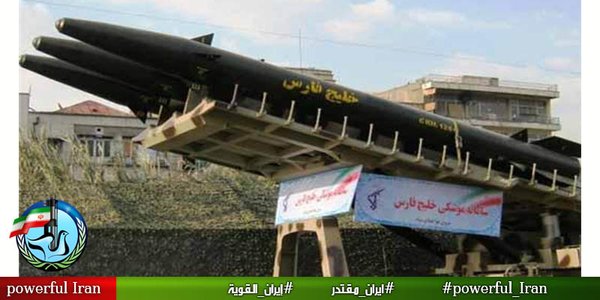
“Dozens of accounts tweet to thousands of followers in waves every few minutes throughout the day using the hashtag ‘Powerful Iran.’ Their profile pictures are Hollywood celebrities or stock photos, but their tweets almost always include pictures of Iranian military equipment along with random and sometimes seemingly irrelevant hashtags,” the BBC added. “All of the tweeted photos bear a logo showing a dove with a rifle on its back bearing the Iranian flag. They also include a caption using the “Powerful Iran” hashtag in three languages: English, Arabic and Persian.”

The mass automated tweet army, while not very effective, does demonstrate the Iranian regime’s efforts to expand its online activities and specifically target Western audiences; even if the language translations offer some stumbling blocks.

“The campaign attempts to leverage hashtags related to the U.S. government (#FBI, #CIA), Israel, Saudi Arabia, and some conservative U.S. hashtags,” says John Little, a security and intelligence expert who writes at Blogs of War. “It also bizarrely attempts to leverage hashtags from popular culture such as #GreaseLive which appears in several tweets.”

Whatever the intention, Little points out, the campaign itself is far from sophisticated.

“In terms of effectiveness the campaign is a miserable failure. Almost all of the tweets have gone unnoticed and have no retweets or favorites. The few interactions that I can find also appear to be faked by other bots. In fact, a review of the top tweets for the hashtag reveals that a large number of them are my tweets exposing the campaign,” he said.

The ham-handed efforts complemented the ongoing social media efforts of the Iran lobby, including Twitter accounts for regime advocates such as Trita Parsi (@tparsi) of the National Iranian American Council, but the regime’s media efforts don’t end there as an Iranian naval commander said Tuesday that Iran retrieved thousands of pages of information from devices used by U.S. sailors who were briefly detained in January.

The claim, published by Iranian state media, marks the latest example of how the authorities in Tehran has kept an incident considered embarrassing to the United States in the media in the two months since it occurred in what only be considered an ongoing PR war Iran is trying to wage over an incident that virtually all U.S. media have moved on from as the presidential race goes into overdrive.

It probably disheartens the regime to see virtually every leading candidate in the U.S. election denounce the Iranian regime and call for additional sanctions in the wake of recent ballistic missile launches.

Hard on the heels of those provocative missile tests, a U.S. official told CNN Iran could launch an even more advanced 3-stage missile “at any minute.”

CNN compares such a vehicle to the rocket North Korea employed to launch a satellite last month, and notes a successful test “would give Iran further insights into intercontinental ballistic missile technology.”

All of which demonstrates that the mullahs in Tehran show no desire to reduce their missile program and in fact intend to move even more aggressively forward; most likely in recognition that a new incoming U.S. president will have a public mandate to act more forcefully with the regime – unlike the Obama administration’s run of public appeasement.

This may also explain why the regime is so focused on crushing any public dissent at home with ever growing human rights violations that have come to the forefront of human rights officials and organizations as pointed out in a story in the Daily Caller.

Ahmed Shaheed, the special rapporteur for Iran, told the U.N. Human Rights Council Monday “at least 966 persons — the highest rate in over two decades — were executed in [Iran in] 2015.” Last year’s executions represented an increase of 213 from the 753 executed in 2014.

“At least 73 juvenile offenders were reportedly executed between 2005 and 2015,” said Shaheed. “At least 160 others are awaiting the same fate on death row.”

Iran’s harsh crackdowns have not been limited to state executions, according to Shaheed. He said that as of January, at least 47 journalists and activists were imprisoned in the country. As many as 270 internet cafes were also closed for their supposed “threat to societal norms and values.”

Amnesty International’s report on Iran for 2015/2016 details many of the various human rights abuses the country continues to engage in, despite the renewed relationships it has made with the world since the Joint Comprehensive Plan of Action (known as the Iran nuclear deal) was inked last July. Iran’s violations range from the aforementioned executions to freedom of speech, and everything in between.

“The authorities continued to severely restrict freedoms of expression, association and assembly,” said Amnesty’s report. “They blocked Facebook, Twitter and other social media websites, closed or suspended media outlets including the Zanan monthly women’s magazine, jammed foreign satellite television stations, arrested and imprisoned journalists and online and other critics, and suppressed peaceful protests.”

The report also noted that Iranian police engage in torture of prisoners during interrogations to illicit confessions. Sentences for those found breaking Iran’s strict penal code include a range of public punishments including “flogging, blinding and amputations.”

Religious persecution continued to be a mainstay in the country. Baha’i, Christians and Sunni Muslims continue to be arrested regularly and are hampered when trying to gain employment, education and the ability to practice their respective religions. Ethnic minorities continue to live under similar conditions.

As the bad news continues to flow out of the Iranian regime, it shouldn’t come as a surprise and had been widely anticipated by Iranian dissident groups. We can only hope the rest of the world will pay attention.

By Michael Tomlinson


Filed Under: News Tagged With: Ahmed Shaheed, Appeasement policy, Featured, Iran, Iran deal, Iran Human rights

Iran Lobby Pushes Fiction of Moderate Win in Iran

March 15, 2016 by admin

Iran Lobby Pushes Fiction of Moderate Win in Iran

Iran Lobby Pushes Fiction of Moderate Win in Iran

That bastion of apologists for the Iranian regime’s abuses and extremists activity – the National Iranian American Council – has pushed vigorously the fiction that the recent parliamentary elections in Iran delivered a resounding win for the forces of moderation; all evidence to the contrary.

It’s a recognition by the NIAC and their fellow travelers that the rhetoric in the American presidential campaign has heated up against the recent actions of the mullahs with all the Republican candidates and now Democratic front runner Hillary Clinton all calling for new sanctions to be imposed in the wake of ballistic missile tests violating United Nations Security Council resolutions banning them.

For the NIAC, it’s a particularly thorny problem since the clock is now running on the end of the Obama presidency and what has been a policy of appeasement of the mullahs in Tehran. Coupled with that is growing public opinion that Iran has not shifted towards moderation in the wake of the nuclear deal, but in fact has grown more aggressive and hostile especially in human rights abuses and proxy wars with its neighbors.

The world has been subjected to the largest refugee crisis since World War II resulting from the Syrian civil war and has seen the Iranian regime go all in by begging Russia to intervene and target rebels to the regime of Bashar al-Assad and not ISIS as widely touted.

The Iranian elections were also a charade given the mass elimination of over half of the candidates submitted for approval. Even the most supportive news media have grudgingly admitted that the human rights situation in Iran and throughout the Middle East has grown more desperate.

Ahmad Shaheed, the UN special rapporteur for human rights in Iran, has issued yet another blistering report of human rights conditions within Iran following similar condemnations by Amnesty International and Iranian dissident and watchdog groups such as the National Council of Resistance of Iran (NCRI), all of whom have painted a bleak picture of the mass arrests, torture, imprisonment and execution of journalists, artists, bloggers, students, ethnic and religious minorities and political opponents and dissidents.

The picture of how bad things are in Iran has become so obvious it’s taken on the near-certainty of gospel. Ask any person on the street if things have improved in Iran, the answer will most likely be “No.”

And yet the NIAC and its allies cannot give up the fight and still try to push the fiction that things are better, even as their own allies such as Iranian-American businessman Siamak Namazi was arrested and tossed into prison without explanation by the same regime he was promoting in the ultimate irony.

With friends like these, who needs enemies?

But Jamal Abdi and Ryan Costello of the NIAC continued to push the party line with the publishing of a “policy memo” on the NIAC website cheerfully citing all the good news coming out of the Iranian elections such as:

  • Huge moderate wins in the parliament and Assembly of Experts, even go so far as saying Hassan Rouhani now has a plurality to enact his policies;
  • How Rouhani, newly empowered, will seek out new policies to open up bridges to the rest of the world; and
  • How so many notable hardliners were defeated as evidence of the mandate of the Iranian people for a new moderate future.

Unfortunately, none of that is true.

The dismissal of over 6,000 candidates left open the way for a field of candidates bulging with loyal supporters of the regime. If the Iranian people are only left with choices between bad and worse candidates, it stands to reason they would select the lesser of two evils.

What Abdi and Costello leave out is the simple fact that real power within the regime didn’t change at all. Supreme Leader Ali Khamenei still remains in charge, as does the Revolutionary Guards Corp (IRGC) which has been busy shooting missiles as fast as it can. The courts and police remain firmly in control and have been busy executing 2,300 people under Rouhani, as well as rounding up virtually any dissenter and locking them away.

Of course Abdi and Costello neglect to mention any of the extremist policies undertaken by Rouhani such as the level of executions than have surged higher than at any time in the history of the mullahs’ reign since 1989. Nor do they take up the lack of any progress on halting child executions, misogynist laws passed under Rouhani’s term or the continued use of Basiji paramilitaries to beat and arrest women for honor code violations such as driving alone or not wearing traditional hijabs.

Most galling of all are Abdi and Costello’s lack of any comment on the bloodshed caused by Rouhani’s policies in supporting three active wars in Syria, Iraq and Yemen and the complete lack of any momentum to halt the killing taking place at the hand of Iranian-backed Hezbollah fighters, Iranian-backed Shiite militia and Iranian-backed Houthi rebels.

Alireza Jafarzadeh, deputy director of the Washington office of the National Council of Resistance of Iran (NCRI), said in an editorial on Fox News:

“Rouhani has not been the only loyal servant of the theocracy throughout his career. The same can be said of all the well-known candidates from the supposedly moderate and reformist faction in the recent elections. They include men like former Chief Prosecutor of the Revolutionary Court Ali Razini and former Prosecutor General and Intelligence Minister Ghorbanali Dorri Najafabadi, both of whom oversaw the executions of political prisoners, the extrajudicial assassinations of dissidents and undesirables, and issued orders for shockingly inhumane punishments like stoning.

“Meanwhile, standing side-by-side with current president Hassan Rouhani is former president Ali Akbar Hashemi Rafsanjani, who has somehow come to be regarded as a leading reformist. This is a man for whom Interpol issued an arrest warrant due to his involvement in the 1994 bombing of the Jewish community center in Buenos Aires, which killed 85 people and wounded 300.”

The reality is that things have not changed in Iran and in fact are only getting worse.

By Michael Tomlinson

Filed Under: Blog, News Tagged With: Featured, Iran, Iran Human rights, Iran Lobby, Jamal Abdi, NIAC, NIAC Action, Ryan Costello

  • « Previous Page
  • 1
  • …
  • 39
  • 40
  • 41
  • 42
  • 43
  • …
  • 72
  • Next Page »

National Iranian-American Council (NIAC)

  • Bogus Memberships
  • Survey
  • Lobbying
  • Iranians for International Cooperation
  • Defamation Lawsuit
  • People’s Mojahedin
  • Trita Parsi Biography
  • Parsi/Namazi Lobbying Plan
  • Parsi Links to Namazi & Iranian Regime
  • Namazi, NIAC Ringleader
  • Collaborating with Iran’s Ambassador

Recent Posts

  • NIAC Trying to Gain Influence On U.S. Congress
  • While Iran Lobby Plays Blame Game Iran Goes Nuclear
  • Iran Lobby Jumps on Detention of Iranian Newscaster
  • Bad News for Iran Swamps Iran Lobby
  • Iran Starts Off Year by Banning Instagram

© Copyright 2026 IranLobby.net · All Rights Reserved.