Iran Lobby

Exposing the Activities of the lobbies and appeasers of the Mullah's Dictatorship ruling Iran

  • Home
  • About
  • Current Trend
  • National Iranian-American Council(NIAC)
    • Bogus Memberships
    • Survey
    • Lobbying
    • Iranians for International Cooperation
    • Defamation Lawsuit
    • People’s Mojahedin
    • Trita Parsi Biography
    • Parsi/Namazi Lobbying Plan
    • Parsi Links to Namazi& Iranian Regime
    • Namazi, NIAC Ringleader
    • Collaborating with Iran’s Ambassador
  • The Appeasers
    • Gary Sick
    • Flynt Leverett & Hillary Mann Leverett
    • Baroness Nicholson
  • Blog
  • Links
  • Media Reports

What the Detention of 10 US Navy Sailors Tells Us About Iran Regime

January 15, 2016 by admin

What the Detention of 10 US Navy Sailors Tells Us About Iran Regime

What the Detention of 10 US Navy Sailors Tells Us About Iran Regime

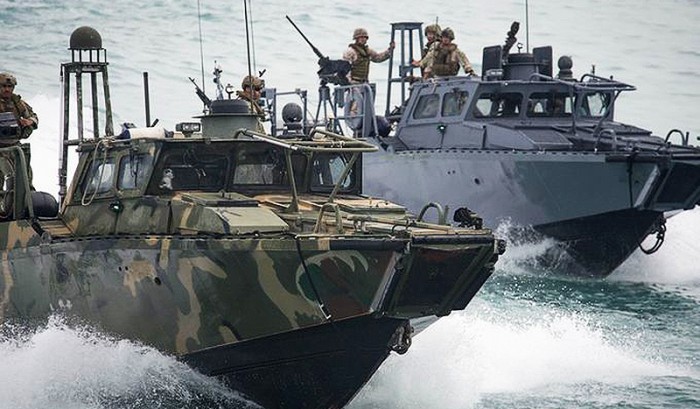
The arrest and detention of 10 U.S. Navy sailors by the Iranian regime and their release after 24 hours is being hailed by some regime supporters as proof of how a new cooperative relationship exists between the U.S. and Iran and how a similar situation might have led to armed conflict before the nuclear deal was agreed to last July.

Regime supporters and members of the Obama administration have even attempted to characterize the Iranian detention as a helpful assist to sailors lost in the waters of the Persian Gulf after allegedly suffering mechanical difficulties, but the images released by the regime are anything but designed to reassure Americans.

The detention was a political act and one designed to convey a specific message considering its timing just before President Obama’s State of the Union speech. It has been a hallmark of the mullahs in Tehran to invest heavily in message, meaning and symbolism. They do not do things haphazardly or without purpose.

The founding of the revolutionary Islamic state even had symbolic meaning with the release of 52 American hostages during the swearing in ceremony for President Ronald Reagan and the continued holding of Iranian-American hostages today also has meaning and symbolism for the regime.

When the regime paints an American flag on the streets of Tehran to be marched over, or builds a model of a U.S. aircraft carrier so it can be sunk on live television, or holds weekly prayer meetings to shout “Death to America,” they are all important symbolic acts for a regime controlled by mullahs deeply concerned over appearances and perception.

The mistake made by those who otherwise support the regime in its efforts to re-enter the international community is that they de-link all of the regime’s actions and treat them as specific, individual events with no relationship to one another.

The test firing of illegal ballistic missiles followed by the launching of rockets near U.S. Navy warships followed by the interception and detention of U.S. Navy sailors are not related according to these supporters of the regime.

They could not be more wrong.

Take for example the election of Hassan Rouhani as president of Iranian regime. Even though he served extensively in intelligence and national security capacities within the regime and was regarded as a trusted ally of top mullah Ali Khamenei, his election was portrayed as a win for moderates by the Iran lobby, led by the National Iranian American Council; forgetting that the previous slate of candidates, was wiped off the ballot by the Guardian Council, allowing Rouhani to win with virtually no opposition.

The mullahs learned their lesson from the disputed election of 2009 where street battles throughout Tehran showed the true nature of the regime to the world. Being mindful of appearances, the mullahs simply took everyone off the ballot that could be a problem.

Which is why the response by the Iran lobby has been interesting, as Shireen Hunter, a professor at Georgetown University, writes in the regime supporting Lobelog.com, that “both the tone and the behavior of the IRGC was quite mild, at least according to the institution’s usual standards. It insisted on treating the US personnel with respect and housing them in a comfortable and safe place.”

Anyone who has watched the video released by the Revolutionary Guard Corps can plainly see the U.S. sailors on their knees, being held at gunpoint with their hands clasped above their heads. They can also see video of a Navy Lieutenant apologizing on camera and saying how all of them have been treated well by their captors.

Oddly, the logic of the Iran lobby is that we should be thankful the regime treated their captives well instead of being upset they captured them in the first place. It’s the same bizarre logic applied to most of the regime’s actions where the Iran lobby has argued that the regime’s involvement in Syria has stemmed the tide of ISIS while neglecting to mention Iran’s intervention in Syria gave birth to ISIS in the first place.

You don’t thank a burglar for being neat after he’s robbed your home.

For the Iranian regime, the videos are powerful symbolism depicting the regime’s ability to confront and embarrass the U.S. military.

It also adds to the growing perception by the mullahs that the U.S. will do nothing in response to any provocation they choose to engage in. The litany of aggressive acts by the regime since the nuclear deal was signed leading up to the capture of the U.S. sailors has merited almost no consequences for the regime.

Ironically enough, even though the regime’s own officials deny the filling in of the Arak heavy-water nuclear reactor’s core with concrete, the U.S. is due to release up to $150 billion in cash before Iran’s parliamentary elections in February.

Common sense would dictate you don’t release the money until you know the election results to see who are you dealing with, even though we can already guess since the slates of candidates in the Assembly of Experts have to be approved by the Guardian Council and most dissidents that could have won seats in the lower house have already been rounded up and arrested at Khamenei’s orders.

As Sean Davis writes in The Federalist, “our military personnel were captured, forced to surrender on their knees, blindfolded, and photographed. Their images were then broadcast to the world on Wednesday morning by the Iranian regime, a clear violation of the Geneva Conventions. The American woman who was captured was forced to submit to Islamic law and don a hijab. State-run Iranian media announced that the whole affair was meant to be a “lesson” to “troublemakers” in the U.S. Congress.”

One would think if the Iranian regime really wanted to be helpful, why not just give the Americans a tow out of the area?

By Michael Tomlinson
Filed Under: Blog, Latest from Lobbies & Appeasers, News Tagged With: Appeasement policy, Featured, Iran Lobby

Iran Regime Deserves No Leeway after Holding Sailors

January 15, 2016 by admin

Iran Regime Deserves No Leeway after Holding Sailors

Iran Regime Deserves No Leeway after Holding Sailors

Ten U.S. Navy sailors were detained by the Iranian Revolutionary Guards Corps after their patrol boats lost contact with U.S. commanders and may have lost power and drifted into waters claimed by the Iranian regime.

The two small boats were traveling between Kuwait and Bahrain when contact was lost according to the Defense Department. Regime officials have assured U.S. officials that the sailors would be released shortly…at least that’s the hope.

The regime accused the sailors of “snooping” according to regime-controlled FARS state media.

Recent history would give most people pause though considering that since the Iranian regime negotiated a nuclear agreement with the P5+1 group of nations, it has acted aggressively in both domestic and foreign policy affairs to such an extent, many analysts have noted a new level of tension in the region exceeding recent memory.

Since July of last year, the Iranian regime has:

  • Begun the mass arrest of dissidents, journalists, artists, students, opposition political leaders and social media professionals in a broad effort to tamp down any dissent in advance of parliamentary elections next February;
  • Convicted Washington Post reporter Jason Rezaian of espionage in a secret revolutionary court, while continuing to hold four other Iranian-Americans on trumped up charges and arresting another who has been identified as being supportive of the Iran lobby in the U.S.;
  • Test fired two new ballistic missiles capable of carrying nuclear warheads in defiance of United Nations Security Council resolutions prohibiting such launches;
  • Fired rockets in international waters in the Strait of Hormuz near U.S. warships, including the aircraft carrier USS Harry S. Truman, and commercial vessels;
  • Threatened to walk away from the nuclear deal should the U.S. impose new sanctions over the test firing of ballistic missiles;
  • Recruited Russia to enter into the Syrian conflict in an effort to target anti-Assad rebel forces in a bid to keep the regime in place instead of targeting ISIS;
  • Stepped up supply of Houthi rebel forces in Yemen and supporting new offensives near the Saudi Arabian border forcing a response from Saudi Arabia; and
  • Allowing Saudi embassies to be attacked and burned in Iran while state police stood idly by in a repeat of similar attacks on British and U.S. embassies.

These provocations follow a series of diplomatic breaks between the Iranian regime and most of its Arab neighbors including Saudi Arabia, Kuwait, Bahrain, Sudan and United Arab Emirates.

Unlike the promises made by Trita Parsi and Reza Marashi of the National Iranian American Council, one of the leading lobbyists for the Iranian regime, the nuclear deal did not produce any turn to moderation by the mullahs in Tehran. If anything, the past six months have provided ample proof that the Iranian regime has no intention of altering its course, but instead is intent on flexing its muscle in taking advantage of this period of appeasement.

At the heart of that appeasement lies the proverbial pot of gold at the end of the rainbow in the form of $150 billion in frozen assets the mullahs are due to receive as early as next week as part of the nuclear agreement.

That cash has no restrictions on it, so the regime can use it to purchase military equipment, send it to terrorist groups such as Hezbollah or benefit companies controlled by the Revolutionary Guard Corps such as petroleum and telecommunications shell companies. The ordinary Iranian citizen will most likely see no improvement in their economic status as a result of the windfall much to chagrin of those who believed in the propaganda being spouted by the Iran lobby.

Even as news media report that the regime is complying with provisions of the nuclear deal including the closing of its Arak nuclear reactor, regime officials themselves disputed that compliance.

Iran’s deputy nuclear chief denied yesterday a report that technicians had dismantled the core of the country’s nearly finished heavy water reactor and filled it with concrete as part of Tehran’s obligations under the nuclear deal with the West.

Ali Asghar Zarean, in remarks to state TV Tuesday, dismissed the report by the Fars news agency from the previous day. He said the regime would sign an agreement with China to modify the Arak reactor, a deal that is expected next week.

The fact that the regime can’t seem to get its own story straight about the condition of its heavy-water reactor ably describes the inability of the rest of world to properly monitor exactly what the regime is doing with its nuclear facilities.

By Michael Tomlinson

Filed Under: Blog, News Tagged With: Appeasement policy, Featured, Iran deal, Sanctions

Calls Increase for New Sanctions Against Iran Regime

January 13, 2016 by admin

Calls Increase for New Sanctions Against Iran Regime

Calls Increase for New Sanctions Against Iran Regime

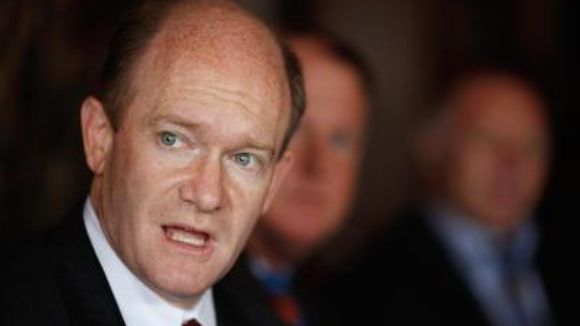
Sen. Christopher A. Coons (D-Del.), who serves on the Senate Foreign Relations Committee, has stepped up his calls – alongside a growing number of Democrats – for the Obama administration to move forward on implementing new sanctions against the Iranian regime for the apparent violation of bans against development of nuclear-capable ballistic missiles.

“I don’t know why the administration has hesitated, but I am urging them publicly and privately to move ahead with those designations,” he told reporters. “I am concerned with the hesitation to move forward with the ballistic missile related designations.”

Coons is among a growing number of Democrats, including some who supported the Iran nuclear deal, who have called on the president to take a firm response to two missile tests late last year. They argue that the administration’s response should show Iran that it will not be able to cheat on the nuclear agreement.

Coons, who supported the Iran nuclear deal, said it was “very clearly communicated and it played a role in my decision” to support the nuclear agreement that the United States was still able to sanction Iran on non-nuclear issues including its missile program or support for terrorist groups.

Unfortunately, Coons and other supporters of the nuclear deal were largely led astray by the Iran lobby which argued long and hard for a separation of nuclear issues from other issues such as missile development, human rights abuses and sponsorship of terrorism.

We are seeing the butcher’s bill come due now as the Iranian regime begins to push the envelope in all those areas now that it has its nuclear agreement.

Unsurprisingly, the mullahs in Tehran have called any proposed new sanctions a violation of the agreement and “illegal.” Such new sanctions as Coons has called for would be viewed as a breach of the agreement by the mullahs and allow them to resume their nuclear program.

Some, such as the New York Times editorial board, still cling to the hope that these issues could still remain separate in what can only be described as delusional thinking. In an editorial yesterday, the Times continued to make the argument that the nuclear deal was the more important goal:

“Critics of Iran and the nuclear deal say the missile tests are proof that the agreement failed. But ending Iran’s production of ballistic missiles was not the focus of the agreement. The greater threat by far has always been Iran’s nuclear program, which was coming closer to producing a bomb until the agreement halted the process.”

The Times does acknowledge the worrisome threat posed by the missile launches in light of the close collaboration between the Iranian regime and North Korea which supplied Iran’s first missiles and still supplies key components, but it still adheres to the laughable idea that there is a real difference and separation between regime president Hassan Rouhani and top mullah Ali Khamenei in terms of “moderates” versus “hardliners” when it comes to the strategic interests of the mullahs in Iran.

Furthermore, Ahmed Shaheed, the UN human rights advocate to Iran, said in a discussion with “Rooz”, Iranian website, that human rights in Iran have not witnessed a significant change since Rouhani’s reign, given that Iran has been refusing, for six years now, the UN rapporteur on human rights.

Amnesty International also issued a statement, last July, warning of the subject of the accumulating executions during the first half of 2015, after recording figures as high as 700 executions, at a time when Iranian statistics showed only 246 Iranians executed. Since Rouhani’s start of his term, over 2,000 people have been executed in Iran, placing Iran at the top of the world list for executions on a per capita basis.

Clearly change needs to come to Iran, but it won’t be coming from the mullahs.

By Laura Carnahan

Filed Under: Blog, News Tagged With: Featured, Iran, Iran Human rights

Iran Regime Pushes Confrontations as Iran Lobby Covers

January 13, 2016 by admin

Iran Regime Pushes Confrontations as Iran Lobby Covers

Iran Regime Pushes Confrontations as Iran Lobby Covers

Noun: con·fron·ta·tion

Definition: A hostile or argumentative meeting or situation between opposing parties.

The Iran regime has decided to live up to the meaning of the word “confrontation” in all its forms as it rapidly escalates a series of crises on several fronts.

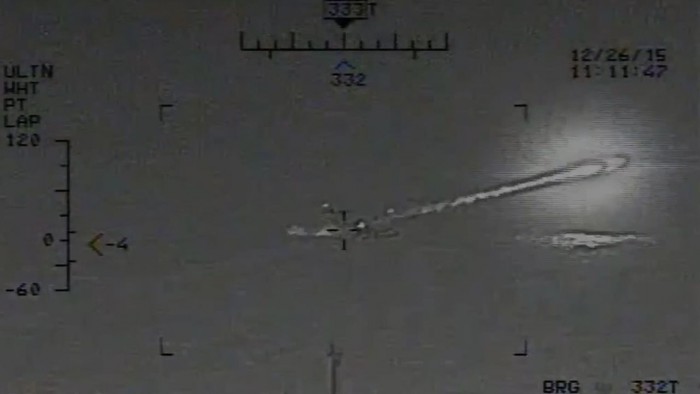
The U.S. Navy released video this weekend taken by an American helicopter showing an Iranian Revolutionary Guards vessel firing unguided rockets last December near warships, including the aircraft carrier USS Harry S. Truman in the Strait of Hormuz as proof rebutting denials by the Iranian regime that it had launched the rockets.

A regime spokesman claimed the accusations by the U.S. were “false” and “akin to psychological warfare,” but had no rebuttal to the video evidence that was released clearly showing the regime had lied about the provocation.

The Navy said the rockets were fired “within an internationally recognized maritime traffic lane” as the Truman and the other ships, including commercial craft, were passing through the Strait of Hormuz into the Persian Gulf.

A U.S. Central Command spokesman at the time called the Iranian actions “highly provocative, unsafe and unprofessional” and said they called into question Iran’s commitment to the security of a waterway vital to international commerce.

But the firing of rockets near U.S. Navy warships was only one part of a much larger tapestry the regime is weaving of acts fueling violence across the Middle East at the direction and behest of the mullahs controlling Iran.

Jay Solomon reported in the Wall Street Journal of the growing fears in Washington and Europe that the nuclear deal reached last July with the Iranian regime has not brought the much-promised moderate turn from Iran, but rather has only emboldened and hardened its leadership.

“Since completion of the agreement in July, Tehran security forces, led by Supreme Leader Ayatollah Ali Khamenei, have stepped up arrests of political opponents in the arts, media and the business community, part of a crackdown aimed at ensuring Mr. Khamenei’s political allies dominate national elections scheduled for Feb. 26, according to Iranian politicians and analysts,” Solomon writes.

“Americans have set their eyes covetously on elections, but the great and vigilant nation of Iran will act contrary to the enemies’ will, whether it be in elections or on other issues, and as before will punch them in the mouth,” Khamenei told a meeting of prayer leaders this week.

“As much as $100 billion in frozen revenues are expected to return to Iran after sanctions are lifted, which U.S. officials said could happen in coming weeks,” Solomon notes. “Many of the companies about to be removed from international blacklists are part of military and religious foundations, including some that report directly to Mr. Khamenei. Those firms could be the first to benefit from the rush of international businesses looking to profit from the lifting of sanctions.”

The same month, two Iranian poets, each received decade-long sentences and 99 lashes for kissing members of the opposite sex and shaking their hands, Iranian state media reported. They have denied the charges.

In November, an Iran court convicted the Washington Post’s Tehran bureau chief, Jason Rezaian, of espionage and sentenced him to prison. The Post and Mr. Rezaian have denied the charges.

Things are getting so bad Congressional Democrats are intensifying pressure on the Obama administration to hold Iran accountable for its testing of ballistic missiles.

Both supporters and opponents of the multinational nuclear accord with the Iranian regime say that to maintain U.S. credibility in enforcing the deal, the White House must move forward with sanctions on Iran after two missile tests in the fall.

“They ought to impose sanctions because we have to show we take this seriously,” Rep. Jerrold Nadler (D., N.Y.), who backed the nuclear deal, said Friday. “Iran is very destabilizing, very aggressive and very badly behaved and we have to do what we can to stop that.”

But even with the renewed calls for action against the Iranian regime, there seems to be little appetite in the White House to engage in new confrontations with the mullahs during the last year of President Obama’s term in office, which has led to traditional U.S. allies such as Saudi Arabia to strike out and form their own coalitions in an effort to stymie Iranian regime’s aggressions.

The Arab League in a statement condemned the attacks on two Saudi diplomatic missions in Iran and accused the Iranian government of failing to protect the buildings, Reuters reported. The statement also condemned a militant group found in Bahrain reportedly backed by Iran’s Revolutionary Guard. All Arab League nations voted in support of the statement except Lebanon, where the Iranian-backed Hezbollah terror group holds serious sway.

Saudi Arabia Foreign Minister Adel Al-Jubeir, speaking at an emergency Arab League session called in Riyadh, Saudi Arabia, to discuss Tehran’s “terrorist acts” after attacks on the Saudi Embassy in Iran, said Arab nations must ensure that Iran is stopped from “meddling in the affairs of Arab nations.”

The actions by Arab League nations comes as the Iran lobby ramps up its verbal and PR attacks on Saudi Arabia in an effort to deflect attention on the Iranian regime’s new provocations. In fact, the regime’s chief lobbyist – the National Iranian American Council – has issued a flurry of editorials condemning Saudi Arabia, but not criticizing the regime’s recent acts including the crackdown against dissidents, the ballistic missile launches and firing of rockets at the U.S. Navy.

“If it seems like the Iranian government’s behavior is schizophrenic, that’s because it is. A small but powerful group of hardliners is trying to derail Rouhani’s foreign policy initiatives in an effort to weaken his domestic political power,” said Reza Marashi of NIAC in a piece for Vice News in which he attempted to blame the regime’s latest nefarious acts on a small group of hardliners.

He of course does not mention the political realities that the regime as a theocratic state is solely and particularly in making decisions regarding its strategic issues, is run at the whim of its Khamenei and the small, hand-picked group of mullahs in its Guardian Council and Assembly of Experts.

As the situation worsens, we should see even more hysterical editorials coming from NIAC and other lobby allies such as Lobelog and the Ploughshares Fund.

By Michael Tomlinson

Filed Under: Blog, News Tagged With: Featured, Iran deal, Iran Lobby, NIAC, Reza Marashi

Iran Lobby Puts Saudi Arabia in its Sights

January 7, 2016 by admin

Gun SightThat stalwart of Iranian regime apologists, the National Iranian American Council, put out a whopper of an editorial in Foreign Policy written by Reza Marashi that attempts to portray Saudi Arabia as the new “George W. Bush” of the Middle East and as a provocateur of the rising tensions there.

It’s a funny piece, worthy of reading on TMZ, Buzzfeed or a reddit blog, but it misses the mark in its facts.

First off, it’s important to acknowledge one fact we do agree on and that is Saudi Arabia went ahead with the execution of a Shiite cleric who had previously led an attempted revolt in the country and was connected with the mullahs in Tehran knowing that it would cause a furious reaction from the Iranian regime.

It’s also important to acknowledge that this blog has widely condemned the use of capital punishment no matter where it is applied, but especially in regimes such as Iran where due process is an iffy proposition. Consequently, for outside observers like us, the executions in Saudi Arabia similarly fall into that category of opposing using capital punishment.

Where we differ from NIAC, is in the silly proposition that Saudi Arabia has been the military aggressor in the region, citing its war in Yemen and support for the Syrian opposition as clear signs of its willingness to fight.

What’s remarkable is that you could swap out the words “Saudi Arabia” from Marashi’s editorial and substitute “Iranian regime” instead and without changing a word, the editorial would be a perfect retort to the aggressive policies of Iran.

Take for example this passage from his editorial and if we simply do the swap, it now reads:

“What’s worse is that the Iran regime chooses to address its geopolitical fears by promoting anti-Sunni and anti-Saudi sectarianism. The Iranian government’s analyses of the situations in Bahrain, Syria, and Yemen have been identical and disturbingly unsophisticated: Sunni Muslims are the bad guys, and Sunni Saudi Arabia is interfering in Shiite affairs. This message empowers the Middle East’s worst ideologues — the kind who think the Islamic State is admirable and the 9/11 attacks might not have been such a bad thing.”

It’s really remarkable how correct and accurate Marashi’s own words become if we simply substitute Iran for Saudi Arabia.

Marashi also calls wars in Syria and Yemen “self-inflicted wounds” but he neglects to mention that it was the Iranian regime that kept the Assad regime alive in the first place with fighters, weapons and cash and it was Iran that initially stirred the Houthis to rebel in Yemen and supplied them with rockets, ammunition and cash in an attempt to overthrow a government of a nation sharing a border with Saudi Arabia.

In a similar vein, it is akin to the Taliban helping Al-Qaeda launch an attack against the U.S., in which case Marashi’s George W. Bush comparison is wholly appropriate.

But where Marashi fails in his analysis is in turning a blind eye to the Iranian role in all of this. One cannot accuse Saudi Arabia of being provocative when you are busy fomenting a rebellion on its border. One cannot condemn executions, when you are busy hanging people in public squares by the score each day.

It is the height of hypocrisy for Marashi to attack Saudi Arabia’s policies, while failing to admit the blame in actions and policies the Iranian regime undertakes. That makes Marashi’s argument intellectually dishonest and more akin to propaganda than serious analysis.

Of course, it’s already been well documented that the NIAC serves primarily as the lobbying advocate and voice for the Iranian regime so his piece is not surprising. It’s only surprising he had the temerity to actually submit with a straight face.

It’s even more interesting that Marashi cites the Saudi “spin machine” in Washington in a similar fashion to his portrayal of the Israeli spin machine during the nuclear debate. It’s probably one of the few times that Saudi Arabia and Israel have both been portrayed in the same manner.

While Saudi Arabia and Israel are certainly not BFFs, it is telling how the NIAC has similarly attacked both nations as opponents to the Iranian regime.

And if indeed Saudi Arabia is the George W. Bush of the Middle East, it’s also true that Iran has now become the new Afghanistan in this metaphor providing safe haven and support to those who would attack Saudi Arabia.

At the end of the day, Marashi’s editorial may end up be prophetic, but just not in the way he hoped for.

By Michael Tomlinson


Filed Under: Blog, News Tagged With: Featured, Iran Lobby, NIAC, NIAC Action, Reza Marashi

Iran Regime Unveils More Missiles as World Hardens Stance

January 6, 2016 by admin

Iran Regime Unveils More Missiles as World Hardens Stance

Iran Regime Unveils More Missiles as World Hardens Stance

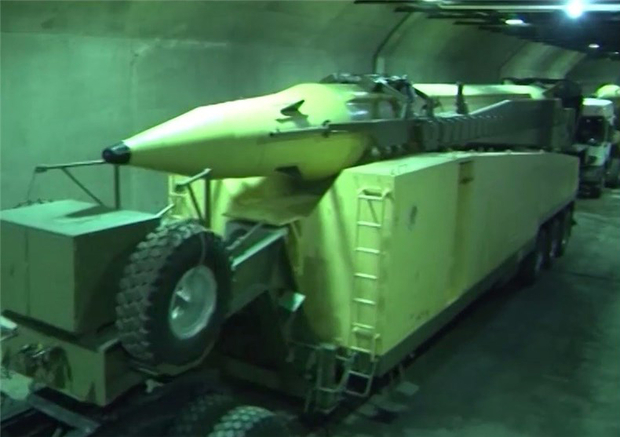
In the wake of the flip flop by the Obama administration to halt the imposition of new sanctions on the Iranian regime for its test firings of Emad ballistic missiles violating a United Nations Security Council resolution last week, the regime unveiled a new underground missile depot prominently featuring the same Emad missile in a blatant thumbing of its nose to the rest of the world.

Regime news agencies and state television video said the underground facility, situated in mountains and run by its Revolutionary Guards Corps, was inaugurated by the speaker of parliament, Ali Larijani. Release of the one-minute video followed footage of another underground missile depot released last October.

U.S. officials say the Emad, which Iran tested fired in October, would be capable of carrying a nuclear warhead and they say Washington will respond to the Emad tests with fresh sanctions against Iranian individuals and businesses linked to the program, but the administration reversed course at the last minute, first announcing a press conference and then canceling it.

The Iranian regime’s boasting about its missile capabilities is a direct challenge for the Obama administration as the U.S. and European Union plan to dismantle nearly all international sanctions against Tehran under the nuclear deal reached in July.

The regime’s provocations undermine all of the reassurances given by supporters of the nuclear deal who claimed it would pave the way for a more moderate and engaged Iranian regime.

After Iran tested the Emad missile in October, the UN Security Council’s panel of experts declared Iran in violation of resolution 1929, adopted in 2010. It prohibits the launching of any missile capable of carrying a nuclear warhead, and remains valid until the July nuclear deal between Iran and the five permanent members of the UN Security Council — the US, UK, Russia, China, and France — plus Germany goes into full effect. That won’t happen until Iran has fulfilled all of its obligations to scale back its program under the agreement, at which point Iran will be “called upon” by the Security Council to cease any missile testing for a period of eight years.

As the Chicago Tribune editorialized yesterday: “As the U.S. backpedaled, the Iranians pressed their advantage: Iranian President Hassan Rouhani proclaimed on Thursday that he was so incensed by proposed U.S. sanctions that he had instructed the military to expand Tehran’s missile program ‘in terms of range and accuracy.’ You don’t like two missile launches? How about 20?

“Days later, the Iranian Navy launched rockets within 1,500 feet of an American aircraft carrier and a French frigate in the Strait of Hormuz.”

“The U.S. and its partners have only one chance to establish that strict compliance from Iran will be expected through the course of this nuclear deal. That chance comes right now, before sanctions are lifted, before millions of dollars flow into Tehran’s economy,” the Tribune went on to say. “The U.S. should impose those sanctions for the missile tests. Iran won’t walk from the deal. It desperately needs that sanctions relief. And if it does walk away, that will serve notice that Iran never did intend to comply.”

The Tribune was not alone in its skepticism of the Iranian regime. Daniel W. Drezner, a professor of international politics at the Fletcher School of Law and Diplomacy at Tufts University, writing in the Washington Post said:

“It is possible that no amount of Obama administration hand-holding and backstopping was going to placate the anxiety of the Sunni states in the wake of the Iran deal. Still, if you look at the past year, the administration seems to have devoted very little time to gardening in the Gulf region. Which guarantees continued bloodshed in Syria, Yemen, Iraq, and . . . I’ve lost count of the sectarian conflicts at this point,” Drezner says.

“It is still likely that the Iran deal will continue to be implemented. But it also seems increasingly likely that the negative externalities of negotiating the deal are rendering it far less significant in advancing the oxymoron that is ‘Middle East stability,’” he added.

All of which goes a long way in explaining the recent escalation in tensions between the Iranian regime and its Arab Gulf state neighbors as Saudi Arabia, Kuwait, Bahrain, Sudan and the United Arab Emirates have all severed ties to the Iranian regime.

For those states which lie only a few hundred miles away from Iran, the threat of the Emad missile is much more real and practical than for the U.S., but no less worrisome is the retreat of U.S. willpower in the face of Iranian aggression under this administration. The message has been unmistakable for many of U.S.’s long-time allies in the region:

You’re on your own.

The Iran lobby was particularly humorous in its most recent statements of support for the mullahs in Tehran as Trita Parsi from the National Iranian American Council actually advocated the idea that Saudi Arabia was pushing for an armed conflict with Iran in order to gain back U.S. support against its long-time foe.

Predictably, Parsi raised the potential of the U.S. cutting loose Saudi Arabia as part of its strategic “realignment” towards Iran with a certain amount of glee.

He offers up the most ironic statement of all when he writes:

“If Washington’s priority is the defeat of IS and other jihadist movements, then a balancing act between an Iran that ferociously opposes IS and a Saudi Arabia that has played an undeniable role in promoting jihadi extremism may not be the right answer.”

The fact that Parsi actually tries to portray the Iranian regime as a standard bearer against Islamic extremism is the height of hypocrisy. It’s like saying the Nazi Party are sponsors of Jewish festivals. We would suggest Parsi reacquaint himself with Iranian regime justice by Googling “Iran executions” and watching some video of the mullahs’ “moderation.”

By Michael Tomlinson

Filed Under: Blog, News Tagged With: #NuclearDeal, Featured, Iran Lobby, Sanctions, Trita Parsi

Looking Back at 2015: Iran Lobby Pushes Falsehoods

December 30, 2015 by admin

Looking Back at 2015: Iran Lobby Pushes Falsehoods

Looking Back at 2015: Iran Lobby Pushes Falsehoods

Our last Look Back at 2015 concerns the Iran lobby itself and the complete lack of moral fiber within them. As 2015 saw a world engulfed in violence and bloodshed borne out of Islamic extremism which sprang forth from the teachings and policies of the Iranian regime, the Iran lobby remained deafeningly silent.

Chief among the leaders of the Iran lobby has been the National Iranian American Council, which has come to symbolize all of the oddities and corruption within supporters of the mullahs.

The NIAC claims an extended mission to help promote universal human rights in Iran saying on its website:

“NIAC works to ensure that human rights are upheld in Iran and that civil rights are protected in the US. NIAC believes that the principles of universal rights – dignity, due process and freedom from violence – are the cornerstones of a civil society.”

Lofty goals, but the record of NIAC’s living up to that mission is pitiful, especially given the plight of Iranian-Americans who have languished in Iranian prisons. These Iranian-Americans seem to be outside the good graces of the NIAC and are rarely mentioned in official public statements, or even social media posts by leading NIAC staffers including Trita Parsi, Reza Marashi and Tyler Cullis.

It is on social media we often see the true nature of the Iran lobby and the allegiances these supporters of the mullahs bear; the most prolific Twitterer is Parsi himself and his political goals are often thinly veiled in his tweets.

Throughout the year, Parsi would again and again go to this basic impulse he has to ridicule American institutions and mock all things even remotely offensive to the mullahs in Tehran.

This includes his tweets through the spring and summer in support of nuclear talks between the P5+1 and the Iranian regime. Parsi often framed the debate about what the U.S. is willing to give up and not the other way around, especially as it applied to delinking contentious issues such as human rights abuses and support of terrorism.

Even after the Charlie Hebdo attacks in Paris in January, the NIAC was silent. For the NIAC, there was no #jesuischarlie hashtag.

Even when Jordanian pilot Moaz al-Kassasbeth was burned alive in a cage on video by ISIS, NIAC made no statement condemning the hideous. Nor did the NIAC ever bother to delve into the roots of Islamic extremism, other than to attempt to make the connection in some manner to Saudi Arabia; Iran’s longtime regional rival. Again, it’s all about politics.

But considering Parsi’s past track record in losing a libel lawsuit largely on the grounds of shoddy record-keeping, making false statements and discovery abuses, it seems to be par for the course of how Parsi conducts his public business in the same slipshod manner. It is worth noting that Parsi was ordered to pay the journalist he accused of libel $184,000 to pay for the defendant’s legal expenses.

A closer look at the judge’s ruling in that case exposes many of the falsehoods the NIAC engages in when handling reality and facts, such as:

  • NIAC really didn’t produce calendar records it was ordered to;
  • NIAC initially hid the existence of four of its computers from the court and was not honest about what they were used for;
  • NIAC misrepresented how its computer system was configured;
  • NIAC didn’t explain why it withheld 5,500 emails from its co-founder and former outreach director;
  • NIAC was not truthful about the nature of its record-keeping system;
  • NIAC took two and a half years to produce its membership lists under court order; and
  • NIAC did not turn over mountains of relevant documents and even altered an important document after the lawsuit was brought.

With that much effort devoted to hiding the truth of what the NIAC engages, is it any wonder the plight of imprisoned Iranian-Americans such as Washington Post reporter Jason Rezaian is often just the tools for the regime?

Parsi, in an interview with Loyola Marymount University’s Asia Pacific Media Center, claimed the charges against Rezaian were all part of a plot to undermine nuclear negotiations with Iran and the P5+1, which is an odd statement to make. One would think Iran’s provocative attempt to ship arms to Houthi rebels in Yemen via armed convoy was enough to undermine talks, or Iran’s seizure of an unarmed cargo vessel might be enough to trouble negotiators, both acts that Parsi failed to criticize.

By August, protests held in favor of the deal resulted in crowds just as small as the staged regime protests in Tehran with Los Angeles – home to over 800,000 Iranian Americans – protests yielding a paltry 200 participants, most not even of Iranian descent; while rallies in Washington, DC and San Diego were even smaller, barely cracking 100 people.

In contrast, over 10,000 rallied in New York’s Times Square against the deal and another 1,000 gathered in Los Angeles, most of them Iranian Americans demonstrating not only their opposition to the regime, but also for the various resistance movements around the world.

While NIAC staffers such as Parsi, Marashi, Cullis and Jamal Abdi shout until veins bulge out of their collective necks that the mullahs deserve a break, they continued to blatantly ignore the incalculable human suffering being inflicted by those same mullahs on women, children, Christians, Iranian-Americans, Sunnis in Iraq, moderates in Syria or refugees in Yemen. The swatch of human suffering and misery caused by the mullahs has earned neither reproach nor condemnation by the NIAC and its allies.

And those allies pop up in some unusual places as Breitbart News discovered when it looked into the hiring of Sahar Nowrouzzadeh, a former NIAC staffer, as the National Security Director for Iran who sat in on several high level meetings with President Obama while discussing negotiations with the Iran regime on the nuclear deal.

The NIAC attempted to dismiss Nowrouzzadeh’s position as a mere intern, but a 2004 document uncovered by Breitbart News described her as a former “staff member” at NIAC.

But the truth about Parsi came out in a serious of journalistic pieces this year as he came under greater scrutiny, including Jeffrey Goldberg of The Atlantic who referred to Parsi as someone who “does a lot of the leg-work for the Iranian regime.”

The crowning hypocrisy came when Parsi denounced comparisons of the Iran nuclear deal to the infamous Munich deal with Nazi Germany and labeled it “fear propaganda” when he himself has been one of the chief merchants of fear mongering by pushing the “war vs. peace” scenario for passage of the deal.

While the passage of the nuclear agreement might be making Parsi and his colleagues feeling good about themselves, the handwriting is on the wall as the presidential election cycle heats up and the rhetoric amongst virtually all of the candidates on both sides of the aisle has turned towards fighting the rise in Islamic extremism and holding the mullahs fully accountable.

In 2016, Parsi and the rest of the Iran lobby might be feeling left out in the cold come November.

By Michael Tomlinson

Filed Under: Blog, National Iranian-American Council, News Tagged With: Featured, Iran deal, Iran Human rights, Iran Lobby, Jason Rezaian, Marashi, National Iranian American Council, NIAC, NIAC Action, Reza Marashi, Trita Parsi, Tyler Cullis

Looking Back at 2015: Iran Regime Human Rights Abuses

December 29, 2015 by admin

Looking Back at 2015: Iran Regime Human Rights Abuses

Looking Back at 2015: Iran Regime Human Rights Abuses

If 2015 has been the “Year of Terror” around the world, it has also been a year for abysmal human rights violations within the Iranian regime and those rights did not get off to an exceptionally strong start when nuclear negotiations between the regime and the P5+1 group of nations delinked improvements in human rights to an agreement.

It was an inauspicious start and things didn’t get much better after that.

In order to maintain a lid on what could be a contentious year domestically as ordinary Iranians chafed under increased economic repression and blatant corruption that benefitted the relatives of the ruling mullahs and commanders in the Revolutionary Guards Corps, the regime cracked down harder on limiting access to social media and internet browsing through its cyber wall and tracking by secret police.

Even though human rights were no longer a priority for the rest of the world, the U.S. did provide an early present to the mullahs when it made a $490 million transfer to Iran as part of the payment for the interim agreement between Iran and the Obama administration during an extension agreed to last November of 2014. Under that agreement, the Iranian regime received a total of $4.9 billion in unfrozen cash in 10 separate payments through June of 2015 in the hopes a final nuclear agreement could be reached.

This came on top of $4.2 billion the Iranian regime received as part of the 2013 interim agreement, which the Obama administration followed with another $2.8 billion in 2014 in a last ditch attempt by the Obama administration to entice the mullahs in Iran to stay at the bargaining table.

This cash helped prop up a regime struggling as it poured billions into a growing Syrian conflict to keep the Assad regime in power amid plummeting global oil prices.

Iran’s religious and paramilitary police also continued to enforce religious law on the streets through abusive tactics including public beatings and assaults or arrest and imprisonment. In a further abomination of traditional Islamic values, Iran’s mullahs have allowed over 40,000 child brides to be wedded just in 2014 and adopted a new law in 2015 allowing men to marry their adopted children.

Added to that was the regime’s ongoing war against women in which it confiscated 40,000 cars driven by women who violated strict dress codes, not to mention the lack of enforcement against those who participated in acid attacks against women.

No one was safe against Iranian regime abuses, as The Observer newspaper chronicled the plight of homosexuals in Iran where an estimated 4,000-6,000 gays and lesbians have been executed by the regime since 1979 to today, which is odd considering that while Iran has liberal laws in regards to transgender individuals – helping to pay for such surgeries in fact – these same policies are used to coerce young gays to undergo conversion or face punishment.

Last May, According to report released by Iran Human Rights group, in the 18 months since the election of President Rouhani in June 2013, Iranian authorities executed more than 1,193 people. This is an average of more than two executions every day.

The number of executions in that period was 31 percent higher than the number in the 18 months before President Rouhani assumed power. The number of juvenile offenders executed in 2014 was the highest since 1990.

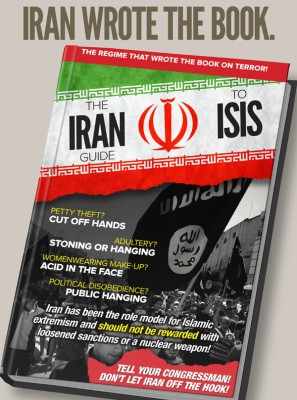
Meanwhile a new short video made the rounds on social media bringing to light the linkages between the Iran regime and ISIS and dubbed Iran the “Godfather of ISIS.” The moniker might smack of a certain hyperbole, but it is nonetheless accurate as to the true nature of Iran’s growing role as a template and model for sectarian violence and mayhem throughout the world.

The short 97-second video, produced for the non-profit, independent news site IranFocus.com, starts off with a narrator discussing the link between Iran’s mullahs and the terror group known as ISIS that sprang up out of the civil war in Syria, but now has tentacles in over a dozen countries in the Middle East, Africa and Asia, but the ISIS coming out party so-to-speak came in Iraq when Syrian forces, backed by the Iranian military, targeted moderate, Western-backed Syrian rebel forces, thereby empowering the radicalized ISIS militias.

Amnesty International’s annual report for 2015 went into extensive detail on the litany of human rights abuses flowing from the mullah’s mandates including restrictions on the freedom of expression, association and assembly, widespread use of torture, codified unfair trials, institutional mistreatment of ethnic and religious minorities, the broad denial of women’s rights, lack of privacy, denial of education, and frequent and indiscriminate use of the death penalty.

In another sign of the oppression from the mullahs, Al-Monitor reported on a move by the regime’s Ministry of Education to set a strict quota in the number of new jobs made available to Iranian women.

“The Ministry of Education held its nationwide exam for new job applicants on Sept. 18, with 178,000 people participating. The exact date for the announcement of the results is unclear. But what is clear is that no matter what score female applicants may obtain, they will make up only 10% of those who will be employed,” Al-Monitor reported.

“This disappointing development came to light in the registration guidelines for this year’s exam. Of the 3,703 educational posts up for grabs, it is stated that only 630 will go to women while the other 3,073 posts will go to men. Female applicants in the Iranian capital are perhaps the most exposed to this policy; of the 190 new employees that are to join the Ministry of Education in Tehran, only six are set to be women,” the story added.

Last year, Iran also had the second highest number of executions in the world after China and also killed the most juvenile offenders, according to Human Rights Watch.

Ahmed Shaheed, the United Nations Special Rapporteur for Human Rights in Iran issued a new report saying that the Iran regime was on track to execute more than 1,000 people in 2015 in an unrelenting campaign of brutal human rights suppression that continues unabated after agreeing to a nuclear agreement that proponents said would shift the regime to a more moderate stance.

Calling it an “unprecedented assault on the right to life in Iran,” Shaheed described a surge in executions over the past year. He said Iran hanged nearly 700 people since January.

Shaheed said the Islamic Republic violated international law by hanging two juvenile offenders. He added “there are dozens more waiting a similar fate on death row.”

The most recent UN condemnation came after 36 human rights organizations, led by Human Rights Watch, called on the regime to improve its human rights situation and for the international community to work together to promote human rights within Iran.

Lastly, according to the New York-based Committee to Protect Journalists, at the end of last year, at least 30 journalists were held in Iranian prisons, including Washington Post reporter Jason Rezaian. Others have been detained since, and in August state media accused a senior Wall Street Journal reporter who once served as a correspondent in Iran of conspiring against the government. The Journal called the claims “completely false, outlandish and irresponsible.”

It is ironic that three large Muslim nations, Indonesia, India and Malaysia, are largely free of violent extremism, which is due in no small part to the development of tolerant, multicultural societies where the secular rules the sectarian. They are a true template for Iran’s future, one where the religiously motivated whims of a few dozen old mullahs do not hold sway over the vastness of a region stretching from the Mediterranean to Indian Ocean.

We can only hope things improve in 2016, they can’t seem to get much worse.

By Laura Carnahan

Filed Under: Blog, News Tagged With: Featured, Iran Human rights

Looking Back at 2015: Iran Regime at Center of Terror

December 28, 2015 by admin

Looking Back at 2015: Iran Regime at Center of Terror

Looking Back at 2015: Iran Regime at Center of Terror

In many ways, 2015 could be labeled the “Year of the Terrorist” because terrorism was the dominant driving news story throughout the world. It began on January 7 in Paris with the Charlie Hebdo attacks and it ended in November with multiple attacks in Paris again.

In between were attacks around the world ranging from the bloody conflict in Syria to seemingly random shootings inspired by Islamic extremism in places such as Chattanooga, Tennessee and San Bernardino, California. Attacks included almost endless assaults in Nigeria with Boko Haram, Yemen with Houthis, and Iraq with ISIS and Shiite militias.

The rise in terrorism and level of brutal violence was punctuated by mass kidnappings, the sexual enslavement of countless women and girls and videotaped executions reflecting the desire of these terrorist groups to maximize the fear and anguish of the civilized world.

If the world thought 2014 was a year of terror with attacks in Sydney, Ottawa and Belgium, 2015 found terrorists willing to push the proverbial envelope in creating hysteria and shedding blood. ISIS reached new heights in barbarism shared with the world with a video showing the burning to death of Jordanian pilot Moaz al-Kassasbeth, who was also a Muslim, in a cage and became enemy number one in the minds of a majority of people around the world.

But February of 2015, a whopping 68 percent of Americans cited ISIS as the number one security threat to America. That number would only grow throughout the year as ISIS executed 21 Egyptian Coptic Christians on the shores of Libya and extremist violence struck in Copenhagen.

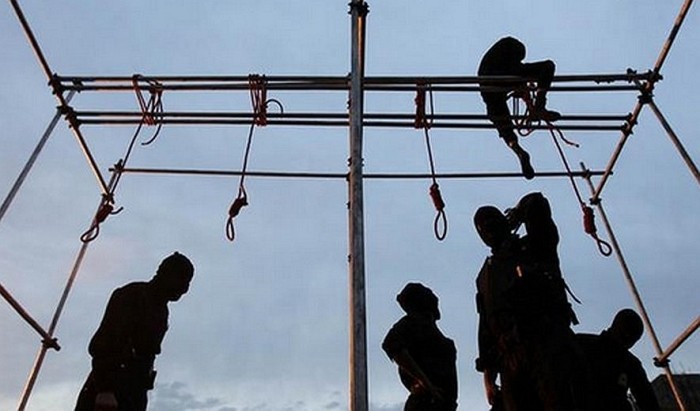
But the blueprint for these grotesque public executions did not begin with ISIS, but rather has been a hallmark of the Iranian regime, which relies on public hangings – often with construction cranes substituting for gallows in town squares – and public amputations with power saws to enforce its medieval brand of justice.

Its religiously controlled courts dispense justice at the whims of the mullahs in Tehran and often with no witnesses, no open trials and no evidence. Tens of thousands ordinary Iranians have been sentenced in this manner and over 1,100 have been executed as catalogued by humanitarian and dissident groups such as Amnesty International.

Being a symbol and mass media template for ISIS and other terror groups is not the only contribution of the Iranian regime in 2015. It also provided ample funding of various terrorist and extremist groups including its long-time proxy in Hezbollah and its recent funding of Houthis rebels in Yemen and the virtual takeover of Iraq’s military and the organization of Shiite militias to fight there and in Syria.

It is not an understatement when various analysts, commentators and journalists have all noted how the Iranian regime has become terror central in 2015.

That became more evident in news media investigations in March of a shadowy unit in the Iranian Revolutionary Guards Quds Forces known as Unit 190 which has fueled many of the conflicts and civil wars raging across the Middle East and North Africa.

After a lengthy and in-depth investigation, Fox News traced the complex land, sea and air routes used by the Quds Force to move weapons to terror groups like Hezbollah, as well as the Houthis who have recently toppled the government in Yemen which only last year was being held up as an example by the Obama administration in the effective fight against terror.

At the heart of Unit 190 is Behnam Shahriyari, born in northwest Iran, who according to western intelligence sources runs a network of straw companies which skirt sanctions by packing rockets, night-vision equipment and grenades in powdered milk, cement and spare kits.

Fox News went on to show photos revealing a hanger at Tehran’s international airport which serves as warehouse and logistics center for the unit’s shipments of illegal weapons fueling conflicts that have killed thousands of innocent civilians globally.

That commitment to terrorism should be recognized by the world as not an ideological battle between Sunni and Shia as the Iranian regime would have us believe, but rather a straight battle for political power, land and military force between the Iranian regime and the rest of the Islamic world and on a much larger political stage, between what the mullahs in Tehran hope will be a new Shia sphere of influence versus the rest of the world.

Their reliance on proxy terror groups is a well-proven method of exerting influence around the world and not just this past year. One only has to look back at the use of Hezbollah to do the mullahs bidding including:

  • Bombings of the U.S. Embassy and barracks in Beirut, Lebanon in 1983 killing 241 Americans and another bombing of the embassy annex in 1984;
  • Hijacking of TWA Flight 847 in 1985;
  • Systematic kidnapping and hostage taking of Americans and Europeans from 1982 to 1992 in Lebanon;
  • Khobar Towers bombing in 1996 killing 19 American servicemen; and
  • Training and arming of insurgents during the Iraq War targeting thousands of innocent Iraqis and also American service personnel.

Now that Hezbollah has provided the bulk of fighters in Syria over the past two years, now aided by mercenary Afghans recruited by the Iranian regime and joined by Quds Force fighters, the regime has made saving Assad in Syria its number one foreign policy initiative next to securing a nuclear deal with the West.

But unlike most other nation states, Iran is not a cult of personality or even a political system. It is a religious theocracy dominated by a select few elite mullahs who work tirelessly to preserve their power and enrich themselves and their families through the skimming off the economy through black market sales of oil otherwise embargoed by international economic sanctions.

It is a regime terrified of the one thing that could bring down its carefully constructed house of cards: ordinary Iranians who have turned their backs on the Islamic state and work towards a democratic, multicultural and pluralistic society.

It is because of the potential for real change in Iran coming from ordinary Iranians that we can only hope 2016 will be much different than 2015.

By Michael Tomlinson

Filed Under: Blog, News Tagged With: Featured, Iran Terrorism, Islamic Extremism, Sanctions

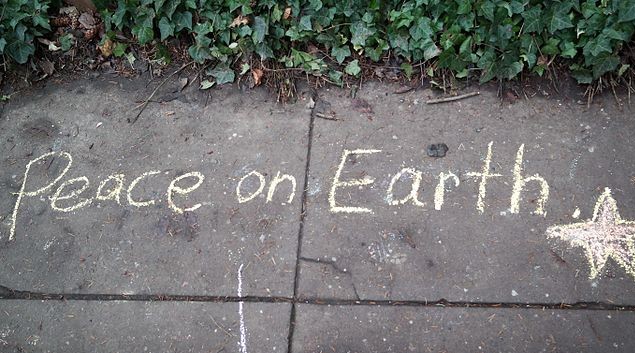
Christmas Hope for a World at Peace

December 25, 2015 by admin

Christmas Hope for a World at Peace

Christmas Hope for a World at Peace

With the world celebrating Christmas and all other assorted holidays this week, it’s worth stepping aside from our normal hustle and bustle and recognize how for one very brief moment, a significant portion of humanity can be joined in peace and harmony.

Even in the worst and darkest times, there can be a glimmer of hope as there was in Christmas of 1914 during World War I when the so-called “Christmas Truce” took place in the trenches of the Western Front.

Even though trench warfare and modern weapons had rendered warfare more akin to industrial slaughter, that particular Christmas found British and German soldiers climbing out of their trenches to exchange seasonal greetings, souvenirs and food and even join in carol-singing. While that truce did not last, throughout history combatants have found small moments to remember the meaning of the holidays.

In today’s world though, we find ourselves living in a time where holiday shoppers have to be on the lookout for unattended bags, passengers on airlines endure enhanced screenings and parents dropping off their children at movie theaters to see the new “Star Wars” movie fret over mass shootings.

The recent terror attacks in Paris and San Bernardino have set Americans on edge to the point that handguns have moved to the top of several wishlists for people wanting to protect themselves, while local law enforcement look for any signs of extremist behavior in social media and in their communities.

The fact that this heightened sense of security is quickly becoming the “new normal” is saddening and a reflection of what our lives may have to be like for the foreseeable future as bad actors around the world continue to focus their terrorist attacks and extremist ideologies at precisely what the holidays have come to represent: peace, joy, love, harmony, tolerance and community.

Nowhere has that been more emblematic than in the wholesale slaughter and expulsion of Christians throughout the Middle East, which reached a crescendo with the plight of the Yazidi sect in Syria and Iraq where 5,000 of them were massacred in 2014 and the sexual enslavement of thousands of women and girls by ISIS.

This was followed by the now infamous videos aired by ISIS killing Egyptian and Ethiopian Christians in mass beheadings and the near eradication of Christian towns, villages and communities in the wake of Islamic extremism’s rapid march.

According to the New York Times, the percentage of the Middle Eastern population that was Christian from 1910 to 2010 was once as high as 14 percent, but has now declined to roughly 4 percent, and all but gone in Iran. Even in Lebanon, once a Christian-dominated country with 78 percent of the population, Christians now account for only 34 percent as Hezbollah and other Islamic extremists groups have taken control over large portions of the country.

The future of Christianity in the region of its birth is now uncertain. ‘‘How much longer can we flee before we and other minorities become a story in a history book?’’ says Nuri Kino, a journalist and founder of the advocacy group Demand for Action.

According to a Pew study, Christians face religious persecution in more countries than any other religious group. ‘‘ISIL has put a spotlight on the issue,’’ says Anna Eshoo, a California Democrat in the U.S. House of Representatives, whose parents are from the region and who advocates on behalf of Eastern Christians. ‘‘Christianity is under an existential threat.’’

But the plight of Christians is only one part of a much larger puzzle where Islamic extremists and religious theocracies such as the Iranian regime systematically drive out any other religion not theirs in order to create a religiously pure society.

Of the 3.1 million displaced Iraqis, 85 percent are Sunnis. No one has suffered more at the hands of ISIS than fellow Muslims. Other religious minorities have been affected as well and in large numbers: Shia Turkmen; Shabak; Kaka’i; and the Mandeans, who follow John the Baptist.

‘‘Everyone has seen the forced conversions, crucifixions and beheadings,’’ David Saperstein, the United States ambassador at large for religious freedom, said. ‘‘To see these communities, primarily Christians, but also the Yazidis and others, persecuted in such large numbers is deeply alarming.’’

The fact that there are almost no Christians left in Iran speaks volumes to the hospitality they enjoy under the yoke of the mullahs in Tehran. There are currently 91 Christians in Iranian regime prisons, including American pastor Saeed Abedini who will not be celebrating Christmas with their families and loved ones.

Most are imprisoned under the false charges of threatening national security through their ministry of Christianity.

We can only hope that by next Christmas, these families experience the greatest present of them all, the return of their loved ones and the halt of persecuting Christians in Iran and elsewhere.

By Laura Carnahan

Filed Under: Blog, News Tagged With: Featured, Iran Terrorism, Syria

  • « Previous Page
  • 1
  • …
  • 40
  • 41
  • 42
  • 43
  • 44
  • …
  • 53
  • Next Page »

National Iranian-American Council (NIAC)

  • Bogus Memberships
  • Survey
  • Lobbying
  • Iranians for International Cooperation
  • Defamation Lawsuit
  • People’s Mojahedin
  • Trita Parsi Biography
  • Parsi/Namazi Lobbying Plan
  • Parsi Links to Namazi & Iranian Regime
  • Namazi, NIAC Ringleader
  • Collaborating with Iran’s Ambassador

Recent Posts

  • NIAC Trying to Gain Influence On U.S. Congress
  • While Iran Lobby Plays Blame Game Iran Goes Nuclear
  • Iran Lobby Jumps on Detention of Iranian Newscaster
  • Bad News for Iran Swamps Iran Lobby
  • Iran Starts Off Year by Banning Instagram

© Copyright 2026 IranLobby.net · All Rights Reserved.