Iran Lobby

Exposing the Activities of the lobbies and appeasers of the Mullah's Dictatorship ruling Iran

  • Home
  • About
  • Current Trend
  • National Iranian-American Council(NIAC)
    • Bogus Memberships
    • Survey
    • Lobbying
    • Iranians for International Cooperation
    • Defamation Lawsuit
    • People’s Mojahedin
    • Trita Parsi Biography
    • Parsi/Namazi Lobbying Plan
    • Parsi Links to Namazi& Iranian Regime
    • Namazi, NIAC Ringleader
    • Collaborating with Iran’s Ambassador
  • The Appeasers
    • Gary Sick
    • Flynt Leverett & Hillary Mann Leverett
    • Baroness Nicholson
  • Blog
  • Links
  • Media Reports

Will Pakistan Become the Next Yemen?

May 14, 2017 by admin

Will Pakistan Become the Next Yemen?

Will Pakistan Become the Next Yemen?

The Iranian regime has turned inciting civil wars into an art form. It got its start early with the bloody sectarian conflict in Lebanon that saw Iran fund and nurture Hezbollah as it grew from a ragtag militia into a globe-spanning proxy for Iran to fight its wars.

Within the last decade, the Iranian regime has refined its mischief-making to new highs in starting the Houthi insurrection in Yemen and drawing Saudi Arabia perilously close to an all-out war with Iran, while in Syria the regime went all-in for the Assad regime.

The mullahs in Tehran used Afghan mercenaries, Shiite militias from Iraq, Hezbollah fighters from Lebanon and its own Revolutionary Guard Corps and Quds Force troops to cut a swath of blood and death across most of Syria.

At the same time, Iran manipulated the government of Nouri al-Maliki in Iraq to collapse the government, launch a sectarian conflict against Sunni tribes and indirectly fuel the rise of ISIS through the swift fall of Mosul.

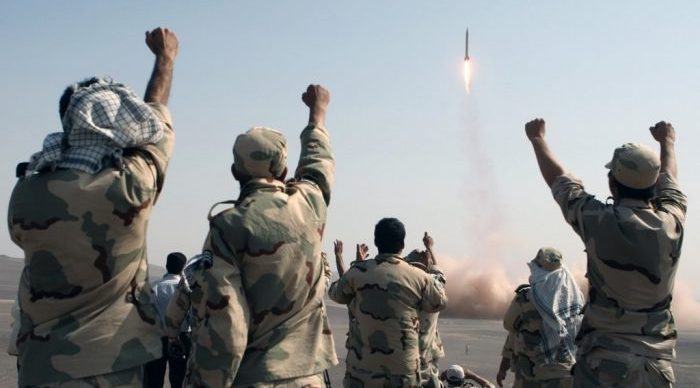
Now comes worrisome signs that Iran may be turning its sights on neighboring Pakistan in a formula that has worked so well before.

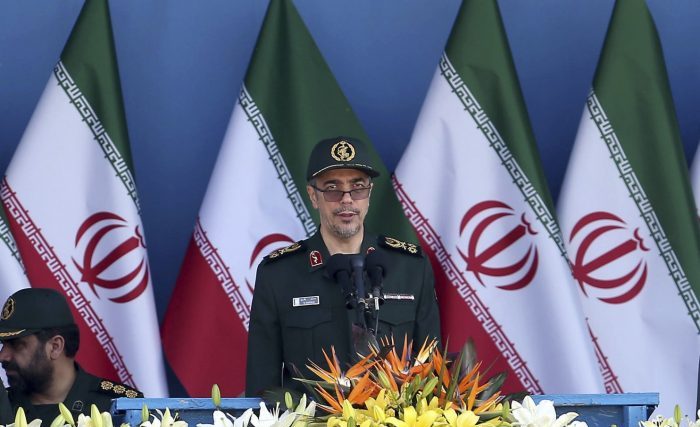
A senior Iranian military commander said the country reserves the right to destroy suspected havens for terrorists in Pakistan following a recent alleged terrorist attack against Iranian border guards serving on the country’s southeastern frontier, according to regime-controlled news services.

“The Armed Forces of the Islamic Republic of Iran condemn such measures and if the Pakistani government does not take serious measures, they (Iranian forces) reserve the absolute and legal right to resolutely counter and destroy the lairs of terrorists however deep inside the neighboring country’s soil,” Iranian Army’s Ground Forces Commander Brigadier General Ahmad Reza Pourdastan said on Tuesday.

He added that Iranian Armed Forces would spare no efforts to safeguard the country’s security.

For Pakistan, the comments are no mere idle threat as the mullahs have acted on past warnings to its neighbors. The turmoil in Iraq and Yemen are prime examples.

A shocked Pakistan foreign office summoned the Iranian ambassador to record a formal protest over the provocative comments.

Relations between Islamabad and Tehran have been complex and full of mistrust for a while now. The two countries, however, have avoided aggressive posturing through public statements in the past, which makes these Iranian comments even more disturbing to Pakistani officials.

At least 10 Iranian border guards were killed in an ambush near the town of Mirjaveh in the southeastern Iranian province of Sistan Balochistan last month. Following the assault, an anti-Iran Sunni Muslim militant group called Jaish al Adl, or the Army of Justice, claimed responsibility for the attack.

Pakistan’s recent decision to join a Saudi Arabia-led military coalition of 41 predominantly Sunni Muslim nations also has upset Iran. Tehran sees the military alliance as an anti-Iran group and an attempt to expand Saudi influence in the region. Saudi and Pakistani officials reject the assertions as unfounded.

The tensions the Iranian regime are creating amongst its neighbors stands as the primary driver of instability throughout the Middle East, contrary to the promises made repeatedly by the Iran lobby which only promised Iranian cooperation and moderation in the wake of the nuclear agreement reached in April 2015.

But the instability outside its borders are only a mirror of the tensions within Iran, especially in the run up to presidential elections on May 19th, but another significant event is going to take place beforehand on May 14th.

May 14 will mark the ninth anniversary of the arrests of the Iranian Baha’i leadership, known as the Yaran. These seven men and women managed the religious and worldly needs of Iran’s Baha’i, who make up the country’s largest non-Muslim minority. Iranian authorities condemned them to 20-year prison terms for their alleged misdeeds—charges that included “corruption on earth,” “insulting religious sanctities,” “espionage for Israel,” and “propaganda against the system.” The group’s secretary was arrested on March 5, 2008, and was also sentenced to 20 years in prison.

Elliott Abrams detailed the plight of the Baha’i in a piece for Foreign Affairs.

From the Iranian revolution in 1979 to this day, the regime has shown the Baha’i no mercy. The Iranian Baha’i community has faced continued oppression on the economic front and in the denial of educational opportunities.

Last November, Iranian authorities shut down more than 100 Baha’i-owned businesses throughout Iran after those businesses were briefly shuttered by their owners to observe the Baha’i holidays.

In December and January alone, more than a dozen Baha’i students were kicked out of Iranian universities because of their faith. As one student put it, “This has been going on for 37 years [since the Iranian revolution].

Every year, university security officials identify new Baha’i students and find excuses to throw them out.” Meanwhile, hundreds of students took the national entrance exam for universities, passed, and were denied entry into any university.

The unjust imprisonment of Baha’i continues, with new arrests by the Intelligence Ministry as recently as April. It is estimated that 80 to 90 Baha’is remain imprisoned in Iran solely due to their religious beliefs. The effort to smear the Baha’i and their religion continues as well, with thousands of anti-Baha’i articles running in Iranian media in the last 12 months.

The plight of these people, coupled with the opening up of a new front against Pakistan shows the willingness of the Iranian regime to disregard world opinion and act according to its own twisted agenda.

Laura Carnahan
Filed Under: Blog, News Tagged With: Featured, hassan rouhani, Iran, Iran Terrorism, IRGC

Why Nothing Changes in Iranian Regime Elections

May 9, 2017 by admin

Why Nothing Changes in Iranian Regime Elections

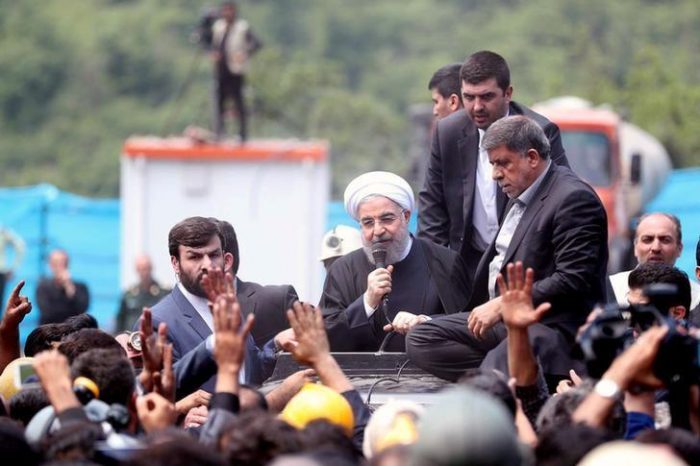
Iran’s President Hassan Rouhani speaks as he visits Azadshahr mine explosion site in Azadshahr, Golestan Province, Iran May 7, 2017. Picture taken May 7, 2017. President.ir/Handout via REUTERS

What ‘s the line? Same stuff, different day? That’s accurate when it comes to describing the so-called “presidential election” scheduled for May 19th. Elections in Iran are neither fair nor free and because of their illegitimacy, they invariably result in further weakening the already embattled regime; like a cancer eating away at a patient.

The most common fallacy being trumpeted around about how the regime government works, especially by Iran lobby advocates such as the National Iranian American Council, is that Iranian elections are democratic.

Nothing could be further from the truth.

When elections are held, all candidates are vigorously vetted by the Guardian Council, a body of 12 clerics, six of whom are appointed directly and the other six indirectly by top mullah Ali Khamenei. When the president is selected, he is nothing more than a puppet, acting according to the will of the supreme leader. Based on the Islamic state’s constitution, the president must be confirmed by the supreme leader no matter what the people voted.

It’s the kind of absolute control that campaign managers in Western nations must envy. Democracy can be such a messy experience that the mullahs in Tehran have done away with the inconvenience.

The idea that “moderates” are going to be empowered is silly when you consider that Khamenei, has final veto power over foreign policy, treaties, military commitments, economic policy, the judiciary and culture. These are enforced through state mechanisms appointed by him including the Revolutionary Guards and Quds Force (which owns over two-thirds of the industrial capacity of the economy through shell companies), Basji paramilitaries and morality police that enforce, arrest and imprison anyone violating generic sharia laws designed to stamp out dissent.

And all candidates, including the incumbent Hassan Rouhani and leading pro-Khamenei camp loyalist Ebrahim Raisi, are in line with all the regime’s strategic objectives. Otherwise, their candidacy would not enjoy Khamenei’s necessary approval.

The citizens of Iran are defined as people without rights or voice. Their choices in the upcoming elections can’t get any worse:

  • Ebrahim Raisi, known for his role in the “Death Commission” ordered by regime founder Ruhollah Khomeini, presided over the1988 massacre of over 30,000 political prisoners, mainly members and supporters of the opposition People’s Mojahedin Organization of Iran;
  • Hassan Rouhani, although portrayed as a moderate by the Iran lobby, he is known for key roles in supporting terrorism; his support for chemical, biological, and nuclear weapons; how he duped the West when he was Iran’s top nuclear negotiator; his early years as a fundamentalist activist and protege of Khomeini. His record during his current term clearly demonstrated his hardline opposition to human rights, freedom, and democracy.

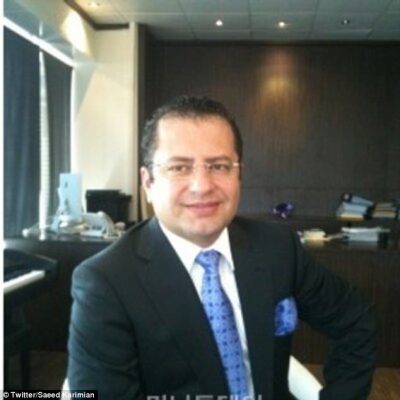
The lengths that the Iran regime will go to keep its grip on power may be shown in the grisly April 29th assassination of exiled Iran TV executive Saeed Karimian in Istanbul.

Saeed Karimian, born in Tehran, the manager and owner of GEM TV group, was assassinated along with a Kuwaiti business partner while in his car after he was sentenced in absentia for “spreading propaganda.”

The regime claimed that Karimian had close relations with the Iranian opposition; going so far as to photoshop an image showing Karimian meeting with Iranian opposition leader Maryam Rajavi.  Karimian had strongly denied such reports in the past, but all Iranians know that linking anyone to the PMOI/MEK is tantamount to an undeclared execution order.

The killing of Karimian is indicative of the new paranoia gripping the theocratic regime; the ruling mullahs are now looking like they are in their death throes. After eight years of appeasement by the Obama administration, the plethora of human rights violations within Iran has increased. More than 3,000 people have been executed since the “so-called” moderate Hassan Rouhani took office as president in 2013.

It would not be surprising that the mullahs anticipate another uprising, similar to what occurred following the fraudulent second election of Mahmoud Ahmadinejad in 2009. With this presidential election, they are terrified that the people of Iran will once again take to the streets to protest the oppression and corruption that have been the modality of the Iranian regime since the 1979 revolution.

Nevertheless, whether Rouhani or Raisi becomes president, one thing is clear: the April 29 assassination in Istanbul and political discontent among the populace is a political signal indicating where the Iranian theocracy is heading after the elections.

The only solution for the people of Iran is to seek change from within. This can be achieved by supporting opposition groups such as National Council of Resistance of Iran, which is largest opposition against Tehran.  This coalition enjoys the most support among Iranians inside the country and abroad, as seen vividly in its annual 100,000-strong rallies, where supporters gather in Paris from all four corners of the globe.

Michael Tomlinson


Filed Under: Blog, News Tagged With: Featured, hassan rouhani, Iran Election 2017, Iran Human rights, Iran Lobby, Iran Mullahs

Iran Regime Up to Old Tricks of Assassination Overseas

May 3, 2017 by admin

Iran Regime Up to Old Tricks of Assassination Overseas

Iran Regime Up to Old Tricks of Assassination Overseas

The Iranian regime has a long history of committing violence around the world either through its terrorist proxies such as Hezbollah, its intelligence operatives and Quds Forces, as well as its own Revolutionary Guard Corps.

The mullahs have long adopted the use of deadly force as a tool of statecraft. Not since the medieval age when monarchs plotted assassinations of rivals, has a nation used killing as part of an ordinary foreign policy tool.

The only other nation that seems to share that same affinity for killing is fellow rogue state North Korea which was implicated of the assassination of its leader Kim Jong Un’s half-brother in a brazen chemical attack at an airport in Malaysia in front of passers-by.

The use of chemical weapons seems to be a common trait shared by North Korea, Iran and its client state of Syria.

Now comes word that a dissident British-Iranian television executive was assassinated in Istanbul over the weekend only a few months after being sentenced in absentia to a six-year prison term by an Iranian court for allegedly spreading subversive propaganda, according to the New York Times.

Saeed Karimian was the owner of Gem TV, a network of television channels broadcasting in Farsi and other languages. He was shot “minutes after leaving his office,” Gem announced on Sunday. Also killed was his Kuwaiti business partner, whose name has not been released.

The assailants fled, and their vehicle was found abandoned and partly destroyed in another part of Istanbul, according to reports by Gem and several Turkish news outlets.

While there was an effort to spin the killing as a dispute over money, others saw the Iranian regime’s dark hand at work.

The National Council of Resistance of Iran, one of the largest Iranian dissident groups, claimed that Karimian was assassinated by Iran’s Revolutionary Guard on the orders of top mullah Ali Khamenei. Iran has been accused of assassinating Iranian exiles in the past, most recently Abbas Yazdi, an Anglo-Iranian businessman who was kidnapped in Dubai in 2013 and is now thought to be dead.

Karimian had long been the target of propaganda and smears by media outlets linked to Iranian security services, the NCRI statement said.

His network has been aggressively expanding lately, recently adding several new channels and recruiting Iranian artists and staff from inside Iran and abroad.

Several regime-controlled Iranian media reports meanwhile said Karimian was linked in the past to The People’s Mujahedeen of Iran (PMOI), an Iranian dissident group which is part of the NCRI coalition, which may be one explanation for the assassination since the Iranian regime has allegedly instigated several documented attacks on refugee camps housing PMOI dissidents in Iraq resulting in massacres of unarmed civilians.

Turkey and Iran are neighbors and major trade partners, but relations have recently been strained. The two are regional rivals and have backed opposing sides in the Syrian civil war, according to the Washington Post.

Reporters Without Borders, a press freedom watchdog, ranks Iran as one of the worst oppressors of journalists in the world. The motive behind the killings, however, remains unclear.

The BBC reported that Karimian’s family said that the Iranian government had threatened him in recent months and that he had planned to leave Istanbul for London.

According to the New York Times, an Iranian court announced last January in a judicial newspaper that Karimian had been sentenced to six years in prison for spreading propaganda against the country’s Islamic government, and acting against national security.

What was so threatening to the mullahs? Apparently soap operas and other entertainment broadcast by Karimian’s networks are a threat to the religious theocracy the mullahs built in Iran since seizing power in 1979.

The potential pollution of the mullahs’ harsh religious control is so precarious that the regime bans satellite dishes and regularly sends militia and police out to rip them off rooftops; they are widely used, and millions of Iranians watch dissident’s “subversive” programming.

Karimian had previously suggested that he hoped his work would change Iranian society. “We will do our best to create an Iran one day that we can take pride in,” Karimian said in comments that were broadcast posthumously on his own network on Sunday following his killing.

The potential for change in Iran must have been seen as too threatening to the control of the mullahs it seems.

Michael Tomlinson

Filed Under: Blog, News Tagged With: Featured, hassan rouhani, Iran Mullahs, Iran Terrorism, IRGC, Khamenei

Iran Lobby Attacks Claims of Prisoner Concessions as Regime Talks Hostages

May 3, 2017 by admin

Iran Lobby Attacks Claims of Prisoner Concessions as Regime Talks Hostages

Iran Lobby Attacks Claims of Prisoner Concessions as Regime Talks Hostages

Josh Meyer wrote a story in Politico that exposed a series of concessions granted by the Obama administration to the Iranian regime as part of its ill-fated nuclear talks that have caused an uproar in Congress and in the intelligence and law enforcement communities.

Predictably, the Iran lobby—led by Trita Parsi of the National Iranian American Council—attacked the story and attempted to discredit the idea of concessions being granted to the Iran regime.

Writing in Huffington Post, Parsi makes the argument that not all “concessions” are alike and those tied to the release of Iranian agents were not linked to the nuclear agreement.

“From the outset, Meyer commits a critical error: He insinuates that any concessions in terms of dropping charges against potential Iranian smugglers were made as part of the nuclear deal. In reality, to the extent any concessions were made, they were made to win the release of Americans held in Iranian jails,” Parsi writes.

Parsi attempts to do what the mullahs in Tehran insisted on from the start of negotiations, which is that the issues of its nuclear program and hostages should be separate and apart from the agreement, but in fact the two were intimately related from the regime’s perspective.

The mullahs were especially keen to keep thorny issues apart from the deal because they did not want to grant the U.S. and other nations any leverage to influence issues such as Iran’s support for terrorism, human rights abuses or the lack of any political reforms within Iran.

Allowing Iran to get off the hook for those items relieved the regime of a substantial obstacle to completing the nuclear deal while preserving the mullahs power over the Iranian people.

Parsi even uses the detention of American sailors as an example of quick resolution when in fact Iranian regime squeezed them for all their propaganda value with videotaped interviews and admissions of wrongdoing. Iran mullahs even built a monument to the humiliation of the “Great Satan.”

Parsi characterizes the Iranians who were released as just a “few alleged Iranian smugglers” and ignores the nearly decades-long investigative work done by FBI agents and Justice Department attorneys who meticulously built cases involving large networks of Iranian operatives attempting to smuggle everything from nuclear weapon components to computers and weapons.

He discounts the allegations made by the Politico article as coming from “mid-level operatives in the Justice Department” as if law enforcement agents, investigators and U.S. attorneys were simply mindless drones.

But Parsi’s attempts to deflect and cover up the facts are nothing new to the Iran lobby when the mullahs get into trouble.

For the mullahs in Tehran though, the deal served its purposes in gaining billions in cash and allowing Iranian oil to flow back on the open market. It also gave Iranian regime a free pass to create havoc and shed the blood of tens of thousands in Syria and Yemen.

Now the stage is set for the Iran presidential election which some analysts have speculated could be the end of the road for Hassan Rouhani since he has served his purpose in portraying Iran as a friendly, moderate country during nuclear talks, but now that the façade is off Iran has no reason to be so “moderate” anymore.

This may explain why Ebrahim Raisi, a mullah with a long and sordid history of leading commissions that ordered the execution of over 30,000 Iranian dissidents in the 1980s may be poised to win the election should top mullah Ali Khamenei wish it.

Of course, Parsi authored yet another editorial in Al-Monitor contending that Khamenei has no influence on the election. He even laughably argues that Raisi is not a true contender nor supported by Khamenei.

What Parsi does not mention is the fact that the Iranian regime in addition to manipulating the votes, primarily opts to simply eliminate thousands of candidates from the very beginning to cull down the ballot to a select handful in order to ensure a preferred candidate’s “election”.

It is a formula that worked in 2013 and being used in this year’s election. Nothing unforeseen ever happens under the watchful gaze of the mullahs.

In another development that shows more promise, the Iranian regime admitted for the first time that the topic of dual national hostages was taken up at the first face-to-face meeting between regime representatives and those of the Trump administration in Vienna during meetings of the joint commission monitoring the implementation of the Iran nuclear deal.

The comments by Iranian Foreign Ministry spokesman Bahram Ghasemi mark the first official government confirmation it discussed prisoners with the U.S. at a recent meeting in Vienna over the nuclear deal.

While falling far short of signaling any sort of movement on freeing those with Western ties held in Iran, Ghasemi’s acknowledgement fits the pattern of past prisoner negotiations with the Islamic Republic. It signals more behind-the-scene negotiations could be possible if the Trump administration, already skeptical of Iranian intentions, is willing to deal.

Speaking to journalists, Ghasemi mentioned no specific names of the inmates brought up by the Americans.

“In the past … we had talks for humanitarian reasons with Americans over (swapping) some (American) prisoners with Iranian prisoners jailed in the U.S. and it had positive results too,” he said.

Last week, State Department spokesman Mark Toner had said American officials at the meeting had “called on Iran to immediately release these U.S. citizens so they can be reunited with their families.”

Dual nationals in detention have been used as bargaining chips in negotiations with the West. Under Iranian law, they are not entitled to consular support.

We can only hope the Trump administration can force their release without having to pay Iran billions in cash or release terrorists in exchange, since past concessions have only emboldened the mullahs to do more.

Laura Carnahan

Filed Under: Blog, News Tagged With: Featured, hassan rouhani, Iran, Iran deal, Iran Human rights, Iran Lobby, Iran Mullahs, National Iranian American Council, NIAC, NIAC Action, Trita Parsi

Obama Prisoner Release Threatens Iran Nuke Deal

April 27, 2017 by admin

Obama Prisoner Release Threatens Iran Nuke Deal

Obama Prisoner Release Threatens Iran Nuke Deal

Revelations from an investigation by Politico led to damning disclosures of an Obama administration essentially opening up the prison doors to let loose over a dozen individuals subject to years-long investigations for crimes such as smuggling nuclear components and military hardware to the Iranian regime.

Even worse were reports that the Obama administration squashed wide ranging and complicated investigations into entire networks working on behalf of the Iranian regime.

All of this occurring while the administration, in lock step with the Iran lobby, consistently downplayed the prisoner releases as minor and barely reported the ending of the investigative work.

News of the accommodations for the Iranian regime has helped push even more criticism of the nuclear deal and added fuel to the fire to claims that Iran has spent the time since the agreement was put in place to bolster its military, crackdown on dissent at home and refill coffers depleted by wars in Syria and Yemen.

The criticism of the nuclear reached a crescendo this week and discussions on Iran policy in the Trump administration seem to be focused not on how to keep the nuclear deal alive, but rather how to confront and push back the mullahs in Tehran.

Columnist Benny Avni in the New York Post was one of several commentators to note the change in tone and direction with the new administration.

“American pressure on Iran is about to resume,” Avni said.

“It all but disappeared as President Barack Obama and Secretary of State John Kerry gave away one concession after another in the run-up to the completion of the Joint Comprehensive Plan of Action — the Iran nuclear deal — in 2015. Such pressure never really got going again, since Obama wanted Iran’s cooperation in implementing the deal and then flinched at anything the Iranians might use as a pretext to walk away from the agreement,” he added.

Avni pointed out—correctly—that UN ambassador Nikki Haley reminded representatives of already existing Security Council resolutions banning the regime from trafficking in weapons (which it violated with gusto in arming Hezbollah in Syria and Houthi rebels in Yemen) and halt any ballistic missile development, let alone testing.

“The United States will work closely with our partners to document and address any actions that violate these resolutions,” Haley said. “We must take a stand against Iran and Hezbollah’s illegal and dangerous behavior.”

The proof against the regime also continues to pour in, this time in the form of reporting from the National Council of Resistance of Iran (NCRI), one of the largest Iranian dissident groups in the world, which unveiled intelligence and satellite imagery in recent days that it says is proof of Iranian actions violating the Joint Comprehensive Plan of Action, or JCPOA. It also alleges that the activity is taking place in areas and facilities that are off limits to regular inspections from the International Atomic Energy Agency.
“These are the very same sources that have been proven accurate in the past. The network of the movement inside Iran, the MEK, was responsible for exposing the Natanz uranium enrichment facility and the Arak heavy water facility back in August of 2002,” said Alireza Jafarzadeh, deputy director of the NCRI’s Washington office.

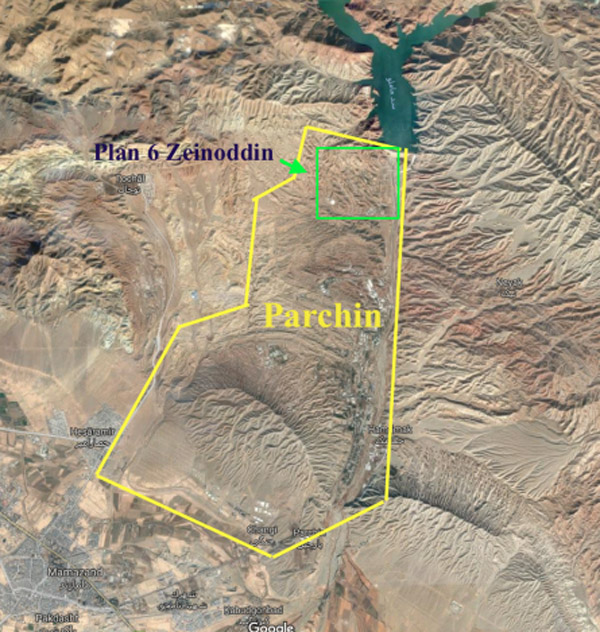
Jafarzadeh said the specific facility shown in the satellite photos depicts a location specializing in detonators. Much of the secret activity is believed to be going on at Iran’s Parchin facility, a spot that Jafarzadeh said Iran blocked inspectors from for years until finally relenting two years ago. He said it makes sense for Iran to do clandestine work there.

“They thought they closed the chapter on Parchin. Now with this new information and new evidence, there is a renewed call among nuclear experts that the IAEA should be able to go back to this place among other locations that the IAEA has never inspected,” said Jafarzadeh.

The disclosures of the potential weaponization of nuclear materials by Iran is hardly a surprise to anyone closely tracking the regime’s past history, but it certainly reinforces the fresh narrative now coursing through Washington, DC and European capitals.

Rep. Lee Zeldin, one of the two Jewish Republicans in the House, is blasting the Obama administration prisoner swap with Iran as “brutally incompetent” following new disclosures about the troubling backgrounds of the Iranians who were set free.

“Once again we are reminded of how brutally incompetent President Obama’s foreign policy was, especially as it related to Iran,” Zeldin told The Post in a statement.

Zeldin has called for more pushback against all of Iran’s threatening activities.

“We must re-establish our leverage with sanctions and other tools that would force the Iranians to the table in the first place,” Zeldin said.

Most of the debate going on now among key analysts and policymakers is the proposal to extend sanctions to the Iranian Revolutionary Guard Corps which sits at the epicenter of the regime’s financial, economic and military infrastructure.

Ilan Berman, senior vice president of the American Foreign Policy Council in Washington, D.C., argued for President Trump to sanction the IRGC in an editorial in US News and World Report.

“If the legal case for designating the IRGC is airtight, the strategic rationale for such a blacklisting is even more compelling.,” Berman said.

“Most immediately, a ban on the IRGC would prevent a further normalization of international trade with Iran. As a result of its 2015 nuclear deal with the West, the Islamic Republic has reaped enormous economic dividends, with transformative effects on its economy and on the strategic aspirations of its leadership. But blacklisting the IRGC could change all that. The Guards, after all, are nothing short of an economic powerhouse, in control of a sprawling empire of companies and corporate entities within the Islamic Republic. All told, the IRGC is believed to command as much as one-third of Iran’s total economy. And because it does, a designation would send a major warning signal to those international firms and foreign nations beginning to dip their toes back into various sectors of the Iranian market that, by doing so, they could run afoul of U.S. counterterrorism laws, with potentially disastrous monetary and political consequences,” he added.

Ironically, Obama’s decision to go easy on the Iranian regime may eventually end up help speed up the demise of his most cherished foreign policy achievement and kill the Iran nuclear deal.

Laura Carnahan

Filed Under: Blog, News Tagged With: #NuclearDeal, Appeasement policy, Featured, hassan rouhani, Iran deal, Iran Human rights, Iran Lobby

Iran Election Slate Set and It’s a Disaster

April 25, 2017 by admin

Iran Election Slate Set and It’s a Disaster

Iran Election Slate Set and It’s a Disaster

What do you get when over 1,600 candidates register to run for president in Iran?

You get just six guys on the ballot representing the absolute worst of the Iranian regime.

Democracy at work right? Only in Iran.

What is stunning about the electoral process in Iran is how the world’s news media tend to fall flat on their collective faces in covering it and missing the most important aspects. Namely that it is essentially a fixed race with no real dissenters allowed and only those candidates deemed to be the most loyal to the regime and its ruling mullahs, especially the guy at the top, Ali Khamenei.

News media fell over themselves announcing that 1,626 applicants registered, including 137 women; the highest number ever of female candidates to register since the Islamic revolution back in 1979.

Exactly how many women made the final ballot? Zero. Nada. Zip.

This is not earth-shattering news since the 12-member, all-male Guardian Council—half of whom are handpicked by Khamenei himself—was never going to approve a woman for the ballot, but is certainly happy to milk the publicity of having these many women register.

While the women who registered may have been making a statement and doing their best to protest the electoral process in the only meaningful way that won’t land them in Evin Prison or the gallows, the mullahs only see a PR opportunity in them.

According to The New Arab, Sha’la Tabrizi, who has a PhD in Political Science, was the first woman to register for this year’s presidential race.

“Women constitute 60 percent of Iranian society, so they should strive for one of them to become a powerful president some day,” she told local media, adding that she is aware of how bleak her chances are.

Similarly, A’zam Taleghani, daughter of prominent Islamic Revolution leader Mahmoud Taleghani and Iran’s first-ever female presidential candidate, registered her candidacy for the third time this year. Taleghani is a former regime MP who heads the Regime’s “Society of Islamic Revolution Women of Iran”.

The Guardian Council has disqualified every female presidential candidate since 1979.

You do have to hand it to them for persistence.

It is not without irony that the most prominent female Iranian political leader is Mrs. Maryam Rajavi who leads the largest Iranian opposition group, the National Council of Resistance of Iran. If the regime were ever to allow her on the ballot, it is likely she might end up being the first female president of Iran.

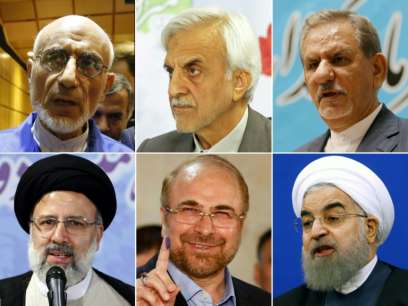
The six candidates who did make it onto the final ballot are a who’s who of regime henchmen and brutal human rights abusers. The more serious choices that will probably make their way out of the election show are:

  • Hassan Rouhani: The incumbent president presided over what has been called by international human rights groups as the largest and fastest rise in public executions in recent Iranian memory. He has also direct the regime’s support for the Assad regime and its military involvement in three wars raging in Syria, Iraq and Yemen;
  • Ebrahim Raisi: arguably one of the regime’s worst human rights abusers who was known to be part of a “Death Commission” that massacred over 30,000 Iranian dissidents in the ‘80s. He now heads Astan Quds Razavi, the wealthiest charity foundation in charge of a holy shrine and provides the financial muscle for Khamenei;
  • Eshaq Jahangiri: the current vice president to Rouhani, he is likely to drop out to back another candidate, but he is especially close to Qassem Soleimani, the head of the Revolutionary Guard’s Quds Force and has played a key role in Iran’s efforts to bolster President Bashar Assad’s forces in Syria as well bring in Russia to fight in Syria;
  • Mohammad Bagher Ghalibaf, a pilot and former commander of Revolutionary Guards air force and Iran’s chief of police. He has been the infamous mayor of Tehran since 2005 and this is his third bid for the presidency. He is blamed for the January’s massive fire at the Plasco building, a historic high-rise in downtown Tehran. The fire caused the building to collapse and killed 26 people, including 16 firefighters.

The inclusion of candidates such as Jahangiri and Hashemitaba are almost assuredly on the ballot to provide a perceived “balance” of “moderates” to “hardliners” even though they have no chance at winning.

The history of Iranian elections proves that with the rigged win for Mahmoud Ahmadinejad in 2009 that led to widespread protests and massive crackdowns.

This election will be no different since the Guardian Council have rendered the ordinary Iranian citizen’s vote moot with a slate designed to ensure only the most devout and devoted will be elected.

For most Iranians, already severely disillusioned by the unfilled promises of Rouhani, the best and most obvious choice on the ballot might be “none of the above.”

Laura Carnahan

Filed Under: Blog, News Tagged With: Featured, hassan rouhani, Iran, Iran deal, Iran Lobby, Iran Mullahs

US Steps Up Sanctions Against Iran Prison Industry

April 19, 2017 by admin

US Steps Up Sanctions Against Iran Prison Industry

US Steps Up Sanctions Against Iran Prison Industry

Each passing day seems to bring more evidence that the Trump administration intends to chart a very different path than the Obama administration when it comes to dealing with the Iranian regime.

The first clue was the harsh rhetoric directed at the mullahs and the nuclear agreement, as well as the multi-billion dollar payment made by the Obama administration as part of the deal.

Then came the first series of sanctions in response to Iran’s launching of ballistic missiles; a move the Obama administration did not make for fear of upsetting the mullahs and threatening the nuclear deal.

Next came the cruise missile strike against a Syrian airbase in response to a chemical attack against civilians, including young children and infants.

In less than three months, President Trump has acted aggressively and swiftly against Iran and its interests in Syria in a bold departure from the feckless policies of trying to appease the mullahs in Tehran practiced by President Obama.

Now the Trump administration is leveling new economic sanctions against senior Iranian officials and its prison system for widespread human rights abuses, including the systematic torture of those being held in these facilities, according to White House officials familiar with the matter.

The latest sanctions target the Tehran Prisons Organization and Sohrab Suleimani, a senior official in the prison system and the brother of Qassem Soleimani, a senior Iranian military figure responsible for operating Iran’s rogue activities in Syria and elsewhere.

Sohrab Soleimani is responsible for overseeing Iran’s notorious Evin Prison, which is known for torturous interrogations, forced interrogations, and widespread mistreatment of inmates.

The latest sanctions are certain to rankle Tehran, already the subject of a range of new sanctions under the Trump administration, which is currently conducting a widespread review of all matters related to the landmark nuclear agreement.

A senior official on the White House National Security Council told the Washington Free Beacon that the Soleimani family has a history of fomenting violence and unrest both inside and outside Iran.

“It’s no coincidence that Sohrab Suleimani is the brother of the notorious Qasem Soleimani, the head of the IRGC’s Quds Forces, who has been responsible for so much of the violent disruption Iran has been spreading through the region,” said the official, who was not authorized to speak on record.

U.S. intelligence agencies believe Gen. Soleimani is overseeing Iran’s military operations in Syria, which are designed to prop up the regime of President Bashar al-Assad. The U.S. and its Middle East allies also said they have seen Gen. Soleimani’s hand in Revolutionary Guard military activities in Iraq, Yemen, Lebanon and the Palestinian territories.

Iranian human rights abuses have only grown under the leadership of so-called reformist President Hassan Rouhani, the official said. This includes the detention of U.S. citizens

“There has been a disturbing and significant increase in the number of detentions and executions of Iranian citizens under President Rouhani, and the infamous Evin Prison under Sohrab Suleimani’s control has been a key facility in this program of domestic repression,” the official said.

The Trump administration is holding meetings with the family members of American citizens still being detained in Iran and believed to be subjected to torture.

Soleimani’s role in Iran’s prison system makes him one of the foremost human rights abusers worldwide.

Soleimani oversaw an April 2014 incident at the Evin Prison in which dozens of security guards and prison officials beat a number of political prisoners. The attack is believed to have lasted several hours and impacted more than 30 prisoners. Many of these prisoners were later denied medical treatment.

Evin Prison is home to large number of Iranian political dissidents and other government opponents, who are routinely shut down and arrested by the Iranian regime for political activities targeting those in power.

The sanctioning of someone so central to the regime’s enforcement system against dissidents and a family member to a key figure in Iran’s military represent a significant escalation in attempts to push and contain the Iranian regime’s influence.

More importantly, the move once again highlights human rights as a central policy concern for the U.S. moving forward and redefines the need for the regime to improve its human rights practices.

U.S. lawmakers have been calling in recent week for the U.S. to further impose sanctions on Iran for its nonnuclear activities. They specifically cited Iran’s continued detention of four U.S. nationals and two U.S. green-card holders as justification for more penalties. Iran has accused most of these Americans of espionage, a charge they have denied.

A bipartisan group of U.S. lawmakers wrote Treasury Secretary Steven Mnuchin last week and noted that Iran hadn’t been sanctioned for any human-rights violations since the nuclear agreement was reached in July 2015.

“Failing to sanction individuals and entities committing flagrant abuses of human rights against the Iranian people not only goes against our most cherished values and principles but also undermines the credibility of our government,” they wrote.

This is an important step, but it’s only a step forward to finally bringing hope and democracy back to the Iranian people. We can only hope the pressure continues to build through next month’s presidential election in Iran.

Laura Carnahan

Filed Under: Blog, News Tagged With: Featured, hassan rouhani, Iran, Iran deal, Iran Human rights, Iran Lobby, Iran Mullahs, Iran sanctions, Iran Terrorism, IRGC, Khamenei, soleimani

Trump Administration Must Move to Sanction IRGC

April 18, 2017 by admin

Trump Administration Must Move to Sanction IRGC

Trump Administration Must Move to Sanction IRGC

With recent moves such as the launching of a cruise missile attack against a Syrian airfield, the dynamics of the how to confront the Iranian regime are inevitably changing in the transition from the Obama administration to the Trump administration.

The pressure on the Iranian regime can be seen in the stepped-up attacks by the Iran lobby to try and dissuade U.S. policymakers from shifting to a more aggressive stance against the mullahs in Tehran.

How and in what form that stance will be is taking shape internally within the administration and in the halls of Congress and the mullahs are desperate to influence that debate. Unfortunately the easy access Iran enjoyed through the open door policy at the Obama White House through multiple visits by Trita Parsi of the National Iranian American Council and other members of the Iran lobby is now shut off.

The Trump White House is poised to ratchet up existing sanctions against Iran and is weighing a much stricter interpretation of the nuclear agreement between Tehran and major world powers, according to Foreign Policy.

The administration is inclined to adopt a “more rigorous application of the tools at its disposal,” a senior White House official told Foreign Policy, referring to sanctions policy. Among the options under consideration: broadening U.S. sanctions to include much larger chunks of the Iranian economy linked to the Islamic Revolutionary Guard Corps (IRGC).

No final decision has been taken by the president or the cabinet. But officials said some decisions will need to be taken soon. On April 25, Iran and the six governments that negotiated the nuclear deal with Tehran, including the United States, are due to meet in Vienna for a quarterly review of the accord.

How President Donald Trump decides to proceed on sanctions and the nuclear deal more broadly carries high stakes for the United States, Iran, and the wider Middle East. A concerted U.S. effort to squeeze Iran would represent a gamble that Tehran’s regional push for power, particularly in Syria and Yemen, could be checked in part by increasing economic pressure.

Another major decision facing President Trump is whether or not to stick with the nuclear deal that he so roundly criticized on the campaign trail. The calculation of whether or not to keep it will have to rely on a central question which is are the mullahs abiding by it or simply using it as a smokescreen to rebuild their military as many suspect.

But the president doesn’t have to shred the deal to put pressure on the Iranian regime. As Foreign Policy pointed out, the agreement is not a binding treaty as such he has broad leeway to interpret its provisions. Under President Obama, that flexibility allowed him to grant Iran broad leniency in areas such as enriched fuel and heavy water. Trump could choose to close those loopholes.

Evidence of that tougher stance has cropped up as the Treasury Department announced new sanctions last week, including the brother of the powerful head of the special forces arm of the IRGC, Sohrab Soleimani, for his role in abuses at the country’s prisons. And in February, the Treasury Department blacklisted eight organizations linked to the Revolutionary Guards, as well as one of its officials based in Lebanon.

The focus on the IRGC and its Quds Forces signal a significant change that could hold the promise of increased effectiveness because of the deep roots the organizations have throughout Iran and its economy.

At the moment, any entity that has a 50 percent ownership stake or more held by the IRGC is subject to sanctions, but the administration is mulling a change that would drop the threshold to a lower percentage.

Such a move would break with long-standing policy at Treasury, which has traditionally defined ownership as above 50 percent for any category of sanctions. A lower threshold would mean blacklisting hundreds and possibly thousands of additional Iranian companies and organizations with links to the IRGC, experts said.

The mere threat of a lower threshold has helped stifle potential investments into the Iranian regime as banks and companies from Europe and Asia fret about possible sanctions being levied by the U.S. down the road should they invest.

That has had a ripple effect as the much-promised economic benefits from the nuclear deal have failed to materialize leading to speculation that top mullah Ali Khamenei may have decided to abandon the pretense of moderation in favor of a harder line as evidenced by who makes the presidential ballot for next month’s election in Iran.

Emanuele Ottolenghi, Ph.D., a senior fellow and expert on Iran at the Foundation for Defense of Democracies, wrote in The Hill of the need to close one loophole benefitting the regime now which the lifting of sanctions restricting the sale of commercial airliners to Iran.

The activities of Iran’s aviation sector have exposed the inadequacy of the nuclear agreement’s caveat that licensed items and services must be used “exclusively for commercial passenger aviation.” Currently, at least five Iranian and two Syrian commercial airlines are engaged in regular military airlifts to Syria, he writes.

These carriers have been crisscrossing Iraqi airspace since 2011, but have increased their tempo since the summer of 2015, when Iran and Russia coordinated their efforts to save Assad’s regime. Flight tracking data indicate that, from the nuclear deal’s implementation day on Jan. 16, 2016 to March 30, 2017, there were at least 696 flights from Iran to Syria, only six of which were carried out by Iran’s air force, she added.

She points out that it is extremely likely that Iran Air is still an active participant in the Syria airlifts. First, there is no justification for frequent commercial flights to Damascus: Syria is a war zone with little tourism or commerce, yet it is served almost twice daily by Iranian airlines. Iran Air, for example, flies to Damascus twice a week. It is doubtful Iranian tourists are posing for selfies in the ruins of bombed cities.

The flight cannot be purchased on Iran Air’s booking website or through travel agencies and the booking website does not include Damascus among its destinations from Tehran’s international airport, where the flights originate. Finally, Iran Air flights to Damascus occasionally make unscheduled stopovers in Abadan, an IRGC logistical hub for the Syria airlifts.

The next few months will show whether or not the Trump administration will follow through on its campaign promises and finally begin the hard work of stopping the mullahs.

Michael Tomlinson

Filed Under: Blog, News Tagged With: #NuclearDeal, Featured, hassan rouhani, Iran deal, Iran Mullahs, Iran sanctions, Iran Terrorism, IRGC, Khamenei

Over 1,600 Presidential Candidates in Iran and None Are Moderates

April 18, 2017 by admin

The Iranian regime has over 1,600 people registered as candidates for next month’s presidential election, but like all previous elections in the mullah’s regime, the outcome is predetermined and not a single moderate or dissident will end up on the final ballot.

The logjam of registered candidates is typical of a system that offers the false veneer of inclusive democracy when it in fact is anything but. It’s emblematic of the root problems within the Iranian regime and why any idea of appeasement or rapprochement is just plain fantasy.

The Associated Press provided a nuts and bolts overview of the election process in Iran.

Under Iranian law, there’s no fee for registering. Hopefuls only must swear allegiance to Iran’s government and be Shiite Muslims. That gives gadflies and publicity seekers the chance to smile and wave to gathered journalists. It’s still a lot of candidates, though. The last similar turnout was Iran’s 2005 election, which saw more than 1,000 register, according to the AP.

All the candidates will be vetted by the Guardian Council, a 12-member panel half selected by the top mullah Ali Khamenei and half nominated by the judiciary and approved by parliament. The council controls elections and must approve all laws passed by parliament. It has never allowed a woman to run for president and routinely rejects candidates calling for dramatic reform. The panel also declared Ahmadinejad won the 2009 election despite widespread fraud allegations.

And who sits at the top of this pyramid? Khamenei of course. The supreme leader also serves as the country’s commander in chief over its military and the powerful Revolutionary Guard, a paramilitary force involved in the wars in Iraq and Syria that also has vast economic holdings across Iran. An 88-member elected clerical panel called the Assembly of Experts appoints the supreme leader and can remove one as well, although that’s never going to happen.

Iran does not allow international observers to monitor its elections. Security forces answering only to the supreme leader also routinely arrest dual nationals and foreigners, using them as pawns in international negotiations, according to AP.

All of which brings us back to the central point people need to remember as these elections unfold, which is that there is no democracy in Iran. The Iranian people have very little choice and fewer real options and nothing happens without Khamenei’s direct approval.

Iran’s election system puts to a lie the arguments long made by Iran lobby members such as the National Iranian American Council which has consistently argued the fiction that real factions and splits occur between “moderate” and “hardline” elements there; when in fact the differences in Iran’s political and religious elite is basically comprised of fights over who’s snout can dig deepest into the trough of ill-gotten gains. The fact is that Iran’s government consistently ranks as one of the most corrupt on the planet and no matter who’s sit on president’s seat, the regime has continued to be the number of executor of its people per capita and the number one state sponsor of terrorism in the world.

The fact that the Iranian people’s top choices right now are its current president, Hassan Rouhani, who promised many reforms including a liberalization of the economy and more economic benefits to the people—all of which has actually gotten worse—and former president Mahmoud Ahmadinejad who was widely reviled during his tenure.

The other choice being Ebrahim Raisi, custodian of Iran’s wealthiest charity, Astan Quds Razavi in Iran’s holiest shrine of Imam Reza in Mashhad, northeastern Iran, who was also tied to massacres of 30,000 Iranian dissidents in the 1988.

These are not great choices for the Iranian people, nor do they spell any kind of relaxation in the regime’s often barbaric policies in terms of human rights abuses and more foreign policy misadventures.

That is because the regime mandates fealty to the principle of obedience to Supreme Guardianship (Velayat-e faqih), meaning, the rule of the ayatollahs. It would be akin to eliminating all political parties in the U.S. and forcing every candidate to swear allegiance to one ruler who can never to drummed out of office.

In many ways the election of a president means relatively little since the real power resides within Khamenei and the position of supreme leader, which is why no matter who gets elected on May 19th, how to deal with Iran, especially its military is the real concern for Iran’s neighbors and the U.S.

Mohammad Amin, an analyst in Iranian affairs and fellow at the Paris-based Middle East Research Foundation, examined the wide-ranging reach of the Iranian Revolutionary Guard Corps and how confronting it is the biggest challenge facing the West.

“The IRGC, the Leviathan of Terror, which has the financial and military resources that exceed the wildest dreams of ISIS, now lurks in the Middle East. Its tentacles extend well beyond the geographical borders of Iran. While ISIS claimed parts of Syria and northern Iraq, the IRGC’s Shiite militias have an extensive presence in almost every country in the region,” he writes in the Daily Caller.

The main Iranian opposition the National Council of Resistance of Iran (NCRI) has revealed a list of 31,690 Iraqi mercenaries of the IRGC, all of whom receive their salaries from Iran.

Last year, U.S. military officials said that as many as 100,000 Iranian-backed Shiite militia are now fighting on the ground in Iraq, “raising concerns that should the Islamic State be defeated, it may only be replaced by another anti-American force that fuels further sectarian violence in the region,” he added.

Amin adds that an essential first step in the direction of controlling the IRGC is for the Trump administration designating the IRGC as a Foreign Terrorist Organization (FTO). Failure to adopt this critical measure will only serve to embolden the regime while the region and the wider world continue to grapple with the menace of religious extremist and terrorism.

For any chance of democracy in Iran, the West needs to support Iranian opposition groups such as the NCRI and cut off the financial support the regime receives from the IRGC. That is surest pathway to eventual freedom for the Iranian people.

Michael Tomlinson

Filed Under: Blog, News Tagged With: Featured, hassan rouhani, Iran, Iran Mullahs, Iran Terrorism, Khamenei, National Iranian American Council, NIAC, NIAC Action

Iran Economy Delivering Only for Military and Regime Elites

April 2, 2017 by admin

Iran Economy Delivering Only for Military and Regime Elites

Iran Economy Delivering Only for Military and Regime Elites

The Iranian economy should be an economic powerhouse backed by one of the largest petroleum reserves in the Middle East and a population that historically has been one of the best educated and entrepreneurial.

The Iranian people have spread throughout the world as part of the diaspora stemming from the Islamic revolution and have helped make scientific advances, create masterpieces of art and build globe-spanning industries.

Yet, given all of these accomplishments, the Iranian economy remains mired in stagnant growth with huge unemployment numbers, especially for Iranian youth who face a bleak future. All too often their choices are to struggle in finding jobs or join the regime as part of its military to be sent off to fight and die in far-flung battlefields far from home.

The truth of the Iranian economy is that it has been shaped and molded to serve not the Iranian people, but to fund the whims and lavish lifestyles of the ruling elites, including the families of mullahs in a dynastic fashion, as well as prime the engine of war for the Revolutionary Guard Corps.

In Al-Arabiya, Tony Duheaume examined the contradictions in the economic windfalls benefitting the elites and the hopelessness and poverty being experienced by Iran’s poor.

“While many of Iran’s citizens have suffered all of the hardships of a failing economy, in a land of increasing unemployment and low pay, the ruling mullahs lead the lives of past emperors, living in absolute luxury, with billions they have made off the backs of the Iranian people, now insulating them from the crumbling nation they reside over,” he writes.

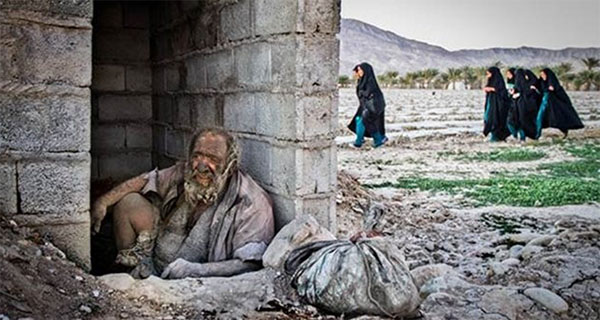
“Beggars wander the streets of Iran in droves, drug addicts with nothing to live for litter the thoroughfares, while the homeless find shelter where they can, some known to have taken up residence living under bridges, or in the sewerage canals that run alongside the country’s highways,” Duheaume added.

Duheaume pointed out a shocking photo essay published in the Shahrvand Daily last year that depicted many of these hapless vagrants sleeping in empty graves in Shahriar, a town about 12 miles from Tehran, the nation’s capital, in images that shocked the nation.

Reports suggested that at least 50 men, women and children were living in this cemetery, with many of their number addicted to drugs. Dressed in grimy rags, their emaciated, dirt-streaked features stare vacantly out of open graves, with only tattered tarpaulins or sheets of well-worn polythene covering the holes to protect them from the elements, in an area where the temperature in winter can drop to well below freezing, he said.

With hundreds of millions of dollars already pouring into the Iranian administrations coffers from released frozen assets, which could eventually total $150 billion, none of this has yet been designated to relieve the suffering of its people. Already billions have been earmarked to spend purchasing Russian T-90 tanks, artillery, advanced Su-30 fighter jets, and helicopters, and during 2016, Iran’s defence sector grew by 45 percent, with the regime spending billions on its long-range missile program, and the development of indigenous weapons systems, Duheaume pointed out.

There is also the delivery of long-promised S-300 air defence systems, said to have cost the Iranian government $900 million. On top of this there are the multi-billion dollars the regime is using to prop up Syrian President Bashar al-Assad, the $60-$100 million a year it is paying in financial assistance to Hezbollah, plus its expenditure in financial support or weapons to aid terror groups such as Hamas and the Houthis, he explained.

But at the other end of the social scale, Duheaume correctly pointed out the group that is siphoning off large amounts of the nation’s assets, are the ultra-rich mullahs that rule Iran, all of them claiming to live frugal lives, but who are in fact living in the lap of luxury, and are said to be squirreling away vast fortunes in foreign bank accounts.

The pictorial evidence of this lavish lifestyle appeared on social media as these children of the mullahs shamelessly posted selfies as they tore down Tehran streets in exotic sports cars swathed in haute couture fashion more appropriate to the catwalks of Paris and Milan.

Top mullah Ali Khamenei himself sits at the top of the ladder as far as the millionaire mullahs are concerned, known to be in control of a financial empire worth $95 billion, which far exceeds the accumulated wealth of the late Shah Mohammad Reza Pahlavi. It was Khamenei’s predecessor Ayatollah Ruhollah Khomeini, the founder of the Iranian Islamic Republic, who used the Shah’s plundering of the Iranian economy, and his unequal distribution of wealth, as one of the main excuses to depose him, and now this plundering has been repeated by his ousters, Duheaume said.

But as far as Iran’s leadership is concerned, all are worthy of the Rich List. To name but a few of Iran’s richest mullahs, Akbar Hashemi Rafsanjani was said to have netted $1.2 billion, Mohammad Ali Taskhiri $90 million, Mohammad Khatami $84 million, Ali Larijani $70 million, Mir Hossein Mousavi $58 million, Mohammad Hossein Adeli $43 million, Mohammad Javad Zarif $32 million, Ahmed Bourghani $19 million, and a little further down the scale, Mahmoud Ahmadinejad with $5 million.

The mullahs have concentrated this wealth into their own pockets and have created a system designed to preserve their wealth and power. The Islamic regime does not tolerate dissent, nor does it provide for its people.

It deals with desperate pleas for jobs and aid from the Iranian people with crackdowns, mass arrests and imprisonment.

Any government that has to maintain control through fear and intimidation is not long for success.

Laura Carnahan

Filed Under: Blog, News Tagged With: Featured, hassan rouhani, Iran, Iran Economy

  • « Previous Page
  • 1
  • 2
  • 3
  • 4
  • 5
  • 6
  • …
  • 10
  • Next Page »

National Iranian-American Council (NIAC)

  • Bogus Memberships
  • Survey
  • Lobbying
  • Iranians for International Cooperation
  • Defamation Lawsuit
  • People’s Mojahedin
  • Trita Parsi Biography
  • Parsi/Namazi Lobbying Plan
  • Parsi Links to Namazi & Iranian Regime
  • Namazi, NIAC Ringleader
  • Collaborating with Iran’s Ambassador

Recent Posts

  • NIAC Trying to Gain Influence On U.S. Congress
  • While Iran Lobby Plays Blame Game Iran Goes Nuclear
  • Iran Lobby Jumps on Detention of Iranian Newscaster
  • Bad News for Iran Swamps Iran Lobby
  • Iran Starts Off Year by Banning Instagram

© Copyright 2026 IranLobby.net · All Rights Reserved.