Iran Lobby

Exposing the Activities of the lobbies and appeasers of the Mullah's Dictatorship ruling Iran

  • Home
  • About
  • Current Trend
  • National Iranian-American Council(NIAC)
    • Bogus Memberships
    • Survey
    • Lobbying
    • Iranians for International Cooperation
    • Defamation Lawsuit
    • People’s Mojahedin
    • Trita Parsi Biography
    • Parsi/Namazi Lobbying Plan
    • Parsi Links to Namazi& Iranian Regime
    • Namazi, NIAC Ringleader
    • Collaborating with Iran’s Ambassador
  • The Appeasers
    • Gary Sick
    • Flynt Leverett & Hillary Mann Leverett
    • Baroness Nicholson
  • Blog
  • Links
  • Media Reports

NIAC Tries to Fool the Public on Iran Again

November 19, 2016 by admin

NIAC Tries to Fool the Public on Iran Again

NIAC Tries to Fool the Public on Iran Again

The National Iranian American Council is in overdrive using the proverbial firehouse to blanket websites, blogs and comment forums in the hope that the incoming Trump administration doesn’t undo the past three years of achievements on behalf of the Iranian regime.

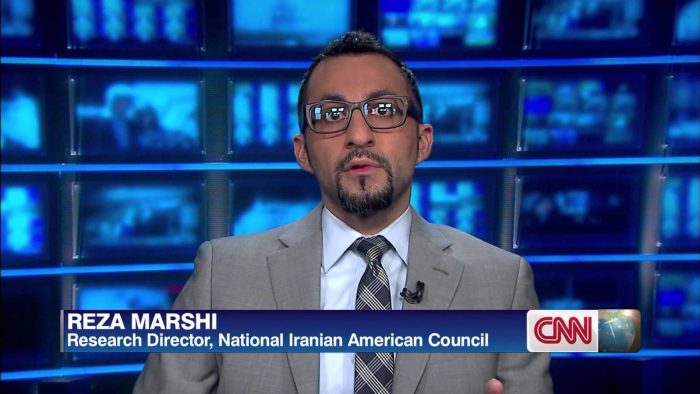
It’s latest contribution was a piece appearing on CNN authored by Trita Parsi and Reza Marashi who again attempt to portray the choices facing the new administration in regards to the nuclear agreement reached with Iran as an either or proposition of leaving it alone or ripping it up and risking grave consequences.

It’s a Hobson’s choice that the NIAC has become adept at: Follow our suggestion and everything will be fine, but dare threaten Iran and risk cataclysm.

The 800,000 people killed in the Syrian conflict so far at the hands of the Assad regime, Hezbollah and Iranian fighters would be hard pressed to agree with those choices.

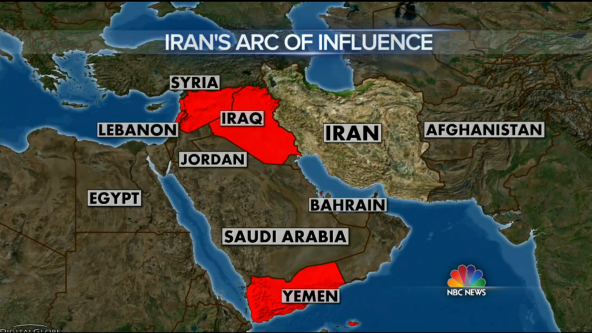
The Iranian regime has established itself clearly as uninterested in peaceful conflict resolution and instead has doubled down and gone all in using military force and violence in an effort to impose its religious will on its neighbors in Syria, Iraq and Yemen.

Parsi and Marashi argue that Trump should take the “political risk necessary to broaden the opening to Iran precisely to avoid replicating recent US policy failures in the Middle East.”

This may be the stupidest statement made yet by Parsi and Marashi.

Why on Earth would Donald Trump want to take a political risk on behalf of Iran, especially as he is already being assailed by the mainstream press and the political elites that turned their noses up at his candidacy (Parsi and Marashi included)?

Parsi and Marashi attempt to force the focus on the survival of the nuclear agreement with Iran when the issue has never been the agreement itself, but rather the behavior of the mullahs in Tehran.

No agreement is worth the paper it’s printed on if one of the participants in the agreement willfully ignores it right from the beginning. The fact that the Obama administration and European Union granted several waivers and exemptions right at the start made the agreement ineffectual and impotent.

During the campaign, Trump correctly focused not on the agreement itself, but the conduct of the mullahs after the agreement was reached. His criticism of the billions of dollars in cash released to Iran and its use in funding conflicts in Syria, Iraq and Yemen demonstrates he looked at the optics correctly, optics that Parsi and Marashi are trying hard to change now with their desperate lobbying campaign.

Parsi and Marashi attempt to frame the discussion around one of Trump’s biggest pledges which was to destroy ISIS and argue that “he cannot walk away or renegotiate the nuclear deal without undermining the coalition against the terror group.”

Unfortunately, Parsi and Marashi never acknowledge that Iranian regime itself is part of the axis of terrorist sponsors with its long-running support for Hezbollah and its sheltering of Al-Qaeda leaders in Iran after the U.S. invasion of Afghanistan drove them out.

They also incorrectly state that the Iran nuclear deal cannot be re-negotiated when in fact any agreement can be re-negotiated; a simple fact that the businessman in Trump knows full well. When you have a rotten deal on the table, it’s the idiot that accepts it as gospel. Trump is no idiot, much as Parsi and Marashi have claimed in the past.

Parsi and Marashi are correct when they characterize Iran as having “substantial latent power – population size and potential for wealth generation,” but miss the most crucial aspect of that power, which is “how will Iran’s leaders choose to apply it?”

Will clerical leaders such as Ali Khamenei and Hassan Rouhani seek to use that potential to improve the lives of ordinary Iranians? Of course not.

Iran’s economy has spiraled downward generating massive protests from small businessmen to school teachers, only to engender a broad and punishing crackdown on dissenters that have filled Iran’s prisons to capacity.

Will the Iranian regime seek to stabilize the Middle East and seek to reduce tensions and conflict? Absolutely not.

Iranian regime deepened the Syrian conflict and broadened it, while bringing Russia into the fight and setting the stage for a return to Cold War confrontations between the U.S. and Russian armed forces. Iran mullahs ignited the Yemen civil war with its clandestine military support for Houthi rebels and plunged Iraq back into sectarian conflict by raising Shiite militias in fighting Sunni insurgents tossed out of the power-sharing government of former president Nouri al-Maliki.

What is even more astonishing is Parsi and Marashi’s suggestion that the solution to the Middle East’s problems is to solve the “Saudi-Iran cold war”; an observation that is ludicrous given the fact that any solution to the current crop of problems in the Middle East starts and stops in Tehran.

Until Parsi and Marashi actually admit that Iran needs to curb its military adventures and support for insurgency and terrorism in order to advance the prospects for peace, nothing they say or write should be considered legitimate policy discussions and instead simply be viewed as propaganda for the mullahs in Tehran.

The quest for peace begins only when Tehran stops trying to rule its neighbors.

Laura Carnahan
Filed Under: Blog, News Tagged With: #NuclearDeal, Featured, hassan rouhani, Iran, Iran Mullahs, Khamenei, National Iranian American Council, NIAC, NIAC Action, Reza Marashi, Rouhani, Trita Parsi, Yemen

Next President Must Address Iran Regime Comprehensively

November 8, 2016 by admin

Next President Must Address Iran Regime Comprehensively

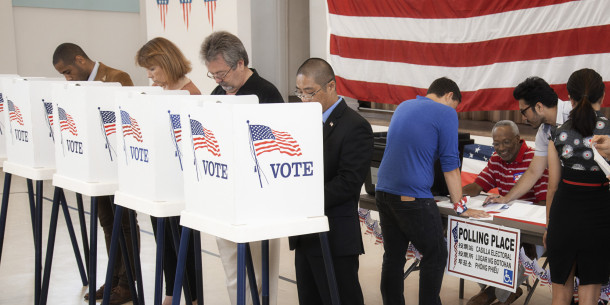
People voting in polling place

One of the great fundamental flaws in the negotiations over the Iran nuclear agreement was the concession to the mullahs in Tehran to unlink non-nuclear activities such as support for terrorism and human rights violations from the deal in an act of appeasement in the vain hope of moderating their behavior.

In the year since the agreement, the Iranian regime’s actions have proven those hopes to be false and the appeasement merely a reward for continued Iranian aggression. While that policy turned out to be a failure, the next president—be it Hillary Clinton or Donald Trump—will need to face the challenge of Iran with a more comprehensive approach.

The challenges facing the new president will be numerous and complicated. The current policies of trying to appease the Iranian regime have only made matters worse not only in the Middle East, but around the world.

It has also fractured what once was a globally united front against the Iranian regime which placed uniform and complete economic sanctions so effective that it threatened the mullahs hold on their regime and drove them finally to the bargaining table for the first time since this regime has been in power.

Unfortunately the nuclear agreement gave them a free hall pass and they have taken it to exploit it. The new president will find on his or her plate an Iran that:

  • Is at the center of the regions three major conflicts by supplying weapons, cash and fighters in Syria, Iraq and Yemen;
  • Those same conflicts have caused the greatest refugee crisis since World War II and radically reshaped the global flow of refugees and migrants and caused internal chaos throughout Europe, Africa and even the Americas;
  • Iranian regime is committed to expanding its extremism and made no attempts to conceal its agenda and willingness to use force to achieve it, including creating a Shia sphere of influence stretching from the Mediterranean to the Indian Ocean;
  • Is actively arresting and imprisoning dual-national citizens from the US and Europe for no reason other than to acquire new bargaining chips to exchange for even more concessions or ransom payments;
  • Forcing changes in alliances and partnerships that have created deep rifts for the US among traditional partners and allies such as Egypt, Israel, Saudi Arabia, Turkey, Jordan and the Gulf states; and
  • Imposed new and brutal crackdowns on human rights on the Iranian people, leaving a negative sentiment about the West, that continues to ignore that in its dealing with the regime.

The new president will also have to rebuild and forge a new consensus on to effective deal with Iranian extremism in the face of a rush by European, Asian and American firms to try and cash in on the perceived riches available in the Iranian marketplace; a perception that may prove just as illusory as the hopes for moderation.

At least one former hostage is working to remind whoever is elected to take a harder line against the Iranian regime. Barry Rosen, a survivor of the 1979 hostage crisis, serves as an advisory board member for United Against Nuclear Iran and penned an editorial for Time magazine.

“In this unusual presidential campaign cycle, we have seen a lack of substantive discussion about Iran and foreign policy from the candidates. This oversight comes at the most critical time in decades, with the nuclear deal well underway despite continued hostile behavior from the Iranian regime. It is imperative that the Presidential candidates and our policymakers in Congress understand that the Iranian regime that held my colleagues and me hostage has not reformed its ways,” Rosen writes.

“It’s likely that the next U.S. President will not be through the first 100 days of the administration before Iran is once again a problem that cannot be ignored. The nuclear deal has done nothing to bring about crucial change in Iran. And there is no more clear an example of this than Iran’s involvement in the Syrian crisis. The American government is foolish to ignore the growing threat that is Iran,” he added.

“The next President must acknowledge the realities of inner turmoil in Iran, and be prepared to take a hard line against Khamenei and his regime as they push the envelope. Regardless of who wins the Iranian elections in March, we already know the regime holds the power and has no intention of working diplomatically with the West. The fanciful notion that the nuclear deal would bring about better relations between our two countries has been dispelled; a new administration will have the chance to cast a spotlight on Iran for the bad global actor it is,” Rosen said.

Rosen’s admonitions for the next president are prescient and valid. He also raises the uncomfortable truth for many of those that originally supported the Iranian nuclear which is that the deal has become almost toxic to publicly support anymore.

Too many Americans recall the videos and photos showing American sailors forced to kneel at gunpoint from Iranian Revolutionary Guard Corps members, while anyone on Google can simply type in “Iran” and “executions” and see the regime’s justice system on gruesome display.

So for a new president the complexities of the Iranian problem will require stern action, as well as a deft hand in reassembling the global consensus that has been damaged over the past year as foreign companies look for dollars instead of relief for the long-suffering Iranian people.

No matter who is elected, we can only hope that dealing with Iran with more than hope and sentiment is on their agenda.

Michael Tomlinson

Filed Under: Blog, News Tagged With: #NuclearDeal, Appeasement policy, Featured, hassan rouhani, Iran, Iran Human rights, Iran Mullahs, Iran sanctions, Rouhani, Sanctions

Iran Regime Tries Claiming Victory Where There is None

November 3, 2016 by admin

Iran Regime Tries Claiming Victory Where There is None

Iran Regime Tries Claiming Victory Where There is None

It has been interesting watching the reaction of Iranian regime leaders to Michael Aoun’s election to the largely ceremonial post of president of Lebanon. From the statements and self-congratulations coming out of Tehran, you would have thought the head of Hezbollah, Hassan Nasrallah was the one elected.

For the people of Lebanon, the results are more akin to a yawner. For Lebanese, who are used to the historical game of musical chairs, the election of Aoun is not so much ground breaking as much as it simply puts a warm body in the chair of the presidency after a two year vacancy.

Antoun Issa, senior editor at the Middle East Institute and a former Beirut-based journalist, appropriately captured the sentiments of most Lebanese when he coined the phrase “Kullun haramiyyeh” which means “they’re all thieves” in describing the most common sentiment on Lebanon’s streets from its vendors and waiters to students and doctors.

“So when Michel Aoun, the maverick general-turned-politician, achieved his long-held ambition of becoming president on Monday, most ordinary Lebanese reacted with indifference. The new president is just another name, another title, and another episode in the country’s endless — and ultimately meaningless — political drama,” Issa writes in Foreign Policy.

“To become president, Aoun, the country’s main Christian leader, struck a deal with his longtime opponent, Saad Hariri, head of the rival Sunni Future Movement. As part of the deal, Hariri will now become prime minister. But for the deal to work, it also needed (and duly received) the approval of arguably the most powerful man in Lebanon — Hassan Nasrallah, the head of Hezbollah,” he added.

“For ordinary people, this is all a game of musical chairs. Such is the disconnect between the country’s political class and the people that the average Lebanese can’t tell the difference between having a president and not having one. Prior to Monday, Lebanon had, in fact, been without a president for two years — but this fact could not be discerned on the streets of Beirut. President or no, Lebanon has had no effective governance for decades,” Issa said.

More importantly, the long-term strategy of Hezbollah is to so weaken the Lebanese government that it cannot provide basic government services such as education, food, healthcare and security and thus remain the dominant political and military power by dispensing these services to the country’s large Shiite population.

It’s a recipe that the mullahs in Tehran have practiced well by keeping the Iranian people dependent on the largesse of the Iranian regime and not allowing the full economic benefits of what should be a powerhouse economy trickle down to the people.

This Iranian regime game plan of claiming victory where there is none is a tried and true tactic. Even as the Iranian people march, protest and demonstrate against rigged elections, government corruption or shortages of food and job opportunities, the mullahs continue to flog the idea of victories to keep the perception alive they know what they are doing.

The problem with maintaining control with essentially a lie is that it is a fragile form of control subject to toppling even by small acts of defiance. For the Iranian regime this means it cannot tolerate even the smallest inklings of dissent, which is why the mullahs so ruthlessly pursue members of the Iranian resistance movement and arrest Iranians on the slightest provocations.

It is why even dress code violations such as women failing to wear a hijab or students posting selfies on Instagram are met with beatings and arrests.

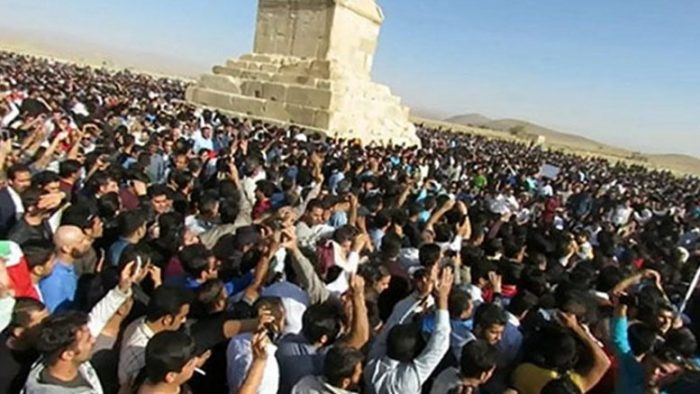
This past Friday saw another of these instances when regime authorities arrested organizers of a rally held at the tomb of the ancient Persian King Cyrus the Great in Pasargadae, Iran.

Breitbart News previously reported that protesters chanted slogans like, “Iran is our country, Cyrus is our father,” “clerical rule is synonymous with only tyranny, only war,” and “freedom of thought cannot take place with beards,” a reference to the theocratic leaders currently in power.

According to Reuters, there was no indication as to how many of the event’s organizers had been arrested. However, a judiciary official reportedly said on Monday Iran’s intelligence and security forces have placed the organizers of the event under close surveillance and that they will face prosecution.

Prior to the October 28 protest, members of the regime’s Revolutionary Guard Corps (IRGC) and other Iranian authorities attempted to thwart the impending rallies by spreading rumors that officials had completely shut down the city, canceling tours to the site, sealing roads to Pasargadae, and shutting down the Internet.

Those actions did not deter the protesters, which consisted mostly of youth and individuals under the age of 35, from carrying out their rally.

The mere existence of such protests are dangerous for the regime, but also provide ample evidence for the rest of the world of the fragility of the mullahs’ rule which is why the international community needs to confront their extremism more forcefully.

Alex Carlile, a Liberal Democrat member of the United Kingdom’s House of Lords and co-chairman of the British Parliamentary Committee for Iran Freedom, challenged the United Nations to hold the regime accountable in an editorial in the Washington Times.

“The Iranian regime has imprisoned a British charity worker and sentenced her to five years’ imprisonment on bogus national security charges,” he writes. “The case of Nazanin Ratcliffe has shocked the British public as it has unfolded over the past six months, since she was arrested by regime officials when she attempted to fly back to England after taking her daughter, Gabriella, to visit her parents.”

“However, this is only the latest in a long line of human rights abuses by Tehran. Earlier this year, a leaked audio file provided further proof of the complicity of top-level regime members in a 1988 massacre, which killed 30,000 political prisoners, including juveniles and pregnant women,” Lord Carlile added.

Lord Carlile writes the main targets of these murders were members of the opposition movement People’s Mojahedin Organization of Iran (PMOI, or MEK), although the regime also executed relatives of members or casual supporters as well as other dissidents.

Nothing so incenses the regime than the continued efforts of the Iranian resistance to educate the world about these massacres and other human rights violations because they ultimately point out the hollow and empty “victories” the regime trumpets.

Michael Tomlinson

Filed Under: Blog, News Tagged With: Featured, hassan rouhani, Hezbollah, Iran, Iran Economy, Iran Human rights, Iran Mullahs, IRGC, Lebanon, Saad Hariri

Is the Iran Regime Trying to Conquer the World?

October 27, 2016 by admin

Is the Iran Regime Trying to Conquer the World?

Is the Iran Regime Trying to Conquer the World?

Is the Iranian regime trying to conquer the world or does it simply want to carve out its own little protected niche in the world?

That seems to be the basic question confronting the rest of the world. For the Obama administration and many of the supporters of the Iranian regime, the focus was solely on the nuclear issue and ignored virtually every other aspect of the regime’s behavior that has troubled the world for the past three decades.

Dealing only with the nuclear issue is like negotiating with a serial killer to get rid of his use of handguns, but allowing him to keep his knives, flamethrowers and lock picks. Ultimately the behavior never changes and he is free and emboldened to do whatever he pleases. Such is the state we face with the Iranian regime today.

Now the world is witnessing a regime that is literally on a binge of dangerous behaviors, like someone with an eating disorder staring at a buffet table, the mullahs in Tehran are licking their lips at the banquet table being laid out before them.

A hallmark of that new militant behavior has been the arrests of dual national citizens and their subsequent sentencing to harsh prison terms without benefit of trial or even legal counsel. Three Americans were sentenced this way over the past week, with Reza “Robin” Shahini of San Diego, California receiving an absurd 18-year prison term.

“They’re bargaining people’s lives as if they’re trading Persian carpets,” said the Carnegie Endowment for International Peace. “Oftentimes, these almost comically harsh sentences are simply meant to increase the value of these prisoners in the event of any quid pro quo with the United States.”

For the mullahs, these hostages do have value. In the case of four Americans released last year with the nuclear agreement, they were worth $1.7 billion in cash.

Not a bad payday for Iran.

But what seems to be at work in the larger context of international affairs is the almost bipolar nature of how Iran is dealing with the world and vice versa.

On the one hand, the Iranian regime is taking hostages, ramping up its participation in three widening wars in Syria, Iraq and Yemen. It is smuggling arms, cash and men, which ironically end up getting used against other countries.

In Yemen, that means Iranian-purchased Chinese cruise missiles fired at US Navy warships.

In Syria, that means Iranian fighters and Afghan mercenaries and Iraqi Shiite militias being ferried in via Iranian airlines to fight against US-backed rebel forces.

In Iraq, it means Iranian-backed Shiite militias leading purges in Sunni villages liberated from ISIS and broad control over Iraq’s foreign policy with its Turkish neighbors.

  1. Todd Wood in the Washington Times also explains Iranian regimes avarice to secure a land corridor from the Iranian border to the Mediterranean to be able to have access to Arab lands, North Africa, and Europe in order to expand its terrorism through Iranian proxy forces and militias in Iraq and Syria.

“The operation seems to be headed by the Iranian Revolutionary Guards and their General Qassem Soleimani who has also visited Moscow multiple times in violation of United Nations sanctions. He is coordinating the actions of Iran proxy forces in Iraq and Syria,” he writes.

Iranian regime is feverishly working on these plans, while at the same time it is busy opening itself up to Western investment and partnerships commercially.

As Thomas Erdbrink writes in the New York Times, the disconnect between the two halves are actually part of a larger, carefully orchestrated plan; a plan that the Obama administration and sympathetic EU nations seem oblivious to.

“What would seem to be a puzzling contradiction is in fact a carefully thought-out, two-track policy being pursued by the supreme leader, Ayatollah Ali Khamenei, and the circle of leaders around him,” he writes.

“Iranian generals are directing the ground war in Syria. Iranian advisers are training Shiite militias fighting in Iraq and Syria. Iranian arms and other support help the Houthi rebels in Yemen.

“In addition to sanctioning the country’s more aggressive military footprint in the region, Ayatollah Khamenei regularly issues broadsides against the United States, promising there will be no softening of Tehran’s stance against the Great Satan, while quietly opening the door to Western capital and expertise,” he adds.

“In Mr. Khamenei’s view, we should be like China,” said Hamidreza Taraghi, an analyst with close ties to the hard-liners. “Have economic relations with the West, but without their political influence and neo-colonization.”

Thus, visa restrictions have been eased and foreign investment policies relaxed, while Iranian diplomats are spreading a message of Iran as the last major untapped market in the world.

But unlike China, Iran’s interests are not solely commercial and economic. It is more than willing to use military force to achieve its religious goals which stands in stark difference to China; essentially an atheist state.

For Khamenei and Rouhani, improvement in the economic status of the Iranian people is paramount to keeping their hold on power. Unless they can improve their quality of life, the street protests of 2009 are going to look like a picnic compared to March of 2017; Rouhani’s re-election bid.

Michael Tomlinson

Filed Under: Blog, News Tagged With: Featured, hassan rouhani, Iran, Iran Human rights, Iran Talks, Iran Terrorism, IRGC, Khamenei, Rouhani

Hassan Rouhani Comments on US Election Despite Troubles Ahead

October 24, 2016 by admin

Hassan Rouhani Comments on US Election Despite Troubles Ahead

Hassan Rouhani Comments on US Election Despite Troubles Ahead

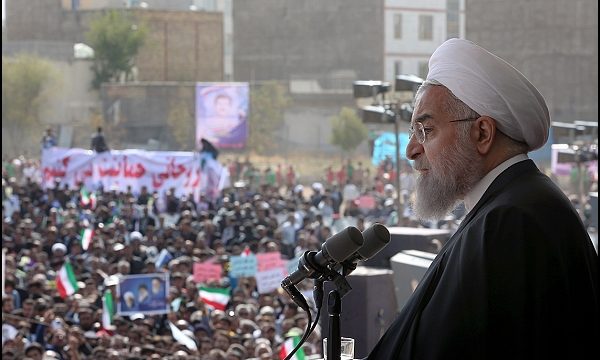
Hassan Rouhani addressed a crowd in the Iranian city of Arak and deplored what he called a “lack of morality” in the US presidential campaign and mocked the recent presidential debates in the his first public comments on a race to elect the next president who will have to decide to confront growing Iranian extremism.

“We have seen the way the (US presidential) candidates speak, accuse and mock (one another); and this is the American democracy and election,” Rouhani said.

Rouhani’s comments followed similar critical remarks made by top mullah Ali Khamenei who also lashed out at both Hillary Clinton and Donald Trump.

“The (ongoing) election campaigns in America and issues raised by the two candidates constitute a clear and evident example of the consequences of lack of spirituality and faith among those in power,” Khamenei said this weekend.

“During the coming weeks, one of these two candidates of America’s (presidential) election, whose remarks and condition you observe, will become the president of a country which has power and wealth and the biggest amount of nuclear weapons as well as the biggest media in the world,” he added in regime-controlled media.

The ramp up in comments by Khamenei and Rouhani indicate a new level of interest and worry by the Iranian regime as the sun sets on the Obama administration which has pursued a policy of appeasing the regime through the nuclear deal, lifting of economic sanctions and payment of ransom to gain the release of American hostages.

For the mullahs in Tehran the upcoming election is worrisome since both candidates have been especially harsh in condemning actions of the Iranian regime such as its long-running support for the Assad regime in Syria and the continued arrests of Iranian-American dual nationals.

The fact that Rouhani and Khamenei are wrestling with a stagnant economy, restless population, skyrocketing youth unemployment and the drain of maintaining three separate proxy wars in Syria, Iraq and Yemen, has threatened their hold over power, which has forced them to pursue an even harsher crackdown on human rights at home to prevent dissent.

The uncertainty of what a new US president will do in regards to Iranian policy has also trickled down to foreign banks and potential investor putting a hold on future investments until next year.

One can almost feel the sweat bead up on Rouhani’s forehead again.

It is ironic though to see Rouhani and Khamenei weigh in on the US election given the handling of their elections.  The Iranian regime historically has rigged its own elections as to make any outcome other than the one desired by the mullahs as moot.

The “stolen” election of 2009 that saw unpopular Mahmoud Ahmadinejad re-elected in a contest widely viewed as fraudulent is just one example. Another was the election of Rouhani himself in which all potential opponents were cleared off the ballot by a committee hand-picked by Khamenei.

The creation of the Iran lobby through organizations such as the National Iranian American Council helped facilitate the false perception that Rouhani was a “moderate.” Fortunately the world has had the benefit of seeing Rouhani in action—especially the year following the nuclear agreement—and has come to the realization that the Iranian regime is not interested in truly becoming a moderate nation.

Rouhani’s comments are even more ridiculous when you consider statements made by Ali Akbar Velayati, a key foreign policy advisor to Khamenei with Iran’s al-Alam television network, in which he claimed the regime opposed interference in the internal affairs of other countries.

“Iran opposes interference by any country, including Turkey or others, in the internal affairs of another country,” he said, adding that the domestic affairs of any country are its own concern.

The regime official rejected claims that Iran is interfering in the affairs of Iraq and said Tehran only provides Baghdad with military consultation at the request of the Arab country’s legitimate government, according to the regime’s PressTV.

The audacity for the regime to peddle such an obvious lie is amazing since the Iranian regime has almost gleefully inserted itself into the internal affairs of its neighbors in Syria and Iraq to a point where Syrians and Iraqis have openly complained of an Iranian takeover of their governments.

The regime’s use of terrorist proxies such as Hezbollah to carry out attacks and bombings in places such as Saudi Arabia, Lebanon, Afghanistan and even Argentina point out how far the mullahs are willing to go to meddle in other countries’ affairs.

Even the use of cyberhackers within the Revolutionary Guard Corps to attack US and European computer systems demonstrates the level of willingness to interfere in virtually all aspects of other nations’ affairs.

It’s now clear that the policy of appeasement of the mullahs to help “moderates” in Iran has failed, and the next president must define a firm policy towards the mullahs in Iran, if it wants to prevent the spread of terror and extremism in the region.

Michael Taylor

Filed Under: Blog, News Tagged With: #NuclearDeal, Appeasement policy, Featured, hassan rouhani, Iran, Iran deal, Iran Human rights, Iran Mullahs, NIAC

Iran Regime Pushes Oil Contracts to Raise Cash for Wars

October 19, 2016 by admin

Iran Regime Pushes Oil Contracts to Raise Cash for Wars

Iran Regime Pushes Oil Contracts to Raise Cash for Wars

The Iranian regime’s Hassan Rouhani put out the invitation to a select group of high-powered investors to come visit the regime in the hopes of garnering new investments to help jump-start a stagnant economy that has only gotten worse after promises for improvements by Rouhani proved false after the nuclear agreement. Rouhani did not mention anything about the dual citizens who will end up in prison for a cash ransom.

Rouhani’s invite went to the 20-20 Investment Association, a group of influential investors overseeing $7 trillion of assets, much of it though is held within government-run pension funds which are prohibited by many state laws from investing in Iran because of its support of terrorism. This includes some of the biggest pension funds run by California, New York and Texas.

James Donald, head of emerging markets at Lazard Asset Management, the US fund company that oversees $174 billion of assets, and a board member of the 20-20 association, said the invitation reflected the Iranian regime’s desire to attract more foreign investors.

Donald said: “The group at this stage has not accepted the invitation. An awful lot of large government pension plans have restrictions on Iranian investments and [on] any company that does business in Iran. There is talk of [the remaining sanctions being removed]. I think there would have to be a federal law change [for banks and asset managers to move en masse into the Iranian market].”

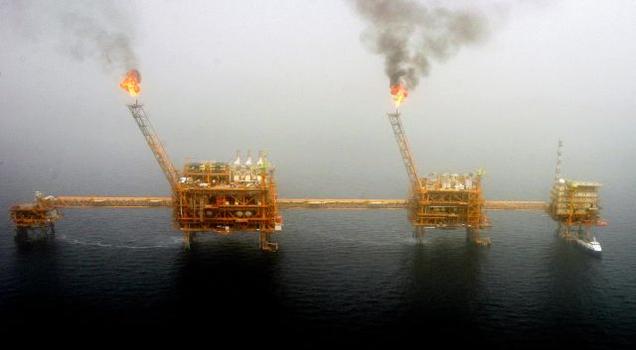
In addition Rouhani’s pleas, the regime-controlled National Iranian Oil Co. issued a request for bidders to invest in Iran’s slumping oil industry which powers much of the regime’s overseas and military activities.

The Iranian regime wants to attract more than $100 billion in investment to increase its oil production by 1 million barrels a day by the start of the next decade and raise its current oil output of 3.63 million barrels a day under a compromise agreement reached with other oil producing countries.

The mullahs in Tehran are anxious to try and diversify its investors because in the prior decade of sanctions imposed stemming from its illicit nuclear weapons program, the only dominant investor willing to ignore Western sanctions was China. In many cases, Iran’s oil, telecommunications, manufacturing and other heavy industries are run almost entirely by Chinese workers and managers.

According to the Chicago Tribune, Western investors have been slow to arrive. That’s especially true in the energy sector, where pressure to increase production is intense. Elsewhere, Western clearing banks still refuse to do business with Iran for fear of falling foul of non-nuclear U.S. sanctions that remain in effect, meaning Western companies can’t raise project finance.

This has created intense pressure on the mullahs to find some way to bring in foreign dollars to modernize its antiquated oil industry in order to get more oil out of the ground and sold to bring in hard dollars to fund three widespread wars Iran is now fighting in Syria, Iraq and Yemen.

The regrettable end game for the mullahs is to rip off Iran’s natural resources not for the benefit of the Iranian people, but rather fund the Islamic revolutionary expansion they are pushing abroad.

Recognizing the limitations of sanctions still in place, in spite of recent moves by the Obama administration to further accommodate a regime threatening to walk away from the nuclear deal in order to extort more concessions, the Central Bank of Iran announced it had informed banks throughout Iran that any failure by non-American banks to provide dollar-related services to Iranians would be “unacceptable” according to regime-controlled media.

“Providing dollar-related services [to Iranians] will no longer expose non-American banks to the risks of sanctions provided that they stay clear of US financial system,” the CBI said in its statement.

“Therefore, non-American banks cannot use US sanctions against Iran as an excuse for refusing to provide dollar-related services to Iranian individuals and entities.”

It is a desperate statement to make since Iran is not the final arbiter of what is and is not allowed under existing sanctions still in place, but the regime is so desperate for cash it is bullying financial institutions into handling US currency in order to get the flow of cash moving through Iran again.

It’s an explicit warning aimed especially at European and Asian banks who have been reluctant to engage in US currency exchanges with Iran for fear of running afoul of US officials, especially since there is significant uncertainty with the upcoming presidential election virtually guaranteeing a change in policy towards Iran come next January.

All of which highlights the futility of the promises and claims made by the Iran lobby following the nuclear deal in which leading supporters of the regime such as the National Iranian American Council promised a more moderate Iran willing to work to end the series of conflicts in the Middle East.

Instead, the world has amply seen the exact opposite with the breaking out of a shooting war between the US Navy and Iranian-backed Houthi forces in Yemen, the ferrying of thousands of Iranian-backed Shiite militias from Iraq into Syria via Iranian airlines to fight for the Assad regime.

The rapid escalation in fighting in these countries is draining the regime’s treasury in spite of the billions of dollars it received as part of the hostage exchange of Americans and the release of frozen assets back to the Iranian regime.

The mullahs squandered those funds and it seems that they are now rapidly trying to squander billions more in foreign investment.

By Michael Tomlinson

Filed Under: Blog, News Tagged With: #NuclearDeal, Featured, hassan rouhani, Iran, Iran Lobby, Iran Mullahs, Iran sanctions, Iran Terrorism

How Did the Iran Nuclear Deal Become a Partisan Talking Point?

October 6, 2016 by admin


How Did the Iran Nuclear Deal Become a Partisan Talking Point?

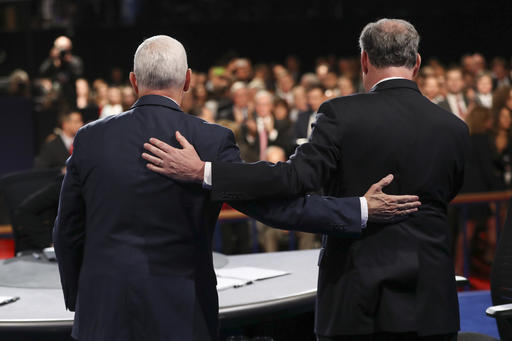
Republican vice-presidential nominee Gov. Mike Pence and Democratic vice-presidential nominee Sen. Tim Kaine stand after the vice-presidential debate at Longwood University in Farmville, Va., Tuesday, Oct. 4, 2016. (Joe Raedle/Pool via AP)

Last night’s vice presidential debate had its usual highs and lows, sprinkled with verbal fisticuffs and even some thoughtful answers, but the most interesting tidbit that came through was the sharp disparity over the Iran nuclear deal in which Democratic running mate, Sen. Tim Kaine (D-VA) all but gushed over the deal’s alleged stoppage of nuclear weapons versus Gov. Mike Pence’s (R-ID) blistering retorts against it.

Putting aside the relative merits of each side’s arguments, the larger question that needs addressing is “how did the nuclear deal ever become a partisan talking point?”

In many ways, it’s lamentable and regrettable that it has gotten to this point. For much of the past three decades both parties have been uniformly united over confronting Iran. That lock-step solidarity is what has driven the vast majority of successes against the Iranian regime such as the imposition of stiff sanctions following the crackdown on demonstrators to the stolen 2009 presidential elections.

Even top mullah Ali Khamenei recognized the terrible blows to the regime’s economy that resulted from those bipartisan sanctions when he summarily decided that the regime needed a new “moderate” face to win back international support after a deplorable eight years of Mahmoud Ahmadinejad.

The regime also recognized that in putting forth a “moderate” face, it had to cobble together a better lobbying effort to drive wedges in the united political front America and its allies had presented for much of the regime’s existence.

Those twin goals led to Hassan Rouhani’s selection and the creation of lobbying groups such as the National Iranian American Council and its offspring, NIAC Action.

Happily for the mullahs, the Obama administration was looking for a foreign policy win to close out its term having been unable to solve the puzzle of wars in Iraq and Afghanistan and the rising tide of Islamic extremism that sprang forth from the Syrian civil war and Iranian regime’s use of terror proxies throughout the region.

It was an unfortunate decision because it enabled the Iran lobby to begin driving that wedge between Democrats and Republicans and shaping a message that if you supported Iran deal you were for peace and if you were against Iran deal you had to be for war.

Most Democrats frankly didn’t buy it as leading members of Congress such as Sen. Robert Menendez (D-NJ), Sen. Ben Cardin (D-MD), Sen. Chuck Schumer (D-NY) and Rep. Eliot Engel (D-NY) opposed the Iran nuclear deal, but the Iran lobby worked furiously to try and shape the debate as a Democrat vs. Republican one when in fact it wasn’t.

For other Democrats, the choices were simpler in which they chose party loyalty in an election cycle, many privately hoping to impose additional sanctions after the presidential elections.

In fact, in the year since the Iran deal was approved, and the mullahs have showed their true nature with the widening of the wars in Syria, Iraq and Yemen, as well as the renewed crackdowns and human rights violations at home and escalation of its ballistic missile program, many of these same Democrats have offered up new proposals to impose new watchdogs or sanctions on Iranian regime.

Coupled with the fact that the mullahs have obliged by going on a binge of militant and aggressive acts including threatening US warships in the Persian Gulf and snatching up even more dual nationals for future hostage swapping, it is almost certain that after the November elections, the US will once again present a united front in confronting Iranian regime’s extremism.

But that prospect hasn’t stopped the Iran lobby from desperately trying to make Iran a partisan issue as NIAC head, Trita Parsi was busy tweeting out his enthusiastic support for Kaine’s comments in support of the nuclear deal, probably had to make many Clinton supporters cringe slightly.

In regards to the actual facts surrounding the nuclear deal, the media fact checkers waded through the statements and found some by Kaine to be slightly wanting of clarity.

From the Washington Post: “The deal, which has been sharply criticized by Republicans, did increase the amount of time that Iran would need to build a nuclear weapon by reducing its centrifuges for uranium enrichment and its stockpile of enriched uranium. But the deal expires in 15 years, and Iran’s nuclear infrastructure remains in place.

“While Iran has insisted it has no interest in building nuclear weapons, the deal does not eliminate the risk that it will obtain nuclear bombs.”

The New York Times called the claim that the Iran nuclear deal eliminated Iran’s nuclear weapons program an “exaggeration.”

A report released this September by the Institute for Science and International Security found that the deal will also allow, through an exemption, Iran to keep 50 tons of heavy water and “continue operating 19 ‘hot cell’ radiation containment chambers.”

Possessing materials such as enriched uranium and heavy water does not necessarily mean Iran will have the capacity to restore its nuclear program. The deal will not allow nuclear inspectors to confirm, however, whether or not Iran is complying with the deal. Iran got negotiators to agree that no U.S. nuclear inspectors will be allowed on Iranian soil, according to Breitbart News.

Ultimately, the issue of containing and confronting the Iranian regime has historically been a bipartisan effort. We hope that after November, it once again becomes bipartisan.

By Michael Tomlinson

Filed Under: Blog, News Tagged With: #NuclearDeal, Featured, hassan rouhani, Iran, Iran deal, Iran Human rights, Iran Lobby, Iran Mullahs, Iran sanctions, Iran Terrorism, National Iranian American Council, NIAC, Trita Parsi

Iran Regime Inks Oil Deal Benefiting Khamenei

October 5, 2016 by admin

Iran Regime Inks Oil Deal Benefiting Khamenei

Iran Regime Inks Oil Deal Benefiting Khamenei

The Iranian regime signed its first oil production deal under a new less restrictive model that it hopes will boost its production output in spite of a new agreement with other oil producing nations to curb production in an effort to boost sagging oil prices worldwide.

The clincher is that the Iranian oil ministry’s news agency Shana said the government had signed a $2.2 billion contract with a unit of Iranian company Tadbir Energy, which is controlled by a religious foundation overseen by top mullah Ali Khamenei, according to the Wall Street Journal.

The regime hopes its new Iran Petroleum Contracts (IPC), part of an effort to sweeten the terms it offers on oil development deals, will attract foreign investors and boost production after years of sanctions.

The National Iranian Oil Company also signed a contract with Persia Oil & Gas Industry Development Co., an Iranian firm, according to Reuters. The U.S. Treasury Department named Persia Oil & Gas in 2013 as part of Setad Ejraiye Farman-e Emam, or Setad, a secretive and powerful organization overseen by Khamenei.

With stakes in nearly every sector of Iran’s economy, Setad built its empire on the seizure of thousands of properties belonging to religious minorities, business people and Iranians living abroad, according to a 2013 Reuters investigation, which estimated the network’s holdings at about $95 billion. (reut.rs/1g1qkCg)

The U.S. Treasury in 2013 sanctioned Setad and 37 companies it said it oversees, calling it “a major network of front companies controlled by Iran’s leadership.” Those sanctions were lifted in January, as part of the historic nuclear deal reached between Iran and world powers in 2015.

The deal, the first to be clinched under new improved terms for oil companies, is aimed at increasing output from four fields located near the Iraqi border to 260,000 barrels a day, compared with 185,000 barrels a day previously.

The deals target an increase in overall output to 5.7 million barrels a day by the end of 2020, compared to only 3.6 million barrels a day reached just last August. The increase in production is being allowed under an exemption granted to the Iranian regime by the Organization of Petroleum Exporting Countries (OPEC), which may threaten the long-term prospects of the reduction deal.

Ali Kardor, the head of the National Iranian Oil Co., said Monday that Iran intended to return to the market share it held before international sanctions, implying a production level of over 4 million barrels a day.

The near-desperate desire by the regime to hit the increased production levels reflects the mullahs need to gain market share and sell aggressively in order to bring badly needed revenue back into the regime’s bank accounts, which have been largely drained dry through its support of the prolonged wars in Syria, Iraq and Yemen.

The United Nations special envoy for Syria previously estimated the Iranian regime’s support for the Assad regime in Syria topped a whopping $6 billion annually alone, with other analysts estimating the total Iranian support for Syria more than double that amount to $15 billion in military and economic aid in 2012 and 2013.

By signing the first deal under this new IPC structure, the regime hopes to entice foreign oil companies to return to Iran and invest in the development of these fields. Previously, foreign firms were reluctant because of buy-back contracts that only benefitted the regime and often left foreign operators with little to no profit.

The push to boost production is also seen as an attempt by Hassan Rouhani to boast of better economic news as he prepares to run for re-election in next year’s presidential election. Iran’s economy has remained stagnant even after the completion of the nuclear deal last year in which Rouhani promised significant economic benefits that have failed to materialize.

The lack of economic improvement for ordinary Iranians have led to renewed discontent in the form of protests by large sectors of the Iranian economy; from teachers protesting low wages to small business owners chafing under poor sales and workers angry over inflated salaries for high-ranking regime officials.

The inclusion of the first oil deal with a firm under the control of Khamenei also signals that the regime’s leadership is still in primary control over Iran’s future and alongside the Revolutionary Guard Corps, virtually every sector of the Iranian economy is controlled by the regime’s leadership.

That belief in the re-opening of the oil markets to Iranian oil may also be behind the recent snub of the German Economy Minister Sigmar Gabriel who was in Tehran on a high profile visit, but took the opportunity to urge the Iranian regime to pursue reforms at home and act more responsibly in Syria.

He also said Iran, which provides economic and military support to Syrian President Bashar al-Assad, should help push for a ceasefire in Syria’s civil war, adding: “I think Iran knows its responsibility there.”

His comments did not go over well with Iran’s parliament speaker, Ali Larijani, who opted to skip a meeting with the German cabinet member in a display of annoyance over the criticism.

Sadeq Larijani, brother of the parliament speaker and head of Iran’s judiciary, criticized Gabriel on Monday for his comments. “If I were in the government’s position or in the foreign minister’s shoes I would never let such a person come to Iran,” he said.

As Iran tries to re-enter the global markets, it should be ready for even more criticism as the world takes greater notice of the regime’s policies and practices.

Ultimately, Iranian mullah’s desire to regain a spot on the global stage may eventually make it once again even more vulnerable to new sanctions for its bad behavior.

By Michael Tomlinson

Filed Under: Blog, News Tagged With: Featured, hassan rouhani, Iran, Iran deal, Iran Mullahs, Iran sanctions, Iran Talks, Iran Terrorism, Khamenei

Iran Regime Killing Environment Like Its People

October 3, 2016 by admin


Iran Regime Killing Environment Like Its People

Iran Regime Killing Environment Like Its People

The Los Angeles Times ran a story examining the deteriorating plight of Iran’s agricultural industry and state of its environment in general; both of which are spiraling downward as dismally as human rights for the Iranian people.

The Islamic paradise promised by the mullahs when they hijacked the Iranian revolution three decades ago, has not come to pass and in its place is a land that has grown parched, where crops have died and entire communities are on the brink of collapse.

Iran’s worsening water crisis has spread desperation across this parched farm belt. Families watch sons leave the villages to hunt for scarce work in the cities. Crops are abandoned. The elderly and infirm forego medical care because they barely have enough money to survive, the Times said.

Iran’s farmers have struggled with several successive years of drought. But environmental mismanagement, water overuse, the pressures of population growth and a government more concerned with security and economic challenges have exacerbated Iran’s agricultural problems, the Times added.

In June, Iran’s Meteorological Organization said 72% the country’s 80 million people were living in “prolonged drought” conditions. Lakes are drying up and cities like Tehran have considered rationing water.

All of which points a devastating picture of how poorly the mullahs have managed the precious natural resources of the country for its people, but that insensitivity to the environment goes all the way back the founding of the Islamic Republic.

The late Ayatollah Ruhollah Khomeini, founder of the Islamic Republic, once told an aide who worried about inflation that Iran’s 1979 revolution “was not about the price of watermelons” — meaning it stood for loftier goals such as economic equality and redistribution, said the Times.

Khomeini’s successors, today’s leaders such as Hassan Rouhani and Ali Khamenei, have even less regard for the environment as they pour billions of dollars into three wars in Syria, Iraq and Yemen and steer the billions in unlocked assets resulting from the nuclear deal to go on a military shopping spree to buy fighters, missiles, ammunition and bombs.

The situation is so dire in many of Iran’s heartlands that many Iranians don’t know what to do next and the regime has been unresponsive to all of their entreaties for help.

In Qiyasabad, residents now must dig as deep as 500 feet to find water. The Hablehrood river, which flows down dun-colored hills to the north, is too salty to use for irrigation, they say. Most farmers still flood their fields to irrigate crops, which is terribly wasteful.

“Ten years ago, I swear, our water was fresh and plenty,” said Karim Baluchi, 54. “Ten years ago I had a decent life.”

He and half a dozen co-owners asked the government this year for a $6,000 loan for a new well and water pump. No one has responded, he said.

According to the Times article, last June, a senior cleric raised eyebrows when he said the drought was caused by women failing to wear appropriate Islamic dress; a clear example of how backwards the mullahs view their nation’s problems.

That lack of concern over Iran’s crumbling environment extends to some of its greatest treasures, including the Asiatic cheetah, otherwise known as the Iranian cheetah, a subspecies of the world’s fastest mammal that exists only within Iran and is on the verge of extinction.

According to the Los Angeles Times, Bahman Jokar, head of the cheetah desk at Iran’s environmental agency, said about 50 cheetahs are believed to remain in Iran’s central deserts – a population so small that to save it requires emergency measures.

“Unfortunately our government and parliament have other top priorities and saving the Asiatic cheetah is not the top one,” Jokar said in a rare bit of candor from an Iranian official over how dire the situation is for the big cats which are deeply rooted in Persian culture and the history of the country going back more than ten centuries.

It’s worth noting that the Caspian tiger and Persian lion, two other species of big cats native to Iran have already gone extinct under the Iranian regime.

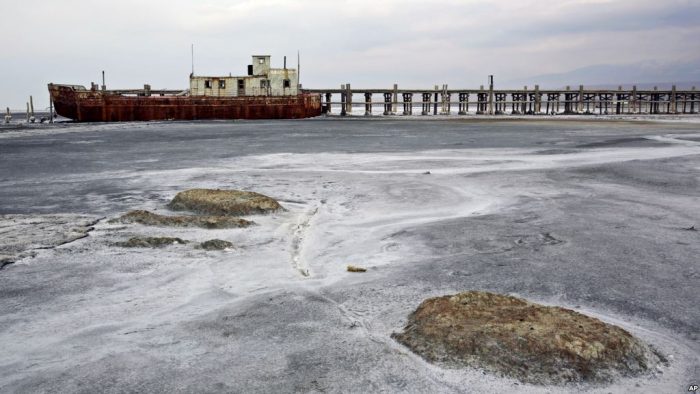
The gross mismanagement and disregard for Iran’s environment by the ruling mullahs extends to the perilous condition of Lake Urmia, the largest lake in the Middle East and sixth-largest saltwater lake in the world which has shrunk to 10 percent of its former size due to damning and overpumping of groundwater.

Even though Rouhani has made continued promises to save Lake Urmia for the cities in Iran that depend on its water, but little has been done and the damage may be irreversible according to environmentalists.

In an article in The Guardian, researcher Shirin Hakim and water management expert Kaveh Madani at the Centre for Environmental Policy of Imperial College, London, described Urmia’s surface as “an area facing a high risk of salt storms.”

The article pointed out that the shrinking of the lake has diminished a fragile ecosystem, with the gradual disappearance of native wildlife including the brine shrimp Artemia and migratory birds like flamingos and pelicans. Such degradation threatens dire economic consequences.

One of the main factors contributing to the state of Lake Urmia is the interference in the natural flow of water into the lake by over 50 dams. The damage has been compounded by unregulated withdrawal of water, water-intensive irrigation and the unsustainable use of fertilizers.

Even as Iran’s environment is destroyed and slowly turned into a wasteland, the mullahs and Rouhani are desperately working on an oil agreement with OPEC to allow it to pump even more oil to sell on the market in order to make up the enormous costs of fighting the Syrian war and keep the Assad regime afloat.

The irony is inescapable and so is the responsibility for this environmental catastrophe which rests on the mullahs in Tehran.

By Laura Carnahan

Filed Under: Blog, News Tagged With: Featured, hassan rouhani, Iran, Iran Human rights, Iran Mullahs, Khamenei, Syria

US Presidential Election Concerns Iran Regime

September 30, 2016 by admin

US Presidential Election Concerns Iran Regime

US Presidential Election Concerns Iran Regime

The sunset is fast approaching on the Obama administration, and with it will come significant changes in the US foreign policy approach to the Middle East and Iran in particular. The mullahs learned their lesson from the two disastrous terms of Mahmoud Ahmadinejad who made it easy to caricature the regime as slightly crazy and evil.

Their manipulation of the election ballot in 2013 assured Hassan Rouhani’s election and helped assist the Iran lobby in trying to project an image of moderation to the West; even though Rouhani’s first term has actually been bloodier than Ahmadinejad’s ever was.

Rouhani has outpaced Ahmadinejad with an unprecedented wave of executions and mass hangings that is approaching 3,000, including women and children according to Amnesty International. His crackdown on religious minorities, journalists, dissidents, artists and students has rivaled the abuses of the infamous 2009 protests.

With the upcoming election of a new US administration, the mullahs are intensely interested in the election outcome, as well as preparing the ground to keep the policies of appeasement rolling in exchange for the false hope that Iran will curb its nuclear ambitions.

The deployment of the Iran lobby has been largely aimed at helping Senators and candidates deemed favorable and supportive towards the nuclear deal, as well as continue coaxing journalists to view the Iranian regime with less than suspicion.

Meanwhile in Iran itself, regime news outlets have been giving considerable space and airtime to the presidential campaign, especially with the rhetoric rising sharply about the effects of the nuclear deal and the best approach needed by a new president to restrain and control the Islamic state.

There is no doubt that Americans and Europeans are anxious about the state of the Middle East, especially the three wars being waged with deep support from the Iranian regime in Syria, Iraq and Yemen, which have contributed to an unprecedented wave of refugees flooding into Europe and the US.

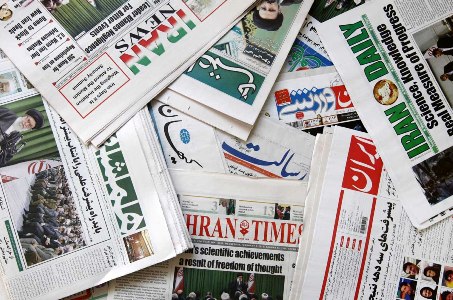
Javan Online, the daily newspaper close to Iran’s Revolutionary Guard Corps, ran an article Sept. 27 titled “The Iranophobia race.”

Kayhan daily, whose editor is appointed by the country’s supreme leader, called the debate “a contest in Iranophobia” in which “Trump threatened to attack Iran and Clinton continued to stress the political and economic pressures against Iran.” Though it didn’t mention Mrs. Clinton’s defense of the Joint Comprehensive Plan of Action’s diplomatic approach.

Hamid Reza Assefi, a former spokesman for the regime’s Foreign Ministry, commented in an op-ed for the Shargh Daily on the likely effect of the US election on Iran. He concluded, “Because of the special rules and the internal sensitivities surrounding the election in Iran … external issues will have no effect.”

He also wrote, “The truth is, both parties in the Unites States share the same opinion on the general aspects of the conflict with Iran.”

On that point he is correct. In spite of the round the clock efforts by the Iran lobby at trying to drive a wedge in the US electorate and attempting to peel off Democratic support, the truth is the vast majority of American voters remain deeply suspicious of the Iranian regime and both Democrats and Republicans are less inclined to accommodate Iran’s agenda after the bloody year since the nuclear deal was reached.

A senior international policy analyst for the RAND Corp., wrote in Fox News that with “the continuing climate of repression, the next Iranian presidential election, and (Ali) Khamenei’s eventual demise may provide some important opportunities for America’s next president.”

“The next U.S. president is likely to be met with multiple international crises after assuming office, and Iran may be one of the most challenging of them,” he writes. “In theory, Rouhani, often portrayed as a ‘moderate’ by the Western media, would have been strengthened by the agreement and able to pursue his agenda of liberalizing Iran both economically and politically. In reality, Rouhani’s presidency has failed to deliver on most of his promises.”

The laundry list of provocative actions by the Iranian regime over the past year has clouded any real building of support for the mullahs by the Iran lobby. The recent spate of arrests of dual national citizens and Rouhani’s reaffirmation that Iran does not recognize dual citizenship on NBC News only provides more fodder for critics of the regime.

The significance of Iran to US policy is becoming more apparent as more analysts and policymakers weigh Iran’s influence and threat level even above that of ISIS. In an editorial in the Los Angeles Times, writes that:

“US political leaders of both parties argue that destroying Islamic State is America’s top priority in the Middle East. In reality, that’s not nearly as important as confronting the challenge posed by Iran. The nuclear deal that went into effect a year ago may have postponed the danger of an Iranian nuclear bomb, but the multifaceted threat of a militaristic, messianic Iran — 80-million strong — is much more menacing to Western interests than the Sunni thugs and murderers of Raqqah and Mosul.”

“From Tehran’s perspective, it gained much more than it gave up. In exchange for postponing its military nuclear project, it achieved the lifting of many economic sanctions, an end to its political isolation and the loosening of restrictions on its ballistic missile program,” he added.

Truthfully, time is running out for the mullahs. We can only expect that the next president and administration will have a more skeptical eye towards the Iranian regime with the benefit of 20-20 hindsight.

By Michael Tomlinson


Filed Under: Blog, News Tagged With: Featured, hassan rouhani, Iran, Iran deal, Iran Human rights, Iran Lobby, Iran Mullahs, Khamenei, Moderate Mullahs, nuclear talks

  • « Previous Page
  • 1
  • …
  • 5
  • 6
  • 7
  • 8
  • 9
  • 10
  • Next Page »

National Iranian-American Council (NIAC)

  • Bogus Memberships
  • Survey
  • Lobbying
  • Iranians for International Cooperation
  • Defamation Lawsuit
  • People’s Mojahedin
  • Trita Parsi Biography
  • Parsi/Namazi Lobbying Plan
  • Parsi Links to Namazi & Iranian Regime
  • Namazi, NIAC Ringleader
  • Collaborating with Iran’s Ambassador

Recent Posts

  • NIAC Trying to Gain Influence On U.S. Congress
  • While Iran Lobby Plays Blame Game Iran Goes Nuclear
  • Iran Lobby Jumps on Detention of Iranian Newscaster
  • Bad News for Iran Swamps Iran Lobby
  • Iran Starts Off Year by Banning Instagram

© Copyright 2026 IranLobby.net · All Rights Reserved.