Iran Lobby

Exposing the Activities of the lobbies and appeasers of the Mullah's Dictatorship ruling Iran

  • Home
  • About
  • Current Trend
  • National Iranian-American Council(NIAC)
    • Bogus Memberships
    • Survey
    • Lobbying
    • Iranians for International Cooperation
    • Defamation Lawsuit
    • People’s Mojahedin
    • Trita Parsi Biography
    • Parsi/Namazi Lobbying Plan
    • Parsi Links to Namazi& Iranian Regime
    • Namazi, NIAC Ringleader
    • Collaborating with Iran’s Ambassador
  • The Appeasers
    • Gary Sick
    • Flynt Leverett & Hillary Mann Leverett
    • Baroness Nicholson
  • Blog
  • Links
  • Media Reports

Iran Arrests American Founder of Pro-Regime Lobby

May 21, 2016 by admin

Iran Arrests American Founder of Pro-Regime Lobby

Iran Arrests American Founder of Pro-Regime Lobby

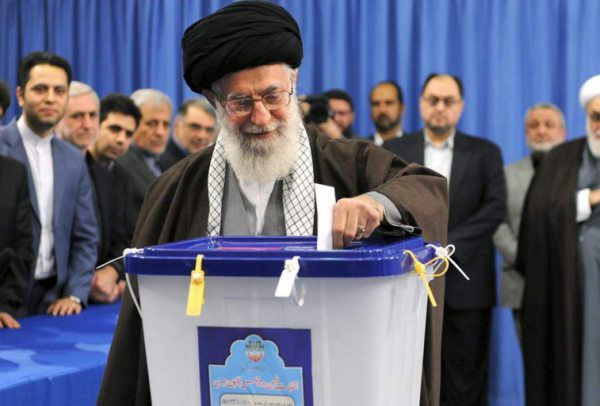
Siamak Namazi, an Iranian-American citizen who helped establish a pro-Tehran lobbying group in America, has been arrested in Iran and imprisoned indefinitely.

Mr. Namazi was visiting family in Tehran when he was arrested by Iranian Revolutionary Guards Corps (IRGC) soldiers and sent to Evin Prison, according to Iranian media reports.

The detention center is infamously known for its horrific mistreatment of prisoners. The facility is noted for its routine “beatings, torture, mock executions, and brutal interrogations,” experts have said.

As the 5th American citizen now held hostage by the regime, Namazi joins the Washington Post’s Jason Rezaian, former FBI agent Robert Levinson, Christian pastor Saeed Abedini, and former U.S. Marine Amir Hekmati.

Namazi has been described as one of the “intellectual architects” of the National Iranian American Council (NIAC), a Washington, D.C.-based lobbying group that has been accused of working in support of the regime in Tehran.

He and NIAC Director Trita Parsi founded the organization as a way to continuously lobby for the removal of sanctions against Iran and to promote Iran’s foreign policy, while combating the pro-Israel sentiment in America, according to documents from a Cyprus convention that featured the two men.

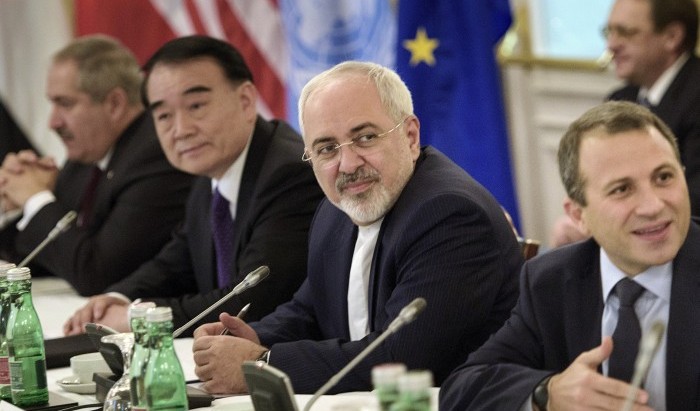
Both Parsi and Namazi have strong connections with the Iranian regime’s President, Hassan Rouhani, and its foreign minister, Javad Zarif. The two have continued to actively communicate with members of the regime. Recently, Parsi was seen traveling with Iran’s delegation during the final stages of the Iranian nuclear deal talks.

NIAC has not commented publicly on Namazi’s arrest, which is believed to have occurred a week or two ago.

When reached by Breitbart News, NIAC Policy Director Jamal Abdi said that the organization has no comment at this time.

An expert on Iran suggests the arrest is the result of a power struggle within the country. Hassan Dai, the editor of the Iranian American Forum, told Breitbart News that Namazi’s imprisonment shows the Ayatollah remains completely in control of his nation’s affairs, and that even Iran’s president is powerless to protect his acquaintances from imprisonment.

Dai explained that Namazi had consistently “lobbied in favor of a faction of the regime,” which upset the Mullahs because it would only be acceptable to “lobby for the whole regime.”

The fight between the factions in Iran is a fight for “the best solution to preserve the regime,” he explained, adding that groups like NIAC have never sided with true “reformists,” but with people who wish to employ a different strategy to empower the regime, such as Hassan Rouhani and former President Akbar Rafsanjani.

Because Namazi and NIAC prefer one faction over the other, “they are undermining the Supreme Leader. They are undermining the Revolutionary Guard,” Dai explained. “When you lobby U.S. policymakers to remove sanctions against Iran with the rationale that it will help reform the regime, you undermine the Supreme Leader, because he wants them to accommodate to the regime now.”

The arrest of Namazi sends a message from Iran’s rulers that “Rouhani has no power,” Dai concluded. “He can not even protect his own friend.”

Namazi’s arrest casts doubt on President Obama’s rationale for the Iran deal. The White House insisted that engaging Iran will help reform the regime, but the detention of a fifth American citizen, and Iran’s continuing aggression, shows that the administration’s reasoning for dealing with the Ayatollah has not held up to scrutiny thus far. The power structure of Iran has not changed since the nuclear deal, neither has Iran’s support for regional terrorist organizations.

Iran claims that the United States is currently holding 19 Iranian nationals under arrest. Regime officials have hinted that they would trade the American citizens for the state-side Iranians. On October 23, a U.S. court sentenced Mozaffar Khazee, an Iranian-American dual citizen, who was convicted of attempting to smuggle state-secrets to Tehran.

by JORDAN SCHACHTEL27 Oct 2015

Edwin Mora contributed to this report.

http://www.breitbart.com/national-security/2015/10/27/iran-arrests-american-founder-pro-regime-lobby/
Filed Under: Media Reports Tagged With: Ayatollah Khamenei, Evin Prison, hassan rouhani, Iran, Iran deal, IRGC, Jihad, Middle East, National Iranian American Council, National Security, NIAC, siamak Namazi

Iran Election Results Predictably Praised by Iran Lobby

February 29, 2016 by admin

http://www.theguardian.com/world/iran-blog/2016/feb/28/five-lessons-from-irans-2016-elections-tehranbureau

http://www.theguardian.com/world/iran-blog/2016/feb/28/five-lessons-from-irans-2016-elections-tehranbureau

As the Iranian regime counts the ballots from this weekend’s parliamentary elections, the Iran lobby is already hailing it as a momentous victory for “moderate” forces in Iran in what may be one of the most blatant obfuscations since Adolf Hitler’s Anschluss of Austria based on the pretext of being invited in to restore order.

“The stunning setback of the hardliners in the elections is precisely why they opposed the Iran nuclear deal. They knew that if successful, the Rouhani faction would benefit electorally from the significant achievement of resolving the nuclear issue and reducing tensions with United States. These benefits would not just be limited to the parliamentary elections, but could establish a new balance of power in Iran’s internal politics with significant long-term repercussions,” said Trita Parsi, head of the National Iranian American Council and lead cheerleader for the Iranian regime.

His absurd comment came in a piece in Huffington Post in which he failed to acknowledge the most glaring problem with his effusive praise: the handpicked Guardian Council of Ali Khamenei removed almost 90 percent of the “moderates” from the ballot during the months-long vetting process.

The only candidates left on the ballot, especially outside of Tehran, were devoted and dedicated candidates solidly aligned with Khamenei, the ruling mullahs and Revolutionary Guards’ leadership.

Taking a few scattered wins in and around Tehran and calling it a “moderate” win is akin to Parsi’s previous arguments about the nuclear deal being a moderating force for Iran and the West, but in its aftermath the regime has conducted illegal missile tests, arrested scores of dissidents and journalists and stepped up its war in Syria.

The money line from Parsi is when he says “In order to avoid a hardline backlash, the moderation of Iranian policies need to happen at a moderate pace.” We can only assume Parsi thinks reform in Iran happens at a snail’s pace. For him and the rest of the Iran lobby, electing one moderate out of 12,000 thrown off the ballot would be considered “progress,” which is why his proclamation of moderates is so silly, especially when we consider that candidates backing Hassan Rouhani are dubbed “reformists” in a stretch of logic that hurts the brain when thinking about it.

Rouhani has turned into anything but a moderate. Rouhani’s sole purpose in being hand selected by Khamenei and all other candidates cleared from the field beforehand was to convince the West of a moderate image and secure a deal lifting crippling sanctions. In his tenure, he has instead presided over the highest increase in executions ever in Iran, cracked down hard on journalists and presided over three proxy wars in Syria, Iraq and Yemen in a show of extremist Islamic expansion that Mahmoud Ahmadinejad, his much-reviled predecessor, could only dream about.

The fact that Rouhani supporters could only win 30 seats in heavily populated Tehran and lose across the rest of the country indicates the usual pattern of deceit coming from the mullahs: Let the “moderates” claim a victory for global media consumption in Tehran, but dominate and assure control everywhere else in Iran.

The recipe for electoral success has worked since decades ago and has allowed the mullahs to play with the world, around their internal fighting. While the infighting is only about their share of power and both “moderates” and “Hardliners” are the same when it comes to executions, domestic repression, and their support for terrorism abroad. Take for instance the so called moderate Rouhani, the reign of executions under his watch has been much larger than his “hardliner” Ahmadinejad, and he and his Foreign Minister Zarif (Another person that is referred to as “moderate” within the mullah’s regime) have continuously expressed their support for the Syrian dictatorship, the Hezbollah and most extremist movements in Iraq and Yemen. Under Rouhani and his predecessors, virtually all legitimate dissident groups and political parties have long been outlawed and even the nascent Green Movement which was crushed in 2009 and was led by leaders arguably still cozy with the regime leadership has no recognition or legitimacy within Iran.

Add to that the contention by the Iranian regime that democracy was served by the participation of an estimated 33 million of Iran’s 55 million eligible voters and you find remarkable similarities with claims by other totalitarian regimes such as the old Soviet Union, North Korea and Nazi Germany in which near universal participation by the electorate was often forced and compulsory as was who to vote for. The Iranian regime is no different.

“Iranian voters delivered a strong message to the elite that political and social aspirations that have long been unmet need to be addressed more robustly,” said Reza Marashi, also of NIAC who claimed voters wanted change, even if it was exchanging one regime diehard for another.

Aaron David Miller, a vice president at the Woodrow Wilson International Center for Scholars, noted in an editorial in the Los Angeles Times that “none of this favors Iran’s pragmatists and centrists, let alone its reformers. In fact, as the International Crisis Group notes, in Iran historically ‘external loosening’ is balanced with ‘internal stiffening.’

“That is what happened after the 1988 cease-fire in the war with Iraq, and after the 2003 nuclear agreement with Britain, France and Germany, when the powerful Guardian Council disqualified reformist candidates in the next elections and conservatives regained their parliamentary majority. A step forward in a highly authoritarian and ideological system can easily produce a few steps back, or at least to the side,” Miller notes.

The Guardian, had similar takeaways in looking at the elections, including that there are no simple divisions of “moderates” and “reformists” since candidates were disqualified less on political views and more on devotion to the ruling mullahs.

In describing Rouhani, Gareth said “Iran’s president has proved himself an astute, hard-headed operator,” adding that “politically, Rouhani will need to maintain public support with an eye to being re-elected as president next year. Anecdotal reports of a lower turn-out in poorer parts of Tehran may reflect most strongly a wider sense among Iranians they are not benefiting from the easing of sanctions.”

While the Iran lobby may be praising this weekend’s election results, the reality of a rigged election means nothing really changed as most Americans tuned into the Oscars instead.

By Michael Tomlinson

Filed Under: Blog, News Tagged With: Featured, hassan rouhani, Iran deal, Iran Human rights, Iran Lobby, Reza Marashi, Trita Parsi

Iran Lobby Ignores Upcoming Iran Election Shenanigans

February 18, 2016 by admin

Iran Lobby Ignores Upcoming Iran Election Shenanigans

Iran Lobby Ignores Upcoming Iran Election Shenanigans

On February 26, Iran will hold its parliamentary elections and similar to almost every election held since the Islamic revolution in 1979, the results will be largely a forgone conclusion since the mullahs control who goes on the ballot in the first place and in the case of the top spot – currently occupied by Ali Khamenei – that is a position that doesn’t even get voted on by the public in a process that old-line Soviets would find reminiscent of the Politburo.

Michael J. Totten, writing in World Affairs, took to task some idiotic observations made by Max Fisher in Vox magazine in which Fisher waxes rapturously about how the Iranian election could be historic. It the same kind of nonsense first advocated by the Iran lobby, most notably bloggers Jim Lobe and Ali Gharib, the National Iranian American Council and other regime advocates such as Paul Pillar.

The notion that the nuclear deal has set the stage for a historic election in which moderates and dissidents will finally get a fair shake and opportunity to put their stamp on the Islamic state moving into the 21st century is about as realistic as Boko Haram suddenly deciding to endorse women’s rights.

The truth of the matter, as Totten rightly points out, “let’s leave aside the blatant vote-stealing in Iran’s 2009 presidential election, when Mahmoud Ahmadinejad was declared the winner in districts that opposed him as overwhelmingly as San Francisco opposes Dick Cheney. Nevermind that disgraceful episode.”

“Elections in Iran are rigged even when they aren’t rigged,” Totten said. “Supreme Leader Ali Khamenei hand-picks everybody who runs for president. Moderates are rejected routinely. Only the less-moderate of the moderates—the ones who won’t give Khamenei excessive heartburn if they win—are allowed to run at all. Liberal and leftist candidates are rejected categorically.”

In the case of the position of president of the regime, a position held by Hassan Rouhani, Totten points out that “he’s not quite a figurehead. He can tinker with a few things around the edges. But the country is run by the unelected Supreme Leader, the Guardian Council, and the Revolutionary Guard Corps, which is officially designated as a terrorist organization.”

NIAC hacks such as Trita Parsi and Reza Marashi have argued that “moderates” will be empowered in a resurgent Iran and that will be reflected in more moderates being elected to the upper legislative body, the Assembly of Experts which nominally selects the new Supreme Leader when Khamenei dies.

Nothing could be further from the truth. The Guardian Council dumped thousands of potential candidates, the overwhelming majority of them more moderate than the ruling mullahs in a similar political exorcism it conducted during Rouhani’s election when it cleared the field for him to run virtually unopposed.

Let’s also consider that a “moderate” in regime politics is like calling someone a moderate who opposes hanging a political dissident, but doesn’t mind locking up a political dissident; in much the same way as Rouhani was hailed as a moderate, but since his ascension he has presided over more executions in his first term than even Ahmadinejad carried out.

In another sign that the elections are going turn out in favor of Khamenei and his cronies no matter what the actual vote is, Khamenei’s office issued a press release through regime-controlled media warning of “enemy” efforts to undermine the elections.

The statement read in part: “Their plot for the February 26 elections is to undermine the Guardian Council and question its decisions,” Ayatollah Khamenei said, “describing the Council as one of the fundamental institutions of the Islamic Establishment, which the US has been strongly opposed to since the victory of the Islamic Revolution.”

“When the Guardian Council’s decisions are called into question, the elections would be perceived to be illegal, and, consequently, the elected parliament as well as the laws it ratifies would be deemed illegal, the Leader explained.”

The regime learned its lessons from the 2009 election debacles that resulted in violent street demonstrations that had to be put down with bloody consequences and is doing all it can to pre-ordain the results and impose order such that there would be no repeat of civil disobedience.

All of which has not gone unnoticed by an American public who’s opinion of the regime’s leadership has astonishingly remained virtually unchanged since the 1980s according to a new Gallup Poll released this week.

A stunningly low 14 percent of Americans have a favorable viewpoint of the regime in a benchmark for futility that has not budged in spite of all the public relations and social media posturing conducted by the Iran lobby. It’s nice to see that no matter how many tweets Trita Parsi puts out, Americans remain skeptical and wary of a regime that has put to the hangman’s noose over 2,300 people under Rouhani.

By Michael Tomlinson


Filed Under: Blog, Current Trend, News Tagged With: Featured, hassan rouhani, Khamenei, National Iranian American Council, NIAC, Reza Marashi, Trita Parsi

Hassan Rouhani Begins European Tour Under Cloud of Executions

January 25, 2016 by admin

Hassan Rouhani Begins European Tour Under Cloud of Executions

Hassan Rouhani Begins European Tour Under Cloud of Executions

Iran regime leader Hassan Rouhani begins a European tour previously postponed because of the terrorist attacks in Paris with stops in France and Italy which has been highlighted by the regime as a goodwill tour as well as a shopping spree to use some of the $100 billion in frozen assets being returned to Iran as part of the nuclear agreement.

Both in France and Italy there are companies with long established business relationships in Iran but they remain hesitant given the regime’s actions in the months immediately following signing of the deal including the test launching of ballistic missiles violating United Nations sanctions against development of nuclear-capable missiles and the continued escalation of the Syrian conflict and support for proxy militias in Iraq and Yemen leading to broad sectarian violence.

More recently the regime engaged in a prisoner swap, releasing several Americans being held by the regime including Washington Post reporter Jason Rezaian and Christian pastor Saeed Abedini, in exchange for a large number of Iranians who had been charged and convicted of arms smuggling and trading in illegal nuclear and military components.

Additionally, both Democrats and Republicans in Congress and on the presidential campaign trail have expressed doubts over the regime’s ability and willingness to give up its militant ways, as well as what the mullahs plan do with all of the billions of dollars they are about to receive. Several pieces of legislation have been put forward addressing the levying of additional sanctions on Iran should the regime prove recalcitrant moving forward.

This has caused the Iran lobby to push back and attempt to make the issue of new sanctions a partisan issue by placing blame on Republicans, even though support for a tough approach to Iran has come from both sides of the aisle.

“From the European side, there is a concern that if they enter Iranian market they will be subjected to American sanctions. Because there are conflicts in the U.S.,” said Trita Parsi, head of National Iranian American Council, the regime’s chief lobbyist. “Congress is very skeptical about the deal and republicans are still pushing for new sanctions and this is sending a conflicting message making Europeans concerned.”

Parsi made his comments to regime-controlled media in an attempt to convince European companies on the eve of Rouhani’s visit to open wide the doors of trade and investment to the regime even with growing doubts over the corrupt nature of the economy and high level of censorship, human rights abuses and control of most industries by the Revolutionary Guard Corps.

Those doubts were only reinforced this weekend by comments made by top mullah Ali Khamenei who commended the actions taken by Revolutionary Guard Corps members in detaining American sailors, calling their actions “courageous.”

“You did a brilliant, interesting and timely job. In fact, this event should be considered God’s work. He drew them towards our waters so that with your timely measure, they would be arrested in that manner – with their hands on their heads,” Khamenei said on his official website.

The statements being made by Khameneni, Rouhani and other regime officials over all the incidents are often conflicting; adding to the confusion over what the regime’s true goals and aims are. Doyle McManus examined this almost bipolar quality within the Iran regime in an editorial in the Los Angeles Times.

“The underlying problem is that Iran still hasn’t made the choice Henry Kissinger described several years ago: whether it is a country or a cause — a normal state, or a revolutionary one,” McManus writes. “On the other hand, the Iranians have repeatedly rejected proposals for normal diplomatic relations with the U.S. (an offer floated by George W. Bush before Barack Obama). They even rejected a U.S. proposal for a hotline between the two countries’ armed forces, even though that could avert unnecessary clashes.”

“This resistance to formal normalization is partly about preserving Iran’s revolutionary self-image,” he added. “So even as he has authorized a de facto rapprochement with the United States, Khamenei has released an uninterrupted flow of statements denouncing the Great Satan and warning against Western subversion.”

This explains much of what is confounding to outside observers about the regime and why the arguments made by the Iran lobby about regime “moderation” is so much hot air. As Michael Rubin, a resident scholar at American Enterprise Institute, pointed out in a recent editorial:

“So what to make of President Hassan Rouhani’s election? Rouhani might have embraced a softer rhetorical style than Mahmoud Ahmadinejad, his predecessor, but he is no more reformist. True, he purged a lot of the Islamic Revolutionary Guard Corps officers from the cabinet, but he replaced them with Ministry of Intelligence veterans. Public executions have skyrocketed under Rouhani.”

“Khamenei is not only supreme leader, but he’s also master marionette, playing factions off each other in order to maintain his own power. The seeming rotation between hardline and less hardline factions has less to do with liberalization and more to do with simply cleaning house before any alternative power can consolidate.” Rubin added. “Obama may believe change in Iran to be inevitable. Unfortunately, it is not the change he imagines. That the Iran deal as constructed provides the cash to Iran’s most hardline elements will only catalyze the slow decline of Iranian reformism.”

It is against this backdrop that Rouhani’s European tour comes soaked in the blood of over 2,000 men, women, children, political opponents, dissidents, activists and others who have been executed since Rouhani took power; a large number of them in grisly public hangings.

According to human rights groups, Iranian dissidents and even United Nations officials, the pace of executions have been stunning even for Iran’s bloody history and are likely to continue unabated. According to the National Council of Resistance of Iran, the first two weeks in January have already seen over 52 executions.

The prospects for the future remain bleak as the regime’s Guardian Council, comprised of 12 Islamic jurists appointed by Khamenei, disqualified more than 6,500 candidates from upcoming parliamentary elections, with opposition groups claiming upwards of 90 percent of “reformist” candidates had been eliminated.

For Europeans meeting with Rouhani this week, it is best to think twice before making a big risk in trading with the regime in Iran, particularly since in the eyes of the Iranians inside and outside the country trading with the mullahs is the equivalent to neglecting the gross violations of human rights in Iran.

By Michael Tomlinson

Filed Under: Blog, News Tagged With: Featured, hassan rouhani, Iran deal, Iran Human rights, Iran sanctions, National Iranian American Council, NIAC Action

Iran Regime Crackdowns Continues as Paris Weeps

November 17, 2015 by admin

Iran Regime Crackdowns Continues as Paris Weeps

Iran Regime Crackdowns Continues as Paris Weeps

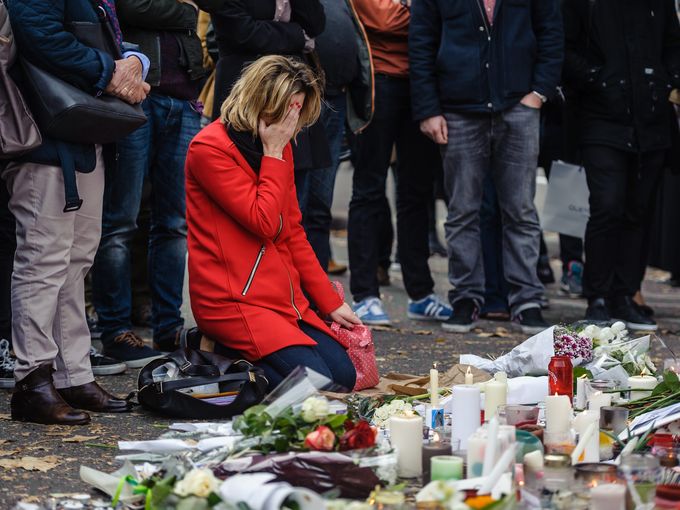
The contrasts in image and tone could not be more striking. On the streets of Paris, thousands gather to mourn those killed in ISIS terror attacks that shook Europe, while on the streets of Tehran, agents for the Revolutionary Guard are busy rounding up more journalists and dissidents in one of the fiercest crackdowns since the days of Mahmoud Ahmadinejad’s reign.

The latest victim of the Iran regime’s security crackdown was the arrest of a press cartoonist who was taken into custody while at work at The Shahrvand, a state daily newspaper in Tehran that is owned by Iran’s Red Crescent Society, or Red Cross according to New York Times.

The arrest had not been reported in the official news media as of Monday night. It came after the publication of a cartoon depicting tearful solidarity with the people of France over the attacks Friday that left at least 129 people dead. The cartoon was also posted on the Instagram.

The fact that a cartoonist is arrested by the regime for publishing a cartoon expressing sympathy for those slain by ISIS – the putative enemy of the Iranian regime – tells us all we need to know about what the mullahs in Tehran are thinking about the slaughter of French, German, American, British, Spanish and Swedish citizens.

The cartoonist’s arrest follows a nationwide crackdown in which several journalists and even two poets have been arrested as being subversive to the regime and serving as tools for Western influence as the regime seeks to stifle any voice of dissent in the wake of the nuclear deal it agreed to last July.

The “to-do” list for the mullahs have been busy lately as they have sought to win the civil war in Syria and secure the Assad regime, gone on a shopping spree for new weapon systems from the Russians, and send proxies to attack an Iranian dissident camp in Iraq in a brutal rocket barrage.

The mullahs have even instituted a new policy to impound the cars of any Iranian women caught driving a car without wearing a “proper” hijab or head covering. This follows past policies that forbade Iranian women from driving alone and allowed basij paramilitaries to beat women drivers and failed to prosecute others who threw acid at women while driving.

Senior mullahs have in recent weeks intensified their verbal attacks on “bad-hijab” women in Iran, with one likening them to “soliciting for sex.”

“The courageous decision by the commander of our police force to confront those women who defy and remove their hijab behind the wheel must be appreciated as it amounts to fighting prostitution on our streets,” said a mullah named Ahmed Alam Ulhoda in one of the more absurd comments ever published.

Another series of arrests targeted social media apps as the Revolutionary Guard also went after administrators on the popular Telegram messaging app for spreading “immoral content” according to the regime’s Fars news agency.

Telegram’s Chief Executive Pavel Durov said last month that Iranian regime authorities had demanded he hand over “spying and censorship tools”, and temporarily blocked the app when he refused.

The IRGC announced the Telegram users’ arrests last week, saying they had shared images and text “insulting to Iranian officials” as well as “satire and sexual advice”. At the time, the judiciary denied any such arrests had even occurred.

This comes after efforts by the regime to block access to popular social media platforms such as Whatsapp, Facebook, Twitter, Tango and Viber.

The crackdowns, especially the widespread nature and swiftness in their enforcement, underscore just how farcical the myth was that Hassan Rouhani’s elevation to president would represent some new “moderate” breakthrough for the regime. Indeed the violations of human rights in Iran has got worse during his tenure.

The alarming rise in human rights abuses moved Human Rights Watch to issue a joint letter signed by 36 human rights groups and other organizations urging support for United Nations General Assembly Resolution A/C.3/70/L.45 which seeks to promote human rights in Iran by calling on the regime to meet its domestic and international obligations to protect human rights.

The vote is scheduled on November 19, 2015 during the 70th session of the General Assembly.

“The Iranian authorities shouldn’t think they are getting a pass on human rights just because the nuclear accord has been signed,” said Sarah Leah Whitson, Human Rights Watch Middle East director. “Passing this resolution will send the message that the world has not forgotten about the country’s ongoing human rights abuses.”

More importantly, supporters of the regime have uttered not a word of criticism over the recent crackdowns. Groups such as the National Iranian American Council and The Ploughshares Fund and bloggers and commentators such as Jim Lobe and Ali Gharib have shifted their focus not on the tragedy suffered by the people of France, but rather in attempting to link the attacks and ISIS to Saudi Arabia in an effort to attack the Iran regime’s long-time rival.

Trita Parsi, head of the NIAC, has been busy on his social media feeds denouncing Saudi Arabia during the Paris attacks as much as he was busy denouncing Israel during the nuclear talks. In both cases, the real goal of his comments is to shift attention away from the bad acts of the Iranian regime.

Ultimately, the world is beginning to see past the facades put up by Iran lobby supporters and are recognizing that the true center of sectarian hate sits squarely in Tehran.

By Michael Tomlinson

Filed Under: Blog, News Tagged With: Featured, hassan rouhani, Iran, Iran deal, Iran Human rights, Iran Lobby, National Iranian American Council, NIAC, NIAC Action, Syria, Trita Parsi

Iran Regime Breaks Nuclear Agreement Already

November 11, 2015 by admin

Iran Regime Breaks Nuclear Agreement Already

Iran Regime Breaks Nuclear Agreement Already

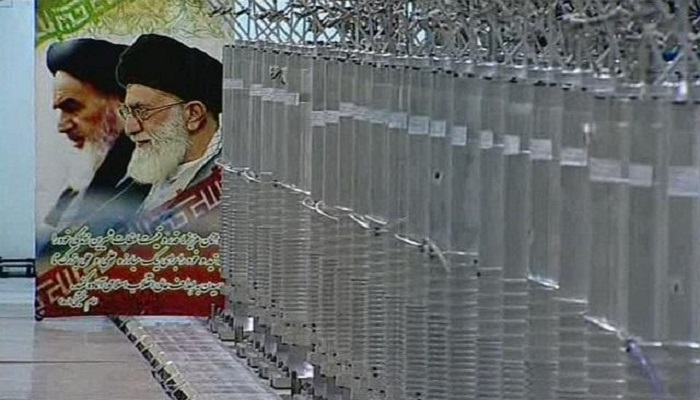
The 159 pages in the nuclear agreement with the Iran regime is by the standards of most international agreements, pretty flimsy, but even its meager few pages specify clearly the expectations the rest of the world has for the regime’s centrifuges used to enrich uranium: dismantling them.

Reuters reported that the regime has halted work in dismantling centrifuges at the Natanz and Fordow nuclear enrichment plants. The nuclear agreement struck last July specified that initial dismantling work would begin on some 10,000 decommissioned centrifuges at the two facilities.

The halt in work was announced by Ali Shamkhani, secretary of the National Security Council for the regime, who was quoted as saying by the ISNA student news agency that “the (dismantling) process stopped with a warning.”

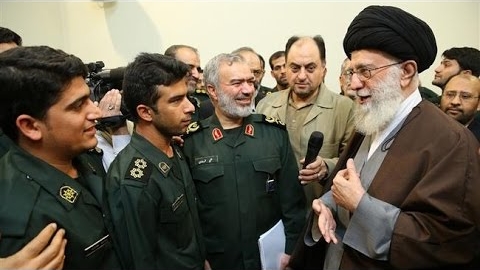
He did not specify what the warning was or who issued it, but the head of the regime parliament’s nuclear deal commission, Alireza Zakani, told Mehr news agency that the dismantling had stopped in Fordow because of a letter to Hassan Rouhani from a group of lawmakers complaining that the dismantling process was moving too swiftly and contradicted directives from top mullah Ali Khamenei.

Khamenei has publicly stated his opposition to several terms within the treaty, including refusal to allow regime military facilities to be inspected and the need for all Western sanctions to be lifted at once before the regime would comply fully with the agreement.

Khamenei has also said the deal should only be implemented once allegations of past military dimensions of the regime’s nuclear program had been settled.

The International Atomic Energy Agency is expected to announce its conclusions on PMD by Dec. 15, according to Reuters.

The 10,000 older, decommissioned centrifuges are only half of what the regime has available to it to enrich low-grade uranium into highly enriched weapons-grade fuel. The nuclear agreement only allows for the regime to actively use a few thousand centrifuges for medical and scientific research purposes.

As Rick Moran in American Thinker notes, “there’s very little difference between the so-called ‘hardliners’ and those the Western press has designated as ‘moderates.’ And Rouhani may try to use the hardliners as an excuse to not fully implement the deal.  Supreme Leader Khamenei has already redefined key elements of the deal to favor Iran’s nuclear program, which Rouhani will probably cite when he violates the terms of the agreement as we go along.”

It is clear now that the regime has no intention of complying with the nuclear agreement and in fact is doing everything it can to push the West with aggressive moves designed to take advantage of the Obama administration’s lame duck political status and lack of desire to force a confrontation on the eve of U.S. presidential elections.

This is why the mullahs in Tehran have doubled down on wiping out opposition to Assad in Syria with a new offensive alongside Russia, test fired a new ballistic missile that violates United Nations Security Council restrictions, attacked and killed Iranian resistance members in Iraq, smuggled new arms to Houthi rebels in Yemen, completed the sale of advanced anti-aircraft missiles from Russia, and cracked down at home by arresting and jailing dissidents and inflaming ethnic tensions with the Azeri minority group in northern Iran.

All of this has been done because the mullahs have already decided to break from the nuclear agreement and see the opportunity for significant gains in the absence of any real threat of retaliation from the U.S. and the rest of the world.

As the Iran lobby, led by the National Iranian American Council, put so eloquently during the debate over the nuclear agreement, the choice for Americans was between “war” and “peace.”

In fact, they were correct, but only in reverse. Approving the pact has surely put the world on a more dangerous path towards greater conflict, while rejecting it may very well have stopped Iranian aggression and brought about stability in the region.

By Michael Tomlinson

Filed Under: News Tagged With: #NuclearDeal, Appeasement policy, Featured, hassan rouhani, Iran, Iran deal, Iran Human rights, Iran Lobby, Iran sanctions, National Iranian American Council, NIAC, NIAC Action, nuclear talks, Parchin

Iran Regime Picks and Chooses What It Wants

November 3, 2015 by admin

Iran Regime Picks and Chooses What It Wants

Iran Regime Picks and Chooses What It Wants

There are many aspects to the collective decision-making of the mullahs in Tehran. On the one hand, they support opening up negotiations on a nuclear deal to help unlock the bank vaults to billions in frozen assets. Then on the other hand, they denounce the terms of the deal and claim it doesn’t apply to them unless all sanctions are lifted at once.

The same double standard applies to what is happening in Syria. The Iran regime has fought endlessly to keep Assad in power there to the extent it even begged the Russians for military support to save him from being overthrown as rebels made serious inroads. The mullahs sought to legitimize the idea of Assad staying in power and seemed to reach a breakthrough by finally being invited to multilateral talks on finding a political solution to the crisis.

But now the regime has threatened to walk away from talks if it found them unconstructive, specifically citing Saudi Arabia’s role in the talks as the bitter rivals escalate their growing conflicts that now stretch from Yemen to Syria.

“In the first round of talks, some countries, especially Saudi Arabia, played a negative and unconstructive role … Iran will not participate if the talks are not fruitful,” regime media cited deputy Foreign Minister Hossein Amir Abdollahian as saying.

Delivering unusually personal criticism, regime president Hassan Rouhani appeared to reprimand Saudi Foreign Minister Adel al-Jubeir, who, on Saturday, lashed out at Tehran for what he termed its interference in regional countries.

“An inexperienced young man in a regional country will not reach anywhere by rudeness in front of elders,” Rouhani was quoted as saying by state news agency IRNA on Monday. He did not name the ‘young man’ but Jubeir was assumed to be his target according to Reuters.

It’s this kind of “I’ll take my ball and play elsewhere” response that has come to typify Iranian regime’s reactions in foreign affairs now. It pushed for a nuclear agreement and then complained about it and threatened to walk away. It pushed for a role for Assad and a seat at the table and now that it has it, it threatens to walk away.

While some psychologists might label this bipolar behavior, long-time regime watchers within the Iranian dissident community have long warned this was how the mullahs do business by pushing a false façade and then changing the rules at the last minute.

It was behavior that typified nearly two years of nuclear talks in which Iran refused to commit to the fine print in order to avoid being boxed in; resulting in a 159-page agreement that is dwarfed by the thousands of pages in similar nuclear agreements with the old Soviet Union and North Korea.

That split behavior has been most explicit in Ali Khamenei, the regime’s top mullah, who has persistently and publicly undercut Rouhani following the nuclear agreement in order to demonstrate his firm control over regime matters and relegate Rouhani to the figurehead status many have claimed he remains.

According to Dr. Majid Rafizadeh, head of the International American Council, writing in Huffington Post, Khamenei has ruled out any “snap-back” option with regards to the sanctions.

“First, he wants sanctions to be lifted at the outset, then he wants to make sure that the international community will not have any mechanism through which it can re-impose sanctions in the very likely scenario that Iran decides to pull out of the nuclear agreement and go full speed ahead on uranium enrichment,” he writes.

“But wait, that’s not all, there is another condition to be met as well. After Khamenei had his president and nuclear team add the condition of the removal of an arms embargo to the nuclear agreement in the eleventh hour, he is now adding the removal of all sanctions (including the ones linked to Iran’s terrorism and human rights violations) to the already-done nuclear deal,” he added.

Another sign of the growing tightening of control by Khamenei was discussed by Gerald F. Seib in the Wall Street Journal.

“Iran also has arrested Nizar Zakka, a Lebanese information-technology specialist who lives in Washington and has permanent-resident status in the U.S. At the same time, Iranian businessmen with ties to foreign firms are being harassed by Iran’s state-security apparatus,” Seib writes. “These detentions are likely the work of Iran’s Revolutionary Guards, who function as a kind of parallel government operating alongside—and apparently beyond the influence of—the official government of President Hassan Rouhani and Foreign Minister Javad Zarif, with whom the U.S. and other world powers negotiated the nuclear deal.”

The broad range of actions by the regime over the last few months leaves very little doubt about the intentions of the mullahs and Khamenei in particular.

He is not interested in accommodation. He has no time for negotiations. He has no belief in moderation.

The regime has even stepped up arrests domestically, including two journalists, one a former deputy culture minister who was jailed in the 2009 crackdown that followed the disputed reelection of then-President Mahmoud Ahmadinejad.

The son of ex-official Issa Saharkhiz told news media his father was arrested this week at his residence in Tehran on charges that include “insulting the supreme leader” and “propaganda against the regime.” The arrests are likely to have a chilling effect on journalists and activists ahead of major elections early next year in Iran.

Meanwhile, a relative of Ehsan Mazandarani, editor in chief of the Iranian regime’s daily Farhikhtegan, said that Mazandarani was detained the same day, also in the capital by agents of the Revolutionary Guards Corps.

Even as these crackdowns increase – and in spite of criticism from human rights and dissident groups – in a vote held Monday, regime lawmakers opted overwhelmingly to continue pushing the “Death to America” slogan chanted across the country on Fridays, after regime ally’s Friday prayer services, and with special zeal every November 4th – the day Iranian mullahs commemorates the beginning of the 1977 siege on the U.S. Embassy in Tehran.

Khamenei picks and chooses his fights and he clearly intends on fighting any notion of moderation.

By Michael Tomlinson

Filed Under: Blog, News Tagged With: #NuclearDeal, Appeasement policy, Featured, hassan rouhani, Iran sanctions, Irantalks, Nuclear Deal, Rouhani, Sanctions

Iran Regime Turns on Its Own

October 29, 2015 by admin

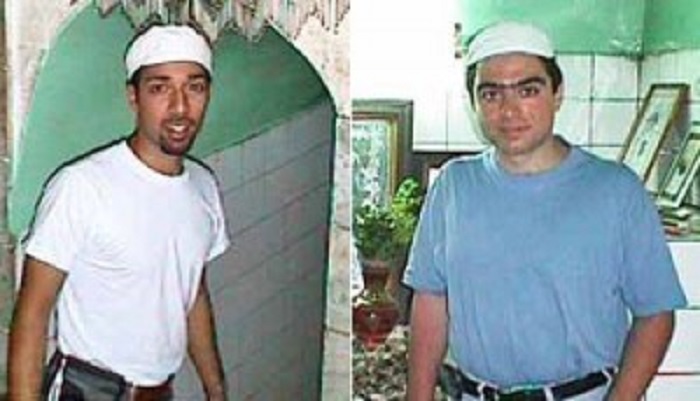
Trita Parsi traveled with Siamak Namazi to Isfahan, Iran’s third largest city, in August 2000. They also toured the Zoroastrian “Fire of Victory” Temple in Yazd. At the time, Siamak was living in Tehran, working for Atieh Bahar, a consultant company with close ties to the government. In 1999, Parsi and Siamak co-authored a paper that recommended setting up a lobbying organization in Washington to influence US-Iran policy. Siamak took a sabbatical in 2005 to complete a fellowship at the Woodrow Wilson Center in Washington, DC. While at the Center, Siamak helped Parsi formulate NIAC policies supportive of the Iranian regime.

Trita Parsi traveled with Siamak Namazi to Isfahan, Iran’s third largest city, in August 2000. They also toured the Zoroastrian “Fire of Victory” Temple in Yazd.
At the time, Siamak was living in Tehran, working for Atieh Bahar, a consultant company with close ties to the government.
In 1999, Parsi and Siamak co-authored a paper that recommended setting up a lobbying organization in Washington to influence US-Iran policy. Siamak took a sabbatical in 2005 to complete a fellowship at the Woodrow Wilson Center in Washington, DC. While at the Center, Siamak helped Parsi formulate NIAC policies supportive of the Iranian regime.

Siamak Namazi, an Iranian-American citizen, has been credited with helping found the Iran lobby including the creation of the National Iranian American Council alongside Trita Parsi as the primary vehicle for advocating for a nuclear agreement lifting economic sanctions on the regime.

The Daily Beast chronicled his family’s involvement as an “intellectual architect” for the NIAC as a pathway for empowering those within the regime whom he had a close relationship with and believed by helping secure an agreement it would boost his fortunes within the regime.

In the immortal words of Kevin Spacey who plays the scheming Frank Underwood on Netflix’s “House of Cards,” “We’re all victims of our own hubris at times.”

Truer words were never spoken about the Iran lobby because on the verge of reaping their perceived successes, they discover all they really are, are puppets for a regime of mullahs whose intent is only focused on preserving their own power.

That is because according to regime media reports, while visiting family in Tehran, Namazi was arrested by Revolutionary Guards Corp soldiers and tossed into the notorious Evin Prison.

There is an irony here on par with Alfred Nobel inventing dynamite and then creating the Nobel Peace Prize after his invention was used in war.

Namazi joins four other Americans who are being held hostage by the regime, including Washington Post reporter Jason Rezaian, Christian pastor Saeed Abedini, former Marine Amir Hekmati and the former FBI agent Robert Levinson.

According to a piece in American Thinker, Parsi and Namazi founded NIAC as a way to lobby for the removal of sanctions against the regime and promote its foreign policy while combatting anti-regime forces in the U.S.

Both Parsi and Namazi reportedly enjoyed close ties and access to Hassan Rouhani and Javad Zarif, the regime’s president and foreign minister, with Parsi being seen traveling with and in close discussions with the regime delegation during nuclear talks.

Conspicuously, the NIAC have been silent on the issue, declining comment and social media feeds for Parsi and other NIAC staff is devoid of any mention of the arrest.

But Hassan Dai, editor of the Iranian American Forum who won a defamation lawsuit filed against him by Parsi, speculated that the arrest suggests a power struggle of sorts within the regime’s leadership.

Dai explained in an interview with Breitbart News that Namazi had consistently “lobbied in favor of a faction of the regime,” which upset the mullahs because it would only be acceptable to “lobby for the whole regime.”

The fight between the factions in Iran is a fight for “the best solution to preserve the regime,” he explained, adding that groups like NIAC have never sided with true “reformists,” but with people who wish to employ a different strategy to empower the regime, such as Rouhani and former President Akbar Rafsanjani.

Because Namazi and NIAC prefer one faction over the other, “they are undermining the Supreme Leader. They are undermining the Revolutionary Guard,” Dai explained. “When you lobby U.S. policymakers to remove sanctions against Iran with the rationale that it will help reform the regime, you undermine the Supreme Leader, because he wants them to accommodate to the regime now.”

The arrest of Namazi sends a message from Iran’s rulers that “Rouhani has no power,” Dai concluded. “He cannot even protect his own friend.”

Breitbart News further speculates – and rightly so – that the arrest pours cold water on the notion that securing the nuclear deal would empower “moderates” within the regime and help reform it. Evidence since agreeing to the nuclear contradicts that idea completely with the conviction of Rezaian, the test launch of an illegal ballistic missile and the launching of a new offensive in Syria alongside Russian forces.

The arrest of Namazi demonstrates that the leadership of the Iran regime is of one mind and firmly in the control of Ali Khamenei and his religious cohorts and that any idea of moderation within the regime is a pipe dream; which may go to explain why coming off of the NIAC’s recent leadership conference to celebrate the nuclear deal, Parsi’s Twitter feed was filled with posts condemning Saudi Arabia, a bitter enemy of Iran and locked in fighting in Yemen.

If Parsi doesn’t tow the mullahs’ line, he might find a different kind of reception party the next time he travels to Tehran and end up sitting next to his buddy Namazi.

By Michael Tomlinson


Filed Under: Blog, Latest from Lobbies & Appeasers, National Iranian-American Council, News Tagged With: #NuclearDeal, Appeasement policy, Featured, hassan rouhani, Iran, Iran deal, Iran Economy, Iran Lobby, Irandeal, Jason Rezaian, Khamenei, Moderate Mullahs, National Iranian American Council, NIAC, Nuclear Deal, Rouhani, siamak Namazi, Syria, Trita Parsi

Why the Iran Lobby is Silent on Syria

October 22, 2015 by admin

Why the Iran Lobby is Silent on Syria

Why the Iran Lobby is Silent on Syria

During the long and contentious negotiations for a nuclear deal between the Iran regime and the P5+1 group of nations, the Iran lobby – led by the National Iranian American Council – was loud and boisterous in its efforts to prop up the regime’s arguments, denounce opponents and defend it as an instrument for positive change.

Trita Parsi, head of the NIAC, led the way with a steady stream of media interviews, editorials and even becoming a near permanent fixture in the hotel bars and lobbies in Austria and Switzerland during negotiations.

Parsi argued that the nuclear agreement would open the door to new solutions in Syria, writing that “the Iranians can help first to secure local cease-fires, and then later to begin a political process.”

“Once the nuclear deal has been sorted out, the door will be open for greater U.S.-Iran engagement,” he added.

Facts on the ground in Syria have proven Parsi to be wrong, if not an outright dissembler of the truth since in the wake of the nuclear agreement, the Iran regime launched a series of new offensives using thousands of fresh troops and forged an alliance with Russia to launch an air campaign that has targeted rebels to the Assad regime, not the ISIS strongholds it claims are its targets.

Ironically, last September, when Hassan Rouhani addressed the United Nations General Assembly, Parsi “compared the U.S. airstrikes in Syria to another country identifying terrorists in Oklahoma and bombing them without approval from the American government.”

We can only assume that Russian bombardment of Syrian civilians at the behest of Iran’s mullahs is more akin to being bombed by your own government with its blessing according to Parsi’s twisted logic.

The closest Parsi has come to biting the hand that feeds him was in a Huffington Post piece on Pope Francis’ visit to America where he writes “there are few signs that Tehran is decisively scaling back its support for the Syrian government and the Russians have recently moved in militarily to boost the Assad side. The end result of this inevitably will be more deaths and more stalemate. No side can escape responsibility for these dire consequences.”

“What has fueled the Syrian crises more than anything else is the false illusion on all sides that a decisive military victory is around the corner,” he added.

Parsi fails to cite that the reason why the Assad regime has been able to stay in power in the face of a peaceful and popular revolt against his rule which later turned bloody and brutal at his hands was the unquestioned and loyal support of the Iran regime.

Rather than advocate for the peaceful regime change in Syria that other nations embraced as part of the Arab Spring – most notably Tunisia which earned the Nobel Peace Prize this year for its peaceful transition to democracy – Parsi has opted to be an unabashed supporter and apologist for Tehran’s military support of Assad and excuses such support as “understandable.”

The example set by the Tunisian National Dialogue Quartet’s Nobel win has recharged democracy activists around the region and bolsters hope for the long-suffering members of the Iranian resistance who have peacefully opposed the mullahs in Tehran only to be arrested, imprisoned, tortured and often executed by the regime for simply protesting for basic human rights.

It is tragic, but altogether understandable that Parsi and the rest of the NIAC staff have never raised their voices in protest over the brutal suppression aimed at the members of the Iranian resistance, which is viewed harshly by the mullahs because of the simple fact the ordinary Iranians are living examples of the opposition to their rule and proof that their government is illegitimate.

Parsi’s contention of a more moderate pathway to regional stability through Tehran has been increasingly taken to task as more commentators see the proof in Iran’s recent actions and increased militarism.

“If the past is any guide, highly ideological regimes — see China, Vietnam, the former Soviet Union and Cuba — have proven adept at opening up economically but still retaining authoritarian and repressive control,” said Aaron David Miller, vice president at the Woodrow Wilson Center for Scholars in an editorial in the Wall Street Journal.

“Anyone who thinks Iran is on a linear course to moderation ought to lay down until the feeling passes,” Miller said.

Similarly, Jennifer Rubin writing in the Washington Post echoed the same thoughts as she praised Sen. Bob Menendez (D-NJ) for being right on Iran’s post-agreement rise in aggression.

“Sen. Robert Menendez, stalwart critic of the Iran deal, deserves to say ‘I told you so.’ He had suggested that sanctions would be lifted even without revealing the possible military dimensions of Iran’s program, that the inspection process (including self-selected samples) was nonsensical and that we would embolden Iran in the region to, among other things, further boost characters like Bashar al-Assad. Right on all counts,” Rubin writes.

As more thoughtful people recognize the folly of the arguments used by the Iran lobby in defending an indefensible agreement, the people of Syrian are reaping the punishment for allowing the mullahs of Iran a free hand in prosecuting their religious war.

Michael Tomlinson

Filed Under: Blog, News Tagged With: #NuclearDeal, Featured, hassan rouhani, Iran Lobby, NIAC, Trita Parsi

Iran Regime Actions Bolster Efforts to Halt Extremism

October 2, 2015 by admin

Iran Regime Actions Bolster Efforts to Halt Extremism

Iran Regime Actions Bolster Efforts to Halt Extremism

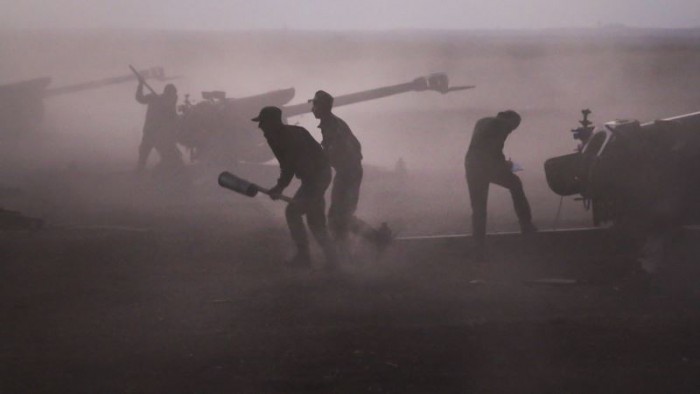
Reuters reported that hundreds of fresh Iran regime troops have flooded back into Syria over the past 10 days and will soon join their Hezbollah allies in a major ground offensive backed by Russian air strikes aimed at retaking territory lost by the Assad regime to rebels; contrary to Iranian and Russian claims they would be focusing their attacks against ISIS.

It seems clear the mullahs in Tehran are focused on securing the Assad regime by eliminating Western-backed moderate rebel units, rather than tackling their Islamic State rivals. The new offensive clearly points out the false propaganda the regime has been pumping out through its lobbyist allies such as the National Iranian American Council.

Peace is certainly the end goal for the Iran regime, but a peace that eradicates any opposition to Assad and leaves Iranian mullahs in control of a swath of territory stretching from the Mediterranean through Syria, Iraq, Iran, Yemen and the Indian Ocean. Their territorial ambitions have come fully to light and the bill for accommodating the regime with the nuclear deal is finally coming due.

“The vanguard of Iranian ground forces began arriving in Syria: soldiers and officers specifically to participate in this battle. They are not advisors … we mean hundreds with equipment and weapons. They will be followed by more,” said a Lebanese military source, adding that Iraqis would also take part in the operation.

Interestingly, Hassan Rouhani, the handpicked puppet leader of the Iran regime, tipped the regime’s hand in his speech before the United Nations last week in which he firmly insisted that U.S. policy should be focused on common actions to defeat ISIS before any discussion takes place on the future of Assad. Rouhani laid out the narrative in which the regime justifies the placement of boots on the ground in Syria openly and blatantly instead of relying on proxies such as Hezbollah in what is sure to be a virtual takeover of Syria by the Iranian military.

As Gareth Porter, an appeaser of the mullahs points out in Middle East Eye, “Iran’s national security strategy has had two primary objectives ever since Khamenei became Iran’s leader: to integrate the Iranian economy into the global system of finance and technology and to deter the threats from the United States and Israel. And Rouhani had primary responsibility for achieving both tasks.”

We are now witnessing what the Iran regime’s future plans are now that they have secured these twin goals and it is causing renewed efforts in Congress to stymie the regime in spite of the nuclear deal.

The House voted Thursday by the hefty margin of 251 to 173 to stop the Obama administration from lifting sanctions against the Iran regime “until Tehran pays the $43.5 billion it still owes in damages to the families of terror victims in cases where responsibility can be linked back to Iran — such as the 1983 bombings of the U.S. Embassy and Marine barracks in Beirut and Hezbollah’s 1985 hijacking of TWA Flight 847,” said the Washington Post.

“Should Iran receive United States sanctions relief before it pays the victims of its terrorism all of what U.S. courts say those victims are owed?” said Rep. Patrick Meehan (R-Pa.), who introduced the measure. “I say no. Not one cent.”

If the survivors or victims’ relatives are not paid now, “it definitely won’t happen later,” House Foreign Affairs Committee Chairman Edward R. Royce (R-Calif.) said. He argued that Iran would spend the money freed up from sanctions relief on building up its military force and other nefarious activities, rather than paying the balance of restitution payments ordered by U.S. courts.

Those same voters may also be alarmed at news coming out of Tehran in which Saeed Abedini, the Iranian-American pastor serving an eight-year prison sentence on charges of undermining national security may face more trumped up charges by the regime, including links to antigovernment groups, said Naghbeh Abedini, his wife. Abedini is one of four Americans being held hostage in Iranian prisons including Washington Post reporter Jason Rezaian and former Marine Amir Hekmati.

The move by the regime to place new charges on Abedini flies in the face of the PR move made by Rouhani at the UN in which he floated the idea of a prisoner swap for 19 Iranian agents convicted on arms trading and smuggling of nuclear components.

All of which leads us full circle back to the question of how to check the ambitions of the mullahs in Iran and in what form? One answer was provided by Mrs. Maryam Rajavi, the president-elect of the National Council of Resistance of Iran, a coalition of Iranian opposition groups, who wrote an editorial in the New York Daily News.

“My message to the United States and the West is that the long-term solution to the Iranian threat lies neither in foreign military intervention nor in collaboration with a regime that is so oppressive at home and so destabilizing abroad,” she said.

“With the nuclear deal, however misguided it may be, in place, the right policy going forward is to encourage and support the Iranian people’s desire for democratic change and to speak out for human rights,” she added.

Sound advice the West would be wise to follow.

By Michael Tomlinson

Filed Under: News Tagged With: #NuclearDeal, Appeasement policy, hassan rouhani, Iran deal, Iran Lobby, Iran sanctions, NIAC, NIAC Action, Sanctions

  • « Previous Page
  • 1
  • …
  • 7
  • 8
  • 9
  • 10
  • Next Page »

National Iranian-American Council (NIAC)

  • Bogus Memberships
  • Survey
  • Lobbying
  • Iranians for International Cooperation
  • Defamation Lawsuit
  • People’s Mojahedin
  • Trita Parsi Biography
  • Parsi/Namazi Lobbying Plan
  • Parsi Links to Namazi & Iranian Regime
  • Namazi, NIAC Ringleader
  • Collaborating with Iran’s Ambassador

Recent Posts

  • NIAC Trying to Gain Influence On U.S. Congress
  • While Iran Lobby Plays Blame Game Iran Goes Nuclear
  • Iran Lobby Jumps on Detention of Iranian Newscaster
  • Bad News for Iran Swamps Iran Lobby
  • Iran Starts Off Year by Banning Instagram

© Copyright 2026 IranLobby.net · All Rights Reserved.