Iran Lobby

Exposing the Activities of the lobbies and appeasers of the Mullah's Dictatorship ruling Iran

  • Home
  • About
  • Current Trend
  • National Iranian-American Council(NIAC)
    • Bogus Memberships
    • Survey
    • Lobbying
    • Iranians for International Cooperation
    • Defamation Lawsuit
    • People’s Mojahedin
    • Trita Parsi Biography
    • Parsi/Namazi Lobbying Plan
    • Parsi Links to Namazi& Iranian Regime
    • Namazi, NIAC Ringleader
    • Collaborating with Iran’s Ambassador
  • The Appeasers
    • Gary Sick
    • Flynt Leverett & Hillary Mann Leverett
    • Baroness Nicholson
  • Blog
  • Links
  • Media Reports

Iran Regime Escalates War on Human Rights

September 29, 2016 by admin

Iran Regime Escalates War on Human Rights

Iran Regime Escalates War on Human Rights

There has been no doubt that the Iranian regime is one of the worst abusers of human rights in the world today. Its record of abuse has been well documented by human rights groups and Iranian dissident organizations.

Anyone sitting in front of a computer or using a smartphone can simply Google “Iran” and “executions” to get a taste of how badly the regime treats its own people. The regime tries mightily to hide its abuses from the world through its control of the Internet, prohibiting the use of social media and employing an army of cyberhackers to monitor communications, as well as attempt to crack the encryption on messaging apps such as WhatsApp and Telegram.

The Iranian regime is unique in one other regard which is that it pretty much doesn’t seem to care what the rest of the world thinks about its human rights record.

One example of that callous disregard for international condemnation was the regime’s decision to uphold a 16-year prison sentence against a prominent human rights advocate in Narges Mohammadi, which was widely protested by groups such as Amnesty International.

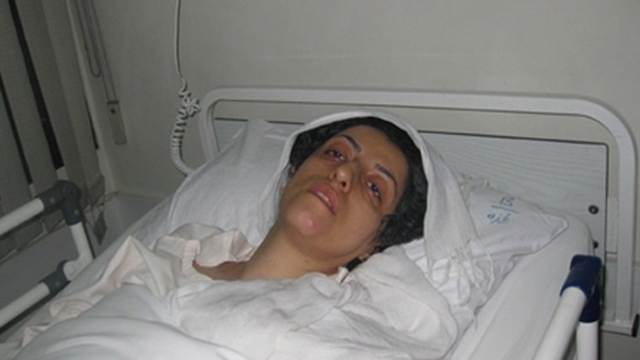
Mohammadi, who is critically ill, had been sentenced in May on charges of violating national security and acting against the Islamic regime through her support of an anti-death penalty campaign.

As vice president of the Defenders of Human Rights Center in Iran, Mohammadi gained attention in 2014 for defending women who had acid thrown on them in the city of Esfahan, purportedly for dressing immodestly.

While jailed this summer at Tehran’s Evin Prison, she staged a 20-day hunger strike in protest of authorities who barred her from speaking by phone with her family.

Mohammadi is mother to 9-year-old twins, who live in France with their father. Friends say she suffers from a chronic illness that causes partial paralysis, which has worsened due to her imprisonment, according to the Los Angeles Times.

“This verdict is yet another cruel and devastating blow to human rights in Iran, which demonstrates the authorities’ utter contempt for justice. Narges Mohammadi is a prominent advocate of human rights and a prisoner of conscience. She should be lauded for her courage not locked in a prison cell for 16 years,” said Philip Luther, Amnesty International’s Research and Advocacy Director for the Middle East and North Africa.

“By insisting that this harsh and appalling sentence is imposed for her peaceful human rights work, the authorities have laid bare their intent to silence human rights defenders at all costs,” he added.

Human rights activists and dual nationals continue to be imprisoned during the presidency of Hassan Rouhani, whose 2013 election had raised hopes of an easing of Iran’s harsh security laws, but has since come to be regarded as an instrument of the regime’s security apparatus.

Mohammadi is a supporter of the Campaign for Step by Step Abolition of the Death Penalty, known by its Persian acronym, Legam. Iran is one of the world’s leading practitioners of capital punishment, putting to death an estimated 1,000 people last year alone.

Last month, Iran put to death a teenager who was convicted of a crime when he was 17. Approximately 160 minors are on death row in Iran, according to Amnesty International.

“It is particularly shocking that this sentence comes as Iran’s authorities are preparing for renewed bilateral dialogue with the EU, given that Narges Mohammadi was convicted for her work campaigning against the death penalty and meeting with the former EU High Representative for Foreign Affairs. This casts serious doubts over Iran’s commitment to engage meaningfully with the EU on human rights issues,” Luther added.

And therein lay the quandary the world faces: Even as it seeks to open up trade relationships with Iran following the nuclear deal, the world turns a blind eye to the continuing, blatant abuses being committed by the regime.

The harsh sentence of Mohammadi for essentially representing women who had been brutalized by regime paramilitaries and police is an especially visible demonstration of how much the mullahs in Tehran simply don’t care what the world thinks.

Part of their disregard stems from their efforts to perpetuate the myth that the nuclear deal is so valuable to the world in keeping Iran from arming itself with nuclear weapons that the world is willing to look the other way on virtually any other issue in order to preserve the deal.

Forget the fact that the deal itself is a wreck and unenforceable and the regime already has taken advantage of it, but this attitude by the world’s leaders has enabled the regime to commit more atrocities, expand its military presence and rapidly rebuild its military without fear of punishment or reprisal.

Nothing epitomizes that more than the rapid development, testing and deployment of the Iranian regime’s ballistic missile program which has progressed from short-range conventional weapons, to now deploying intercontinental missiles capable of carrying nuclear, chemical or biological warheads.

The Foundation for the Defense of Democracies, wrote in US News and World Report, explaining the regime’s use of nuclear agreement to advance its own agenda.

“Tehran insists that foreign (implicitly, U.S.) machinations have undermined the sanctions relief that the deal should have brought. Iranian officials have claimed they have ‘no fear’ of the deal falling apart, and openly discuss how to snap back their remaining nuclear infrastructure if they believe the deal has been transgressed. These critiques form the core of Iran’s snapback-centric strategy, one aimed at upping the ante to pocket additional concessions,” they write.

The “snapback” mechanism included in the deal allows the countries involved to restore sanctions in the event of Iranian “significant non-performance.” But Iran retains a separate snapback capability that can nullify both nuclear and non-nuclear sanctions: the threat of ramping up its nuclear infrastructure. The fact that the Islamic Republic is able to credibly threaten such snapback means Western audiences will have to reckon with Tehran’s complaints,” they added.

By Laura Carnahan
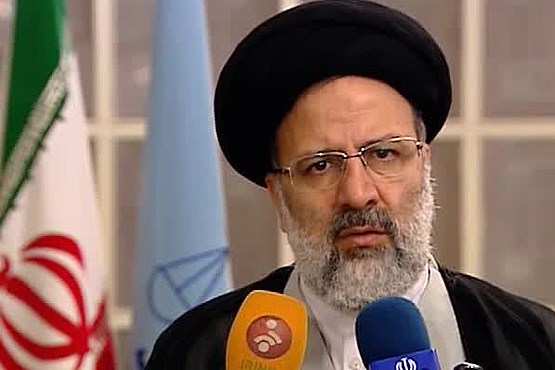
Filed Under: Blog, News Tagged With: Featured, hassan rouhani, Iran, Iran deal, Iran Human rights, Iran Mullahs, Iran Talks, Iran Terrorism, Irandeal

There is More Than One Presidential Election to Keep an Eye on

September 28, 2016 by admin

There is More Than One Presidential Election to Keep an Eye on

There is More Than One Presidential Election to Keep an Eye on

While the US watches a slugfest of a presidential election between Hillary Clinton and Donald Trump, another presidential election scheduled to take place next year on the other side of the world bears watching because of how it potentially impacts not only every American, but also the entire Middle East and Europe.

The “election” will be in Iran for the next president, however unlike the US election, there is likely to be no doubt, no drama, no recounting of ballots or examination of hanging chads. There probably won’t even be very many people on the ballot as well because in the Iranian regime, elections are inconveniences that have to be tolerated for the international community.

They are by no means, free, fair, open or even compelling. The last time there was even any controversy was in 2009 when the election was widely seen as rigged and in the heat of the Arab Spring movement, ordinary Iranians decided to do something they had not done since the downfall of the Shah of Iran; they protested—massively.

In response, top mullah Ali Khamenei and his fellow clerics did what they normally do, they ordered a crushing suppression of protests that results in deaths, mass imprisonment and harsh crackdowns on news media, technology and foreign journalists.

After figuring out the regime couldn’t stomach another debacle like that, Khamenei and his fellow conspirators cooked up a scheme to wipe names off future ballots and allow a handpicked successor to be elected without any protest and be seen as a “moderate.”

That man was Hassan Rouhani in 2013 who cruised to victory against a field of straw men and was widely praised as a “fresh” face by the Iran lobby; an odd phrase since Rouhani has been at the heart of the regime’s military and intelligence services for the past three decades.

Calling Rouhani a moderate is like calling a neo-Nazi “open minded.”

Now his re-election is coming up next year and already the field is being cleared to allow him an uncontested run and eliminate any choice for the Iranian people who would dearly love to dump him into the unemployment line after debilitating economic news continued to pour out of Iran even after a nuclear deal that Rouhani and the mullahs promised would open the flood gates to an improved quality of life.

Things are so bad for Rouhani at home that even Mahmoud Ahmadinejad, the man Rouhani succeeded, has considered another run for the presidency until he was slapped down by Khamenei. The prospect of another term by Ahmadinejad has the mullahs scared out of their turbans since he is widely reviled in the West and at home.

His run would be akin to having Richard Nixon take a stab against Jimmy Carter in 1980 fresh off his resignation and threatened impeachment from the Watergate scandal.

“In carrying out the intentions of the leader of the revolution, I have no plans to take part in the elections next year,” Ahmadinejad said in a letter to Khamenei, published on his website dolatebahar.com.

You could almost hear the sigh of relief coming from Khamenei and Rouhani.

Besides Rouhani’s re-election, the looming prospect of who replaces an aging and ill Khamenei should have the US and its allies even more worried. Far from the prospect of getting a more moderate replacement, the name most often heard being bandied about as the next top mullah is Ibrahim Raisi.

As Ray Takeyh, a senior fellow at the Council of Foreign Relations, put it succinctly in an editorial in the Washington Post, Raisi “could be the only person in the Islamic Republic who could cause people to miss Khamenei.”

“Raisi is 56 years old and, like Khamenei, hails from the city of Mashhad. After a stint in the seminary, he has spent his entire career in the Islamic Republic’s enforcement arm, serving as prosecutor general, head of the General Inspection Office and lead prosecutor of the Special Court of the Clergy, which is responsible for disciplining mullahs who stray from the official line. In one of his most notorious acts, he served as a member of the ‘Death Commission’ that, in the summer of 1988, oversaw the massacre of thousands of political prisoners on trumped-up charges,” Takeyh writes.

“Raisi’s background fits nicely with the Revolutionary Guards’ mission of crushing dissent. In a recent interview, Revolutionary Guards commander Muhammad Jaffari conceded that since 2005, the regime has come to see domestic insurrection as an even greater challenge to its existence than external pressures. The ideal successor to Khamenei would have to not only share the Guards’ perspective but also have close ties to the security organs and the judiciary. The Guards seem to have found their man. Raisi is being increasingly touted by them as a vanguard of the regime and an enforcer of its will,” he added.

Khamenei’s clear preference for Raisi can be seen in his appointment of him to head one of the regime’s largest charitable foundations, Astan Quds Razavi, which gives Raisi access and control to vast land holdings and many other enterprises that funnel money to him, the IRGC and his allies.

With the endowment’s estimated value at $15 billion, Raisi is in prime position to buy votes and assemble his own network of loyal supporters and operatives.

All of which reinforces the central conceit of Khamenei, Rouhani and their ilk, which is to maintain the purity of the Islamic revolution and the ideological basis for it. Even with the opening of trade with the nuclear agreement, the mullahs have no intention of using these new funds to help the economy or Iranian people. Instead, they view these proceeds as necessary to continue the funding and expansion of the Islamic revolution.

Ultimately, while everyone is focused on if Rouhani will be re-elected, the more important question is whether or not Raisi will even allow Rouhani to speak without a script.

By Michael Tomlinson

Filed Under: Blog, News Tagged With: Featured, hassan rouhani, Iran, Iran deal, Iran Human rights, Iran Lobby, Iran Mullahs, Moderate Mullahs, Raisi

“NIAC Leadership” Conference Showcases Influence Pedaling

September 26, 2016 by admin

“NIAC Leadership” Conference Showcases Influence Pedaling

“NIAC Leadership” Conference Showcases Influence Pedaling

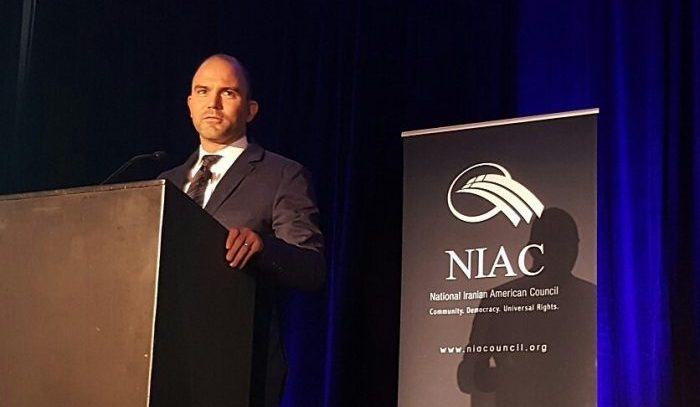
How much does it cost to meet your lawmakers in a venue where you can exert the influence of the mullahs in Tehran? Apparently only $349 and that also gets you three lunches and two breakfasts!

What a deal.

But if you’re strapped for cash, maybe because you have to pitch in for your family to hire a lawyer in an effort to reach your dual-nationality relative who is sitting in Evin prison in Iran, for only $175 you can still get access to lawmakers, but you miss out on a “Gala Reception” and hors d’oeuvres.

So less pizazz, but still you can buy access and who is selling this access at such bargain rate prices? The National Iranian American Council which held its “Leadership Conference” this weekend in Washington, DC.

The conference was a veritable who’s who of Iranian regime activists and lobbyists, all previously dedicated foot soldiers in the fight for securing a nuclear deal with Iran, as well as the fight to buy reprieves for the regime from ongoing sanctions for violations of human rights and sponsorship of terrorism.

Some of the more notable speakers included Joseph Cirincione of the Ploughshares Fund,which received and distributed cash to various members of the Iran lobby including NIAC according to investigative media reports, Ben Rhodes, deputy national security advisor to President Obama and architect of the now-infamous “echo chamber” of supporters used to deceive media and the American people as to the inherent flaws of the nuclear agreement.

Other key participants curiously included Christopher Backemeyer, deputy coordinator of sanctions policy in the State Department, and Michael Mosier, associate director at the Office of Sanctions Policy & Implementation in the Office of Foreign Assets Control. These two men hold considerable power over the question of whether or not Iran is complying with the nuclear agreement and whether or not certain sanctions should be enforced such as bans against the regime accessing US currency exchanges.

The fact that such key regulatory officials are participating in a conference sponsored by an organization identified as having strong links to high ranking Iranian officials should prove troubling. It is similar to having members of the Treasury Department’s securities enforcement division having drinks with executives from Enron or Lehman Brothers prior to the mortgage meltdown.

What is always fascinating about the NIAC’s annual confab is the packing of the speakers list with its own staffers, in this case Trita Parsi, Reza Marashi and Tyler Cullis, each of whom have worked diligently to carry Iran’s water and make excuses for the worst excesses of the regime. Watching these three “stooges” try to divert attention away from ballistic missile launches, mass arrests of journalists, public hangings of Iranians or arrests of Americans, Brits and other citizens is like watching a bad sketch comedy troupe.

Considering that one of the self-proclaimed mandates of the NIAC is “to ensure that human rights are upheld in Iran and that civil rights are protected in the US. NIAC believes that the principles of universal rights – Freedom of assembly, religion, and speech, as well as dignity, due process and freedom from violence – are the cornerstones of a civil society” one might ask why NIAC never invites any of the Iranian-Americans who can tell their story first hand of what Iranian justice is like.

Why is it that NIAC never has people such as Saeed Abedini, the Christian pastor held and tortured in Iran, or Amir Hekmati, the former US Marine brutalized in prison, or Jason Rezaian, the Washington Post reporter, to attend a conference and tell their story in furthering an understanding of the terrible forces at work within Iran’s religious leadership?

Of course the NIAC would never showcase any of these Americans since their presence would be a terrible embarrassment and highlight the true nature of the Iranian regime which is cruelty, punishment, abuse and control. Even though these Americans were released in exchange for $1.7 billion in cash, more Americans have been taken this year and the NIAC holds no fundraiser for them; launches no grassroots campaign for their release and holds no protest in their honor.

Even after the regime’s president, Hassan Rouhani, appeared on NBC prior to his speech before the United Nations General Assembly, he confidently admitted to Chuck Todd that Iran did not recognize dual nationalities.

“Therefore those who have dual citizenship, from the interpretation of the Iranian laws, are Iranian citizens solely and only,” Rouhani said. “And any legal prosecution is carried out on the foundation that they are Iranian citizens subject to Iranian law.”

And yet the NIAC issued no condemnation, no rebuke, not even a single tweet objecting to the extralegal procedures against Iranian-Americans, which the NIAC was ostensibly working on behalf of.

The height of absurdity was reached and exceeded by several speakers at this weekend’s proceedings, including this juicy quote from Rhodes.

“Acceleration of tensions between Gulf partners and Iran is a serious problem across the region,” said Rhodes as quoted by NIAC.

You think? It might be one of the better understatements, ranking up there with “peace in our time” by Neville Chamberlain.

The Iranian regime has pushed the possibility of all-out conflict with regional rival Saudi Arabia, while at the time supporting three proxy wars in Syria, Iraq and Yemen that have claimed the lives of almost 750,000 people. NIAC’s promises that Iran would be a partner for peace and moderation following the nuclear deal have turned out to be false and alarmingly so.

What was promising was the position taken by Philip Gordon, a senior foreign policy advisor to Hillary Clinton and senior fellow at the Council of Foreign Relations, who reiterated the presidential candidates public statements of skepticism about Iran’s conduct and the need to “distrust and verify” when it comes to enforcing the nuclear deal, much to the chagrin of Parsi who tried everything short of begging to get Gordon to make positive statements about the regime.

Gordon’s reticence provides hope that the next president will approach Iran with a clean slate and not be motivated to the falsehoods and “echo chamber” of the NIAC.

By Laura Carnahan

Filed Under: Blog, News Tagged With: #NuclearDeal, Ben Rhodes, Featured, hassan rouhani, Iran, Iran deal, Iran Human rights, Iran Lobby, Jason Rezaian, Joseph Cirincione, Marashi, National Iranian American Council, NIAC, NIAC Action, Ploughshares, Reza Marashi, Rouhani, Trita Parsi, Tyler Cullis, Yemen

Hassan Rouhani Tries to Fool the World

September 23, 2016 by admin

Hassan Rouhani Tries to Fool the World

Hassan Rouhani Tries to Fool the World

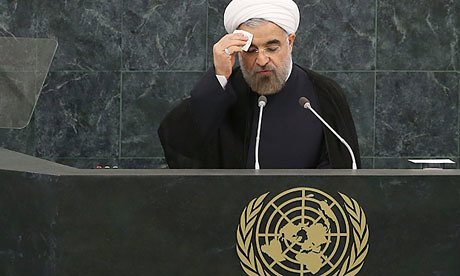
In each prior appearance before the United Nations General Assembly session, the Iranian regime’s Hassan Rouhani has sought to project an image of moderation and openness. His entourage usually consisted of large swarms of advisers, economic aides and other dignitaries.

His schedule usually consisted of media interviews with network anchors and newspapers in which he offered a beguiling smile and chuckle to preserve the image of some kind of avuncular uncle.

But in his fourth and most recent appearance the other day, his schedule was a limited two day layover and consisted of few meetings on the sidelines with only one network interview with MSNBC’s Chuck Todd. Gone was the large retinue, but wasn’t missing was the same sly effort to try and conceal the truth behind Iran’s moves.

The Wall Street Journal noted the distinct change in this visit by Rouhani.

“Iran’s posture and agenda this year at the U.N. stands in contrast to years past, when the president brought large teams of advisers and ministers and capitalized on the trip by holding meetings with scholars, editors, Iranian-American business moguls and ordinary citizens,” wrote the Journal.

“The Iranian-American business community, which was heavily courted by Mr. Rouhani and his team during previous U.N. summits, kept its distance this year. Iran’s arrests of dual nationals, particularly Iranian-American businessman Saimak Namazi and his father, Baqir Namazi, who was formerly a U.N. official, sent chills through businesses considering investing in Iran,” the Journal added.

The circumstances have changed dramatically for Iran and the rest of the world in just one year with the nuclear agreement reached last year. Wars now rage throughout the region in Syria, Iraq, Afghanistan and Yemen and bloody extremist Islamic attacks of all stripes have peppered the world from Australia to Canada and the U.S. to throughout Europe and Africa.

Also, with the nuclear deal in hand, the mullahs in Tehran have focused their efforts on trying to press for more concessions before the window closes and either Hillary Clinton or Donald Trump are elected since both have expressed varying degrees of skepticism of the regime and the nuclear deal.

The hotly disputed ransom payment made by the US of $1.7 billion in cash for American hostages earlier this year emboldened the regime and spurred another round of hostage taking of dual national citizens, which Rouhani noted in an interview, Iran does not recognize.

Iran is currently detaining five British dual nationals, a Canadian-Iranian professor and four Iranian-Americans. In the past, Iran has jailed dual nationals as leverage to swap prisoners.

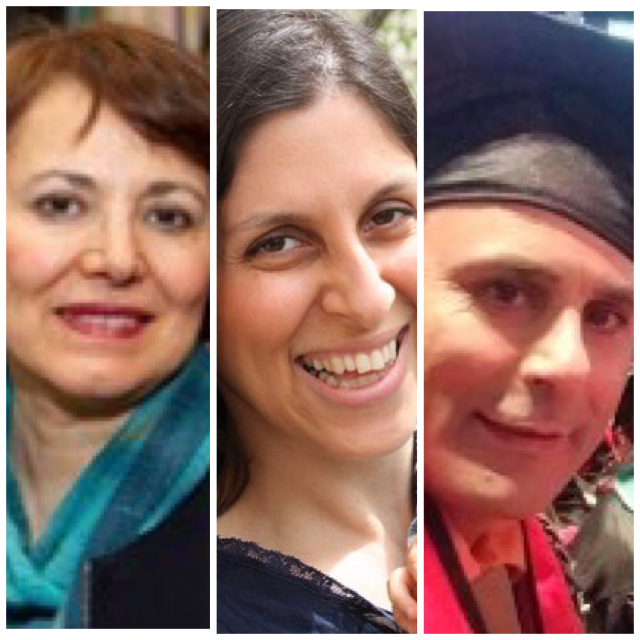
When asked about the case of the British-Iranian charity worker Nazanin Zaghari-Ratcliffe, who was sentenced to five years in prison in August, Rouhani simply said Iran doesn’t recognize dual nationals and denied using them as pawns. Zaghari-Ratcliffe’s husband has said Iran hasn’t revealed specific charges against his wife.

What hasn’t changed is the drivel that spewed out of Rouhani in his speech in which he heaped one absurd notion on top of another, first blaming sectarian violence in the region solely on Saudi Arabia, its chief regional rival, and assuring the world Iran supported inclusive, democratic governments.

It’s an appalling statement to make for Rouhani considering the Iranian regime is the most brutal nation in the Middle East, unless you count ISIS as a separate entity. His statement that Syria’s unrest could only be resolved by rooting out terrorist groups, neglected to mention that Iran’s military support of the brutal Assad regime has not targeted terror groups such as ISIS, but rather Syrian rebel groups opposed to Assad.

“If the Saudi government is serious about its vision for development and regional security, it must cease and desist from divisive policies, spread of hate ideology and trampling upon the rights of neighbors,” Rouhani said.

His blaming of the Saudi’s is beyond incredulous considering Iran’s mullahs run a 24/7 hate mongering propaganda machines through its state-owned media, cyberattacks and lobbying groups all aimed at pushing its own peculiar brand of extremist ideology.

In his speech, Rouhani criticized the United States for its “lack of compliance” with a landmark nuclear deal reached with six major powers and Iran in 2015 aimed at curbing Tehran’s nuclear program in exchange for lifting sanctions, which is the crux of the issue most concerning Rouhani and his cohorts.

The Iranian economy is stalled and unemployment, wage growth and household incomes have all stayed persistently below the targets Rouhani promised when he gained office. Making matters worse, the perception that Iranians would receive economic benefits from the nuclear deal have failed to materialize making ordinary Iranians restless and angry at their continued plight.

With the financial drains of supporting three proxy wars emptying the regime treasury, the money it has received from unfrozen assets and the hostage payment have principally been used to replenish its depleted military stores.

The irony of Rouhani praising peace while the Revolutionary Guard Corps showed off new long-range ballistic missiles with cluster bomb warheads against the backdrop of mass demonstrations and protests in Iran of people frustrated with deep seated corruption was not lost on most observers.

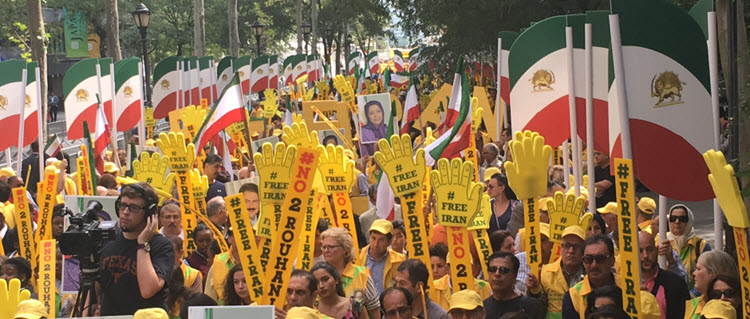
Nor did the thousands of protesters outside of the UN made up of human rights groups and Iranian dissidents let UN delegations forget that Rouhani should not be getting a free ride and ought to be held accountable for the lies he pedaled at the General Assembly.

As the hashtag said, #No2Rouhani on hundreds of signs, the world should say no more to his deceptions.

By Michael Tomlinson

Filed Under: Blog, News Tagged With: #NuclearDeal, Featured, hassan rouhani, Iran, Iran deal, Iran Human rights, Nuclear Deal, Rouhani

While Rouhani Speaks at UN Relatives of Hostages Plead for Their Freedom

September 21, 2016 by admin


While Rouhani Speaks at UN Relatives of Hostages Plead for Their Freedom

While Rouhani Speaks at UN Relatives of Hostages Plead for Their Freedom

Far from the pomp and pageantry of the United Nations General Assembly session opening and its parade of speeches from world leaders, small acts of defiance help shine a light on one leader in particular who will do his best to put a happy face of a skull and crossbones situation.

A mother and daughter have bravely filmed themselves cycling in an Iranian city in defiance of a fatwa that says it is a danger to women’s “chastity”.

The fatwa, which has been announced by Iran’s top mullah Ali Khamenei, prevents women from cycling because it “exposes society to corruption”.

The video shows two women wearing hijabs and face veils cycling on a road in what they say is Kish, an island territory belonging to Iran.

“My mum and I are from Tehran,” the woman holding the camera says.

“Bicycle riding is part of our lives. We heard Khamenei’s fatwa banning women from cycling,” the woman says. “We immediately rented two bicycles to say we’re not giving up cycling.”

“It’s our absolute right and we’re not going to give up,” she adds defiantly according to the Independent newspaper.

As protests go, this one is not likely to go down in history akin to Martin Luther King’s march in Selma or even the mass Arab Spring protests that rocked the Middle East, but in Iran, where almost any act of civil disobedience can lead to imprisonment, torture and even death, riding a bicycle if you’re a woman is a pretty brave act.

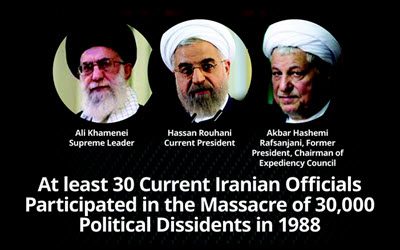
But for 30,000 Iranians in 1988, the penalty for their alleged act of disobedience—by being associated even remotely with the People’s Mojahedin Organization of Iran (PMOI/MEK)—earned execution at the hands of the leaders who now hold leadership positions in Iran.

The mass killings recently re-entered the international spotlight when audio recordings of former top cleric, Hossein-Ali Montazeri came to light last month. The late ayatollah had been the heir-apparent to the founder of the Islamic Republic in the 1980s, but was ousted from his position and from the regime itself as a result of the contents of the recording, in which he condemned the mass killings, calling them a stain on the memory of Iran’s honor.

Tom Ridge, the former secretary for homeland security, noted in an editorial in The Hill that Montazeri’s long-suppressed tirade specifically confirms some of the most shocking details of the proceedings sentencing these people to death, including the execution of teenage girls and pregnant women.

A large demonstration was held today in front of the UN protesting Rouhani’s scheduled appearance and the continued presence of so many regime leaders in power today who participated in those massacres.

As Ridge points out, one of the individuals heard on the 1988 recording is today the justice minister in the Rouhani administration, Mostafa Pourmohammadi, who was the Intelligence Ministry’s representative on the Tehran “death commission,” which held the minutes-long trials to determine which of the local political prisoners would be put to death. On the recording, Pourmohammadi eagerly defends the activities that Montazeri described as the “worst crime of the Islamic Republic.” And today he characterizes the massacre as the enactment of “God’s commandment” regarding the MEK.

Rouhani comes to the UN session though with more baggage as news comes out of Iran of more crackdowns and human rights violations, which clearly demonstrate that under his “moderate” reign, things have gone from bad to worse; a prospect that seemed unimaginable after the brutal terms of the former president Ahmadinejad.

According to Al-Monitor, reports surfaced of the arrest of Sadra Mohaghegh, the society editor of the Reformist Shargh Daily. His sudden detention has caused an outcry among journalists, activists and Iranian netizens, who have turned Mohaghegh’s name into a hashtag — especially after Mohaghegh’s Twitter account was taken down on Tuesday for unknown reasons.

According to Basij News, Mohaghegh was arrested “during an intelligence operation by security forces,” without specifying which agency was responsible for his arrest. Media reports accuse him of having collaborated with “counter-revolutionary” foreign media. The detention comes only days after the arrest of another Iranian journalist, Yashar Soltani, who is in charge of Memari News, a website that focuses on urban news and architecture.

Rouhani’s appearance in New York is also being met with heavy pressure from the family and relatives of Western hostages being held by the regime, including Kamran Foroughi who has flown from London to New York for the past three years to beg Rouhani for the release of his ailing father, Kamal Foroughi, 76, on humanitarian grounds. The British-Iranian dual national has cataracts, spent 18 months in solitary confinement, and is barely halfway through his 5-year sentence on espionage charges.

Foroughi came to New York with Richard Ratcliffe, whose wife, Nazanin, also a British-Iranian dual national, was sentenced last month to five years in prison on espionage charges while visiting her parents. Their 2-year-old daughter, Gabriella, has had her passport confiscated.

The same judge, Abolghassem Salavati, presided over the trials of Zakka, Foroughi and Ratcliffe. He is known for handing down harsh sentences in high-profile political cases. He also sentenced Washington Post reporter Jason Rezaian, who was released along with three other Iranian-Americans in a prisoner swap in January when the nuclear deal was implemented, according to the Washington Post.

Even newly-installed British Prime Minister Theresa May was under pressure to raise the plight of Ratcliffe in her meeting with Rouhani on the sidelines of the UN session.

It is hard to imagine how any objective observer can now claim that Rouhani’s term has been a moderate one. The human rights violations have been so prevalent, so brutal and so constant that it is a wonder why the world’s representatives simply don’t walk out on his speech.

By Laura Carnahan

Filed Under: Blog, News Tagged With: Featured, hassan rouhani, Iran, Iran Human rights, Iran Mullahs, Khamenei

Hassan Rouhani Begins Charm Tour Leading to UN Speech

September 13, 2016 by admin

Hassan Rouhani Begins Charm Tour Leading to UN Speech

Hassan Rouhani Begins Charm Tour Leading to UN Speech

The United Nations General Assembly Session over the years has been the scene of many speeches both famous and infamous. Some of the more memorable addresses by some infamous people include Venezuelan strong man Hugo Chavez in 2006, Libyan dictator Moammar Gadhafi in 2009 and Iranian regime leader Mahmoud Ahmadinejad in 2010.

It has been used as a platform to bully the world. It has been used to make extravagant accusations. It has been used to charm and lull the world into believing false narratives.

It has also been used to raise human rights issues. It has been used to advocate for peace, democracy and tolerance. It has been used to raise the hope for a world seeking to make a better place for the future.

The General Assembly exists to serve the aims of whoever chooses to speak and the annual general session is a free for all so world leaders can make their rhetorical claims on whatever topic they choose.

Into this platform has stepped Hassan Rouhani, the handpicked president of the Iranian regime who has used previous sessions to make lofty promises of openness, moderation and dedication to finding diplomatic solutions to intractable problems.

Unfortunately, the reality of the Iranian regime’s actions has never lived up to his rhetoric.

As recently as Rouhani’s address to the UN last year, he suggested that the nuclear agreement reached with Iran and world powers would help create the basis for broader engagement, in a speech that was noted for its departure from the strident tone of his boss, top mullah Ali Khamenei.

Last year Rouhani spent considerable time extolling the diplomatic success of the agreement, claiming it would lift years of painful economic sanctions on Iran in exchange for verifiable guarantees that its nuclear activities remain peaceful.

In the year since he gave that optimistic speech, relations between the Iranian regime and the rest of the world has plummeted to new lows. Among the regime low-lights since he gave his speech:

  • Iranian regime has stepped up arrests of dual-national citizens following the linking of releasing American hostages in exchange for $1.7 billion from the U.S.;
  • Iranian regime has expanded proxy wars in Syria, Iraq and Yemen through its continued support of terror groups such as Hezbollah and its recruitment of Afghan mercenaries and arming of Shiite militias and Houthi rebels;
  • The regime has continued development and test firing of ballistic missiles in defiance of UN restrictions, alongside being granted exemptions from the nuclear deal allowing it to maintain large stockpiles of heavy water and operating “hot cells” for the handling of nuclear materials;
  • Iranian regime has instituted large crackdowns against dissidents, students, journalists, ethnic and religious minorities, including knocking off the majority dissident and moderate candidates from parliamentary election ballots; and
  • Iranian regime stepped up open confrontations in the Persian Gulf with U.S. Navy warships, necessitating evasive maneuvers and even warning shots to be fired, even as the regime engages in a massive military build-up with purchases from Russia.

It has hardly been a year of peace and moderation as Rouhani claimed and the Iran lobby has argued for since the nuclear deal was reached.

A closer look at Rouhani’s travel itinerary shows his focus on a tour of designed to expand the regime’s sphere of influence into Latin America as he visits Venezuela this week.

At the UN General Assembly though, Rouhani’s task will be more difficult—not only because more people are likely disbelieve his assertions given the regime’s track record—but also that Khamenei may be finding Rouhani’s utility waning and the need for this particular puppet lessening.

Many analysts and Iranian dissidents have predicted that Rouhani’s selection in a purportedly rigged presidential election was designed to allow the regime to present a more genial and media-savvy face to open a rapprochement with the U.S. in order to secure a favorable deal alleviating the regime of crippling economic sanctions.

Now that the regime has been appeased through the nuclear agreement, the need for friendly regime face may be fading as Khamenei has indulged his desire for more aggressive confrontations with the U.S. and its allies.

Dr. Majid Rafizadeh, president of the International American Council, says a sign of that shift may come if Rouhani’s speech criticizes the U.S., highlighting Washington’s failure to let Tehran rejoin the financial global system.

Iran’s UN speech will most likely repeat Khamenei’s message, in a more diplomatic way, that the US has been “breaking oaths, not acting on their commitments and creating obstacles,” he said.

Rouhani’s speech is also unlikely to make any mention of the current hostages being held by the regime, including Nazanin Zaghari-Ratcliffe, a British-Iranian dual citizen, who was detained in April at Tehran’s Imam Khomeini Airport.

An Iranian court just handed down a harsh five year prison sentence on her, even though the exact charges have not been disclosed by the regime. Zaghari-Ratcliffe works at the Thomson Reuters Foundation, the charitable arm of the company that owns the Reuters news agency and her plight, along with other hostages such as Canadian professor Homa Hoodfar, have revived concern about the regime’s plans for more cash for hostage swaps.

As the Wall Street Journal editorialized in an opinion piece:

“One purpose of the harsh sentence is to remind Iranians in the diaspora tempted to return home in the wake of the nuclear deal that the regime sees them as traitors. It’s also no accident that the sentence came shortly after the U.K. upgraded its diplomatic relations back to ambassador level.

“Foreign Secretary Boris Johnson cheered the new opening to Tehran last Monday, only to receive a rude awakening days later. Now the regime has a new political and financial bargaining chip, and Mr. Obama has created a cash-for-hostages incentive system with his earlier ransom. Let’s hope the British government is wiser than to stuff briefcases with unmarked bills.”

The UN should plan on asking Rouhani the tough questions it didn’t ask him the last three times he spoke at the General Assembly.

By Michael Tomlinson

Filed Under: Blog, News Tagged With: Featured, General Assembly, hassan rouhani, Iran, Iran deal, Iran Human rights, Iran sanctions, UNGA

US Warns of Travel to Iran as Regime Shows off Military Might

August 24, 2016 by admin

US Warns of Travel to Iran as Regime Shows off Military Might

US Warns of Travel to Iran as Regime Shows off Military Might

In what is becoming annual rite of summer, the U.S. State Department on Monday issued a warning urging U.S. citizens to avoid traveling to Iran. This latest advisory, which emphasizes Iran’s desire to capture U.S. citizens, comes on the heels of a growing scandal over the Obama administration’s decision to pay Iran $400 million in cash on the same day that it freed several U.S. hostages, according to the Washington Free Beacon.

The new warning replaces an existing one the department issued on March 14, 2016 and reiterates and highlights the risk of arrest and detention of Americans, particularly dual national Iranian-Americans, which the Iranian regime does not recognize.

“Iranian authorities continue to unjustly detain and imprison U.S. citizens, particularly Iranian-Americans, including students, journalists, business travelers, and academics, on charges including espionage and posing a threat to national security,” the advisory said.

“Iranian authorities have also prevented the departure, in some cases for months, of a number of Iranian-American citizens who traveled to Iran for personal or professional reasons. U.S. citizens traveling to Iran should very carefully weigh the risks of travel and consider postponing their travel. U.S. citizens residing in Iran should closely follow media reports, monitor local conditions, and evaluate the risks of remaining in the country,” the advisory added.

The advisory goes on to warn of the threats posed to religious minorities and a wide range of other classifications of individual at risk of arrest, harassment and detention by regime authorities.

“The Iranian government continues to repress some minority religious and ethnic groups, including Christians, Baha’i, Arabs, Kurds, Azeris, and others.  Consequently, some areas within the country where these minorities reside, including the Baluchistan border area near Pakistan and Afghanistan, the Kurdish northwest of the country, and areas near the Iraqi border, remain unsafe.

“Iranian authorities have detained and harassed U.S. citizens, particularly those of Iranian origin. Former Muslims who have converted to other religions, religious activists, and persons who encourage Muslims to convert are subject to arrest and prosecution,” the advisory said.

Despite the warning, Iran remains a tourism destination for some with The New York Times offering two-week trips to Iran several times a year. It is noteworthy that the Times has long been an editorial supporter of accommodating the Iranian regime as part of the Obama administration’s echo chamber of support.

The warning flies in the face of the all of the claims made by the Iran lobby during the nuclear talks last year when prominent advocates for the regime such as Trita Parsi of the National Iranian American Council, bloggers Ali Gharib and Jim Lobe, all promised a more moderate and stabilizing Iranian regime.

Clearly the opposite has happened if the U.S. government has to update warnings about its citizens being kidnapped by the Iranian government and then warning that it can do little to help you out if you are taken hostage.

Top that level of aggressive militancy with new announcements by the Iranian regime of is newly grown military muscle which it puts on display with the glee of a child showing off a new bicycle.

The regime released images of its first domestically built long-range missile defense system on Sunday, a project started when the country was under international sanctions.

Images on multiple state news agencies showed President Hassan Rouhani and Minister of Defense Hossein Dehghan standing in front of the new Bavar 373 missile defense system, according to France 24 News.

The system was designed to intercept cruise missiles, drones, combat aircraft and ballistic missiles, according to earlier statements by Dehghan. He claimed that Iran’s missile range capabilities have been expanded by two to three times across its arsenal. The upgrades now give Iran’s current stock of cruise missiles the ability to hit targets 62 miles off its coast, easily putting ships traveling through the Persian Gulf’s Strait of Hormuz at risk.

Rouhani said in a televised speech on Sunday that Iran’s military budget had more than doubled compared with last year.

“If we are able to discuss with world powers around the negotiating table, it is because of our national strength” he said.

Rouhani also unveiled the first Iranian-made turbo-jet engine on Sunday, saying it was capable of flight at 50,000 feet.

“The Islamic republic is one of eight countries in the world who have mastered the technology to build these engines,” Rouhani said.

Dehghan added that Iran was now looking to develop seaborne cruise missiles capable of supersonic speed.

The new missile was developed as a response to the suspension of delivery of a Russian-made S-300 missile system because of earlier sanctions, but with those sanctions lifted because of the nuclear agreement, Russia completed delivery of the advanced weapons system this year.

Dehghan also boasted on regime television that the regime would also negotiate with Russia to acquire its sophisticated Sukhoi fighter and attack aircraft to bring its air force capability for long-range force projection and air combat against the more sophisticated air forces of regional rivals such as Saudi Arabia and the Gulf states.

Iran has also discussed with Russia the production licensing of the Russian T-90 tank inside Iran. The focus of the Iranian regime is on acquiring the capability and technology to produce the systems in-country rather than depending on the mood of the Kremlin to sell Iran weapons.

The world should be aware now that the Iranian regime’s intentions are anything but peaceful and moderate.

By Michael Tomlinson

Filed Under: Blog, News Tagged With: #NuclearDeal, Featured, hassan rouhani, Iran, Iran deal, Iran Human rights, Iran Terrorism, Khamenei, nuclear talks

Who is Really in Charge of the Iran Regime?

July 29, 2016 by admin

Who is Really in Charge of the Iran Regime?

Who is Really in Charge of the Iran Regime?

The Iranian regime has been busy snatching up citizens of other countries without charge, trial or contact with the outside world. They have been U.S., British, French and Canadian citizens; dual national Iranians. They have been professors, students and aid workers.

None were terrorists, criminals or even political. They all had the misfortune of being in Iran and possessing a passport of a foreign country. It seems that alone was sufficient for the Revolutionary Guards to pick them up, put them in prison and walk away.

The New York Post editorial board blasted the practice and blamed earlier acts of appeasement for sowing the seeds for this behavior.

“Iran is re-stocking its larder of American and other Western hostages, clearly convinced the Obama administration won’t dare make it an issue. Tehran this week arrested yet another US citizen and plans to place him on trial — though on what charges, it won’t say,” the Post said.

“The State Department says it’s ‘looking into’ the latest arrest, which is pretty much all it can do. Iran doesn’t recognize dual citizenship, so won’t even allow consular visits to those being held.

“Some analysts suggest the Revolutionary Guard is insisting on the arrests in order to deter Western businessmen from visiting Iran with investment cash. Funny: Getting such investment was supposedly Tehran’s major motive for accepting the deal’s supposedly tough restrictions on its nuclear-weapons program in the first place,” it added.

The arrests do raise an interesting question: Who is calling the shots in the Iranian regime?

The Iran lobby has long maintained that a rift and power struggle is going on within the regime between the forces of moderates versus hardliners. Loyalists such as Trita Parsi of the National Iranian American Council have used that talking point incessantly in pushing for approval of the nuclear deal with Iran last year.

They promised a nuclear deal would usher in a period of moderation and empower these so-called moderates in upcoming elections.

The opposite has happened as the region has literally gone up in flames with wars now raging from Syria to Yemen and terrorist attacks striking the U.S. and Europe with almost daily frequency.

In Iran, parliamentary elections were rigged with the removal of virtually all perceived dissenters or moderates removed from the ballot even before voting began. The only group of “moderates” elected was a small cadre in Tehran only and even they have turned out to be loyal to the regime and ruling mullahs as evidenced by elections to return the hardest core extremists to leadership positions in the parliament and supreme council.

Many media outlets have characterized the hostage taking as evidence of the internal power struggle within the regime.

The Christian Science Monitor described by saying “the targets of the most radical elements of Iran’s competing power blocs are increasingly Iranian-Americans and other dual nationals visiting Iran to see family or pursue academic interests. They are being ensnared in the upheaval and redistribution of power in the wake of last year’s nuclear deal, experts in United States-Iran relations say.”

“Iranian hardliners opposed to President Hassan Rouhani and his diplomatic opening to the US and the West are widely assumed to be behind the detentions – and would not appear to be easily persuaded to permit the detainees’ release. But at the same time, some Iran experts say they see a window of opportunity for some kind of prisoner deal before President Obama leaves office,” it added.

The fact that speculation centers on the Iranian regime snatching up Americans and Brits for the purpose of another round of prisoner swaps in exchange for more economic concessions says volumes about the intentions about the regime, but it says even more about who is calling the shots in the leadership of the regime.

The time-honored tradition of hostage taking by the mullahs in Tehran was even conceded by Iran lobbyists as being unlikely to die off.

“But the prospects for freeing Iran’s imprisoned dual nationals before Mr. Obama leaves office – not to mention ending the practice altogether – are not bright,” says Reza Marashi of the NIAC.

“You have to put the likelihood at 50-50 at best,” he says. “The ability to align timing and interests, that’s completely up in the air.”

The best the Iran lobby can offer these poor, innocent victims of the regime are 50-50 odds they will be joined by more hostages.

All the evidence points to the fact that Hassan Rouhani has never been a moderate and is rock-solid in step with Ali Khamenei and his fellow mullahs on these actions. Has Rouhani called for these prisoners’ release? Has he condemned them? Has he even so much as posted a tweet describing any regret over these actions?

The answer is a resounding no.

The hardline nature of the regime can be seen in the everyday cruelties and injustices visited on ordinary Iranians. Beyond the more gruesome aspects of the regime’s rule, including public executions, amputations and beatings of women on the street, everyday acts that seem perfectly normal to any Western citizen are viewed as subversive and dangerous.

A group of women were reportedly arrested for riding bicycles in Iran and made to sign pledges not to repeat the “violation”.

They were planning to participate in a cycling event in the north-western city of Marivan when police told them a new government directive had barred women riding bicycles in public.

The opposition National Council of Resistance of Iran said officers ordered them to sign written pledges vowing not to repeat the “unlawful violation” and took several women who protested into custody, according to the Independent.

In another incident, up to 150 people were detained by Iran’s morality police at a mixed-gender party in Tehran. In the sweltering heat of summer, as people spend more time outside, the authorities tighten their grip on social norms, cracking down on activities deemed un-Islamic.

Such restrictions have become a regular feature of Iranian life since the current theocracy has come to power after the 1979 revolution, as members of the morality police appear on the streets, or are deployed in vans at public places, to tackle women defying the compulsory hijab, men with non-approved hairstyles, or males and females partying together, according to the Media outlets.

But even with all these acts of suppressing free expression, defiance among the Iranian people still finds a way to surface as many men have posted photos of themselves wearing the hijab to social media, in solidarity with women in the country, who are forced to cover their heads in public, the Independent reported.

Many of the photos show a man wearing the hijab next to his wife or a female relative whose hair is uncovered.

It isn’t much in the way of defying the regime, but in a nation where simply holding a U.S. passport and being an Iranian can land you in prison, even these small acts can grow to become important changes to the regime.

By Laura Carnahan

Filed Under: Blog, News Tagged With: hassan rouhani, Iran, Iran deal, Iran Human rights, Iran Lobby, Trita Parsi

Why the Iran Regime Needs ISIS

July 28, 2016 by admin

Why the Iran Regime Needs ISIS

Why the Iran Regime Needs ISIS

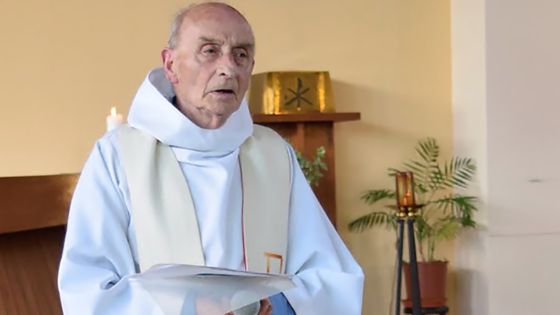
Rev. Jacques Hamel was an 85-year old priest shepherding a flock in a small church in Normandy, France. He was celebrating Mass when two dedicated followers of the terrorist group ISIS stormed in, made him kneel at the altar and then slit his throat in front of two shocked parishioners and two nuns who then heard a sermon from the killers.

ISIS claimed responsibility for the attack and fulfilled its long-standing vow to bring a war against Christians and the Catholic Church by killing a priest in the sanctity of a church.

“They forced him to his knees and obviously he wanted to defend himself and that’s when the drama began,” said one nun, who identified herself as Sister Danielle, The Guardian reported. “They were filming themselves preaching in Arabic in front of the altar. It was a horror.”

The attack comes amid a spate of terror strikes in France, including Tunisian Mohamed Lahouaiej Bouhlel’s truck rampage in Nice on July 14, when he plowed into a crowd of Bastille Day revelers – killing 84 and wounded over 300.

For two years, the black-clad jihadist army has called for attacks on Christians in Rome, throughout Europe and across the world. It has even called for the assassination of Pope Francis. The attack — which the knife-wielding ISIS killers reportedly videotaped — in the northern French town of Saint-Etienne-du-Rouvray shows Islamist killers have heeded the call.

“The Islamic State is persistently demoralizing European unity by launching divisive attacks within its borders — the most recent attack on the Catholic Church aims directly at the French sense of identity,” said Veryan Khan, editorial director for the U.S.-based Terrorism Research & Analysis Consortium.

Over the weekend, ISIS Twitter accounts called for more operatives to take up arms in France and carry out additional deadly attacks, according to an analyst with the U.S. based company GiPEC.

ISIS warned that London and Washington DC are next on the list of target cities, with images threatening major world capitals being posted online.

With a secure base of operations extending from Syria to northern Iraq, ISIS can continue to recruit young extremists, engineer the return of fighters to their home countries and supply arms, cash and documents to move terrorists around the world.

The inability to crush ISIS in Syria and Iraq has been largely the result of the almost-never ending wars brought about by Iranian intervention in both countries. It has been well-known that Iran’s last minute support for the Assad regime kept it from falling during the Arab spring protests.

The decision by Iranian commanders to target not extremist Islamic groups, but instead go after Western-funded and backed rebels, was a key step towards freeing militants to expand their ranks. Iranian regime’s manipulation of the administration of former Iraqi prime minister Nouri al-Maliki was the defining blow though in driving out Sunnis from a coalition government straight into the arms of ISIS and leading to the downfall of Mosul, the most important victory for the terror group.

The cold calculation of the mullahs in Tehran explains why the regime did not go after ISIS and why ISIS has so far largely left Iranian interests and its citizens alone and untouched.

For the mullahs ruling Iran, the mere existence of ISIS and its sheer brutality provides a usual counterweight to attacks on its own human rights record and support for terrorism such as its long-standing partner Hezbollah. As ISIS ratchets up the severity, frequency and brutality of its attacks, Iranian regime’s conduct begins to pale in the opinions of media and governments.

Imagine a wife beating, rapist living on your block. You would be rightly worried about him, but instead a notorious serial killer moves into the neighborhood and starts slaughtering people. Who would you be more concerned about?

It’s a sleight of hand trick that gives the mullahs freedom to operate and gain some political cover for their abuses. If the world protests the arrests of dual-national citizens by Iran, don’t worry, there’s an ISIS attack on a church.

These efforts at deception have been part and parcel part of the tools the mullahs use to distract attention. They used it to great effect during the negotiations for the nuclear talks by pointing to the Syrian conflict’s start and how a more “moderate” Iran could help ease tensions there; never mind Iran started it all in the first place.

It is also why Iranian regime has done little to actually combat ISIS. Even with the enlistment of Russia to fight in Syria alongside Iran, the targeting list for Russian warplanes includes American-backed militias and not ISIS units.

Now that the regime has set the date for its next presidential election for May 2017, you can be assured the mullahs will use ISIS to demonstrate their commitment to helping combat terrorism, while continuing its own sponsorship of terror.

Predictably the media, with the help of the Iran lobby, was pedaling the notion that the election represents a battle between “moderates” vs. “hardliners.” If the past three years under Hassan Rouhani have taught us anything, it is that there are no real moderates within the Iranian regime.

Anyone espousing a dissenting view has either been put in prison or sent to the gallows to be hung. It’s a tidy way to clear your ballot of any dissenting views.

By Michael Tomlinson

Filed Under: Blog, News Tagged With: Featured, hassan rouhani, Iran, Iran Lobby, Iran Mullahs, Iran Terrorism, IRGC

Iran Regime Goes After US Human Rights to Cover its Bad Record

July 26, 2016 by admin

Iran Regime Goes After US Human Rights to Cover its Bad Record

Iran Regime Goes After US Human Rights to Cover its Bad Record

One of the more ironic acts of desperation by the Iranian regime is to sponsor a conference in Tehran on the U.S. human rights record as it pertains to police killings of African-Americans; in an attempt to cover up Iran’s abysmal human rights record.

Regime-run television gave the event wide play as it sought to focus attention on the politically hot topic in the U.S. and right on cue, the Iran lobby obliged by raising its own profile on the Black Lives Matter movement and trying to link it to the concerns of the Iranian regime.

The National Iranian American Council, a staunch defender of the Iranian regime, spotlighted a letter being circulated in Farsi aimed at building ties between the BLM movement and the perceptions of how Iran is being treated as “terrorists” in the media.

It is ironic for NIAC to be sharing this letter and proclaim solidarity with the blacks who perceive being persecuted while back in Iran, Iranian-Americans are being arrested with alarming frequency lately and the NIAC issues no protest or demand for their release.

The latest being a San Diego-man who may have been arrested because of his frequent social media postings protesting human rights abuses in Iran. While it is commendable to hope for an improvement in the relations between blacks and law enforcement in the U.S., it might have been more productive if NIAC circulated a letter in Iran calling on the mullahs to improve the treatment of Iranians by the regime’s police and paramilitary units.

It is the treatment of ordinary Iranians at the hands of regime that makes the effort to blame the U.S. for human rights abuses so extraordinarily silly, but it is on par with recent efforts to try and blame Saudi Arabia for the creation of ISIS. Next the mullahs will blame global warming on Canada in order to deflect from the snatching of its citizens by Iran.

Most troubling though is the regime’s recent spate of arrests of dual national citizens with most not even charged with any specific crime. Their abductions bring up the specter of more prisoner swaps down the road similar to what followed after the nuclear deal was agreed to with the swap of several Americans including Washington Post reporter Jason Rezaian and Christian pastor Saeed Abedini.

The plight of religious minorities such as Christians, Iran has always been a precarious thing with several such as the Ba’hai being ruthlessly persecuted by the regime. One such example is a Christian woman being held and denied a medical release while she undertakes a hunger strike.

Mohabat News reported Monday that the Iranian Ministry of Intelligence has refused to grant Maryam Zargaran’s release despite signs that she is developing multiple sclerosis. The Christian woman began her second hunger strike on July 5 in protest against the treatment she has received in prison, and reports are saying that she has become very weak, with her long-term heart condition posing an increasing health risk.

Zargaran’s family were allowed to visit her in prison recently, but revealed that she refuses to receive treatment at the prison clinic because staff mistreat her there.

The Iranian Christian woman has been held inside Evin Prison’s Women’s Ward since July 15, 2013, for helping Abedini, who also spent three and a half years in prison in Iran before being released and returning to America.

Abedini has been speaking out against the persecution of Christians in Iran and against Zargaran’s treatment ever since, and on Saturday wrote on Facebook: “Today is day 20 of Nasim hunger strike and NO [response] from anyone.”

Abedini spoke before 100,000 people in Paris at the National Council of Resistance of Iran rally earlier in July, and vowed that through faith in Jesus Christ, the “resurrection of the Iranian people” is coming soon.

“We will soon see this rebellion in our country, in our hearts, and in our world, because Jesus Christ is bringing this message. The resurrection of the Iranian people shall arrive very soon,” the pastor said at the time.

But the Iranian regime’s malfeasance extends to its long-standing support for terrorism as was revealed when the Obama administration moved to slap sanctions on high-ranking Al-Qaeda officials being harbored in Iran by the regime.

This action follows similar acts targeting the Iran-al-Qaeda relationship with the Treasury and State Departments publicly accused the Iranian regime of allowing al Qaeda to operate inside Iran at least 10 times between July 2011 and August 2014.

Testifying before Congress in February 2012, Director of National Intelligence James Clapper described the relationship as a “marriage of convenience.” There is considerably more evidence of Iran’s support for al Qaeda in the collection of documents captured during the raid of Osama bin Laden’s compound on Abbottabad, Pakistan, in 2011.

Senior U.S. intelligence officials have told The Weekly Standard that the document collection includes letters describing the nature of the relationship between Iran and al Qaeda and specific ways in which Iran has aided al Qaeda’s network and operations.

The hypocrisy in the move to sanctions terrorists safely harbored in Iran, but not sanction Iran itself is self-evident and an example of the perverse logic the Iran lobby has sought to instill throughout the “echo chamber” of supporters of the regime.

By Laura Carnahan

Filed Under: Blog, News Tagged With: Abedini, Featured, hassan rouhani, Iran Human rights, Maryam Zargaran, National Iranian American Council

  • « Previous Page
  • 1
  • …
  • 6
  • 7
  • 8
  • 9
  • 10
  • Next Page »

National Iranian-American Council (NIAC)

  • Bogus Memberships
  • Survey
  • Lobbying
  • Iranians for International Cooperation
  • Defamation Lawsuit
  • People’s Mojahedin
  • Trita Parsi Biography
  • Parsi/Namazi Lobbying Plan
  • Parsi Links to Namazi & Iranian Regime
  • Namazi, NIAC Ringleader
  • Collaborating with Iran’s Ambassador

Recent Posts

  • NIAC Trying to Gain Influence On U.S. Congress
  • While Iran Lobby Plays Blame Game Iran Goes Nuclear
  • Iran Lobby Jumps on Detention of Iranian Newscaster
  • Bad News for Iran Swamps Iran Lobby
  • Iran Starts Off Year by Banning Instagram

© Copyright 2026 IranLobby.net · All Rights Reserved.