Iran Lobby

Exposing the Activities of the lobbies and appeasers of the Mullah's Dictatorship ruling Iran

  • Home
  • About
  • Current Trend
  • National Iranian-American Council(NIAC)
    • Bogus Memberships
    • Survey
    • Lobbying
    • Iranians for International Cooperation
    • Defamation Lawsuit
    • People’s Mojahedin
    • Trita Parsi Biography
    • Parsi/Namazi Lobbying Plan
    • Parsi Links to Namazi& Iranian Regime
    • Namazi, NIAC Ringleader
    • Collaborating with Iran’s Ambassador
  • The Appeasers
    • Gary Sick
    • Flynt Leverett & Hillary Mann Leverett
    • Baroness Nicholson
  • Blog
  • Links
  • Media Reports

Meeting of Arab States Shows Challenge of Confronting Iran

April 8, 2016 by admin

Meeting of Arab States Shows Challenge of Confronting Iran

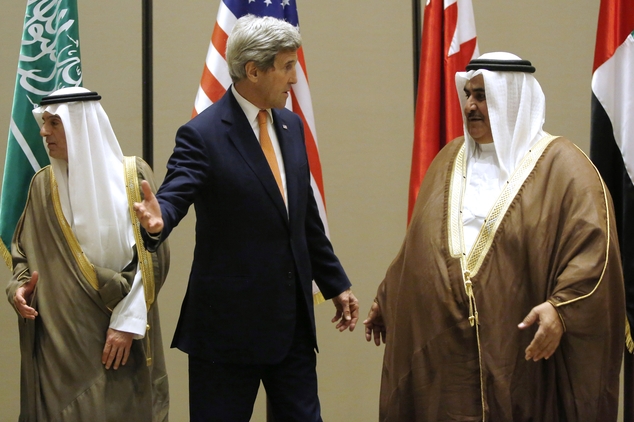
Secretary of State John Kerry talks with Bahrain Foreign Minister Khalid bin Ahmed Al Khalifa, right, after they and Saudi Arabia Foreign Minister Adel al-Jubeir, left, gathered for a family photo at the start of the Gulf Cooperation Council (GCC) Ministerial meetings in Manama, Bahrain, Thursday, April 7, 2016. (Jonathan Ernst/Pool Photo via AP)

The Gulf Cooperation Council (GCC) is a regional political and economic union of Arab States within the Persian Gulf and includes Bahrain, Kuwait, Oman, Qatar, Saudi Arabia and the United Arab Emirates. Since 1981 when it was founded, it has come to form a cohesive union of Arab states that share in the massive oil wealth of the Persian Gulf and within the last few years has created military alliances to combat the rise of ISIS and the increased militant forays of the Iranian regime.

These states have found themselves at the forefront of various Iranian provocations ranging from Bahrain battling insurgents armed by Iranian agents to Saudi Arabia which is trying to stem a full-scale insurrection on its border with neighboring Yemen fueled by Houthi rebels armed, trained and advised by Iran’s Revolutionary Guard Corps.

These Arab states have also intercepted considerable amounts of arms being smuggled by Iran to various proxies and terrorists to fuel insurrection and strikes at the various states in a stark reminder of how committed the mullahs in Tehran are in destabilizing their Arab neighbors.

All of this highlights one of the untruths uttered by the Iran lobby during the run up to the nuclear deal last year which was securing a deal would empower moderate forces within Iran to take greater control over Iran’s government and temper its more extreme elements.

We now know since the deal was agreed to last July, the Iranian regime has taken every opportunity to step up its military activities throughout the region; from Syria on the Mediterranean to Yemen on the Indian Ocean.

It is against this backdrop that U.S. Secretary of State John Kerry travels to Bahrain for a meeting of the GCC whose members are intent on reading Kerry the riot act about the rise of Iranian extremism.

Part of that process included statements from Kerry and Bahrain’s foreign minister on Thursday urging Iran to stop escalating its provocative behavior and pursue a more constructive foreign policy.

Kerry is in Bahrain to consult with officials from Bahrain and other Gulf Arab countries frustrated by Tehran’s policies and lay the groundwork for meetings between President Barack Obama and Gulf Arab leaders in Riyadh later this month. The president held a meeting in Washington last year with Gulf Arab leaders and senior officials to pledge military aid and calm allies’ nerves about Tehran as the nuclear deal neared completion.

“Today we are noticing two things that we kind have expected,” Sheik Khalid bin Ahmed Al Khalifa, Bahrain’s foreign minister, said, outlining the views of Bahrain and the GCC. “The missile program is moving forward with full support of the leadership of the Islamic Republic and we are seeing the hegemonic interventions through proxies in several parts of our region continuing unabated.”

While Kerry once again stressed the positive virtues of the nuclear agreement, the reality is that the almost slavish dedication to keeping afloat a nuclear deal that is already – for all intents and purposes – dead from the Iranian point of view has allowed the Iranian regime to move forward aggressively on several other fronts now that sanctions have been lifted and it can access a new credit line of $100 billion to replenish its military losses at a critical time for the mullahs.

That reality has forced Kerry to make a complex argument here to the ministers of the GCC, where he repeated that the U.S. would continue to lift the economic sanctions against Iran that it agreed to as part of the nuclear accord, even while imposing new ones to counter Tehran’s missile launches, an effort now underway in the United Nations Security Council.

The bipolar nature of American diplomacy has caused consternation and confusion among America’s allies such as the Gulf states and what can only be construed as unbridled joy amongst the mullahs who are taking advantage of the mixed messages.

But sentiment was hardening against Iran and the weak administration position as the editorial board for the Washington Post decried the ramp up in missile testing by Iran and the need to sanction the regime.

“Tehran’s behavior comes as no surprise to the many observers who predicted the deal would not alter its hostility to the West or its defiance of international norms. Unfortunately, the Obama administration’s response has also been much as critics predicted: It has done its best to play down Iran’s violations and avoid any conflict out of fear that the regime might walk away from a centerpiece of President Obama’s legacy,” the Post wrote.

In reference to a push by Iran to lift restrictions on accessing U.S. currency markets, the Post said “Secretary of State John F. Kerry, the accord’s architect, said Tuesday that the regime ‘deserves the benefits of the deal they struck.’ There’s logic to that. But there’s also a problem of reciprocity: Should the United States take steps not strictly mandated by the text of the nuclear accord at a time when Iran is testing nuclear-capable missiles?”

What has all this wrought? Not the peace and moderation promised by Iran lobby supporters such as Trita Parsi of the National Iranian American Council, but instead the world has witnessed a global military spending boost of nearly $1.7 trillion in 2015, the first increase in several years as a result of Iranian regime’s rise and increase in global terrorism and proxy wars fueled by Iran according to a new report.

Tiny Qatar has signed a deal for $7.6 billion to buy 24 Dassault Rafal fighter jets from France. Kuwait on Tuesday finalized a deal to purchase 28 Eurofighter Typhoons, a deal estimated to be worth around $8 billion; all in response to the uncertainty the Iranian regime is sowing.

By Laura Carnahan
 

Filed Under: Blog, News Tagged With: Featured, Iran, Iran deal, Iran Lobby, Iran Mullahs, Iran sanctions, National Iranian American Council, NIAC, Trita Parsi

One Year after Nuclear Agreement Iran Is Worse

April 6, 2016 by admin

One Year after Nuclear Agreement Iran Is Worse

One Year after Nuclear Agreement Iran Is Worse

This weekend marked one year since the nuclear agreement with the Iranian regime – known as the Joint Comprehensive Plan of Action – was reached between Iran and the group of nations known as the P5+1 and subsequently adopted by the United Nations Security Council and European Union.

The Iran lobby made it a life or death struggle between forces of good and moderation versus dark and hardliners. The Iran lobby promised a new era of rising moderate political influence and an opening to the West. The Iran lobby warned that failure to approve the agreement would plunge the region into chaos and open the door for decades of unremitting violence and turmoil.

The Iran lobby promised that failure to approve a deal would lead to a cataclysmic war with Iran that could unleash nuclear weapons. It warned of a war-mongering hunger within the U.S. government intent on eradicating the poor, peaceful mullahs.

“War against Iran has been on the agenda in Washington since at least 2005. The 2007 National Intelligence Estimate is credited with thwarting the George W. Bush administration’s plans — confirmed to me by administration officials — to attack Iran by revealing that the U.S. intelligence community had concluded that Iran did not have an active nuclear weapons program,” wrote Trita Parsi of the National Iranian American Council last June 2015 in Foreign Policy.

His warnings were part of the “good cop, bad cop” playbook the Iran lobby used in praising Iran’s intentions and denouncing the threat of war from those opposed to the deal.

Unfortunately for the rest of the world, they were spectacularly wrong in their promises and warnings. One year later the Middle East is in chaos with three full blown wars raging across Syria, Iraq and Yemen, causing the largest refugee crisis the world has seen since Adolf Hitler went goose-steeping across Europe.

Yousef al-Otaiba, the ambassador of the United Arab Emirates to the U.S., wrote in this weekend’s Wall Street Journal of the uncertainty and angst being felt throughout the region with a newly empowered and aggressive Iranian regime since the nuclear deal.

“Since the nuclear deal, however, Iran has only doubled down on its posturing and provocations. In October, November and again in early March, Iran conducted ballistic-missile tests in violation of United Nations Security Council resolutions.

“In December, Iran fired rockets dangerously close to a U.S. aircraft carrier in the Strait of Hormuz, just weeks before it detained a group of American sailors. In February, Iranian Defense Minister Hossein Dehghan visited Moscow for talks to purchase more than $8 billion in Russian fighter jets, planes and helicopters.

“In Yemen, where peace talks now hold some real promise, Iran’s disruptive interference only grows worse. Last week, the French navy seized a large cache of weapons on its way from Iran to support the Houthis in their rebellion against the U.N.-backed legitimate Yemeni government. In late February, the Australian navy intercepted a ship off the coast of Oman with thousands of AK-47s and rocket-propelled grenades. And last month, a senior Iranian military official said Tehran was ready to send military ‘advisers’ to assist the Houthis,” Otaiba writes.

The laundry list of militant acts by the Iranian regime grows longer each day to include smuggling warheads and arms to Shiite cells in Bahrain and Saudi Arabia, widespread crackdowns at home aimed at political dissidents and religious minorities, large-scale human rights violations including historic levels of executions of women and children, and rigging of parliamentary elections to remove over half of the candidates from even appearing on the ballot, including the most loyal agents and officials of the same regime in the past few decades.

The swiftness of the transformation of the Iranian regime since the nuclear deal was approved last year has been stunning. The mullahs are flush with cash, they’ve invited foreign companies to invest billions, not suffered any repercussions from human rights violations or involvement in proxy wars, kept their nuclear enrichment infrastructure intact and elevated development of their ballistic missiles to reach Europe, Africa and American military bases from the Indian Ocean to the Mediterranean.

And the regime has no intentions of taking its foot off the gas, especially in the area of boosting its missile capability.

Ali Larijani, the regime’s parliamentary speaker and someone lauded by the Iran lobby as a “born-again moderate” said that Iran should continue to develop its missile capabilities despite opposition from western countries.

“Although some excuses recently raised by a number of Western countries about Iran’s missile [tests] are flimsy and legally worthless, they are indicative of their long-term policy which [shows] that they do not want the Islamic Republic to be powerful enough to ensure regional security,” he said according to Tasnim News on Saturday.

“For this reason,” he added, “we should insist on strengthening the country’s defense capability, especially in the field of missiles.”

There is a certain irony that last year the world was worried about nuclear warheads and now it has to worry about missiles to carry those warheads and battlefields across the region, as well as a sharp rise in terror attacks striking at cities around the world killing hundreds.

The ultimate irony came in President Obama’s remarks at the so-called National Security Summit this weekend in Washington in which he criticized the regime for undermining the “spirit” of the agreement even as they stick to the “letter” of the deal.

“Iran so far has followed the letter of the agreement, but the spirit of the agreement involves Iran also sending signals to the world community and businesses that it is not going to be engaging in a range of provocative actions that are going to scare businesses off,” Obama said at a press conference.

“When they launch ballistic missiles with slogans calling for the destruction of Israel, that makes businesses nervous.”

“Iran has to understand what every country in the world understands, which is businesses want to go where they feel safe, where they don’t see massive controversy, where they can be confident that transactions are going to operate normally,” he added. “And that’s an adjustment that Iran’s going to have to make as well.”

I can’t tell if the president is naïve or just-plain dumb when he equates a burgeoning missile program and threat of nuclear annihilation to a need to improve Iran’s business climate. The problem the world is dealing with in Iran is not that businesses are skittish of investing, but rather that the mullahs are intent on remaking the world in their own image.

We can only hope that come November, a new administration will be more intent on reigning in Iranian extremism rather than the opening of a new McDonalds or Starbucks in Tehran.

By Michael Tomlinson

Filed Under: Blog, News Tagged With: #NuclearDeal, Featured, Iran deal, Iran Human rights, Iran Lobby, National Iranian American Council, NIAC Action, Trita Parsi

Pressure Mounts to Keep Iranian Regime Out of Financial System

April 6, 2016 by admin

Pressure Mounts to Keep Iranian Regime Out of Financial System

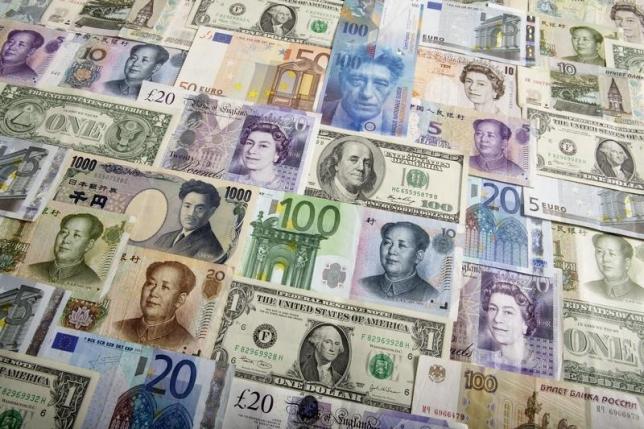
Arrangement of various world currencies including Chinese Yuan, Japanese Yen, US Dollar, Euro, British Pound, Swiss Franc and Russian Ruble pictured in Warsaw January 26, 2011. REUTERS/Kacper Pempel

The American dollar is the world standard for global currencies. Its fluctuations set the pricing in currency markets, allows companies and governments to transact business around the world and provide certainty in holding reserves and assets in turbulent times.

The role of U.S. currency is so integral to conducting business, the Iranian regime’s removal from the global banking system and access to U.S. dollars crippled its export economy and was one of the most significant drivers in forcing the mullahs back to the negotiating table after putting enormous pressure on their finances.

The nuclear agreement with the Iranian regime reached last year provided for an easing of sanctions including allowing the regime access to previously frozen assets, but the agreement did not affect certain restrictions that remained in place keeping Iran out of U.S. currency markets for non-nuclear sanctions such as support and sponsorship of terrorism.

This has proven to be somewhat of an Achilles heel for the mullahs since not having complete and unfettered access to U.S. dollars hampers its ability to conduct international exports such as exchanging euros for dollars for taking advantage of currency floats to earn additional money from the estimated $100 billion in assets it now has access to in overseas accounts.

Relaxation of those restrictions would also greatly ease the ability of family members of the ruling mullahs and members of the Revolutionary Guard Corps to move the illicit funds they have squirrelled away over the past decade in engaging in black market petroleum sales and transfers of weapons and other banned technologies to enrich themselves.

This has become such a thorny issue for the regime that virtually all of its leaders, including Ali Khamenei, Hassan Rouhani and Javad Zarif, have denounced the U.S. for not fully lifting access and threatened to walk away from the nuclear agreement as a result. To say their complaints carry a hint of desperation would be understatement.

The Iran lobby has followed similarly in calling for a complete lifting of all sanctions and warning of a collapse of the agreement that could threaten the region with more disorder, which any rational person would find hard to believe when you look at Syria, Yemen, Libya and Iraq.

The Obama administration has typically floated some trial balloons to give the regime access to U.S. currency through loopholes creating offshore clearing houses not tied to the U.S. banking system that foreign banks could access to exchange dollars.

The reaction from Congress has been unified and uniformly negative to the idea. A senior State Department official reassured concerned lawmakers on Tuesday that the Obama administration is not planning to allow Iran access to the U.S. financial system or use of the U.S. dollar for transactions.

“The rumors and news that have appeared in the press … are not true,” Under Secretary of State for Political Affairs Thomas Shannon told the Senate Foreign Relations Committee.

U.S. lawmakers have expressed deep concern about recent reports that the administration might let Iran use the dollar in some business transactions.

That concern was reinforced in an editorial by Rep. Ed Royce (R-CA), the chairman of the House Foreign Affairs Committee, in the Washington Post.

“Iran has yet to see the economic growth it wants from President Obama’s nuclear deal, and it’s demanding additional concessions — above and beyond the agreement — in return for nothing. Specifically, Ayatollah Ali Khamenei wants the United States to end sanctions aimed at curbing Iran’s funding for terrorism and illicit weapons so Iran can gain access to the U.S. financial system, where the majority of international business is conducted,” Royce said.

“This is an alarming departure from the Obama administration’s position just months ago. Indeed, when selling the nuclear deal to the American people last year, the administration repeatedly stressed to Congress that key terrorism, missile and human rights sanctions against Iran would continue to be vigorously enforced,” he added.

“Iran has seen what Obama will do to preserve his nuclear deal, and it’s taking full advantage. The United States cannot cave again. Congress should make clear that until the Iranian regime drops its illicit missile program and funding of terrorism, it won’t receive another dime of sanctions relief,” Royce said.

Royce is correct in pointing out how the world has gotten virtually nothing in return for the nuclear agreement after one year with Iran engaging in a broad range of militant and aggressive moves both home and abroad. The sheer number of provocative acts has dismayed supporters of the regime and put them on the defensive in trying to explain away everything from missile launches to mass executions to interception of illegal weapons shipments.

For Iran lobby supporters such as the National Iranian American Council and media boosters such as Jim Lobe of Lobelog, their task has been to focus on the idea that the U.S. is failing the nuclear agreement and not the other way around.

Lobe attempted to use results from public opinion polls done in Iran to show how the Iranian people were growing more distrustful of the U.S.

“Confidence that the U.S. will abide by the deal has also slipped—from 45% in a September survey by the Gallup organizations to 29%, according to CISSM. Although 41% of respondents said in September that they were either ‘not very’ or ‘not at all’ confident about Washington’s compliance, the new poll found that figure had risen to 66%. The pollsters did not probe the reasons for the increase in skepticism, although it may relate either to the continuing imposition of sanctions as well as coverage of the election campaign here,” Lobe writes.

His reasoning is as silly as the mullahs blaming the U.S. for the threat of new sanctions for launching illegal ballistic missiles.

The Iranian people live in a society under harsh control by the mullahs where online activities are tracked and they are subjected to withering amounts of anti-American propaganda on a daily basis.

Is it any wonder they feel negative upon seeing no improvement in their lives one year after the deal as Rouhani has promised to keep unfrozen assets overseas to help purchase new weapons and Khamenei has vowed to maintain a “resistance economy?”

These are not the acts of a regime interested in improving the lives of the Iranian people and we should not be swayed their continued propaganda.

By Michael Tomlinson

Filed Under: Blog, News Tagged With: Featured, Iran, Iran deal, Iran Human rights, Iran Lobby, Lobelog

Iran Lobby Blaming US for Failure of Nuclear Accord

April 1, 2016 by admin


Iran Lobby Blaming US for Failure of Nuclear Accord

Iran Lobby Blaming US for Failure of Nuclear Accord

Like the erupting of Old Faithful or the certainty of the tides and moon, the Iran lobby is now attempting to blame the failure of the nuclear agreement reached with the Iranian regime squarely on the Obama administration and the U.S.

It’s an absurd and bitterly ironic move since it was these same supporters of the Iranian regime who lauded President Obama for disregarding the opinions of the American people, his military and national security advisors and a majority of Congressmen to do a deal with a nation firmly in the thrall of religious extremists.

Since the deal was done last summer, the evidence of Iran’s complete lack of compliance has been laid bare to see ranging from the testing of illegal ballistic missiles and narrowing of inspections to carefully stage-managed media events to the imposition of a vicious human rights crackdown and rigging of parliamentary elections that delivered continued control of Iran to the ruling mullahs.

And in a complete demonstration of weak intestinal fortitude, the doors were opened for Iran to access over $100 billion in cash which is promptly used to begin buying advanced new weapons from Russia, as well as host North Korean officials connected to that regime’s nuclear and missile programs.

Meanwhile, the Iranian people have seen no benefits or improvements in their lives, only greater oppression as detailed by Amnesty International and the UN Special Rapporteur for human rights in Iran who have noted a dizzying climb in executions, including among children and women, and severe crackdowns against religious minorities such as Christians, Sunni Muslims and Bahai, as well as journalists, artists, students and political dissidents.

Now the Iran lobby is blaming the U.S. for the failure of the nuclear accord?

“The nuclear accord between the U.S., other major world powers, and Iran is under threat. But the source of this risk might upset expectations: it is the Obama administration that has failed to resolve persistent ambiguities with the U.S. sanctions relief and, as a result, major foreign banks continue to refuse to handle transactions involving Iran, frustrating the expectations of Iran’s people for economic reprieve and plaguing the ultimate sustainability of the nuclear accord,” said Tyler Cullis of the National Iranian American Council in a piece in Huffington Post.

Last week, Iran’s Supreme Leader Ayatollah Ali Khamenei publicly alleged that the United States was failing to “respect its commitments” under the nuclear accord, particularly by “using roundabout paths to prevent the Islamic Republic” from achieving economic re-integration with the rest of the world. Specifically, the Supreme Leader decried the reticence of foreign banks to re-engage with their Iranian counterparts, chalking it up to pernicious efforts by U.S. sanctions authorities to undermine the benefit of the sanctions relief for Iran, wrote Cullis.

It’s an absurd series of statements that would take an encyclopedia to deconstruct, but let’s take a shot at the highlights or rather, the lowlights:

  • Ali Khamenei, the religious dictator in control of Iran, has long hammered the U.S. and the rest of the world for that matter not only for sanctions and policies aimed against the regime, but also for the failure to free Iran to interact with the rest of the world, even though he has consistently called upon Iranians to embrace a “resistance economy” built on the idea that the regime could be self-sustaining and not subject to future sanctions; thereby freeing it to pursue any policies it wanted free from reprisals;
  • Khamenei and Cullis’ claim that Iran is being kept from re-entering the international financial system is partly true in that the Obama administration is still debating whether or not to lift those restrictions. The problem is that since the regime insisted that the nuclear deal not be tied to other contentious issues such as support for terrorism and human rights violations, the similar lifting of sanctions in place for those “unrelated” activities might violate U.S. laws on the books;
  • Cullis’ contention that failure to lift access to the financial system is burdensome on the Iranian people is a farce since the government of Hassan Rouhani has already announced it is going to keep the bulk of its new-found wealth abroad to be used to buy planes, missiles, telecommunications equipment and other items the regime was prohibited from buying beforehand. Virtually none of that money will find its way back to Iran to provide healthcare for Iranians, boost the consumer economy or even help protect Iran’s environment devastated by gross mismanagement by the mullahs.

Khamenei and Cullis can’t have it both ways. You cannot demand to have items delinked from the deal and then demand the lifting of sanctions not related to the nuclear deal as well. In this case, both are whining like bully children being denied the ability to smack around another child that already waved the white flag.

While Cullis urges to provide foreign banks with clear guidelines on how to tap Iran back into the financial system, he neglects to focus on the real issue which is by treating the nuclear deal by itself and not addressing the vast number of other collateral issues, the sanctions program against Iran regime is frankly a mess and vast loopholes and uncertainty everywhere.

In fact, the Obama administration and U.S. Treasury Dept. have already had to levy additional sanctions and criminal charges against individuals and companies for violating existing sanctions, as well as for brand new cyberattacks on U.S. financial institution and a New York dam.

“Without taking steps such as these, the Obama administration will continue to frustrate Iran’s expectations and risk the nuclear accord in the process. When it comes to U.S.-Iran relations, perceptions matter; and the perception in Iran right now is that the U.S. — whether acting out of malice or negligence — is hindering the practical benefit to Iran of the sanctions relief. Should this perception grow in Tehran that the United States is not a good-faith actor with which Iran can deal, both the historic nuclear accord and the progress in relations between the two bitter adversaries will be placed in bitter peril,” Cullis adds.

It’s a silly statement to make because it pre-supposes that the burden of compliance falls on the U.S. and its allies, not on Iran mullahs which violated international law in the first place by pursuing nuclear weapons!

This is like a serial killer being paroled from prison and then suing the state for not providing him with a beachfront home in Malibu and brand new Tesla in the garage.

Cullis’ gumption is admirable, it’s takes a special kind of chutzpah to push for a terror regime to gain access to the world’s ATM machine.

By Laura Carnahan

Filed Under: Blog, Current Trend, Latest from Lobbies & Appeasers, News Tagged With: Featured, Iran, Iran deal, Iran Human rights, Iran Lobby, Iran Mullahs, Tyler Cullis

Brussels Attacks Shows Need to Confront Islamic Extremism at its Source

March 23, 2016 by admin

Brussels Attacks Shows Need to Confront Islamic Extremism at its Source

Brussels Attacks Shows Need to Confront Islamic Extremism at its Source

An airport ticket counter and Starbucks location crowded with people were the scenes of devastating suicide bombings in Brussels, as was a crowded commuter train where ISIS quickly claimed responsibility for the devastating attacks that so far has killed at least 30 and injured over 200 in a stark reminder of the vulnerability of Europe to sophisticated attacks.

The Islamic State-affiliated news agency has issued a bulletin claiming responsibility for the deadly attacks Tuesday in Brussels.

The claim was disseminated on the group’s official channel on Telegram, a social media platform, and picked up by other official ISIS channels on Telegram and on Twitter.

“Islamic State fighters carried out a series of bombings with explosive belts and devices on Tuesday, targeting an airport and a central metro station in the center of the Belgian capital Brussels, a country participating in the coalition against the Islamic State,” the statement says. “Islamic State fighters opened fire inside the Zaventem airport, before several of them detonated their explosive belts, as a martyrdom bomber detonated his explosive belt in the Maalbeek metro station.”

A security camera image was released depicting three men, two of who wore black gloves that many security experts indicated could have hid the triggering devices or prevented a premature detonation; steps detailed in training manuals developed and distributed by ISIS indicating a high level of planning, coordination and sophistication.

Brussels has now entered the lexicon of Islamic terror attacks that include New York, London, Paris, Madrid, Sydney and Ottawa and adds to the mounting evidence that Islamic extremists and ISIS will not simply be defeated by smart bombs and drones.

To defeat any extremist ideology, one has to look for its sources and how it is nurtured and exported. The blueprint for ISIS was laid out long ago by the Iranian regime which pioneered state-sponsored terrorism by formalizing its deployment in its Quds Forces, backed by the resources of the Revolutionary Guard Corps and excused by the theological nonsense espoused by the regime’s mullahs.

To say the Iranian regime is the godfather of Islamic terror would be accurate. To say the Iranian regime gave birth to ISIS is even more accurate.

ISIS rise out of the quagmire of the Syrian civil war could not have been made possible without the Iranian regime’s support of the Assad regime that prolonged that conflict and reduced the effectiveness of moderate, Western-backed rebel groups in favor of Al-Qaeda affiliated militias.

The splintering and creation of ISIS from Al-Qaeda alone might not have been sufficient to launch the global army of terror we know face unless the meddling of the Iranian regime in Iraq forced the departure of Sunni tribes from the government of Nouri al-Maliki and created a power vacuum allowing for ISIS rapid advances in Iraq, culminating in the conquest of Mosul, which gave ISIS a quadrupling of territory, a ready-made labor force and fertile recruiting ground among disenfranchised Sunni communities.

The fact that Iran went all in by arming and deploying Shiite militias to fight ISIS initially in Iraq quickly turned this conflict into the bloody sectarian war it has now become.

The lack of an appropriate response from the Obama administration only intensified the conflict as Iran sought regional hegemony in a Shia crescent, thereby creating ISIS with a powerful recruiting tool among Sunnis.

Even as the evidence is clear and strong of the links between ISIS and the Iranian regime, the Iran lobby has ramped up to protect Iran from any criticism and have begun to mobilize to lobby the presidential candidates to protect the nuclear deal reached with Iran.

The National Iranian American Council (NIAC), strong advocates for Tehran, urged Hillary Clinton to follow President Obama’s lead in encouraging openings with Iran. It warned that “any deviation from Obama’s prudent and wise rhetoric and diplomacy will risk the significant progress achieved in the past few years.”

“At a time when President Obama is seeking to make his historic Iran policy change as irreversible as possible, we are concerned by Secretary Clinton downplaying the possibility of a larger diplomatic opening,” said Jamal Abdi, NIAC Action executive director.

The move to lobby Clinton is the clearest sign yet the NIAC and other Iran supporters are alarmed at the universal declarations coming from all the presidential candidates warning against accommodating the Iranian regime. Public opinion polls show Americans are leery of the regime and find little confidence in the mullahs promises of moderation that the Iran lobby have been flogging for the better part of three years.

The Brussels attacks are only another chapter in a long and bloody novel that is being authored in Tehran and the failure to connect the two will only result in more attacks and more deaths. Only by dealing effectively with Iran and pushing back its forces abroad back within Iran can we hope to curb the influence of the Revolutionary Guards and more importantly the nihilistic ideology the people like Ali Khamenei peddle in weekly chants of “Death to America” which still holds passionate meaning for him and his fellow clerics.

No matter how the Iran lobby tries to paper over the spread and growth of Islamic extremism, the root and source of that poisoned tree lies in Tehran with deep roots.

By Michael Tomlinson


Filed Under: News Tagged With: Featured, Iran, Iran deal, Iran Lobby, National Iranian American Council, NIAC, NIAC Action, Nuclear Deal

Iran Lobby Excuses Get Stranger and Stranger

March 17, 2016 by admin


Iran Lobby Excuses Get Stranger and Stranger

Iran Lobby Excuses Get Stranger and Stranger

The Iran lobby has offered up a variety of excuses for the actions and militant behavior of the Iranian regime ranging from pleas of peace-loving intent and political moderation to feigned ignorance and indignation over escalating human rights abuses and proxy wars throughout the Middle East.

One of the newest lines being trotted out by the Iran lobby is the absurd notion that Iran has never started a war.

A scholar at the American Enterprise Institute, took that claim to task in a column for Commentary Magazine.

He showcased comments made by Iranian regime apologists Juan Cole, a University of Michigan professor, and retired Congressman Ron Paul who said “There’s no history to show that Iran are aggressive people. When’s the last time they invaded a country? Over 200 years ago!”

“Iran has not launched an aggressive war in modern history (unlike the US or Israel), and its leaders have a doctrine of ‘no first strike.’ This is true of Supreme Leader Ali Khamenei, as well as of Revolutionary Guards commanders,” said Cole.

The Iranian regime knows when it has got a good thing going. Foreign Minister Mohammad Javad Zarif yesterday tweeted, “Iran hasn’t attacked any country in 250 years. But when Saddam rained missiles on us and gassed our people for 8 yrs, no one helped us.”

These are absurd comments when looked at in the context of what the mullahs have wrought since the Islamic revolution in 1979. The mullahs preferred method of aggression is to use proxies, either in the form of terrorist groups such as Hezbollah or local militias such as in Iraq and Yemen.

Hezbollah alone has served as a conduit of death and destruction for decades by carrying acts of terror either under the direction of or direct cooperation with Revolutionary Guards and Quds Forces personnel. In the most recent Syrian conflict, senior Iranian commanders have been in the field directing combat operations and even getting killed.

It’s noteworthy that Syria never posed a direct conflict with Iran, not even sharing borders, but the mullahs felt it necessary to engage in armed conflict there and even expanded it by calling for Russia to join in the bloodshed and widen the war.

Since the revolution, Iran has been involved in military campaigns in:

  • 1982-present: Lebanon
  • 2003-present: Iraq
  • 2006: Israel (via Hezbollah)
  • 2011-present: Syria
  • 2015-present: Yemen

Not exactly a record of pacifism, but certainly in line with the extremist nature of the regime and the duplicitous nature of the excuses made by the Iran lobby.

Another example of that stranger than fiction messaging came when regime-controlled media blasted the report issued by Ahmed Shaheed, the UN special rapporteur for human rights in Iran, which blistered the regime for appalling human rights abuses, including a near historic 1,000 executions in 2015 and a distressing willingness of the mullahs to kill children and women.

Iran Foreign Ministry Spokesman Hossein Jaber Ansari criticized the recent report as “biased,” “politically motivated” and “prejudicial, Tasnim news agency reported.

He said that the report is “imbalanced” and has been prepared based on “unreliable information.”

Those criticisms fell on deaf ears though as the Committee to Protect Journalists joined 34 other organizations in calling on the U.N. Human Rights Council to vote in favor of renewing the mandate Shaheed’s term as special rapporteur. The vote is scheduled to take place during the 31st session of the council, which ends March 24.

In the joint letter, the organizations drew attention to the range of “serious and systematic violations” of civil and political rights in Iran, as well as the need for the council to urge Iranian authorities to implement long overdue legal changes that would address the grievances of those who have borne the brunt of human rights abuses.

Journalists and other political and civic actors are “arbitrarily detained and given increasingly harsh prison sentences, often for trumped-up national security-related charges,” the letter said. Iran is one of the leading jailers of journalists, with 19 behind bars as of CPJ’s annual prison census on December 1. Ahead of last month’s legislative elections, journalists were arrested and at least one publication was banned, CPJ research shows.

In the meantime, even the modest “moderate” election wins hailed by the Iran lobby were under assault as several women who won seats were being verbally attacked for making comments deemed threatening to the regime, such as criticizing laws mandating women wear traditional veils and coverings.

All of which provides additional proof that any hope of moderation offered up by the Iran lobby is never really going to happen. This was put on bold display when Reza Marashi, research director for the National Iranian American Council, published a plaintive editorial in Huffington Post pleading for the release of his fellow regime supporter, Siamak Namazi, who was arrested and imprisoned by the regime and not part of the prisoner swap resulting from the nuclear deal.

“After finishing his graduate studies abroad, he again returned to Iran in 1999, this time as a consultant. Most people in his shoes returned to try and make a quick buck as a big fish in a small pond. Not Siamak. He helped run a world-renowned consulting firm – staffed predominantly with Iranian-born citizens – that facilitated badly-needed foreign investment from blue-chip multinational corporations,” Marashi said.

Unfortunately, Marashi neglects to mention how that firm, Atieh Consulting, become embroiled in regime politics since his family had deep connections to various parts of the regime’s leadership and actively cooked up the idea of creating an Iran lobby in the U.S. through the NIAC to help advocate for the lifting of international sanctions and far from being a selfless act, Namazi and others had hoped to position themselves to serve as middlemen to funnel foreign investment back into the regime and steer it towards their political allies as described in several investigative pieces.

It is also noteworthy how Marashi did not write similar heartfelt pieces on behalf of other Americans held captive in Iranian prisons such as Amir Hekmati or Saeed Abedini or endured years of torture in Iran.

It would certainly be interesting to see Marashi put his feet where his mouth is and go to Iran himself to plead with the mullahs and see if he can avoid a lengthy prison term as well as another political pawn for them.

By Michael Tomlinson

Filed Under: Blog, News Tagged With: Featured, Iran, Iran deal, Iran Human rights, Iran Lobby, Iran sanctions, National Iranian American Council, NIAC, NIAC Action, Reza Marashi

Iran Lobby Pushes Fiction of Moderate Win in Iran

March 15, 2016 by admin

Iran Lobby Pushes Fiction of Moderate Win in Iran

Iran Lobby Pushes Fiction of Moderate Win in Iran

That bastion of apologists for the Iranian regime’s abuses and extremists activity – the National Iranian American Council – has pushed vigorously the fiction that the recent parliamentary elections in Iran delivered a resounding win for the forces of moderation; all evidence to the contrary.

It’s a recognition by the NIAC and their fellow travelers that the rhetoric in the American presidential campaign has heated up against the recent actions of the mullahs with all the Republican candidates and now Democratic front runner Hillary Clinton all calling for new sanctions to be imposed in the wake of ballistic missile tests violating United Nations Security Council resolutions banning them.

For the NIAC, it’s a particularly thorny problem since the clock is now running on the end of the Obama presidency and what has been a policy of appeasement of the mullahs in Tehran. Coupled with that is growing public opinion that Iran has not shifted towards moderation in the wake of the nuclear deal, but in fact has grown more aggressive and hostile especially in human rights abuses and proxy wars with its neighbors.

The world has been subjected to the largest refugee crisis since World War II resulting from the Syrian civil war and has seen the Iranian regime go all in by begging Russia to intervene and target rebels to the regime of Bashar al-Assad and not ISIS as widely touted.

The Iranian elections were also a charade given the mass elimination of over half of the candidates submitted for approval. Even the most supportive news media have grudgingly admitted that the human rights situation in Iran and throughout the Middle East has grown more desperate.

Ahmad Shaheed, the UN special rapporteur for human rights in Iran, has issued yet another blistering report of human rights conditions within Iran following similar condemnations by Amnesty International and Iranian dissident and watchdog groups such as the National Council of Resistance of Iran (NCRI), all of whom have painted a bleak picture of the mass arrests, torture, imprisonment and execution of journalists, artists, bloggers, students, ethnic and religious minorities and political opponents and dissidents.

The picture of how bad things are in Iran has become so obvious it’s taken on the near-certainty of gospel. Ask any person on the street if things have improved in Iran, the answer will most likely be “No.”

And yet the NIAC and its allies cannot give up the fight and still try to push the fiction that things are better, even as their own allies such as Iranian-American businessman Siamak Namazi was arrested and tossed into prison without explanation by the same regime he was promoting in the ultimate irony.

With friends like these, who needs enemies?

But Jamal Abdi and Ryan Costello of the NIAC continued to push the party line with the publishing of a “policy memo” on the NIAC website cheerfully citing all the good news coming out of the Iranian elections such as:

  • Huge moderate wins in the parliament and Assembly of Experts, even go so far as saying Hassan Rouhani now has a plurality to enact his policies;
  • How Rouhani, newly empowered, will seek out new policies to open up bridges to the rest of the world; and
  • How so many notable hardliners were defeated as evidence of the mandate of the Iranian people for a new moderate future.

Unfortunately, none of that is true.

The dismissal of over 6,000 candidates left open the way for a field of candidates bulging with loyal supporters of the regime. If the Iranian people are only left with choices between bad and worse candidates, it stands to reason they would select the lesser of two evils.

What Abdi and Costello leave out is the simple fact that real power within the regime didn’t change at all. Supreme Leader Ali Khamenei still remains in charge, as does the Revolutionary Guards Corp (IRGC) which has been busy shooting missiles as fast as it can. The courts and police remain firmly in control and have been busy executing 2,300 people under Rouhani, as well as rounding up virtually any dissenter and locking them away.

Of course Abdi and Costello neglect to mention any of the extremist policies undertaken by Rouhani such as the level of executions than have surged higher than at any time in the history of the mullahs’ reign since 1989. Nor do they take up the lack of any progress on halting child executions, misogynist laws passed under Rouhani’s term or the continued use of Basiji paramilitaries to beat and arrest women for honor code violations such as driving alone or not wearing traditional hijabs.

Most galling of all are Abdi and Costello’s lack of any comment on the bloodshed caused by Rouhani’s policies in supporting three active wars in Syria, Iraq and Yemen and the complete lack of any momentum to halt the killing taking place at the hand of Iranian-backed Hezbollah fighters, Iranian-backed Shiite militia and Iranian-backed Houthi rebels.

Alireza Jafarzadeh, deputy director of the Washington office of the National Council of Resistance of Iran (NCRI), said in an editorial on Fox News:

“Rouhani has not been the only loyal servant of the theocracy throughout his career. The same can be said of all the well-known candidates from the supposedly moderate and reformist faction in the recent elections. They include men like former Chief Prosecutor of the Revolutionary Court Ali Razini and former Prosecutor General and Intelligence Minister Ghorbanali Dorri Najafabadi, both of whom oversaw the executions of political prisoners, the extrajudicial assassinations of dissidents and undesirables, and issued orders for shockingly inhumane punishments like stoning.

“Meanwhile, standing side-by-side with current president Hassan Rouhani is former president Ali Akbar Hashemi Rafsanjani, who has somehow come to be regarded as a leading reformist. This is a man for whom Interpol issued an arrest warrant due to his involvement in the 1994 bombing of the Jewish community center in Buenos Aires, which killed 85 people and wounded 300.”

The reality is that things have not changed in Iran and in fact are only getting worse.

By Michael Tomlinson

Filed Under: Blog, News Tagged With: Featured, Iran, Iran Human rights, Iran Lobby, Jamal Abdi, NIAC, NIAC Action, Ryan Costello

Holding Iran Accountable Starts by Not Believing Iran Lobby

March 11, 2016 by admin

Holding Iran Accountable Starts by Not Believing Iran Lobby

Holding Iran Accountable Starts by Not Believing Iran Lobby

The Iran lobby, consisting of lobbying groups such as the National Iranian American Council and media platforms like Lobelog.com, has long argued that agreement on a nuclear deal would bring about a new period of moderation within Iran and smooth the way for normalized relations.

Since the agreement was completed last summer, the Iranian regime has acted nothing like a moderate government engaging in a wide variety of foreign policy excesses such as going all-in on the Syrian civil war and stepping up support for Houthi rebels in Yemen, to instituting a harsh crackdown at home imprisoning dissidents and journalists and keeping the gallows busy by marching over 2,200 people to their deaths over the past two years.

Throughout it all, the Iran lobby has worked hard to maintain its charade and keep journalists believing in this false narrative no matter how incredible the proof has been otherwise. One example of this is a Q&A in the New York Times by Rick Gladstone in which he regurgitates many of the Iran lobby’s myths. For example, Gladstone asks:

  • Is Iran honoring the nuclear agreement? He writes it is according to the International Atomic Energy Agency, but neglects to mention admissions by the head of that agency that inspection protocols had been comprised at various points and full reporting may never be achievable;
  • Are recent missile tests prohibited under the nuclear agreement? He says no, such launchings are considered a separate issue, but neglects to mention that the regime pushed hard to unlink a host of issues such as ballistic missiles, human rights and support for terrorism from the deal, thereby allowing the regime a free hand to continue its illegal activities;
  • Iran’s parliamentary elections last month were supposed to have strengthened moderate supporters of Hassan Rouhani. So why is Iran provoking its critics by testing missiles? Gladstone explains that the launches are conducted by the Revolutionary Guard Corps which is outside of Rouhani’s control, but neglects to point out that Rouhani has been a willing supporter of these hardline tactics since his government has overseen one of the harshest crackdowns in 20 years against public dissent.

This militancy on the part of the Iranian regime was reinforced by boasts by senior military commanders that the tests would continue even though they are in violation of United Nations Security Council resolutions, which are being proven impotent by the lack of any consequences for these violations.

Brig. Gen. Amir Ali Hajizadeh, a senior commander for the Iranian Revolutionary Guard Corps that runs the regime’s missile program, told state television that it has more missiles ready to launch, and they are for defensive purposes.

“Iran’s missile program will not stop under any circumstances,” Hajizadeh said. “We are always ready to defend the country against any aggressor.”

The fact that the argument over the regime’s violations have shifted from calling for swift action to debates over whether or not imposition of sanctions might jeopardize a nuclear agreement that has already proven ineffectual in curbing the regime demonstrates how weak the international response has become.

This broad policy of appeasing the mullahs has already generated severe negative consequences as Iran seeks to aggressive upgrade its military and rearm in the wake of its deep involvement in three ongoing proxy wars in Syria, Iraq and Yemen as well as a potential new arms race with its chief regional rival, Saudi Arabia.

Hajizadeh also announced that Iran is calling its own version of a spy drone, “Simorgh,” which is Iranian for “Phoenix,” according to the country’s state controlled media.

Iran’s version of the drone “was manufactured through reverse engineering of the U.S. drone, which was tracked and hunted down in Iran late in 2011, and has been equipped by the IRGC with bombing capability,” according to Fars News Agency.

This comes on the heels of an $8 billion shopping spree in Moscow by the Iranian regime and the imminent delivery of an advanced S-300 anti-aircraft missile system.

Most disturbing of all was the announcement by Ahmed Shaheed, U.N. special rapporteur on human rights in Iran, that there had been a “staggering surge in the execution of at least 966 prisoners last year – the highest rate in over two decades,” Shaheed told a news briefing.

The number of executions are roughly double the number executed in 2010 and 10 times as many as were executed in 2005 and demonstrate how Rouhani’s promises of a more moderate government when he was elected were merely political window dressing.

“A large percentage of those executions are for drug offences and under Iran’s current drug laws, possession of 30 grams of heroin or cocaine would qualify for the death penalty. So there’s a number of draconian laws,” he said.

“Fundamental problems also exist with regard to the due process and fair trial rights of the accused,” Shaheed said.

“I continue to receive frequent and alarming reports about the use of prolonged solitary and incommunicado confinement, torture and ill-treatment, lack of access to lawyers and the use of confessions solicited under torture as evidence in trials – practices that clearly violate Iran’s own laws,” he said.

Hundreds of journalists, bloggers, activists and opposition figures “currently languish in Iran’s prisons and detention facilities,” he said.

None of which has stopped the Iran lobby from trying to divert attention to anything else as evidenced by an appearance by Jamal Abdi, of the NIAC, at a summit in Washington, DC aimed at criticizing the U.S. relationship with Saudi Arabia.

He spoke of how the Saudi regime tried to jeopardize the U.S. nuclear deal with Iran and criticized the visa restrictions the U.S. imposed on Iranians and Iranian dual nationals. He also spoke of how the U.S. is essentially “renting” the Saudi army to carry out the war in Yemen, and potentially even Syria, which is ironic considering that it was the Iranian regime’s support of the Assad regime in Syria and Houthi rebels in Yemen that started both conflicts in the first place.

All of which demonstrates how the Iran lobby will address any issue other than the current activities of the regime.

By Michael Tomlinson

Filed Under: Blog, News Tagged With: Featured, Iran Human rights, Iran Lobby, Iran sanctions, IRGC, Jamal Abdi, Lobelog, National Iranian American Council, NIAC, NIAC Action

Iranian Regime Launches More Missiles; Clinton Pushes for Sanctions

March 10, 2016 by admin

Iranian Regime Launches More Missiles; Clinton Pushes for Sanctions

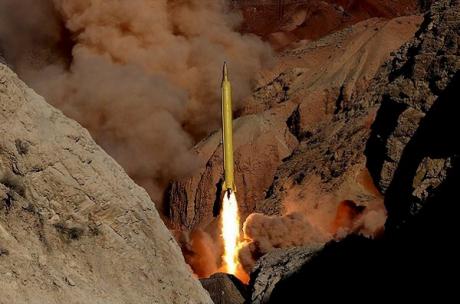
A ballistic missile is launched and tested in an undisclosed location, Iran, in this handout photo released by Farsnews on March 9, 2016. REUTERS/farsnews.com/Handout via Reuters

You have to wonder just how much of North Korea is rubbing off on the mullahs in Tehran as the Iranian regime launched ballistic missiles for the second straight day in violation of United Nations Security Council resolutions and boldly thumbed their collective noses at the U.S. as Vice President Joseph R. Biden Jr. was touring Israel.

The Revolutionary Guards Corps, which oversees the Islamic state’s missile program, fired two missiles that it said hit targets over 850 miles away and pointedly declared that Israel was now within striking distance.

If they didn’t get their point across, the IRGC said the missiles bore inscriptions written in Hebrew on the side saying “Israel must be wiped off the face of the earth,” as reported by Fars, a regime news agency which also released video of the launches.

The head of the Revolutionary Guards’ missile program, Brig. Gen. Amir Ali Hajizadeh, said the rockets had a range of about 1,200 miles and were capable of hitting the “Zionist regime,” Iran’s name for its archenemy Israel, the semiofficial news agency Mehr reported.

As expected, the Iran lobby did not utter one tweet, statement or editorial condemning the provocative launches, nor the timing which seemed designed to send a pointed message to the U.S. The repeated launches does bring to mind the tactics used by North Korea in also aggressively firing missiles and rockets regardless of any international sanctions that exist. The fact that the two radical nations – which already share missile and nuclear technology – are now sharing the same political playbook should come as no surprise.

The lack of inclusion of the regime’s missile program in the nuclear agreement reached last year shows the glaring loopholes that exist for Iran to continue the development of destabilizing weapons systems that can deliver chemical, biological or conventional warheads – let alone nuclear ones developed in secret – anywhere in the Middle East and most of Europe, Asia and Africa.

The lack of response from the Obama administration was predictable and disheartening for those who have consistently warned of the threat the regime poses; even after a rigged parliamentary election was touted as producing a “moderate” shift in Iran’s domestic politics.

Laudably, Democratic presidential candidate Hillary Clinton entered the fray by calling for more sanctions against the Iranian regime in light of this most recent violation.

Clinton said on Wednesday she was “deeply concerned” by reports that Iran had tested multiple ballistic missiles and said the country should face sanctions for its actions.

“This demonstrates once again why we need to address Iran’s destabilizing activities across the region, while vigorously enforcing the nuclear deal,” Clinton said in a statement.

“Iran should face sanctions for these activities and the international community must demonstrate that Iran’s threats toward Israel will not be tolerated,” she said.

Her backing of sanctions comes as Democrats and Republicans on Capitol Hill joined together in a push to develop new sanctions against Iran in light of these new and repeated transgressions.

Senate Foreign Relations Committee Chair Bob Corker (R-Tenn.) and ranking member Ben Cardin (D-Md.) are preparing legislation to slap additional sanctions on Iran in response to a recent spate of ballistic missile launches. While the tests do not themselves violate the Iranian nuclear deal that took effect in January, officials believe they fly in the face of other international prohibitions and weaken the spirit of compliance needed to sustain the nuclear pact.

The senators are also negotiating a way to extend the current regime of sanctions under the Iran Sanctions Act past the end of the year, and possibly increase sanctions against Tehran for other conventional weapons and terrorist activities as well.

If the Senate can produce a package of sanctions, it stands a good chance of getting an audience in the House, where Speaker Paul Ryan (R-Wisc.) said Tuesday that Congress would “continue to press for new sanctions against Tehran” in light of the most recent ballistic missile tests.

Thus far, the Obama administration has only issued sanctions against 11 individuals involved in Iran’s ballistic missile program. Sen. Kelly Ayotte (R-N.H.) today said those sanctions are “proving to be anemic, given [Iran’s] continuing testing of ballistic missiles.”

The realization that the Iranian regime remains committed to a militarized pathway in the wake of the nuclear deal and recent elections was not lost on U.S. military commanders, as the top U.S. military commander overseeing the Middle East said Tuesday that despite the nuclear deal, Iran shows no signs of altering its destabilizing behavior.

“There are a number of things that lead me to personally believe that, you know, their behavior is not — they haven’t changed any course yet,” said Army Gen. Lloyd Austin, commander of U.S. Central Command, at a Senate hearing.

Austin said he was concerned about Iran’s continued testing of ballistic missiles, which the U.S. intelligence community believes is Iran’s preferred method for delivering a nuclear weapon.

“What I would say is that what we and the people in the region are concerned about is that they already have overmatch with the numbers of ballistic missiles,” Austin told the Senate Armed Services Committee.

“The people in the region, they remained concerned about [Iran’s] cyber capabilities, their ability to mine the straits,” he added. “And certainly the activity of their Quds forces … we see malign activity, not only throughout the region, but around the globe as well.”

Austin also expressed concern about an “emerging strategic partnership” between another U.S. adversary, Russia. The two nations are working together to bolster Syrian President Bashar Assad’s government.

“What I worry about is [if] that relationship between Syria, Russia and Iran develops further, that it will present a problem for the region,” he said.

That cooperation is expanding to include the sale of high-end weapons, Austin said.

“We’ve seen recently [the sale of] high-end air defense capability from Russia to Iran and that’s a problem for everyone in the region,” Austin said.

“And also coastal defense cruise missiles. As that type of technology is — migrates from Russia to Iran, it’ll eventually wind up in the hands of Lebanese Hezbollah.”

All in all, it hasn’t been a very good weak for the Iran lobby proponents of a new moderate Iran and puts to a lie what they have been advocating for so long.

By Laura Carnahan

Filed Under: Blog, News Tagged With: #NuclearDeal, Featured, Iran, Iran Lobby

Iran Lobby Priorities Do Not Include Human Rights Reforms

March 9, 2016 by admin

Iran Lobby Priorities Do Not Include Human Rights Reforms

Iran Lobby Priorities Do Not Include Human Rights Reforms

If there has been one consistent aspect to the Iran lobby’s efforts to humanize and moderate the perception of the mullahs in Tehran, it has been the complete lack of criticism over the perennially awful human rights violations committed by the Iranian regime, especially under the first term of Hassan Rouhani’s “moderate” government.

The Iran lobby’s marching orders since the creation of advocacy groups such as the National Iranian American Council, has been to blunt the forceful voices of long-time critics of the Iranian regime such as the National Council of Resistance of Iran (NCRI) and key members of Congress and the media and spin a counter-narrative of an Iran yearning to be moderate if only given the chance with a nuclear deal that freed it from crippling sanctions.

It’s a playbook that borrows heavily from how North Korea was able to develop nuclear weapons and advanced missile systems even after agreeing to restrict both under international agreements that it consistently violated. The mullahs calculated that the rest of the world, especially an incoming President Barack Obama, had little stomach for direct confrontation with the regime and took a gamble that it could muzzle dissent enough to reshape its image.

The NIAC, led by Trita Parsi and Reza Marashi, took on the challenge of spinning this new vision after the “election” of Hassan Rouhani and new warm and fuzzy kind of mullah who tweets and posts Instagram shots of him watching the World Cup sans clerical robes and turban.

While the Iranian regime was able to secure a nuclear deal and a lifting of sanctions, the “win” may prove illusory as the situation in the Middle East continues to deteriorate with a worsening situation in Syria, a full-blown proxy war is building with Saudi Arabia and an American presidential election that offers the remaining candidates with public policy positions that take a much harder line against Iran than the Obama administration.

To that end, the Iran lobby has begun to focus on two central goals in its PR push of late. One is to attack vocal opponents of the regime among the presidential candidates, especially candidates such as Donald Trump, Sen. Ted Cruz and Ben Carson, as well as take jabs at Hillary Clinton’s recent statements warning Iran to refrain from continued aggression against its neighbors.

Long-time regime supporter, Ali Gharib, has been especially prolific in hurling invective against the Trump campaign, his latest salvos coming on noted Iran lobby blog, Lobelog.com, as well as a sarcastic diatribe against Carson in The Guardian.

In both cases, Gharib does what he does best, use snark and sarcasm to deflect from any serious discussion of the shortcomings of the Iranian regime, specifically the horrific abuses meted out against journalists, women, ethnic minorities, dissidents and Christians. Gharib cannot be bothered with these facts since he’s having too much fun mocking candidates.

But his attacks and those of Parsi and Marashi hide the genuine concern and fear Iran lobby supporters have which is a new incoming president would not be beholden to the agreements made by the Obama administration and would be have a free hand to chart their own foreign policy which addresses the key problem in the Middle East today, which is that Iran is at the heart of three proxy wars and supporter of three terrorist organizations and a dictatorial regime that has caused the largest refugee crisis since World War II.

Parsi, Gharib and other Iran lobbyists refuse to discuss the impending mass execution of 100 prisoners, nor the inexcusable mass killings of every adult male from a village in southern Iran.

The Norway-based Iran Human Rights group revealed on Friday that sources inside and outside Ghezel Hessar prison, including a prosecutor attached to Iran’s Islamic Revolutionary Court, confirmed that the inmates were told that the country’s Supreme Court had upheld their sentences, and that they should prepare to be put to death.

The prospect of this mass execution for drug crimes comes just months after the United Nations Office on Drugs and Crime (UNODC) inked a new $20 million deal with Iran to assist in its counter-narcotic efforts. Advocates against the excesses of the drug war have pilloried the UN for its dealings with Iran, which kills hundreds of people every year, including foreign nationals, over drug-related charges. Iran Human Rights estimates that more than 1,800 people were executed for drug crimes in Iran between 2010 and 2014, most without due process or access to proper legal representation.

The sheer barbarism of the Iranian regime is appalling and yet, the Iran lobby never speaks of these issues. Its silence is damning.

The lobby also never mentions alarming new incidents of militant acts by the Iranian regime every day. Just this weekend, they included:

  • An Australian naval ship seized a large arms cache that may have come from Iran and headed to Yemen by way of Somalia for Iranian-backed Houthi rebels. On board was more than 2,000 pieces of weaponry — including 1,989 AK-47 assault rifles and 100 rocket-propelled grenades;
  • The U.S. Commerce Department announced export restrictions on Chinese telecoms equipment maker ZTE Corp for alleged violations of U.S. export controls on Iranian which the Chinese company sold U.S. made telecommunications products to Iran, which is banned;
  • Yukiya Amano, chief of the International Atomic Energy Agency, the international community’s nuclear watchdog organization, disclosed that certain agreements reached under the Iran nuclear deal limit inspectors from publicly reporting on potential violations by the regime. Amano’s remarks come on the heels of a February IAEA oversight report that omitted many details and figures related to Iran’s nuclear program. The report sparked questions from outside nuclear experts and accusations from critics that the IAEA was not being transparent with its findings; and
  • The FBI arrested the American head of a metallurgy company on charges of illegally exporting to Iran a half-ton of special powder that could, in theory, be used in the production of nuclear-tipped rockets. Agents nabbed 44-year-old Erdal Kuyumcu of Woodside, New York—the CEO of Global Metallurgy, a self-described “provider of specialty metal products, services and supply chain solutions” that lists phone numbers in New York City and Turkey. That Iranian government agencies or companies were allegedly trying to get their hands on cobalt-nickel powder might seem to indicate that Tehran, despite having agreed to suspend its nuclear program, is still trying to develop ballistic missiles optimized for carrying an atomic warhead.

Of course, the Iran lobby has chosen not to defend any of these actions, nor make mention of the continued aggressive moves by the regime, which makes it all too clear what their real motives are: protecting the new “moderate” image of the mullahs.

By Michael Tomlinson

Filed Under: Blog, News Tagged With: Featured, Iran Human rights, Iran Lobby, Lobelog, Moderate Mullahs

  • « Previous Page
  • 1
  • …
  • 22
  • 23
  • 24
  • 25
  • 26
  • …
  • 38
  • Next Page »

National Iranian-American Council (NIAC)

  • Bogus Memberships
  • Survey
  • Lobbying
  • Iranians for International Cooperation
  • Defamation Lawsuit
  • People’s Mojahedin
  • Trita Parsi Biography
  • Parsi/Namazi Lobbying Plan
  • Parsi Links to Namazi & Iranian Regime
  • Namazi, NIAC Ringleader
  • Collaborating with Iran’s Ambassador

Recent Posts

  • NIAC Trying to Gain Influence On U.S. Congress
  • While Iran Lobby Plays Blame Game Iran Goes Nuclear
  • Iran Lobby Jumps on Detention of Iranian Newscaster
  • Bad News for Iran Swamps Iran Lobby
  • Iran Starts Off Year by Banning Instagram

© Copyright 2026 IranLobby.net · All Rights Reserved.