Iran Lobby

Exposing the Activities of the lobbies and appeasers of the Mullah's Dictatorship ruling Iran

  • Home
  • About
  • Current Trend
  • National Iranian-American Council(NIAC)
    • Bogus Memberships
    • Survey
    • Lobbying
    • Iranians for International Cooperation
    • Defamation Lawsuit
    • People’s Mojahedin
    • Trita Parsi Biography
    • Parsi/Namazi Lobbying Plan
    • Parsi Links to Namazi& Iranian Regime
    • Namazi, NIAC Ringleader
    • Collaborating with Iran’s Ambassador
  • The Appeasers
    • Gary Sick
    • Flynt Leverett & Hillary Mann Leverett
    • Baroness Nicholson
  • Blog
  • Links
  • Media Reports

Pushback Grows Against Iran Lobby Claims of Moderate Win

March 4, 2016 by admin

Pushback Grows Against Iran Lobby Claims of Moderate Win

Pushback Grows Against Iran Lobby Claims of Moderate Win

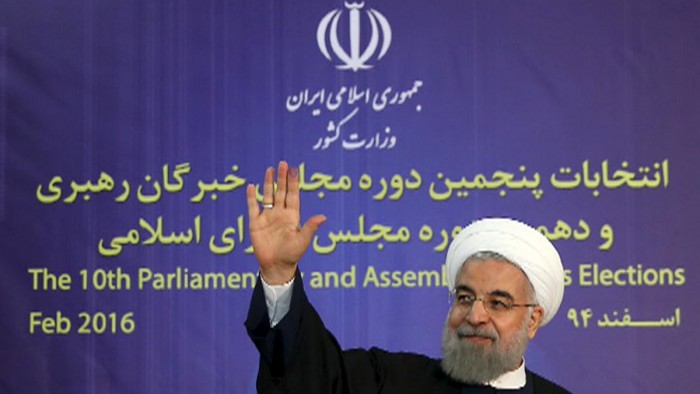
Basking in the afterglow of the Iranian regime’s parliamentary election results, the Iran lobby predictably boasted of the massive wins by moderate and reformist forces within Iran, but now the pushback is coming from a wide variety of the political spectrum as the results and actual winning candidates are absorbed and evaluated.

The realization is settling in that far from the moderate tsunami described by regime supporters such as Trita Parsi and Reza Marashi of the National Iranian American Council, the truth is that very little has changed within the regime leadership and the Iranian people still remain firmly in the grip and thrall of the mullahs.

The parade of cold water on the moderate landslide theory was led by the editorial board of the Washington Post, which has intimate first-hand knowledge of the extremist nature of the regime through the hostage taking and eventual prisoner swap of its reporter, Jason Rezaian. It editorialized:

“Claims of a reformist triumph, however, are overblown. Before the elections, an Iranian liberal coalition said that 99 percent of 3,000 pro-reform candidates had been disqualified by a hard-line clerical council. Most of those in Mr. Rouhani’s coalition are, like him, moderate conservatives, meaning they favor economic reforms and greater Western investment, but not liberalization of the political system or a moderation of Iran’s aspiration to become the hegemon of the Middle East. True Iranian religious and political reformers, like those who joined the 2009 Green Movement, are in jail or exile, or were banned from the ballot.

“For now, Iran can be expected to continue the course it has been pursuing in the months since the nuclear deal was struck: waging proxy wars against the United States and its allies around the Middle East, using its unfrozen reserves to buy weapons, and defying non-nuclear limits — such as by testing long-range missiles. The elections won’t make the regime more pliable, and they won’t change the need for a U.S. counter to its aggressions. They shouldn’t provide an excuse for the Obama administration to tolerate Tehran’s provocations,” the Post said.

The Post is correct in its assertions and admits to the basic problem facing those nervously praising the “moderate” wins: they are left with hoping for the best outcome even though it will most likely come to pass since the alternative is to face the difficult choices of pushing for regime change against a regime firmly entrenched.

The Atlantic’s Kathy Gilsinan noted some of the difficulties in the tea leaf reading going on post-election in discerning who actually won.

“Institutions whose members aren’t popularly elected, including the office of the supreme leader, the Guardian Council, the judiciary, and the security services, are the most powerful in Iran’s government. And they remain in the hands of hardliners,” she writes.

“Another reason it’s difficult to know the significance of these elections—aside from the dueling claims of victory from each camp, and the fact that, as Thomas Erdbink of The New York Times reported Wednesday, ‘there has been no official comment on the affiliation of the winning candidates’—is that Iran does not have strong political parties. Knowing that Republicans have a majority in the U.S. Congress, for example, gives you a rough sense of that body’s legislative priorities and how they would differ from those of a Democratic Congress. As Majlis Monitor, a website devoted to Iranian politics, notes, ‘While political parties help us see a country’s political fault-lines, their absence in Iran makes it difficult to understand how politics are actually [organized] and work there.’”

This points out the fundamental problem with the claims being made by Parsi or Jim Lobe over at Lobelog that moderates won the election: the absence of political parties stems from the mullahs aim to eliminate all dissent and organize the government around homogenous support for the Islamic revolution. True dissident parties such as the Mojahedin Khalgh (MEK or PMOI) were outlawed and membership was classified as punishable by death.

There is no doubt that the Iranian people want real reform and a true turn towards democracy. They are tired of living in an oppressive regime where their every online move is monitored and their every economic move is stymied by widespread official corruption.

The New York Times’ Erdbink also explained how results of the election may never be publicly revealed.

“The Interior Ministry, which is overseeing the voting for the 290-seat Parliament and the clerical Assembly of Experts, announced on Tuesday the names of 222 parliamentary candidates who won nationwide. It also announced that there would be a second round of voting for 68 seats in several constituencies in April,” he said. “But there has been no official comment on the affiliation of the winning candidates, and there may never be, making it difficult to determine how many seats the various factions have won.”

The Interior Ministry also oversees the internal security for the regime and already has a checkered history with the hijacking of the 2009 elections. It wouldn’t be unreasonable to see some similar shenanigans with these results to ensure the right kinds of “moderates” eventually won seats.

Former UN ambassador John R. Bolton took a similar viewpoint in writing for the American Enterprise Institute:

“Efforts to distinguish Tehran’s moderates from hard-liners have a long historical record of failure, as have similar precedents in analyzing Moscow and Beijing. Today in Iran, while there are disagreements over economic, social and religious policies among the elite, there is no disagreement over the objective of mastering the difficult science and technology required to achieve nuclear weapons deliverable on ballistic missiles. There is simply no credible evidence that the ayatollahs and other key Iranian leaders have ever diverged on that goal. Moreover, the nuclear and ballistic missile programs are firmly controlled by the Revolutionary Guards, which is about as likely to cede responsibility to the elected Majlis as to America’s Congress,” he writes.

Ultimately the real test of real reform will come if Evin Prison is emptied, ballistic missiles are shelved and support is withdrawn from Syria, Iraq and Yemen.

I wouldn’t hold your breath for that.

By Michael Tomlinson
Filed Under: Blog, News Tagged With: Appeasement policy, Featured, Iran, Iran deal, Iran Lobby, Lobelog, National Iranian American Council, NIAC, Reza Marashi, Trita Parsi

Iran Lobby Working Hard to Spin Iran Elections

March 3, 2016 by admin

Iran Lobby Working Hard to Spin Iran Elections

Iran Lobby Working Hard to Spin Iran Elections

With the recent parliamentary elections in Iran, the regime and its allies are working hard to project the image of a moderate landslide setting the stage for a new era of peace, prosperity and happiness. Somewhere in there are probably also promises that eating ice cream doesn’t make you fat and pots of gold lie at the end of rainbows.

At the center of that spin control exercise stands the National Iranian American Council, the chief lobbyist and public advocate for the mullahs in Tehran, which sent its leaders out to talk to virtually any journalist that would listen to them about how great things turned out in Iran.

“The stunning setback of the hardliners in the elections is precisely why they opposed the Iran nuclear deal,” said Trita Parsi, president of the NIAC. “They knew that if successful, the Rouhani faction would benefit electorally from the significant achievement of resolving the nuclear issue and reducing tensions with United States.”

Parsi’s comments are the key message for regime supporters: that approval of the nuclear deal was the key for the moderate wins. It makes for a nice fiction, but it is also as blatantly wrong.

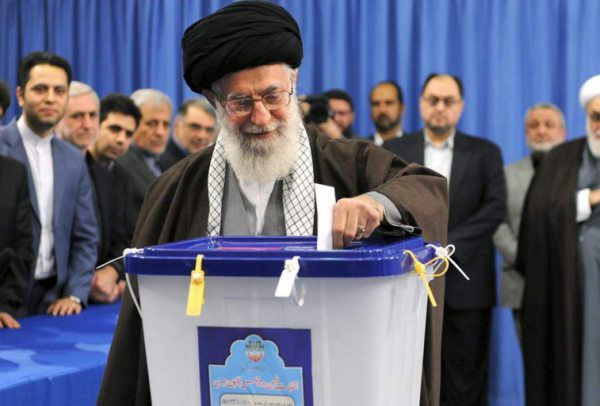
First, Parsi’s contention of a moderate win is beguilingly false since he ignores the months-long vetting process in which the handpicked members of the Guardian Council bounced over half of the 12,000 candidates that submitted for approval to appear on the ballot. Those that survived were largely approved based on their allegiance to the Supreme leader of the mullahs and adherence to the supporting the policies of the ruling mullahs, backed by the Revolutionary Guard.

Anyone who deviated from those goals was arrested and thrown in jail during a massive crackdown across Iran that saw journalists, dissidents and potential opposition politicians rounded up. Of course, Parsi and his colleagues did not utter a word of protest during these arrests.

In another quote given in an editorial in the Washington Post, Parsi added that hardliners “knew that if successful, the Rouhani faction would benefit electorally from the significant achievement of resolving the nuclear issue and reducing tensions with United States. These benefits would not just be limited to the parliamentary elections, but could establish a new balance of power in Iran’s internal politics with significant long-term repercussions.”

It’s the second falsehood Parsi preaches in claiming there are indeed factions splitting the Iranian regime, including a bloc of moderates aligned with Hassan Rouhani.

Where Parsi is wrong is his claim that the differences separating these so-called “faction” are political, when they are in fact more about power and greed.

The Iranian regime ranks as one of the most corrupt economies in the world with the Revolutionary Guard and the families of the mullahs running the regime deeply involved and controlling of virtually all the major industries in Iran, including petroleum, aviation, telecommunications, mining, shipping and manufacturing.

With the cash infusion of $100 billion in hard currency being made available, the mullahs and military are loathe to give up control of those assets, or the billions in foreign investment that will flow as a result of the nuclear deal. The fight over parliamentary seats is less about opening up Iranian society and broadening human rights and more about securing enough seats to control how that spoils of the nuclear deal get divided up.

The mullahs have long made clear their political strategy in crafting a regime modeled after China in which the economy is liberalized while maintaining tight political control over the people. In that manner, the parliamentary elections and claims of moderation by the Iran lobby make perfect sense. As Parsi and others proclaim moderation, the government is still left firmly in the hands of those intent on enriching themselves and not improving the lot of the Iranian people.

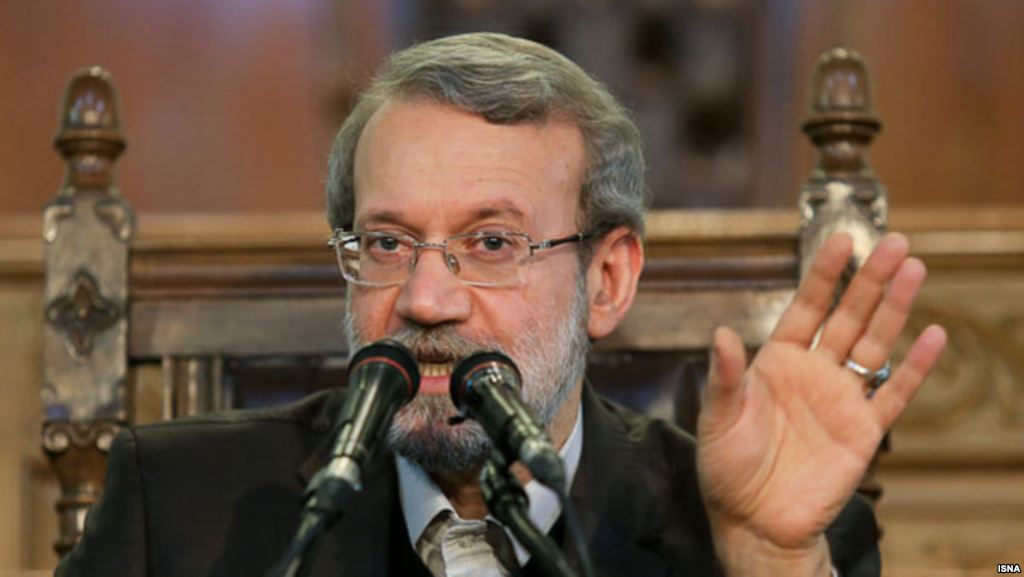
The deception by Parsi does go to some absurd lengths as he claims in an interview on The Real News that Ali Larijani, the current head of the parliament and overseer of the judiciary, is actually in favor of moderate policies.

“Ali Larijani, who is the current head of the parliament, is a conservative. And he’s been a conservative for a very long time, belongs to a very conservative and well-established family. But he has aligned himself with Rouhani most of the time on most issues. And he’s not considered right now to be in the anti-Rouhani camp,” Parsi claims.

It’s a silly claim when you consider that the regime’s judicial and police functions are firmly in control of hardliners that enforced the vetting process in the first place and removed all the opponents to Rouhani’s slate of “moderate” allies. This is also the same judiciary that has consistently imprisoned Americans, Christians and sentences children to death, and most recently snatched up Parsi’s friend and ally, Siamak Namazi, and threw him in prison without legal representation or charge.

The fact that Parsi called these “the most consequential non-presidential elections in Iran at least for the last two decades” in an interview with the Cato Institute, is even more absurd given that many would claim that the disputed 2009 presidential elections that were stolen and protested with mass demonstrations that were brutally put down violently by the mullahs were the most consequential elections in Iran since that was the last time the Iranian people actually took a stab at real regime change.

The last false argument being put forth by the Iran lobby is the contention that real change is possible down the road with the possibility of a new supreme leader being elected following the inevitable death of the 76-year old Ali Khamenei.

“In the short term the parliamentary elections will impact Iran’s economic policies. But for the long term, this assembly could elect the next supreme leader, which has greater long-term implications for Iran and its people,” said Reza Marashi, also of the NIAC.

It is laughable to think there will be any real possibility of installing a new top mullah that would deviate from the path the Islamic revolution has taken, or loosen the control the mullahs and Revolutionary Guard have over the country. For Marashi to think there would be any change over a long, incremental pathway ignores the abject suffering and brutality being meted out against the Iranian people every day.

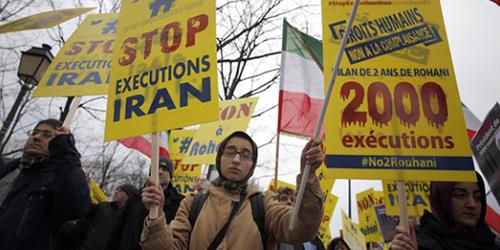
When the Rouhani regime has overseen a record number of executions, far exceeding the high water mark set by Mahmoud Ahmadinejad, the idea of a loosening of the regime is merely a smokescreen.

Already Rouhani has seen fit to keep the vast majority of the billions in released funds in overseas accounts to help pay for the new military hardware Iran is busy buying from Russia and soon China. The Iranian people are unlikely to see any of it and ultimately their hopes for an improving economy will remain only an unfilled dream so long as the mullahs are in Power.

By Michael Tomlinson

Filed Under: Blog, News Tagged With: Featured, Iran deal, Iran Human rights, Iran Lobby, NIAC, Reza Marashi, Rouhani, Trita Parsi

Who Are These So-Called “Moderates” in Iran Elections?

March 1, 2016 by admin

Who Are These So-Called “Moderates” in Iran Elections?

Who Are These So-Called “Moderates” in Iran Elections?

The New York Times, among other news outlets, trumpeted the election results from Iran with great fanfare announcing “strong” gains by moderates and reformists in this weekend’s parliamentary elections. Predictably, the spin revolved around the notion that this was a step in the right direction towards a more moderate future in Iran.

“Though hard-liners still control the most powerful positions and institutions of the state, two national elections last week appeared to build on the slow but unmistakable evolution toward a more moderate political landscape — now and into the future,” wrote Thomas Erdbrink in the Times. “While the hard-liners still remain firmly in control of the judiciary, the security forces and much of the economy, the success of the moderate, pragmatic and pro-government forces seemed to give Mr. Rouhani political currency to push a course of greater liberalization of the economy at home and accommodation abroad.”

What Erdbrink and most other Western journalists miss is the simple fact that the mullahs in control of the regime – virtually all of the important sectors of power as Erdbrink notes – have allowed a smattering of candidates to run that can appear “moderate” when compared to the more vocal conservatives in power, but in fact all share the same loyalty to the aims of the Islamic state.

Revolution and regime change are not coming anytime soon to Iran under these mullahs no matter what rosy picture some media wish to paint.

What is even more amusing is that all the celebration is focused on the election of a small minority dubbed “moderates” in the lower house parliament, but in the 88-member Assembly of Experts, over three-quarters of the original candidates seeking to run were swept off the ballot before voting even began, leaving only hardcore supporters of top mullah Ali Khamenei to win seats.

As to whom actually won, the Wall Street Journal editorial board took a closer look at the winners and found them less than “moderate” and downright unsavory.

  • Mostafa Kavakebian. The General Secretary of Iran’s Democratic Party, Mr. Kavakebian is projected to enter the Majlis as a member for Tehran. In a 2008 speech he said: “The people who currently reside in Israel aren’t humans, and this region is comprised of a group of soldiers and occupiers who openly wage war on the people.”
  • Another moderate is Kazem Jalali, who previously served as the spokesman for the National Security and Foreign Affairs Committee of the Majlis and is projected to have won a seat. In 2011 Mr. Jalali said his committee “demands the harshest punishment”—meaning the death penalty—for Mir Hossein Mousavi and Mehdi Karroubi, the two leaders of the Green Movement that was bloodily suppressed after stolen elections in 2009. Those two leaders are still under house arrest.

According to the Journal, as for new Assembly of Experts, many of the “moderates” projected to have won seats were also listed on the hard-liners’ lists, since the ratio of candidates to seats was well below two, including:

  • Mohammad Reyshahry, a former Intelligence Minister believed to have helped spearhead the 1988 summary execution of thousands of leftists;
  • Ghorbanali Dorri-Najafabadi, another former Intelligence Minister believed to have directed the “chain murders” of the late 1990s; and
  • Ayatollah Yousef Tabatabainejad, a fierce opponent of women’s rights who has called Israel “a cancerous tumor.”

That seems like quite a slate of “moderate” new faces that got elected. Maybe Trita Parsi and Reza Marashi from the National Iranian American Council, can fly over and have lunch with these moderates, unless they are worried they might be arrested like their fellow Iran lobby supporter Siamak Namazi who now languishes in an regime prison.

“The political reality in Iran is that the Ayatollahs, backed by the Revolutionary Guards, remain firmly in control,” the Journal correctly points out.

The funny thing about the parade of optimistic and sunny news headlines is how they eerily echo the same notes of hope that came in the wake of the nuclear agreement only to be followed by grimmer headlines of illegal ballistic missile tests, detaining of American sailors, rocket launches at U.S. and French navy warships, recruiting Russia to fight in Syria and the largest refugee crisis since World War II.

Even as regime supporters laud these “moderate” wins, shocking news came of a village in southern Iran of a heinous incident announced by Shahindokht Molaverdi, the ironically named vice president for women and family affairs.

“We have a village in Sistan and Baluchestan province where every single man has been executed,” she said, without naming the place or clarifying whether the executions took place at the same time or over a longer period. “Their children are potential drug traffickers as they would want to seek revenge and provide money for their families. There is no support for these people.”

Maya Foa, from the anti-death penalty campaigning group Reprieve, said: “The apparent hanging of every man in one Iranian village demonstrates the astonishing scale of Iran’s execution spree. These executions — often based on juvenile arrests, torture, and unfair or nonexistent trials — show total contempt for the rule of law, and it is shameful that the UN and its funders are supporting the police forces responsible.”

Amnesty is particularly concerned about Iran’s execution of juveniles. In a report published in January, the group said Iran had carried out 73 executions of juvenile offenders between 2005 and 2015.

Sistan and Baluchestan, where the unnamed village is situated, “is arguably the most underdeveloped region in Iran, with the highest poverty, infant and child mortality rates, and lowest life expectancy and literacy rates in the country,” according to Ahmed Shaheed, the UN special rapporteur on the situation of human rights in Iran. “The province … experiences a high rate of executions for drug-related offences or crimes deemed to constitute ‘enmity against God’ in the absence of fair trials.”

Even as the Iran lobby celebrates these wins, an Iranian village has seen all the men in it killed indiscriminately by these same “moderates.”

By Laura Carnahan

Filed Under: Blog, News Tagged With: Featured, Iran Human rights, Iran Lobby, Iran Mullahs, Khamenei, Marashi, National Iranian American Council, NIAC, Reza Marashi, Rouhani, Trita Parsi

Iran Election Results Predictably Praised by Iran Lobby

February 29, 2016 by admin

http://www.theguardian.com/world/iran-blog/2016/feb/28/five-lessons-from-irans-2016-elections-tehranbureau

http://www.theguardian.com/world/iran-blog/2016/feb/28/five-lessons-from-irans-2016-elections-tehranbureau

As the Iranian regime counts the ballots from this weekend’s parliamentary elections, the Iran lobby is already hailing it as a momentous victory for “moderate” forces in Iran in what may be one of the most blatant obfuscations since Adolf Hitler’s Anschluss of Austria based on the pretext of being invited in to restore order.

“The stunning setback of the hardliners in the elections is precisely why they opposed the Iran nuclear deal. They knew that if successful, the Rouhani faction would benefit electorally from the significant achievement of resolving the nuclear issue and reducing tensions with United States. These benefits would not just be limited to the parliamentary elections, but could establish a new balance of power in Iran’s internal politics with significant long-term repercussions,” said Trita Parsi, head of the National Iranian American Council and lead cheerleader for the Iranian regime.

His absurd comment came in a piece in Huffington Post in which he failed to acknowledge the most glaring problem with his effusive praise: the handpicked Guardian Council of Ali Khamenei removed almost 90 percent of the “moderates” from the ballot during the months-long vetting process.

The only candidates left on the ballot, especially outside of Tehran, were devoted and dedicated candidates solidly aligned with Khamenei, the ruling mullahs and Revolutionary Guards’ leadership.

Taking a few scattered wins in and around Tehran and calling it a “moderate” win is akin to Parsi’s previous arguments about the nuclear deal being a moderating force for Iran and the West, but in its aftermath the regime has conducted illegal missile tests, arrested scores of dissidents and journalists and stepped up its war in Syria.

The money line from Parsi is when he says “In order to avoid a hardline backlash, the moderation of Iranian policies need to happen at a moderate pace.” We can only assume Parsi thinks reform in Iran happens at a snail’s pace. For him and the rest of the Iran lobby, electing one moderate out of 12,000 thrown off the ballot would be considered “progress,” which is why his proclamation of moderates is so silly, especially when we consider that candidates backing Hassan Rouhani are dubbed “reformists” in a stretch of logic that hurts the brain when thinking about it.

Rouhani has turned into anything but a moderate. Rouhani’s sole purpose in being hand selected by Khamenei and all other candidates cleared from the field beforehand was to convince the West of a moderate image and secure a deal lifting crippling sanctions. In his tenure, he has instead presided over the highest increase in executions ever in Iran, cracked down hard on journalists and presided over three proxy wars in Syria, Iraq and Yemen in a show of extremist Islamic expansion that Mahmoud Ahmadinejad, his much-reviled predecessor, could only dream about.

The fact that Rouhani supporters could only win 30 seats in heavily populated Tehran and lose across the rest of the country indicates the usual pattern of deceit coming from the mullahs: Let the “moderates” claim a victory for global media consumption in Tehran, but dominate and assure control everywhere else in Iran.

The recipe for electoral success has worked since decades ago and has allowed the mullahs to play with the world, around their internal fighting. While the infighting is only about their share of power and both “moderates” and “Hardliners” are the same when it comes to executions, domestic repression, and their support for terrorism abroad. Take for instance the so called moderate Rouhani, the reign of executions under his watch has been much larger than his “hardliner” Ahmadinejad, and he and his Foreign Minister Zarif (Another person that is referred to as “moderate” within the mullah’s regime) have continuously expressed their support for the Syrian dictatorship, the Hezbollah and most extremist movements in Iraq and Yemen. Under Rouhani and his predecessors, virtually all legitimate dissident groups and political parties have long been outlawed and even the nascent Green Movement which was crushed in 2009 and was led by leaders arguably still cozy with the regime leadership has no recognition or legitimacy within Iran.

Add to that the contention by the Iranian regime that democracy was served by the participation of an estimated 33 million of Iran’s 55 million eligible voters and you find remarkable similarities with claims by other totalitarian regimes such as the old Soviet Union, North Korea and Nazi Germany in which near universal participation by the electorate was often forced and compulsory as was who to vote for. The Iranian regime is no different.

“Iranian voters delivered a strong message to the elite that political and social aspirations that have long been unmet need to be addressed more robustly,” said Reza Marashi, also of NIAC who claimed voters wanted change, even if it was exchanging one regime diehard for another.

Aaron David Miller, a vice president at the Woodrow Wilson International Center for Scholars, noted in an editorial in the Los Angeles Times that “none of this favors Iran’s pragmatists and centrists, let alone its reformers. In fact, as the International Crisis Group notes, in Iran historically ‘external loosening’ is balanced with ‘internal stiffening.’

“That is what happened after the 1988 cease-fire in the war with Iraq, and after the 2003 nuclear agreement with Britain, France and Germany, when the powerful Guardian Council disqualified reformist candidates in the next elections and conservatives regained their parliamentary majority. A step forward in a highly authoritarian and ideological system can easily produce a few steps back, or at least to the side,” Miller notes.

The Guardian, had similar takeaways in looking at the elections, including that there are no simple divisions of “moderates” and “reformists” since candidates were disqualified less on political views and more on devotion to the ruling mullahs.

In describing Rouhani, Gareth said “Iran’s president has proved himself an astute, hard-headed operator,” adding that “politically, Rouhani will need to maintain public support with an eye to being re-elected as president next year. Anecdotal reports of a lower turn-out in poorer parts of Tehran may reflect most strongly a wider sense among Iranians they are not benefiting from the easing of sanctions.”

While the Iran lobby may be praising this weekend’s election results, the reality of a rigged election means nothing really changed as most Americans tuned into the Oscars instead.

By Michael Tomlinson

Filed Under: Blog, News Tagged With: Featured, hassan rouhani, Iran deal, Iran Human rights, Iran Lobby, Reza Marashi, Trita Parsi

Human Rights Remain Under Assault by Iranian Regime

February 22, 2016 by admin

Human Rights Remain Under Assault by Iranian Regime

Human Rights Remain Under Assault by Iranian Regime

Next week the Iranian regime will conduct parliamentary elections that most news media and analysts have already called rigged because of the customary elimination of over two-thirds of the candidates seeking seats in the lower parliament and the more powerful Assembly of Experts.

The regime’s Guardian Council, with its handpicked members by top mullah Ali Khamenei, exercised their usual due diligence in removing any candidate that even had a hint of moderation or deviation from the Islamic revolutionary principles that guide the regime.

What is left are only those candidates that pledge religious, ideological and political fealty to the mullahs that run the regime and hold sway over virtually all facets of life in Iran.

This winnowing process empowers the mullahs and allows them the freedom and discretion to continue the unabated crackdown on human rights in advance of the elections with no cause for worry or recrimination from the international community, but there are news accounts that leak out depicting the brutality being visited on ordinary Iranians – often smuggled out by members of the dissident community at great personal risk.

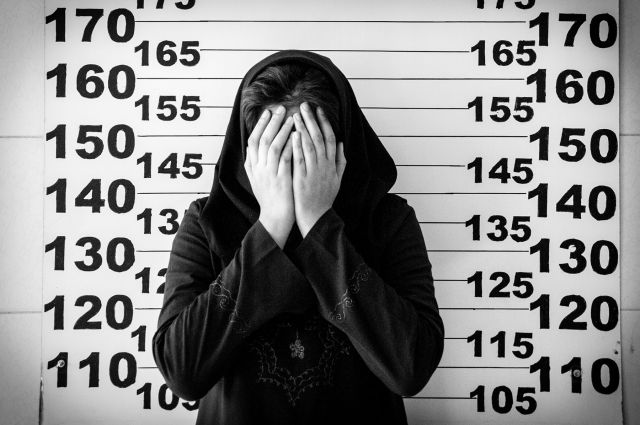
One of those moving accounts was published in Quartz online in a photo essay by a photographer who spent four years researching women and girls being held in Iranian prisons, many awaiting death sentences.

“My main goal in this project was to understand how young girls could end up in jail in the first place,” the prizewinning photographer tells Quartz. “I spent time talking to them, they were nice and kind.”

In Iran, the death penalty can be applied to minors, and in 2014, a United Nations report estimated that at least 160 juvenile offenders were on death row in the country.

While according to a Jan. 25 report by Amnesty International, 73 juvenile offenders were executed in Iran between 2005 and 2015.

The compelling photos paint a grim portrait of a regime willing to kill young girls, often for crimes committed by male acquaintances who escape punishment, leaving it to the girls to pay the ultimate price in their stead.

It’s a situation that the Iran lobby has been virtually silent on. A careful perusal of the websites, blogs and social media feeds for regime supporters such as Trita Parsi, Reza Marashi and Tyler Cullis of the National Iranian American Council or Ali Gharib or Lobelog.com reveal hardly a word of criticism or protest over the heinous violations. What they have protested though has been the incarceration of Siamak Namazi, a dual U.S.-Iranian citizen who was detained by regime authorities and not part of the prisoner swap that occurred as part of the nuclear agreement.

It is ironic that Namazi’s case is the one that earns the attention of the Iran lobby because of the close relationship he has with Parsi and his role in helping launch the NIAC and as an outspoken advocate of the nuclear deal with the regime.

Now Namazi is experiencing the same denial of legal representation that was forced on other American hostages such as Christian pastor Saeed Abedini and Washington Post reporter Jason Rezaian. We can only hope now that the shoe is on the other foot, these supporters of the regime would be more vocal in their criticisms, but we doubt it.

These elections though will provide a glimpse though of the lie that is Iranian regime democracy, which was discussed in an editorial in the New York Post who took to task the policy of appeasement exercised by the Obama administration:

“When it runs out of plausible excuses for its appeasement-plus policy on Iran, the Obama administration advances one argument as final line of defense: showing goodwill toward the Islamic Republic would help ‘moderates’ secure a greater share of power in Tehran with the hope of an eventual change of behavior by the ruling mullahs.”

“But who are the ‘moderates’ that Obama hopes to promote Tehran? A trio of mullahs consisting of former President Hashemi Rafsanjani, former Security Minister Dorri Najafabadi and current President Hassan Rouhani forms the core of the faction that Obama hopes would sail to victory next week,” the article writes. “The triumvirate has a history of masquerading as moderates.”

He recounts how these supposed moderates have often espoused political reforms, but never offered or implemented any political reforms while holding office.

“Rafsanjani and his hand-picked successor Khatami governed for 16 years, but never offered a single political reform let alone implementing any. Their successor Rouhani has had more than two years to show that he follows the same path. During his presidency Iran has become world leader in the number of executions and political prisoners,” he adds.

Rouhani is exercising the playbook that Rafsanjani and Khatami exercised in portraying himself as a moderate when he has no intention of supporting reforms and has openly talked about his admiration for the so-called “Chinese Model” which emphasizes economic development with control of the government firmly in the Communist Party’s hands. Rouhani envisions a similar situation with the lifting of economic sanctions bolstering the flow of money to regime coffers, but no loosening of political restrictions.

The Financial Times took note of the Iranian public’s distinct lack of enthusiasm for upcoming elections against the backdrop of a sputtering economy still stifled by mass corruption and a focus on diverting funds to supporting the proxy wars in Syria, Yemen and Iraq.

“The subdued seasonal shopping just one month before Norouz, the Iranian new year holiday, is adding to widespread gloom about a prolonged economic stagnation that has also dimmed public enthusiasm for the crucial upcoming elections,” the Financial Times writes. “Hassan Rouhani, the country’s centrist president, is now blamed by many for failing to deliver on his election campaign promises to help improve the economy with the nuclear agreement. Although inflation has shrunk — from a peak of about 40 per cent in 2013, when Mr. Rouhani took the reins, to about 13 per cent today, according to central bank figures — economic growth is next to zero and people are unwilling to purchase goods.”

While the election results may be a forgone conclusion, the hope remains that an oppressed Iranian people will someday soon see true regime change.

By Michael Tomlinson

Filed Under: Blog, News Tagged With: Featured, Iran, Iran Human rights, Iran Lobby, Khamenei, NIAC, Reza Marashi, Rouhani, Trita Parsi

Iran Lobby Attacks Saudi Arabia to Distract from Worsening Syrian Situation

February 16, 2016 by admin

Iran Lobby Attacks Saudi Arabia to Distract from Worsening Syrian Situation

Iran Lobby Attacks Saudi Arabia to Distract from Worsening Syrian Situation

There is a certain reliable predictability in what the Iran lobby will write about and advocate. It will always defend the Iranian regime from any potential sanctions no matter how egregious its acts. It will always stay mute on horrific human rights violations or terrorist acts springing from Tehran. It will always find someone else to blame for the region’s troubles that come directly from Iranian actions.

Reza Marashi, the research director for the National Iranian American Council and one of the staunchest defenders of the regime, penned an editorial in The Cairo Review which essentially places blame on Saudi Arabia for the all the ills befalling the Middle East. It is an all-too predictable attempt at shifting blame away from Tehran and dumping it on Riyadh.

Among the literary ruins of his diatribe lie a few choice nuggets of deception such as:

“The Obama administration rightly recognizes the aggressive regional policies of both Iran and Saudi Arabia. But here’s the catch: Tehran has been willing to negotiate de-escalation for nearly three years. Washington has encouraged it. To date, Riyadh has refused,” Marashi writes.

The remarkable thing about Marashi’s editorial is that you could trade places between Saudi Arabia and Iran and his editorial would make perfect sense. For example, the previous piece would read now as:

“The Obama administration rightly recognizes the aggressive regional policies of both Iran and Saudi Arabia. But here’s the catch: Riyadh has been willing to negotiate de-escalation for nearly three years. Washington has encouraged it. To date, Tehran has refused.”

In this reality, the truth actually comes out correctly! Tehran has been the sole reason why the Syrian civil war escalated into the conflagration it has become. Top mullah Ali Khamenei and his handpicked puppet Hassan Rouhani made the calculation that keeping Syrian dictator Bashar al-Assad in power was their only hope of maintaining a Shia arc of influence stretching from the Mediterranean Sea to the Indian Ocean through Syria, Iraq and Yemen.

If Iran’s chief regional ally was allowed to fall, the Iranian regime’s position would become precarious and the very real possibility of regime change would finally be available to the overwhelming numbers of ordinary oppressed Iranians who yearn for freedom from the yoke of theocratic control.

Instead, the mullahs went all in by first pouring billions of dollars into the Assad regime to keep it afloat after most of the world imposed harsh sanctions for the use of barrel bombs and chemical weapons on Syrian and opposition civilians.

Then Tehran directed its terrorist proxy Hezbollah to pour fighters into Syria while at the same time it recruited and coerced Afghan refugees in Iran to enlist and shipped them off to fight. Even with all this support, Assad’s regime was on the verge of crumbling from opposition fighters, forcing Rouhani to beg Russia’s Vladimir Putin to intervene and throw Moscow’s weight into the fray to save the Iranian regime’s proverbial bacon.

Even as Syrian peace talks have taken place in Geneva, Marashi contends that Saudi Arabia has no place at the table which is ironic since Marashi conveniently ignores the fact that all lines of conflict flow back to Tehran and Saudi Arabia is intricately caught up in this web with the Iranian regime’s sponsorship and support of Houthi rebels in Yemen who have brought another war to the Saudi Arabian border; a fact Marashi neglects to mention.

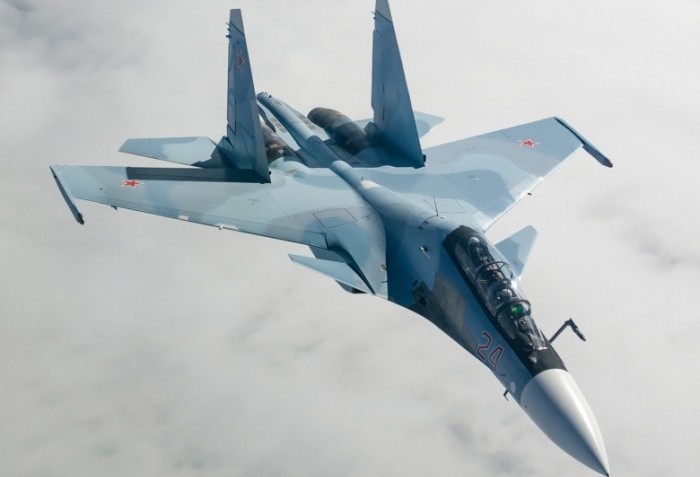
Marashi further contends that the nuclear deal with Iran did not pre-ordain regional conflicts as a result. In fact, that is exactly what it has done. The lifting of economic sanctions and the awarding of over $100 billion in cash to Iran has caused ripples far and wide as Tehran embarked on a mass shopping spree including sophisticated Russian anti-aircraft missiles and now an agreement to buy advanced Sukhoi Su-30 Flanker fighters.

The rapid re-armament of Iran has justifiably spooked its neighbors who plainly see the results of regime aggression and adventurism. Their concerns have sparked talked of a nuclear arms race as Iran’s neighbors seriously weigh their options in pursuing comparable weapons to the Iranian regime, even raising the specter of a new nuclear arms race – a glaring point that Marashi neglects to remark on.

The total commitment of the Iranian regime to support Assad manifested itself with a demand from regime foreign minister Javad Zarif that Iran and its allies in Syria won’t allow a cessation of hostilities in Syria to enable opponents of the Assad regime to “regroup.”

The demand to press the fight against Assad’s opponents by the Iranian regime recognizes that Iran cannot sustain an indefinite war, especially as it drains that $100 billion credit line quickly and global petroleum prices continue to sink, denying the regime the opportunity to cash in immediately on the lifting of embargoes on oil sales.

The clock is definitely running on the mullahs, and they and their allies such as the NIAC know it. This was shown in comments made by the Iranian regime’s air defense chief who vowed that Iran would help Syria further by beefing up its air defense capabilities as the possibility of the establishment of no-fly zones was being raised at the Geneva talks.

One only wonders if that includes transferring some of the new S-300 advanced missile batteries the Iranian regime has just purchased from Russia over to Syria, in what would amount to a dramatic escalation in military support for the Assad regime by Iran.

The reality is that Marashi’s editorial is an indicator of the growing level of concern the mullahs have over the successes Saudi Arabia and neighboring Gulf states have had in stemming Iranian regime advances, especially in intercepting arms being smuggled by Iran into Yemen for Houthi rebels.

By Michael Tomlinson


Filed Under: Blog, News Tagged With: Featured, Iran Lobby, Reza Marashi, Syria

Iran Lobby Cannot Defend Growing Human Rights Violations

February 16, 2016 by admin

Iran Lobby Cannot Defend Growing Human Rights Violations

Iran Lobby Cannot Defend Growing Human Rights Violations

“You cannot escape the responsibility of tomorrow by evading it today.” – Abraham Lincoln

On this President’s Day, it is fitting we look back on past presidents for lessons and observations that hold true in today’s chaotic world and Lincoln’s quote is as powerful and meaningful today as it was in his day, especially as we look at the downward spiral that is the Middle East in general and the Iranian regime specifically.

Lincoln, faced with a great split down the middle of his country, believed deeply in uniting a nation under the principles of freedom and equality for all. He saw slavery as a morally corrupt practice that – if allowed to continue – would darken and sicken the heart of his nation to its core. His quote hearkens to the need to stand firm in the face of great adversity and make the hard decisions today because any delay would force ever harder decisions tomorrow.

The same sentiment applies to the world’s approach to the mullahs in Tehran. The rush to appease the Iranian regime with a dubious nuclear agreement and the move to delink from it a wide range of regime abuses such as support for terror, development of ballistic missiles, holding of hostages and crackdowns on human rights, have proven to be problematic in its aftermath.

Lincoln’s words are also a necessary reminder that we cannot bargain away important moral points today in the hopes for political expediency and we certainly cannot be lured by the siren song of false promises that emanate from the Iran lobby which fought hard to position the regime as a moderate-seeking group of bureaucrats and not a bunch of thuggish theocrats which they really are.

When regime advocates such as Trita Parsi and Reza Marashi of the National Iranian American Council argue for an almost obsequious approach to dealing with the mullahs in the hopes of gaining favor, they in fact are arguing the world give away all of its leverage in the hope of gaining some whiff of cooperation when none will be forthcoming.

Even now, Parsi and Marashi and others in the Iran lobby have consistently ignored the broader implications of aggressive regime behavior since the nuclear deal and instead focused on non-issues such as visa waivers and holding the line against any possible future sanctions.

They have ignored the widespread imprisonment of journalists, Iranian dissidents, artists, students and bloggers throughout Iran.

They have ignored the dramatic escalation in the Syrian war as the mullahs begged Russia to enter on behalf of saving the Assad regime.

They have ignored the blatant acts of aggression committed by the regime in detaining ten U.S. sailors and then using them in a constant stream of propaganda exercises; releasing video of them kneeling underneath guns, even one sailor crying and now revelations they were subjected to constant and intense questioning by regime officials.

The Iran lobby has consistently ignored the repeated reports and demands of international human rights groups such as Amnesty International and Ahmed Shaheed, the United Nations Special Rapporteur for human rights in Iran, all of whom have revealed evidence of mounting regime abuses of increasing size and barbarity.

An Iranian who fled the bloodshed of the regime wrote in the American Thinker his own story of the atrocities committed by the regime and sad state of affairs for ordinary Iranians.

“In the last 37 years, the Iranian nation has lived under the reign of the most backward regime.  The truth is that the clergymen who rule Iran do not belong in this age and cannot deal with the realities of the modern world.  At best, the Islamic revolution of 1979 was the revolution of century against century.  They believe that after 37 years of mismanagement and brutality, the only way they can extend their rule is by increasingly terrorizing their critics.  The Islamic regime has taken this noble Iranian nation into the Middle Ages, creating some of the most medieval laws and implementing them against its citizens in the most vicious manner,” he writes.

“The regime’s atrocities include stoning men and women, cutting off their fingers, torturing innocent people for their opinion, incarcerating religious minorities on fabricated charges, imprisoning Iranian youths for upholding their very basic human rights, and organizing vigilantes to murder political opponents.  They have created an atmosphere of fear and intimidation, where Iranians cannot trust one another.  In brief, in the name of religion, the clergymen have created a society where sadness and despair have replaced hope and optimism,” he added.

This testimony is only one of many that pour out of Iran demanding to be addressed by the world’s governments and news media. Iranian dissident groups such as the National Council of Resistance of Iran have provided much of the proof of the atrocities being committed through smuggled video of public executions, sworn testimony from victims of the regime and tracking of prisoners who all too often disappear in the labyrinth of infamous black holes such as Evin Prison.

Ultimately, Lincoln’s message may prove prophetic as the price to be paid in confronting Iranian regime aggression will only rise in the next president’s term. We can only hope that price will not be too high to pay in light of recent appeasement of the mullahs.

By Laura Carnahan

Filed Under: Blog, News Tagged With: Abraham Lincoln, Featured, Iran Human rights, Iran Lobby, Reza Marashi, Trita Parsi

Iran Lobby Promises of More Moderate Iran Rebutted

February 10, 2016 by admin

Iran Lobby Promises of More Moderate Iran Rebutted

Iran Lobby Promises of More Moderate Iran Rebutted

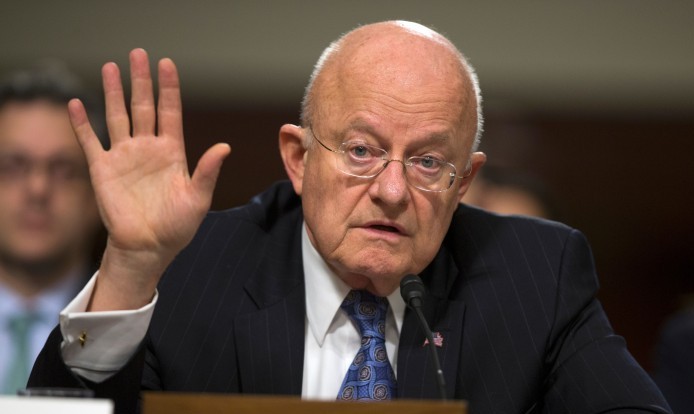
In an appearance before the Senate Armed Services Committee on Tuesday, James Clapper, director of national intelligence, gave a very somber description of what he sees as the Iranian regime’s intentions toward the U.S. now that last summer’s nuclear deal has commenced.

In particular, his statements offered little assurance the regime is acting as an honest actor with the U.S. and the other states involved in last year’s negotiations, or that the nuclear deal will stop Iran regime from obtaining a nuclear weapon.

“Iran probably views JCPOA [Iran deal] as a means to remove sanctions while preserving nuclear capabilities, as well as the option to eventually expand its nuclear infrastructure,” said Clapper.

The U.S. intelligence community has concluded that “Iran does not face any insurmountable technical barriers to producing a nuclear weapon, making Iran’s political will the central issue,” according to Clapper.

Clapper’s statements stand in stark contrast with those made by the Iran lobby led by the National Iranian American Council, which lauded the nuclear accord last summer, claiming it would not only stop all of Iran’s possible pathways to a nuclear weapon, but that “under its terms, Iran is never allowed to build a nuclear weapon.”When queried on Iran’s missile tests conducted in October and December of 2015 just months after the signing of the Iran deal, Clapper had no doubts the regime was trying to send a message.

“I think this was a deliberate message of defiance and that the Iranians are going to continue with an aggressive program to develop their missile force,” said Clapper.

The U.S. intelligence community predicts the Iranian regime “would choose ballistic missiles as its preferred method of delivering nuclear weapons, if it builds them,” according to Clapper. “Iran’s ballistic missiles are inherently capable of delivering [weapons of mass destruction], and Tehran already has the largest inventory of ballistic missiles in the Middle East.”

The regime also continues research on its space program, which is largely considered a front for the construction of advanced ballistic missile technology.

“Iran’s progress on space launch vehicles—along with its desire to deter the United States and its allies—provides Tehran with the means and motivation to develop longer-range missiles, including ICBMs,” Clapper said.

At the same time, Iran continues to be the world’s foremost sponsor of terrorism.

“Iran—the foremost state sponsor of terrorism—continues to exert its influence in regional crises in the Middle East through the Islamic Revolutionary Guard Corps—Quds Force (IRGC-QF), its terrorist partner Lebanese Hezbollah, and proxy groups,” Clapper said.

The Obama administration responded to the tests with a new round of sanctions on Iran’s missile program. Regime officials said the new sanctions would not deter its ambitious missile program, and that it will instead go on the “offensive” in response.

It is in this context that the recent ramp up in testing and deployment of new ballistic missiles and nuclear warheads by North Korea is the most troubling since it has been North Korea that has provided the initial designs and materials to the Iranian regime for its nuclear and missile programs as Clapper indicated in his testimony.

He testified that North Korea has expanded its Yongbyon plant for uranium enrichment and has restarted a plutonium reactor shut down in 2007 that could produce nuclear weapons fuel “within a matter of weeks to months.” North Korea could have as many as 100 nuclear bombs less than five years from now, plus, as Clapper warned, it’s developing an ICBM missile to carry them to the U.S. homeland.

North Korea in many ways is the preview of what the Iranian regime is on track to similarly do as it has broken all of the agreements it has made, developed its weapons program under the unsuspecting eyes of international inspections and freely traded in its technology to other radical nations.

North Korea is also a reminder that hollow diplomatic promises not backed up by severe consequences leads to only more appeasement in a desperate bid to regain perceived momentum with each new violation and militant act. It’s a pattern that is already being repeated with the Iranian regime which has launched new missiles, stepped up its wars in Syria and Yemen and instituted a large-scale crackdown on human rights and political dissidents at home in advance of upcoming elections.

And even with the Iran lobby’s own, most vocal supporters being similarly tossed into Iranian prisons, the Iran lobby cannot face the awful consequences of its actions and still expresses support for the totalitarian regime in Tehran.

That link between North Korea and the Iranian regime is under scrutiny by members of Congress who have called for an investigation of the cooperation between the two regimes.

Sen. David Perdue (R-Ga.) late Monday filed an amendment to a North Korea sanctions bill that would require the administration to disclose to Congress any cooperation between the rogue Asian nation and Iran on nuclear weapon and ballistic missile development.

Congress took up the issue after North Korea said it successfully tested a hydrogen bomb last month. On Saturday, the country conducted a missile launch that it claimed was to put a satellite into space for peaceful purposes, but the U.S. and allies suspect was a long-range missile test in violation of international law.

Perdue and other members of Congress suspect that North Korea and Iran are cooperating and that the administration has been reluctant to disclose to Congress what it knows.

“It’s undeniable that Iran and North Korea have been cooperating on nuclear weapon and ballistic missile development for years now,” said Perdue, a member of the Senate Foreign Relations Committee, in a statement.

“Iranians have reportedly been present for at least three of North Korea’s nuclear tests,” he said.

Perdue’s amendment would require the administration to submit a semiannual report to Congress on North Korea’s cooperation with Iran on nuclear weapon and ballistic missile testing, development and research.

It would also require the administration to disclose to Congress the identity of individuals who have knowingly engaged in or directed material support or exchanged information between governments of Iran and North Korea for their nuclear programs.

“This amendment forces the Obama administration to disclose to Congress what it knows about this cooperation between rogue nations, instead of denying the linkages. The sooner we acknowledge this illicit cooperation, the sooner we can work to put it to a halt,” Perdue said.

The failure to rein in North Korea and the appeasement of the mullahs in Iran with a deeply flawed nuclear deal has only emboldened these regimes to aggressively move forward with their plans. We can only hope that the world will respond soon enough to halt these threats before it’s too late.

By Michael Tomlinson

Filed Under: Blog, News Tagged With: #NuclearDeal, Featured, Iran, Iran Lobby

What the Iran Lobby Will Not Talk About

February 8, 2016 by admin

What the Iran Lobby Will Not Talk About

What the Iran Lobby Will Not Talk About

While most of the U.S. and a good chunk of the global sports audience watched the Denver Broncos defeat the Carolina Panthers in Super Bowl 50 on Sunday, the rest of the world continued to struggle with the daily hardships that have come with the rise of Islamic extremism flowing out of the Iranian regime.

That extremism has come to take many forms including the world’s largest refugee crisis since World War II as Syrians flee the civil war that Iranian forces have exacerbated. It has also resulted in rising tensions with the Iranian regime since the completion of a nuclear deal that was sold as being an instrument for moderation by the Iran lobby – most notably the National Iranian American Council.

Those tensions have included the blatant violation of existing United Nations Security Council sanctions banning the development of nuclear-capable ballistic missiles and the continued crackdown on Iranians in advance of upcoming parliamentary elections, including the imprisonment of Iranian-Americans, Christians, dissidents, journalists, artists, bloggers and scores of others deemed a danger to the ruling mullahs.

Even after a prisoner swap that allowed for the release of long-time American prisoners Jason Rezaian, Saeed Abedini and Amir Hekmati, the specter of other Americans becoming prisoners in Iran has loomed to such an extent that the U.S. State Department updated its travel warning for Iran recently “to reiterate and highlight the risk of arrest and detention of U.S. citizens, particularly dual national Iranian Americans, in Iran.”

“Various elements in Iran remain hostile to the United States.  Since the United States and Iran reached a Joint Comprehensive Plan of Action to address the international community’s concerns over Iran’s nuclear program on July 14, 2015, Iran has continued to harass, arrest, and detain U.S. citizens, in particular dual national,” read the State Department warning.

“The Iranian government continues to repress some minority religious and ethnic groups, including Christians, Baha’i, Arabs, Kurds, Azeris, and others.  Consequently, some areas within the country where these minorities reside, including the Baluchistan border area near Pakistan and Afghanistan, the Kurdish northwest of the country, and areas near the Iraqi border, remain unsafe. Iranian authorities have detained and harassed U.S. citizens, particularly those of Iranian origin.  Former Muslims who have converted to other religions, religious activists, and persons who encourage Muslims to convert are subject to arrest and prosecution,” added the statement.

Naturally the Iran lobby is completely silent on this issue since there is really nothing it can say to defend the Iranian regime, unless of course it did a public service by reprinting the State Department warning on their own websites to provide a heads up to Iranian-Americans.

The only public pronouncements the Iran lobby has made on travel is to condemn the notion of requiring background checks on those wishing to secure a visa to travel to the U.S. from nations such as Iran.

The plight of those with dual citizenship being detained and imprisoned in Iran was made more public when Reuters confirmed that a number of these dual citizens were being charged with espionage similar to what Washington Post reporter Rezaian was charged.

“We have several dual citizens in jail. Their charges are mostly the same (as Rezaian’s),” the judiciary spokesman Gholamhossein Mohseni Ejei was quoted as saying by the Fars news agency. “It is still important to know what he and those related to him were doing in Iran. So their case is still open.”

The fact that the mullahs still view the holding of dual citizens as a form of political gamesmanship and bartering leaves little room for the Iran lobby to make any case for a new wave of “moderation” sweeping over the Iranian regime.

In an odd twist, Siamak Namazi, an Iranian-American with strong ties to the Iran lobby and others supportive of the regime and the nuclear deal, was arrested and is still being held in Iran. Namazi’s friends and supporters, including the NIAC, have attempted to portray his plight as being a pawn in the political power struggle between so-called “moderate” and “hardline” factions within the Iranian regime, but the simple truth may be he is just another bargaining chip the regime may want to use in the future.

But his arrest does send a clear signal to the Iran lobby that their utility to the regime is only as worthwhile as the mullahs deem fit and they – like any other Iranian – could just as quickly and easily find themselves in Evin Prison even after being a loyal supporter of the regime.

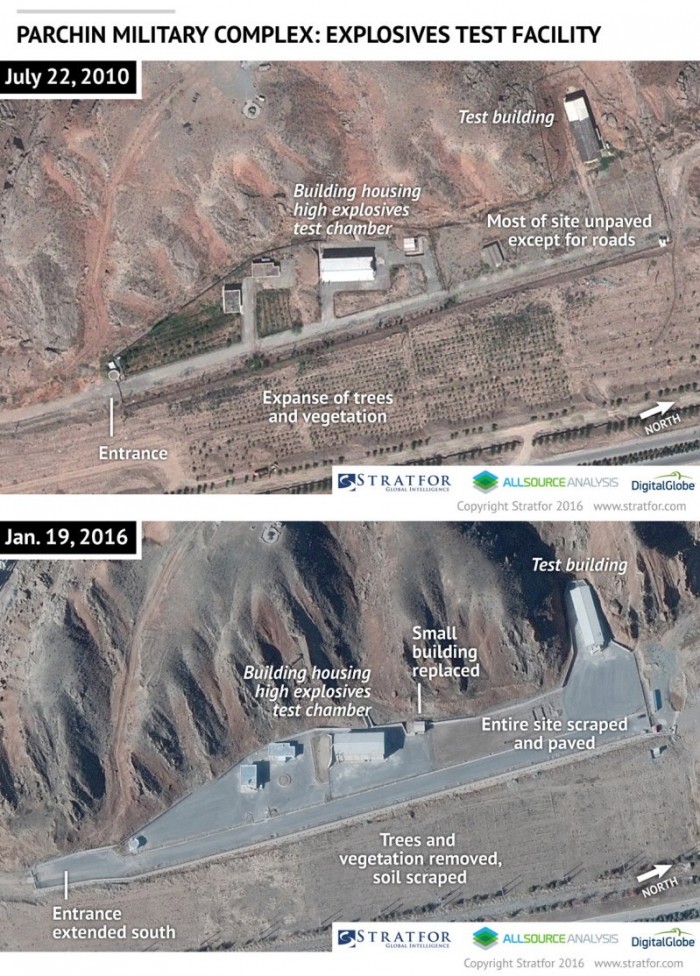
That nefarious nature of the regime was reinforced by disclosures that even as the Iranian regime was working to negotiate a nuclear deal, it was working to hide its atomic work at its Parchin military complex which has been used to test high explosives necessary for ignitors for nuclear warheads according to various intelligence agencies and Iranian dissident groups.

Forecasting site Stratfor.com says the images published Monday show Iran building a tunnel into a heavily guarded mountain complex inside the Parchin facility, some 20 miles southeast of Tehran, while also working to erase signs of alleged high-explosive testing at another area on the site.

“We’re not saying they’re cheating on the nuclear deal,” Stratfor analyst Sim Tack told The Daily Beast. “The images show Iran was going through the motions to hide what it’s done before, and it is still…developing facilities that the IAEA may or may not have access to,” Tack said, referring to the International Atomic Energy Agency.

The progression of satellite images tracking construction at Parchin from 2012 to 2015 show how Iran’s leaders apparently worked to keep regime hardliners happy by moving forward with weapons programs, even as the leadership worked to erase signs of an illegal nuclear weapons program, Tack said.

The imagery reveals new paving around a building alleged to be used for high-explosive testing, while another shows plants and trees removed and soil scraped and hauled away as possible evidence of radioactive contamination was removed in advance of inspections.

The simultaneous construction of a tunnel entrance into the mountain complex is also worrisome since the regime has since released new photos showing its inventory of ballistic missiles stored in new underground bunkers.

Yet even with all of these acts and revelations, the Iran lobby remains silent. We can only assume it has been waiting for the Super Bowl so they can relax while their fellow Iranian citizens undergo more torture.

By Michael Tomlinson

Filed Under: Blog, News Tagged With: #NuclearDeal, Featured, Iran Lobby, NIAC

Iran Lobby Cannot Hide Growing Discontent Within Iran Regime

February 5, 2016 by admin

Iran Lobby Cannot Hide Growing Discontent Within Iran Regime

Iran Lobby Cannot Hide Growing Discontent Within Iran Regime

The Iran lobby, led by the squawking voices of luminaries such as Trita Parsi and Reza Marashi of the National Iranian American Council and so-called journalists Jim Lobe and Ali Gharib, promised a new moderate Iran after the nuclear deal was announced, which was met with loud demonstrations and honking car horns on the streets of Tehran by Iranians hoping for a new shift in the regime’s policies moving forward.

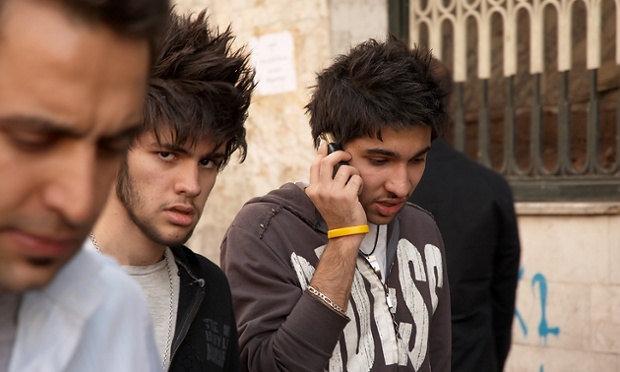
That hope has slowly been strangled and has led to widespread disillusionment among ordinary Iranians, especially Iranian youth who face appalling high unemployment rates, are subjected to internet cyberwalls and live in constant fear of arrest and torture for engaging in counter-revolutionary acts such as posting photos on Instagram.

Their hopes had been bolstered by the false promise offered by the election of Hassan Rouhani, who has become the false face of a regime which has no intention of changing course. Reuters took a deeper look at the dissatisfaction running through Iranian society and the lack of progress towards the moderate promises made by Rouhani’s ascension.

Rouhani won the presidency in 2013, bolstered by the support of many women and young people who were encouraged by his comments that Iranians deserved to live in free country and have the rights enjoyed by other people around the world, said Reuters.

“I am not going to make the same mistake twice. I have decided not to vote,” said Setareh, a university graduate in the northern city of Rasht. “I voted for Rouhani – was he able to improve my situation? No.”

According to the Reuters reporting, Rouhani’s supporters hoped that his election victory would lead to social change in country where women have lesser rights than men in areas including inheritance, divorce and child custody and are subject to travel and dress restrictions, and strict Islamic law is enforced by a “morality police.”

But rights campaigners say there have been little, if any, moves to bring about greater political and cultural freedoms as the president has focused on striking the nuclear accord with world powers to end the international sanctions that have crippled Iran’s economy with no guarantees the financial windfalls would benefit the consumer economy.

Reuters found significant irony among young Iranians that Rouhani’s promises to loosen Internet restrictions have not been met. Access to social media remains officially blocked, though Rouhani and Khamenei have their own Twitter accounts.

This has been a particular grievance among those under 30, who represent more than two-thirds of the 78 million people living in Iran and were born after the 1979 Islamic revolution.

“I am not going to vote. What is the use of voting? My hopes are shattered,” said a 27-year-old engineer in Tehran, who refused to give his name.

The situation for Iranian women remains abysmal and shows no signs of improvement after parliamentary elections. Under regime law, men can divorce their spouses far more easily than women, while custody of children over seven automatically goes to the father.

Women have to get permission from their husbands to travel abroad. They are obliged to cover their hair and the shape of their bodies, their testimony as a legal witness is worth half that of a man’s and daughters inherit half of what sons do.

“What will change if I vote?” said Miriam, 26, who could not win custody of her eight-year-old son after getting divorced in the central city of Isfahan. “Can reformist candidates give me equal rights?”

A report by the U.N. special rapporteur on Iran last year said human rights in the country “remained dire” under Rouhani, while separately a U.N. child rights watchdog said this month that girls faced discriminatory treatment “in family relations, criminal justice system, property rights”.

Support for that nuclear deal may also appear to be cracking based on a new poll conducted by the University of Maryland’s Center for International and Security Studies in January. Another question asked whether the deal was a victory for Iran or a defeat for Iran. In August, 36.6 percent of Iranians said it was a victory, but that number has now dropped to 27.4 percent. Interestingly, the numbers of Iranians who felt it was a defeat also dropped. Instead, a third answer – that the deal is beneficial for both Iran and the world powers that agreed to it – gained adherents, rising 43 percent of Iranians to 54 percent between August and January.

Both are significant erosions of confidence by the Iranian people in what they believe from the Mullah’s regime and the fact they do not see any of the alleged benefits touted by the mullahs flowing to them and are unlikely to see any as the regime focuses on business deals benefitting industries controlled by the Revolutionary Guards Corps.

That focus on benefits for the ruling elites was highlighted by criticisms voiced by regime publications affiliated with the IRGC which criticized a number of the contracts signed by Rouhani on his recent European tour in an effort to justify the removal of almost 90 percent of candidates from election ballots who might be viewed as moderates or even outright dissenters from being able to run for office.

That militant and aggressive behavior was reinforced by comments made by the head of the regime army in the Fars news agency in he promised the regime would continue development of its ballistic missile program even though the international community has widely condemned it as a violation of existing sanctions, according to Reuters.

In October, Iran violated a United Nations ban by testing a precision-guided ballistic missile, prompting a U.S. threat to impose more sanctions. In December, Rouhani ordered Iran’s missile program to be expanded.

“Iran’s missile capability and its missile program will become stronger. We do not pay attention and do not implement resolutions against Iran, and this is not a violation of the nuclear deal,” Fars quoted commander-in-chief Ataollah Salehi as saying.

He was referring to Iran’s deal with world powers last year to curb a nuclear program that the West feared, despite Tehran’s denials, was aimed at acquiring atomic weapons.

But even as the Iranian regime was making these threatening statements, its foreign minister Javad Zarif was demanding that the U.S. make clear a public pledge not to penalize any European banks engaging in trade with the regime, according to Reuters.

Many foreign banks are cautious about resuming trade with Iran following January’s nuclear deal because they fear being caught up in ongoing U.S. sanctions.

Although world powers lifted many crippling sanctions against Iran in return for the country complying with a deal to curb its nuclear ambitions, some restrictions remain in place

Washington still prevents U.S. nationals, banks and insurers from trading with Iran and also prohibits any trades with Iran in U.S. dollars from being processed via the U.S. financial system.

This is a significant complication given the dollar’s role as the world’s main business currency.

European banks are also cautious – with some, including Deutsche Bank, remembering past fines from U.S. regulators for breaking sanctions, Reuters said.

European businesses should be wary of jumping too quickly back in bed with the regime given its aggressive actions and engagement in escalating conflicts in Syria, Iraq and Yemen, especially since the upcoming parliamentary elections will be just another act of political theater with no real benefit or relief for the Iranian people.

By Michael Tomlinson

Filed Under: Blog, News Tagged With: #NuclearDeal, Featured, Iran Lobby, Reza Marashi, Trita Parsi

  • « Previous Page
  • 1
  • …
  • 23
  • 24
  • 25
  • 26
  • 27
  • …
  • 38
  • Next Page »

National Iranian-American Council (NIAC)

  • Bogus Memberships
  • Survey
  • Lobbying
  • Iranians for International Cooperation
  • Defamation Lawsuit
  • People’s Mojahedin
  • Trita Parsi Biography
  • Parsi/Namazi Lobbying Plan
  • Parsi Links to Namazi & Iranian Regime
  • Namazi, NIAC Ringleader
  • Collaborating with Iran’s Ambassador

Recent Posts

  • NIAC Trying to Gain Influence On U.S. Congress
  • While Iran Lobby Plays Blame Game Iran Goes Nuclear
  • Iran Lobby Jumps on Detention of Iranian Newscaster
  • Bad News for Iran Swamps Iran Lobby
  • Iran Starts Off Year by Banning Instagram

© Copyright 2026 IranLobby.net · All Rights Reserved.