Iran Lobby

Exposing the Activities of the lobbies and appeasers of the Mullah's Dictatorship ruling Iran

  • Home
  • About
  • Current Trend
  • National Iranian-American Council(NIAC)
    • Bogus Memberships
    • Survey
    • Lobbying
    • Iranians for International Cooperation
    • Defamation Lawsuit
    • People’s Mojahedin
    • Trita Parsi Biography
    • Parsi/Namazi Lobbying Plan
    • Parsi Links to Namazi& Iranian Regime
    • Namazi, NIAC Ringleader
    • Collaborating with Iran’s Ambassador
  • The Appeasers
    • Gary Sick
    • Flynt Leverett & Hillary Mann Leverett
    • Baroness Nicholson
  • Blog
  • Links
  • Media Reports

Iran Lobby Continues to Ignore Human Rights Violations

February 2, 2016 by admin

Iran Lobby Continues to Ignore Human Rights Violations

Iran Lobby Continues to Ignore Human Rights Violations

The Iran lobby’s leading cheerleaders seem to have a problem with selective memory recall as evidenced by the latest editorial by Reza Marashi from the National Iranian American Council in the National Interest in which he praised Hassan Rouhani’s European tour and boasted of the Iranian regime’s plans for its newfound wealth as a result of the nuclear deal.

“Iran is pursuing this agenda in an effort to increase government legitimacy and security among Iranian society through improved economic conditions,” Marashi says in of the more inane comments he makes.

“Alliances and enmities shift regularly in Iranian politics, but survival of the system is the shared goal of all stakeholders. Thus far, Rouhani’s political coalition has won Iran’s internal political debate by arguing that survival is better guaranteed through flexibility than intransigence,” he adds in typical think tank-speak.

What Marashi is missing from his less than eloquent dissertation is the reality that is going on within Iran now which is the swift action by the Guardian Council to remove from parliamentary election ballots upwards of 90 percent of all candidates perceived to be moderate or opposed to the current mullah leadership. Even the grandson of the regime’s founder, Ruhollah Khomeini, was tossed off the ballot for being too moderate!

Marashi’s piece is titled “Can Iran Get Out of Its Own Way?” That much he got right, since it is clear the mullahs in Tehran have absolutely no desire to halt their steady stream of militant and aggressive actions in solidifying their hold on power, continue their crackdown on human rights and internal dissent and utilize its newfound wealth to rebuild its infrastructure and enrich themselves at the same time.

The upcoming parliamentary elections are now set to deliver a hand-picked slate of loyalists beholden to the mullahs and Ali Khamenei and Rouhani – far from being the moderate struggling to preserve the future of democracy in Iran – has ably served in his capacity as the puppet face for Khamenei.

It’s also worth noting that Marashi’s claim of the regime realigning to provide an economic boon to ordinary Iranians is also a farce since the deals being signed are lined up to funnel billions back into the coffers of the Revolutionary Guard which controls the heavy industries such as petroleum, aviation and manufacturing.

Marashi also doesn’t address the unseen corruption so deeply rooted in the regime economy that any foreign investor is likely to face barriers. He also does not dare mention the sophisticated cyberwall cutting Iran off from the rest of the world and the high degree of surveillance conducted by the regime’s intelligence agencies that monitor virtually all traffic in and out of the country and often leads them to dissidents and other activists.

Despite the deals and the desire of European governments to begin trading with Iran, financing remains a big issue as major European banks remain reluctant to handle Iranian payments, deterred by previous huge fines from the US treasury. Nuclear-related sanctions have been lifted but other US measures relating to terrorism and human rights are still in place, according to The Guardian.

In typical regime fashion indicative of the corruption within it, far from being a political fight between “hard line” and “moderate” factions, the fight within the regime can be viewed as a fight over the spoils of getting the nuclear deal since the vast majorities of Iranian industries are controlled in whole or part through shell companies belonging to the Revolutionary Guard, which in turn has provided a steady source of illicit income to regime officials for the past two decades.

Even as Khamenei has still called for a “resistance economy,” his intent and those of the mullahs is not to resist any American threat, but instead keep the Iranian people under the boot of oppression and not allow the full benefits of a reopened economy to flow to them.

Evidence of this schism was shown as the regime cancelled plans for a conference set for London where new contracts for foreign oil companies to drill in Iran. Regime officials ostensibly claimed the cancellation was due to British visa requirements, but in fact political turmoil domestically was to blame as various regime groups jockeyed for their share of the corrupt spoils.

Some oil officials are worried the contracts won’t be attractive enough to offset the majors’ reluctance to invest globally due to low oil prices. Others fear mounting criticism by hard-liners who say the deals would give too much away of the country’s natural wealth, according to the Wall Street Journal.

The new deals have been criticized by the Basij, the paramilitary oppressive forces, formed to uphold the principles of the mullah’s rule. On Saturday, members of Basij’s student wing were arrested after protesting against the contracts, the semiofficial Tasnim news agency reported.

Political crackdowns in Iran are so commonplace and for so many trivial acts, that some Iranians who have been repeatedly arrested have developed handbook to help those who might face arrest in the regime.

One of the student activists jailed three times and tortured, believes there are steps activists in Iran can take to better protect themselves, both inside and outside prison walls. He belongs to a group of over a dozen activists who used their hard-earned personal experiences to create a 19-chapter booklet in Farsi and English titled “Safe Activism: Reducing the Risks and Impact of Arrest,” according to the Guardian.

Designed to teach activists and journalists how to avoid careless behaviors that could endanger them and those around them, the booklet, now online, also offers guidelines on what to do in case of arrest and how to mitigate the consequences of incarceration,” the Guardian added.

Basic safety measures are highlighted in the first chapters of the ‘Safe Activism’ booklet. Readers are reminded to take precautions before meeting with other activists and not communicate important information over the phone. They are advised to keep sensitive documents as well as identification papers and travel documents at a safe place outside their residence, and to clear their homes of illegal items like drugs, alcohol and banned media.

The fact that ordinary Iranians would need a handbook like these speaks volumes about conditions in Iran and is damning proof that Marashi’s optimistic views are really flights of fantasy.

It would be more of a service if the NIAC published the handbook on its website so future Iranian-Americans visiting Iran are not imprisoned like so many others have been.

By Michael Tomlinson

Filed Under: Blog, Current Trend, News Tagged With: #NuclearDeal, Featured, Iran deal, Iran Economy, Iran Human rights, Iran Lobby, Marashi, NIAC, Reza Marashi, Rouhani

With Lifting of Sanctions Iran Lobby Pressing for Wide Open Trade

January 23, 2016 by admin

With Lifting of Sanctions Iran Lobby Pressing for Wide Open Trade

With Lifting of Sanctions Iran Lobby Pressing for Wide Open Trade

The transition for the Iran lobby was eventual and anticipated as it shifts gears from the lifting of economic sanctions to cheerleading investment by foreign companies into the Iranian economy in a bid to divert billions of dollars in capital into the regime’s coffers.

Nothing exemplified this newfound priority than an editorial by Tyler Cullis, a legal fellow with the National Iranian American Council, which appeared in Huffington Post. Cullis, a true apostle of the mullahs in Tehran, outlined the argument that the U.S. was coming late to the sanctions lifting party and not investing as wholeheartedly as it should.

“The U.S. trade embargo with Iran remains largely intact — outside of newly created authorizations for the import of Iran-origin carpets and certain foodstuffs and the sale to Iran of commercial aircraft. Under the trade embargo, U.S. companies are barred from engaging in trade with or investment in Iran — with few exceptions. Violating these U.S. sanctions prohibitions can lead to serious criminal and civil penalties,” Cullis writes.

“Moreover, considering the reputational risks of being seen doing business with Iran – which retains somewhat of a pariah status among the American public and which has remained under trade embargo for two-plus decades – few U.S. companies were willing to put themselves out on the limb for the chance to re-engage such an unfamiliar market. The result was that U.S. companies conducted virtually no real outreach to either the Obama administration or Members of Congress, which, in turn, fed into a perception in the White House that it lacked any real constituency for the openings that it could have otherwise supported,” Cullis adds.

His logic is fairly twisted on several levels. Cullis is correct that American companies are concerned damage to their brands through re-engagement in Iran, especially in sectors seen as bolstering industries largely controlled by the regime’s Revolutionary Guard Corps such as petroleum, telecommunications and transportation.

That damage to corporate brands can also result from calls for boycotts or other retaliation by human rights groups, Iranian dissidents and religious minorities – all of whom have been subject to brutal treatment by the mullahs there – who may seek to leverage the restart of economic involvement as a vehicle to have their plight heard on the world stage.

Cullis also neglects another key fact about doing business with the Iranian regime; any opening to Iranian markets will almost surely not be accompanied any meaningful reforms in the conduct of the economy by the mullah leadership which remains one of the most corrupt in the world.

According to Transparency International, Iran ranks 136th out of 175 countries in terms of corruption with deficiencies in judicial independence, rule of law, press freedom, free speech and accountability and bribery.

Few American or even European companies would venture into the Iranian market given those conditions and those that do are most likely to work first with regime-controlled industries such as petroleum, shipping or transportation, which is why the first companies most likely to enter the market would be airplane manufacturers such as Airbus, oil companies and heavy equipment manufacturers.

But Cullis is woefully ignorant of the greatest barriers remaining for American companies, especially those engaged in consumer products and services, which the mullahs are hell bent on preventing access to anything that might lead to the Iranian people having greater access to items, goods and services the mullahs might consider “corrupting.”

American cornerstone industries such as entertainment would largely be excluded from Iran. Can we image movies such as “Argo,” “Zero Dark Thirty,” or “13 Hours” getting screen time in Tehran? Can we envision hit television shows such as “Homeland” or “Game of Thrones” airing on Iranian TV sets? Could we really see documentaries about Holocaust or the Iraq-Iran War finding an audience in regime-controlled media?

What about other U.S. industries such as Apple and the ubiquitous iPhone? Would the mullahs allow access to the iTunes store and give Iranians the freedom to use Facebook, Snapchat, Twitter or other social media platforms so far banned by the mullahs and even leading to the arrest and imprisonment of bloggers and other social media users?

Would the mullahs allow U.S. technology companies to enter the marketplace with tablets, WiFi routers, GoPro cameras, portable hard drives, etc? What is more likely is that instead of the rosy picture portrayed by Cullis is a more likely scenario where the mullahs will greatly restrict certain foreign companies from entering the Iranian market that could create a corrupting influence and threaten their reign of terror and suppression.

What is more likely is a “pay-to-play” model where companies will be forced to pay up bribes to regime officials to enter the market and be subject to tight restrictions on what could be sold and to whom. It is a scenario many companies would be reluctant to undertake which explains the reticence of many companies from jumping in with both feet the way Cullis is encouraging.

The fact of the matter is that while sanctions have been lifted, the mullahs still remain in charge and that alone is a significant obstacle for many companies. Coupled with the mullahs continued focus on aggressive military actions in Syria, Yemen and Iraq, as well as continued development of military capability such as ballistic missile design, it’s highly unlikely like McDonalds or Starbucks are going to be opening up locations in Iran and offering free WiFi to Iranians to go with their Big Macs and lattes.

For the vast majority of American consumer brands, entry into the Iranian market is far from a sure thing and remains a risky proposition as long as Iran remains a religious theocracy controlled by a cadre of mullahs who insist on imposing medieval punishments such as public hangings and amputations.

By Laura Carnahan


Filed Under: Blog, Current Trend Tagged With: Featured, Iran Lobby, Sanctions, Tyler Cullis

Iran Lobby Worries Gains Will Be Lost With New President

January 21, 2016 by admin

Iran Lobby Worries Gains Will Be Lost With New President

Iran Lobby Worries Gains Will Be Lost With New President

The Iran lobby continues to exhibit the delusional nature that has marked much of its public lobbying efforts on behalf of the Iranian regime. The newest effort was put on display in an editorial posted to the Huffington Post by Trita Parsi and Tyler Cullis of the National Iranian American Council.

The piece offered up helpful suggestions for the next U.S. president to maintain the same policy of appeasing the mullahs in Tehran that the Obama administration has followed the past three years leading up to the fateful decision to lift economic sanctions as part of a deeply flawed nuclear agreement.

Parsi and Cullis offer the suggestions because they realize the clock is ticking down with the incoming presidential election, and the new president, be it either a Republican or Democrat, is likely to forge their own path in dealing with Iran, especially considering much of the Obama administration’s legacy towards the regime has been built largely around executive orders and not full-fledged treaties.

They do ask an important question though which is “Since this new budding relationship with Iran has not been institutionalized, what will be left of it when the Obama administration leaves office?”

Unfortunately, Parsi and Cullis seem to think that international relations is more akin to developing a teenage crush and keeping the love notes going through Snapchats and emojis.

They offer up three steps in their recipe for true love between the U.S. and a theocratic Iranian regime controlled by mullahs who fully support the use of terror as a tool of statecraft, including:

  • The need for the U.S. and Iran to establish a strategic dialogue thought regular meetings;
  • Establishing a dialogue between both countries legislatures; and
  • The need for increased contact and communications between the two societies.

On the surface these seem like worthy, even laudable goals, but like all the bright ideas and sunny promises made by the NIAC, they are not rooted in the reality of the here and now.

Take for example the first idea they offer which is to build a dialogue through regular meetings. It is worth noting that the U.S., even when it did not have formal diplomatic relations, never stopped meeting with Iranian representatives on a whole host of issues, most notably negotiations on the regime’s burgeoning nuclear program through both the Bush and Obama presidencies.

Parsi and Cullis neglect to mention that dialogue between the two countries has always been present, the difference though has been in the general unwillingness to give the mullahs a blank check until the last year in which the Obama administration essentially caved in nuclear talks – first by delinking support for terrorism and human rights abuses from talks – then allowing the Iranian regime to support the Assad regime in Syria even after the use of chemical weapons without repercussions.

The notion that the Middle East would be a remarkably different place if the Bush administration had capitulated earlier is ridiculous when you consider such an act would not have deterred mullahs in Iran from supporting terror groups, would not have deterred them from doing what it could to keep Assad in power and would certainly not have deterred them from continuing the practice of public hangings and mass crackdowns on journalists, dissidents, women and religious minorities.

Most important, the idea that ISIS could have been stymied is absurd since it was Iranian regime’s support of Assad in the first place that spawned ISIS, as well as offering safe haven for Al-Qaeda leaders driven out of Afghanistan by the U.S. invasion who later left to build ISIS out of the carnage of Syria.

The second idea that Parsi and Cullis offer about a dialogue between legislative bodies is even – to borrow a phrase from the Trump lexicon – more stupid than the first idea since the Iranian regime has a long practice of winnowing the field of candidates eligible to run for parliamentary seats, especially in the Assembly of Experts in order to ensure an ironclad control over the government.

Take for example parliamentary elections next month in which out of a field of 12,000 candidates who applied to run, almost two-thirds were disqualified by the Guardian Council. The 12-member council vets political candidates and all legislation passed by parliament. It is made up of six judges elected by parliament and six clerics appointed by top mullah Ali Khamenei, who has the final word on virtually all important state matters.

So-called reformists—those favoring more political and economic freedom and improved relations with the outside world, who have been involved in all previous terrorist activities and domestic repression—say their camp was overwhelmingly targeted, with one saying barely 1% had been approved in a sign that the practical political realities of how the regime is run are completely at odds with the rosy picture painted by Parsi and Cullis.

Considering how the two houses of parliament in the regime are under the thumb of a single man in Khamenei, the notion of a dialogue developing between them and the U.S. Congress is a silly one and unlikely to ever develop.

This brings us to the last ridiculous idea Parsi and Cullis hoist up which is the idea of communications and contact between the Iranian and American people. Again, a nice notion if it was true, but almost impossible to succeed considering how the mullahs have imposed a cyberwall blocking internet access and use of social media platforms for the Iranian people to communicate with the outside world.

From a practical standpoint, the regime’s Revolutionary Guard Corps, which owns the virtually all of the major telecommunications companies, monitors the nation’s communications and often uses those channels to identify dissidents and suppress contrary political activities.

Considering how American culture is largely built around mass media entertainment and consumer marketing, it is highly unlikely that any of that will ever find unrestricted audiences in Iran, where mullahs already impose strict censorship rules on all foreign media content and ban many iconic American brands for fear of cultural “contamination.”

Indeed, what Parsi and Cullis are really worried about is that the broad public perception in America that Iran’s mullah leadership is focused on terror and military expansion at the cost of domestic oppression of its people is true and will become the focus on a new president’s foreign policy. For the Iranian people and the rest of the world, the best hope for a truly new relationship with the regime lies not in following the plan laid out by Parsi and Cullis, but in fact doing the exact opposite.

By Michael Tomlinson


Filed Under: Blog, News Tagged With: #NuclearDeal, Appeasement policy, Featured, Iran Lobby, Iran sanctions, IranLobby, National Iranian American Council, NIAC Action, Trita Parsi, Tyler Cullis

End of Iran Regime Sanctions Brings Uncertain Future

January 19, 2016 by admin

On the same line, it has been trying to put the blame on other factions or "hardliners" within the mullahs for the surge in executions and oppressive measures taking place during "moderate" president of the mullahs, Rouhani's tenure.

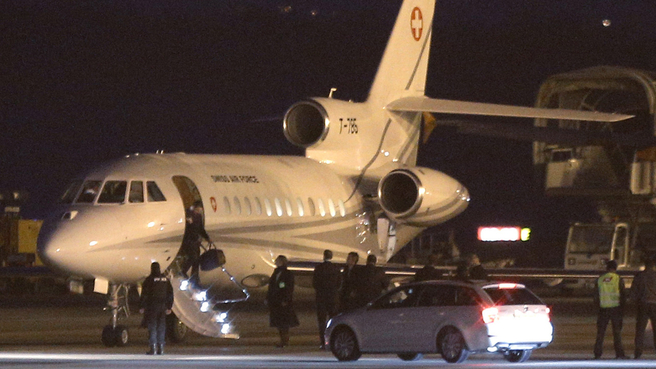
An unidentified man leaves a Dassault Falcon jet of Swiss army at the airport in Geneva, Switzerland, Sunday, Jan 17, 2016. A US government plane waited nearby to bring back to the US the men who were left from imprisonment in Iran the day before. (AP Photo/Laurent Cipriani)

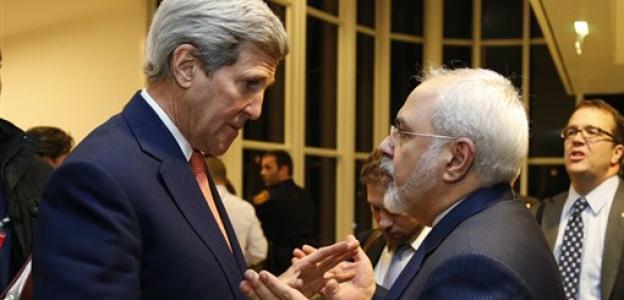
This weekend brought an almost frantic rush of events as the Obama administration and international community lifted economic sanctions against the Iranian regime, while also facilitating a prisoner swap of four Americans being held in Iran with seven Iranian-Americans being held in U.S. prison for trafficking in illegal weapons and nuclear materials.

Three of Americans fly out of Iran and onto Germany to be reunited with loved ones, including Christian pastor Saeed Abedini, former U.S. Marine Amir Hekmati and Washington Post reporter Jason Rezaian. A fourth American, Nosratollah Khosravi whose imprisonment had not been previously reported, opted to stay in Tehran where he has a residence.

The lifting of nuclear sanctions on Saturday allowed Iran to re-enter the world’s oil markets; according to some estimates, by the end of the year its exports may increase by a million barrels a day, yielding about $30 million a day in revenue at current prices. Its ships will be able to enter and leave foreign ports, and its citizens will have access to global financial markets. On top of which the regime is scheduled to being receiving cash transfer of frozen assets that could total as much as a staggering $150 billion.

The Obama administration also took to clearing up several old accounting issues, including a payment of $1.7 billion representing a $400 million refund in payments made for military equipment sold to the government under the former shah, but never delivered because of the revolution along with interest accumulated over 37 years.

With all of this cash now flooding into the Iranian regime’s coffers, the single biggest question hanging over the Middle East is “What will the mullahs do with all that money?”

Considering the nuclear agreement made no attempt to link any restrictions on how the money was to be used, the mullahs are essentially free to do whatever they like with it, which has caused Iran’s neighbors to become very worried.

In Saudi Arabia, there was concern that the lifting of sanctions would bolster Iran and its allies. A statement by 140 Sunni Muslim clerics urged Muslims to unite against the threat of Shiite Iran. It criticized actions by some minority groups in Muslim countries and accused them of “serving foreign agendas,” a veiled reference to what they view as the loyalty of Shiites in Sunni-majority Arab countries to Iran.

Iran’s rivals are also worried that Tehran will spend some of the billions of dollars of oil revenue unfrozen by the lifting of sanctions on aiding regional allies that include Syrian President Bashar al-Assad, the Shiite group Hezbollah in Lebanon and the Shiite-linked Houthi rebels in Yemen.

The prisoner swap and lifting of sanctions was predictably hailed by the Iran lobby, but even the regime’s staunchest supporters recognized the current ambivalent mood of American and European voters who have been unnerved by a rash of terror attacks inspired by Islamic extremism.

“While this diplomatic victory should be celebrated, it is impossible to ignore the ongoing systemic human rights violations in Iran. Recent arrests of activists and artists appear aimed at intimidating reformists and moderates ahead of key elections to Iran’s parliament and Assembly of Experts. Further, an ongoing rise in executions – often for nonviolent drug-related offenses – must be halted without delay. We hope that the moderation that has dramatically impacted Iran’s external relations can now shift inward to produce lasting change,” said the National Iranian American Council, the regime’s leading lobbyist, in a press release. On the same line, it has been trying to put the blame on other factions or “hardliners” within the mullahs regime for the surge in executions and oppressive measures taking place during Rouhani’s tenure, the “moderate” president of the mullahs.

This also represents the double-edged sword the Iran lobby now has to traverse since it has bet everything that the regime will act like a normal civil nation from now on. If the Iranian regime continues to escalate its conflict with Saudi Arabia, continues to fund terror groups or continues to apprehend American sailors at will on the high seas, then public opinion will be turned quickly against the lobby.

Iranian dissident groups that know the regime’s leadership best had the best perspective on this weekend’s events.

“The major part of Iran’s economy (more than 50% of its GDP) is controlled by 14 large entities, all of which are affiliated with the military and security apparatus and controlled by Supreme Leader Ali Khamenei. Much of the released funds will end up in the coffers of these 14 economic entities. A good portion of IRGC expenditures and the monthly financial assistance to the Syrian dictator is paid up by the profits of these institutions. The bulk of the released funds will flow to these economic hubs and will thus serve Khamenei and the IRGC,” said the National Council of Resistance of Iran, one of the leading dissident groups, in a prepared statement.

The NCRI points out, correctly, that the Iranian regime is lurching towards parliamentary elections with a flurry of political arrests and a rapid escalation in public executions – 53 in the first two weeks of January alone – in order to maintain control of the Iranian people, especially if they are anticipating a windfall from the release of funds which they are not likely to receive.

As the Wall Street Journal pointed out in an editorial, this weekend’s events cemented the perception that the Iranian regime essentially swapped four Americans for over $100 billion in cash, access to the international banking system and a re-entry into the global oil markets.

“The timing of Iran’s Saturday release of the Americans is no accident. This was also implementation day for the nuclear deal, when United Nations sanctions on Tehran were lifted, which means that more than $100 billion in frozen assets will soon flow to Iran and the regime will get a lift from new investment and oil sales. The mullahs were taking no chances and held the hostages until President Obama’s diplomatic checks cleared,” the Journal declared.

“But the Iranians negotiated a steep price for their freedom. The White House agreed to pardon or drop charges against seven Iranian nationals charged with or convicted of crimes in the U.S., mostly for violating sanctions designed to retard Iran’s military or nuclear programs. Iran gets back men who were assisting its military ambitions while we get innocents. This is similar to the lopsided prisoner swaps that Mr. Obama previously made with Cuba for Alan Gross and the Taliban for alleged deserter Sgt. Bowe Bergdahl,” the Journal added.

All of this shows that the mullahs tried and true policy of taking hostages will only embolden them to do more. The right policy though seems to be a firm policy much similar to the Sanctions that forced them to come to the nuclear negotiation table.

By Michael Tomlinson

Filed Under: Blog, Current Trend, News Tagged With: Featured, Iran, Iran deal, Iran Lobby

What the Detention of 10 US Navy Sailors Tells Us About Iran Regime

January 15, 2016 by admin

What the Detention of 10 US Navy Sailors Tells Us About Iran Regime

What the Detention of 10 US Navy Sailors Tells Us About Iran Regime

The arrest and detention of 10 U.S. Navy sailors by the Iranian regime and their release after 24 hours is being hailed by some regime supporters as proof of how a new cooperative relationship exists between the U.S. and Iran and how a similar situation might have led to armed conflict before the nuclear deal was agreed to last July.

Regime supporters and members of the Obama administration have even attempted to characterize the Iranian detention as a helpful assist to sailors lost in the waters of the Persian Gulf after allegedly suffering mechanical difficulties, but the images released by the regime are anything but designed to reassure Americans.

The detention was a political act and one designed to convey a specific message considering its timing just before President Obama’s State of the Union speech. It has been a hallmark of the mullahs in Tehran to invest heavily in message, meaning and symbolism. They do not do things haphazardly or without purpose.

The founding of the revolutionary Islamic state even had symbolic meaning with the release of 52 American hostages during the swearing in ceremony for President Ronald Reagan and the continued holding of Iranian-American hostages today also has meaning and symbolism for the regime.

When the regime paints an American flag on the streets of Tehran to be marched over, or builds a model of a U.S. aircraft carrier so it can be sunk on live television, or holds weekly prayer meetings to shout “Death to America,” they are all important symbolic acts for a regime controlled by mullahs deeply concerned over appearances and perception.

The mistake made by those who otherwise support the regime in its efforts to re-enter the international community is that they de-link all of the regime’s actions and treat them as specific, individual events with no relationship to one another.

The test firing of illegal ballistic missiles followed by the launching of rockets near U.S. Navy warships followed by the interception and detention of U.S. Navy sailors are not related according to these supporters of the regime.

They could not be more wrong.

Take for example the election of Hassan Rouhani as president of Iranian regime. Even though he served extensively in intelligence and national security capacities within the regime and was regarded as a trusted ally of top mullah Ali Khamenei, his election was portrayed as a win for moderates by the Iran lobby, led by the National Iranian American Council; forgetting that the previous slate of candidates, was wiped off the ballot by the Guardian Council, allowing Rouhani to win with virtually no opposition.

The mullahs learned their lesson from the disputed election of 2009 where street battles throughout Tehran showed the true nature of the regime to the world. Being mindful of appearances, the mullahs simply took everyone off the ballot that could be a problem.

Which is why the response by the Iran lobby has been interesting, as Shireen Hunter, a professor at Georgetown University, writes in the regime supporting Lobelog.com, that “both the tone and the behavior of the IRGC was quite mild, at least according to the institution’s usual standards. It insisted on treating the US personnel with respect and housing them in a comfortable and safe place.”

Anyone who has watched the video released by the Revolutionary Guard Corps can plainly see the U.S. sailors on their knees, being held at gunpoint with their hands clasped above their heads. They can also see video of a Navy Lieutenant apologizing on camera and saying how all of them have been treated well by their captors.

Oddly, the logic of the Iran lobby is that we should be thankful the regime treated their captives well instead of being upset they captured them in the first place. It’s the same bizarre logic applied to most of the regime’s actions where the Iran lobby has argued that the regime’s involvement in Syria has stemmed the tide of ISIS while neglecting to mention Iran’s intervention in Syria gave birth to ISIS in the first place.

You don’t thank a burglar for being neat after he’s robbed your home.

For the Iranian regime, the videos are powerful symbolism depicting the regime’s ability to confront and embarrass the U.S. military.

It also adds to the growing perception by the mullahs that the U.S. will do nothing in response to any provocation they choose to engage in. The litany of aggressive acts by the regime since the nuclear deal was signed leading up to the capture of the U.S. sailors has merited almost no consequences for the regime.

Ironically enough, even though the regime’s own officials deny the filling in of the Arak heavy-water nuclear reactor’s core with concrete, the U.S. is due to release up to $150 billion in cash before Iran’s parliamentary elections in February.

Common sense would dictate you don’t release the money until you know the election results to see who are you dealing with, even though we can already guess since the slates of candidates in the Assembly of Experts have to be approved by the Guardian Council and most dissidents that could have won seats in the lower house have already been rounded up and arrested at Khamenei’s orders.

As Sean Davis writes in The Federalist, “our military personnel were captured, forced to surrender on their knees, blindfolded, and photographed. Their images were then broadcast to the world on Wednesday morning by the Iranian regime, a clear violation of the Geneva Conventions. The American woman who was captured was forced to submit to Islamic law and don a hijab. State-run Iranian media announced that the whole affair was meant to be a “lesson” to “troublemakers” in the U.S. Congress.”

One would think if the Iranian regime really wanted to be helpful, why not just give the Americans a tow out of the area?

By Michael Tomlinson

Filed Under: Blog, Latest from Lobbies & Appeasers, News Tagged With: Appeasement policy, Featured, Iran Lobby

Iran Regime Pushes Confrontations as Iran Lobby Covers

January 13, 2016 by admin

Iran Regime Pushes Confrontations as Iran Lobby Covers

Iran Regime Pushes Confrontations as Iran Lobby Covers

Noun: con·fron·ta·tion

Definition: A hostile or argumentative meeting or situation between opposing parties.

The Iran regime has decided to live up to the meaning of the word “confrontation” in all its forms as it rapidly escalates a series of crises on several fronts.

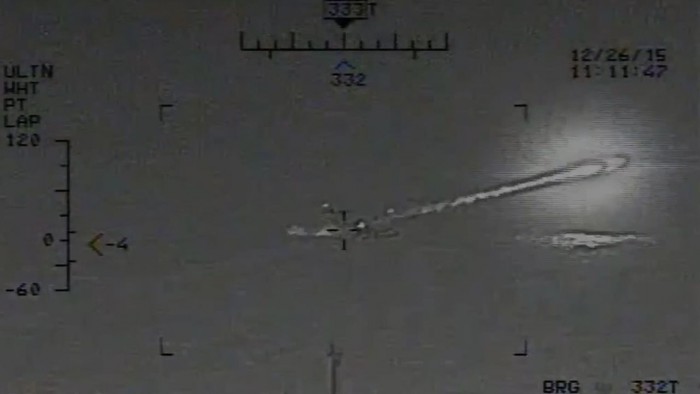
The U.S. Navy released video this weekend taken by an American helicopter showing an Iranian Revolutionary Guards vessel firing unguided rockets last December near warships, including the aircraft carrier USS Harry S. Truman in the Strait of Hormuz as proof rebutting denials by the Iranian regime that it had launched the rockets.

A regime spokesman claimed the accusations by the U.S. were “false” and “akin to psychological warfare,” but had no rebuttal to the video evidence that was released clearly showing the regime had lied about the provocation.

The Navy said the rockets were fired “within an internationally recognized maritime traffic lane” as the Truman and the other ships, including commercial craft, were passing through the Strait of Hormuz into the Persian Gulf.

A U.S. Central Command spokesman at the time called the Iranian actions “highly provocative, unsafe and unprofessional” and said they called into question Iran’s commitment to the security of a waterway vital to international commerce.

But the firing of rockets near U.S. Navy warships was only one part of a much larger tapestry the regime is weaving of acts fueling violence across the Middle East at the direction and behest of the mullahs controlling Iran.

Jay Solomon reported in the Wall Street Journal of the growing fears in Washington and Europe that the nuclear deal reached last July with the Iranian regime has not brought the much-promised moderate turn from Iran, but rather has only emboldened and hardened its leadership.

“Since completion of the agreement in July, Tehran security forces, led by Supreme Leader Ayatollah Ali Khamenei, have stepped up arrests of political opponents in the arts, media and the business community, part of a crackdown aimed at ensuring Mr. Khamenei’s political allies dominate national elections scheduled for Feb. 26, according to Iranian politicians and analysts,” Solomon writes.

“Americans have set their eyes covetously on elections, but the great and vigilant nation of Iran will act contrary to the enemies’ will, whether it be in elections or on other issues, and as before will punch them in the mouth,” Khamenei told a meeting of prayer leaders this week.

“As much as $100 billion in frozen revenues are expected to return to Iran after sanctions are lifted, which U.S. officials said could happen in coming weeks,” Solomon notes. “Many of the companies about to be removed from international blacklists are part of military and religious foundations, including some that report directly to Mr. Khamenei. Those firms could be the first to benefit from the rush of international businesses looking to profit from the lifting of sanctions.”

The same month, two Iranian poets, each received decade-long sentences and 99 lashes for kissing members of the opposite sex and shaking their hands, Iranian state media reported. They have denied the charges.

In November, an Iran court convicted the Washington Post’s Tehran bureau chief, Jason Rezaian, of espionage and sentenced him to prison. The Post and Mr. Rezaian have denied the charges.

Things are getting so bad Congressional Democrats are intensifying pressure on the Obama administration to hold Iran accountable for its testing of ballistic missiles.

Both supporters and opponents of the multinational nuclear accord with the Iranian regime say that to maintain U.S. credibility in enforcing the deal, the White House must move forward with sanctions on Iran after two missile tests in the fall.

“They ought to impose sanctions because we have to show we take this seriously,” Rep. Jerrold Nadler (D., N.Y.), who backed the nuclear deal, said Friday. “Iran is very destabilizing, very aggressive and very badly behaved and we have to do what we can to stop that.”

But even with the renewed calls for action against the Iranian regime, there seems to be little appetite in the White House to engage in new confrontations with the mullahs during the last year of President Obama’s term in office, which has led to traditional U.S. allies such as Saudi Arabia to strike out and form their own coalitions in an effort to stymie Iranian regime’s aggressions.

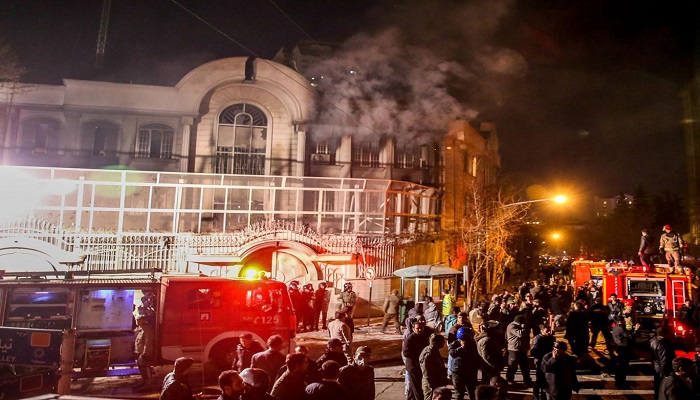
The Arab League in a statement condemned the attacks on two Saudi diplomatic missions in Iran and accused the Iranian government of failing to protect the buildings, Reuters reported. The statement also condemned a militant group found in Bahrain reportedly backed by Iran’s Revolutionary Guard. All Arab League nations voted in support of the statement except Lebanon, where the Iranian-backed Hezbollah terror group holds serious sway.

Saudi Arabia Foreign Minister Adel Al-Jubeir, speaking at an emergency Arab League session called in Riyadh, Saudi Arabia, to discuss Tehran’s “terrorist acts” after attacks on the Saudi Embassy in Iran, said Arab nations must ensure that Iran is stopped from “meddling in the affairs of Arab nations.”

The actions by Arab League nations comes as the Iran lobby ramps up its verbal and PR attacks on Saudi Arabia in an effort to deflect attention on the Iranian regime’s new provocations. In fact, the regime’s chief lobbyist – the National Iranian American Council – has issued a flurry of editorials condemning Saudi Arabia, but not criticizing the regime’s recent acts including the crackdown against dissidents, the ballistic missile launches and firing of rockets at the U.S. Navy.

“If it seems like the Iranian government’s behavior is schizophrenic, that’s because it is. A small but powerful group of hardliners is trying to derail Rouhani’s foreign policy initiatives in an effort to weaken his domestic political power,” said Reza Marashi of NIAC in a piece for Vice News in which he attempted to blame the regime’s latest nefarious acts on a small group of hardliners.

He of course does not mention the political realities that the regime as a theocratic state is solely and particularly in making decisions regarding its strategic issues, is run at the whim of its Khamenei and the small, hand-picked group of mullahs in its Guardian Council and Assembly of Experts.

As the situation worsens, we should see even more hysterical editorials coming from NIAC and other lobby allies such as Lobelog and the Ploughshares Fund.

By Michael Tomlinson

Filed Under: Blog, News Tagged With: Featured, Iran deal, Iran Lobby, NIAC, Reza Marashi

Iran Lobby Attacks Saudi Arabia to Aid Iran Regime

January 8, 2016 by admin

Iran Lobby Attacks Saudi Arabia to Aid Iran Regime

Iran Lobby Attacks Saudi Arabia to Aid Iran Regime

The Iran lobby, led by the National Iranian American Council, has ratcheted up the propaganda machine to take direct aim at Saudi Arabia in the growing escalation in tensions between it and the Iranian regime.

This was highlighted in back-to-back editorials by Trita Parsi and Reza Marashi of NIAC as well as a steady parade of attack pieces by Eli Clifton and Paul Pillar on Lobelog.com, all attempting to portray the Iran regime as the picked on softie and Saudi Arabia as the menacing bully.

It’s a curious, but not unsurprising, direction for the Iran lobby since the rise in tensions with Saudi Arabia and other neighboring Arab states have brought to the forefront one unmistakable point the rest of the world cannot ignore; the Iranian regime is always at the center of the world’s most dangerous conflicts.

Be it in Syria by its support of the Assad regime, or in Yemen through its support of Houthis rebels or in Iraq through Shiite militias, the mullahs in Tehran have manipulated events to create disorder in order to gain footholds in neighboring nations to establish the Shiite version of the Warsaw Pact as a buffer from its adversaries.

But the delusional arguments being pedaled by the Iran lobby to cover for Iran’s aggressive expansions have ranged all over the map as it has tried anything to explain away the sectarian violence and bloodshed coming at the behest of the Iranian regime.

Take for example Parsi’s editorial appearing in Al Jazeera in which he attempts to portray Saudi Arabia as a “declining state” and Iran as a “rising state” by way of explaining why Saudi Arabia is resisting Iran so strenuously.

It’s the kind of argument a high school student reading Cliff Note’s versions of history might make. Parsi says that “history teaches us that it is not rising states that tend to be reckless, but declining powers.”

Most historians would disagree with Parsi and most political and military analysts would find his comment nonsensical since the defining parameters for nations to act “recklessly” often form around issues of resources, economy, wealth and even faith. The “decline” of a nation can be defined in a similarly wide variety of methods, none of which would apply to Parsi’s reasoning.

Empires and nations can decline through environmental degradation such as the Harappan Civilization in the 22nd century BC in what is now called Pakistan or the Minoans centered on the island of Crete which met its demise in 1450 BC when a volcano erupted.

They can also decline through war such as the ancient Roman Empire or the Ottoman Empire at the end of World War I. In all these cases, nations and empires in decline were not cited for “reckless” action as a reason for their declines. If anything, history teaches us that declining empires are often the victims of aggressive neighbors who sense weakness and an opportunity to acquire more territory, more wealth or more slaves.

Modern history has taught us that lesson especially well as in the growth of totalitarian states such as Nazi Germany or now the Iranian regime in which aggression is more often the hallmark of these nations’ leadership. Accommodation is viewed as weakness, negotiation is a tactic to hold off retaliation and military action is a tool of statecraft.

Parsi typically confuses political weakness with practical weakness. It’s a viewpoint common among dictatorships which only see the world through the lens of strength and domination. Parsi’s conceit and obsession with the strongman view of the world is illustrated when he writes:

“Their prospects of success in any confrontation will diminish the longer they wait, and second, because of the illusion that a crisis may be their last chance to change the trajectory of their regional influence and their prospects vis-à-vis rivals. When their rivals — who have the opposite relationship with time — seek to deescalate and avoid any confrontation, declining states feel they are left with no choice but to instigate a crisis.”

Parsi believes then that in the modern world the only options open for nations that feel threatened is to seek out confrontation and create crisis.

Going by that standard, the nations in the greatest decline would seem to be China, North Korea, Russia and Iran given the recent track records of confrontation in the South China Sea, Ukraine, nuclear bomb tests and – in the case of the Iranian regime – aggressive actions in Syria, Iraq and Yemen. On that basis alone, Iran would seem to be the nation in steepest decline using Parsi’s logic.

Parsi neglects to also mention the near Hail Mary-like request of the mullahs in Tehran to bring in Russian intervention in Syria to save the Assad regime.

If anything, the recent actions by the Saudis and other nations to sever relations with Iran including Bahrain, Sudan, United Arab Emirates and Kuwait, all reflect a newfound strength and resolve from nations that have typically come to rely on U.S. power to protect them. If anything, these nations have opted to poke the Iranian beast in the eye and finally stand up to the largest supplier of terrorist groups in the world.

These nations have sought to halt the flow of arms into their nations with crackdowns on Islamic extremists receiving weapons and explosives from Iran’s Revolutionary Guards Corps and even acted militarily to in Syria and Yemen and break from the historical patterns of only supplying cash to U.S. or European allies.

The recent acts by the Iranian regime to violate UN sanctions with ballistic missile launches and threaten to walk away from the nuclear deal it agreed to last July smack more of the desperation Parsi writes about than anything Saudi Arabia has done.

Parsi largely blames these acts and the recent burning of the Saudi embassy in Tehran as the result of a small “hardliner” segment at odds with the “moderate” leadership of Hassan Rouhani. It’s a common canard offered by the Iran lobby and one that fails to seriously discuss the true nature of the regime, which is as a theocracy, Iran is firmly and fully in the control of Ali Khamenei and the other mullahs. Any other interpretation is either naïve or deliberately obtuse.

It’s worth noting that the mullahs have a penchant for burning down foreign embassies having done so to the Americans in 1979, the British in 2011 and now the Saudis in 2016. One might wonder who’s next for an encore.

By Michael Tomlinson

Filed Under: Blog, National Iranian-American Council, The Appeasers Tagged With: Featured, Iran Lobby, Iran Saudi Arabia, Iran Saudi Arabia crisis, Moderate Mullahs, National Iranian American Council, NIAC, Reza Marashi, Rouhani, Trita Parsi

Iran Lobby Puts Saudi Arabia in its Sights

January 7, 2016 by admin

Gun SightThat stalwart of Iranian regime apologists, the National Iranian American Council, put out a whopper of an editorial in Foreign Policy written by Reza Marashi that attempts to portray Saudi Arabia as the new “George W. Bush” of the Middle East and as a provocateur of the rising tensions there.

It’s a funny piece, worthy of reading on TMZ, Buzzfeed or a reddit blog, but it misses the mark in its facts.

First off, it’s important to acknowledge one fact we do agree on and that is Saudi Arabia went ahead with the execution of a Shiite cleric who had previously led an attempted revolt in the country and was connected with the mullahs in Tehran knowing that it would cause a furious reaction from the Iranian regime.

It’s also important to acknowledge that this blog has widely condemned the use of capital punishment no matter where it is applied, but especially in regimes such as Iran where due process is an iffy proposition. Consequently, for outside observers like us, the executions in Saudi Arabia similarly fall into that category of opposing using capital punishment.

Where we differ from NIAC, is in the silly proposition that Saudi Arabia has been the military aggressor in the region, citing its war in Yemen and support for the Syrian opposition as clear signs of its willingness to fight.

What’s remarkable is that you could swap out the words “Saudi Arabia” from Marashi’s editorial and substitute “Iranian regime” instead and without changing a word, the editorial would be a perfect retort to the aggressive policies of Iran.

Take for example this passage from his editorial and if we simply do the swap, it now reads:

“What’s worse is that the Iran regime chooses to address its geopolitical fears by promoting anti-Sunni and anti-Saudi sectarianism. The Iranian government’s analyses of the situations in Bahrain, Syria, and Yemen have been identical and disturbingly unsophisticated: Sunni Muslims are the bad guys, and Sunni Saudi Arabia is interfering in Shiite affairs. This message empowers the Middle East’s worst ideologues — the kind who think the Islamic State is admirable and the 9/11 attacks might not have been such a bad thing.”

It’s really remarkable how correct and accurate Marashi’s own words become if we simply substitute Iran for Saudi Arabia.

Marashi also calls wars in Syria and Yemen “self-inflicted wounds” but he neglects to mention that it was the Iranian regime that kept the Assad regime alive in the first place with fighters, weapons and cash and it was Iran that initially stirred the Houthis to rebel in Yemen and supplied them with rockets, ammunition and cash in an attempt to overthrow a government of a nation sharing a border with Saudi Arabia.

In a similar vein, it is akin to the Taliban helping Al-Qaeda launch an attack against the U.S., in which case Marashi’s George W. Bush comparison is wholly appropriate.

But where Marashi fails in his analysis is in turning a blind eye to the Iranian role in all of this. One cannot accuse Saudi Arabia of being provocative when you are busy fomenting a rebellion on its border. One cannot condemn executions, when you are busy hanging people in public squares by the score each day.

It is the height of hypocrisy for Marashi to attack Saudi Arabia’s policies, while failing to admit the blame in actions and policies the Iranian regime undertakes. That makes Marashi’s argument intellectually dishonest and more akin to propaganda than serious analysis.

Of course, it’s already been well documented that the NIAC serves primarily as the lobbying advocate and voice for the Iranian regime so his piece is not surprising. It’s only surprising he had the temerity to actually submit with a straight face.

It’s even more interesting that Marashi cites the Saudi “spin machine” in Washington in a similar fashion to his portrayal of the Israeli spin machine during the nuclear debate. It’s probably one of the few times that Saudi Arabia and Israel have both been portrayed in the same manner.

While Saudi Arabia and Israel are certainly not BFFs, it is telling how the NIAC has similarly attacked both nations as opponents to the Iranian regime.

And if indeed Saudi Arabia is the George W. Bush of the Middle East, it’s also true that Iran has now become the new Afghanistan in this metaphor providing safe haven and support to those who would attack Saudi Arabia.

At the end of the day, Marashi’s editorial may end up be prophetic, but just not in the way he hoped for.

By Michael Tomlinson


Filed Under: Blog, News Tagged With: Featured, Iran Lobby, NIAC, NIAC Action, Reza Marashi

Iran Regime Unveils More Missiles as World Hardens Stance

January 6, 2016 by admin

Iran Regime Unveils More Missiles as World Hardens Stance

Iran Regime Unveils More Missiles as World Hardens Stance

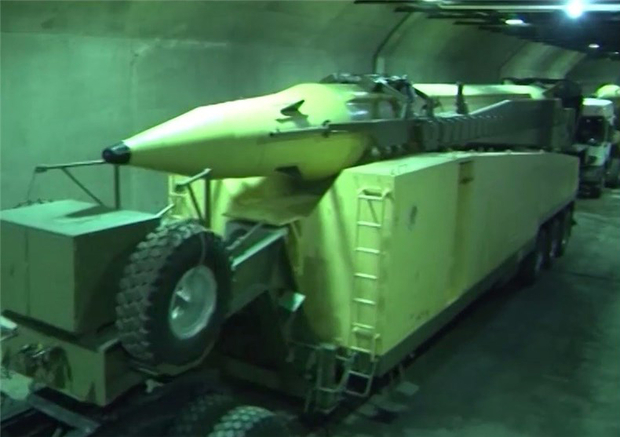
In the wake of the flip flop by the Obama administration to halt the imposition of new sanctions on the Iranian regime for its test firings of Emad ballistic missiles violating a United Nations Security Council resolution last week, the regime unveiled a new underground missile depot prominently featuring the same Emad missile in a blatant thumbing of its nose to the rest of the world.

Regime news agencies and state television video said the underground facility, situated in mountains and run by its Revolutionary Guards Corps, was inaugurated by the speaker of parliament, Ali Larijani. Release of the one-minute video followed footage of another underground missile depot released last October.

U.S. officials say the Emad, which Iran tested fired in October, would be capable of carrying a nuclear warhead and they say Washington will respond to the Emad tests with fresh sanctions against Iranian individuals and businesses linked to the program, but the administration reversed course at the last minute, first announcing a press conference and then canceling it.

The Iranian regime’s boasting about its missile capabilities is a direct challenge for the Obama administration as the U.S. and European Union plan to dismantle nearly all international sanctions against Tehran under the nuclear deal reached in July.

The regime’s provocations undermine all of the reassurances given by supporters of the nuclear deal who claimed it would pave the way for a more moderate and engaged Iranian regime.

After Iran tested the Emad missile in October, the UN Security Council’s panel of experts declared Iran in violation of resolution 1929, adopted in 2010. It prohibits the launching of any missile capable of carrying a nuclear warhead, and remains valid until the July nuclear deal between Iran and the five permanent members of the UN Security Council — the US, UK, Russia, China, and France — plus Germany goes into full effect. That won’t happen until Iran has fulfilled all of its obligations to scale back its program under the agreement, at which point Iran will be “called upon” by the Security Council to cease any missile testing for a period of eight years.

As the Chicago Tribune editorialized yesterday: “As the U.S. backpedaled, the Iranians pressed their advantage: Iranian President Hassan Rouhani proclaimed on Thursday that he was so incensed by proposed U.S. sanctions that he had instructed the military to expand Tehran’s missile program ‘in terms of range and accuracy.’ You don’t like two missile launches? How about 20?

“Days later, the Iranian Navy launched rockets within 1,500 feet of an American aircraft carrier and a French frigate in the Strait of Hormuz.”

“The U.S. and its partners have only one chance to establish that strict compliance from Iran will be expected through the course of this nuclear deal. That chance comes right now, before sanctions are lifted, before millions of dollars flow into Tehran’s economy,” the Tribune went on to say. “The U.S. should impose those sanctions for the missile tests. Iran won’t walk from the deal. It desperately needs that sanctions relief. And if it does walk away, that will serve notice that Iran never did intend to comply.”

The Tribune was not alone in its skepticism of the Iranian regime. Daniel W. Drezner, a professor of international politics at the Fletcher School of Law and Diplomacy at Tufts University, writing in the Washington Post said:

“It is possible that no amount of Obama administration hand-holding and backstopping was going to placate the anxiety of the Sunni states in the wake of the Iran deal. Still, if you look at the past year, the administration seems to have devoted very little time to gardening in the Gulf region. Which guarantees continued bloodshed in Syria, Yemen, Iraq, and . . . I’ve lost count of the sectarian conflicts at this point,” Drezner says.

“It is still likely that the Iran deal will continue to be implemented. But it also seems increasingly likely that the negative externalities of negotiating the deal are rendering it far less significant in advancing the oxymoron that is ‘Middle East stability,’” he added.

All of which goes a long way in explaining the recent escalation in tensions between the Iranian regime and its Arab Gulf state neighbors as Saudi Arabia, Kuwait, Bahrain, Sudan and the United Arab Emirates have all severed ties to the Iranian regime.

For those states which lie only a few hundred miles away from Iran, the threat of the Emad missile is much more real and practical than for the U.S., but no less worrisome is the retreat of U.S. willpower in the face of Iranian aggression under this administration. The message has been unmistakable for many of U.S.’s long-time allies in the region:

You’re on your own.

The Iran lobby was particularly humorous in its most recent statements of support for the mullahs in Tehran as Trita Parsi from the National Iranian American Council actually advocated the idea that Saudi Arabia was pushing for an armed conflict with Iran in order to gain back U.S. support against its long-time foe.

Predictably, Parsi raised the potential of the U.S. cutting loose Saudi Arabia as part of its strategic “realignment” towards Iran with a certain amount of glee.

He offers up the most ironic statement of all when he writes:

“If Washington’s priority is the defeat of IS and other jihadist movements, then a balancing act between an Iran that ferociously opposes IS and a Saudi Arabia that has played an undeniable role in promoting jihadi extremism may not be the right answer.”

The fact that Parsi actually tries to portray the Iranian regime as a standard bearer against Islamic extremism is the height of hypocrisy. It’s like saying the Nazi Party are sponsors of Jewish festivals. We would suggest Parsi reacquaint himself with Iranian regime justice by Googling “Iran executions” and watching some video of the mullahs’ “moderation.”

By Michael Tomlinson

Filed Under: Blog, News Tagged With: #NuclearDeal, Featured, Iran Lobby, Sanctions, Trita Parsi

NIAC List of Accomplishments Misses on Human Rights

January 5, 2016 by admin


NIAC List of Accomplishments Misses on Human Rights

NIAC List of Accomplishments Misses on Human Rights

The National Iranian American Council, the leading advocate and lobbyist for the Iranian regime, published its list of accomplishments for 2015. It was a revealing list giving insight into the top priorities for the NIAC.

For an organization that claims as its mission the “strengthening the voice of Iranian Americans and promoting greater understanding between the American and Iranian people” one would think some of its top priorities would include:

  • Lifting of restrictions within Iran in the use of social media and access to the internet;
  • Halting censorship of news media and a stop to the arrest and imprisonment of journalists;
  • Freeing of Iranian-Americans currently being held in Iranian prisons, including Washington Post reporter Jason Rezaian, Christian pastor Saeed Abedini and former U.S. Marine Amir Hekmati;
  • Withdrawing support for terrorist organizations such as Hezbollah and a halt to proxy wars in Syria, Lebanon, Iraq and Yemen;
  • Releasing over 90 Christians currently imprisoned in regime prisons for practicing their faith;
  • Stopping all executions and imposition of punishments such as public amputations, stoning and beatings; and
  • Restoring basic rights to Iranian women to be free from abuse, spousal murder and misogyny laws.

On the surface, that would seem like an eminently reasonable list of goals for any organization interested in advancing humanitarians causes, but in the case of the NIAC, none of those goals are in its list of accomplishments, nor are they in its 2016 resolutions for future action.

That’s right, zero, zilch, nada.

So what exactly were the NIAC’s best accomplishments for the year? According to its website, the NIAC lays proud claim to nine achievements in its list, of which seven were related to the nuclear agreement with the Iranian regime.

The single most important achievement for the NIAC in 2015 according to its own boasts was securing a nuclear deal already dead on arrival with the test firing of ballistic missiles in violation of United Nations Security Council sanctions and threats by the mullahs to walk away from the deal if there are any threats to impose new sanctions for its missile violations.

Not exactly a recipe for “promoting greater understanding.”

Unsurprisingly, among its four stated “resolutions” for 2016, half relate to the nuclear deal.

Nowhere does NIAC mention the Iranian-Americans being held in Iran.

Nowhere does NIAC mention the brutal human rights situation in Iran.

Nowhere does NIAC mention the growing sectarian rift being fueled by extremist statements being made by top mullah Ali Khamenei who has been calling for the destruction of Sunni Arab states.

Nowhere does NIAC give any mention to the need to ratchet down tensions by calling on the Iranian regime to withdrawal support for proxy wars that have turned the Middle East into a battlefield stretching from the Mediterranean to Indian Oceans.

Instead, the NIAC’s sole focus is to keep the nuclear agreement alive long enough for $100 billion in cash to be wire transferred into regime bank accounts.

Trita Parsi must be looking to buy a new house.

It is a sad situation when the NIAC spells out in its own words its top priorities and none of them address the concerns of Iranian-Americans who yearn for a return to a homeland free from religious control, free from harsh brutality and open to all forms of religious worship and freedoms.

Far from serving Iranian-Americans, the NIAC serves only the mullahs in Tehran and has no other agenda than to take its orders from them.

One would think just for the sake of appearances the NIAC would throw a bone to human rights advocates and mention or cite as a goal the release of these Iranian-American hostages as a priority. It doesn’t even have to be the top priority, maybe number five or six on its list, but the NIAC can’t even bring itself to do that.

It should be apparent to any member of Congress, to any Congressional candidate, to any presidential campaign, who looks at this list, the NIAC is nothing more than a lobbying arm of the Iranian regime and does not accurately reflect the concerns of Iranian-Americans.

In this new year of 2016, we can only hope everyone wakes up to the charade the NIAC has been playing in 2015.

By Michael Tomlinson

Filed Under: Blog, National Iranian-American Council Tagged With: #NuclearDeal, Featured, Iran, Iran deal, Iran Human rights, Iran Lobby, Iran Terrorism, National Iranian American Council, NIAC, Trita Parsi

  • « Previous Page
  • 1
  • …
  • 24
  • 25
  • 26
  • 27
  • 28
  • …
  • 38
  • Next Page »

National Iranian-American Council (NIAC)

  • Bogus Memberships
  • Survey
  • Lobbying
  • Iranians for International Cooperation
  • Defamation Lawsuit
  • People’s Mojahedin
  • Trita Parsi Biography
  • Parsi/Namazi Lobbying Plan
  • Parsi Links to Namazi & Iranian Regime
  • Namazi, NIAC Ringleader
  • Collaborating with Iran’s Ambassador

Recent Posts

  • NIAC Trying to Gain Influence On U.S. Congress
  • While Iran Lobby Plays Blame Game Iran Goes Nuclear
  • Iran Lobby Jumps on Detention of Iranian Newscaster
  • Bad News for Iran Swamps Iran Lobby
  • Iran Starts Off Year by Banning Instagram

© Copyright 2026 IranLobby.net · All Rights Reserved.