Iran Lobby

Exposing the Activities of the lobbies and appeasers of the Mullah's Dictatorship ruling Iran

  • Home
  • About
  • Current Trend
  • National Iranian-American Council(NIAC)
    • Bogus Memberships
    • Survey
    • Lobbying
    • Iranians for International Cooperation
    • Defamation Lawsuit
    • People’s Mojahedin
    • Trita Parsi Biography
    • Parsi/Namazi Lobbying Plan
    • Parsi Links to Namazi& Iranian Regime
    • Namazi, NIAC Ringleader
    • Collaborating with Iran’s Ambassador
  • The Appeasers
    • Gary Sick
    • Flynt Leverett & Hillary Mann Leverett
    • Baroness Nicholson
  • Blog
  • Links
  • Media Reports

Iran Lobby Prefers the World Ignores Terror Threats

November 23, 2015 by admin

Iran Lobby Prefers the World Ignores Terror Threats

Iran Lobby Prefers the World Ignores Terror Threats

Trita Parsi, the head of the National Iranian American Council and one of the chief supporters and defenders of the Iranian regime, retweeted a cartoon on his Twitter feed which may have been a Freudian slip on his part since, we can deduce it reflects his desperate desire to see the world’s news media and American voters focus on anything else besides the recent spate of terror attacks and the regime’s rampage of human rights violations.

In the cartoon, a man watches television as a reporter yells out “What can we do to lessen the grip of fear from terrorism?” The man hits the remote to turn the TV off with a knowing smirk on his face.

You can almost see Parsi’s face substituted in there as he wishes the world could just turn off their TVs or switch to playing Angry Birds on their smartphones instead of watching photos and videos showing the gruesome aftermath of Paris and Mali as scores of innocent people are killed and injured.

Unfortunately for Parsi and the rest of the Iran lobby, the flow of images won’t stop as terror groups such as ISIS, Boko Harem, Al-Qaeda and others step up their attacks in a sick game of upping the ante on each other. All of these attacks are a constant reminder that the world is not going to be moderate wonderland after the Iran nuclear deal and that the Iranian regime is not a force for stabilizing the Middle East.

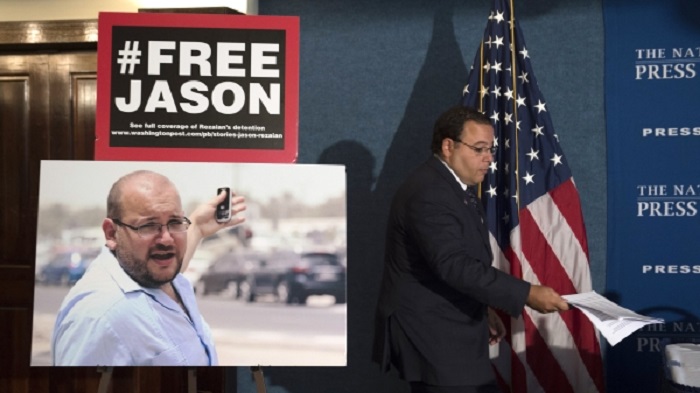
Since last July when the agreement was signed, the mullahs in Tehran have engaged in an avalanche of misdeeds that have culminated with the announcement this weekend that the regime formally sentenced imprisoned Washington Post reporter Jason Rezaian to an indeterminate sentence for spying.

“We’re aware of the reports in the Iranian media but have no further information at this time,” Washington Post foreign editor Douglas Jehl said. “Every day that Jason is in prison is an injustice. He has done nothing wrong.

“Even after keeping Jason in prison 488 days so far, Iran has produced no evidence of wrongdoing,” Jehl added. “His trial and sentence are a sham, and he should be released immediately.”

Parsi was able to break away from his normal tweeting defending the regime to comment how sad it was that Rezaian had been sentenced. Of course, Parsi could not be bothered to openly criticize Hassan Rouhani or Ali Khamenei or the mullahs running the revolutionary courts or demand for Rezaian’s release or even mention the scores of other journalists recently rounded up by the Revolutionary Guards in a widespread crackdown on dissent. No, that might have taxed his tweeting duties to criticize opposition for calling for a pause in the influx of Syrian refugees.

It is worth noting the debate over the fate of Syrian refugees is misplaced and efforts by Parsi and others in the Iran lobby to politicize the issue are disingenuous because the more fundamental question is not what to do with Syria’s four million refugees, but why are they leaving and not going back in the first place?

The answer to that is even simpler: the Iranian regime’s unquestioned support of the Assad regime has created the very crisis Parsi and his colleagues are now attacking. It’s an absurd scenario since Parsi and the NIAC have never opposed Iran’s military intervention, nor use of Hezbollah as a terrorist proxy in the bloody civil war.

The plight of Syria’s refugees will not be resolved by policy debates over verification, but rather by cutting the Assad regime from Tehran’s coffers and getting rid of the thousands of Hezbollah, Quds Force, Revolutionary Guards, afghan mercenary and Shiite militia fighters the Iranian regime has put into Syria.

There can be no solution to the dilemma of ISIS, without first resolving how we can get Iran out of Syria and create a long-term peaceful solution that allows the Syrian people to go back home, which could only be possible when Assad is put aside.

Part of that solution will come when Russia determines to what extent it wants to keep its interests aligned with the Iranian regime, especially as President Putin travels to Tehran this week for his first visit in eight years and first since Rouhani was elevated. Already there are signs that Russia’s long-term views of how to fix Syria are diverging from the Iranian regime’s plans.

Christopher Phillips, a Syria expert at Chatham House international affairs think-tank in London, describes Iran and Russia as “frenemies” in Syria, fighting in lock-step for a common short-term interest but maintaining divergent long-term goals.

“Iran was happy to say [to Moscow]: send some planes or [President Bashar al-] Assad is in trouble,” said Mr Phillips. “But longer term, Iran will naturally be uncomfortable. Syria was becoming their fiefdom. They invested a lot and now a bigger fish has come along.”

Views differ on the balance of interests between Moscow and Tehran — including over their respective fidelity to the Assad regime. But one European diplomat said the “complex, sometimes unfathomable” relationship was crucial to untying the knotty international politics over Syria’s conflict.

The very fact that the Iranian regime is a religious theocracy, guided by its devotion to an extremist and warped view of Islam makes any kind of stable relationship with the mullahs virtually impossible as the actions taken by the regime since July can attest to.

How does convicting an American journalist serve the regime’s goals? How does supplying thousands of new fighters to prolong a civil war that has spilled over onto the streets of Paris help reduce tensions? How does ignoring a nuclear agreement by test launching banned ballistic missiles help reassure jittery Arab neighbors to Iran?

In all these cases, the answer remains that Iran’s mullahs are the source of these tensions and Parsi’s vocal support for them and lack of criticism only reinforces the growing perception is nothing more than a paid mouthpiece.

By Michael Tomlinson
Filed Under: Blog, News Tagged With: Featured, Iran, Iran Lobby, Jason Rezaian, National Iranian American Council, NIAC, Trita Parsi

Iran Lobby Ramps Up Efforts to Influence US Presidential Campaign

November 19, 2015 by admin

Iran Lobby Ramps Up Efforts to Influence US Presidential Campaign

Iran Lobby Ramps Up Efforts to Influence US Presidential Campaign

The silly season is upon us and we don’t mean the College Football Playoff selection process. We mean the quadrennial presidential election season and with it, what promises to be a year filled with debates, poll results, gaffes, blizzard of television advertising and a healthy barrage of social media postings.

But the stakes for this election cycle are enormous and carry with it a sense of gravity we have not seen since during the height of the Cold War when Lyndon B. Johnson famously aired the “Daisy” ad against Barry Goldwater hinting that electing the Arizona conservative would start World War III.

Even though the ad only aired once, it has become one of the most controversial political ads ever aired used in American politics, but it did show what some political candidates are willing to entertain in terms of tackling controversial topics and issues.

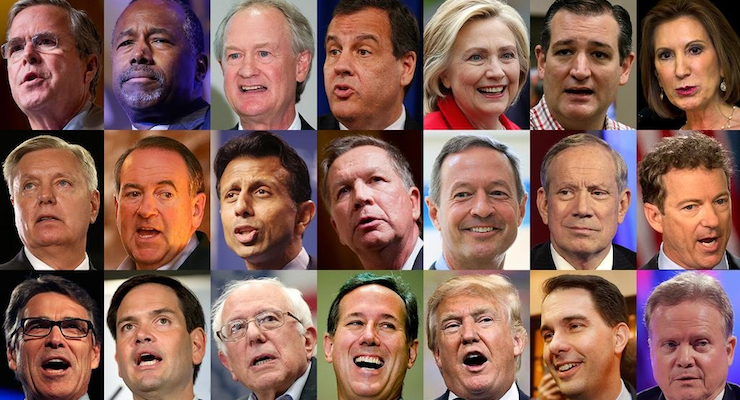
Every campaign season has its own rhythms and rollercoaster swings in emotions and momentum. This season has been no different starting with a Republican field of candidates that has been dominated by two total outsiders in Donald Trump and Ben Carson, while the Democratic side was stuck in relative limbo while Vice President Joe Biden was deciding if he was in or out of the race and Hillary Clinton waded through her email controversy as Sen. Bernie Sanders rallied huge numbers of supporters.

But with the recent nuclear deal with the Iranian regime and the bloody Friday the 13th massacre in Paris, terrorism and what to do with Syria has moved front and center in the consciousness of American voters.

According to a new Reuters/lpsos poll done after the Paris attacks, showed that terrorism had moved to the front of all topics of concern to voters (20.5%), ahead of the economy (15.9%) and healthcare (8.8%) and unemployment (8.6%).

The five-day tracking showed concern over terror effectively doubled over the weekend of the Paris attacks and shows only signs of increasing as France battles additional terror cells in its suburbs while French warplanes bomb targets in Syria.

“What is almost certain is that the demands on the candidates will grow more exacting. As previous presidential campaigns jarred by outside events have demonstrated, how a candidate responds can be as important to a campaign as the event itself,” speculated Jonathan Martin in the New York Times.

What is certain has been the tepid response from the Iran lobby which has gone virtually mute and deaf over the Paris attacks. Iranian regime loyalists such as Trita Parsi and Reza Marashi of the National Iranian American Council, Jim Lobe of Lobelog, The Ploughshares Fund, just to name a few, have offered little in the way of sympathy over the victims, nor condemnation of the terrorists themselves.

If anything, their social media feeds and public statements have been largely focused on centering blame for the attacks and creation of ISIS on the doorstep of Saudi Arabia as the primary regional rival to the mullahs in Tehran.

It’s a curious stand to make since clearly sectarian violence is at the heart of most of what ails the Middle East both historically and moving forward. In fact, Iran’s all-in support for Assad in Syria help spawn ISIS in the first place as Al-Qaeda fighters pushed out of Afghanistan and Iraq by the U.S. surge flocked to Syria and splintered off to form their own groups, eventually coalescing into the ISIS we know today.

The fact that the Iranian regime has also served as a terror blueprint of sorts through its longtime sponsorship of Hezbollah in Lebanon and Shiite militias in Iraq has given ISIS a roadmap for exploiting the shock value of its attacks and dominate the news cycle; gives it the dubious honor of being a “godfather” to ISIS.

This in turn has placed a burden on the Iranian lobby to step up to the proverbial plate to try and influence the presidential elections since a new president – especially if it’s a Republican – will feel no obligation to stay the course President Obama has set with the nuclear deal with Iranian regime and the hands-off policy he has largely taken in Syria and Iraq.

To that end, NIAC Action, the official lobbying arm of NIAC, launched a petition drive directed at all presidential candidates to refrain from using rhetoric that would be deemed “hostile” at the Iranian regime.

The letter it is circulating reads in part:

“That is why we urge you and everyone running for the White House to retire the hostile rhetoric of the past. This hostile rhetoric often makes no distinction between the Iranian government and the Iranian people. It empowers hardliners, undermines those working to resolve challenges, and promotes conflict.

“Instead, we urge you to articulate how you will seize the opportunity created by the diplomatic breakthrough with Iran to build a more peaceful future.”

To say it is a shameful misdirection of the truth would be generous, because the mullahs in Iran have been very open and specific since the nuclear agreement was secured last July in venting their vitriol about the U.S., let alone keeping up the ritual “Death to America” chants at Friday prayers.

As we move deeper into the election cycle, we can be assured of increased action by the Iran lobby as it seeks to keep a lid on American voters’ concerns over terrorism and it combats any damaging news coming out of the Middle East such as more terror attacks or the Iranian regime’s complicity in some new human rights atrocity.

But from the early signs, it seems that Republican candidates have firmly chosen to not swallow the Kool-Aid on a “moderate” Iran and the Democrats will hedge their bets and set terms for Iran that only aid in ensuring a more stable and cooperative Middle East – both goals that the mullahs are opposed to.

By Laura Carnahan

Filed Under: Blog, News Tagged With: #NuclearDeal, Appeasement policy, Featured, Iran deal, Iran Lobby, National Iranian American Council, NIAC, NIAC Action, Reza Marashi, Trita Parsi

Iran Regime Leader Khamenei Blames America for Creating ISIS

November 18, 2015 by admin


Iran Regime Leader Khamenei Blames America for Creating ISIS

Iran Regime Leader Khamenei Blames America for Creating ISIS

Over the years the world has seen many fantastical and absurd claims coming from leaders of the Iranian regime such as the denial of the Nazi Holocaust by Mahmoud Ahmadinejad, but the regime hit a new level of outrageousness when the regime’s top mullah, Ali Khamenei, implied that the U.S. created ISIS as a means of distracting world attention away from crimes perpetrated by Israel.

But Khamenei didn’t stop there; he included the creation of Al-Qaeda as another part of a decade long program by the U.S. to shield Israel from scrutiny. I’m sure if we wait long enough, Khamenei will issue a video saying the U.S. was behind the 9/11 attacks as well.

The video, posted on a Facebook page affiliated with the Revolutionary Guards and first reported by the Middle East Media Research Institute, explains that the U.S. created the Islamic State to advance its own agenda.

“France is going through sad bloody nights. Bloodiest blood has been shed on the streets of Paris, reportedly by the ISIS [Islamic State] terrorists,” the narrator states as the video shows footage of the aftermath of the Paris attacks. “Many express condolences. Even the Saudi king and the U.S. president. The same ones whose involvement in creating the ISIS project is being exposed more than ever.”

Additionally, the video features Wesley Clark, former NATO supreme commander, explaining that ISIS was developed in part through funding that was directed at recruiting individuals to fight Hezbollah, the Lebanese group that is staunchly allied with Iran and Syrian President Bashar Assad, who Syrian rebels have unsuccessfully been trying to unseat for several years in a civil war that has claimed hundreds of thousands of lives.

It is worth noting that the video makes pains to insinuate that the US facilitated the formation of a terrorist menace to fight the Iranian regime’s Mideast allies: Assad and Hezbollah.

The video concludes with the narrator appearing to question al Qaeda’s involvement in the Sept. 11, 2001 terror attacks, according to the Washington Free Beacon.

According to the Middle East Media Research Institute, Khamenei’s office was responsible for producing the video. The clip concludes with a picture of the address for the supreme leader’s website.

The video is part of the larger effort being mounted by the Iran lobby to try and distance the regime from any responsibility for the surge in terrorism from groups like ISIS that were inspired by the template of terror laid down by the Iran regime originally through its support of Hezbollah and its own Shiite militias.

Meanwhile, many regime leaders and institutions in Iran have celebrated the Paris attacks according to the National Council of Resistance of Iran, an umbrella organization of Iranian dissident groups.

Hamid Abu Talebi, political advisor to regime president Hassan Rouhani and former ambassador to France, has described the terrorist crimes in Paris as “inevitable”, “the outcome of the West’s arbitrary measures in supporting terrorism … and neglecting Iran’s warnings during the past few years”.

“The French have paid the price of their government’s support for ISIS and terrorism,” said Brigadier General Massoud Jazayeri, deputy commander of Iran’s armed forces general staff. Describing the Syrian people’s resistance as terrorism he added, “From the first months of the terrorist measures in Syria and other neighboring countries, we gave numerous warnings to Europe that terrorism will engulf their lands.”

Tasnim, the news agency affiliated to the Quds Force, described the Paris tragedy as “homemade terrorism” in France and Europe and wrote, “Khamenei had during the past few years warned Western leaders that supporting terrorism in the region will eventually turn back on you… and in the not so distant future, these groups will cause turmoil in the same countries that supported them.”

Far from condemning the attacks, the Iran regime has sought to leverage the attacks for its own political purposes in shifting attention to rival Saudi Arabia and away from the ongoing offensive in Syria which spawned ISIS in the first place.

In an insightful piece for Foreign Affairs by Ray Takeyh and Reuel Marc Gerecht, the Iran regime is seen as taking advantage of ISIS to consolidate its power in the region as it props up Shiites in control of Iraq and Assad’s Alawite sect in Syria just enough to keep Sunni jihadists from complete victory.

This balancing act by the Iran regime according to Takeyh and Gerecht could result in a permanent destabilization of the Arab heartland benefiting Iran as the mullahs use broad sectarian conflict to keep Saudi Arabia bogged down in a civil war in Yemen and Egypt and Turkey off balance with ISIS attacks.

They point to how the Iran regime built the original model for terrorist integration in Lebanon when it melded a variety of Shia parties into Hezbollah which it used as a proxy to attack the U.S. and its allies abroad. The mullahs repeated the model in Iraq after 2003.

“Tehran had two complementary objectives: drive the United States out and prevent the formation of a new anti-Iranian Iraq. Once again, Iran turned to the development of radical Shia militias. The paramilitary outfits lacerated U.S. forces and intimidated, and sometimes killed, secular Shiites and recalcitrant Iraqi clerics,” Takeyh and Gerecht write.

Ultimately, the mullahs aim will be to use the Paris attacks to their advantage and leverage the threat of ISIS – a threat they created – to allow the regime to force alliances with Russia, U.S., France and other nations and make it an indispensable partner in a war on terrorism that it supports already.

By Michael Tomlinson

Filed Under: Blog, News Tagged With: Featured, Iran, Iran Lobby

Iran Regime Crackdowns Continues as Paris Weeps

November 17, 2015 by admin

Iran Regime Crackdowns Continues as Paris Weeps

Iran Regime Crackdowns Continues as Paris Weeps

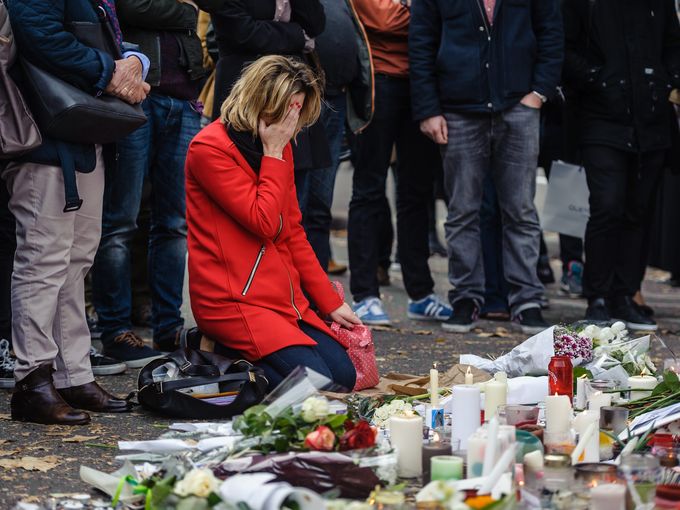
The contrasts in image and tone could not be more striking. On the streets of Paris, thousands gather to mourn those killed in ISIS terror attacks that shook Europe, while on the streets of Tehran, agents for the Revolutionary Guard are busy rounding up more journalists and dissidents in one of the fiercest crackdowns since the days of Mahmoud Ahmadinejad’s reign.

The latest victim of the Iran regime’s security crackdown was the arrest of a press cartoonist who was taken into custody while at work at The Shahrvand, a state daily newspaper in Tehran that is owned by Iran’s Red Crescent Society, or Red Cross according to New York Times.

The arrest had not been reported in the official news media as of Monday night. It came after the publication of a cartoon depicting tearful solidarity with the people of France over the attacks Friday that left at least 129 people dead. The cartoon was also posted on the Instagram.

The fact that a cartoonist is arrested by the regime for publishing a cartoon expressing sympathy for those slain by ISIS – the putative enemy of the Iranian regime – tells us all we need to know about what the mullahs in Tehran are thinking about the slaughter of French, German, American, British, Spanish and Swedish citizens.

The cartoonist’s arrest follows a nationwide crackdown in which several journalists and even two poets have been arrested as being subversive to the regime and serving as tools for Western influence as the regime seeks to stifle any voice of dissent in the wake of the nuclear deal it agreed to last July.

The “to-do” list for the mullahs have been busy lately as they have sought to win the civil war in Syria and secure the Assad regime, gone on a shopping spree for new weapon systems from the Russians, and send proxies to attack an Iranian dissident camp in Iraq in a brutal rocket barrage.

The mullahs have even instituted a new policy to impound the cars of any Iranian women caught driving a car without wearing a “proper” hijab or head covering. This follows past policies that forbade Iranian women from driving alone and allowed basij paramilitaries to beat women drivers and failed to prosecute others who threw acid at women while driving.

Senior mullahs have in recent weeks intensified their verbal attacks on “bad-hijab” women in Iran, with one likening them to “soliciting for sex.”

“The courageous decision by the commander of our police force to confront those women who defy and remove their hijab behind the wheel must be appreciated as it amounts to fighting prostitution on our streets,” said a mullah named Ahmed Alam Ulhoda in one of the more absurd comments ever published.

Another series of arrests targeted social media apps as the Revolutionary Guard also went after administrators on the popular Telegram messaging app for spreading “immoral content” according to the regime’s Fars news agency.

Telegram’s Chief Executive Pavel Durov said last month that Iranian regime authorities had demanded he hand over “spying and censorship tools”, and temporarily blocked the app when he refused.

The IRGC announced the Telegram users’ arrests last week, saying they had shared images and text “insulting to Iranian officials” as well as “satire and sexual advice”. At the time, the judiciary denied any such arrests had even occurred.

This comes after efforts by the regime to block access to popular social media platforms such as Whatsapp, Facebook, Twitter, Tango and Viber.

The crackdowns, especially the widespread nature and swiftness in their enforcement, underscore just how farcical the myth was that Hassan Rouhani’s elevation to president would represent some new “moderate” breakthrough for the regime. Indeed the violations of human rights in Iran has got worse during his tenure.

The alarming rise in human rights abuses moved Human Rights Watch to issue a joint letter signed by 36 human rights groups and other organizations urging support for United Nations General Assembly Resolution A/C.3/70/L.45 which seeks to promote human rights in Iran by calling on the regime to meet its domestic and international obligations to protect human rights.

The vote is scheduled on November 19, 2015 during the 70th session of the General Assembly.

“The Iranian authorities shouldn’t think they are getting a pass on human rights just because the nuclear accord has been signed,” said Sarah Leah Whitson, Human Rights Watch Middle East director. “Passing this resolution will send the message that the world has not forgotten about the country’s ongoing human rights abuses.”

More importantly, supporters of the regime have uttered not a word of criticism over the recent crackdowns. Groups such as the National Iranian American Council and The Ploughshares Fund and bloggers and commentators such as Jim Lobe and Ali Gharib have shifted their focus not on the tragedy suffered by the people of France, but rather in attempting to link the attacks and ISIS to Saudi Arabia in an effort to attack the Iran regime’s long-time rival.

Trita Parsi, head of the NIAC, has been busy on his social media feeds denouncing Saudi Arabia during the Paris attacks as much as he was busy denouncing Israel during the nuclear talks. In both cases, the real goal of his comments is to shift attention away from the bad acts of the Iranian regime.

Ultimately, the world is beginning to see past the facades put up by Iran lobby supporters and are recognizing that the true center of sectarian hate sits squarely in Tehran.

By Michael Tomlinson

Filed Under: Blog, News Tagged With: Featured, hassan rouhani, Iran, Iran deal, Iran Human rights, Iran Lobby, National Iranian American Council, NIAC, NIAC Action, Syria, Trita Parsi

What the Paris Attacks Tell Us About Terror Template

November 16, 2015 by admin

What the Paris Attacks Tell Us About Terror Template

What the Paris Attacks Tell Us About Terror Template

The tragedy of the Paris terrorist attacks this weekend are so startling in their scope, so appalling in the loss of life and so despicable in the choice of victims, that the world has once again been moved to commemorate with demands for stern action and condemnation of the breed of Islamic extremism flowing out of the war torn streets of Syria and now making its way to the wide boulevards of Paris.

With 132 dead as of the latest reporting with scores more in critical condition, the full scope of the killed may not be known for a little while longer, but what is known is that the attack was sophisticated in planning, meticulous in its execution and devastating in its results. It was also spawned and given life from early reports by the ISIS terror network that now dominates vast swaths of Syrian and Iraqi territory, while its influence and recruitment stretches from the Americas to Africa and Asia.

What is unmistakable is the “template of terror” that has come to be the calling card of terror groups such as Hezbollah, Al Qaeda, Boko Haram and ISIS, amongst scores of others. The names might be different, ethnicities varied, even religions at odds with each other, but all share the same fundamental belief in using violence, terror and fear to state their case, sow terror and achieve their aims.

Attacking and striking at these terror groups has de-evolved into a game of “Whack-a-Mole” as militaries strike at individual terrorist leaders like “Jihadi John,” the Briton who was identified as being one of the ringleaders of ISIS who came to the world’s attention decapitating Western hostages.

More astute analysts have pointed out that to curb the threat of global terror, you have to strike at the safe havens offered by sympathetic governments such as the invasion of Afghanistan after the 9/11 attacks to dislodge the Taliban’s support of Al-Qaeda. Others have pointed out the need to support unstable democracies as they struggle with the aftermath and chaos wrought by the changes from the Arab spring protests that toppled governments in Libya, Egypt and elsewhere so that they do not become safe havens for terrorists.

But the single largest supporter of terror in the world today, both financially and spiritually, has been and remains the Iranian regime.

The mullahs in Tehran have been the chief sponsors of Hezbollah and have used Hezbollah fighters in proxy wars in Syria, Afghanistan, Lebanon, Iraq and elsewhere. They have also supported Shiite militias in Iraq with arms, including explosive devices manufactured in Iran, used to kill hundreds of U.S. service personnel in Iraq.

The Iran regime has also provided a spiritual template for ISIS and others through the brutal warped application of sharia law to mete out punishment in often ghastly ways. Before ISIS ever decapitated a captive on video, Iranian regime was hanging prisoners in public squares in front of young relatives. Before ISIS ever machine gunned children, Iranian regime was arresting and executing them. Before ISIS ever imposed harsh religious law in the villages and towns it conquered, Iranian regime was flogging women, cutting off the hands of thieves with power saws and beating demonstrators in the street. The medieval measures that are still being practiced under Rouhani.

The visceral brutality of Iranian regime’s justice has long been used as the standard for invoking a twisted form of Islam to justify violence in the name of territorial gain. The mistake most countries make in dealing with Islamic extremism is in thinking it is a religious war.

It is not.

The violence that stems from the Iran regime and flows out to groups like ISIS and Hezbollah is used as a political tool to achieve practical goals such as toppling governments in Yemen, creating safe havens for forces to operate such as in Iraq and Lebanon and building integrated networks to carry out missions around the world such as Iranian-linked terror attacks in Latin America and the U.S.

What is most telling is the response to the Paris attacks by Iran and its lobbyist allies. In the first few hours of the attacks, while the world expressed, shock, outrage and revulsion, social media linked to Iran’s lobbyists did not offer condolences or sympathy, but rather opened up a full bore attack on Iran’s chief regional rival – Saudi Arabia – in an ongoing effort to destabilize that country.

Trita Parsi, head of the National Iranian American Council, offered up this insightful post on his Twitter feed as the streets of Paris ran thick with blood:

“If it turns out this horrible terror was done by ISIS or AlQaeda, will France rethink its cosy ties with Saudi and those funding Salafists?”

This is the first thing that comes to the mind of Parsi? His next seven posts sought to blame the attacks on Saudi Arabia before he got to his first tweet about Iranians expressing sympathy outside of the French embassy in Tehran.

He even managed to work in a dig at the U.S., tweeting:

“2014, U.S. intel found out that certain equipment sold to Saudi had ended up in ISIS hands. Not sure if they followed up… #ParisAttacks”

Since then, Parsi has continued the drumbeat of linking ISIS to Saudi Arabia, along with other Iran supporters who are marching to the same tune of deflecting blame away from Iranian mullahs.

The only certain thing is that the mullahs in Tehran set the tune and example for the terror industry and by their actions have long validated violence against civilians as a means to an end. It is a pathway that folks like Parsi have never apparently found objectionable judging by their social media accounts and public statements.

Parsi and his colleagues have never made human rights a centerpiece of their lobbying efforts as they have always sought to de-link the issue from any relevancy such as the nuclear talks. The hypocrisy of groups such as NIAC is easily apparent when you peruse their press releases and commentary. The lack of sympathy for the victims of Paris and the all-too-quick efforts to link them to traditional enemies of Iranian regime reveal the true purposes they have.

That true nature of the Iran regime was on front page display in regime newspapers where on its front page, Javan featured an illustration of a masked jihadist with a gun and a machete standing at the top of the Eiffel Tower, waving a mixed flag of the United States and ISIS.

“Return to home,” its headline said, quoting reports that some 200 French extremists had returned to the country after fighting with ISIS abroad.

In Kayhan – Iranian regime’s oldest and most-vocal paper — editor Hossein Shariatmadari, known as the mouth piece for regime’s supreme leader, repeated a conspiracy theory often cited in Iranian media that ISIS is a creation of the West and Israel under an operation dubbed “Hornet’s Nest”.

“Now the designers of the Hornet’s Nest must await the return of the wasps to the real nest — wasps that carry automatic rifles and grenades,” Shariatmadari wrote.

This shouldn’t come as a surprise to long-time observers of the regime or to Iranian dissidents who have long warned that ignoring Iranian mullah’s conduct in supporting terrorist groups has only allowed them to flourish.

Unfortunately, unless the world acts to focus on the source of the terrorism occurring in Iran, we will inevitably be faced with more Paris attacks elsewhere.

By Michael Tomlinson

Filed Under: Blog, Current Trend, News Tagged With: Featured, Iran, Iran Human rights, Iran Lobby, Iran Mullahs, Iran Talks, Khamenei, Moderate Mullahs, National Iranian American Council, NIAC, NIAC Action, Rouhani, Trita Parsi

As Rouhani Goes on European Shopping Trip Dissidents Raise Voices

November 13, 2015 by admin


As Rouhani Goes on European Shopping Trip Dissidents Raise Voices

As Rouhani Goes on European Shopping Trip Dissidents Raise Voices

This week regime’s assigned president, Hassan Rouhani will become the first leader of the mullah’s regime to travel to Europe in a decade as part of effort to establish trade and foreign investment pacts in the wake of the nuclear agreement completed last July.

To say the tour begins on a rocky footing is an understatement. In France, a diplomatic row over French wine erupted when Rouhani snubbed the French with a demand for no alcohol at an official state dinner. Telling the French they can’t serve wine in their own palace is like telling a French chef he cannot use truffles.

A counterproposal by French officials for a breakfast was snubbed by Rouhani’s delegation as being a “cheap” offering by the French. Rouhani and French President Francois Hollande will instead just have a simple meet and greet moment for the cameras.

All of which underscores an important point for the regime: everything will always be on Iran’s terms.

While Hollande’s advisors have called the situation “ridiculous,” it is anything but ridiculous for Rouhani who has been busy trying to keep up the charade that he is a champion of opening Iran to the West, while at the same time towing the party line from top mullah Ali Khamenei on the brutal crackdown happening at home as scores of journalists are harassed and arrested.

Rouhani’s European trip has a more practical and important aspect for the regime. Rouhani hopes to pursue deals in car manufacturing, agriculture and most importantly Airbus aircraft to upgrade its aging fleet of airliners.

But his trip will be met with that is expected to be a week-long series protests from human rights and dissident groups aimed at raising the issue of the regime’s harsh human rights records; especially the dramatic rise in executions being carried out in Iran.

A large march and rally is planned for November 16th in Paris with other actions planned during the week to include:

  • Declarations by human rights organizations, including sponsors of this week’s protests, on the deteriorating human rights situation in Iran under Rouhani and the need for immediate action;
  • Delivery of a letter by 100 French MPs from different parties to the French president insisting that relations with the regime in Tehran must be contingent upon a moratorium on executions and improvement of the human rights situation in Iran;
  • Release of a statement by French political, social and intellectual figures condemning the deterioration of the human rights situation in Iran and the regime’s export of fundamentalism and terrorism;
  • Street exhibitions and displays in central Paris explaining the human rights situation in Iran.

In a reminder of just how much the Iran regime expects the rest of the world to dance to its tune, Rouhani said in an interview with the Italian newspaper, Corriere della Sera, that the U.S. and Iran could normalize relations but that the U.S. should “apologize” first without going into further detail as to what kind of apology the regime was demanding.

It’s an odd demand to make considering that the regime currently holds several Americans hostage and in a report just released this week, was identified as the source of manufacturing bombs that killed hundreds of U.S. service personnel in Iraq through its Quds Forces.

But nothing this outrageous would be unexpected from a regime that has been growing more aggressive towards the world since the nuclear deal was completed.

The discontent in the U.S. has grown substantially as the Iran regime acts so belligerently. The New York Observer ran an editorial warning of the regime’s actions, saying:
“Since President Obama pushed through his Iran nuclear deal without a congressional vote, the folks in Tehran have responded in some mighty unusual ways.

“First, they’ve jailed five visiting Americans—and are holding them hostage. Then they launched a massive cyberattack against the U.S. State Department, Aramco and several American banks. Plus, they are cracking down on Iranians who advocate better ties with the United States, even shutting down businesses that have American connections—including a KFC knock-off in Tehran. But most significantly, the Ayatollahs are threatening to renege on the nuclear deal if we push too hard to get our citizens back.

“We hope this gives pause to President Obama and the deal’s supporters in Congress. If this is how Iran acts before we have released the $100 billion-plus in frozen funds, how might they behave when we have no more Iranian funds to use as leverage?”

As Rouhani tours Europe, we can only hope Pope Francis raises the issue of executions, the Italian prime minister stresses the importance of human rights and the French president discusses the need for an end to executions in Iran and releasing all political prisoners in Iran’s prisons.

By Michael Tomlinson


Filed Under: Blog, News Tagged With: #NuclearDeal, Appeasement policy, Featured, Iran deal, Iran Lobby

Iran Regime Breaks Nuclear Agreement Already

November 11, 2015 by admin

Iran Regime Breaks Nuclear Agreement Already

Iran Regime Breaks Nuclear Agreement Already

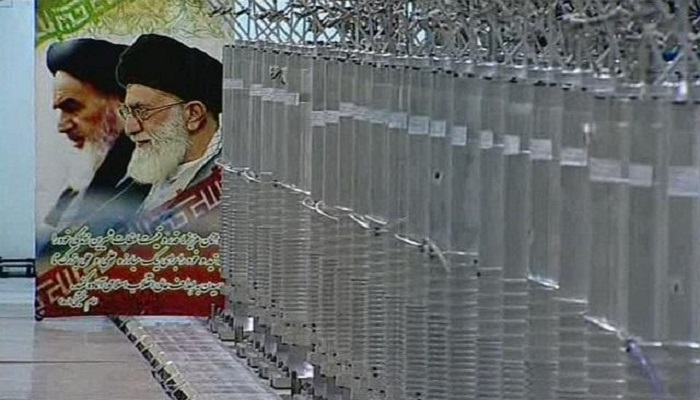
The 159 pages in the nuclear agreement with the Iran regime is by the standards of most international agreements, pretty flimsy, but even its meager few pages specify clearly the expectations the rest of the world has for the regime’s centrifuges used to enrich uranium: dismantling them.

Reuters reported that the regime has halted work in dismantling centrifuges at the Natanz and Fordow nuclear enrichment plants. The nuclear agreement struck last July specified that initial dismantling work would begin on some 10,000 decommissioned centrifuges at the two facilities.

The halt in work was announced by Ali Shamkhani, secretary of the National Security Council for the regime, who was quoted as saying by the ISNA student news agency that “the (dismantling) process stopped with a warning.”

He did not specify what the warning was or who issued it, but the head of the regime parliament’s nuclear deal commission, Alireza Zakani, told Mehr news agency that the dismantling had stopped in Fordow because of a letter to Hassan Rouhani from a group of lawmakers complaining that the dismantling process was moving too swiftly and contradicted directives from top mullah Ali Khamenei.

Khamenei has publicly stated his opposition to several terms within the treaty, including refusal to allow regime military facilities to be inspected and the need for all Western sanctions to be lifted at once before the regime would comply fully with the agreement.

Khamenei has also said the deal should only be implemented once allegations of past military dimensions of the regime’s nuclear program had been settled.

The International Atomic Energy Agency is expected to announce its conclusions on PMD by Dec. 15, according to Reuters.

The 10,000 older, decommissioned centrifuges are only half of what the regime has available to it to enrich low-grade uranium into highly enriched weapons-grade fuel. The nuclear agreement only allows for the regime to actively use a few thousand centrifuges for medical and scientific research purposes.

As Rick Moran in American Thinker notes, “there’s very little difference between the so-called ‘hardliners’ and those the Western press has designated as ‘moderates.’ And Rouhani may try to use the hardliners as an excuse to not fully implement the deal.  Supreme Leader Khamenei has already redefined key elements of the deal to favor Iran’s nuclear program, which Rouhani will probably cite when he violates the terms of the agreement as we go along.”

It is clear now that the regime has no intention of complying with the nuclear agreement and in fact is doing everything it can to push the West with aggressive moves designed to take advantage of the Obama administration’s lame duck political status and lack of desire to force a confrontation on the eve of U.S. presidential elections.

This is why the mullahs in Tehran have doubled down on wiping out opposition to Assad in Syria with a new offensive alongside Russia, test fired a new ballistic missile that violates United Nations Security Council restrictions, attacked and killed Iranian resistance members in Iraq, smuggled new arms to Houthi rebels in Yemen, completed the sale of advanced anti-aircraft missiles from Russia, and cracked down at home by arresting and jailing dissidents and inflaming ethnic tensions with the Azeri minority group in northern Iran.

All of this has been done because the mullahs have already decided to break from the nuclear agreement and see the opportunity for significant gains in the absence of any real threat of retaliation from the U.S. and the rest of the world.

As the Iran lobby, led by the National Iranian American Council, put so eloquently during the debate over the nuclear agreement, the choice for Americans was between “war” and “peace.”

In fact, they were correct, but only in reverse. Approving the pact has surely put the world on a more dangerous path towards greater conflict, while rejecting it may very well have stopped Iranian aggression and brought about stability in the region.

By Michael Tomlinson

Filed Under: News Tagged With: #NuclearDeal, Appeasement policy, Featured, hassan rouhani, Iran, Iran deal, Iran Human rights, Iran Lobby, Iran sanctions, National Iranian American Council, NIAC, NIAC Action, nuclear talks, Parchin

The Clenched Fist of the Iran Regime

November 7, 2015 by admin


The Clenched Fist of the Iran Regime

The Clenched Fist of the Iran Regime

The Wall Street Journal editorialized yesterday about the downfall of the hopes of backers of the Iran nuclear deal in a new, more moderate Iran opening up to the West in the wake of the landmark agreement. It even included a non-too slightly snarky aside about the anticipation the New York Times had about the potential of leading guided tours of the wonders of Iran.

Instead, the Journal rightly outlines the abrupt downward spiral the mullahs in Tehran have charted instead; most especially the spat of arrests the regime has undertaken targeting journalists, dissidents and most disturbing of all: American citizens.

“In recent days Tehran has arrested two U.S. citizens, bringing to five the number of Americans known to be under Iranian lock and key. They include Washington Post reporter Jason Rezaian, who has spent nearly 500 days in prison. Former U.S. Marine Amir Hekmati has been imprisoned since 2011 on espionage charges, and Saaed Abedini, a Muslim-born convert to Christianity, was arrested in 2012 on charges of leading an underground house-church movement,” the Journal said.

Interestingly though was the Journal’s insight into the arrest of Siamak Namazi, an Iranian-born American businessman who has been an outspoken advocate of closer U.S.-Iranian ties, even collaborating with Trita Parsi in help support the National Iranian American Council, one of the regime’s chief lobbying vehicles.

Namazi had even worked in the Iranian Housing Ministry under the presidency of Akbar Hashemi Rafsanjani, now perceived to be a moderate, but widely considered a theological hardliner back in the day; all of which goes to prove that the Iran regime is undergoing the same ideological purges that marked the worst of the Stalinist purges of the 1930s.

“Some speculate that the arrests are part of Mr. Khamenei’s effort to underscore his regime’s ideological purity and beat back domestic calls for reform. But the Islamic Republic has been in the business of taking hostages since its beginning, no matter whether the president is a reputed moderate like current leader Hasan Rouhani, or a firebrand like predecessor Mahmoud Ahmadinejad,” said the Journal.

“When it comes to the Islamic Republic, international goodwill is invariably met with contempt and cruelty. In the wake of the nuclear deal, this is a lesson the West will have to learn all over again,” it added.

The Journal’s lesson is plain to see now as the evidence is now overwhelming that for the mullahs, the nuclear deal isn’t worth the paper it was printed on, but the mullahs recognize correctly that the Obama administration is willing to overlook virtually any violations or aggressions by Iran in order to protect the appearance of preserving a historic foreign policy win.

The mullahs have also correctly calculated that the time remaining before U.S. presidential elections in 2016 literally amounts to a fire sale and they are racing to sweep anything and everything they can before the sale ends.

This includes a number of moves that have come to light further illustrating just how far Ali Khamenei and his fellow mullahs are willing to go to secure their goals.

The Guardian printed a story in which it tracked the recruitment, training and flow of Afghan refugees living in Iran and Syria by the regime and sent to die on Syrian battlefields.

“Iran is recruiting Afghan refugees to fight in Syria, promising a monthly salary and residence permits in exchange for what it claims to be a sacred endeavor to save Shia shrines in Damascus,” Dehghan writes. “The Fatemioun military division of Afghan refugees living in Iran and Syria is now the second largest foreign military contingent fighting in support of Bashar al-Assad, the Syrian president, after the Lebanese militia Hezbollah.”

Horrifically enough, the Guardian revealed that the Iran regime was accepting Afghans below the age of 18. At least one 16-year-old Iran-based Afghan refugee was killed in Syria earlier this year. The allowance for child fighters is a tactic that both the Iran regime, ISIS and Al-Qaeda all share.

Most Iran-based Afghans, who are also Shia, are not going to Syria to risk their lives on religious grounds but because of the financial and stability benefits that their involvement will bring to them and their families. Nearly 1 million Afghans are registered as refugees in Iran but the country is believed to host at least 2 million more that are living there illegally.

In another sign of the growing provocations by the regime, Bahrain convicted five Bahrainis of conspiring with Iran to carry out attacks within the country. Bahrain charged that Tehran was trying to foment unrest in their country by providing training to two of the Bahrainis involved and communicating with the others through the regime’s Revolutionary Guard Corps.

This follows an incident last month in which Bahrain security forces uncovered a large bomb-making factory and arrested a number of suspects linked to the Revolutionary Guards.

All of which shows that not only there are no signs of moderation in Iran, but its moving more and more in the opposite direction.

By Michael Tomlinson

Filed Under: Blog, News Tagged With: Iran, Iran deal, Iran Lobby, National Iranian American Council, NIAC, Trita Parsi

What the Taking of Another American by Iran Regime Tells Us

November 2, 2015 by admin

What the Taking of Another American by Iran Regime Tells Us

What the Taking of Another American by Iran Regime Tells Us

The sudden and surprising arrest by Iran regime officials of Siamak Namazi raised the eyebrows of many veteran Iran watchers; not the least because Namazi has been an integral part of efforts to build a lobbying force in the U.S. used to support the regime’s political goals, namely passage of a just-completed nuclear agreement.

In fact, the ties between Namazi and Trita Parsi, the founder of the National Iranian American Council and leading lobbyist for the regime, have been well documented, all of which raised the question of why would regime leaders order the arrest of one of their own?

The very question indicates how wrong most analysts are about Iranian mullahs in the first place. Many people, including apparently Namazi, long assumed that if you towed the party line of the mullahs, you were always going to be in their good graces and in Namazi’s case, he hoped to reap the financial rewards that came from that association in the form of guiding foreign investment into Iran following the nuclear deal.

But what he failed to understand and what many others have failed to grasp even as they tried appeasing these same mullahs is that they are never going to allow anyone into their tight circle of control who does not follow their proscribed fundamentalist and extremist religious beliefs.

For the mullahs in Tehran, the coin of the realm is not just money; the constitution vests absolute authority with Ali Khamenei and his cadre of mullahs who oversee the judiciary, military and foreign affairs and vast tracts of the economy, while have an unrelaxing temptation for expansion of their authorities in to neighboring countries.

The Iranian Revolutionary Guard Corps wields disproportionate influence through its monopolistic control of entire industries such as telecommunications, petroleum, finance and agriculture. Iran’s theocracy controls planning of the economy and dispenses its meager rewards to the Iranian people, while reserving the bulk of the financial gains for its elites, their families and the military campaigns it funds overseas in Lebanon, Syria, Iraq and Yemen.

For Namazi and Parsi and their fellow Iran lobbyists, the suddenness of the arrest was jarring, but it should have not comes as a complete surprise since the mullahs have long practiced the art of score-settling amongst their factions with sham trials, imprisonments and even executions.

But unlike what Parsi and his ilk would have the rest of the world believe, the fight in Iran’s leadership is not between “moderates” and “hardliners,” but in fact is between factions of corrupt mullahs bickering over the booty they rob from the Iranian people. The fact that every effort to promote a “moderate” faction within Iran has met with utter failure is indicative not of the lack of passion within the Iranian people for regime change, but rather the ruthless willingness of the mullahs to use deadly force against their own people to keep tight their grip on power.

Also since signing of the nuclear agreement, Khamenei has made it his mission to remind the world the he does not view adherence to the terms of the agreement to be beneficial to the regime, nor indispensable. In fact, in his mind, anything that compromises the extremist Islamic fanaticism is the antithesis of what the mullahs want. For Khamenei, getting a $150 billion check from unfrozen assets with no strings attached is the best possible alternative.

Khamenei is eager for the money in order to continue funding his vision of an expanding Islamic sphere of influence stretching from the Mediterranean to the Indian Ocean, but he does not want to jeopardize it with young Iranians clamoring for access to Snapchat on their iPhones while wearing clothes from Old Navy, which is why the arrest of Namazi, a putative supporter of the regime, tells us clearly that the regime intends to be the one calling the shots and not the other way around.

By Michael Tomlinson

Filed Under: Blog, National Iranian-American Council, News, The Appeasers Tagged With: #NuclearDeal, Appeasement policy, Featured, Iran, Iran deal, Iran Lobby, Iran sanctions, Khamenei, National Iranian American Council, NIAC, Trita Parsi

Iran Regime Turns on Its Own

October 29, 2015 by admin

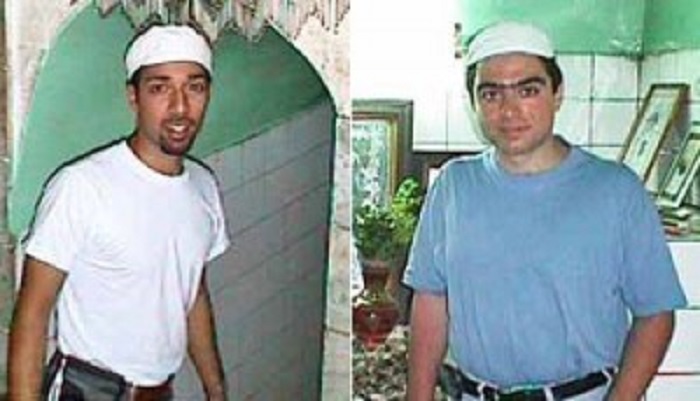
Trita Parsi traveled with Siamak Namazi to Isfahan, Iran’s third largest city, in August 2000. They also toured the Zoroastrian “Fire of Victory” Temple in Yazd. At the time, Siamak was living in Tehran, working for Atieh Bahar, a consultant company with close ties to the government. In 1999, Parsi and Siamak co-authored a paper that recommended setting up a lobbying organization in Washington to influence US-Iran policy. Siamak took a sabbatical in 2005 to complete a fellowship at the Woodrow Wilson Center in Washington, DC. While at the Center, Siamak helped Parsi formulate NIAC policies supportive of the Iranian regime.

Trita Parsi traveled with Siamak Namazi to Isfahan, Iran’s third largest city, in August 2000. They also toured the Zoroastrian “Fire of Victory” Temple in Yazd.
At the time, Siamak was living in Tehran, working for Atieh Bahar, a consultant company with close ties to the government.
In 1999, Parsi and Siamak co-authored a paper that recommended setting up a lobbying organization in Washington to influence US-Iran policy. Siamak took a sabbatical in 2005 to complete a fellowship at the Woodrow Wilson Center in Washington, DC. While at the Center, Siamak helped Parsi formulate NIAC policies supportive of the Iranian regime.

Siamak Namazi, an Iranian-American citizen, has been credited with helping found the Iran lobby including the creation of the National Iranian American Council alongside Trita Parsi as the primary vehicle for advocating for a nuclear agreement lifting economic sanctions on the regime.

The Daily Beast chronicled his family’s involvement as an “intellectual architect” for the NIAC as a pathway for empowering those within the regime whom he had a close relationship with and believed by helping secure an agreement it would boost his fortunes within the regime.

In the immortal words of Kevin Spacey who plays the scheming Frank Underwood on Netflix’s “House of Cards,” “We’re all victims of our own hubris at times.”

Truer words were never spoken about the Iran lobby because on the verge of reaping their perceived successes, they discover all they really are, are puppets for a regime of mullahs whose intent is only focused on preserving their own power.

That is because according to regime media reports, while visiting family in Tehran, Namazi was arrested by Revolutionary Guards Corp soldiers and tossed into the notorious Evin Prison.

There is an irony here on par with Alfred Nobel inventing dynamite and then creating the Nobel Peace Prize after his invention was used in war.

Namazi joins four other Americans who are being held hostage by the regime, including Washington Post reporter Jason Rezaian, Christian pastor Saeed Abedini, former Marine Amir Hekmati and the former FBI agent Robert Levinson.

According to a piece in American Thinker, Parsi and Namazi founded NIAC as a way to lobby for the removal of sanctions against the regime and promote its foreign policy while combatting anti-regime forces in the U.S.

Both Parsi and Namazi reportedly enjoyed close ties and access to Hassan Rouhani and Javad Zarif, the regime’s president and foreign minister, with Parsi being seen traveling with and in close discussions with the regime delegation during nuclear talks.

Conspicuously, the NIAC have been silent on the issue, declining comment and social media feeds for Parsi and other NIAC staff is devoid of any mention of the arrest.

But Hassan Dai, editor of the Iranian American Forum who won a defamation lawsuit filed against him by Parsi, speculated that the arrest suggests a power struggle of sorts within the regime’s leadership.

Dai explained in an interview with Breitbart News that Namazi had consistently “lobbied in favor of a faction of the regime,” which upset the mullahs because it would only be acceptable to “lobby for the whole regime.”

The fight between the factions in Iran is a fight for “the best solution to preserve the regime,” he explained, adding that groups like NIAC have never sided with true “reformists,” but with people who wish to employ a different strategy to empower the regime, such as Rouhani and former President Akbar Rafsanjani.

Because Namazi and NIAC prefer one faction over the other, “they are undermining the Supreme Leader. They are undermining the Revolutionary Guard,” Dai explained. “When you lobby U.S. policymakers to remove sanctions against Iran with the rationale that it will help reform the regime, you undermine the Supreme Leader, because he wants them to accommodate to the regime now.”

The arrest of Namazi sends a message from Iran’s rulers that “Rouhani has no power,” Dai concluded. “He cannot even protect his own friend.”

Breitbart News further speculates – and rightly so – that the arrest pours cold water on the notion that securing the nuclear deal would empower “moderates” within the regime and help reform it. Evidence since agreeing to the nuclear contradicts that idea completely with the conviction of Rezaian, the test launch of an illegal ballistic missile and the launching of a new offensive in Syria alongside Russian forces.

The arrest of Namazi demonstrates that the leadership of the Iran regime is of one mind and firmly in the control of Ali Khamenei and his religious cohorts and that any idea of moderation within the regime is a pipe dream; which may go to explain why coming off of the NIAC’s recent leadership conference to celebrate the nuclear deal, Parsi’s Twitter feed was filled with posts condemning Saudi Arabia, a bitter enemy of Iran and locked in fighting in Yemen.

If Parsi doesn’t tow the mullahs’ line, he might find a different kind of reception party the next time he travels to Tehran and end up sitting next to his buddy Namazi.

By Michael Tomlinson


Filed Under: Blog, Latest from Lobbies & Appeasers, National Iranian-American Council, News Tagged With: #NuclearDeal, Appeasement policy, Featured, hassan rouhani, Iran, Iran deal, Iran Economy, Iran Lobby, Irandeal, Jason Rezaian, Khamenei, Moderate Mullahs, National Iranian American Council, NIAC, Nuclear Deal, Rouhani, siamak Namazi, Syria, Trita Parsi

  • « Previous Page
  • 1
  • …
  • 26
  • 27
  • 28
  • 29
  • 30
  • …
  • 38
  • Next Page »

National Iranian-American Council (NIAC)

  • Bogus Memberships
  • Survey
  • Lobbying
  • Iranians for International Cooperation
  • Defamation Lawsuit
  • People’s Mojahedin
  • Trita Parsi Biography
  • Parsi/Namazi Lobbying Plan
  • Parsi Links to Namazi & Iranian Regime
  • Namazi, NIAC Ringleader
  • Collaborating with Iran’s Ambassador

Recent Posts

  • NIAC Trying to Gain Influence On U.S. Congress
  • While Iran Lobby Plays Blame Game Iran Goes Nuclear
  • Iran Lobby Jumps on Detention of Iranian Newscaster
  • Bad News for Iran Swamps Iran Lobby
  • Iran Starts Off Year by Banning Instagram

© Copyright 2026 IranLobby.net · All Rights Reserved.