Iran Lobby

Exposing the Activities of the lobbies and appeasers of the Mullah's Dictatorship ruling Iran

  • Home
  • About
  • Current Trend
  • National Iranian-American Council(NIAC)
    • Bogus Memberships
    • Survey
    • Lobbying
    • Iranians for International Cooperation
    • Defamation Lawsuit
    • People’s Mojahedin
    • Trita Parsi Biography
    • Parsi/Namazi Lobbying Plan
    • Parsi Links to Namazi& Iranian Regime
    • Namazi, NIAC Ringleader
    • Collaborating with Iran’s Ambassador
  • The Appeasers
    • Gary Sick
    • Flynt Leverett & Hillary Mann Leverett
    • Baroness Nicholson
  • Blog
  • Links
  • Media Reports

WikiLeaks Reveals a Much Tougher Hillary Clinton on Iran Regime

October 19, 2016 by admin

WikiLeaks Reveals a Much Tougher Hillary Clinton on Iran Regime

WikiLeaks Reveals a Much Tougher Hillary Clinton on Iran Regime

The Iran Lobby, led by the National Iranian American Council, have often publicly argued for a more moderate approach to the Iranian regime and encouraged efforts by the Obama administration to appease the mullahs in Tehran in the hopes of changing their historically extremist behavior and policies.

The past two years have shown how foolish it was to believe those promises as the Iranian regime is now the central player in three wars raging across Syria, Iraq and Yemen; all conflicts in which the world is increasingly being dragged into the crosshairs of a shooting war.

The Obama administration has called for another increase in US forces in Iraq to combat ISIS insurgents, yet now find that Iraqi militias it trained are now fighting in Syria against rebel forces the US supports.

Now in Yemen the US Navy is exchanging missile fire with Iranian-backed Houthi rebels. Not exactly a recipe for “moderation.”

The NIAC and other Iran lobbyist members have gone all in with the Democratic Party in backing their candidates for House and Senate races in the hopes of overturning a Republican majority that is skeptical of Iran’s professed moderate intentions, but that hope might prove just as illusory as the idea of Iranian moderation.

WikiLeaks has been dumping thousands of emails and documents from the Democratic National Committee, party officials and members of the Clinton campaign, including from Hillary Clinton itself.

What they reveal is a much different picture of the candidate’s opinions on Iran that what the NIAC would have everyone believe.

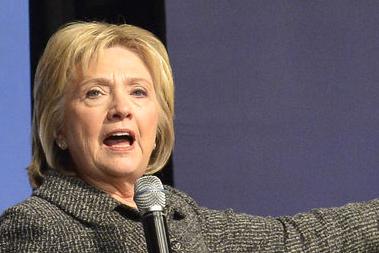
According to a speech transcript made public this weekend by WikiLeaks, Clinton on October 28, 2013, told the Jewish United Fund of Metropolitan Chicago: “I believe that Rouhani was allowed to be elected by the two major power sources in Iran, the supreme leader and the clerics and the Revolutionary Guard … in part because the sanctions were having a quite damaging effect on the economy.”

She continued: “I don’t think anyone should have any illusions as to the motives of the Iranian leadership. What they really want to do is get sanction relief and give as little as possible for that sanction relief.”

According to Eli Lake in Bloomberg, Clinton, in private at least, has taken a more realistic view since leaving the administration. In her Chicago speech, she called Rouhani’s outreach to the West a “charm offensive,” and argued that U.S. negotiations were important as a sign of good faith to the international community, but not as a way to influence Iranian internal politics.

In another speech sure to dismay NIAC and other Iranian supporters, Clinton even advocated privately for U.S.-led strikes against Iranian regime nuclear facilities and acknowledged regime’s ability to terrorize the United States through Iranian regime’s Revolutionary Guard Corps (IRGC) operatives and other proxies in Latin and North America.

Clinton expressed a willingness to bomb the Iranian regime facilities as an “option” to prevent the Shiite powerhouse from developing a nuclear weapon in a June 4, 2013 speech to Goldman Sachs and elaborated further about the threat Iranian regime, the IRGC, and its proxies pose to the United States in a separate speech on October 24, 2013.

She warned that there would be “consequences” carried out through the IRGC and Iranian regime’s other proxies if the United States took military action against it. Although she did not specifically mention Hezbollah by name, it is the most active Iranian mullah’s terror proxy across the world, including the Western Hemisphere.

In a bit of prescience, Clinton reiterated:  “So it’s a wicked problem, as we like to say, because Iran is not only troubling because of its nuclear program, although that’s the foremost threat, it’s the primary conductor and exporter of terrorism.”

“I mean, if you had a big map here behind us, literally from North America to Southeast Asia, there are so many thoughts, so many bombs, so many arrests that are all traced back to the Iranian regime’s revolutionary guard, and their constant efforts to sell (inaudible)….So even if a miracle were to happen and we came up with a verifiable nuclear deal, there would still be problems that Iran is projecting and causing around the world that had real consequences for our friends and ourselves.”

Her recognition of the Iranian regime’s true nature is a welcome boost to those that have opposed the entreaties of NIAC and other Iranian regime supporters. It is also understandable that her comments were private since they were at odds with her party’s leader in President Obama, but with her possible election as president, her core beliefs that the Iranian regime is not a huggable, fluffy teddy bear, but rather a central conduit for the exporting of death, destruction and terrorism is heartening to regime opponents and Iranian dissidents.

On another accout, the Iranian regime blasted comments made by Secretary of State John Kerry who blamed Iran’s provocative actions in Syria and Yemen as being the creator of uncertainty to the extent foreign banks and businesses are reluctant to invest in Iran and not US sanctions on currency exchanges.

In an interview published Friday, Kerry told Foreign Affairs magazine that Iranian regime’s support for Syrian President Bashar Al-Assad, Lebanon’s Hezbollah movement and Yemen’s Houthi rebels made it “very difficult” to help Iran improve its banking system and business practices.

“Mr. Kerry’s comments are totally unacceptable,” Iranian regime’s deputy foreign minister, Abbas Araghchi, told state television on Sunday night.

“We are surprised. During the nuclear negotiations, we clearly said that questions of security, defense, ballistic missiles and our regional policies were not negotiable and are not linked to the nuclear talks,” he said.

“It is unacceptable that Mr. Kerry is today talking of new conditions.”

No matter how the regime wants to spin it, these problems are problems of its own creation.

By Michael Tomlinson
Filed Under: Blog, News Tagged With: Featured, Iran, Iran deal, Iran Lobby, Iran Terrorism, IRGC, National Iranian American Council, NIAC, Sanctions

Iran Regime Trying to Execute 22-Year Old Woman

October 12, 2016 by admin

Iran Regime Trying to Execute 22-Year Old Woman

Iran Regime Trying to Execute 22-Year Old Woman

The Iranian regime is not a nameless, faceless bureaucracy. Its leadership is made up of men, virtually all of whom are deeply indoctrinated and adhering to an extremist form of Islamic belief that is at odds with the rest of the modern world.

These men are handpicked, have lifelong associations and cover for one another to ensure the continuation of their rule. Their families profit handsomely from the control these men exert over virtually all of the industries within Iran, while they are protected from prosecution and accusations of corruption by a system of religious courts that answer to no one except the ruling class.

The Iranian people are kept in check by a paramilitary force that enforces not only legal codes, but also morality codes of conduct, all of which are designed to keep free expression and even outside-the-box thinking firmly suppressed.

Elections are essentially rigged where these rulers decide who can run for office and routinely clear the field of any potential reformists or would-be moderates.

Their rule and effectiveness at ruling are put on display almost every day with public executions held in open squares throughout the country, usually from construction cranes and sometimes involving scores of prisoners.

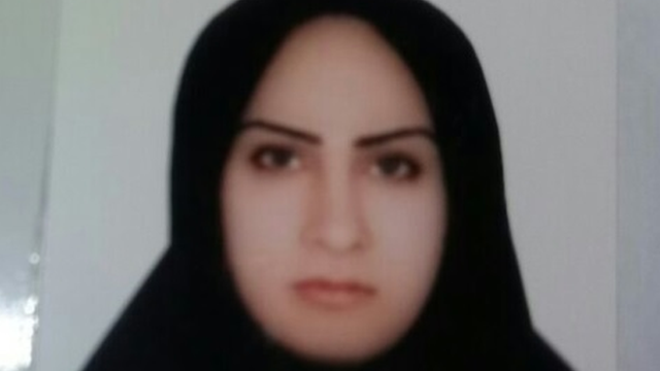
It is within this ruling class, dominated by religious mullahs, that has seen fit to imprison thousands of ordinary Iranians for crimes that would be anathema in the West. No case illustrates this disparity more than the case of Zeinab Sekaanvand, a 22-year-old Iranian-Kurdish woman who was arrested when she was just 17-years-old and convicted of murdering her husband after a grossly unfair trial according to Amnesty International.

The Iranian regime plans to execute her as early as October 13th, despite an international outcry for her release.

“This is an extremely disturbing case. Not only was Zeinab Sekaanvand under 18 years of age at the time of the crime, she was also denied access to a lawyer and says she was tortured after her arrest by male police officers through beatings all over her body,” said Philip Luther, Research and Advocacy Director for the Middle East and North Africa at Amnesty International.

“Iran’s continued use of the death penalty against juvenile offenders displays the authorities’ contempt even for commitments they themselves have signed up to. The Iranian authorities must immediately quash Zeinab Sekaanvand’s conviction and grant her a fair retrial without recourse to the death penalty, and in accordance with principles of juvenile justice,” he said.

Sekaanvand was 17-years-old when she was arrested in February 2012 for the murder of her husband, whom she had married at the age of 15. She was held in the police station for the next 20 days where she has said she was beaten by male police officers. She “confessed” to them that she stabbed her husband after he had subjected her to months of physical and verbal abuse and had repeatedly refused her requests for divorce, according to Amnesty International.

Her trial was grossly unfair. She was denied access to a lawyer during her entire pre-trial detention period and only met her state-appointed lawyer for the first time at her final trial session on October 18, 2014, the human rights group said.

The Iranian regime’s parliament has passed laws allowing marriage for girls as young as 13-years-old, including even a man marrying his own stepdaughter, in examples of the misogynist tendencies of these ruling men.

“Child marriage isn’t just a form of discrimination, it’s a form of violence,” Save the Children CEO Kevin Watkins told the New York Post.

“Forcing girls to marry much older men robs them of their freedom and amounts to sexual slavery. Instead of being in school, married girls face domestic violence, abuse and rape,” he said.

Human rights groups have long criticized Iran’s Penal Code which falls woefully short of safeguards required for juvenile offenders under international human rights law, and even those limited safeguards that do exist, such as informing juvenile offenders of their right to apply for a retrial, are often not implemented by the authorities.

While in prison, Sekaanvand become pregnant from a relationship with another prisoner, stalling her planned execution by the regime until she delivered a stillborn child on September 30th.

Doctors said the young woman’s baby died in her womb two days before she gave birth as a result of the shock she suffered after her friend and cellmate was executed.

According to Human Rights Watch, another 49 people who were children when they committed an offense are currently on the regime’s death row. In the past decade, Iran has executed at least 73 juvenile offenders, according to a January Amnesty report.

It is noteworthy that while the Iranian regime’s leadership pursues this binge of killing children, the Iran Lobby has been stunningly silent on the issue, offering almost no criticism of the practices.

A perusal of the social media feeds for notable Iran lobby members such as Trita Parsi, Reza Marashi and Tyler Cullis of the National Iranian American Council reflect a shocking lack of commentary of the regime’s willingness to incarcerate, torture and execute children, especially battered women who are victims of appalling domestic violence.

We can only assume the higher priorities for the NIAC is urging the lifting of more restrictions on the regime’s access to US currency so the mullahs can get more cash to line their pockets.

By Laura Carnahan

Filed Under: Blog, News Tagged With: Iran, Iran Human rights, Iran Lobby, IRGC, NIAC, NIAC Action, Trita Parsi, Tyler Cullis

Iran Lobby Working Feverishly to Save Nuclear Deal

October 11, 2016 by admin

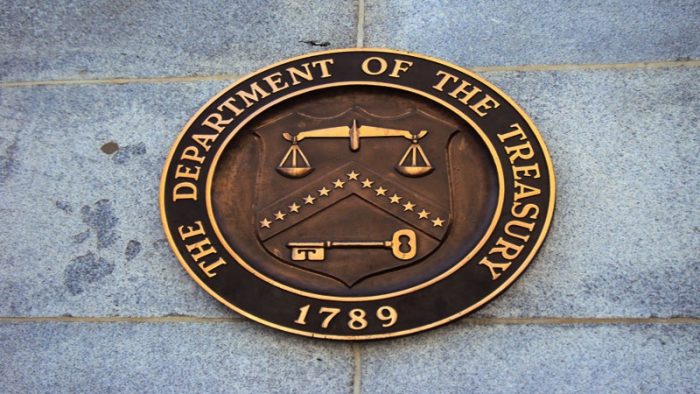
treasury-logo

Since talks began with the Iranian regime on a potential nuclear agreement, the Obama administration has redefined generously its interpretations of “sanctions” on the regime to the point where billions of dollars have flowed to Tehran in ways unthinkable just a year ago.

The justification for the broad easing of sanctions has been the mantra that the alternative would be worse for the world; that failure to do so would empower “hardline” elements in Iran to seize the opportunity to take control and force out “moderates” and abandon the deal and start a nuclear arms race.

The administration’s position echoes the positions pushed by the Iran lobby, including prominent supporters such as the National Iranian American Council, which repeatedly claimed that the deal was helping cement support for perceived moderates such as Hassan Rouhani.

In response, the Obama administration has ignored, overlooked and even enabled a long string of accommodations for the Iranian regime that has emboldened the mullahs in Tehran. While no one disputes the intentions of the president in wanting to make a world free from nuclear weapons, we respectfully judge his efforts to have been a monumental waste of time.

The misguided belief by the US that Rouhani is a moderate that needs to be supported and whose re-election should be a priority is dumbfounding given the year of bloodshed caused by Rouhani’s policies including the massive escalation in the Syrian war, severe domestic crackdowns on human rights and the unprecedented executions of almost 3,000 Iranians, including women and children ranking Iran second in the world in state-sanctioned killing.

The latest act of appeasing the regime comes in the form of new guidance from the Treasury Department that effectively lifts the last remaining sanctions on the regime’s access to US currency exchanges.

The New York Post editorial board issued a blistering response to the action:

“The latest betrayal: The Treasury Department just lifted key restrictions on Iran’s ability to do business in US dollars and access world financial markets — breaking Team Obama’s explicit vows as it lobbied Congress not to nix the deal.

“Iran’s banks weren’t even cut off from the US financial system over the nuclear issue — but over Tehran’s funding of terrorism, its regional aggression and so on.

“Which makes another Treasury move even more squalid: It will now also let foreign firms and branches of US firms do business with Iranian groups like the Revolutionary Guard.

“The Guard is the chief conduit for Tehran’s support of terrorism, tied to numerous plots, including one in DC aimed at a Saudi envoy. And it’s also a prime force helping Syria’s Bashar al-Assad massacre civilians in his bloody bid to keep power.”

The guidance offered by the Treasury Department was designed to provide reassurance to foreign banks which have been skittish about conducting business in US dollar transactions with Iran.

According to Reuters, the guidance comes after months of complaints from Tehran, which says that remaining US sanctions have frightened away trade partners and robbed Iran of the benefits it was promised under the nuclear deal it concluded with world powers last year.

The guidelines, issued by the US Treasury Department’s Office of Foreign Assets Control on Friday, clarify that non-U.S. banks can do dollar trades with Iran, provided those transactions don’t pass through financial institutions in the United States.

What is even more incredible was that Michael Mosier, the associate director at the Office of Sanctions Policy & Implementation of Foreign Assets Control, and Christopher Backemeyer, deputy coordinator of Sanctions Policy, both were featured speakers at the NIAC’s Leadership Conference in an appalling act of conflict of interest.

The timing of their appearance before the leading lobbying arm of the Iranian regime shortly before the release of guidelines that effectively encourages and shows foreign banks how to avoid existing US sanctions put in place to stem the flood of cash flowing to terrorist groups such as Hezbollah is mind boggling.

Ironically, in an effort to minimize the impact of the Treasury Department’s guidance, the NIAC quickly issued a press release in an attempt to explain that this was not an evasion of existing sanctions, as well as encouraged the expansion of even more channels to accommodate the regime.

“The administration should take steps consistent with the U.S.’s stated policy that it will not stand in the way of legitimate business involving Iran.  Such measures include licensing U.S. person employees of foreign companies to engage in transactions involving Iran and licensing U.S. persons in general to facilitate transactions between foreign persons and Iran,” read the NIAC’s statement from Tyler Cullis.

Of course, the NIAC neglected to mention that any dual-national Iranian-American that traveled to Iran on business was likely to be arrested and held for ransom or a future prisoner swap.

The guidelines earned a quick rebuke from Congressional critics who warned of dire consequences in allowing the Iranian regime easier access to US dollars.

“The new guidance overturns the long-running understanding that the U.S. dollar cannot be used to facilitate international trade with any Iranian entities, let alone sanctioned entities. And by allowing foreign subsidiaries of U.S. companies to transact business with Iranian entities, the president is ignoring the clear text of a law passed by Congress,” Sen. Tom Cotton (R., Ark.) said on Sunday.

Sen. Mark Kirk of Illinois, who chairs a Senate banking committee with oversight over Iran sanctions law, said the new guidelines amounted to the White House granting Tehran new concessions.

Meanwhile, Rep. Mike Pompeo (R., Kan.) said Treasury’s changes “green-light business with terrorists. The updated FAQs remove barriers for foreigners to engage with firms the Islamic Revolutionary Guard Corps controls.”

By Michael Tomlinson

Filed Under: Blog, News Tagged With: Appeasement policy, Featured, Iran Human rights, Iran Terrorism, IRGC, National Iranian American Council, NIAC, NIAC Action, Nuclear Deal, Rouhani, Sanctions, Tyler Cullis

Key to Syrian Solution Lies in Pushing Iran Out

October 10, 2016 by admin


Key to Syrian Solution Lies in Pushing Iran Out

Key to Syrian Solution Lies in Pushing Iran Out

Sunday night’s presidential debate between Hillary Clinton and Donald Trump is sure to be analyzed, dissected and poured over for days, but while both candidates traded accusations on Syria and its effect to refugees, terrorism and geopolitics, neither candidate hit the mark when it came to highlighting the real solution to the Syrian civil war.

The real solution to stopping the bloodshed in Syria lies in getting the Iranian regime out of Syria.

The Syrian civil war has been raging since 2011 and it is easy to forget its beginnings and how it grew into the global conflagration it has become, but what has been indisputable has been the influence of the Iranian regime from the very beginning.

It is useful to recall that the source of the original unrest were protests by ordinary Syrians demanding democratic reforms in March of 2011 and the release of political prisoners. In many respects, the protests taking place on the streets of Damascus were eerily similar to protests on the streets of Tehran by Iranians protesting similar issues in the wake of a presidential election widely recognized as being fraudulent.

Within a month protests had spread throughout Syria and the Assad regime responded just as the mullahs in Tehran did two years earlier; with massive crackdowns by the military that included the indiscriminate shooting of civilians in the streets.

The images of dead and dying civilians in Tehran and Damascus are not the only things that connected the two regimes.

The Iranian regime acted quickly to funnel funds to the cash-strapped Assad regime after a series of punishing international sanctions were imposed for the regime’s use of chemical weapons and mass killing weapons such as barrel bombs on civilians, including hospitals; that support was estimated by the UN to be as high as $6 billion annually, with other human rights groups doubling that amount.

Additionally, the Iranian regime sent senior commanders from its Quds Forces to plan and lead operations involving Hezbollah terrorists to help repel the gains of Syrian rebels. This level of involvement increased with the forced recruitment of thousands of Afghan refugees as mercenaries, along with the shifting of Shiite militias from Iraq to fight in Syria.

The involvement of so much Iranian military capacity led to declarations from Syrian military officials that Syria might as well become a province of Iran.

Even with all of that Iranian regime interferences, the rebels were still making gains leading up to the actual shelling of Assad regime buildings in Damascus, which led to the now not-so-secret trip to Moscow by Quds Force commanders to beg for Russian intervention in Syria.

The increasing tempo of military actions collapsed a proposed cease-fire and led to claims and counter charges between the US and Russia reminiscent of the Cold War. Nothing illustrated that confusion more than the situation in the northern Syrian city of Aleppo.

The New York Times examined the zany alliances at work in Aleppo where there are Iraqi Shiite militiamen cheering for clerics who liken the enemy to foes from seventh-century battles. There are Iranian Revolutionary Guards fighting on behalf of a Shiite theocracy. There are Afghan refugees hoping to gain citizenship in Iran, and Hezbollah militants whose leaders have long vowed to fight “wherever needed.”

The messy mosaic of ground fighters on both sides has challenged Washington’s tangled allegiances. The United States is effectively allied with Iraqi Shiite militias to thwart the Islamic State in Iraq, but in Syria, some of those same militias are fighting on the side of the Assad government, which the United States opposes, and against a mix of rebel groups, some of them backed by the Obama administration.

The Daily Caller discussed the vast increases in Shiite militias in Syria.

“Most estimates of the total number of Shi’a militia fighters in all of Syria now exceed 60,000,” U.S. strategic advisory firm The Soufan Group notes. The Soufan Group highlights that this number may even exceed that of the actual Syrian Arab Army under command of Assad. These Shiite militias take orders only from Iran’s Revolutionary Guard Corps.

Alarmingly, even though the evidence is overwhelming that the only viable solution to Syria’s war lies in containing and ultimately removing Iran’s control of the Assad regime, the Washington Post reported efforts were underway by the Obama administration to actually weaken sanctions imposed on Syria.

According to lawmakers and staffers in both parties, the White House is secretly trying to water down the Caesar Syria Civilian Protection Act, a bipartisan bill that would sanction the Assad regime for mass torture, mass murder, war crimes and crimes against humanity. The bill, guided by House Foreign Affairs Committee ranking Democrat Eliot Engel (N.Y.), would also sanction entities that aid the Syrian government in these atrocities; that includes Russia and Iran.

The bill, named after a Syrian defector who presented the world with 55,000 pictures documenting Assad’s mass torture and murder of more than 11,000 civilians in custody, has 70 co-sponsors, a majority of whom are Democrats.

Now the White House has told members and staffers that the bill’s sanctions on Iran could violate the nuclear agreement the Obama administration struck with Tehran last year and the Russia sanctions could hurt any future efforts to work with Moscow diplomatically on Syria.

It is a stunning position to take and one disturbingly similar to arguments made by Iran lobby members such as the National Iranian American Council.

It seems that the similarities between Syria and Iran be beyond just murdered civilians in the street.

By Michael Tomlinson

Filed Under: Blog, News Tagged With: Featured, Iran, Iran deal, Iran Human rights, Iran Lobby, Iran Mullahs, Iran sanctions, Iran Talks, Iran Terrorism, IRGC, National Iranian American Council, NIAC, NIAC Action, Sanctions, Syria

How Did the Iran Nuclear Deal Become a Partisan Talking Point?

October 6, 2016 by admin


How Did the Iran Nuclear Deal Become a Partisan Talking Point?

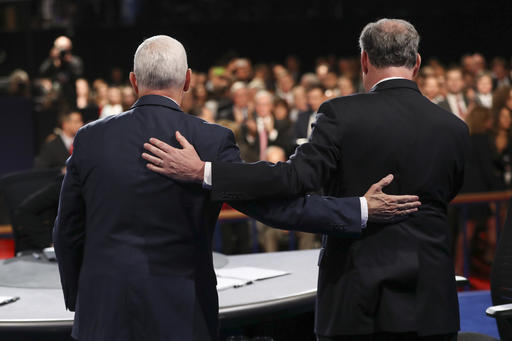
Republican vice-presidential nominee Gov. Mike Pence and Democratic vice-presidential nominee Sen. Tim Kaine stand after the vice-presidential debate at Longwood University in Farmville, Va., Tuesday, Oct. 4, 2016. (Joe Raedle/Pool via AP)

Last night’s vice presidential debate had its usual highs and lows, sprinkled with verbal fisticuffs and even some thoughtful answers, but the most interesting tidbit that came through was the sharp disparity over the Iran nuclear deal in which Democratic running mate, Sen. Tim Kaine (D-VA) all but gushed over the deal’s alleged stoppage of nuclear weapons versus Gov. Mike Pence’s (R-ID) blistering retorts against it.

Putting aside the relative merits of each side’s arguments, the larger question that needs addressing is “how did the nuclear deal ever become a partisan talking point?”

In many ways, it’s lamentable and regrettable that it has gotten to this point. For much of the past three decades both parties have been uniformly united over confronting Iran. That lock-step solidarity is what has driven the vast majority of successes against the Iranian regime such as the imposition of stiff sanctions following the crackdown on demonstrators to the stolen 2009 presidential elections.

Even top mullah Ali Khamenei recognized the terrible blows to the regime’s economy that resulted from those bipartisan sanctions when he summarily decided that the regime needed a new “moderate” face to win back international support after a deplorable eight years of Mahmoud Ahmadinejad.

The regime also recognized that in putting forth a “moderate” face, it had to cobble together a better lobbying effort to drive wedges in the united political front America and its allies had presented for much of the regime’s existence.

Those twin goals led to Hassan Rouhani’s selection and the creation of lobbying groups such as the National Iranian American Council and its offspring, NIAC Action.

Happily for the mullahs, the Obama administration was looking for a foreign policy win to close out its term having been unable to solve the puzzle of wars in Iraq and Afghanistan and the rising tide of Islamic extremism that sprang forth from the Syrian civil war and Iranian regime’s use of terror proxies throughout the region.

It was an unfortunate decision because it enabled the Iran lobby to begin driving that wedge between Democrats and Republicans and shaping a message that if you supported Iran deal you were for peace and if you were against Iran deal you had to be for war.

Most Democrats frankly didn’t buy it as leading members of Congress such as Sen. Robert Menendez (D-NJ), Sen. Ben Cardin (D-MD), Sen. Chuck Schumer (D-NY) and Rep. Eliot Engel (D-NY) opposed the Iran nuclear deal, but the Iran lobby worked furiously to try and shape the debate as a Democrat vs. Republican one when in fact it wasn’t.

For other Democrats, the choices were simpler in which they chose party loyalty in an election cycle, many privately hoping to impose additional sanctions after the presidential elections.

In fact, in the year since the Iran deal was approved, and the mullahs have showed their true nature with the widening of the wars in Syria, Iraq and Yemen, as well as the renewed crackdowns and human rights violations at home and escalation of its ballistic missile program, many of these same Democrats have offered up new proposals to impose new watchdogs or sanctions on Iranian regime.

Coupled with the fact that the mullahs have obliged by going on a binge of militant and aggressive acts including threatening US warships in the Persian Gulf and snatching up even more dual nationals for future hostage swapping, it is almost certain that after the November elections, the US will once again present a united front in confronting Iranian regime’s extremism.

But that prospect hasn’t stopped the Iran lobby from desperately trying to make Iran a partisan issue as NIAC head, Trita Parsi was busy tweeting out his enthusiastic support for Kaine’s comments in support of the nuclear deal, probably had to make many Clinton supporters cringe slightly.

In regards to the actual facts surrounding the nuclear deal, the media fact checkers waded through the statements and found some by Kaine to be slightly wanting of clarity.

From the Washington Post: “The deal, which has been sharply criticized by Republicans, did increase the amount of time that Iran would need to build a nuclear weapon by reducing its centrifuges for uranium enrichment and its stockpile of enriched uranium. But the deal expires in 15 years, and Iran’s nuclear infrastructure remains in place.

“While Iran has insisted it has no interest in building nuclear weapons, the deal does not eliminate the risk that it will obtain nuclear bombs.”

The New York Times called the claim that the Iran nuclear deal eliminated Iran’s nuclear weapons program an “exaggeration.”

A report released this September by the Institute for Science and International Security found that the deal will also allow, through an exemption, Iran to keep 50 tons of heavy water and “continue operating 19 ‘hot cell’ radiation containment chambers.”

Possessing materials such as enriched uranium and heavy water does not necessarily mean Iran will have the capacity to restore its nuclear program. The deal will not allow nuclear inspectors to confirm, however, whether or not Iran is complying with the deal. Iran got negotiators to agree that no U.S. nuclear inspectors will be allowed on Iranian soil, according to Breitbart News.

Ultimately, the issue of containing and confronting the Iranian regime has historically been a bipartisan effort. We hope that after November, it once again becomes bipartisan.

By Michael Tomlinson

Filed Under: Blog, News Tagged With: #NuclearDeal, Featured, hassan rouhani, Iran, Iran deal, Iran Human rights, Iran Lobby, Iran Mullahs, Iran sanctions, Iran Terrorism, National Iranian American Council, NIAC, Trita Parsi

Why Does the Iran Lobby Want to Make Iran a Partisan Issue?

September 27, 2016 by admin

Why Does the Iran Lobby Want to Make Iran a Partisan Issue?

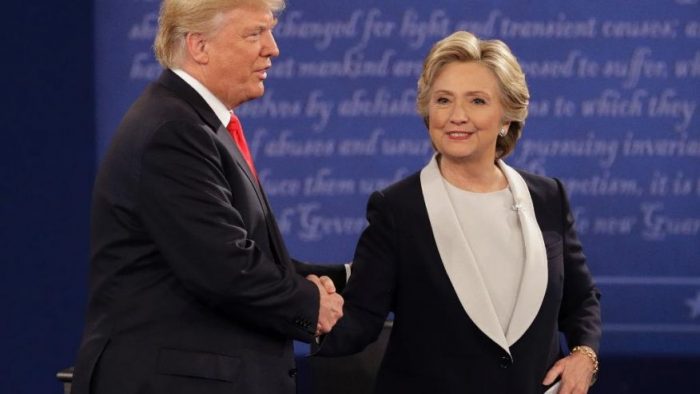
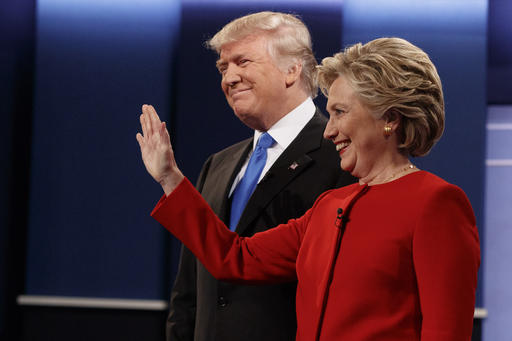
Republican presidential candidate Donald Trump, left, stands with Democratic presidential candidate Hillary Clinton before the first presidential debate at Hofstra University, Monday, Sept. 26, 2016, in Hempstead, N.Y. (AP Photo/ Evan Vucci)

The first debate between Hillary Clinton and Donald Trump was billed as literally the fight of the century; bigger than Ali vs. Frazier, bigger than Coke vs. Pepsi. While an innumerable number of columnists, analysts, lobbyists and anyone else with “-sts” at the end of their job description will critique this debate to death, we should be asking a question that didn’t come up in the debate.

Why does the Iran lobby want to make the issue of Iran a partisan political issue?

From the moment the Iran lobby was created, especially the launch of its principal leader—the National Iranian American Council—it has sought to wedge itself into the partisan political environment by trying to align itself with Democrats and attacking Republicans for the past several years.

At first it may have been because Republicans were the most visibly opposed to accommodating the mullahs in Tehran, but the NIAC even held its fire when it came to criticizing prominent Democrats opposed to Iran accommodation such as Sen. Robert Menendez (D-NJ), a prominent critic of the Iranian regime.

It was also no coincidence that many of NIAC’s staffers formerly worked for Democratic office holders and organizations, but that is a superficial reason for its efforts to politicize Iran issues.

The blueprint for this tactic comes from the mullahs themselves as displayed in their energetic efforts to tar and feather Saudi Arabia and portray its chief regional rival as the source of all terrorism and evil in the world. It’s a blatant effort at diverting attention away from Iran’s own failings and blunt criticism for its long support for terrorism and brutal human rights record.

If you treat any criticism of the Iranian regime as merely political point scoring, the NIAC and other supporters are hoping it diminishes the power and effectiveness of the criticism. The only problem with that argument is when both Democrats and Republicans both take aim at the regime anyway.

In stark contrast to that cynical tactic, Iranian dissident and opposition groups such as the National Council of Resistance of Iran have worked diligently to build bridges on both sides of the political aisle and worked on unifying themes such as human rights, support for women and opposition to sponsorship of terrorism.

Those efforts have won over many on both sides of the aisle with members such as Democratic House Leader Nancy Pelosi (D-CA), former Democratic Sen. Joe Lieberman, House Foreign Affairs Committee chair Ed Royce (R-CA), and former New York mayor Rudy Giuliani just to name a few.

Ultimately the Iran lobby must pursue this diversion strategy since its typical message points about Iranian cooperation and moderation have dissolved in a flurry of aggressive, militant and shocking moves by the mullahs since the nuclear deal was sealed and the “echo chamber” of support was revealed by the news media.

With the news coming out of Iran since the passage of the nuclear deal being mostly bad and only getting worse, the Iran lobby finds itself in a pickle with the upcoming presidential election promising a new president who plans to hold the Iranian regime much more accountable whoever wins.

For the Iranian regime, the pressure is on to grab as much as it can before that happens so the news coming out of Tehran is fast and furious. In the last day alone, we have seen:

  • The proposed cease-fire in Syria collapse as Russian and Syria aircraft have resumed massive bombing of primarily civilians in rebel-controlled areas, such as Aleppo as a major ground has been observed moving into the area with as many as 3,000 Iranian-backed fighters hoping to crush the rebellion against the Assad regime;
  • Iran will continue to test and improve the range and accuracy of its ballistic missiles to deter or coerce potential adversaries — the United States operating in the region, Gulf Arab states, Turkey and Israel – four Middle East experts said in a meeting of the Atlantic Council;
  • Hassan Rouhani and other regime leaders are under intense pressure back home from dissatisfied Iranians upset with the lack of benefits trickling down to them from the nuclear agreement and the perception that rampant corruption is siphoning off any economic improvement;
  • The head of Iran’s atomic energy agency warned that the landmark nuclear deal could be jeopardized by perceived foot-dragging on sanctions relief, promised in exchange for Tehran’s commitment to curb key atomic activities, even though US officials said those commitments were fulfilled but uncertainty over investing in Iran has been responsible for the delays; and
  • The regime’s top mullah, Ali Khamenei, tried to snuff out an insurgent return to the political stage by widely reviled past president Mahmoud Ahmadinejad who has hinted at a challenge to Khamenei’s handpicked minion, Rouhani.

The turmoil the Iranian regime is facing highlights the schisms that are running through Iranian society and the deepening split between the mullahs and the Iranian people. It also explains why the Iran lobby is so intent on trying to portray Iran policy issues as partisan political ones and not worthy of the attention of media.

Unfortunately for the Iran lobby, the American people, who have been subjected to near constant attacks inspired by extremist Islamists and worry about the growing carnage around the Middle East caused by Iranian regime’s active support of three proxy wars, have begun to suspect any supporter of the mullahs.

This may explain why the only people in America openly supporting the Iranian regime are those directly connected to the Iran lobby such as the NIAC, Ploughshares Fund and their cohorts.

By Michael Tomlinson

Filed Under: Blog, News Tagged With: Featured, Iran, Iran deal, Iran Human rights, Iran Lobby, Iran Mullahs, Iran sanctions, National Iranian American Council, NIAC, NIAC Action, Ploughshares

“NIAC Leadership” Conference Showcases Influence Pedaling

September 26, 2016 by admin

“NIAC Leadership” Conference Showcases Influence Pedaling

“NIAC Leadership” Conference Showcases Influence Pedaling

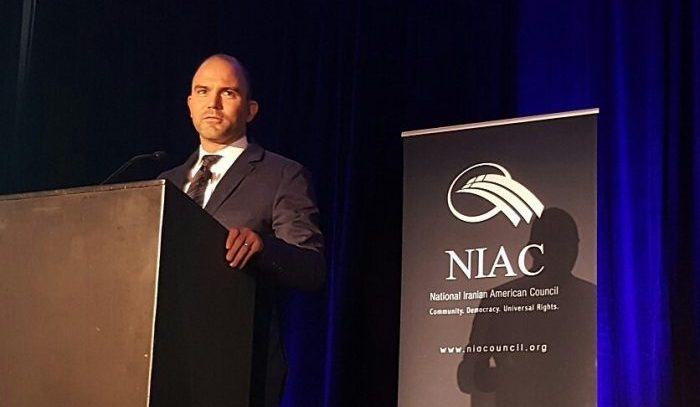
How much does it cost to meet your lawmakers in a venue where you can exert the influence of the mullahs in Tehran? Apparently only $349 and that also gets you three lunches and two breakfasts!

What a deal.

But if you’re strapped for cash, maybe because you have to pitch in for your family to hire a lawyer in an effort to reach your dual-nationality relative who is sitting in Evin prison in Iran, for only $175 you can still get access to lawmakers, but you miss out on a “Gala Reception” and hors d’oeuvres.

So less pizazz, but still you can buy access and who is selling this access at such bargain rate prices? The National Iranian American Council which held its “Leadership Conference” this weekend in Washington, DC.

The conference was a veritable who’s who of Iranian regime activists and lobbyists, all previously dedicated foot soldiers in the fight for securing a nuclear deal with Iran, as well as the fight to buy reprieves for the regime from ongoing sanctions for violations of human rights and sponsorship of terrorism.

Some of the more notable speakers included Joseph Cirincione of the Ploughshares Fund,which received and distributed cash to various members of the Iran lobby including NIAC according to investigative media reports, Ben Rhodes, deputy national security advisor to President Obama and architect of the now-infamous “echo chamber” of supporters used to deceive media and the American people as to the inherent flaws of the nuclear agreement.

Other key participants curiously included Christopher Backemeyer, deputy coordinator of sanctions policy in the State Department, and Michael Mosier, associate director at the Office of Sanctions Policy & Implementation in the Office of Foreign Assets Control. These two men hold considerable power over the question of whether or not Iran is complying with the nuclear agreement and whether or not certain sanctions should be enforced such as bans against the regime accessing US currency exchanges.

The fact that such key regulatory officials are participating in a conference sponsored by an organization identified as having strong links to high ranking Iranian officials should prove troubling. It is similar to having members of the Treasury Department’s securities enforcement division having drinks with executives from Enron or Lehman Brothers prior to the mortgage meltdown.

What is always fascinating about the NIAC’s annual confab is the packing of the speakers list with its own staffers, in this case Trita Parsi, Reza Marashi and Tyler Cullis, each of whom have worked diligently to carry Iran’s water and make excuses for the worst excesses of the regime. Watching these three “stooges” try to divert attention away from ballistic missile launches, mass arrests of journalists, public hangings of Iranians or arrests of Americans, Brits and other citizens is like watching a bad sketch comedy troupe.

Considering that one of the self-proclaimed mandates of the NIAC is “to ensure that human rights are upheld in Iran and that civil rights are protected in the US. NIAC believes that the principles of universal rights – Freedom of assembly, religion, and speech, as well as dignity, due process and freedom from violence – are the cornerstones of a civil society” one might ask why NIAC never invites any of the Iranian-Americans who can tell their story first hand of what Iranian justice is like.

Why is it that NIAC never has people such as Saeed Abedini, the Christian pastor held and tortured in Iran, or Amir Hekmati, the former US Marine brutalized in prison, or Jason Rezaian, the Washington Post reporter, to attend a conference and tell their story in furthering an understanding of the terrible forces at work within Iran’s religious leadership?

Of course the NIAC would never showcase any of these Americans since their presence would be a terrible embarrassment and highlight the true nature of the Iranian regime which is cruelty, punishment, abuse and control. Even though these Americans were released in exchange for $1.7 billion in cash, more Americans have been taken this year and the NIAC holds no fundraiser for them; launches no grassroots campaign for their release and holds no protest in their honor.

Even after the regime’s president, Hassan Rouhani, appeared on NBC prior to his speech before the United Nations General Assembly, he confidently admitted to Chuck Todd that Iran did not recognize dual nationalities.

“Therefore those who have dual citizenship, from the interpretation of the Iranian laws, are Iranian citizens solely and only,” Rouhani said. “And any legal prosecution is carried out on the foundation that they are Iranian citizens subject to Iranian law.”

And yet the NIAC issued no condemnation, no rebuke, not even a single tweet objecting to the extralegal procedures against Iranian-Americans, which the NIAC was ostensibly working on behalf of.

The height of absurdity was reached and exceeded by several speakers at this weekend’s proceedings, including this juicy quote from Rhodes.

“Acceleration of tensions between Gulf partners and Iran is a serious problem across the region,” said Rhodes as quoted by NIAC.

You think? It might be one of the better understatements, ranking up there with “peace in our time” by Neville Chamberlain.

The Iranian regime has pushed the possibility of all-out conflict with regional rival Saudi Arabia, while at the time supporting three proxy wars in Syria, Iraq and Yemen that have claimed the lives of almost 750,000 people. NIAC’s promises that Iran would be a partner for peace and moderation following the nuclear deal have turned out to be false and alarmingly so.

What was promising was the position taken by Philip Gordon, a senior foreign policy advisor to Hillary Clinton and senior fellow at the Council of Foreign Relations, who reiterated the presidential candidates public statements of skepticism about Iran’s conduct and the need to “distrust and verify” when it comes to enforcing the nuclear deal, much to the chagrin of Parsi who tried everything short of begging to get Gordon to make positive statements about the regime.

Gordon’s reticence provides hope that the next president will approach Iran with a clean slate and not be motivated to the falsehoods and “echo chamber” of the NIAC.

By Laura Carnahan

Filed Under: Blog, News Tagged With: #NuclearDeal, Ben Rhodes, Featured, hassan rouhani, Iran, Iran deal, Iran Human rights, Iran Lobby, Jason Rezaian, Joseph Cirincione, Marashi, National Iranian American Council, NIAC, NIAC Action, Ploughshares, Reza Marashi, Rouhani, Trita Parsi, Tyler Cullis, Yemen

Parsi vs Daioleslam: Correcting the Record

August 24, 2016 by admin

Hassan Daioleslam (left) beat back and won $183,000 from Trita Parsi and NIAC

Hassan Daioleslam (left) beat back and won $183,000 from Trita Parsi and NIAC

Source: Middle East Forum

Al-Monitor’s congressional correspondent, Julian Pecquet, wrote an article in Al-Monitor about the divided Iranian community in the United States, showing the Mujahideen-e Khalq (MeK or NCRI) against the regime in Tehran on one side, and the National Iranian American Council (NIAC) with the regime.

In the course of the article, he paraphrases the head of NIAC, Trita Parsi:

Today’s critics, Parsi said, are the same Iran hawks – and their allies in the NCRI – who urged a tougher stance against Tehran at the time.

In particular, Parsi points to the fact that the legal defense of Seyyed Hassan Daioleslam, the man NIAC sued for defamation, was organized by Daniel Pipes, a hawkish critic of radical Islam. The firm chosen to represent Daioleslam? Legal giant Sidley Austin, which just so happens to have been the US lawyer for arch-Iran foe Israel since 1992. NIAC failed to prove Daioleslam was acting out of malice and lost the case, even though the veracity of his claims was not established.

This passage contains multiple errors that could have been avoided had Mr. Pecquet done what a journalist should do and check with both sides of a dispute (rather than just with NIAC). As he did not, I’ll help him by presenting a few facts:

1) I did not “organize” the defense of Daioleslam. This was done entirely independently by Brooke Goldstein, the head of the Legal Project (the Middle East Forum initiative protecting the free discussion of Islam and related topics) at the time. I only learned about Parsi vs Daioleslam and Sidley Austin’s willingness to defend Mr. Daioleslam after she had arranged it.

2) Parsi states that Sidley Austin “just so happens to have been the US lawyer” for Israel since 1992. I looked into this and I see no evidence that Sidley Austin represents the Government of Israel, let alone since 1992. I challenge him to document this. As a large international law firm, Sidley Austin has “represented numerous Israeli clients in connection with transactional activity, as well as litigation, throughout the U.S. since the late 1980s,” but that’s not what Parsi said.

3) In characterizing Sidley Austin, Parsi ignores two important facts: that Sidley Austin was the law firm where both Michelle and Barack Obama started their legal careers; and FEC records show the firm’s lawyers collectively to be one of the very largest donors to the Obama campaigns of both 2008 and 2012.

4) Once we’re talking about who hired whom, let’s note that NIAC hired the PR firm Brown Lloyd James to help its case against Daioleslam and BLJ just happened also to work on behalf of Middle East dictators like Bashar al-Assad of Syria and Muammar al-Qaddafi of Libya.

5) Yes, NIAC lost the case concerning Daioleslam’s malice, but that’s not the whole story. After dismissing the lawsuit against Daioleslam, the court issued a second ruling in which it sanctioned NIAC and Trita Parsi for discovery abuses (including false declarations to the court) and ordered them to pay $183,000 to Daioleslam for his legal expenses.

6) The veracity of Daioleslam’s claims were indeed “established,” as the court obliged NIAC to release internal documents revealing the organization’s extensive ties to Tehran, including a lobby effort coordinated with Iran’s ambassador to the United Nations and collaboration with two individuals named in a Congressional report as agents of Iranian intelligence.

Daniel Pipes (DanielPipes.org, @DanielPipes) is president of the Middle East Forum.

by Daniel Pipes • Aug 23, 2016
Cross-posted from Danielpipes.org

Filed Under: Media Reports, National Iranian-American Council Tagged With: Featured, Iran Lobby, National Iranian American Council, NIAC, NIAC Action, Trita Parsi

Iran Lobby Assurances Proven False Again

August 21, 2016 by admin

Iran Lobby Assurances Proven False Again

Iran Lobby Assurances Proven False Again

The “echo chamber” created by the Obama administration to help push through passage of the badly flawed Iran nuclear deal has beat the drum repeatedly in efforts to defend the deal in the face of growing and incontrovertible proof that all of the assumptions of the Iran lobby have been proven false.

The revelations of the falsehoods surrounding the Iran lobby’s participation in that now infamous echo chamber have almost become legendary:

  • Allen S. Weiner, a Stanford law professor and contributor to the Washington Post’s opinions section who co-authored a piece arguing in favor of the $400 million “ransom payment” failed to disclose he had long been on the payroll of the Ploughshares Fund, an organization recently exposed as a key cog in a White House-orchestrated campaign to build what it called a pro-Iran “echo chamber;”
  • Shortly after approval of the nuclear deal, in which the Iran lobby argued it would empower “moderate” forces within the regime, parliamentary elections were rigged to eliminate virtually all perceived moderates and usher in solid majorities loyal to the ruling mullahs; and
  • Promises by the Iran lobby, especially the National Iranian American Council, that the deal would help steer Iran as a player in the Middle East to stabilize regional conflicts was proven wrong when wars in Syria and Iraq widened, ISIS rose up and Iran launched a rebellion in Yemen by the Houthis.

In each case, the Iran lobby has sought to assure the world of the good intentions of the Iranian regime, only to have those assurances fall flat in the face of new regime transgressions, but for the Iran lobby the battle being waged by its members is the battle of public perception.

It serves the purposes of the mullahs to have the perception there is a chance for moderation, rather than actually delivering any.

Nothing illustrates that point more than the controversy over the $400 million cash payment made by the Obama administration in what appeared to be linkage for the release of several American hostages.

Even though the Iran lobby remained relatively silent on the issue, “echo chamber” participants such as Weiner made a strong case for denouncing any link of cash for hostages. Of course, the Iranian regime did nothing to steer speculation away from that scenario; with various regime officials all but boasting of how the Islamic state cowed the U.S. and forced it to pay it millions of dollars.

Even though the Obama administration at first vigorously denied any connection, the issue was never what the administration thought, but what the regime thought since if the mullahs indeed believed this was a straight cash for hostage swap, it would only serve to validate their belief that this was a sound policy to pursue in advancing the goals of the regime.

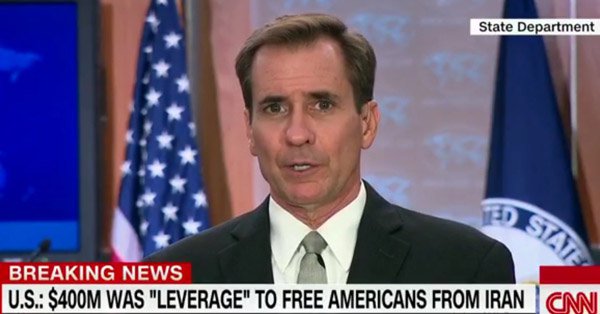
That much was true when the Obama administration finally admitted the other day that the $400 million ransom payment was held up until confirmation of the hostages’ release and flight back home, thereby validating the use of the money as leverage tied directly to the hostages’ plight.

For months the Obama administration had maintained that the payment was part of a settlement over an old dispute and did not amount to a “ransom” for the release of the Americans. Instead, administration officials said, it was the first installment of the $1.7 billion that the United States intends to pay Iran to reimburse it for military equipment it bought before the Iranian revolution that the United States never delivered.

But at a briefing on Thursday, John Kirby, the State Department spokesman, said the United States “took advantage of the leverage” it felt it had that weekend in mid-January to obtain the release of the hostages and “to make sure they got out safely and efficiently.”

According to the New York Times, the acknowledgment by Kirby on Thursday touched off a torrent of criticism from Republicans.

“It was ransom,” said Representative Ed Royce of California, chairman of the House Foreign Affairs Committee. “We now know it was ransom. And on top of that it put more American lives at risk. And we’ve emboldened Iran. We’ve encouraged them, frankly, to take more hostages and put more American lives at risk of being taken hostage.”

Iranian regime press has described the payment as a ransom — which fits Tehran’s narrative that it has outmaneuvered the Obama administration.

Kirby conceded that while the deals were negotiated separately, the timing of the final transactions was linked. “As we said at the time, we deliberately leveraged that moment to finalize these outstanding issues nearly simultaneously,” he said.

The Wall Street Journal editorial board took a harsh tack with the ransom payment, saying the Obama Administration’s handling of the Iran ransom-for-hostages story brings to mind the classic Chico Marx line in the movie “Duck Soup”: “Who are you going to believe—me or your own eyes?”

“Mr. Obama, meanwhile, spent August denying that a ransom was a ransom. Since the January “leverage” moment, Iran has taken three more Americans as hostage and is now demanding the return of $2 billion in funds that U.S. courts have ordered held for the victims of Iranian-sponsored terrorism. The eyes of the world can simply stare,” the Journal added.

The campaign to pass this ill-fated nuclear deal has also been undergoing even more scrutiny with disclosures that Ploughshares Fund sought $750,000 from billionaire financier’s George Soro’s Open Society Foundation to pay off “experts and validators” to vouch for the nuclear agreement.

The disclosure of the Ploughshares request shines further light on backroom efforts by the White House and its top allies to create what they called an “echo chamber” to galvanize public support for the nuclear deal with Iran.

According to the Washington Free Beacon, one foreign policy consultant who has worked intimately with Congress on the Iran deal said that the Ploughshares funding request is further proof that the White House’s efforts were well funded and highly influential.

“You couldn’t turn around last summer without bumping into some Iran deal booster complaining about all the money that skeptics were spending,” the source said. “Now we find out that the architects of the Iran echo chamber were soliciting hundreds of thousands of dollars from dark money groups to pour into manipulating the media and pushing fabricated experts into the mainstream.

By Michael Tomlinson

Filed Under: Blog, News Tagged With: #NuclearDeal, Appeasement policy, Featured, Iran Lobby, National Iranian American Council, NIAC, Nuclear Deal, nuclear talks, Ploughshares

Iran Lobby Working Hard to Preserve Flawed Nuclear Deal

July 19, 2016 by admin

Iran Lobby Working Hard to Preserve Flawed Nuclear Deal

Iran Lobby Working Hard to Preserve Flawed Nuclear Deal

It has been one year since the Iran nuclear deal was agreed approved and freed the Iranian regime from a host of economic sanctions, as well as gave itself truckloads of political and diplomatic capital it has spread around the world in support of three proxy wars it is now waging.

By any objective standard, the Iranian nuclear deal has been a failure because it never was tied to modifying the behavior of the mullahs in Tehran. If the mullahs suffer no consequences for actions to support terror, commit cruel human rights violations and continue to build the infrastructure necessary to deliver a nuclear warhead to a target, then they are going to continue with that abhorrent behavior.

Nowhere was that point made more clear than in revelations by the Associated Press that in a secret side deal with the Iranian regime granted by the Obama administration, key restrictions on Iran’s nuclear program will start to ease years before the publicly-stated 15 year accord’s expiration, thus allowing the regime to pursue full development of a nuclear bomb well before the end of the pact.

The confidential document is the only text linked to last year’s deal between Iran and six foreign powers that hasn’t been made public, although U.S. officials say members of Congress who expressed interest were briefed on its substance. It was given to the AP by a diplomat whose work has focused on Iran’s nuclear program for more than a decade, and its authenticity was confirmed by another diplomat who possesses the same document.

although some of the constraints extend for 15 years, documents in the public domain are short on details of what happens with Iran’s most proliferation-prone nuclear activity — its uranium enrichment — beyond the first 10 years of the agreement.

The document obtained by the AP fills in the gap. It says that as of January 2027 — 11 years after the deal was implemented — Iran will start replacing its mainstay centrifuges with thousands of advanced machines.

Continue reading the main story

Centrifuges churn out uranium to levels that can range from use as reactor fuel and for medical and research purposes to much higher levels for the core of a nuclear warhead. From year 11 to 13, says the document, Iran will install centrifuges up to five times as efficient as the 5,060 machines it is now restricted to using.

Those new models will number less than those being used now, ranging between 2,500 and 3,500, depending on their efficiency, according to the document. But because they are more effective, they will allow Iran to enrich at more than twice the rate it is doing now, according to the New York Times.

The blockbuster revelations mean that Iran can massively expand its uranium enrichment capacity to produce several nuclear warheads within a time frame as little as 10 years, which contradicts virtually every public reassurance uttered by Iran lobby proponents such as the National Iranian American Council and Ploughshares Fund.

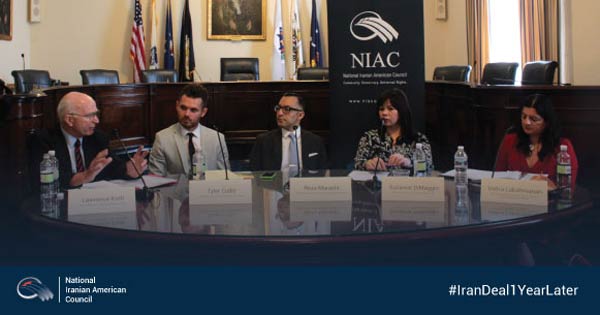
The NIAC’s deliberate misleading of the public continued during a briefing on Capitol Hill in which the NIAC was represented by noted regime apologists Reza Marashi and Tyler Cullis. Also attending were Suzanne DiMaggio of New America and Lawrence Korb of the Center for American Progress.

DiMaggio was especially adept at turning verbal gymnastics in trying to pound home the idea that the nuclear agreement should not be tied to other issues such as Iran’s consistent support for the Assad regime as it busily wipes out virtually the entire civilian population of Syria.

It is funny DiMaggio also mentioned the heightened state of crisis in the Strait of Hormuz and thought it would be a good idea for the U.S. and the regime to negotiate an agreement government interactions at sea. That would be nice since Iran has been busy continually threatening U.S. and foreign vessels, capturing and parading U.S. sailors and threatening to blow up commercial shipping repeatedly, as well as use its own vessels to smuggle illicit weapons and arms to Houthi rebels in Yemen, threatening Saudi Arabia and opening a new war front.

Yeah, that would be a nice idea. So would hitting the lottery three times in a row, but you shouldn’t count on it.

Most remarkable of all was the complete absence of any discussions about human rights in the presentations. Only during questioning did Marashi mention human rights in the context of having a dialogue, which is cold comfort to the thousands of Iranians and dual-nationality citizens currently being held in Evin prison.

The fact that the Iran lobby never discusses human rights reveals the Achilles heel of its position in trying to defend the nuclear deal. Regime apologists such as Trita Parsi of NIAC understand the threat that discussing human rights poses to the nuclear deal since the topic is deadly radioactive to them. They have no defense for the barbaric actions of the regime and no deflection of the human misery being suffered by Iranians at the hands of their own leaders.

In a lengthy piece in Politico, Indira A.R. Lakshmanan, a Boston Globe columnist, wrote extensively about efforts to derail the nuclear deal, taking special effort to go after Mark Dubowitz of the Foundation for Defense of Democracies, and staunch opponent of the nuclear deal.

She also ironically only mentions human rights once in her piece and only in terms of what Dubowitz is focusing on in working against the flawed deal. She quotes Parsi in his efforts to portray the potential consequences of the nuclear deal failing and blaming it on the U.S. exclusively, even though the Iranian regime has moved aggressively to exceed the limits of the agreement with a huge increase in testing of ballistic missiles outlawed by United Nations sanctions.

Iran is barred from conducting ballistic missile tests for eight years under UN Resolution 2231, which went effect July 20, 2015, days after the nuclear accord was signed.

Iran is “called upon not to undertake any activity related to ballistic missiles designed to be capable of delivering nuclear weapons, including launches using such ballistic missile technology,” according to the text of the resolution.

Yet, only two days before the anniversary of the agreement, Iran conducted its fourth missile test since the deal was signed in clear violation of the sanction and has boldly proclaimed it would accelerate its missile program; choosing the same path that pariah state North Korea has taken in missile development.

With the looming end of the Obama administration and the very real possibility of a Trump or Clinton administration seeking to redo the deal to address these concerns, the Iran lobby is working feverishly to buy the mullahs more time to accelerate its nuclear infrastructure work before the start of 2017.

By Michael Tomlinson

Filed Under: Blog, News Tagged With: #NuclearDeal, Featured, Indira A.R. Lakshmanan, Iran, Iran Human rights, Iran Lobby, National Iranian American Council, NIAC, NIAC Action, Reza Marashi, Suzanne DiMaggi, Trita Parsi, Tyler Cullis

  • « Previous Page
  • 1
  • …
  • 12
  • 13
  • 14
  • 15
  • 16
  • …
  • 26
  • Next Page »

National Iranian-American Council (NIAC)

  • Bogus Memberships
  • Survey
  • Lobbying
  • Iranians for International Cooperation
  • Defamation Lawsuit
  • People’s Mojahedin
  • Trita Parsi Biography
  • Parsi/Namazi Lobbying Plan
  • Parsi Links to Namazi & Iranian Regime
  • Namazi, NIAC Ringleader
  • Collaborating with Iran’s Ambassador

Recent Posts

  • NIAC Trying to Gain Influence On U.S. Congress
  • While Iran Lobby Plays Blame Game Iran Goes Nuclear
  • Iran Lobby Jumps on Detention of Iranian Newscaster
  • Bad News for Iran Swamps Iran Lobby
  • Iran Starts Off Year by Banning Instagram

© Copyright 2026 IranLobby.net · All Rights Reserved.